Category: school

  • Counslr Launches in New Mexico and Illinois; Expands Footprint in New York to Increase Access to Mental Health Support

    Counslr Launches in New Mexico and Illinois; Expands Footprint in New York to Increase Access to Mental Health Support

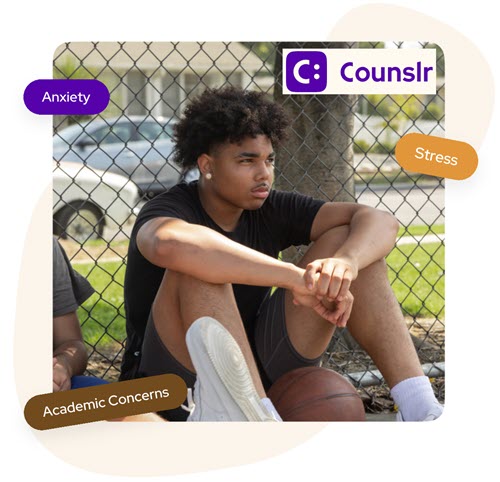
    NEW YORK, NY – Counslr, a leading B2B mental health and wellness platform, announced today that it has expanded its footprint into the State of New Mexico starting with a partnership with Vista Nueva High School, Aztec, NM; and into the State of Illinois starting with a partnership with Big Hollow School District, Ingleside, IL. These initial partnerships will empower students and staff to prioritize their mental health by enabling them to access unlimited wellness resources and live texting sessions with Counslr’s licensed and vetted mental health support professionals, who are available on-demand, 24/7/365. By increasing accessibility to Counslr’s round-the-clock support, Vista Nueva and Big Hollow aim to bridge gaps in mental health support for students and staff, enabling those who previously did not or could not access care, whether due to cost, inconvenience, or stigma, to receive the support they desire.

    1 in 6 youth suffer from a mental illness, but the majority do not receive mental health support due to substantial obstacles to care. Additionally, mental health is even a bigger challenge in rural America due to unique barriers, including fewer providers resulting in longer wait times or insufficient access to crucial mental health services. This resource scarcity underscores the urgency for additional resources and innovative solutions to bridge this critical gap in mental health care for school communities.

    “We are happy to be able to offer students another tool that they can use to support their mental well-being. Knowing that students have been able to speak with a professional outside of school hours helps us know this app was needed and is useful,” states Rebekah Deane, Professional School Counselor, Vista Nueva High School. “We hope this tool also assists students in learning how to navigate systems so that when they graduate high school they know these options exist and they can continue to seek out support when necessary.”

    As factors such as academic pressures, social media influence, burnout and world events contribute to heightened stress levels and mental health challenges, schools throughout the country are recognizing the growing need to offer more accessible resources and preventative mental health services to both students and staff.

    “Counslr provides an extremely easy-to-access platform for those who otherwise may not seek the help they need, and we are very excited to join Counslr in this partnership. We are all very well aware of the impact that technology has had on the mental health of our students and we feel that Counslr can meet our students in a setting they are comfortable with,” states Bob Gold, Big Hollow School District Superintendent. “Outside of our students, we are thrilled to be able to offer this service to the amazing adults who work with our students every day. There are so many families dealing with some sort of trauma, and the life of an educator is no different.  These adults tend to give so much of themselves to their students, so we strongly feel that our efforts here to join with Counslr is our way of providing an opportunity for our educators to focus on their own mental health.”

    In addition to the geographic expansion,Counslr has also expanded its existing footprint in states like New York, most recently partnering with the Silver Creek Central School District to support its students and staff.  

    “We know mental health needs are on the rise, for students and adults.  To me, Counslr is a resource our students and staff both deserve,” states Dr. Katie Ralston, Superintendent, Silver Creek Central. “In the beginning stages at Silver Creek Central, it has proven to be an asset, as it offers access to everyone on the spot, any day, for any situation.”

    “Supporting diverse populations of students and faculty across the country clearly illustrates that mental health knows no boundaries,” said Josh Liss, Counslr CEO. Adding that, “With 86% of Counslr’s users being first-time care seekers, we strive to reach these silent sufferers who need help, but do not or cannot access it, no matter where they are located.”

    ABOUT COUNSLR

    Counslr is a text-based mental health support application that provides unlimited access to robust wellness resources and live texting sessions with licensed professionals, 24/7/365. Users can access support on-demand within two minutes of opening the app, or by scheduled appointment. Through real-time texting, users enjoy one-on-one, private communication with a licensed counselor that can be conducted anytime, anywhere. Counslr was designed to help individuals deal with life’s day-to-day issues, empowering individuals to address concerns while they are “small” to help ensure that they stay “small”. Counslr partners with organizations of all shapes and sizes (companies, unions, nonprofits, universities/colleges, high schools, etc) so that these entities can provide Counslr’s services to their employees/members/students at no direct cost. For more information, please visit www.counslr.com.

    eSchool News Staff
    Latest posts by eSchool News Staff (see all)

    Source link

  • Introducing The Edge, a Breakthrough SEL and Life Skills Curriculum for Middle and High School Students

    Introducing The Edge, a Breakthrough SEL and Life Skills Curriculum for Middle and High School Students

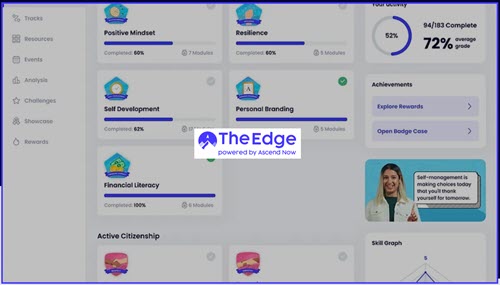
    Los Angeles, CA — As students navigate an increasingly complex world defined by artificial intelligence, social media, and rapid technological change, the need for essential life skills has never been greater. The Edge, an innovative, research-based social-emotional and life skills curriculum, creates a dynamic and effective learning environment where middle and high school students can build the social-emotional and life-readiness skills needed to succeed in school, relationships, and life. 

    Designed in collaboration with educators and aligned with the CASEL framework, The Edge is the first curriculum to meet educators’ demands for high-quality instructional materials for SEL and life-skills readiness. The curriculum helps students cultivate communication, problem-solving, and self-awareness, as well as essential life skills like entrepreneurship, negotiation, financial literacy, and networking, to boost their academic abilities.

    “The Edge represents a paradigm shift in education,” says Devi Sahny, Founder and CEO of The Edge and Ascend Now. “It’s not just about helping students excel academically—it’s about helping them understand themselves, connect with others, and develop the resilience to face life’s challenges head-on.”

    By combining bite-sized lessons with project-based learning, The Edge creates a dynamic and effective learning environment with ready-to-use, adaptable resources educators use to help students develop both hard and soft skills. Its advanced analytics track student progress whilesaving valuable preparation time. Designed to enable educators to adapt as needed, the curriculum is flexible and requires minimal preparation to support all learning environments—asynchronous and synchronous learning, even flipped learning.

     Key highlights include:

    • Integrated Skill Framework: A robust curriculum featuring 5 pillars, 24 essential skills, and 115 modules, blending SEL with employability and life skills such as negotiation, financial literacy, and digital literacy, all aligned with CASEL, ASCA, and global educational standards.
    • Educator-Friendly Design: With over 1,000 customizable, MTSS-aligned resources, The Edge saves teachers time and effort while allowing them to adapt materials to meet their unique classroom needs.
    • Hard Skill Development Meets SEL: By engaging in activities like entrepreneurship, critical thinking, and leadership training, students develop technical proficiencies while enhancing communication, empathy, and resilience.
    • Real-Time Analytics: Advanced data tools provide administrators with actionable insights into student progress, enabling schools and districts to measure outcomes and improve program alignment with educational goals.
    • Compelling Content. The curriculum features engaging content that integrates the latest insights from learning sciences with professional writing from skilled authors affiliated with SNL, Netflix, and HBO Max. This combination guarantees that the material is educationally solid, relevant, and thought-provoking.

    The Edge immerses students in real-life, complex scenarios that challenge them to think critically, collaborate effectively, and apply social-emotional learning (SEL) to everyday situations. For example, one lesson about conflict resolution uses an actual problem that Pixar faced when allocating resources for new movies. 

    Early adopters of The Edge have reported remarkable results. The Edge was used by rising high school seniors during a three-week summer college immersion program (SCIP) at Georgetown University, which prepares high school students from underserved backgrounds to apply for college. At the end of the program, 94% reported learning important skills, and 84% said they discovered something new about themselves.

    ABOUT THE EDGE

    The Edge is the latest innovation from Ascend Now US, dba The Edge, a US-based education startup committed to increasing both college and career readiness for all students.  Sahny founded The Edge in the US after building and scaling Ascend Now Singapore, which has provided personalized academic and entrepreneurship tutoring to over 10,000 students and 20+ international schools over the last decade. 

    eSchool News Staff
    Latest posts by eSchool News Staff (see all)

    Source link

  • 5 of the biggest education trends for 2025

    5 of the biggest education trends for 2025

    Key points:

    As we welcome a new year, educators and industry leaders are excited to discover the biggest education trends for 2025. The past few years have been characterized by fresh and innovative solutions for learning, as well as transformative, technology-forward approaches to education.  

    Each year, we like to look ahead and anticipate the biggest upcoming education trends. There are many topics education professionals can expect to be at the center of the conversation in 2025–from new perspectives on artificial intelligence for education to the emergence of nontraditional school models amid an increasingly competitive enrollment environment. 

    For 2025, schools and districts are focused on making learning more engaging for students, creating a more positive environment for educators, and transforming school culture to meet the diverse needs of the school community. As schools work to accomplish these goals, we expect to see an expansion of AI and other emerging technologies in the classroom, enhanced professional development and support for teachers, and more individualized learning opportunities for students. 

    Here are five of the biggest education trends for 2025: 

    1. Nontraditional school models 

      Everything from career opportunities, technology, and the world around us has changed significantly over the past decade, yet the traditional model of public schools in the U.S. has remained largely unchanged for generations. As this industrial-age school model persists, many students feel bored and disengaged with their learning.  

      When the COVID-19 pandemic caused school interruptions in 2020, many families decided it was time to pivot to new and nontraditional learning opportunities for their children. Since 2019, over 1 million students–the equivalent of one student from every class in the country–have left the conventional classroom to seek out different educational approaches and more innovative learning environments. The National Center for Education Statistics projects that public schools, including public charter schools, will lose an additional 2.4 million students by 2031.  

      Today’s students desire more individualized learning approaches, which empower them to use their creativity, explore their passions, and engage with their peers in more collaborative ways. In 2025, we will see a greater emergence of nontraditional school models that center student engagement, collaboration, and creativity, and prepare learners to graduate into a continually-evolving workforce.  

      Some of these emerging nontraditional education models include microschools, online and hybrid learning programs, and project-based or student-led schools, as well as long-established nontraditional school programs such as homeschooling, Montessori, and career and technical education schools. In 2025, we also anticipate that public schools will step up to meet the diverse needs of students through innovative approaches, mirroring some of the elements of these nontraditional school models in order to maintain enrollment, enhance engagement, and equip students with applicable career-ready skills. 

      2. Expanded use of AI in education 

        As we predicted last year, artificial intelligence (AI) has become prevalent in the educational space, and this emerging technology shows no sign of stopping its rapid growth as we make our way into 2025. This year, we expect the conversation around AI to shift, reflecting a more widespread acceptance of the technology as a beneficial tool to enhance education and productivity. 

        In 2025, schools will continue to integrate more AI into the curriculum, guiding students to use it appropriately to enhance their learning. Many schools and districts have already developed formal AI school policies and modified student codes of conduct to ensure safe, effective, and ethical use of AI tools in the classroom.  

        Furthermore, many educators are now taking the initiative to incorporate AI tools into their lesson plans to help students build familiarity with the technology. Introducing students to AI in a safe and controlled environment enables them to learn how to use it effectively and ethically. Equipping students with foundational skills in AI is already regarded as an essential skill set for college and many careers. 

        Because AI is a fairly new technology for everyone, including educators, we anticipate that more schools will implement AI professional development opportunities this year, enabling teachers to deliver more effective AI instruction. Some schools are also beginning to employ AI tools for administrative productivity, which will require training and guidance to ensure educators and staff can successfully integrate these tools into their work. 

        3. Targeted support for educators  

          Over the past five years, many districts have been focused on allocating Elementary and Secondary School Emergency Relief (ESSER) funding to implement new educational programs and tools, support student wellbeing, and overcome learning loss. Now that the final ESSER deadline has passed, 2025 will see schools and districts shift their attention to providing targeted support directly to educators.  

          With all of the new technology, refreshed learning spaces, and updated curriculum districts have recently introduced, professional development is essential to ensure effective implementation of these enhancements. In 2025, schools will incorporate new professional development programs that empower educators to foster engaged learners. By providing the tools and resources teachers need to be successful, schools can help educators improve their productivity and attain professional goals, while still keeping teacher wellbeing as a top priority. 

          Teachers are the primary influencers of the K-12 educational experience, so supporting educators is a holistic approach that benefits the entire school community. To address rising workloads, schools will implement new tools and strategies to support teacher efficacy and wellbeing. Some schools are even piloting automated and AI-powered technologies to take repetitive and administrative tasks off teachers’ plates, freeing up invaluable time for them to connect with students and focus on teaching.  

          Additionally, districts have begun to recognize the importance of a healthy work-life balance, as many teachers have left the profession over the past several years. In 2025, districts will continue to explore ways to cultivate a more positive job experience for teachers. Teachers want solutions for student behavioral issues, more attentive leadership teams, and more manageable workloads. Schools will work to improve these matters, while maintaining aspects of the job teachers value most, including school culture, opportunities for professional learning and certifications, and STEM and arts programs. 

          4. A focus on school and district culture 

            With a growing list of education options, students and their families are seeking out learning environments that not only provide high-quality curriculum and resources, but also align with their values and prioritize school-home communication. In this increasingly competitive enrollment environment, cultivating a positive culture and connected school community are the qualities that make schools stand out.  

            Funding and resources are directly related to the number of students at each school, so cultivating an inviting school culture is key. In 2025, schools and districts will take time to refine their school brand in order to attract and maintain students. School leaders will focus on creating more opportunities to engage with students and families, implementing new communications tools, initiatives, and events that bring the school community together. 

            In the past few years, some K-12 administrators have piloted mobile teaching stations to increase their visibility and daily impact throughout their school. We anticipate more school leaders will embrace this approach in 2025, enabling them to build stronger relationships with students and teachers. By working from mobile workstations, administrators can directly engage with students and staff, making face-to-face connections on a daily basis. Frequent positive interactions with school leadership help students, teachers, and families stay engaged with the school community, promoting a culture of connection and support. 

            5. Universal design for learning 

              Today’s students are making more choices about how and where they want to learn than ever before. Universal design for learning (UDL) promotes achievement among diverse student bodies by giving each student access to resources and environments that help them learn. Accessibility goes far beyond ADA compliance, and schools are recognizing this through the application of UDL across the learning experience. Understanding the diverse needs of students is crucial for creating learning experiences that are inclusive and supportive. 

              In 2025, UDL will be at the center of creating comfortable and engaging learning environments that accommodate all students’ needs. For instance, more schools are implementing sensory spaces, ensuring neurodiverse learners have a safe and comfortable space to self-regulate throughout the school day. These spaces don’t just serve neurodivergent students–all students benefit from having areas at school that are dedicated to supporting wellbeing. 

              As in previous years, accessibility and equity will continue to be prominent topics in 2025, but the conversation will pivot to focus on ways UDL can positively impact curriculum. UDL emphasizes providing students with multiple, flexible types of engagement, different ways of presenting information, and multiple ways to demonstrate their understanding in the classroom. This practice supports students who are neurodivergent and/or experience learning challenges, but also improves the learning experience for neurotypical students. 

              Latest posts by eSchool Media Contributors (see all)

    Source link

  • How Spokane Public Schools is helping kids engage in real life

    How Spokane Public Schools is helping kids engage in real life

    Key points:

    Social media has connected kids like never before, but what they get in likes and shares, they lose in real, meaningful engagement with their peers and classmates. Lunch hours are spent hunched over smartphones, and after-school time means less sports and more Snapchat.

    The adverse effects of this excessive screen time have significantly impacted students’ social- emotional health. Forty-one percent of teens with the highest social media usage struggle with mental health issues, and between 2010 and 2020, anxiety among adolescents skyrocketed by 106 percent.

    At Spokane Public Schools (SPS), educators and administrators are reversing the side effects of social media by re-connecting with students through school-based extracurricular activities. Through its transformative Engage IRL (Engage in Real Life) initiative, the district is encouraging kids to get off their devices and onto the pickleball court, into the swimming pool, and outside in the fresh air. With more than 300 clubs and sports to choose from, SPS students are happier, healthier, and less likely to reach for their smartphones.

    An innovative approach to student engagement

    Even before the pandemic, SPS saw levels of engagement plummet among the student population, especially in school attendance rates, due in part to an increase in mental health issues caused by social media. Rebuilding classroom connections in the era of phone-based childhoods would require district leaders to think big.

    “The question was not ‘How do we get kids off their phones?’ but ‘How do we get them engaged with each other more often?’” said Ryan Lancaster, executive director of communications for SPS. “Our intent was to get every kid, every day, involved in something positive outside the school day and extend that community learning past the classroom.” 

    To meet the district’s goal of creating a caring and connected community, in 2022, school leaders formed a workgroup of parents, community members, coaches, and teachers to take inventory of current extracurriculars at all district schools and identify gaps in meeting students’ diverse interests and hobbies.

    Engaging with students was a top priority for workgroup members. “The students were excited to be heard,” explained Nikki Otero Lockwood, SPS board president. “A lot of them wanted an art club. They wanted to play board games and learn to knit. No matter their interests, what they really wanted was to be at school and be connected to others.”

    Working with community partners and LaunchNW, an Innovia Foundation initiative focused on helping every child feel a sense of belonging, SPS launched Engage IRL–an ambitious push to turn students’ ideas for fun and fulfillment into real-life, engaging activities.

    Over the past two years, Engage IRL has been the catalyst for increasing access and opportunities for K-12 students to participate in clubs, sports, arts activities, and other community events. From the Math is Cool Club and creative writing classes to wrestling and advanced martial arts, kids can find a full range of activities to join through the Elite IRL website. In addition, five engagement navigators in the district help connect families and students to engagement opportunities through individual IRL Plans and work with local organizations to expand programming.

    “All day, every day, our navigators are working to break down barriers and tackle challenges to make sure nothing gets in the way of what kids want to be involved in and engaged in,” said Stephanie Splater, executive director of athletics and activities for SPS. “For example, when we didn’t have a coach for one of the schools in our middle school football program, our navigators mobilized for really good candidates in a short amount of time just from their personal outreach.”

    In only two years, student engagement in extracurriculars has nearly doubled. Furthermore, according to Lancaster, since the Engage IRL launch, SPS hasn’t experienced a day where it dipped below 90 percent attendance. 

    “That’s an outlier in the past few years for us, for sure, and we think it’s because kids want to be at school. They want to be engaged and be part of all the cool things we’re doing. We’ve had a really great start to the 2024-2025 school year, and Engage IRL has played a huge role.”

    Engage IRL also helped SPS weather student blowback when the district launched a new cell phone policy this year. The policy prohibits cell phone use in elementary and middle school and limits it to lunch and periods between classes for high school students. Because students were already building personal connections with classmates and teachers through Engage IRL, many easily handled social media withdrawal.

    Creating opportunities for all kids

    Key to Engage IRL’s success was ensuring partnerships and programs were centered in equity, allowing every child to participate regardless of ability, financial or transportation constraints, or language barriers.

    Establishing a no-cut policy in athletics by creating additional JV and C teams ensured kids with a passion for sports, but not college-level skills, continued to compete on the court or field. Partnering with Special Olympics also helped SPS build new unified sports programs that gave children with disabilities a chance to play. And engagement navigators are assisting English language learners and their families in finding activities that help them connect with kids in their new country.

    For Otero Lockwood, getting her daughter with autism connected to clubs after years of struggling to find school activities has been life-changing.

    “There are barriers to finding community for some kids,” she shared. “We know kids with disabilities are more likely to be underemployed as adults and not as connected to the community. This is something we have the power to do that will have a lasting impact on the children we serve.”

    Through Engage IRL, SPS has redefined student engagement by expanding access and opportunity to 6,000 students across 58 schools. In just two short years, the district has seen attendance increase, student wellness improve, and dependence on smartphones diminish. By continuing to listen to the needs of students and rallying the community to partner on out-of-school activities, Spokane Public Schools is successfully fostering the face-to-face connections every child needs to thrive.

    Latest posts by eSchool Media Contributors (see all)
    Source link

  • Marian High School Chooses BenQ’s LK936ST Golf Simulator Projector for New Golf Training Lab

    Marian High School Chooses BenQ’s LK936ST Golf Simulator Projector for New Golf Training Lab

    COSTA MESA, Calif. — BenQ, an internationally renowned provider of visual display and collaboration solutions, today announced that Marian High School in Omaha, Nebraska, selected and installed two BenQ LK936ST 4K HDR short-throw golf simulator projectors for its golf sim Golf Training Lab at the Marian Athletic Center. In 2024, the Marian girls’ golf team became the undefeated Nebraska State Champions in Class A golf. Designed to help analyze and improve the golfers’ swings and give them the ability to practice in all weather conditions, the Marian Golf Training Lab provides the girls’ high school and junior teams with an immersive and realistic golf course environment. Based on research and recommendations from golf simulation experts, Marian High School chose the BenQ LK936ST for its exceptional color accuracy, powerful brightness, and maintenance-free operation.

    Head Coach Robert Davis led the effort to build the Golf Training Lab, which includes two golf simulator bays featuring Carl’s Place 16×10 impact screens and ProTee VX launch monitors. Seeking a high-performance projector that could deliver realistic course visuals, bright images in a well-lit environment, and long-term, maintenance-free operation, Davis consulted with golf simulator manufacturers and reviewers. After thorough research, BenQ’s LK936ST emerged as the top choice.

    “Our athletes benefit from an experience that’s as close as you can get to being on an actual course,” said Davis. “When we pull up courses, you can see distinct leaves on the trees. That level of realism not only makes training more effective but also more enjoyable.”

    The BenQ LK936ST’s 4K UHD resolution, combined with BenQ’s exclusive Golf Mode, ensures a highly detailed, true-to-life golfing experience. Its 5,100 lumens of brightness allow it to perform exceptionally well in the Marian Athletic Center’s brightly lit environment, ensuring clear visuals even without dimming the lights. Additionally, its short-throw lens and advanced installation tools — such as digital shrink, lens shift, and keystone correction — allow for a flexible and seamless setup within the limited space of the simulator bays.

    “The golf simulation market has grown rapidly as more schools, athletes, and enthusiasts seek ways to improve their game year-round,” said Bob Wudeck, senior director of business development at BenQ America Corp. “With the LK936ST, we’ve provided everything a golf simulator needs to deliver a truly immersive experience. Its 4K resolution, high brightness, and laser-powered color accuracy ensure that golfers can see every detail with precision, whether it’s the grain of the greens or the clear blue sky. By combining these features, we’ve created a projector that meets the high standards required for today’s golf training environments.”

    The BenQ LK936ST is engineered to provide a truly immersive and precise golf simulation experience, making it an ideal choice for Marian High School’s Golf Training Lab. With a 4K UHD resolution powered by Texas Instruments’ DLP chip technology, it delivers razor-sharp visuals and a stunning 3,000,000:1 contrast ratio, which allows for enhanced graphics and a lifelike recreation of the world’s top golf courses. Its exclusive Golf Mode, designed specifically for golf simulation, reproduces the vivid greens and brilliant blues of fairways and skies, offering 92% of the Rec. 709 color gamut for true-to-life color accuracy. This unprecedented visual fidelity helps golfers maintain their focus and engagement, simulating real-world conditions to perfect their game.

    In addition to its color and image quality, the LK936ST is designed to excel in challenging environments. The projector’s short-throw lens (0.81-0.89) and 1.1x zoom capacity make it easy to install outside of the swing zone, projecting a large image without casting shadows on the screen. Digital shrink, offset, lens shift, keystone correction, and corner fit provide advanced installation flexibility, enabling perfect alignment with the screen, even in tight or unconventional spaces like garages, basements, or smaller training rooms.

    Built for long-lasting, maintenance-free operation, the LK936ST features a sealed IP5X-rated dustproof optical engine, eliminating the need for filter changes and ensuring optimal performance even in dusty environments. Its laser light source guarantees 20,000 hours of use with consistent color and brightness, far outlasting traditional lamp-based projectors. The projector also offers instant power-up without the need for warm-up or cool-down times, allowing golfers to jump straight into their training. With multiple HDMI inputs and networking options, it integrates easily with other entertainment or training components, making it a versatile centerpiece for not only golf simulations but also home theater and gaming setups.

    More information on the BenQ LK936ST 4K HDR short-throw golf simulator projector is available at bit.ly/3na585n.

    About BenQ America — Business & Education Solutions
    The No. 1 selling global projector brand powered by TI DLP technology, according to Futuresource, the BenQ digital lifestyle brand stands for “Bringing Enjoyment and Quality to Life,” fusing ease of use with productivity and aesthetics with purpose-built engineering. BenQ is a world-leading human technology and professional solutions provider serving the enterprise, education, and entertainment markets. To realize this vision, the company focuses on the aspects that matter most to users, redefining traditional technology with innovative capabilities that increase efficiency, enhance learning, and amplify entertainment — all while ensuring a healthy, safe, and intuitive user experience. BenQ’s broad portfolio of professional installation solutions includes digital, laser, and interactive projectors; premium flat panels; and interactive large-format displays that take visual enjoyment to new heights in corporate offices, classrooms and lecture halls, and home theaters. The company’s products are available across North America through leading value-added distributors, resellers, and retailers. Because it matters. More information is available at www.BenQ.com.

    All trademarks and registered trademarks mentioned herein are the property of their respective owners.

    Image Link:
    www.ingearpr.com/BenQ_Marian_High_School_Golf_Lab_2.jpg
    www.ingearpr.com/BenQ_Marian_High_School_Golf_Lab_1.jpg
    www.ingearpr.com/BenQ_Marian_High_School_Golf_Lab_4.jpg
    www.ingearpr.com/BenQ_Marian_High_School_Golf_Lab_3.jpg
    Image Caption: Marian High School Chooses BenQ’s LK936ST Golf Simulator Projector for New Golf Training Lab

    Follow BenQ America Corp.
    Blog: https://www.BenQ.com/en-us/business/resource.html?category=Trends%20and%20Knowledge
    Facebook: https://www.facebook.com/BenQNorthAmerica
    Instagram: https://www.instagram.com/BenQnorthamerica/
    LinkedIn: https://www.linkedin.com/company/BenQ-america/
    Twitter: https://twitter.com/BenQamerica
    YouTube: https://www.youtube.com/channel/UCqz1hlN9lW1mfUe4_XMEo2A/featured?

    eSchool News Staff
    Latest posts by eSchool News Staff (see all)


    Source link