Category: STEM & STEAM Trends

  • 5 powerful ways to link STEM lessons to real-world applications

    5 powerful ways to link STEM lessons to real-world applications

    Key points:

    “Why are we learning this?”

    This is a question every educator has faced before. To be fair, it’s a valid question. Students are naturally curious, and it’s normal for them to wonder about the knowledge that they’re acquiring. The real issue is how we, as educators, choose to respond to them.

    In my experience, teachers have two standard replies to this question:

    1. They’ll try to explain the subject in detail, which results in a long-winded answer that confuses their students and doesn’t satisfy them.
    2. They’ll argue that the information is important because it’s on an upcoming test, which typically leaves students feeling frustrated and disengaged.

    Either way, the result is the same: Students lose all legitimacy in the lesson and they’re unable to connect with the content.

    If we want our students to engage with the material in a way that’s memorable, meaningful, and fun, then we need to help them discover why it is important. Teachers can accomplish this by introducing real-world connections into the lesson, which reveal how the information that students acquire can be practically applied to real-world problems.

    Without building these connections between the concepts our students learn and real-world applications, students lose interest in what they are learning. Using the strategies below, you can start to build student investment into your classroom content.

    The everyday enigma

    Use everyday items that operate with mystery and frame your lesson around them. Your students’ curiosity will drive them to learn more about the object and how it functions. This allows students to see that the small concepts they are learning are leading to the understanding of an object that they interact with daily. When choosing an item, pick one that is familiar and one that has multiple STEM elements. For example, you could use a copper wire to discuss electrical currents, a piece of an automobile to explore chemistry and combustion, or shark teeth when teaching about animal adaptations and food chains.  

    Interest intersect

    Connect your students’ personal hobbies to the subject matter. For instance, if you have a student who is really passionate about soccer, try having them create a mini poster that connects the sport to the concepts learned in class. This gets them to think creatively about the purpose of content. This strategy has the additional benefit of helping teachers learn more about their students, creating opportunities to build communication and rapport.

    Get an expert

    Invite professionals (scientists, engineers, etc.) to talk with your class. This gives students a first-hand account of how the concepts they are learning can be applied to different careers. If you’re teaching chemistry, consider inviting a nurse or doctor to share how this subject applies to human health. If you’re teaching math, a local architect can expound on how angles and equations literally shape the homes in which students live. Not only does this provide a real-world example of students, but it helps schools connect with their community, creating vital relationships in the process.           

    Problem to progress

    Create an engineering investigation based on a local, real-world problem. For instance, I once knew a music teacher who was frustrated because pencils would regularly fall off his music stands. I challenged my 5th grade students to create a solution using the engineering design process. Not only did they succeed, but the experience allowed my students to see the real-world results of the inventions they created. When students understand that their work can make a tangible difference, it completely changes their relationship with the material.  

    Project-based learning

    Project-based learning is driven by inquiry and student ownership. This allows students to make contributions to the real world through hands-on investigations. What makes these inquiry-focused lessons so useful is that students are the driving force behind them. They choose how to approach the information, what questions to pursue, and what solutions they want to test. This makes the learning intensely personal while taking advantage of students’ natural curiosity, creativity, and critical-thinking skills. If you need a little help getting started, consider using one of these Blue Apple projects from Inquiry Outpost.

    By linking our STEM lessons to real-world experiences, teachers can provide a meaningful answer to the age-old question of, “Why are we learning this?” We can equip our students with the skills to not only navigate everyday challenges but also create positive change within their own communities. So, let’s empower young learners to see the relevance of STEM in their lives, and lay a strong learning foundation that will support them well beyond the classroom.

    Latest posts by eSchool Media Contributors (see all)

    Source link

  • Reaching peak engagement in K-12 science education

    Reaching peak engagement in K-12 science education

    Key points:

    More than half of science teachers believe the most important value of science education is how it contributes to students’ curiosity, critical thinking, and creativity, according to a new report from LEGO Education. But are today’s students truly engaging with science education?

    LEGO Education’s State of Classroom Engagement Report: Science Edition surveyed more than 6,000 global teachers, parents, students, and U.S. administrators to gather data that can offer insight to support educators as they strive to engage their students in science learning.

    Science learning builds life skills students will use even if they do not pursue the science in college or as a career. It also increases student engagement and well-being, but here’s the catch: Students have to feel connected to the material in order to build these skills.

    Just over half of global science teachers say their students are engaged in science, which points to a critical need to boost engagement in the subject, according to the report. Interestingly, students say they are more engaged in science than they are in school overall. Only one-third of teachers worldwide indicate that their students are engaged in the classroom. Schools could leverage students’ interest in science to build schoolwide engagement–a key factor tied to student well-being.

    When students aren’t engaged in science, what’s behind that lack of engagement? Often, they’re intimidated before they even learn the material, and they assume the topics are too challenging. Students lose confidence before they even try. Of students who say science is their least-favorite topic, 45 percent say science is too hard and 37 percent say they are bad at science. What’s more, 77 percent of global teachers say they believe students struggle because of complex concepts and curricula, and they’re searching for for impactful resources that support every student’s success.

    “If students think they’re not good at the subject or avoid it, we risk losing an entire generation of innovators and problem solvers,” said Victor Saeijs, president of LEGO Education, in the report.

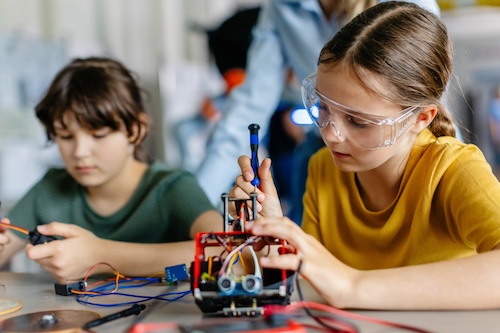
    How can educators reach students who struggle to engage with science? Hands-on science learning is the key to piquing student curiosity, prompting them to engage with learning material and build confidence as they explore science concepts. Sixty-two percent of science teachers say hands-on activities drive student engagement in science. Seventy-five percent of science teachers who do incorporate hands-on activities believe this approach leads to higher test scores and grades.

    More students need access to hands-on science learning. Only 55 percent of students say they regularly get hands-on experiences–these experiences usually require extra time and resources to plan and execute. Eighty-two percent of science teachers say they need more ways to teach science with play and hands-on methods.

    Having access to hands-on science learning experiences increases students’ confidence, giving them the boost they often need to tackle increasingly tough-to-learn concepts:

    • 73 percent of students with access to hands-on learning opportunities report feeling confident in science
    • Just 52 percent of students who do not have access to hands-on learning report feeling confident in science

    Hands-on experiences in science drive:

    • Learning outcomes: 71 percent of science teachers who incorporate hands-on, playful learning believe the methodology supports higher test scores and grades
    • Engagement for all learners: 84 percent of U.S. teachers and 87 percent of administrators think that hands-on experiences help all types of learners engage with science concepts
    • Love of science: 63 percent of students who love science credit their passion to regular hands-on experiences
    • Confidence: 79 percent of students who have hands-on science experiences are confident in the subject

    Administrators and science teachers are short on time and need hands-on tools and resources to quickly engage students in learning:

    • 59 percent of U.S. administrators and 54 percent of science teachers say they need more tools to engage students in science
    • Nearly one-third of U.S. students do not get hands-on science experiences.
    Laura Ascione
    Latest posts by Laura Ascione (see all)

    Source link