
Category: stock market

  • Dollar Tree and the Rising Cost of Survival

    Dollar Tree and the Rising Cost of Survival

    While Wall Street celebrates record highs, Main Street grapples with rising costs that strain household budgets. Dollar Tree, once synonymous with affordability, has seen its pricing structure evolve significantly. In 2021, the company increased its baseline price from $1 to $1.25, and by 2025, introduced items priced up to $10 in select stores.

    For residents in food deserts—areas with limited access to affordable and nutritious food—stores like Dollar Tree serve as essential sources for groceries. However, these stores often stock predominantly ultra-processed foods, contributing to dietary challenges. A study by Tufts, Harvard, and the USDA found that while dollar store food purchases scored low on the Healthy Eating Index, households shopping there didn’t significantly differ in overall diet quality from those shopping primarily at grocery stores.

    The expansion of dollar stores in low-income communities has been linked to exacerbating food insecurity. These stores often lack fresh produce and healthy staples, leading to diets high in processed foods. Research indicates that small food retailers are less likely than supermarkets to sell healthy staple foods, further entrenching food insecurity in these areas.

    Despite the financial gains reflected in the stock market, the affordability gap widens for working-class families. Economic gains at the top do not trickle down to the communities that need them most. As investment portfolios swell, the affordability gap grows, and the promise of basic necessities remains increasingly out of reach. For working-class families and those living in under-resourced neighborhoods, the soaring market feels less like a sign of prosperity and more like a reminder of growing inequality.

    In addition to rising costs, recent changes to the Supplemental Nutrition Assistance Program (SNAP) are further impacting low-income households. A new law backed by the Trump administration and signed in July 2025 is set to reduce SNAP benefits for 2.4 million Americans by expanding work requirements to additional groups, including parents of children aged 14 and up, adults aged 55–64, veterans, former foster youth, and homeless individuals. The legislation requires these groups to work, volunteer, or participate in job training for at least 80 hours per month to qualify. This expansion is expected to shift more costs to states and redistribute resources, increasing income for middle- and high-income households while reducing benefits for low-income households.

    The Center on Budget and Policy Priorities (CBPP) notes that people in food-insecure households spend roughly 45% more on medical care annually than those in food-secure households. SNAP participation has been linked to improved health outcomes and reduced healthcare costs. For instance, early access to SNAP among pregnant mothers and in early childhood improved birth outcomes and long-term health as adults. Elderly SNAP participants are less likely than similar non-participants to forgo their full prescribed dosage of medicine due to cost.

    The reduction or loss of SNAP benefits can lead to increased food insecurity and poorer health outcomes. A study published in Health Affairs found that the loss of SNAP benefits was associated with food insecurity and poor health in working families with young children. The study indicated that reduced benefits were associated with greater odds of fair or poor caregiver and child health.

    As the affordability gap widens and access to essential resources becomes more challenging, the combination of rising costs and reduced support systems underscores the growing inequality faced by working-class families and communities in need.


    Sources:
    Source link

  • How worried are we about the future? Let’s quantify it.

    How worried are we about the future? Let’s quantify it.

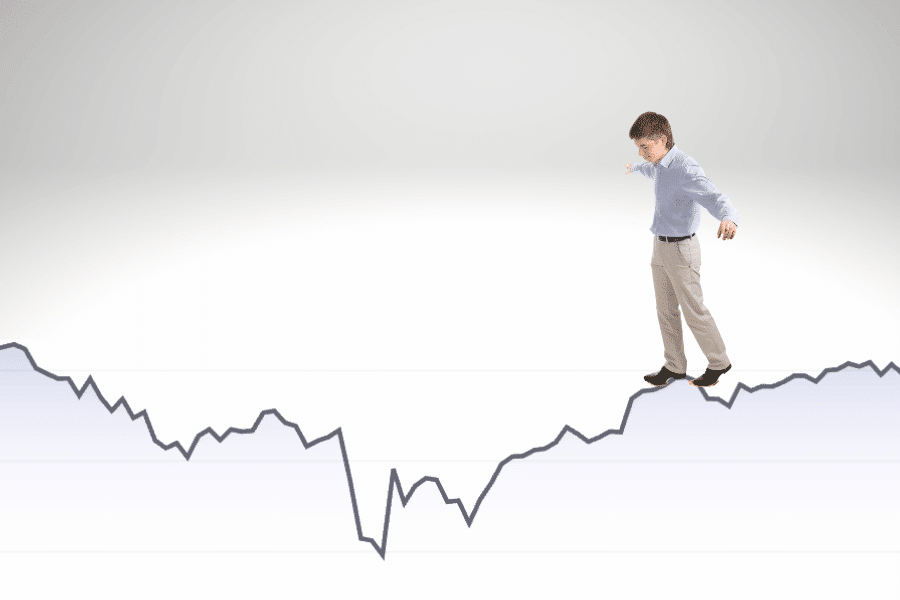
    Fear. Uncertainty. Those are human emotions that many people are feeling these days. It turns out you can quantify fear and uncertainty by looking at the stock market.

    Stocks are shares of a business that people can buy on a public market, betting that the business will grow and profit and the shares will be more valuable over time. But share prices also rise and fall based on how people feel about the economic future. 

    So individual stocks, as well as whole sectors of an industry or the overall market in general, can rise or fall on economic or company reports, politics, geopolitical events, unexpected news and whether investors are optimistic or pessimistic about the future. 

    When these kinds of changes or reports cause stocks to suddenly and frequently rise and fall, we say the market is “volatile.” 

    Throughout 2025, the U.S. stock market, which is the biggest in the world, has been pretty volatile. One way to measure it is through the Standard and Poor’s 500 Index, which is a snapshot of 500 major company stocks. 

    Politics and plunging markets

    From mid-February to early April, the S&P 500 index plummeted 19% as U.S. President Donald Trump launched a trade war that raised fears of inflation, a recession, job losses and a swelling national debt.  

    The U.S. market has largely recovered those losses in response to Trump pausing his tariff wars and lowering tariffs from scary levels. As of 30 June 2025, the stock market was dancing in record high territory. 

    Robert Whaley, a finance professor at Vanderbilt University and director of its Financial Markets Research Center, developed a way to measure a stock market’s volatility by keeping track of stock options — contracts that gives investors the right, but not an obligation, to buy or sell a stock at a predetermined price at a set future date. 

    It is popularly known as the “fear index” and goes by the symbol VIX. 

    The fear index is a measure of how much volatility is expected in the next month. Historically, its long-term average has been 17. During April, it was 40-50. In comparison, the index was at 85 in the COVID-19 market crash of March 2020 and at 89.5 during the global financial crisis of 2008-2009. 

    Buying and selling on fear

    What happens during market volatility? High volatility usually implies higher risk because price movements are less predictable. While some short-term stock traders can make money during market volatility, longer-term buy-and-hold investors might get jittery. 

    Mutual fund cash holdings were at a 15-year high in March. That means that professional money managers held onto cash and stayed on the sidelines. What do global investors crave? Stability and predictability. 

    “The VIX as of now (intraday June 30) is at 17 so things are calmer which is surprising given what is happening in Ukraine and Iran,” Whaley said. “It seems the markets have become quite comfortable about it.” 

    He underscored that the fear index is intended to help institutional investors — such as those who manage pension funds or retirement accounts that many people invest in — predict market volatility over the next 30 days. For people who might not be actively involved in the stock market, all of this still matters. 

    “It reflects how institutions are feeling about the marketplace,” Whaley said. “An analogy would be if you own a house on the beach and learn a hurricane is coming. How much might insurance cost if you could actually buy it that late?” 

    Reading the market

    Whaley said that young people should develop an intuitive feel of stock market volatility, since it is an expression of nervousness. 

    “In essence, it’s a fear gauge,” he said. “If people are getting nervous buying put options [that gives investors a right to buy] that drives up put prices. If VIX was at 30-40% institutions are scared to death. Right now at 17%, there’s no concern in the short run.”

    Whaley said the index is normally around 15-20%, but a reading below 15% would reflect that investors are complacent. 

    As for the limitations of the fear index, Whaley said some people read too much into it and some institutions might overpay for VIX options and futures to try to insure their investments against losses. 

    While the fear index was born on a real-time basis in 1993, Whaley calculated that it would have reached an intraday high of 172 and closed at 156 on October 19, 1987, the date of the global stock market crash known as Black Monday. Whaley said other market earthquakes that caused big percentage drops included the 2008 financial crisis and Trump’s tariffs. 

    Whaley said viewed in a historical context, the fear index is like any other index — like the Dow Jones Industrial Average — that has a market value. “Indices are useful in terms of their history,” he said. “A barometer of fear. If VIX is higher, figure out what is going on.” 


    Questions to consider:

    1. What type of news might cause fear in a stock market?

    2. If there is a lot of uncertainty in a stock market, what do many professional investors do? 

    3. Can you think of another way to measure how fearful people are about the future?


    Source link

  • The Business Plots, Then and Now

    The Business Plots, Then and Now

    In 1933, a group of American businessman planned a coup to take down the new President, Franklin Roosevelt. In this scheme, General Smedley Butler would be tasked with orchestrating the overthrow. This attempted coup was called the Business Plot.  

    College students today may ask, so what’s so important about this moment in history?  The point is that we have entered an era again where big business has a dominating influence over American politics. In the case of the 1933 moment, the coup was reactive. American business had failed, a Great Depression was in progress, and businessmen were fighting to maintain control, a control that they were used to having under Harding, Coolidge, and Hoover. The man tasked to lead the plot, General Butler, squashed it before it happened. And the story largely faded away. 

    Eight years later, in 1941, the US would be fighting a world war against global fascism and imperialism.  In the aftermath of the war, a stronger nation would arise. Today, we are also a nation facing intense competition and conflict, this time against China, Russia, India and other nations, with global climate change being a factor that wasn’t apparent back then. 

    In 2024, US business people, some of the richest people in the world,
    did something similar, but more proactive and less controversial. Today, folks, in general are OK with American businessmen pulling the strings. The most wealthy man have succeeded where big banks and big business failed before. And they have elected a friend. Today, cryptocurrency is booming. The stock market is booming for now. Unemployment is at record lows–for now. Big business has managed to gain greater control of the US government with little or no uproar. 


    Source link