

Category: strike

  • San Francisco Teachers Strike Ends With Tentative Agreement on Raises, Benefits – The 74

    San Francisco Teachers Strike Ends With Tentative Agreement on Raises, Benefits – The 74


    Get stories like this delivered straight to your inbox. Sign up for The 74 Newsletter

    A historic, week-long strike for United Educators of San Francisco came to an end Friday when the union and San Francisco United School District agreed on a tentative contract after nearly a year of negotiations.

    The union won fully-funded health care and an 8.5% raise over two years for classified staff including paraprofessionals. Teachers will get a 5% raise over two years. It’s a compromise between the district’s original offer of 2% and the union’s demand of an increase between 9% and 14%.

    Improving special education working conditions was also a key demand for the union. The tentative agreement includes caseload reductions, increased pay for added duties and requirements to ensure students receive special education services in a timely manner.

    United Educators of San Francisco began its first strike in nearly 50 years on Monday after 11 months of failed negotiations with the district. Schools were shuttered for roughly 50,000 students as thousands of educators flocked to picket lines. More than 250 principals, office clerks and custodians in two other unions went on a sympathy strike in solidarity. 

    “None of this would have been possible without the thousands of you who have shown up to our board actions, signed petitions to commit to our campaign, written letters to our Board of Education, and — in the last four days — shown up in the rain to support your big bargaining team in the streets,” the union said in a statement. “This strike has made it clear what is possible when we join together and fight for the stability in our schools that many have said was out of our reach.”

    While staff reported to work on Friday, students will return on Feb. 18 after two previously scheduled holidays. Superintendent Maria Su said in a statement that the agreement marked “a new beginning.”

    “I recognize that this past week has been challenging,” she said. “Thank you to the (district) staff, community-based partners, and faith and city leaders who partnered with us to continue centering our students in our work every day. I am so proud of the resilience and strength of our community. ”

    Other contract wins include limits on the district’s use of artificial intelligence, according to the union. The district and union also agreed on a proposal to classify schools as sanctuary spaces for immigrant students, staff and families. The policy bars federal Immigration and Customs Enforcement agents from entering school grounds or obtaining records without a criminal judicial warrant. Staff will also receive three hours of training to enforce these policies.

    The union said information about the contract ratification process will be announced in the near future and leaders are planning to host town halls. The agreement still needs to be approved by both the union and school board. 

    “We know our work is not done,” the union said. “While we didn’t win everything we know we deserve, this strike allowed us to imagine our schools and classrooms as they should be with staffing levels high enough that our students can learn and thrive.  This is a foundation for a stable district.”


    Did you use this article in your work?

    We’d love to hear how The 74’s reporting is helping educators, researchers, and policymakers. Tell us how
    Source link

  • How early cognitive training leads to lifelong brain strength

    How early cognitive training leads to lifelong brain strength

    Key points:

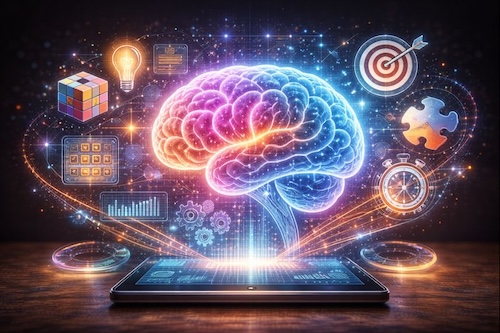
    As we continue to make strides in understanding the brain–its strengths and weaknesses, how it develops, and its incredible potential–one idea has continued to strike conversation: the profound benefits of cognitive training. Cognitive training involves exercises that target core skills like working memory, attention, and processing speed. While much of the research in this field has focused on its applications for the elderly, the greatest promise may lie in starting cognitive training early and establishing a foundation for lifelong brain health, rather than simply addressing decline later in life.

    Research consistently shows that daily cognitive training exercises can slow cognitive decline and boost overall brain function in older adults. A landmark National Institutes of Health-funded study, known as the ACTIVE trial (Advanced Cognitive Training for Independent and Vital Elderly), demonstrated that challenging brain activities help maintain mental sharpness and memory retention in people over 50, delaying the onset of neurodegenerative diseases.

    While cognitive training benefits adults at any stage of life, the Handbook of Clinical Neurology indicates childhood as a uniquely pivotal opportunity for brain development. The research highlights that synaptogenesis (the creation of new synapses) peaks in childhood, making it a critical window for experience-dependent brain changes. If introduced during the formative schooling years, ideally between the ages of eight to 18, brain training has the potential to lay a strong foundation for sustained cognitive health well into adulthood, helping improve short-term cognitive skills and setting the stage for long-term mental fitness.

    Using the education system as a vehicle to introduce cognitive skill development to children and teens offers a promising route for ensuring these benefits become part of every young student’s growth journey. By incorporating structured cognitive exercises into schools through gamified, digital training platforms, educational institutions can create a holistic approach to learning that nurtures both academic success and mental well-being in a fun, innovative way. And, while there may be hurdles to overcome due to time constraints associated with training or the implementation of new technology, the results of improving test scores with these mostly self-guided programs should make this transition a no-brainer.

    Furthermore, the science shows that brain training programs have resulted in better schooling outcomes. One recent study published in Brain Sciences, an international scientific journal, investigated the efficacy of computerized cognitive training (CCT) on school-age children with learning differences. Teachers were trained to administer daily 20-minute sessions to students, monitor their progress, and provide guidance and support as needed. The findings ultimately concluded that CCT is efficacious in building core cognitive abilities that are critical to school success. Evidence also indicated that more CCT training leads to greater treatment effects. Research like this not only provides the assurance of positive results, but also demonstrates the feasibility of integrating technology-based cognitive training programs into school systems and educational organizations.

    Students today face unprecedented distractions from technology, social media, and academic pressures. Cognitive training can combat these distractions early on by reinforcing focus and attention–skills that are essential for navigating an increasingly complex world. Embedding cognitive training into school curricula ensures all students have equal access to developing critical brain functions, giving them the fortitude to thrive both academically and personally. Just as physical education evolved from a novel concept to a core part of school curricula worldwide, cognitive training should be viewed through the same lens–as an investment in lifelong success, resilience and overall well-being.

    The question is no longer whether cognitive training works–it does. With continued declines in national academic benchmarks, now is the time for homeschooling parents, public school systems, tutor centers, and other academic-adjacent institutions to get creative with solutions.

    Investing in technology for cognitive training in the classroom is an evidence-based approach to improving student engagement and performance in the short term, while building a lasting foundation for robust brain health in the future. Proactive integration, rather than retroactive intervention, during the formative years of life is key to redefining the trajectory of cognitive aging. This isn’t just about improving test scores today; it’s about safeguarding mental acuity and cognitive resilience for generations to come.

    Latest posts by eSchool Media Contributors (see all)

    Source link