Teacher preparation programs have long emphasized curriculum, instruction, and assessment. However, they often fall short in one critical area: social-emotional and mental health needs of students.
We work daily with students whose academic success is inseparable from their psychological well-being. Nonetheless, we witness new educators wishing they were trained in not just behavior management, but, nowadays, the non-academic needs of children. If preservice programs are going to meet the demands of today’s classrooms, they must include deeper coursework in counseling, psychology, and trauma-informed teaching practices.
Students today are carrying heavier emotional burdens than ever before. Anxiety, bullying, depression, grief, trauma exposure (including complex trauma), and chronic stress are unfortunately quite common. The fallout rarely appears in uniform, typical, or recognizable ways. Instead, it shows up as behaviors teachers must interpret and address (i.e., withdrawal, defiance, irritability, avoidance, conflict, aggression and violence, or inconsistent work).
Without formal training, it is easy to label these actions as simple “misbehaviors” instead of asking why. However, seasoned educators and mental health professionals know that behaviors (including misbehaviors) are a means of communication, and understanding the root cause of a student’s actions is essential to creating a supportive and effective classroom.
Oftentimes, adults fall into a pattern of describing misbehaviors by children as “manipulative” as opposed to a need not being met. As such, adults (including educators) need to shift their mindsets. This belief is supported by research. Jean Piaget reminds us that children’s cognitive and emotional regulation skills are still developing and naturally are imperfect. Lev Vygotsky reminds us that learning and behavior are shaped by the quality of a child’s social interactions, including with the adults (such as teachers) in their lives. Abraham Maslow’s hierarchy further reinforces that psychological safety and belonging must be met before meaningful learning or self-control can occur, and teachers need to initiate psychological safety.
Traditional classroom management training is often sparse in traditional preservice teacher training. It often emphasizes rules, procedures, and consequences. They absolutely matter, but the reality is far more nuanced. Behavior management and behavior recognition are not the same. A student who shuts down may be experiencing anxiety. A child who blurts out or becomes agitated may be reacting to trauma triggers in the environment. A student who frequently acts out may be seeking connection or stability in the only way they know how. Trauma-informed teaching (rooted in predictability, emotional safety, de-escalation, and relationship-building) is not just helpful, but is foundational in modern schools. Yet, many new teachers enter the profession with little to no formal preparation in these practices.
The teacher shortage only heightens this need. Potential educators are often intimidated not by teaching content, but by the emotional and behavioral demands that they feel unprepared to address. Meanwhile, experienced teachers often cite burnout stemming from managing complex behaviors without adequate support. Courses focused on child development, counseling skills, and trauma-informed pedagogy would significantly improve both teacher confidence and retention. It would also be beneficial if subject-area experts (such as the counseling or clinical psychology departments of the higher education institution) taught these courses.
Of note, we are not suggesting that teachers become counselors. School counselors, social workers, psychologists, and psychometrists play essential and irreplaceable roles. However, teachers are the first adults to observe subtle shifts in their students’ behaviors or emotional well-being. Oftentimes, traditional behavior management techniques and strategies can make matters worse in situations where trauma is the root cause of the behavior. When teachers are trained in the fundamentals of trauma-informed practice and creating emotionally safe learning environments, they can respond skillfully. They can collaborate with or refer students to clinical mental-health professionals for more intensive support.
Teacher preparation programs must evolve to reflect the emotional realities of today’s classrooms. Embedding several clinically grounded courses in counseling, psychology, and trauma-informed teaching (taught by certified and/or practicing mental-health professionals) would transform the way novice educators understand and support their students. This would also allow for more studies and research to take place on the effectiveness of various psychologically saturated teaching practices, accounting for the ever-changing psychosocial atmosphere. Students deserve teachers who can see beyond behaviors and understand the rationale beneath it. Being aware of behavior management techniques (which is often pretty minimal as teacher-prep programs stand now) is quite different than understanding behaviors. Teachers deserve to be equipped with both academic and emotional tools to help every learner thrive.
Latest posts by eSchool Media Contributors (see all)
Student success and socio-emotional well-being, including coping and adjusting to college life (particularly during their first year) continue to be pervasive issues (van der Zanden et al., 2018; Welle & Graf, 2011). Social support received from a variety of sources (including faculty) are linked to better physical and emotional well-being and academic performance (Hartung et al., 2015; Mattanah et al., 2012; Micari & Pazos, 2012; van der Zanden et al., 2018; Walton et al. 2015). In particular, building rapport and relationships with faculty, and even informal interactions with faculty have all been found to contribute to various positive outcomes including greater student engagement, achievement, motivation, and socio-emotional functioning (Decker et al., 2007; Halawah 2006; Pascarella & Terenzini 2005; Thompson, 2001; van der Zanden et al., 2018; Woodside et al., 1999).
Supporting students is important for their success and this task is not a singular activity completed by a single person. There are various people in positions at the institution which contribute to supporting students and their ultimate success, including but not limited to, faculty, student advisors, student support services (writing center, library, accommodation office, etc.), department administrators, etc. One avenue within the faculty role that is important to highlight is our everyday communications, interactions with, and feedback to students.
Our focus here is on student feedback and how that can contribute to their success, broadly defined, which includes both meeting academic milestones, and mental health and well-being. We use the term feedback here to refer, quite broadly, to a number of linguistic interactions with students which might be verbal or written, delivered synchronously or asynchronously. Because, when we really consider all of our interactions with students, many of them are feedback-like without being tied to an assessment or improving their work (i.e., providing them with a way to gauge how they’re doing in this role of student which they fulfil on our campuses). For example, we may provide advice on study strategies or balancing their out-of-class obligations with their studies, or other advising conversations which could be included under the umbrella term of feedback. Similarly, faculty feedback can serve as intervention strategies to adjust student behaviors if they are struggling with their course work and/or the overall transition process.
Applications
Foster Early Communication and Connection
Starting the semester with a sense of community, building rapport between students and instructor as well as among students is important. One way to build this is to encourage students to post an introduction on the learning management system (LMS) with a photo and a “hidden fact” (e.g., they have an interesting family situation such as many siblings, an identical twin, etc., they work in a unique place, their hometown is far away, etc.). In response to these posts, I always ask a genuinely curious question (“What breed of dog is that?” or “Do you still play/have you always played that position in hockey?”). The purpose of these follow-up questions is twofold. First, genuine curiosity conveys interest and can foster open communication in building individual relationships with students. Second, that feedback on their introduction can also serve to highlight areas of the introduction where students could have been clearer and might improve future writing skills without seeming overtly critical.
Reimagine Office Hours
Another early-semester intervention relates to office hours. Attending office hours is beneficial to students and helps them connect with their professor. We can “force” students to attend (required for credit or bonus point or only strongly encouraged) by framing it as a get-to-know-you opportunity. I had a colleague who called it “Tea with Me” and, although it was not required (nor did it involve tea), students enjoyed engaging with their instructor in this informal manner (the optional nature of the activity was also intentionally not made explicit when students were sent a link to register for “tea” time during the first two weeks of the semester).
Additionally, “office hours” is not really the most inviting or descriptive label for this valuable time where faculty are available for students, so these can be re-named to be more explicit about what the purpose of office hours are or to make them more inviting to students. A quick request to your favorite generative AI tool might propose new names such as Brain Breaks & Beverages; Curiosity Café; Study & Support Session; Curiosity Hour; Prof Pop-Ins; Connect & Reflect; Recharge & Reach Out; Growth Hour, along with many clever personalized alliterations.
As a bonus tip, students don’t always know where our offices are, so offering a bonus point for taking a selfie at our office door may also encourage them to find it and possibly stop by while we’re there. Anecdotally, some first-generation students, who were unfamiliar with academic culture, mistakenly assumed “office hours” were designated times that the faculty member was not available, as these hours were set aside for specific tasks, such as research or grading. Emphasizing that these hours are “open door” policy for students may clarify the purpose of these designated times and encourage them to use these hours for their benefit.
Use Feedback to Build Rapport
When grading assignments and providing students with the traditional content-related feedback about their mastery and performance, you can also use this opportunity for feedback to build rapport with students. For example, you might include information they previously shared with you in person (about their dog, their work, their future aspirations, etc.) in your text where you can, even if it takes the form of an emoji (e.g., a dog to accompany the grading rubric or overall general comment). Using emojis in our feedback may also help make us instructors seem more relatable and approachable to students and make the positive feedback we provide seem less formal.
Maintain Regular Communication
Regular communication/touch points can play an important part in supporting students, such as personalized LMS announcements (using replace strings to personalize students’ names) or emails about class attendance or performance. As Chapman and Kennette (2021) point out, regular positive communication, for both struggling students as well as those who are successful, is important. Some of this work can be automated (e.g., using intelligent agents in the Brightspace LMS), individual (sending each student a personalized email at certain points in the semester), or semi-automated with batch emails sent to students based on some performance measure (e.g., midterm emails for low-performing, acceptable performance, and good-performing students). If using batch emails, remember to BCC students for privacy.
Conclusion
Building additional touchpoints with students can help them to succeed academically as well as support their mental health and wellness. Faculty are encouraged to consider implementing some of the examples above to build additional support for students by way of their interactions and feedback as a method of community building and supporting a culture of collaborative learning.
Lynne N. Kennette is a professor of psychology at Durham College (Oshawa, Ontario). She earned her Ph.D. in cognitive psychology from Wayne State University (Detroit, MI) and has varied research interests including bilingual language representation, memory, supporting student learning, and numerous other topics related to teaching and learning (SoTL).
Phoebe S. Jen Lin obtained her PhD in social psychology from Wayne State University in Detroit, Michigan. She has conducted research on prejudice and stereotyping, attitude-behavior consistency, and role model influence. Her current scholarly interests are in anti-racism in higher education and inclusive teaching practices. She is currently a professor at Framingham State University.
References
Decker, D. M., Dona, D. P., & Christenson, S. L. (2007). Behaviorally at-risk African American students: The importance of student–teacher relationships for student outcomes. Journal of School Psychology, 45(1), 83-109. https://doi.org/10.1016/j.jsp.2006.09.004
Halawah, I. (2006). The impact of student-faculty informal interpersonal relationships on intellectual and personal development. College Student Journal, 40(3), 670–78.
Hartung, F.-M., Sproesser, G., & Renner, B. (2015). Being and feeling liked by others: How social inclusion impacts health. Psychology & Health, 30(9), 1103-1115. https://doi.org/10.1080/08870446.2015.1031134
Kennette, L. N., & Chapman, M. (2021). Providing positive student feedback in an online environment. Academic Letters, Article 203.https://doi.org/10.20935/AL203
Mattanah, J. F., Brooks, L. J., Brand, B. L., Quimby, J. L., & Ayers, J. F. (2012). A social support intervention and academic achievement in college: Does perceived loneliness mediate the relationship? Journal of College Counseling, 15(1), 22-36. https://doi.org/10.1002/j.2161-1882.2012.00003.x
Micari, M., & Pazos, P. (2012). Connecting to the professor: Impact of the student-faculty relationship in a highly challenging course. College Teaching,60(2), 41-47. https://doi.org/10.1080/87567555.2011.627576
Pascarella, E. T. & Terenzini, P. T. (2005). How college affects students. Jossey-Bass.
Thompson, M. D. (2001). Informal student-faculty interaction: Its relationship to educational gains in science and mathematics among community college students. Community College Review, 29(1), 35-57. https://doi.org/10.1177/009155210102900103
Woodside, B. M., Wong, E. H., & Wiest, D. J. (1999). The effect of student-faculty interaction on college students’ academic achievement and self concept. Education, 119(4), 730-730.
van der Zanden, P. J. A. C., Denessen, E., Cillessen, A. H. N., & Meijer, P. C. (2018). Domains and predictors of first-year student success: A systematic literature review. Educational Research Review, 23, 57-77. https://doi.org/10.1016/j.edurev.2018.01.001
Walton, G. M., Logel, C., Peach, J. M., Spencer, S. J., & Zanna, M. P. (2015). Two brief interventions to mitigate a ”chilly climate” transform women’s experience, relationships, and achievement in engineering. Journal of Educational Psychology, 107(2), 468-485. https://doi.org/10.1037/a0037461
Welle, P. D., & Graf, H. M. (2011). Effective lifestyle habits and coping strategies for stress tolerance among college students. American Journal of Health Education, 42(2), 96-105. https://doi.org/10.1080/19325037.2011.10599177
Special education is at a breaking point. Across the country, more children than ever are being referred for evaluations to determine whether they qualify for special education services. But there aren’t enough school psychologists or specialists on staff to help schools meet the demand, leaving some families with lengthy wait times for answers and children missing critical support.
The growing gap between need and capacity has inspired districts to get creative. One of the most debated solutions? Remote psychoeducational testing, or conducting evaluations virtually rather than face-to-face.
Can a remote evaluation accurately capture what a child needs? Will the results hold up if challenged in a legal dispute? Is remote assessment equivalent to in-person?
As a school psychologist and educational consultant, I hear these questions every week. And now, thanks to research and data released this summer, I can answer with confidence: Remote psychoeducational testing can produce equivalent results to traditional in-person assessment.
What the research shows
In July 2025, a large-scale national study compared in-person and remote administration of the Woodcock-Johnson V Tests of Cognitive Abilities and Achievement (WJ V), the latest version of one of the most widely-used and comprehensive assessment systems for evaluating students’ intellectual abilities, academic achievement, and oral language skills. Using a matched case-control design with 300 participants and 44 licensed school psychologists from across the U.S., the study found no statistically or practically significant difference in student scores between in-person and remote formats.
In other words: When conducted with fidelity, remote WJ V testing produces equivalent results to traditional in-person assessment.
This study builds on nearly a decade of prior research that also found score equivalency for remote administrations of the most widely used evaluations including WJ IV COG and ACH, RIAS-2, and WISC-V assessments, respectively.
The findings of the newest study are as important as they are urgent. They show remote testing isn’t just a novelty–it’s a practical, scalable solution that is rooted in evidence.
Why it matters now
School psychology has been facing a workforce shortage for over a decade. A 2014 national study predicted this crunch, and today districts are relying on contracting agencies and remote service providers to stay afloat. At the same time, referrals for evaluations are climbing, driven by pandemic-related learning loss, growing behavioral challenges, and increased awareness of neurodiversity.
The result: More children and families waiting longer for answers, while school psychologists are facing mounting caseloads and experiencing burnout.
Remote testing offers a way out of this cycle and embraces changes. It allows districts to bring in licensed psychologists from outside their area, without relocating staff or asking families to travel. It helps schools move through backlogs more efficiently, ensuring students get the services they need sooner. And it gives on-site staff space to do the broader preventative work that too often gets sidelined. Additionally, it offers a way to support those students who are choosing alternate educational settings, such as virtual schools.
Addressing the concerns
Skepticism remains, and that’s healthy. Leaders wonder: Will a hearing officer accept remote scores in a due process case? Are students disadvantaged by the digital format? Can we trust the results to guide placement and services?
These are valid questions, but research shows that when remote testing is done right, the results are valid and reliable.
Key phrase: Done right. Remote assessment isn’t just a Zoom call with a stopwatch. In the most recent study, the setup included specific safeguards:
Touchscreen laptops with screens 13” or larger;
A secure platform with embedded digital materials;
Dual cameras to capture the student’s face and workspace;
A guided proctor in-room with the student; and
Standardized examiner and proctor training protocols.
This carefully structured environment replicates traditional testing conditions as closely as possible. All four of the existing equivalency studies utilized the Presence Platform, as it already meets with established criteria.
When those fidelity conditions are met, the results hold up. Findings showed p-values above .05 and effect sizes below .03 across all tested subtests, indicating statistical equivalence. This means schools can confidently use WJ V scores from remote testing, provided the setup adheres to best practices.
What district leaders can do
For remote testing to succeed, schools need to take a thoughtful, structured approach. Here are three steps districts can take now.
Vet providers carefully. Ask about their platform, equipment, training, and how they align with published research standards.
Clarify device requirements. Ensure schools have the right technology in place before testing begins.
Build clear policies. Set district-wide expectations for how remote testing should be conducted so everyone–staff and contractors alike–are on the same page.
A path forward
Remote assessment won’t solve every challenge in special education, but it can close one critical gap: timely, accurate evaluations. For students in rural districts, schools with unfilled psychologist positions, virtual school settings, or families tired of waiting for answers, it can be a lifeline.
The research is clear. Remote psychoeducational testing works when we treat it with the same care and rigor as in-person assessment. The opportunity now is to use this tool strategically–not as a last resort, but as part of a smarter, more sustainable approach to serving students.
At its best, remote testing is not a compromise; it’s a path toward expanded access and stronger support for the students who need it most.
In classrooms across the country, students are mastering their ABCs, solving equations, and diving into science. But one essential life skill–behavior–is not in the lesson plan. For too long, educators have assumed that children arrive at school knowing how to regulate emotions, resolve conflict, and interact respectfully. The reality: Behavior–like math or reading–must be taught, practiced, and supported.
Today’s students face a mounting crisis. Many are still grappling with anxiety, disconnection, and emotional strain following the isolation and disruption of the COVID pandemic. And it’s growing more serious.
Further complicating matters is social media and device usage. Students and adults alike have become deeply reliant on screens. Social media and online socialization–where interactions are often anonymous and less accountable–have contributed to a breakdown in conflict resolution, empathy, and recognition of nonverbal cues. Widespread attachment to cell phones has significantly disrupted students’ ability to regulate emotions and engage in healthy, face-to-face interactions. Teachers, too, are frequently on their phones, modeling device-dependent behaviors that can shape classroom dynamics.
It’s clear: students can’t be expected to know what they haven’t been taught. And teachers can’t teach behavior without real tools and support. While districts have taken well-intentioned steps to help teachers address behavior, many initiatives rely on one-off training without cohesive, long-term strategies. Real progress demands more–a districtwide commitment to consistent, caring practices that unify educators, students, and families.
A holistic framework: School, student, family
Lasting change requires a whole-child, whole-school, whole-family approach. When everyone in the community is aligned, behavior shifts from a discipline issue to a core component of learning, transforming classrooms into safe, supportive environments where students thrive and teachers rediscover joy in their work. And when these practices are reinforced at home, the impact multiplies.
To help students learn appropriate behavior, teachers need practical tools rather than abstract theories. Professional development, tiered supports, targeted interventions, and strategies to build student confidence are critical. So is measuring impact to ensure efforts evolve and endure.
Some districts are leading the way, embracing data-driven practices, evidence-based strategies, and accessible digital resources. And the results speak for themselves. Here are two examples of successful implementations.
Evidence-based behavior training and mentorship yields 24 percent drop in infractions within weeks
With more than 19,000 racially diverse students across 24 schools east of Atlanta, Newton County Schools prioritized embedded practices and collaborative coaching over rigid compliance. Newly hired teachers received stipends to complete curated, interactive behavior training before the school year began. They then expanded on these lessons during orientation with district staff, deepening their understanding.
Once the school year started, each new teacher was partnered with a mentor who provided behavior and academic guidance, along with regular classroom feedback. District climate specialists also offered further support to all teachers to build robust professional learning communities.
The impact was almost immediate. Within the first two weeks of school, disciplinary infractions fell by 24 percent compared to the previous year–evidence that providing the right tools, complemented by layered support and practical coaching, can yield swift, sustainable results.
Pairing shoulder coaching with real-time data to strengthen teacher readiness
With more than 300,000 students in over 5,300 schools spanning urban to rural communities, Clark County School District in Las Vegas is one of the largest and most diverse in the nation.
Recognizing that many day-to-day challenges faced by new teachers aren’t fully addressed in college training, the district introduced “shoulder coaching.” This mentorship model pairs incoming teachers with seasoned colleagues for real-time guidance on implementing successful strategies from day one.
This hands-on approach incorporates videos, structured learning sessions, and continuous data collection, creating a dynamic feedback loop that helps teachers navigate classroom challenges proactively. Rather than relying solely on reactive discipline, educators are equipped with adaptable strategies that reflect lived classroom realities. The district also uses real-time data and teacher input to evolve its behavior support model, ensuring educators are not only trained, but truly prepared.
By aligning lessons with the school performance plan, Clark County School District was able to decrease suspensions by 11 percent and discretionary exclusions by 17 percent.
Starting a new chapter in the classroom
Behavior isn’t a side lesson–it’s foundational to learning. When we move beyond discipline and make behavior a part of daily instruction, the ripple effects are profound. Classrooms become more conducive to learning. Students and families develop life-long tools. And teachers are happier in their jobs, reducing the churn that has grown post-pandemic.
The evidence is clear. School districts that invest in proactive, strategic behavior supports are building the kind of environments where students flourish and educators choose to stay. The next chapter in education depends on making behavior essential. Let’s teach it with the same care and intentionality we bring to every other subject–and give every learner the chance to succeed.
Dr. Tami Dean, The Equity Hour Podcast & Kareeme Hawkins, RethinkEd and Pivot Path Strategic Solutions
Dr. Tami Dean is a veteran educator, coach, and leader with over 20 years of experience in classroom instruction, curriculum design, and educational leadership. She supports K-12 and higher education through strategic planning, professional development, and innovative program design and hosts The Equity Hour Podcast™, where she leads thought-provoking conversations on teaching, leadership and transformation in education.
Kareeme Hawkins is an education leader, executive coach, and SEL expert with over 15 years of experience in K–12 instruction, counseling, and edtech leadership. As national director of Client Success at RethinkEd and an executive coach with Pivot Path Strategic Solutions, she drives strategic initiatives, fosters partnerships, and empowers leaders to navigate change and advance equity-driven practices.
Latest posts by eSchool Media Contributors (see all)
Nearly one-third of the nation’s K-12 U.S. public schools mandate mental health screening for students, with most offering in-person treatment or referral to a community mental health professional if a student is identified as having depression or anxiety, according to a new study.
About 40 percent of principals surveyed said it was very hard or somewhat hard to ensure that students receive appropriate care, while 38 percent said it was easy or very easy to find adequate care for students. The findings are published in the journal JAMA Network Open.
“Our results suggest that there are multiple barriers to mental health screening in schools, including a lack of resources and knowledge of screening mechanics, as well as concerns about increased workload of identifying students,” said Jonathan Cantor, the study’s lead author and a policy researcher at RAND, a nonprofit research organization.
In 2021, the U.S. Surgeon General declared a youth mental health emergency. Researchers say that public schools are strategic resources for screening, treatment, and referral for mental health services for young people who face barriers in other settings.
Researchers wanted to understand screening for mental health at U.S. public schools, given increased concerns about youth mental health following the challenges posed by the COVID-19 pandemic.
In October 2024, the RAND study surveyed 1,019 principals who participate in the RAND American School Leader panel, a nationally representative sample of K–12 public school principals.
They were asked whether their school mandated screening for mental health issues, what steps are taken if a student is identified as having depression or anxiety, and how easy or difficult it is to ensure that such students received adequate services.
Researchers found that 30.5 percent of responding principals said their school required screening of students with mental health problems, with nearly 80 percent reporting that parents typically are notified if students screen positive for depression or anxiety.
More than 70 percent of principals reported that their school offers in-person treatment for students who screen positive, while 53 percent of principals said they may refer a student to a community mental health care professional.
The study found higher rates of mental health screenings in schools with 450 or more students and in districts with mostly racial and ethnic minority groups as the student populations.
“Policies that promote federal and state funding for school mental health, reimbursement for school-based mental health screening, and adequate school mental health staff ratios may increase screening rates and increase the likelihood of successfully connecting the student to treatment,” Cantor said.
Support for the study was provided by the National Institute of Mental Health.
Other authors of the study are Ryan K. McBain, Aaron Kofner, Joshua Breslau, and Bradley D. Stein, all of RAND; Jacquelin Rankine of the University of Pittsburgh School of Medicine; Fang Zhang, Hao Yu, and Alyssa Burnett, all of the Harvard Pilgrim Health Care Institute; and Ateev Mehrotra of the Brown University School of Public Health.
RAND Health Care promotes healthier societies by improving health care systems in the United States and other countries.
eSchool Media staff cover education technology in all its aspects–from legislation and litigation, to best practices, to lessons learned and new products. First published in March of 1998 as a monthly print and digital newspaper, eSchool Media provides the news and information necessary to help K-20 decision-makers successfully use technology and innovation to transform schools and colleges and achieve their educational goals.
A new DESSA screener to be released for the Fall ‘25 school year–designed to be paired with a strength-based student self-report assessment–accurately predicted well-being levels in 70 percent of students, a study finds.
According to findings from Riverside Insights, creator of research-backed assessments, researchers found that even students with strong social-emotional skills often struggle with significant mental health concerns, challenging the assumption that resilience alone indicates student well-being. The study, which examined outcomes in 254 middle school students across the United States, suggests that combining risk and resilience screening can enable identification of students who would otherwise be missed by traditional approaches.
“This research validates what school mental health professionals have been telling us for years–that traditional screening approaches miss too many students,” said Dr. Evelyn Johnson, VP of Research & Development at Riverside Insights. “When educators and counselors can utilize a dual approach to identify risk factors, they can pinpoint concerns and engage earlier, in and in a targeted way, before concerns become major crises.”
The study, which offered evidence of, for example, social skills deficits among students with no identifiable or emotional behavioral concerns, provides the first empirical evidence that consideration of both risk and resilience can enhance the predictive benefits of screening, when compared to strengths-based screening alone.
In the years following COVID, many educators noted a feeling that something was “off” with students, despite DESSA assessments indicating that things were fine.
“We heard this feedback from lots of different customers, and it really got our team thinking–we’re clearly missing something, even though the assessment of social-emotional skills is critically important and there’s evidence to show the links to better academic outcomes and better emotional well-being outcomes,” Johnson said. “And yet, we’re not tapping something that needs to be tapped.”
For a long time, if a person displayed no outward or obvious mental health struggles, they were thought to be mentally healthy. In investigating the various theories and frameworks guiding mental health issues, Riverside Insight’s team dug into Dr. Shannon Suldo‘s work, which centers around the dual factor model.
“What the dual factor approach really suggests is that the absence of problems is not necessarily equivalent to good mental health–there really are these two factors, dual factors, we talk about them in terms of risk and resilience–that really give you a much more complete picture of how a student is doing,” Johnson said.
“The efficacy associated with this dual-factor approach is encouraging, and has big implications for practitioners struggling to identify risk with limited resources,” said Jim Bowler, general manager of the Classroom Division at Riverside Insights. “Schools told us they needed a way to identify students who might be struggling beneath the surface. The DESSA SEIR ensures no student falls through the cracks by providing the complete picture educators need for truly preventive mental health support.”
The launch comes as mental health concerns among students reach crisis levels. More than 1 in 5 students considered attempting suicide in 2023, while 60 percent of youth with major depression receive no mental health treatment. With school psychologist-to-student ratios at 1:1065 (recommended 1:500) and counselor ratios at 1:376 (recommended 1:250), schools need preventive solutions that work within existing resources.
The DESSA SEIR will be available for the 2025-2026 school year.
This press release originally appeared online.
eSchool Media staff cover education technology in all its aspects–from legislation and litigation, to best practices, to lessons learned and new products. First published in March of 1998 as a monthly print and digital newspaper, eSchool Media provides the news and information necessary to help K-20 decision-makers successfully use technology and innovation to transform schools and colleges and achieve their educational goals.
In Florida, a bill that bans cellphone use in elementary and middle schools, from bell to bell, recently sailed through the state Legislature.
Gov. Ron DeSantis signed it into law on May 30, 2025. The same bill calls for high schools in six Florida districts to adopt the ban during the upcoming school year and produce a report on its effectiveness by Dec. 1, 2026.
We are experts in media use and public health who surveyed 1,510 kids ages 11 to 13 in Florida in November and December 2024 to learn how they’re using digital media and the role tech plays in their lives at home and at school. Their responses were insightful – and occasionally surprising.
Adults generally cite four reasons to ban phone use during school: to improve kids’ mental health, to strengthen academic outcomes, to reduce cyberbullying and to help limit kids’ overall screen time.
But as our survey shows, it may be a bit much to expect a cellphone ban to accomplish all of that.
What do kids want?
Some of the questions in our survey shine light on kids’ feelings toward banning cellphones – even though we didn’t ask that question directly.
We asked them if they feel relief when they’re in a situation where they can’t use their smartphone, and 31% said yes.
Additionally, 34% of kids agreed with the statement that social media causes more harm than good.
And kids were 1.5 to 2 times more likely to agree with those statements if they attended schools where phones are banned or confiscated for most of the school day, with use only permitted at certain times. That group covered 70% of the students we surveyed because many individual schools or school districts in Florida have already limited students’ cellphone use.
How students use cellphones matters
Some “power users” of cellphone apps could likely use a break from them.
Twenty percent of children we surveyed said push notifications on their phones — that is, notifications from apps that pop up on the phone’s screen — are never turned off. These notifications are likely coming from the most popular apps kids reported using, like YouTube, TikTok and Instagram.
This 20% of children was roughly three times more likely to report experiencing anxiety than kids who rarely or never have their notifications on.
They were also nearly five times more likely to report earning mostly D’s and F’s in school than kids whose notifications are always or sometimes off.
Our survey results also suggest phone bans would likely have positive effects on grades and mental health among some of the heaviest screen users. For example, 22% of kids reported using their favorite app for six or more hours per day. These students were three times more likely to report earning mostly D’s and F’s in school than kids who spend an hour or less on their favorite app each day.
They also were six times more likely than hour-or-less users to report severe depression symptoms. These insights remained even after ruling out numerous other possible explanations for the difference — like age, household income, gender, parent’s education, race and ethnicity.
Banning students’ access to phones at school means these kids would not receive notifications for at least that seven-hour period and have fewer hours in the day to use apps.
Phones and mental health
However, other data we collected suggests that bans aren’t a universal benefit for all children.
Seventeen percent of kids who attend schools that ban or confiscate phones report severe depression symptoms, compared with just 4% among kids who keep their phones with them during the school day.
This finding held even after we ruled out other potential explanations for what we were seeing, such as the type of school students attend and other demographic factors.
We are not suggesting that our survey shows phone bans cause mental health problems.
It is possible, for instance, that the schools where kids already were struggling with their mental health simply happened to be the ones that have banned phones. Also, our survey didn’t ask kids how long phones have been banned at their schools. If the bans just launched, there may be positive effects on mental health or grades yet to come.
In order to get a better sense of the bans’ effects on mental health, we would need to examine mental health indicators before and after phone bans.
To get a long-term view on this question, we are planning to do a nationwide survey of digital media use and mental health, starting with 11- to 13-year-olds and tracking them into adulthood.
Even with the limitations of our data from this survey, however, we can conclude that banning phones in schools is unlikely to be an immediate solution to mental health problems of kids ages 11-13.
Grades up, cyberbullying down
Students at schools where phones are barred or confiscated didn’t report earning higher grades than children at schools where kids keep their phones.
This finding held for students at both private and public schools, and even after ruling out other possible explanations like differences in gender and household income, since these factors are also known to affect grades.
There are limits to our findings here: Grades are not a perfect measure of learning, and they’re not standardized across schools. It’s possible that kids at phone-free schools are in fact learning more than those at schools where kids carry their phones around during school hours – even if they earn the same grades.
We asked kids how often in the past three months they’d experienced mistreatment online – like being called hurtful names or having lies or rumors spread about them. Kids at schools where phone use is limited during school hours actually reported enduring more cyberbullying than children at schools with less restrictive policies. This result persisted even after we considered smartphone ownership and numerous demographics as possible explanations.
We are not necessarily saying that cellphone bans cause an increase in cyberbullying. What could be at play here is that at schools where cyberbullying has been particularly bad, phones have been banned or are confiscated, and online bullying still occurs.
But based on our survey results, it does not appear that school phone bans prevent cyberbullying.
Overall, our findings suggest that banning phones in schools may not be an easy fix for students’ mental health problems, poor academic performance or cyberbullying.
That said, kids might benefit from phone-free schools in ways that we have not explored, like increased attention spans or reduced eyestrain.
Co-Authored By Aaliyah Lee-Raji, Amadis Canizales, Amaiya Peterson, Andrew Stillwell, Anessa Mayorga, Aniyah Campbell, A’niyah Leather, Anna Fleeman, Brookelyn Vivas, Cassandra Mathieu, Christian Bennett, Clio Chatelain, Daniel Abernethy, Fatoumata Sow, India Davis, Isabella Maiello, Jazmine Collins, Jennifer Sanchez-Martinez, Joseph Stauffer, Karlee Howard, Kaylee Japak, Keanell Tonny, Kristian Isom, Leonardo Pisa, Mackenzie Lemus, Maddox Wreski, Madelyn Beasley, and Saverio Consolazio
In higher education, one of the greatest challenges is getting students not only engaged in learning but also excited about research. An equally pressing issue is navigating the increasing role of artificial intelligence (AI) in the teaching and learning space. This semester, I aimed to tackle both by teaching a psychology of wellness class that integrated the principles of positive psychology with the use of AI tools. During the two-week module on positive psychology, I wanted students to experience research and writing as positive and engaging activities. I floated the idea of co-authoring an article on student wellness from their perspective, incorporating the responsible use of AI, fostering a passion for research, and ensuring that the process was enjoyable.
Here is how the project unfolded:
Day 1: Setting the Stage for Collaborative Writing
The project began by gauging student interest in co-authoring an article on student wellness. I asked those who wanted front-facing credit and authorship acknowledgment to text me their consent and indicate if they would be comfortable with their photo(s) being included. Importantly, students had the option to opt-out at any time if they felt uncomfortable with the direction of the article. I was fortunate because a large majority of the students showed a genuine interest in this assignment.
To kick off the project, I used ChatGPT to generate an outline based on positive psychology as aligned with the textbook chapters and student-led ideas and topics. The students were then divided into groups, where each group received a dedicated workspace in our learning management system, D2L. Each group selected a predetermined subtopic to focus on, and I tasked them with using ChatGPT to generate 20 ideas on that subtopic. From those 20 ideas, the groups narrowed it down to three, which they discussed in detail, considering both research-based and personal experiences. Each group member took notes to guide the next stage of the project.
Day 2: Mind Mapping and Cross-Pollination of Ideas
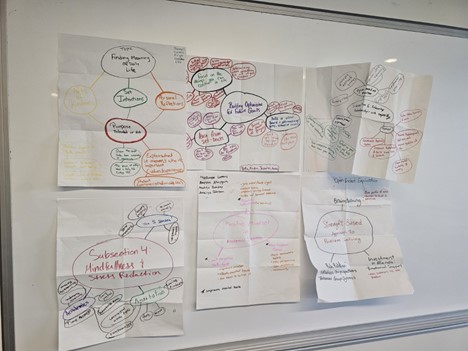
On the second day, students were given poster paper and markers to create mind maps of their ideas and help gain clarity on their discussions from the previous day. Each group placed their chosen topic at the center of the mind map and organized the associated ideas around it. The mind mapping exercise allowed students to visually connect their thoughts and discussions from day one.
One member from each group was nominated to circulate among the other groups, engaging in discussions about each team’s subsection of the article. This not only gave students a broader perspective on how their topics related to the overarching theme of student wellness but also facilitated the flow of information between teams. After gathering input from other teams, the group representative brought the new insights back to their original group, enhancing their understanding of their own topic and how it fit into the larger article. To ensure continuity, students took photos of their mind maps, which would later serve as guides for the writing process.
Day 3: Writing and Research Alignment
On the third day, each group was tasked with creating a document that contained a minimum of five references, with each group member responsible for contributing at least one reference. The document consisted of chunks of article drafts accompanied by their respective references. Students were asked to align these references with the ideas discussed during the earlier sessions and integrate them into their mind maps. Next, students took 15 minutes individually within a shared Google doc to write about their subsection, drawing from their mind maps and class discussions. This individual writing time allowed students to consolidate their thoughts and begin crafting their portion of the collaborative article.
Day 4: Ethical Use of AI in the Writing Process
The fourth day focused on ethical AI usage. We began with a discussion on how students had been using AI tools like ChatGPT and how they envisioned using any type of AI tools in the creation of this article. Together, we created an AI disclosure statement, agreeing on how AI would be used during the editing phase.
We explored specific AI prompts that could enhance their writing, including:
“Rephrase for clarity.”
“Organize this paragraph for the introduction, summary, or conclusion.”
“Give me a starting sentence for this paragraph.”
These prompts were designed to guide students in using AI as a tool to enhance clarity and organization rather than relying on it to write the content.
Day 5: Final Writing and Cohesive Editing
On the final day, students returned to their group documents and spent 15 minutes revising their sections. Afterward, they worked together to co-edit the document without the use of AI, striving to make the article more cohesive and polished. Finally, we revisited the agreed-upon AI prompts, and students were given the option to use AI only when they felt it was necessary for tasks like rephrasing sentences or organizing paragraphs.
The project culminated in a completed article on student wellness, co-authored by students and enhanced by responsible AI usage. The collaborative process not only demystified research and writing but also empowered students to see these activities as positive, engaging, and enjoyable experiences.
Takeaways From This Teaching Experience
The AI writing project was a valuable learning experience for the students, as it incorporated individual and collaborative learning elements alongside technology-based approaches. Reflecting on this experience, I have identified several key takeaways to carry forward into the new semester of teaching and learning.
The Importance of Throwback Learning Experience: Something Familiar Traditional tools like markers and poster boards remain essential in fostering cohesion, socialization, and competence-building. These activities encouraged students to engage in discussions and create visual representations of their ideas, which helped build their confidence and reinforce the collaborative process.
Starting With Original Ideas Matters Students benefited from discussing their ideas within the context of originality before integrating AI-generated content. Generative AI poses a potential threat to originality, emphasizing the need for human thought, discussion, and creativity to provide a benchmark for comparing the quality and intentionality of AI contributions.
Clear Parameters and Prompts Are Essential Defining the role of AI in the writing process was critical for success. Many students initially viewed AI as a tool for producing entire works. By discussing the parameters beforehand, it became clear that AI was to be used to supplement and enhance cohesion rather than replace the creative process.
The Importance of Prompt Development Students gained a growing understanding of the importance of crafting effective prompts for AI. Recognizing how prompts influence AI outputs is a crucial skill that was previously underdeveloped in many students. Moving forward, this skill will be vital as they navigate the intersection of human creativity and AI assistance.
Final Thoughts
Developing effective AI prompts is a pivotal skill that empowers students to use AI intentionally and meaningfully in their learning. A well-crafted prompt acts as the foundation for generating accurate, relevant, and cohesive responses, highlighting the importance of clarity, specificity, and purpose in the initial instructions given to the AI. By understanding how to formulate prompts, students can better harness the potential of AI to support their ideas, enhance their creativity, and improve the quality of their work without relying on AI to replace their original contributions.
This skill also encourages critical thinking, as students must evaluate the type of input needed to achieve a desired outcome, troubleshoot issues in responses, and refine their prompts for better results. Moreover, it aligns with the broader need for digital literacy in education, preparing students to interact responsibly and effectively with technology in academic, professional, and personal contexts.
Lastly, incorporating intentional AI use into teaching strategies ensures that students not only learn how to use these tools but also understand their limitations and ethical considerations. By balancing traditional methods, which foster originality and human connection, with innovative technologies like AI, educators can create a holistic learning environment that values both creativity and technological fluency. This balance will be crucial as AI continues to play an increasingly integral role in education and beyond.
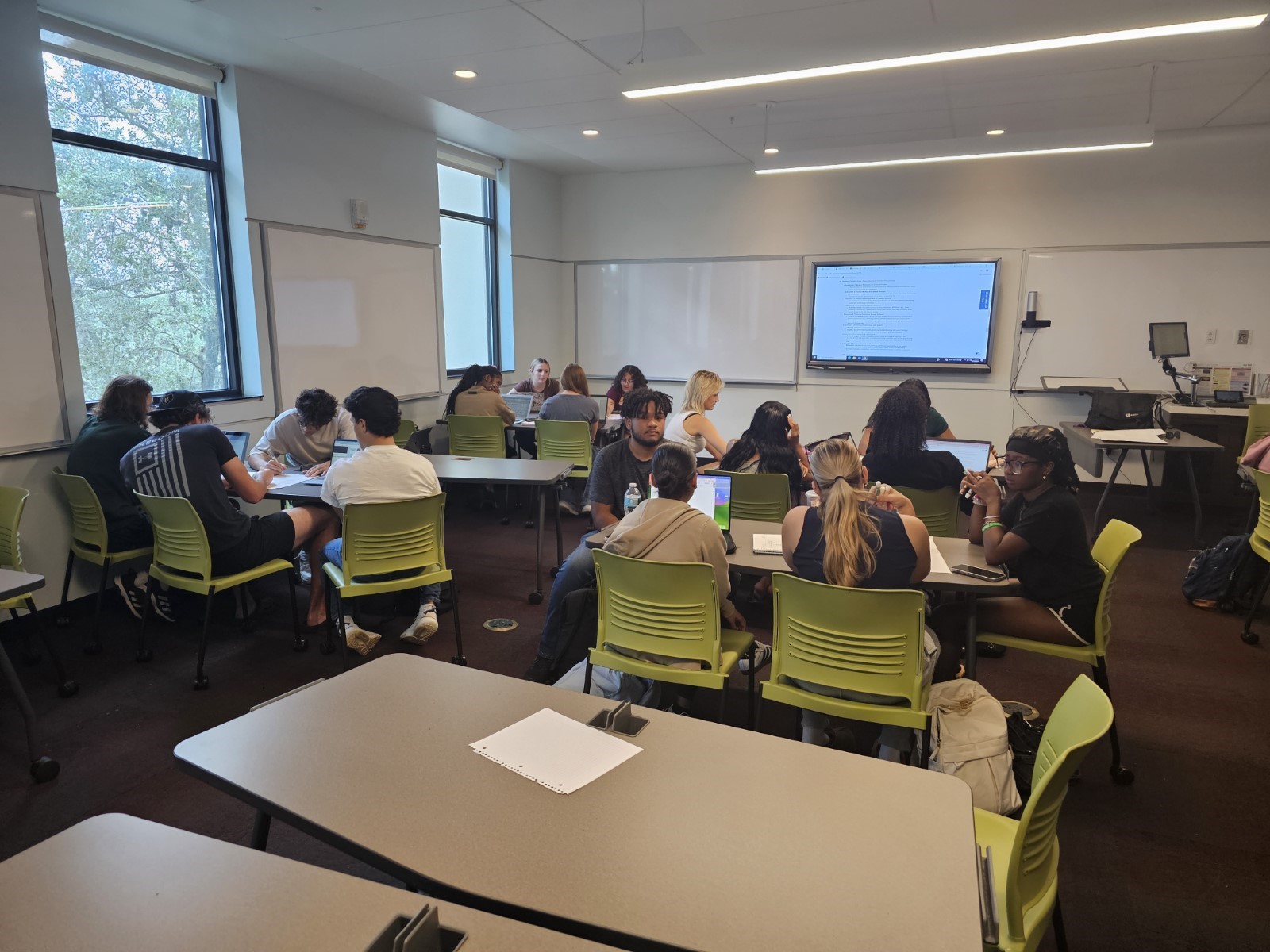
Dr. Courtney Plotts’ students in class.A snapshot of the students’ work.
Special Note of Pride: I would like to note that this group of students worked on this project during class and completed this while two natural disasters accrued, power outages, remote and in person learning and did a great job considering the circumstances. I am so proud of each of them! We originally had bigger visions for the project but due to weather we had to make some changes to the plan!
Freshman College Students’ Advice to Peers for Health & Wellness in 2025
The new year always comes with the possibility of change and growth. As students, much of our growth focus is academics and learning-based. Being academically successful isn’t an easy task. Student wellbeing is an important factor in the learning process (Frazier & Doyle-Fosco, 2024). And for most of us, throwing ourselves into our studies and homework can come with negative side effects like burnout, stress, and decreased mood and motivation. But being successful doesn’t have to come at the risk of your mental health. In our view, academic success means more than good grades and knowledge. Although you may have gone through something last year, or are still going through it now, it doesn’t have to affect you in a negative way. There is so much more that goes into being successful. Success requires dedication, consistency, self-care, and a positive mindset. But for many of us a positive mind set is hard to come by.
The Collective Obstacle
The average age of our class is 19.7 years of age. We have lived with social media all of our lives. A lot of voices have imparted information. Some good, some not so good. The negativity that is readily accessible on social media can lead to negative self-talk. “Negative self-talk refers to your inner voice making critical, negative, or punishing comments. These are the pessimistic, mean-spirited, or unfairly critical thoughts that go through your head when you are making judgements about yourself” (Scott, 2023). Negative self-talk can be detrimental to your psychological well-being. It can really bring you down after you do it for too long. Negative self-talk can also induce stress, depression, and relationship problems. How you can start to believe the negative self-talk: you can start to believe negative self-talk after a while of you doing it. The more you start to tell yourself you can’t do something, the more you’ll start to believe it.
The effects of positive self-talk are the opposite of negative self-talk. It will improve your mental health, can reduce stress, lessen depression, and improve relationships. This not only impacts academics, but other aspects of life. To minimize negative self-talk, you can catch your inner critic when it’s happening and change your thinking to think more positive thoughts, remember that thoughts are not facts, contain your negativity, shift your perspective, think like a friend, or other trusted advisors.
Two Positive Ideas to Embrace in 2025
Two ideas to embrace in the new year that can jumpstart your positivity are evaluating how you think about failure and the control of your future. Failure is an inevitable part of life, but it is through our setbacks that we find opportunities for growth and success. How we respond to failure matters more than the failure itself, and cultivating a mindset of optimism is key to overcoming challenges (Hilppö & Stevens, 2020). Optimism, combined with grit—the perseverance and passion to achieve long-term goals—forms the foundation for a positive and resilient lifestyle. Together, these qualities enable us to turn obstacles into stepping stones and approach life’s difficulties with determination and hope. Think of failures as learning opportunities. Think about the knowledge you gain from hindsight when thinking about failure.
Additionally, understanding the distinction between what we can and cannot control is crucial for maintaining positivity and health (Pourhoseinzadeh, Gheibizadeh,& Moradikalboland, Cheraghian, 2017). Accepting that not everything is within our power allows us to shift our focus to areas where we can make a difference and grow from the experience. Remaining positive during challenging situations and remembering the aspects we can influence help us navigate adversity with a constructive mindset. It’s also important to respect that some factors are beyond our control and may happen for reasons we do not yet understand. By seeking to understand why certain things are outside our control, we can cultivate acceptance and use these moments as opportunities for reflection and personal growth.
The Importance of Health Communication in 2025
Healthy communication is critical to positive personal growth. Asking open-ended questions is important when engaging in meaningful communication because it ensures that there are no assumptions being made. One researcher found that assumptions “lead to consistent and unnecessary community failures” (Macrae, 2018, p.5). Additionally, healthy communication can build true connections among people and better understanding. Also, avoiding assumptions is a way to stay present in the moment allowing you to determine if there is genuine interest in the conversation. Most importantly, health aspects of communication like listening, reflecting, and pausing encourage new thinking and can develop new ideas just about anything.
In addition to healthy communication, think about sharing more of your experiences with peers. Starting from a place of curiosity and health, inquire about someone’s well-being. You can start with a simple phrase like “Are you ok?” Or be ready and willing to share your own personal experience when the time is right. Not only can this help someone else but sharing your story can also help you process what you have been through. Sharing and listening to each other’s experiences can show understanding and help you feel more willing to share now and in the future. Understanding and being present is a power combination for communication.
Lastly, remember that relationships are complex. Whether parental, academic, or personal, everyone has their relationships challenges. One tactic to strengthen relationships is humor. Remember to laugh and enjoy life and the people around you. Most people forget about light heartedness and humor, and how humor can help strengthen and resolve issues within a relationship. Humor can improve the quality of relationships by reducing the stress, tension, and anxiety of the people within the relationship. This effect can only occur if humor is used respectfully in relationships. When used right, humor also can create a more comfortable relationship with less anxiety and sadness for those in it. It’s ok to laugh—even in challenging times.
Summary
A positive mindset is the root of achieving any goal you put your mind to. As a collective voice, we hope the information we shared is valuable information. Our goal was to share meaningful information for your new year and new journey in 2025. As students, we fully understand the importance of mental health, especially because all of us experienced covid at some of the most challenging times of our lives. We hope this information helps you in the new year as much as it helped us learn and grow. Remember to stay happy, healthy, and safe in the new year and think positive!
Dr. Courtney Plotts is a Dynamic Keynote Speaker, Author, and Professor. Dr. Plotts is the National Chair of the Council For At-Risk Student Education and Professional Standards, the country’s only organization that provides standards for working with marginalized and nontraditional students in Kindergarten to College. Her role as National Chair includes training, consulting, and research. Her subject matter expertise has been used in a variety of book publications. Most recently “Small Teaching Online” By Flower Darby with James M. Lang published in June 2019. Dr. Plotts was recognized in 2017 by the California State Legislature for a bold commitment to change in education. She is currently in talks with higher education institutions to launch an institute that focuses on diversity and best practices in online teaching spaces to launch in 2021.
References
Frazier, T., & Doyle Fosco, S. L. (2024). Nurturing positive mental health and wellbeing in educational settings – the PRICES model. Frontiers in public health, 11, 1287532. https://doi.org/10.3389/fpubh.2023.12875
Hilppö, J., & Stevens, R. (2020). “Failure is just another try”: Re-framing failure in school through the FUSE studio approach. International Journal of Educational Research, 99, 101494. https://doi.org/10.1016/j.ijer.2019.101494
Macrae, C. (2018). When no news is bad news: Communication failures and the hidden assumptions that threaten safety. Journal of the Royal Society of Medicine, 111(1), 5–7. https://doi.org/10.1177/0141076817738503
Pourhoseinzadeh, M., Gheibizadeh, M., & Moradikalboland, M., Cheraghian, B. (2017). The Relationship between Health Locus of Control and Health Behaviors in Emergency Medicine Personnel. International journal of community based nursing and midwifery, 5(4), 397–407.
The Trump administration has cleared the way for immigration arrests at or near schools, ending a decades-old approach.
Republican and Democratic administrations alike have treated schools and child care centers, along with churches and hospitals, as “sensitive” or “protected” locations where immigration enforcement should only take place when there is an immediate danger to the public.
A copy of the Homeland Security memo was not immediately available for review.
But in a statement, a Homeland Security spokesperson said that Acting Secretary Benjamine Huffman issued a directive on Monday that rescinded the sensitive locations policy. The spokesperson said the action would help federal authorities enforce immigration law and catch criminals who entered the country illegally. Immigration agents will be asked to use “common sense” in enforcing the law.
“Criminals will no longer be able to hide in America’s schools and churches to avoid arrest,” the statement read.
Even before this policy existed, large-scale immigration raids weren’t conducted at schools. But Trump’s policy change paves the way for immigration agents to detain parents during dropoff or pickup, as has happened occasionally in the past.
Immigrant rights advocates worry that could lead to more absenteeism among children with immigrant parents, who may now fear being stopped by immigration agents while driving or walking their kids to school. That happened during the first Trump administration. Advocates also worry about the potential for routine interactions with school police to reveal a student or family’s immigration status, and lead to their deportation.
Some school districts have issued explicit instructions to educators and parents about how school staff should handle an immigration agent’s presence on campus. Some districts have also said they will not permit a federal agent on school premises without a judicial warrant, and that staff will be instructed to call the school system’s lawyer if these agents do show up.
Some of the nation’s largest districts, including Los Angeles and Chicago, have re-upped or expanded existing policies meant to protect immigrant students and families. New York City is scheduled to vote on a resolution this week that would reaffirm a policy preventing school safety agents from collaborating with federal immigration authorities in most cases.
Trump also signed an executive order that seeks to end the automatic right to citizenship for any child born in the U.S. On January 21, 18 states announced they were suing to block the policy change.
This story has been updated to include confirmation and comments from the Department of Homeland Security about the policy change.
Chalkbeat is a nonprofit news site covering educational change in public schools.
Social media has connected kids like never before, but what they get in likes and shares, they lose in real, meaningful engagement with their peers and classmates. Lunch hours are spent hunched over smartphones, and after-school time means less sports and more Snapchat.
The adverse effects of this excessive screen time have significantly impacted students’ social- emotional health. Forty-one percent of teens with the highest social media usage struggle with mental health issues, and between 2010 and 2020, anxiety among adolescents skyrocketed by 106 percent.
At Spokane Public Schools (SPS), educators and administrators are reversing the side effects of social media by re-connecting with students through school-based extracurricular activities. Through its transformative Engage IRL (Engage in Real Life) initiative, the district is encouraging kids to get off their devices and onto the pickleball court, into the swimming pool, and outside in the fresh air. With more than 300 clubs and sports to choose from, SPS students are happier, healthier, and less likely to reach for their smartphones.
An innovative approach to student engagement
Even before the pandemic, SPS saw levels of engagement plummet among the student population, especially in school attendance rates, due in part to an increase in mental health issues caused by social media. Rebuilding classroom connections in the era of phone-based childhoods would require district leaders to think big.
“The question was not ‘How do we get kids off their phones?’ but ‘How do we get them engaged with each other more often?’” said Ryan Lancaster, executive director of communications for SPS. “Our intent was to get every kid, every day, involved in something positive outside the school day and extend that community learning past the classroom.”
To meet the district’s goal of creating a caring and connected community, in 2022, school leaders formed a workgroup of parents, community members, coaches, and teachers to take inventory of current extracurriculars at all district schools and identify gaps in meeting students’ diverse interests and hobbies.
Engaging with students was a top priority for workgroup members. “The students were excited to be heard,” explained Nikki Otero Lockwood, SPS board president. “A lot of them wanted an art club. They wanted to play board games and learn to knit. No matter their interests, what they really wanted was to be at school and be connected to others.”
Working with community partners and LaunchNW, an Innovia Foundation initiative focused on helping every child feel a sense of belonging, SPS launched Engage IRL–an ambitious push to turn students’ ideas for fun and fulfillment into real-life, engaging activities.
Over the past two years, Engage IRL has been the catalyst for increasing access and opportunities for K-12 students to participate in clubs, sports, arts activities, and other community events. From the Math is Cool Club and creative writing classes to wrestling and advanced martial arts, kids can find a full range of activities to join through the Elite IRL website. In addition, five engagement navigators in the district help connect families and students to engagement opportunities through individual IRL Plans and work with local organizations to expand programming.
“All day, every day, our navigators are working to break down barriers and tackle challenges to make sure nothing gets in the way of what kids want to be involved in and engaged in,” said Stephanie Splater, executive director of athletics and activities for SPS. “For example, when we didn’t have a coach for one of the schools in our middle school football program, our navigators mobilized for really good candidates in a short amount of time just from their personal outreach.”
In only two years, student engagement in extracurriculars has nearly doubled. Furthermore, according to Lancaster, since the Engage IRL launch, SPS hasn’t experienced a day where it dipped below 90 percent attendance.
“That’s an outlier in the past few years for us, for sure, and we think it’s because kids want to be at school. They want to be engaged and be part of all the cool things we’re doing. We’ve had a really great start to the 2024-2025 school year, and Engage IRL has played a huge role.”
Engage IRL also helped SPS weather student blowback when the district launched a new cell phone policy this year. The policy prohibits cell phone use in elementary and middle school and limits it to lunch and periods between classes for high school students. Because students were already building personal connections with classmates and teachers through Engage IRL, many easily handled social media withdrawal.
Creating opportunities for all kids
Key to Engage IRL’s success was ensuring partnerships and programs were centered in equity, allowing every child to participate regardless of ability, financial or transportation constraints, or language barriers.
Establishing a no-cut policy in athletics by creating additional JV and C teams ensured kids with a passion for sports, but not college-level skills, continued to compete on the court or field. Partnering with Special Olympics also helped SPS build new unified sports programs that gave children with disabilities a chance to play. And engagement navigators are assisting English language learners and their families in finding activities that help them connect with kids in their new country.
For Otero Lockwood, getting her daughter with autism connected to clubs after years of struggling to find school activities has been life-changing.
“There are barriers to finding community for some kids,” she shared. “We know kids with disabilities are more likely to be underemployed as adults and not as connected to the community. This is something we have the power to do that will have a lasting impact on the children we serve.”
Through Engage IRL, SPS has redefined student engagement by expanding access and opportunity to 6,000 students across 58 schools. In just two short years, the district has seen attendance increase, student wellness improve, and dependence on smartphones diminish. By continuing to listen to the needs of students and rallying the community to partner on out-of-school activities, Spokane Public Schools is successfully fostering the face-to-face connections every child needs to thrive.
Sean Duke, Washington State School Directors’ Association
Sean Duke is the communications officer for the Washington State School Directors’ Association, where he has served for over six years.
Latest posts by eSchool Media Contributors (see all)