A report in The Times had suggested that the UK is set to table a deal for a reciprocal scheme that will see young EU citizens, aged 18-30, able to live and work in the UK for up to three years.
However, the government has since insisted it has no plans for such a scheme.
“We do not have plans for a youth mobility agreement,” a spokesperson told The PIENews on February 21.
“We are committed to resetting the relationship with the EU to improve the British people’s security, safety and prosperity. We will of course listen to sensible proposals. But we have been clear there will be no return to freedom of movement, the customs union or the single market.”
The Labour government has previously dismissed proposals for such a scheme, but recent reports had suggested new plans could contain a cap on the number of young people allowed into the UK through the scheme and could therefore alleviate concerns from UK government as it seeks to curb migration.
The UK government has previously made it clear its preference to do deals with individual member states, but subsequently rejected deals proposed by countries such as Spain.
The UK already has a Youth Mobility Scheme with a number of countries including Australia, New Zealand, Japan and Canada that allow individuals to study and work in the country for up to two years, with the possibility of extensions for some countries.
The membership body for English language schools in the UK, English UK, has been campaigning for an EU Youth Mobility Scheme since Brexit.
“We welcome reports that the government plans to negotiate a youth mobility deal with the EU,” Huan Japes, membership director, English UK, told The PIE.
“For young people in Europe and the UK to have the opportunity to live, work and study in each others’ countries will have immense benefits – not only for the young people themselves but also for language teaching centres and other educational organisations, the hospitality industry and for the UK’s future relations with the EU.”
“And this kind of time-limited, mutually beneficial immigration has broad support from the British public,” said Japes, who added that he would like to see a scheme with “a generous allocation of places so that this scheme can really make a difference to young people’s lives.”
According to advocacy group European Movement UK, mobility for young people could be a gateway to much closer ties with neighbouring European countries.
European Movement UK CEO, Nick Harvey, said the government’s hostility to the idea “could not be justified” when the benefits of such a scheme are so obvious.
“After all, the UK has youth mobility schemes with 13 other countries – including Australia and Japan – so it makes sense to have one with our nearest neighbours and closest partners,” said Harvey.
“Dismissing the idea of reciprocal youth mobility simply meant letting down British young people who face all sorts of economic difficulties, and have seen their horizons curtailed by Brexit. Young people want and deserve the chance to study or work in Europe. The government owes it to them to make sure they get that chance.”
We need to start pulling this country out of the no-growth quagmire of Brexit and start giving people hope for a better, brighter future Mike Galsworthy, chair of European Movement UK
Similarly, Mike Galsworthy, chair of European Movement UK, is calling for a deal to be made.
“We need to start pulling this country out of the no-growth quagmire of Brexit and start giving people hope for a better, brighter future,” he said.
“Liberating our youth and small businesses alike to engage is an important start. Hopefully the government will now see that being bold, hopeful and engaged with Europe brings a sigh of relief from the public and a more positive outlook for the UK.”
Writing in her column for The PIE last week, outgoing London Higher CEO Diana Beech mused on a refreshed relationship for the UK and the EU and what it might mean for the sector.
“The process of resetting the UK-EU relationship by the spring is one to watch for the UK’s higher education sector,” she wrote.
“This is because, while the EU has the power to ease restrictions on UK businesses to improve British trade prospects, the UK also has something that many in the EU want in return: namely the power to reinstate a youth mobility scheme between the UK and the EU.
“At its most ambitious, such a scheme could allow young people from the UK and Europe the freedom to travel across countries to study and work as was the norm before Brexit.
“A curtailed version could at least see mobility enacted for shorter, time-limited placements. Either way, UK universities could find themselves becoming an important bargaining chip in any future renegotiations,” wrote Beech.
Beech considered that previously, the UK higher education sector would have “been first to welcome” the return of a Youth Mobility Scheme such as Erasmus+. But financial woes facing the sector are “likely to dampen university managers’ enthusiasm” for such measures, considering EU students would once again be regarded as ‘home’ students, thereby capping the fees they pay.
Student accommodation platform University Living and the National Indian Students and Alumni Union (NISAU) have launched the Living Scholarship – worth £12,000 (INR 13,10,832).
The scholarships will be provided to 10 “outstanding students” from India, who are planning to pursue higher education in the UK.
“Accommodation is the second-largest expense after tuition for students studying abroad, and we believe financial challenges should not be a barrier to achieving academic dreams,” said Saurabh Arora, founder and CEO, University Living.
“Through this scholarship, we are committed to providing meaningful support to Indian students so they can focus on their education and future careers with greater confidence.”
Beyond financial assistance, recipients will benefit from exclusive mentorship, participation in student ambassador programs, and access to internship opportunities, through the organisations, all aimed at fostering their professional growth and future career success.
Accommodation is the second-largest expense after tuition for students studying abroad, and we believe financial challenges should not be a barrier to achieving academic dreams Saurabh Arora, University Living.
“NISAU has long worked to ensure Indian students in the UK are set up for success, and the Living Scholarship is a vital step in reducing financial stress for them,” said Sanam Arora, chairperson, NISAU UK.
“Together with University Living, we aim to empower students with not just financial aid but also networking and professional growth opportunities.”
The Living Scholarship will open for applications on February 14, 2025, with more information available on www.universityliving.com.
Indian students and alumni are recognised as an integral part of the UK higher education system, with organisations like NISAU celebrating their achievements annually through events such as the India-UK Achievers Honours and Conference, which took place in central London on January 13.
Despite the UK emerging as one of the most sought after study destinations among students from India, in recent years poor job prospects, and stricter rules on students bringing dependents into the country with them have led to falling numbers.
As per a report by the Times of India, students from India have seen the largest drop, falling from nearly 140,000 in 2022/23 to 111,329 in 2023/24 – a decrease of over 20%.
Applications from other major sending countries such as Bangladesh and Nigeria have also fallen.
However, new data from the UK Home Office reveals that 28,700 sponsored study visa applications were submitted in January 2025 – a 12.5% increase compared to the 25,500 applications recorded in January 2024.
Though there are encouraging signs, Home Office data continues to show a broader downward trend over the past year with applications from main applicants totalling 411,100 in the year ending January 2025 – a 13% decrease compared to the previous year.
Discussions at the New Delhi event centered on India’s growing appeal as a destination for international students and a key partner for global institutions seeking to enhance their internationalisation strategies.
“In our recent visit to Sri Lanka, we saw over 3,000 students express interest to study in Indian universities due to them being affordable and providing high-quality education,” shared Pankaj Mittal, secretary general, Association of Indian Universities.
“Earlier, students from Sri Lanka were only looking at the US, UK, and Europe but that’s not affordable for them anymore, which is why they are focusing on India.”
Mittal stated that this phenomenon indicates a future where “India will prosper and become the destination where international students and educators will see potential.”
According to the Study in India portal, over 72,000 international students studied in India for the academic year 2024/25.
The rise in international students, especially from South Asia and Africa, has prompted the Ministry of Home Affairs to announce specialised visas dubbed the ‘e-student visa’ and ‘e-student-x visa.’
Additionally, a ‘G-20 talent visa’ has been announced for scientists, researchers, faculty members, and scholar academicians from G20 countries.
Elsewhere, reports suggest that IIT Madras is considering establishing a branch campus in Sri Lanka, joining other IITs in their plans for international expansion.
While international universities are making headlines concerning their expansion plans in India, Mittal highlighted that Indian universities are equally excited to collaborate with institutions abroad but need to find the right partners.
We are now handholding Indian universities to help them find the right partners and guide them on which areas they can collaborate in. Pankaj Mittal, AIU
“After the National Education Policy came into the picture, Indian universities are looking forward to more collaborations with international universities,” said Mittal.
“The only issue right now is that we need to help Indian universities, especially public ones, with capacity building. We are now handholding Indian universities to help them find the right partners and guide them on which areas they can collaborate in.”
Through its initiative ‘The Indian Network for Internationalisation of Higher Education’, which has 1,064 member Indian and international universities, AIU is helping Indian and international institutions advance their internationalisation strategies in India.
With a 17,000-strong student population, including over 210 international students, private institutions like UPES are partnering with top institutions across the world but want the benefits to be more ‘reciprocal’.
“Since the NEP, there have been a slew of regulations that are coming at a fast pace which are also overwhelming for us as Indian institutions,” said Ram Sharma, vice-chancellor, UPES.
“As an Indian institution we are pretty clear that we want the best for our students, which is why we have made it a policy to partner with the world’s top 100 universities, such as King’s College London, Edinburgh University, the University of Queensland, and more.”
Though joint and dual degrees are becoming major attractions in partnerships between Indian and international institutions, Sharma believes it’s not creating the same excitement among Indian students as expected.
“Except for our partnership with the University of Queensland, many of our partnerships have participation of less than ten students,” said Sharma.
“So now we are talking about a campus on campus model, wherein we can partner with a well-established existing institution and experiment with other models in light of increasing TNE interest.”
According to Rohit Kumar, director, international recruitment, partnerships, and mobility, University of York, a ‘culture of innovation’ that can benefit both Indian and international students can only be brought about by cross-disciplinary collaboration between the Indian education sector, international universities, and the Indian government.
“Dedicated funding streams are needed to strengthen research capabilities between institutions, while international universities entering India must actively engage with industry,” said Kumar.
Secretary of state for education, Bridget Phillipson, addressed students considering studying abroad, highlighting the benefits of a UK education and promoting the country’s post-study work opportunities.
“In the new academic year, we will welcome thousands of international students who will be starting courses in our universities and I hope to see many more in the future,” Phillipson said in the video shared by the UK Council for International Student Affairs (UKCISA).
“The UK is a wonderful and safe place to study. Our country is home to some of the very best universities in the world – four of the world’s top 10 can be found right here in the UK.
“An education from a British university has been the springboard for success for so many global trailblazers, from politics to business, from the arts to the sciences, in fact dozens of current and recent world leaders studied here in the UK and our universities have driven some of the most exciting and valuable research anywhere in the world.
“You could be part of the next groundbreaking wave of research and join a new generation of inspiring leaders,” she told prospective students.
Phillipson went on to describe some of the ways in which UK universities support their international students through pastoral support, work experience, scholarships and bursaries.
“You’ll also get have the chance to join Alumni UK – a global group of people from around the world who have studied here. It’s a fantastic professional network that you can tap into to get great advice and guidance.”
Phillipson went on to promote the UK’s Graduate Route, describing the opportunity which lets graduates “work, live and contribute” in the UK.
International students forge international friendships so by studying abroad, you can help build bridges between our countries, and these connections help make the world a better, brighter place.
Bridget Phillipson, UK secretary of state for education
“Studying in the UK sets you up for success in your career, but it’s more than that. International students forge international friendships so by studying abroad, you can help build bridges between our countries, and these connections help make the world a better, brighter place.”
Phillipson previously addressed international students in a video not long after stepping into the role in July 2024.
On the release of the latest video, Anne Marie Graham, UKCISA chief executive, said she was “encouraged” to see the continuing messages of welcome and support from the UK’s education secretary.
“Current and prospective students will also welcome the secretary of state’s ongoing support for the graduate visa and her reflections on the mutual benefits of a UK education – not just the contributions that international students make to the UK, but the positive impact on their own careers and ambitions,” she told The PIE.
“We look forward to continuing to work with the UK government to ensure international students are welcomed and supported, from pre-arrival visas to post-graduation work opportunities, so that all international students have a positive experience studying here.”
Pedram Bani Asadi, chair of the UKCISA’s Student Advisory Group commented: “I welcome the support from this government for international students’ hopes and dreams, and recognition of all the contributions we make to both UK culture and the economy.
“Having access to the Graduate Route has been absolutely essential for me to be able to reinforce the skills I learnt in my studies and contribute to the UK. I appreciate all the friends and experiences I’ve had here and look forward to continuing my role as a #WeAreInternational student ambassador, and working with the UK government to support my fellow international students to have a positive experience.”
Since Labour took came into power, sector stakeholders have noted the government’s more welcoming tone toward international students, a marked contrast to the rhetoric of the previous Conservative government.
Despite a change in rhetoric, the Labour government has shown no intention of reversing the Conservative’s decision to ban international students on UK taught master’s courses from bringing dependants with them to the UK.
“While the new government has said many positive things about international students, the focus on immigration remains acute,” said Jamie Arrowsmith, director of Universities UK International in an update to sector earlier this month.
The UK’s international educations strategy is currently under review, and the rollout of the new approach is set for April.
Sector leaders gathered at the QS Reimagine Education summit in London late last year to discuss priorities for the UK’s international education sector going forward, giving suggestions for a refreshed strategy, which included improved post-study work rights.
While studying abroad in Rome, I not only experienced the super touristy spots, but I also had the opportunity to live like a local and explore the hidden gems of Rome. Here are my top five things to do in Rome (although there are a lot more!).
Source: https://tinyurl.com/y7837cce
Explore The Monuments
A trip to Rome isn’t complete without visiting all of the historical Roman landmarks, no matter how touristy – and crowded – they can get. From the Pantheon to the Colosseum, the Roman Forums, and the Spanish steps, there is an abundance of sights to see in Rome, and it never gets old experiencing ancient, Roman history. Make sure to watch your belongings carefully, however, as pickpockets are abundant in crowded, touristy areas.
Source: https://tinyurl.com/ydf2jb6t
Bike Around Villa Borghese
A hidden, Roman gem I learned about – although it is still a bit touristy – is biking in Villa Borghese. You can bike around the gardens, stop for a picnic lunch in the grass, and walking through numerous museums and buildings. It is also close to many of the other monuments in Rome, making it easily accessible.
Source: https://tinyurl.com/yd6l273b
Visit Trastevere
One of my favorite places in Rome is the neighborhood of Trastevere. From the cute little shops to the amazing restaurants, this area of a Rome is a must. Although there are many cool, and hidden, neighborhoods in Rome, I am biased as I lived in Trastevere and fell in love. I would highly recommend starting in la Piazza di Santa Maria – which is located right by the famous Santa Maria church – and walk around the area from there. This is a place you don’t want to miss!
Source: https://tinyurl.com/kwrwqbb
Travel around the Street Markets
Another highlight of Rome is the street markets. Food, produce, gifts, and other goods are sold during weekday mornings and on the weekends. One of the most popular tourist markets is in Campo dei Fiori, which has food, any kind of pasta you could think of, and local, fresh produce. It is open every morning except on Sundays. Another amazing market – for fresh veggies, fruit, fish, and meat – is the Piazza San Cosimato market, which is open every morning except on Sundays. My personal market favorite, however, is the flea market located around the Via Portuense area in Trastevere. This market has EVERYTHING you could ever need at great prices! Clothing, toiletries, sunglasses, and other goods are sold here every Sunday morning-afternoon. Again, make sure to keep your belongings close at the markets, as the high volume of people brings out the pickpockets and other petty thieves.
Source: https://tinyurl.com/ya85rk5k
EAT, EAT AND EAT!!
Of course, when in Rome you must eat! Here is a – very condensed – list of my favorite restaurants in Rome:
La Gelateria Frigidarium – a touristy, but AMAZING, gelato place (near Campo dei Fiori)
Dar Poeta – the BEST pizza I have ever had and I still dream about it (located in Trastevere)
Pimms – a great place for cheap salads and good risotto (in Trastevere)
Donkey Punch – a casual sandwich joint for a quick bite (in Trastevere)
Capa Toast – slightly touristy panini place (located in Trastevere)
Ristorante Maccheroni – a casual dinner place with some of the best pasta at great prices (in the Piazza delle Coppelle near the Pantheon)
ABOUT THE AUTHOR: Jolie Blair is a rising senior at Emory University from Sun Valley, Idaho. She is double majoring in Theater Studies and Public Health and has a passion for the arts, writing, and traveling. She studied abroad for the 2016 fall semester in Rome, Italy and had an experience of a lifetime, which she loves to share with those who want to listen (and even those who don’t like her 140lb Great Dane!).
Hi everyone! It’s September and summer and officially over! 🙁
Summer is one of those sacred times of year for faculty to determine the next steps of their faculty career. From my dear colleague who is focused on his retirement to new faculty members who are focused on their new research agenda, everyone is focused on renewal. Our department faculty members usually travel to work at state parks, volunteer in the community, and participate in professional development activities.
This summer, we traveled on a study abroad experience to Scotland, Ireland, and England. This was an incredible journey with 17 students from our university. I have not traveled outside of the country for a year and the students were filled with excitement from the end of the spring semester.
The trip to Europe was long and uneventful. We traveled with EF Tours and it was definitely an adventure. Many of our rural students have never traveled outside of the country before this adventure and they learned many new skills along their journey. I was proud of their progress.
During the study abroad experience, I also had an opportunity walk a mile by myself in Ireland. Previously, I have ALWAYS traveled in groups – large groups and small groups. However, when most of the attendees wanted to participate in an activity together and I had to travel back to the hotel to pick up an item – I had the opportunity be independent. I walked by myself across the city to the hotel. This prepared me for another big adventure that I had this summer. Summer 2023 was filled with solo adventure travel for this female faculty member.
We also had an opportunity to view the Book of Kells in Ireland. It was a great experience and the library that housed the book of Kells (the Bible) was one of the most beautiful libraries I’ve ever visited.
This was my second time to visit the palace in England. There is always a crowd at Buckingham palace and the students enjoyed snapping pictures with the statues.
Who am I kidding? I enjoyed snapping pictures as well! It was crowded and it was definitely an adventure.
I’ve only heard about it on YouTube from flight attendants, but Primark lived up to its reputation. The clothes were inexpensive, high quality, and were gorgeous! I was very excited to buy professor clothes at Primark!
Overall, we had a great time. The students enjoyed themselves and I did as well. I learned a lot about European culture and I added two additional countries to my list. In fact, I added THREE new countries to my list (more about that later). Another day, another post. 😉
Let me know if you have any questions about traveling with students. They are a trip – literally! I cannot remember the last time that I laughed so hard. Traveling with rural students enables them to be themselves while experience a whole new world.
December 5, 2022 by Dean Hoke: In the newest edition of the 2022 Open Doors Report, US university’s international student enrollment shows encouraging signs. International students coming to the United States are reported at 948,519, which nears the pre-pandemic level. However, the number of Americans studying abroad in 2020-21 was 14,549 compared to 162,633 in 2019-20 and the high watermark of 350,000 in 2018-19.
The chart below shows how long US students study overseas.
Of the 350,000 students in 2018-19 who studied overseas, the majority either studied abroad for a summer or a short term.
What is the profile of the American student who studies abroad?
The number of US students who study abroad represents only 2.7% of the American university students who attend four-year and above institutions. Students who study abroad tend to be juniors or seniors in undergraduate school, female, Caucasian, have financial means, and study in Europe.
What countries have the largest number of students studying abroad?
T.I.M.E. Association, located in France, conducted a study in 2021 of UNESCO mobility data which reported 5.6 million international students worldwide to determine the top countries with the most outgoing students studying in another country. They looked at the “long-term mobility of students to complete a whole study cycle and acquire a degree (Bachelor, Master or PhD) abroad. The top countries university students leave to study abroad are:
China – 993,367
India – 375,055
Germany – 122,538
Viet Nam – 108.527
South Korea – 101,774
France – 99,488
United States – 84,349 (long-term studies)
Students from other countries study abroad primarily due to the:
Future Employment Opportunities, be it at home or abroad
Quality of institution and program
Meet a diverse range of people
Study and learn differently
Self-reliance and being on your own
Meeting new friends and lifelong networking
Seeing your culture from a different point of view
How important are students studying abroad to the business community as future employees?
Businesses worldwide are putting a higher emphasis on international experience. Most big and small companies are trying to attract business and partnerships with international partners. In a 2014 survey titled U.S. Business Needs for Employees with International Expertise, 800 executives in US companies were surveyed to identify the demand for corporate employees with international competence, including international skills and/or knowledge of foreign languages and world areas. The results of the 2014 survey call for a continuing need for international business education in the US, with increased emphasis on intercultural communication, foreign language skills, and international experience. The 800 represented a broad cross-section of Industries and the number of employees.
Some interesting facts come out:
39% failed to fully exploit international business opportunities due to insufficient internationally competent personnel in the past five years
39% have no foreign offices, and all international operations are handled in the US
43% state that overall business would increase a great deal if more international expertise were available on staff
60% state that an appreciation for cross-cultural differences is of great importance for professional staff, followed by Understanding country legal and government requirements (59%) and understanding of local markets and business practices (58%)
83% state their company will place a greater emphasis on international competence among management and employees over the next ten years
Additional studies support that studying abroad helps employers and helps students get jobs. In 2016, The Institute for the International Education of Students (IES), founded in 1950, conducted a comprehensive survey of 1205 of its alumni.
Here are the key points from the study:
93% who entered the workforce were employed within six months
89% of those who entered graduate school earned admissions in their first or second-choice school
50% felt that their IES Abroad Program experience helped them to get this first job
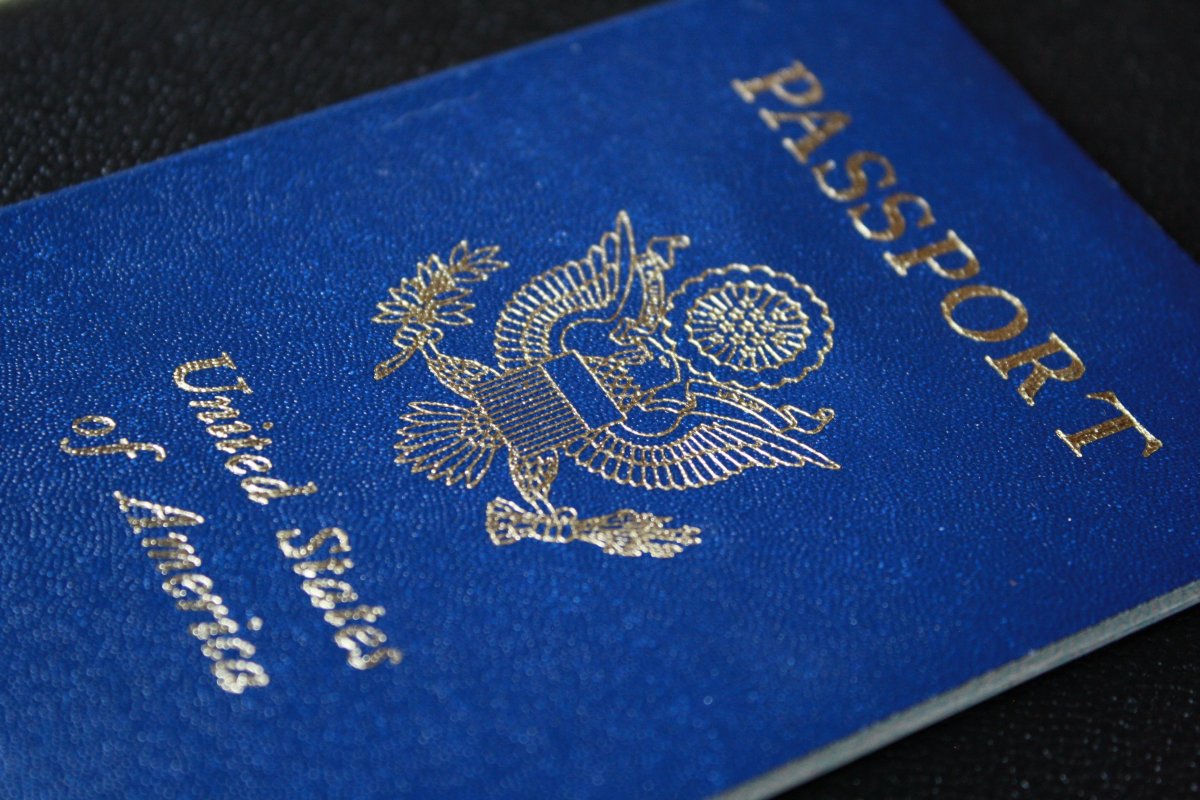
The American Passport Project
How can we encourage and support students to study abroad?
In a recent interview with Higher Ed Without Borders (in which I am a co-host), we asked Dr. Allan Goodman, CEO of the IIE, about a new program they established in 2021 titled The American Passport Project. Dr. Goodman commented that studying abroad is one of the best ways that students can acquire global skills and create personal and professional opportunities. Furthermore, it’s a part of IIE’s mission to increase participation and diversity in studying abroad and extend these benefits to all students regardless of socioeconomic status. However, students of limited financial means find it more difficult to participate in studying abroad due to financial hurdles, which could bar them from moving forward.
The American Passport Project plans to have enabled 10,000 students to be awarded passports by the end of this decade. IIE will help 1,000 college students obtain U.S. passports annually by awarding funds to 40 U.S. colleges and universities in the IIE Network. Each institution will identify 25 of its first-year students who are eligible for Pell grants. Eligibility will be limited to first-year students to ensure that they have ample time remaining in their college career and receive guidance from their advisors to map out a study abroad plan. Competitive institutions will demonstrate grant need, support obtained, and impact on study abroad participation.
First Year Results
In the inaugural year, nearly 200 institutions applied for the grant to support students obtaining U.S. passports. These institutions informed IIE of the various ways they could utilize the grant to support targeted student populations.
Forty institutions were selected, and more than 50% of institutions chosen represent minority-serving student populations (HBCU, HSI, MSI) or are community colleges.
Nearly 50% of U.S. states are represented (33% South, 32% Midwest, 25% Northeast, and 10% West).
The majority are expanding their diversity, equity, access, and inclusion efforts by targeting these top 4 student populations: students with demonstrated financial need, racial/ethnic minorities, students who have never traveled abroad, and first-generation students.
In a follow-up interview with Lindsay Calvert, IIE’s lead for the Passport Project, I asked about the program’s status and the number of students approved by IIE as of November 2022.
One thousand one hundred twenty-two students have been nominated by their awarding institutions and approved by IIE to be supported with the IIE-granted funds to help them obtain their U.S. passport and engage them in study abroad planning.
778 students from the first cohort
344 from the second cohort)
Some institutions can quickly able to identify, nominate, and confirm students. Others have been challenged with their outreach and recruitment, so this process can span over a year to fulfill the goal of 25 students per campus.
Since the Passport Project aims to support first-year students, they anticipate them to study abroad in the 2023/24 academic year and subsequent years of their undergraduate term.
One million U.S. college students will study abroad annually for credit
Study abroad participants will more closely represent the demographics of the undergraduate population in terms of gender, ethnicity, students with disabilities, income level, and field of study
A significantly greater proportion of study abroad will occur in nontraditional destinations outside Western Europe
Higher education institutions will make studying abroad a critical component of a quality higher education
U.S. higher education institutions could apply for federal grants, individually or in a consortium, to help them institute programs that would move the country toward achieving these objectives.
Conclusion
I have long wondered why so few Americans go overseas to study, even for a summer. Aren’t they seeing the benefits that students from other countries see? Are they not aware that by studying abroad, they increase their chances of graduation and employment? Perhaps most university students are unaware of studying overseas or believe they can’t afford the cost or cannot give up a part-time job to be away for the summer.
Organizations like IIE are helping address increasing study abroad opportunities with its American Passport Program by emphasizing minorities and non-elite schools. The proposed Simon bill also helps address the issue and pushes for a million students to study abroad, but it remains to be seen if it will pass. It will take bi-partisan support and a higher public profile to get through the upcoming Congress. Last and not least are higher education institutions themselves. While the larger state institutions and elite privates have programs and resources to help promote study abroad, that is not necessarily the case with thousands of other colleges and universities. While most schools have international affairs offices, they need more personnel and budget to adequately promote or financially support students. Their priority in fundraising for such programs is lower than other needs.
We need businesses that will benefit from these students and federal and state governments to help promote and partially subsidize. If companies and governments want to compete for an increasing share of international business successfully, they need employees who have spent time abroad.
Dean Hoke is Co-Founder and Managing Partner Edu Alliance a higher education consulting firm located in Bloomington, Indiana and Abu Dhabi, United Arab Emirates. Dean received his Bachelor of Arts degree from Urbana University in Ohio, his Master of Science from The University of Louisville, and a graduate of the Wharton School of Business Executive Management program. Since 1975 Dean has worked in the higher education and broadcasting industry, serving in senior leadership roles specializing in international education, marketing, communications, partnerships, and online learning.
He currently serves as Chairperson Elect of the American Association of University Administrators , Advisory Board of the School of Education, Franklin University and is Co-Host of the Podcast series Higher Ed Without Borders and Distance Learning Roundtable. Dean is actively engaged in consulting projects in international education, branding, business intelligence, and online learning leading projects in the United States, the Middle East, Africa, and Asia. Dean resides in Bloomington, Indiana
Note: I’ve been invited to attend the Forum on Education Abroad annual conference and will be tweeting and posting to IHEC Blog‘s Facebook page during the conference as well as doing an end of conference summary blog post.