Category: Survey

  • Policy uncertainty emerges as top barrier to student mobility 

    Policy uncertainty emerges as top barrier to student mobility 

    While affordability remains the greatest obstacle for students, IDP Education’s new Emerging Futures survey has revealed the growing impact of sudden and unclear policy changes shaping students’ international study decisions.  

    “Students and families are prepared to make sacrifices to afford their international education dreams. They can adjust budgets, seek scholarships and rely on part-time work. But they cannot plan for uncertainty,” said IDP chief partnerships officer Simon Emmett.  

    “When the rules change, without warning or clarity, trust falls away. Students hesitate, delay, or choose to study elsewhere.” 

    Drawing on the views of nearly 8,000 international students from 134 countries between July and August 2025, the results highlighted the critical importance of study destinations communicating policy changes to sustain trust among students.  

    The US and UK were rated the lowest for providing clear guidance on visas and arrivals processes, while New Zealand was identified as the top communicator in this respect.  

    What’s more, the UK saw the steepest rise in students withdrawing from plans to study there, indicating recent policy changes including plans to shorten the Graduate Route and increase compliance metrics for universities are creating uncertainty among international students. 

    Of the students who said they were pivoting away from major study destinations, over half (51%) indicated tuition fees had become unaffordable and one in five said it was too difficult to obtain a visa.  

    In markets such as Malaysia, the Philippines and the UAE, students reported delaying or redirecting applications almost immediately after unclear announcements by major destinations, the report said. 

    Meanwhile Canada’s share of withdrawals was shown to have eased, indicating messaging is helping to rebuild stability, the authors suggested, though Canadian study permit issuance has fallen dramatically in 2025.

    Without that stability, even the most attractive destinations risk losing trust

    Simon Emmett, IDP

    Despite policy disruptions in Australia over recent years, the country remained the most popular first-choice destination globally, ranked highly for value for money, graduate employment opportunities and post-study work pathways.  

    At the same time, many respondents flagged sensitivities to recent visa and enrolment changes, highlighting the need for consistent and transparent messaging to maintain Australia’s competitiveness, according to IDP.  

    The US saw the largest decline in popularity, dropping to third place behind Australia and the UK. 

    NAFSA CEO Fanta Aw said the findings should serve as a “wake-up call” that policy uncertainty has real human and economic costs, emphasising the need for “clear and consistent” communication from institutions and policymakers.  

    “Students are paying close attention to how the US administration handles student visas and post-study experiential learning opportunities like Optional Practical Training,” said Aw. 

    Visa restrictions and policy hostility have rocked the US under Trump’s second presidency, with global visa appointments suspended for nearly a month this summer, as well as thousands of student visa revocations and travel restrictions on 12 nations.  

    Post-study work opportunities are increasingly fragile in the US with government plans to overhaul the H-1B skilled worker visa to favour better paid jobs and OPT coming under increased scrutiny from policymakers. 

    Emmett highlighted the knock-on effect of these policy shocks, with student journeys being disrupted “not by ambition, but by uncertainty”. 

    “Countries that provide predictability will win the confidence of students and their families. Without that stability, even the most attractive destinations risk losing trust,” he said. 

    Despite financial and political challenges, demand for global study remained strong, with half of all prospective students intending to apply within six months, and a further 29% within a year. 

    South Asia emerged as the main driver of intent, with more than 60% of students surveyed from India, Pakistan and Bangladesh preparing near-term applications, though this region was also the most sensitive to abrupt or confusing policy shifts.  

    Source link

  • Survey of 1500 Kids Suggests School Phone Bans Have Important but Limited Effects – The 74

    Survey of 1500 Kids Suggests School Phone Bans Have Important but Limited Effects – The 74


    Get stories like this delivered straight to your inbox. Sign up for The 74 Newsletter

    In Florida, a bill that bans cellphone use in elementary and middle schools, from bell to bell, recently sailed through the state Legislature.

    Gov. Ron DeSantis signed it into law on May 30, 2025. The same bill calls for high schools in six Florida districts to adopt the ban during the upcoming school year and produce a report on its effectiveness by Dec. 1, 2026.

    But in the debate over whether phones should be banned in K-12 schools – and if so, howstudents themselves are rarely given a voice.

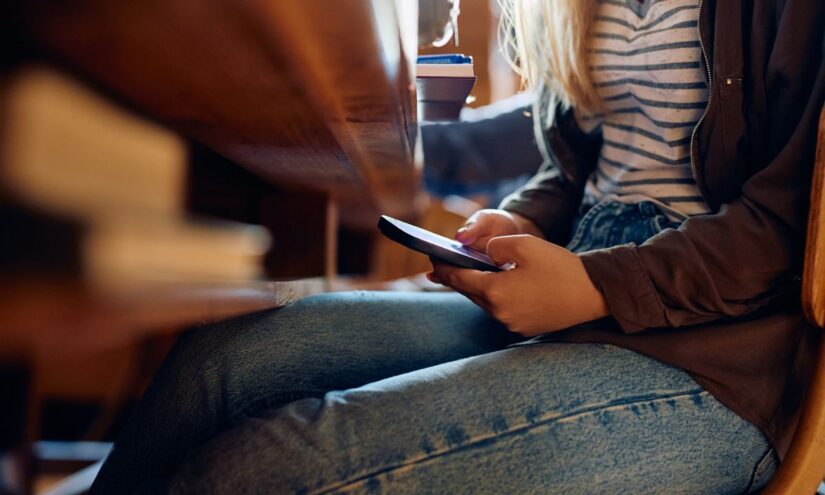
    We are experts in media use and public health who surveyed 1,510 kids ages 11 to 13 in Florida in November and December 2024 to learn how they’re using digital media and the role tech plays in their lives at home and at school. Their responses were insightful – and occasionally surprising.

    Adults generally cite four reasons to ban phone use during school: to improve kids’ mental health, to strengthen academic outcomes, to reduce cyberbullying and to help limit kids’ overall screen time.

    But as our survey shows, it may be a bit much to expect a cellphone ban to accomplish all of that.

    What do kids want?

    Some of the questions in our survey shine light on kids’ feelings toward banning cellphones – even though we didn’t ask that question directly.

    We asked them if they feel relief when they’re in a situation where they can’t use their smartphone, and 31% said yes.

    Additionally, 34% of kids agreed with the statement that social media causes more harm than good.

    And kids were 1.5 to 2 times more likely to agree with those statements if they attended schools where phones are banned or confiscated for most of the school day, with use only permitted at certain times. That group covered 70% of the students we surveyed because many individual schools or school districts in Florida have already limited students’ cellphone use.

    How students use cellphones matters

    Some “power users” of cellphone apps could likely use a break from them.

    Twenty percent of children we surveyed said push notifications on their phones — that is, notifications from apps that pop up on the phone’s screen — are never turned off. These notifications are likely coming from the most popular apps kids reported using, like YouTube, TikTok and Instagram.

    This 20% of children was roughly three times more likely to report experiencing anxiety than kids who rarely or never have their notifications on.

    They were also nearly five times more likely to report earning mostly D’s and F’s in school than kids whose notifications are always or sometimes off.

    Our survey results also suggest phone bans would likely have positive effects on grades and mental health among some of the heaviest screen users. For example, 22% of kids reported using their favorite app for six or more hours per day. These students were three times more likely to report earning mostly D’s and F’s in school than kids who spend an hour or less on their favorite app each day.

    They also were six times more likely than hour-or-less users to report severe depression symptoms. These insights remained even after ruling out numerous other possible explanations for the difference — like age, household income, gender, parent’s education, race and ethnicity.

    Banning students’ access to phones at school means these kids would not receive notifications for at least that seven-hour period and have fewer hours in the day to use apps.

    Phones and mental health

    However, other data we collected suggests that bans aren’t a universal benefit for all children.

    Seventeen percent of kids who attend schools that ban or confiscate phones report severe depression symptoms, compared with just 4% among kids who keep their phones with them during the school day.

    This finding held even after we ruled out other potential explanations for what we were seeing, such as the type of school students attend and other demographic factors.

    We are not suggesting that our survey shows phone bans cause mental health problems.

    It is possible, for instance, that the schools where kids already were struggling with their mental health simply happened to be the ones that have banned phones. Also, our survey didn’t ask kids how long phones have been banned at their schools. If the bans just launched, there may be positive effects on mental health or grades yet to come.

    In order to get a better sense of the bans’ effects on mental health, we would need to examine mental health indicators before and after phone bans.

    To get a long-term view on this question, we are planning to do a nationwide survey of digital media use and mental health, starting with 11- to 13-year-olds and tracking them into adulthood.

    Even with the limitations of our data from this survey, however, we can conclude that banning phones in schools is unlikely to be an immediate solution to mental health problems of kids ages 11-13.

    Grades up, cyberbullying down

    Students at schools where phones are barred or confiscated didn’t report earning higher grades than children at schools where kids keep their phones.

    This finding held for students at both private and public schools, and even after ruling out other possible explanations like differences in gender and household income, since these factors are also known to affect grades.

    There are limits to our findings here: Grades are not a perfect measure of learning, and they’re not standardized across schools. It’s possible that kids at phone-free schools are in fact learning more than those at schools where kids carry their phones around during school hours – even if they earn the same grades.

    We asked kids how often in the past three months they’d experienced mistreatment online – like being called hurtful names or having lies or rumors spread about them. Kids at schools where phone use is limited during school hours actually reported enduring more cyberbullying than children at schools with less restrictive policies. This result persisted even after we considered smartphone ownership and numerous demographics as possible explanations.

    We are not necessarily saying that cellphone bans cause an increase in cyberbullying. What could be at play here is that at schools where cyberbullying has been particularly bad, phones have been banned or are confiscated, and online bullying still occurs.

    But based on our survey results, it does not appear that school phone bans prevent cyberbullying.

    Overall, our findings suggest that banning phones in schools may not be an easy fix for students’ mental health problems, poor academic performance or cyberbullying.

    That said, kids might benefit from phone-free schools in ways that we have not explored, like increased attention spans or reduced eyestrain.

    This article is republished from The Conversation under a Creative Commons license. Read the original article.


    Get stories like these delivered straight to your inbox. Sign up for The 74 Newsletter

    Source link