Category: Teachers

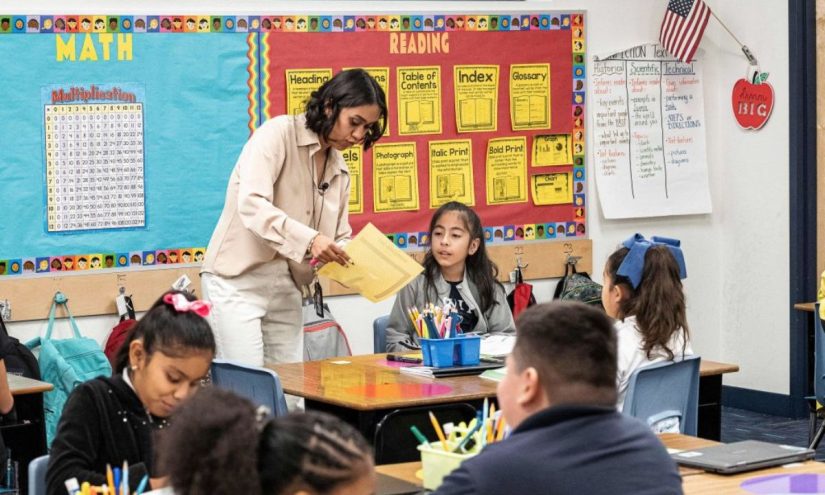
  • Teacher stress levels have surpassed pandemic-era highs

    Teacher stress levels have surpassed pandemic-era highs

    Key points:

    America’s K-12 educators are more stressed than ever, with many considering leaving the profession altogether, according to new survey data from Prodigy Education.

    The Teacher Stress Survey, which polled more than 800 K-12 educators across the U.S., found that nearly half of teachers (45 percent) view the 2024-25 school year as the most stressful of their careers. The surveyed educators were also three times more likely to say that the 2024-25 school year has been the hardest compared to 2020, when they had to teach during the height of the COVID-19 pandemic.

    Student behavior challenges (58 percent), low compensation (44 percent), and administrative demands (28 percent) are driving teacher burnout and turnover at alarming rates. Public school teachers were more likely to report stress from unrealistic workloads, large class sizes, school safety concerns, and student behavior issues than their private school counterparts.

    “The fact that stress levels for so many teachers have exceeded those of the pandemic era should be a wake-up call,” said Dr. Josh Prieur, director of education enablement at Prodigy Education and former assistant principal in the U.S. public school system. “Teachers need tangible, meaningful, and sustained support … every week of the year.”

    Additional key findings include:

    • The vast majority of teachers (95 percent) are experiencing some level of stress, with more than two-thirds (68 percent) reporting moderate to very high stress. K-5 teachers were the most likely to feel extremely/very stressed (33 percent). Sixty-three percent of teachers report that their current stress levels are higher than when they first started teaching. 
    • Nearly one in 10 teachers surveyed (9 percent) are planning to leave the profession this year, while nearly one in four (23 percent) are actively thinking about it. One-third of teachers do not expect to be teaching three years from now, likely because nearly half (48 percent) of teachers don’t feel appreciated for the work that they do.
    • Teachers are finding ways to prioritize their well-being, but time limits and job pressures often get in the way. Seventy-eight percent of teachers say they actively make time for self-care, but nearly half (43 percent) feel guilty for spending time on self-care and 78 percent have skipped self-care due to work demands. Implementing school-provided self-care perks and mandatory self-care breaks would appeal to teachers, with 85 percent and 76 percent taking advantage of each benefit, respectively.
    • Top solutions that would reduce teachers’ stress include a higher salary (59 percent), a four-day school week (33 percent), stronger classroom discipline policies (32 percent), and smaller class sizes (25 percent). Public school teachers were more likely to prefer a shorter week, while private school educators opted for higher pay. 

    “Teacher Appreciation Week should serve as the starting point for building systems that show we value teachers’ time, talent, and well-being,” said Dr. Prieur. “Districts can do this by investing in tools that reduce the burden on teachers, prioritizing time for self-care and implementing policies that reinforce teachers’ value as an ongoing commitment to bettering the profession.”

    This press release originally appeared online.

    Laura Ascione
    Latest posts by Laura Ascione (see all)

    Source link

  • New Jersey students in special education stuck in separate classrooms

    New Jersey students in special education stuck in separate classrooms

    CINNAMINSON, N.J. — Terri Joyce believed that her son belonged in a kindergarten classroom that included students with and without disabilities.

    The year before, as a 4-year-old, he happily spent afternoons in a child care program filled with typically developing children, without any extra support. Like other kids his age, her son, who has Down syndrome, was learning about shapes and loved sitting on the rug listening to the teacher read books aloud. His speech delay didn’t prevent him from making friends and playing with children of differing abilities and, during the summer, he attended the same program for full days and would greet her with big smiles at pick up time.

    But when Joyce met with school district administrators ahead of her son’s kindergarten year, they told her that he would need to spend all day in a classroom that was only for students with significant disabilities.

    “They absolutely refused to even consider it,” Joyce said. “They told us, ‘We move so fast in kindergarten, he needs specialized instruction, he’ll get frustrated.’”

    It was the separate classroom that left him frustrated.

    Terri Joyce said her son, who has Down syndrome, has thrived after she fought for him to be included in a general education classroom. Credit: Yunuen Bonaparte for The Hechinger Report

    Under federal law, students with disabilities — who once faced widespread outright exclusion from public schools — have a right to learn alongside peers without disabilities “to the maximum extent” possible. That includes the right to get accommodations and help, like aides, to allow them to stay in the general education classroom. Schools must report crucial benchmarks, including how many students with disabilities are learning in the general education classroom over 80 percent of the time.

    More than anywhere else in the country, New Jersey students with disabilities fail to reach this threshold, according to federal data. Instead, they spend significant portions of the school day in separate classrooms where parents say they have little to no access to the general curriculum — a practice that can violate their civil rights under federal law.

    Just 49 percent of 6- and 7-year-olds with disabilities in the state spend the vast majority of their day in a general education classroom, compared with nearly three-quarters nationally. In some New Jersey districts, it was as low as 10 percent for young learners. Only 45 percent of students with disabilities of all ages are predominantly in a general education classroom, compared to 68 percent nationwide.

    For over three decades, the state has faced lawsuits and federal monitoring for its continued pattern of unnecessarily segregating students with disabilities and regularly fails to meet the targets it sets for improving inclusion.

    Surrounded mostly by children who had trouble communicating, Terri Joyce’s son’s speech development stalled. He wasn’t exposed to what his peers in the general education classroom were learning — like science and social studies.

    For Terri Joyce, getting her son included in a general education classroom “was a part-time job” and meant staying on top of, and documenting, his academic and social progress. Credit: Yunuen Bonaparte for The Hechinger Report

    Joyce tried mediation with the Cinnaminson district but they refused to budge. In the end, she hired a lawyer, filed a due process claim with the state and succeeded in having her son placed in a classroom that included students with and without disabilities the next year, repeating kindergarten to see if he could regain the skills he had lost. The process cost her family thousands of dollars.

    Related: Become a lifelong learner. Subscribe to our free weekly newsletter featuring the most important stories in education.

    The Hechinger Report spoke with more than 80 parents, researchers, lawyers, advocates and school officials across the state who described a widespread failure to devote resources to integrating students with disabilities — and a decentralized system that gives enormous power to district leaders, who have long been able to refuse to prioritize inclusion without facing consequences from the state or federal government.

    New Jersey is known nationally as a leader in public education, but the state’s governance system has led to inclusion rates that vary dramatically between districts. As a result, a child who is placed in a separate classroom for the entire day in one district could be included all day in a general education classroom in a neighboring one.

    “Mindset is the biggest barrier,” said Michele Gardner, executive director of All In for Inclusive Education and previously an administrator for 15 years in the Berkeley Heights district. “There are educators, parents, administrators and physicians who truly believe that separate is better for children with and without disabilities. With more than 600 districts, local control makes change harder.”

    Experts say integrating students with disabilities in general education should be easiest, and can be the most beneficial, in the early years. Researchers have found students with and without disabilities — particularly the youngest learners — can benefit when inclusion is done with enough staffing and commitment. Young children also learn from watching each other, and parents worry denying students with disabilities this chance can have lasting damage on them academically and emotionally. Worldwide, inclusion is considered a human right helping all children develop empathy and prepare for society after graduation.

    Too often, New Jersey parents say, young learners are placed right away in separate classrooms based on a diagnosis — as Joyce’s son was — rather than an assessment of what support they actually need.

    Just over a decade ago, New Jersey settled a class-action lawsuit filed by parents and advocacy groups over student placement, which required years of state monitoring, a new stakeholder committee, and training and technical assistance for districts with the lowest rates of inclusion.

    But since then, the proportion of young students in the general education classroom the vast majority of the day actually decreased by about 5 percentage points, from 54 percent in the 2013-14 school year. Nationwide, there was no such drop.

    “We are certainly seeing a trend that, even at younger ages, students are being shuttled into segregated schooling and never really starting in inclusive experiences,” Syracuse University inclusive special education professor Christine Ashby said of New Jersey and other states. 

    Ashby, who also runs the university’s Center on Disability and Inclusion, said students then tend to stay in separate — commonly called self-contained — classrooms, where they may receive individualized instruction alongside peers with disabilities but may be less prepared for life after high school.

    Related: Hundreds of thousands of students are entitled to training and help finding jobs. They don’t get it      

    For Terri Joyce, the opportunity she fought for her son to have proved worth it. It took him time to adjust, but with the help of an aide, he settled in and, now in first grade, is thriving alongside his general education peers once again.

    “It was like night and day,” said Joyce. “His speech improved. He loves school. He has friends. He gets invited to birthday parties.”

    Terri Joyce is happy with how her son’s writing skills have developed in first grade while learning in a general education classroom. Credit: Yunuen Bonaparte for The Hechinger Report

    New Jersey Department of Education officials declined a request for an interview, but said in a statement that the agency is working with schools statewide to improve how often students with disabilities are placed in general education classrooms through training, technical assistance and programs promoting inclusion. A new website provides a detailed look at each district’s data, broken down by grade and type of disability.

    “All placement decisions must be made on an individual basis and there is no one-size-fits all standard or outcome that should be applied to every district, school or student,” Laura Fredrick, the department’s communication director, said in the emailed statement.

    Fredrick said districts that fail to meet state goals for increasing inclusion may face more intensive monitoring, but there are no direct financial penalties or automatic consequences for failing to improve. She also noted that the state pays for voluntary training to increase inclusion in K-12 schools.

    That program has helped in some districts, but a limited number of schools have participated so far and space is limited — some that have applied for the training have been turned away.

    In Cinnaminson, district officials said they could not comment on specific students but that school officials and parents work together on placement decisions.

    “To the fullest extent possible, we strive to place students in general education classrooms for the most inclusive educational experience,” Superintendent Stephen Cappello said in a statement.

    Some experts said the data suggests that, unlike other states, New Jersey districts do a good job providing individualized services that students need. Autism New Jersey clinical director Joe Novak said in contrast, “There are certain districts, or states, where the default may simply be to place the child in general education and say, ‘Well, best of luck.’”

    Indeed a frequent complaint from some parents is the lack of specialized services in general education classrooms, especially because of staffing shortages or lack of expertise. In those cases a student may be counted as included in a general education classroom but without the support they need, which advocates on both sides of the debate say can be harmful. 

    “New Jersey is probably doing a lot of things right, because it means we’re probably really customizing what makes sense for the individual,” Novak said

    Yet others say the state can improve inclusion rates that are sharply lower than the nation’s.

    Related: Special education and Trump: What parents and schools need to know    

    The federal government doesn’t say how many students should be included or for how much of the school day. States set targets for inclusion rates but typically don’t fine or sanction districts for not meeting them. States can also take other steps like requiring training or administrative changes for districts. Advocates say New Jersey districts have little to lose for repeatedly falling below the state’s own targets for including children with disabilities.

    Oversight from the federal government could also diminish going forward. Although the Trump administration pledges to continue funding special education, advocates warn the planned dismantling of the Department of Education, including its civil rights enforcement arm, will harm students with disabilities.

    “It’s sort of petrifying, from my end, for these families,” said Jessica Weinberg, a former New Jersey school district attorney who now runs a special education law firm.

    “It could be completely disbanded,” she said of the Education Department. “The uncertainty is really unsettling.”

    Federal law says students should be placed in separate classrooms “only if” they can’t learn in the general education classroom with services detailed in IEPs, or individualized education programs — the document that outlines a student’s needs, the services they should receive and where they’ll receive them. Teachers, school officials and parents sit on their child’s IEP team, which is supposed to review placement decisions each year.

    And parents across New Jersey say it takes time and money to fight for access to general education classrooms — which means whether a child is included can reflect existing racial disparities and whether families can afford lawyers and advocates. Parents say when a school argues their child must be taught separately, their best way of fighting that decision is lawyers and experts — if they can afford it.

    Districts with less poverty and a larger share of white students tend to have higher inclusion rates and test scores, according to The Hechinger Report’s analysis of state data. Overall, just 37 percent of Black students in kindergarten, first or second grade in New Jersey are included in the general education classroom for the vast majority of the school day, compared to half of white students.

    It’s challenging to get special education services in urban and lower-income districts in the first place, said Nicole Whitfield, a mother of a child with a disability who founded an advocacy group in Trenton for families fighting for special education services.

    Urban “districts are so overloaded with so many kids, they don’t do a good job in managing it,” she said.

    In all districts, arguments against including more students often hinge on money. Administrators may say they can’t afford all the services every child needs, like an aide assigned to work with one child, and some parents worry providing comprehensive services could strain budgets or cut services for students without disabilities. As special education costs rise, the federal government has long failed to provide as much special education funding as it pledged.

    Related: How a disgraced method of diagnosing learning disabilities persists in our nation’s schools

    The way New Jersey funds schools doesn’t consider how many students have disabilities. The governor’s proposed budget for the upcoming school year would take that into account and increase overall special education spending by about $400 million — though some districts will lose money. Lawmakers are debating the governor’s proposal, which has some support from the chair of the state Senate Education Committee, Sen. Vin Gopal.

    Yet districts spend hundreds of millions of dollars a year to pay tuition at private schools ($784 million last year statewide) and fight legal battles — money advocates say could boost public special education.

    It cost Washington Township school district about $90,000 to send Nicole Lannutti’s daughter, who is non-verbal and has a developmental delay, to a private preschool for a year rather than educate her in one of its schools.

    “If you can come up with the money for lawsuits, why can’t you put it into the district right now?” Lannutti said. “That makes no sense.”

    Washington Township school district did not respond requests for comment.

    Whittier Elementary School in Teaneck, New Jersey, rearranged its classrooms to improve how many students with disabilities are included in classes with their peers. Credit: Meredith Kolodner/The Hechinger Report

    In some districts, officials say inclusion doesn’t cost more in the long run, even if there are upfront costs. Administrators in Sparta Township, for example, said improving inclusion rates didn’t require more spending. Its schools got help from the New Jersey Inclusion Project — the state-funded training program that helps districts provide students with the least restrictive learning environment appropriate for them.

    “[It] has really changed the way we educate our students,” said Adrienne Castorina, Sparta’s director of special services. Teachers found that they were able to provide specialized instruction in reading inside a general education classroom, for example, instead of pulling children out and teaching them in separate rooms. 

    In 2024, a special education parent advisory committee in Bernards Township School District asked administrators to apply to the New Jersey Inclusion Project. Parents thought the program would be a no-cost, collaborative path forward.

    District officials refused.

    Many parents in the wealthy district say Bernards’ classroom staff are committed and skilled, but they also say there’s an unwritten policy of separating children based on their diagnosis — close to three-quarters of children with autism, for example, spend the vast majority of their day without contact with their general education peers.

    For years, Trish Sumida pleaded with staff at her daughter’s elementary school in Bernards to allow her to have contact with her non-disabled peers. But every day, starting in kindergarten, she learned only alongside other children with autism. Most years, she was the only girl in the room, and she longed for someone to play with who shared her interests.

    “Those early years are so important,” said Sumida, whose daughter is now in fifth grade and still spends most of her time in a separate classroom. “I feel like we’ve missed our window.”

    Many Bernards parents are particularly frustrated by the refusal to set up co-taught classrooms, a nationally used approach where a general education and special education teacher work together to educate students with and without disabilities.

    Jean O’Connell, Bernards’ director of special services, rejected the idea of co-taught classes in elementary school, saying they made it harder to support individual students, particularly in reading. “We had this model in place for many years and found it ineffective,” she said in an email.

    Related: For kids with disabilities, child care options are worse than ever    

    Research suggests even students with significant disabilities can learn alongside general education peers with help from co-teachers or paraprofessionals. And a large body of evidence suggests inclusion doesn’t harm learners with or without disabilities.

    Some scholars say inclusion research is flawed because students who appear to benefit may need less support and have fewer academic struggles. Such experts point out that a separate classroom may be the appropriate setting for some children, who could languish without intensive support in a general education classroom. And schools with high inclusion rates on paper may place students with disabilities in general education without needed aides and accommodations — which federal data does not capture.

    Even a prominent researcher who has questioned the benefits of inclusion, however, said most children don’t need to be taught separately all day.

    “Most students with disabilities do not need very intensive forms of instruction,” said Vanderbilt University special education professor Douglas Fuchs.

    O’Connell did not respond to questions about why Bernards refused to participate in the New Jersey Inclusion Project and said only that the district has participated in inclusion workshops. She added that the district has no “blanket district-wide policy on inclusion” and involves parents in all placement decisions.

    Yet several Bernards parents said they met intense resistance from administrators. One mom said her child who has autism that requires limited support was in an inclusion classroom for pre-K without any problems, but Bernards administrators insisted he be placed in a self-contained classroom for kindergarten.

    “He would cry to me every morning and say he didn’t want to go to school,” said the mom, who asked not to be named, afraid her child could experience discrimination because of his disability if identified. “I just felt heartbroken every day.”

    She tried repeatedly to have him moved, eventually turning to mediation and filing a complaint with the state. Ultimately, she felt her child couldn’t wait for a resolution. She moved to another district last fall, where he learns alongside his general education peers all day. She said her child is now happy and doing well academically and socially.

    Related: Students with disabilities often snared by subjective discipline rules         

    Other districts that have struggled with low levels of inclusion have embraced outside help — including from the Inclusion Project. The program helped Whittier Elementary School in Teaneck create its first co-taught classrooms two years ago. Teachers there said the shift requires a lot of planning and they wish they had more staff to provide support, but they’ve seen their students develop academically and socially.

    “When you think about the conversations that kids have — turn to your partner, talk to your table, those opportunities aren’t there in self-contained,” said Janine Lawler, who has been a special education teacher for 18 years, mostly in self-contained classrooms, and is now co-teaching in a first-grade class.

    Janine Lawler teaches math to a group of first graders in Teaneck, New Jersey. Her classroom includes students with and without disabilities. Credit: Meredith Kolodner/The Hechinger Report

    Educators say they can provide intensive instruction without having to separate children for large portions of the day.

    “Do we have to isolate young people to give them a service, or can we include them and provide the same service or greater service?” said André Spencer, superintendent of Teaneck Public Schools. “We believe we can include them.”

    For decades, New Jersey education officials have failed to support or pressure districts to improve their inclusion rates. A 2004 report found a lack of consequences — such as financial penalties — for New Jersey districts who repeatedly failed to increase inclusion of students with disabilities despite years of promises to improve.

    “There’s a culture in New Jersey, which is that you teach kids with impairments in segregated classes,” said Carol Fleres, a long-time special education administrator in New Jersey who is now a special education professor and department co-chair at New Jersey City University.

    A 2018 report by the National Council on Disability, an independent federal agency, found “serious contradictions” in New Jersey’s regulations that lay out how schools have to provide special education services. For example: The state categorizes students as having mild, moderate or severe disabilities and says that students with similar behavioral or academic needs should be grouped together.

    Those issues make it easy for New Jersey schools to lump students with disabilities together in violation of federal requirements, according to the report.

    A spokesman for New Jersey’s education department defended the regulations as doing the opposite. “This arrangement helps ensure that students who require more individualized instruction, especially those whose needs cannot be met in a general education setting, even with supplementary aids and services, are educated in smaller, more supportive environments,” Michael Yaple said in an email.

    Despite settlements and scrutiny, advocates want more accountability: New Jersey’s State Special Education Advisory Council, which advises the state Education Department on special education issues, recommended required training for districts with low inclusion rates.

    Special education parent and advocate Amanda Villamar, who works with families throughout New Jersey, said education officials try to educate the state’s over 600 school districts — but those efforts only go so far.

    “We have a lot of districts that just say: ‘Well, it’s guidance. We don’t have to do it,’” Villamar said. “They literally just don’t even give it the time of day. Then you have other districts that put a lot of work and thought and effort into it.”

    Related: OPINION: Students with disabilities should not lose their rights when they are placed in private settings by public school systems

    Lawyers representing families said young children with behavioral challenges or intellectual disabilities often wind up in separate classrooms for years, even if behaviors improve. Promises of inclusion in gym class or at lunch don’t always happen, they said.

    Many parents said they felt forced to agree to separate classrooms, with the promise of inclusion, eventually. That day never came.

    “Once you start restricting them, how are you going to get them back and get them increasingly more time within the classroom?” said Elizabeth Alves, a member of the State Special Education Advisory Council.

    For Terri Joyce’s son, learning in the co-taught classroom meant accessing the general education curriculum, including social studies. The lessons on civil rights inspired him.

    “He became obsessed with Martin Luther King,” she said. “He still will sit for hours and watch YouTube videos of his speeches.”

    Like other students with disabilities, her son’s IEP is subject to an annual review, which means that inclusion in the general education classroom isn’t guaranteed in the years to come. Joyce says that means constant vigilance in a process that feels like a part-time job.

    But her efforts to have her son included are about more than academics. He’s on the flag football team. He rides the school bus. Other kids recognize him and say hello in the grocery store.

    “It’s much bigger than just his education and being included in the classroom,” she said. “Being included in school means he’s more included in life, and he’s more included in our community, and he’s more valued.”

    Contact investigative reporter Marina Villeneuve at 212-678-3430 or [email protected] or on Signal at mvilleneuve.78

    Contact senior investigative reporter Meredith Kolodner at 212-870-1063 or [email protected] or on Signal at merkolodner.04

    This story about special education classrooms was produced by The Hechinger Report, a nonprofit, independent news organization focused on inequality and innovation in education. Sign up for the Hechinger newsletter.

    The Hechinger Report provides in-depth, fact-based, unbiased reporting on education that is free to all readers. But that doesn’t mean it’s free to produce. Our work keeps educators and the public informed about pressing issues at schools and on campuses throughout the country. We tell the whole story, even when the details are inconvenient. Help us keep doing that.

    Join us today.

    Source link

  • A big reason why students with math anxiety underperform — they just don’t do enough math

    A big reason why students with math anxiety underperform — they just don’t do enough math

    Math anxiety isn’t just about feeling nervous before a math test. It’s been well-known for decades that students who are anxious about math tend to do worse on math tests and in math classes.

    But recently, some of us who research math anxiety have started to realize that we may have overlooked a simple yet important reason why students who are anxious about math underperform: They don’t like doing math, and as a result, they don’t do enough of it.

    We wanted to get a better idea of just what kind of impact math anxiety could have on academic choices and academic success throughout college. In one of our studies, we measured math anxiety levels right when students started their postsecondary education. We then followed them throughout their college career, tracking what classes they took and how well they did in them.

    We found that highly math-anxious students went on to perform worse not just in math classes, but also in STEM classes more broadly. This means that math anxiety is not something that only math teachers need to care about — science, technology and engineering educators need to have math anxiety on their radar, too.

    We also found that students who were anxious about math tended to avoid taking STEM classes altogether if they could. They would get their math and science general education credits out of the way early on in college and never look at another STEM class again. So not only is math anxiety affecting how well students do when they step into a STEM classroom, it makes it less likely that they’ll step into that classroom in the first place.

    Related: A lot goes on in classrooms from kindergarten to high school. Keep up with our free weekly newsletter on K-12 education.

    This means that math anxiety is causing many students to self-sort out of the STEM career pipeline early, closing off career paths that would likely be fulfilling (and lucrative).

    Our study’s third major finding was the most surprising. When it came to predicting how well students would do in STEM classes, math anxiety mattered even more than math ability. Our results showed that if you were a freshman in college and you wanted to do well in your STEM classes, you would likely be better off reducing your math anxiety than improving your math ability.

    We wondered: How could that be? How could math anxiety — how you feel about math — matter more for your academic performance than how good you are at it? Our best guess: avoidance.

    If something makes you anxious, you tend to avoid doing it if you can. Both in our research and in that of other researchers, there’s been a growing understanding that in addition to its other effects, math anxiety means that you’ll do your very best to engage with math as little as possible in situations where you can’t avoid it entirely.

    This might mean putting in less effort during a math test, paying less attention in math class and doing fewer practice problems while studying. In the case of adults, this kind of math avoidance might look like pulling out a calculator whenever the need to do math arises just to avoid doing it yourself.

    In some of our other work, we found that math-anxious students were less interested in doing everyday activities precisely to the degree that they thought those activities involved math. The more a math-anxious student thought an activity involved math, the less they wanted to do it.

    If math anxiety is causing students to consistently avoid spending time and effort on their classes that involve math, this would explain why their STEM grades suffer.

    What does all of this mean for educators? Teachers need to be aware that students who are anxious about math are less likely to engage with math during class, and they’re less likely to put in the effort to study effectively. All of this avoidance means missed opportunities for practice, and that may be the key reason why many math-anxious students struggle not only in math class, but also in science and engineering classes that require some math.

    Related: Experts share the latest research on how teachers can overcome math anxiety

    Math anxiety researchers are at the very beginning of our journey to understand ways to make students who are anxious about math stop avoiding it but have already made some promising suggestions for how teachers can help. One study showed that a direct focus on study skills could help math-anxious students.

    Giving students clear structure on how they should be studying (trying lots of practice problems) and how often they should be studying (spaced out over multiple days, not just the night before a test) was effective at helping students overcome their math anxiety and perform better.

    Especially heartening was the fact that the effects seen during the study persisted in semesters beyond the intervention; these students tended to make use of the new skills into the future.

    Math anxiety researchers will continue to explore new ways to help math-anxious students fight their math-avoidant proclivities. In the meantime, educators should do what they can to help their students struggling with math anxiety overcome this avoidance tendency — it could be one of the most powerful ways a math teacher can help shape their students’ futures.

    Rich Daker is a researcher and founder of Pinpoint Learning, an education company that makes research-backed tools to help educators identify why their students make mistakes. Ian Lyons is an associate professor in Georgetown University’s Department of Psychology and principal investigator for the Math Brain Lab.

    Contact the opinion editor at [email protected].

    This story about math anxiety was produced by The Hechinger Report, a nonprofit, independent news organization focused on inequality and innovation in education. Sign up for Hechinger’s weekly newsletter.

    The Hechinger Report provides in-depth, fact-based, unbiased reporting on education that is free to all readers. But that doesn’t mean it’s free to produce. Our work keeps educators and the public informed about pressing issues at schools and on campuses throughout the country. We tell the whole story, even when the details are inconvenient. Help us keep doing that.

    Join us today.

    Source link

  • Book bans draw libraries into damaging culture wars that undermine their purpose

    Book bans draw libraries into damaging culture wars that undermine their purpose

    For the last four years, school and public libraries have been drawn into a culture war that seeks to censor, limit and discredit diverse perspectives.

    Yet time and time again, as librarians have been encouraged or even directed to remove books that include LGBTQ+, Black, Latino and Indigenous characters or themes or history from their collections, they have said no.

    When librarians said no, policy changes were submitted and laws were proposed — all in the name of controlling the library collection.

    Some librarians lost their jobs. Some had their lives threatened. Legislators proposed bills that attempt to remove librarians’ legal protections, strive to prevent them from participating in their national professional associations, seek to limit some materials to “adults only” areas in public libraries and threaten the way library work has been done for decades.

    Here’s why this is wrong. For generations, libraries have been hubs of information and expertise in their communities. Librarians and library workers aid in workforce development, support seniors, provide resources for veterans, aid literacy efforts, buttress homeschool families —among many other community-enriching services. Your public library, the library in your school and at your college, even those in hospitals and law firms, are centers of knowledge. Restrictions such as book bans impede their efforts to provide information.

    Related: Become a lifelong learner. Subscribe to our free weekly newsletter featuring the most important stories in education. 

    Professional librarians study the First Amendment and understand what it means to protect the right to read. We provide opportunities for feedback from our users so that they have a voice in decision-making. We follow a code of ethics and guidelines to make the best selections for our communities.

    It is illegal for a library to purchase pornographic or obscene material; we follow the law established by the Supreme Court (Miller v. California, 1973). That decision has three prongs to determine if material meets the qualifications for obscenity. If the material meets all three, it is considered obscene and does not have First Amendment protection.

    But our procedures have been co-opted, abused and flagrantly ignored by a small and vocal minority attempting to control what type of information can be accessed by all citizens. Their argument, that books are not banned if they are available for purchase, is false.

    When a book or resource is removed from a collection based on a discriminatory point of view, that is a book ban.

    Librarians follow a careful process of criteria to ensure that our personal biases do not intervene in our professional work. Librarians have always been paying attention. In 1939, a group of visionary librarians crafted the Library Bill of Rights to counter “growing intolerance, suppression of free speech and censorship affecting the rights of minorities and individuals.” In 1953, librarians once again came together and created the Freedom to Read Statement, in response to McCarthyism.

    You may see a similar censorship trend today — but with the advent of the internet and social media, the speed at which censorship is occurring is unparalleled.

    Much of the battle has focused on fears that schoolchildren might discover books depicting families with two dads or two moms, or that high school level books are available at elementary schools. (Spoiler alert: they are not.)

    Related: The magic pebble and a lazy bull: The book ban movement has a long timeline

    The strategy of this censorship is similar in many localities: One person comes to the podium at a county or school board meeting and reads a passage out of context. The selection of the passage is deliberate — it is meant to sound salacious. Clips of this reading are then shared and re-shared, with comments that are meant to frighten people.

    After misinformation has been unleashed, it’s a real challenge to control its spread. Is some subject matter that is taught in schools difficult? Yes, that is why it is taught as a whole, and not in passages out of context, because context is everything in education.

    Librarians are trained professionals. Librarians have been entrusted with tax dollars and know how to be excellent stewards of them. They know what meets the criteria for obscenity and what doesn’t. They have a commitment to provide something for everyone in their collections. The old adage “a good library has something in it to offend everyone” is still true.

    Thankfully, there are people across the country using their voices to fight back against censorship. The new documentary “Banned Together,” for example, shows the real-world impact of book banning and curriculum censorship in public schools. The film follows three students and their adult allies as they fight to reinstate 97 books pulled from school libraries.

    Ultimately, an attempt to control information is an attempt to control people. It’s an attempt to control access, and for one group of people to pass a value judgment on others for simply living their lives.

    Libraries focus on the free expression of ideas and access to those ideas. All the people in our communities have a right to read, to learn something new no matter what their age.

    Lisa R. Varga is the associate executive director, public policy and advocacy, at the American Library Association.

    Contact the opinion editor at [email protected].

    This story about book bans was produced by The Hechinger Report, a nonprofit, independent news organization focused on inequality and innovation in education. Sign up for Hechinger’s weekly newsletter.

    The Hechinger Report provides in-depth, fact-based, unbiased reporting on education that is free to all readers. But that doesn’t mean it’s free to produce. Our work keeps educators and the public informed about pressing issues at schools and on campuses throughout the country. We tell the whole story, even when the details are inconvenient. Help us keep doing that.

    Join us today.

    Source link

  • What I learned building an AI tool for my own kids (and millions more worldwide)

    What I learned building an AI tool for my own kids (and millions more worldwide)

    Stay up-to-date with the
    INNOVATIONS
    in K-12 Education Newsletter

    Name