Category: Technology

  • Will US science survive and thrive, or fade away?

    Will US science survive and thrive, or fade away?

    by Paul Temple

    When Robert Oppenheimer graduated from Harvard in 1925, young American scientists wanting to work with the world’s best researchers crossed the Atlantic as a matter of course. As a theoretical physicist, Oppenheimer’s choice was between Germany, particularly Göttingen and Leipzig, and England, particularly Cambridge. If you’ve seen the movie, you’ll know that Cambridge didn’t work out for him, so in 1926 he went to work with Max Born, one of the leading figures in quantum mechanics, at Göttingen, receiving his doctorate there just a year later. His timing was good: within a few years from the Nazi seizure of power in 1933, attacks on academics, Jewish and otherwise, and then of course the Second World War, had destroyed what was perhaps the world’s most important university system. Let us note that academic structures, depending on relatively small numbers of intellectual leaders, usually able to move elsewhere, are fragile creations.

    I used to give a lecture about the role of universities in driving economic development, with particular reference to scientific and technological advances. Part of this lecture covered the role of US universities in supporting national economic progress, starting with the Land Grant Acts (beginning in 1862, in the middle of the Civil War for heaven’s sake!), through which the federal government funded the creation of universities in the new states of the west; going on to examine support for university research in the Second World War, of which the Manhattan Project was only a part; followed by the 1945 report by Vannevar Bush, Science – the endless frontier, which provided the rationale for continued government support for university research. The Cold War was then the context for further large-scale federal funding, not just in science and technology but in social science also, spin-offs from which produced the internet, biotech, Silicon Valley, and a whole range of other advanced industries. So, my lecture concluded, look at what a century-and-a-half of government investment in university-derived knowledge gets you: if not quite a new society, then one changed out of all recognition – and, mostly, for the better.

    The currently-ongoing attack by the Trump administration on American universities seems to have overlooked the historical background just sketched out. My “didn’t it work out just fine?” lecture now needs a certain amount of revision: it is almost describing a lost world.

    President Trump and his MAGA movement, says Nathan Heller writing in The New Yorker this March, sees American universities as his main enemies in the culture wars on which his political survival depends. Before he became Trump’s Vice-President, JD Vance in a 2021 speech entitled “The Universities are the enemy” set out a plan to “aggressively attack the universities in this country” (New York Times, 3 June 2025). University leaderships seem to have been unprepared for this unprecedented assault, despite ample warning. (A case where Trump and his allies needed to be taken both literally and seriously.) Early 2025 campus pro-Palestinian protests then conveniently handed the Trump administration the casus belli to justify acting against leading universities, further helped by clumsy footwork on the part of university leaderships who seem largely not to have rested their cases on the very high freedom of speech bar set by the First Amendment, meaning that, for example, anti-Semitic speech (naturally, physical attacks would be a different matter) would be lawful under Supreme Court rulings, however much they personally may have deplored it. Instead, university presidents allowed themselves to be presented as apologists for Hamas. (Needless to say, demands that free speech should be protected at all costs does not apply in the Trump/Vance world to speech supporting causes of which they disapprove.)

    American universities have never faced a situation remotely like this. As one Harvard law professor quoted in the New Yorker piece remarks, the Trump attacks are about the future of “higher education in the United States, and whether it is going to survive and thrive, or fade away”. If you consider that parallels with Germany in 1933 are far-fetched, please explain why.

    SRHE Fellow Dr Paul Temple is Honorary Associate Professor in the Centre for Higher Education Studies, UCL Institute of Education.

    Author: SRHE News Blog

    An international learned society, concerned with supporting research and researchers into Higher Education

    Source link

  • Furore over Stanford University AI conference – Campus Review

    Furore over Stanford University AI conference – Campus Review

    A controversial conference at a prestigious American university where AI will author and review academic research papers has faced worldwide backlash as Australian academics join the debate about the event.

    Please login below to view content or subscribe now.

    Membership Login

    Source link

  • Cellphone bans can help kids learn — but Black students are suspended more as schools make the shift

    Cellphone bans can help kids learn — but Black students are suspended more as schools make the shift

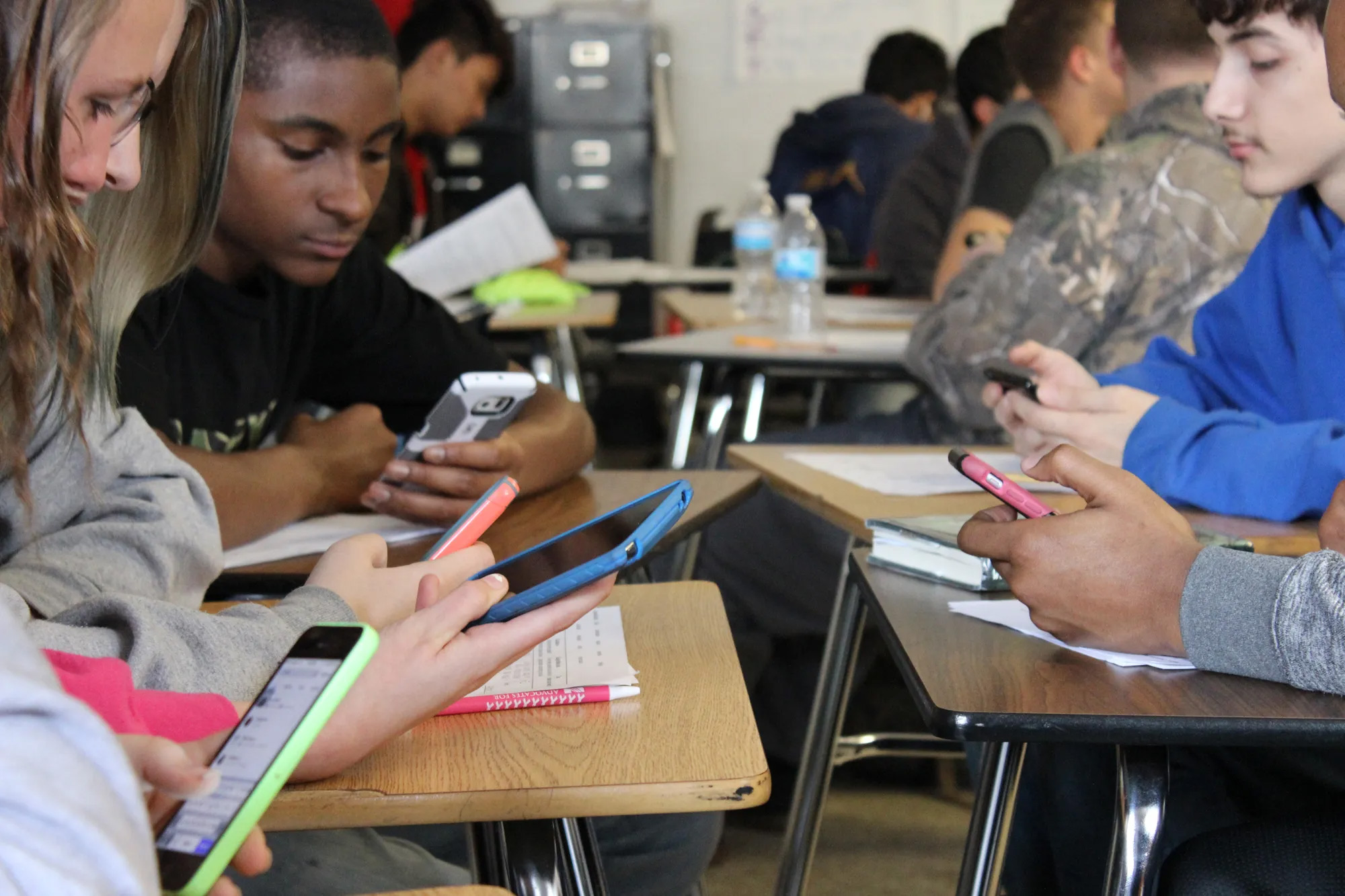
    Thirty states now limit or ban cellphone use in classrooms, and teachers are noticing children paying attention to their lessons again. But it’s not clear whether this policy — unpopular with students and a headache for teachers to enforce — makes an academic difference. 

    If student achievement goes up after a cellphone ban, it’s tough to know if the ban was the reason. Some other change in math or reading instruction might have caused the improvement. Or maybe the state assessment became easier to pass. Imagine if politicians required all students to wear striped shirts and test scores rose. Few would really think that stripes made kids smarter.

    Two researchers from the University of Rochester and RAND, a nonprofit research organization, figured out a clever way to tackle this question by taking advantage of cellphone activity data in one large school district in Florida, which in 2023 became the first state to institute school cellphone restrictions. The researchers compared schools that had high cellphone activity before the ban with those that had low cellphone usage to see if the ban made a bigger difference for schools that had high usage. 

    Indeed, it did. 

    Related: Our free weekly newsletter alerts you to what research says about schools and classrooms.

    Student test scores rose a bit more in high cellphone usage schools two years after the ban compared with schools that had lower cellphone usage to start. Students were also attending school more regularly. 

    The policy also came with a troubling side effect. The cellphone bans led to a significant increase in student suspensions in the first year, especially among Black students. But disciplinary actions declined during the second year. 

    “Cellphone bans are not a silver bullet,” said David Figlio, an economist at the University of Rochester and one of the study’s co-authors. “But they seem to be helping kids. They’re attending school more, and they’re performing a bit better on tests.”

    Figlio said he was “worried” about the short-term 16 percent increase in suspensions for Black students. What’s unclear from this data analysis is whether Black students were more likely to violate the new cellphone rules, or whether teachers were more likely to single out Black students for punishment. It’s also unclear from these administrative behavior records if students were first given warnings or lighter punishments before they were suspended. 

    The data suggest that students adjusted to the new rules. A year later, student suspensions, including those of Black students, fell back to what they had been before the cellphone ban.

    “What we observe is a rocky start,” Figlio added. “There was a lot of discipline.”

    The study, “The Impact of Cellphone Bans in Schools on Student Outcomes: Evidence from Florida,” is a draft working paper and has not been peer-reviewed. It was slated to be circulated by the National Bureau of Economic Research on Oct. 20 and the authors shared a draft with me in advance. Figlio and his co-author Umut Özek at RAND believe it is the first study to show a causal connection between cellphone bans and learning rather than just a correlation.

    The academic gains from the cellphone ban were small, less than a percentile point, on average. That’s the equivalent of moving from the 50th percentile on math and reading tests (in the middle) to the 51st percentile (still close to the middle), and this small gain did not emerge until the second year for most students. The academic benefits were strongest for middle schoolers, white students, Hispanic students and male students. The academic gains for Black students and female students were not statistically significant.  

    Related: Suspended for…what? 

    I was surprised to learn that there is data on student cellphone use in school. The authors of this study used information from Advan Research Corp., which collects and analyzes data from mobile phones around the world for business purposes, such as figuring out how many people visit a particular retail store. The researchers were able to obtain this data for schools in one Florida school district and estimate how many students were on their cellphones before and after the ban went into effect between the hours of 9 a.m. and 1 p.m.

    The data showed that more than 60 percent of middle schoolers, on average, were on their phones at least once during the school day before the 2023 ban in this particular Florida district, which was not named but described as one of the 10 largest districts in the country. (Five of the nation’s 10 largest school districts are in Florida.) After the ban, that fell in half to 30 percent of middle schoolers in the first year and down to 25 percent in the second year.

    Elementary school students were less likely to be on cellphones to start with and their in-school usage fell from about 25 percent of students before the ban to 15 percent after the ban. More than 45 percent of high schoolers were on their phones before the ban and that fell to about 10 percent afterwards.

    Average daily smartphone visits in schools, by year and grade level

    Average daily smartphone visits during regular school days (relative to teacher workdays without students) between 9am and 1pm (per 100 enrolled students) in the two months before and then after the 2023 ban took effect in one large urban Florida school district. Source: Figlio and Özek, October 2025 draft paper, figure 2C, p. 23.

    Florida did not enact a complete cellphone ban in 2023, but imposed severe restrictions. Those restrictions were tightened in 2025 and that additional tightening was not studied in this paper.

    Anti-cellphone policies have become increasingly popular since the pandemic, largely based on our collective adult gut hunches that kids are not learning well when they are consumed by TikTok and SnapChat. 

    This is perhaps a rare case in public policy, Figlio said, where the “data back up the hunches.” 

    Contact staff writer Jill Barshay at 212-678-3595, jillbarshay.35 on Signal, or [email protected].

    This story about cellphone bans was produced by The Hechinger Report, a nonprofit, independent news organization focused on inequality and innovation in education. Sign up for Proof Points and other Hechinger newsletters.

    The Hechinger Report provides in-depth, fact-based, unbiased reporting on education that is free to all readers. But that doesn’t mean it’s free to produce. Our work keeps educators and the public informed about pressing issues at schools and on campuses throughout the country. We tell the whole story, even when the details are inconvenient. Help us keep doing that.

    Join us today.

    Source link

  • Next gen learning spaces: UDL in action

    Next gen learning spaces: UDL in action

    Key points:

    By embracing Universal Design for Learning (UDL) principles in purchasing decisions, school leaders can create learning spaces that not only accommodate students with disabilities but enhance the educational experience for all learners while delivering exceptional returns on investment (ROI).

    Strangely enough, the concept of UDL all started with curb cuts. Disability activists in the 1960s were advocating for adding curb cuts at intersections so that users of wheelchairs could cross streets independently. Once curb cuts became commonplace, there was a surprising secondary effect: Curb cuts did not just benefit the lives of those in wheelchairs, they benefited parents with strollers, kids on bikes, older adults using canes, delivery workers with carts, and travelers using rolling suitcases. What had been designed for one specific group ended up accidentally benefiting many others.

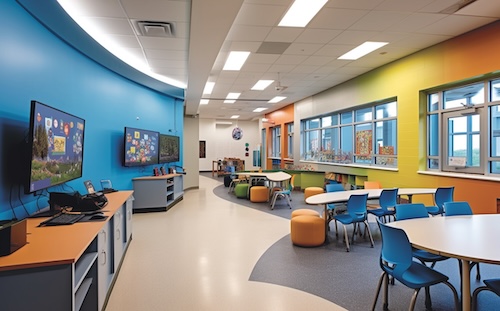
    UDL is founded on this idea of the “curb-cut effect.” UDL focuses on designing classrooms and schools to provide multiple ways for students to learn. While the original focus was making the curriculum accessible to multiple types of learners, UDL also informs the physical design of classrooms and schools. Procurement professionals are focusing on furniture and technology purchases that provide flexible, accessible, and supportive environments so that all learners can benefit. Today entire conferences, such as EDspaces, focus on classroom and school design to improve learning outcomes.

    There is now a solid research base indicating that the design of learning spaces is a critical factor in educational success: Learning space design changes can significantly influence student engagement, well-being, and academic achievement. While we focus on obvious benefits for specific types of learners, we often find unexpected ways that all students benefit. Adjustable desks designed for wheelchair users can improve focus and reduce fatigue in many students, especially those with ADHD. Providing captions on videos, first made available for deaf students, benefit ELL and other students struggling to learn to read.

    Applying UDL to school purchasing decisions

    UDL represents a paradigm shift from retrofitting solutions for individual students to proactively designing inclusive environments from the ground up. Strategic purchasing focuses on choosing furniture and tech tools that provide multiple means of engagement that can motivate and support all types of learners.

    Furniture that works for everyone

    Modern classroom furniture has evolved far beyond the traditional one-size-fits-all model. Flexible seating options such as stability balls, wobble cushions, and standing desks can transform classroom dynamics. While these options support students with ADHD or sensory processing needs, they also provide choice and movement opportunities that enhance engagement for neurotypical students. Research consistently shows that physical comfort directly correlates with cognitive performance and attention span.

    Modular furniture systems offer exceptional value by adapting to changing needs throughout the school year. Tables and desks that can be easily reconfigured support collaborative learning, individual work, and various teaching methodologies. Storage solutions with clear labeling systems and accessible heights benefit students with visual impairments and executive functioning challenges while helping all students maintain organization and independence.

    Technology that opens doors for all learners

    Assistive technology has evolved from specialized, expensive solutions to mainstream tools that benefit diverse learners. Screen readers like NVDA and JAWS remain essential for students with visual impairments, but their availability also supports students with dyslexia who benefit from auditory reinforcement of text. When procuring software licenses, prioritize platforms with built-in accessibility features rather than purchasing separate assistive tools.

    Voice-to-text technology exemplifies the UDL principle perfectly. While crucial for students with fine motor challenges or dysgraphia, these tools also benefit students who process information verbally, ELL learners practicing pronunciation, and any student working through complex ideas more efficiently through speech than typing.

    Adaptive keyboards and alternative input devices address various physical needs while offering all students options for comfortable, efficient interaction with technology. Consider keyboards with larger keys, customizable layouts, or touchscreen interfaces that can serve multiple purposes across your student population.

    Interactive displays and tablets with built-in accessibility features provide multiple means of engagement and expression. Touch interfaces support students with motor difficulties while offering kinesthetic learning opportunities for all students. When evaluating these technologies, prioritize devices with robust accessibility settings including font size adjustment, color contrast options, and alternative navigation methods.

    Maximizing your procurement impact

    Strategic procurement for UDL requires thinking beyond individual products to consider system-wide compatibility and scalability. Prioritize vendors who demonstrate commitment to accessibility standards and provide comprehensive training on using accessibility features. The most advanced assistive technology becomes worthless without proper implementation and support.

    Conduct needs assessments that go beyond compliance requirements to understand your learning community’s diverse needs. Engage with special education teams, occupational therapists, and technology specialists during the procurement process. Their insights can prevent costly mistakes and identify opportunities for solutions that serve multiple populations.

    Consider total cost of ownership when evaluating options. Adjustable-height desks may cost more initially but can eliminate the need for specialized furniture for individual students. Similarly, mainstream technology with robust accessibility features often costs less than specialized assistive devices while serving broader populations.

    Pilot programs prove invaluable for testing solutions before large-scale implementation. Start with small purchases to evaluate effectiveness, durability, and user satisfaction across diverse learners. Document outcomes to build compelling cases for broader adoption.

    The business case for UDL

    Procurement decisions guided by UDL principles deliver measurable returns on investment. Reduced need for individualized accommodations decreases administrative overhead while improving response times for student needs. Universal solutions eliminate the stigma associated with specialized equipment, promoting inclusive classroom cultures that benefit all learners.

    Latest posts by eSchool Media Contributors (see all)

    Source link

  • For World Space Week it’s time to look up

    For World Space Week it’s time to look up

    This week marks World Space Week, an international celebration of humankind’s last frontier launched by the United Nations in 1999. In more than 80 countries, people are celebrating through thousands of events.

    One of the goals of space week is to let people know how many of the products we depend on down on earth came out of space exploration programs: Life support systems for miners, memory foam mattresses, scratch-resistant lenses, nutritional supplements, cordless tools and freeze-dried food.

    Learning about outer space and space exploration excites young people and attracts them to science, technology, engineering and math fields.

    But for News Decoder, it is the international cooperation we see in space exploration programs that excites us. When we look to the moon, our galaxy and beyond, we see the possibility for peace and cooperation here on Earth.

    To celebrate World Space Week, check out some of the stories we’ve published about outer space and the people exploring it.


    Source link

  • Unis need modern tech for flexible courses – Campus Review

    Unis need modern tech for flexible courses – Campus Review

    Calls for universities to offer shorter, more flexible courses that meet the demands of Australia’s future economy must be met with better technology management, according to sector voices from a leading software company.

    Please login below to view content or subscribe now.

    Membership Login

    Source link

  • The case for collaborative purchasing of digital assessment technology

    The case for collaborative purchasing of digital assessment technology

    Higher education in the UK has a solid background in leveraging scale in purchasing digital content and licenses through Jisc. But when it comes to purchasing specific technology platforms higher education institutions have tended to go their own way, using distinct specifications tailored to their specific needs.

    There are some benefits to this individualistic approach, otherwise it would not have become the status quo. But as the Universities UK taskforce on transformation and efficiency proclaims a “new era of collaboration” some of the long standing assumptions about what can work in a sharing economy are being dusted off and held up to the light to see if they still hold. Efficiency – including finding ways to realise new forms of value but with less overall resource input – is no longer a nice to have; it’s essential for the sector to remain sustainable.

    At Jisc, licensing manager Hannah Lawrence is thinking about the ways that the sector’s digital services agency can build on existing approaches to collective procurement towards a more systematic collaboration, specifically, in her case, exploring ideas around a collaborative route to procurement for technology that supports assessment and feedback. Digital assessment is a compelling area for possible collaboration, partly because the operational challenges are fairly consistent between institutions – such as exam security, scalability, and accessibility – but also because of the shared pedagogical challenge of designing robust assessments that take account of the opportunities and risks of generative AI technology.

    The potential value in collaboration isn’t just in cost savings – it’s also about working together to test and pilot approaches, and share insight and good practice. “Collaboration works best when it’s built on trust, not just transaction,” says Hannah. “We’re aiming to be transparent and open, respecting the diversity of the sector, and making collaboration sustainable by demonstrating real outcomes and upholding data handling standards and ethics.” Hannah predicts that it may take several years to develop an initial iteration of joint procurement mechanism, in collaboration with a selection of vendors, recognising that the approach could evolve over years to offer “best on class” products at a competitive price to institutions who participate in collective procurement approaches.

    Reviewing the SIKTuation

    One way of learning how to build this new collaborative approach is to look to international examples. In Norway, SIKT is the higher education sector’s shared services agency. SIKT started with developing a national student information system, and has subsequently rolled out, among other initiatives, national scientific and diploma archives, and a national higher education application system – and a national tender for digital assessment.

    In its first iteration, when the technology for digital assessment was still evolving, three different vendors were appointed, but in the most recent version, SIKT appointed one single vendor – UNIwise – as the preferred supplier for digital assessment for all of Norwegian higher education. Universities in Norway are not required to follow the SIKT framework, of course, but there are significant advantages to doing so.

    “Through collaboration we create a powerful lobby,” says Christian Moen Fjære, service manager at SIKT. “By procuring for 30,000 staff and 300,000 students we can have a stronger voice and influence with vendors on the product development roadmap – much more so than any individual university. We can also be collectively more effective in sharing insight across the network, like sample exam questions, for example.” SIKT does not hold views about how students should be taught, but as pedagogy and technology become increasingly intertwined, SIKT’s discussions with vendors are typically informed by pedagogical developments. Christian explains, “You need to know what you want pedagogically to create the specification for the technical solution – you need to think what is best for teaching and assessment and then we can think how to change software to reflect that.”

    For vendors, it’s obviously great to be able to sell your product at scale in this way but there’s more to it than that – serving a critical mass of buyers gives vendors the confidence to invest in developing their product, knowing it will meet the needs of their customers. Products evolve in response to long-term sector need, rather than short-term sales goals.

    SIKT can also flex its muscles in negotiating favourable terms with vendors, and use its expertise and experience to avoid pitfalls in negotiating contracts. A particularly pertinent example is on data sharing, both securing assurances of ethical and anonymous sharing of assessment data, and clarity about ultimate ownership of the data. Participants in the network can benefit from a shared data pool, but all need to be confident both that the data will be handled appropriately and that ultimately it belongs to them, not the vendor. “We have baked into the latest requirements the ability to claw back data – we didn’t have this before, stupid, right?” says Christian. “But you learn as the needs arise.”

    Difference and competition

    In the UK context, the sector needs reassurance that diversity will be accommodated – there’s a wariness of anything that looks like it might be a one-size-fits-all model. While the political culture in Norway is undoubtedly more collectivist than in the UK, Norwegian higher education institutions have distinct missions, and they still compete for prestige and to recruit the best students and staff.

    SIKT acknowledges these differences through a detailed consultation process in the creation of national tenders – a “pre-project” on the list of requirements for any technology platform, followed by formal consultation on the final list, overseen by a steering group with diverse sector representation. But at the end of the day to realise the value of joining up, there does need to be some preparedness to compromise, or to put it another way, to find and build on areas of similarity rather than over-refining on what can often be minor differences. Having a coordinating body like SIKT convene the project helps to navigate these issues. And, of course, some institutions simply decide to go another way, and pay more for a more tailored product. There is nothing stopping them from doing so.

    As far as SIKT is concerned, competition between institutions is best considered in the academic realm, in subjects and provision, as that is what benefits the student. For operations, collaboration is more likely to deliver the best results for both institutions and students. But SIKT remains agnostic about whether specific institutions have a different view. “We don’t at SIKT decide what counts as competitive or not,” says Christian. “Universities will decide for themselves whether they want to get involved in particular frameworks based on whether they see a competitive advantage or some other advantage from doing so.”

    The medium term horizon for the UK sector, based on current discussions, is a much more networked approach to the purchase and utilisation of technology to support learning and teaching – though it’s worth noting that there is nothing stopping consortia of institutions getting together to negotiate a shared set of requirements with a particular vendor pending the development of national frameworks. There’s no reason to think the learning curve even needs to be especially steep – while some of the technical elements could require a bit of thinking through, the sector has a longstanding commitment to sharing and collaboration on high quality teaching and learning, and to some extent what’s being talked about right now is mostly about joining the dots between one domain and another.

    This article is published in association with UNIwise. For further information about UNIwise and the opportunity to collaborate contact Tim Peers, Head of Partnerships.

    Source link

  • Before you click on that incredible deal…

    Before you click on that incredible deal…

    Scammers are everywhere on the internet, masquerading to obtain your personal information. Many social media users or website creators pose as government entities or other authorities to offer you things that seem too good to be true or use scare tactics, like fake warnings about things like late fines or missed court dates, to prompt online users into sharing personal information. 

    In an era of misinformation, how do we know when a website is real? 

    One way is to research a website’s domain. A domain name is the part of a website address preceded by .com, .net or other popular suffixes. It’s essentially just the base website name without the “https://” and “www.”

    “Measuring a website’s credibility might take time,” said Jordan Lyle, a senior reporter for Snopes.com. “Young journalists should know their stuff when it comes to domains and redirects.” 

    Snopes.com is one of the internet’s oldest fact-checking websites. He has more than 25 years of experience in managing websites and knows how to determine whether a site is legit. 

    Investigating internet sites

    Alex Kasprak, a former investigative journalist at Snopes.com, has conducted numerous investigations using information gleaned from Domain Name Server (DNS) registers. DNS registers contain information about a particular website, its URL and IP address — a unique number on every tech device you might use. 

    With the information he found, Kasprak has been able to uncover unreported connections between news websites and their funders and between scammers and their beneficiaries. 

    “DNS tools are a great first step into any investigation that involves the identity of people behind websites or possible undisclosed connections between them,” Kasprak said.

    Taking the expertise from these two investigative reporters, News Decoder has compiled the toolkit below to help perform a credible and comprehensive examination for publishing. 

    Are there red flags?

    Scam websites have certain red flags. They might lack legal documentation, for example, including terms of service and privacy policies. 

    Another sign is sloppiness and mistakes. Try skimming through various pages on the site to look for typos, glaringly incorrect information, vague contact information, skewed formatting and other things that seem unprofessional. 

    Lyle said that a website that promotes a specific giveaway might lack any biographical or contact information about the people promoting the product or offer.

    “Sometimes, scammers will include a mailing address that, upon searching for it, turns out to be a fulfillment center or a business that allows LLCs to anonymously register with that business’ physical office as a virtual address, shielding the scam’s operators from being identified,” Lyle said. 

    Conduct a website domain search.

    Kasprak said that the Internet Corporation for Assigned Names and Numbers (ICANN) operates as a phonebook for the internet.

    “In this analogy, the phone numbers are Internet Protocol (IP) addresses  — a string of numbers formatted like 0.0.0.0 — and the ‘names’ are the actual domain names [e.g. news-decoder.com] to which those IP addresses are associated,” Kasprak said. “Like a human with a phone, domain names can change IP addresses several times.”

    The first step for tracing the origins of a website involves what’s known as a “WHOIS” search — a specific type of domain search listing information about the creation of a domain. 

    WHOIS is a public database that lists several contact numbers, names or organisations associated with a given IP address or domain name. Many people these days use services that allow one to register a website anonymously, making the results have limited value. Older records, or those from some non-Western nations, often include actual names or corporate contacts, explained Kasprak. 

    A WHOIS search, which can be conducted at godaddy.com/whois, queries the public WHOIS database. 

    Lyle said he often looks at the date a person officially purchased and registered a domain name.. “For example, in the case of researching potential scams, if a domain name was recently registered, that’s a red flag indicating the website might be untrustworthy and could confirm the potential scam as legitimate,” he said.

    Look at the site history.

    Another great tool to pair with “WHOIS” searches is the Internet Archive’s Wayback Machine. When performing a “WHOIS” search on godaddy.com/whois, check to see when the domain was created. That year should match the Wayback Machine’s records of creation date, as well as show if the website had other owners with completely different websites. 

    “Also, know that the domain information listed in a WHOIS search might be the most recent data, but not the original data,” Lyle said. “Check the Wayback Machine to see if the website existed long ago in another form.”

    Scammers might also create fake domains to pretend to be a legitimate business, adjusting the URL link slightly to trick users. A fake Home Depot ad on Facebook, for example, didn’t lead to homedepot.com when clicked through, but instead to “h0medepott.com”; an “o” was changed to a zero and a second “t” was added to the end of the URL. 

    “Scammers have created fake domains almost matching the genuine business domain for banks, as well as for USPS, for example,” Lyle said. “Sometimes, scammers won’t even bother to create similar domain names and instead simply rely on people not looking at the URL.” 

    Some scammers go so far as to copy the web design of a company — logo and all — to trick consumers. These types of scam websites often offer giveaways that seem too good to be true, such as free money, super inexpensive offers for goods or services or non-existent programs for student loan forgiveness.

    “Of course, the biggest red flag would be an offer that seems too good to be true,” Lyle said. “If an offer seems too good to be true, it probably is. And I will go a step further: In 2025, if an offer seems too good to be true, it is. Avoid it.”

    For journalists all this should becoming standard practice when using information off the internet in news stories. 

    “Basically, you want to make sure you did everything you could with your research before publishing your article,” Lyle said. “And that you attempted to go above and beyond expectations other publishers might have for their articles’ comprehensive credibility.”


    Questions to consider:

    1. What are some common red flags that a website might be fake or trying to scam you?

    2. What is a DNS register and how is it useful to identify a potential scam?

    3. If a friend sent you an unknown link, what steps would you take before clicking? How would you explain your choice to click or not?


    Source link

  • Learning to debate is an important facet of education, but too often public school students are left out 

    Learning to debate is an important facet of education, but too often public school students are left out 

    Ever since I first stepped onto the debate stage, I have been passionate about speech and debate. For the last three of my high school years, I have competed and placed nationally at major tournaments in Dallas, Los Angeles, Chicago, Atlanta and Las Vegas, among many others. Debate demands an incredible amount of research, preparation and practice, but those aren’t the biggest challenges for me.  

    I attend a public high school in California that lacks a formal debate program or coach, which has forced me to choose between quitting an activity I love and competing independently without any school support.  

    I chose the latter. And that means I prepare alone in the dark, navigate complex registration processes and, most importantly, pay hefty fees. 

    As many of us know, debate is an effective way to strengthen students’ comprehension, critical thinking and presentation skills. Debate allows students to explore ideas in a myriad of topics, from biotechnology to nuclear proliferation​​​​, and find their unique passions and interests. 

    Yet for many students, a lack of school support is a major entry barrier. It has turned debate into another private-school-dominated space, where private-school students receive access to higher quality research and on-the-spot coaching on argument structure and prose, like a football coach adjusting strategy on the sidelines. Additionally, most prestigious tournaments in the U.S. prohibit non-school-affiliated debaters like me from competing altogether.  

    Related: A lot goes on in classrooms from kindergarten to high school. Keep up with our free weekly newsletter on K-12 education.  

    These circumstances de facto prevent lower-income debaters from becoming successful in the activity. And that is why I believe that all schools should incorporate speech and debate classes into their core curriculums. Existing history and English teachers could act as debate coaches, as they do in many private schools. School districts could even combine programs across high schools to save resources while expanding access (Mountain View High School and Los Altos High School in California have pursued this strategy).  

    Over the past two decades, the debate community has engaged in efforts to democratize access to speech and debate through the creation of new formats (for example, public forum), local debate associations and urban debate leagues, among others.  

    However, many of these initiatives haven’t been successful. These newer formats, initially intended to lessen the research burden on debaters, have shifted toward emphasizing strict evidence standards and complex debate jargon. This shift has made debate less, not more, accessible, and led to more students from private schools — who were quickly able to ​​​​out-prepare those from public​​ schools — entering and dominating the competition.  

    Local debate associations and​​​​ competitive leagues for neighboring schools have provided more students with opportunities to participate. Still, debate via these organizations is limited, as they don’t provide direct coaching to member schools or rigorous opportunities for students, and prohibit certain students and programs from competing.  

    Similarly, urban debate leagues (for example, the Los Angeles Metropolitan ​​​​Debate League) have been incredibly successful in expanding debate access to lower-income and minority students; however, these programs are concentrated in major metropolitan cities, face opposition from some school districts and rely on donor funding, which can be uncertain.  

    In my debate rounds, I have analyzed pressing social problems such as global warming and economic inequality through a policymaking lens; in some rounds I defended increased wealth taxes, and in others I argued against bans on fossil fuels. Without debate, I wouldn’t be so conscious of the issues in my community. Now, as I enter college, I’m looking forward to continuing debate and leveraging my skills to fight for change.  

    Related: High school students find common ground on the debate stage 

    Speaking of college, in the competition for admission to the most selective colleges, extracurricular involvement can be a deciding factor, and debate is an excellent way to stand out, at least for those students with proper support.  

    However, when students from rural and low-income communities lack access to the same opportunities as students from more metropolitan and higher-income communities, we risk exacerbating the educational achievement gap to our collective detriment.  

    In the meantime, debate tournaments should reduce entry barriers for nontraditional debaters and for students from public schools without coaches and extra support.  

    Without these initiatives, too many rural and low-income students will be excluded from an amazing activity, one that is especially important in today’s polarizing and divisive climate.  

    Aayush Gandhi is a student at Dublin High School. He is an avid writer and nationally ranked Lincoln-Douglas debater.  

    Contact the opinion editor at [email protected].  

    This story about debate programs was produced by The Hechinger Report, a nonprofit, independent news organization focused on inequality and innovation in education. Sign up for Hechinger’s weekly newsletter.  

    The Hechinger Report provides in-depth, fact-based, unbiased reporting on education that is free to all readers. But that doesn’t mean it’s free to produce. Our work keeps educators and the public informed about pressing issues at schools and on campuses throughout the country. We tell the whole story, even when the details are inconvenient. Help us keep doing that.

    Join us today.

    Source link

  • How UNE trained an AI-literate workforce – Campus Review

    How UNE trained an AI-literate workforce – Campus Review

    Almost all employees at the University of New England (UNE) use AI each day to augment tasks, despite the wider sector slowly adopting the tech into its workforce.

    Please login below to view content or subscribe now.

    Membership Login

    Source link