Category: Technology

  • Inside Adelaide uni’s digital experience – Campus Review

    Inside Adelaide uni’s digital experience – Campus Review

    Digital platforms are a key part of a positive student experience and will be a major focus for the new Adelaide University (AU), its digital project lead told an audience of academics on Thursday.

    Please login below to view content or subscribe now.

    Membership Login

    Source link

  • Designed in California but made … all over the world

    Designed in California but made … all over the world

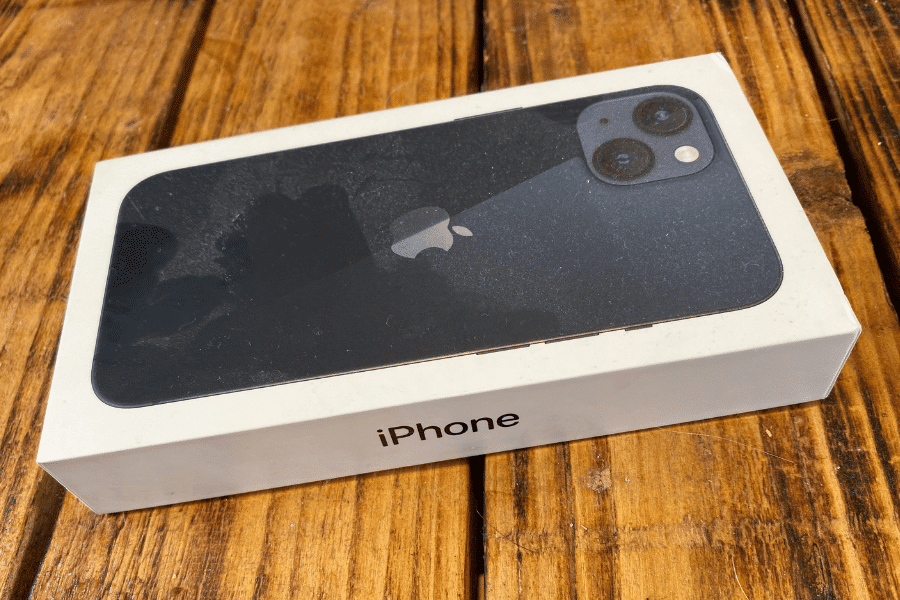
    Most of us spend a good part of our lives glued to our iPhone or other similar devices. It seems as if we cannot survive without being connected to cyberspace.

    It turns out that Apple, a U.S.-based company which makes the iPhone and depends on its sale, cannot survive without being connected to China, which is a key partner in the production of most every iPhone that people use. And that puts the iPhone at the center of the great power struggle underway between the United States and China.

    One of the earliest insights into iPhone production came along in 2010 thanks to research by economists Yuqing Xing and Neal Detert. They lifted the veil off the mystery behind the iPhone label “Designed by Apple in California, Assembled in China”.

    The iPhone model 3G was indeed designed in Cupertino, California, by Apple. But the vast majority of components were sourced from Japan, South Korea, Germany and elsewhere in the United States.  All iPhone components were then shipped for assembly to Foxconn, a Taiwanese contract manufacturer based in Shenzhen, China.

    Less than 4% of the iPhone manufacturing value came from the assembly in China.

    Manufacturing capability

    The iPhone was only first launched in 2007, and iPhones were not sold in China until late 2009. At the time, there was no production of Chinese smartphones. Since those days, the iPhone and other smartphones have become ubiquitous in modern life. Apple now sells 230 million iPhones annually, each one of which has one thousand components and about 90% of them are produced in China.

    Financial Times journalist Patrick McGee, in his recent book “Apple in China“, explained how Apple began assembling iPhones in China for its cheap labour costs but that came with a different cost: China’s labour was not of high quality.

    In contrast to the general impression, China does not have great vocational training systems. So Apple became China’s vocational school.

    Although Apple did not own any factories, it assumed close control over the factories of Foxconn and other companies to ensure its traditional perfectionist quality control. This included sending over planeloads of high-level engineers from the United States to train Chinese workers and investing in machinery for production lines.

    Further, while components from foreign companies are still used in Apple products, these companies are now increasingly based in China. Over time Chinese companies have played a growing role in the production of the iPhone and other devices. Workers from all these companies have also been trained by Apple engineers.

    Over the past decade, Apple invested some $55 billion a year for staff training and machinery. Since 2008, 28 million Chinese have received training from Apple — a figure larger than the workforce of California.

    Human capital

    But there is more to China’s human capital than training offered by Apple. A key element has been China’s investment in human capital more generally, notably education and health.

    Chinese students participating in the OECD’s Programme for International Student Assessment — from Beijing, Shanghai, Jiangsu and Zhejiang, collectively home to nearly 200 million people — have outperformed the majority of students from other education systems, including the United States.

    China has also made extraordinary progress in lifting its life expectancy, which is now the same as that of the United States at 78 years, even though the gross domestic product per capita in the United States  — a key measure of the economic health of a country — at $83,000, is more than six times that of China. For the first time, China has overtaken the United States in healthy life expectancy at birth,  according to World Health Organization data.

    Apple CEO Tim Cook has said that there is a popular conception that companies come to China because of low labour cost. Cook argues that the truth is China stopped being a low labor cost country many years ago.

    He insists that Apple is motivated by the quantity and type of skill that China offers. For example, while it requires really advanced tooling engineers, Cook is not sure the United States could fill a room with such engineers, while in China you could fill multiple football fields. Such vocational expertise is now very, very deep in China.

    India and the United States

    U.S. President Donald Trump insists that Apple must “reshore” its production to the United States. This is not realistic. The United States does not have the capacity to produce Apple’s products at scale and at competitive cost. It most certainly does not have the same competitive cost, well-trained engineering workforce as China, which has some three million people working in Apple’s supply chain.

    Under Trump 1.0, Apple made a commitment to build “three big, beautiful factories” (in Trump’s words) in the United States. But that was just hot air, as none were built. Now, Trump has threatened to impose a 25% tariff on iPhones if they are not made in the United States.

    In response, Apple said that phones sold there would be labelled “Made in India” (although this is unacceptable for Trump), and has pledged to invest $500 billion in the United States. What this pledge means in reality is still unclear. Apple may ultimately need to build a token factory or two, with limited production functions, to pander to Trump.

    Many commentators are suggesting India as an alternative production base for Apple. And some assembly functions are indeed being shifted to India. But these are just the very final assembly phase of production, which are sufficient to justify attaching an “Assembled in India” label.

    All the pre-assembly activities remain in China. At this stage, India is not a viable option for replacing China because of deficiencies in human capital, infrastructure and logistics systems.

    A close partnership

    In many ways, modern China and Apple have made each other.

    Technology and knowledge transfer have underpinned China’s growing contribution to the iPhone and other Apple products — as well as the Chinese smartphone brands like Huawei, Xiaomi and Oppo, which now dominate world markets. Moreover, Chinese engineers are capable of building all sorts of electronic products, some of which could be used in military conflicts.

    In sum, Apple has made a major contribution to the rise of China as a technological powerhouse. China has been a key factor in the rise of Apple as one of the world’s most successful companies. Apple has a Chinese system for producing the iPhone and other products that works like a song.

    No other country has the human capital, and production and logistics systems for producing Apple products at scale and at a competitive cost. Thus, Apple is in a way now trapped in China, which makes it vulnerable to coercion from China’s authoritarian government.

    It should try to make greater efforts to de-risk itself from China, although that is not easy and might provoke the ire of the Chinese authorities.

    Apple now finds itself caught between a rock and a hard place — meaning President Xi and President Trump.


    Questions to consider:

    1. Where is the iPhone made?

    2. What would make a device that is made outside the United States more expensive to buy in the United States?

    3. Should people be able to buy anything from anywhere without any extra costs from governments? Why?


     

    Source link

  • Prime Minister announces productivity roundtable – Campus Review

    Prime Minister announces productivity roundtable – Campus Review

    Prime Minister Anthony Albanese has announced a productivity roundtable between business leaders, unions and community associations with the aim of boosting economic growth and wages, in his National Press Club address on Tuesday.

    Please login below to view content or subscribe now.

    Membership Login

    Source link

  • Trump cuts could expose student data to cyber threats

    Trump cuts could expose student data to cyber threats

    When hackers hit a school district, they can expose Social Security numbers, home addresses, and even disability and disciplinary records. Now, cybersecurity advocates warn that the Trump administration’s budget and personnel cuts, along with rule changes, are stripping away key defenses that schools need.

    “Cyberattacks on schools are escalating and just when we need federal support the most, it’s being pulled away,” said Keith Krueger, chief executive officer of the Consortium for School Networking, an association of technology officials in K-12 schools. 

    Related: Our free weekly newsletter alerts you to what research says about schools and classrooms.

    The stakes are high. Schools are a top target in ransomware attacks, and cyber criminals have sometimes succeeded in shutting down whole school districts. The largest such incident occurred in December, when hackers stole personal student and teacher data from PowerSchool, a company that runs student information systems and stores report cards. The theft included data from more than 60 million students and almost 10 million teachers. PowerSchool paid an undisclosed ransom, but the criminals didn’t stop. Now, in a second round of extortion, the same cyber criminals are demanding ransoms from school districts.  

    The federal government has been stepping up efforts to help schools, particularly since a 2022 cyberattack on the Los Angeles Unified School District, the nation’s second-largest. Now this urgently needed assistance is under threat. 

    Warning service

    Of chief concern is a cybersecurity service known as MS-ISAC, which stands for Multi-State Information Sharing and Analysis Center. It warns more than 5,700 schools around the country that have signed up for the service about malware and other threats and recommends security patches. This technical service is free to schools, but is funded by an annual congressional appropriation of $27 million through the Cybersecurity and Infrastructure Security Agency (CISA), an agency within the Department of Homeland Security.

    On March 6, the Trump administration announced a $10 million funding cut as part of broader budget and staffing cuts throughout CISA. That was ultimately negotiated down to $8.3 million, but the service still lost more than half of its remaining $15.7 budget for the year. The non-profit organization that runs it, the Center for Internet Services, is digging into its reserves to keep it operating. But those funds are expected to run out in the coming weeks, and it is unclear how the service will continue operating without charging user fees to schools. 

    “Many districts don’t have the budget or resources to do this themselves, so not having access to the no cost services we offer is a big issue,” said Kelly Lynch Wyland, a spokeswoman for the Center for Internet Services.  

    Sharing threat information

    Another concern is the effective disbanding of the Government Coordinating Council, which helps schools address ransomware attacks and other threats through policy advice, including how to respond to ransom requests, whom to inform when an attack happens and good practices for preventing attacks. This coordinating council was formed only a year ago by the Department of Education and CISA. It brings together 13 nonprofit school organizations representing superintendents, state education leaders, technology officers and others. The council met frequently after the PowerSchool data breach to share information. 

    Now, amid the second round of extortions, school leaders have not been able to meet because of a change in rules governing open meetings. The group was originally exempt from meeting publicly because it was discussing critical infrastructure threats. But the Department of Homeland Security, under the Trump administration, reinstated open meeting rules for certain advisory committees, including this one. That makes it difficult to speak frankly about efforts to thwart criminal activity.

    Non-governmental organizations are working to resurrect the council, but it would be in a diminished form without government participation.

    “The FBI really comes in when there’s been an incident to find out who did it, and they have advice on whether you should pay or not pay your ransom,” said Krueger of the school network consortium. 

    A federal role

    A third concern is the elimination in March of the education Department’s Office of Educational Technology. This seven-person office dealt with education technology policies — including cybersecurity. It issued cybersecurity guidance to schools and held webinars and meetings to explain how schools could improve and shore up their defenses. It also ran a biweekly meeting to talk about K-12 cybersecurity across the Education Department, including offices that serve students with disabilities and English learners. 

    Eliminating this office has hampered efforts to decide which security controls, such as encryption or multi-factor authentication, should be in educational software and student information systems. 

    Many educators worry that without this federal coordination, student privacy is at risk. “My biggest concern is all the data that’s up in the cloud,” said Steve Smith, the founder of the Student Data Privacy Consortium and the former chief information officer for Cambridge Public Schools in Massachusetts. “Probably 80 to 90 percent of student data isn’t on school-district controlled services. It’s being shared with ed tech providers and hosted on their information systems.”

    Security controls

    “How do we ensure that those third-party providers are providing adequate security against breaches and cyber attacks?” said Smith. “The office of ed tech was trying to bring people together to move toward an agreed upon national standard. They weren’t going to mandate a data standard, but there were efforts to bring people together and start having conversations about the expected minimum controls.”

    That federal effort ended, Smith said, with the new administration. But his consortium is still working on it. 

    In an era when policymakers are seeking to decrease the federal government’s involvement in education, arguing for a centralized, federal role may not be popular. But there’s long been a federal role for student data privacy, including making sure that school employees don’t mishandle and accidentally expose students’ personal information. The Family Educational Rights and Privacy Act, commonly known as FERPA, protects student data. The Education Department continues to provide technical assistance to schools to comply with this law. Advocates for school cybersecurity say that the same assistance is needed to help schools prevent and defend against cyber crimes.

    “We don’t expect every town to stand up their own army to protect themselves against China or Russia,” said Michael Klein, senior director for preparedness and response at the Institute for Security and Technology, a nonpartisan think tank. Klein was a senior advisor for cybersecurity in the Education Department during the previous administration. “In the same way, I don’t think we should expect every school district to stand up their own cyber-defense army to protect themselves against ransomware attacks from major criminal groups.” 

    And it’s not financially practical. According to the school network consortium only a third of school districts have a full-time employee or the equivalent dedicated to cybersecurity. 

    Budget storms ahead

    Some federal programs to help schools with cybersecurity are still running. The Federal Communications Commission launched a $200 million pilot program to support cybersecurity efforts by schools and libraries. FEMA funds cybersecurity for state and local governments, which includes public schools. Through these funds, schools can obtain phishing training and malware detection. But with budget battles ahead, many educators fear these programs could also be cut. 

    Perhaps the biggest risk is the end to the entire E-Rate program that helps schools pay for the internet access. The Supreme Court is slated to decide this term on whether the funding structure is an unconstitutional tax.

    “If that money goes away, they’re going to have to pull money from somewhere,” said Smith of the Student Data Privacy Consortium. “They’re going to try to preserve teaching and learning, as they should.  Cybersecurity budgets are things that are probably more likely to get cut.

    “It’s taken a long time to get to the point where we see privacy and cybersecurity as critical pieces,” Smith said. “I would hate for us to go back a few years and not be giving them the attention they should.”

    Contact staff writer Jill Barshay at 212-678-3595, jillbarshay.35 on Signal, or [email protected].

    This story about student cybersecurity was written by Jill Barshay and produced by The Hechinger Report, a nonprofit, independent news organization focused on inequality and innovation in education. Sign up for Proof Points and other Hechinger newsletters.

    The Hechinger Report provides in-depth, fact-based, unbiased reporting on education that is free to all readers. But that doesn’t mean it’s free to produce. Our work keeps educators and the public informed about pressing issues at schools and on campuses throughout the country. We tell the whole story, even when the details are inconvenient. Help us keep doing that.

    Join us today.

    Source link

  • Centralising assessment doesn’t mean standardising pedagogy: Opinion – Campus Review

    Centralising assessment doesn’t mean standardising pedagogy: Opinion – Campus Review

    On CampusTechnology

    Adopting this approach has to be flexible and take into account different modalities used to assess students’ work, according to Piero Tintori

    Most universities dream of a future that embraces digital assessment and exams, but the journey to get there is complex and not universally supported.

    Please login below to view content or subscribe now.

    Membership Login

    Source link

  • With no warning

    With no warning

    The term ‘observations’ comes from the days trained weather observers recorded standard meteorological information. Now observations from radiosondes — attached to weather balloons rising to the upper stratosphere — collect data on temperature, humidity, air pressure and wind. 

    Automated surface-observing systems on land provide real-time data and satellites gather imagery and more data which is fed into supercomputers to provide forecasts.

    So what are the benefits of accurate weather forecasts?

    Staying prepared for the worst

    Evan Thompson, the director of the Meteorological Service in Jamaica, has seen his island hit by extreme weather events as seasonal hurricanes have become more severe.

    Thompson said that people need to know how to protect themselves from extreme weather such as tropical storms and hurricanes.

    “Whether it means moving to higher ground in the moment or at least ensuring you don’t take chances crossing flooded roadways that are with waters moving fast, or rivers,” he said.

    Thompson wants his country to be prepared for severe weather. “More data always means better observations which in turn leads to better forecasts.”

    Over the last decades, the accuracy of weather forecasting in the United States has vastly increased what is known as storm resiliency, helped airlines reroute flights, farmers to plant crops at the optimal times and power companies to deal with demand from their customers.

    Climate change intensifies weather.

    Elsewhere, the World Meteorological Organisation (WMO) and the World Environmental Programme (WEP) have targeted the need for more observation stations in countries across the Middle East, Africa, South America and Pacific Island states, countries which are at risk of seeing economic progress wiped out by increasing impacts of climate change. 

    The WMO target is for weather observation to reach the levels of countries in Europe and the United States. But it may not be citing the United States as a model in the future. Since January, the United States has been reducing its capacity to provide weather data.

    The cuts come at a time when the intensity and frequency of extreme weather events have increased due to climate change linked to human induced warming according to the Intergovernmental Panel on Climate Change report of August 2021. However, the Trump administration has taken a decision to eliminate the term “climate change” from federal websites. 

    Especially dependent on accurate forecasts are the construction industry, agriculture, power companies and aviation. 

    Fabio Venuti of the European Centre for Medium-Range Weather Forecasts inputs weather data into a supercomputer. “Global weather forecasting like ours can assimilate data then produce high resolution local forecasts for each country,” he said. “They can be more prepared.”

    Information farmers can rely on

    Fabio said that the ability to forecast rain and drought can help farmers and governments plan food crops. And it can help public health officials prepare for and lessen the spread of diseases, such as malaria, that are affected by environmental factors as insects transported by winds. 

    Thompson in Jamaica said that the policies and plans that governments take are affected by weather forecasting. “For example, building codes can be adjusted because we recognise more severe downpours in areas that don’t normally have flooding,” he said. 

    In the United States, the National Oceanic and Atmospheric Administration (NOAA), the parent agency of the National Weather Service, is tasked with daily weather forecasts, severe storm warnings and climate monitoring. In 2025 NOAA has already lost 800 employees and a further 500 have been offered buyouts.

    According to the former heads of the National Weather Service, the proposed cuts of close to 30% for NOAA would essentially eliminate NOAA’s research function for weather.

    Inger Anderson, executive director of the UN Environment Programme, said that accurate weather forecasting pays off in many ways — lives saved, improved disaster management, protecting livelihoods, biodiversity, food security, water supply and economic growth. 

    Besides cutting staffing, the Trump administration has also cut back on funds used to record tidal predictions and weather disasters such as heat waves, hurricanes, tornados, floods and wildfires. The U.S. National Centers for Environmental Information, the agency that collates historical meteorological records, will cease to update its Billion-Dollar Weather and Climate Disasters database beyond 2024. Previous records will be archived. 

    Jeff Masters, a meteorologist for Yale Climate Connections says the database is the “gold standard” used to evaluate the costs of extreme weather. “It’s a major loss, since it comes at a time when we need to better understand how much climate change is increasing disaster losses,” he said.

    Weather forecasting can tell us more than whether to carry an umbrella, when to plan a picnic or plant flowers in the gardens. Accurate forecasting can save your life, your home and your livelihood. 


    Questions to consider:

    1. How do you use weather forecasts?

    2. Should politicians work more closely with scientists?

    3. Have you experienced a severe weather event?


    Source link

  • A big reason why students with math anxiety underperform — they just don’t do enough math

    A big reason why students with math anxiety underperform — they just don’t do enough math

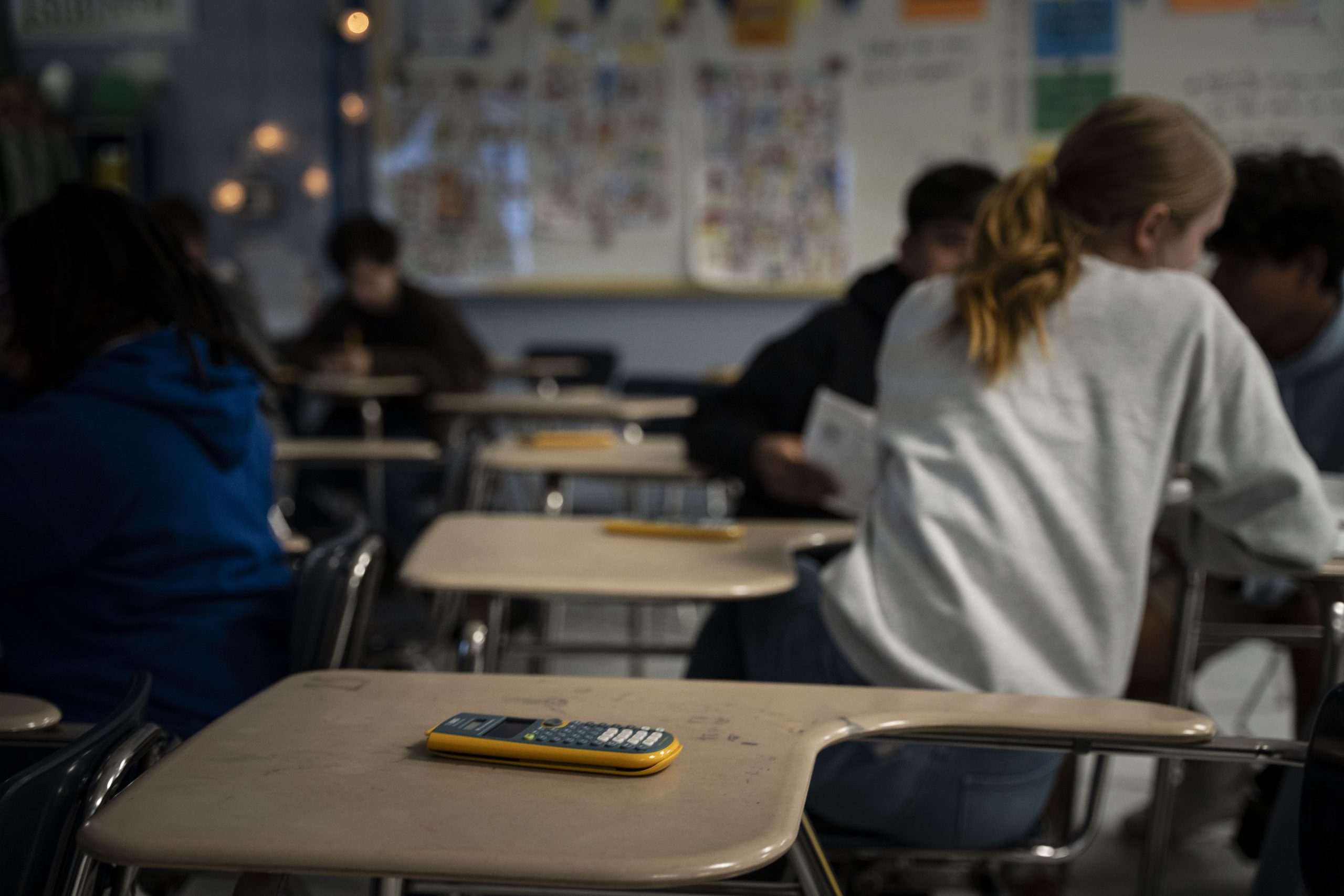
    Math anxiety isn’t just about feeling nervous before a math test. It’s been well-known for decades that students who are anxious about math tend to do worse on math tests and in math classes.

    But recently, some of us who research math anxiety have started to realize that we may have overlooked a simple yet important reason why students who are anxious about math underperform: They don’t like doing math, and as a result, they don’t do enough of it.

    We wanted to get a better idea of just what kind of impact math anxiety could have on academic choices and academic success throughout college. In one of our studies, we measured math anxiety levels right when students started their postsecondary education. We then followed them throughout their college career, tracking what classes they took and how well they did in them.

    We found that highly math-anxious students went on to perform worse not just in math classes, but also in STEM classes more broadly. This means that math anxiety is not something that only math teachers need to care about — science, technology and engineering educators need to have math anxiety on their radar, too.

    We also found that students who were anxious about math tended to avoid taking STEM classes altogether if they could. They would get their math and science general education credits out of the way early on in college and never look at another STEM class again. So not only is math anxiety affecting how well students do when they step into a STEM classroom, it makes it less likely that they’ll step into that classroom in the first place.

    Related: A lot goes on in classrooms from kindergarten to high school. Keep up with our free weekly newsletter on K-12 education.

    This means that math anxiety is causing many students to self-sort out of the STEM career pipeline early, closing off career paths that would likely be fulfilling (and lucrative).

    Our study’s third major finding was the most surprising. When it came to predicting how well students would do in STEM classes, math anxiety mattered even more than math ability. Our results showed that if you were a freshman in college and you wanted to do well in your STEM classes, you would likely be better off reducing your math anxiety than improving your math ability.

    We wondered: How could that be? How could math anxiety — how you feel about math — matter more for your academic performance than how good you are at it? Our best guess: avoidance.

    If something makes you anxious, you tend to avoid doing it if you can. Both in our research and in that of other researchers, there’s been a growing understanding that in addition to its other effects, math anxiety means that you’ll do your very best to engage with math as little as possible in situations where you can’t avoid it entirely.

    This might mean putting in less effort during a math test, paying less attention in math class and doing fewer practice problems while studying. In the case of adults, this kind of math avoidance might look like pulling out a calculator whenever the need to do math arises just to avoid doing it yourself.

    In some of our other work, we found that math-anxious students were less interested in doing everyday activities precisely to the degree that they thought those activities involved math. The more a math-anxious student thought an activity involved math, the less they wanted to do it.

    If math anxiety is causing students to consistently avoid spending time and effort on their classes that involve math, this would explain why their STEM grades suffer.

    What does all of this mean for educators? Teachers need to be aware that students who are anxious about math are less likely to engage with math during class, and they’re less likely to put in the effort to study effectively. All of this avoidance means missed opportunities for practice, and that may be the key reason why many math-anxious students struggle not only in math class, but also in science and engineering classes that require some math.

    Related: Experts share the latest research on how teachers can overcome math anxiety

    Math anxiety researchers are at the very beginning of our journey to understand ways to make students who are anxious about math stop avoiding it but have already made some promising suggestions for how teachers can help. One study showed that a direct focus on study skills could help math-anxious students.

    Giving students clear structure on how they should be studying (trying lots of practice problems) and how often they should be studying (spaced out over multiple days, not just the night before a test) was effective at helping students overcome their math anxiety and perform better.

    Especially heartening was the fact that the effects seen during the study persisted in semesters beyond the intervention; these students tended to make use of the new skills into the future.

    Math anxiety researchers will continue to explore new ways to help math-anxious students fight their math-avoidant proclivities. In the meantime, educators should do what they can to help their students struggling with math anxiety overcome this avoidance tendency — it could be one of the most powerful ways a math teacher can help shape their students’ futures.

    Rich Daker is a researcher and founder of Pinpoint Learning, an education company that makes research-backed tools to help educators identify why their students make mistakes. Ian Lyons is an associate professor in Georgetown University’s Department of Psychology and principal investigator for the Math Brain Lab.

    Contact the opinion editor at [email protected].

    This story about math anxiety was produced by The Hechinger Report, a nonprofit, independent news organization focused on inequality and innovation in education. Sign up for Hechinger’s weekly newsletter.

    The Hechinger Report provides in-depth, fact-based, unbiased reporting on education that is free to all readers. But that doesn’t mean it’s free to produce. Our work keeps educators and the public informed about pressing issues at schools and on campuses throughout the country. We tell the whole story, even when the details are inconvenient. Help us keep doing that.

    Join us today.

    Source link

  • ‘We’re here to detect the presence of learning:’ Danny Liu explains USyd’s AI policy – Campus Review

    ‘We’re here to detect the presence of learning:’ Danny Liu explains USyd’s AI policy – Campus Review

    The University of Sydney’s (USyd) new artificial intelligence (AI) learning and assessment policy is commonsense for both teachers and students, head of the uni’s AI group has said.

    Please login below to view content or subscribe now.

    Membership Login

    Source link

  • USyd responds to student concerns about ‘two-lane’ AI policy – Campus Review

    USyd responds to student concerns about ‘two-lane’ AI policy – Campus Review

    The university arguably leading the sector in its use of artificial intelligence (AI) in assessment tasks has received criticism from some students who have complained they lost marks for not using AI in a test.

    Please login below to view content or subscribe now.

    Membership Login

    Source link

  • AI in Education: Beyond the Hype Cycle

    AI in Education: Beyond the Hype Cycle

    We just can’t get away from it. AI continues to take the oxygen out of every edtech conversation. Even the Trump administration, while actively destroying federal involvement in public education, jumped on the bandwagon this week.

    Who better to puncture this overused acronym than edtech legend Gary Stager. In this conversation, he offers a pragmatic perspective on AI in education, cutting through both fear and hype. Gary argues that educators should view AI as simply another useful technology rather than something to either fear or blindly embrace. He criticizes the rush to create AI policies and curricula by administrators with limited understanding of the technology, suggesting instead that schools adopt minimal, flexible policies while encouraging hands-on experimentation. Have a listen: