Category: teens

  • Inside Schools’ Teen Nicotine Crackdown – The 74

    Inside Schools’ Teen Nicotine Crackdown – The 74

    School (in)Security is our biweekly briefing on the latest school safety news, vetted by Mark KeierleberSubscribe here.

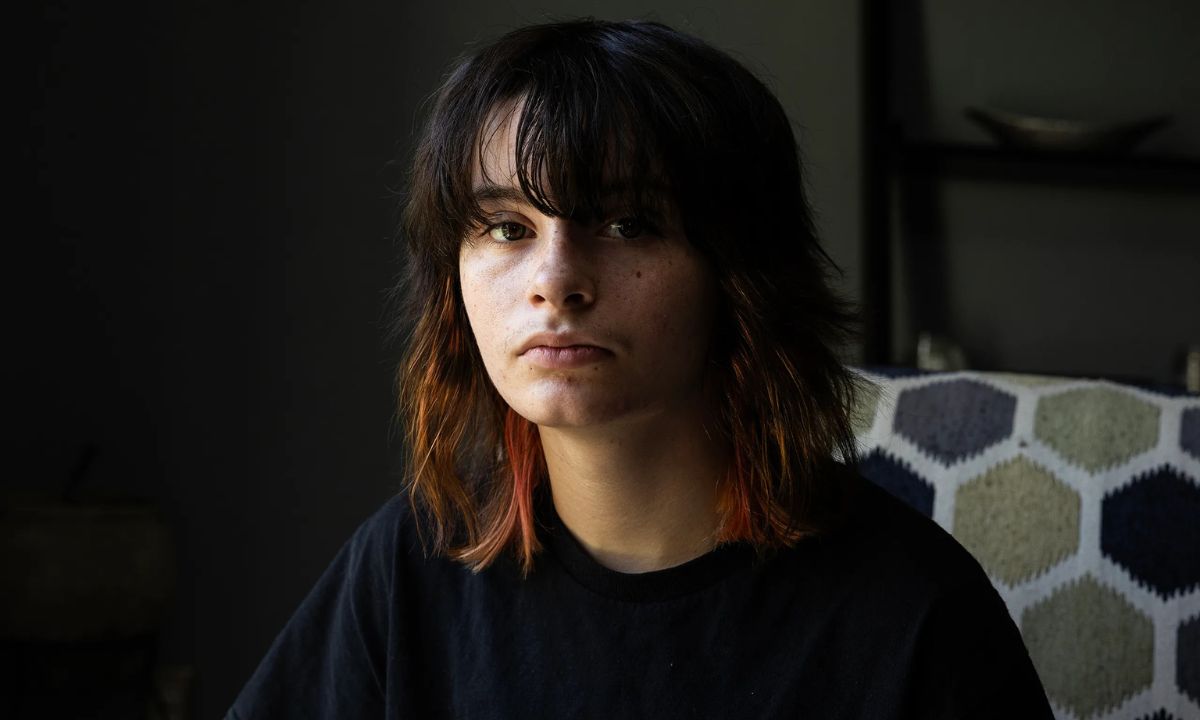
    It was in physical education class when Laila Gutierrez swapped out self-harm for a new vice: Vaping.

    Like students across the country, Gutierrez got dragged into a nicotine-fueled war between vape manufacturers, who used celebrity marketing and fruity flavors to hook kids on e-cigarettes, and educators, who’ve turned to surveillance tools and discipline to crack down on the youngest users. Gutierrez was suspended for a week after she was nabbed vaping in a crowded school bathroom during her lunch hour. 

    In my latest investigative deep dive, co-published this week with WIRED, I reveal how school districts across the country have spent millions to install vape-detecting sensors in school bathrooms — once considered a digital surveillance no-go. The devices prioritize punishment to combat student nicotine addiction.

    Eamonn Fitzmaurice/The 74

    My analysis of public records obtained from Minneapolis Public Schools reveals the sensors inundated administrators with alerts — about one per minute during a typical school day, on average. Their presence brought a spike in school discipline, records show, with suspensions dwarfing treatment services and younger middle school students facing the harshest consequences. 

    The sheer volume of alerts, more than 45,000 over seven months across four schools, raises questions about whether they’re an effective way to get kids to give up their vape pens. And some students voiced privacy concerns about the sensors, the most high tech of which can now reportedly detect keywords, how many young people are in the bathroom at one time and for how long. 

    “Surveillance is only a diagnosis,” Texas student activist Cameron Samuels told me. “It only recognizes symptoms of a failed system.”  


    In the news

    Charlotte, North Carolina, school officials reported more than 30,000 students absent on Monday, two days after federal immigration agents arrested 130 people there in their latest sweep. That more recent data point underscores the 81,000 school days missed by more than 100,000 students in California’s Central Valley after immigration raids earlier this year, according to a newly peer reviewed Stanford University study. | The 74

    • Los Angeles schools have lost thousands of immigrant students — from 157,619 in the 2018-19 school year to just 62,000 this year — because of the city’s rising prices and falling birth rates. Now, that trend has intensified after the “chilling effect” of recent federal immigration raids, district officials said. | The 74
    • Student enrollment is dropping in school districts across the country amid President Donald Trump’s immigration crackdown. In Miami, for example, the number of new immigrant students has decreased by more than 10,000 compared to last year. | The Associated Press

    Ten Commandments: Siding with the families of students who argued they infringed on their religious freedom, a federal judge on Tuesday ordered some Texas public school districts to remove Ten Commandment displays from their classroom walls by next month. | The New York Times

    • 28 Bills, Ten Commandments and 1 Source: A Christian Right ‘Bill Mill’. | The 74

    Online gaming platform Roblox announced it will block children from interacting with teens and adults in the wake of lawsuits alleging the platform has been used by predators to groom young people. | The Guardian

    Furry and freaky: “Kumma,” a Chinese-made teddy bear with artificial intelligence capabilities and marketed toward children, is being pulled from shelves after researchers found it could teach its users how to light matches and about sexual kinks. | Futurism

    A teenage girl from New York reported to a police officer at school that her adoptive father had been raping her at home for years. The officer, who didn’t believe her, bungled the case — and she was abused again. | New York Focus

    ‘Brazen cruelty’: A federal judge has ordered the release of a 16-year-old Bronx high schooler who has spent nearly a month in federal immigration custody despite having a protective status reserved for immigrant youth who were abused, neglected or abandoned by a parent. | amNewYork

    Sign-up for the School (in)Security newsletter.

    Get the most critical news and information about students’ rights, safety and well-being delivered straight to your inbox.

    Civil rights groups have decried proposed federal changes to the Education Department’s data collection on racial disparities in special education that could make it more difficult to identify and address service gaps. | K-12 Dive

    ‘Dead-naming’ enforced: A Texas law now requires school employees to use names and pronouns that conform to students’ sex at birth. Several transgender students whose schools are complying say it has transformed school from a place of support to one that rejects who they are. | The Texas Tribune.


    ICYMI @The74

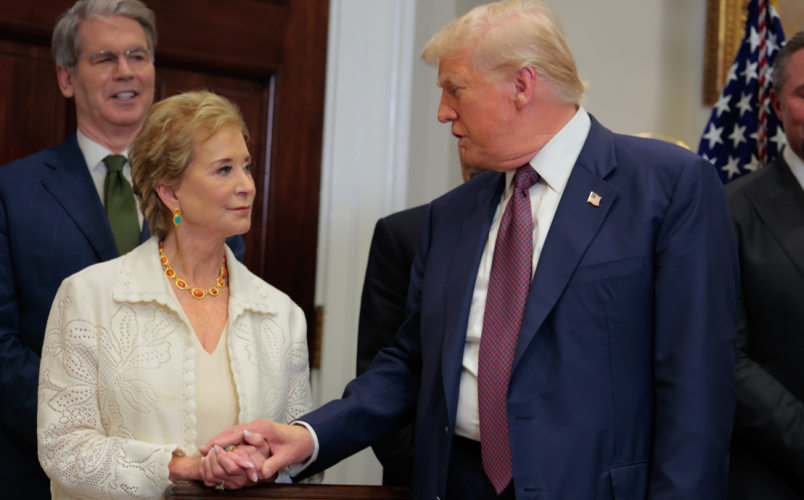
    Education Secretary Linda McMahon has signed agreements with other agencies to take over major K-12 and higher education programs in keeping with President Donald Trump’s effort to shut down the Department of Education. (Anna Moneymaker/Getty Images)

    Emotional Support

    “Let’s circle back in 2026.”

    -Taittinger, already


    Did you use this article in your work?

    We’d love to hear how The 74’s reporting is helping educators, researchers, and policymakers. Tell us how

    Source link

  • Students Love AI Chatbots — No, Really – The 74

    Students Love AI Chatbots — No, Really – The 74

    School (in)Security is our biweekly briefing on the latest school safety news, vetted by Mark KeierleberSubscribe here.

    The robots have taken over.

    New research suggests that a majority of students use chatbots like ChatGPT for just about everything at school. To write essays. To solve complicated math problems. To find love. 

    Wait, what? 

    Nearly a fifth of students said they or a friend have used artificial intelligence chatbots to form romantic relationships, according to a new survey by the nonprofit Center for Democracy & Technology. Some 42% said they or someone they know used the chatbots for mental health support, as an escape from real life or as a friend.

    Eighty-six percent of students say they’ve used artificial intelligence chatbots in the past academic year — half to help with schoolwork.

    The tech-enabled convenience, researchers conclude, doesn’t come without significant risks for young people. Namely, as AI proliferates in schools — with help from the federal government and a zealous tech industry — on a promise to improve student outcomes, they warn that young people could grow socially and emotionally disconnected from the humans in their lives. 


    In the news

    The latest in Trump’s immigration crackdown: The survey featured above, which quizzed students, teachers and parents, also offers startling findings on immigration enforcement in schools: 
    While more than a quarter of educators said their school collects information about whether a student is undocumented, 17% said their district shares records — including grades and disciplinary information — with immigration enforcement. 

    In the last school year, 13% of teachers said a staff member at their school reported a student or parent to immigration enforcement of their own accord. | Center for Democracy & Technology

    People hold signs as New York City officials speak at a press conference calling for the release of high school student Mamadou Mouctar Diallo outside of the Tweed Courthouse on Aug. 14 in New York City. (Michael M. Santiago/Getty Images)
    • Call for answers: In the wake of immigration enforcement that’s ensnared children, New York congressional Democrats are demanding the feds release information about the welfare of students held in detention, my colleague Jo Napolitano reports. | The 74
    • A 13-year-old boy from Brazil, who has lived in a Boston suburb since 2021 with a pending asylum application, was scooped up by Immigration and Customs Enforcement after local police arrested him on a “credible tip” accusing him of making “a violent threat” against a classmate at school. The boy’s mother said her son wound up in a Virginia detention facility and was “desperate, saying ICE had taken him.” | CNN
    • Chicago teenagers are among a group of activists patrolling the city’s neighborhoods to monitor ICE’s deployment to the city and help migrants avoid arrest. | NPR
    • Immigration agents detained a Chicago Public Schools vendor employee outside a school, prompting educators to move physical education classes indoors out of an “abundance of caution.” | Chicago Sun-Times
    • A Des Moines, Iowa, high schooler was detained by ICE during a routine immigration check-in, placed in a Louisiana detention center and deported to Central America fewer than two weeks later. | Des Moines Register
    • A 15-year-old boy with disabilities — who was handcuffed outside a Los Angeles high school after immigration agents mistook him for a suspect — is among more than 170 U.S. citizens, including nearly 20 children, who have been detained during the first nine months of the president’s immigration push. | PBS

    Trigger warning: After a Washington state teenager hanged himself on camera, the 13-year-old boy’s parents set out to find out what motivated their child to livestream his suicide on Instagram while online users watched. Evidence pointed to a sadistic online group that relies on torment, blackmail and coercion to weed out teens they deem weak. | The Washington Post

    Civil rights advocates in New York are sounding the alarm over a Long Island school district’s new AI-powered surveillance system, which includes round-the-clock audio monitoring with in-classroom microphones. | StateScoop

    A federal judge has ordered the Department of Defense to restock hundreds of books after a lawsuit alleged students were banned from checking out texts related to race and gender from school libraries on military bases in violation of the First Amendment. | Military.com

    More than 600 armed volunteers in Utah have been approved to patrol campuses across the state to comply with a new law requiring armed security. Called school guardians, the volunteers are existing school employees who agree to be trained by local law enforcement and carry guns on campus. | KUER

    Sign-up for the School (in)Security newsletter.

    Get the most critical news and information about students’ rights, safety and well-being delivered straight to your inbox.

    No “Jackass”: Instagram announced new PG-13 content features that restrict teenagers from viewing posts that contain sex, drugs and “risky stunts.” | The Associated Press

    A Tuscaloosa, Alabama, school resource officer restrained and handcuffed a county commissioner after a spat at an elementary school awards program. | Tuscaloosa News

    The number of guns found at Minnesota schools has increased nearly threefold in the last several years, new state data show. | Axios

    More than half of Florida’s school districts received bomb threats on a single evening last week. The threats weren’t credible, officials said, and appeared to be “part of a hoax intended to solicit money.” | News 6


    ICYMI @The74

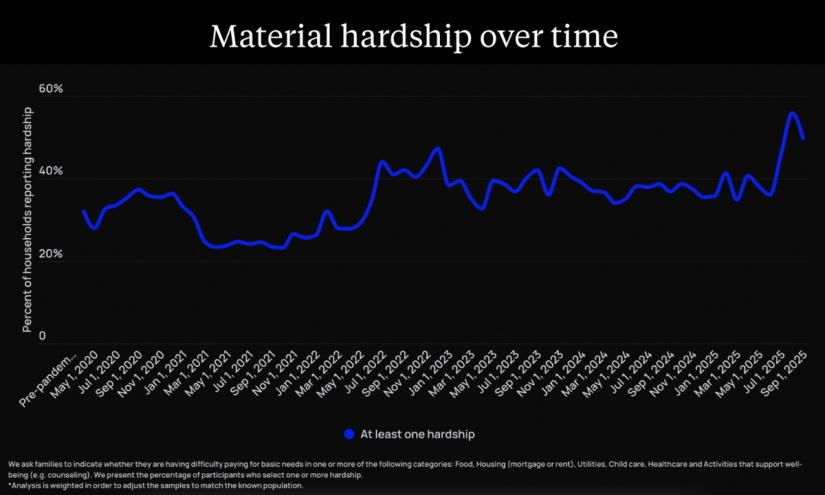
    RAPID Survey Project, Stanford Center on Early Childhood

    Survey: Nearly Half of Families with Young Kids Struggling to Meet Basic Needs

    Education Department Leans on Right-Wing Allies to Push Civil Rights Probes

    OPINION: To Combat Polarization and Political Violence, Let’s Connect Students Nationwide


    Emotional Support

    Thanks for reading,
    —Marz


    Did you use this article in your work?

    We’d love to hear how The 74’s reporting is helping educators, researchers, and policymakers. Tell us how

    Source link

  • LGBTQ+ Rural Teens Find More Support Online Than in Their Communities – The 74

    LGBTQ+ Rural Teens Find More Support Online Than in Their Communities – The 74


    Get stories like this delivered straight to your inbox. Sign up for The 74 Newsletter

    New research has found that rural LGBTQ+ teens experience significant challenges in their communities and turn to the internet for support.

    The research from Hopelab and the Born This Way Foundation looked at what more than 1,200 LGBTQ+ teens faced and compared the experiences of those in rural communities with those of teens in suburban and urban communities. The research found that rural teens are more likely to give and receive support through their online communities and friends than via their in-person relationships.

    “The rural young people we’re seeing were reporting having a lot less support in their homes, in their communities, and their schools,” Mike Parent, a principal researcher at Hopelab, said in an interview with the Daily Yonder. “They weren’t doing too well in terms of feeling supported in the places they were living, though they were feeling supported online.”

    However, the research found that rural LGBTQ+ teens had the same sense of pride in who they were as suburban and urban teens.

    “The parallel, interesting finding was that we didn’t see differences in their internal sense of pride, which you might kind of expect if they feel all less supported,” he said. “What was surprising, in a very good way, was that indication of resilience or being able to feel a strong sense of their internal selves despite this kind of harsh environment they might be in.”

    Researchers recruited young people between the ages of 15 and 24 who identified as LGBTQ+ through targeted ads on social media. After surveying the respondents during August and September of last year, the researchers also followed up some of the surveys with interviews, Parent said.

    According to the study, rural teens were more likely than their urban and suburban counterparts to find support online. Of the rural respondents, 56% of rural young people reported receiving support from others online several times a month compared to 51% of urban and suburban respondents, and 76% reported giving support online, compared to 70% of urban and suburban respondents.

    Conversely, only 28% of rural respondents reported feeling supported by their schools, compared to 49% of urban and suburban respondents, the study found, and 13% of rural respondents felt supported by their communities, compared to 35% of urban and suburban respondents.

    Rural LGBTQ+ young people are significantly more likely to suffer mental health issues because of the lack of support where they live, researchers said. Rural LGBTQ+ young people were more likely to meet the threshold for depression (57% compared to 45%), and more likely to report less flourishing than their suburban/urban counterparts (43% to 52%).

    The study found that those LGBTQ+ young people who received support from those they lived with, regardless of where they live, are more likely to report flourishing (50% compared to 35%) and less likely to meet the threshold for depression (52% compared to 63%).

    One respondent said the impact of lack of support impacted every aspect of their lives.

    “Not being able to be who you truly are around the people that you love most or the communities that you’re in is going to make somebody depressed or give them mental issues,” they said in survey interviews, according to Hopelab. “Because if you can’t be who you are around the people that you love most and people who surround you, you’re not gonna be able to feel the best about your well-being.”

    Respondents said connecting with those online communities saved their lives.

    “Throughout my entire life, I have been bullied relentlessly. However, when I’m online, I find that it is easier to make friends… I met my best friend through role play [games],” one teen told researchers. “Without it, I wouldn’t be here today. So, in the long run, it’s the friendships I’ve made online that have kept me alive all these years.”

    Having support in rural areas, especially, can provide rural LGBTQ+ teens with a feeling of belonging, researchers said.

    “Our findings highlight the urgent need for safe, affirming in-person spaces and the importance of including young people in shaping the solutions,” Claudia-Santi F. Fernandes, vice president of research and evaluation at Born This Way Foundation, said in a statement. “If we want to improve outcomes, especially for LGBTQ+ young people in rural communities, their voices–and scientific evidence–must guide the work.”

    Parent said the survey respondents stressed the importance of having safe spaces for LGBTQ+ young people to gather in their own communities.

    “I think most of the participants recognize that you can’t do a lot to change your family if they’re not supportive,” he said. “What they were saying was that finding ways for schools to be supportive and for communities to be supportive in terms of physical spaces (that allowed them) to express themselves safely (and) having places where they can gather and feel safe, uh, were really important to them.”

    Hopelab seeks to address mental health in young people through evidence-based innovation, according to its organizers. The Born This Way Foundation was co-founded by Lady Gaga and her mother, West Virginia native Cynthia Bisset Germanotta.

    The organization is focused on ending bullying and building up communities, while using research, programming, grants, and partnerships to engage young people and connect them to mental health resources, according to the foundation’s website.

    This article first appeared on The Daily Yonder and is republished here under a Creative Commons Attribution-NoDerivatives 4.0 International License.


    Get stories like these delivered straight to your inbox. Sign up for The 74 Newsletter

    Source link

  • How a Rhode Island Teen’s $1M Changed the State’s 6th Largest City – The 74

    How a Rhode Island Teen’s $1M Changed the State’s 6th Largest City – The 74


    Get stories like this delivered straight to your inbox. Sign up for The 74 Newsletter

    When then-16-year old Mariam Kaba won $1 million through the Transform Rhode Island scholarship three years ago, she saw it as her opportunity to create the change she wanted to see in her nearly 45,000-person community of Woonsocket. 

    “I don’t see much positive representation from our community all the time,” Kaba said. “I was thinking ‘my scholarship won’t get picked.’ But it did … and I was able to bring something so big to my community, a community that already doesn’t have the most funding in the world.” 

    The scholarship, funded by the Papitto Opportunity Connection Foundation, asks students to answer, “if you had $1 million how would you target the lives of those in Rhode Island and how would you create change?”

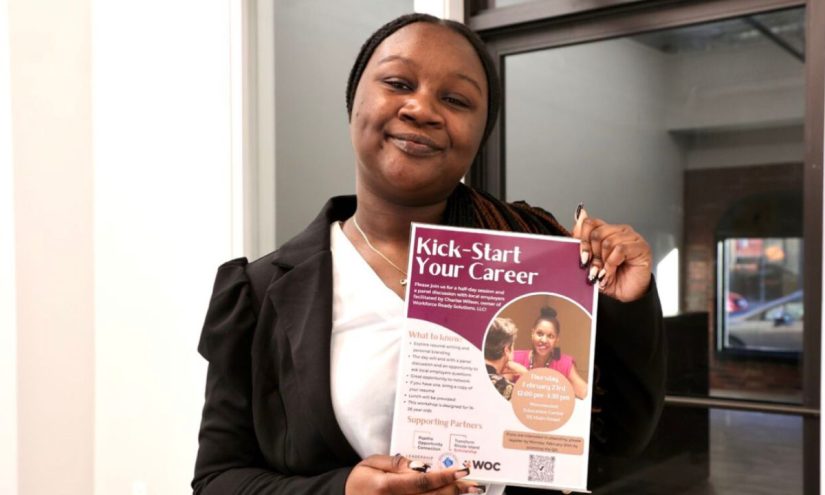
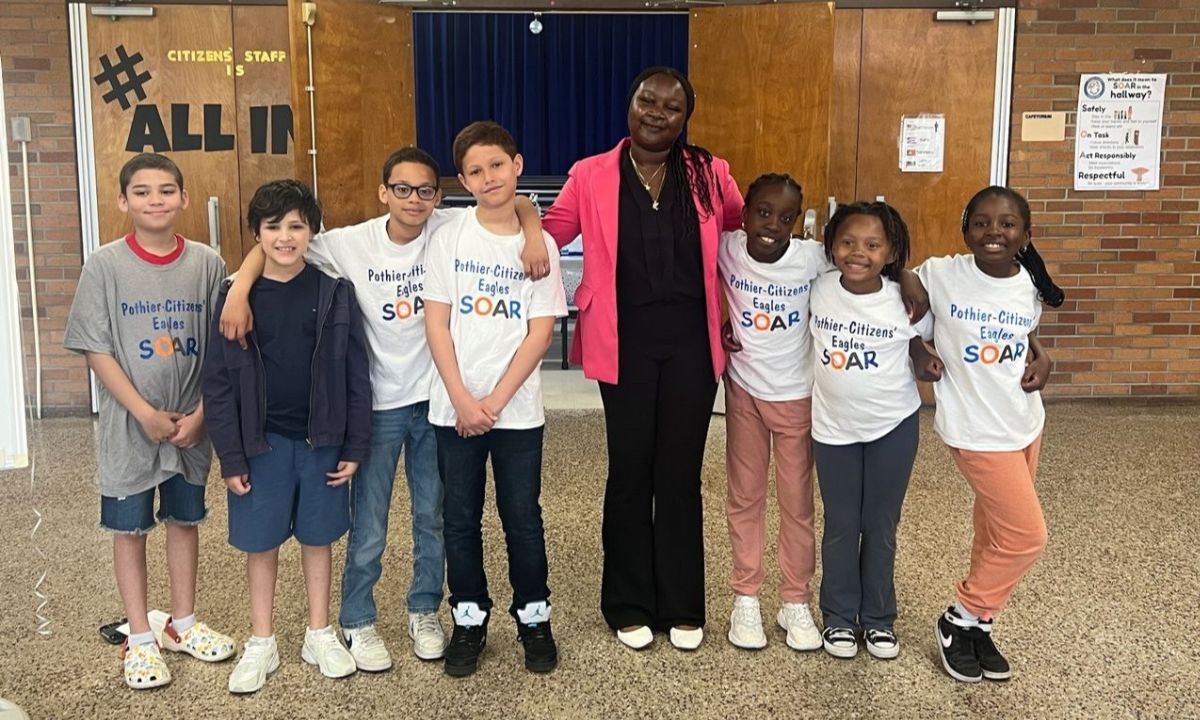
    Kaba’s investments resulted in a number of youth-centered spaces and opportunities popping up across the city, including 120 calm corners in elementary classrooms to support students’ sensory functions, new physical education equipment for all Woonsocket elementary schools, job fairs, hundreds of donated books, and field trips to local colleges & universities, among others.

    Kaba, who is now a rising sophomore at Northeastern University, describes the experience of winning the scholarship as surreal.

    “It didn’t occur to me that I was the last person standing and I won $1 million,” Kaba said. “But when I won, the first thing I thought was, ‘OK, let’s get to work. I’m given this opportunity to help improve my community. What steps can I take? And when does the groundwork start happening?’”

    When a teen leads, adults follow

    Bringing Kaba’s vision to life meant working alongside adults with experience in project management and community engagement while keeping up with her student life at Woonsocket High School.

    “In high school, I managed both classwork and extracurriculars like student council, being a peer mentor and participating in Future Business Leaders of America,” Kaba said. “Balancing those things with my work with the scholarship came easy to me.”

    Kaba partnered with community organizations across the state like nonprofit Leadership Rhode Island. This collaboration helped lay out a roadmap for Kaba’s proposal, manage the scholarship funds and coordinate meetings with community leaders. 

    The winning student also sits on the board of the Papitto Opportunity Connection Foundation for a year. This provides an opportunity for them to build their network and connect with leaders in Rhode Island. 

    High schoolers can make a difference through spaces and support like this, Kaba said, and also advises teens interested in engaging with their community to “not be afraid to start off small.”

    This “small” gesture, Kaba added, can be as simple as gathering a group of friends to organize a community cleanup or starting a school club or Instagram to advocate for something they’re passionate about.

    “Starting off small is going to give you those steps to leading these big impactful projects,” Kaba said.

    The feedback Kaba received on her community investments, primarily from peers, community members and teachers in Woonsocket, was overwhelmingly positive.

    “People told me, ‘I was able to go to this job fair and I got connected to this job,’ or, ‘I’m going to the Harbour Youth Center to get items from the food pantry you created and it’s been helping my family a lot,’” Kaba said. “Community organizations reached out to me to let me know they would love to find a way to work together and do their part to take action too.”


    Get stories like these delivered straight to your inbox. Sign up for The 74 Newsletter

    Source link