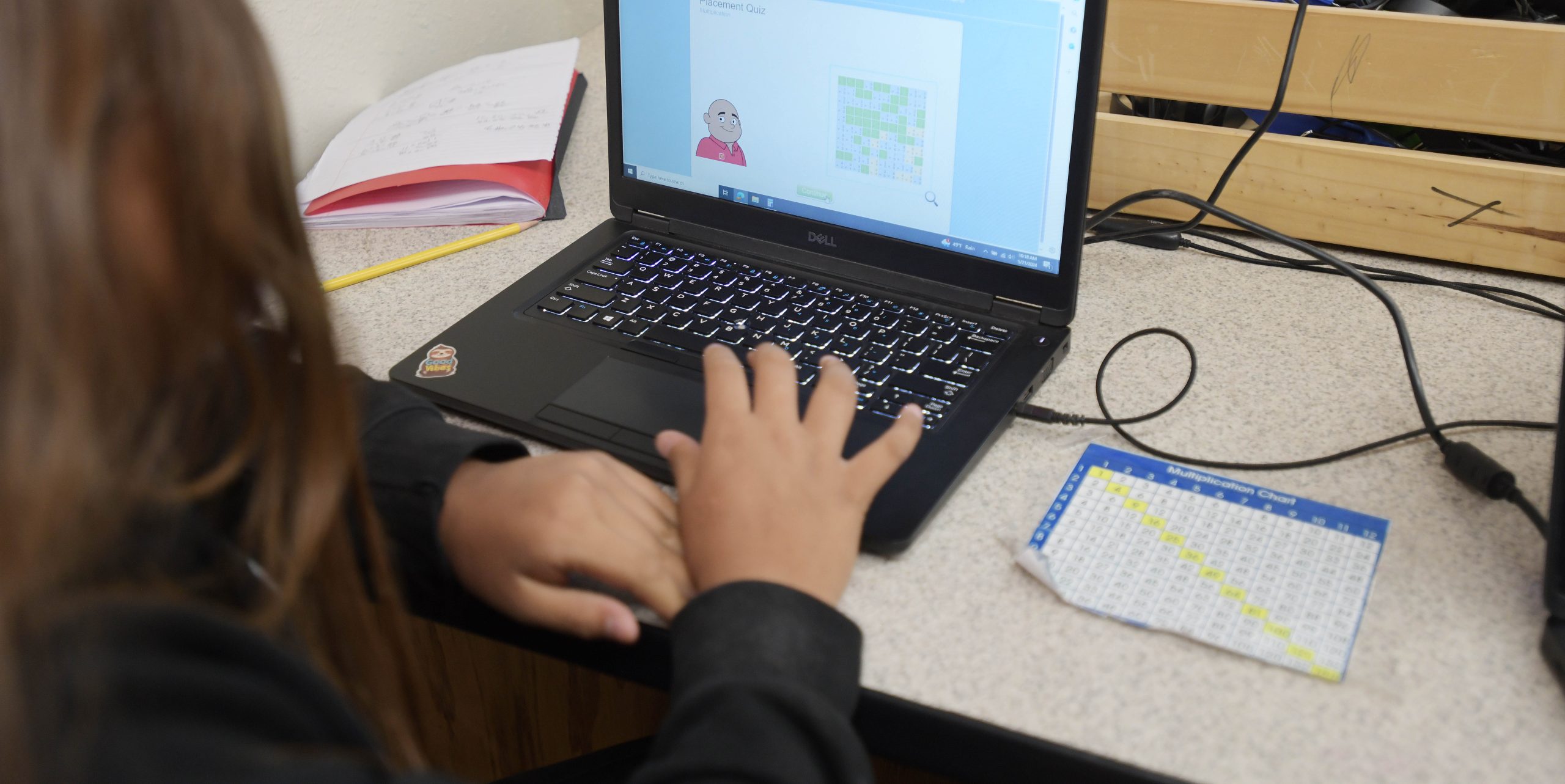
Category: Testing

  • I didn’t think I needed the help or advice, but a new literacy teaching coach from afar gave me the self-confidence I lacked

    I didn’t think I needed the help or advice, but a new literacy teaching coach from afar gave me the self-confidence I lacked

    by Thomas MacCash, The Hechinger Report
    November 24, 2025

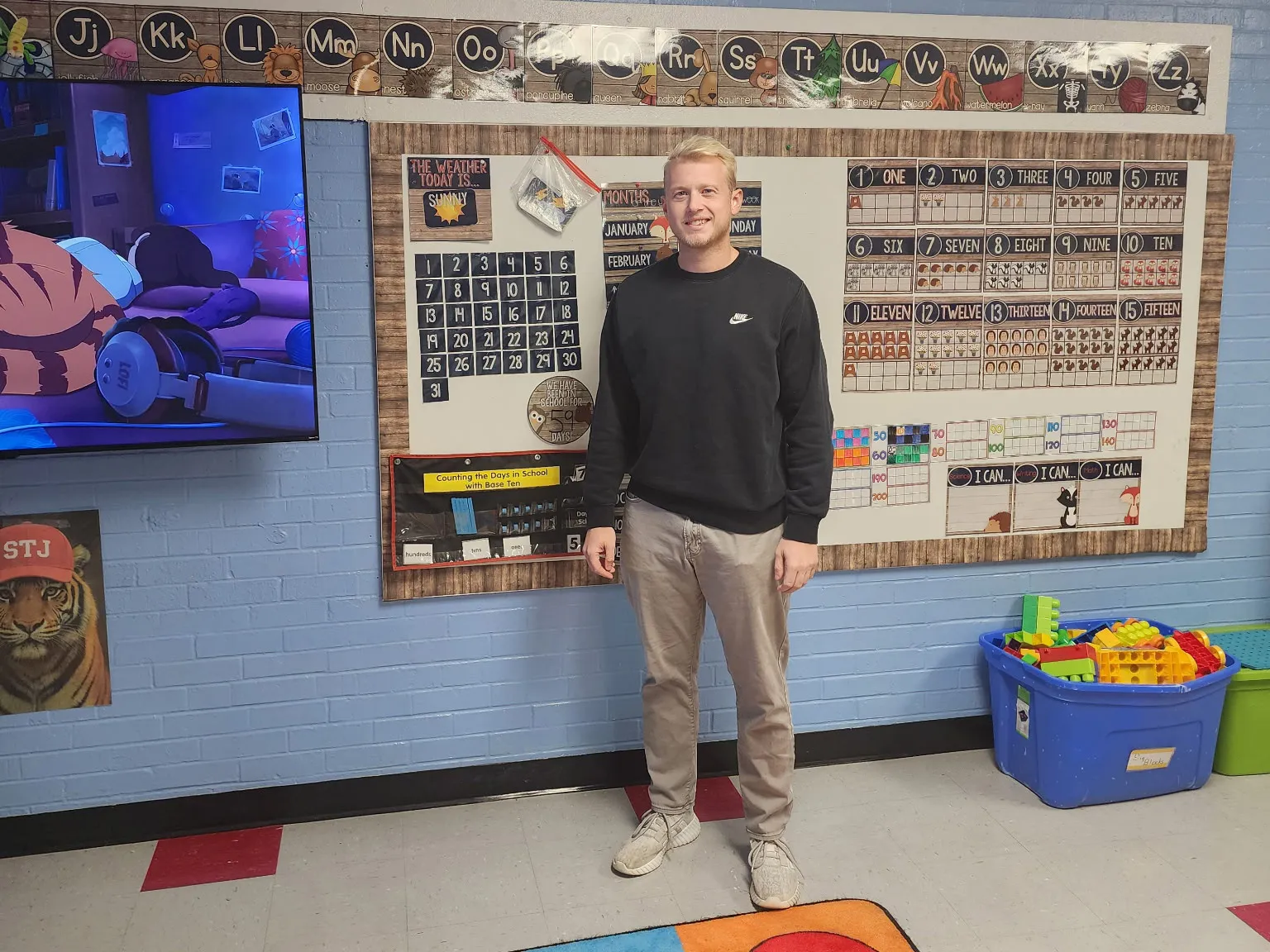
    I was the only guy in my education classes at Missouri State University, and until this year I was the only male out of nearly 100 teachers in my school. My approach to teaching is very different, and more often than not was met with a raised brow rather than a listening ear.  

    I teach kindergarten, and there are so few men in early childhood education that visitors to my classroom tend to treat me like a unicorn. They put me in a box of how I am “supposed” to be as a male in education without knowing the details of my approach to teaching.  

    As a result, I’d grown skeptical about receiving outside help. When someone new came into my classroom to provide unsolicited “support,” my immediate thought was always, “OK, great, what are they going to cook up? What are they trying to sell me?” I’d previously had former high school administrators come into my classroom to offer support, but they didn’t have experience with the curriculum I used or with kindergarten. The guidance was well-intentioned, but not relevant. 

    Related: A lot goes on in classrooms from kindergarten to high school. Keep up with our free weekly newsletter on K-12 education.  

    My entire view of getting help and support changed when Ashley Broadnax, a literacy coach from New Orleans, nearly 700 miles away, came into my class in St. James, Missouri, population 3,900. Ashley works for The New Teacher Project, or TNTP, a nonprofit aiming to increase students’ economic and social mobility. Once a month for a full academic year, she came in to help us transition to a “science of reading” approach, as part of a special pilot program, the Rural Schools Early Literacy Collaborative. 

    I never thought I would love having a literacy coach and their feedback, but I now believe it is something that can work for many teachers. I hope that as Missouri and other states transition to new ways of teaching reading, more coaches will be available for others who could use the support. The state says that over 15,000 teachers may get trained in the science of reading to help build our knowledge of how children learn to read and what type of instruction is most effective.  

    Ashley had used the curriculum herself and was on hand to provide timely support. This was the first time I received relevant feedback from a former teacher who had firsthand experience with the lessons I was leading.  

    It completely changed my approach and my students’ learning. Although I come from a family of teachers — my mom, grandma and brother all taught — I had started teaching two weeks out of college, and I wasn’t familiar with the new reading curriculum and didn’t have a lot of self-confidence. 

    When Ashley came in for the very first visit, I knew working with her was going to be different. Even though she had never been to St. James, she was sensitive to the rural context where I’ve spent all my life. We’re 90 minutes southwest of St. Louis and a little over an hour southeast of Jefferson City, the state capital. In St. James, you may see a person on a horse riding past a Tesla a few times a year. I’ve seen this world of extremes play out in school open houses and in the learning gaps that exist in my kindergarten classroom.  

    Ashley had researched our community and was open to learning more about our nuances and teaching styles. She was also the first coach I’d met who actually had taught kindergarten, so she knew what worked and what didn’t. As a young teacher with a significant number of students with special needs, I really appreciated this.  

    Related: How coaches for teachers could improve reading instruction, close early academic gaps 

    Ashley provided me with a pathway to follow the new curriculum while also maintaining my unique approach to teaching. Everything came from a place of ensuring that teachers have what they need to be successful, rather than an “I know better than you do” attitude. She would let me know “I loved how you did this” and she’d ask, “Can you extend it in this way?” or tell me, “This was great, here’s how you can structure it a bit further.” 

    Not everything she did to help was profound. But her little tips added up. For example, the curriculum we used came with 10 workbooks for each student as well as stacks of literature, and I needed help integrating it into my lessons.  

    I soon noticed a shift in my ability to teach. I was learning specific ways to help students who were on the cusp of catching on, along with those who weren’t getting it at all.  

    Throughout the course of the year, we saw how our students were more quickly achieving proficiency in English language arts. In my school, according to the Missouri Department of Elementary and Secondary Education, the percentage of kindergartners reading on grade level went from 82 percent in the fall to 98 percent in the spring; the percentage of first graders on grade level went from 41 percent to 84 percent.  

    There were similar gains across the other schools in my county participating in the pilot program; one school had all of its kindergarten and first grade students demonstrate growth on reading assessments. Those students, on average, made gains that were more than double typical annual growth, TNTP found. 

    I attribute a great deal of this progress to the support from Ashley and her peers. I know I am a better educator and teacher for my students. Her support has made a change for the better in my grade and classroom. 

    Thomas MacCash is a kindergarten teacher at Lucy Wortham James Elementary in St. James, Missouri.  

    Contact the opinion editor at [email protected].  

    This story about literacy teaching coaches was produced by The Hechinger Report, a nonprofit, independent news organization focused on inequality and innovation in education. Sign up for Hechinger’s weekly newsletter.

    This <a target=”_blank” href=”https://hechingerreport.org/teacher-voice-im-a-new-male-kindergarten-teacher-in-rural-missouri-extra-support-made-a-huge-difference-to-my-class/”>article</a> first appeared on <a target=”_blank” href=”https://hechingerreport.org”>The Hechinger Report</a> and is republished here under a <a target=”_blank” href=”https://creativecommons.org/licenses/by-nc-nd/4.0/”>Creative Commons Attribution-NonCommercial-NoDerivatives 4.0 International License</a>.<img src=”https://i0.wp.com/hechingerreport.org/wp-content/uploads/2018/06/cropped-favicon.jpg?fit=150%2C150&amp;ssl=1″ style=”width:1em;height:1em;margin-left:10px;”>

    <img id=”republication-tracker-tool-source” src=”https://hechingerreport.org/?republication-pixel=true&post=113481&amp;ga4=G-03KPHXDF3H” style=”width:1px;height:1px;”><script> PARSELY = { autotrack: false, onload: function() { PARSELY.beacon.trackPageView({ url: “https://hechingerreport.org/teacher-voice-im-a-new-male-kindergarten-teacher-in-rural-missouri-extra-support-made-a-huge-difference-to-my-class/”, urlref: window.location.href }); } } </script> <script id=”parsely-cfg” src=”//cdn.parsely.com/keys/hechingerreport.org/p.js”></script>

    Source link

  • IELTS apologises after technical issue leads to score changes

    IELTS apologises after technical issue leads to score changes

    • IELTS attributes the situation to a “technical issue” affecting some reading and listening components of its Academic and General Training tests.
    • Testing company says 99% of its tests in the relevant time period were unaffected by the bug and offers apologies and support to test-takers who received incorrect results.
    • Commentators point out the consequences of the score changes could be far-reaching.

    IELTS test-takers around the world have been informed that some results dating back to August 2023 were incorrect, and revised scores have now been issued.

    The incorrect test results are a result of a “technical issue” affecting a number of listening and reading components of some IELTS Academic and General Training tests. Most result corrections are upwards, with some downwards. The majority of test-takers saw changes in component scores, with some experiencing a 0.5 band score change too.

    “IELTS recently identified an issue that led to a small proportion of test-takers receiving incorrect results between August 2023 and September 2025,” the company said in a statement.

    “Over 99% of IELTS tests during this time period were unaffected and there are no continuing issues with current IELTS tests. We have contacted affected test-takers to provide updated results, to offer our sincere apologies, and to provide appropriate support. We have also contacted relevant recognising organisations.”

    The organisation maintained it has “strict quality control procedures” in place to protect the integrity of the millions of IELTS tests it administers each year and assured it has taken “all necessary steps” to prevent this issue from happening again.

    IELTS, co-owned by IDP, Cambridge University Press, and the British Council, has launched a help page addressing the issue. The page provides answers to frequently asked questions and guidance for affected candidates and organisations on next steps, including how to access revised scores.

    Affected test-takers are being offered refunds and free resits.

    Michael Goodine, owner of Test Resources in South Korea, and commentator on the testing industry, said the story highlights “how important it is for test makers to identify problems as quickly as possible so that test takers have sufficient time to protect their interests”.

    Goodine worries that those test-takers who originally received lower scores may have “missed out on life-changing academic and professional opportunities for which they needed a particular IELTS score”.

    The PIE contacted IELTS for comment.

    Goodine also has concerns that the technical issue may have prevented some candidates from meeting immigration or residency requirements.

    “It may be too late for some of these individuals to get back on track. I feel for those people,” he said.

    Testing companies serve as gatekeepers for academia and for immigration.
    Michael Goodine, Test Resources

    And he worries that candidates who received inflated scores may have found themselves struggling in academic settings.

    “Testing companies serve as gatekeepers for academia and for immigration. When they mess up, the consequences can be far-reaching and profound,” said Goodine.

    IELTS describes the issue as “an internal IELTS issue” and said it has completed a thorough investigation into the cause of the issue “to ensure no current or future test takers would be affected, and to rectify the issue for those impacted”.

    Source link

  • Why one reading expert says ‘just-right’ books are all wrong

    Why one reading expert says ‘just-right’ books are all wrong

    by Jill Barshay, The Hechinger Report
    October 27, 2025

    Timothy Shanahan, a professor emeritus at the University of Illinois at Chicago, has spent his career evaluating education research and helping teachers figure out what works best in the classroom. A leader of the National Reading Panel, whose 2000 report helped shape what’s now known as the “science of reading,” Shanahan has long influenced literacy instruction in the United States. He also served on the National Institute for Literacy’s advisory board in both the George W. Bush and Barack Obama administrations.

    Shanahan is a scholar whom I regularly consult when I come across a reading study, and so I was eager to interview him about his new book, “Leveled Reading, Leveled Lives.” (Harvard Education Press, September 2025). In it, Shanahan takes aim at one of the most common teaching practices in American classrooms: matching students with “just-right” books. 

    He argues that the approach — where students read different texts depending on their assessed reading level — is holding many children back. Teachers spend too much time testing students and assigning leveled books, he says, instead of helping all students learn how to understand challenging texts.

    “American children are being prevented from doing better in reading by a longstanding commitment to a pedagogical theory that insists students are best taught with books they can already read,” Shanahan writes in his book. “Reading is so often taught in small groups — not so teachers can guide efforts to negotiate difficult books, but to ensure the books are easy enough that not much guidance is needed.”

    Comprehension, he says, doesn’t grow that way.

    The trouble with leveled reading

    Grouping students by ability and assigning easier or harder books — a practice known as leveled reading — remains deeply embedded in U.S. schools. A 2018 Thomas B. Fordham Institute survey found that 62 percent of upper elementary teachers and more than half of middle school teachers teach at students’ reading level rather than at grade level.  

    That may sound sensible, but Shanahan says it’s not helping anyone and is even leading teachers to dispense with reading altogether. “In social studies and science, and these days, even in English classes,” he said in an interview, “teachers either don’t assign any readings or they read the texts to the students.” Struggling readers aren’t being given the chance — or the tools — to tackle complex material on their own.

    Instead, Shanahan believes all students should read grade-level texts together, with teachers providing more support for those who need it.

    Related: Our free weekly newsletter alerts you to what research says about schools and classrooms.

    “What I’m recommending is instructional differentiation,” he said in our interview. “Everyone will have the same instructional goal — we’re all going to learn to read the fourth-grade text. I might teach a whole-class lesson and then let some kids move on to independent work while others get more help. Maybe the ones who didn’t get it, read the text again with my support. By the end, more students will have reached the learning goal — and tomorrow the whole class can take on another text.”

    27 different ways

    Shanahan’s approach doesn’t mean throwing kids into the deep end without help. His book outlines a toolbox of strategies for tackling difficult texts, such as looking up unfamiliar vocabulary, rereading confusing passages, or breaking down long sentences. “You can tip over into successful reading 27 different ways,” he said, and he hopes future researchers discover many more. 

    He is skeptical of drilling students on skills like identifying the main idea or making inferences. “We’ve treated test questions as the skill,” he said. “That doesn’t work.”

    There is widespread frustration over the deterioration of American reading achievement, especially among middle schoolers. (Thirty-nine percent of eighth graders cannot reach the lowest of three achievement levels, called “basic,” on the National Assessment of Educational Progress.) But there is little agreement among reading advocates on how to fix the problem. Some argue that what children primarily need is more knowledge to grasp unfamiliar ideas in a new reading passage, but Shanahan argues that background knowledge won’t be sufficient or as powerful as explicit comprehension instruction. Other reading experts agree. Nonie Lesaux, dean of the Harvard Graduate School of Education who specializes in literacy in her own academic work, endorsed Shanahan’s argument in an October 2025 online discussion of the new book. 

    Shanahan is most persuasive in pointing out that there isn’t strong experimental evidence to show that reading achievement goes up more when students read a text at their individual level. By contrast, a 2024 analysis found that the most effective schools are those that keep instruction at grade level. Still, Shanahan acknowledges that more research is needed to pinpoint which comprehension strategies work best for which students and in which circumstances.

    Misunderstanding Vygotsky

    Teachers often cite the Russian psychologist Lev Vygotsky’s “zone of proximal development” to justify giving students books that are neither too easy nor too hard. But Shanahan says that’s a misunderstanding of Vygotsky’s work.

    Vygotsky believed teachers should guide students to learn challenging things they cannot yet do on their own, he said.

    He offers an analogy: a mother teaching her child to tie their shoes. At first, she demonstrates while narrating the steps aloud. Then the child does one step, and she finishes the rest. Over time, the mother gradually releases control and the child ties a bow on his own. “Leveled reading,” Shanahan said, “is like saying, ‘Why don’t we just get Velcro?’ This is about real teaching. ‘Boys and girls, you don’t know how to ride this bike yet, but I’m going to make sure you do by the time we’re done.’ ”

    Related: What happens to reading comprehension when students focus on the main idea

    Shanahan’s critique of reading instruction applies mainly from second grade onward, after children learn how to read and are focusing on understanding what they read. In kindergarten and first grade, when children are still learning phonics and how to decode the words on the page, the research evidence against small group instruction with different level texts isn’t as strong, he said. 

    Learning to read first – decoding – is important. Shanahan says there are rare exceptions to teaching all children at grade level. 

    “If a fifth grader still can’t read,” Shanahan said, “I wouldn’t make that child read a fifth-grade text.” That child might need separate instruction from a reading specialist.

    Advanced readers, meanwhile, can be challenged in other ways, Shanahan suggests, through independent reading time, skipping ahead to higher-grade reading classes, or by exploring complex ideas within grade-level texts.

    The role of AI — and parents

    Artificial intelligence is increasingly being used to rewrite texts for different difficulty levels. Shanahan is skeptical of that approach. Simpler texts, whether written by humans or generated by AI, don’t teach students to improve their reading ability, he argues.

    Still, he’s intrigued by the idea of using AI to help students “climb the stairs” by instantly modifying a single text to a range of reading levels, say, to third-, fifth- and seventh-grade levels, and having students read them in quick succession. Whether that boosts comprehension is still unknown and needs to be studied.

    AI might be most helpful to teachers, Shanahan suspects, to help point to a sentence or a passage that tends to confuse students or trip them up. The teacher can then address those common difficulties in class. 

    Shanahan worries about what happens outside of school: Kids aren’t reading much at all.

    He urges parents to let children read whatever they enjoy — regardless if it’s above or below their level — but to set consistent expectations. “Nagging may not be effective,” he said. “But you can be specific: ‘After dinner Thursday, read the first chapter. When you’re done, we’ll talk about it, and then you can play a computer game or go on your phone.’ ”

    Too often, he says, parents back down when kids resist. “They are the kids. We are the adults,” Shanahan said. “We’re responsible. Let’s step up and do what’s right for them.”

    Contact staff writer Jill Barshay at 212-678-3595, jillbarshay.35 on Signal, or [email protected].

    This story about reading levels was produced by The Hechinger Report, a nonprofit, independent news organization focused on inequality and innovation in education. Sign up for Proof Points and other Hechinger newsletters.

    This <a target=”_blank” href=”https://hechingerreport.org/proof-points-shanahan-leveled-reading/”>article</a> first appeared on <a target=”_blank” href=”https://hechingerreport.org”>The Hechinger Report</a> and is republished here under a <a target=”_blank” href=”https://creativecommons.org/licenses/by-nc-nd/4.0/”>Creative Commons Attribution-NonCommercial-NoDerivatives 4.0 International License</a>.<img src=”https://i0.wp.com/hechingerreport.org/wp-content/uploads/2018/06/cropped-favicon.jpg?fit=150%2C150&amp;ssl=1″ style=”width:1em;height:1em;margin-left:10px;”>

    <img id=”republication-tracker-tool-source” src=”https://hechingerreport.org/?republication-pixel=true&post=113055&amp;ga4=G-03KPHXDF3H” style=”width:1px;height:1px;”><script> PARSELY = { autotrack: false, onload: function() { PARSELY.beacon.trackPageView({ url: “https://hechingerreport.org/proof-points-shanahan-leveled-reading/”, urlref: window.location.href }); } } </script> <script id=”parsely-cfg” src=”//cdn.parsely.com/keys/hechingerreport.org/p.js”></script>

    Source link

  • Teachers unions leverage contracts to fight climate change

    Teachers unions leverage contracts to fight climate change

    This story first appeared in Hechinger’s climate and education newsletter. Sign up here

    In Illinois, the Chicago Teachers Union won a contract with the city’s schools to add solar panels on some buildings and clean energy career pathways for students, among other actions. In Minnesota, the Minneapolis Federation of Educators demanded that the district create a task force on environmental issues and provide free metro passes for students. And in California, the Los Angeles teachers union’s demands include electrifying the district’s bus fleet and providing electric vehicle charging stations at all schools. 

    Those are among the examples in a new report on how unionized teachers are pushing their school districts to take action on the climate crisis, which is damaging school buildings and disrupting learning. The report — produced by the nonprofit Building Power Resource Center, which supports local governments and leaders, and the Labor Network for Sustainability, a nonprofit that seeks to unite labor and climate groups — describes how educators can raise demands for climate action when they negotiate labor contracts with their districts. By emphasizing the financial case for switching to renewable energy, educators can simultaneously act on climate change, improve conditions in schools and save districts money, it says. 

    As federal support and financial incentives for climate action wither, this sort of local action is becoming more difficult — but also more urgent, advocates say. Chicago Public Schools has relied on funding for electric buses that has been sunsetted by the Trump administration, said Jackson Potter, vice president of the Chicago Teachers Union. But the district is also seeking other local and state funding and nonprofit support.

    Bradley Marianno, an associate professor in the College of Education at the University of Nevada, Las Vegas, said that educator unions embracing climate action is part of a move started about 15 years ago in which more progressive unions — like those in Chicago, Los Angeles and elsewhere — focus on “collective good bargaining,” or advocating for changes that are good for their members but also the broader community. But this approach is unlikely to catch on everywhere: “The risk lies in members feeling that core issues like wages and working conditions are being overlooked in favor of more global causes,” he wrote in an email. 

    I recently caught up with Potter, the CTU vice president, about the report and his union’s approach to bargaining for climate action. Collaborating with local environmental and community groups, the Chicago Teachers Union ultimately succeeded in winning a contract that calls for identifying schools for solar panels and electrification, expanding indoor air quality monitoring, helping educators integrate climate change into their curriculum, and establishing training for students in clean energy jobs, among other steps. 

    This interview has been edited for length and clarity. 

    The report talks about contract negotiations being an underused — and effective — lever for demanding climate action. Why do you see that process as such an opportunity for climate action?

    On the local level, our schools are 84, 83 years old on average. There is lead paint, lead pipes, mold, asbestos, PCBs, all kinds of contamination in the HVAC system and the walls that require upgrades. By our estimate, the district needs $30 billion worth of upgrades, and right now I think they spend $500 million a year to just do patch-up work. We’re at a point where it’s a system fail of epic proportions if we can’t figure out a way to transition and make things healthier. And so if you’re going to do a roof repair, put solar on it, have independence from fossil fuels, clean air in areas that have faced environmental racism and contamination. 

    We’re also dealing with a legacy of discrimination and harm, and that is true of the nation. So how do we get out of this and also save the planet and also prevent greater climate events that further destabilize vulnerable communities and put people at risk? It made sense for us to use our contract as a path to do both things — deal with this local crisis that was screaming for new solutions and ideas, in a moment when the climate is on fire, literally.  

    How challenging was it to get educators to view climate issues as a priority? There are so many other things, around pay and other issues, on the table. 

    When we started, it almost felt like people in the membership, in the community, viewed it as a niche issue. Like, ‘Oh, isn’t that cute, you care about green technology.’ As we figured out how to think about it and talk about it and probe where people were having issues in their schools, it became really obvious that when you started talking about asbestos, lead and mold remediation — and helping communities that have been hit the hardest with cumulative impacts and carcinogens and how those things are present in schools — that became much more tangible. Or even quality food and lunch and breakfast for students who are low-income. It went from bottom of the list to top of the list, instantaneously. 

    Your contract calls for a number of climate-related actions, including green pathways for students and agreements with building trade unions to create good jobs for students. Tell me about that. 

    We’re trying to use the transformation of our facilities as another opportunity for families and students in these communities that have been harmed the most to get the greatest benefit from the transformation. So if we can install solar, we want our students to be part of that project on the ground in their schools, gaining the skills and apprenticeship credentials to become the electricians of the future. And using that as a project labor agreement [which establishes the terms of work on a certain project] with the trades to open doors and opportunities. The same goes for all the other improvements — whether it’s heat pumps, HVAC systems, geothermal. And for EV — we have outdated auto shop programming that’s exclusively based on the combustible engine reliant on fossil fuels, whereas in [the nearby city of] Belvidere they are building electric cars per the United Auto Workers’ new contract. Could we gain a career path on electric vehicles that allows students to gain that mechanical knowledge and insight and prepares them for the vehicles of the future? 

    The report talks about the Batesville School District in Arkansas that was able to increase teacher salaries because of savings from solar. Have you tried to make the case for higher teacher salaries because of these climate steps?  

    The $500 million our district allocates for facility upgrades annually comes out of the general fund, so we haven’t at all thought about it in terms of salary. We’ve thought about it in terms of having a school nurse, social worker, mental health interventions at a moment when there is so much trauma. We see this as a win-win: The fewer dollars the district has to spend on facility needs means the more dollars they can spend on instructional and social-emotional needs for students. In terms of the Arkansas model, it’s pretty basic. If you get off the fossil fuel pipelines and electric lines and you become self-sufficient, essentially, powering your own electric and heat, there is going to be a boon, particularly if there are up-front subsidies. 

    Math and climate change 

    When temperatures rise in classrooms, students have more trouble concentrating and their learning suffers — in math, in particular. That’s according to a new report from NWEA, an education research and testing company.

    The report, part of a growing body of evidence of the harms of extreme heat on student performance, found that math scores declined when outdoor temperatures on test days rose above 80 degrees Fahrenheit. Students in high-poverty schools, which are less likely to have air conditioning, saw declines up to twice as large as those in wealthier schools. 

    The learning losses grew as temperatures rose. Students who took tests on 101-degree days scored roughly 0.06 standard deviations below students who tested when temperatures were 60 degrees, the equivalent of about 10 percent of the learning a fifth grader typically gains in a school year. 

    It’s not entirely clear why student math scores suffer more than reading when temperatures rise. But Sofia Postell, an NWEA research analyst, said that on math tests, students must problem-solve and rely on their memories, and that kind of thinking is particularly difficult when students are hot and tired. Anxiety could be a factor too, she wrote in an email: “Research has also shown that heat increases anxiety, and some students may experience more testing anxiety around math exams.”

    The study was based on data from roughly 3 million scores on NWEA’s signature MAP Growth test for third to eighth graders in six states. 

    The report urged school, district and state officials to take several steps to reduce the effects of high heat on student learning and testing. Ideally, tests would be scheduled during times of the year when it wasn’t so hot, it said, and also during mornings, when temperatures are cooler. Leaders also need to invest in updating HVAC systems to keep kids cool. 

    “Extreme heat has already detrimentally impacted student learning and these effects will only intensify without action,” wrote Postell. 

    Mea culpa: A quick note to say I got two things wrong in my last newsletter — the name of the Natural Resources Defense Council was incorrect, as was the number of hours of learning California students have missed so far this year. It’s more than 54,000. 

    Contact editor Caroline Preston at 212-870-8965, via Signal at CarolineP.83 or on email at [email protected].

    This story about teachers unions was produced by The Hechinger Report, a nonprofit, independent news organization focused on inequality and innovation in education. Sign up for the Hechinger newsletter on climate and education.

    The Hechinger Report provides in-depth, fact-based, unbiased reporting on education that is free to all readers. But that doesn’t mean it’s free to produce. Our work keeps educators and the public informed about pressing issues at schools and on campuses throughout the country. We tell the whole story, even when the details are inconvenient. Help us keep doing that.

    Join us today.

    Source link

  • English Teachers Work to Instill the Joy of Reading. Testing Gets in the Way – The 74

    English Teachers Work to Instill the Joy of Reading. Testing Gets in the Way – The 74


    Get stories like this delivered straight to your inbox. Sign up for The 74 Newsletter

    A new national study shows that Americans’ rates of reading for pleasure have declined radically over the first quarter of this century and that recreational reading can be linked to school achievement, career compensation and growth, civic engagement, and health. Learning how to enjoy reading – not literacy proficiency – isn’t just for hobbyists, it’s a necessary life skill. 

    But the conditions under which English teachers work are detrimental to the cause – and while book bans are in the news, the top-down pressure to measure up on test scores is a more pervasive, more longstanding culprit. Last year, we asked high school English teachers to describe their literature curriculum in a national questionnaire we plan to publish soon. From responses representing 48 states, we heard a lot of the following: “soul-deadening”; “only that which students will see on the test” and “too [determined] by test scores.”

    These sentiments certainly aren’t new. In a similar questionnaire distributed in 1911, teachers described English class as “deadening,” focused on “memory instead of thinking,” and demanding “cramming for examination.” 

    Teaching to the test is as old as English itself – as a secondary school subject, that is. Teachers have questioned the premise for just as long because too many have experienced a radical disconnect between how they are asked or required to teach and the pleasure that reading brings them.

    High school English was first established as a test-driven subject around the turn of the 20th Century. Even at a time when relatively few Americans attended college, English class was oriented around building students’ mastery of now-obscure literary works that they would encounter on the College Entrance Exam. 

    The development of the Scholastic Aptitude Test in 1926 and the growth of standardized testing since No Child Left Behind have only solidified what was always true: As much as we think of reading as a social, cultural, even “spiritual” experience, English class has been shaped by credential culture.

    Throughout, many teachers felt that preparing students for college was too limited a goal; their mission was to prepare students for life. They believed that studying literature was an invaluable source of social and emotional development, preparing adolescents for adulthood and for citizenship. It provided them with “vicarious experience”: Through reading, young people saw other points of view, worked through challenging problems, and grappled with complex issues. 

    Indeed, a national study conducted in 1933 asked teachers to rank their “aims” in literature instruction. They listed “vicarious experience” first, “preparation for college” last.

    The results might not look that different today. Ask an English teacher what brought her to the profession, and a love of reading is likely to top the list. What is different today is the  unmatched pressure to prepare students for a constant cycle of state and national examinations and for college credentialing. 

    Increasingly, English teachers are compelled to use online curriculum packages that mimic the examinations themselves, composed largely of excerpts from literary and “informational” texts instead of the whole books that were more the norm in previous generations. “Vicarious experience” has less purchase in contemporary academic standards than ever. 

    Credentialing, however, does not equal preparing. Very few higher education skills map neatly onto standardized exams, especially in the humanities. As English professors, we can tell you that an enjoyment of reading – not just a toleration of it – is a key academic capacity. It produces better writers, more creative thinkers, and students less likely to need AI to express their ideas effectively.

    Yet we haven’t given K-12 teachers the structure or freedom to treat reading enjoyment as a skill. The data from our national survey suggests that English teachers and their students find the system deflating. 

     “Our district adopted a disjointed, excerpt-heavy curriculum two years ago,” a Washington teacher shared, “and it is doing real damage to students’ interest in reading.” 

    From Tennessee, a teacher added: “I understand there are state guidelines and protocols, but it seems as if we are teaching the children from a script. They are willing to be more engaged and can have a better understanding when we can teach them things that are relatable to them.”

    And from Oregon, another tells us that because “state testing is strictly excerpts,” the district initially discouraged “teaching whole novels.”  It changed course only after students’ exam scores improved. 

    Withholding books from students is especially inhumane when we consider that the best tool for improved academic performance is engagement – students learn more when they become engrossed in stories. Yet by the time they graduate from high school, many students  master test-taking skills but lose the window for learning to enjoy reading.

    Teachers tell us that the problem is not attitudinal but structural. An education technocracy that consists of test making agencies, curriculum providers, and policy makers is squeezing out enjoyment, teacher autonomy and student agency. 

    To reverse this trend, we must consider what reading experiences we are providing our students. Instead of the self-defeating cycle of test-preparation and testing, we should take courage, loosen the grip on standardization, and let teachers recreate the sort of experiences with literature that once made us, and them, into readers.


    Get stories like these delivered straight to your inbox. Sign up for The 74 Newsletter

    Source link

  • If we are going to build AI literacy into every level of learning, we must be able to measure it

    If we are going to build AI literacy into every level of learning, we must be able to measure it

    Everywhere you look, someone is telling students and workers to “learn AI.” 

    It’s become the go-to advice for staying employable, relevant and prepared for the future. But here’s the problem: While definitions of artificial intelligence literacy are starting to emerge, we still lack a consistent, measurable framework to know whether someone is truly ready to use AI effectively and responsibly. 

    And that is becoming a serious issue for education and workforce systems already being reshaped by AI. Schools and colleges are redesigning their entire curriculums. Companies are rewriting job descriptions. States are launching AI-focused initiatives.  

    Yet we’re missing a foundational step: agreeing not only on what we mean by AI literacy, but on how we assess it in practice. 

    Two major recent developments underscore why this step matters, and why it is important that we find a way to take it before urging students to use AI. First, the U.S. Department of Education released its proposed priorities for advancing AI in education, guidance that will ultimately shape how federal grants will support K-12 and higher education. For the first time, we now have a proposed federal definition of AI literacy: the technical knowledge, durable skills and future-ready attitudes required to thrive in a world influenced by AI. Such literacy will enable learners to engage and create with, manage and design AI, while critically evaluating its benefits, risks and implications. 

    Second, we now have the White House’s American AI Action Plan, a broader national strategy aimed at strengthening the country’s leadership in artificial intelligence. Education and workforce development are central to the plan. 

    Related: A lot goes on in classrooms from kindergarten to high school. Keep up with our free weekly newsletter on K-12 education. 

    What both efforts share is a recognition that AI is not just a technological shift, it’s a human one. In many ways, the most important AI literacy skills are not about AI itself, but about the human capacities needed to use AI wisely. 

    Sadly, the consequences of shallow AI education are already visible in workplaces. Some 55 percent of managers believe their employees are AI-proficient, while only 43 percent of employees share that confidence, according to the 2025 ETS Human Progress Report.  

    One can say that the same perception gap exists between school administrators and teachers. The disconnect creates risks for organizations and reveals how assumptions about AI literacy can diverge sharply from reality. 

    But if we’re going to build AI literacy into every level of learning, we have to ask the harder question: How do we both determine when someone is truly AI literate and assess it in ways that are fair, useful and scalable? 

    AI literacy may be new, but we don’t have to start from scratch to measure it. We’ve tackled challenges like this before, moving beyond check-the-box tests in digital literacy to capture deeper, real-world skills. Building on those lessons will help define and measure this next evolution of 21st-century skills. 

    Right now, we often treat AI literacy as a binary: You either “have it” or you don’t. But real AI literacy and readiness is more nuanced. It includes understanding how AI works, being able to use it effectively in real-world settings and knowing when to trust it. It includes writing effective prompts, spotting bias, asking hard questions and applying judgment. 

    This isn’t just about teaching coding or issuing a certificate. It’s about making sure that students, educators and workers can collaborate in and navigate a world in which AI is increasingly involved in how we learn, hire, communicate and make decisions.  

    Without a way to measure AI literacy, we can’t identify who needs support. We can’t track progress. And we risk letting a new kind of unfairness take root, in which some communities build real capacity with AI and others are left with shallow exposure and no feedback. 

    Related: To employers,AIskills aren’t just for tech majors anymore 

    What can education leaders do right now to address this issue? I have a few ideas.  

    First, we need a working definition of AI literacy that goes beyond tool usage. The Department of Education’s proposed definition is a good start, combining technical fluency, applied reasoning and ethical awareness.  

    Second, assessments of AI literacy should be integrated into curriculum design. Schools and colleges incorporating AI into coursework need clear definitions of proficiency. TeachAI’s AI Literacy Framework for Primary and Secondary Education is a great resource. 

    Third, AI proficiency must be defined and measured consistently, or we risk a mismatched state of literacy. Without consistent measurements and standards, one district may see AI literacy as just using ChatGPT, while another defines it far more broadly, leaving students unevenly ready for the next generation of jobs. 

    To prepare for an AI-driven future, defining and measuring AI literacy must be a priority. Every student will be graduating into a world in which AI literacy is essential. Human resources leaders confirmed in the 2025 ETS Human Progress Report that the No. 1 skill employers are demanding today is AI literacy. Without measurement, we risk building the future on assumptions, not readiness.  

    And that’s too shaky a foundation for the stakes ahead. 

    Amit Sevak is CEO of ETS, the largest private educational assessment organization in the world. 

    Contact the opinion editor at [email protected]. 

    This story about AI literacy was produced by The Hechinger Report, a nonprofit, independent news organization focused on inequality and innovation in education. Sign up for Hechinger’s weekly newsletter. 

    The Hechinger Report provides in-depth, fact-based, unbiased reporting on education that is free to all readers. But that doesn’t mean it’s free to produce. Our work keeps educators and the public informed about pressing issues at schools and on campuses throughout the country. We tell the whole story, even when the details are inconvenient. Help us keep doing that.

    Join us today.

    Source link

  • the realities of foreign language anxiety

    the realities of foreign language anxiety

    Picture this: you’ve crossed oceans, packed your suitcase, a dictionary (or maybe just Google Translate), your dreams, and a relentless drive to succeed in a US higher education setting. You’ve landed in the United States, ready for college life. But before you can even start worrying about your academic experience or how to navigate campus life and groceries you’re hit with a more personal challenge: “Will I sound awkward if I say this out loud?”

    For many non-native English speakers, this is not just a fleeting thought. It’s a daily reality known as foreign language anxiety – “the feeling of tension and apprehension specifically associated with second language contexts, including speaking, listening, and learning.” It can limit and negatively impact a student’s ability to communicate, threaten self-confidence, and, over time, affect academic performance.

    Why it matters more than we think

    Foreign language anxiety is more than a minor inconvenience. International students must maintain full-time enrolment to keep their visa status. If foreign language anxiety leads to missed classes, delayed assignments, or low grades, the consequences can be severe — including losing that status and returning home without a degree.

    Even though incoming students meet minimum language proficiency requirements, many have had little practice using English in real-life spontaneous situations. Passing a standardised test is one thing; responding to a professor’s question in front of a class of native speakers is another. This gap can lead to self-consciousness, fear, and avoidance behaviours that hinder academic and social success.

    The three faces of language anxiety

    Research shows that foreign language anxiety often takes three forms:

    1. Fear of negative evaluation – Worrying about being judged for language mistakes, whether by professors or peers. Some students are comfortable in class but avoid informal conversations. Others avoid eye contact entirely to escape being called on.
    2. Communication apprehension – Feeling uneasy about speaking in a foreign language, even for students who were confident communicators in their home country. Concerns about sounding less capable than native speakers can lead to silence in classroom discussions.
    3. Test anxiety – Stress about organising and expressing ideas under time pressure in a second language. This is not just about knowing the material; it’s about performing under linguistic and cognitive strain.

    These anxieties can actively block learning. When students focus on how they sound rather than what is being said, their ability to process information suffers.

    The role of faculty and administrators

    Faculty and administrators may underestimate how much their approach affects international students’ confidence. Being corrected for grammar in front of others is one of the most anxiety-provoking experiences students report. In contrast, giving students time to answer, offering feedback privately, and creating an environment where mistakes are treated as part of learning can significantly reduce foreign language anxiety.

    When capable, motivated students are held back by the effects of foreign language anxiety, institutions risk losing both talent and the global perspectives these students offer

    University administrators can also make a difference through peer mentoring programs, conversation workshops, and targeted support services. However, these resources are only effective if students are aware of them and feel comfortable using them.

    Why this isn’t just a student problem

    It’s easy to think of foreign language anxiety as a personal obstacle each student must overcome, but it has larger implications. International students bring global perspectives, enrich classroom discussions, and contribute to campus culture.

    Their success is both a moral responsibility and an investment in the overall quality and strength of higher education. When capable, motivated students are held back by the effects of foreign language anxiety, institutions risk losing both talent and the global perspectives these students offer. Taking steps to reduce its impact benefits the entire academic community.

    Moving forward

    Addressing foreign language anxiety is not about lowering academic standards. It’s about giving students a fair chance to meet them by reducing unnecessary barriers. For students, this means practicing conversation in low anxiety provoking settings, seeking clarification when needed, and accepting that mistakes are a natural part of language learning. For faculty and staff, it means being intentional about communication, offering encouragement, and ensuring that resources are accessible and culturally responsive.

    Foreign language anxiety is a shared challenge that can undermine even the most motivated and capable students. Often, the greatest hurdle of studying abroad is not mastering complex coursework, adjusting to life far from home, or navigating cultural differences – it is the moment a student must raise their hand, speak in a language that is not their own, and hope that their words are understood as intended.

    Beyond academics, foreign language anxiety can affect the kinds of social and academic engagement that are essential for building leadership skills. Group work, class discussions, and participation in student organisations often require students to communicate ideas clearly, respond to feedback, and collaborate across cultures – the same skills needed to lead effectively in professional environments.

    However, literature on foreign language anxiety suggests that students may hesitate to take on visible roles or avoid speaking in group settings altogether, limiting their ability to practice these skills. When students withdraw from such opportunities, they lose more than a chance to participate – they miss experiences that can shape confidence, decision-making, and the ability to work with diverse teams.

    Understanding and addressing the impact of foreign language anxiety, therefore, is not only relevant for academic success but also for preparing graduates to step into leadership roles in a global context.

    Source link

  • A gender gap in STEM widened during the pandemic. Schools are trying to make up lost ground

    A gender gap in STEM widened during the pandemic. Schools are trying to make up lost ground

    IRVING, Texas — Crowded around a workshop table, four girls at de Zavala Middle School puzzled over a Lego machine they had built. As they flashed a purple card in front of a light sensor, nothing happened. 

    The teacher at the Dallas-area school had emphasized that in the building process, there are no such thing as mistakes. Only iterations. So the girls dug back into the box of blocks and pulled out an orange card. They held it over the sensor and the machine kicked into motion. 

    “Oh! Oh, it reacts differently to different colors,” said sixth grader Sofia Cruz.

    In de Zavala’s first year as a choice school focused on science, technology, engineering and math, the school recruited a sixth grade class that’s half girls. School leaders are hoping the girls will stick with STEM fields. In de Zavala’s higher grades — whose students joined before it was a STEM school — some elective STEM classes have just one girl enrolled. 

    Efforts to close the gap between boys and girls in STEM classes are picking up after losing steam nationwide during the chaos of the Covid pandemic. Schools have extensive work ahead to make up for the ground girls lost, in both interest and performance.

    In the years leading up to the pandemic, the gender gap nearly closed. But within a few years, girls lost all the ground they had gained in math test scores over the previous decade, according to an Associated Press analysis. While boys’ scores also suffered during Covid, they have recovered faster than girls, widening the gender gap.

    As learning went online, special programs to engage girls lapsed — and schools were slow to restart them. Zoom school also emphasized rote learning, a technique based on repetition that some experts believe may favor boys, instead of teaching students to solve problems in different ways, which may benefit girls. 

    Old practices and biases likely reemerged during the pandemic, said Michelle Stie, a vice president at the National Math and Science Initiative.

    “Let’s just call it what it is,” Stie said. “When society is disrupted, you fall back into bad patterns.”

    Related: A lot goes on in classrooms from kindergarten to high school. Keep up with our free weekly newsletter on K-12 education.

    In most school districts in the 2008-09 school year, boys had higher average math scores on standardized tests than girls, according to AP’s analysis, which looked at scores across 15 years in over 5,000 school districts. It was based on average test scores for third through eighth graders in 33 states, compiled by the Educational Opportunity Project at Stanford University. 

    A decade later, girls had not only caught up, they were ahead: Slightly more than half of districts had higher math averages for girls.

    Within a few years of the pandemic, the parity disappeared. In 2023-24, boys on average outscored girls in math in nearly 9 out of 10 districts.

    A separate study by NWEA, an education research company, found gaps between boys and girls in science and math on national assessments went from being practically non-existent in 2019 to favoring boys around 2022.

    Studies have indicated girls reported higher levels of anxiety and depression during the pandemic, plus more caretaking burdens than boys, but the dip in academic performance did not appear outside STEM. Girls outperformed boys in reading in nearly every district nationwide before the pandemic and continued to do so afterward.

    “It wasn’t something like Covid happened and girls just fell apart,” said Megan Kuhfeld, one of the authors of the NWEA study. 

    Related: These districts are bucking the national math slump 

    In the years leading up to the pandemic, teaching practices shifted to deemphasize speed, competition and rote memorization. Through new curriculum standards, schools moved toward research-backed methods that emphasized how to think flexibly to solve problems and how to tackle numeric problems conceptually.

    Educators also promoted participation in STEM subjects and programs that boosted girls’ confidence, including extracurriculars that emphasized hands-on learning and connected abstract concepts to real-life applications. 

    When STEM courses had large male enrollment, Superintendent Kenny Rodrequez noticed girls losing interest as boys dominated classroom discussions at his schools in Grandview C-4 District outside Kansas City. Girls were significantly more engaged after the district moved some of its introductory hands-on STEM curriculum to the lower grade levels and balanced classes by gender, he said.

    When schools closed for the pandemic, the district had to focus on making remote learning work. When in-person classes resumed, some of the teachers had left, and new ones had to be trained in the curriculum, Rodrequez said. 

    “Whenever there’s crisis, we go back to what we knew,” Rodrequez said. 

    Related: One state tried algebra for all eighth graders. It hasn’t gone well

    Despite shifts in societal perceptions, a bias against girls persists in science and math subjects, according to teachers, administrators and advocates. It becomes a message girls can internalize about their own abilities, they say, even at a very young age. 

    In his third grade classroom in Washington, D.C., teacher Raphael Bonhomme starts the year with an exercise where students break down what makes up their identity. Rarely do the girls describe themselves as good at math. Already, some say they are “not a math person.” 

    “I’m like, you’re 8 years old,” he said. “What are you talking about, ‘I’m not a math person?’” 

    Girls also may have been more sensitive to changes in instructional methods spurred by the pandemic, said Janine Remillard, a math education professor at the University of Pennsylvania. Research has found girls tend to prefer learning things that are connected to real-life examples, while boys generally do better in a competitive environment. 

    “What teachers told me during Covid is the first thing to go were all of these sense-making processes,” she said. 

    Related: OPINION: Everyone can be a math person but first we have to make math instruction more inclusive 

    At de Zavala Middle School in Irving, the STEM program is part of a push that aims to build curiosity, resilience and problem-solving across subjects.

    Coming out of the pandemic, Irving schools had to make a renewed investment in training for teachers, said Erin O’Connor, a STEM and innovation specialist there.

    The district last year also piloted a new science curriculum from Lego Education. The lesson involving the machine at de Zavala, for example, had students learn about kinetic energy. Fifth graders learned about genetics by building dinosaurs and their offspring with Lego blocks, identifying shared traits. 

    “It is just rebuilding the culture of, we want to build critical thinkers and problem solvers,” O’Connor said.

    Teacher Tenisha Willis recently led second graders at Irving’s Townley Elementary School through building a machine that would push blocks into a container. She knelt next to three girls who were struggling.

    They tried to add a plank to the wheeled body of the machine, but the blocks didn’t move enough. One girl grew frustrated, but Willis was patient. She asked what else they could try, whether they could flip some parts around. The girls ran the machine again. This time, it worked.

    “Sometimes we can’t give up,” Willis said. “Sometimes we already have a solution. We just have to adjust it a little bit.” 

    Lurye reported from Philadelphia. Todd Feathers contributed reporting from New York. 

    The Associated Press’ education coverage receives financial support from multiple private foundations. AP is solely responsible for all content. Find AP’s standards for working with philanthropies, a list of supporters and funded coverage areas at AP.org.

    The Hechinger Report provides in-depth, fact-based, unbiased reporting on education that is free to all readers. But that doesn’t mean it’s free to produce. Our work keeps educators and the public informed about pressing issues at schools and on campuses throughout the country. We tell the whole story, even when the details are inconvenient. Help us keep doing that.

    Join us today.

    Source link

  • Nation’s Report Card at risk, researchers say

    Nation’s Report Card at risk, researchers say

    This story was reported by and originally published by APM Reports in connection with its podcast Sold a Story: How Teach Kids to Read Went So Wrong.

    When voters elected Donald Trump in November, most people who worked at the U.S. Department of Education weren’t scared for their jobs. They had been through a Trump presidency before, and they hadn’t seen big changes in their department then. They saw their work as essential, mandated by law, nonpartisan and, as a result, insulated from politics.

    Then, in early February, the Department of Government Efficiency showed up. Led at the time by billionaire CEO Elon Musk, and known by the cheeky acronym DOGE, it gutted the Department of Education’s Institute of Education Sciences, posting on X that the effort would ferret out “waste, fraud and abuse.”

    A post from the Department of Government Efficiency.

    When it was done, DOGE had cut approximately $900 million in research contracts and more than 90 percent of the institute’s workforce had been laid off. (The current value of the contracts was closer to $820 million, data compiled by APM Reports shows, and the actual savings to the government was substantially less, because in some cases large amounts of money had been spent already.)

    Among staff cast aside were those who worked on the National Assessment of Educational Progress — also known as the Nation’s Report Card — which is one of the few federal education initiatives the Trump administration says it sees as valuable and wants to preserve.

    The assessment is a series of tests administered nearly every year to a national sample of more than 10,000 students in grades 4, 8 and 12. The tests regularly measure what students across the country know in reading, math and other subjects. They allow the government to track how well America’s students are learning overall. Researchers can also combine the national data with the results of tests administered by states to draw comparisons between schools and districts in different states.

    The assessment is “something we absolutely need to keep,” Education Secretary Linda McMahon said at an education and technology summit in San Diego earlier this year. “If we don’t, states can be a little manipulative with their own results and their own testing. I think it’s a way that we keep everybody honest.”

    But researchers and former Department of Education employees say they worry that the test will become less and less reliable over time, because the deep cuts will cause its quality to slip — and some already see signs of trouble.

    “The main indication is that there just aren’t the staff,” said Sean Reardon, a Stanford University professor who uses the testing data to research gaps in learning between students of different income levels.

    All but one of the experts who make sure the questions in the assessment are fair and accurate — called psychometricians — have been laid off from the National Center for Education Statistics. These specialists play a key role in updating the test and making sure it accurately measures what students know.

    “These are extremely sophisticated test assessments that required a team of researchers to make them as good as they are,” said Mark Seidenberg, a researcher known for his significant contributions to the science of reading. Seidenberg added that “a half-baked” assessment would undermine public confidence in the results, which he described as “essentially another way of killing” the assessment.

    The Department of Education defended its management of the assessment in an email: “Every member of the team is working toward the same goal of maintaining NAEP’s gold-standard status,” it read in part.

    The National Assessment Governing Board, which sets policies for the national test, said in a statement that it had temporarily assigned “five staff members who have appropriate technical expertise (in psychometrics, assessment operations, and statistics) and federal contract management experience” to work at the National Center for Education Statistics. No one from DOGE responded to a request for comment.

    Harvard education professor Andrew Ho, a former member of the governing board, said the remaining staff are capable, but he’s concerned that there aren’t enough of them to prevent errors.

    “In order to put a good product up, you need a certain number of person-hours, and a certain amount of continuity and experience doing exactly this kind of job, and that’s what we lost,” Ho said.

    The Trump administration has already delayed the release of some testing data following the cutbacks. The Department of Education had previously planned to announce the results of the tests for 8th grade science, 12th grade math and 12th grade reading this summer; now that won’t happen until September. The board voted earlier this year to eliminate more than a dozen tests over the next seven years, including fourth grade science in 2028 and U.S. history for 12th graders in 2030. The governing board has also asked Congress to postpone the 2028 tests to 2029, citing a desire to avoid releasing test results in an election year. 

    “Today’s actions reflect what assessments the Governing Board believes are most valuable to stakeholders and can be best assessed by NAEP at this time, given the imperative for cost efficiencies,” board chair and former North Carolina Gov. Bev Perdue said earlier this year in a press release.

    The National Assessment Governing Board canceled more than a dozen tests when it revised the schedule for the National Assessment of Educational Progress in April. This annotated version of the previous schedule, adopted in 2023, shows which tests were canceled. Topics shown in all caps were scheduled for a potential overhaul; those annotated with a red star are no longer scheduled for such a revision.

    Recent estimates peg the annual cost to keep the national assessment running at about $190 million per year, a fraction of the department’s 2025 budget of approximately $195 billion.

    Adam Gamoran, president of the William T. Grant Foundation, said multiple contracts with private firms — overseen by Department of Education staff with “substantial expertise” — are the backbone of the national test.

    “You need a staff,” said Gamoran, who was nominated last year to lead the Institute of Education Sciences. He was never confirmed by the Senate. “The fact that NCES now only has three employees indicates that they can’t possibly implement NAEP at a high level of quality, because they lack the in-house expertise to oversee that work. So that is deeply troubling.”

    The cutbacks were widespread — and far outside of what most former employees had expected under the new administration.

    “I don’t think any of us imagined this in our worst nightmares,” said a former Education Department employee, who spoke on condition of anonymity for fear of retaliation by the Trump administration. “We weren’t concerned about the utter destruction of this national resource of data.”

    “At what point does it break?” the former employee asked.

    Related: Suddenly sacked

    Every state has its own test for reading, math and other subjects. But state tests vary in difficulty and content, which makes it tricky to compare results in Minnesota to Mississippi or Montana.

    “They’re totally different tests with different scales,” Reardon said. “So NAEP is the Rosetta stone that lets them all be connected.”

    Reardon and his team at Stanford used statistical techniques to combine the federal assessment results with state test scores and other data sets to create the Educational Opportunity Project. The project, first released in 2016 and updated periodically in the years that followed, shows which schools and districts are getting the best results — especially for kids from poor families. Since the project’s release, Reardon said, the data has been downloaded 50,000 times and is used by researchers, teachers, parents, school boards and state education leaders to inform their decisions.

    For instance, the U.S. military used the data to measure school quality when weighing base closures, and superintendents used it to find demographically similar but higher-performing districts to learn from, Reardon said.

    If the quality of the data slips, those comparisons will be more difficult to make.

    “My worry is we just have less-good information on which to base educational decisions at the district, state and school level,” Reardon said. “We would be in the position of trying to improve the education system with no information. Sort of like, ‘Well, let’s hope this works. We won’t know, but it sounds like a good idea.’”

    Seidenberg, the reading researcher, said the national assessment “provided extraordinarily important, reliable information about how we’re doing in terms of teaching kids to read and how literacy is faring in the culture at large.”

    Producing a test without keeping the quality up, Seidenberg said, “would be almost as bad as not collecting the data at all.”

    The Hechinger Report provides in-depth, fact-based, unbiased reporting on education that is free to all readers. But that doesn’t mean it’s free to produce. Our work keeps educators and the public informed about pressing issues at schools and on campuses throughout the country. We tell the whole story, even when the details are inconvenient. Help us keep doing that.

    Join us today.


    Source link

  • Australia expands accepted English language tests for visa applications

    Australia expands accepted English language tests for visa applications

    LanguageCert Academic, CELPIP General, and the Michigan English Test (MET) are now officially accepted for use in Australian visa applications.

    With this update, a total of nine tests from eight different providers are now officially recognised for Australian visa purposes. These include previously accepted options such as IELTS, Pearson (PTE Academic), Cambridge English, TOEFL iBT, and OET. Notably, IELTS Academic and IELTS General Training are now registered as separate tests.

    Commenting on the news, Sharon Harvey, CEO of Michigan Language Assessment, said: “We are proud that Michigan Language Assessment has been approved by the government of Australia for MET to be used for Australian visa purposes. This recognition is a clear acknowledgment of the validity and reliability of MET, and of its value in assessing and certifying English language skills.”

    We are proud that Michigan Language Assessment has been approved by the government of Australia for MET to be used for Australian visa purposes

    The company, which launched in 2009 and enhanced with a secure digital version in 2021, said that to earn this status, MET underwent an extensive validation process.

    Meanwhile, LanguageCert‘s partnerships and recognitions director Fraser Cargill said the company was “excited to deepen our engagement in Australia, supporting individuals as they pursue opportunities in this dynamic country”.

    “This contract reflects our ongoing commitment to supporting government departments with secure solutions and individuals worldwide in achieving their academic, professional or personal goals through accessible and trusted language assessment,” he added.

    As of August 7, updated score requirements for certain tests have been implemented, with full details available on the Department of Home Affairs website.

    For its part, CELPIP General said it was “pleased to announce” that its test was one of those accepted by the Australian government as proof of English langage proficiency for visa purposes.

    “With this designation, we are pleased to provide test takers seeking to attain an Australian visa with the same dedicated assessment of English language proficiency that is tried and true for the government of Canada and other score users,” it said.

    Source link