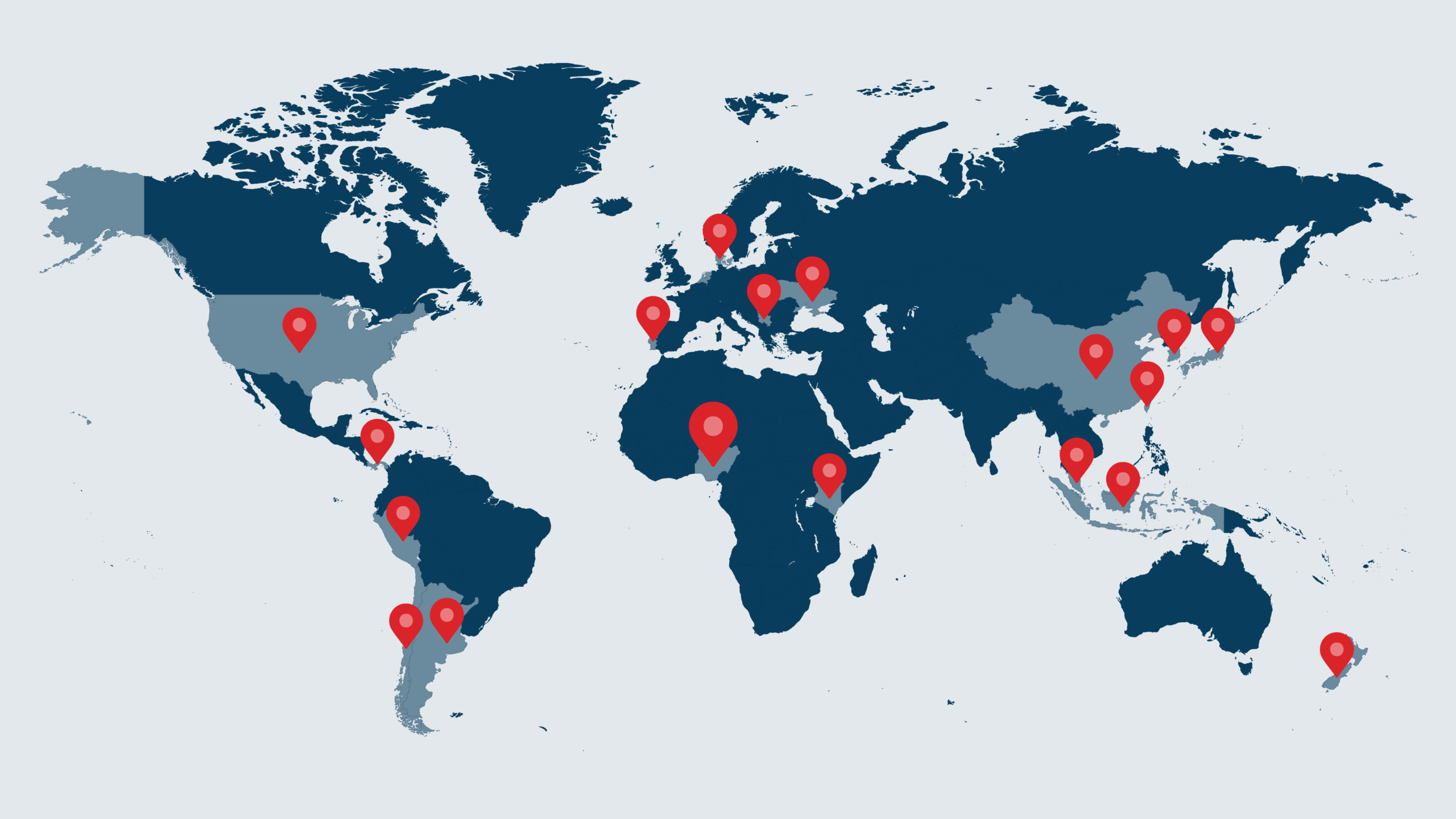
Welcome to The Fifteen, a global round-up of the stories animating higher education institutions and systems around the globe. Let’s get to it.
- The biggest story in world higher education this past couple of weeks has certainly been “The Compact”, a deal offered by the Trump administration on October 1 to nine large research institutions (some public, some private). Apparently inspired by the work of Trumpian billionaire Marc Rowan, the proposed deal would see institutions agree to hand control of admissions to the Trump administration, transform or abolish institutional units the disparage or belittle Conservative ideas (not defined), abolish any use of race or gender criteria in hiring, adopt a standard of “institutional neutrality” which prevent all employees from speaking in public about “societal and political events”, fight against grade inflation, freeze tuition for five years, provide free tuition in the sciences if their endowment is over $2M/student, limit foreign enrolment to 15% of the student body, all in return for…something? The Compact isn’t clear, but it certainly suggests that universities’ existence as tax-exempt entities, their ability to receive research funding, recruit foreign students, and eligibility for student aid programs will all be harmed if they don’t sign the deal. The excellent Brendan Cantwell of Michigan State University described the deal as “rotten”, the Dean of Law at Berkeley Erwin Chereminsky called it “extortion”, while UCLA professor Joseph Fishkin noted that it’s an attempt to “replace the law with the deal”. At the time of writing, none of the nine institutions had accepted the offer, though one (MIT) had outright rejected it. In response to MIT’s rejection, Trump made an open offer to all institutions to sign the Compact. Republican legislatures in some states are likely to push their state-run institutions to sign the deal; meanwhile the Democratic governor of California and the Democratic legislature of Virginia have both signaled financial consequences to universities in their state that do sign on to the compact.
- Tuition fees are starting to become a big issue in Europe. The Wallonie-Bruxelles government in Belgium, under serious financial pressure, is raising tuition fees (known as “minerval”) by about 40% to just under €1200/year. And further south, opposition is mounting to the Swiss government’s proposal to double tuition fees (to a little over €3000 per year).
- Back in 1999, former Prime Minister Tony Blair committed the UK to a goal of 50% of young people being able to access university. Current Prime Minster Keir Starmer has backed away from that goal, saying the target is “not right for our times”. He wants a new target which involves more students in skilled vocational programs (which is interesting because that sector is even more poorly-funded than universities).
- India continues to open up to global branch campuses. Last week, it announced approvals for another nine UK institutions to open in the country as well as another three from Australia. Canada, as usual, is nowhere to be seen because – in our typical fleece-addled way – we expect everyone to come to us.
- Vietnam is continuing to go full speed on modernizing its university system. The Politburo recently asked the Ministry of Education to draw up plans to create three to five “world class” institutions, and over 140 institutions have been put on notice that they may end up being merged to create a system of fewer, stronger universities.
- Down in Australia, the University of Sydney has become the first major research-intensive university in the world to have a student body which is 51% international students. I’m sure this will have no effect on the ongoing debate about student visas.
- Iran has been ramping up the number of international students it hosts as well, mainly from neighboring countries like Pakistan and Iraq. However, these students are not always welcome. Earlier this month, protests erupted accusing Iraqi students of being in league with Iranian government militants and of harassing female students.
- This chart showing monthly academic salaries across Africa has been circulating quite a bit in Nigeria this past few weeks. It appears to stem from this story from a Nigeria Tribune journalist, and it looks right-ish to me, though I suspect it is not including various forms of allowances and per diems that would tend to equalize the results a bit, or making distinctions between public and private institutions. With the academic staff union gearing up for yet another strike, the finding that Nigeria is dead last in salaries is grist for the mill.
- Brazil broke the 10M mark in national enrolments in 2024, making it the fourth-largest higher education system in the world (behind China, India and the US, but well clear of Indonesia and Turkey). More interestingly: over 50% of enrolments are online and presential learning numbers are actually in decline. Meanwhile in Mexico, enrolments in polytechnic and vocational programs have reached an all-time high.
- Nature published a special issue on universities. Parts of it are free online, but you may find it worthwhile to spend the $30 for the full issue (it’s good!)
- As reported in previous editions of The Fifteen, Hong Kong is going ahead with raising the permissible “non-local” portion of the student body to 50%. There have been two developments in this story in the past couple of weeks. First, the government is making it clear that it does not want the new numbers to come entirely from the mainland (we’ll see how the mainland feels about that soon, I guess). Second, the government is actually planning an entirely new “University Town” to accommodate the new influx. Meanwhile, Hong Kong is celebrating being the only city in the world with five universities in the Times Higher Education ranking’s top 100.
- Two countries are experimenting with new degree lengths. Turkey is now permitting universities to offer three-year Bachelor’s degrees, but only to “academically elite”, which I assume means some kind of advanced placement system. Meanwhile, in Japan, there is a move to approve five year joint Bachelor’s-Master’s degrees.
- Saudi Arabia has a rich cultural history but when it comes to education; it has tended (like most Arab countries) to focus more heavily on science and engineering. Now, however, it is opening a new University of the Arts in Riyadh. It is starting out just in the fields of music, film and performing arts, but has plans to expand into architecture, culinary arts, heritage studies, cultural management, literature, and fashion.
- The Times Higher Education had a piece on Chinese study abroad numbers collapsing by 2040, posing “an existential threat to institutions worldwide”. It’s an odd piece. Yes, since 2018 births in China have been plummeting, meaning collapse in overall youth (18-21) numbers sometime around 2036-38. But current youth numbers are well below where they were 20 years ago, and yet, studying abroad is much more common. Demography is not destiny.
- This one is from earlier this summer when the blog was on hiatus, but I thought it was worth resurfacing. Somebody in Beijing decided to make some money by selling bottled water allegedly from Weiming Lake on the Beida campus. “Gazing at the water daily can boost morale, enhance intelligence and significantly increase emotional intelligence,” the sellers said, transparently capitalizing on students’/parents’ anxieties during the gaokao season.
And that’s the mid-October edition of the Fifteen. See you back here on Hallowe’en for the next edition.
The blog is off next week, but you can still join Tiffany MacLennan for Focus Friday on October 24 (they’ll be chatting about international student enrolment).