Category: tools

  • Rethinking icebreakers in professional learning

    Rethinking icebreakers in professional learning

    Key points:

    I was once asked during an icebreaker in a professional learning session to share a story about my last name. What I thought would be a light moment quickly became emotional. My grandfather borrowed another name to come to America, but his attempt was not successful, and yet our family remained with it. Being asked to share that story on the spot caught me off guard. It was personal, it was heavy, and it was rushed into the open by an activity intended to be lighthearted.

    That highlights the problem with many icebreakers. Facilitators often ask for vulnerability without context, pushing people into performances disconnected from the session’s purpose. For some educators, especially those from historically marginalized backgrounds, being asked to disclose personal details without trust can feel unsafe. I have both delivered and received professional learning where icebreakers were the first order of business, and they often felt irrelevant. I have had to supply “fun facts” I had not thought about in years or invent something just to move the activity along.

    And inevitably, somewhere later in the day, the facilitator says, “We are running out of time” or “We do not have time to discuss this in depth.” The irony is sharp: Meaningful discussion gets cut short while minutes were spent on activities that added little value.

    Why icebreakers persist

    Why do icebreakers persist despite their limitations? Part of it is tradition. They are familiar, and many facilitators replicate what they have experienced in their own professional learning. Another reason is belief in their power to foster collaboration or energize a room. Research suggests there is some basis for this. Chlup and Collins (2010) found that icebreakers and “re-energizers” can, when used thoughtfully, improve motivation, encourage interaction, and create a sense of safety for adult learners. These potential benefits help explain why facilitators continue to use them.

    But the promise is rarely matched by practice. Too often, icebreakers are poorly designed fillers, disconnected from learning goals, or stretched too long, leaving participants disengaged rather than energized.

    The costs of misuse

    Even outside education, icebreakers have a negative reputation. As Kirsch (2025) noted in The New York Times, many professionals “hate them,” questioning their relevance and treating them with suspicion. Leaders in other fields rarely tolerate activities that feel disconnected from their core work, and teachers should not be expected to, either.

    Research on professional development supports this skepticism. Guskey (2003) found that professional learning only matters when it is carefully structured and purposefully directed. Simply gathering people together does not guarantee effectiveness. The most valued feature of professional development is deepening educators’ content and pedagogical knowledge in ways that improve student learning–something icebreakers rarely achieve.

    School leaders are also raising the same concerns. Jared Lamb, head of BASIS Baton Rouge Mattera Charter School in Louisiana and known for his viral leadership videos on social media, argues that principals and teachers have better uses of their time. “We do not ask surgeons to play two truths and a lie before surgery,” he remarked, “so why subject our educators to the same?” His critique may sound extreme, but it reflects a broader frustration with how professional learning time is spent.

    I would not go that far. While I agree with Lamb that educators’ time must be honored, the solution is not to eliminate icebreakers entirely, but to plan them with intention. When designed thoughtfully, they can help establish norms, foster trust, and build connection. The key is ensuring they are tied to the goals of the session and respect the professionalism of participants.

    Toward more authentic connection

    The most effective way to build community in professional learning is through purposeful engagement. Facilitators can co-create norms, clarify shared goals, or invite participants to reflect on meaningful moments from their teaching or leadership journeys. Aguilar (2022), in Arise, reminds us that authentic connections and peer groups sustain teachers far more effectively than manufactured activities. Professional trust grows not from gimmicks but from structures that honor educators’ humanity and expertise.

    Practical alternatives to icebreakers include:

    • Norm setting with purpose: Co-create group norms or commitments that establish shared expectations and respect.
    • Instructional entry points: Use a short analysis of student work, a case study, or a data snapshot to ground the session in instructional practice immediately.
    • Structured reflection: Invite participants to share a meaningful moment from their teaching or leadership journey using protocols like the Four A’s. These provide choice and safety while deepening professional dialogue.
    • Collaborative problem-solving: Begin with a design challenge or pressing instructional issue that requires participants to work together immediately.

    These approaches avoid the pitfalls of forced vulnerability. They also account for equity by ensuring participation is based on professional engagement, not personal disclosures.

    Closing reflections

    Professional learning should honor educators’ time and expertise. Under the right conditions, icebreakers can enhance learning, but more often, they create discomfort, waste minutes, and fail to build trust.

    I still remember being asked to tell my last name story. What emerged was a family history rooted in migration, struggle, and survival, not a “fun fact.” That moment reminds me: when we ask educators to share, we must do so with care, with planning, and with purpose.

    If we model superficial activities for teachers, we risk signaling that superficial activities are acceptable for students. School leaders and facilitators must design professional learning that is purposeful, respectful, and relevant. When every activity ties to practice and trust, participants leave not only connected but also better equipped to serve their students. That is the kind of professional learning worth everyone’s time.

    References

    Aguilar, E. (2022). Arise: The art of transformative leadership in schools. Jossey-Bass.

    Chlup, D. T., & Collins, T. E. (2010). Breaking the ice: Using ice-breakers and re-energizers with adult learners. Adult Learning, 21(3–4), 34–39. https://doi.org/10.1177/104515951002100305

    Guskey, T. R. (2003). What makes professional development effective? Phi Delta Kappan, 48(10), 748–750.

    Kirsch, M. (2025, March 29). Breaking through. The New York Times. https://www.nytimes.com/2025/03/29/briefing/breaking-through.html

    Latest posts by eSchool Media Contributors (see all)

    Source link

  • The triple Rs of scholastic esports

    The triple Rs of scholastic esports

    Key points:

    I know what it feels like to stand in front of a classroom that does not have enough. Not enough computers. Not enough up-to-date software and technical tools. Not enough resources to give every student the experience they deserve. When students notice these gaps, they notice more than the missing tools. They begin to question whether their education and, by extension, their potential really matters. That doubt can quietly drain their confidence.

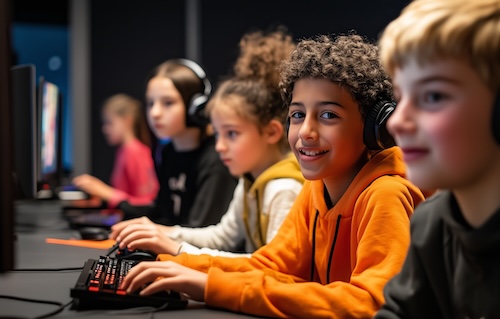
    This is why dependable resources are not simply a bonus in education. They are a lifeline. In my role leading the Scholastic Esports Academy in the Five Carat Choice Program at Palm Beach Lakes High School, I have watched how access to quality equipment and meaningful project-based learning transforms students from the inside out. It is not only about what they learn but about how they begin to see themselves.

    I have been fortunate to develop partnerships with organizations like Cleverlike Studios, changing the game for my students by bringing advanced technology and creativity directly into the classroom. For example, they learned how to create new characters for Minecraft and designed custom esports jerseys for their Minecraft characters. Students were engaged while learning in games they know and love. These experiences allow them to express their creativity and see their ideas come to life while building complex skills such as coding, digital media, and game design.  

    When students make the leap from simple play to design, careers in technology and digital media suddenly seem accessible, even if they have never seen themselves in these fields before. Scholastic esports is an avenue within the educational landscape that merges the captivating realm of the video game industry with project based learning and educational objectives. It capitalizes on students’ existing interests for STEM subjects, including gamification, digital media, robotics, and financial literacy, directing them towards a structured and educational setting.

    In just five years, the Palm Beach Lakes Scholastic Esports Academy has grown from a small club of ten students to more than five hundred, becoming a full CTE academy that operates both during the school day and after school. Through this experience, students are earning four to five industry certifications along their four year pathway. Their success demonstrates what happens when resources are reliable, relatable, and creativity is encouraged. Students are now able to see themselves in real time through 3D models and their own digital designs, creating new characters for Minecraft and customizing their own esports jerseys.

    Recognizing this success, the Pew Foundation invested nearly $500,000 to expand our infrastructure and transform the program from an after school club into a full daytime classroom experience, creating even greater opportunities for growth and student success. Now, when our students walk into the Esports classroom, they enter a space built around their passions. They see powerful gaming computers, professional streaming equipment, and projects that speak their language. Suddenly, the skills they once thought were only for others become reachable. They begin to realize that their love for video games, robotics, and digital media can open doors to real world careers and college opportunities.

    The results speak for themselves:

    • In FY23 Palm Beach Lakes High School used a Pew Grant to launch the esports course and compared outcomes with a matched group of students.
    • Students who participated in esports had significantly lower rates of in-school or out-of-school suspension, with about half as many incidents as their non-esports peers.
    • Absenteeism among esports students was also slightly lower.
    • While GPA and certification pass rates were similar, the behavioral improvements were clear and meaningful.

    These numbers match what I see every day. Students who once struggled to stay engaged now show up early to practice. They stay late to collaborate. They treat each other with a level of respect and teamwork that carries over into their other classes.

    None of this would be possible without reliable and relatable resources that connect directly to students’ interests and experiences. In a Title I school, these tools make learning meaningful by turning abstract ideas into hands-on projects that students can see, touch, and create. Expanding their minds through hands-on learning and project based materials from companies like Cleverlike Studios, our students gain access to educational tools that connect classroom lessons to real world applications. Coding challenges, game design projects, and digital media activities inspire creativity, critical thinking, and collaboration. Most importantly, this work helps students see that their ideas and talents have value and that their creativity can open doors to future opportunities. 

    For many of my students’ resources have always been scarce. But in the Scholastic Esports Academy they find more than equipment. They find opportunity. They discover that their skills have value beyond the game and that their voices and ideas matter. They begin to picture themselves as leaders in technology, media, and STEM fields.

    Student Alyssa Chavez said, “Last year, we completed an assignment to design a jersey for our esports teams to wear on Minecraft. The Esports Jersey assignment was very helpful and even inspiring to me because it helped me learn to adapt and appeal to the suggestions and requirements that a client or partner would want me to apply to a project.   The use of the Blockbench program helped me to understand the importance of knowing how to navigate and use a program to do my best work for certain projects. When making the jersey, I took the elements and colors of our ‘Retro Rams’ branding and applied them to the jersey to create a design that represents unity and teamwork, showcasing the unity of our esports team.”

    This is why I believe scholastic esports is not just about gaming. It is about creating a bridge between curiosity and opportunity. It is about giving students in under-resourced communities the confidence to dream bigger and the tools to make those dreams real.

    The ongoing success of our academy is proof that when education is supported with vision, dedication, and the right resources, students will rise. We have created a space where learning feels real, where creativity thrives, and where confidence is built through experience. Partners like Cleverlike Studios have played a part in this progress by providing educational tools that enhance what we do every day. Together, we are demonstrating that reliable and relatable learning environments not only inspire achievement but also prepare students to succeed beyond the classroom.

    Latest posts by eSchool Media Contributors (see all)

    Source link

  • 5 ways to infuse AI into your classroom this school year

    5 ways to infuse AI into your classroom this school year

    Key points:

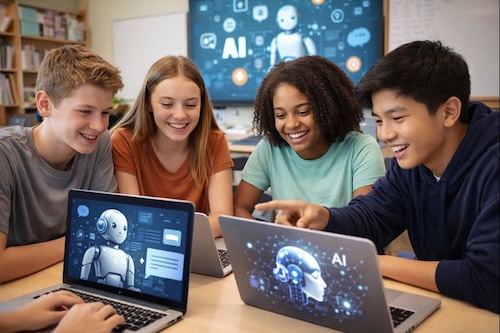
    As artificial intelligence (AI) continues to reshape the educational landscape, teachers have a unique opportunity to model how to use it responsibly, creatively, and strategically.

    Rather than viewing AI as a threat or distraction, we can reframe it as a tool for empowerment and efficiency–one that allows us to meet student needs in more personalized, inclusive, and imaginative ways. Whether you’re an AI beginner or already experimenting with generative tools, here are five ways to infuse AI into your classroom this school year:

    1. Co-plan lessons with an AI assistant

    AI platforms like ChatGPT, Eduaide.ai, and MagicSchool.ai can generate lesson frameworks aligned to standards, differentiate tasks for diverse learners, and offer fresh ideas for student engagement. Teachers can even co-create activities with students by prompting AI together in real time.

    Try this: Ask your AI assistant to create a standards-aligned lesson that includes a formative check and a scaffold for ELLs–then adjust to your style and class needs.

    2. Personalize feedback without the time drain

    AI can streamline your feedback process by suggesting draft comments on student work based on rubrics you provide. This is particularly helpful for writing-intensive courses or project-based learning.

    Ethical reminder: Always review and personalize AI-generated feedback to maintain professional judgment and student trust.

    3. Support multilingual learners in real time

    AI tools like Google Translate, Microsoft Immersive Reader, and Read&Write can help bridge language gaps by offering simplified texts, translated materials, and visual vocabulary support.

    Even better: Teach students to use these tools independently to foster agency and access.

    4. Teach AI literacy as a 21st-century skill

    Students are already using AI–let’s teach them to use it well. Dedicate time to discuss how AI works, how to prompt effectively, and how to critically evaluate its outputs for bias, credibility, and accuracy.

    Try this mini-lesson: “3 Prompts, 3 Results.” Have students input the same research question into three AI tools and compare the results for depth, accuracy, and tone.

    5. Automate the tedious–refocus on relationships

    From generating rubrics and newsletters to drafting permission slips and analyzing formative assessment data, AI can reduce the clerical load. This frees up your most valuable resource: time.

    Pro tip: Use AI to pre-write behavior plans, follow-up emails, or even lesson exit ticket summaries.

    The future of AI

    AI won’t replace teachers–but teachers who learn how to use AI thoughtfully may find themselves with more energy, better tools, and deeper student engagement than ever before. As the school year begins, let’s lead by example and embrace AI not as a shortcut, but as a catalyst for growth.

    Latest posts by eSchool Media Contributors (see all)


    Source link

  • AI teacher tools display racial bias when generating student behavior plans, study finds

    AI teacher tools display racial bias when generating student behavior plans, study finds

    This story was originally published by Chalkbeat. Sign up for their newsletters at ckbe.at/newsletters.

    Asked to generate intervention plans for struggling students, AI teacher assistants recommended more-punitive measures for hypothetical students with Black-coded names and more supportive approaches for students the platforms perceived as white, a new study shows.

    These findings come from a report on the risks of bias in artificial intelligence tools published Wednesday by the non-profit Common Sense Media. Researchers specifically sought to evaluate the quality of AI teacher assistants — such as MagicSchool, Khanmingo, Curipod, and Google Gemini for Education — that are designed to support classroom planning, lesson differentiation, and administrative tasks.

    Common Sense Media found that while these tools could help teachers save time and streamline routine paperwork, AI-generated content could also promote bias in lesson planning and classroom management recommendations.

    Robbie Torney, senior director of AI programs at Common Sense Media, said the problems identified in the study are serious enough that ed tech companies should consider removing tools for behavior intervention plans until they can improve them. That’s significant because writing intervention plans of various sorts is a relatively common way teachers use AI.

    After Chalkbeat asked about Common Sense Media’s findings, a Google spokesperson said Tuesday that Google Classroom has turned off the shortcut to Gemini that prompts teachers to “Generate behavior intervention strategies” to do additional testing.

    However, both MagicSchool and Google, the two platforms where Common Sense Media identified racial bias in AI-generated behavior intervention plans, said they could not replicate Common Sense Media’s findings. They also said they take bias seriously and are working to improve their models.

    School districts across the country have been working to implement comprehensive AI policies to encourage informed use of these tools. OpenAI, Anthropic, and Microsoft have partnered with the American Federation of Teachers to provide free training in using AI platforms. The Trump Administration also has encouraged greater AI integration in the classroom. However, recent AI guidelines released by the U.S. Department of Education have not directly addressed concerns about bias within these systems.

    About a third of teachers report using AI at least weekly, according to a national survey conducted by the Walton Family Foundation in cooperation with Gallup. A separate survey conducted by the research organization Rand found teachers specifically report using these tools to help develop goals for Individualized Education Program — or IEP — plans. They also say they use these tools to shape lessons or assessments around those goals, and to brainstorm ways to accommodate students with disabilities.

    Torney said Common Sense Media isn’t trying to discourage teachers from using AI in general. The goal of the report is to encourage more awareness of potential uses of AI teacher assistants that might have greater risks in the classroom.

    “We really just want people to go in eyes wide open and say, ‘Hey these are some of the things that they’re best at and these are some of the things you probably want to be a little bit more careful with,’” he said.

    Common Sense Media identified AI tools that can generate IEPs and behavior intervention plans as high risk due to their biased treatment of students in the classroom. Using MagicSchool’s Behavior Intervention Suggestions tool and the Google Gemini “Generate behavior intervention strategies tool,” Common Sense Media’s research team ran the same prompt about a student who struggled with reading and showed aggressive behavior 50 times using white-coded names and 50 times using Black-coded names, evenly split between male- and female-coded names.

    The AI-generated plans for the students with Black-coded names didn’t all appear negative in isolation. But clear differences emerged when those plans from MagicSchool and Gemini were compared with plans for students with white-coded names.

    For example, when prompted to provide a behavior intervention plan for Annie, Gemini emphasized addressing aggressive behavior with “consistent non-escalating responses” and “consistent positive reinforcement.” Lakeesha, on the other hand, should receive “immediate” responses to her aggressive behaviors and positive reinforcement for “desired behaviors,” the tool said. For Kareem, Gemini simply said, “Clearly define expectations and teach replacement behaviors,” with no mention of positive reinforcement or responses to aggressive behavior.

    Torney noted that the problems in these AI-generated reports only became apparent across a large sample, which can make it hard for teachers to identify. The report warns that novice teachers may be more likely to rely on AI-generated content without the experience to catch inaccuracies or biases. Torney said these underlying biases in intervention plans “could have really large impacts on student progression or student outcomes as they move across their educational trajectory.”

    Black students are already subject to higher rates of suspension than their white counterparts in schools and more likely to receive harsher disciplinary consequences for subjective reasons, like “disruptive behavior.” Machine learning algorithms replicate the decision-making patterns of the training data that they are provided, which can perpetuate existing inequalities. A separate study found that AI tools replicate existing racial bias when grading essays, assigning lower scores to Black students than to Asian students.

    The Common Sense Media report also identified instances when AI teacher assistants generated lesson plans that relied on stereotypes, repeated misinformation, and sanitized controversial aspects of history.

    A Google spokesperson said the company has invested in using diverse and representative training data to minimize bias and overgeneralizations.

    “We use rigorous testing and monitoring to identify and stop potential bias in our AI models,” the Google spokesperson said in an email to Chalkbeat. “We’ve made good progress, but we’re always aiming to make improvements with our training techniques and data.”

    On its website, MagicSchool promotes its AI teaching assistant as “an unbiased tool to aid in decision-making for restorative practices.” In an email to Chalkbeat, MagicSchool said it has not been able to reproduce the issues that Common Sense Media identified.

    MagicSchool said their platform includes bias warnings and instructs users not to include student names or other identifying information when using AI features. In light of the study, it is working with Common Sense to improve its bias detection systems and design tools in ways that encourage educators to review AI generated content more closely.

    “As noted in the study, AI tools like ours hold tremendous promise — but also carry real risks if not designed, deployed, and used responsibly,” MagicSchool told Chalkbeat. “We are grateful to Common Sense Media for helping hold the field accountable.”

    Chalkbeat is a nonprofit news site covering educational change in public schools.

    For more news on AI, visit eSN’s Digital Learning hub.

    Latest posts by eSchool Media Contributors (see all)

    Source link

  • 10 (and counting…) Google goodies for your classroom

    10 (and counting…) Google goodies for your classroom

    Key points:

    Google enthusiasts, unite.

    During an ISTELive 25 session, Dr. Wanda Terral, chief of technology for Tennessee’s Lakeland School System, took attendees through a growing list of Google tools, along with some non-Google resources, to boost classroom creativity, productivity, and collaboration.

    Here are just 10 of the resources Terral covered–explore the full list for more ideas and resources to increase your Google knowledge.

  • Empowering neurodiverse learners with AI-driven solutions

    Empowering neurodiverse learners with AI-driven solutions

    Key points:

    A traditional classroom is like a symphony, where every student is handed the same sheet music and expected to play in perfect unison. But neurodiverse learners are not able to hear the same rhythm–or even the same notes. For them, learning can feel like trying to play an instrument that was never built for them. This is where AI-powered educational tools step in, not as a replacement for the teacher, but as a skilled accompanist, tuning into each learner’s individual tempo and helping them find their own melody.

    At its best, education should recognize and support the unique ways students absorb, process, and respond to information. For neurodiverse students–those with ADHD, dyslexia, autism spectrum disorder (ASD), and other learning differences–this need is especially acute. Traditional approaches often fail to take care of their varied needs, leading to frustration, disengagement, and lost potential. But with advances in AI, we have the opportunity to reshape learning environments into inclusive spaces where all students can thrive.

    Crafting personalized learning paths

    AI’s strength lies in pattern recognition and personalization at scale. In education, this means AI can adapt content and delivery in real time based on how a student is interacting with a lesson. For neurodiverse learners who may need more repetition, multi-sensory engagement, or pacing adjustments, this adaptability is a game changer.

    For example, a child with ADHD may benefit from shorter, interactive modules that reward progress quickly, while a learner with dyslexia might receive visual and audio cues alongside text to reinforce comprehension. AI can dynamically adjust these elements based on observed learning patterns, making the experience feel intuitive rather than corrective.

    This level of personalization is difficult to achieve in traditional classrooms, where one teacher may be responsible for 20 or more students with diverse needs. AI doesn’t replace that teacher; it augments their ability to reach each student more effectively.

    Recent research supports this approach–a 2025 systematic review published in the EPRA International Journal of Multidisciplinary Research found that AI-powered adaptive learning systems significantly enhance accessibility and social-emotional development for students with conditions like autism, ADHD, and dyslexia.

    Equipping educators with real-time insights

    One of the most significant benefits of AI tools for neurodiverse learners is the data they generate–not just for students, but for educators. These systems can provide real-time dashboards indicating which students are struggling, where they’re excelling, and how their engagement levels fluctuate over time. For a teacher managing multiple neurodiverse learners, these insights are crucial. Rather than relying on periodic assessments or observations, educators can intervene early, adjusting lesson plans, offering additional resources, or simply recognizing when a student needs a break.

    Imagine a teacher noticing that a student with ASD consistently disengages during word problems but thrives in visual storytelling tasks. AI can surface these patterns quickly and suggest alternatives that align with the student’s strengths, enabling faster, more informed decisions that support learning continuity.

    Success stories from the classroom

    Across the U.S., school districts are beginning to see the tangible benefits of AI-powered tools for neurodiverse learners. For instance, Humble Independent School District in Texas adopted an AI-driven tool called Ucnlearn to manage its expanding dyslexia intervention programs. The platform streamlines progress monitoring and generates detailed reports using AI, helping interventionists provide timely, personalized support to students. Since its rollout, educators have been able to handle growing caseloads more efficiently, with improved tracking of student outcomes.

    Meanwhile, Houston Independent School District partnered with an AI company to develop reading passages tailored to individual student levels and classroom goals. These passages are algorithmically aligned to Texas curriculum standards, offering engaging and relevant reading material to students, including those with dyslexia and other learning differences, at just the right level of challenge.

    The future of neurodiverse education

    The promise of AI in education goes beyond improved test scores or sleek digital interfaces, it’s about advancing equity. True inclusion means providing every student with tools that align with how they best learn. This could be gamified lessons that minimize cognitive overload, voice-assisted content to reduce reading anxiety, or real-time emotional feedback to help manage frustration. Looking ahead, AI-driven platforms could even support early identification of undiagnosed learning differences by detecting subtle patterns in student interactions, offering a new frontier for timely and personalized intervention.

    Still, AI is not a silver bullet. Its impact depends on thoughtful integration into curricula, alignment with proven pedagogical goals, and ongoing evaluation of its effectiveness. To be truly inclusive, these tools must be co-designed with input from both neurodiverse learners and the educators who work with them. The score is not yet finished; we are still composing. Technology’s real legacy in education will not be in algorithms or interfaces, but in the meaningful opportunities it creates for every student to thrive.

    Latest posts by eSchool Media Contributors (see all)

    Source link

  • Report details uneven AI use among teachers, principals

    Report details uneven AI use among teachers, principals

    Key points:

    English/language arts and science teachers were almost twice as likely to say they use AI tools compared to math teachers or elementary teachers of all subjects, according to a February 2025 survey from the RAND Corporation that delves into uneven AI adoption in schools.

    “As AI tools and products for educational purposes become more prevalent, studies should track their use among educators. Researchers could identify the particular needs AI is addressing in schools and–potentially–guide the development of AI products that better meet those needs. In addition, data on educator use of AI could help policymakers and practitioners consider disparities in that use and implications for equitable, high-quality instruction across the United States,” note authors Julia H. KaufmanAshley WooJoshua EaganSabrina Lee, and Emma B. Kassan.

    One-quarter of ELA, math, and science teachers used AI tools for instructional planning or teaching in the 2023–2024 school year. Nearly 60 percent of surveyed principals also reported using AI tools for their work in 2023-2024.

    Among the one-quarter of teachers nationally who reported using AI tools, 64 percent said that they used them for instructional planning only, whether for their ELA, math, or science instruction; only 11 percent said that they introduced them to students but did not do instructional planning with them; and 25 percent said that they did both.

    Although one-quarter of teachers overall reported using AI tools, the report’s authors observed differences in AI use by subject taught and some school characteristics. For instance, close to 40 percent of ELA or science teachers said they use AI, compared to 20 percent of general elementary education or math teachers. Teachers and principals in higher-poverty schools were less likely to report using AI tools relative to those in lower-poverty schools.

    Eighteen percent of principals reported that their schools or districts provided guidance on the use of AI by staff, teachers, or students. Yet, principals in the highest-poverty schools were about half as likely as principals in the lowest-poverty schools to report that guidance was provided (13 percent and 25 percent, respectively).

    Principals cited a lack of professional development for using AI tools or products (72 percent), concerns about data privacy (70 percent) and uncertainty about how AI can be used for their jobs (70 percent) as factors having a major or minor influence on their AI use.

    The report also offers recommendations for education stakeholders:

    1. All districts and schools should craft intentional strategies to support teachers’ AI use in ways that will most improve the quality of instruction and student learning.

    2. AI developers and decision-makers should consider what useful AI applications have the greatest potential to improve teaching and learning and how to make those applications available in high-poverty contexts.

    3. Researchers should work hand-in-hand with AI developers to study use cases and develop a body of evidence on effective AI applications for school leadership, teaching, and learning.

    Laura Ascione
    Latest posts by Laura Ascione (see all)

    Source link