Category: Trump administration

  • En Puerto Rico, la campaña de Trump para desmantelar el Departamento de Educación pega más fuerte

    En Puerto Rico, la campaña de Trump para desmantelar el Departamento de Educación pega más fuerte

    Maraida Caraballo Martínez es educadora en Puerto Rico desde hace 28 años y directora de la Escuela de la Comunidad Jaime C. Rodríguez desde hace siete. Nunca sabe cuánto dinero recibirá del gobierno cada año porque no se basa en el número de niños matriculados. Un año recibió 36.000 dólares; otro año, 12.000 dólares.

    Pero por primera vez como educador, Caraballo notó una gran diferencia durante la administración Biden. Gracias a una inyección de fondos federales en el sistema educativo de la isla, Caraballo recibió una subvención de 250.000 dólares, una cantidad de dinero sin precedentes. La utilizó para comprar libros y ordenadores para la biblioteca, pizarras e impresoras para las aulas, reforzar el programa de robótica y construir una pista polideportiva para sus alumnos. “Esto significó una gran diferencia para la escuela”, dijo Caraballo.

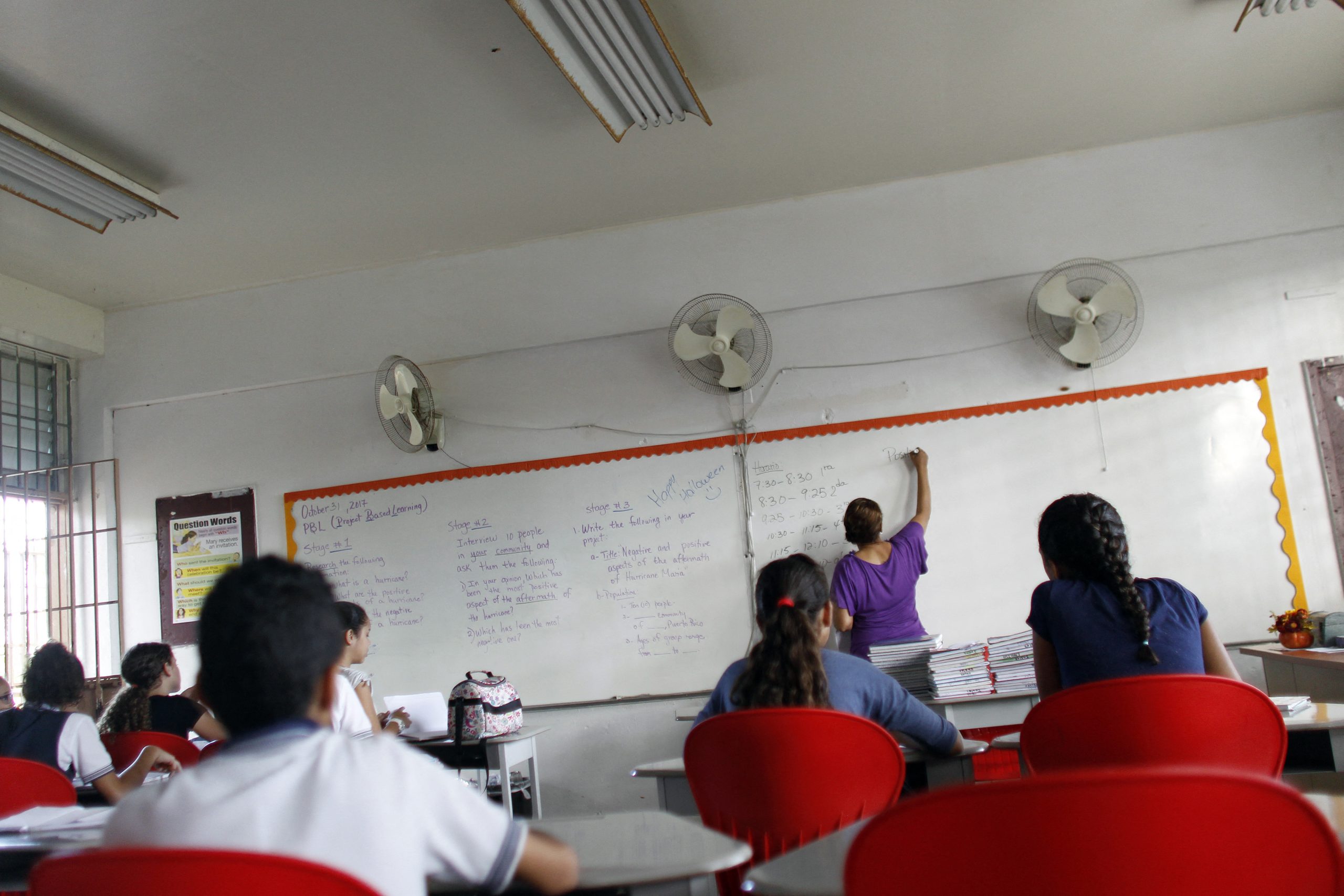
    Yabucoa, un pequeño pueblo del sureste de Puerto Rico, fue una de las regiones más afectadas por el huracán María en 2017. Y esta comunidad escolar, como cientos de otras en la isla, ha experimentado trastornos casi constantes desde entonces. Una serie de desastres naturales, como huracanes, terremotos, inundaciones y deslizamientos de tierra, seguidos de la pandemia de coronavirus en 2020, han golpeado la isla e interrumpido el aprendizaje. También ha habido una rotación constante de secretarios de educación locales: siete en los últimos ocho años. El sistema educativo puertorriqueño -el séptimo distrito escolar más grande de Estados Unidos- se ha vuelto más vulnerable debido a la abrumadora deuda de la isla, la emigración masiva y una red eléctrica paralizada.

    Relacionado: En las aulas de preescolar a secundaria pasan muchas cosas. Mantente al día con nuestro boletín semanal gratuito sobre educación.

    Bajo la presidencia de Joe Biden, se produjeron tímidos avances, respaldados por miles de millones de dólares y una atención personal sostenida por parte de altos funcionarios federales de educación, dijeron muchos expertos y educadores de la isla. Ahora les preocupa que todo se desmantele con el cambio en la Casa Blanca. El presidente Donald Trump no ha ocultado su desdén por el territorio estadounidense, habiendo dicho supuestamente que estaba sucio y que la gente era pobre.” Durante su primer mandato, retuvo miles de millones de dólares en ayuda federal tras el huracán María y ha sugerido vender la isla o cambiarla por Groenlandia.

    Una reciente orden ejecutiva para hacer del inglés el idioma oficial ha preocupado a los habitantes de la isla, donde solo 1 de cada 5 personas habla inglés con fluidez, y el español es el idioma de instrucción en las escuelas. Trump está tratando de eliminar el Departamento de Educación de EE.UU. y ya ha hecho recortes radicales a la agencia, lo que tendrá implicaciones en toda la isla. Incluso si los fondos federales -que el año pasado representaron más de dos tercios del financiamiento del Departamento de Educación de Puerto Rico, o DEPR- se transfirieran directamente al gobierno local, probablemente traerían peores resultados para los niños más vulnerables, dicen los educadores y expertos en políticas públicas. Históricamente, el DEPR ha estado plagado de interferencias políticas, burocracia generalizada y falta de transparencia.

     Maraida Caraballo Martínez ha sido educadora en Puerto Rico durante 28 años y ahora es directora de una escuela primaria. Su escuela ha estado a punto de cerrar tres veces debido a la emigración masiva de la isla. Credit: Kavitha Cardoza for The Hechinger Report

    Y el departamento de educación local no está tan avanzado tecnológicamente como otros departamentos de educación estatales, ni es tan capaz de difundir las mejores prácticas. Por ejemplo, Puerto Rico no dispone de una “fórmula por alumno”, un cálculo utilizado habitualmente en el continente para determinar la cantidad de dinero que recibe cada estudiante para su educación. Roberto Mujica es el director ejecutivo de la Junta de Supervisión y Gestión Financiera de Puerto Rico, convocada por primera vez bajo la presidencia de Barack Obama en 2016 para hacer frente al marasmo financiero de la isla. Mujica dijo que la actual asignación de fondos educativos de Puerto Rico es opaca. “Cómo se distribuyen los fondos se percibe como un proceso político”, dijo. “No hay transparencia ni claridad”.

    En 2021, Miguel Cardona, Secretario de Educación de Biden, prometió “un nuevo día” para Puerto Rico. “Durante demasiado tiempo, los estudiantes y educadores de Puerto Rico fueron abandonados”, dijo. Durante su mandato, Cardona aignó casi 6.000 millones de dólares federales para el sistema educativo de la isla, lo que se tradujo en un aumento salarial histórico para los profesores, financiamiento para programas de tutoría extraescolar, la contratación de cientos de profesionales de salud mental escolar y la creación de un programa piloto para descentralizar el DEPR.

    Cardona designó a un asesor principal, Chris Soto, para que fuera su persona de contacto con el sistema educativo de la isla, subrayando el compromiso del gobierno federal con la isla. Durante casi cuatro años en el cargo, Soto realizó más de 50 viajes a la isla. Carlos Rodríguez Silvestre, director ejecutivo de la Fundación Flamboyán, una organización sin fines de lucro de Puerto Rico que ha dirigido los esfuerzos de alfabetización infantil en la isla, dijo que el nivel de respeto e interés sostenido hicieron sentir que se trataba de una asociación, no un mandato de arriba hacia abajo. “Nunca había visto ese tipo de atención a la educación en Puerto Rico”, afirmó. “Soto prácticamente vivía en la isla”.

    Soto también trabajó estrechamente con Víctor Manuel Bonilla Sánchez, presidente del sindicato de maestros, la Asociación de Maestros de Puerto Rico, o AMPR, lo que dio lugar a un acuerdo por el que los educadores recibieron 1.000 dólares más al mes en su salario base, un aumento de casi el 30% para el maestro promedio. “Fue el mayor aumento salarial en la historia de los maestros de Puerto Rico”, dijo Bonilla, aunque incluso con el aumento, los maestros de aquí siguen ganando mucho menos dinero que sus colegas en el continente.

    Una de las mayores quejas que Soto dijo haber escuchado fue lo rígido y burocrático que era el Departamento de Educación de Puerto Rico, a pesar de una ley de reforma educativa de 2018 que permite un mayor control local. La agencia de educación -la unidad de gobierno más grande de la isla, con la mayor cantidad de empleados y el mayor presupuesto- estaba configurada de manera que la oficina central tenía que aprobar todo. Así que Soto creó y supervisó un programa piloto en Ponce, una región en la costa sur de la isla, enfocado en la descentralización.

    Por primera vez, la comunidad local eligió un consejo asesor de educación, y los candidatos a superintendente tuvieron que postularse en lugar de ser nombrados, dijo Soto. El superintendente recibió autoridad para aprobar directamente las solicitudes presupuestarias en lugar de enviarlas a través de funcionarios de San Juan, así como flexibilidad para gastar el dinero en su región en función de las necesidades de cada escuela.

    En el pasado, eso no se tenía en cuenta: Por ejemplo, Yadira Sánchez, psicóloga que lleva más de 20 años trabajando en la educación puertorriqueña, recuerda cuando una escuela recibió docenas de aires acondicionados nuevos aunque no los necesitaba. “Ya tenían aires acondicionados que funcionaban”, dice, “así que ese dinero se perdió”.

    Relacionado: Las amenazas de deportación de Trump pesan sobre los grupos que ofrecen ayuda con la FAFSA

    El proyecto piloto también se centró en aumentar la eficiencia. Por ejemplo, ahora se evalúa a los niños discapacitados en sus colegios, en lugar de tener que acudir a un centro especial. Y Soto dice que también intentó eliminar el uso de influencias y aumentar la transparencia en torno al gasto en el PRDE. “Puedes mejorar las facturas, pero si tus amigos políticos son los que se quedancon los trabajos, entonces no tienes un buen sistema escolar”, dijo.

    Bajo el mandato de Biden, Puerto Rico también recibió una subvención competitiva o grant  del Departamento de Educación de EE.UU. por valor de 10,5 millones de dólares para escuelas comunitarias, otro hito. Y el departamento federal empezó a incluir datos sobre el territorio en algunas estadísticas educativas recopiladas. “Puerto Rico ni siquiera figuraba en estos indicadores, así que empezamos a preguntarnos cómo mejorar los sistemas de datos. Desentrañar el problema de los datos significó que Puerto Rico puede ser debidamente reconocido”, dijo Soto.

    Pero ya hay planes para deshacer el esfuerzo de Cardona en Ponce. La recién elegida gobernadora de la isla, Jenniffer González Colón, es republicana y partidaria de Trump. El popular secretario de Educación, Eliezer Ramos Parés, regresó a principios de este año al frente del departamento tras dirigirlo desde abril de 2021 hasta julio de 2023, cuando la gobernadora le pidió inesperadamente que dimitiera, algo nada inusual en el gobierno de la isla, donde los nombramientos políticos pueden terminar de repente y con poco debate público. Ramos dijo a The Hechinger Report que el programa no continuará en su forma actual, calificándolo de “ineficiente”.

    “El programa piloto no es realmente eficaz”, dijo, señalando que la política puede influir en las decisiones de gasto no sólo a nivel central, sino también a nivel regional. “Queremos tener algunos controles”. También dijo que ampliar la iniciativa a toda la isla costaría decenas de millones de dólares. En su lugar, Ramos dijo que estaba estudiando enfoques más limitados de la descentralización, en torno a algunas funciones de recursos humanos y adquisiciones. Dijo que también estaba explorando una fórmula de financiación por alumno para Puerto Rico y estudiando las lecciones de otros grandes distritos escolares como la ciudad de Nueva York y Hawai.
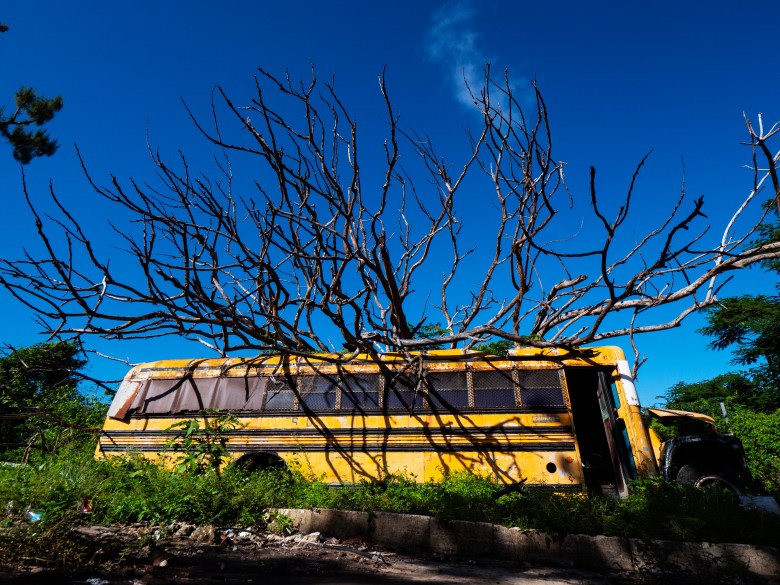
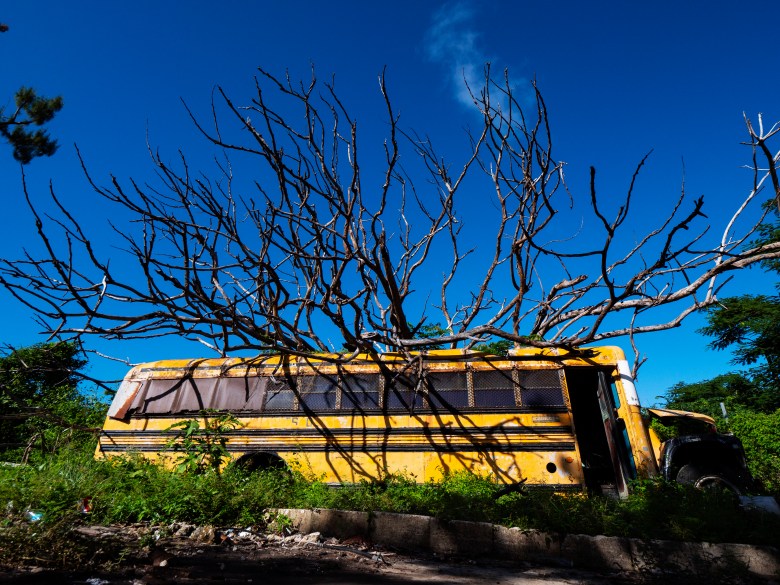
    Un autobús escolar bajo un árbol que cayó durante el huracán María, que azotó la isla de Puerto Rico en septiembre de 2017. Más de un año después, no había sido retirado. Credit: Al Bello/Getty Images for Lumix

    Aunque la educación ha sido la mayor partida presupuestaria de la isla durante años, sigue siendo mucho menos de lo que cualquiera de los 50 estados gasta en cada estudiante. Puerto Rico gasta 9.500 dólares por estudiante, frente a una media de 18.600 dólares en los estados.

    El Departamento de Educación de EE.UU., que complementa la financiación local y estatal para los estudiantes en situación de pobreza y con discapacidades, tiene un papel desproporcionado en las escuelas de Puerto Rico. En la isla, el 55% de los niños viven por debajo del umbral de la pobreza, frente al 17% en los 50 estados; en el caso de los estudiantes de educación especial, las cifras son del 35% y el 15%, respectivamente. En total, durante el año fiscal 2024, más del 68 por ciento del presupuesto de educación en la isla procede de fondos federales, frente al 11 por ciento en los estados de EE UU. El departamento también administra las becas Pell para estudiantes de bajos ingresos -alrededor del 72 por ciento de los estudiantes puertorriqueños las solicitan- y apoya los esfuerzos de desarrollo profesional y las iniciativas para los niños puertorriqueños que van y vienen entre el continente y el territorio.

    Linda McMahon, la nueva secretaria de Educación de Trump, ha dicho supuestamente que el Gobierno seguirá cumpliendo sus “obligaciones legales” con los estudiantes aunque el departamento cierre o transfiera algunas operaciones y despida personal. El Departamento de Educación de Estados Unidos no respondió a las solicitudes de comentarios para esta historia.

    Algunos dicen que el hecho de que la administración Biden haya vertido miles de millones de dólares en un sistema educativo en problemas con escasa rendición de cuentas ha creado expectativas poco realistas y no hay un plan para lo que ocurre después de que se gasta el dinero. Mujica, director ejecutivo de la junta de supervisión, dijo que la infusión de fondos pospuso la toma de decisiones difíciles por parte del gobierno puertorriqueño. “Cuando se tiene tanto dinero, se tapan muchos problemas. No tienes que enfrentarte a algunos de los retos que son fundamentales para el sistema”. Y afirmó que apenas se habla de lo que ocurrirá cuando se acabe ese dinero. “¿Cómo se va a llenar ese vacío? O desaparecen esos programas o tendremos que encontrar la financiación para ellos”, dijo Mujica.

    Dijo que esfuerzos como el de Ponce para acercar la toma de decisiones a donde están las necesidades de los estudiantes es “de vital importancia”. Aún así, dijo que no está seguro de que el dinero haya mejorado los resultados de los estudiantes. “Esta era una gran oportunidad para hacer cambios fundamentales e inversiones que produzcan resultados a largo plazo. No estoy seguro de que hayamos visto las métricas que lo respalden”.

    Relacionado: ¿Un trabajo demasiado bien hecho?

    Puerto Rico es una de las regiones más empobrecidas desde el punto de vista educativo, con unos resultados académicos muy inferiores a los del continente. En la parte de matemáticas de la Evaluación Nacional de Progreso Educativo, o NAEP, una prueba que realizan los estudiantes de todo EE.UU., sólo el 2% de los alumnos de cuarto curso de Puerto Rico calificaron como competentes, la puntuación más alta jamás registrada en la isla, y el 0% de los alumnos de octavo curso lo fueron. Los estudiantes puertorriqueños no hacen la prueba NAEP de lectura porque aprenden en español, no en inglés, aunque los resultados compartidos por Ramos en una conferencia de prensa en 2022 mostraron que sólo el 1% de los estudiantes de tercer grado leían a nivel de grado.

    Hay algunos esfuerzos alentadores. La Fundación Flamboyán ha liderado una coalición de 70 socios en toda la isla para mejorar la alfabetización de los niños de preescolar a tercer grado, entre otras cosas mediante el desarrollo profesional. La formación del profesorado a través del departamento de educación del territorio ha sido a menudo irregular u opcional.

    La organización trabaja ahora en estrecha colaboración con la Universidad de Puerto Rico y, como parte de ese esfuerzo, supervisa el gasto de 3 millones de dólares en formación para la alfabetización. Aproximadamente 1.500 profesores de Puerto Rico (un tercio de los maestros de Kinder a 5º grado) han recibido esta rigurosa formación. Los educadores recibieron 500 dólares como incentivo por participar, además de libros para sus aulas y tres horas de formación continua. “Fueron muchas horas de calidad. No ha sido el método de ‘rociar (con un poco de agua) y rezar’”, dijo Silvestre. Ese esfuerzo continuará, según Ramos, que lo calificó de “muy eficaz”.

    Una nueva prueba de lectura para alumnos de primero a tercer grado que la organización sin fines de lucro ayudó a diseñar mostró que entre los años escolares 2023 y 2024, la mayoría de los niños estaban por debajo del nivel del grado, pero hubo avances en los resultados en todos los grados. “Pero aún nos queda un largo camino por recorrer para que estos datos lleguen a los profesores a tiempo y de forma que puedan actuar en consecuencia”, dijo Silvestre.

    Kristin Ehrgood, Directora General de la Fundación Flamboyán, afirma que es demasiado pronto para ver resultados espectaculares. “Es realmente difícil ver una tonelada de resultados positivos en un período tan corto de tiempo con la desconfianza significativa que se ha construido durante años”, dijo. Dijo que no estaban seguros de cómo la administración Trump podría trabajar o financiar el sistema educativo de Puerto Rico, pero que la administración Biden había construido una gran cantidad de buena voluntad. “Hay muchas oportunidades que podrían aprovecharse, si una nueva administración decide hacerlo”.

    Otra señal esperanzadora es que la junta de supervisión, que fue muy protestada cuando se formó, ha reducido la deuda de la isla de 73.000 a 31.000 millones de dólares. Y el año pasado los miembros de la junta aumentaron el gasto en educación en un 3%. Mujica dijo que la junta se centra en asegurarse de que cualquier inversión se traduzca en mejores resultados para los estudiantes: “Nuestra opinión es que los recursos tienen que ir a las aulas”.

    Relacionado: Un pequeño pueblo rural en Nebraska necesitaba más cuidado infantil en español. Esto fue lo que se hizo para obtenerlo

    Betty A. Rosa, comisionada de educación y presidente de la Universidad del Estado de Nueva York y miembro de la Junta de Supervisión, afirmó que la inestabilidad educativa en Puerto Rico se debe a los cambios en el liderazgo. Cada nuevo líder se dedica a “reconstruir, reestructurar, reimaginar, elija la palabra que elija”, dijo. “No hay coherencia”. A diferencia de su cargo en el estado de Nueva York, el Secretario de Educación de Puerto Rico y otros cargos son nombramientos políticos. “Si tienes un gobierno permanente, aunque cambie el liderazgo, el trabajo continúa”.

    Ramos, que vivió esta inestabilidad cuando el anterior gobernador pidió inesperadamente su dimisión en 2023, dijo que se reunió con McMahon, la nueva secretaria de Educación de EE.UU., en Washington, D.C., y que mantuvieron una “agradable conversación”. “Ella sabe de Puerto Rico, se preocupa por Puerto Rico y demostró total apoyo en la misión de Puerto Rico”, dijo. Dijo que McMahon quería que el DEPR ofreciera más clases bilingües, para exponer a más estudiantes al inglés. Queda por ver si habrá cambios en la otorgación de fondos o cualquier otra cosa. “Tenemos que ver lo que ocurre en las próximas semanas y meses y cómo esa visión y esa política podrían afectar a Puerto Rico”, dijo Ramos.
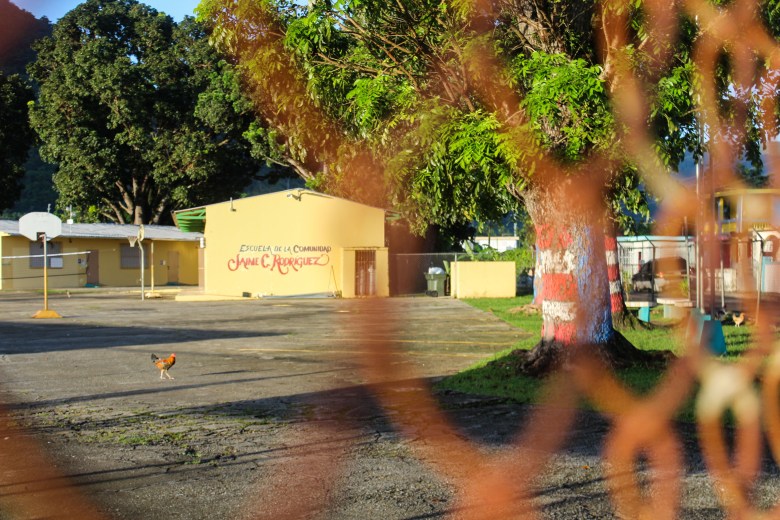
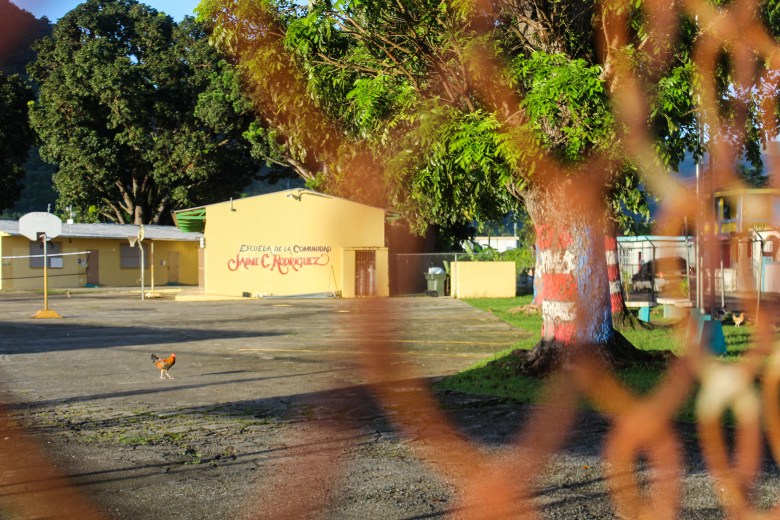
    La Escuela de la Comunidad Jaime C. Rodríguez es una escuela Montessori de Yabucoa, Puerto Rico, que carecía de instalaciones deportivas para sus alumnos. Recientemente comenzó las obras de un centro deportivo polivalente gracias a los fondos federales otorgados por la administración del presidente Biden. Credit: Kavitha Cardoza for The Hechinger Report

    Ramos fue muy apreciado por los educadores durante su primera etapa como Secretario de Educación. También tendrá que tomar muchas decisiones, como ampliar las escuelas charter y cerrar las escuelas públicas tradicionales, ya que la matriculación en las escuelas públicas de la isla sigue disminuyendo vertiginosamente. En el pasado, ambas cuestiones provocaron protestas feroces y generalizadas.

    Soto es realista y cree que la nueva administración tendrá “puntos de vista diferentes, tanto ideológica como políticamente”, pero confía en que el pueblo de Puerto Rico no quiera volver a la antigua forma de hacer las cosas. “Alguien dijo: ‘Ustedes sacaron al genio de la botella y va a ser difícil volver a ponerlo’ en lo que se refiere a un sistema escolar centrado en el estudiante”, dijo Soto.

    Cardona, cuyos abuelos son oriundos de la isla, dijo que Puerto Rico había experimentado un “estancamiento académico” durante años. “No podemos aceptar que los estudiantes rindan menos de lo que sabemos que son capaces”, dijo a The Hechinger Report, justo antes de despedirse como máximo responsable de educación del país. “Empezamos el cambio; tiene que continuar.

    La pequeña escuela de la directora Carabello, con 150 alumnos y 14 profesores, ha estado a punto de cerrarse ya tres veces, aunque en todas ellas se ha salvado en parte gracias al apoyo de la comunidad. Carabello confía en que Ramos, con quien ya ha trabajado anteriormente, cambie las cosas. “Conoce el sistema educativo”, afirma. “Es una persona brillante, abierta a escuchar”.  

    Pero las largas jornadas de los últimos años le han pasado factura. Suele estar en la escuela de 6:30 a.m. a 6:30 p.m. “Entras cuando anochece y te vas cuando anochece”, dice. Ha habido muchas plataformas nuevas que aprender y nuevos proyectos que poner en marcha. Quiere jubilarse, pero no puede permitírselo. Tras décadas en las que el gobierno local no financió suficientemente el sistema de pensiones, se recortaron los subsidios que compensaban el alto precio de los bienes y servicios en la isla y se congelaron los planes de pensiones.

    Ahora, en lugar de jubilarse con el 75% de su salario, Carabello recibirá sólo el 50%, 2.195 dólares al mes. Tiene derecho a prestaciones de la Seguridad Social, pero no son suficientes para compensar la pensión perdida. “¿Quién puede vivir con 2.000 dólares en un mes? Nadie. Es demasiado duro. Y mi casa aún necesita 12 años más para pagarse”.

    A Carabello, siempre tan fuerte y optimista con sus alumnos, se le saltaron las lágrimas. Pero es raro que se permita tiempo para pensar en sí misma. “Tengo una gran comunidad. Tengo grandes profesores y me siento feliz con lo que hago”, afirma.

    Está muy, muy cansada. 

    Comunícate con editora Caroline Preston al 212-870-8965 o [email protected].

    Este artículo sobre el Departamento de Educación y Puerto Rico fue producido por The Hechinger Report, una organización de noticias independiente sin fines de lucro centrada en la desigualdad y la innovación en la educación. Suscríbete a nuestro boletín de noticias.

    The Hechinger Report provides in-depth, fact-based, unbiased reporting on education that is free to all readers. But that doesn’t mean it’s free to produce. Our work keeps educators and the public informed about pressing issues at schools and on campuses throughout the country. We tell the whole story, even when the details are inconvenient. Help us keep doing that.

    Join us today.

    Source link

  • Head Start, the federal child care program for low-income families, is turning 60 this year. Will it make it to 61?

    Head Start, the federal child care program for low-income families, is turning 60 this year. Will it make it to 61?

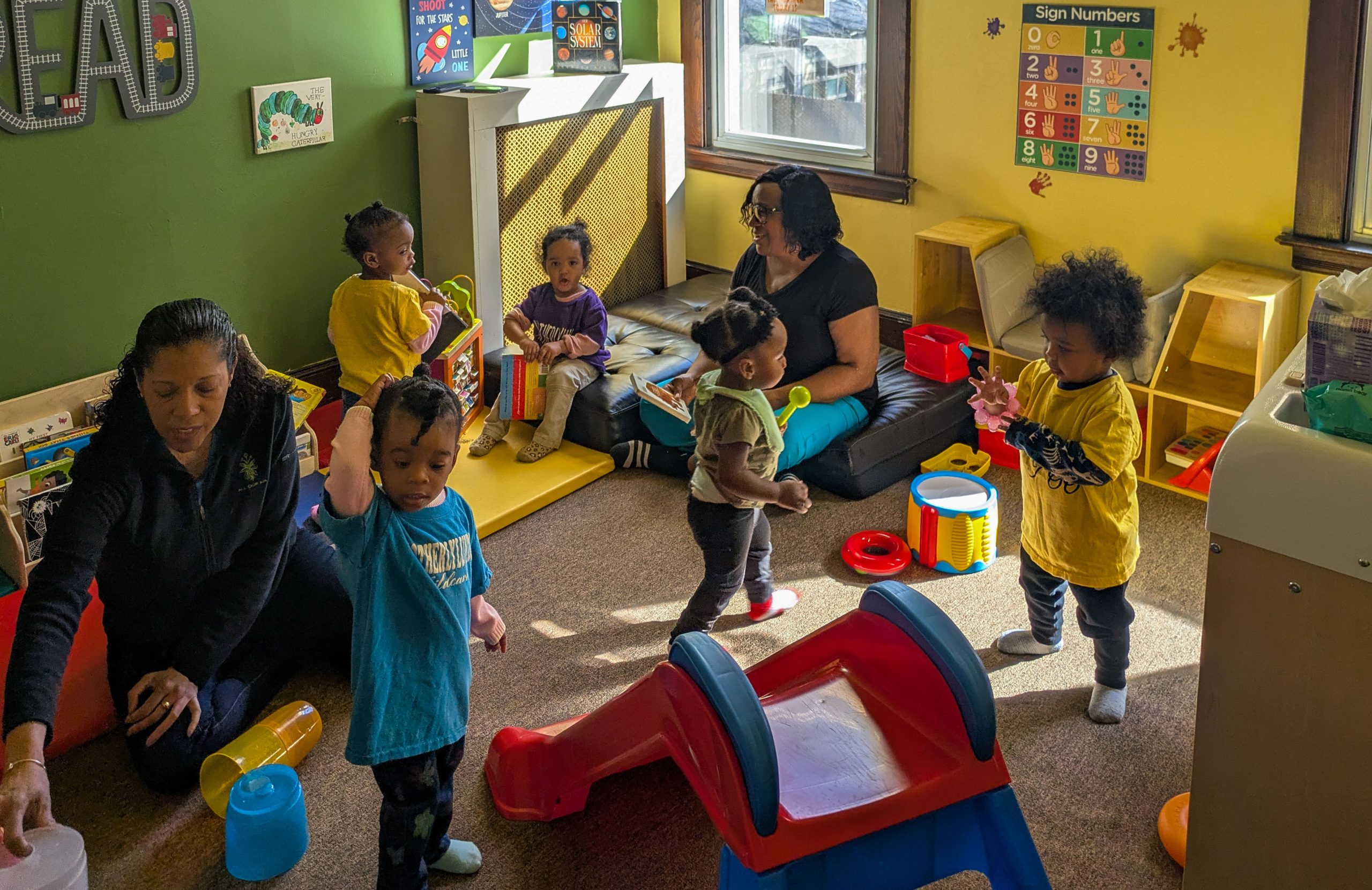
    NEW HAVEN, Conn. — Bright morning sun is streaming through her home’s windows as Sandra Dill reads a picture book about penguins to a room full of busy toddlers. While listening, the kids blow kisses, plop in a visitor’s lap, then get up to slide down a small slide.

    Dill has been running a family child care business from her home for 15 years, and every one of her 13 grandchildren has spent time here — currently it’s 20-month-old Nathaniel, who has a puff of curly hair and a gooey grin.

    “My older ones started to call it ‘grandma school,’” she said. Another one of her granddaughters, now a teenager, is returning this summer to help out.

    Four of Dill’s eight available slots are funded through Head Start. This is the federal-to-local program that funds child care and other support for the poorest families in America. (Regular Head Start serves children 3 to 5 years old; Early Head Start is for those under 3.) The program — which began right here in New Haven, Connecticut — is celebrating its 60th anniversary this year.

    It’s also never been so at risk: First a federal funding freeze hit providers, then a chunk of Head Start federal support staff were fired by the Department of Government Efficiency. On March 27, the Department of Health and Human Services announced it was cutting a further 10,000 jobs, and reorganizing the Administration for Children and Families, which administers Head Start. As of April 1, Head Start employees in five of the program’s 10 regions — Boston, New York, Chicago, San Francisco and Seattle — had reportedly been laid off, according to a LinkedIn post that day from Katie Hamm, a former official with the federal Administration for Children and Families. Hamm said there does not appear to be a transition plan laying out how Head Start programs in those regions will receive funding and support. Project 2025, the conservative policy handbook organized by the Heritage Foundation, which the Trump administration has been following closely, calls for eliminating Head Start altogether.

    “I think it’s terrible,” Dill said. “I just can’t imagine. It’s already not enough, and if this happens, it’s going to affect a lot of families that are already struggling.”

    Ed Zigler, the “father of Head Start,” was the son of immigrants from Poland. His father was a peddler and his mother plucked chickens to make a little money, according to Walter Gilliam, executive director of the University of Nebraska’s Buffett Early Childhood Institute, who counted Zigler as his closest mentor.

    When Zigler was a child, his family made its way to a settlement house in Kansas City, Missouri; these community-based charities offered a two-generation approach, caring for and educating children while also teaching English and job skills to parents and connecting families with medical care and housing help.

    “That made a huge impact on his and his family’s life,” Gilliam said.

    Related: Young children have unique needs and providing the right care can be a challenge. Our free early childhood education newsletter tracks the issues.

    As a young psychology professor at Yale, Zigler was hired as an advisor to President Lyndon Johnson to help design family programs for the federal War on Poverty. In creating Head Start, he turned to the same two-generation model he grew up with.

    To date, Head Start has served nearly 40 million children. In fiscal year 2023, the Head Start program was funded to serve 778,420 children. The program has always been underfunded: In 2020 Head Start served barely 1 in 10 eligible infants and toddlers and only half of eligible preschoolers. It’s limited to families making under the federal poverty level, which is just $31,200 for a family of four.

    The sand table at Dill’s child care is an opportunity to explore shapes, colors and textures. Credit: Anya Kamenetz for The Hechinger Report

    Still, for many of the families who do manage to make it through the doors, the program is life-changing.

    “Head Start is in every community in America,” said Cara Sklar, director of early & elementary education policy at the D.C.-based think tank New America. “It’s the original two-generation program, with wraparound support for kids. It’s really held up as a model of quality in early learning.”

    The “wraparound support” for Dill’s Early Head Start families is funded by the United Way of Greater New Haven, and comes via a network for family child care educators called All Our Kin. The network helps mothers enroll in community college and apply for housing subsidies. Dill has had mothers who lived in their cars and one who was living with her mother “six to a room,” she said. She also does regular home visits with families to talk about children’s development and support parents in goals like potty training.

    Thanks to Early Head Start, a nurse, a mental health consultant and a nutritionist all help Dill keep the kids healthy and safe. And the program also provides extra funds she can use to get back up and running if, for example, the furnace needs fixing.

    But Head Start is now facing funding challenges that go far beyond a broken furnace. “The past month has been harrowing for child care providers,” said Carolina Reyes, director of Arco Iris Bilingual Children’s Center, a preschool in Laurel, Maryland, that is a Head Start partner, and also a member of the nationwide advocacy group MomsRising. 

    The first blow to Head Start in this administration was President Donald Trump’s January 27 executive order calling for a federal funding freeze. Since Head Start is a direct federal-to-local grant program, even temporary interruptions in funding can cause programs to close their doors.

    “ Programs like mine operate on razor-thin margins,” said Reyes. “I don’t have any reserves to pull from if funding is delayed or slashed.”

    Related: Is Head Start a failure?

    While funding for most programs has resumed, Joel Ryan, the executive director of the Washington State Association of Head Start, said in a recent press conference that as late as the week of Feb. 17, one in four of his programs still had trouble accessing the Head Start payment website. 

    That same week of the 17th, almost 70 Head Start staffers were pink-slipped in the federal government’s sweep of “probationary” employees — about one-fifth of the program’s workforce. One laid-off employee, who didn’t want to give his name because he is still fighting his dismissal and fears reprisal, said he spent five years as a contractor before switching to full time this past summer, which accounted for his probationary status. He wore many hats at Head Start, doing data analytics, working with grant recipients and serving as a liaison for state partners.

    “They say we’re bloated; we could have used two more full-time people,” he said.

    The cuts, he feared, will lead to further delays in programs getting the payments they rely on, not to mention the oversight that keeps kids safe.

    “I come from the private sector. I will find another job,” he said. “The issue isn’t us, it’s the children and the families. We’ve got all these people in poverty who are getting screwed over by what’s happening.” 

    A third blow came on February 25, when the House passed a budget resolution calling for $880 billion in cuts to discretionary spending programs over the next decade, with Medicaid the prime target, along with the federal Supplemental Nutrition Assistance Program. Head Start families overwhelmingly rely on these safety net programs. The White House’s gutting of the Department of Education also threatens many services for preschoolers, especially those in special education. (This process, which maps out the next fiscal year, is separate from the recent vote to fund the government until Sept. 30.)

    “This is going from the precipice of disaster to decimating the system,” Sklar said. “All the parts that help families, from Head Start to child care to food to health care, are all being destabilized at once.”

    Gilliam said that threats to eliminate Head Start are nothing new. After designing the program during the Johnson administration, Zigler was appointed to run it under the presidency of Richard Nixon. “Some folks told him that his job was to destroy, essentially, the program that he had created,” Gilliam said.

    Related: In 2024, Head Start programs are still funded by a formula set in the 1970s

    Head Start advocates said the program has been able to fight off political challenges in the past because it is widely distributed geographically and has bipartisan support.

    “I agree that Project 2025 is a real threat to Head Start, as well as to other programs that we all care about,” said Ryan, with the Washington State Head Start association.

    “But I will say this: We have great research. We have great data. We have a great track record. We have a lot of bipartisan support in Congress. And we have parent power.”

    By coincidence, the week the House passed its budget resolution, a group of 150 Head Start parents were on Capitol Hill lobbying as part of a group called Start Early, and they met with many Republican senators.

    Tommy Sheridan, the deputy director of the National Head Start Association, struck an almost defiantly optimistic tone after the visit to lawmakers: “We still believe and have seen indicators that this administration is supportive of Head Start. And Congress as well.”

    NaMaree Cunningham and her twin sister turned two on the day of our visit. Credit: Anya Kamenetz for The Hechinger Report

    Another potential bright spot is the growth of child care support and funding on the state level. Elizabeth Groginsky is New Mexico’s first cabinet secretary for the state’s new Early Childhood Education & Care Department, and she said the pandemic woke a lot of people up to the importance of early care and education.

    “People began to understand the impact that child care has on children’s development, families’ ability to work, the overall economy,” Groginsky said.

    Since 2020, New Mexico has gone through a major expansion in home visits, child care and preschool. Vermont has made similar moves, and New York and Connecticut are heading in that direction as well. Even the deep-red state of Kentucky has expanded access.

    What all of these state-level programs have in common is that they are much more widely available to middle-class families, rather than tightly targeted to families in poverty, as Head Start still is. Historically, with programs like Medicare and Social Security, universal access has meant durable support.

    Now those states are contemplating stepping in further if the federal government drops the ball.

    “Because the state has made such an impressive commitment to child care, we’re potentially in a better spot than others,” said Janet McLaughlin, deputy commissioner for Vermont’s Department of Children and Families. And Groginsky, in New Mexico, said firmly, “The governor and the legislature — I don’t think we’ll let New Mexicans go without. They’ll find a way.”

    Support for this reporting was provided by the Better Life Lab at New America.

    Contact editor Christina Samuels at 212-678-3635 or [email protected].

    This story about Head Start was produced by The Hechinger Report, a nonprofit, independent news organization focused on inequality and innovation in education. Sign up for the Hechinger newsletter.

    The Hechinger Report provides in-depth, fact-based, unbiased reporting on education that is free to all readers. But that doesn’t mean it’s free to produce. Our work keeps educators and the public informed about pressing issues at schools and on campuses throughout the country. We tell the whole story, even when the details are inconvenient. Help us keep doing that.

    Join us today.

    Source link

  • With higher education under siege, college presidents cannot afford to stay silent 

    With higher education under siege, college presidents cannot afford to stay silent 

    Higher education is under siege from the Trump administration. Those opposing this siege and the administration’s attacks on democracy would do well to heed the wise advice of Benjamin Franklin given just prior to the signing of the Declaration of Independence in 1776: “We must all hang together, or most assuredly we shall all hang separately.” 

    This is particularly true right now for college and university presidents.

    College presidents come from a tradition based on the importance of ideas, of fairness, of speaking the truth as they understand it, whatever the consequences. If they don’t speak out, what will later generations say when they look back at this dark, dark time?

    The idea that Trump’s attacks on higher education are necessary to combat antisemitism is the thinnest of covers, and yet only a very few college presidents have been brave enough to call this what it is. 

    The president and those around him don’t care about antisemitism. Trump said people who chanted “Jews will not replace us” were “very fine people”; he dined with avowed antisemites like Nick Fuentes and Ye (Kanye West). 

    Marjorie Taylor Greene blamed the California wildfires of 2018 on space lasers paid for by Jewish bankers. Robert Kennedy claimed that Covid “targeted” white and Black people but spared Ashkenazi Jews and Chinese people. The Proud Boys pardoned by Trump for their part in the January 6 insurrection have routinely proclaimed their antisemitism; they include at least one member who has openly declared admiration for Adolf Hitler.

    Fighting antisemitism? That was never the motive for the Trump administration’s attacks on colleges and universities. The motive was — and continues to be — to discipline and tame institutions of higher learning, to bring them to heel, to turn them into mouthpieces of a single ideology, to put an end to the free flow of ideas under the alleged need to combat “wokeism.”

    Related: Interested in innovations in the field of higher education? Subscribe to our free biweeklyHigher Education newsletter.

    Columbia University has been a prime target of the Trump administration’s financial threats. I’ve been a university provost. I’m not naïve about the tremendous damage the withholding of federal support can have on a school. But the fate of Columbia should be a cautionary tale for those who think keeping their heads down will help them survive. (The Hechinger Report is an independent, nonprofit, nonpartisan organization based at Teachers College, Columbia University.) 

    Columbia was more than conciliatory in responding to concerns of antisemitism. The administration suspended two student groups, Students for Justice in Palestine and Jewish Voice for Peace, for holding rallies that allegedly included “threatening rhetoric and intimidation.” 

    They suspended four students in connection with an event featuring speakers who “support terrorism and promote violence.” 

    They called in police to dismantle the encampment created to protest the War in Gaza. Over 100 protesters were arrested

    They created a Task Force on Antisemitism, and accepted its recommendations. They dismissed three deans for exchanging text messages that seemed to minimize Jewish students’ concerns and referenced antisemitic tropes. 

    President Minouche Shafik resigned after little more than a year in office. (Last week, the university’s interim president, Katrina Armstrong, also resigned.) In September 2024, the ADL reports, the university went so far as to introduce “new policies prohibiting the use of terms like ‘Zionist’ when employed to target Jews or Israelis.” 

    None of this prevented the Trump administration from cancelling $400 million worth of grants and contracts to Columbia — because responding to antisemitism was never the real impetus for the attack. 

    Related: Tracking Trump: His actions to dismantle the Education Department, and more

    Was Marjorie Taylor Greene asked to renounce antisemitism as a condition for her leadership in Congress? 

    Was Robert Kennedy asked to renounce antisemitism in order to be nominated for a Cabinet position?

    Were the Proud Boys asked to renounce antisemitism as a condition for their pardoning? 

    This is an attack on higher education as a whole, and it requires a collective defense. Columbia yesterday. Harvard today, your school tomorrow. College presidents cannot be silent as individual schools are attacked. They need to speak out as a group against each and every incursion. 

    They need to pledge to share resources, including financial resources, to resist these attacks; they should mount a joint legal resistance and a joint public response to an attack on any single institution. 

    These days, as many have observed, are much like the dark days of McCarthyism in the 1950s. In retrospect, we wonder why it took so long for so many to speak up. 

    Today we celebrate those who had the moral strength to stand up right then and say, “No. This isn’t right, and I won’t be part of it.” 

    The politicians of the Republican Party have made it clear they won’t do that, though most of them understand that Trumpism is attacking the very values — freedom, democracy, fairness — that they celebrate as “American.” 

    They have earned the low opinion most people have of politicians. But college and university presidents should — and must — take a stand. 

    Rob Rosenthal is John E. Andrus Professor of Sociology, Emeritus, at Wesleyan University. 

    Contact the opinion editor at [email protected].

    This story about higher education and the Trump administration was produced byThe Hechinger Report, a nonprofit, independent news organization focused on inequality and innovation in education. Sign up for Hechinger’sweekly newsletter.

    The Hechinger Report provides in-depth, fact-based, unbiased reporting on education that is free to all readers. But that doesn’t mean it’s free to produce. Our work keeps educators and the public informed about pressing issues at schools and on campuses throughout the country. We tell the whole story, even when the details are inconvenient. Help us keep doing that.

    Join us today.

    Source link

  • Losing homeschool data Losing homeschool statistics

    Losing homeschool data Losing homeschool statistics

    The Trump administration says one of its primary goals in education is to expand school choice and put power back in the hands of parents. Yet it has killed the main way to track one of the most rapidly growing options — learning at home. 

    The Education Department began counting the number of homeschooled children in 1999, when fewer than 2 percent of students were educated this way. Homeschooling rose by 50 percent in the first decade of the 2000s and then leveled off at around 3 percent

    The most recent survey of families took place in 2023, and it would have been the first indication of the growth of homeschooling since the pandemic. The data collection was nearly finished and ready to be released to the public, but in February, Elon Musk’s Department of Government Efficiency (DOGE) terminated the contract for this data collection, which is part of the National Household Education Survey, along with 88 other education contracts. Then in March, the federal statisticians who oversee the data collection and could review the final figures were fired along with almost everyone else at the National Center for Education Statistics (NCES). As things stand now, this federal homeschool data is unlikely to ever be released. 

    Related: Our free weekly newsletter alerts you to what research says about schools and classrooms.

    “Work on these data files has stopped and there are no current plans for that work to continue,” said a spokesman for the American Institutes for Research, a nonprofit research organization that had held the contract to collect and analyze the data before DOGE canceled it. 

    The loss of this data upset both avid supporters and watchdogs of school choice, particularly now that some states are expanding their Education Savings Account (ESA) programs to transfer public funds directly to families who homeschool their children. Angela Watson, a prominent Johns Hopkins University researcher who runs the Homeschool Research Lab, called it a “massive loss.” Robert Maranto, a professor in the department of education reform at the University of Arkansas, said that in the past, the federal statistics have helped “dispel some of the myths” that homeschooling is “overwhelmingly white,” when, in fact, a more diverse population is learning this way. Maranto also serves as the editor of the Journal of School Choice. The most recent issue was devoted to homeschooling and about half the articles in it cited NCES reports, he said. 

    “There is a certain irony that a pro-school choice administration would cut objective data that might help increase acceptance of homeschooling,” said Maranto. 

    Related: Chaos and confusion as the statistics arm of the Education Department is reduced to a skeletal staff of 3

    It is unclear what will happen to the unreleased 2023 homeschooling data or if the Education Department will ever collect homeschool statistics in the future. 

    In response to questions about the fate of the homeschooling data, Education Department spokeswoman Madison Biedermann said that its research arm, the Institute of Education Sciences, is in possession of the data and that it is “reviewing how all its contractual activities can best be used to meet its statutory obligations.”

    Last September, the Education Department released some preliminary statistics from the 2023 survey. It noted a small increase in traditional homeschooling since 2019 but a large increase in the number of students who were enrolled in an online virtual school and learning from home full time. Together, more than 5 percent of U.S. students were learning at home in one of these two ways. Fewer than 4 percent were learning at home in 2019. 

    Source: National Center for Education Statistics, September 2024 media briefing slide.

    Researchers were keen to dig into the data to understand the different flavors of homeschooling, from online courses to microschools, which are tiny schools that often operate in private homes or places of worship. Researchers also want to understand why more parents are opting for homeschooling and which subjects they are directly teaching their children, all questions that are included in the parent survey conducted by the Education Department. 

    Related: Tracking Trump: His actions on education

    Tracking homeschooling is notoriously difficult. Families who choose this option can be distrustful of government, but this was one of the few surveys that homeschool advocates cited to document the growth in their numbers and they advised the writers of the federal survey on how to phrase questions. 

    Beginning in 2020, the U.S. Census Bureau also began collecting some data on homeschooling, but those statistics cannot be directly compared with the Education Department data and without a historical record, the census data is less useful, researchers said. It is also unclear if this census data will continue. Some states collect data on homeschooling, but researchers said they do it in different ways, making it impossible to compare homeschooling across states.

    Patrick Wolf, a professor of education policy who studies school choice at the University of Arkansas, was also dismayed by the loss of the Education Department’s statistics. 

    “A federal government agency has been collecting national statistics on education since 1867,” he said. “State and local policy makers and practitioners will be severely challenged in doing their work if they don’t have good data from the feds regarding public schooling, private schooling, and homeschooling. Sending education authority to the states only will work well if the federal government continues to collect and publish comprehensive data on schooling. Otherwise, state and local officials are being asked to fly blind.”

    Contact staff writer Jill Barshay at 212-678-3595, jillbarshay.35 on Signal, or [email protected].

    This story about homeschool statistics was written by Jill Barshay and produced by The Hechinger Report, a nonprofit, independent news organization focused on inequality and innovation in education. Sign up for Proof Points and other Hechinger newsletters.

    The Hechinger Report provides in-depth, fact-based, unbiased reporting on education that is free to all readers. But that doesn’t mean it’s free to produce. Our work keeps educators and the public informed about pressing issues at schools and on campuses throughout the country. We tell the whole story, even when the details are inconvenient. Help us keep doing that.

    Join us today.

    Source link

  • For Puerto Rican schools, Trump’s campaign to dismantle the Department of Education has a particular bite

    For Puerto Rican schools, Trump’s campaign to dismantle the Department of Education has a particular bite

    Maraida Caraballo Martinez has been an educator in Puerto Rico for 28 years and the principal of the elementary school Escuela de la Communidad Jaime C. Rodriguez for the past seven. She never knows how much money her school in Yabucoa will receive from the government each year because it isn’t based on the number of children enrolled. One year she got $36,000; another year, it was $12,000.

    But for the first time as an educator, Caraballo noticed a big difference during the Biden administration. Because of an infusion of federal dollars into the island’s education system, Caraballo received a $250,000 grant, an unprecedented amount of money. She used it to buy books and computers for the library, white boards and printers for classrooms, to beef up a robotics program and build a multipurpose sports court for her students. “It meant a huge difference for the school,” Caraballo said.

    Yabucoa, a small town in southeast Puerto Rico, was one of the regions hardest hit by Hurricane Maria in 2017. And this school community, like hundreds of others in Puerto Rico, has experienced near constant disruption since then. A series of natural disasters, including hurricanes, earthquakes, floods and landslides, followed by the coronavirus pandemic in 2020, has pounded the island and interrupted learning. There has also been constant churn of local education secretaries — seven in the past eight years. The Puerto Rican education system — the seventh-largest school district in the United States — has been made more vulnerable by the island’s overwhelming debt, mass emigration and a crippled power grid.

    Maraida Caraballo Martinez has been an educator in Puerto Rico for 28 years and is now the principal of an elementary school. Her school has been slated for closure three times because of mass emigration from the island. Credit: Kavitha Cardoza for The Hechinger Report

    Under President Joe Biden, there were tentative gains, buttressed by billions of dollars and sustained personal attention from top federal education officials, many experts and educators on the island said. Now they worry that it will all be dismantled with the change in the White House. President Donald Trump has made no secret of his disdain for the U.S. territory, having reportedly said that it was “dirty and the people were poor.” During his first term, he withheld billions of dollars in federal aid after Hurricane Maria and has suggested selling the island or swapping it for Greenland. 

    A recent executive order to make English the official language has worried people on the island, where only 1 in 5 people speak fluent English, and Spanish is the medium of instruction in schools. Trump is seeking to eliminate the U.S. Department of Education and has already made sweeping cuts to the agency, which will have widespread implications across the island. Even if federal funds — which last year made up more than two thirds of funding for the Puerto Rican Department of Education, or PRDE — were transferred directly to the local government, it would likely lead to worse outcomes for the most vulnerable children, say educators and policymakers. The PRDE has historically been plagued by political interference, widespread bureaucracy and a lack of transparency.

    And the local education department is not as technologically advanced as other state education departments, nor as able to disseminate best practices. For example, Puerto Rico does not have a “per pupil formula,” a calculation commonly used on the mainland to determine the amount of money each student receives for their education. Robert Mujica is the executive director of the Puerto Rico Financial Oversight and Management Board, first convened under President Barack Obama in 2016 to deal with the island’s financial morass. Mujica said Puerto Rico’s current allocation of education funds is opaque. “How the funds are distributed is perceived as a political process,” he said. “There’s no transparency and there’s no clarity.”

    Related: Become a lifelong learner. Subscribe to our free weekly newsletter featuring the most important stories in education.

    In 2021, Miguel Cardona, Biden’s secretary of education, promised “a new day” for Puerto Rico. “For too long, Puerto Rico’s students and educators were abandoned,” he said. During his tenure, Cardona signed off on almost $6 billion in federal dollars for the island’s educational system, leading to a historic pay increase for teachers, funding for after-school tutoring programs, hiring of hundreds of school mental health professionals and the creation of a pilot program to decentralize the PRDE.

    Cardona designated a senior adviser, Chris Soto, to be his point person for the island’s education system to underscore the federal commitment. During nearly four years in office, he made more than 50 trips to the island. Carlos Rodriguez Silvestre, the executive director of the Flamboyan Foundation, a nonprofit in Puerto Rico that has led children’s literacy efforts on the island, said the level of respect and sustained interest felt like a partnership, not a top-down mandate. “I’ve never seen that kind of attention to education in Puerto Rico,” he said. “Soto practically lived on the island.”

    Soto also worked closely with Victor Manuel Bonilla Sánchez, the president of the teachers union, Asociación de Maestros de Puerto Rico, or AMPR, which resulted in a deal in which educators received $1,000 more a month to their base salary, a nearly 30 percent increase for the average teacher. “It was the largest salary increase in the history of teachers in Puerto Rico,” Bonilla said, though even with the increase, teachers here still make far less money than teachers on the mainland.

    One of the biggest complaints Soto said he heard was how rigid and bureaucratic the Puerto Rico Department of Education was, despite a 2018 education reform law that allows for more local control. The education agency — the largest unit of government on the island, with the most employees and the biggest budget — was set up so that the central office had to sign off on everything. So Soto created and oversaw a pilot program in Ponce, a region on the island’s southern coast, focusing on decentralization.

    For the first time, the local community elected an advisory board of education, and superintendent candidates had to apply rather than be appointed, Soto said. The superintendent was given the authority to sign off on budget requests directly rather than sending them through officials in San Juan, as well as the flexibility to spend money in his region based on individual schools’ needs.

    In the past, that wasn’t a consideration: For example, Yadira Sanchez, a psychologist who has worked in Puerto Rican education for more than 20 years, remembers when a school got dozens of new air conditioners even though it didn’t need it. “They already had functioning air conditioners,” she said, “so that money was lost.”

    The pilot project also focused on increasing efficiency. For example, children with disabilities are now evaluated at their schools rather than having to visit a special center. And Soto says he tried to remove politics and increase transparency around spending in the PRDE as well. “You can improve invoices, but if your political friends are getting the work, then you don’t have a good school system,” he said.

    A school bus under a tree that fell during Hurricane Maria, which hit the island of Puerto Rico in September 2017. More than a year later, it had not been removed. Credit: Al Bello/Getty Images for Lumix

    Under Biden, Puerto Rico also received a competitive U.S. Department of Education grant for $10.5 million for community schools, another milestone. And the federal department started including data on the territory in some education statistics collected. “Puerto Rico wasn’t even on these trackers, so we started to dig into how do we improve the data systems? Unraveling the data issue meant that Puerto Rico can properly get recognized,” Soto said.

    But already there are plans to undo Cardona’s signature effort in Ponce. The island’s newly elected governor, Jenniffer González Colón, is a Republican and a Trump supporter. The popular secretary of education, Eliezer Ramos Parés, returned earlier this year to head the department after leading it from April 2021 to July 2023 when the governor unexpectedly asked him to resign — not an unusual occurrence within the island’s government, where political appointments can end suddenly and with little public debate. He told The Hechinger Report that the program won’t continue in its current form, calling it “inefficient.”

    “The pilot isn’t really effective,” he said, noting that politics can influence spending decisions not only at the central level but at the regional level as well. “We want to have some controls.” He also said expanding the effort across the island would cost tens of millions of dollars. Instead, Ramos said he was looking at more limited approaches to decentralization, around some human resource and procurement functions. He said he was also exploring a per pupil funding formula for Puerto Rico and looking at lessons from other large school districts such as New York City and Hawaii.

    Related: In Puerto Rico, the odds are against high school grads who want to go to college

    While education has been the largest budget item on the island for years, it’s still far less than any of the 50 states spend on each student. Puerto Rico spends $9,500 per student, compared with an average of $18,600 in the states.

    The U.S. Department of Education, which supplements local and state funding for students in poverty and with disabilities, has an outsized role in Puerto Rico schools. On the island, 55 percent of children live below the poverty line, compared with 17 percent in the 50 states; for students in special education, the figures are 35 percent and 15 percent, respectively. In total, during fiscal year 2024, more than 68 percent of the education budget on the island comes from federal funding, compared to 11 percent in U.S. states. The department also administers Pell Grants for low-income students — some 72 percent of Puerto Rican students apply — and supports professional development efforts and initiatives for Puerto Rican children who move back and forth between the mainland and territory.

    Linda McMahon, Trump’s new education secretary, has reportedly said that the government will continue to meet its “statutory obligations” to students even as the department shuts down or transfers some operations and lays off staff. The U.S. Department of Education did not respond to requests for comment.

    Some say the Biden administration’s pouring billions of dollars into a troubled education system with little accountability has created unrealistic expectations and there’s no plan for what happens after money is spent. Mujica, the executive director of the oversight board, said the infusion of funds postponed tough decisions by the Puerto Rican government. “When you have so much money, it papers over a lot of problems. You didn’t have to deal with some of the challenges that are fundamental to the system.” And he said there is little discussion of what happens when that money runs out. “How are you going to bridge that gap? Either those programs go away or we’re going to have to find the funding for them,” Mujica said.

    He said efforts like the one in Ponce to bring decision making closer to where the students’ needs are is “vitally important.” Still, he said he’s not sure the money improved student outcomes. “This was a huge opportunity to make fundamental changes and investments that will yield long-term results. I’m not sure that we’ve seen the metrics to support that.”

    Related: Are the challenges of Puerto Rico’s schools a taste of what other districts will face?

    Puerto Rico is one of the most educationally impoverished regions, with academic outcomes well below the mainland. On the math portion of the National Assessment of Educational Progress, or NAEP, a test that students across the U.S. take, just 2 percent of fourth graders in Puerto Rico were proficient, the highest score ever recorded for the island, and zero percent of eighth graders were. Puerto Rican students don’t take the NAEP for reading because they learn in Spanish, not English, though results shared by Ramos at a press conference in 2022 showed only 1 percent of third graders were reading at grade level.

    There are some encouraging efforts. Flamboyan Foundation, the nonprofit in Puerto Rico, has been leading an island-wide coalition of 70 partners to improve K-3 literacy, including through professional development. Teacher training through the territory’s education department has often been spotty or optional.

    The organization now works closely with the University of Puerto Rico and, as part of that effort, oversees spending of $3 million in literacy training. Approximately 1,500 or a third of Puerto Rico’s K-5 teachers have undergone the rigorous training. Educators were given $500 as an incentive for participating, along with books for their classrooms and three credit hours in continuing education. “It was a lot of quality hours. This was not the ‘spray and pray’ approach,” said Silvestre. That effort will continue, according to Ramos, who called it “very effective.”

    A new reading test for first through third graders the nonprofit helped design showed that between the 2023 and 2024 school years, most children were below grade level but made growth in every grade. “But we still have a long way to go so that this data can get to teachers in a timely manner and in a way that they can actually act on it,” Silvestre said.

    Kristin Ehrgood, Flamboyan Foundation’s CEO, said it’s too soon to see dramatic gains. “It’s really hard to see a ton of positive outcomes in such a short period of time with significant distrust that has been built over years,” she said. She said they weren’t sure how the Trump administration may work with or fund Puerto Rico’s education system but that the Biden administration had built a lot of goodwill. “There is a lot of opportunity that could be built on, if a new administration chooses to do that.”

    Another hopeful sign is that the oversight board, which was widely protested when it was formed, has cut the island’s debt from $73 billion to $31 billion. And last year board members increased education spending by 3 percent. Mujica said the board is focused on making sure that any investment translates into improved outcomes for students: “Our view is resources have to go into the classroom.”

    Related: A superintendent made big gains with English learners. His success may have been his downfall

    Betty A. Rosa, education commissioner and president of the University of the State of New York and a member of the oversight board, said leadership churn in Puerto Rico drives its educational instability. Every new leader is invested in “rebuilding, restructuring, reimagining, pick your word,” she said. “There is no consistency.” Unlike her New York state position, the Puerto Rican education secretary and other positions are political appointments. “If you have permanent governance, then even when the leadership changes, the work continues.”

    Ramos, who experienced this instability when the previous governor unexpectedly asked to resign in 2023, said he met McMahon, the new U.S. secretary of education, in Washington, D.C., and that they had a “pleasant conversation.” “She knows about Puerto Rico, she’s concerned about Puerto Rico, and she demonstrated full support in the Puerto Rico mission,” he said. He said McMahon wanted PRDE to offer more bilingual classes, to expose more students to English. Whether there will be changes in funding or anything else remains to be seen. “We have to look at what happens in the next few weeks and months and how that vision and policy could affect Puerto Rico,” Ramos said.

    Ramos was well-liked by educators during his first stint as education secretary. He will also have a lot of decisions to make, including whether to expand public charter schools and close down traditional public schools as the island’s public school enrollment continues to decline precipitously. In the past, both those issues led to fierce and widespread protests.

    Soto says he’s realistic about the incoming administration having “different views, both ideologically and policywise,” but he’s hopeful the people of Puerto Rico won’t want to go back to the old way of doing things. “Somebody said, ‘You guys took the genie out of the bottle and it’s going to be hard to put that back’ as it relates to a student-centered school system,” Soto said.

    Cardona, whose grandparents are from the island, said Puerto Rico had seen “academic flatlining” for years. “We cannot accept that the students are performing less than we know they are capable of,” he told The Hechinger Report, just before he signed off as the nation’s top education official. “We started change; it needs to continue.”

    Related: What’s left after a mass exodus of young people from Puerto Rico?

    Principal Carabello’s small school of 150 students and 14 teachers has been slated for closure three times already, though each time it has been spared in part because of community support. She’s hopeful that Ramos, with whom she’s worked previously, will turn things around. “He knows the education system,” she said. “He’s a brilliant person, open to listen.”  

    Escuela de la Communidad Jaime C. Rodriguez is a Montessori school in Yabucoa, Puerto Rico, that did not have any sports facilities for its students. It recently began work on a multipurpose sports center, made possible by federal funds under former President Joe Biden. Credit: Kavitha Cardoza for The Hechinger Report

    But the long hours of the past several years have taken a toll on her. She is routinely in school from 6:30 a.m. to 6:30 p.m. “You come in when it’s dark and you leave when it’s dark,” she said. There have been many new platforms to learn and new projects to implement. She wants to retire but can’t afford to. After decades of the local government underfunding the pension system, allowances that offset the high price of goods and services on the island were cut and pension plans were frozen.

    Now instead of retiring with 75 percent of her salary, Carabello will receive only 50 percent, $2,195 a month. She is entitled to Social Security benefits, but it isn’t enough to make up for the lost pension. “Who can live with $2,000 in one month? Nobody. It’s too hard. And my house still needs 12 years more to pay.”

    Carabello, who is always so strong and so optimistic around her students, teared up. But it’s rare that she allows herself time to think about herself. “I have a great community. I have great teachers and I feel happy with what I do,” she said.

    She’s just very, very tired. 

    This story about Puerto Rican schools was produced by The Hechinger Report, a nonprofit, independent news organization focused on inequality and innovation in education. Sign up for the Hechinger newsletter.

    The Hechinger Report provides in-depth, fact-based, unbiased reporting on education that is free to all readers. But that doesn’t mean it’s free to produce. Our work keeps educators and the public informed about pressing issues at schools and on campuses throughout the country. We tell the whole story, even when the details are inconvenient. Help us keep doing that.

    Join us today.

    Source link

  • Staff furloughs sweep EducationUSA

    Staff furloughs sweep EducationUSA

    Effective March 14, the Institute of International Education (IIE) announced that it had been forced to furlough the majority of EducationUSA staff and employees of other ECA-funded programs, as it struggles to maintain operations under the Trump administration.

    “Over the past several weeks, IIE has been impacted by a myriad of external changes, requiring us to quickly adapt and to respond to the evolving needs of multiple stakeholders.

    “Numerous factors, including Executive Orders, program suspensions, and changes in the payments and processes of the US Department of State have impacted our operations,” IIE’s EducationUSA team wrote in a staff update.

    The US State Department’s flagship study abroad network added that it had taken the “difficult but necessary” step of dismissing all but two domestic staff members to maintain operations. Regional managers outside the US will also have limited scope, said EducationUSA.  

    The organisation emphasised that the program had not been cancelled or cut, but that funding remained frozen, limiting the institute’s ability to retain full staffing levels.

    It is unclear how many employees have been affected in total, let alone when or even whether their jobs will resume.  

    Further programs implicated in the furloughs include the Fulbright, Humphrey and Gilman scholarships, which rely on funding from the State Department’s Bureau of Educational and Cultural Affairs (ECA) that was frozen by the State Department on February 12 and has not yet resumed.

    Intended as a temporary 15-day pause on federal funding, the Trump administration provided no rationale for the freeze, with stakeholders warning the measure threatened the survival of US study abroad.

    For decades, EducationUSA has been a cornerstone of global engagement

    Fanta Aw, NAFSA

    In a public statement, IIE said it regretted the workforce reduction but that it remained “hopeful that this is temporary and that we will be able to resume full staffing levels soon”.  

    “Our priority is to ensure that students and scholars continue to be able to have life-changing international educational opportunities,” it added.  

    There has been an outpouring of support from colleagues, facing unprecedented challenges under the Trump administration, which recently cut 50% of Education Department staff and proposed a ban on all Chinese study visas, alongside the financial freeze crippling study abroad.  

    “This is another pivotal moment for international education in the US,” said NAFSA CEO Fanta Aw: “For decades, EducationUSA has been a cornerstone of global engagement, providing students, families, and institutions worldwide with trusted, reliable guidance on US higher education.” 

    “We must do all we can to preserve and strengthen this critical program,” wrote Aw on LinkedIn.  

    With a network of over 430 international student advising centres across more than 175 countries and territories, the impact of staff furloughs at EducationUSA will be widespread, with operations largely ceasing across the globe.

    Source link

  • OPINION: Here’s why we cannot permit America’s partnership with higher education to weaken or dissolve

    OPINION: Here’s why we cannot permit America’s partnership with higher education to weaken or dissolve

    Abrupt cuts in federal funding for life saving medical research. Confusing and misleading new guidance about campus diversity programs. Cancellation, without due process, of hundreds of millions of dollars in federal grants and contracts held by a major university. Mass layoffs at the Education Department, undermining crucial programs such as federal student aid.

    All of this, and more, in the opening weeks of the second Trump administration.

    The president has made clear that colleges and universities face a moment of unprecedented challenge. The partnership the federal government forged with American higher education long ago, which for generations has paid off spectacularly for our country’s civic health, economic well-being and national security, appears in the eyes of many to be suddenly vulnerable.

    America must not permit this partnership to weaken or dissolve. No nation has ever built up its people by tearing down its schools. Higher education builds America — and together, we will fight to ensure it continues to do so.  

    Related: Tracking Trump: his actions on education    

    Some wonder why more college and university presidents aren’t speaking out. The truth is, many of them fear their institutions could be targeted next.

    They are also juggling immense financial pressures and striving to fulfill commitments to teaching and research.

    But the American Council on Education, which I lead, has always stood up for higher education. We have done it for more than a century, and we are doing it now. We will use every tool possible — including litigation, advocacy and coalition-building — to advance the cause.

    ACE is the major coordinating body for colleges and universities. We represent institutions of all kinds — public and private, large and small, rural and urban — with a mission of helping our members best serve their students and communities.

    Let me be clear: We welcome scrutiny and accountability for the public funds supporting student aid and research. Our institutions are subject to state and federal laws and must not tolerate any form of discrimination, even as they uphold freedom of expression and the right to robust but civil protest. 

    We also know we have much work to do to raise public confidence in higher education and the value of a degree.

    However, we cannot allow unwarranted attacks on higher education to occur without a vigorous and proactive response.

    When the National Institutes of Health announced on Feb. 7 a huge cut in funding that supports medical and health research, ACE joined with the Association of American Universities, the Association of Public and Land-grant Universities and a number of affected universities in a lawsuit to stop this action.

    ACE has almost never been a plaintiff in a lawsuit against the federal government, but the moment demanded it. We are pleased that a federal judge has issued a nationwide preliminary injunction to preserve the NIH funding.

    When the Education Department issued a “Dear Colleague” letter Feb. 14 that raised questions about whether campus programs related to diversity, equity      and inclusion would be permissible under federal law, ACE organized a coalition of more than 70 higher education groups calling for the department to rescind the letter.      

    We raised concerns about the confusion the letter was causing. We pointed out that the majority opinion from Chief Justice John Roberts in the Students for Fair Admissions case acknowledged that diversity-related goals in higher education are “commendable” and “plainly worthy.”    

     We invited the department to engage with the higher education community to promote inclusive and welcoming educational environments for all students, regardless of race or ethnicity or any other factors. We remain eager to work with the department. 

    Related: Fewer scholarships and a new climate of fear follow      the end of affirmative action

    Unfortunately, in recent days the administration has taken further steps we find alarming.

    ACE denounced the arbitrary cancellation of $400 million in federal grants and contracts with Columbia University. Administration officials claimed their action was a response to failures to adequately address antisemitism at Columbia, though it bypassed well-established procedures for investigating such allegations. (The Hechinger Report is an independent unit of Teachers College, Columbia University.)

    Ultimately, this action will eviscerate academic and research activities, to the detriment of students, faculty, medical patients and others.

    Make no mistake: Combating campus antisemitism is a matter of utmost priority for us. Our organization, along with Hillel International and the American Jewish Committee, organized two summits on this topic in 2022 and 2024, fostering important dialogue with dozens of college and university presidents.

    We also are deeply concerned about the letter the Trump administration sent to Columbia late last week that makes certain demands of the university, including a leadership change for one of its academic departments. To my mind, the letter obliterated the boundary between institutional autonomy and federal control. That boundary is essential. Without it, academic freedom is at risk.

    Meanwhile, layoffs and other measures slashing the Education Department’s workforce by as much as half will cause chaos and harm to financial aid and other programs that support millions of students from low- and middle-income families. We strongly urge the administration to change course and Congress to step in if it does not.

    Despite all that has happened in the past several weeks, we want President Trump and his administration to know this: Higher education is here for America, and ready to keep building. Colleges and universities have long worked with the government in countless ways to strengthen our economy, democracy, health and security. We cannot abandon that partnership. We must fortify it. 

    Ted Mitchell is president of the American Council of Education in Washington, D.C.

    Contact the opinion editor at [email protected].

    This story about academic freedom was produced by The Hechinger Report, a nonprofit, independent news organization focused on inequality and innovation in education. Sign up for Hechinger’s weekly newsletter.

    The Hechinger Report provides in-depth, fact-based, unbiased reporting on education that is free to all readers. But that doesn’t mean it’s free to produce. Our work keeps educators and the public informed about pressing issues at schools and on campuses throughout the country. We tell the whole story, even when the details are inconvenient. Help us keep doing that.

    Join us today.

    Source link

  • How Trump is disrupting efforts by schools and colleges to combat climate change

    How Trump is disrupting efforts by schools and colleges to combat climate change

    This week I dug into how the Trump administration’s anti-climate blitz is hampering schools’ and colleges’ ability to green their operations, plus a new report on the California wildfires’ impact on students. Thank you for reading, and reply to this email to be in touch. — Caroline Preston

    LeeAnn Kittle helps oversee the Denver public school district’s work to reduce carbon emissions by 90 percent by 2050.

    In January, her job got a lot tougher. 

    Denver expected to receive tax credits via the Inflation Reduction Act for an additional 25 electric school buses. President Donald Trump attempted to freeze clean energy funds through the IRA in his first days in office. Kittle, the district’s executive director of sustainability, also considered applying for tax credit-like payments for energy-efficient heat pumps for the district’s older buildings that lack air conditioning. And she’d intended to apply this spring for a nearly $12 million grant through Renew America’s Schools, a Department of Energy program to help schools become more energy efficient. Staff working on that program have left and its future is uncertain.  

    “I think we’re all in shock,” said Kittle. “It’s like someone put us in a snow globe and shook us up, and now we’re asked to stand straight. And it’s like I don’t know how to stand straight right now.”

    Since January, the Trump administration has launched a broadside against efforts to reduce gases that cause climate change, including by freezing clean energy spending, slashing environmental staff and research, scrubbing the words “climate change” from websites, and rethinking decades of science showing the harms of global warming to human health and the planet. Experts and education leaders say those actions — some of which have been challenged in court — are disrupting, but not extinguishing, efforts by schools and colleges to curtail their emissions and reduce their toll on the planet.

    Related: Want to read more about how climate change is shaping education? Subscribe to our free newsletter.

    At the start of the year, the State University of New York was awarded $15 million to buy 350 electric vehicle charging stations. “We have yet to see the dollars,” said its chancellor, John B. King Jr. A webinar on the Department of Transportation grant program, which is funded by the bipartisan infrastructure act, was canceled. “It’s been radio silence,” said Carter Strickland, the SUNY chief sustainability officer. 

    The SUNY system, which owns a staggering 40 percent of New York State’s public buildings, had also planned to apply for IRA payments for a variety of projects to electrify campuses, reduce pollution and improve energy efficiency. In November, it applied for approximately $1.45 million for an Oneonta campus project that uses geothermal wells to provide heating and cooling. It still expects to get that money since the project is complete and the IRA remains law, but it can no longer count on payments for newer projects, King said. 

    “What the IRA did was turbocharged everything and gave many more players the ability to see themselves as part of a clean energy economy,” said Timothy Carter, president of Second Nature, a group that supports climate work in higher education. But the confusion that the Trump administration has sowed — even though the IRA has not been repealed — means both K-12 and higher education institutions are reconsidering clean energy projects. 

    There’s no count of how many colleges have sought funding through the IRA and bipartisan infrastructure act-funded programs, said Carter, but the work is spread across red and blue states, and some education systems have dozens of projects under construction. The University of California system, for example, filed applications for more than 70 projects, including a $1 billion project to replace UC Davis’s leaky and inefficient heating and cooling system and a project at UC Berkeley to phase out an old power plant and replace it with a microgrid. 

    “We remain hopeful that funding will be provided per the program provisions,” David Phillips, associate vice president for capital programs at the University of California, wrote in an email. 

    Sara Ross, co-founder of Undaunted K12, which helps school districts green their operations, said her group tells school leaders that for now, “energy tax credits are still the law of the land.” 

    But she expects those credits could be eliminated in the new tax bill that Congress is negotiating this year. 

    In the past, entities that begin construction on projects before any changes in a new law go into effect have been grandfathered in and still received that money, she said. “No promises,” Ross said, but historically that’s how such tax credit scenarios have worked. She said some school districts are speeding up projects to beat that possible deadline, while others are abandoning them.

    There is some political movement to preserve clean energy tax credits. Roughly 85 percent of the private-sector dollars that have gone into clean energy projects are in GOP-led districts, according to a report last year. Some GOP lawmakers have advocated for maintaining that funding, which has contributed to a surge in renewable energy jobs.  

    Steven Bloom, assistant vice president of government relations with the American Council on Education, said that gives supporters of the IRA some hope. But he said that many higher education institutions are facing so much pain and uncertainty from other Trump administration actions, like the National Institutes of Health’s plan to slash overhead payments and investigations into alleged antisemitism, that unfortunately “climate investments may get pushed down the ladder of priorities in the near term.” 

    Related: How colleges can become ‘living labs’ for combating climate change

    Another important vehicle for greening schools, the Renew America’s Schools grant program, was started in 2022 with $500 million for school districts. Many of the Department of Energy staff working on that effort have left, Ross said, and some school districts have not heard back about the status of funding for their projects.    

    In Massachusetts, the Lowell school district won a prize through the Renew America program that could unlock up to $15 million to help the district improve its aged facilities. The district’s facilities for the most part lack air conditioning and schools have been closed on occasion due to high temperatures.

    Katherine Moses, the city of Lowell’s sustainability director, wrote in an email that the district had so far pocketed $300,000 that it is using for energy audits to identify inefficiencies and lay the groundwork for a larger investment. It’s unclear what could happen beyond that and if the district will receive more money. She said Lowell is proceeding according to the requirements of the grant “until we hear otherwise from DOE.” 

    More than 3,400 school districts have applied for money through programs created under the bipartisan infrastructure law and the IRA to electrify school buses. After a federal judge ruled against the administration’s freeze on clean energy spending, grants through those programs appear to have been unfrozen and districts have been able to access payments, said Sue Gander, director of the electric school bus initiative with the nonprofit World Resources Institute. 

    But rebates for electric buses are still stalled, she said. Districts are submitting forms to receive rebates, she said, “but there’s no communication coming back to them through the system about the status of their award or any indication that any payment that may have been requested is being provided.”  

    The Transportation and Energy departments and the Environmental Protection Agency, which runs the Clean School Bus Program, did not respond by deadline to requests for comment for this article.  

    King, of SUNY, noted that climate change is already negatively affecting young people and contributing to worsening disasters like floods and fires. For some faculty, staff and students, the backtracking from climate action at the federal level is stirring disappointment and fear, he said. “There is this very intense frustration that as a society we are stopping efforts to deal with what is truly an existential threat.” 

    Contact Caroline Preston at 212-870-8965, on Signal at CPreston.83 or via email at [email protected]

    This story about clean energy was produced by The Hechinger Report, a nonprofit, independent news organization focused on inequality and innovation in education. Sign up for our climate and education newsletter.

    What I’m reading:

    My colleague Neal Morton traveled to northwest Colorado for a story on how phasing out coal-powered plants affects school budgets and career prospects for graduates. School districts haven’t done enough to plan for those changes or prepare students for alternate careers, he writes, and renewable energy projects are not popping up fast enough to smooth the financial pain.  

    Some 725,000 students at more than 1,000 schools faced school closures during the California wildfires in January, according to a new report from Undaunted K12 and EdTrust. The fire had a disproportionate impact on students living in poverty and from underrepresented backgrounds, the report says: Three-quarters of the affected students came from low-income households, and 66 percent were Hispanic. 

    The U.S. Coast Guard Academy removed the words “climate change” from its curriculum, reports Inside Climate News. The academy falls under the purview of the Department of Homeland Security, whose new director, Kristi Noem, issued a directive in February to “eliminate all climate change activities and the use of climate change terminology in DHS policies and programs.”

    Schools with satisfactory heating systems reduce student absences by 3 percent and suspensions by 6 percent, and record a 5 percent increase in math scores, according to a study by researchers at the University at Albany, State University of New York. Schools with satisfactory cooling systems see an increase of 3 percent in reading scores. 

    Contact editor Caroline Preston at 212-870-8965, on Signal at CPreston.83 or via email at [email protected].

    This story about clean energy was produced by The Hechinger Report, a nonprofit, independent news organization focused on inequality and innovation in education. Sign up for our climate and education newsletter.

    The Hechinger Report provides in-depth, fact-based, unbiased reporting on education that is free to all readers. But that doesn’t mean it’s free to produce. Our work keeps educators and the public informed about pressing issues at schools and on campuses throughout the country. We tell the whole story, even when the details are inconvenient. Help us keep doing that.

    Join us today.

    Source link

  • Dismantling Ed Dept. Will Harm More Than 26 Million Kids — and America’s Future – The 74

    Dismantling Ed Dept. Will Harm More Than 26 Million Kids — and America’s Future – The 74


    Get stories like this delivered straight to your inbox. Sign up for The 74 Newsletter

    The layoffs of half of the employees of the U.S. Department of Education clearly demonstrate the Trump administration’s follow-through on one of Project 2025’s mandates, which intends to eliminate the resources, protections and opportunities that millions of children and families across this nation rely on.

    It is evident that the White House will not stop until it wipes out the most basic protections and supports for the American people, including the youngest children. The first step was the attempt to defund Head Start and Early Head Start, impacting 800,000 young children across the nation. This order was halted by a federal judge in Washington, thanks to the lawsuits filed by Democracy Forward and attorneys general from 23 states. 

    The mass layoffs will severely hamper the department’s ability to execute on its core responsibilities. This move is a direct assault on millions of students, teachers and families. It is clearly a precursor to dismantling the department without congressional consent, which would have an even more devastating impact. The department serves and protects the most vulnerable children and young adults, ensuring that they have equal access to education. This includes:

    • 26 million students from low-income backgrounds — more than half of all K-12 students — who rely on the department for reasonable class sizes; school meals; tutoring; afterschool and summer programs; school supplies such as laptops and books; parent engagement programs; and, in some cases, transportation
    • 9.8 million students enrolled in rural schools
    • 7.4. million students with disabilities
    • 5 million English learners
    • 1.1 million students experiencing homelessness
    • 87 million college students who receive Pell Grants and student loans 

    The department was created in 1980 with a single, crucial purpose: to ensure equal access to education and to promote educational excellence throughout the nation. Its creation followed decades of systemic inequities that left children in disadvantaged communities without the same learning opportunities as their more privileged peers. The department’s work has been a critical safeguard against discrimination in schools, whether on the basis of race, disability, gender or income. 

    Without the federal government’s intervention and oversight, the more than 13 million children who live in poverty would be even more vulnerable to systemic inequities. The department ensures that federal dollars are distributed to those students most in need, ensuring that underserved children have the same opportunities for success as their wealthier peers. Without the federal oversight and the department’s support, these students will fall even further behind, and the national achievement gap will grow wider.

    The federal government is the only entity that can ensure a baseline level of educational equity across the entire nation. The department holds states accountable for ensuring that all children, regardless of where they live or what their socioeconomic status may be, receive a quality education. If this accountability is removed, the children most at risk — those in underfunded schools, children of color, children with disabilities, English learners and those experiencing homelessness — will be the first to suffer. These children would be denied the critical services and protections they need to succeed in school and in life.

    Moreover, the president’s plan to turn education policy over to the states would completely dismantle the federal safety net that ensures that the most vulnerable children are not left behind. Each of the 50 states has different priorities, resources and political climates. While some might be able to provide excellent educational opportunities, others will leave children behind, particularly in rural or economically disadvantaged areas. Inequities between states could widen to an intolerable degree, and the resulting lack of uniform educational standards would only further disadvantage the children who need the most help.

    To be clear, the department cannot be dissolved at the whim of a sitting president. Under the Constitution, only an act of Congress can create or dismantle a federal agency. The president does not have the unilateral power to eliminate an entire federal institution that serves the educational needs of millions of children across this country. Attempting to do so would not only undermine the law, but also inflict tremendous harm to the very foundation of America’s educational system.

    The idea that dismantling the department could somehow improve that system is not only misguided, but dangerously naïve.

    It’s vital that we, as a nation, recognize the long-term damage this action would cause. The attempt to dismantle the Department of Education is not just an attack on a government agency — it is an attack on the future of America’s children.

    To parents across the country: This policy is not only unconstitutional — it is a grave threat to your children’s future. Whether your child is in a classroom in New York, Los Angeles or a small town in the Midwest, the U.S. Department of Education has worked to ensure that their educational opportunities are protected, funded and regulated. A president who seeks to eliminate this essential agency is jeopardizing the future of every single student in America.

    This is why we must all rise up and make our voices heard. We must demand that our leaders stop this dangerous plan in its tracks, that they fix what isn’t working and that they use this opportunity to reimagine public education and invest in a more effective, equitable system that gives all children the opportunity to succeed.


    Get stories like these delivered straight to your inbox. Sign up for The 74 Newsletter

    Source link

  • Una de cada cinco personas que proveen cuidado infantil es inmigrante.

    Una de cada cinco personas que proveen cuidado infantil es inmigrante.

    Nueve días después de que el presidente Donald Trump firmara órdenes ejecutivas con medidas enérgicas contra la inmigración ilegal, Damaris Alvarado-Rodríguez decidió cerrar un aula en una de sus guarderías en Filadelfia.

    A pesar de tener tarjetas de residencia, las maestras de ese salón de clases, en donde atienden a niños y niñas que tienen un año de edad, estaban demasiado nerviosas para ir a trabajar. Desde que Trump tomó posesión, sus funcionarios se han enfocado en Filadelfia y otras denominadas ciudades santuario donde se limita la cooperación en la aplicación de las leyes de inmigración. Los agentes de inmigración han estado presentes constantemente en los vecindarios donde están situados los tres centros de Alvarado-Rodríguez.

    “Tengo mucho miedo de cómo esto va a afectar a nuestros niños, familias y personal”, dijo.

    En un programa de cuidado infantil familiar en Albuquerque, Nuevo México, Maggie, de 47 años, quien fue abogada antes de emigrar desde México hace 10 años, también ha visto los rápidos efectos de las órdenes ejecutivas. Cinco de los 12 niños a su cuidado dejaron de presentarse. Maggie dijo a través de un intérprete que los padres deciden dejar a sus hijos pequeños con hermanos mayores o abuelos en lugar de con ella, es decir, que salen de casa solo para trabajar y así estar fuera del alcance de las autoridades lo más posible. (The Hechinger Report no utiliza los nombres completos de algunos de los entrevistados porque temen por su seguridad). 

    “Los padres dijeron: ‘Vamos a esperar a que las cosas se calmen’”, dijo Maggie.

    Relacionado: La educación es una labor de toda la vida. Suscríbete a nuestro boletín semanal gratuito, que incluye las noticias más importantes sobre el mundo de la educación.

    En Estados Unidos, 1 de cada 5 trabajadores de cuidado infantil es inmigrante. En ciudades grandes como Nueva York, los inmigrantes constituyen más del 40 % de la fuerza laboral de cuidado infantil. En Los Ángeles, es de casi el 50 %.

    “En la economía del cuidado infantil, los inmigrantes son la columna vertebral de este trabajo”, afirma Erica Phillips, directora ejecutiva de la Asociación Nacional de Cuidado Infantil Familiar. Estos educadores de la primera infancia se “dedican a prestar uno de los servicios más esenciales y con mayor impacto para los niños pequeños de todo el país”.

    Los expertos opinan que las órdenes ejecutivas de Trump amenazan dicha columna vertebral. Entre otros cambios, las órdenes amplían las normas sobre qué inmigrantes pueden ser deportados rápidamente, sin tener una audiencia; exigen que algunos no ciudadanos se registren y presenten huellas dactilares; y limitan los permisos de trabajo.

    Un patio de recreo en uno de los centros de cuidado infantil que Damaris Alvarado-Rodríguez dirige en Filadelfia. Alvarado-Rodríguez recientemente cerró una de las aulas porque varios maestros tenían miedo de ir a trabajar debido a posibles redadas de ICE. Credit: Image provided by Damaris Alvarado-Rodriguez

    Varios proveedores de cuidado infantil dijeron que la situación parece más grave que en años anteriores. La actual administración ha establecido cuotas diarias de aprehensiones de inmigrantes, lo que ha producido arrestos de más inmigrantes por día que el promedio bajo la administración anterior. Esto incluye a muchos sin antecedentes penales, que no eran el blanco de la ejecución de la ley bajo el expresidente Joe Biden. Asimismo, Trump ha impulsado medidas para terminar con el estatus legal de millones de personas pues propuso eliminar la ciudadanía por nacimiento.

    Estados Unidos no puede permitirse perder personal de cuidado infantil. Hay ya muchos programas que tienen problemas crónicos de rotación de trabajadores, lo que puede crear inestabilidad en las vidas de los niños y niñas a su cuidado. Las tasas de rotación en el sector de cuidado infantil son  65 % más altas que el promedio en otros sectores. Los salarios bajos (una trabajadora promedio de cuidado infantil gana 13,07 dólares la hora) dificultan la contratación de personal. A menudo, los cuidadores carecen de prestaciones y pueden ganar más al trabajar en restaurantes de comida rápida o en venta minorista. La pandemia debilitó la fuerza laboral, algo que se ha tardado en reponer. Para lidiar con la escasez de cuidadores infantiles, varios estados han intentado aprobar leyes que permitan a los adolescentes trabajar en dichas aulas. 

    “Ya estamos empezando desde un punto en el que no hay suficiente cuidado infantil, los programas están en apuros y la fuerza laboral ya está viviendo un estrés increíble”, dijo Lea Austin, directora ejecutiva del Centro para el Estudio del Empleo en el Cuidado Infantil de la Universidad de California en Berkeley. “Solo podemos esperar que esto vaya a devastar aún más todo el ecosistema de cuidado y educación temprana”.

    El país lleva mucho tiempo recurriendo a los inmigrantes para los trabajos de cuidado, incluido el cuidado infantil y otras labores como el cuidado de personas mayores. Los inmigrantes tienen mayor probabilidad de servir como cuidadores de “amistades, familiares y vecinos” al asumir acuerdos informales de atención donde hay flexibilidad y que son más populares entre padres de familia.

    Al desempeñar estas funciones de cuidado, los inmigrantes permiten que otros padres puedan trabajar. Se calcula que hay 142.000 inmigrantes indocumentados que trabajan como niñeras y asistentes de atención personal o de salud en el hogar en todo el país, lo que crea “un efecto multiplicador de productividad en toda la economía”, según una investigación del Center for American Progress. En la ciudad de Nueva York, la mayoría de las 14.000 niñeras de la ciudad son inmigrantes.

    Relacionado: ‘Hay una cultura de temor’: Estudiantes indocumentados agonizan ante comienzo del nuevo mandato de Trump

    En el norte de California, Adriana, una joven de 27 años que emigró de México hace dos años, dijo que quiere empezar a trabajar y que recientemente le ofrecieron un empleo en una compañía grande. No obstante, primero necesita encontrar una guardería para su bebé de 3 meses, y le preocupa que los funcionarios de inmigración la separen de su bebé. “Tengo miedo, sobre todo porque parece que podrán entrar en mi lugar de trabajo”, dijo a través de un intérprete. “Me preocupa dejar a mi bebé solo”.

    El Servicio de Inmigración y Control de Aduanas de EE. UU. (ICE, por sus siglas en inglés) no respondió a las múltiples solicitudes de comentarios. Una de las órdenes ejecutivas de Trump, firmada poco después de haber asumido el cargo, anuló las restricciones que impedían que ICE realice redadas en escuelas y programas de cuidado infantil.

     Las tarjetas rojas que ofrecen algunos programas de cuidado infantil y escuelas, como estas en un centro en Texas, tienen como objetivo ayudar a las familias a comprender sus derechos en caso de ser detenidas por agentes de inmigración. Credit: Jackie Mader/The Hechinger Report

    La política de inmigración puede tener un efecto paralizador en las comunidades, lo que hace que los inmigrantes eviten trabajos que podrían aumentar su visibilidad ante las autoridades, dijo Chris Herbst, profesor asociado de la Universidad Estatal de Arizona, que estudió el impacto de la política en el cuidado infantil entre 2008 y 2014. Debido a que el sistema de cuidado infantil de Estados Unidos depende tanto del trabajo de los inmigrantes, “los impactos son instantáneos”, añadió.

    En Albuquerque, Ana dirige un programa de cuidado infantil que atiende a 50 familias del área, la mayoría de las cuales son ciudadanas estadounidenses. Ana se fue de México en 2020 con su esposo y su hijo pequeño cuando la violencia aumentó en su estado natal de Sinaloa, y ahora le preocupa que la puedan deportar. Ese tipo de preocupación la comparte su personal: tres de sus 14 empleados han dejado de ir a trabajar por miedo a las redadas de inmigración.

    Recientemente, Ana y su esposo reunieron algunas pertenencias en caso de ser detenidos. Para prepararse, también han considerado certificar un documento de tutela encargando a su hijo de 3 años, que es ciudadano estadounidense, así como de su hijo de 8 años, que no es ciudadano, a un familiar. “Lo que nos motiva es mejorar la situación de nuestras familias, vivir en mejores lugares y aumentar las oportunidades para nuestros hijos”, dijo. “Esperamos que [los funcionarios de inmigración] persigan a los delincuentes y no intenten seguir o perseguir a personas que son buenas y trabajadoras”.

    Elida Cruz dirige un programa de cuidado infantil en el centro de California donde atiende a los hijos de trabajadores migrantes. Cruz opina que el miedo es palpable en algunos de los padres de familia; tanto ella como su esposo reparten víveres y transportan a los pequeños hacia y desde su programa de cuidado infantil para que los padres puedan limitar su tiempo fuera de casa. Su esposo escogió una palabra clave con una familia, la cual pronuncia tres veces para que los padres sepan que es seguro abrir la puerta.

    Relacionado: Las amenazas de deportación de Trump pesan sobre los grupos que ofrecen ayuda con la FAFSA

    Cruz, como muchas otras proveedoras de cuidado infantil, ha intentado educar a las familias inmigrantes sobre sus derechos al compartir con ellas recursos disponibles y entregarles “tarjetas rojas” que aconsejan a las personas sobre qué hacer si se les acercan agentes de inmigración. Además de preocuparse por los efectos en las familias y los niños, le preocupa qué sucederá si dichas familias se van. “Financieramente, sería la devastación de mi negocio”, dijo. “Tendría que cerrar. Me quedaría sin clientes, sin niños”, añadió. “Nuestros negocios se van a hundir porque todos dependemos de los trabajadores del campo”. 

    Puede que solo sea cuestión de tiempo: incluso los niños pequeños a su cargo parecen estar conscientes de que las cosas podrían cambiar en cualquier momento. “Es desgarrador ver las caritas de los niños, llenas de miedo”, dijo. Un niño preguntó si los agentes de inmigración vendrían a su centro.

    Cruz le dijo lo único que se le ocurrió, aunque sabía que era una mentira piadosa. 

    “Le dije: ‘¿Sabes por qué no van a venir aquí? … Porque ni siquiera tienen nuestra dirección, así que no saben que estamos aquí, mijo’”. 

    Camilla Forte contribuyó con el reportaje.

    Comunícate con Jackie Mader al 212-678-3562 o [email protected]

    Este artículo sobre el cuidado infantil fue producido por The Hechinger Report, una organización de noticias independiente sin fines de lucro centrada en la desigualdad y la innovación en la educación. Suscríbete a nuestro boletín de noticias.
    The Hechinger Report provides in-depth, fact-based, unbiased reporting on education that is free to all readers. But that doesn’t mean it’s free to produce. Our work keeps educators and the public informed about pressing issues at schools and on campuses throughout the country. We tell the whole story, even when the details are inconvenient. Help us keep doing that.

    Join us today.

    Source link