MIT president Saly Kornbluth said the agreement went against freedom of expression and the university’s independence, and that it was “fundamentally” inconsistent with MIT’s “core belief that scientific funding should be based on scientific merit alone”.
Last week, the Trump administration sent a compact to nine US colleges laying out sweeping demands including capping international enrolments, banning the use of race or sex in hiring and freezing tuition for five years. In return, schools that signed on would receive competitive advantages from the government.
In a letter to US education secretary Linda McMahon, Kornbluth said: “We must hear facts and opinions we don’t like – and engage respectfully with those whom we disagree.”
Under the terms of the compact, signatories must abolish university units that “punish” or “belittle” conservative ideas, and all college employees “must abstain in their official capacity from actions or speech related to politics”.
If adopted by the institutions, it would set a 15% cap on international undergraduate students including a 5% limit for any given country. It also stipulates that universities must hand over international student information, including discipline records, upon the request of the government.
MIT is the first of the nine institutions to officially respond to the administration before the October 20 deadline. Stakeholders said the White House is likely aiming to expand the compact if institutions engage.
The day after it was sent, the University of Texas swiftly announced it was “honoured” to be a part of Trump’s proposal, though the remaining institutions were notably quiet on the agreement, which has received strong pushback from faculty leadership and administrators.
Faculty senates at the University of Virginia and the University of Arizona voted to oppose the compact with overwhelming majorities, while Dartmouth College president said in a statement she was “deeply committed” to the university’s values and would always defend its “fierce independence”.
In Tennessee, academic and workers unions have called on Vanderbilt University to reject what they called “Trump’s Fascist Compact”, with a petition from Graduate Workers United garnering almost 1,000 signatures as of October 8.
Elsewhere, California governor Gavin Newsom quickly responded saying: “California universities that bend to the will of Donald Trump and sign this insane ‘compact’ will lose billions in state funding – IMMEDIATELY.”
“California will not bankroll schools that sign away academic freedom,” he wrote on October 2, sending a clear sign to the University of Southern California (USC), the only Californian college to receive the proposal so far.
Alongside MIT, the compact demands were thrust upon: Vanderbilt University, Dartmouth College, the University of Pennsylvania, the University of Southern California, the University of Texas, the University of Arizona, Brown University and the University of Virginia.
California universities that bend to the will of Donald Trump and sign this insane ‘compact’ will lose billions in state funding – IMMEDIATELY
Gavin Newsom, Governor of California
While it remains unclear how the recipients were chosen, stakeholders have noted that the list includes high prestige universities as well as public flagships, likely to generate maximum sectoral and media impact.
“The compact forces all nine institutions to reveal their positions; it sets the narrative for media reporting and public discussion of the points in the compact; and starts a public sorting of university responses to these policy priorities,” Boston College professor Chris Glass told The PIE News.
Whether MIT’s response emboldens the universities to reject the proposal remains to be seen, but even without the signatures, “the compact creates lasting ripples, as universities, accreditors, and state officials recalibrate for future policy fights,” said Glass.
The compact’s international student cap is yet another clear sign of Trump’s anti-immigration stance, though experts have noted that none of the nine universities have undergraduate international student populations that exceed the 15% limit.
While U Penn and USC are both close to the threshold with international undergraduate populations around the 14% mark, the universities of Virginia, Arizona and Texas at Austin all enrol less than 6% international undergraduates, according to analysis by Soka University of America professor Ryan Allen.
As such, Glass speculated the cap was intended to signal to universities beyond the nine, especially those above the 15% threshold, that they may face future scrutiny.
“Just by introducing the cap, the administration sets the terms of debate and sends a strong message – to its base, to all universities in the US, and to prospective international students,” he said.
As per Allen’s analysis, just 14 of the top 114 US universities have undergraduate international populations that exceed the proposed limit.
If it is implemented, the impact of the cap by itself might not be significant, “but this is part of an overall message that the US does not want international students … It’s tough to grapple with in the classroom because our students are feeling that message,” said Allen.
Typically, international students make up a larger proportion of postgraduate than undergraduate enrolments, though universities rarely disaggregate the two in overall student counts.
And yet: “Undergrad admissions are much more contentious and political than grad school. So, the idea that international students are somehow taking seats from Americans is much more salient in that space,” said Allen.
For the first time in more than a decade, confidence in the nation’s colleges and universities is rising. Forty-two percent of Americans now say they have “a great deal” or “quite a lot” of confidence in higher education, up from 36 percent last year.
It’s a welcome shift, but it’s certainly not time for institutions to take a victory lap.
For years, persistent concerns about rising tuition, student debt and an uncertain job market have led many to question whether college was still worth the cost. Headlines have routinely spotlighted graduates who are underemployed, overwhelmed or unsure how to translate their degrees into careers.
With the rapid rise of AI reshaping entry-level hiring, those doubts are only going to intensify. Politicians, pundits and anxious parents are already asking: Why aren’t students better prepared for the real world?
But the conversation is broken, and the framing is far too simplistic. The real question isn’t whether college prepares students for careers. It’s how. And the “how” is more complex, personal and misunderstood than most people realize.
Related: Interested in innovations in higher education? Subscribe to our free biweekly higher education newsletter.
What’s missing from this conversation is a clearer understanding of where career preparation actually happens. It’s not confined to the classroom or the career center. It unfolds in the everyday often overlooked experiences that shape how students learn, lead and build confidence.
While earning a degree is important, it’s not enough. Students need a better map for navigating college. They need to know from day one that half the value of their experience will come from what they do outside the classroom.
To rebuild America’s trust, colleges must point beyond course catalogs and job placement rates. They need to understand how students actually spend their time in college. And they need to understand what those experiences teach them.
Ask someone thriving in their career which part of college most shaped their success, and their answer might surprise you. (I had this experience recently at a dinner with a dozen impressive philanthropic, tech and advocacy leaders.) You might expect them to name a major, a key class or an internship. But they’re more likely to mention running the student newspaper, leading a sorority, conducting undergraduate research, serving in student government or joining the debate team.
Such activities aren’t extracurriculars. They are career-curriculars. They’re the proving grounds where students build real-world skills, grow professional networks and gain confidence to navigate complexity. But most people don’t discuss these experiences until they’re asked about them.
Over time, institutions have created a false divide. The classroom is seen as the domain of learning, and career services is seen as the domain of workforce preparation. But this overlooks an important part of the undergraduate experience: everything in between.
The vast middle of campus life — clubs, competitions, mentorship, leadership roles, part-time jobs and collaborative projects — is where learning becomes doing. It’s where students take risks, test ideas and develop the communication, teamwork and problem-solving skills that employers need.
This oversight has made career services a stand-in for something much bigger. Career services should serve as an essential safety net for students who didn’t or couldn’t fully engage in campus life, but not as the launchpad we often imagine it to be.
We also need to confront a harder truth: Many students enter college assuming success after college is a given. Students are often told that going to college leads to success. They are rarely told, however, what that journey actually requires. They believe knowledge will be poured into them and that jobs will magically appear once the diploma is in hand. And for good reason, we’ve told them as much.
But college isn’t a vending machine. You can’t insert tuition and expect a job to roll out. Instead, it’s a platform, a laboratory and a proving ground. It requires students to extract value through effort, initiative and exploration, especially outside the classroom.
The credential matters, but it’s not the whole story. A degree can open doors, but it won’t define a career. It’s the skills students build, the relationships they form and the challenges they take on along the way to graduation that shape their future.
As more college leaders rightfully focus on the college-to-career transition, colleges must broadcast that while career services plays a helpful role, students themselves are the primary drivers of their future. But to be clear, colleges bear a grave responsibility here. It’s on us to reinforce the idea that learning occurs everywhere on campus, that the most powerful career preparation comes from doing, not just studying. It’s also on us to address college affordability, so that students have the time to participate in campus life, and to ensure that on-campus jobs are meaningful learning experiences.
Higher education can’t afford public confidence to dip again. The value of college isn’t missing. We’re just not looking in the right place.
Bridget Burns is the founding CEO of the University Innovation Alliance (UIA), a nationally recognized consortium of 19 public research universities driving student success innovation for nearly 600,000 students.
The Hechinger Report provides in-depth, fact-based, unbiased reporting on education that is free to all readers. But that doesn’t mean it’s free to produce. Our work keeps educators and the public informed about pressing issues at schools and on campuses throughout the country. We tell the whole story, even when the details are inconvenient. Help us keep doing that.
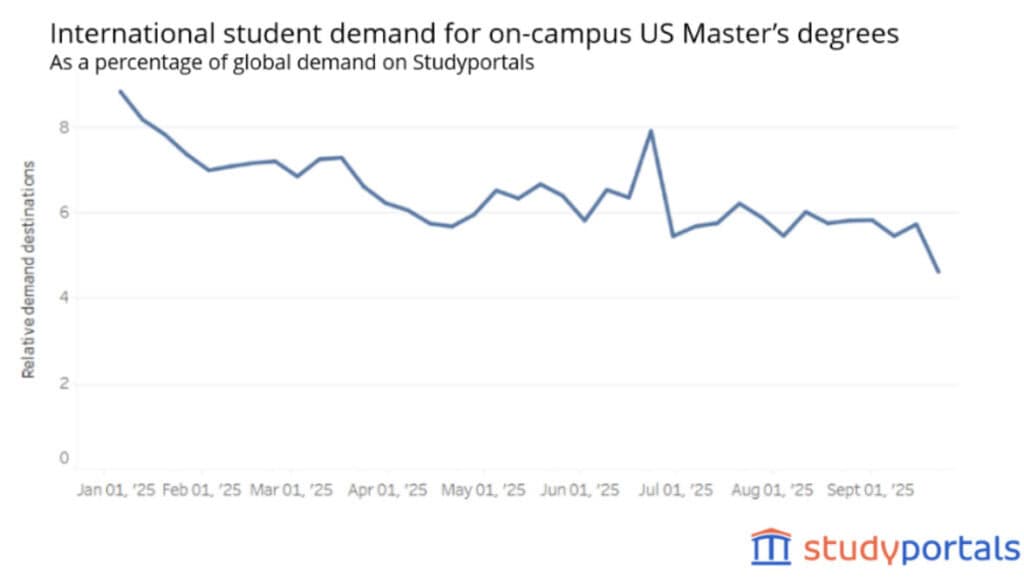
The data, collected from January 6 to September 28, aligns closely with the start of Donald Trump’s second presidential term and the ensuing uncertainty around student visas and post-graduation work opportunities. It is based on the search behaviour of over 50 million prospective students on Studyportals.
“Prospective international students and their families weigh not only academic reputation but also regulatory stability and post-graduation prospects,” said Studyportals CEO Edwin van Rest: “Right now, those factors are working against institutions.”
Studyportals said the steep decline – dropping more than 60% in less than nine months – corresponds to proposed and enacted policy changes impacting student visa duration, Optional Practical Training (OPT) and H-1B work authorisation in the US.
Last week, the Trump administration shocked businesses and prospective employees by hiking the H-1B visa fee to $100,000 – over 20 times what employers previously paid. Days later, the government announced proposals to overhaul the visa system in favour of higher-paid workers.
Sector leaders have warned that OPT could be the administration’s next target, after a senior US senator called on the homeland security secretary Kristi Noem to stop issuing work authorisations such as OPT to international students.
Such a move would have a detrimental impact on student interest in the US, with a recent NAFSA survey suggesting that losing OPT reduces enrolment likelihood from 67% to 48%.
Meanwhile, roughly half of current students planning to stay in the US after graduation would abandon those plans if H-1B visas prioritised higher wage earners, the survey indicated.
“Prospective students are making go/no-go enrolment decisions, while current students are making stay/leave retention decisions,” said van Rest.
“Policy changes ripple through both ends of the pipeline, reducing new inflow and pushing out existing talent already contributing to US research, innovation and competitiveness,” he added.
Data: Studyportals
The search data revealed a spike in interest at the beginning of July, primarily from Vietnam and Bangladesh, and to a lesser extent India and Pakistan. Experts have suggested the new Jardine-Fulbright Scholarship aimed at empowering future Vietnam leaders could have contributed to the rise.
Meanwhile, Iran, Nepal and India have seen the steepest drops in master’s demand, declining more than 60% this year to date compared to last.
While federal SEVIS data recorded a 0.8% rise in international student levels this semester, plummeting visa arrivals and anecdotal reports of fewer students on campus suggest the rise was in part due to OPT extensions – individuals who are counted in student totals but who are not enrolled on US campuses or paying tuition fees.
Beyond the immediate financial concerns of declining international enrolments for some schools, van Rest warned: “The policies we adopt today will echo for years in global talent flows.”
The UK and Ireland have gained the most relative market share of international interest on Studyportals – both up 16% compared to the same period in 2024. Australia, Austria, Sweden and Spain all experienced a 12% increase on the previous year.
In the US, international students make up over half of all students enrolled in STEM fields and 70% of all full-time graduate enrolments in AI-related disciplines, according to Institute of International Education (IIE) data.
The policies we adopt today will echo for years in global talent flows
Edwin van Rest, Studyportals
What’s more, universities with higher rates of international enrolment have been found to produce more domestic STEM graduates, likely due to greater investment in these disciplines, National Foundation for American Policy (NFAP) research has shown.
Last year, graduate students made up 45% of the overall international student cohort (including OPT), compared to undergraduate which comprised roughly 30%, according to IIE Open Doors data.
Universities with higher proportions of overseas students have been found to produce more domestic STEM graduates, likely due to greater investment in these disciplines, National Foundation for American Policy (NFAP) research has shown.
The news of plummeting international demand comes as domestic enrolments are declining, with less high school graduates entering college education and an overall demographic shrinking of university-age students.
In a recent survey by the American Council on Education (ACE), nearly three quarters of college leaders said they were concerned about enrolment levels this semester, with 65% moderately or extremely worried about immigration restrictions and visa revocations.
In his first two months in office, President Donald Trump ordered the closing of the Education Department and fired half of its staff. The department’s research and statistics division, called the Institute of Education Sciences (IES), was particularly hard hit. About 90 percent of its staff lost their jobs and more than 100 federal contracts to conduct its primary activities were canceled.
But now there are signs that the Trump administration is partially reversing course and wants the federal government to retain a role in generating education statistics and evidence for what works in classrooms — at least to some extent. On Sept. 25, the department posted a notice in the Federal Register asking the public to submit feedback by Oct. 15 on reforming IES to make research more relevant to student learning. The department also asked for suggestions on how to collect data more efficiently.
The timeline for revamping IES remains unclear, as is whether the administration will invest money into modernizing the agency. For example, it would take time and money to pilot new statistical techniques; in the meantime, statisticians would have to continue using current protocols.
Still, the signs of rebuilding are adding up.
Related: Our free weekly newsletter alerts you to what research says about schools and classrooms.
At the end of May, the department announced that it had temporarily hired a researcher from the Thomas B. Fordham Institute, a conservative think tank, to recommend ways to reform education research and development. The researcher, Amber Northern, has been “listening” to suggestions from think tanks and research organizations, according to department spokeswoman Madi Biedermann, and now wants more public feedback.
Biedermann said that the Trump administration “absolutely” intends to retain a role in education research, even as it seeks to close the department. Closure will require congressional approval, which hasn’t happened yet. In the meantime, Biedermann said the department is looking across the government to find where its research and statistics activities “best fit.”
Other IES activities also appear to be resuming. In June, the department disclosed in a legal filing that it had or has plans to reinstate 20 of the 101 terminated contracts. Among the activities slated to be restarted are 10 Regional Education Laboratories that partner with school districts and states to generate and apply evidence. It remains unclear how all 20 contracts can be restarted without federal employees to hold competitive bidding processes and oversee them.
Earlier in September, the department posted eight new jobs to help administer the National Assessment of Educational Progress (NAEP), also called the Nation’s Report Card. These positions would be part of IES’s statistics division, the National Center for Education Statistics. Most of the work in developing and administering tests is handled by outside vendors, but federal employees are needed to award and oversee these contracts. After mass firings in March, employees at the board that oversees NAEP have been on loan to the Education Department to make sure the 2026 NAEP test is on schedule.
Only a small staff remains at IES. Some education statistics have trickled out since Trump took office, including its first release of higher education data on Sept. 23. But the data releases have been late and incomplete.
It is believed that no new grants have been issued for education studies since March, according to researchers who are familiar with the federal grant making process but asked not to be identified for fear of retaliation. A big obstacle is that a contract to conduct peer review of research proposals was canceled so new ideas cannot be properly vetted. The staff that remains is trying to make annual disbursements for older multi-year studies that haven’t been canceled.
With all these changes, it’s becoming increasingly difficult to figure out the status of federally funded education research. One potential source of clarity is a new project launched by two researchers from George Washington University and Johns Hopkins University. Rob Olsen and Betsy Wolf, who was an IES researcher until March, are tracking cancellations and keeping a record of research results for policymakers.
If it’s successful, it will be a much-needed light through the chaos.
The Hechinger Report provides in-depth, fact-based, unbiased reporting on education that is free to all readers. But that doesn’t mean it’s free to produce. Our work keeps educators and the public informed about pressing issues at schools and on campuses throughout the country. We tell the whole story, even when the details are inconvenient. Help us keep doing that.
The notice, published in the Federal Register on September 24, proposes an overhaul of the H-1B visa process to establish a “weighted selection process” favouring “higher skilled and higher paid” workers.
If finalised, the proposal would give greater odds of selection to workers with higher wages, if the number of applicants exceeds the 85,000-limit set by Congress, which has been the case every year for over a decade. The system would replace the current lottery selection process.
The changes – initially put forward for White House review in July – follow a major hike in the H-1B visa fee to $100,000 announced last week, triggering widespread panic among US companies and prospective foreign employees.
Prior to the announcement, employers typically paid between $2,000 to $5,000 for H-1B visa applications, with Trump claiming the increase would put an end to employers “abusing” the system by hiring foreign workers at a “significant discount” in comparison to American workers.
As per yesterday’s proposal, prospective employees would be assigned to four wage bands, with applicants in the top band (level four) placed into the selection pool four times, those in level three entered three times, and so on.
The Department of Homeland Security (DHS) has said the process would “incentivise employers to offer higher wages or higher skilled position to H-1B workers and disincentivise the existing widespread use of the H-1B program to fill lower paid or lower skilled positions”.
The department said it “recognised the value” in maintaining opportunities for lower wage earners and maintained they would not be precluded from the visa, unlike the Trump’s 2021 proposal which “left little or no opportunity” for lower earners.
But critics argue the proposed weighted system will harm US employers’ ability to build international knowledge and fill jobs.
“By favouring more experienced foreign workers and reducing the number of new job entrants, US companies will find themselves struggling to grow,” Intead CEO Ben Waxman told The PIE News.
The plans now face a 30-day public comment period before they are considered by the administration for a final rule, a process that could take several months.
Extensive feedback to government from US businesses on how the proposal would damage US competitiveness is widely expected, with experts also anticipating possible court challenges against the legislation.
Early reports from Bloomberg have suggested the US Chamber of Commerce has begun polling member companies about a potential lawsuit to challenge the $100,000 fee hike.
DHS itself has estimated that 5,200 small businesses currently employing H-1B visa holders would suffer significant damages due to loss of labour.
“There simply are not enough American computer science graduates to support the decades-long record of US innovation and economic growth. That is the wonder of the US tech sector,” said Waxman.
“Why would the US government want to constrain that engine?” he asked.
With analysis by the Chamber of Commerce forecasting a continued decline in the US labour force participation by 2030, advocacy bodies such as IIE have emphasised the importance of international students to fill gaps in labour markets across the country.
There simply are not enough American computer science graduates to support the decades-long record of US innovation and economic growth
Ben Waxman, Intead
The visa, popular with tech companies, enables US employers to temporarily employ foreign workers in “specialty occupations” spanning a wide range of industries from healthcare and teaching to computer science and financial analysis.
Under the current system, there is a statutory annual cap of 85,000 new H-1B visas: 65,00 for regular H-1B visas and 20,000 for individuals with advanced degrees from US institutions known as the master’s cap.
Each year, US employers submit registrations to USCIS for each worker they want to sponsor for a visa. Typically, this number exceeds the cap, in which case, applicants are placed into a random lottery which determines who is awarded a visa.
Since 2012, 60% or more of H-1B workers have held a computer-related job.
Amazon remains the single largest sponsor, with 10,000 out of its total 1.56 million employees holding H-1B visas. Microsoft, Apple and Meta have also expanded foreign hiring through this stream in recent years, according to Newsweek analysis of new federal data.
Commentators have already warned that if the new structure is implemented, the US tech sector will ramp up offshoring facilities and jobs. “Not the outcome anyone in the US wants,” said Waxman.
The visa program has been the subject of much debate in recent months, with Elon Musk, himself once an H-1B worker, coming out in defence of the visa against calls for its abolition from some MAGA hardliners who argued it allowed firms to suppress wages and sidelines American workers.
Denial rates for H-1B visas peaked at 15% during Trump’s first administration due to stricter immigration rules and the tightening of the definition of “specialty occupations”.
India, America’s largest source of international students, is also the top country of origin for H-1B visa holders, with Indian nationals making up 73% of new H-1B approvals in 2023.
China was the second-most common birthplace of H-1B workers, accounting for 12% of skilled workers approved in 2023, while no other birthplace accounted for more than 2% of the total.
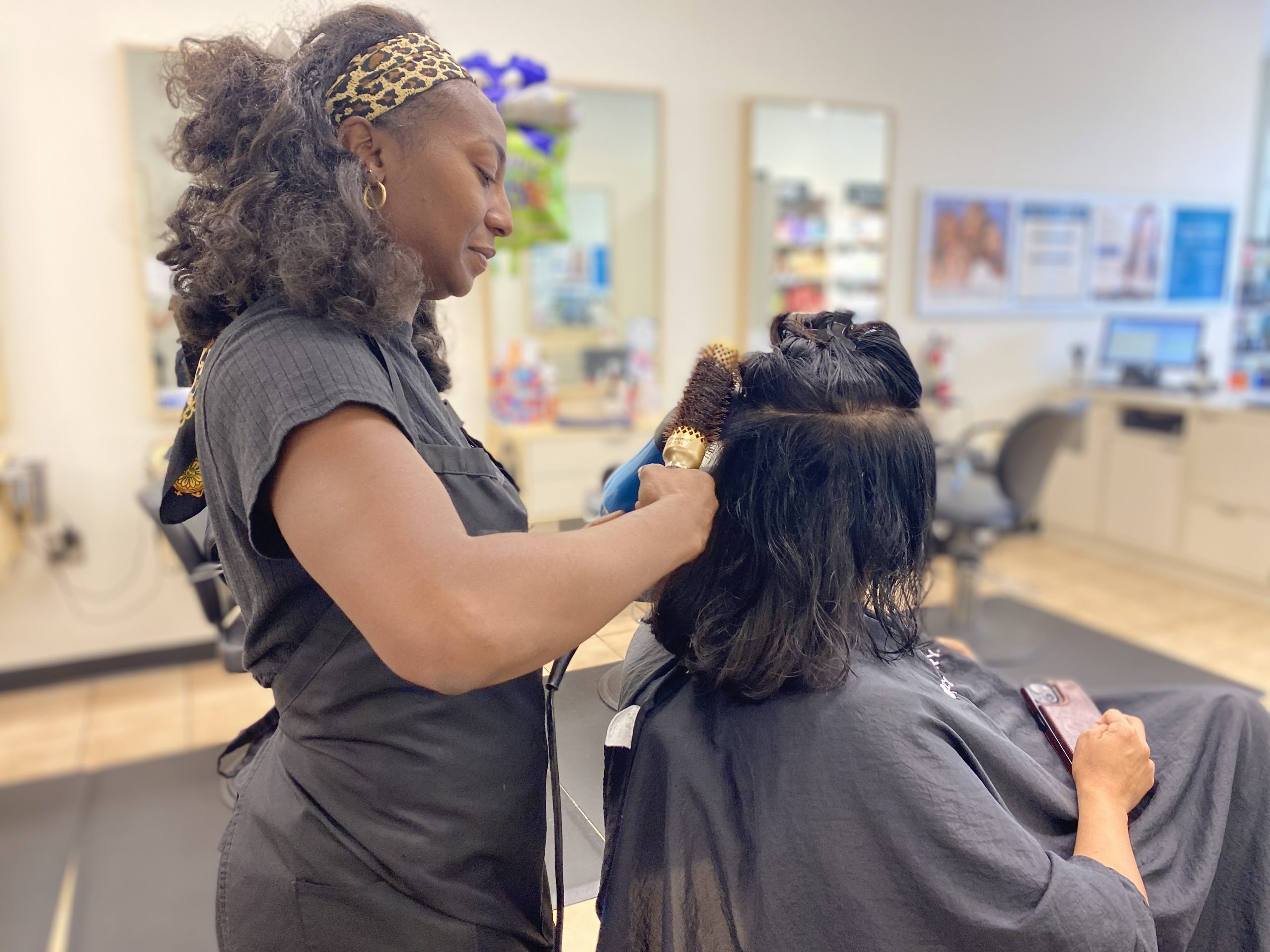
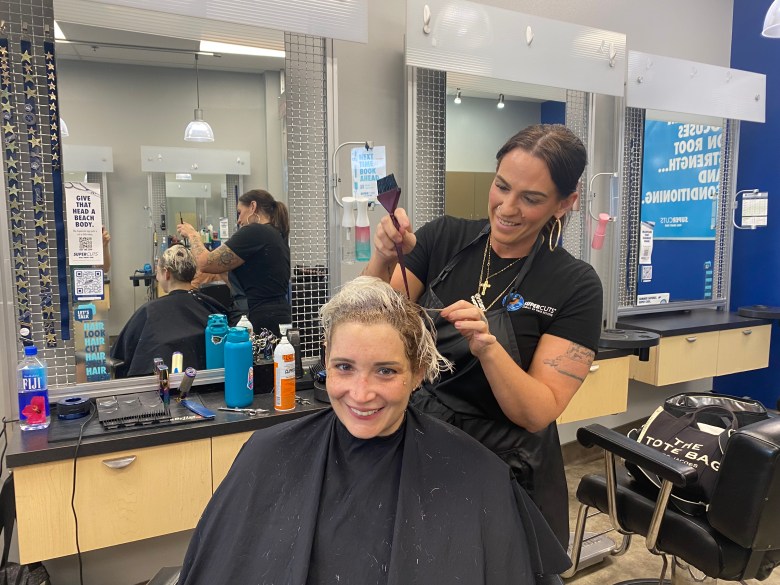
Remiah Ward’s shift at the SmartStyle salon inside Walmart was almost over, and she’d barely made $30 in tips from the haircuts she’d done that day. It wasn’t unusual — a year after her graduation from beauty school, tips plus minimum wage weren’t enough to cover her rent.
She scarcely had time to eat and sleep before she had to drive back to the same Walmart in central Florida to stock shelves on the night shift. That job paid $14 an hour, but it meant she sometimes spent 18 hours a day in the same building. She worked six days a week but still struggled to catch up on bills and sleep.
The admissions officer at the American Institute of Beauty, where she enrolled straight out of high school, had sold her on a different dream. She would easily earn enough to pay back the $10,000 she borrowed to attend, she said she was told. Ward had no way of knowing that stylists from her school earn $20,200 a year, on average, four years after graduating. Seven years later, her debt, plus interest, is still unpaid.
In July, Republicans in Congress pushed through policies aimed at ensuring that what happened to Ward wouldn’t happen to other Americans on the government’s dime; colleges whose graduates don’t earn at least as much as someone with a high school diploma will now risk losing access to federal student loans. But one group managed to slip through the cracks — thousands of schools like the American Institute of Beauty were exempt.
Remiah Ward worked two jobs while trying to make it as a hair stylist but never made enough to pay her all her bills and has had to put her dream career on hold. Credit: Courtesy Remiah Ward
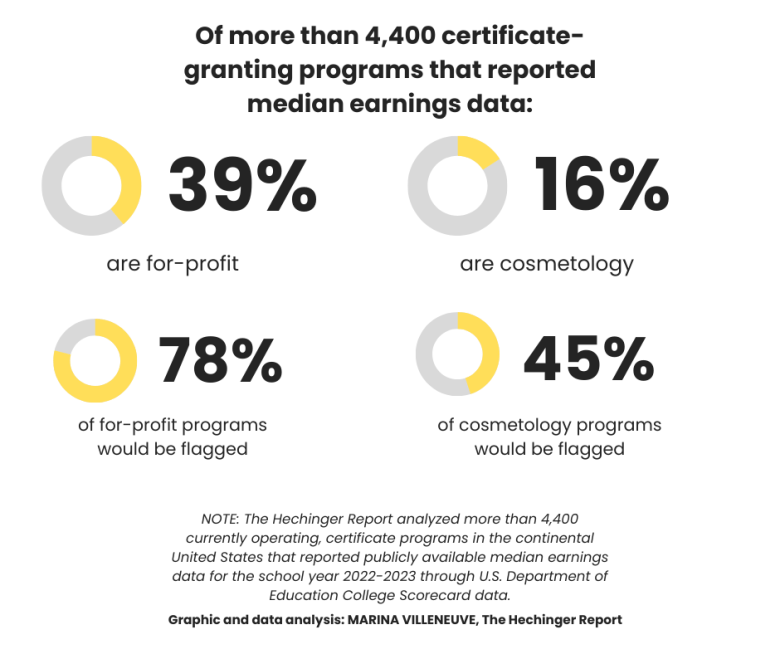
Certificate schools succeeded in getting a carve-out. The industry breathed a collective sigh of relief, and with good reason. At least 1,280 certificate-granting programs, which enrolled more than 220,000 students, would have been at risk of losing federal student loan funding if they had been included in the bill, according to a Hechinger Report analysis of federal data. [See table.] About 80% of those are for-profit programs, and 45 percent are cosmetology schools.
“There is this very strange donut hole in accountability where workforce programs are held accountable, two-year degree programs are held accountable, but everything in between gets off without any accountability,” said Preston Cooper, a senior fellow at the conservative think tank American Enterprise Institute.
The schools spared are known as certificate programs and, with their promise of an affordable and relatively quick path to economic security, are the fastest growing part of higher education. They usually take about a year to complete and train people to be hair-stylists, welders, medical assistants and cooks, among other jobs.
As with traditional colleges, there are big differences in quality among certificate programs. Some hair stylists can make a middle-class living if they work in a busy salon. But for people who have to pay back hefty student loans, the low wages for stylists in the early years can be an insurmountable obstacle.
Ward found herself facing that dilemma. When she could no longer sustain the lack of sleep from her double shifts at Walmart, she pressed pause on her styling career and took a job with Amazon, loading and unloading planes. She wasn’t ready to give up her dream career, though, so in addition to her 10-hour days moving boxes, she took part-time gigs at local hair salons. She didn’t have family to help pay rent, not to mention loan payments, so she couldn’t afford to work fulltime at a salon, which is essential to build up a regular clientele — and bigger tips. Without that, she couldn’t get much beyond minimum wage.
A representative from the American Institute of Beauty denied that Ward was told she would easily repay her loan.
“No admissions representative, not at AIB or elsewhere, would ever make such a statement,” Denise Herman, general counsel and assistant vice president of AIB, said in an email.
The high cost of many for-profit cosmetology schools — tuition can be upward of $20,000, usually for a one-year program — can leave former students mired in debt. In May, the government released data showing 850 colleges where at least a third of borrowers haven’t made a loan payment for 90 days or more, putting them on track to default. About 42 percent of those were for-profit cosmetology and barbering schools (including AIB).
Brittany Mcnew says she loves working as a stylist but that her income takes a hit when traffic is slow in her salon in Bethlehem, Pennsylvania. Credit: Meredith Kolodner/The Hechinger Report
Herman blamed the Biden administration policy that after the pandemic let borrowers forgo payments without any penalty.
“Debtors became ‘comfortable’ not making payments,” said Herman. “AIB provides the graduate with the information graduates need to make their payments. What that graduate decides to pay, or not pay, is not influenced by AIB.”
Under the “big beautiful bill” passed in July, two- and four-year colleges must ensure that, after four years, graduates on average make at least as much as someone in their state who has only a high school diploma. The colleges must inform students if they fail that test, and if it happens for two out of three years, the college will be ineligible to receive federal loan funds.
Some for-profit certificate schools lobbied hard for an exemption. The American Association of Career Schools, which represents proprietary cosmetology schools, spent $120,000 lobbying the Education Department and Congress, including on the “big beautiful bill,” in the first six months of this year. At the group’s major lobbying event in April, Sen. Bill Cassidy, chairman of the Senate Health, Education, Labor and Pensions Committee, was the keynote speaker.
Cassidy declined to answer questions about why certificate programs were excluded, but a fact sheet from his committee noted that they are already covered by something else, the gainful employment rule, which is also being challenged by the for-profit cosmetology industry.
That federal gainful employment regulation, updated in 2023, requires in essence that graduates from career-oriented schools earn enough to be able to pay back their loans and earn more than a high school graduate. It also requires that consumers, like Ward, be given more information about how graduates from all colleges fare in the workplace.
The rule posed an existential threat to a huge swath of cosmetology schools.
In 2023, the American Association of Career Schools sued to block the gainful employment rule.
“AACS supports fair and reasonable accountability measures,” Cecil Kidd, the AACS’s executive director, said in an email. “However, we strongly object to arbitrary or discriminatory policies such as the US Department of Education’s Gainful Employment rule, which unfairly targets career schools while exempting many public and private non-profit institutions that fail to meet comparable outcomes.”
He pointed to public comments in which AACS has argued that the rule imposes an unfair burden on cosmetology schools since stylists are predominantly women, who are more likely to have “personal commitments” that affect their earnings, and who rely on tips that are often pocketed as unreported income.
Cameron Vandenboom is a successful hair stylist but says the high cost of her private beauty school wasn’t worth thousands of dollars in student debt: “I absolutely should have gone to community college.” Credit: Courtesy Shanna Kaye Photo
In a twist that surprised advocates on both sides, the Education Department in May asked the court to effectively dismiss AACS’ lawsuit.
If the court rules in favor of the cosmetology schools, certificate programs will be free of all accountability requirements on their graduates’ earning levels, because they got the carveout in July.
Even if the court rules against cosmetology schools, advocates are pessimistic that the Trump administration will implement the gainful rules. The first Trump administration got rid of the original rules back in 2019 and Nicholas Kent, now the U.S. undersecretary of education, was previously the chief policy officer for Career Education Colleges and Universities, or CECU, the trade group that represents for-profit colleges, including certificate programs. He is a well-known critic of the rule.
“I would be very surprised, if the unlikely scenario plays out that the Biden rule is upheld, that this Department of Education would just say, OK, the court has spoken,” said Jason Altmire, CECU’s executive director. “We are not opposed to accountability for certificate programs, so long as it’s fair to everybody and we have a voice in how you’re measuring programs.”
Altmire said CECU didn’t lobby for certificate programs to be carved out of Congress’ bill, but did argue against the earnings formula that Congress landed on. Altmire said it doesn’t take into account part-time work and the gender gap in wages.
One objection from AACS, raised by CECU as well, is that the earnings measured don’t include tips, which are crucial to hair stylists’ income. Analyzed without including tips, 576 of 724 cosmetology schools in the Hechinger Report analysis would fail Congress’ earnings test. But even if tips were included and raised stylists’ income by 20 percent, 526 cosmetology schools would still fail.
Earlier this year, Remiah Ward made the difficult decision to leave Florida and move to Kentucky, where the cost of living was more forgiving. She’s working from 7 p.m. to 7 a.m. at an aluminum factory for $19.50 an hour.
One day, she might go back to styling after her debt is paid off. Like many former beauty school students, she wishes she’d had more information when she decided to enroll.
“They really sugar-coated it. I was 18 years old, and I needed a trade that I was already pretty good at,” said Ward, who is now 26. “Everybody thinks they’re going to make a high return, and it’s just not the reality.”
Marina Villeneuve contributed data analysis to this story.
The Hechinger Report provides in-depth, fact-based, unbiased reporting on education that is free to all readers. But that doesn’t mean it’s free to produce. Our work keeps educators and the public informed about pressing issues at schools and on campuses throughout the country. We tell the whole story, even when the details are inconvenient. Help us keep doing that.
Schools that train hairstylists, dental assistants and health aides will be able to keep getting federal student loan dollars even if the professionals they turn out don’t end up earning any more than a high school graduate.
That’s because programs like those, which don’t end in a college degree, were granted an exemption from new accountability measures under President Donald Trump’s ”big, beautiful bill.”
A Hechinger Report analysis of federal data found at least 1,280 such certificate programs could have been at risk of their students losing access to federal student loans — but a successful lobbying effort excluded them from the accountability measures.
Related: Become a lifelong learner. Subscribe to our free weekly newsletter featuring the most important stories in education.
Under the new law, most graduates of associate, bachelor’s and graduate degree programs must earn at least as much as someone who has only a high school diploma. If programs fail to hit that benchmark for two out of three years, their students will no longer be eligible for federal student loans. (And the schools must warn students of this possibility if they miss the mark for just one year). Without that borrowing power, many students could not afford to attend. And without those students, some of the schools might not survive.
Using the table below, see which certificate programs might have been flagged under the Trump law if not for the exemption. If graduates of a particular program ended up earning less than adults with only a high school diploma, that program could have faced losing eligibility for federal student loans under the Trump law.
Methodology
What exactly does the “big, beautiful bill” call for?
The legislation requires the Department of Education to compare earnings of working adults who have only a high school diploma to the earnings of adults four years after they complete a degree program or graduate certificate. If a postsecondary program’s graduates fail to outearn adults with only high school degrees for two out of three years, students can no longer obtain federal student loans to attend that program.
The law also sets up an appeals process and a way for programs to apply to regain eligibility for federal student loans.
What data was analyzed?
The law directs the education secretary to use census data to calculate median earnings for working adults with only a high school degree in the state where a program is located. The Department of Education will release regulations that spell out exactly how to do that math. For example, the law does not spell out whether it will look at census data averaged out over 12 months or a longer period of time.
For earnings data for high school graduates, The Hechinger Report relied on calculations from the Department of Education, which were derived from the 2022 American Community Survey 5-Year Estimates Public Use Microdata Sample from the U.S. Census Bureau.
To calculate median earnings for graduates, the law directs the Education Department to put together earnings data for a cohort of at least 30 graduates who received federal student aid for postsecondary education — which typically includes grants, loans or work-study. Graduates are excluded if they’re currently enrolled in another higher education program. If there are fewer than 30 students in a cohort, the Education Department can lump together several years of data to get to 30 students.
To get earnings data for graduates of certificate programs, Hechinger used a federal database known as College Scorecard. We downloaded field of study data for the 2022-23 school year. From this data, The Hechinger Report extracted information about certificate programs, at their main campuses, and included only programs that had median earnings data. The federal database suppresses earnings data for small programs. That left 4,431 currently operating certificate programs.
How was a program determined to be at possible risk of failing the accountability measure?
For each program, The Hechinger Report compared median graduate earnings to the high school graduate earnings data of the state where the program was located. If the graduates earned less, the program was considered to be at risk.
Under the law, postsecondary programs that don’t meet the earnings benchmark for one year have to inform all current students that they are at risk of losing their eligibility for federal student loans.
Are there any limitations to the data?
The “big, beautiful bill” takes online programs into account by considering whether students live in the same state where their academic program is based. Under the law, student earnings are compared with national data rather than state data when fewer than half of enrolled students live in the state where the school is located, which may be the case for online programs.
The Hechinger Report’s analysis instead compares every program with state earnings. That’s because the College Scorecard field of study data set is limited and only includes information about graduates employed within the same state as the institution, not whether enrolled students live in the same state as the program. In addition, College Scorecard data provides earnings data for all graduates without a breakdown for whether they receive federal aid.
Also, the Hechinger database looks at the available median earnings of all students four years after graduation for the school year 2022-23, regardless of the number of graduates. Though College Scorecard suppresses data on smaller programs, median earnings data is available for programs with 16 or more working graduates. The “big, beautiful bill” directs the Department of Education to instead lump together years of data to create cohorts of at least 30 students.
The Hechinger Report provides in-depth, fact-based, unbiased reporting on education that is free to all readers. But that doesn’t mean it’s free to produce. Our work keeps educators and the public informed about pressing issues at schools and on campuses throughout the country. We tell the whole story, even when the details are inconvenient. Help us keep doing that.
When Starr Dixon heard the Trump administration was floating a proposal last spring to eliminate Head Start, the 27-year-old parent in rural Michigan cried for a week.
The free, federally funded early learning program has been life-changing for her and her young daughter, she said. It provided stability after Dixon, who lives about 100 miles north of Lansing, left a yearslong abusive relationship.
While her 3-year-old daughter has blossomed socially, emotionally and verbally in the program during the last year and a half, Dixon has taken on numerous volunteer positions with Head Start, gaining experience that she can put on her resume after a 7-year gap in employment. She hopes to ultimately apply for a job at Head Start.
“It has just completely transformed my life,” she said.
This year, I talked to people in communities across rural America and learned how Head Start is essential in places where there are few other child care options. Head Start also provides an economic boost for these areas and serves as direct support for parents, many of whom go on to volunteer for or get jobs at their local programs.
Related: Young children have unique needs and providing the right care can be a challenge. Our free early childhood education newsletter tracks the issues.
Though my reporting focused on western Ohio, parents in other parts of the country, like Dixon, shared similar stories with me about how critical Head Start is to their lives. But since January, the Trump administration has taken what some call a “death by a thousand cuts” approach to the program, firing federal staff, closing regional offices and offering no increase in spending on Head Start in budget proposals.
All those moves have caused chaos and upheaval. In Alabama, Jennifer Carroll, who oversees 39 Head Start sites run by the Community Action Partnership of North Alabama, told me she is reassuring the families she works with that her program’s funding is stable for at least the rest of the year. Carroll fears that if parents think Head Start funding is in jeopardy, they’ll pull their children out of the program, disrupting their learning.
Another example: Keri Newman Allred is the executive director of Rural Utah Child Development Head Start, which operates Head Start programs spread across 17,000 square miles in central and east Utah. Newman Allred estimates her programs, which employ 91 residents and serve 317 children, can survive for one more year. After that, without more money, they will have to make cuts to the program if they want to give teachers a raise to meet inflation.
While other Head Start programs can supplement operations with private donations, Newman Allred’s programs serve some of the most sparsely populated parts of America, known as “frontier counties,” where there are no deep-pocketed philanthropies. Her programs rely solely on federal funding.
In April, the Department of Government Efficiency, or DOGE, abruptly shuttered five of Head Start’s 10 regional offices. Programs in Maine that were without directors or that needed assistance with regulations, finances or federal requirements have been left to go it alone without consistent, daily support.
“The closure of regional offices has all but crippled programs,” said Sue Powers, senior director of strategic initiatives at the Aroostook County Action Program in the rural, northernmost tip of Maine. “No one’s checking in. When you’re operating in a program that is literally in crisis, and you need [regional staff] and do not have them, it’s more than alarming.”
This story about Head Start was produced by The Hechinger Report, a nonprofit, independent news organization focused on inequality and innovation in education. Sign up for the Hechinger newsletter.
The Hechinger Report provides in-depth, fact-based, unbiased reporting on education that is free to all readers. But that doesn’t mean it’s free to produce. Our work keeps educators and the public informed about pressing issues at schools and on campuses throughout the country. We tell the whole story, even when the details are inconvenient. Help us keep doing that.
ASHE COUNTY, N.C. — In the time it took to read an email, the federal money vanished before Superintendent Eisa Cox’s eyes: dollars that supported the Ashe County school district’s after-school program, training for its teachers, salaries for some jobs.
The email from the Department of Education arrived June 30, one day before the money — $1.1 million in total — was set to materialize for the rural western North Carolina district. Instead, the dollars had been frozen pending a review to make sure the money was spent “in accordance with the President’s priorities,” the email said.
In a community still recovering from Hurricane Helene, where more than half of students are considered economically disadvantaged, Cox said there was no way they could replace that federal funding. “It is scary to think about it, you’re getting ready to open school and not have a significant pot of funds,” she said.
School leaders across the country were reeling from the same news. The $1.1 million was one small piece of a nearly $7 billion pot of federal funding for thousands of school districts that the Trump administration froze — money approved by Congress and that schools were scheduled to receive on July 1. For weeks, leaders in Ashe County and around the country scrambled to figure out how they could avoid layoffs and fill financial holes — until the money was freed July 25, after an outcry from legislators and a lawsuit joined by two dozen states.
“I had teachers crying, staff members crying. They thought they were going to lose their jobs a week before school,” said Curtis Finch, superintendent of Deer Valley Unified School District in Phoenix.
About $1.1 million was at stake for the Ashe County school district in western North Carolina this summer when a portion of K-12 schools’ federal funding was frozen. Credit: Ariel Gilreath/The Hechinger Report
Now, as educators welcome students back to classrooms, they can no longer count on federal dollars as they once did. They must learn to plan without a playbook under a president intent on cutting education spending. For many districts, federal money is a small but crucial sliver of their budgets, potentially touching every part of a school’s operations, from teacher salaries to textbooks. Nationally, it accounts for about 14 percent of public school funding; in Ashe County, it’s 17 percent. School administrators are examining their resources now and budgeting for losses to funding that was frozen this summer, for English learners, after-school and other programs.
So far, the Trump administration has not proposed cutting the largest pots of federal money for schools, which go to services for students with disabilities and to schools with large numbers of low-income students. But the current budget proposal from the U.S. House of Representatives would do just that.
At the same time, forthcoming cuts to other federal support for low-income families under the Republican “one big, beautiful bill” — including Medicaid and SNAP — will also hammer schools that have many students living in poverty. And some school districts are also grappling with the elimination of Department of Education grants announced earlier this year, such as those designed to address teacher shortages and disability services. In politically conservative communities like this one, there’s an added tension for schools that rely on federal money to operate: how to sound the alarm while staying out of partisan politics.
For Ashe County, the federal spending freeze collided with the district’s attempt at a fresh start after the devastation of Helene, which demolished roads and homes, damaged school buildings and knocked power and cell service out for weeks. Between the storm and snow days, students here missed 47 days of instruction.
Cox worries this school year might bring more missed days: That first week of school, she found herself counting the number of foggy mornings. An old Appalachian wives’ tale says to put a bean in a jar for every morning of fog in August. The number of beans at the end of the month is how many snow days will come in winter.
“We’ve had 21 so far,” Cox said with a nervous laugh on Aug. 21.
Fragrant evergreen trees blanket Ashe County’s hills, a region that bills itself as America’s Christmas Tree Capital because of the millions of Fraser firs grown for sale at the holidays. Yet this picturesque area still shows scars of Hurricane Helene’s destruction: fallen trees, damaged homes and rocky new paths cut through the mountainsides by mudslides. Nearly a year after the storm, the lone grocery store in one of its small towns is still being rebuilt. A sinkhole that formed during the flooding remains, splitting open the ground behind an elementary school.
Ashe County Schools Superintendent Eisa Cox visits classrooms at Blue Ridge Elementary School during the first week of the school year in Warrensville, N.C. Credit: Ariel Gilreath/The Hechinger Report
As students walked into classrooms for the first time since spring, Julie Taylor — the district’s director of federal programs — was reworking district budget spreadsheets. When federal funds were frozen, and then unfrozen, her plans and calculations from months prior became meaningless.
Federal and state funding stretches far in this district of 2,700 students and six schools, where administrators do a lot with a little. Even before this summer, they worked hard to supplement that funding in any way possible — applying to state and federal grants, like one last year that provided money for a few mobile hot spots for families who don’t have internet access. Such opportunities are also narrowing: The Federal Communications Commission, for example, recently proposed ending its mobile hot spot grant program for school buses and libraries.
“We’re very fiscally responsible because we have to be — we’re small and rural, we don’t have a large tax base,” Taylor said.
When the money was frozen this summer, administrators’ minds went to the educators and kids who would be most affected. Some of it paid for a program through Appalachian State University that connects the district’s three dozen early-career teachers with a mentor, helps them learn how to schedule their school days and manage classroom behavior.
The program is part of the reason the district’s retention rate for early career teachers is 92 percent, Taylor said, noting the teachers have said how much the mentoring meant to them.
Also frozen: free after-school care the district provides for about 250 children throughout the school year — the only after-school option in the community. Without the money, Cox said, schools would have to cancel their after-school care or start charging families, a significant burden in a county with a median household income of about $50,000.
Sixth grade students make self-portraits out of construction paper during the first week of the school year at Blue Ridge Elementary School in Warrensville, N.C., in August. Credit: Ariel Gilreath/The Hechinger Report
The salary for Michelle Pelayo, the district’s migrant education program coordinator for nearly two decades, was also tied up in that pot of funding. Because agriculture is the county’s biggest industry, Pelayo’s work in Ashe County extends far beyond the students at the school. Each year, she works with the families of dozens of migrant students who move to the area for seasonal work on farms, which generally involves tagging and bundling Christmas trees and harvesting pumpkins. Pelayo helps the families enroll their students, connects them with supplies for school and home, and serves as a Spanish translator for parent-teacher meetings — “whatever they need,” she said.
Kitty Honeycutt, executive director of the Ashe County Chamber of Commerce, doesn’t know how the county’s agriculture industry would survive without the migrant students Pelayo works with. “The need for guest workers is crucial for the agriculture industry — we have to have them,” she said.
A couple of years ago, Pelayo had the idea to drive to Boone, North Carolina, where Appalachian State University’s campus sits, to gather unwanted appliances and supplies from students moving out of their dorm rooms at the end of the year to donate to migrant families. She’s a “find a way or make a way” type of person, Honeycutt said.
Cox is searching for how to keep Pelayo on if Ashe County loses these federal funds next year. She’s talked with county officials to see if they could pay Pelayo’s salary, and begun calculating how much the district would need to charge families to keep the after-school program running. Ideally, she’d know ahead of time and not the night before the district is set to receive the money.
Districts across the country are grappling with similar questions. In Detroit, school leaders are preparing, at a minimum, to lose Title III money to teach English learners. More than 7,200 Detroit students received services funded by Title III in 2023.
In Wyoming, the small, rural Sheridan County School District 3 is trying to budget without Title II, IV and V money — funding for improving teacher quality, updating technology and resources for rural and low-income schools, among other uses, Superintendent Chase Christensen said.
Schools are trying to budget for cuts to other federal programs, too — such as Medicaid and food stamps. In Harrison School District 2, an urban district in Colorado Springs, Colorado, schools rely on Medicaid to provide students with counseling, nursing and other services.
The district projects that it could lose half the $15 million it receives in Medicaid next school year.
“It’s very, very stressful,” said Wendy Birhanzel, superintendent of Harrison School District 2. “For a while, it was every day, you were hearing something different. And you couldn’t even keep up with, ‘What’s the latest information today?’ That’s another thing we told our staff: If you can, just don’t watch the news about education right now.”
There’s another calculation for school leaders to make in conservative counties like Ashe, where 72 percent of the vote last year went for President Donald Trump: objecting to the cuts without angering voters. When North Carolina’s attorney general, a Democrat, joined the lawsuit against the administration over the frozen funds this summer, some school administrators told state officials they couldn’t publicly sign on, fearing local backlash, said Jack Hoke, executive director of the North Carolina School Superintendents’ Association.
Cox sees the effort to slash federal funds as a chance to show her community how Ashe County Schools uses this money. She believes people are misguided in thinking their schools don’t need it, not malicious.
“I know who our congresspeople are — I know they care about this area,” Cox said, even if they do not fully grasp how the money is used. “It’s an opportunity for me to educate them.”
If the Education Department is shuttered — which Trump said he plans to do in order to give more authority over education to states — she wants to be included in state-level discussions for how federal money flows to schools through North Carolina. And, importantly, she wants to know ahead of time what her schools might lose.
As Cox made her rounds to each of the schools that first week back, she glanced down at her phone and looked up with a smile. “We have hot water,” she said while walking in the hall of Blue Ridge Elementary School. It had lost hot water a few weeks earlier, but to Cox, this crisis was minor — one of many first-of-the-year hiccups she has come to expect.
Still, it’s one worry she can put out of her mind as she looks ahead to a year of uncertainties.
Meanwhile, the anxiety about this school year hasn’t reached the students, who were talking among themselves in the high school’s media center, creating collages in the elementary school’s art class and trekking up to Mount Jefferson — a state park that sits directly behind the district’s two high schools — for an annual trip.
They were just excited to be back.
Marina Villeneuve contributed data analysis to this story.
Contact staff writer Ariel Gilreath on Signal at arielgilreath.46 or at [email protected].
The Hechinger Report provides in-depth, fact-based, unbiased reporting on education that is free to all readers. But that doesn’t mean it’s free to produce. Our work keeps educators and the public informed about pressing issues at schools and on campuses throughout the country. We tell the whole story, even when the details are inconvenient. Help us keep doing that.
From Texas to Florida to Arizona, school voucher policies are reshaping the landscape of American education. The Trump administration champions federal support for voucher expansion, and many state-level leaders are advancing school choice programs. Billions of public dollars are now flowing to private schools, church networks and microeducation platforms.
The push to expand school choice is not just reallocating public funds to private institutions. It is reorganizing the very purpose of schooling. And in that shift, something essential is being lost — the public mission of education as a foundation of democracy.
Civic education is becoming fragmented, underfunded and institutionally weak.
In this moment of sweeping change, as public dollars shift from common institutions to private and alternative schools, the shared civic entities that once supported democratic learning are being diminished or lost entirely — traditional structures like public schools, libraries and community colleges are no longer guaranteed common spaces.
The result is a disjointed system in which students may gain academic content or career preparation but receive little support in learning how to lead with integrity, think across differences or sustain democratic institutions. The very idea of public life is at risk, especially in places where shared experience has been replaced by polarization. We need civic education more than ever.
If we want students who can lead a multiracial democracy, we need schools of every type to take civic formation seriously. That includes religious schools, charter schools and homeschooling networks. The responsibility cannot fall on public schools alone. Civic formation is not an ideological project. It is a democratic one, involving the long-term work of building the skills, habits and values that prepare people to work across differences and take responsibility for shared democratic life.
What we need now is a civic education strategy that matches the scale of the changes reshaping American schooling. This will mean fostering coordinated investment, institutional partnerships and recognition that the stakes are not just academic, they are also democratic.
Americans overwhelmingly support civic instruction. According to a 2020 survey in Texas by the Center of Women in Politics and Public Policy and iCivics, just 49 percent of teachers statewide believed that enough time was being devoted to teaching civics knowledge, and just 23 percent said the same about participatory-democracy skills. This gap is not unique to Texas, but there is little agreement on how civics should be taught, and even less structural support for the schools trying to do it.
Without serious investment, civic formation will remain an afterthought — a patchwork effort disconnected from the design of most educational systems.
This is not an argument against vouchers in principle. Families should have options. But in the move to decentralize education, we risk hollowing out its civic core. A democratic society cannot survive on academic content alone. It requires citizens — not just in the legal sense, but in the civic one.
A democratic society needs people who can deliberate, organize, collaborate and build a shared future with others who do not think or live like they do.
And that’s why we are building a framework in Texas that others can adopt and adapt to their own civic mission.
The pioneering Democracy Schools model, to which I contribute, supports civic formation across a range of public and private schools, colleges, community organizations and professional networks.
Civic infrastructure is the term we use to describe our approach: the design of relationships, institutions and systems that hold democracy together. Just as engineers build physical infrastructure, educators and civic leaders must build civic infrastructure by working with communities, not for or on them.
We start from a democratic tradition rooted in the Black freedom struggle. Freedom, in this view, is not just protection from domination. It is the capacity to act, build and see oneself reflected in the world. This view of citizenship demands more than voice. It calls for the ability to shape institutions, policies and public narratives from the ground up.
The model speaks to a national crisis: the erosion of shared civic space in education. It must be practiced and must be supported by institutions that understand their role in building public life. Historically Black colleges and universities like Huston-Tillotson University offer a powerful example. They are not elite pipelines disconnected from everyday life. They are rooted in community, oriented toward public leadership and shaped by a history of democratic struggle. They show what it looks like to educate for civic capacity — not just for upward mobility. They remind us that education is not only about what students know, but about who they become and what kind of world they are prepared to help shape.
Our national future depends on how well we prepare young people to take responsibility for shared institutions and pluralistic public life. This cannot be accomplished through content standards alone. It requires civic ecosystems designed to cultivate public authorship.
We have an enormous stake in preparing the next generation for the demands of democratic life. What kind of society are we preparing young people to lead? The answer will not come from any single institution. It will come from partnerships across sectors, aligned in purpose even if diverse in approach.
We are eager to collaborate with any organization — public, private or faith-based — committed to building the civic infrastructure that sustains our democracy. Wherever education takes place, civic formation must remain a central concern.
Robert Ceresa is the founding director of the Politics Lab of the James L. Farmer House, Huston-Tillotson University.
The Hechinger Report provides in-depth, fact-based, unbiased reporting on education that is free to all readers. But that doesn’t mean it’s free to produce. Our work keeps educators and the public informed about pressing issues at schools and on campuses throughout the country. We tell the whole story, even when the details are inconvenient. Help us keep doing that.