Category: Trump

  • Could Trump’s tariffs end up spurring green innovation?

    Could Trump’s tariffs end up spurring green innovation?

    U.S. President Donald Trump has never been a champion of the environment. From gutting climate policies to rolling back crucial environmental protections, the track record of the U.S. president speaks for itself. 

    But his announcement this month of steep tariffs on a sweeping range of foreign-made goods intended to boost U.S. production may also inadvertently fuel a global shift toward green innovation and a more sustainable future.

    During his first term, Trump pulled the United States out of the Paris Agreement, slashed pollution regulations and gave the fossil fuel industry a free pass. One of his most controversial moves was opening up the Arctic National Wildlife Refuge (ANWR) to drilling — a pristine, ecologically-sensitive area home to polar bears, caribou and Indigenous communities that depend on the land.

    Now, he’s back — and this time, his weapon of choice is tariffs. The Trump administration has imposed tariffs on all imports from China, Mexico and Canada, as well as on steel, aluminium and cars from around the world.

    By targeting key imports like clean energy components and critical minerals, Trump’s latest trade war threatens to derail climate progress, drive up costs for renewable energy and push the United States further into fossil fuel dependence. The damage is real and the consequences could be catastrophic.

    Tariffs could hamper climate change efforts.

    The implementation of broad tariffs is poised to significantly hinder efforts against climate change and weaken environmental legislation. Here’s how:​

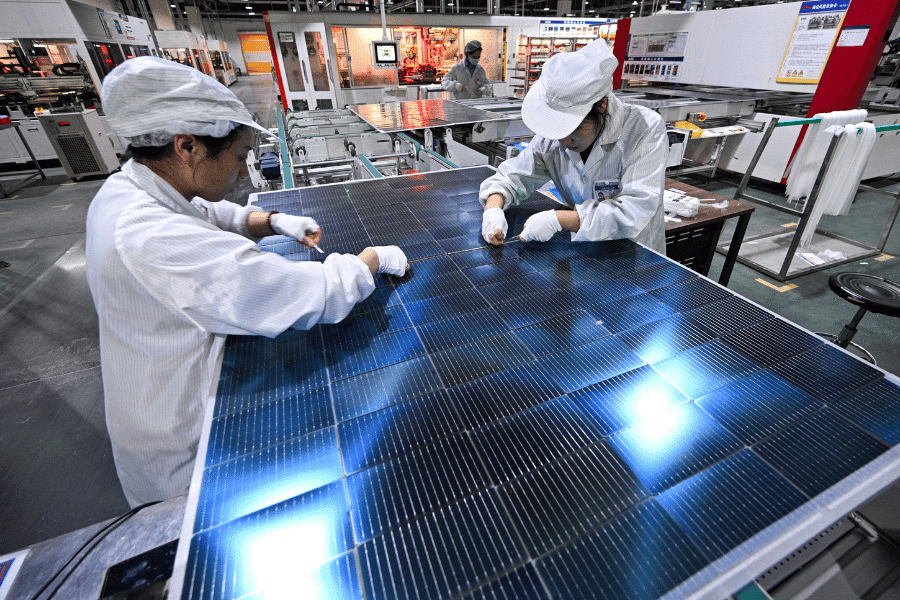
    Disruption of clean energy supply chains: The tariffs, particularly those targeting imports from China like steel, aluminium and lithium directly affect the availability and cost of clean technology components. For instance, the United States imports a substantial amount of lithium batteries from China — $1.9 billion worth in December 2024 alone. Increased tariffs on these imports could raise costs for renewable energy projects and electric vehicles, slowing the transition to cleaner energy sources. ​

    The energy sector is already grappling with shortages of essential parts. New tariffs exacerbate this issue, making it more challenging to procure necessary components for renewable energy infrastructure. This could delay projects and increase reliance on fossil fuels, counteracting efforts to reduce greenhouse gas emissions. ​

    Strain on environmental initiatives: The stock market’s negative reaction to the tariff announcements, with the Dow Jones dropping nearly 1,700 points and erasing approximately $3.1 trillion in market value, indicates broader economic instability. Such financial turmoil can lead to reduced funding and support for environmental programs, as both public and private sectors may prioritize immediate economic concerns over long-term environmental goals. ​

    As Trump imposes tariffs, his administration is also rolling back environmental protections. His Environmental Protection Agency is now questioning a key 2009 ruling that classifies greenhouse gases like carbon dioxide as harmful to human health. If the courts overturn it, this could weaken U.S. climate laws and make it harder to fight climate change.

    Unintended consequences

    While Trump’s tariffs largely threaten climate progress in the United States, they could have unintended environmental benefits elsewhere.

    Boosting green manufacturing in other countries: If U.S. tariffs make Chinese solar panels, batteries and EV components more expensive, other countries — especially in Europe, India and Latin America — may ramp up their own clean energy production. China itself may increase investment and focus on domestic EV adoption, hydrogen technology or battery recycling. 

    This could lead to a more diversified and resilient global supply chain for renewable technologies, while also strengthening domestic energy resilience by encouraging countries to develop and secure their own clean energy resources, reducing reliance on foreign imports.

    Strengthening regional trade alliances for green tech: With the imposing trade barriers, countries looking to avoid tariffs might strengthen regional partnerships, such as the EU-India green energy collaboration or China’s push to supply African and Latin American markets with solar and wind technology. This could decentralize the clean energy economy, reducing reliance on any single country.

    Reducing export-driven deforestation: If tariffs make U.S. imports of commodities like beef, palm oil and timber more expensive, countries that export these products (e.g., Brazil, Indonesia) may face declining demand. Less demand equals less incentive to clear forests for agriculture.

    On the other hand, the EU Deforestation Regulation (EUDR), adopted in June 2023, aims to block imports of commodities linked to deforestation unless they can be verified as deforestation-free. The EU is a huge consumer of these commodities. 

    With two major markets (U.S. and EU) becoming less profitable for deforestation-linked goods, exporters might change their practices to comply with stricter regulations. This could encourage more sustainable supply chains.

    However, this would depend on whether other countries, like China, pick up the slack and implement EUDR-like regulations.

    Backing off petroleum

    If trade wars escalate and tariffs disrupt global markets, long-term investments in fossil fuel projects could become riskier due to economic uncertainty. Tariffs on fossil fuel-related goods — like equipment, machinery or raw materials — can increase production costs for oil and gas companies. 

    As the cost of extraction, refining and transportation rises, companies could face shrinking profit margins, making fossil fuel investments less appealing. This, and shifting focus to clean energy, might push investors toward renewables, which are increasingly seen as more stable and future-proof.

    There’s a catch: These benefits depend on how other countries respond. If the U.S. tariffs cause economic slowdowns, some nations might double down on fossil fuels to stabilize their economies. So while tariffs could have some green silver linings, they’re more of a chaotic wildcard than a deliberate climate strategy.

    While the tariffs imposed by the Trump administration present significant challenges to global climate efforts, they also create opportunities for positive change. The disruptions in the clean energy supply chain, economic instability and rollbacks of environmental protections are certainly concerning. However, the unintended side effects of these actions might just catalyze a shift in global energy dynamics.

    In the long run, this “chaotic wildcard” could make fossil fuel investments riskier and accelerate the global pivot toward renewables. Countries and industries could be forced to innovate and adapt faster than expected. 

    While the path ahead may seem uncertain, there’s a silver lining: resilience, innovation and adaptability are key to overcoming these challenges. As the world adjusts to these new realities, the opportunity to cultivate a cleaner, more sustainable future is within reach — if leaders recognize this moment and take bold action to seize it. 

    So, while the road ahead may be bumpy, there is still reason to hope and act. 


    Questions to consider:

    1. How can governments turn the economic disruptions caused by tariffs into opportunities for advancing clean energy and climate goals?

    2. How can a decentralization of green energy technology be a good thing? 

    3. How can government intervention combined with market forces, like the rising cost of fossil fuels, accelerate the transition to renewable energy?


    Source link

  • Colorado School Attendance Zones Keep Racial, Socioeconomic Segregation Going – The 74

    Colorado School Attendance Zones Keep Racial, Socioeconomic Segregation Going – The 74


    Get stories like this delivered straight to your inbox. Sign up for The 74 Newsletter

    Colorado school districts should revise their school attendance zones at least every four years with a “civil rights focus.” State lawmakers should increase funding to transport students to and from school. And attorneys, advocates, and community organizations should embrace the right to sue over school assignments that increase racial segregation.

    Those are among the recommendations in a new report from the Colorado Advisory Committee to the U.S. Commission on Civil Rights. “Examining the Racial Impact of Public School Attendance Zones in Colorado” concludes that the way Colorado draws school attendance boundaries and assigns students to schools mirrors segregated housing patterns and results in low-income families having less access to high-quality schools.

    “This segregation fuels a widespread belief that schools serving predominantly white and affluent students are inherently better than those serving predominantly students of color or low-income families,” an accompanying policy brief said.

    Other reports from local and national think tanks and advocacy organizations have reached similar conclusions. While some local school officials, such as the Denver school board, have talked about possible solutions, the federal Trump administration has framed efforts to increase racial diversity in schools as discrimination that could trigger civil rights investigations.

    The Colorado Advisory Committee is a 10-person group of bipartisan appointed volunteers. Each state has an advisory committee that produces reports on civil rights issues ranging from housing discrimination to voting rights to the use of excessive force by police officers.

    In its latest report, the Colorado committee found that “thousands — perhaps tens of thousands — of Colorado students are likely to be assigned to schools in violation” of a federal law that says assigning a student to a school outside their neighborhood is unlawful “if it has segregating effects.”

    The committee’s recommended solutions attempt to balance strong support for neighborhood schools with allowing families to choose the best school for their child. School choice, or the ability for a student to apply to attend any public school, is enshrined in state law.

    The committee advocated for what it called “controlled choice,” which it said could mean that popular schools reserve seats for students who live outside the neighborhood or that schools give priority admission to non-neighborhood students who live the closest.

    To produce its report, the committee held hearings in 2023 to gather input from national experts including university professors, the author of a book on school attendance zones, and representatives from think tanks across the political spectrum.

    The committee also convened a group of 10 local experts including Brenda Dickhoner from the conservative advocacy organization Ready Colorado; Kathy Gebhardt, who was then a member of the Boulder Valley school board and now sits on the State Board of Education; former Aurora Public Schools superintendent Rico Munn; and Nicholas Martinez, a former teacher who heads the education reform organization Transform Education Now.

    The committee’s other recommendations include:

    • The civil rights divisions of the federal education and justice departments should review options for enforcing “the permissible and impermissible use of race in drawing attendance boundaries and setting school assignment policies.”
    • Colorado lawmakers should correct “the systemic racial and ethnic disparities” caused by the state’s school transportation system, which does not require school districts to provide transportation to students who use school choice.
    • State lawmakers should improve Colorado’s school choice system, including by adopting a uniform school enrollment window statewide and providing families with more information about schools’ discipline policies, class sizes, and other factors.
    • Colorado school districts should revise their school attendance zones and student assignment policies at least every four years and “consider racial and ethnic integration as part of the rezoning process.”

    “Redrawing school boundaries every few years can help prevent segregation from becoming entrenched while still allowing students to maintain a sense of stability in their educational environment,” the committee’s policy brief said.

    Chalkbeat is a nonprofit news site covering educational change in public schools.


    Get stories like these delivered straight to your inbox. Sign up for The 74 Newsletter

    Source link

  • Dr. Joanne Liu on NYU Canceling Her Talk (Democracy Now!)

    Dr. Joanne Liu on NYU Canceling Her Talk (Democracy Now!)


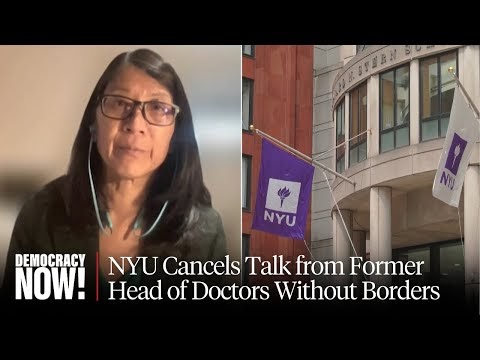
    The former international head of Doctors Without Borders is speaking out after New York University canceled her presentation, saying some of her slides could be viewed as “anti-governmental” and “antisemitic” because they mentioned the Trump administration’s cuts to foreign aid and deaths of humanitarian workers in Israel’s war on Gaza. Dr. Joanne Liu, a Canadian pediatric emergency medicine physician, was scheduled to speak at NYU, her alma mater, on March 19 and had been invited almost a year ago to discuss the challenges of humanitarian crises. Censoring speech is “killing the essence of what the university is about,” says Liu. “I truly and strongly believe that universities are the temple of knowledge.”

    Source link

  • The military footprint of the United States

    The military footprint of the United States

    The United States is keen to withdraw troops from Afghanistan and end its longest war ever, but the number of American soldiers in the South Asian country is dwarfed by many thousands stationed elsewhere across the globe.

    The 200,000 U.S. troops overseas are testimony to Washington’s persistent international commitment despite deep-seated isolationist impulses reflected in President Donald Trump’s “America First” campaign.

    The costly U.S. military footprint is a legacy of its status as Western leader that America inherited, at times reluctantly, after the two world wars in the last century.

    If Washington ever significantly reduced its network of military bases around the world, it would reflect a major turning point in history and possibly a destabilizing shift in the balance of power.

    The United States, Afghanistan and Taliban insurgents hit a roadblock recently as they tried to implement a face-saving pact leading to the partial withdrawal of American troops in the Asian nation after nearly two decades of hostilities.

    U.S. troops stationed around the world

    The anticipated pullout of about 3,400 of the remaining 12,000 U.S. troops was threatened by continuing violence, a squabble over a prisoner swap and the spread of COVID-19.

    But the American troops in Afghanistan are just the tip of an iceberg. Some 200,000 U.S. troops are stationed in overseas bases across Asia, the Middle East, Europe and Latin America.

    Current lists of U.S. troops overseas by the Defense Manpower Data Center include: 38,000 in Japan, 34,000 in Germany, 24,000 in South Korea, 12,000 in Afghanistan, 12,000 in Italy, 8,000 in Britain, 6,000 in Kuwait, 5,000 in Bahrain, 5,000 in Iraq and 3,000 in Spain.

    Smaller deployments are in Qatar, Turkey, Djibouti, Jordan, United Arab Emirates, Australia, Belgium, Cuba, Romania and El Salvador.

    The overseas deployments are a legacy of global military engagement dating back to the first years of the U.S. republic in the early 19th century.

    A fight against pirates

    U.S. founding fathers were no strangers to warfare. With significant French support, they defeated Britain to win control of the 13 original colonies, but they were soon challenged by pirates.

    “We can trace the roots of overseas conflict back to the skirmishes with the Barbary Pirates in the Jefferson years,” Michael O’Hanlon, a military historian at the Brookings Institution, said in an interview.

    In 1801, Thomas Jefferson, the third U.S. president, sent warships to free U.S. merchant seamen held hostage by North African Barbary Coast pirates.

    Between 1812 and 1814, U.S. troops and warships again sent British forces packing, although the White House was burned.

    “But those skirmishes were not really indicative of any major overseas ambition – just yet,” said O’Hanlon.

    The United States becomes a world leader.

    The next military challenge with standing armies was the U.S. Civil War in the 1860s. Then, a strongly isolationist American public was dragged into two world wars in the 20th century, first in 1917 when the German navy began targeting neutral ships, and then in 1941 when the Japanese bombed the American fleet in Pearl Harbor, Hawaii.

    After the world wars, U.S. isolationists sought to keep America out of foreign conflicts and shrink the size of its standing army. “That stopped,” said O’Hanlon, “with the descent of the Iron Curtain in Europe, the communist takeover in China, the Soviet testing of a nuclear bomb and of course the North Korean attack on South Korea, all in the late 1940s or 1950s.”

    Soon the United States joined the North Atlantic Treaty Organization (NATO) and signed military treaties with Japan, the Philippines, Germany and South Korea, leaving U.S. troops in some cases as a “trip wire” to warn off aggressors that an attack on U.S. or NATO bases would mean war.

    The latest expansion of U.S. military forces overseas is the Pentagon’s Africa Command. It is working with French troops to patrol the Sahara region, where Islamist militants have launched attacks in several former French colonies including Mali, Niger, Burkina Faso, Algeria and Tunisia.

    But a proposal to reduce the U.S. military’s involvement in Africa has stoked fears that militants could end up destabilizing or controlling large parts of the sub-Saharan Sahel.

    The spokesman for U.S. forces in Afghanistan, Col. Sonny Leggett, recently tweeted that despite the risks of the COVID-19 pandemic, the United States will pursue its plan to withdraw troops until 8,600 are left.

    Under the deal signed at the end of February, the U.S. is to cut its forces in Afghanistan to 8,600 service members within 135 days of the deal, and the international coalition backing the United States is to draw down by a commensurate amount, the Hill newspaper reported last month.


    Three questions to consider:

    1. Who were the Barbary pirates?

    2. Why did the United States enter World War One and World War Two?

    3. Why did the United States not revert to form and retreat into an isolationist shell after World War Two?


    Source link

  • Trump Dismantles US Institute of Museum and Library Services (YT Daily News)

    Trump Dismantles US Institute of Museum and Library Services (YT Daily News)

    The Institute of Museum and Library Services (IMLS) has put its entire staff on administrative leave following President Trump’s executive order to eliminate seven federal agencies, including IMLS. 
     
    Keith E. Sonderling has been appointed as the acting director during this transition. Staff were notified via email about their 90-day paid leave, which included instructions to return government property and had their email accounts disabled. 
     
    IMLS is a small federal agency, with about 70 employees,
    that awards grant funding to museums and libraries across the United
    States. Last year it granted $266 million to support essential cultural institutions.


    Source link

  • Columbia University’s Interim President Resigns Amid Trump Administration’s Pressure Over Campus Activism

    Columbia University’s Interim President Resigns Amid Trump Administration’s Pressure Over Campus Activism

    Columbia University’s interim president, Dr. Katrina A. Armstrong, resigned on Friday, just days after the university made significant concessions to the Trump administration in exchange for the restoration of $400 million in federal research funding. Armstrong’s resignation follows a tumultuous period for the institution, already reeling from the departure of her predecessor, Minouche Shafik, in August 2024.

    Armstrong, who had stepped into the role of interim president during a time of political and social unrest, faced mounting pressure over the university’s handling of pro-Palestinian student activism, which sparked national controversy and calls for accountability from political leaders, including former President Donald Trump and his administration. Armstrong’s resignation marks the latest chapter in a series of leadership shifts at Columbia as it navigates the increasingly polarized political environment surrounding campus protests.


    Effective immediately, Claire Shipman, co-chair of Columbia’s Board of Trustees, has been appointed acting president. David J. Greenwald, chair of the Board of Trustees, praised Armstrong for her dedication to the university, acknowledging her hard work during a time of “great uncertainty.” Greenwald’s statement highlighted Armstrong’s contributions to the university, saying, “Katrina has always given her heart and soul to Columbia. We appreciate her service and look forward to her continued contributions to the University.” Armstrong, who will return to lead the Irving Medical Center, had taken on the interim presidency in a period marked by increasing tensions on campus over political activism and its fallout.

    Political Pressure and Concessions to the Trump Administration

    The resignation comes amid significant political pressure, as the Trump administration imposed a set of demands on Columbia in exchange for the release of crucial federal funding. Earlier this month, the administration presented the university with nine conditions to restore the $400 million in research grants that had been frozen over accusations of antisemitism linked to campus protests.

    In an effort to regain the funding, Columbia conceded to these demands, which included a ban on students wearing masks to conceal their identities during protests, except for religious or health reasons. Additionally, Columbia agreed to hire 36 new campus security officers with the authority to arrest students involved in protests. The university also committed to increasing institutional oversight by appointing a new senior vice provost to monitor the university’s Department of Middle East, South Asian, and African Studies.

    Perhaps most notably, Columbia pledged to adopt a stance of “greater institutional neutrality,” a policy that the university said would be implemented after working with a faculty committee. The decision was seen as an attempt to quell political tensions while navigating the contentious issues surrounding student activism.

    A Leadership Crisis at Columbia University

    Armstrong’s resignation follows the departure of Minouche Shafik, who faced widespread criticism for her handling of campus protests against the war in Gaza. Under Shafik’s leadership, Columbia became a focal point of national debates about free speech, activism, and the role of universities in responding to global conflicts. Shafik ultimately resigned after facing intense scrutiny for her handling of the protests and the occupation of an academic building by students, an incident that ended with NYPD officers forcibly removing the students.

    In Armstrong’s case, her tenure was similarly marred by controversies surrounding the university’s response to the growing political activism on campus. The university’s handling of pro-Palestinian protests, particularly those related to the ongoing Israel-Palestine conflict, led to calls for stronger action from political figures, especially within the Republican Party. Armstrong’s decision to oversee negotiations with the Trump administration over the university’s federal funding placed her at the center of a storm of political and social unrest, further intensifying the pressure on her leadership.

    Columbia’s Future Amidst Political Turmoil

    The resignation of Armstrong is a significant moment for Columbia, as the institution grapples with the broader implications of political activism within academia and the increasing role of government in shaping university policies. As the university enters another phase of leadership instability, the question remains: how will the next president balance the competing demands of activism, free speech, and political pressures from outside forces?

    Columbia’s decision to adopt a policy of institutional neutrality and increase security measures reflects the complex and polarized environment that universities are navigating in today’s political climate. The growing influence of political figures like Trump and the scrutiny placed on universities over their responses to student protests signal a new era for higher education, one where the lines between campus activism and political power are increasingly blurred.

    As the search for a permanent president continues, Columbia University will need to chart a course that both addresses the concerns of its diverse student body and faculty while navigating the external pressures that have shaped the university’s recent trajectory. The role of universities in fostering open dialogue, supporting activism, and protecting the rights of students will likely continue to be a central issue in higher education for years to come.

    Conclusion

    The resignation of Katrina Armstrong adds to a growing list of university presidents who have faced intense political pressure and scrutiny over campus activism, particularly surrounding Middle Eastern and global conflicts. Columbia’s next steps will be crucial not only for the future of the institution but also as a bellwether for how universities across the country navigate the increasingly complex landscape of political activism, academic freedom, and government intervention. The institution’s response to these challenges will undoubtedly have long-term implications for the role of higher education in a polarized society.

    Source link

  • Decoder: The Silence of America

    Decoder: The Silence of America

    Iconic photos from the Cold War cover the corridors of the Prague headquarters of Radio Free Europe and Radio Liberty, news networks created by the U.S. government to counter censorship and disinformation from the Soviet Union and their East European satellite nations during the Cold War.

    Images from 1989, the year communist rule melted away in more than a dozen countries, were reminders of earlier days when Radio Free Europe and Radio Liberty had broadcast news in Polish, Czech, Slovakian and the Baltic languages; those countries are now robust democracies as well as members of the European Union and NATO.

    Those historic photos jostle with more recent images from countries where human rights and democracy are not observed, including Russia, Belarus, Iran, Afghanistan and other nations across Central and South Asia. In total, the two networks broadcasted in 27 languages to 23 countries providing news coverage and cultural programming where free media doesn’t exist or is threatened.

    The journalists who broadcast there often do so at great risk. 

    Many are exiles unable to return to their own countries. Three of their journalists are currently jailed in Russian-occupied Crimea, Russia and Azerbaijan. The charges against them are viewed as politically motivated.

    Countering power with news

    On 14 March 2025, U.S. President Donald Trump signed an executive order which cut the funding for the U.S. Agency for Global Media, the parent agency of Radio Free Europe and Radio Liberty. It also cut the funding of Radio Free Asia and the Middle East Broadcasting Network, the Voice of America — the “official” voice of the United States — as well as Radio & Television Marti which broadcasts to Cuba.

    The funding cuts would effectively silence these networks. In response, Radio Free Europe and Radio Liberty filed a lawsuit in Washington, D.C. 18 March that argued that Congress has exclusive authority over federal spending and that cannot be altered by a presidential executive order. Voice of America Director Michael Abramowitz filed suit 26 March. 

    On March 27, the Trump administration announced it had restored the funding for Radio Free Europe and Radio Liberty. 

    Radio Free Europe and Radio Liberty came into being after the end of the second World War when Europe became a divided continent. While the wartime allies, including Britain and the United States, focused on rebuilding their economies after years of war, Soviet leader Joseph Stalin sent his army to occupy most of Eastern Europe. 

    Despite promises made at a meeting in the Crimea, known as the Yalta Conference, during the final months of the war in 1945, Stalin refused to allow free elections in East Germany, Romania, Bulgaria, Poland, Hungary and Czechoslovakia. 

    Neither were free elections held in the three Baltic countries — Estonia, Latvia and Lithuania — which the Soviet Union had annexed in 1940. The crushing of democratic rule in so many nations was characterised by British Prime Minister Winston Churchill as “an iron curtain” that had “descended across the continent.” 

    After years of fighting Nazi Germany, half of Europe was now ruled under a Soviet dictatorship.

    Containing communism

    The United States responded with a policy of ‘containment’ that aimed to halt the spread of communism without using soldiers and tanks. Radio Free Europe started broadcasting in 1950 followed by Radio Liberty in 1953. 

    With a system of transmitters pointing east, news programmes that countered the state propaganda were beamed to the countries in the Soviet bloc, eventually in 17 languages. These were tactics that came to be known as ‘soft power’.

    Based in Munich, Radio Free Europe and Radio Liberty, or RFE/RL as they became known, attracted dissidents who opposed the Soviet-imposed governments. Their audiences grew during the Cold War, despite threats of prosecution. 

    In addition to news, broadcasts covered music, sports and science. Banned literature written by dissidents who challenged the communist systems could be heard on RFE/RL. Czech dissident Vaclav Havel was one of those voices.

    The Berlin Wall tumbled down in November 1989. It was followed by the Velvet Revolution that overthrew the Czech government and installed as its president, the former political prisoner Haval. He invited RFE/RL to move their base from Munich to Prague. 

    “My confinement in prison might have lasted longer had it not been for the publicity I had through these two stations,” Haval said at the time. 

    An outcry in Europe and elsewhere

    The news that the Trump administration would shut down the radio networks spread quickly. Listeners, viewers and supporters who had lived through the Cold War years when only pro-government broadcasts were legal, shared their stories on social media:

    “In Romania, they [RFE] lightened communism with the hope of freedom.”

    “As a small girl, living under a communist regime in Poland, I remember my grandfather listening every night to Radio Free Europe, to get uncensored news from around the world, to get different opinions on the world’s affairs, and probably hoping that one day, he would live in a free world. It was illegal to listen to this Radio, and the quality was very poor, and yet, he would do it every night … ” 

    Polish Foreign Minister Radek Sikorski recalled how his father had listened to Radio Free Europe and Voice of America. “This is a great shame,” he wrote. “My grandfather was listening to RFE in Soviet-occupied Poland in 80s. It’s how we learned basic facts about our own countries because communist propaganda was so tightly controlled.”

    On 17 March the Czech Republic asked the foreign ministers of the European Union to support RFE/RL so the journalism could continue. 

    One diplomat who was in the meeting said that stopping RFE/RL’s broadcasts would “be a gift to Europe’s adversaries.” Already Russia’s state broadcaster, Russia Today, had tweeted that cutting the funding for RFE/RL was an “awesome decision by Trump.”

    When Vaclav Havel welcomed Radio Free Europe and Radio Liberty to Prague after democracy had been restored to Czechoslovakia, he said that having RFE/RL in the Czech capital was equivalent to having three NATO divisions. 

    The supporters of the networks are hoping that the soft power of free media is indeed able to pack a powerful punch for free media.

    Update to this story: As of 30 March, Radio Free Liberty has informed News Decoder that, while two weeks worth of funds have been received, the rest of U.S. government funding had not yet been restored. We will continue to update this story as we learn of further developments. 


    Three questions to consider:

    1. Why, during the Cold War, were radio broadcasts across closed borders one of the few ways people could receive news that was not controlled by the government?
    2. In what ways are people limited in accessing news, culture and music?
    3. In what ways might a free media be important in a democracy?


    Source link

  • Trump cuts research funding to six Aus universities and counting – Campus Review

    Trump cuts research funding to six Aus universities and counting – Campus Review

    At least six Group of Eight (Go8) universities have had research grants terminated by the United States amid an anti-diversity and gender ideology studies crackdown from US President Donald Trump’s office.

    Please login below to view content or subscribe now.

    Membership Login

    Source link

  • Trump: Aus research must disclose vaccine, transgender, DEI or China ties

    Trump: Aus research must disclose vaccine, transgender, DEI or China ties

    US President Donald Trump in the Oval Office of the White House. Picture: Mandel Ngan

    Australian researchers who receive United States funding have been asked to disclose links to China and whether they agree with US President Donald Trump’s “two sexes” executive order.

    Please login below to view content or subscribe now.

    Membership Login

    Source link

  • Watch DOGE layoffs in real-time with Layoffs.fyi

    Watch DOGE layoffs in real-time with Layoffs.fyi

    Layoffs.fyi is keeping track of US federal government layoffs. The website was originally created to track tech layoffs and has been featured in the Wall Street Journal, Bloomberg, and NY Times. 

    Source link