
The assassination of Charlie Kirk on September 10, 2025, offers a stark illustration of how violent acts against movement leaders can reconfigure political energy on U.S. campuses. Kirk was the leader of Turning Point USA, Turning Point Action (formerly Students for Trump), and Turning Point Faith. He was also the creator of the Professor Watchlist and the School Board Watchlist.
Far from diminishing conservative student mobilization, Kirk’s death appears to have amplified it—at least in the short term. Randall Collins’ sociology of interaction ritual chains and Eric Hoffer’s classic analysis of mass movements provide a useful lens for understanding both the surge and the likely limits of this moment.
Collins identifies four outcomes of successful ritual gatherings: group solidarity, emotional energy, sacred symbols, and moral righteousness. In the wake of Kirk’s assassination, conservative students and evangelical leaders have experienced all four in compressed, amplified form.
Pastors quickly declared Kirk a “Christian martyr.” Rob McCoy invoked biblical precedent, while Jackson Lahmeyer described the murder as “spiritual in nature and an attack on the very institution of the church.” This religious framing elevates Kirk from activist to sacred symbol.
The immediate response has been extraordinary. Turning Point USA claims more than 32,000 requests for new chapters in the 48 hours following his death. Collins would interpret this as emotional energy seeking new ritual outlets. In this sense, Kirk’s martyrdom has become not just a grievance but a generator of collective action.
The memorial scheduled for September 21 at State Farm Stadium—with capacity for more than 60,000 and featuring Donald Trump—is set to be the largest ritual gathering in the history of conservative student politics. Collins would predict this to be a high-intensity moment of “collective effervescence,” the kind of event that extends emotional energy for months if not years.
Hoffer’s The True Believer provides a complementary angle. He argued that mass movements thrive on frustration, doctrine, and the presence of either a leader or a transcendent cause. Kirk’s assassination intensified frustration while transforming him into a more powerful symbolic figure than he was in life.
Student conservatives now have all three: grievance (left-wing violence), a sacred cause (free speech framed as religious duty), and a heroic narrative (following a martyred leader). In Hoffer’s words, martyrdom provides both “grievance and transcendent meaning.”
The shift from Kirk as a living leader to Kirk as martyr reflects Hoffer’s principle of substitutability. Loyalty has already migrated from the man himself to the mythology of his sacrifice. College Republicans chairman William Donahue compared the killing to Martin Luther King Jr.’s assassination, framing it as a watershed for the movement.
The paradox is that Kirk’s most important contribution—the high-energy confrontational rituals of his “Prove Me Wrong” campus debates—cannot be replicated without him. These events generated viral spectacle, solidified conservative identity, and created sacred moments of confrontation. They were, in Collins’ terms, engines of emotional energy.
The September 21 memorial may provide a one-time boost, but Collins emphasizes that emotional energy must be renewed through repeated rituals. Without Kirk’s charisma and willingness to create confrontational spaces, conservative students risk energy dissipation. Already some students report greater enthusiasm for activism, while others express fear of being targeted themselves.
The dilemma is clear: the rituals that generated the most energy (public confrontations) are the very ones most likely to invite violence. This tension may limit the sustainability of the movement’s current surge.
Beyond the sociology of solidarity lies a material reality: martyrdom is also a business model. Conservative organizations are already converting Kirk’s death into a revenue stream. Within hours of the assassination, Turning Point USA launched fundraising appeals invoking Kirk’s “sacrifice,” while conservative merchandisers began selling commemorative t-shirts, hats, and wristbands emblazoned with slogans like “Martyr for Freedom” and “Charlie Lives.”
Publishing houses are reportedly fast-tracking hagiographic biographies, while streaming platforms are negotiating for documentaries. Memorial events, livestreams, and “Martyrdom Tours” are being packaged as both spiritual rituals and ticketed spectacles. Kirk’s death, in other words, is generating not only emotional energy but also financial capital.
This profit motive raises questions about the sincerity of the rhetoric surrounding Kirk’s martyrdom. While Collins and Hoffer help explain the emotional pull, the commodification of grief ensures that the “sacred symbol” is also a lucrative brand. Conservative student organizing may thus be sustained less by spontaneous devotion than by a well-financed industry of grievance, merchandise, and media spectacle.
Several markers will reveal whether Kirk’s martyrdom produces lasting transformation or burns out in ritual dissipation:
Memorial impact: Attendance and intensity at the September 21 gathering will test whether Kirk’s death can generate lasting solidarity.
Chapter formation: The real test of Turning Point USA’s 32,000 claims will be functioning chapters in six months.
Leadership succession: Hoffer reminds us that movements need charismatic leaders. At present, Trump appears to be monopolizing the emotional energy, raising doubts about the rise of new student leaders.
Counter-mobilization: Collins’ conflict theory suggests left-wing backlash could shape whether conservative students double down or retreat.
For the next 6–18 months, conservative student mobilization is likely to grow. The movement now has the grievance, sacred symbolism, and transcendent narrative that both Collins and Hoffer identify as powerful motivators.
But sustaining this surge will be difficult without Kirk’s unique talent for generating high-energy campus rituals. Unless new leaders emerge who can replicate or reimagine those ritual forms, the emotional energy of martyrdom may eventually dissipate.
At the same time, the financial infrastructure now growing around Kirk’s death suggests the movement has a fallback strategy: keep the martyrdom alive as long as it remains profitable. In this way, Kirk’s assassination may prove to be not just a sociological event but also a business opportunity—one that reveals the convergence of politics, religion, and profit in contemporary conservative student life.
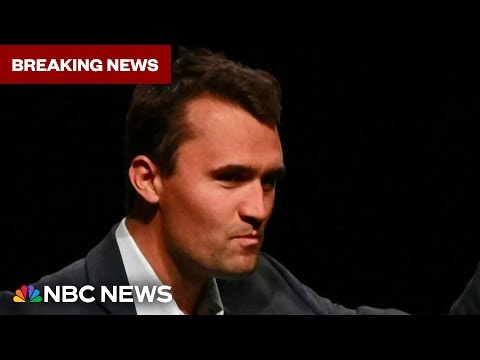
Charlie Kirk was shot and killed at Utah Valley University today. The killer was not immediately caught. The Higher Education Inquirer has been covering Kirk and his organization, Turning Point USA, since 2016. Kirk has been a polarizing force in the United States, particularly on US college campuses. HEI hopes this event will not lead to further violence. Since its inception, we have urged for peace and nonviolence.

In the murky world of political nonprofits and student organizations, foreign influence is often subtle—but sometimes the signs are hard to ignore. Turning Point USA (TPUSA), the high-profile conservative nonprofit mobilizing students across the United States, has come under our scrutiny for potential infiltration by individuals with Kremlin connections.
Central to this story is Alexandra Hollenbeck, a former student journalist and TPUSA associate whose activities raise questions about Russian influence in American student politics. While much of the information has been scrubbed from the Internet, we still hold considerable evidence.
Alexandra Hollenbeck has contributed to conservative publications such as The Post Millennial, Washington Examiner, and TurningPoint.News. Her work includes coverage of pro-Trump narratives, student activism, and international affairs.
In a 2017 article for TPUSA’s Student Action Summit, Hollenbeck reported on former Trump strategist Sebastian Gorka’s speech, highlighting his devotion to combating jihadists and supporting Trump’s agenda. Gorka’s talk drew historical parallels, beginning with the story of Paul, a 15-year-old boy walking through post-war Budapest, emphasizing that “liberty is as precious as it is fragile.”
Hollenbeck’s prominence within TPUSA circles became more conspicuous after she was photographed at the Kremlin during a pro-Putin rally—a rare and striking connection for a U.S.-based political journalist.
Inquiries to the FBI regarding Hollenbeck’s activities yielded no response. TPUSA also never responded to our questions.
TPUSA operates extensive student networks and organizes high-profile events that attract donors, media, and political figures. While the organization is influential within U.S. conservative circles, its internal vetting procedures for affiliates and journalists are less transparent. This opacity creates opportunities for individuals to gain access to sensitive networks, messaging, and potentially student data.
Hollenbeck’s activities—her Kremlin presence, her coverage of pro-Trump events, and her involvement in TPUSA events—illustrate why external scrutiny is warranted. While no definitive proof of espionage or formal Russian affiliation has been established, the pattern of her engagements suggests a potential risk of foreign influence.
Hollenbeck’s case highlights broader vulnerabilities. U.S. student political organizations, particularly those with ideological missions and national reach, can be attractive targets for foreign influence. The combination of access to young adults, credibility on campuses, and ties to political figures creates strategic opportunities for external actors.
Even the perception of foreign infiltration can damage trust, complicate fundraising, and raise national security concerns, particularly when student data or organizational communications could be exposed.
While no concrete evidence has emerged proving that Hollenbeck acted on behalf of the Russian government, her Kremlin connections, TPUSA involvement, and early work covering ideologically charged events like Gorka’s summit illustrate a cautionary tale. Student organizations, nonprofits, and journalists must remain alert to potential foreign influence and implement safeguards to protect institutional integrity.
For TPUSA, this means auditing affiliations, reviewing internal vetting procedures, and ensuring participants act in the organization’s and public’s best interests. For journalists and watchdogs, it underscores the importance of persistent investigation into intersections between U.S.-based political networks and foreign actors.
The case of Alexandra Hollenbeck demonstrates that in today’s political environment, the lines between ideology, influence, and infiltration are increasingly blurred—and the stakes for student organizations and U.S. democracy are higher than ever.
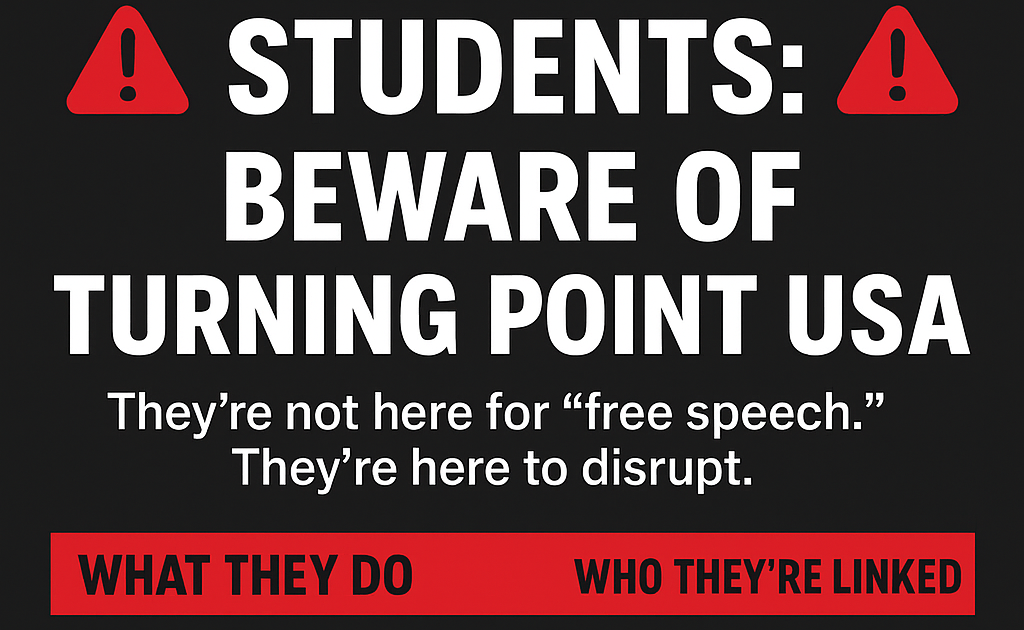
Turning Point USA (TPUSA) brands itself as a conservative youth movement dedicated to free markets and limited government. In reality, a growing body of investigative reporting, watchdog research, and student testimony reveals an organization built on intimidation, manipulation, and close ties to extremists. Students should be aware of the risks before engaging with TPUSA in any capacity.
From its inception, TPUSA has sought to be confrontational. One of its most notorious tools, the Professor Watchlist, publishes the names, photos, and alleged offenses of professors the group deems “anti-conservative.” This public shaming campaign has been condemned by educators and civil liberties advocates as a threat to academic freedom and personal safety. In more recent years, TPUSA has expanded its targets beyond individual professors, with initiatives like the School Board Watchlist, designed to stir distrust of public education and stoke fear around diversity, equity, and inclusion initiatives.
These campaigns are paired with questionable political tactics. Investigations have shown that TPUSA has engaged in covert influence efforts on college campuses, including secretly funding student government elections and running coordinated online disinformation campaigns. Their political arm, Turning Point Action, has been compared to a troll farm for its use of deceptive social media operations.
The group’s leadership and chapters have repeatedly been linked to white supremacist and far-right extremist figures. TPUSA events have hosted or associated with members of Nick Fuentes’ “Groyper” movement, Holocaust deniers, and other alt-right personalities. The Southern Poverty Law Center, Anti-Defamation League, and multiple journalists have documented these associations, which TPUSA leaders routinely downplay. Internal communications and leaked chapter messages have exposed racist, homophobic, and Islamophobic rhetoric from members. Charlie Kirk, TPUSA’s founder, once falsely claimed that a Black woman had “taken his place” at West Point, a statement criticized as both untrue and racially inflammatory.
TPUSA’s messaging also extends beyond politics into science denial. The group has repeatedly dismissed the scientific consensus on climate change, framing environmental concerns as a hoax or left-wing scare tactic, and hosting events that platform climate change skeptics over credible experts. TPUSA has received significant funding from fossil fuel interests, including Koch network-affiliated donors, and from political megadonors such as Foster Friess and Rebekah Mercer, who are known for underwriting climate denial campaigns. Other key allies include right-wing think tanks like the Heritage Foundation and media figures such as Tucker Carlson, who have amplified TPUSA’s messaging to broader audiences. The organization has also benefitted from support by religious nationalist groups and political operatives who share its hardline positions on education, race, and gender.
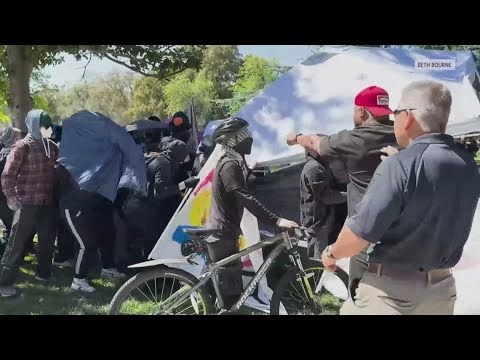
TPUSA’s confrontational model often invites chaos. At UC Davis, a TPUSA-sponsored event erupted into physical clashes involving Proud Boys. Across campuses, students and faculty report that TPUSA representatives deliberately provoke heated exchanges, record them, and circulate the footage to mobilize their base and fundraise off manufactured outrage. Former members have confirmed that such confrontations are not accidental, but rather part of the playbook.
While TPUSA presents itself as a mainstream conservative voice, the evidence paints a darker picture: an organization willing to distort, harass, and align with extremists to achieve its goals. Students seeking honest political debate should look for groups that engage in respectful dialogue, value truth over theatrics, and reject intimidation as a tool.
Sources:
Southern Poverty Law Center – Turning Point USA: Case Study in the Hard Right
Media Matters – Turning Point USA’s History of Racism and White Nationalist Ties
The New Yorker – A Conservative Nonprofit That Seeks to Transform College Campuses Faces Allegations of Racial Bias and Illegal Campaign Activity
Anti-Defamation League – Extremism in American Politics: Turning Point USA
Wired – How Charlie Kirk Plans to Discredit Martin Luther King Jr. and the Civil Rights Act
Chron – Texas A&M Turning Point Chat Exposes Racist and Homophobic Comments
The Guardian – What I Learned When Turning Point USA Came to My Campus
OpenSecrets – Turning Point USA Donors and Political Funding
DeSmog – Turning Point USA and Fossil Fuel Industry Influence
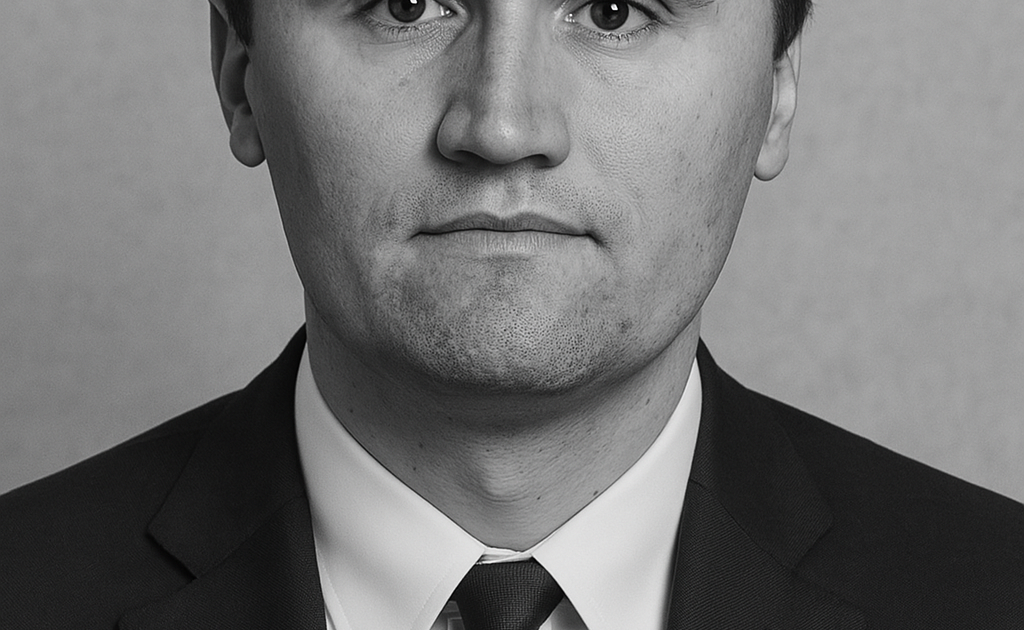
Conservative commentator Charlie Kirk has repeatedly asserted that men are most fulfilled when they marry and have children. This idea, rooted in a traditionalist worldview, has gained traction among some segments of the population, particularly those seeking a return to what they perceive as the moral and social stability of the past. But does the scientific evidence support this claim? A closer look at research from sociology, psychology, and economics suggests a more complex and less ideologically convenient reality.
It is true that some studies show a correlation between marriage and higher reported levels of happiness and well-being. For example, a 2002 study published in the Journal of Marriage and Family found that married individuals reported higher happiness levels than their unmarried counterparts. However, the effect size was relatively modest, and subsequent research has nuanced these findings.
A 2012 meta-analysis by Lucas and Dyrenforth in Personality and Social Psychology Bulletin suggested that the happiness boost associated with marriage is temporary. On average, individuals experience a honeymoon period after marriage, followed by a return to baseline happiness levels within a few years. This phenomenon, known as hedonic adaptation, undermines the idea that marriage itself produces sustained happiness.
Moreover, the benefits of marriage appear to be highly contingent on the quality of the relationship. A study published in Journal of Family Psychology (Carr et al., 2014) found that people in high-conflict marriages reported significantly lower well-being than unmarried individuals. Men in unhappy marriages often experience increased psychological distress, which may lead to health problems, substance abuse, and even premature death (Whisman et al., 2006).
Kirk’s view also hinges on the assumption that fatherhood enhances male happiness. While parenthood is often meaningful and rewarding, the scientific literature offers mixed findings regarding its impact on overall well-being.
A major study by Nelson et al. (2014) in Psychological Bulletin found that the association between parenthood and well-being is neither universally positive nor negative. The effects depend heavily on contextual factors like marital status, socioeconomic resources, and the age of the children. Fathers in stable, supportive relationships often report satisfaction from parenting, but those facing financial stress, lack of social support, or conflict with a co-parent frequently experience declines in mental health.
Another longitudinal study by Herbst and Ifcher (2016) found that fathers experience both gains and losses in subjective well-being. While they may report a greater sense of purpose and life meaning, they also experience declines in leisure time, sleep quality, and perceived freedom—all factors associated with lower happiness levels. Notably, single fathers and those in contentious co-parenting arrangements report lower life satisfaction than child-free men.
Perhaps most revealing are studies showing that autonomy and life purpose are stronger predictors of long-term happiness than marital or parental status alone. Deci and Ryan’s Self-Determination Theory, which has been widely validated across cultures, suggests that autonomy, competence, and relatedness are the key psychological needs for well-being. Marriage and children can contribute to these needs, but they can also undermine them, especially if the roles are imposed or filled with conflict.
Research from the Pew Research Center and Gallup also shows that life satisfaction is more closely tied to financial security, meaningful work, physical health, and strong social networks than to marital or parental status alone. Men who are engaged in purposeful careers, maintain close friendships, and have control over their time report higher levels of happiness—even if they are single or child-free.
Recent demographic trends reflect changing attitudes about what constitutes a fulfilling life. Census data show that marriage rates among men have declined steadily over the past 50 years. Meanwhile, increasing numbers of men are choosing to remain child-free or delay fatherhood. A 2021 Pew Research Center report found that 44% of men under 50 without children expected to remain child-free, a marked increase from previous decades.
While some conservatives view these changes as signs of cultural decline, others interpret them as evidence that men are exercising greater personal agency in crafting their lives outside traditional expectations. Men who reject marriage and fatherhood are not necessarily unhappy or aimless. For many, this path allows greater freedom to travel, pursue creative or intellectual goals, contribute to their communities, or engage in activism and caregiving in non-familial forms.
Importantly, mental health outcomes among men do not uniformly improve with marriage and children. According to the National Institute of Mental Health, men in high-conflict or financially strained marriages report elevated rates of depression, anxiety, and substance abuse. Fatherhood under conditions of instability or poverty can exacerbate stress levels. Conversely, single men who cultivate strong support systems and engage in regular exercise, therapy, or meaningful social activities often show comparable or better mental health outcomes than married peers.
Charlie Kirk’s assertion that men are “happiest” when married with children oversimplifies a set of deeply personal and variable life experiences. While marriage and fatherhood can be sources of joy, meaning, and fulfillment, they are not universal prescriptions for happiness. The scientific consensus indicates that well-being is shaped by a complex interplay of autonomy, relationship quality, health, socioeconomic status, and personal values.
Higher education—particularly in the social sciences—has a role to play in challenging ideological assumptions with empirical research. In a pluralistic society, young men deserve the freedom to critically examine diverse paths to meaning and well-being, without being pressured into a one-size-fits-all model of masculinity. If anything, the data reveal that the happiest men are not necessarily husbands and fathers, but those who are allowed to define their own lives on their own terms.
Sources:
Lucas, R. E., & Dyrenforth, P. S. (2012). Does the honeymoon last? Personality and Social Psychology Bulletin.
Carr, D., Freedman, V. A., Cornman, J. C., & Schwarz, N. (2014). Happy marriage, happy life? Journal of Family Psychology.
Nelson, S. K., Kushlev, K., & Lyubomirsky, S. (2014). Is parenthood associated with well-being? Psychological Bulletin.
Whisman, M. A., Uebelacker, L. A., & Weinstock, L. M. (2006). Marital distress and mental health. Journal of Consulting and Clinical Psychology.
Deci, E. L., & Ryan, R. M. (2000). The “what” and “why” of goal pursuits: Human needs and the self-determination of behavior. Psychological Inquiry.
Pew Research Center. (2021). More Americans say they are unlikely to have children.
Herbst, C. M., & Ifcher, J. (2016). The increasing happiness of U.S. parents. Review of Economics of the Household.
National Institute of Mental Health. (2023). Mental Health and Marriage.
Gallup (2022). Global Emotions Report.