
by Rob Cuthbert
In SRHE News and Blog a series of posts is chronicling, decade by decade, the progress of SRHE since its foundation 60 years ago in 1965. As always, our memories are supported by some music of the times.
In 2005 Hurricane Katrina hit the Gulf Coast in the USA, and a Kashmir earthquake in Pakistan killed 86,000. In London 52 people died in the 7/7 suicide bombings; Jean Charles de Menezes, wrongly suspected of being a fugitive terrorist, was killed by London police officers. Labour under Tony Blair won its third successive victory in the 2005 UK general election, George W Bush was sworn in for his second term as US President, and Angela Merkel became the first female Chancellor of Germany. Pope John Paul II died and was succeeded by Pope Benedict XVI. Prince Charles married Camilla Parker Bowles. YouTube was founded, Microsoft released the Xbox 360, the Superjumbo Airbus A380 made its first flight and the Kyoto Protocol officially took effect. There was no war in Ukraine as Greece won the Eurovision Song Contest 2005 in Kyiv, thanks to Helena Paparizou with “My Number One” (no, me neither). In a reliable barometer of the times the year’s new words included glamping, microblogging and ransomware. And the year was slightly longer when another leap second was added.
Higher education in 2005
So here we are, with many people taking stock of where HE had got to in 2005 – suddenly I see. Evan Schofer (Minnesota) and John W Meyer (Stanford) looked at the worldwide expansion of HE in the twentieth century in the American Sociological Review, noting that: “An older vision of education as contributing to a more closed society and occupational system—with associated fears of “over-education”—was replaced by an open-system picture of education as useful “human capital” for unlimited progress. … currently about one-fifth of the world cohort is now enrolled in higher education.”
Mark Olssen (Surrey) and Michael A Peters (Surrey) wrote about “a fundamental shift in the way universities and other institutions of higher education have defined and justified their institutional existence” as different governments sought to apply some pressure. Their 2005 article in the Journal of Educational Policy traced“… the links between neoliberalism and globalization on the one hand, and neoliberalism and the knowledge economy on the other. … Universities are seen as a key driver in the knowledge economy and as a consequence higher education institutions have been encouraged to develop links with industry and business in a series of new venture partnerships.”

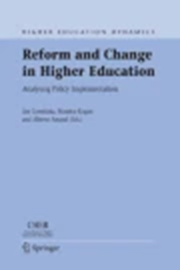
Åse Gornitzka (Oslo), Maurice Kogan (Brunel) and Alberto Amaral (Porto) edited Reform and Change in Higher Education: Analysing Policy Implementation, also taking a long view of events since the publication 40 years earlier of Great Expectations and Mixed Performance: The Implementation of Higher Education Reforms in Europe by Ladislav Cerych and Paul Sabatier. The 2005 book provided a review and critical appraisal of current empirical policy research in higher education with Kogan on his home territory writing the first chapter, ‘The Implementation Game’. At the same time another giant of HE research, SRHE Fellow Michael Shattock, was equally at home editing a special issue of Higher Education Management and Policy on the theme of ‘Entrepreneurialism and the Knowledge Society’. That journal had first seen the light of day in 1977, being a creation of the OECD programme on Institutional Management in Higher Education, a major supporter of and outlet for research into HE in those earlier decades. The special issue included articles by SRHE Fellows Ron Barnett and Gareth Williams, and by Steve Fuller (Warwick), who would be a keynote speaker at the SRHE Research Conference in 2006. The journal’s Editorial Advisory Group was a beautiful parade of leading researchers into HE, including among others Elaine El-Khawas, (George Washington University, Chair), Philip Altbach (Boston College, US), Chris Duke (RMIT University, Australia), Leo Goedegebuure (Twente), Ellen Hazelkorn (Dublin Institute of Technology), Lynn Meek (University of New England, Australia), Robin Middlehurst (Surrey), Christine Musselin (Centre de Sociologie des Organisations (CNRS), France), Sheila Slaughter (Arizona) and Ulrich Teichler (Gesamthochschule Kassel, Germany).
I’ve got another confession to make – Shattock had been writing about entrepreneurialism as ‘an idea for its time’ for more than 15 years, paying due homage to Burton Clark. The ‘entrepreneurial university’ was indeed a term “susceptible to processes of semantic appropriation to suit particular agendas”, as Gerlinde Mautner (Vienna) wrote in Critical Discourse Studies. It was a concept that seemed to break through to the mainstream in 2005 – witness, a survey by The Economist, ‘The Brains Business’ which said: “America’s system of higher education is the best in the world. That is because there is no system … Europe hopes to become the world’s pre-eminent knowledge-based economy. Not likely … For students, higher education is becoming a borderless world … Universities have become much more businesslike, but they are still doing the same old things … A more market-oriented system of higher education can do much better than the state-dominated model”. You could have it so much better, said The Economist.
An article by Simon Marginson (then Melbourne, now Oxford via UCL), ‘Higher Education in the Global Economy’, noted that “… a new wave of Asian science powers is emerging in China (including Hong Kong and Taiwan), Singapore and Korea. In China, between 1995 and 2005 the number of scientific papers produced each year multiplied by 4.6 times. In South Korea … 3.6 times, in Singapore 3.2. … Between 1998 and 2005 the total number of graduates from tertiary education in China increased from 830,000 to 3,068,000 ….” (and Coldplay sang China all lit up). Ka Ho Mok (then Hang Seng University, Hong Kong) wrote about how Hong Kong institutional strategies aimed to foster entrepreneurship. Private education was booming, as Philip Altbach (Boston College) and Daniel C Levy (New York, Albany) showed in their edited collection, Private Higher Education: a Global Revolution. Diane Reay (Cambridge), Miriam E David and Stephen J Ball (both IoE/UCL) reminded us that disadvantage was always with us, as we now had different sorts of higher educations, offering Degrees of choice: class, race, gender and higher education.
The 2005 Oxford Review of Education article by SRHE Fellow Rosemary Deem (Royal Holloway) and Kevin J Brehony (Surrey) ‘Management as ideology: the case of ‘new managerialism’ in higher education’ was cited by almost every subsequent writer on managerialism in HE. 2005 was not quite the year in which journal articles appeared first online; like many others in 2005 that article appeared online only two years later in 2007, as publishers digitised their back catalogues. However by 2005 IT had become a dominant force in institutional management. Libraries were reimagined as library and information services, student administration was done in virtual learning environments, teaching was under the influence of learning management systems.

The 2005 book edited by Paul Ashwin (Lancaster), Changing higher education: the development of learning and teaching, reviewed changes in higher education and ways of thinking about teaching and learning over the previous 30 years. Doyenne of e-learning Diana Laurillard (UCL) said: “Those of us working to improve student learning, and seeking to exploit elearning to do so, have to ride each new wave of technological innovation in an attempt to divert it from its more natural course of techno-hype, and drive it towards the quality agenda.” Singh, O’Donoghue and Worton (all Wolverhampton) provided an overview of the effects of eLearning on HE andin an article in the Journal of University Teaching Learning Practice.
UK HE in 2005
Higher education in the UK kept on growing. HESA recorded 2,287,540 students in the UK in 2004-2005, of whom 60% were full-time or sandwich students. Universities UK reported a 43% increase in student numbers in the previous ten years, with the fastest rise being in postgraduate numbers, and there were more than 150,000 academic staff in universities.
Government oversight of HE went from the Department for Education (DfE) to the Department for Education and Employment (DfEE), then in 2001 the Department for Education and Skills (DfES), which itself would only last until 2007. Gillian Shepherd was the last Conservative Secretary of State for Education before the new Labour government in 1997 installed David Blunkett until 2001, when Estelle Morris, Charles Clarke and Ruth Kelly served in more rapid succession. No party would dare to tangle with HE funding in 1997, so a cross-party pact set up the Dearing Review, which reported after the election. Dearing pleaded for its proposals to be treated as a package but government picked the bits it liked, notably the introduction of an undergraduate fee of £1000, introduced in 1998. Perhaps Kelly Clarkson got it right: You had your chance, you blew it.
The decade after 1995 featured 12 separate pieces of legislation. The Conservative government’s 1996 Education (Student Loans) Act empowered the Secretary of State to subsidise private sector student loans. Under the 1996 Education (Scotland) Act the Scottish Qualifications Authority replaced the Scottish Examination Board and the Scottish Vocational Education Council. There was a major consolidation of previous legislation from the 1944 Education Act onwards in the 1996 Education Act, and the 1997 Education Act replaced the National Council for Vocational Qualifications and the School Curriculum and Assessment Authority with the Qualifications and Curriculum Authority.
The new Labour government started by abolishing assisted places in private schools with the 1997 Education (Schools) Act (an immediate reward for party stalwarts, echoed 20 years later when the new Labour government started by abolishing VAT relief for private schools). The 1998 Education (Student Loans) Act allowed public sector student loans to be transferred to the private sector, which would prompt much subsequent comment and criticism when tranches of student debt were sold, causing unnecessary trouble. The 1998 Teaching and Higher Education Act established General Teaching Councils for England and Wales, made new arrangements for the registration and training of teachers, changed HE student financial support arrangements and allowed fees to rise to £3000, passing narrowly after much Parliamentary debate. The 1998 School Standards and Framework Act followed, before the 2000 Learning and Skills Act abolished the Further Education Funding Councils and set up the Learning and Skills Council for England, the National Council for Education and Training for Wales, and the Adult Learning Inspectorate. The 2001 Special Educational Needs and Disability Act extended provision against discrimination on grounds of disability in schools, further and higher education.
The 2004 Higher Education Act established the Arts and Humanities Research Council, created a Director of Fair Access to Higher Education, made arrangements for dealing with students’ complaints and made provisions relating to grants and loans to students in higher and further education. In 2005 in the Journal of Education Policy Robert Jones (Edinburgh) and Liz Thomas (HE Academy) identified three strands – academic, utilitarian and transformative – in policy on access and widening participation in the 2003 White Paper which preceded the 2004 Act. They concluded that “… within a more differentiated higher education sector different aspects of the access discourse will become dominant in different types of institutions.” Which it did, but perhaps not quite in the way they might have anticipated.
John Taylor (then Southampton) looked much further back, at the long-term implications of the devastating 1981 funding cuts, citing Maurice Kogan and Stephen Hanney (both Brunel) “Before then, there was very little government policy for higher education. After 1981, the Government took a policy decision to take policy decisions, and other points such as access and efficiency moves then followed.”.
SRHE and research into higher education in 2005
With long experience of engaging with HE finance policy, Nick Barr and Iain Crawford (both LSE) boldly titled their 2005 book Financing Higher Education: Answers From the UK. But policies were not necessarily joined up, and often pointed in different directions, as SRHE Fellow Paul Trowler (Lancaster), Joelle Fanghanel (City University, London) and Terry Wareham (Lancaster) noted in their analysis, in Studies in Higher Education, of initiatives to enhance teaching and learning: “… these interventions have been based on contrasting underlying theories of change and development. One hegemonic theory relates to the notion of the reflective practitioner, which addresses itself to the micro (individual) level of analysis. It sees reflective practitioners as potential change agents. Another relates to the theory of the learning organization, which addresses the macro level … and sees change as stemming from alterations in organizational routines, values and practices. A third is based on a theory of epistemological determinism … sees the discipline as the salient level of analysis for change. … other higher education policies exist … not overtly connected to the enhancement of teaching and learning but impinging upon it in very significant ways in a bundle of disjointed strategies and tacit theories.”
SRHE Fellow Ulrich Teichler (Kassel) might have been channelling The Killers as he looked on the bright side about the growth of research on higher education in Europe in the European Journal of Education: “Research on higher education often does not have a solid institutional base and it both benefits and suffers from the fact that it is a theme-base area of research, drawing from different disciplines, and that the borderline is fuzzy between researchers and other experts on higher education. But a growth and quality improvement of research on higher education can be observed in recent years …”
European research into HE had reached the point where Katrien Struyven, Filip Dochy and Steven Janssens (all Leuven) could review evaluation and assessment from the student’s point of view in Evaluation and Assessment in Higher Education:“… students’ perceptions about assessment significantly influence their approaches to learning and studying. Conversely, students’ approaches to study influence the ways in which they perceive evaluation and assessment.” Lin Norton (Liverpool Hope) and four co-authors surveyed teachers’ beliefs and intentions about teaching in a much-cited article in Higher Education: “… teachers’ intentions were more orientated towards knowledge transmission than were their beliefs, and problem solving was associated with beliefs based on learning facilitation but with intentions based on knowledge transmission.” Time for both students and teachers to realise it was not all about you.
SRHE had more than its share of dislocations and financial difficulties in the decade to 2005. After its office move to Devonshire Street in London in 1995 the Society’s financial position declined steadily, to the point where survival was seriously in doubt. Little more than a decade later we would have no worries, but until then the Society’s chairs having more than one bad day were Leslie Wagner (1994-1995), Oliver Fulton (1996-1997), Diana Green (1998-1999), Jennifer Bone (2000-2001), Rob Cuthbert (2002-2003) and Ron Barnett (2004-2005). The crisis was worst in 2002, when SRHE’s tenancy in Devonshire Street ended. At the same time the chairs of SRHE’s three committees stepped down and SRHE’s funds and prospective income reached their lowest point, sending a shiver down the spine of the governing Council. The international committee was disbanded but the two new incoming committee chairs for Research (Maria Slowey, Dublin City University) and Publications (Rosemary Deem, Royal Holloway) began immediately to restore the Society’s academic and financial health. SRHE Director Heather Eggins arranged a tenancy at the Institute of Physics in 76 Portland Place, conveniently near the previous office. From 2005 the new Director, Helen Perkins, would build on the income stream created by Rosemary Deem’s skilful negotiations with publishers to transform the Society’s finances and raise SRHE up. The annual Research Conference would go from strength to strength, find a long-term home in Celtic Manor, and see SRHE’s resident impresario François Smit persuade everyone that they looked good on the dancefloor. But that will have to wait until we get to SRHE in 2015.
Rob Cuthbert is editor of SRHE News and the SRHE Blog, Emeritus Professor of Higher Education Management, University of the West of England and Joint Managing Partner, Practical Academics. Email [email protected]. Twitter/X @RobCuthbert. Bluesky @robcuthbert22.bsky.social.
