Category: UK

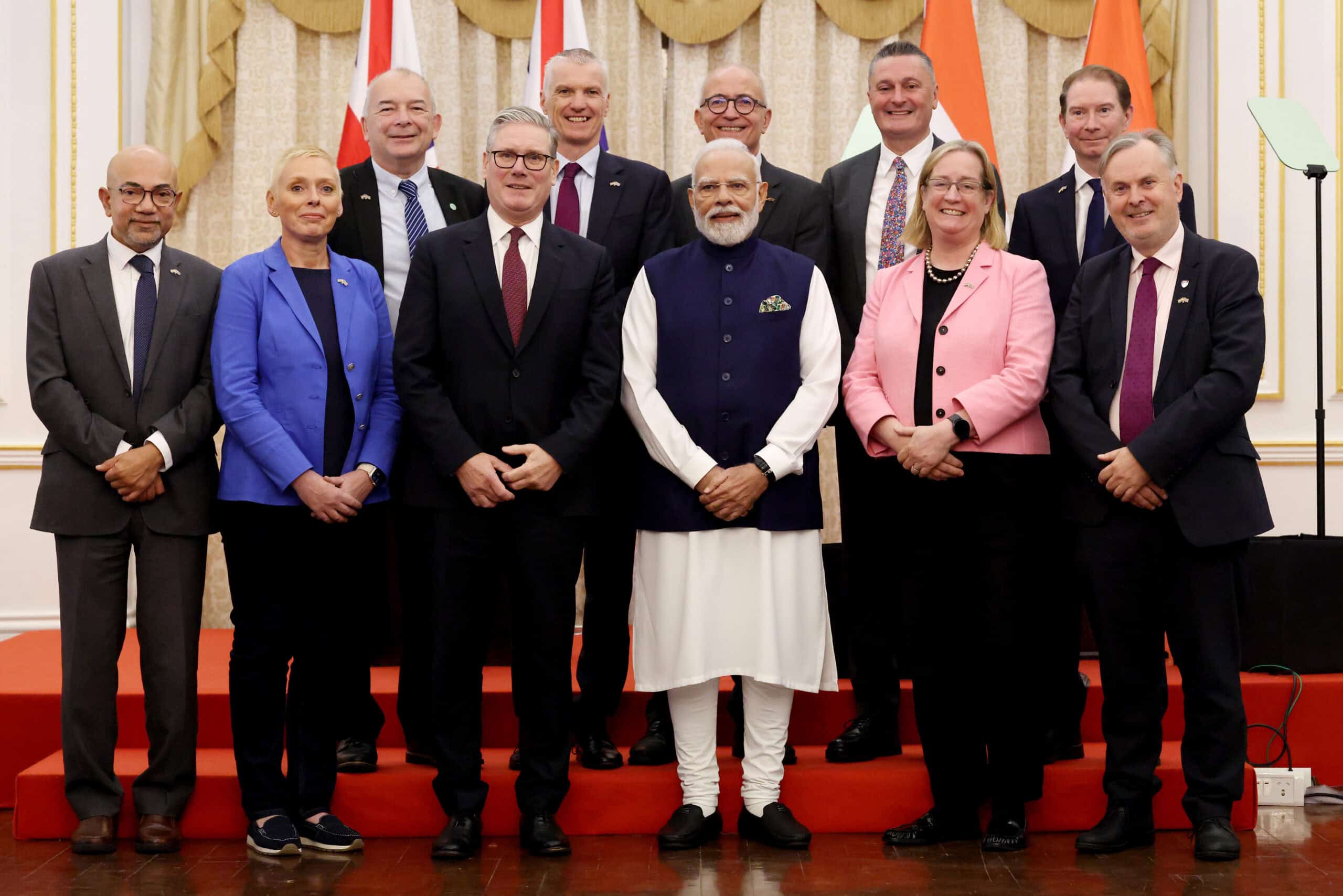
  • First look at the University of Southampton’s Delhi campus

    First look at the University of Southampton’s Delhi campus

    TFTDL podcast – David Winstanley (Who’s The Man?)

    Listen to David Winstanley, the man with the weight of expectation on his shoulders as all eyes are on the University of Southampton as they prepare to open their Indian campus in August 2025. The TFTDL crew return to the airwaves on the day of the Air India crash, in a rare, new episode.

    Source link

  • The Society for Research into Higher Education in 1975

    The Society for Research into Higher Education in 1975

    by Rob Cuthbert

    Only yesterday

    I’ve been walking these streets so long: in the SRHE Blog a series of posts is chronicling, decade by decade, the progress of SRHE since its foundation 60 years ago in 1965. As always, our memories are supported by some music of the times, however bad it might have been[1].

    Is this the real life?

    Some parts of the world, like some parts of higher education, were drawing breath after momentous years. The oil crisis of 1973-74 sent economic shocks around the world. In 1975 the Vietnam war finally ended, and the USA also saw the conviction of President Richard Nixon’s most senior staff John MitchellBob Haldeman and John Ehrlichman, found guilty of the Watergate cover-up. Those were the days when the Washington Post nailed its colours to the mast rather than not choosing sides, and in the days when the judicial system and the fourth estate could still expose and unseat corrupt behaviour at the highest levels. Washington Post editor Katharine Graham supported her journalists Woodward and Bernstein against huge establishment pressure, as Tammy Wynette sangStand by your man. How times change.

    Higher education in the UK had seen a flurry of new universities in the 1960s: Aston, Brunel, Bath, Bradford, City, Dundee, Heriot-Watt, Loughborough, Salford, Stirling, Surrey, the New University of Ulster, and perhaps most significant of all, the Open University. All the new UK universities were created before 1970; there were no more in the period to 1975, but the late 60s and early 1970s saw the even more significant creation of the polytechnics, following the influential 1966 White Paper A Plan for Polytechnics and Other Colleges. The Times Higher Education Supplement, established in 1971 under editor Brian Macarthur, had immediately become the definitive trade paper for HE with an outstanding journalistic team including Peter (now Lord) Hennessy, David Hencke and (now Sir) Peter Scott (an SRHE Fellow), later to become the THES editor and then VC at Kingston. THES coverage of the polytechnic expansion in the 1970s was dominated by North East London Polytechnic (NELP, now the University of East London), with its management team of George Brosan and Eric Robinson. They were using a blueprint created in their tenure at Enfield College, and fully developed in Robinson’s influential book, The New Polytechnics – the People’s Universities. NELP became “a byword for innovation”, as Tyrrell Burgess’s obituary of George Brosan said, developing an astonishing 80 new undergraduate programmes validated by the Council for National Academic Awards, created like SRHE in 1965. Burgess himself had been central to NELP’s radical school for independent study and founded the journal, Higher Education Review, working with its long-time editor John Pratt (an SRHE Fellow), later the definitive chronicler of The Polytechnic Experiment. In Sheffield one of the best of the polytechnic directors, the Reverend Canon Dr George Tolley, was overseeing the expansion of Sheffield Polytechnic as it merged with two colleges of education to become Sheffield City Polytechnic.

    As in so many parts of the world the HE system was increasingly diverse and rapidly expanding. In Australia nine universities had been established between 1964 and 1975: Deakin, Flinders, Griffith, James Cook, La Trobe, Macquarie, Murdoch, Newcastle, and Wollongong. The Australian government had taken on full responsibility for HE funding as Breen (Monash) explained, and had even abolished university fees in 1974, which Mangan’s (Queensland) later review regarded as not necessarily a good thing. How times change.

    In the USA the University of California model established under president Clark Kerr in the 1960s dominated strategic thinking about HE. Berkeley’s Martin Trow had already written The British Academics with AH Halsey (Oxford) and was about to become the Director of the Centre for Studies of Higher Education at Berkeley, where his elite-mass-universal model of how HE systems developed would hold sway for decades.

    In the UK two new laws, the Sex Discrimination Act 1975 and the Equal Pay Act 1970, came into force on 29 December, aiming to end unequal pay of men and women in the workplace. In the USA the Higher Education Act 1972 with its Title IX had been a hugely influential piece of legislation which prohibited sex discrimination in educational institutions receiving federal aid. How times change. Steve Harley’s 1975 lyrics would work now with President Trump: You’ve done it all, you’ve broken every code.

    You ain’t seen nothing yet

    Some things began in 1975 which would become significant later. In HE, institutions that had mostly been around for years or even centuries but started in a new form included Buckinghamshire College of Higher Education (later Buckinghamshire New University), Nene College of Higher Education (University of Northampton), Bath Spa University College, Roehampton, and Dublin City University. Control of Glasgow College of Technology (Glasgow Caledonian University) transferred from Glasgow Corporation to the newly formed Strathclyde Regional Council. Nigeria had its own flurry of new universities in Calabar, Jos, Maiduguri and Port Harcourt.

    Everyone knew that “you’re gonna need a bigger higher education system” as the blockbuster hit Jaws was released. 1975 was the year when Ernő Rubik applied for a patent for his invention the Magic Cube, Microsoft was founded as a partnership between Bill Gates and Paul Allen, and Margaret Thatcher defeated Edward Heath to become leader of the Conservative Party. Bruce Springsteen was already ‘The Boss’ when Liz Truss was Born to run on 26 July; she would later briefly become a THES journalist and briefly Shadow Minister for Higher Education, before ultimately the job briefly as boss. 1970s terrorism saw a bomb explode in the Paris offices of Springer publishers: the March 6 Group (connected to the Red Army Faction) demanded amnesty for the Baader-Meinhof Group.

    Higher education approaching a period of consolidation

    Guy Neave, then perhaps the leading continental European academic in research into HE, later characterised 1975-1985 as a period of consolidation. In the UK the government was planning for (reduced) expansion and Labour HE minister Reg Prentice was still quoting the 1963 Robbins Report in Parliament: “The planning figure of 640,000 full-time and sandwich course students in Great Britain in 1981 which I announced in November is estimated to make courses of higher education available for all those who are qualified by ability and attainment to pursue them and who wish to do so. It allows for the number of home students under 21 entering higher education in Great Britain, expressed as a proportion of the population aged 18, to rise from 14% in 1973 to 17% in 1981. … the reductions in forecast higher education expenditure in the recent Public Expenditure White Paper are almost entirely attributable to the lower estimate of prospective student demand.” Government projections of student numbers were always wrong, as Maurice Kogan (Brunel) might have helped to explain – I thought by now you’d realise. 1975 was the year when Kogan, a former senior civil servant in the Department of Education and Science, published his hugely influential Educational Policy-making: A Study of Interest Groups and Parliament.

    In the US the Carnegie Commission on Higher Education, founded ten years earlier under Clark Kerr, was in full pomp and published Demand and Supply in United States Higher Education. Two giants of sociology, Seymour Martin Lipset and David Riesman, wrote essays on ‘Education and Politics at Harvard’. How times change.

    Research into higher education

    Academics were much in evidence in novels; 1975 saw Malcolm Bradbury’s The History Man, David Lodge’s Changing Places, and Colin Dexter‘s first Inspector Morse novel Last Bus to Woodstock, and higher education was becoming established as a field of study. Dressel and Mayhew’s 1974 US-focused book reviewed by Kellams (Virginia) in the Journal of Higher Education, and published by the then-ubiquitous HE publishers Jossey-Bass in San Francisco saw ‘the emergence of a profession’. Nevertheless much research into HE was still appearing in mainstream education rather than HE journals, even in the USA. Tinto (Columbia) reported his synthesis of research on ‘dropout’ (as it was called then) in HE in the Review of Educational Research, and DI Chambers wrote about a major debate in China about higher education policy in an article in Comparative Education.

    Michael Shattock’s history of the SRHE in its earlier years pulled no punches about the limited achievements and reach of the Society:

    “By 1973, when the university system was in crisis with the collapse of the quinquennial funding system, it was clear that the Society was significantly failing to meet the ambitious targets it had started out with: it held annual conferences but attendance at 100 to 120 ensured that any surplus was low. It had successfully launched the valuable Research into Higher Education Abstracts but its … monographs, … while influential among specialists did not command a wide readership. The Society appeared to be at a crossroads as to its future: so far it had succeeded in expanding its membership, both corporate and individual, but this could easily be reversed if it failed to generate sufficient activity to retain it. Early in 1973 the Governing Council agreed to hold a special meeting … and commissioned a paper from Leo Evans, one of its members, and Harriet Greenaway, the Society’s Administrator … The “Discussion Paper on the Objectives of  the Society” … quoted the aims set out in the Articles of Association “to promote and encourage research in higher education and related fields” and argued that the Society’s objectives needed to be broadened.  … The implied thrust of the paper was that the Society had become too narrow in its research interests and that it should be more willing to address issues related to the development of the higher education system.”

    In the end the objectives were expanded to include concern for the development of the HE sector, but the Society’s direction was not wholly settled, according to Shattock. Moreover: “Both in 1973-74 and 1974-75 there was great concern about the Society’s continued financial viability, and in 1976 the Society moved its premises out of London to the University of Surrey where it was offered favourable terms.” (Someone Saved My Life Tonight). In 1976 Lewis Elton of Surrey, one of SRHE’s founders, would become Chair of the Society when the incumbent Roy Niblett suffered ill health. It was the same year that the principal inspiration for the foundation of SRHE (as Shattock put it), Nicholas Malleson, died at only 52. SRHE’s finances were soon back on an even keel but It would be more than 25 years before they achieved long-term stability.

    Rob Cuthbert is editor of SRHE News and the SRHE Blog, Emeritus Professor of Higher Education Management, University of the West of England and Joint Managing Partner, Practical Academics. Email [email protected]. Twitter/X @RobCuthbert.


    [1] The top selling single of 1975 was Bye Bye Baby by the Bay City Rollers, and the Eurovision Song Contest was won by Ding-a-Dong. The album charts were dominated by greatest hit albums from Elton John, Tom Jones, The Stylistics, Perry Como, Engelbert Humperdinck and Jim Reeves. I rest my case. As always, there were some exceptions.

    Author: SRHE News Blog

    An international learned society, concerned with supporting research and researchers into Higher Education

    Source link

  • Ripping up the rule book

    Ripping up the rule book

    On May 7, I was honoured to address an audience at Goodenough College in London, at the kind invitation of the master of The Worshipful Company of Educators, to talk on the topic of ‘educators opening doors to the world’.

    For those not familiar with Goodenough College, it is a remarkable community in Bloomsbury, central London, comprising 700 postgraduate students and their families from around 95 different countries, each studying at any one of London’s world-leading universities.

    When I stepped inside the doors of the College, I was instantly transported back to my own experience as a first-time post-doctoral researcher at the University of British Columbia (UBC) in Canada, when I found myself living in a very similar international community called St John’s College at the heart of the UBC campus.

    It was there that I saw first-hand just how important communities like these are for bringing people together from across the globe through education and providing a ‘home from home’ for overseas students and researchers. These communities allow friendships to form, ideas to thrive and inter-cultural understanding to arise.

    It is also that experience that has since driven my subsequent career, both in making and influencing higher education policy, to ensure that our universities and colleges continue serving as dynamic meeting points for the world.

    Breaking the rules

    When you work in policy, one of the first rules you learn is not to base policy on anecdote or personal experience. However, when it comes to something as positive and life changing as international education, I am a firm believer in ripping up the rule book.

    While not everyone is fortunate to have an international education experience of their own, every single one of us indirectly benefits from the international students around us – not least given that, in the UK, they bring in £41.9 billion to the economy per annual cohort.

    when it comes to something as positive and life changing as international education, I am a firm believer in ripping up the rule book

    These economic benefits are felt even more acutely by our universities and colleges, where international student fees have become a lifeline to financially-stretched institutions – both to make up for the rising shortfall in domestic funding and to cross-subsidise world-leading research.

    Yet, as all good educators know, international students are much more than big pound and dollar signs to our sector.

    In a global city like London, international student communities are reflective of the global workforce and the multi-cultural population around us. Having international students in our midst helps prepare local students for the realities of living and working in these diverse environments. It encourages them to think differently about the world, and they learn to appreciate different cultures, traditions and perspectives.

    The real winners

    There are also substantial soft power benefits to be had from our diverse international student inflows. Each year the Higher Education Policy Institute (HEPI) publishes a soft power index showing the tally of serving world leaders educated in UK universities. While some may see this as a ‘bit of fun’ over the summer when it’s traditionally published, it’s actually a really powerful signal of the strength of the UK’s educational brand.

    It is also a stark reminder of what is at stake if we start to use education to close doors to the world rather use it than to open them.

    As one international student, and member of Goodenough College, said to me over dinner on the evening I spoke: Today I might just be eating dinner here with other international students, but tomorrow we could be the ones doing deals together in politics or in business, and it is our countries that will be the real winners of this experience.”

    While policymakers across the Western world are fixated on finding ways to bring immigration down, when it comes to international education, perhaps they should pay more attention to the benefits that are had when international students return to their home countries with the skills, friendships and memories made during their overseas educational experiences. For, these are the things that from the foundations of closer business and trade relationships between different countries and enhance future diplomatic relations.

    The clock is ticking

    A very early read of the immigration white paper suggests UK universities may have dodged a bullet when it comes to major policy reform. While the post-study work entitlement may have been reduced to 18 months from two years, the UK still has a positive offer to sell to the world – and one that isn’t undermined by country-specific restrictions or provider-level caps as is the case elsewhere in the world. Gone too (for now at least) are any requirements for international graduates to meet certain salary thresholds should they wish to stay and work in the UK.

    We need to ensure policymakers are tackling the parts of the immigration system that are failing us, not those that are overwhelmingly helping us

    Of course, we need to take public concerns about immigration seriously and chart a sustainable path for the future. But we need to ensure policymakers are tackling the parts of the immigration system that are failing us, not those that are overwhelmingly helping us. This should be done through measures that strengthen the overall ecosystem, not ones that weaken it through reckless words and kneejerk reactions.

    Last month, the International Higher Education Commission (IHEC), for which I am proud to have served as a commissioner, set out a framework for success based on the three pillars of competitiveness, diversification and public trust. The challenge for all of us now is to find ways to move forward with this framework – and in the new context set out by the Immigration White Paper – to ensure we continue opening the doors to the world through our educational offer. The last thing we should do is close them down through the loss of any one of those important sides of the policy triangle.

    Source link

  • Coventry given green light to open campus in GIFT City

    Coventry given green light to open campus in GIFT City

    The institution revealed its ambition to open the campus in December, when it launched an Indian hub in New Delhi to support the institute’s admissions, recruitment, and partnerships in the region.

    Approval for the £1 billion expenditure on the campus was announced at the London Stock Exchange on April 9 at the 13th UK-India Economic and Financial Dialogue (EFD).

    GIFT City (Gujarat International Finance Tec-City) is a business district in the Indian state of Gujarat.

    “We are delighted that approval has been given to commence the set-up process for Coventry University GIFT City and know that many students will benefit from the high-quality education we can offer over the years to come,” said John Latham CBE, vice-chancellor of Coventry University and Group.

    Competition among international universities has risen significantly in the region, with more UK universities keen on expanding into GIFT City. In January, The University of Surrey unveiled plans to open a campus in the city, as did Queen’s University Belfast.

    We… know that many students will benefit from the high-quality education we can offer over the years to come
    John Latham, Coventry University

    Coventry’s new India campus is offering postgraduate programs such as international business management and business and finance. The university plans to add further courses in the near future.

    Alison Barrett, director of India at the British Council said: “It emphasises our shared commitment to the internationalisation of education, as highlighted in the National Education Policy 2020. Thousands of students will benefit from the high-quality education that the university can offer in the years to come.”

    The campus building is set open its doors this month.

    Source link

  • A turning point for UK international higher education

    A turning point for UK international higher education

    In 2019, the UK launched its first international education strategy – a landmark effort that set ambitious, cross-government targets for growing our international education footprint. The years since have exposed the fragility of a strategy without a built-in mechanism for review or refresh when buffeted by events. Changing geopolitics, tightening migration strategies and Covid might not individually have been expected, but exposure to global markets will always bring challenges.

    The 2019 roadmap lacked clarity on whether those targets were a floor or a ceiling and what we were to do when they were reached. In their absence, policy drifted. Reactive decisions replaced proactive planning. Universities, caught in the crosswinds of shifting geopolitics and domestic migration debates, have too often been left guessing what the government’s long-term vision really is.

    That’s why the International Higher Education Commission (IHEC) was formed; to fill this strategic vacuum with a coherent, forward-looking, and inclusive vision. Working across sectors – engaging university leaders, student bodies, recruiters, and policymakers – it’s been working on framework for a new UK international higher education strategy rooted in data, tempered by experience, and open to evolution.

    Our personal view is that we need nothing less than a reinvention of how we plan, manage, and grow international higher education; that we must hack a way through the many things we could do, or would like to do, to get to the essential priorities – what we must do – and be brave enough to make difficult decisions. 

    It is clear that the government wishes the sector well, but is not going to put its hand in its pocket any time soon. Our only way forward in the short term, then, is to ask for modest help, which will provide a short-term, concrete return on investment to trade our way out of the immediate difficulties.

    Our personal view is that we need nothing less than a reinvention of how we plan, manage, and grow international higher education

    If we steady the ship, we can in parallel put in place a framework, acknowledging the likely ongoing volatility in geopolitics and global markets, that moves us to a more strategic and sustainable approach in the medium and longer term. This may not be elegant policy making, but it is rooted in the pragmatic reality of the changes necessary to stabilise a system so economically, socially and culturally significant.

    We have shared our personal views in a number of fora over the past two years as IHEC has unfolded and reiterate them here as we anticipate the imminent publication of our final report. It is very timely now, having been delayed initially by the UK general election, in which higher education as a topic failed to appear. Then the focus of almost everyone was on the US election, and that was followed by the significant challenges in the sector that meant that policy suggestions would not have been appropriate. 

    Now, there is a more proactive, forward-looking context to which we hope we can contribute.

    • A living strategy with built-in review and flexibility

      The UK needs a dynamic framework, not a static document.

      Strategies must adapt to shifting global conditions, student preferences, and national needs. A ‘living’ strategy, reviewed regularly, updated transparently, and framed around multiple scenarios, not a single trajectory. Growth must be deliberate, not accidental.

      • Policy certainty and sustainable structures

          Confidence in the UK’s offer depends in part on consistency. The Graduate Route – allowing students to work post-study – has been a cornerstone of our recent successes, but its future must be secured through clearer legal and policy underpinning in the face of continuing threats from a still-changing migration policy context.

          We also need a more sustainable system that doesn’t rely solely on growth from a few key markets, but diversifies and balances recruitment in line with national capacity and ambition.

          • A competitive, student-centred offer

          International students are not just numbers; they’re individuals with aspirations and needs. Better engagement with the ‘student voice’ is critical, as is a re-examination of how we ensure student success as they enter the workforce.

          • Whole-government coherence and accountability

          Too often, policy is siloed across Whitehall. Education may do better than other areas, but there are key departments missing from discourse – the Home Office, the Department for Science, Innovation and Technology, among others – and they are necessary to provide coordinated oversight.

          It’s also vital to reflect regional priorities and the role of devolved nations, Metro Mayors, and local authorities in shaping recruitment and integration strategies.

          • Strategic marketing and market diversification

          The UK concentrates too heavily on a small number of international markets. We must be smarter.

          Study UK does the best it can with the woefully poor levels of investment, but we must invest in data-driven, market-specific campaigns and learn from countries like Australia that tie marketing to outcomes.  

          • Public-private partnership and institutional innovation

          Strategic delivery needs strategic partners. We must deepen collaboration with sector bodies like UKCISA, NISAU and BUILA to create a more integrated system that shares responsibility across institutions, government, and industry. 

          We also need to support the new found enthusiasm for TNE at scale to ensure that the new initiatives are robustly founded, and better data to inform national and institutional decision making.

          • Reframing migration and public narrative

          International students bring huge value to local economies, research, and the cultural fabric of our campuses. Yet in public discourse they too often become collateral in broader immigration debates.

          We must be able to show, and more effectively communicate, that almost all students return home. A confident, positive narrative is essential, based on evidence – not emotion.

          The road ahead

          This is a moment for boldness and clarity. The sector stands at a crossroads. It is under unprecedented threat, but it is also brimming with opportunity. If we get it right, the UK will not only remain a top destination for international students: we will lead globally on how it integrates education with diplomacy, soft power, and innovation.

    Source link

  • Education providers pivot to TNE in price-sensitive Pakistan

    Education providers pivot to TNE in price-sensitive Pakistan

    Speaking at The PIE Live Europe 2025, Stuart Smith, CEO of pathway provider NCUK, said Pakistan’s position as a growing yet price-sensitive market opens exciting opportunities for students to earn their qualifications before transitioning to a high-quality university in the UK or elsewhere. 

    “Financially, one of the biggest barriers for Pakistani students has been the cost of studying abroad. The pathway model helps address this by offering significant cost savings, allowing students to progress to high-quality universities,” Smith told delegates at the London conference.

    “One of the big advantages of our model is that students can come in on an NCUK qualification, spend one or two years at home making really important cost savings, and academically prepare for studying abroad, all in a comfortable environment.”

    According to Smith, the rise in interest in international qualifications among Pakistani students also means easier visa approvals for them. 

    Visa refusals and delays have forced many Pakistani students to miss their January intake at UK universities, with some even withdrawing their applications, as reported by The PIE News last year. 

    “For students studying in-country pathway programs, we’ve seen fewer visa refusals because they are better prepared for the visa process and qualify better for visa interviews,” Smith added. 

    Last year, Pakistan’s Higher Education Commission revised its TNE policy to provide greater clarity on requirements, operational models, and introduce guidelines for establishing offshore campuses of Pakistani higher education institutions. 

    The update also emphasised quality assurance and regulatory assessments. 

    “Instead of targeting a small number of students at a high price point, a more sustainable approach is to offer programs at a lower price to a larger student base,” stated Smith. 

    “That being said, there is a market for institutions at all price points. The key is to find the right strategy that balances accessibility with quality.”

    The HEC has previously cautioned students and parents in Pakistan about some of the violations made by Pakistani institutions in their TNE programmes. 

    Moreover, the HEC warned recognised domestic HEIs offering foreign qualifications in Pakistan to comply with the government’s TNE policy, stating that any violations would result in non-recognition of the student’s degree.

    According to Vanessa Potter, director of communications and external relations at the University of Essex, while enrolling large numbers of Pakistani students in TNE programmes remains challenging, the university has shifted its focus. It now puts more into collaborating with its Pakistani alumni, supporting research at local universities, and assisting academic staff in the country.

    “One area we’ve significantly expanded is PhD support for academic staff. We offer our partners substantial discounts on PhD programs, as we believe in supporting both the academy and our institutional collaborators,” stated Potter. 

    “Many universities we work with have one or two staff members engaged in these programs, either full-time or part-time under co-supervision arrangements with Pakistani universities.”

    Just last year, the University of Essex partnered with Beaconhouse International College to offer a variety of business, law, and technology courses to students in major Pakistani cities, including Islamabad, Faisalabad, and Lahore.

    Over the years, Pakistan’s investment in research and development has remained notably low, with expenditure dropping from 0.17% of GDP in 2019 to 0.16% in 2021. 

    This limited funding presents challenges for Pakistani universities in securing high global research rankings, keeping the country’s R & D investment well below international standards.

    Such challenges provide an opportunity for research collaboration for institutions like the University of Essex. 

    “There are pockets of excellent research in Pakistan, though they don’t always reflect in global rankings,” stated Potter. 

    “There is funding available – academic exchanges have already been supported, and the British Council in Pakistan has provided funding for specific initiatives. We are also working with them on scholarships in collaboration, while also receiving support from the British High Commission in Pakistan.”

    According to Potter, the university is also working with the HEC to support laboratory staff in universities.

    “It’s a specialised project, and while we are still looking to pay for it, we are committed to enhancing the development of lab staff in science departments in Pakistani universities.” 

    In recent years, Pakistan has emerged as a major TNE market, especially for the UK. 

    According to the revised TNE policy, HEIs with a strong reputation and ranked within the top 700 in the QS or THE world university rankings, or those classified as Fachhochschule, will be eligible to offer their degree programs in Pakistan.

    Some institutions make the mistake of treating local Pakistani-origin agents differently from international aggregators. This is a clear discrimination
    Atif Khan, University of Hertfordshire

    With the launch of its new initiative, ‘Udaan Pakistan,’ aimed at revitalising the country’s economy, Atif Khan, country director at the University of Hertfordshire, believes that Pakistan has a strategic vision for economic growth over the next five to 10 years. 

    This, in turn, could drive a rising demand for international qualifications among students, he said. 

    “Any universities keen to come to Pakistan – this is the time. Demand will not finish, it will grow,” stated Khan. 

    “Currently, Pakistan has 55 recognised TNE programs, with over 15,000 students engaged. Of these, around 12,000 are involved in UK-affiliated programs, meaning nearly 80% of TNE students in Pakistan are already planning to transition to the UK for their postgraduate studies.”

    On the recruitment front, Khan anticipates a rise in study visas from Pakistan to major international study destinations, noting that the UK issued 35,000 student visas by 2024, an increase of 13% from the previous year.

    But he highlighted how some of the practices adopted by UK universities in the country are discriminatory in nature and need to be fixed.

    “When it comes to selecting recruitment agents, universities need a sustained strategy. They must work with the right agents, ensuring strong compliance and regular training sessions. The market is evolving rapidly,” stated Khan. 

    “Some institutions make the mistake of treating local Pakistani-origin agents differently from international aggregators. This is a clear discrimination. If universities continue down this path, they risk attracting lower-quality students.”

    Furthermore, Potter emphasised that while Pakistan’s economic challenges may prevent an exponential rise in student numbers, universities that offer strong career support and employability prospects could continue to attract Pakistani students.

    “I think being able to articulate clearly how you can support students with jobs, and how having a degree from a particular type of university subject might help that career long term, does help students understand the welcoming environment,” she said.

    Source link

  • Scotland’s “sleeping giant” looks to international recruitment

    Scotland’s “sleeping giant” looks to international recruitment

    Although the history of the institution dates back over 100 years, it only achieved degree-awarding powers last year. Specialising in agriculture and life sciences, SRUC hopes to become an increasingly attractive choice for international students.

    “For many years, SRUC’s been a sleeping giant,” SRUC’s principal and chief executive Wayne Powell told The PIE News. “Now we’ve awoken and we can see huge amount of potential in what we can offer here in Scotland.”

    Offering international masters programs including international food and agriculture business, business consultancy and project management, Powell said the institution is “creating a future which is much more aligned to what students for the future will want to do” – with international recruitment efforts largely looking to students from India, Pakistan, Nigeria and other parts of sub-Saharan Africa.

    With six campuses located around Scotland, SRUC’s Edinburgh campus launched a £1.8 million vertical farming innovation centre in January, making it the first Scottish higher education institution in Scotland to create a commercial-sized vertical farm to help address global and local food production challenges.

    “Some of the things that we work on are at the nexus of the most important challenges facing society. So how do we feed a growing world?” explained Powell. “How do we support environmental sustainability?”

    He continued: “We are interested in attracting students that have an identity and an interest in sustainability and how the sustainability will play out over their lifetimes”.

    But while sustainability is undeniably a focus for the institution, Powell stressed that prospective students are also being enticed by curriculums focussing on business – especially as SRUC runs its own “successful consultancy business”.

    Now we’ve awoken and we can see huge amount of potential in what we can offer here in Scotland
    Wayne Powell, SRUC

    Learning about international agriculture, food and business in tandem is also a focus for programs, “particularly the potential for acquiring those business skills as part of a green economy”, Powell said.

    “And our location in Edinburgh [creates] a fantastic opportunity to come and live and work and study in a great city,” he added.

    “There’s something here which is going to be attractive and we’re keen to market that in the right way and creating the first cohort of students coming into something really special.”

    It comes as Scotland has taken steps to position itself as an attractive destination for international students. In late January, the country’s universities were encouraged to take “collective action” to promote Scotland as a study destination.

    In the same week, Scotland’s first minister John Swinney made the case for a bespoke visa for skilled international students graduating from the country’s colleges and universities. However, it is understood that the UK government has no plans to make good on these ambitions.

    Source link

  • Industry mourns loss of Saskia Loer Hansen

    Industry mourns loss of Saskia Loer Hansen

    The industry was left reeling this week after the announcement by RMIT University in Australia of the death of Loer Hansen, a well known senior leader who had enjoyed a successful global career working in Australia and the UK.

    “It is with deep sadness that we share some very difficult news with our community. In a tragic car accident while returning from holiday, Saskia Loer Hansen, deputy vice-chancellor international and engagement and interim general director RMIT Vietnam, lost her life,” said RMIT in a statement.

    “The shock of her sudden passing is hard to fathom, and anyone who had the good fortune to know Saskia will understand that a rare light has gone out.

    “While nothing can make good of the loss of someone with so much more to give, the RMIT community will remember her as an example to emulate.”

    LinkedIn has seen many posts remembering Loer Hansen’s humanity, charisma and professional impact. Prior to RMIT, Loer Hansen worked as PVC international at Aston University in the UK, having moved to the UK from a prior role at the same Australian institution.

    “Saskia was an inspirational leader with the biggest heart,” remembered Wendy Yip, director international development at Aston University.

    “I will always remember how she made time to listen, no matter how busy she was. She will be deeply missed by the teams she led, the people she engaged with, and the global education sector she helped shape.”

    The shock of her sudden passing is hard to fathom, and anyone who had the good fortune to know Saskia will understand that a rare light has gone out
    RMIT University

    Neville Wylie, deputy principal at University of Stirling, wrote: “She had one of the warmest smiles in the business and was an extraordinarily talented communicator.”

    AEMG, an Australian based company working closely with China, also noted Loer Hansen’s dedication. “We will always remember our 2021 Hand in Hand Workshop, when Saskia joined us at 4am from the UK to participate and present,” it said. “Her commitment to global education and her support for AEMG never wavered, no matter the time nor circumstances.”

    “Saskia’s passing is an enormous shock, and the response from friends and colleagues has been overwhelming. She lived an exceptional life; her generous spirit reaching so many. Together, we will remember her,” commented VC of RMIT Alec Cameron on LinkedIn.

    Loer Hansen was born in Denmark and enjoyed a truly global career – engaging and sharing her insight with The PIE over many years. She is fondly remembered.

    Those wishing to attend a memorial service for Saskia Loer Hansen can register their interest with RMIT University here.

    Source link

  • Parents turn to international education as path to residency

    Parents turn to international education as path to residency

    If families looking to relocate to “top destinations” such as the US and Canada choose the right program for their children, they may be granted permanent residency as domestic students or even graduate from their chosen institution as residents or citizens, according to Tess Wilkinson, director of education services at Henley & Partners Education in the UK.

    “We’re now seeing a real uptick in the types of families who are now becoming aware that there is an option for them,” she told The PIE News.

    “For families looking at relocating, there can be real gains in the amount of fees they spend on education in places like Canada,” she explained. “They can they can save [up to] $150,000 on fees.”

    The sheer number of clients asking for assistance in this area signals that education is swiftly becoming “one of the key drivers for people looking at second residences to citizenships”, she added.

    Henley & Partners refers to itself as a “global leader in residence and citizenship by investment”. Its education arm, Wilkinson explained, helps to “advise transnational families who are looking for global education solutions”.

    Working with families all over the world with children and adults of all ages – from K-12 to those seeking master’s degrees or MBAs – it “assists them to find the right match”, taking into account children’s individual needs and the types of residency or citizenship that may become available to its clients through educational opportunities.

    “We can advise on all the top-tier destinations. So we have a family, for instance, who are considering the UK, the US and Australia and they’re putting in applications for all three countries,” Wilkinson shared.

    We’re now seeing a real uptick in the types of families who are now becoming aware that there is an option for them
    Tess Wilkinson, Henley & Partners Education

    With immigration policies in key markets such as the UK, the US, Canada and Australia shifting all the time, Wilkinson acknowledged that it “is not something that is simple”.

    But she said that, with expertise across a number of key markets, Henley & Partners can provide families with education counsellors to help match children to institutions that suit them best, as well as help with applying to universities or summer programs.

    The ‘big four’ international education destination countries are all seeing turbulence in their respective markets. Some of these restrictive policies are having an impact on students’ ability to study in the countries, hindering them from securing post-graduate residency in their chosen destination.

    Australia and Canada are both subject restrictions on international students, while UK universities’ international departments have been blighted by a crackdown on overseas students’ ability to bring their families into the country with them.

    Meanwhile, Donald Trump’s second term as US President continues to present challenges to the sector, as he freezes study abroad funding, battles against DEI legislation and moves to arrest or even deport international student protestors.

    Tess Wilkinson will be speaking at The PIE Live Europe at the PIEx Power Up Expanding horizons: accessing global education & opportunity via investment migration on March 11 at 16:00. Tickets are available online here.

    Source link

  • Open universities: between radical promise and market reality

    Open universities: between radical promise and market reality

    by Ourania Filippakou

    Open universities have long symbolised a radical departure from the exclusivity of conventional universities. Conceived as institutions of access, intellectual emancipation, and social transformation, they promised to disrupt rigid academic hierarchies and democratise knowledge. Yet, as higher education is increasingly reshaped by market logics, can open universities still claim to be engines of social progress, or have they become institutions that now reproduce the very inequalities they sought to dismantle?

    This question is not merely academic; it is profoundly political. Across the globe, democratic institutions are under siege, and the erosion of democracy is no longer an abstraction – it is unfolding in real time (cf EIU, 2024; Jones, 2025). The rise of far-right ideologies, resurgent racism, intensified attacks on women’s and LGBTQ+ rights, and the erosion of protections for migrants and marginalised communities all point to a crisis of democracy that cannot be separated from the crisis of education (Giroux, 2025). As Giroux (1984) argues, education is never neutral; it can operate as both a potential site for fostering critical consciousness and resistance and a mechanism for reproducing systems of social control and domination. Similarly, Butler (2005) reminds us that the very categories of who counts as human, who is deemed grievable, and whose knowledge is legitimised are deeply political struggles.

    Open universities, once heralded as radical interventions in knowledge production, now find themselves entangled in these struggles. Increasingly, they are forced to reconcile their egalitarian aspirations with the ruthless pressures of neoliberalism and market-driven reforms. The challenge they face is no less than existential: to what extent can they uphold their role as spaces of intellectual and social transformation, or will they become further absorbed into the logics of commodification and control?

    My article (Filippakou, 2025) in Policy Reviews in Higher Education, ‘Two ideologies of openness: a comparative analysis of the Open Universities in the UK and Greece’, foregrounds a crucial but often overlooked dimension: the ideological battles that have shaped open universities over time. The UK Open University (OU) and the Hellenic Open University (HOU) exemplify two distinct yet converging trajectories. The UK OU, founded in the 1960s as part of a broader post-war commitment to social mobility, was a political project – an experiment in making university education available to those long excluded from elite institutions. The HOU, by contrast, emerged in the late 1990s within the European Union’s push for a knowledge economy, where lifelong learning was increasingly framed primarily in terms of workforce development. While both institutions embraced ‘openness’ as a defining principle, the meaning of that openness has shifted – from an egalitarian vision of education as a public good to a model struggling to reconcile social inclusion with neoliberal imperatives.

    A key insight of this analysis is that open universities do not merely widen participation; they reflect deeper contestations over the purpose of higher education itself. The UK OU’s early success inspired similar models worldwide, but today, relentless marketisation – rising tuition fees, budget cuts, and the growing encroachment of corporate interests – threatens to erode its founding ethos.

    Meanwhile, the HOU was shaped by a European policy landscape that framed openness not merely as intellectual emancipation but as economic necessity. Both cases illustrate the paradox of open universities: they continue to expand access, yet their structural constraints increasingly align them with the logic of precarity, credentialism, and market-driven efficiency.

    This struggle over education is central to the survival of democracy. Arendt (1961, 2005) warned that democracy is not self-sustaining; it depends on an informed citizenry capable of judgment, debate, and resistance. Higher education, in this sense, is not simply about skills or employability – it is about cultivating the capacity to think critically, to challenge authority, and to hold power to account (Giroux, 2019). Open universities were once at the forefront of this democratic mission. But as universities in general, and open universities in particular, become increasingly instrumentalised – shaped by political forces intent on suppressing dissent, commodifying learning, and hollowing out universities’ transformative potential – their role in sustaining democratic publics is under threat.

    The real question, then, is not simply whether open universities remain ‘open’ but how they define and enact this openness. To what extent do they serve as institutions of intellectual and civic transformation, or have they primarily been reduced to flexible degree factories, catering to market demands under the guise of accessibility? By comparing the UK and Greek experiences, this article aims to challenge readers to rethink the ideological stakes of openness in higher education today. The implications extend far beyond open universities themselves. The broader appeal of this analysis lies in its relevance to anyone interested in universities as sites of social change. Open universities are not just alternatives to conventional universities – they represent larger struggles over knowledge, democracy, and economic power. The creeping normalisation of authoritarian politics, the suppression of academic freedom, and the assault on marginalised voices in public discourse demand that we reclaim higher education as a site of resistance.

    Can open universities reclaim their radical promise? If higher education is to resist the encroachment of neoliberalism and reactionary politics, we must actively defend institutions that prioritise intellectual freedom, civic literacy, and higher education for the public good. The future of open universities – and higher education itself – depends not only on institutional policies but on whether scholars, educators, and students collectively resist these forces. The battle for openness is not just about access; it is about the kind of society we choose to build – for ourselves and the generations to come.

    Ourania Filippakou is a Professor of Education at Brunel University of London. Her research interrogates the politics of higher education, examining universities as contested spaces where power, inequality, and resistance intersect. Rooted in critical traditions, she explores how higher education can foster social justice, equity, and transformative change.

    Author: SRHE News Blog

    An international learned society, concerned with supporting research and researchers into Higher Education

    Source link