Category: United States

  • What’s not talked about when you live overseas

    What’s not talked about when you live overseas

    The first time someone told me I was “too loud” in Latvia, I laughed. Not because it was funny, but because I genuinely hadn’t realized I was being loud. We were eating pizza one evening at Easy Wine in Riga, and despite being the only one not tipsy on the refreshments, I was still somehow the rowdiest at the table. 

    I shrank down an inch in my seat. The moment gave me pause. It was oddly familiar, like déjà vu. Everything around me felt almost known, just slightly askew, like it had been tilted on its axis. 

    The shame of taking up too much space? That I knew. But this time, it didn’t come from being Brown. It came from being American. 

    In the United States, my race is always top of mind. I’m a university student, and as a Government major, it’s a regular feature of my coursework. Having grown up in a nearly all-White town, I’ve been explaining my identity to others since I could talk. 

    With nearly two decades of practice under my belt, I’m well-versed in how my skin color and ancestry shape the world around me, and how to articulate that for others. So, the longer I spent in Riga, the more unsettled I felt by how absent race seemed from the conversation. 

    Conversations not had

    Hours spent gazing out the windows of trolleybuses gliding through the city confirmed what I suspected: Riga is not very diverse. Among the small number of people of color I did see, most were other South Asians, like me. In the United States, race is an ever-present topic, whether it’s in political debates, academic syllabi or heated threads on X. In Latvia, it felt like race had slipped out of the cultural vocabulary altogether. 

    As part of my study abroad program, we often heard from expert guest lecturers. And as each one spoke, a quiet confusion grew inside me: Why is nobody talking about race? I started to feel like a foreign lunatic, playing an internal game of “spot the non-white person” on every street. But the more I searched, the more questions I had. Where was the discussion? Why wasn’t it happening? 

    So, I brought it up with a friend I’d made in my hostel. Arsh is an Indian student studying mechanical engineering at Riga Technical University. He had been living in the city since February. When I asked if he’d experienced discrimination as a visibly Punjabi Sikh, his answer surprised me. 

    “No,” he said. 

    And then he added something that completely shifted my perspective. 

    “Nobody talks.”

    Silence and race

    I’d known Latvians were famously quiet, but I’d never considered how that silence might shape their understanding and construction of race. 

    In the United States, your racial identity is often the first thing people ask about. Strangers want to know what you are and where you’re from. Race in America is personal, political and inescapable. The constant conversation can be both exhausting and empowering: it pushes systems to change, creates space for shared stories of resilience and holds people accountable.

    But it also creates a kind of fatigue. As a person of color, you’re constantly on: explaining, reacting, defending. You’re visible, but often through a lens of trauma or tension. 

    In Latvia, it was different. What I came to think of as a kind of “quiet neutrality” reigned. People didn’t ask where I was from. They didn’t comment on my skin tone. They didn’t bring up diversity or inclusion, mainly because they weren’t speaking to me in the first place. 

    At first, that silence felt like relief. But eventually, it began to feel like an absence, because bias still exists, even if no one’s talking about it. 

    The power of passive racism

    After speaking with Arsh, I turned to the Internet, searching for other South Asian perspectives on racism in Latvia. I found plenty. 

    One Quora user bluntly wrote, “Indians are treated like shit here in Latvia.” Another shared that she didn’t know if others felt negatively about her brown skin, but if they did, they didn’t confront her about it. A Redditor described being told to “go back to your own country.” These stories varied wildly from hate crimes to total indifference, but they painted a clear picture: racism existed here. It just didn’t look the same. 

    Curious to dig deeper, I reached out to Gokul from @lifeinlatviaa on Instagram. A popular Indian content creator who’s lived in Latvia for seven years, Gokul shares his takes on life in the Baltics. Many of his videos humorously cover topics of social culture, stereotypes, education and work. He also co-hosts the podcast Baltic Banter with Brigita Reisone. 

    When I asked Gokul about his experience, he described the racism in Latvia as mostly “passive.” Latvians, he said, are reserved. “If they don’t like something, they won’t be in your face about it,” he said. 

    Still, he shared more overt examples, like housing ads that openly say Indians need not call. He noted persistent stereotypes, too: that Brown people are dirty kebab shop owners or delivery drivers. 

    The familiarity of bias

    None of this was unfamiliar to me. I’ve experienced housing discrimination. I’ve been called dirty by a White person. The common style of racism in Latvia was new to me: distant and quiet. In the United States, I once had a tween boy bike past me and mock an Indian accent — it was less traumatic than it was bizarre. There was certainly nothing subtle about it though. 

    Looking further, I found several reports from Latvian Public Broadcasting documenting hate crimes and prejudice against South Asians. So no, it’s not that racism doesn’t exist in Latvia. It’s that it shows up differently, and more importantly, it’s not widely discussed. 

    That difference matters.

    Race is fluid and contextual; its meaning shifts with time, place and history. In the United States, racism is foundational. It began with colonization and slavery, extending through the systemic injustice known as Jim Crow in the 19th and 20th centuries, to modern-day Islamophobia and racial profiling by police. Racial violence and resistance are woven into the country’s DNA. 

    Latvia’s history tells a different story. Latvia is a nation shaped more by being colonized than by colonizing. Ethnic Latvians have fought for sovereignty under foreign rule, whether by Germans or Soviets. Today, its population is overwhelmingly White, and ethnic tensions tend to focus on Latvians and Russians, or Roma communities. Immigration is relatively new here, so the language to talk about race may simply not have developed yet. 

    And that brings me back to volume. 

    In the United States, being loud is often classed and racialized as “trashy,” especially when tied to communities of color. In Latvia, loudness is framed differently: it’s seen as a kind of cultural rudeness. It’s not about being Brown, it’s about being foreign. And because everyone is generally quieter, the social cues around race, identity and belonging shift, too. 

    Little things like volume, friendliness and eye contact build the scaffolding around how race is perceived in different societies. They may seem like surface-level quirks, but they shape deep-rooted assumptions.

    And they remind us: racism may look different in various places, but it doesn’t disappear. It just changes form. And recognizing that change is the first step to dismantling it.


    Questions to consider:

    1. Why do many people outside the United States connect loudness with being American?

    2. Why was the author troubled about the lack of conversation about racism in Latvia?

    3. What kind of conversations do you have about race and do they make you feel more or less comfortable?

     

    Source link

  • How important could one court be?

    How important could one court be?


    A polarized electorate

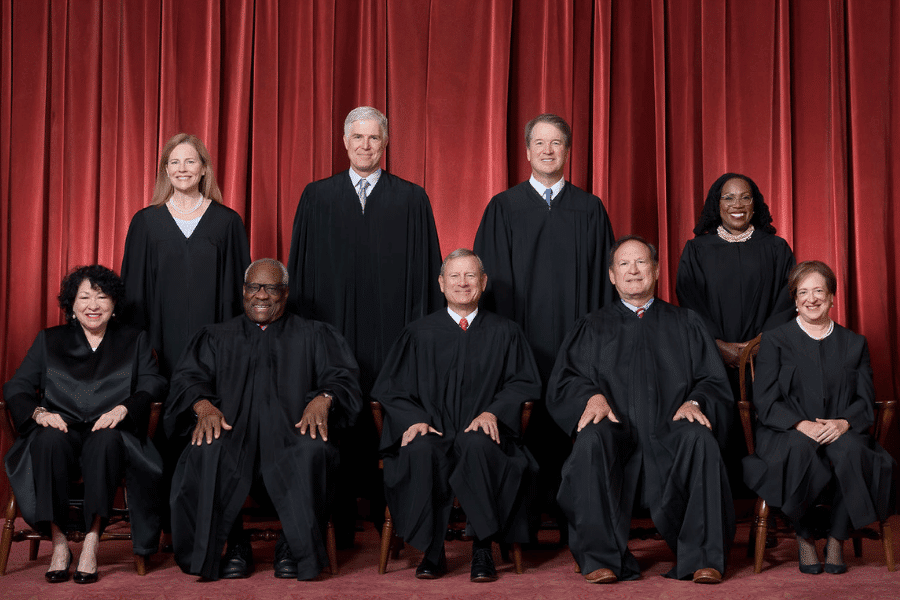
    The first Italo-American to serve on the Supreme Court, Scalia had been appointed by Ronald Reagan, a Republican president. Of the eight remaining justices, four were appointed by Republican presidents and four by Democrats.

    Both parties recognize that Scalia’s successor could tip the scales in close votes. Cases currently before the Court involve climate change, affirmative action, abortion, unions, immigrants and contraception — issues where the electorate is deeply divided.

    Although the Constitution stipulates that the president nominates Supreme Court justices, Republican candidates for the presidency have said the choice of Scalia’s successor should be left to whoever succeeds Barack Obama in the White House next January. Obama, a Democrat, has said he will send a nomination to the Senate in due course.

    That partisan split can be explained by the weight of the Court’s decisions and the polarization of the U.S. electorate.

    Whereas historically the two major parties have been able to agree, sometimes begrudgingly, on the choice of justices, the process has become far more partisan and divisive in recent decades.

    Unfavorable opinions

     The gaping ideological split in the current Congress and an increasingly vitriolic presidential campaign ensure a bitter fight in coming months.

    The political acrimony was reflected in a nationwide poll conducted last year by the Pew Research Center.

    Following recent Supreme Court rulings on Obamacare and same-sex marriage, unfavorable opinions of Court have reached a 30-year high, the survey found. And opinions about the court and its ideology have never been more politically divided.

    “Republicans’ views of the Supreme Court are now more negative than at any point in the past three decades,” it said. Little wonder that Republican presidential candidates are keen to put a conservative in the vacant seat.

    While the Supreme Court is an independent branch of government, its composition is not — and has never been — immune from politics. The nomination of justices is part of the system of checks and balances.

    But at the end of the day, the system requires the willingness of voters and their representatives to adhere to laws, executive orders and court rulings, however deep the political divide. If that faith ever crumbled, the U.S. experiment in democracy would be under threat.


    Source link

  • Designed in California but made … all over the world

    Designed in California but made … all over the world

    Most of us spend a good part of our lives glued to our iPhone or other similar devices. It seems as if we cannot survive without being connected to cyberspace.

    It turns out that Apple, a U.S.-based company which makes the iPhone and depends on its sale, cannot survive without being connected to China, which is a key partner in the production of most every iPhone that people use. And that puts the iPhone at the center of the great power struggle underway between the United States and China.

    One of the earliest insights into iPhone production came along in 2010 thanks to research by economists Yuqing Xing and Neal Detert. They lifted the veil off the mystery behind the iPhone label “Designed by Apple in California, Assembled in China”.

    The iPhone model 3G was indeed designed in Cupertino, California, by Apple. But the vast majority of components were sourced from Japan, South Korea, Germany and elsewhere in the United States.  All iPhone components were then shipped for assembly to Foxconn, a Taiwanese contract manufacturer based in Shenzhen, China.

    Less than 4% of the iPhone manufacturing value came from the assembly in China.

    Manufacturing capability

    The iPhone was only first launched in 2007, and iPhones were not sold in China until late 2009. At the time, there was no production of Chinese smartphones. Since those days, the iPhone and other smartphones have become ubiquitous in modern life. Apple now sells 230 million iPhones annually, each one of which has one thousand components and about 90% of them are produced in China.

    Financial Times journalist Patrick McGee, in his recent book “Apple in China“, explained how Apple began assembling iPhones in China for its cheap labour costs but that came with a different cost: China’s labour was not of high quality.

    In contrast to the general impression, China does not have great vocational training systems. So Apple became China’s vocational school.

    Although Apple did not own any factories, it assumed close control over the factories of Foxconn and other companies to ensure its traditional perfectionist quality control. This included sending over planeloads of high-level engineers from the United States to train Chinese workers and investing in machinery for production lines.

    Further, while components from foreign companies are still used in Apple products, these companies are now increasingly based in China. Over time Chinese companies have played a growing role in the production of the iPhone and other devices. Workers from all these companies have also been trained by Apple engineers.

    Over the past decade, Apple invested some $55 billion a year for staff training and machinery. Since 2008, 28 million Chinese have received training from Apple — a figure larger than the workforce of California.

    Human capital

    But there is more to China’s human capital than training offered by Apple. A key element has been China’s investment in human capital more generally, notably education and health.

    Chinese students participating in the OECD’s Programme for International Student Assessment — from Beijing, Shanghai, Jiangsu and Zhejiang, collectively home to nearly 200 million people — have outperformed the majority of students from other education systems, including the United States.

    China has also made extraordinary progress in lifting its life expectancy, which is now the same as that of the United States at 78 years, even though the gross domestic product per capita in the United States  — a key measure of the economic health of a country — at $83,000, is more than six times that of China. For the first time, China has overtaken the United States in healthy life expectancy at birth,  according to World Health Organization data.

    Apple CEO Tim Cook has said that there is a popular conception that companies come to China because of low labour cost. Cook argues that the truth is China stopped being a low labor cost country many years ago.

    He insists that Apple is motivated by the quantity and type of skill that China offers. For example, while it requires really advanced tooling engineers, Cook is not sure the United States could fill a room with such engineers, while in China you could fill multiple football fields. Such vocational expertise is now very, very deep in China.

    India and the United States

    U.S. President Donald Trump insists that Apple must “reshore” its production to the United States. This is not realistic. The United States does not have the capacity to produce Apple’s products at scale and at competitive cost. It most certainly does not have the same competitive cost, well-trained engineering workforce as China, which has some three million people working in Apple’s supply chain.

    Under Trump 1.0, Apple made a commitment to build “three big, beautiful factories” (in Trump’s words) in the United States. But that was just hot air, as none were built. Now, Trump has threatened to impose a 25% tariff on iPhones if they are not made in the United States.

    In response, Apple said that phones sold there would be labelled “Made in India” (although this is unacceptable for Trump), and has pledged to invest $500 billion in the United States. What this pledge means in reality is still unclear. Apple may ultimately need to build a token factory or two, with limited production functions, to pander to Trump.

    Many commentators are suggesting India as an alternative production base for Apple. And some assembly functions are indeed being shifted to India. But these are just the very final assembly phase of production, which are sufficient to justify attaching an “Assembled in India” label.

    All the pre-assembly activities remain in China. At this stage, India is not a viable option for replacing China because of deficiencies in human capital, infrastructure and logistics systems.

    A close partnership

    In many ways, modern China and Apple have made each other.

    Technology and knowledge transfer have underpinned China’s growing contribution to the iPhone and other Apple products — as well as the Chinese smartphone brands like Huawei, Xiaomi and Oppo, which now dominate world markets. Moreover, Chinese engineers are capable of building all sorts of electronic products, some of which could be used in military conflicts.

    In sum, Apple has made a major contribution to the rise of China as a technological powerhouse. China has been a key factor in the rise of Apple as one of the world’s most successful companies. Apple has a Chinese system for producing the iPhone and other products that works like a song.

    No other country has the human capital, and production and logistics systems for producing Apple products at scale and at a competitive cost. Thus, Apple is in a way now trapped in China, which makes it vulnerable to coercion from China’s authoritarian government.

    It should try to make greater efforts to de-risk itself from China, although that is not easy and might provoke the ire of the Chinese authorities.

    Apple now finds itself caught between a rock and a hard place — meaning President Xi and President Trump.


    Questions to consider:

    1. Where is the iPhone made?

    2. What would make a device that is made outside the United States more expensive to buy in the United States?

    3. Should people be able to buy anything from anywhere without any extra costs from governments? Why?


    Source link

  • The guardians of the exosphere

    The guardians of the exosphere

    Not many military forces have ranks and uniforms that were inspired by science fiction. The U.S. Space Force (USSF) has both. Their dress uniform is described by the U.S. Armed Forces Super Store as “a deep navy, representing the vastness of space” and the jacket’s buttons are diagonal and off centre with the logo of the Space Force. 

    Members of the Space Force are known as Guardians, a term that will be familiar to fans of the animated superhero series where extraterrestrial criminals unite to preserve the galaxy. 

    But the Space Force has a real and serious purpose. After being discussed for several decades, it was created in 2019 and tasked with protecting the United States from threats in space with the motto, “Semper supra,” which is Latin for “Always above.”  

    As the USSF mission statement explains, “From GPS to strategic warning and satellite communications, we defend the ultimate high ground.” 

    Despite its vast mission, there are fewer than 10,000 Guardians — enlisted women and men and officers — making it the smallest wing of the U.S. military.

    Detecting missiles and other objects

    Like all nations, the United States relies on critical infrastructure and everyday business that is now dependent on satellites which enable navigation, weather forecasting, earth observation, communication and intelligence. 

    Before the formation of the Space Force, monitoring satellites was part of the duties of the U.S. Air Force. Now the U.S. Space Force has taken over many of those duties and is dedicated solely to operating and protecting assets which operate in space. Their mission also includes operating the Ballistic Missile Early Warning System which is designed for advanced missile detection.

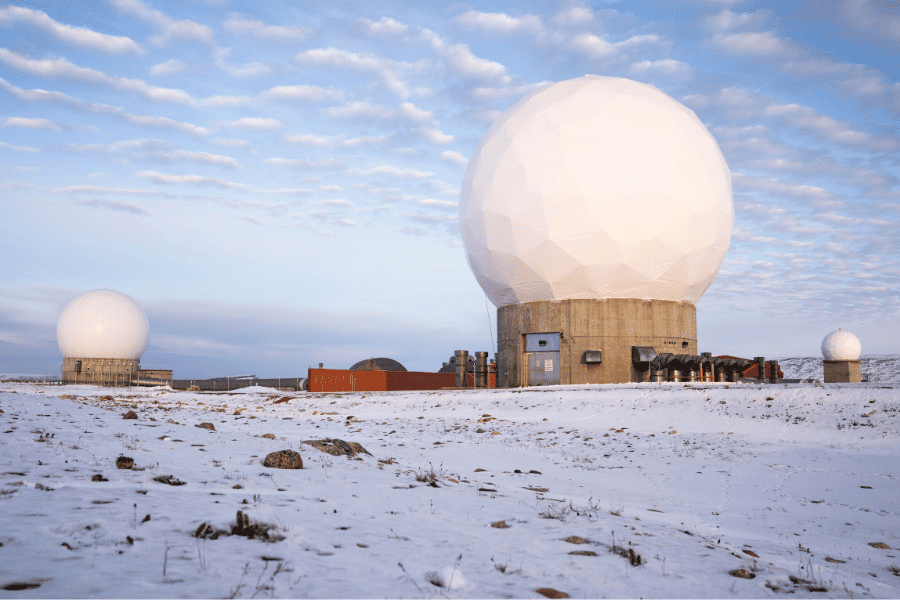
    The USSF currently has six bases in the continental United States and one base outside of the country. Located in Greenland, it is its most northerly base. Previously known as Thule Base, in 2023 it reverted to its traditional name Pituffik.

    In March 2025, Pituffik base hosted a visit by U.S. Vice President J.D. Vance following statements by President Trump that he wanted to “buy Greenland”

    Donald Trump was not the first American president who wanted to buy Greenland. In 1946 President Truman made a similar offer to Denmark, the colonial power. Denmark turned him down — the Greenlanders had no say in those days as a colony. Now Greenland is an autonomous territory of Denmark and all Greenlanders are Danish citizens.

    Eyes on the skies

    But even in 1946, there was already a U.S. base in Greenland, built during World War Two during the years that Denmark was occupied by Nazi Germany. Thule Base was America’s most northerly deepwater port and runway and supported Allied naval operations against the Nazi threat.

    Now, 80 years on, the base can monitor not only space activities, but the expansion of Russian government activities in the Arctic region. Climate change is expected to enable an ice-free Northwest Passage in the coming decades when traffic in shipping could rival the Suez Canal. 

    Now, with the addition of the Space Force to Pituffik Base in Greenland, the sea sky as well as space will be closely monitored.

    The location of Pituffik is not only strategically placed to keep an eye on Russian and Chinese space activities, but to monitor polar orbiting satellites. These observation satellites, which orbit north to south, make a full orbit every 92 minutes. In addition to civilian and scientific satellites, which provide data on land, sea and atmosphere, there are military satellites which are classified.

    The vast majority of military satellites that are operated by the United States are believed to number around 250 which is more than the total of Russian and Chinese military satellites. Military observers believe many of these satellites are monitored from Pituffik. 

    Nobody wants a war in space.

    The idea of a space force had been discussed for decades because “nobody wants a war in space” according to Major General John Shar, the commander of space operations for the U.S. Space Force. Shar compared the need for the United States to operate military space operations to ocean-going nations wanting a navy.

    Several other countries agree. France, Canada and Japan have created their own versions of a space force to deter threats in space.

    French President Macron announced the creation of a space command in 2019. The force is being established in tandem with the French Air Force. As one of the leading space nations in the world, the force will protect French satellites. French aerospace companies are currently designing a new generation of satellites reportedly designed to carry lasers and possibly even guns.

    The Canadian Space Division, a division of the Royal Canadian Air Force, provides “space-based support of military operations” and “defending and protecting military space capabilities” according to their mission statements.

    Japan’s Space Operations Group is part of the Japan Air and Space Self-Defense Force unit based in Tokyo. Japan, also a leading space nation, is building many earth observation and surveillance satellites. Many of their astronauts from JAXA, the Japan Aerospace Exploration Agency, have flown missions on the International Space Station. 

    The Japanese have also taken on a wider mission, beyond a national military focus. They are enhancing their capability for Space Domain Awareness in order to focus on the increasing risk of collisions with satellites caused by space debris.

    Earth’s satellite infrastructure can be substantially damaged by space debris orbiting at an average speed of 17,500 mph. It’s not only cyberattacks and targeted satellite destruction that can cause serious global disruption.

    The United States, France, Japan and Canada point out that any new satellites and any activities from the respective space forces will stay within the strictures of the International Outer Space Treaty which outlaws testing nuclear weapons or weapons of mass destruction in space.

    If space around the earth and beyond can remain a peaceful place, perhaps the designation of “Guardian” for the U.S. Space Force is appropriate. 


    Questions to consider: 

    1. In what ways does science fiction inspire ideas that are useful for humanity?

    2. What should nations not be allowed to do in space?

    3. Would you join a space force in your country to help monitor and protect space activities?


    Source link

  • The politics of representation

    The politics of representation

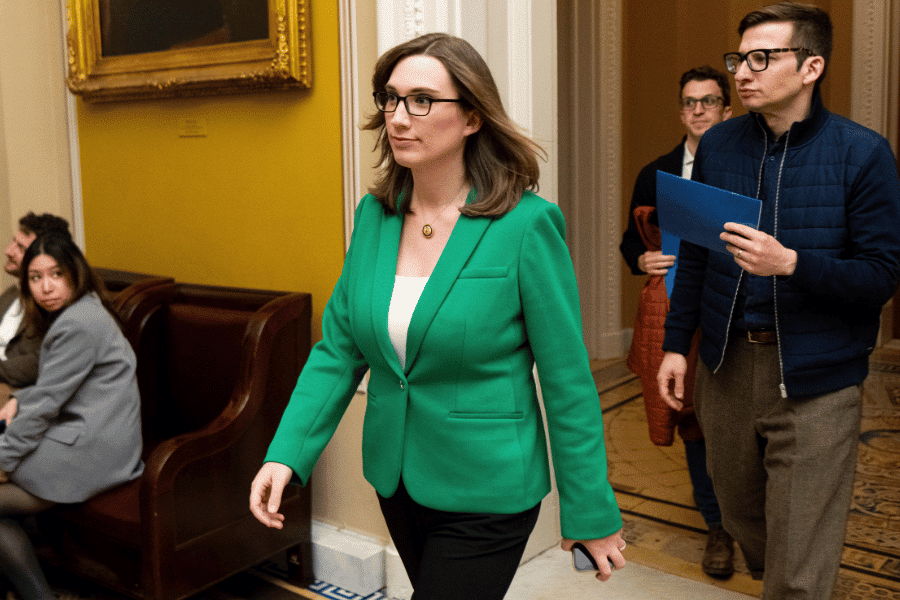
    When I searched for Sarah McBride’s name on March 12, the first thing I saw was a story about a member of the U.S. Congress calling her “Mr. McBride” in an official hearing.

    Ms. McBride is the first congressional representative in United States history to be openly transgender.

    Since 18 November 2024, when McBride was elected to Congress, I’ve seen dozens of articles in which the only thing in question is her gender identity. It’s funny that Republicans in the U.S. Congress have made such a fuss over McBride’s gender, while McBride – the only congressperson representing the state of Delaware – has done nothing of the sort.

    For someone so polarised and one-dimensional by the media, McBride seems intent on collaboration.

    Delawareans have been overwhelmingly supportive of McBride. A University of Delaware poll, which recorded the pre-election numbers, had McBride at 52% of the vote, while her opponent, John Whalen, received 30%. Sarah McBride ended up with a 58% return, which could be considered a landslide.

    This starkly contrasted primaries across the country, with many states flipping Republican, that had gone Democrat in 2020.

    So, what’s the difference between Delaware and McBride, compared to the rest of the nation?

    What voters care about

    For starters, Delaware, where I live, is minuscule compared to its sister states. These conditions make Delaware not only ideal grounds to break history on, but also the only place it could have happened for McBride.

    Delaware does not boast a large number of gay and trans people. A UCLA poll found that only 4.5% of citizens in Delaware are queer and trans and over half are under voting age. By and large, McBride was elected by a primarily straight electorate.

    This election did not contrast with the national sentiment of Democrats. A Pew Research study found that about 64% of Americans believe trans people should be protected from discrimination when it comes to employment, housing, and education. Additionally, democrats had even stronger support of the notion that gender is not assigned at birth.

    Simply put, Delaware and McBride are a good fit.

    McBride is calm, composed, and focusing on her Delaware constituents more than anything else. In fact, she is the first freshman democrat in the 119th Congress to bring a bill to the floor. A bipartisan bill protecting consumers from credit appraisal scams.

    Opposition from Republicans

    Some congressional Republicans prefer to call McBride names rather than work to make a stronger nation.

    Describing McBride’s welcome to D.C. can be summarized in two words: Political Theatre.

    On McBride’s first visit to D.C., she was greeted by a ban on the use of bathrooms in the house by transgender people brought forward by Republican Congresswoman Nancy Mace. This pointed attack by Representative Mace didn’t seem to affect McBride, who was more focused on: “Delivering on the issues that keep Delawareans up at night.”

    In recent months, McBride has been subject to even more unwarranted scrutiny and misnomers from her republican colleagues.

    I spoke with McBride to hear her plans for Delaware, her response to President Trump’s actions, and what she has accomplished thus far in her congressional term.

    Jack McConnel: What was your main reason to run for congressional office? 

    Sarah McBride: So my interest in politics was really rooted in my own journey to authenticity as a young person, as someone growing up here in Delaware, I was scared. I wondered whether the heart of this country was big enough to love someone like me.

    And I faced a crisis of hope. And in that crisis of hope, I went searching for solutions and examples of our world becoming kinder and fairer. And I found a little glimmer of hope as I read history books and saw the through line of every chapter was a story of advocates, activists and a handful of courageous and effective elected officials working together to right the wrongs of our past, to address injustice, to bring people from the shadows and the margins of society into the circle of opportunity.

    I ultimately decided to run for office, though, in 2019 for the state Senate was really the byproduct of my experience as a caregiver to my husband during his battle with terminal cancer.

    Because I know despite the fact that Andy lost his life to cancer, I know how lucky we were. I know how lucky he was to have health insurance that allowed him to get care that prolonged his life. And I know how lucky both of us were to have flexibility with our jobs that allowed him to focus on the full-time job of getting care and me to focus on the full-time job of caring for him.

    McConnel: What are you most proud of so far in your term?

    McBride: First is that I’ve introduced multiple bipartisan bills.

    One with [California Republican] Young Kim that provides consumer protections for Americans against the predatory practices of so-called credit repair organizations.

    The second more recently with [Republican] Representative Mike Lawler from New York, which protects farmers and in so doing helps to lower costs for Delawareans at the grocery store by investing in combating avian flu.

    McConnel: How do you think the Democratic party should respond to the results of the 2024 election?

    McBride: What we can do is we can help to mobilize the public against [President Donald Trump]. Public opinion still matters. We are still under democracy. These people still care about their popularity. They still care about the next election and the goal in this moment as we defend Medicaid in the short run.

    The goal in this moment also has to be to make sure that this president, that the public understands the harms that this president is inflicting on people of every political persuasion across the country. As the public mobilizes against this president, it throws sand in the gears of an authoritarian machine that slows it down, that extends the runway of our democracy so that we can get to the next election and get to the next election.

    McConnel: How do you plan on responding to these movements?

    McBride: Fighting back against that is at the top of my priority list at this moment. In the longer term, obviously, there is an answer to your question, a real effort by this president to illegally and unconstitutionally consolidate power to essentially create absolute power.

    I mean, his first step is to employ what’s called the unitary executive theory, which is absolute authority within the executive branch under the purview of Congress. But he’s also clearly trying to undermine the main power of Congress, the power of the purse. He’s questionable about whether he’s going to listen to the Supreme Court and when all is said and done, making sure that we can’t stop every action by this president. The results of the last election give us limited institutional levers.

    McConnel: Thank you, Representative McBride.

    The main concern McBride reiterated again and again was what she was doing for the Delawareans who elected her. McBride took every opportunity during our interview to highlight the issues most relevant to her constituents. She talked to me about the effort to defund programs Delawareans rely on.

    When asked about what the Democratic Party should be doing going forward, McBride said that Democrats have lost the “art of social change” and that they must be willing to meet people where they are and engage in conversations where people disagree. She pointed towards the 2026 midterms as a place to build momentum towards.

    McBride said when Democrats try to sound the alarm about everything the president is doing, it dilutes the effect of the message. “We can’t ever go to 10 if we’re always at 10,” she said.

    McBride’s goal? Slow down Trump where she can and build support going into 2026.


    Questions to consider: 

    1. In what way does Representative Sarah McBride get treated differently than her Congressional colleagues?

    2. What did Delaware voters care about when they voted to elected McBride to Congress?

    3. If you were to vote for a government representative, what issues do you most want that person to tackle?


    Source link

  • Could Trump’s tariffs end up spurring green innovation?

    Could Trump’s tariffs end up spurring green innovation?

    U.S. President Donald Trump has never been a champion of the environment. From gutting climate policies to rolling back crucial environmental protections, the track record of the U.S. president speaks for itself. 

    But his announcement this month of steep tariffs on a sweeping range of foreign-made goods intended to boost U.S. production may also inadvertently fuel a global shift toward green innovation and a more sustainable future.

    During his first term, Trump pulled the United States out of the Paris Agreement, slashed pollution regulations and gave the fossil fuel industry a free pass. One of his most controversial moves was opening up the Arctic National Wildlife Refuge (ANWR) to drilling — a pristine, ecologically-sensitive area home to polar bears, caribou and Indigenous communities that depend on the land.

    Now, he’s back — and this time, his weapon of choice is tariffs. The Trump administration has imposed tariffs on all imports from China, Mexico and Canada, as well as on steel, aluminium and cars from around the world.

    By targeting key imports like clean energy components and critical minerals, Trump’s latest trade war threatens to derail climate progress, drive up costs for renewable energy and push the United States further into fossil fuel dependence. The damage is real and the consequences could be catastrophic.

    Tariffs could hamper climate change efforts.

    The implementation of broad tariffs is poised to significantly hinder efforts against climate change and weaken environmental legislation. Here’s how:​

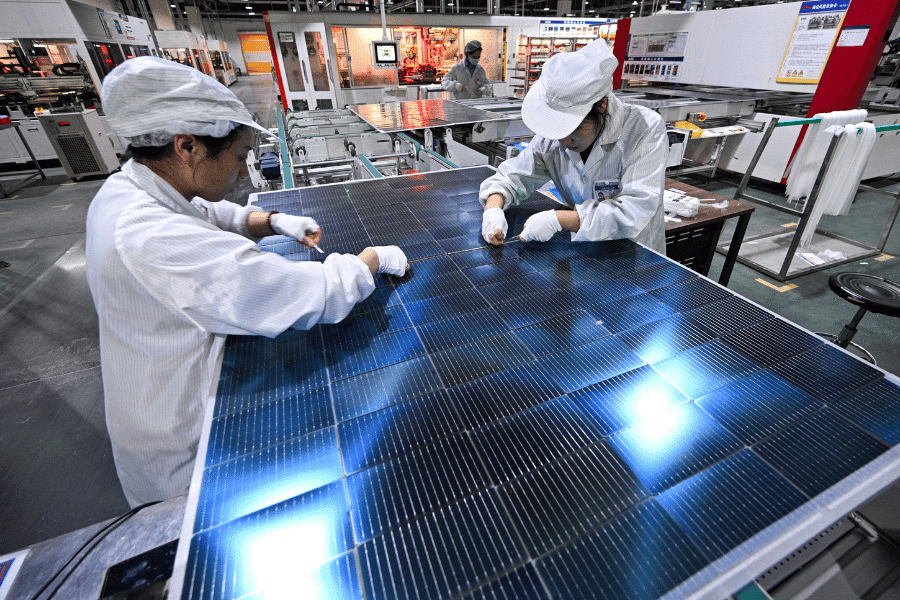
    Disruption of clean energy supply chains: The tariffs, particularly those targeting imports from China like steel, aluminium and lithium directly affect the availability and cost of clean technology components. For instance, the United States imports a substantial amount of lithium batteries from China — $1.9 billion worth in December 2024 alone. Increased tariffs on these imports could raise costs for renewable energy projects and electric vehicles, slowing the transition to cleaner energy sources. ​

    The energy sector is already grappling with shortages of essential parts. New tariffs exacerbate this issue, making it more challenging to procure necessary components for renewable energy infrastructure. This could delay projects and increase reliance on fossil fuels, counteracting efforts to reduce greenhouse gas emissions. ​

    Strain on environmental initiatives: The stock market’s negative reaction to the tariff announcements, with the Dow Jones dropping nearly 1,700 points and erasing approximately $3.1 trillion in market value, indicates broader economic instability. Such financial turmoil can lead to reduced funding and support for environmental programs, as both public and private sectors may prioritize immediate economic concerns over long-term environmental goals. ​

    As Trump imposes tariffs, his administration is also rolling back environmental protections. His Environmental Protection Agency is now questioning a key 2009 ruling that classifies greenhouse gases like carbon dioxide as harmful to human health. If the courts overturn it, this could weaken U.S. climate laws and make it harder to fight climate change.

    Unintended consequences

    While Trump’s tariffs largely threaten climate progress in the United States, they could have unintended environmental benefits elsewhere.

    Boosting green manufacturing in other countries: If U.S. tariffs make Chinese solar panels, batteries and EV components more expensive, other countries — especially in Europe, India and Latin America — may ramp up their own clean energy production. China itself may increase investment and focus on domestic EV adoption, hydrogen technology or battery recycling. 

    This could lead to a more diversified and resilient global supply chain for renewable technologies, while also strengthening domestic energy resilience by encouraging countries to develop and secure their own clean energy resources, reducing reliance on foreign imports.

    Strengthening regional trade alliances for green tech: With the imposing trade barriers, countries looking to avoid tariffs might strengthen regional partnerships, such as the EU-India green energy collaboration or China’s push to supply African and Latin American markets with solar and wind technology. This could decentralize the clean energy economy, reducing reliance on any single country.

    Reducing export-driven deforestation: If tariffs make U.S. imports of commodities like beef, palm oil and timber more expensive, countries that export these products (e.g., Brazil, Indonesia) may face declining demand. Less demand equals less incentive to clear forests for agriculture.

    On the other hand, the EU Deforestation Regulation (EUDR), adopted in June 2023, aims to block imports of commodities linked to deforestation unless they can be verified as deforestation-free. The EU is a huge consumer of these commodities. 

    With two major markets (U.S. and EU) becoming less profitable for deforestation-linked goods, exporters might change their practices to comply with stricter regulations. This could encourage more sustainable supply chains.

    However, this would depend on whether other countries, like China, pick up the slack and implement EUDR-like regulations.

    Backing off petroleum

    If trade wars escalate and tariffs disrupt global markets, long-term investments in fossil fuel projects could become riskier due to economic uncertainty. Tariffs on fossil fuel-related goods — like equipment, machinery or raw materials — can increase production costs for oil and gas companies. 

    As the cost of extraction, refining and transportation rises, companies could face shrinking profit margins, making fossil fuel investments less appealing. This, and shifting focus to clean energy, might push investors toward renewables, which are increasingly seen as more stable and future-proof.

    There’s a catch: These benefits depend on how other countries respond. If the U.S. tariffs cause economic slowdowns, some nations might double down on fossil fuels to stabilize their economies. So while tariffs could have some green silver linings, they’re more of a chaotic wildcard than a deliberate climate strategy.

    While the tariffs imposed by the Trump administration present significant challenges to global climate efforts, they also create opportunities for positive change. The disruptions in the clean energy supply chain, economic instability and rollbacks of environmental protections are certainly concerning. However, the unintended side effects of these actions might just catalyze a shift in global energy dynamics.

    In the long run, this “chaotic wildcard” could make fossil fuel investments riskier and accelerate the global pivot toward renewables. Countries and industries could be forced to innovate and adapt faster than expected. 

    While the path ahead may seem uncertain, there’s a silver lining: resilience, innovation and adaptability are key to overcoming these challenges. As the world adjusts to these new realities, the opportunity to cultivate a cleaner, more sustainable future is within reach — if leaders recognize this moment and take bold action to seize it. 

    So, while the road ahead may be bumpy, there is still reason to hope and act. 


    Questions to consider:

    1. How can governments turn the economic disruptions caused by tariffs into opportunities for advancing clean energy and climate goals?

    2. How can a decentralization of green energy technology be a good thing? 

    3. How can government intervention combined with market forces, like the rising cost of fossil fuels, accelerate the transition to renewable energy?


    Source link

  • The military footprint of the United States

    The military footprint of the United States

    The United States is keen to withdraw troops from Afghanistan and end its longest war ever, but the number of American soldiers in the South Asian country is dwarfed by many thousands stationed elsewhere across the globe.

    The 200,000 U.S. troops overseas are testimony to Washington’s persistent international commitment despite deep-seated isolationist impulses reflected in President Donald Trump’s “America First” campaign.

    The costly U.S. military footprint is a legacy of its status as Western leader that America inherited, at times reluctantly, after the two world wars in the last century.

    If Washington ever significantly reduced its network of military bases around the world, it would reflect a major turning point in history and possibly a destabilizing shift in the balance of power.

    The United States, Afghanistan and Taliban insurgents hit a roadblock recently as they tried to implement a face-saving pact leading to the partial withdrawal of American troops in the Asian nation after nearly two decades of hostilities.

    U.S. troops stationed around the world

    The anticipated pullout of about 3,400 of the remaining 12,000 U.S. troops was threatened by continuing violence, a squabble over a prisoner swap and the spread of COVID-19.

    But the American troops in Afghanistan are just the tip of an iceberg. Some 200,000 U.S. troops are stationed in overseas bases across Asia, the Middle East, Europe and Latin America.

    Current lists of U.S. troops overseas by the Defense Manpower Data Center include: 38,000 in Japan, 34,000 in Germany, 24,000 in South Korea, 12,000 in Afghanistan, 12,000 in Italy, 8,000 in Britain, 6,000 in Kuwait, 5,000 in Bahrain, 5,000 in Iraq and 3,000 in Spain.

    Smaller deployments are in Qatar, Turkey, Djibouti, Jordan, United Arab Emirates, Australia, Belgium, Cuba, Romania and El Salvador.

    The overseas deployments are a legacy of global military engagement dating back to the first years of the U.S. republic in the early 19th century.

    A fight against pirates

    U.S. founding fathers were no strangers to warfare. With significant French support, they defeated Britain to win control of the 13 original colonies, but they were soon challenged by pirates.

    “We can trace the roots of overseas conflict back to the skirmishes with the Barbary Pirates in the Jefferson years,” Michael O’Hanlon, a military historian at the Brookings Institution, said in an interview.

    In 1801, Thomas Jefferson, the third U.S. president, sent warships to free U.S. merchant seamen held hostage by North African Barbary Coast pirates.

    Between 1812 and 1814, U.S. troops and warships again sent British forces packing, although the White House was burned.

    “But those skirmishes were not really indicative of any major overseas ambition – just yet,” said O’Hanlon.

    The United States becomes a world leader.

    The next military challenge with standing armies was the U.S. Civil War in the 1860s. Then, a strongly isolationist American public was dragged into two world wars in the 20th century, first in 1917 when the German navy began targeting neutral ships, and then in 1941 when the Japanese bombed the American fleet in Pearl Harbor, Hawaii.

    After the world wars, U.S. isolationists sought to keep America out of foreign conflicts and shrink the size of its standing army. “That stopped,” said O’Hanlon, “with the descent of the Iron Curtain in Europe, the communist takeover in China, the Soviet testing of a nuclear bomb and of course the North Korean attack on South Korea, all in the late 1940s or 1950s.”

    Soon the United States joined the North Atlantic Treaty Organization (NATO) and signed military treaties with Japan, the Philippines, Germany and South Korea, leaving U.S. troops in some cases as a “trip wire” to warn off aggressors that an attack on U.S. or NATO bases would mean war.

    The latest expansion of U.S. military forces overseas is the Pentagon’s Africa Command. It is working with French troops to patrol the Sahara region, where Islamist militants have launched attacks in several former French colonies including Mali, Niger, Burkina Faso, Algeria and Tunisia.

    But a proposal to reduce the U.S. military’s involvement in Africa has stoked fears that militants could end up destabilizing or controlling large parts of the sub-Saharan Sahel.

    The spokesman for U.S. forces in Afghanistan, Col. Sonny Leggett, recently tweeted that despite the risks of the COVID-19 pandemic, the United States will pursue its plan to withdraw troops until 8,600 are left.

    Under the deal signed at the end of February, the U.S. is to cut its forces in Afghanistan to 8,600 service members within 135 days of the deal, and the international coalition backing the United States is to draw down by a commensurate amount, the Hill newspaper reported last month.


    Three questions to consider:

    1. Who were the Barbary pirates?

    2. Why did the United States enter World War One and World War Two?

    3. Why did the United States not revert to form and retreat into an isolationist shell after World War Two?


    Source link

  • Trump’s idea of peace in Gaza? Hotels and yacht clubs.

    Trump’s idea of peace in Gaza? Hotels and yacht clubs.

    U.S. President Donald Trump views Israel’s war on Gaza through the eyes of the real estate developer he was before he entered politics. 

    “We have an opportunity to do something that could be phenomenal,” he said at a joint news conference with Israeli Prime Minister Benjamin Netanyahu on 4 February. “And I don’t want to be cute. I don’t want to be a wise guy. But the Riviera of the Middle East.”

    He was talking about the possibility of forcing 2.2 million Palestinians from Gaza to make place for “the Riviera of the Middle East.”

    Elaborating the idea in social media posts and interviews, the U.S. president left no doubt that he saw one of the world’s most complex problems — the Israeli-Palestinian conflict — as a real estate deal.

    Trump explained that the United States could take over Gaza, a place where tens of thousands of people have been killed by Israeli air strikes and ground troops over the past 16 months. 

    Taking ownership of the conflict

    Israel has pummelled Gaza ever since 7 October 2024 when gunmen from the militant Hamas group stormed across the border, killed 1,200 Israelis and took more than 250 people hostage. 

     “I do see a long-term ownership position and I see it bringing great stability to that part of the Middle East and maybe the entire Middle East,” Trump said. “We’re going to take over that piece and we’re going to develop it, create thousands and thousands of jobs. And it will be something that the entire Middle East can be very proud of.”

    To make that possible, the people now living in the future Riviera must leave, possibly to neighbouring Jordan or Egypt, he said. 

    Leaders of both countries have rejected that idea, as has the Arab League, the Secretary General of the United Nations, Antonio Guterres and a host of human rights groups.

    Conspicuously absent from statements by Trump and officials of his administration was the matter of international law.

    The thorny issue of international law

    The forced deportation of civilians is prohibited by an array of provisions of the Geneva Conventions which the United States has ratified. 

    Forced deportation has been considered a war crime ever since the Nuremberg Trial of Nazi officials.

    The International Criminal Court lists the kind of forcible population transfer visualized by Trump’s Riviera of the Middle East plan as both a war crime and a crime against humanity. (The United States is not a member of the court because it never ratified the Rome Statute on the court’s establishment).

    The legal and geo-political arguments triggered by Trump’s controversial proposal often leave out the collective trauma that shapes the Palestinians’ national identity and political aspirations.

    That trauma dates back to the violence preceding the establishment of the state of Israel in 1948, more than 50 years after an Austrian Jew, Theodor Herzl, published a book (Der Judenstaat) that inspired the Zionist movement.

    A history of forced expulsion

    An estimated 700,000 Palestinians fled or were expelled from what is now Israel during the war between Zionist paramilitary fighters of the Haganah, the forerunners of today’s Israeli Defence Force, and regular soldiers of six Arab countries. 

    Palestinians call that forced exodus the Naqba (the catastrophe). At the time, many expected to return to their homes once the fighting was over.

    A resolution by the U.N. General Assembly seven months after the formal establishment of Israel provided for a right of return for those who fled. A General Assembly resolution in 1974 declared the right to return an “inalienable right.” 

    Like all General Assembly resolutions, the 1948 vote was not binding, but it was explicit: “Refugees wishing to return to their homes and live at peace with their neighbours should be permitted to do so at the earliest possible date and that compensation should be paid for the property of those choosing not to return…”

    Neither happened but the concept that those who left had a right to return has lived on for four generations, with hopes fading gradually but not entirely. There are still families who keep as heirlooms keys to the houses they fled in the turmoil of the Naqba.

    How history plays out today

    This history helps explain why today’s Palestinians in Gaza take seriously Trump’s proposal to resettle them all and their fear that any resettlement would result in permanent exile. 

    Trump’s “Riviera” proposal came as a surprise, apparently even to Netanyahu who stood next to him at the press conference. But it appears to have been a subject of discussion inside the Trump family for some time.

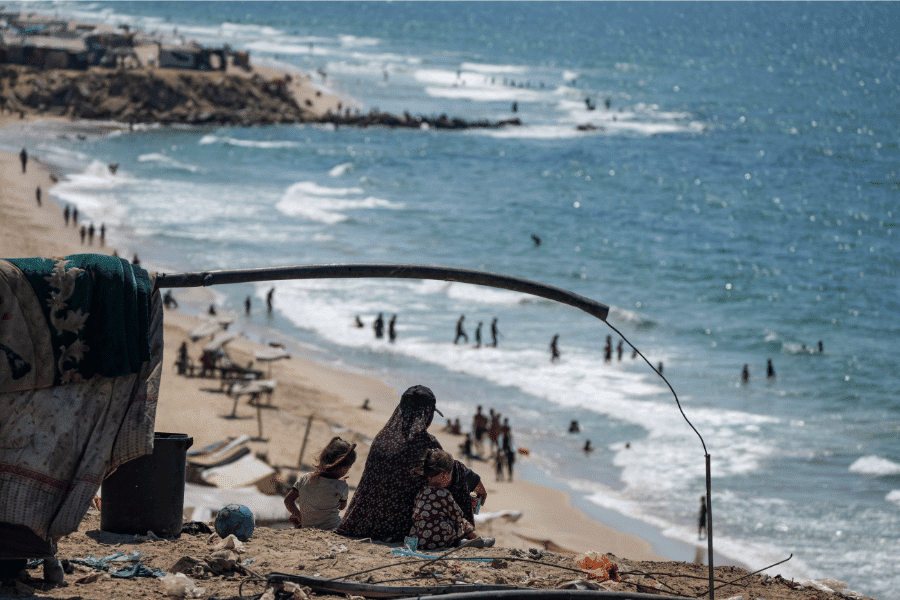
    At an event at Harvard university in February 2024, Trump’s son-in-law, Jared Kushner, mused about the untapped value of the Gaza strip and its beautiful beaches. “Gaza’s waterfront property, it could be very valuable, if people would focus on building up livelihoods,” Kushner said. 

    He did not specify which people would do the building but his father-in-law appears to be determined that it would not be the people now living there. 

    Who, then? It’s one of many questions yet to be answered in the era of Trump 2.0.


    Questions to consider:

    • What is one problem Trump will have if he wants the United States to take over Gaza?

    • Why do many Palestinians take Trump’s threat of relocation seriously?

    • What makes the idea that people have the right to return to homes their ancestors were force out of complicated?


    Source link

  • What nations have the strongest democracies?

    What nations have the strongest democracies?

    In my capacity as a globetrotting Asianist, I frequently encounter people from the United States who want to brag about democracy. They are often surprised to discover how healthy it is in many Asian countries.

    The United States as the world’s longest standing democracy stands in contrast with its great geopolitical rival, China, one of the world’s most authoritarian political regimes. The U.S. Constitution came into effect in 1789, and famously begins with “We the people…” affirming that a government must serve its citizens.

    What’s more, U.S. law declares the promotion and protection of democracy, human rights and fundamental freedoms to be “principal” and “fundamental” goals of U.S. foreign policy. 

    But over the years, politics has evolved across both sides of the Pacific Ocean. By the measure of democracy set by the Economist Intelligence Unit (EIU) the United States now falls short.

    The EIU considers it a “flawed democracy” and ranks it 29th out of the 167 jurisdictions surveyed. The demotion from “full democracy” to a “flawed democracy” came in 2016, the year Donald Trump was elected to his first term as president.

    The EIU assesses democracy worldwide based on five criteria: electoral process and pluralism, functioning of government, political participation, political culture and civil liberties. In other words, there is a lot more to democracy than simply having elections.  

    Measuring democracy by world standards

    In this context, the United States scores poorly for its political culture. “The U.S. score is weighed down by intense political and cultural polarisation,” its report noted. “Social cohesion and consensus have collapsed in recent years as disagreements over an expanding list of issues have fuelled the country’s ‘culture wars’.” 

    Fault lines have deepened in particular over LGBTQ+ rights, climate policy and reproductive health. 

    Polarisation has long compromised the functioning of government in the United States and the country’s score for this category is also particularly low.  

    “Pluralism and competing alternatives are essential for a functioning democracy, but differences of opinion in the U.S. have hardened into political sectarianism and almost permanent institutional gridlock,” the EIU reported.

    Freedom House, a think tank which analyses freedom across the world, has also observed that democratic institutions in the United States have eroded. It cites: “Rising political polarisation and extremism, partisan pressure on the electoral process, mistreatment and dysfunction in the criminal justice and immigration systems and growing disparities in wealth, economic opportunity and political influence.”

    Democracy in Asia and the Pacific

    Across the Pacific, we find five “full democracies”: Australia, Japan, South Korea, New Zealand and Taiwan, although the EIU’s report preceded the current political turmoil in South Korea. The region also has 10 “flawed democracies,” including Malaysia, India, The Philippines and Indonesia.

    Singapore, a country which is often criticised for its soft authoritarian political system, is also assessed to be a flawed democracy. But there can be little doubt about the government’s effectiveness in delivering services to its citizens. Singapore’s technocratic and managerial style governance have generated one of the world’s most prosperous and efficient economies. 

    Its GDP per capita, which is a way of measuring the economic wellbeing of a country, is $148,000 — among the very highest in the world, and ahead of the United States, Germany or Japan.  

    When it comes to economic freedom, Singapore leads the world according to the Heritage Foundation, while the United States ranks a mere 25th out of the 176 jurisdictions surveyed. Other Asia-Pacific economies which rank well are Taiwan (4th) New Zealand (6th), Australia (13th) and South Korea (14th). 

    Human capital has long been a key ingredient in Singapore’s economic success story. Singapore’s students topped the OECD’s 2022 Programme for Student Assessment which assessed the capabilities for 15-year-old students from 81 countries and economies for reading, science and maths. Indeed, Japan and South Korea are also ranked in the top 10 countries. The United States was ranked 34th with a similar score to Vietnam.

    Education is key to democracy.

    When it comes to universities, the United States is still the world leader, with the Massachusetts Institute of Technology, Harvard University, Princeton University, Stanford University, the California Institute of Technology, the University of California, Berkeley and Yale University all being ranked in the top 10 by Times Higher Education.  

    But Asian universities are now climbing the ladder, with China’s Tsinghua University now number 12, Peking University 13th, National University of Singapore 17th, the University of Tokyo 28th and Nanyang Technological University Singapore 30th.

    Asian citizens also enjoy much higher life expectancies than U.S. citizens or those of most other developed countries. Hong Kong tops the list of the world’s highest life expectancy at 86 years, with Japan, South Korea, Australia and Singapore all being in the top 10.  

    In comparison, the United States ranks just 48th in the world; Americans live on average some six years less than Hong Kongers. 

    And while Singapore and many other Asian countries are notorious for restrictions on personal freedoms, the trade-off is a safe society and an efficient economy. For example, Singapore is estimated by research group Numbeo to have a much better crime index and safety scale than the United States or France.  

    No monopoly on democratic values

    My American friends seem insistent that their open and free-wheeling society represents a unique source of creativity and innovation.  

    There is no doubt some truth in this perception — U.S. companies dominate Forbes list of the world’s most innovative companies. At the same time, companies from India, South Korea, Indonesia, Thailand, China and Japan are now climbing up the Forbes list.  

    And while Switzerland, Sweden and the United States might top the Global Innovation Index, Singapore, South Korea, China and Japan are not far behind.

    Comparing the quality of democracy and governance is a complex exercise, something that a short article like this cannot sufficiently tackle.  

    But it is clear, based on a number of factors, that many Asian countries are doing quite well in developing systems of democracy and governance. The United States faces many deep challenges in contrast and could draw lessons from its Asian friends across the ocean.


    Three questions to consider:

    1. What is one common measure of democracy?
    2. In what way does the United States fall short on measures of democratic strength?
    3. What do you think is the most important characteristic of a democracy?


    Source link

  • What a peaceful transition of power looks like

    What a peaceful transition of power looks like

    On 20 January, Donald Trump will take the office of president of the United States for the second time. It remains to be seen how this second term — interrupted by the four-year term of Joe Biden — will play itself out. 

    The first time around, President Barack Obama had left Trump a relatively stable nation and world. Trump’s term proved so disruptive, 41 of his 44 top aides, including his own vice president, refused to back him for a return to office. The next four years are likely to be a bumpy ride.

    Americans have long prided themselves on the peaceful transition of leadership.

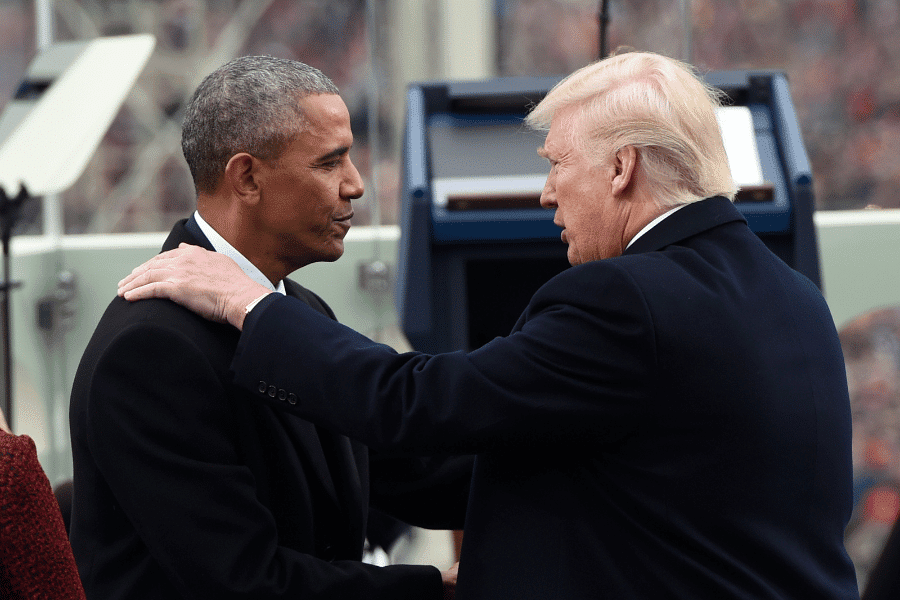
    Traditionally, on the morning of the transfer of power, the outgoing president meets with the incoming president for coffee at the White House, they share a ride to the Capitol, trade places and say goodbye. Trump scorned that tradition by flying home to his Mar-a-Lago club in the state of Florida a few hours before the inauguration.

    Before Trump, outgoing presidents tried to ease the transition by leaving notes offering advice and best wishes to their successors in the top drawer of the desk in the Oval Office. George H.W. Bush’s note to Bill Clinton, with whom he’d waged a bare-knuckles election campaign a few months earlier, was especially gracious. 

    “I wish you well. I wish your family well. Your success now is our country’s success. I am rooting hard for you,” Bush wrote.

    Peaceful transition signals a healthy democracy.

    The tradition of a peaceful transfer of power, which dates back to George Washington, crumbled four years ago when Trump, refusing to accept the voters’ rejection of his bid for another four years of office in the 2020 U.S. election, inspired an angry mob to storm the halls of Congress. Their aim was to block certification of Joe Biden’s election to succeed Trump, something that is generally considered a formality. The would-be insurrection failed.  

    Trump is now poised to again assume the highest office in the United States. To the surprise and disappointment of nearly half the country, he narrowly prevailed over Biden’s vice president, Kamala Harris, in last November’s bitterly contested presidential race. Bowing to tradition and a sense of decency, Harris conceded the election.

    “A fundamental principle of American democracy is that when we lose an election, we accept the results,” Harris said in her concession speech. “That principle, as much as any other, distinguishes democracy from monarchy or tyranny.” 

    The current transfer of power has proceeded peacefully and the inauguration itself is expected to follow the historic norm.

    While the transfer is usually thought to include just a few procedural events and the presidential oath-taking, it consists of much more and begins almost immediately after voters cast their ballots in the fall. 

    Handing over the reins of power

    If the election winner is new to the office of president, they and their team are briefed on issues and challenges they’ll face and undergo background checks to assure their avoidance of conflicts of interest and qualification to handle sensitive information.

    Normally, the focus of a transition is on appointments to top government positions and on policy changes. 

    With the Trump transition, both have been controversial. Some of the people he’s chosen for some of the most critical jobs are far out of the U.S. political mainstream. And some of the policies he says he intends to pursue — a massive nationwide roundup and deportation of illegal immigrants, the annexation of Greenland and a takeover of the Panama Canal to mention a few — are raising alarms in the United States and abroad.

    With the recent passing of former President Jimmy Carter, I can’t help remembering a time of sharp contrast to the one we are in now. 

    The 20th of January 1981 was one of the more memorable days in U.S. history. Carter had lost his bid for reelection in large part because he had been unable to secure the release of 53 U.S. diplomats and citizens who’d been held hostage in Iran for more than a year. He’d been up until 4 a.m. that day trying to sew up a deal for their release.

    It was almost done but still incomplete as he and incoming president Ronald Reagan rode up Pennsylvania Avenue together for the inaugural ceremony in a big black armored presidential limousine known as “The Beast.”

    Front row seat to a presidential transition

    I was one of the newsmen covering Carter that day. So I got a firsthand view of how the transfer of power unfolded. When we reached the U.S. Capitol, one of the television networks aired a report that the hostages had been freed. It was premature. 

    In a final indignity to Carter, the Iranians waited until minutes after Reagan was sworn in to let an Algerian aircraft chartered to bring the hostages home take off.

    What the new president said in his inaugural speech was all but lost in the celebrations over the end of the hostage ordeal. Once the formalities were over, Carter and his entourage — his wife Rosalynn, family members, top aides and a small group of reporters — walked to a small motorcade waiting outside the Capitol building. 

    In place of “The Beast” and a long trail of support vehicles was a small sedan and several vans. We slowly made our way to Andrews Air Force Base in the Maryland suburbs of Washington D.C. where a military transport plane waited to take Carter home to Georgia. 

    Although it was the same plane he’d flown on as president, its radio call sign was no longer “Air Force One.” Now it was identified as “Special Air Mission” followed by the aircraft’s tail number, “Twenty-Seven Thousand.” Reagan was president. Carter was history.

    Before turning south, the plane flew over the White House and dipped a wing. Many aboard were in tears. But the tears turned to laughter when a young Carter aide, Philip Wise, humorously borrowed a line from Dr. Martin Luther King Jr., the martyred U.S. civil rights leader. “Free at last, free at last. Thank God almighty, we are free at last,” Wise shouted.

    Witnessing the most powerful office in the world change hands was like living a real-life version of the storybook “Cinderella” and seeing the coach turn into a pumpkin.

    Having witnessed so many times in so many places where a change at the top was brought about by armed conflict or a military coup, this turnover from Carter to Reagan showed the world the power of a peaceful transition.


    Three questions to consider:

    1. Can you think of a recent changeover from one national leader to the next that wasn’t peaceful?
    2. If a new leader is appointed by the old one without an election, would you consider that a peaceful transition of power?
    3. If you were in an important leadership position, do you think you would find it difficult to step down?


    Source link