

Student retention remains one of the most pressing challenges in higher education. While institutions devote considerable resources to attracting new students, ensuring those students persist through to graduation is just as vital for institutional health and student success.
When students leave before completing their programs, colleges and universities lose tuition revenue and see diminished returns on their investments in recruitment and instruction. For students, the stakes are even higher: they often walk away without the credentials or skills they set out to earn, leaving personal and professional goals unfulfilled.
Retention, typically measured by the percentage of students who return to the same institution each year, is now a key performance indicator in higher education. It reflects how well a school supports and engages its students and can influence institutional rankings, funding, and public perception.
Recent data offers a mixed picture. In the United States, the national first-year retention rate for first-time students reached 69.5% in 2022, the highest level in nearly a decade and a slight increase over previous years. Still, that means nearly one in three students don’t return for a second year. In Canada, the pattern is comparable: 15–20% of university freshmen leave after their first year, with even higher attrition rates in colleges.
There is both urgency and opportunity here. This blog explores eight strategic, research-backed approaches that institutions can take to significantly improve student retention, strengthening institutional outcomes and ensuring more students reach the finish line.
Struggling with enrollment and retention?
Our Digital Marketing team can help you generate more leads!

What Causes Students to Leave?
Why is student retention important in higher education? Student retention reflects institutional effectiveness and student success. High retention means students are achieving their goals and institutions are providing strong support. Low retention signals issues like academic or financial struggle. It’s both an ethical responsibility and a financial imperative, reducing dropout rates and maximizing investment in recruitment and instruction.
Student retention is a complex challenge influenced by a range of academic, social, and personal factors. While no two students leave college for exactly the same reason, research has consistently identified several common barriers to persistence. Understanding these roadblocks is essential for developing interventions that work.
Financial Barriers
For many students, the cost of education is a deciding factor. Difficulty paying tuition, fees, and living expenses remains one of the most significant drivers of attrition—particularly for those from lower-income backgrounds. Even small outstanding balances can prevent students from registering for the next semester, pushing them to stop out or drop out entirely.
Lack of Engagement and Belonging
Students who feel disconnected from campus life are far less likely to persist. A strong sense of community, whether through clubs, student organizations, residence life, or peer support networks, has been shown to significantly improve retention. When students feel isolated or out of place, their motivation to stay enrolled often wanes.
Insufficient Academic Support
Academic struggles can quickly lead to frustration and withdrawal if students don’t receive timely help. Without access to tutoring, mentoring, academic advising, or remedial coursework, those who fall behind may begin to doubt their ability to succeed.
Campus Culture and Climate
The broader institutional culture also plays a pivotal role. A welcoming, inclusive environment supported by compassionate faculty and staff can boost student morale and engagement. In contrast, campuses that feel unwelcoming or where students sense a lack of support often see higher rates of attrition.
Life Outside the Classroom
External pressures, including mental health concerns, family responsibilities, work conflicts, or physical health issues, can interfere with students’ ability to continue their studies. When schools lack the flexibility or resources to help students manage these challenges, even the most motivated learners may be forced to leave.
The First-Year Experience
The transition into higher education is a make-or-break period. Students who struggle during their first year, due to academic shock, poor orientation programs, or difficulty making friends, are at greater risk of not returning for a second year. Supporting students during this critical period can make a long-term difference.
What Is the Difference Between Persistence and Retention?
Retention refers to students returning to the same institution, while persistence tracks students continuing in higher education, even if they transfer. A student may not be retained by one college but still persist by enrolling elsewhere. Persistence offers a broader view of student progress beyond a single campus.
What Are the Factors Affecting Student Retention?
Student retention is influenced by academics, finances, social belonging, mental health, and institutional climate. Academic unpreparedness, isolation, financial strain, and life challenges are leading causes of dropout. The first-year experience is especially critical. Successful retention strategies address multiple areas, supporting students academically, socially, and personally to help them stay enrolled.
With these contributing factors in mind, it’s clear that improving student retention requires a holistic, proactive approach. Fortunately, institutions have a range of strategies at their disposal. In the next section, we’ll explore eight of the most effective ways colleges and universities are addressing these issues, complete with real-world examples from Canada, the U.S., and beyond.
1. Personalize Communication and Support for Students
Today’s students are used to receiving customized experiences in almost every aspect of their lives, from social media feeds to online shopping recommendations. They now expect the same level of personalized communication from their college or university. When schools meet students with timely, tailored support, they show that they care, and that can make all the difference in whether a student stays or leaves.
This kind of proactive outreach can take several forms. Some institutions segment their automated email campaigns by group, such as first-years, international students, or those on academic probation, to deliver more relevant content and reminders. Others implement 24/7 text messaging systems or AI-powered chatbots that answer routine questions, offer words of encouragement, and send reminders about key deadlines. More advanced platforms go a step further, using predictive analytics to monitor signs of disengagement or academic trouble, alerting advisors to intervene before it’s too late.
These tools offer a concierge-style model of support: always on, always responsive. Students can get help after hours or over the weekend, when live staff may not be available, which helps reduce frustration and drop-off.
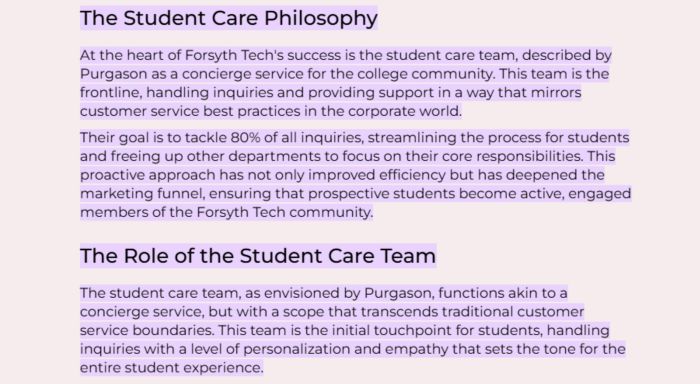
Example: Forsyth Technical Community College in the U.S. revamped its approach to student communication by adopting a “customer service” mindset, ensuring that both staff and automated systems responded quickly, kindly, and proactively to student needs. This overhaul included faster response times, friendly messaging, and a systematic effort to check in on students rather than waiting for problems to surface. The result? A 9% increase in student retention after implementing this new communication model.
Source: Enrollify
Putting It into Practice
To replicate this approach, consider implementing a CRM (Customer Relationship Management) or student engagement platform that allows advisors to monitor student status and send targeted messages. This could be as simple as congratulating a student on a strong midterm, or as critical as reaching out after several missed classes.
Even small gestures like a personalized check-in from a faculty member can make students feel they belong. When institutions shift from one-size-fits-all messaging to individualized outreach, they build a sense of care and connection that reinforces students’ decisions to stay enrolled.
2. Foster a Strong Sense of Community and Belonging
A strong sense of belonging is one of the most powerful predictors of student retention. When students feel connected, through friendships, mentors, and shared campus culture, they’re more likely to persist despite academic or personal challenges. Conversely, loneliness and disconnection are key drivers of attrition.
To support student connection, institutions should create structured opportunities for involvement: orientation, residence life, clubs, intramurals, volunteer work, and student leadership. Participation in these activities increases engagement and reinforces a sense of purpose. Social media can amplify this by highlighting student life and celebrating individual voices.
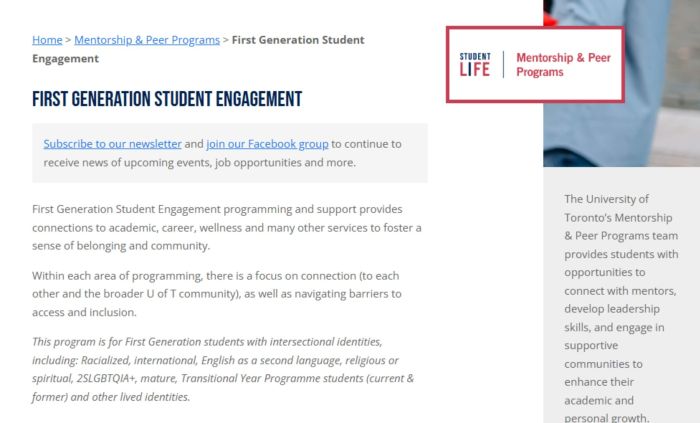
Example: The University of Toronto supports student retention by building community and belonging for underrepresented students through mentorship. In particular, U of T offers programming for first-generation students that connects them with mentors and resources across campus. This First Generation Student Engagement program focuses on helping students navigate barriers to access and inclusion by linking them to academic support, career guidance, wellness services, and peer networks. The goal is to ensure first-gen and other marginalized students feel a strong sense of belonging and are supported throughout their journey.
Source: University of Toronto
Ultimately, when students feel they matter to peers, faculty, and the institution, they’re more likely to stay. Belonging isn’t a bonus; it’s foundational to retention.
3. Offer Robust Academic Support and Advising
Academic challenges are a leading cause of student attrition. When students feel lost, overwhelmed, or unsupported, they’re more likely to withdraw. That’s why proactive academic support is one of the most effective student retention strategies.
Effective strategies include offering accessible tutoring (in-person and 24/7 online), writing assistance, and supplemental instruction for high-failure courses. Just as crucial is structured academic advising. When advisors monitor progress and flag early signs of struggle, like low grades or unbalanced course loads, they can intervene with timely solutions.
Institutions must also normalize help-seeking by actively promoting support services. Social media, email campaigns, and website content can encourage students to use academic resources without stigma.
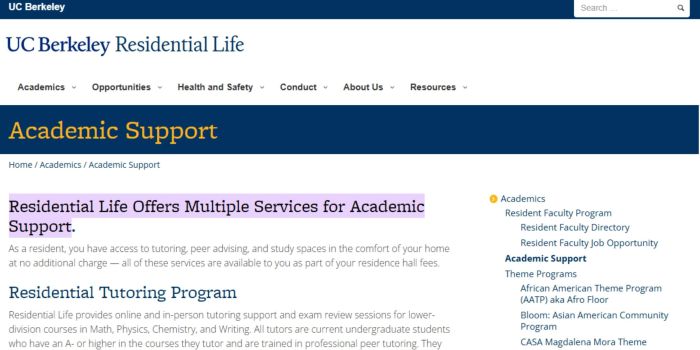
Example – UC Berkeley has built an ecosystem of academic support services combined with faculty mentorship to improve student success and retention. On the academic side, Berkeley provides extensive tutoring, peer advising, and dedicated study spaces in residence halls, free for students and readily accessible where they live.
Source: UC Berkeley
Early alert systems are another retention tool. By analyzing attendance and coursework in the first weeks, schools can identify at-risk students and reach out before they disengage.
The message is simple: when students know help is available and feel encouraged to use it, they’re more likely to succeed.
4. Provide Career Development Opportunities From Day One
Career uncertainty is a major driver of student attrition. To counter this, institutions must integrate career development early, ideally from the first year.
Career workshops, alumni networking, LinkedIn training, and highlighting the career potential of different majors help students connect academics to future employment. Research confirms that uncertainty about career direction strongly correlates with dropout risk.
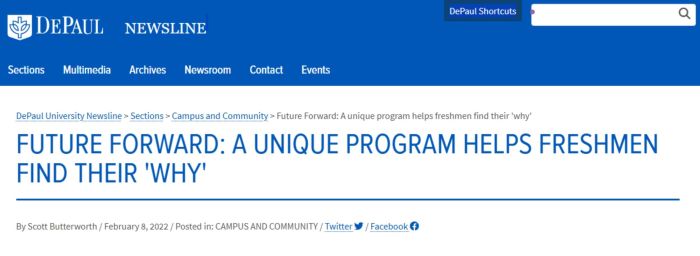
Example: DePaul University launched the Future Forward program, a year-long career incubator for first-year students, to bolster their sense of purpose and keep them enrolled. The idea is to help freshmen find their “why” for attending college by engaging them in self-discovery, skill-building, and career exploration starting in their first quarter. Future Forward combines online learning modules (on topics like growth mindset, design thinking, networking) with mentorship from older student peers and staff. By integrating career development into the first-year experience, DePaul addresses a major attrition risk: lack of direction. Many freshmen enter undecided about their field, which can sap motivation. Future Forward helps students clarify goals and see how their studies link to future careers, thereby increasing their commitment to persist.
Source: DePaul University
Mentorship is another effective strategy. Toronto Metropolitan University’s Tri-Mentoring Program connects upper-year students with professionals to support the transition to work.
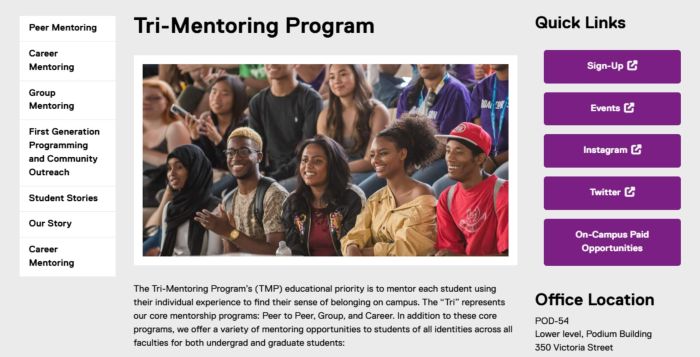
Example: Toronto Metropolitan University (TMU) – formerly Ryerson University – pioneered the Tri-Mentoring Program (TMP) to support student retention through layered mentorship and inclusion. The educational priority of TMP is “to mentor each student using their individual experience to find their sense of belonging on campus.”
Source: Toronto Metropolitan University
In practice, the “Tri” refers to three tiers of mentoring: Peer Mentoring (matching first-year students with trained upper-year mentors in the same program or with similar backgrounds), Group Mentoring (regular group sessions and community events for students from equity-deserving groups, facilitating peer networking and mutual support), and Career Mentoring (matching third-year or higher students with industry professionals, often alumni, for guidance as they prepare for careers).
Similarly, internships, job shadowing, and embedded career-planning courses give students confidence in their trajectory. Institutions can also integrate career goals into academic advising and marketing, using alumni stories to reinforce long-term value. When students see a clear path from degree to career, their motivation and likelihood of staying enrolled dramatically improve.
5. Leverage Data and Early Alerts to Identify At-Risk Students
Predictive analytics enables institutions to proactively support students showing signs of disengagement or academic risk. By monitoring GPA, class attendance, LMS activity, or even ID card swipes, colleges can detect early warning signs and act before a student drops out.
Many platforms offer dashboards and AI-driven messaging to flag risks and send targeted resources. When paired with advisor outreach, this approach becomes highly effective.
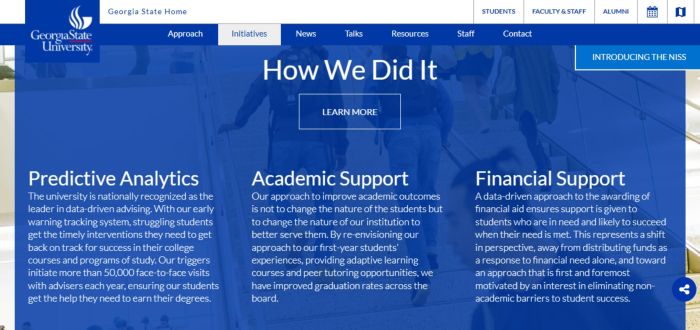
Example: Georgia State University’s Predictive Analytics: Georgia State tracks over 800 risk indicators, triggering alerts when students show signs of academic or financial distress. This system led to the Panther Retention Grant, which helps students with small outstanding balances, one of the biggest dropout triggers. Combined with advisor follow-ups, this strategy has significantly improved retention, especially for underrepresented students.
Source: Georgia State University
Even basic early alert systems can help. Faculty-initiated midterm warnings and proactive outreach have been shown to improve persistence by making students feel supported. Benchmarking tools like the IPEDS database can also guide institutions on where to improve.
In short, using data transforms retention from reactive to proactive. With the right tools and team, schools can identify challenges early, intervene meaningfully, and prevent students from slipping through the cracks.
6. Enhance Financial Aid Awareness and Support
Financial strain is a top reason students consider stopping out. To improve retention, institutions must ensure students are aware of, and able to access, funding options before small financial issues force them out.
Colleges should proactively promote scholarships, bursaries, emergency grants, and flexible payment plans. Hiring financial aid coaches or sending alerts to students with incomplete forms or unpaid balances can help prevent unnecessary dropouts. Georgia State University’s Panther Retention Grants exemplify this approach, offering micro-grants to students at risk of losing enrollment over modest fees. Over 10,000 students have benefited, with research showing faster graduations and lower debt loads as a result.
COVID-era aid also proved powerful: community colleges and HBCUs that used relief funds to clear student debts saw thousands stay enrolled. Additionally, financial literacy programs, like budgeting workshops or one-on-one counselling, equip students to manage limited resources wisely and reduce financial stress.
Example: Queen’s University has focused on reducing financial barriers and the misinformation around them by proactively promoting financial aid opportunities to students, using channels like social media, email, and digital signage. The goal is to ensure students know about and utilize available aid (scholarships, bursaries, grants), thereby decreasing the number who drop out due to financial strain. In practice, Queen’s Student Affairs runs ongoing Instagram awareness campaigns about bursary deadlines, loan applications, and financial wellness tips. Below we see Queen’s official Student Affairs Instagram has posts reminding students “it’s not too late to apply for the 2023–24 General Bursary for winter and summer terms” and to apply for government aid like OSAP (Ontario Student Assistance Program).

Source: Instagram
Bottom line: funding support and strong communication are critical tools in retaining financially vulnerable students.
7. Offer Flexible and Inclusive Learning Options
Modern college students are diverse; many are part-time, working, parenting, or have accessibility needs. Rigid policies and teaching methods can alienate these learners, making flexibility and inclusivity essential to retention.
Flexible scheduling options, like evening, weekend, online, or hybrid classes, help students balance education with life responsibilities. Allowing part-time enrollment, asynchronous learning, or summer online courses can reduce dropout risk, especially among non-traditional learners.
Credit for prior learning (e.g., PLAR in Canadian colleges) also supports older students by recognizing experience and accelerating time to completion. Inclusive learning environments ensure students of all abilities and styles thrive.
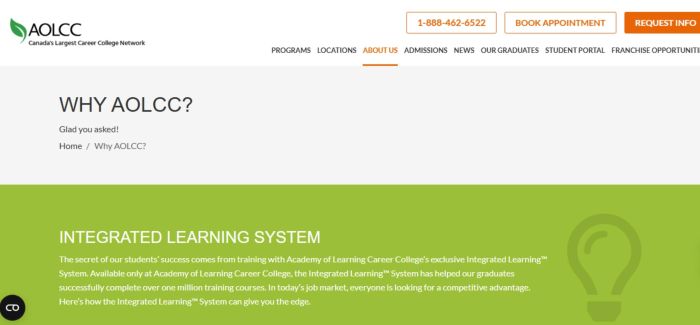
Example: Academy of Learning Career College (AOLCC) uses its proprietary Integrated Learning System (ILS) to maximize student retention by offering flexibility, personalization, and one-on-one support in the learning process. The ILS is a self-directed, multi-sensory training system that lets each student learn at their own pace on a schedule that suits them. A crucial feature since many AOLCC students are adult learners, working, or have family obligations.
Source: AOLCC
Support for online students is also critical. Strong virtual infrastructure; 24/7 tech help, online tutoring, and proactive instructor check-ins help remote learners feel connected. Some schools have engagement teams dedicated to online students.
Additionally, flexible academic policies such as compassionate leaves or grading options (used during the pandemic) can prevent student loss under strain. By adapting to student realities rather than enforcing a traditional mold, colleges show they care and turn potential stop-outs into future graduates.
8. Strengthen Faculty-Student Engagement and Mentorship
Faculty play a pivotal role in student retention through their daily interactions with students. Strong faculty-student engagement, including mentorship, accessibility, and supportive instruction, helps students feel seen, guided, and motivated to persist, especially when challenges arise.
Research shows that meaningful faculty contact improves students’ sense of integration and commitment to college. Gen Z students, in particular, value professors who demonstrate authenticity and personal interest. Without that, disengagement and dropout risk increase.
Colleges can enhance engagement through mentorship programs, pairing students with faculty advisors who offer academic, career, and personal guidance. Faculty training in inclusive teaching and student outreach empowers instructors to recognize and assist struggling students early. Simple actions, like checking in on absences, can make a big difference.
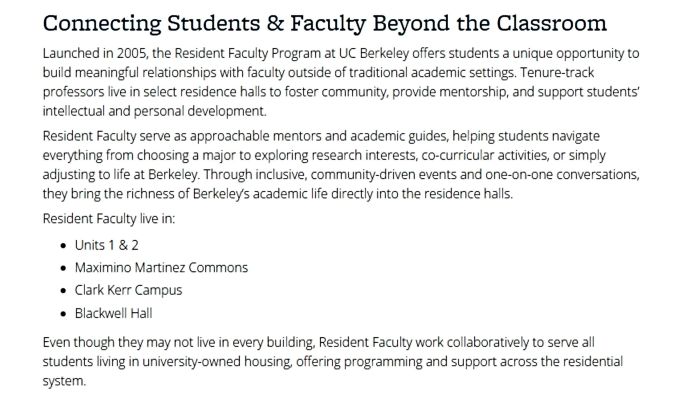
Example: Faculty as Mentors at Berkeley: As noted earlier, UC Berkeley emphasizes that its faculty are among the most accessible, citing programs like the Resident Faculty Program where professors live in residence halls to interact with students outside of class. They highlight that faculty often serve as mentors and even friends to students, and note statistics such as a 19:1 student-faculty ratio and many small classes. This environment of approachability contributes to student success and retention at Berkeley; students feel supported academically and personally by instructors of that caliber, which deepens their commitment to staying.
Source: UC Berkeley
Interactive teaching methods, such as discussions or group work, foster stronger connections. Faculty who use student names, encourage participation, and integrate feedback build rapport and community. Schools like UC Berkeley go further, housing faculty in residence halls and maintaining small class sizes to promote mentorship.
Faculty should be viewed as frontline retention agents. By celebrating teaching and providing tools for meaningful student relationships, institutions can greatly boost persistence through a caring, connected academic culture. In retention, relationships matter, and faculty are key.
Retention Starts With Intention and the Right Support
Improving student retention isn’t about a single silver bullet. As we’ve explored, it takes a coordinated, research-driven strategy, one that centers students at every point of their journey. Whether it’s delivering personalized outreach, fostering belonging, offering early career guidance, or using data to proactively intervene, the most successful institutions treat student retention as both a mission and a metric.
But knowing what works is only half the equation. Implementing these strategies at scale, consistently and effectively, requires the right tools, technology, and expertise. That’s where Higher Education Marketing can help.
At HEM, we equip colleges and universities with the CRM systems, marketing automation, and digital engagement strategies needed to nurture students from application to graduation. From crafting segmentation-based communications to building data-informed retention workflows, our solutions are built for institutions ready to prioritize persistence.
If you’re looking to boost your retention rates, build stronger student connections, and create a more responsive campus experience, explore how HEM’s services can support your goals. Together, we can help more students reach the finish line and help your institution thrive in the process.
Do you want to explore strategic and effective university student retention strategies?
Contact HEM for more information.
Struggling with enrollment and retention?
Our Digital Marketing team can help you generate more leads!
Frequently Asked Questions
Question: Why is student retention important in higher education?
Answer: Student retention reflects institutional effectiveness and student success. High retention means students are achieving their goals and institutions are providing strong support. Low retention signals issues like academic or financial struggle.
Question: What is the difference between persistence and retention?
Answer: Retention refers to students returning to the same institution, while persistence tracks students continuing in higher education, even if they transfer.
Question: What are the factors affecting student retention?
Answer: Student retention is influenced by academics, finances, social belonging, mental health, and institutional climate. Academic unpreparedness, isolation, financial strain, and life challenges are leading causes of dropout.