Jason E. Lane is one of the founders of the Cross-Border Education Research Team, which has been monitoring the transnational education (TNE) sector since 2010. According to its data, the United States is the top player – it has 97 overseas campuses. In comparison, Canada fields just eight.
Opening a satellite location is not for the faint of heart. TNE often requires significant financial investments, which can evaporate if the school fails to attract students or runs into political trouble in the host country.
“There are a range of challenges,” Lane said. “These include maintaining the quality of teaching and offering the types of educational experiences that are available on the main campus.”
Some top American schools, including Harvard and Princeton, have declined to pursue the TNE model, instead relying on partnerships to build their international profiles.
While America remains the leader, Australia, with a population of just 27 million people, punches far above its weight, with 24 satellite campuses.
“Australia has a long history of being internationally engaged,” Lane said. “They looked at their own slowly growing population base and decided to expand overseas. It’s part of a longer term strategy of internationalisation.”
There are a range of challenges… These include maintaining the quality of teaching and offering the types of educational experiences that are available on the main campus Jason E. Lane, Cross-Border Research Team
Recently, some universities have backtracked on their commitment to foreign campuses. Last year, Texas A&M University announced that it was closing its 20-year-old campus in Qatar to focus on its core work in the United States. Board chair Bill Mahomes said the school “did not necessarily need a campus infrastructure 8,000 miles away to support education and research collaboration”.
In August, the University of Calgary shuttered its Qatar site after providing training to local learners there for many years. It provided no reason for the decision and did not respond to a request for more information.
For David Robinson, the executive director of the Canadian Association of University Teachers, the answer is clear: “In the end, as Calgary’s experience shows, I think branch campuses have largely turned out to be a failed business model.”
Robinson said the association had “for many years” raised concerns about institutions setting up campuses in parts of the world where academic freedom might not be upheld or respected in the same way as it would in Canada.
Academic freedom worries are also prevalent in the US, Lane told The PIE News. “A lot of US campuses have gotten into establishing foreign campuses while wanting guarantees of academic freedom. But those countries may have different definitions of academic freedom.”
Overseas campuses serve a wide range of students. In some cases, especially in the Middle East, satellites enrol only local or regional learners.
Queen’s University in Kingston, Ontario, has had a site at a castle in England for 30 years; many of the students attending are on a semester or year abroad from the Canadian campus.
Others leverage their overseas satellites to attract attendees from across the globe. Webster University, based in St. Louis, Missouri, has operations in several locations, including Geneva.
It offers a seamless transition between taking courses there and at the US campus. The Swiss school draws students from many countries; diverse classes prepare students to work with people from a wide variety of backgrounds.
New campuses are now reflecting shifts in the global geopolitical alignment, Lane says. After Hungary tilted to the right and fell into the Russia-China orbit, Fudan University of Shanghai opened a satellite in that country.
With its growing population and improving economic development, Africa is increasingly viewed as a potential market. Currently, universities from the United States, United Kingdom, France and Netherlands have satellites on the African continent.
Stakeholders are worried about the Early Decision (ED) system – where students apply early to their first-choice institution and, if admitted, are required to commit to attending. Although admission is not guaranteed, the common practice is that students must ‘lock in’ once accepted and withdraw all other applications, even in different countries.
But with rising visa denials in Donald Trump’s United States, fears are rising that international students could be at an unfair disadvantage.
Education consultant Elisabeth Marksteiner, pointed out that even if a student applies for a visa as soon as they have been accepted by an institution, they could be denied in late August, with the semester due to start in early September
“Suddenly the student has no live applications anywhere in the entire world. There is no plan B – the whole point about ED is it takes out all insurance, effectively,” she told The PIE News.
“There are some countries where we know it can be 11 months to get a visa appointment… there is no way that you are going to make it.”
Advice from the National Association for College Admission Counseling (NACAC) on ED was updated in August to make it more specific and transparent for parents and school counselors alike.
“The updates aim to ensure applicants, parents/guardians, and counselors fully understand the implications of an ED commitment under various possible scenarios,” it said.
The practice has become a popular way for institutions to gauge their enrolment numbers ahead of time. And according to Marksteiner, enforcing binding ED agreements is a low-stakes approach for elite institutions – even if it means some international students won’t be able to take up their place.
“The people who are most using ED are the ones at the top of the pile. They will always be able to fill their class,” she said.
The people who are most using ED are the ones at the top of the pile. They will always be able to fill their class Elisabeth Marksteiner, education consultant
ED offers often use complicated wording and “legalese” that, according to Marksteiner, can leave parents and high schoolers feeling uneasy.
“It seems to me that we have lost effectively our moral compass in holding ED agreements in the way that we do,” she explained.
In September, Tulane made headlines after it slapped Colorado Academy with a one-year ban on ED applications after one of its students allegedly pulled out of an offer.
However, some institutions are changing their policies to make sure than non-US applicants do not have to withdraw their applications from other parts of the world.
Visa delays have been a persistent problem for US higher education institutions under the second Trump administration – part of an “escalating cascade” of attacks on international students, according to an address by Presidents’ Alliance CEO Miriam Feldblum at this week’s PIE Live North America conference in Chicago.
Since taking office for the second time, President Trump has imposed a travel ban on 19 countries, enforced an immigration crackdown that has affected thousands of international students and suspended visa interviews across the world for several weeks – a move whose effects are still being felt.
Nick began his career with Nottingham Trent University in the UK working in international student recruitment, before going on to a wide range of leadership and consultancy roles in the private sector. He joined The PIE in 2021 and is a key commentator on the current trends in the global higher education industry. He curates content for our PIE Live conferences and is the co-host of the Tales from the Departure Lounge podcast. Get in touch with Nick at [email protected]
As Thu Thu Htet, “T”, was nearing graduation at her high school in Burma, she knew she wanted to go abroad to study engineering. She wanted to study at the Rochester Institute of Technology in New York State, but didn’t want to spend tens of thousands of dollars a year in tuition, since international students don’t qualify for federal aid.
Instead, she decided to start her higher education journey at Monroe Community College, also in Rochester, where tuition is cheaper. T, now in her second semester, has made friends with dozens of other international students at MCC, who have helped her feel less lonely being so far away from family.
“There are times where I don’t feel like I fit in. Or I feel alone sometimes. The most important thing is the friends that you have,” she said.
International student enrolments have surged at US community colleges ever since the pandemic, including this fall. As community colleges host more international students, administrators are looking for ways to make them feel welcome on campuses where most students are local commuters.
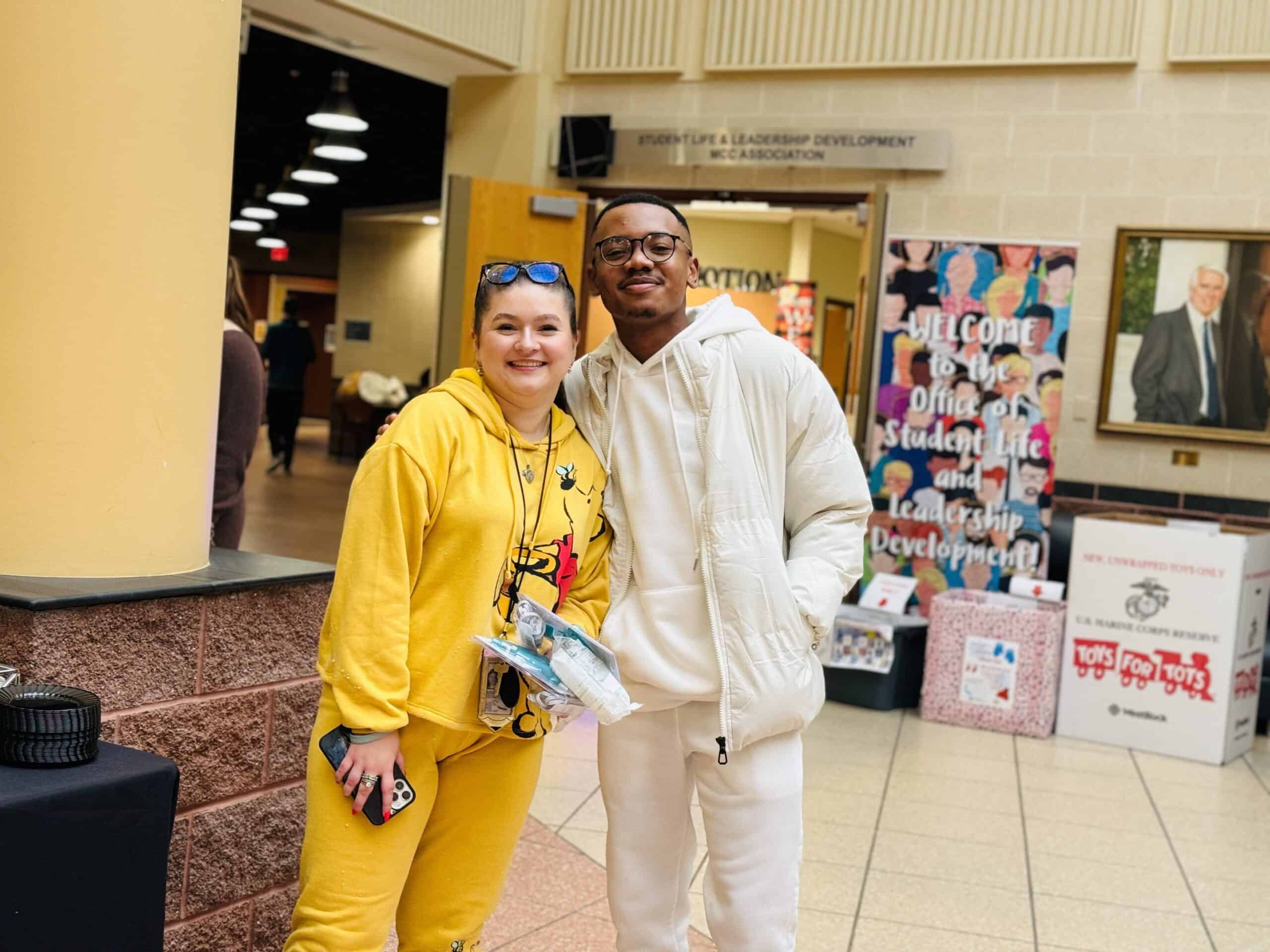
One way international students at MCC can find support is through campus life. T serves as the president of the Global Union – a student-run club for international students, immigrant students, and anyone interested in learning about other cultures. Through her role, she greets new students, helps them to overcome challenges, and organises events to help them showcase their cultures.
“Sometimes, you need to be around people that have the same feeling as yours. When we are in the same club with immigrants, refugees, or other international students, we feel like we fit in with each other,” T said.
An unexpected increase
Because of President Trump’s policies, analysts predicted a 15% drop in total international students at American colleges and universities this fall. Experts warned that the Trump administration’s near month-long pause on visa interviews, travel bans, and war against many of the nation’s most prestigious universities would harm enrolment.
Instead, this fall’s international student enrolment across all degree programs, including OPT, grew by 0.8%, according to the Student and Exchange Visitor Information System (SEVIS) data that the Department of Homeland Security publishes.
Community colleges have helped to move the needle. For associate degree programs, international student enrolment increased by 9.1%, with community colleges welcoming nearly 5,500 more students than last year. Meanwhile, enrolment shrunk slightly for master’s programs and hardly changed for bachelor’s programs.
Rather than choosing not to study in the US this fall, it seems like students are choosing different kinds of degrees or schools. That’s according to Chris Glass, director of Boston College’s higher education program, who recently analysed the latest SEVIS data.
“If we’re to take this data at face value, the system is far more resilient than the tumultuous headlines would suggest,” Glass previously told The PIE News .
Based on his analysis, the over 9% growth of international students at community colleges may not be a fluke. Glass argues that international students gravitate toward schools with less political spotlight, more affordable tuition, and access to opportunities after graduation. Community colleges check all of those boxes.
MCC is hosting more international students now than before the pandemic. This fall, the campus’ international student body grew by 35%, hosting 120 students from over 30 countries.
MCC’s international recruiting efforts for soccer, baseball, and other sports has helped to draw students from across continents, said Carly O’Keefe, MCC’s assistant director of global education and international services. The current men’s and women’s soccer team roster has a combined 34 international students.
In addition, unlike many other community colleges, MCC has dorms. For T, attending a college with on-campus dorms was critical, since she had no family or friends in Rochester to live with.
O’Keefe said international students at MCC bring ideas and culture from across the globe, enriching a campus where most students are local. Some local students – limited by jobs, financial constraints, or family obligations – have never traveled overseas.
“They’re able to make friendships with people from other countries that they maybe would have never connected with otherwise,” she said.
Finding a community through campus life
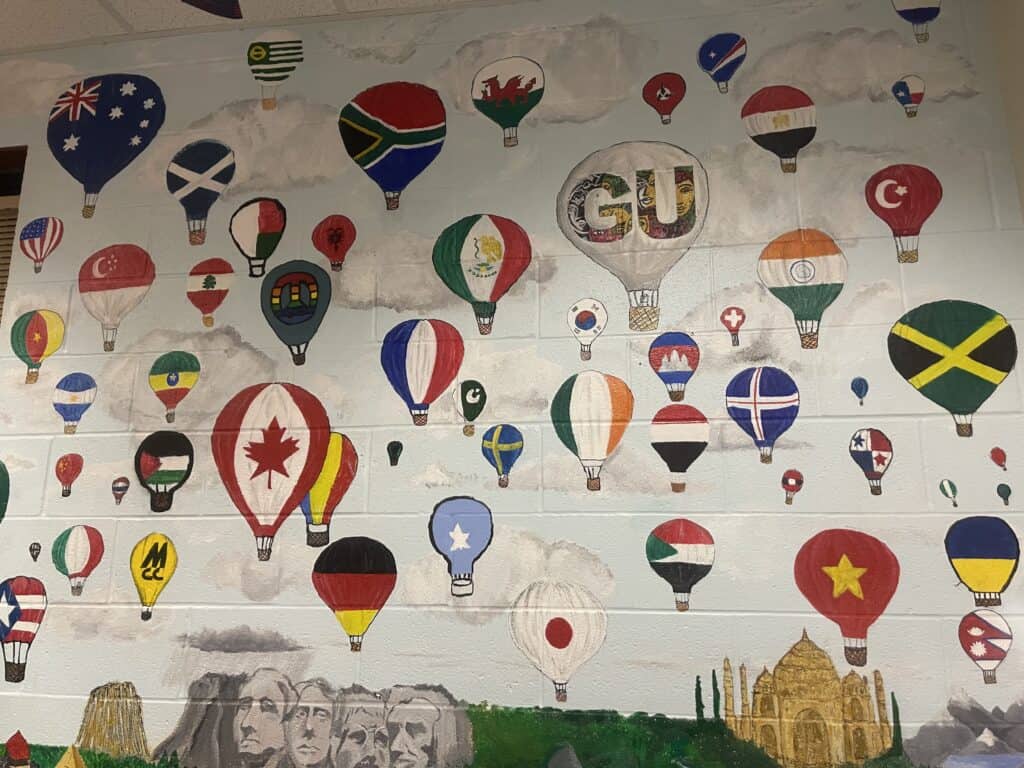
The wall of the Global Union office is decorated with dozens of paintings of hot air balloons containing flags, created by students to represent their countries. Colourful cloth flags and souvenirs from across the world fill the room.
“At the time when I saw the Korean flag, I was so proud,” said Onyu Cha, a first-semester international student from South Korea studying nursing.
Hot air balloon paintings at Global Union office. Photo: MCC Global Union
Onyu made friends with other Koreans through campus life and through her sister, who also lives in Rochester. Recently, she and other Korean students went to her sister’s house to cook food for the holiday of Chuseok, a mid-autumn harvest festival often referred to as Korean Thanksgiving.
Through her role as the vice-president of the Global Union, Onyu has got to learn about the cultures of other students. Currently, the club is planning for an event to celebrate holidays from across the world, all on one day. That’s similar to last year’s Global Fusion Festival – an event in the campus atrium to celebrate the cultures of all MCC students. It featured African drummers, Ukrainian dancers, and food from across the globe.
Judichael Razafintsalama – a student from Madagascar who graduated from MCC last May – said serving as the Global Union president allowed him to support his fellow international students.
Having international students on campus at a community college can be really enriching to a local community
Dr. Melissa Whatley, William & Mary
The summer before starting his first year at MCC, Razafintsalama landed in Rochester around 2am. When he got to his dorm, he realised he had no food. The vending machines were empty, the campus’ food services were closed, and he hadn’t set up rideshare on his phone. To get groceries, he walked two hours to a Walmart and back, carrying four bags while jet lagged.
Now, international students come together to help the Office of Global Education provide packages of canned food, granola bars and utensils for incoming international students.
“We even helped two of our students move into their apartment and make sure that everything is settled after going through what I went through,” Razafintsalama said.
Razafintsalama said he’s had the chance to teach others at MCC about his country and his culture. Most students he encountered had never met anyone from Madagascar, the island nation off the southeastern coast of Africa.
“They usually attach it to the cartoon movie,” he said. “It’s great because I can see that people are interested in my country and to see what it actually is like.”
Supporting international students’ social and housing needs is critical to making them feel welcome, said Dr. Melissa Whatley, an assistant professor of higher education at William & Mary University. Her research group recently released a report on international education at community colleges, finding that 82% hosted international students.
Whatley hopes that these colleges are providing international students with campus life opportunities and, if they don’t have dorms, are helping students to find housing.
“Having international students on campus at a community college can be really enriching to a local community, to the extent that the community is equipped to welcome them,” she said.
Concerns over travel ban
Currently, the US hosts over 1.2 million international students or recent graduates, according to SEVIS data. The dataset doesn’t distinguish between students and graduates working temporarily through Optional Practical Training (OPT). More in-depth statistics will become available once the Institute of International Education publishes its annual report later in November.
However, because of President Trump’s travel ban, some prospective international students have been restricted from studying in the US. That includes Burmese students who didn’t secure a visa before June 9.
MCC has seen an uptick in Burmese students ever since a civil war broke out in the country, interrupting higher education for many students. The war began in 2021 when military forces toppled the country’s democratically elected government. Last spring, MCC still hosted more students from Burma than from any other country, O’Keefe said.
Now, Burma is among the 12 countries included in Trump’s travel ban, impacting all immigrant and non-immigrant visas. Seven more countries are under a partial travel ban that impacts international student visas.
As for international enrolments at MCC? “We’ll see how the trends change over the next few semesters. I would be surprised to see such a significant level of continued growth but we can hope things at least stay stable,” O’Keefe said in an email.
The takeaway from this fall’s enrolment data is that students’ perceptions take a long time to change, said Gerardo Blanco, academic director of the Centre for International Higher Education at Boston College. He previously told The PIE that the 0.8% international student increase revealed in SEVIS records came as a surprise, but that doesn’t mean there won’t be a decline in coming years.
“I hope the takeaway message is not that the US is invincible, in that even hostile policies towards international students cannot change perceptions,” he said.
A record number of American students are applying to UK universities, with applications up nearly 14% over last year. The shift reflects something deeper than academic preference. It’s a response to uncertainty – political, cultural, and institutional – within the US higher education system.
Students are assessing the climate as carefully as the curriculum, and for many, overseas options are starting to look more stable, more supportive, and more aligned with their values.
For years, US institutions have concentrated on drawing international students into their classrooms and research labs. These efforts have been crucial to advancing STEM research, sustaining graduate-level enrolment, and feeding innovation pipelines. That trend continues, but the story is evolving.
An outbound shift is now underway, with a growing number of American students pursuing degrees abroad. They’re no longer just participating in short-term exchanges or postgraduate fellowships, they’re committing to full undergraduate and master’s programs in other countries.
This change matters – and it signals both a loss of tuition revenue and a weakening of domestic confidence in US higher education itself.
Global competitors are moving decisively
Universities in the UK, Canada, Australia, Germany, and the Netherlands have responded to this moment with strategy and urgency. They’ve expanded international recruitment offices, developed targeted campaigns for US students, and aligned their degree programs with global employment pathways.
Tuition transparency, faster visa timelines, and the option to work post-graduation are all part of a larger value proposition. These countries have positioned themselves as predictable, inclusive, and serious about talent retention.
When American students earn degrees abroad, they begin forming professional relationships, research collaborations, and employment ties in other countries
The messaging stands in sharp contrast to the environment many students perceive at home in the US, where they’re regrettably familiar with ongoing threats to federal research funding, campus free speech tensions, and anti-immigrant rhetoric. Legislative actions in some states, such as restrictions on DEI programs or faculty tenure, further complicate the picture for students who see higher education as a place of openness and critical inquiry.
Even where the academic offering remains strong, the broader social climate is giving students pause. Many now fear that attending university in the US could come with limitations on expression, uncertainty around institutional support, or even diminished international credibility. These concerns are pushing more prospective students, both international and domestic, to weigh their options with increasing care.
The landscape is becoming borderless
Higher education is no longer a domestically bounded experience. Today’s students are growing up in a digital-first world where comparison is constant and information is immediate. They can browse course catalogs from universities in five countries before lunch.
They’re watching lectures on TikTok from professors in London, Melbourne, and Berlin. They’re discussing housing, scholarships, and career prospects with peers on Reddit, Discord, and WhatsApp. The idea of applying to college abroad no longer feels radical or risky – it feels strategic.
At the same time, the financial argument for international study has grown stronger. In the UK and parts of Europe, undergraduate degrees often take three years instead of four. Tuition is fixed, predictable, and, in some cases, lower than the out-of-state rates at US public universities.
Students can begin building global networks immediately, with exposure to cross-cultural collaboration built into the experience. That combination of efficiency, affordability, and international orientation is hard to ignore.
Consequences will extend beyond enrollment trends
If this shift continues, the implications go well beyond enrolment figures. When American students earn degrees abroad, they begin forming professional relationships, research collaborations, and employment ties in other countries. That international experience can strengthen global literacy, which is good in theory, but it may also weaken long-term institutional connections to the US – particularly if graduates choose to live, work, and innovate elsewhere.
This becomes especially relevant in sectors where talent mobility drives economic growth. If a critical mass of globally minded US students pursue AI, climate tech, public health, or diplomacy degrees abroad and then launch their careers overseas, the domestic pipeline for advanced skills and leadership becomes harder to sustain. These are early signs of a broader trend, and we should treat them with urgency.
The same applies to the soft power of US education. For decades, American universities have served as platforms for international exchange, not only bringing foreign students in, but equipping domestic students to become global ambassadors. If that dynamic begins to fade, so does the country’s influence in shaping global norms around research, ethics, and innovation.
Prioritising stability and trust
Reversing this trend will require more than competitive admissions packages. US institutions – and the policymakers who shape their environment – must work to restore trust. That means safeguarding academic freedom, ensuring transparent financial support structures, and publicly affirming the value of international engagement.
Students are listening closely. They are attuned to leadership choices and the broader societal signals surrounding higher education. If they sense instability or retreat, they will continue to look abroad.
Universities also need to communicate more effectively with prospective students about their long-term value. That includes articulating what makes a US education distinctive, and doing so without leaning solely on prestige or nostalgia. There must be a renewed emphasis on civic purpose, global relevance, and practical opportunity. The next generation is looking for clarity, meaning, and alignment between their educational investment and the world they hope to shape.
The US can lead again, if it chooses to
The United States still possesses unmatched institutional capacity in research, innovation, and cultural reach. But influence is not a static asset. It depends on the willingness to adapt and lead with principle. The current wave of outbound student mobility should not be dismissed as an anomaly. It’s a signal. How US higher education responds – at both the institutional and national levels – will determine whether it remains a magnet for talent or becomes just one option among many.
International students are placing getting a quality education over policy developments – with the UK keeping its spot as the preferred desitnation for 80% of nearly 1,000 pathway students surveyed by NCUK.
A new report covering the survey’s findings analyses data from 921 students across 88 countries studying an international foundation year or Master’s preparatino programs, looking at their motivations for studying in top destinations, as well as other preferences.
It found that Australia was the second most popular choice, with 4% of students surveyed marking it as their preference, followed by Canada, the US, New Zealand and Ireland at 3%. Meanwhile, the most coveted programs are business and computer science, as the preferred subjects for just under a third (31%) of respondents.
Students’ continued preference for the UK comes in spite of a slew of policy changes affecting international students. In May, the government unveiled its long-awaited immigration white paper, setting out the way Keir Starmer’s Labour party intends to tackle migration over the coming years.
It included plans to reduce the Graduate Route by six months to a total of 18 months, as well as new compliance metrics that higher education institutions must in order to continue recrutiing international students. Tougher Basic Compliance Assessment (BCA) requirements are set to take effect this month, meaning that universities will face penalties if more than 5% of their students’ visas are rejected, down from 10%.
And last September, the UK increased international student maintenance requirements for the first time since 2020. Under the new rules, students coming to London must show evidence of having £1,483 per month, while studying outside of London need proof that they have at least £1,136 per month.
But NCUK’s chief marketing officer Andy Howells pointed out that students are looking beyond arbitrary political decision when choosing their preferred study destination, thinking instead about their long-term prospects.
“This research demonstrates that international students are sophisticated decision-makers who look beyond political headlines to focus on educational quality and career outcomes,” he said. “While policy changes generate significant discussion in our sector, students are primarily motivated by the academic excellence and opportunities that institutions can provide.”
The survey found that, of a sample size of 646 students, just 12% who said they were considering studying in the UK said that financial requiremwnr increases would stop them from applying to UK instiutuons.
However, the popularity of other major study destinations were ore impacted by political headwinds, the survey found.
Over a third (36%) interested in applying the Australian institutions said that proposed international enrolment caps would affect their decision, while 26% of those looking to study in Canada said they would no longer apply to Canadian institutions over policy changes – particularly changes to the country’s postgraduate work permit scheme.
And almost four in 10 (38%) considering the US said Donald Trump’s second presidency would negatively impact their choice to study in America.
For the majority of students surveyed (69.9%), education quality is the primary driver leading them to seek study abroad opportunities, closely followed by enhanced career development opportunities (56.4%) and gaining new knowledge (55.2%).
The survey also shone a light on students’ post-graduation plans. Half of respondents said they wanted to stay in their study destination, with 31% planning to work and 19% looking at further studies.
This research demonstrates that international students are sophisticated decision-makers who look beyond political headlines to focus on educational quality and career outcomes Andy Howells, NCUK
But a growing number of students plan to return to their hoe country immediately after graduating, with 23% saying they want to do this – up from 18% in last year’s survey.
Immigration has continued to be a hot topic in the UK as the anti-immigration Reform party grows in popularity.
Just earlier this week, Home Secretary Yvette Cooper drew ire from the international education sector after announcing that the government will be tougher on overseas students who make asylum claims that “lack merit” as a means to stay in the country after their visa expires.
Some 10,000 students have already been texted and emailed warning them that they will not be allowed to stay in the UK if they have no legal right to remain and explicitly warning them against making bogus asylum claims.
Picture this: you’ve crossed oceans, packed your suitcase, a dictionary (or maybe just Google Translate), your dreams, and a relentless drive to succeed in a US higher education setting. You’ve landed in the United States, ready for college life. But before you can even start worrying about your academic experience or how to navigate campus life and groceries you’re hit with a more personal challenge: “Will I sound awkward if I say this out loud?”
For many non-native English speakers, this is not just a fleeting thought. It’s a daily reality known as foreign language anxiety – “the feeling of tension and apprehension specifically associated with second language contexts, including speaking, listening, and learning.” It can limit and negatively impact a student’s ability to communicate, threaten self-confidence, and, over time, affect academic performance.
Why it matters more than we think
Foreign language anxiety is more than a minor inconvenience. International students must maintain full-time enrolment to keep their visa status. If foreign language anxiety leads to missed classes, delayed assignments, or low grades, the consequences can be severe — including losing that status and returning home without a degree.
Even though incoming students meet minimum language proficiency requirements, many have had little practice using English in real-life spontaneous situations. Passing a standardised test is one thing; responding to a professor’s question in front of a class of native speakers is another. This gap can lead to self-consciousness, fear, and avoidance behaviours that hinder academic and social success.
The three faces of language anxiety
Research shows that foreign language anxiety often takes three forms:
Fear of negative evaluation – Worrying about being judged for language mistakes, whether by professors or peers. Some students are comfortable in class but avoid informal conversations. Others avoid eye contact entirely to escape being called on.
Communication apprehension – Feeling uneasy about speaking in a foreign language, even for students who were confident communicators in their home country. Concerns about sounding less capable than native speakers can lead to silence in classroom discussions.
Test anxiety – Stress about organising and expressing ideas under time pressure in a second language. This is not just about knowing the material; it’s about performing under linguistic and cognitive strain.
These anxieties can actively block learning. When students focus on how they sound rather than what is being said, their ability to process information suffers.
The role of faculty and administrators
Faculty and administrators may underestimate how much their approach affects international students’ confidence. Being corrected for grammar in front of others is one of the most anxiety-provoking experiences students report. In contrast, giving students time to answer, offering feedback privately, and creating an environment where mistakes are treated as part of learning can significantly reduce foreign language anxiety.
When capable, motivated students are held back by the effects of foreign language anxiety, institutions risk losing both talent and the global perspectives these students offer
University administrators can also make a difference through peer mentoring programs, conversation workshops, and targeted support services. However, these resources are only effective if students are aware of them and feel comfortable using them.
Why this isn’t just a student problem
It’s easy to think of foreign language anxiety as a personal obstacle each student must overcome, but it has larger implications. International students bring global perspectives, enrich classroom discussions, and contribute to campus culture.
Their success is both a moral responsibility and an investment in the overall quality and strength of higher education. When capable, motivated students are held back by the effects of foreign language anxiety, institutions risk losing both talent and the global perspectives these students offer. Taking steps to reduce its impact benefits the entire academic community.
Moving forward
Addressing foreign language anxiety is not about lowering academic standards. It’s about giving students a fair chance to meet them by reducing unnecessary barriers. For students, this means practicing conversation in low anxiety provoking settings, seeking clarification when needed, and accepting that mistakes are a natural part of language learning. For faculty and staff, it means being intentional about communication, offering encouragement, and ensuring that resources are accessible and culturally responsive.
Foreign language anxiety is a shared challenge that can undermine even the most motivated and capable students. Often, the greatest hurdle of studying abroad is not mastering complex coursework, adjusting to life far from home, or navigating cultural differences – it is the moment a student must raise their hand, speak in a language that is not their own, and hope that their words are understood as intended.
Beyond academics, foreign language anxiety can affect the kinds of social and academic engagement that are essential for building leadership skills. Group work, class discussions, and participation in student organisations often require students to communicate ideas clearly, respond to feedback, and collaborate across cultures – the same skills needed to lead effectively in professional environments.
However, literature on foreign language anxiety suggests that students may hesitate to take on visible roles or avoid speaking in group settings altogether, limiting their ability to practice these skills. When students withdraw from such opportunities, they lose more than a chance to participate – they miss experiences that can shape confidence, decision-making, and the ability to work with diverse teams.
Understanding and addressing the impact of foreign language anxiety, therefore, is not only relevant for academic success but also for preparing graduates to step into leadership roles in a global context.
This year marks the 75th anniversary of the Fulbright Program in Korea, one of the oldest and most robust binational educational exchanges in the world.
Coinciding with this milestone is the 30th anniversary of South Korea’s landmark 5.31 Education Reform – a policy blueprint that sought to transform the nation’s education system into a more open and globally competitive ecosystem.
The Fulbright legacy in Korea illustrates how long-term bilateral cooperation has scaffolded national education strategies and fostered intellectual diplomacy across generations.
The strategic alliance between the Republic of Korea and the United States has been underpinned by an enduring educational partnership. Education has always been more than a soft-power tool in this relationship; it has served as a central pillar for shared values, talent development, policy learning, and institutional co-evolution.
At a time when the Indo-Pacific region is undergoing profound geopolitical, technological, and demographic shifts, reaffirming the educational ties between Korea and the US is a strategic imperative.
Fulbright Korea: peacebuilding through knowledge
Established through a 1950 agreement, Korea became one of the first countries to join the Fulbright Program, though the Korean War delayed its launch until 1960. Revised agreements in 1963 and 1972 created the Korean-American Educational Commission (KAEC) and introduced joint funding, making Korea one of 49 nations to co-finance the programme with the US.
Since then, Korea has often matched or exceeded US contributions. Today, KAEC awards over 200 grants annually to Korean and American participants, supporting a global network of Fulbright scholars and more than 7,600 Korean alumni across diverse fields.
Fulbright Korea exemplifies educational diplomacy at its best. Graduate fellowships support future policymakers and scientists, while English teaching assistants serve across Korea’s provinces, enhancing not just language acquisition but also cross-cultural understanding.
These initiatives echo the lifelong learning ambitions embedded in Korea’s broader educational reforms, showing how international exchange and domestic innovation can reinforce each other. These long-standing programs have strengthened Korea’s education system while fostering mutual understanding, helping to build enduring people-to-people ties that support bilateral cooperation.
Fulbright Korea exemplifies educational diplomacy at its best
The US also supports student mobility and academic advising in Korea through EducationUSA, housed at KAEC, which offers Korean students up-to-date information on American higher education. Korea continues to rank among the top sending countries of international students to the US, with over 43,000 enrolled in 2023/24, making it the third-largest sender.
While the Ministry of Education’s 2024 data reports 3,179 American students enrolled in Korean higher education, US study abroad figures suggest that nearly twice as many participate in programmes based in Korea. The US has also been recognised as a key partner in Korea’s Study Korea 300K Project, which seeks to host 300,000 international students by 2027.
Institutional transformation and globalisation
The 5.31 Education Reform, declared in 1995 amidst the waves of globalisation, aimed to modernise Korea’s education system through two core principles: globalisation and informatisation.
These pillars reshaped how universities operate, allowing for greater curricular flexibility, the introduction of credit banking and recognition of prior learning, and the rapid adoption of digital tools. Competitive government initiatives like Brain Korea 21 and, later, the University Restructuring Plan incentivised research output and global benchmarking.
Despite uneven implementation, the reform not only accelerated the internationalisation of Korean higher education but also deepened its ties with US institutions. By 2008/09, over 75,000 Korean students were enrolled in US higher education, placing Korea among the top sending countries globally.
Given its relatively small population, this figure represented the highest per capita rate of US-bound students in the world. At the same time, Korea became an increasingly attractive destination for American students, with study abroad numbers growing substantially over the past two decades, growing from 2,062 in 2008/09 to 5,909 in 2022/23.
Even before the 5.31 reform, US higher education institutions played a pivotal role. In the decades following the Korean War, American graduate programs served as critical training grounds for a generation of Korean scholars. These individuals returned not as passive recipients or brokers of foreign models but as active knowledge creators who adapted global ideas to local contexts, built research infrastructure, and mentored emerging academics.
This process of intellectual circulation laid the groundwork for Korea’s ascent in global university rankings and research productivity. Foundational initiatives such as the Minnesota Project and the US-supported establishment of KAIST in 1971 were emblematic of this transformation.
Transnational education and role of program providers
Transnational education has added new depth to Korea-US educational co-operation. The Incheon Global Campus, which hosts the Korean branches of five US universities, enables local students to earn US degrees without leaving the country.
These institutions bring American accreditation standards and pedagogical approaches into the Korean context, serving as important centres for cross-cultural learning and academic collaboration. Increasingly, they also function as supportive platforms for study abroad, facilitating intercultural engagement. Modest but meaningful forms of faculty and scholarly exchange further enrich these settings.
Not-for-profit organisations such as IES Abroad have also become indispensable facilitators of educational exchange. Marking its 75th anniversary in 2025 as well, IES Abroad shares a parallel legacy with Fulbright Korea in advancing international education.
Its recently established Seoul Center has already hosted over 220 US students, exemplifying the growing role of study abroad programme providers in fostering engagement with Korean society. By offering for-credit academic programmes, cultural and language immersion, and hands-on learning opportunities, these providers play a crucial role in sustaining the depth and accessibility of bilateral educational exchange.
Toward mutuality and innovation
Together, these developments have yielded significant accomplishments: a thriving academic pipeline, robust knowledge circulation, improved global rankings for Korean institutions, and a steady increase in intercultural literacy among students from both countries. Korean graduates with US degrees now occupy leadership roles in government, academia, and business. American students return with deeper cultural understanding, with many pursuing careers in diplomacy, education, or East Asia-focused industries.
However, challenges remain. Some observers have raised concerns about the asymmetrical flow of talent, particularly during earlier decades when “brain drain” seemed more plausible than circulation.
Others caution against over-Americanisation in curricula and institutional culture. Korea’s demographic decline and the rising cost of US education now pose additional obstacles to sustained exchange. National policy shifts, ideological realignments, and increasing public scrutiny of foreign involvement in higher education further complicate the outlook.
Reimagining educational diplomacy
The pressing challenges highlight the importance of rearticulating a shared vision for the future, particularly as the direction of bilateral commitments established under previous administrations continues to evolve.
Mutual investment in scholarship funds, stronger collaboration among diverse stakeholders within the broader international education field, more accessible hybrid learning models, and enhanced joint governance of transnational campuses can all help to future-proof the Korea-US educational partnership.
In 2025, as we commemorate 75 years of Fulbright Korea and IES Abroad, and reflect on 30 years since Korea’s 5.31 reform, it becomes evident that international exchange and domestic transformation are not separate trajectories but mutually reinforcing forces. Korea-US educational cooperation has evolved from aid-driven assistance to a platform for peer-to-peer growth and innovation.
If approached strategically, the next chapter of this relationship can not only address pressing policy challenges but also reimagine the purpose of education in a world increasingly defined by brittleness, anxiety, nonlinearity, and incomprehensibility.
“This is a critical juncture – and it’s essential you live the values Harvard teaches and not make a deal with the Trump administration that cedes the university’s autonomy in unconstitutional or unlawful ways,” states the August 1 letter.
Signed by 15,068 alumni, faculty, researchers, staff and other supporters, the letter criticises settlements made by Columbia and Brown, which signatories warn “represent a dangerous capitulation that risks eroding the foundation of American higher education”.
“As Harvard rightly argued in court in its lawsuit, the unconstitutional demands being made by this administration represent a blatant encroachment on academic freedom and university autonomy,” it continues.
Last month, Columbia became the first institution to settle with Trump over allegations of antisemitism on campus, paying the administration $221m in return for settling various civil rights and employment claims and restoring $400m in terminated funding.
Soon after, Brown University followed suit, reaching its own deal with the administration over similar disputes about DEI admissions practices and access to student data.
Harvard, having the largest endowment of any global university, has been the only one to challenge the White House in the courts, though recent rumours have suggested a $500m deal between Harvard and the government could be in the making.
The letter’s message is clear: “Do not give in.”
It calls on university leadership to uphold Harvard’s independence and reject political interference and punitive action, ensuring that admissions hiring, employment and disciplinary processes do not treat student and staff differently based on their political views.
The signatories recommend the establishment of a structure for the university to directly engage with the Harvard community about policy changes impacting them, urging Harvard to use its financial resources to “protect and honour” their livelihoods and education.
“Protect students, faculty, researchers and staff, especially those with international status, from any intrusions of privacy, unwarranted immigration action, and attacks on their constitutionally protected rights and freedoms,” it continues.
At this moment of national reckoning, Harvard must demonstrate that our values, integrity, and freedom are not for sale
Harvard alumni
The letter warns of the “chilling effect” that a settlement would have on the Harvard community and beyond.
Holding the line is critical for campuses across the US, for those that benefit from the research and scholarship of the university, and for the “foundational role that independent higher education plays in our democracy,” it argues.
“At this moment of national reckoning, Harvard must demonstrate that our values, integrity, and freedom are not for sale.”
Since mid-April, the Trump administration has launched multiple attacks on Harvard for allegedly failing to root out antisemitism on campus and failing to hand over international students’ records, among other accusations.
The university is fighting the government on multiple fronts in the courts, including defending its right to enrol international students, which the administration has repeatedly tried to revoke.
The university has publicly stood by its 7,000 international students, who make up over 27% of Harvard’s student body and come from nearly 150 different countries.
Amid broader attacks on higher education and severe visa challenges, colleges across the country are bracing for a major decline in international students this fall, with “conservative” estimates of a potential 30-40% decline.
“Who am I? I’m one of the people that can see the future well before it’s created.”
Meet Taylor Shead, the athlete-turned tech entrepreneur who is on a mission to change the way students access and absorb education in the 21st century.
A former college basketball scholar, her original goal was to train as a reconstructive plastic surgeon alongside her sporting career.
But like many students, while sports held her attention, she found STEM subjects inaccessible due to the dense language of mathematical equations and chemical symbols.
“Frankly, I was a little annoyed,” Shead explains. “I was in the best private schools in Texas, and I thought: if I’m in this privileged position where I’m going to college level and I don’t feel prepared, then what about everybody else from all kinds of backgrounds?
“As an athlete, you have tutors [to help you succeed academically] and so I had a moment when I realised that the education system isn’t working.”
The statistics back up her hypothesis. In the US, approximately 86% of kids graduate from high school, but only about 37% of them graduate from college. Only 66% of US students reach Level 2 proficiency in mathematics and fewer than 30% of high school students feel prepared to pursue a postsecondary pathway.
“It was like, this isn’t a problem that’s black or white, it’s not male or female, it’s not rich or poor. This is a problem that impacts everybody,” says Shead.
“There’s a problem with the current system, the way schooling and college prepares you for each next step, even when it’s the best of the best – so what’s the solution?”
Building on a three-year stint as an Apple mentor and volunteering in inner city schools in Dallas and Fort Worth, Shead took the leap and founded Stemuli in 2016 as a platform to support kids in STEM subjects.
Shortly after, the pandemic hit and the world pivoted to online learning. The moment catapulted the business forward and Shead became only the 94th black woman in the history of the world to raise over a million dollars in venture capital.
The company raised over USD$10 million overall and won the prestigious United Nations AI for good competition in 2024.
The Stemuli mission is to gamify the curriculum to engage a generation of learners who have grown up on video games. This isn’t online learning for the sake of it; the aim is to create learning opportunities in the co-creative worlds that exist in games.
“There are 3.3 billion gamers around the world playing right now,” Shead explains. “Yet all the kids I meet in classrooms are bored. Games like Roblox and Minecraft have set the example of STEM learning crossing over to where kids want to be.”
Stemuli is currently beta testing the third iteration of the platform, a one-world gaming environment where there are infinite possibilities to explore and learn.
Only 66% of US students reach Level 2 proficiency in math and fewer than 30% of high school students feel prepared to pursue a postsecondary pathway
“We used to produce a lot of work simulation games but now nobody knows what the future jobs are going to be. Technology is moving so fast,” explains Shead.
“So we’ve created a much more entrepreneurial gaming experience where, together with an AI prompt assistant, you can test and learn all sorts of ideas in a safe environment. We’ve created a game for entrepreneurship.”
Shead is keen to stress that there is a misconception that entrepreneurship means that you must aspire to be the boss of your own company. She equates entrepreneurship to a curiosity skillset that builds problem solving and resilience in a fast-changing world.
“We are a Walton family funded organisation and they partnered with us at Stemuli to scale stimuli across 20 states in the heartland in order to make sure people in rural America have access to AI literacy skills through our video game,” she says.
“I am obsessed about the idea of a little boy or girl sitting in a rural, remote town that’s seeing with their own eyes the problems that need to be solved in their community. They’re going to create the best technology because they understand the problem, whereas somebody on the coast or Silicon Valley, they’re not even thinking about it.”
It is also is significant that Shead has achieved so much success in the edtech field, despite coming largely from an athletic background rather than a tech education.
“Most people think athletes are dumb, but maybe we’re stubborn and hardworking and relentless enough to be the ones that actually can endure the pressure to make something like this happen, right?
“I like to flip the narrative on its head to say it might take an athlete to go up against established systems and to believe that, in a world that is so structured, that education can actually change for the better. They don’t call athletes game-changers for nothing.”
There will be many people who feel the status quo in education should be preserved, but the great promise of technology is the potential for companies like Stemuli to open access up for the majority rather than the privileged few.
“It’s going to be hard, but there are people like me out there who feel inspired by this mission and that means it’s the best time to be alive” says Shead.
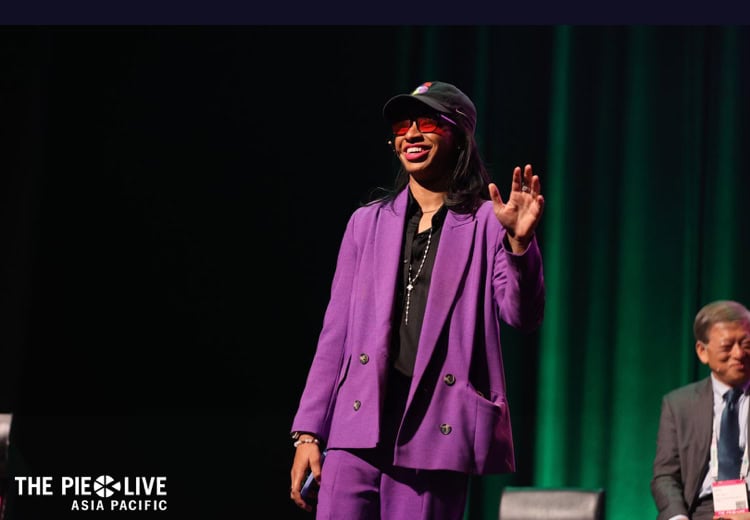
Having seen Shead in action at The PIE Live Asia Pacific, we are inclined to believe her.
Talor Shead was interviewed by The PIE’s Nicholas Cuthbert and took part in our conference debate – Will AI improve or damage higher education?at The PIE Live Asia Pacific.Watch Taylor explain why it’s the best time to be alive below.