Category: US government

  • MIT rejects Trump’s preferential funding offer

    MIT rejects Trump’s preferential funding offer

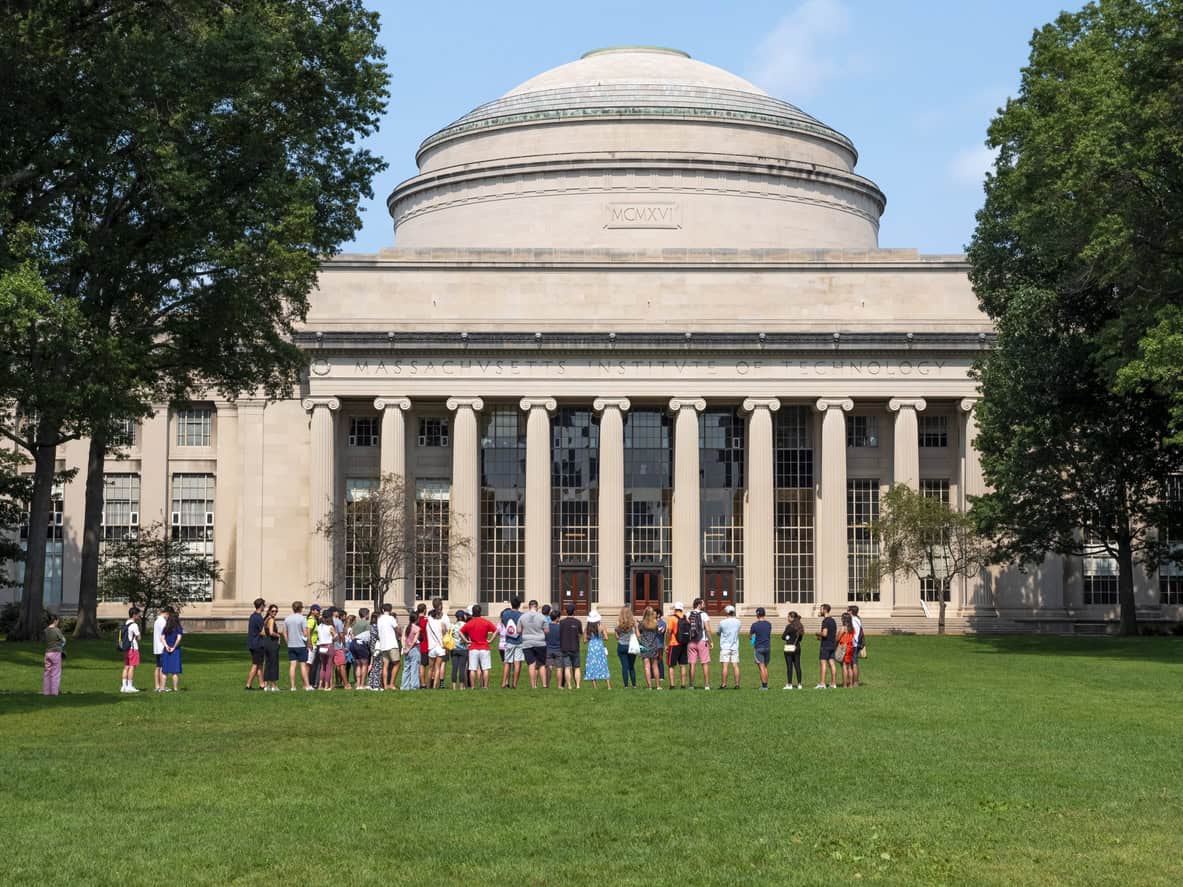
    MIT president Saly Kornbluth said the agreement went against freedom of expression and the university’s independence, and that it was “fundamentally” inconsistent with MIT’s “core belief that scientific funding should be based on scientific merit alone”. 

    Last week, the Trump administration sent a compact to nine US colleges laying out sweeping demands including capping international enrolments, banning the use of race or sex in hiring and freezing tuition for five years. In return, schools that signed on would receive competitive advantages from the government.  

    In a letter to US education secretary Linda McMahon, Kornbluth said: “We must hear facts and opinions we don’t like – and engage respectfully with those whom we disagree.” 

    Under the terms of the compact, signatories must abolish university units that “punish” or “belittle” conservative ideas, and all college employees “must abstain in their official capacity from actions or speech related to politics”.  

    If adopted by the institutions, it would set a 15% cap on international undergraduate students including a 5% limit for any given country. It also stipulates that universities must hand over international student information, including discipline records, upon the request of the government.  

    MIT is the first of the nine institutions to officially respond to the administration before the October 20 deadline. Stakeholders said the White House is likely aiming to expand the compact if institutions engage.  

    The day after it was sent, the University of Texas swiftly announced it was “honoured” to be a part of Trump’s proposal, though the remaining institutions were notably quiet on the agreement, which has received strong pushback from faculty leadership and administrators. 

    Faculty senates at the University of Virginia and the University of Arizona voted to oppose the compact with overwhelming majorities, while Dartmouth College president said in a statement she was “deeply committed” to the university’s values and would always defend its “fierce independence”.  

    In Tennessee, academic and workers unions have called on Vanderbilt University to reject what they called “Trump’s Fascist Compact”, with a petition from Graduate Workers United garnering almost 1,000 signatures as of October 8.  

    Elsewhere, California governor Gavin Newsom quickly responded saying: “California universities that bend to the will of Donald Trump and sign this insane ‘compact’ will lose billions in state funding – IMMEDIATELY.”

    “California will not bankroll schools that sign away academic freedom,” he wrote on October 2, sending a clear sign to the University of Southern California (USC), the only Californian college to receive the proposal so far.  

    Alongside MIT, the compact demands were thrust upon: Vanderbilt University, Dartmouth College, the University of Pennsylvania, the University of Southern California, the University of Texas, the University of Arizona, Brown University and the University of Virginia. 

    California universities that bend to the will of Donald Trump and sign this insane ‘compact’ will lose billions in state funding – IMMEDIATELY

    Gavin Newsom, Governor of California

    While it remains unclear how the recipients were chosen, stakeholders have noted that the list includes high prestige universities as well as public flagships, likely to generate maximum sectoral and media impact.  

    “The compact forces all nine institutions to reveal their positions; it sets the narrative for media reporting and public discussion of the points in the compact; and starts a public sorting of university responses to these policy priorities,” Boston College professor Chris Glass told The PIE News. 

    Whether MIT’s response emboldens the universities to reject the proposal remains to be seen, but even without the signatures, “the compact creates lasting ripples, as universities, accreditors, and state officials recalibrate for future policy fights,” said Glass.  

    The compact’s international student cap is yet another clear sign of Trump’s anti-immigration stance, though experts have noted that none of the nine universities have undergraduate international student populations that exceed the 15% limit.  

    While U Penn and USC are both close to the threshold with international undergraduate populations around the 14% mark, the universities of Virginia, Arizona and Texas at Austin all enrol less than 6% international undergraduates, according to analysis by Soka University of America professor Ryan Allen. 

    As such, Glass speculated the cap was intended to signal to universities beyond the nine, especially those above the 15% threshold, that they may face future scrutiny. 

    “Just by introducing the cap, the administration sets the terms of debate and sends a strong message – to its base, to all universities in the US, and to prospective international students,” he said.

    As per Allen’s analysis, just 14 of the top 114 US universities have undergraduate international populations that exceed the proposed limit.

    If it is implemented, the impact of the cap by itself might not be significant, “but this is part of an overall message that the US does not want international students … It’s tough to grapple with in the classroom because our students are feeling that message,” said Allen. 

    Typically, international students make up a larger proportion of postgraduate than undergraduate enrolments, though universities rarely disaggregate the two in overall student counts.  

    And yet: “Undergrad admissions are much more contentious and political than grad school. So, the idea that international students are somehow taking seats from Americans is much more salient in that space,” said Allen.  
    Source link

  • Govt. data error sparks doubt over US international enrolments

    Govt. data error sparks doubt over US international enrolments

    The reliability of federal datasets is under scrutiny after an error was identified on the Student and Exchange Visitor Information System (SEVIS) website that appeared to show stagnating international student numbers from August 2024 to the present.  

    The error, brought to The PIE News’s attention by EnglishUSA, casts doubt on recent headlines and media reports about declining international student enrolments in the US, with SEVIS data appearing to show an enrolment decline of 11% between March 2024 and March 2025.  

    “Starting in August 2024, the data appears to be duplicated month after month, with flatlined totals for students on F and M visas. These figures show virtually no fluctuation during a period when natural enrolment shifts would be expected,” explained EnglishUSA executive director, Cheryl Delk-Le Good.  

    “This irregularity comes at a time of heightened concern within the field, particularly as educators and administrators manage the fallout from widespread SEVIS terminations and the resulting confusion around visa status for international students,” added Delk-Le Good.  

    The US Department of Homeland Security (DHS), which runs SEVIS, was alerted to the error on April 14 and said it was “working to resolve the issue”.  

    As of April 25, the dataset has not been updated, and DHS has not responded to The PIE’s request for comment.  

    US International Trade Administration. Market Diversification Tool for International Education. 2023. Retrieved: April 11, 2025.

    Notably, the inaccuracies begin in August 2024 and span both US administrations, suggesting “a computer glitch rather than an intentional act,” said Mark Algren – interim director of the Applied English Center at the University of Kansas and a contributor to EnglishUSA’s data initiatives – who noticed the anomaly.  

    However, Algren added that he had “no idea why someone didn’t catch it,” with the considerable timeframe of the glitch likely to hamper confidence in federal datasets that are relied on by institutions and that ensure transparency in the system.  

    Total F&M visa holders in the US: 

    Month  Total F&M  Change from previous month 
    August 24   1,091,134  -59,822 
    September 24   1,091,137  +3 
    October 24  1,091,141  +4 
    November 24  1,091,144  +3 
    January 25  1,091,142  -2 
    February 25  1,091,155  +13 
    March 25  1,091,161  +11 
    Source: SEVIS

    It is important to note that each monthly dataset recorded by SEVIS is a snapshot of a given day that month, and the drop recorded in August 2024 (which is considered the last accurate figure) could have been taken before many students arrived for the fall academic term.  

    For this reason, “it’s hard to say that an August report is representative of the following fall term,” said Algren, with the true figures yet to be seen.  

    At the start of the 2024/25 academic year, IIE’s fall snapshot reported a 3% rise in international student enrolment, building on sustained growth over the last three years. 

    Despite recent uncertainty in the US caused by the current administration’s recent attacks on higher education, the period of SEVIS’ misreporting represents an earlier timeframe before the impact of Trump’s policies came into effect.  

    Source link

  • Trump threatens Harvard’s ability to host int’l students 

    Trump threatens Harvard’s ability to host int’l students 

    US homeland security secretary Kristi Noem has written a “scathing letter” to Harvard University, demanding it submits records of international students’ “illegal and violent activities” by April 30, or face losing its eligibility to enrol student visa holders.

    In Noem’s April 16 statement, she accused Harvard’s “spineless leadership” of “bending the knee to antisemitism” and “threatening national security”. 

    “Harvard’s position as a top institution of higher learning is a distant memory,” she added, cancelling two department of homeland security (DHS) grants worth USD $2.7 million on the basis that the university was “unfit to be entrusted with taxpayer dollars”.  

    DHS is threatening to strip Harvard of its Exchange Visitor Program (SEVP) certification, which allows colleges and universities to issue forms to admitted international students to use in their US visa applications. 

    The punitive measures are the latest in a dispute between Trump and the country’s oldest university, which saw USD $2.2bn in federal funding frozen after it rebuffed government demands, including reporting on international students and ending DEI policies. 

    What’s more, President Trump threatened on April 15 to revoke Harvard’s tax-exempt status over its “radical ideology”. 

    The University will not surrender its independence or relinquish its constitutional rights

    Alan Garber, Harvard University

    Last year, Harvard hosted 6,793 international students, totalling over 27% of the entire student body.  

    Across the country, more than a million international students attend US colleges every year, contributing $50bn to the economy, as previously reported by The PIE News. 

    The DHS letter – seen by the Harvard Crimson student newspaper – accused Harvard of creating a “hostile learning environment” for Jewish students and reminded the university it was “a privilege to have foreign students attend Harvard University, not a guarantee”.  

    Refusing to submit to the government’s previous demands, Harvard president Alan Garber said the university was committed to tackling antisemitism but maintained it would not “surrender its independence or relinquish its constitutional rights.”  

    “[The administration’s prescription] violates Harvard’s First Amendment rights and exceeds the statutory limits of the government’s authority,” Garber wrote in a message to the community.  

    In light of the recent escalation over SEVP certification, the university has maintained its position that it will not cede to government control, according to the Washington Post.  

    Alongside enhanced scrutiny of teaching, the government is requiring that Harvard reports on international students “supportive of terrorism or antisemitism” and those “hostile to American values”, ban all clubs supporting Palestine, and ban mask-wearing on campus, among other measures.  

    The directives largely stem from two of Trump’s early Executive Orders relating to “protecting the US from terrorism” and “combatting antisemitism”, which have led to over 1,320 international student visa revocations as of April 16, according to Inside Higher Ed.  

    Of this figure, 12 Harvard students and alumni have had their visas cancelled, though the university was not made aware of the rationale behind the revocations.  

    Student visas have been revoked for a variety of reasons, including some minor traffic infractions. Most of the high-profile cases involve students that participated in pro-Palestinian activism.  

    Challenges to the Trump administration have gained traction in recent weeks, with 19 states and 86 institutions supporting a legal challenge against the government’s revocation of student visas, led by the American Association of University Professors (AAUP).  

    Former President Obama, a Harvard alum, expressed his support for the university in a post on X, describing the government’s funding freeze an “unlawful and ham-handed attempt to stifle academic freedom”, urging other institutions to “follow suit”.

    Meanwhile, hundreds of Yale faculty members have published a letter asking its leadership to legally challenge “unlawful demands that threaten academic freedom and university self-governance”.

    Source link

  • Watch DOGE layoffs in real-time with Layoffs.fyi

    Watch DOGE layoffs in real-time with Layoffs.fyi

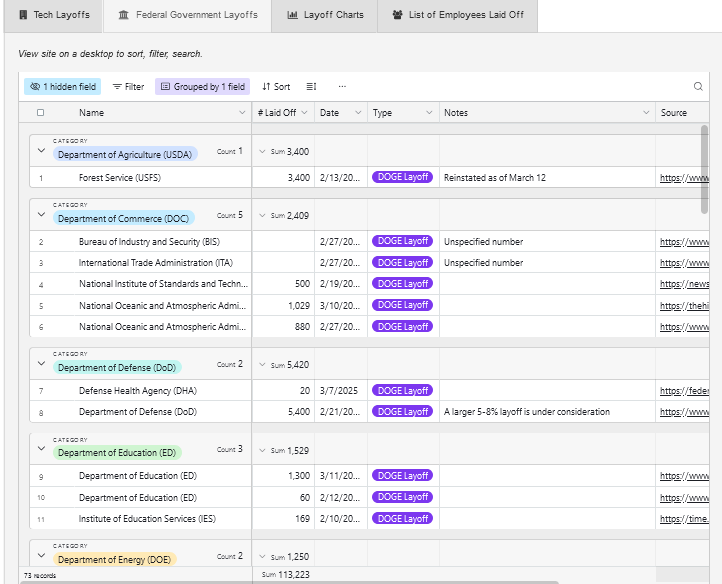
    Layoffs.fyi is keeping track of US federal government layoffs. The website was originally created to track tech layoffs and has been featured in the Wall Street Journal, Bloomberg, and NY Times. 

    Source link