Category: US

  • the view from NAFSA 2025

    the view from NAFSA 2025

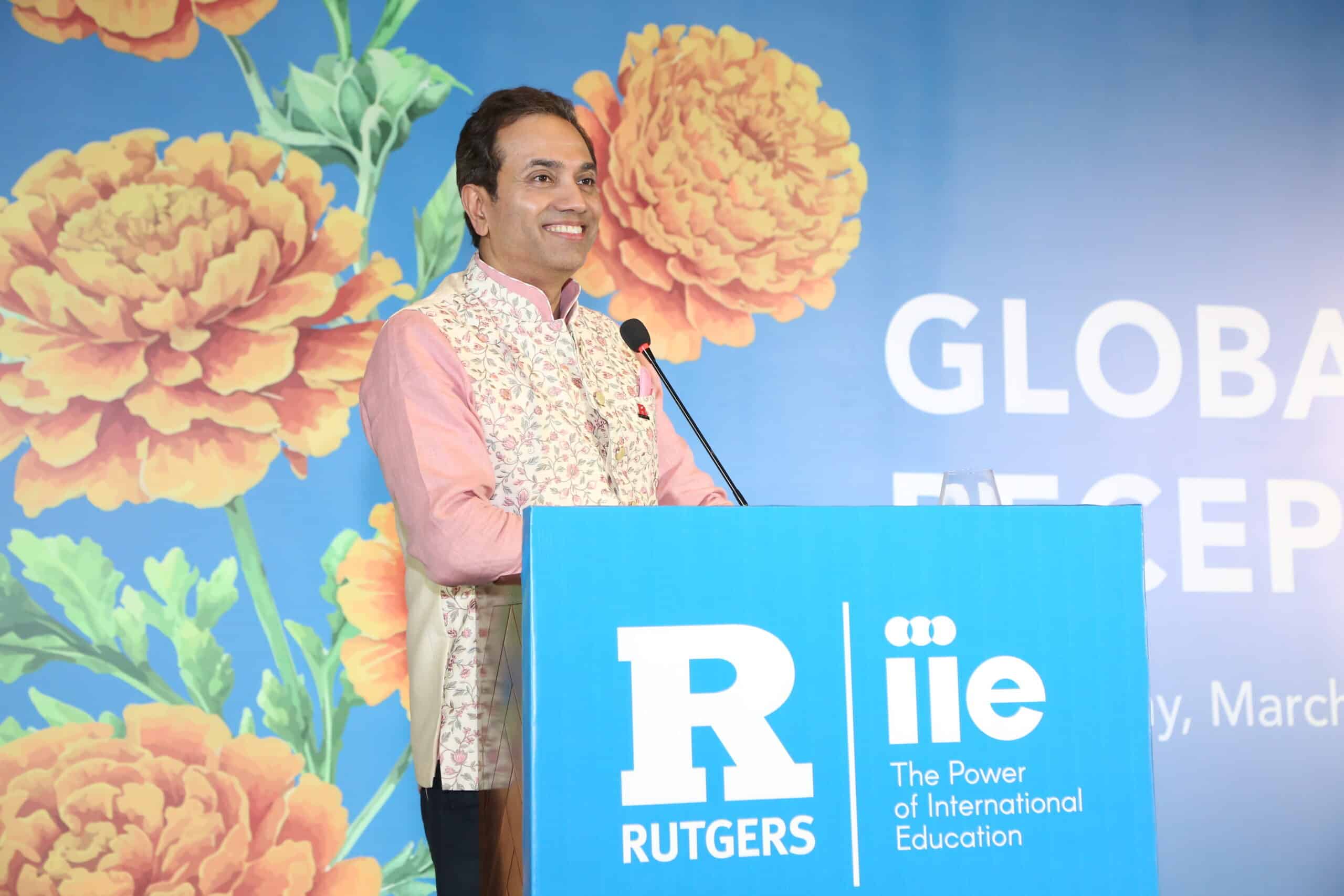
    As 8,000 delegates gathered in San Diego for the opening plenary of NAFSA 2025, the sector was hit with the news that the Trump administration was halting the scheduling of student visa interviews as it prepared to expand its social media vetting of prospective students.  

    Then, on day two of the conference – as friends and colleagues filtered out of the convention centre to drinks receptions across the city – they were rocked by more bad news. This time, that the State Department would “aggressively revoke” visas for Chinese students and enhance scrutiny of future visa applicants.

    The unexpected, inflammatory announcements alarmed delegates and immediately set the agenda for discussions across the four-day event.  

    Concern circulated about the characteristically broad scope and vague language of the announcements – which colleagues have come to expect from the administration. But while all of this could have quite reasonably created panic and confusion, in fact, there was an air of focus and unity.  

    For Brett Blacker, Duolingo’s managing director for Australia and New Zealand, the conference acted “a bit like a group therapy session”. Colleagues from across the globe were simply grateful to be together to process the rapidly changing policy environment and devise strategies for the future.  

    And while the deliberately disorientating barrage of attacks from the Trump administration demand that stakeholders are continuously adapting and reacting, attendees were also urged to take the long view. 

    “When the roots are deep, there is no reason to fear the wind,” said NAFSA CEO Fanta Aw, telling colleagues to pursue partnerships “not for prestige, but for shared progress”. 

    Aw extended a special welcome to NAFSA’s international participants – comprising 45% of attendees – whose very presence she said amounted to “an act of hope”.  

    While xenophobia disguised as nationalism and the politicisation of international students is by no means limited to the US, many of the conference’s most fruitful discussions came from cross-border comparisons.  

    Rather than remain despondent, NAFSA delegates have taken to LinkedIn with realism and pragmatism, laced with just a little bit of hope

    These were most stark when examining student mobility in the ‘big four’ study destinations, with several sessions highlighting the relative attractiveness of the UK amid visa challenges in Canada and Australia, not to mention extreme volatility in the US.  

    Elsewhere, discussions highlighted the rise of the ‘Asian decade’ and the increasing pull of destinations such as Ireland and Germany, with a sense of the sector at a tipping point as the dominance of traditional destinations and models is increasingly questioned.  

    This sense of unity continued as colleagues were united over the frustrating lack of detail about the latest policies from the White House. As the conference continued, attendees received no clarity from government about the length of the visa interview freeze, despite the initial cable indicating it would only last several days.  

    Ten days later, students remain unable to book visa appointments, and the administration has stayed similarly silent on the scope or character of its “aggressive” Chinese visa revocations. It’s a maddening state of affairs, stemming from an increasingly unpredictable administration that seems unable to see that peevish, retaliatory policies made in the spur of the moment are having real-world effects on institutions and students alike.

    Sadly, the onslaught shows no sligns of slowing down. Since the close of NAFSA 2025, the Trump administration has barred prospective international students in 19 countries from studying in the US. 

    And it has also attempted, once again, to strip students around the world of the right to study at America’s oldest institution, signing a proclamation to suspend Harvard’s international enrolments, which has since been temporarily blocked by a federal court.  

    As uncertainty prevails across much of the sector, emotions are understandably high. But rather than remain despondent, NAFSA delegates have taken to LinkedIn with realism and pragmatism, laced with just a little bit of hope.

    As attendees heard from Intead’s Ben Waxman in the final session of the final day in the furthest away room: ““Now is not the time to get angry, now is the time to get focussed”. 

    Source link

  • Cut, Coerce, Control: What Trump Is Doing to U.S. Universities

    Cut, Coerce, Control: What Trump Is Doing to U.S. Universities

    The single biggest story in higher education for the first six months of this year, without a doubt, has been the Trump administration’s remarkable assault on science and universities. Arguably it’s the largest state-led assault on higher education institutions anywhere in the world since Mao and the cultural revolution.

    Billions of dollars already legally allocated to institutions have been stripped from them mainly, but not exclusively through the National Science Foundation and the National Institutes of Health. Billions more are going to be cut permanently through the budget process. Individual institutions in particular, Harvard, have been threatened with a variety of punishments if they do not obey the administration’s wishes on DEI and the curriculum. International students are being deported and the government has mooted a variety of policies that would see international numbers decline sharply. Low income students are looking at major cuts to both loans and grants. And we’re only, as of this recording, 134 days into this administration’s term, still 1,327 less to go.

    With me today is a returning guest, Brendan Cantwell, from Michigan State University. He joined our show last fall to talk about what, based on his reading of the now notorious Project 2025, a Trump administration might do to higher education. And he was mostly right. Certainly he was more perspicacious than most actual higher education leaders, and so we thought just before we break for the summer, we’d invite him back on, not just to say, I told you so, but to help us understand both the strategies and tactics that the Trump administration is using and where the conflict might be headed next.

    Just one note, we recorded this on Wednesday, the 28th of May. Some things such as the state of the Trump Harvard battle have changed since then, so keep that in mind as you listen.

    And now, over to Brendan.


    The World of Higher Education Podcast
    Episode 3.34 | Cut, Coerce, Control: What Trump Is Doing to U.S. Universities

    Transcript

    Alex Usher (AU): Brendan, let’s start with the big picture. We’re four months—and a week—into Trump’s presidency, with just over three and a half years to go. Let me see if I’ve got this right.

    He’s attacked the major granting agencies—NIH and NSF—and reduced direct funding to individual investigators, often on DEI grounds. He’s also cut overhead payments to universities. On top of that, he’s gone after specific institutions—Columbia, Harvard, and others—trying to pull their funding in ways that, frankly, seem completely illegal. The justification has ranged from their support for EDI to questionable claims of antisemitism or collaboration with the Chinese Communist Party.

    We’ve now got a budget moving through Congress that, as I understand it, takes an axe to the student loan and grant system. And just this week, the government appears to be targeting international students—starting with Harvard, and more broadly by ordering embassies to conduct social media checks before issuing student visas. Am I missing anything?

    Brendan Cantwell (BC): I’m not sure—there’s just been so much. It’s hard to keep up. There have been several executive orders, including ones targeting what we call Diversity, Equity, and Inclusion programs. Others have touched on accreditation and a range of other topics.

    The thing about this administration is that so much is happening so quickly, and these actions are in various stages of implementation. Some are being held up in court, and with others, it’s not even clear how they’re supposed to be implemented. The president makes a proclamation, but then there’s this uncertainty: what does it actually mean in practice?

    Even for someone who spends a lot of time tracking this, it’s really difficult to stay on top of everything. But the overall thrust seems clear: the administration is using every mechanism it believes it controls—and some it probably doesn’t, legally—to pressure universities to align with the president’s agenda.

    That’s not just my interpretation. It’s actually a common talking point from the administration: if universities want funding, they ought to support the president’s goals. More broadly, there’s a clear effort to weaken the sector—to undermine its role as an independent political and cultural force that could challenge the president or the party.

    AU: I think Linda McMahon actually said exactly that earlier today—that universities are fine as long as they’re aligned with the president and the administration. So, I think you’ve done a good job explaining the through line across these various actions. But how coherent are those actions, really?

    Is this a well-oiled plan, where they expected to be at this point by month three or four? Or is it more like the tariff policies, where the president just thinks of something new each day and rolls it out on a whim?

    BC: I almost want to push back on the either/or framing. It’s definitely true that the president—and to some extent his top policy people and enforcers—are just throwing things at the wall. A lot of it is reactionary: this university defied me, so now I’m mad and I’m going to do something outrageous to show how much authority I have over them.

    So yes, there’s an erratic, incoherent aspect to it. The rationale for their actions shifts constantly: one day it’s antisemitism, the next it’s about violating a Supreme Court ruling on affirmative action, then it’s about foreign collaboration. The justification just keeps changing.

    But if you take a step back and look at the cumulative effect of what the administration is doing—getting universities to be more compliant, weakening their financial position, causing faculty and staff to lose their jobs—that broader objective is being advanced. And that’s exactly the kind of outcome that people like Chris Rufo, who claim to speak for the administration’s education policy, seem to be aiming for.

    So no, it’s not tactically precise—it’s not some kind of meticulously calibrated battle plan. But the overall strategy of flooding the sector with challenges is definitely happening.

    AU: I’ll come back to the strategy in a second, but let’s talk tactics. Do you get the sense that the Trump team is getting smarter in how it’s operating? That maybe they’ve been caught off guard a few times and are starting to adapt?

    I’m just thinking about what’s happened in the last week. First, they attacked Harvard—saying, essentially, “we’re getting rid of all your international students.” Then the court pushes back. But right away, the administration has a response: the court says, “No, you can’t do that,” and they immediately pivot to pulling individual scholarships or research grants for international students—ones that hadn’t already been cut.

    Then they go a step further, announcing cuts that apply not just to Harvard, but to all international students. Are they getting smarter, or not? I never had the sense this group was particularly good at learning, but maybe that’s changing?

    BC: Are they getting smarter? I’m not sure. Are they more determined? Yes. And I think the voices inside the administration that might have constrained the president’s impulses back in 2016 to 2020—those are gone now. He’s unconstrained. He’s persistent. And he and his senior policy advisors genuinely believe in what they’re doing. They’re committed to the project and they’re looking for ways to push it forward.

    Take the example you just mentioned: there’s an injunction—you can’t bar Harvard from enrolling international students, at least not before the courts weigh in. And the administration responds, “Fine. We’ll just create a new process to vet all international student visas.” So suddenly, they’re grinding the whole system to a halt.

    They’re absolutely more willing now to use tactics that are difficult to block—tactics that escalate the situation every time someone pushes back. And they’re building out those tactics in a way that moves them closer to their goals.

    That said, I don’t think their objectives are ever really precise or coherent. It’s more of a generalized impulse: they don’t like foreigners, they don’t like foreign students, they don’t like Harvard, they don’t like universities. So, they hit where it hurts—and this is one way to do it.

    Now, is that smart? Maybe more effective, yes. I’m not sure it serves the country, or even the president’s long-term agenda, in any meaningful way. But it’s definitely happening.

    AU: So let me turn to the Trump administration’s broader strategy. Last time you were on, we talked about Project 2025 and its implications for higher education. How closely do you think the White House’s actions over the past four months align with what was outlined in Project 2025? And by the way, this is your chance to say “I told you so.”

    BC: Yeah, I love to say “I told you so”—it’s one of my character flaws.

    A lot of what was in Project 2025 has now been implemented—or at least, versions of it have. Take the cap on indirect costs, for example. They’ve implemented a 15% cap, rather than the negotiated rates that were often quite a bit higher for individual campuses. Those rates sometimes raised eyebrows, especially among people unfamiliar with how the U.S. system works.

    And even the rhetoric is the same. They’ve said, essentially, “Marxist foundations only pay 15%, so why should we subsidize Marxist stuff?” That language comes directly from Project 2025.

    There are other examples, too. Many of the student loan reforms currently working their way through Congress have Project 2025 fingerprints on them. The executive order on DEI? Same thing. So yes, there are a lot of specific elements from the plan that are now showing up in policy.

    And beyond the specifics, the overall spirit of Project 2025 is clearly visible in the administration’s posture toward higher education.

    That said, there’s one key difference: Project 2025 envisioned a more active role for Congress and a more deliberative policymaking process than what we’re actually seeing. It assumed, at least implicitly, more checks on presidential power than the president has been willing to accept.

    So, while many of Project 2025’s ideas have been implemented—some fully, some partially—how long they last is still an open question. And ironically, the actual execution by the administration is in many ways less constrained, and possibly less lawful, than what Project 2025 originally proposed. That’s my impression, at least—as a non-lawyer.

    AU: We’ve been talking about the Trump administration. I want to shift now to the higher education sector. For most of February and part of March, the sector seemed… bewildered. Almost unable to process what was happening. It was like, “This must be a mistake—they can’t possibly mean that.”

    And as a result, I think the response was pretty slow. When the administration went after Columbia, which was the first institutional target, many universities seemed to instinctively say, “Let’s stay quiet. Maybe we’ll be spared.”

    You, and a few others, were pretty clear-eyed from the beginning about how this would unfold. Why didn’t university leaders see it coming? This feels like a colossal failure of imagination. What happened?

    BC: Let me start by offering a partial defense of university leaders.

    There are people like me—and others—who are pretty knowledgeable but also pessimistic. We say bad things are going to happen a lot, and often they don’t. During Trump’s first term, there was concern that a lot of his anti-higher-ed rhetoric would turn into policy. And in some ways, it did. But in many ways, it didn’t. Congress constrained him. The courts constrained him. Even people inside his administration held him back. And he also lost focus on higher ed.

    So, I think university leaders had some reason to believe that the best strategy was to remain quiet, lobby Congress, and let the courts do their work. That approach worked last time, so it wasn’t irrational to assume it might work again. It just took them some time to adjust to the new reality.

    Some of that delay is about individual cognitive response, which I’m not really qualified to speak to. But some of it is structural—university bureaucracies and associations take time to pivot. Shifting strategies isn’t easy.

    So yes, it’s fair to say the sector was caught flat-footed. And yes, leaders should have had a better sense of what was coming. That’s a valid critique. But once they figured out what was happening, I think the sector showed a fair amount of agility. Associations started taking a more aggressive posture. ACE, for instance, became part of the resistance—which I wouldn’t have predicted would happen so quickly.

    Universities are still trying to find their footing. And then you have Red State universities, which are really hemmed in by state legislatures. They’re facing a whole different set of challenges, apart from what’s coming out of the federal administration. Those institutions are in a very tough spot.

    AU: What does it say about American higher education that Harvard has become ground zero for the resistance?

    BC: Full credit to Harvard—absolutely.

    Here’s my hedge: they had the benefit of seeing what happened to Columbia. That experience showed there was no good-faith negotiation to be had with this administration.

    In some ways, it makes strategic sense for Trump to pick on Harvard. It’s not the most lovable institution. It’s a big, juicy target.

    But at the same time, it’s also kind of foolish. Harvard has enormous resources—financial, social, institutional. They have more capacity to fight back than almost any other institution in the country.

    I think they recognized what Columbia’s experience revealed: if you give in to this administration, institutional autonomy is gone—possibly for a long time.

    If Harvard wants to preserve the American establishment—which it’s often accused of doing, by reproducing elite institutions and elite classes—then it has to resist Trump. That resistance is a condition of preserving the pre-Trump order.

    So yes, it’s good and necessary that Harvard is doing this. But I wouldn’t interpret this as Harvard becoming some scrappy underdog street fighter. It’s simply one of the few institutions with the resources and standing to try to defend the old order.

    AU: What about going forward, though? I mean, I hear more institutions—maybe not acting, but at least sounding like they understand they all have to hang together, or they’ll hang separately. But will they?

    I mean, take the University of Michigan on DEI—they folded like Superman on laundry day. Part of that was probably about Santa Ono’s personal ambitions. But there are a lot of institutions, both public and private, that have already bent the knee at least once.

    How do you come back from that? And can it really be done through the courts alone? Because right now, it’s all being held up by temporary restraining orders. And as you’ve said, that doesn’t provide clarity. Eventually, these cases are going to have to go up to the Supreme Court—where, incidentally, four or five justices are Harvard alums. Whatever else they believe, they might have some interest in preserving these institutions.

    How do you see the resistance evolving over the next few months?

    BC: I’d be disingenuous if I told you I know exactly how this is going to play out.

    AU: Best guess.

    BC: I think the strategy for the sector is to try to win where it can in the courts, and hope the administration abides by those rulings—which, honestly, is a real concern at this point.

    And then also to behave like a school of fish: move together, so it becomes difficult to single out and take down any one institution.

    The hope is that they can wait the president out—that the administration will shift its focus to something else, burn through its energy on attacks, and that most of the sector will remain intact enough to keep operating.

    And then, when that moment comes, institutions can manage the fallout: the indirect consequences like how states deal with a recession if healthcare or food assistance burdens shift onto them, or the winding down of research operations as the pool of available grant funding shrinks.

    I think the approach is: keep your head down, don’t explicitly cave, and hope the administration moves on. It’s probably the best available strategy right now.

    But I don’t know if it will work. If the administration manages to keep its attention fixed on higher education and maintains this pace of attacks and cuts, then it’s going to be very difficult for large parts of the sector to emerge unscathed.

    AU: You mentioned at the beginning of the interview an executive order related to accreditation. We haven’t talked about that yet, and I think some people see that as the sleeper issue—not necessarily for the big, wealthy private institutions, but for the vast majority of colleges and universities.

    Changes to the U.S. accreditation system could have huge implications. What’s been happening on that front so far? What’s actually in that executive order, and what could these changes mean for institutional autonomy and academic freedom?

    BC: Most of the executive orders from this administration, it’s not exactly clear what it does. It directs the Secretary of Education—who, by the way, has also been tasked with dismantling the Department of Education, so there’s that contradiction to hold in your mind.

    AU: But she’s still the Secretary. I saw her today.

    BC: Yes, she’s still there.

    So, this order directs her to collaborate with new accreditors and to open up competition in accreditation. The stated goal is to “foster innovation” and “rein in the accreditation cartel”—that’s the language they use. They frame current accreditors as promoters of Marxist, DEI, anti-Semitic, or otherwise ideologically objectionable agendas. It’s a jumble of terms, but it signals their intent.

    There are really two key elements here. First, increasing competition among accreditors. That means recognizing accreditors that wouldn’t have been approved under a Democratic administration—and maybe not even under many Republican ones. These would be organizations willing to give the stamp of approval to short-term or for-profit programs that don’t meet U.S. or international best practices for educational quality. If I were being snarky, I’d call them scammer programs.

    Second, they could use accreditation as a way to impose standards that align with the president’s political agenda. For example, they might require changes to how campuses regulate student conduct, admissions policies, or even faculty hiring practices. They could try to use accreditation to reach into curriculum—mandating, say, a general education requirement focused on Western Civilization or other ideologically favored content.

    Accreditation is the clearest vehicle they have to influence what’s taught and how institutions operate. But these kinds of changes take time and require more methodical planning—something this administration has been less consistent about, as we’ve discussed.

    So, we’ll see what happens. But it’s definitely something to keep an eye on over the next couple of years. If universities are already weakened by all the other pressures—funding cuts, legal battles, political attacks—they may be less able to resist a fundamental restructuring of the accreditation system.

    AU: The sector’s had a lot thrown at it over the last four months. But looking ahead—have we seen the end of all this sabotage innovation, so to speak? Is there more coming? We talked about Project 2025 a little earlier. Is there anything in there that hasn’t been used against the sector yet? What should we be even more worried about?

    BC: I’m not sure there’s any one Project 2025 policy I’d point to and say, “watch out for that specifically.” But a couple of things are worth keeping an eye on.

    One would be if the administration attempts to block institutions—or even groups of institutions, or the entire country—from accessing federal student financial aid. That’s Title IV under the Higher Education Act. If they were to go after Title IV the same way they’ve unilaterally blocked access to research grants or are now targeting international students, that would be hugely disruptive. It’s a big, coercive lever. They could do a lot of damage with it.

    The other thing to watch is the relationship between federal and state policy. We’re already seeing red states passing legislation that mirrors or reinforces the Trump administration’s higher ed agenda. Utah, for example, just passed a bill where institutions face a big cut to their appropriations—unless they agree to evaluate and cut programs the state deems nonessential.

    And even individual boards of governors, particularly in Republican-dominated states, are taking it upon themselves to implement Trump-aligned policies. I think we might be seeing that at the University of North Carolina, for instance, where no one outside of the health sciences has received tenure in the past year. We don’t know exactly what’s going on, but it certainly looks like the board is using its technical authority to enact the administration’s broader political agenda. So those are the kinds of developments to watch.

    AU: Brendan, best of luck—and thanks for joining us.

    BC: Thanks very much, Alex. Always a pleasure to be here.

    AU: That just leaves me to thank our excellent producers—Tiffany MacLennan and Sam Pufek—and you, our viewers, listeners, and readers, for joining us. If you have any questions or comments about today’s podcast, or suggestions for future episodes, don’t hesitate to reach out at [email protected]. Run—don’t walk—to our YouTube page and subscribe. That way, you’ll never miss an episode of The World of Higher Education Podcast. Join us next week for what will be our final episode before the summer break. Our special guest? Me. Tiffany will be turning the tables and peppering me with questions about higher education in Canada and internationally during the first half of 2025. I’ll do my best to make it all sound coherent. Bye for now.

    *This podcast transcript was generated using an AI transcription service with limited editing. Please forgive any errors made through this service. Please note, the views and opinions expressed in each episode are those of the individual contributors, and do not necessarily reflect those of the podcast host and team, or our sponsors.

    This episode is sponsored by KnowMeQ. ArchieCPL is the first AI-enabled tool that massively streamlines credit for prior learning evaluation. Toronto based KnowMeQ makes ethical AI tools that boost and bottom line, achieving new efficiencies in higher ed and workforce upskilling. 

    Source link

  • courts intensify effort to block Trump’s int’l enrolment ban

    courts intensify effort to block Trump’s int’l enrolment ban

    • District judge moves to take out an injunction on Trump administration’s Harvard international enrolment ban while the case moves through the legal system.
    • University’s international students report “emotional distress” as many cancel travel plans over fears they will not be allowed back into the US.
    • US Department of Homeland Security boss accuses Harvard of “disdain” for American people and spreading hate.

    Following on from her decision last week to temporarily block the move, district judge Allison Burroughs told a packed court that she wanted to “maintain the status quo” while Harvard’s case works its way through the legal system.

    It’s the latest twist in the university’s ongoing battle with the Trump administration, which has accused it of anti-semitism and stripped it of billions of dollars in funding. For its part, Harvard is coming out swinging against the directive, swiftly mounting a legal challenge – the latest step of which culminated in Burroughs’ judgement in a hearing yesterday.

    In court documents filed ahead of the hearing, Harvard’s director of immigration services at the institution’s international office, Maureen Martin, detailed the toll that the administration’s announcement is taking on the campus’s international students.

    She wrote that the revocation notice has caused both students and faculty to express “profound fear, concern, and confusion” – with the university “inundated” with queries from worried international students.

    “Many international students and scholars are reporting significant emotional distress that is affecting their mental health and making it difficult to focus on their studies,” said Martin, adding that some are too afraid to attend their own graduation ceremonies this week in case immigration-related action is taken against them.

    Meanwhile, others are cancelling international travel plans over concerns they will not be able to re-enter the US. “Some fear being compelled to return
    abruptly to home countries where they might not be safe due to ongoing conflicts or where they could face persecution based on their identity or background,” Martin wrote.

    Many international students and scholars are reporting significant emotional distress that is affecting their mental health and making it difficult to focus on their studies
    Maureen Martin, Harvard University

    While US stakeholders may be breathing a sigh of relief at Harvard’s temporary reprieve, Donald Trump’s government is showing no signs of backing down.

    In a letter sent to Harvard before Thursday’s hearing, US Immigration and Customs Enforcement (ICE) confirmed that it wanted to move ahead with revoking the university’s SEVP certification, which would mean it could no longer host international students. Notably, though, the letter did not repeat last week’s assertion that Harvard would have 30 days to challenge the decision and suggested the government would not look to immediately enact the directive.

    In a statement released yesterday, US secretary of the Department of Homeland Security, Kristi Noem, doubled down on accusations that Harvard has not complied with SEVP regulations, has “encouraged and allowed anti-semitic and anti-American violence to rage on its campus” and has been working with the Chinese Communist Party.

    “Harvard’s refusal to comply with SEVP oversight was the latest evidence that it disdains the American people and takes for granted US taxpayer benefits,” she said. “Following our letter to Harvard, the school attempted to claim it now wishes to comply with SEVP standards. We continue to reject Harvard’s repeated pattern of endangering its students and spreading American hate – it must change its ways in order to participate in American programs.”

    Harvard’s row with the Trump administration stems from the stand it took against a raft of government demands, including that it reform its admissions and hiring practices to combat antisemitism on campus, end DEI initiatives and hand over reports on international students.

    When the institution refused to comply with the demands, the government – seemingly in retaliation – froze $2.2 billion in the university’s funding, threatened to revoke its tax-exempt status, and demanded that international students’ records be handed over. If Harvard didn’t play ball, it was warned, it risked losing its SEVP certification. 

    Although Harvard did send over some student information on April 30, and maintained that it had provided the information it was legally bound to supply, this seems to have been insufficient for the Trump administration, which then moved to black the institution from hosting international students.

    In yet another blow to the US international education sector, the US government announced this week that it would pause all new study visa interviews at American consulates around the world – sparking dismay from stakeholders.

    And Chinese students studying in the US were plunged into uncertainty yesterday after – amid a trade war with Beijing – the government announced plans to “aggressively revoke” their visas. As yet, it remains unclear whether all Chinese students will be affected or just those with links to the Chinese Communist Party or studying in so-called key areas.

    Source link

  • Judge halts ban on international enrolments at Harvard

    Judge halts ban on international enrolments at Harvard

    In the latest move in the government’s dramatic feud with the US’s oldest university – and a major victory for international education sector – district judge Allison Burroughs issued a temporary restraining order yesterday, halting the directive stripping Harvard of its eligibility to enrol students from overseas.

    It follows the institution’s swift decision to mount a legal challenge against the administration’s demands that it hand over all disciplinary records for international students from the last five years if it wanted to regain its SEVP status.

    In its lawsuit, Harvard said: “With the stroke of a pen, the government has sought to erase a quarter of Harvard’s student body, international students who contribute significantly to the University and its mission.” The next hearing in the case will be held in Boston on May 29.

    If it comes to pass, the ban on international student enrolments would significantly harm Harvard’s financial situation – with last year’s 6,793 overseas students making up a sizeable 27% of the student body.

    With the stroke of a pen, the government has sought to erase a quarter of Harvard’s student body, international students who contribute significantly to the University and its mission
    Harvard University

    Orders from the Trump administration would not only prevent Harvard from enrolling any F-1 or J-1 students for the 2025/26 academic year, but also force current international students to transfer to another university if they want to stay in the country. 

    The move cause widespread panic among international students – especially given that some are set to graduate in just one week.

    Students told The PIE News that they were worried about what was happening, but trusted Harvard to “have our backs”.

    The institution’s row with Harvard stems from the stand it took – one of the only US institutions to do so – against the administrations raft of demands, including that it reform its admissions and hiring practices to combat antisemitism on campus, end DEI initiatives and hand over reports on international students.

    When the institution refused to do so, the government froze $2.2 billion in the university’s funding, threatened to revoke its tax-exempt status, and demanded international students’ records if it didn’t want to lose its SEVP certification. 

    Although Harvard did send over some student information on April 30, and maintained that it had provided the information it was legally bound to supply, this seems to have been insufficient for the Trump administration.

    In US homeland security secretary Kristi Noem’s letter to Harvard, she said: “This action should not surprise you and is the unfortunate result of Harvard’s failure to comply with simple reporting requirements”.  

    Source link

  • Panic hits Harvard international students after Trump crackdown

    Panic hits Harvard international students after Trump crackdown

    As per a statement released by Kristi Noem, US homeland security secretary, Harvard’s Student and Exchange Visitor Program (SEVP) certification has been revoked because of their “failure to adhere to the law.” 

    “As a result of your refusal to comply with multiple requests to provide the Department of Homeland Security pertinent information while perpetuating an unsafe campus environment that is hostile to Jewish students, promotes pro-Hamas sympathies, and employs racist “diversity, equity, and inclusion” policies, you have lost this privilege,” read the letter by Noem to Harvard University, shared on X, formerly Twitter. 

    “The revocation of your Student and Exchange Visitor Program certification means that Harvard is prohibited from having any aliens on F- or J- nonimmigrant status for the 2025-2026 academic school year.”

    Students set to join Harvard this year are now relying on the institution to take urgent action to keep their dreams of studying at the Ivy League institution alive.

    “I already had to defer my intake from last year to this year due to lack of funds. Deferring again just isn’t an option for me,” stated Pravin Deshmukh, an incoming student at Harvard’s Graduate School of Education. 

    “We’re hoping the university can find some form of solution and keep us updated on what’s happening. Harvard has been very proactive over the past few weeks. They’ve reassured incoming students like me of their commitment through emails, provided details on continuing classes online, and shared ways to stay in touch with the International Office.”

    Currently, over 6,800 international students are enrolled at the university, making up 27% of this year’s student body, with a significant portion hailing from countries such as China, India, Canada, South Korea, and the UK.

    WhatsApp groups are on fire – everyone’s panicking, wondering what’s going to happen next. Some parents were planning to attend graduation ceremonies, but now students are telling them, ‘Don’t say you’re coming to visit us.’

    Harvard GSE student

    The vast international student cohort at the campus will also have to transfer to another US university or risk losing their legal immigration status, according to Noem, which puts the current students in jeopardy. 

    “For graduating students, it feels like our degrees could be rendered useless and we might even be labeled as illegal immigrants,” a student at Harvard’s GSE, who requested anonymity, told The PIE. 

    “Some students are considering staying in the U.S. by transferring their SEVIS to community colleges if Harvard can’t find a solution.”

    “WhatsApp groups are on fire – everyone’s panicking, wondering what’s going to happen next. Some parents were planning to attend graduation ceremonies, but now students are telling them, ‘Don’t say you’re coming to visit us,’” the student added. 

    While Noem has issued a 72-hour ultimatum to Harvard, demanding the university hand over all disciplinary records from the past five years related to international students involved in illegal activities and protests on and off campus, students across Harvard’s schools told The PIE that professors and deans have arranged meetings with them to address any questions or concerns.

    “We received an email from the Harvard University president regarding available support, information about Zoom sessions hosted by Harvard’s international offices, and a text-message service for ICE-related threats. Today, a session is being held in person at our school with professors and the Dean,” the Harvard student stated.

    “This is Harvard — they will take a stand, unlike Columbia University or MIT. They have our backs.”

    Some students have voiced concerns about their parents traveling to the US for their graduation ceremonies, but feel reassured by Harvard’s stand that commencement will proceed as planned on May 29th.

    “The Harvard website is being updated regularly, and we have been asked to keep an eye on it, but there’s still a lot of uncertainty. Since yesterday, many of us have been wondering whether we will graduate and the next steps. The morning email confirmed that commencement will continue as planned,” stated another Harvard student, who didn’t wish to be named. 

    “There’s a shift in the atmosphere, making it very difficult to plan the next steps. We couldn’t have imagined something like this happening six months ago, but you have to be prepared for anything.”

    In the meantime Harvard has a released a statement, doubling down on its commitment towards international students.

    “We are fully committed to maintaining Harvard’s ability to host our international students and scholars, who hail from more than 140 countries and enrich the University – and this nation – immeasurably,” stated the University. 

    “We are working quickly to provide guidance and support to members of our community. This retaliatory action threatens serious harm to the Harvard community and our country, and undermines Harvard’s academic and research mission.”

    Furthermore, the institution’s swift lawsuit against the Trump administration over the international student ban resulted in a major victory, as US District Judge Allison Burroughs issued a temporary restraining order against the government’s plan to strip Harvard of its ability to recruit international students.

    According to Sameer Kamat, founder, MBA Crystal Ball, a leading MBA admissions consultancy in India, the Trump administration could choose to extend the deadline for Harvard to comply with its requirements, similar to its approach on trade tariffs in recent weeks.

    “For all we know, Trump may ease off the pressure and give Harvard more time to comply, like he did with the tariff deadlines on his trade partners. But for now, it puts all international students in a limbo. They’ve become collateral damage in a fight that they never wanted to be part of,” stated Kamat.

    “He had played a similar move on Canada and Mexico by giving them a very tight deadline to bring down their tariffs for American goods. This was to push them into action. And then on the final day, he pushed the deadline by a month. Which is why I am thinking, we can’t rule out the possibility of that happening this time. Considering he put a 72-hour deadline, which runs into the weekend.”

    According to Namita Mehta, president, The Red Pen, consultancies like hers are actively supporting affected students by providing guidance, clarifying policy updates, and connecting them with legal or immigration experts as needed.

    “While the announcement has understandably caused concern, it’s essential to recognise that such decisions are often part of broader political narratives and may be temporary,” stated Mehta.

    “While students and families should stay engaged, informed, and proactive, it is equally important to remain hopeful. The strength of institutions like Harvard lies in their academic excellence and capacity to navigate complex challenges with integrity and vision.”

    Source link

  • Presidents’ Alliance challenges “unlawful” SEVIS terminations

    Presidents’ Alliance challenges “unlawful” SEVIS terminations

    Their suit argues that the thousands of terminations, which to date have left more than 1,800 students without valid status, are “unlawful” and came “without warning, individualised explanation and an opportunity to respond”.

    The Presidents’ Alliance on Higher Education and Immigration, which advocates for immigrant and international student rights, and several impacted students from institutions such as MIT and Boston University filed the suit in the District Court for the district of Massachusetts yesterday.

    Not only have students been forced out of housing, jobs or their chosen institution mere weeks away from graduation, but the Trump administration’s crackdown on international students has “undermined’ institutions’ being able to “attract, retain, and effectively serve” students from overseas, the group warned.

    The court is asked to find that the policy is unlawful and unconstitutional, reactivate the SEVIS records of affected students, halt the policy while the case is being fought and “vacate all improper SEVIS terminations”.

    President and CEO of the Presidents’ Alliance, Miriam Feldblum, warned that students would be put off from studying in the US because of the “fear and uncertainty diminishing our global competitiveness and reputation”.

    “The unlawful termination of student records without due process strikes at the heart of higher education’s mission. Colleges and universities drive innovation, research, and workforce growth by fostering global talent – but they can’t do that when students’ futures are derailed without explanation,” she said.

    “These actions deter future students from studying here in the US, and hinder campus administrators from carrying out their work by the arbitrary upending of established regulations and processes.” 

    Meanwhile, Sirine Shebaya, executive Director at the National Immigration Project – which is representing the Presidents’ Alliance – blasted the policy vas “not only lawless… [but] cruel” – marking “yet another manifestation of policies that fly in the face of both legal standards and common decency”.

    These actions deter future students from studying here in the US, and hinder campus administrators from carrying out their work by the arbitrary upending of established regulations and processes
    Miriam Feldblum, Presidents’ Alliance

    While the surge in visa revocations was at first thought to mainly affect students who had expressed pro-Palestinian sympathies, international education stakeholders have been left baffled at a growing number being issued at institutions where no such protests had taken place.

    Some students – including one unnamed Boston University graduate represented in the legal case – are reporting that their visas had been taken away due to minor traffic infractions. Others have been left confused after their visas were revoked despite having no criminal history.

    Yet the State Department continues to back the policy.

    “The Trump administration is focused on protecting our nation and our citizens by upholding the highest standards of national security and public safety through our visa process,” a State Department spokesperson told The PIE News this week.  

    “The Department of State will continue to work closely with the Department of Homeland Security to enforce zero tolerance for aliens in the United States who violate US laws, threaten public safety, or in other situations where warranted.” 

    Source link

  • Three Florida unis harnessing the Hispanic population boom

    Three Florida unis harnessing the Hispanic population boom

    As the face of education continues to undergo a rapid evolution, some institutions in the United States are pioneering innovative approaches to meet the diverse needs of their learners. What sets these institutions apart is their strong ties to established universities in Latin America and Spain, with international accreditations and faculty from around the world.

    These institutions are not only providing world-class education but also addressing unique market needs through distinctive programs and methodologies. This is happening in a big way in Florida – and it’s time to pay attention.

    The Hispanic power in Florida: business, economy, entrepreneurship, and education

    According to the Florida State Hispanic Chamber of Commerce, there are over 604,000 Hispanic-owned businesses in Florida that contribute USD $90 billion to the state’s economy each year. Florida has been ranked the number one US state for entrepreneurship. Combine that with the fact that Florida is the gateway to Latin America and the Caribbean, and you’ve got yourself a state with a promising entrepreneurial spirit.

    Here are the universities that are leading the charge. They’re doing all the right things and it’s time to closely observe

    Miami-Dade County alone is home to over 1,200 multinational companies to have set up their Latin American headquarters in the area. Some 30% of all businesses in the county are run by people of Hispanic descent. This is a massive industry that’s growing at a rapid pace and demands highly educated professionals who can keep up with it all. This is a dynamic, entrepreneurial and young Hispanic community.

    So, what are Florida’s institutions doing differently? They are agile, forward-thinking, and constantly evolving – meeting the needs of Hispanic students in Florida and beyond who want to study at their own pace and in a way that fits their lives.

    Here are the universities that are leading the charge. They’re doing all the right things and it’s time to closely observe.

    1. MIU City University: affordable, flexible, and global

    MIU City University has been around since 2019. Founded by Grupo ProEduca and UNIR in Spain, MIU City University offers online and hybrid programs that cater to busy professionals.

    With programs in cybersecurity, computer science, digital marketing, business intelligence, educational innovation, and others, MIU City University offers affordable certificates and degrees with a proven online model recognised by global rankings. Its global reach with students from over 90 countries makes it the perfect institution for those who want to connect with a worldwide network of professionals.

    What sets MIU City University apart is its focus on practicality. Students are learning the exact skills that today’s employers are looking for, whether it’s in business, tech, or marketing. And with remote work on the rise, these programs make it easier than ever to combine work, study, and life.

    2. CUC University: flexible programs for remote workers who need to study

    CUC University, founded in 2021 by Universidad de la Costa in Colombia, is another institution breaking the mould. They offer online programs designed for students who are working alongside their studies. CUC has designed its courses to be flexible so students can study on their own time with faculty from around the world.

    A good example of its offering are programs in international business administration, marketing, mass media communication, media technology, and entrepreneurship. These programs are designed for working professionals who need to level up. With over 53 years of academic excellence, CUC is the perfect mix of legacy and innovation.

    Its partnerships with private and public organisations help students connect with the right people who are looking for professionals ready to compete in the global marketplace or start their own venture.

    3. Panamerican University: a global business experience

    And then there is Panamerican University, founded in 2022 by Panamerican Business School from Guatemala, already flexing its global muscle. With 25 years of experience and partnerships with over 700 companies across 20 countries, 800 faculty from over the world, it’s offering programs designed to today’s economy.

    It offers programs in business administration, digital marketing, and international and sustainable business, among others. Its students can obtain global certificates in dynamic and multicultural cities like Dubai, Stockholm, Singapore, Madrid, Tokio, and Miami.

    And let’s not forget it’s got over 350,000 alumni who are spread out all over the world, which connects its students with an international network of professionals.

    Why these universities are changing the game

    These institutions have identified gaps and the needs of the non-traditional Hispanic students in Florida; working professionals who are trying to balance career and family, people who need a degree, professional development, continuous learning, and upskilling to keep up in a rapidly changing world.

    They’ve filled those gaps with flexible and practical offers. They’re serving a growing Hispanic student population – both domestic and those from their international biosphere – a segment that is hungry for opportunities to grow. They are partnering with companies, international organisations, governments, providing real-world skills, a worldwide network, and the flexibility to study from anywhere.

    I am impressed by these innovative institutions and their rapid pace of growth. I have just shown three examples, but there are more institutions doing great things that have been here for a while. Some of them are opening new campuses and branches, with in-person, online and hybrid models: Ana G. Méndez University- Puerto Rico, Nexus University; Universidad Mayor Chile, Westfield Business School; Prisma Education Group Colombia, Broward International University; San Ignacio University; USIL Peru, Albizu University; Puerto Rico, GAIA University, Guatemala, to name just a few.  

    These institutions offer flexibility, affordability, global exposure, and a focus on practical skills for today’s workforce. They’re not just educating students; they’re connecting them to a global ecosystem of professionals, alumni, and companies that are ready to hire.

    It’s time to pay attention to what these universities are doing. They’re a novel example that education can be tailored to the needs of the students and the world they’re entering. The future of higher education is here, and it’s fast, flexible, and ready to break all the rules. And it’s so exciting that this is happening here in the Sunshine State.

    Source link

  • Stakeholders call bluff on anti-OPT bill

    Stakeholders call bluff on anti-OPT bill

    Titled H.R. 2315, the Fairness for High-Skilled Americans Act, the bill was reintroduced by Gosar, who argued that OPT “undercuts American workers” and lets “greedy businesses hire inexpensive foreign labour” without providing benefits.

    “Never authorized by Congress, OPT circumvents the H-1B visa cap set by Congress by allowing over 100,000 aliens admitted into our country on student visas to continue working in the United States for another three years after completing their academic studies,” read a statement by Gosar.

    “The OPT program completely abandons young Americans who have spent years and tens of thousands of dollars pursuing careers in science, technology, engineering, and mathematics only to be pushed out of those fields by cheap foreigners.”

    Though the legislation has been referred to the House Committee on the Judiciary, stakeholders have already shut down any possibility of it passing the US House of Representatives in the future. 

    While proposals like this tend to generate headlines, the likelihood of this bill advancing in Congress is extremely low
    John Evans, Catalyst Gem

    “While proposals like this tend to generate headlines, the likelihood of this bill advancing in Congress is extremely low,” John Evans, co-founder and CEO, Catalyst Gem, a US-based software and services company specialising in international student admissions, told The PIE News

    “The last serious attempt to eliminate OPT came in 2020 and failed in the face of overwhelming bipartisan, legal, and economic opposition. Despite significant political pressure, the program remained fully intact, without any modifications, because of its recognised value to the US economy and workforce development.”

    This isn’t Gosar’s first attempt to target the OPT program. In 2019, he introduced similar legislation and urged its termination through an executive order by President Donald Trump, who was serving his first term at the time.

    Following Gosar’s move, WashTech – a union representing STEM workers – also took legal action, suing the US government over its 1992 rule that established the 12-month OPT program and the 2016 regulation which allows eligible STEM graduates to extend OPT by 24 months.

    But the idea that OPT displaces American workers with international graduates is far from the truth, according to Evans. 

    “As of April 2025, the US had 7.6 million job openings, with high-skill sectors such as tech, healthcare, and engineering facing some of the greatest shortages,” he explained.

    “Looking ahead, the US is projected to create 1.1 million new STEM jobs over the next decade and will need a continued pipeline of talent, including OPT, to support this growth. Failure to meet this demand will weaken the US position in the global economy, particularly if the talent is directed elsewhere.”

    Despite efforts by the Trump administration, which pushed to restrict or eliminate OPT under the direction of then senior advisor to the President, Stephen Miller, the proposed changes were ultimately abandoned due to strong opposition from universities, business leaders, and other key groups.

    Since then, OPT has remained a critical part in international appeal for US education and in 2023, the number of international students participating in the program rose to 242,782 – a 22% jump from the year before. 

    This surge played a significant role in pushing the overall international student population in the country to a record 1.1 million, with OPT participants making up a substantial portion of that total.

    “I don’t see this bill going anywhere as the US needs more highly skilled workers – both American and otherwise to fuel an economy that is moving towards doing more highly skilled work in the US,” stated Mark Kopenski, president and CEO, Global Student Recruitment Advisors, a consultancy firm handling international student recruitment and enrolment strategies for educational institutions. 

    “The (Trump) administration has been bullish on creating paths to permanent residence for highly skilled and educated individuals from around the globe. This will take some time as there is a clearing out of many individuals that have come to the US illegally and without skills, financial resources and abilities that the US desires.”

    According to Kopenski, programs like the “Gold Card Visa” are designed to attract highly skilled talent and noted that some international students in the US have already acquired or are planning to acquire these visas.

    Although programs like the H-1B visa, which allows US employers to temporarily hire international workers in specialised fields, have faced scrutiny during Trump’s second term, the former president has voiced support for granting green cards to international college graduates. 

    However, no legislation has materialised to back this proposal, and instead, international graduates are encountering growing restrictions.

    Since Trump’s inauguration in January this year, hundreds of international students have been detained and seen their visas revoked on US college and university campuses, often without any prior warning. 

    As per reports, over 80 US universities have reported visas being revoked for some of their international students. 

    Last month, US Secretary of State Marco Rubio stated that over 300 student visas had been revoked due to activities deemed “against US national interest.” 

    Experts suggest the revocations may be tied to students’ involvement in pro-Palestine protests or minor legal infractions, such as speeding, with some facing deportation or being asked to leave the country.

    The move has led to condemnation from US educators, who have slammed the “alarming” and “deeply disturbing actions” of the Trump administration. 

    The move could possibly contribute to an already declining interest in studying in the US, as highlighted by a recent survey conducted by StudyPortals. 

    Evans commented: “To rebuild confidence, the US must adopt a more consistent, transparent, and student-centred approach to international admissions and immigration, like the streamlined policies seen in Canada, the UK, and Australia. This effort must be reinforced by public messaging and policies that clearly state: ‘You are welcome here, and your contributions matter.’”

    Meanwhile, Kopenski sees this as short-term declining interest, set to “correct itself as the US strengthens its attractiveness as a destination that provides the ultimate springboard to wealth and prosperity”.

    Source link

  • Parents turn to international education as path to residency

    Parents turn to international education as path to residency

    If families looking to relocate to “top destinations” such as the US and Canada choose the right program for their children, they may be granted permanent residency as domestic students or even graduate from their chosen institution as residents or citizens, according to Tess Wilkinson, director of education services at Henley & Partners Education in the UK.

    “We’re now seeing a real uptick in the types of families who are now becoming aware that there is an option for them,” she told The PIE News.

    “For families looking at relocating, there can be real gains in the amount of fees they spend on education in places like Canada,” she explained. “They can they can save [up to] $150,000 on fees.”

    The sheer number of clients asking for assistance in this area signals that education is swiftly becoming “one of the key drivers for people looking at second residences to citizenships”, she added.

    Henley & Partners refers to itself as a “global leader in residence and citizenship by investment”. Its education arm, Wilkinson explained, helps to “advise transnational families who are looking for global education solutions”.

    Working with families all over the world with children and adults of all ages – from K-12 to those seeking master’s degrees or MBAs – it “assists them to find the right match”, taking into account children’s individual needs and the types of residency or citizenship that may become available to its clients through educational opportunities.

    “We can advise on all the top-tier destinations. So we have a family, for instance, who are considering the UK, the US and Australia and they’re putting in applications for all three countries,” Wilkinson shared.

    We’re now seeing a real uptick in the types of families who are now becoming aware that there is an option for them
    Tess Wilkinson, Henley & Partners Education

    With immigration policies in key markets such as the UK, the US, Canada and Australia shifting all the time, Wilkinson acknowledged that it “is not something that is simple”.

    But she said that, with expertise across a number of key markets, Henley & Partners can provide families with education counsellors to help match children to institutions that suit them best, as well as help with applying to universities or summer programs.

    The ‘big four’ international education destination countries are all seeing turbulence in their respective markets. Some of these restrictive policies are having an impact on students’ ability to study in the countries, hindering them from securing post-graduate residency in their chosen destination.

    Australia and Canada are both subject restrictions on international students, while UK universities’ international departments have been blighted by a crackdown on overseas students’ ability to bring their families into the country with them.

    Meanwhile, Donald Trump’s second term as US President continues to present challenges to the sector, as he freezes study abroad funding, battles against DEI legislation and moves to arrest or even deport international student protestors.

    Tess Wilkinson will be speaking at The PIE Live Europe at the PIEx Power Up Expanding horizons: accessing global education & opportunity via investment migration on March 11 at 16:00. Tickets are available online here.

    Source link