Category: vaccines

  • The New COVID Vaccine Rules Leave Parents with More Questions than Answers – The 74

    The New COVID Vaccine Rules Leave Parents with More Questions than Answers – The 74


    Get stories like this delivered straight to your inbox. Sign up for The 74 Newsletter

    The federal government’s latest guidelines for COVID-19 vaccines make it difficult to know who, exactly, will be able to access shots this fall. While Health and Human Services Secretary Robert F. Kennedy Jr. and some of his staff claim anyone will be able to access a shot in consultation with their doctor, medical groups are warning that the new guidance will impact a broad swath of people, including postpartum people and healthy children.

    “For children and young adults that I see, there are constraints, and they are significant,” said Dr. Molly O’Shea, a pediatrician in Michigan and a spokesperson for the American Academy of Pediatrics (AAP).

    It might also take several more weeks to know who will be able to receive no-cost COVID-19 vaccines covered by health insurance. That decision partly depends on formal recommendations from a vaccine panel that isn’t scheduled to meet until mid-September. 

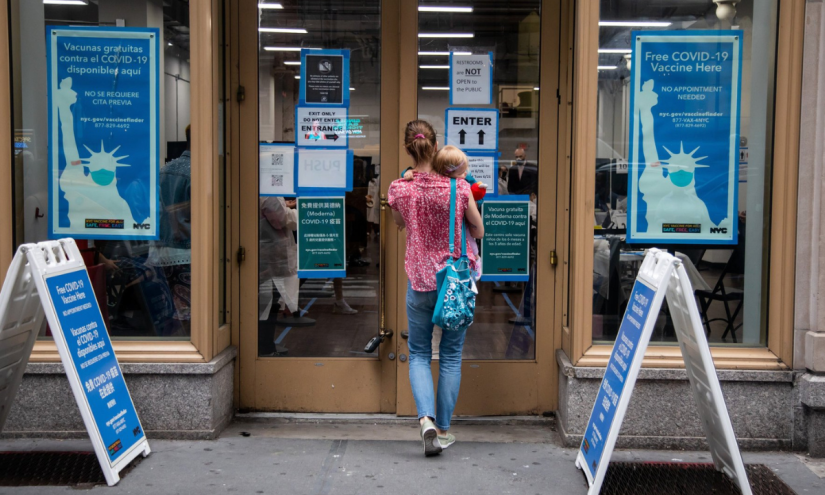
    Actions by the Food and Drug Administration last week mean that none of the COVID-19 vaccines that are slated to be on the U.S. market this fall will have an emergency use authorization that had allowed their quick (yet still rigorously tested) approval at the height of the pandemic. The removal of this designation means the drug company Pfizer will no longer offer COVID-19 vaccines to very young children, limiting parents’ brand options and potentially impacting supply.

    Moderna, Pfizer and Novavax, the three main COVID-19 vaccine manufacturers, have all shared news releases about what they’ve been approved to offer:

    • Moderna, Pfizer or Novavax will offer shots to anyone who is 65 and older, irrespective of medical history.
    • Pfizer will offer shots to anyone between the ages of five and 64 if they have at least one underlying condition that puts them at high risk for severe outcomes from COVID-19.
    • Moderna will offer shots to anyone between six months and 64 if they have at least one underlying condition that puts them at high risk for severe outcomes from COVID-19.
    • Novavax, the only company providing a non-mRNA COVID-19 vaccine, will offer shots to anyone between 12 and 64 if they have at least one underlying condition that puts them at high risk for severe outcomes from COVID-19.

    The vaccine panel known as the Advisory Committee for Immunization Practices (ACIP) is expected to make formal recommendations on these FDA-approved vaccines, and those recommendations have historically determined whether insurance providers will cover a vaccine at no cost under insurance.

    An HHS spokesperson did not immediately respond to a request for information and comment from The 19th, but in a post on X, Kennedy said: “These vaccines are available for all patients who choose them after consulting with their doctors.” Separately, USA Today reported on a document from HHS stating the FDA’s actions do “not affect access to these vaccines for healthy individuals. These vaccines remain available to those who choose them in consultation with their healthcare provider.”

    Dr. Marty Makary, FDA commissioner, added in a separate X post: “100% of adults in this country can still get the vaccine if they choose. We are not limiting availability to anyone.”

    But what that means practically for everyday people who want to access a COVID-19 shot — everything from whether their doctor will prescribe it, or if a pharmacy will be able to administer it, and whether there will be an out-of-pocket cost — is unclear for now. 

    How will it impact postpartum people?

    Pregnant people are expected to still have access to the vaccine because the CDC continues to list pregnancy as an underlying condition that puts an individual at high risk for severe outcomes from COVID-19. (The list of at least two dozen conditions also includes chronic health conditions and immunocompromised conditions.)

    But Kennedy, who has repeatedly questioned the safety of COVID-19 vaccines despite research that shows their effectiveness, announced in May that the CDC would no longer formally recommend such vaccines to pregnant people and healthy children, a move that seemed to contradict his own department

    Lactating and postpartum individuals must have an underlying medical condition to be eligible for one of the FDA’s approved vaccines, according to the American College of Obstetricians and Gynecologists (ACOG)’s understanding of the announcement. ACOG continues to recommend COVID-19 vaccination to people who are contemplating pregnancy, are pregnant, were recently pregnant or are now lactating.

    “We recognize that now, disappointingly, only lactating and postpartum individuals with an underlying condition will be eligible for vaccination. Still, it remains critical that pregnant patients receive the vaccines so that they are able to provide passive immunity from COVID-19 to their infants in those first few months of life before they can be vaccinated,” said ACOG President Steven J. Fleischman in an email.

    How will it impact healthy children?

    Healthy children will likely still be able to access the COVID vaccine, but the cost for a parent or guardian, as well as availability, will be impacted by these decisions.

    Charlotte A. Moser, co-director of the Vaccine Education Center at Children’s Hospital of Philadelphia, said parents who want to get their kids the COVID-19 vaccine should still be able to do so through what is called shared clinical decision-making in consultation with their child’s health care provider, according to the CDC’s current vaccine schedule. But it’s unclear whether this will change when ACIP meets again.

    But physicians who prescribe a COVID-19 vaccine outside of the parameters of how the FDA approved them would be OKing use of the shot “off-label” — a designation that means a medical product is being used outside of how the FDA approved it. That raises questions about access and cost. Physicians might not be willing to prescribe off-label because of concerns about liability.

    “I think that there will be a substantially smaller number of pediatricians, pharmacies, etc., who will be comfortable taking that risk,” O’Shea said.

    Dr. Dial Hewlett, medical director of tuberculosis services at Westchester County Department of Health in New York and a spokesperson for the Infectious Diseases Society of America, said an off-label prescription might also not be covered by insurance.

    “A mother or father can go in with their child and say, ‘I’d like for them to have the vaccine,’ but they may be told, ‘Well we’ll give it, but you’re going to have to pay $200,’” he said.

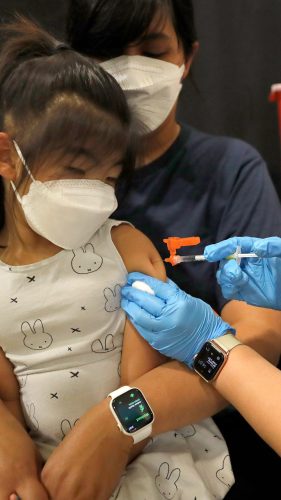
    The science on COVID vaccines has consistently indicated they are safe for children to receive.
    (Joseph Prezioso / AFP / Getty Images)

    Depending on the circumstances, pharmacists may also not be able to provide off-label vaccines. Some states tie pharmacist immunization authority to FDA approval,which has the potential to create a hodgepodge of access. The New York Times reported that CVS and Walgreens, the country’s largest pharmacy chains, have begun restricting COVID-19 shots in some states to people with a prescription. 

    “There may be some variability from state to state, but it’s a big barrier if FDA approval is not there, and the FDA approvals have been pulled back from where they were previously,” Hewlett said.

    The FDA announcement is “concerning,” added Moser, who noted that limiting Pfizer’s vaccine will make it more difficult for all children to get a COVID-19 vaccine this year because of anticipated supply limitations.

    O’Shea, the pediatrician in Michigan, said her office is currently deciding how many COVID-19 shots to stock, and it’s proving tricky as they weigh the cost vs. demand — the percentage of children under 18 getting the shot is under 15 percent.

    “Figuring out how much we want to have at any one time, and how we are going to give it to people — this really makes it a lot more complicated,” she said.

    What happens next?

    Moser said the announcement adds confusion for providers and families, and noted that the unilateral approach by Kennedy so far when it comes to vaccine policy “removes hundreds of voices of clinicians and scientists that were part of the process.” Moser recently served on ACIP and is among the members that Kennedy removed. He has replaced the panel with people who do not have relevant experience.

    “That army of voices ensured a process informed by clinical experience and scientific expertise to which the small group making these decisions now cannot possibly compare,” she said in an email.

    The revamped ACIP panel is scheduled to meet over two days beginning on September 18. Republican Sen. Bill Cassidy, a doctor who is chair of the Senate Health, Education, Labor, and Pensions (HELP) Committee, is now questioning whether that panel has enough legitimacy to meet, especially amid a leadership shakeup at the Centers for Disease Control and Prevention

    “Serious allegations have been made about the meeting agenda, membership, and lack of scientific process being followed for the now announced September ACIP meeting,” he said in a statement. “These decisions directly impact children’s health and the meeting should not occur until significant oversight has been conducted. If the meeting proceeds, any recommendations made should be rejected as lacking legitimacy given the seriousness of the allegations and the current turmoil in CDC leadership.”

    AAP called Kennedy’s latest COVID guidelines “deeply troubling” and urged COVID vaccine decision-making to remain between medical experts and families. 

    Dr. Susan J. Kressly, president of AAP, said in a statement that any barrier to COVID-19 vaccination as the nation enters the respiratory virus season creates “a dangerous vulnerability for children and their families.”

    “Any parent who wants their child vaccinated should have access to this vaccine,” she said, adding that HHS’ action “not only prevents this option for many families, but adds further confusion and stress for parents trying to make the best choices for their children.”

    This story was originally reported by Barbara Rodriguez of The 19th. Meet Barbara and read more of their reporting on gender, politics and policy.


    Get stories like these delivered straight to your inbox. Sign up for The 74 Newsletter

    Source link

  • Pediatricians Back COVID Vaccines, in Split From RFK Jr. – The 74

    Pediatricians Back COVID Vaccines, in Split From RFK Jr. – The 74


    The American Academy of Pediatrics recommends that children ages 6 to 23 months should receive a COVID-19 vaccine.


    Source link

  • What’s all the flap about bird flu?

    What’s all the flap about bird flu?

    Avian influenza has scared doctors and scientists for a generation. But its arrival in the United States might finally give the H5N1 bird flu virus the combination of factors it needs to cause a global pandemic.

    Those factors include a new carrier; dairy cattle; a regulatory system that protects farmers at the expense of human health; and a government bent on taking down an already weak public health infrastructure.

    The H5N1 avian influenza virus making headlines around the world — and driving up the price of eggs — in the United States is no youngster. It’s been around since at least 1996, when it was first spotted in a flock of geese in Guangdong in southern China.

    Since then it has spread around the entire world, tearing through flocks of poultry in Asia, Europe and the Americas and wiping out birds and mammals on every continent, including Antarctica. H5N1 bird flu only rarely infects people but as of the end of January 2025, the World Health Organization reported 964 human cases globally and 466 deaths, although many milder cases are likely to have been missed.

    Vets and virus experts have had their eyes on H5N1, in particular, for decades. It didn’t look like a serious threat when it killed geese in 1996. But the next year the virus caused an outbreak in people just over the border from Guangdong in Hong Kong.

    It infected 18 people and killed six of them before it was stopped. That got people’s attention. A 30% fatality rate is exceptionally high for a virus — something approaching the mortality of smallpox.

    Mutations and swap meets

    The virus gets its name from two prominent structures: the hemagglutinin, or H designation, and the neuraminidase, or N. All influenza A viruses get an HxNx name. The current circulating viruses causing human flu misery right now are H1N1 and H3N2, for example, as well as influenza B, which doesn’t get any fancy name.

    But influenza viruses are exceptionally mutation-prone, and even the extra designation doesn’t tell the whole story about the changes the virus has undergone. Every time a flu virus replicates itself, it can make a mistake and change a little. This is called antigenic shift. As if this wasn’t enough, flu viruses can also meet up inside an animal and swap large chunks of genetic material.

    The result? The H5N1 viruses now circulating are very different from those that were seen back in 1996 and 1997, even though they have the same name.

    This is what’s been going on over the past 30 years. H5N1 has been cooking along merrily in birds around the world. So, after the 1997 outbreak, not much was seen of H5N1 until 2003, when it caused widespread outbreaks in poultry in China. Researchers discovered it could infect wild waterfowl without making them sick, but it made chickens very sick, very fast. And those sick chickens could infect people.

    The best way to control its spread among poultry was to cull entire flocks, but if people doing the culling didn’t take the right precautions, they could get infected, and the virus caused serious, often fatal infections. Doctors began to worry that the virus would infect pigs. Pigs are often farmed alongside chickens and ducks, and they’re a traditional “mixing vessel” for flu viruses. If a pig catches an avian flu virus, it can evolve inside the animal to adapt more easily to mammals such as humans. Pigs have been the source of more than one influenza pandemic.

    Pandemic planning

    In the early 2000s, scientists and public health officials took H5N1 so seriously that they held pandemic exercises based on the premise that H5N1 would cause a full-blown pandemic. (Journalists were included in some of these exercises, and I took part in a few.)

    But it didn’t cause a pandemic. Vaccines were developed and stockpiled. Pandemic plans were eventually discarded, ironically just ahead of the Covid pandemic.

    However, flu viruses are best known for their confounding behavior, and H5N1 has always been full of surprises. It has evolved as it has spread, sometimes popping up and sometimes disappearing, but never causing the feared human pandemic. It has not spread widely among pigs although it has occasionally infected people around the world, as well as pet cats, zoo animals, wild seals, polar bears, many different species of birds and, most lately, dairy cattle.

    It’s this development that might finally be a turning point for H5N1.

    For a virus to start a human pandemic, it must acquire the ability to infect people easily; it must then pass easily from person to person; and it must cause significant illness.

    Competing interests

    So far, this hasn’t happened with H5N1. It has infected 68 people in the United States, mostly poultry or dairy workers. Mostly, it causes an eye infection called conjunctivitis, although it killed one Louisiana man. But it is spreading in a never-before-seen way — on milking equipment and in the raw milk of the infected cattle.

    “The more it spreads within mammals, that gives it more chances to mutate,” said Nita Madhav, a former U.S. Centers for Disease Control and Prevention researcher who is now senior director of epidemiology and modeling at Ginkgo Biosecurity. I interviewed her for a podcast for One World One Health Trust. “As it mutates, as it changes, there is a greater chance it can infect humans. If it gains the ability to spread efficiently from person to person, then it would be hard to stop,” Madhav said.

    And while some states are working to detect and control its spread, the federal government is not doing as much as public health experts say it should. Two agencies are involved: the U.S. Department of Agriculture (USDA) and the Centers for Disease Control (CDC).

    Dr. John Swartzberg, a health sciences clinical professor emeritus at the University of California, Berkeley said in an interview with the UC Berkeley School of Public Health that the USDA is charged with two responsibilities that only sometimes work in concert.

    “One of the responsibilities they have is to assure a healthy agricultural industry for the United States,” Swartzberg said. “The second responsibility is to assure safety of the human beings who consume agricultural products in the United States.”

    More information, not less, is needed.

    Dairy farmers feared they’d lose money if their farms were identified as sources of infection. And it’s a lot more expensive to cull cattle than it is to cull chickens.

    “And I think what we’ve seen with this bird flu problem is that the USDA is tilted in favor of protecting the industry, as opposed to protecting the health of humans,” Swartzberg said. “CDC is also involved, but the CDC has no authority to go into states and tell them what to do. It has to be done state by state.”

    On top of that, U.S. President Donald Trump has ordered the CDC to take down websites reporting on avian flu and other issues. He is withdrawing U.S. membership from WHO, crippling the ability to coordinate with other countries on controlling outbreaks of disease.

    He notably tried to suppress reporting about Covid during his previous presidency and promoted unproven and disproven treatments.

    His newly confirmed Health and Human Services Secretary, who will oversee CDC and other agencies charged with human health, Robert F. Kennedy, Jr, is a vaccine denier, proponent of raw milk and has no public health qualifications.

    The stubbornness of people in the United States doesn’t help. When public health officials warned against drinking raw milk last year, raw milk sales actually went up.

    “Food safety experts like me are just simply left shaking their heads,” Donald Schaffner, a Rutgers University food science professor, told PBS News.

    The big fear? That in flu season, someone will catch both seasonal flu and H5N1, giving the viruses a chance to make friends in the body, swap genetic material and make a deadly new virus that can infect people easily.


    Three questions to consider:

    1. How can politics affect public health risk?
    2. How does public understanding and trust affect the risk of disease?
    3. Countries often blame one another for the spread of disease, but should they?


    Source link