
Category: Video

  • 5 tips for educators using video

    5 tips for educators using video

    Key points:

    When you need to fix your sink, learn how to use AI, or cook up a new recipe, chances are you searched on YouTube, TikTok, Instagram, or even Facebook–and found a video, watched it, paused it, rewound it, and successfully accomplished your goal. Why? Videos allow you to get the big picture, and then pause, rewind, and re-watch the instruction as many times as you want, at your own pace.  Video-based instruction offers a hands-free, multichannel (sight and sound) learning experience. Creating educational videos isn’t an “extra” for creating instruction in today’s world; it’s essential.

    As an educator, over the past 30 years, I’ve created thousands of instructional videos. I started creating videos at Bloomsburg University early in my career so I could reinforce key concepts, visually present ideas, and provide step-by-step instruction on software functionality to my students. Since those early beginnings, I’ve had the chance to create video-based courses for Lynda.com (now LinkedIn Learning) and for my YouTube channel.

    Creating instructional videos has saved me time, expanded my reach, and allowed me to have more impact on my students.

    Tips

    Creating educational videos over the years has taught me a number of key lessons that can help you, too, to create impactful and effective instructional videos.

    Be yourself and have fun

    The first rule is to not overthink it. You are not giving a performance; you are connecting with your students. In your instructional video, talk directly to your students and connect with them. The video should be an extension of your personality. If you tell silly jokes in class, tell silly jokes in the video. You want your authentic voice, your expressions, and your energy in the videos you create.

    And don’t worry about mistakes. When I first did Lynda.com courses, any small mistake I made meant we had to redo the take. However, over the years, the feedback I’ve received on the videos across LinkedIn Learning indicated that flawless performances were not the way to go because they didn’t feel “real.” Real people make mistakes, misspeak, and mispronounce words. Students want to connect with you, not with flawless editing. If you stumble over a word, laugh it off and keep going. The authenticity makes the student feel like you’re right there with them. If you watch some of my current LinkedIn Learning courses, you’ll notice some mistakes, and that’s okay–it’s a connection, not a distraction.

    Speak with the students, don’t lecture

    Video gives you the chance to have an authentic connection with the student as if you were sitting across the desk from them, having a friendly but informative chat. When filming, look directly into the camera, but don’t stare–keep it natural. In actual conversations, two people don’t stare at each other, they occasionally look away or look to the side. Keep that in mind as you are recording. Also make sure you smile, are animated, and seem excited to share your knowledge. Keep your tone conversational, not formal. Don’t slip into “lecture mode.” When you look directly into the camera and speak directly to the student, you create a sense of intimacy, presence, and connection. That simple shift from a lecture mindset to conversation will make the video far more impactful and help the learning to stick.

    Record in short bursts

    You don’t have to record a one-hour lecture all at once. In fact, don’t!  A marathon recording session isn’t good for you. It creates fatigue, mistakes, and the dreaded “do-over” spiral where one slip-up makes you want to restart the entire video. Instead, record in short bursts, breaking your content into segments. Usually, I try to record only about four to five minutes at a time.  The beauty of this technique is that if it’s completely a mess and needs a total “do over,” you only need to re-record a few minutes, not the entire lecture. This is a lifesaver. Before I began using this technique, I dreaded trying to get an entire one-hour lecture perfect for the recording, even though I was rarely perfect in delivering it in class. But the pressure, because it was recorded, was almost overwhelming.

    Now, I record in small segments and either put them all together after I’ve recorded them individually or present them to students individually. The advantage of individually recorded videos for students is that it makes the content easier to learn. They can re-watch the exact piece they struggled with instead of hunting through an hour-long video to find just what they need.

    Keep it moving

    A word of caution: We’ve all seen those videos. You know the ones: A tiny talking head hovers in the corner, reading every bullet point like it’s the audiobook version of the slide while the same slide just sits there for 15 minutes with no movement and no animation–not even a text flying in from the left. Ugh. Don’t let your visuals sit there like wallpaper. Instead, strive for movement. About every 30 seconds, give learners something new to look at. That could mean switching to the next slide, drawing live on a whiteboard, cutting to you speaking and then back to the slide, or animating an illustration to show movement. The point is that motion grabs attention. For a video, cut down your wall-of-text slides. Use fewer words and more slides. If you have 50 words crammed on one slide, split it into three slides. Insert an image, a chart, or even a simple sketch. If you’re teaching software, demonstrate it on screen instead of describing it in words. If you’re explaining a process, illustrate the steps as you go. The more movement, the more likely you are to hold the learner’s attention.

    Keep production simple

    The good news about creating educational videos is that you don’t need a big budget or a film crew to get started. All you need is a camera, a good microphone, and a simple video creation tool. Now, I would advise not using your laptop’s built-in camera or microphone. They don’t do the job well. You don’t want a grainy, pixelated picture or muffled audio. They make it too hard for students to focus and even harder for them to stay engaged. For video, I recommend using an external webcam. Even a modest one is a huge step up from what’s baked into most PCs. For audio, go with an external microphone, or even a good-quality headset. For the video tool, I have not found a simpler or easier-to-use tool than Camtasia’s free online, cloud-based tool. The free version lets you record your screen, capture your voice, do slight edits, and add backgrounds.  It is more than enough to create clear, useful videos that your students can actually learn from. Remember, the goal isn’t Hollywood production. You want clear, effective, and authentic instructional videos.

    By using these five tips, educators can create instructional videos to save time, expand their reach, and create greater impacts on their students. Grab a good camera, a decent headset, and free video software, and create your first instructional video. Just simply start. You’ll wonder why you waited so long.

    Latest posts by eSchool Media Contributors (see all)

    Source link

  • How to Be A Great Podcast Guest with Cheryl Lau

    How to Be A Great Podcast Guest with Cheryl Lau

    Academic voices should be heard. Are you open to sharing yours? This episode of The Social Academic is about podcasting. Podcast host, coach, and producer, Cheryl Lau joins me to talk about podcasting for academics like you.

    Have you been a guest on a podcast? Have you thought about starting your own podcast as an academic? Much of this conversation is advice for people who want to be guests on the show.

    Cheryl Lau shares great advice toward the end specific for those of you dreaming about having your own podcast. What else do you dream about for your online presence, academics?

    Cheryl Lau is the host of the EDIT HISTORY podcast, podcast content strategist, and podcast producer.

    Cheryl started her own podcast in 2020. Her show was shortlisted for the 2024 Asia Podcast Awards (by Radioinfo Asia) in the “Best Money and Business Podcast” category and won the 2023 Golden Crane Award (by the Asian American Podcasters Association) in the “Best Entrepreneur/Solopreneur Podcast” category.

    Today, she helps business owners, consultants, and creators build a podcast content strategy that resonates with their audience, differentiates their brand, and establishes their position in the industry.

    She also works with organizations and established shows through podcast production. From ideation and guest prep to editing, publishing, and promotion, Cheryl oversees every stage of podcast production.

    Source link

  • What do you dream about for your online presence, academics?

    What do you dream about for your online presence, academics?

    What do you dream about your online presence that you’re not at now? Is there something you think you want in the future, but you just can’t see it happening? Feel like it will take more work than you have capacity for right now?

    That’s how I felt about my blog/podcast/updating my website. At one point, I felt not good about each of these things. You see, website updates are something that can happen anytime. For professors that might include adding a new publication or speaking engagement.

    But when there are substantive changes you dream about? Or a new project? Sometimes that list of to-do’s can add up. That makes it more than updating what you already have.

    For your online presence, that might look like doing an overhaul of your LinkedIn profile. Writing a new academic bio or faculty profile. Doing a professional photoshoot for photos of you.

    So what sparked taking action for me? Doing it for myself wasn’t enough. It’s when I thought about who this would help, the people who were involved. Which is you! The readers! And all the academics to come.

    I was open about the fact that I was behind on this with my friends, Brittany Trinh and Jennifer Ho. They happened to need to update their websites too. I ended up hosting a coworking day for us. It was fun to do it together, each of us using our energy towards better communication. Sharing a clear representation of who we are on our websites is always a good use of time.

    That’s true for clients I work with on their websites. We’re doing it together. The process of dreaming can make it beautiful. If you have a friend or colleague who is also interested in their online presence, I encourage you to do it together and cheer each other on too.

    That’s one thing I love about websites: it allows me to create an open source trove of articles and interviews that people can find, and people do find, even years after they’ve been shared.

    I’m sharing this story with you because of what came after my redesign, when there was no more to-do list and I had space to think and dream again. That’s when creative opportunity sparked.

    I want to have more conversations with professors, grad students, researchers, the people who help them… because telling our own stories is really powerful. 

    When we can build community and share what we’re open about with people in ways that could help them, we have to make that work for our lives. It has to be doable within our creative constraints, equipment, budget, tech, skills, and time. There are all these things that might impact how we feel about our dreams. 

    For me, having my podcast has always been not consistent. I don’t release episodes on a set schedule. I don’t have the regular publishing schedule that I admire in other podcasters. But I love being able to share in these more accessible ways. 

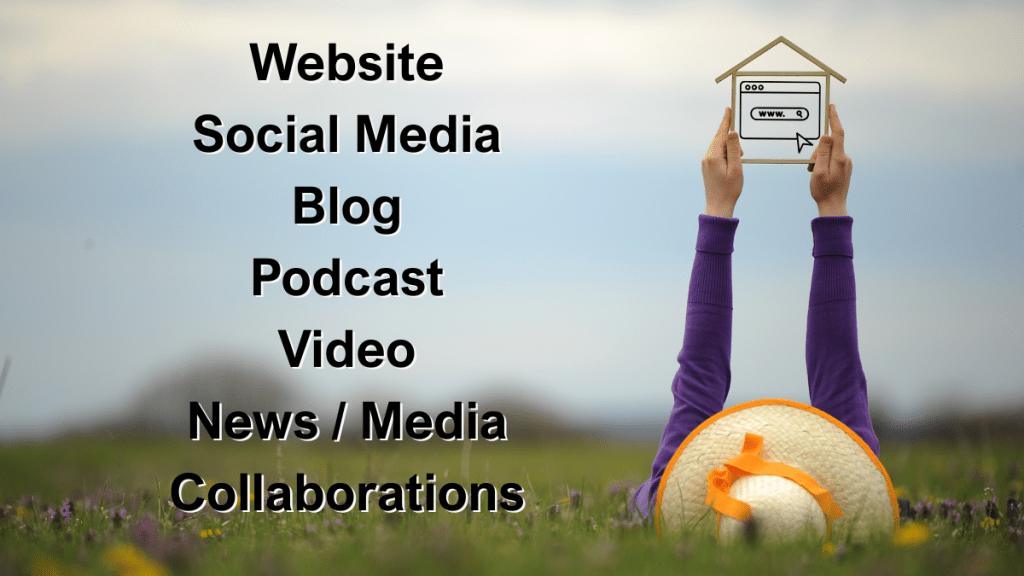
    I love that you can experience an interview in written form, or watch it on YouTube, or check it out on Spotify. Creating in written, audio, and video format makes it interesting for me to create and it helps more people. I have the capacity to do that. Consistency is the only thing I sacrificed.

    Subscribe to The Social Academic blog.

    The form above subscribes you to new posts published on The Social Academic blog.
    Want emails from Jennifer about building your online presence? Subscribe to her email list.
    Looking for the podcast? Subscribe on Spotify.
    Prefer to watch videos? Subscribe on YouTube.

    Actually, I remember my first time being open to being on video for my podcast (which had been audio only for 1+ year). I interviewed Dr. Ruth C. White about being on video and TV. She shared a story about pitching herself to the local TV station in the middle of the night. In the morning, she had an invitation to appear on their show that day as an expert on mental health.

    I thought, ‘Wow! I’m so glad I was open to trying out putting myself out there when I didn’t know if I was going to stick with it.’ To be honest, I thought I’d go back to audio and leave YouTube. Nothing was set in stone, except my willingness to try.

    When the spark came that I wanted to highlight more people on The Social Academic this year, I realized my current process of getting episodes out wasn’t going to be within my capacity.

    I’d been teaming up with an audio engineer, Sir Nic, and my husband, Matthew, was doing the video editing. We had a process we were happy with that worked for a long time. But the time frame to get episodes out wouldn’t have allowed me to highlight all the people that I had dreamed about.

    That’s why The Social Academic interview series is now a live-first format. And honestly? That kinda makes me laugh. It brings up a memory of a friend from college, Jose, who was a YouTuber. He was well known enough that some people recognized him. And he made it work, recording in his college dorm room. Jose used to livestream on a platform called YouNow, which is how I met one of my favorite DJs. And, where I first forayed into livestreaming.

    At the time, I was deep into research for my creative thesis, a collection of poetry based on the pianist, Glenn Gould. Gould had a fascinating view of the relationship between audience and performer, and became reclusive later in life. I was a singer. And my own relationship with performance had shifted. It was like better understanding Gould helped me make a more informed decision for myself.

    I no longer wanted to sing for people in person. But I was curious about how musicians were opening themselves up to performing virtually. It seemed like a different relationship, one that created distance while also sharing this more intimate personal side of the musician livestreaming. And the musicians? They seemed mostly relaxed.

    I wanted to explore how I felt performing live to strangers. It touches me to think back to that moment of bravery because opening yourself up can be scary for many people. It certainly was for me. I tried livestreaming a few times. I even got a couple virtual tips. And while my livestreaming experience on YouNow was shortlived, it opened up my mind to what it meant to hold space for people. And, to create space for yourself too.

    Sometimes, the things we try out aren’t your dreams. But they help other people. Maybe they build your capacity. Or, help you to better understand yourself.

    While I never dreamed about being a livestreamer, it really works with the kind of openness I am hoping we can create for each other in that conversation when we are live on The Social Academic interview series.

    P.S. There is another live on YouTube this evening! Dr. Lily Rosewater joins me to talk about what it means to be more visible as an expert.

    What dreams do you have? What dreams have you been holding back? Is there something you’re open to, but you aren’t sure how to get there?

    You don’t have to move forward with your dream now. I just love that you’re open to it for yourself in the future. If I’m more open to my dreams, if my guests are open to their dreams, if you the reader are more open to your dreams…we can better protect higher education in the ways that we care about it.

    Research is important, teaching is important, faculty, and each person on campus has value.

    I want people to be able to have a voice.

    It’s ok if the way you dream about sharing your voice doesn’t feel accessible to you right now. There may be ways or opportunities for you in the future. Naming your dream now can be a gift to ourselves.

    I want to wrap up with a personal story. My father-in-law, Bob Pincus, was one of my first clients back when I started The Academic Designer LLC in 2018. His online presence was not something he dreamed about. Social media in general was not a priority for him. He’s an art history professor, and a local celebrity here where he was art critic for the San Diego Union-Tribune for many years.

    Whether social media was a priority for Bob or not, his audience of people who already care about and were connected with him, were on social media. Every time he posts on Facebook, people are excited to talk with him. Do you have a professor friend like that?

    I’m sharing this story with you because Bob, who never loved social media, had a new dream recently. And actually this is funny, because none of us can remember what first sparked it. My mother-in-law, Georgie, says it was my idea. My husband, Matthew, says it was Bob’s. One day at the Costco in Carlsbad, California, we’re sitting at the outdoor bench having a slice of pizza. By the end of the slice, a plan for his YouTube channel was already in the works.

    Someone who never dreamed about having a YouTube channel now has multiple episodes in progress. He’s sharing in meaningful ways with the public about art in America through video.

    When Bob was laid off from paper, like many excellent journalists around the country were, people suggested he create something for himself. They said, “You should start a podcast!” or a blog. More recently he’s been encouraged to try Substack or a LinkedIn newsletter.

    But you have to want it for yourself.

    I’m so glad that when the spark for sharing on video came to Bob, he was open to the conversation. To turning the idea over in his head and seeing what we could make happen for him as a team. While you can totally start your YouTube channel on your own like I did, Bob knew he didn’t want to get there on his own. When you have an idea, it’s okay if you’re like Bob, thinking, “I need collaborators on this.” Maybe your idea is best solo, but it’s okay if you need a team to support each other too.

    One professor I chatted with who dreams about a podcast to talk about her research field, shared that a reason she’s wanting to be more active on social media is in hopes of finding a co-host for that dream.

    When we have a dream that feels like us and helps share our voice, it’s ok if you don’t know how to get there. These academics were all DIY for their YouTube. I’ve met podcasters who have started on their phone. I’ve met people whose university was able to support them in creating their podcast.

    There are awesome professors out there who turn their class into a limited-time podcast, and encourage students to create video even if it’s something they’ve never tried before.

    I want you to believe that if you don’t know how to do something, there’s an opportunity to explore your dream in the future when you’re ready.

    Here’s a few ideas for what you may dream about for yourself as a professor or researcher. You can help more people by being intentional about how you show up online. If it’s something you want for yourself? I’m excited for you. You’ve got this. Find resources on The Social Academic blog to help you.

    Subscribe to The Social Academic blog.

    The form above subscribes you to new posts published on The Social Academic blog.
    Want emails from Jennifer about building your online presence? Subscribe to her email list.
    Looking for the podcast? Subscribe on Spotify.
    Prefer to watch videos? Subscribe on YouTube.

    Source link