

Category: Virtual Field Trips

  • Effective tools to foster student engagement

    Effective tools to foster student engagement

    Key points:

    In my classroom, students increasingly ask for relevant content. Students want to know how what they are learning in school relates to the world beyond the classroom. They want to be engaged in their learning.

    In fact, the 2025-2026 Education Insights Report vividly proves that students need and want engaging learning experiences. And it’s not just students who see engagement as important. Engagement is broadly recognized as a key driver of learning and success, with 93 percent of educators agreeing that student engagement is a critical metric for understanding overall achievement. What is more, 99 percent of superintendents believe student engagement is one of the top predictors of success at school.

    Creating highly engaging lesson plans that will immerse today’s tech-savvy students in learning can be a challenge, but here are two easy-to-find resources that I can turn to turbo-charge the engagement quotient of my lessons:

    Virtual field trips
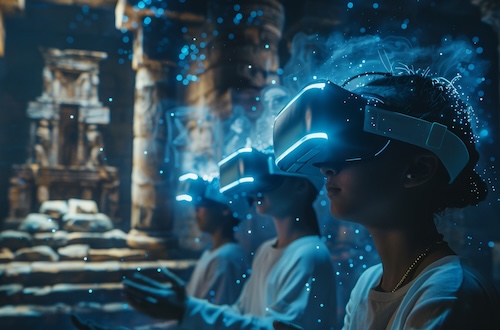
    Virtual field trips empower educators to introduce students to amazing places, new people and ideas, and remarkable experiences–without ever leaving the classroom. There are so many virtual field trips out there, but I always love the ones that Discovery Education creates with partners.

    This fall, I plan to take my K-5 students to see the world’s largest solar telescope, located in Hawaii, for a behind-the-scenes tour with the National Science Foundation and Sesame. For those with older grades, I recommend diving into engineering and architecture with the new Forging Innovation: A Mission Possible Virtual Field Trip.

    I also love the virtual tours of the Smithsonian National Museum of Natural History. Together as a class or individually, students can dive into self-guided, room-by-room tours of several exhibits and areas within the museum from a desktop or smart device. This virtual field trip does include special collections and research areas, like ancient Egypt or the deep ocean. This makes it fun and easy for teachers like me to pick and choose which tour is most relevant to a lesson.

    Immersive learning resources
    Immersive learning content offers another way to take students to new places and connect the wider world, and universe, to the classroom. Immersive learning can be easily woven into the curriculum to enhance and provide context.

    One immersive learning solution I really like is TimePod Adventures from Verizon. It features free time-traveling episodes designed to engage students in places like Mars and prehistoric Earth. Now accessible directly through a web browser on a laptop, Chromebook, or mobile device, students need only internet access and audio output to begin the journey. Guided by an AI-powered assistant and featuring grade-band specific lesson plans, these missions across time and space encourage students to take control, explore incredible environments, and solve complex challenges.

    Immersive learning content can be overwhelming at first, but professional development resources are available to help educators build confidence while earning microcredentials. These resources let educators quickly dive into new and innovative techniques and teaching strategies that help increase student engagement.

    Taken together, engaging learning opportunities are ones that show students how classrooms learnings directly connect to their real lives. With resources like virtual field trips and immersive learning content, students can dive into school topics in ways that are fun, fresh, and sometimes otherworldly.

    Latest posts by eSchool Media Contributors (see all)

    Source link

  • 7 new and engaging virtual field trips

    7 new and engaging virtual field trips

    Key points:

    Virtual field trips have emerged as an engaging resource, offering students immersive experiences and allowing them to explore global landmarks, museums, and natural wonders without leaving their classrooms.​

    Virtual field trips connect students to places that, due to funding, geography, or other logistical challenges, they may not otherwise have a chance to visit or experience.

    These trips promote active engagement, critical thinking, and cater to diverse learning styles. For instance, students can virtually visit the Great Wall of China or delve into the depths of the ocean, fostering a deeper understanding of subjects ranging from history to science.

    If you’re looking for a new virtual field trip to bring to your classroom, here are a few to investigate:

    Giant Panda Cam at the Smithsonian National Zoo: Watch Bao Li and Qing Bao–the two new Giant Pandas at Smithsonian’s National Zoo–as they explore their indoor and outdoor habitats at the David M. Rubenstein Family Giant Panda Habitat. The Giant Panda Cam is live from 7 a.m. to 7 p.m. ET daily. After 7 p.m., the cam feed will switch to a pre-recorded view of the last 12 hours.  

    The Superpower of Story: A Virtual Field Trip to Warner Bros. Studios: Students will go behind the scenes on an exclusive virtual field trip to DC Comics headquarters at Warner Bros. Studios in Burbank, California!.They’ll step into the world of legendary superheroes and blockbuster films, uncovering the secrets of how stories evolve from bold ideas to iconic comics to jaw-dropping live-action spectacles on the big screen. Along the way, they’ll hear from the creative minds who shape the DC Universe and get an insider’s look at the magic that brings their favorite characters to life.

    Mount Vernon: Students can enter different buildings and click on highlighted items or areas for explanations about their significance or what they were used for.

    Arctic Adventures: Polar Bears at Play Virtual Field Trip: Do polar bears play? The LEGO Group’s sustainability team, Polar Bears International, and Discovery Education travel to Churchill Manitoba and the Polar Frontier habitat at the Columbus Zoo and Aquarium in search of polar bears at play. Students will meet polar bears and play experts and uncover how arctic animals use play to learn just like humans, while inspiring students to use their voice to change their planet for the better.

    The Manhattan Project: Join The National WWII Museum for a cross-country virtual expedition to discover the science, sites, and stories of the creation of the atomic bomb. Student reporters examine the revolutionary science of nuclear energy in the Museum’s exhibits and the race to produce an atomic weapon in complete secrecy. 

    The Anne Frank House in VR: Explore the hiding place of Anne Frank and her family in virtual reality using the Anne Frank House VR app. The app provides a very special view into the Secret Annex where Anne Frank and the seven other people hid during WWII. In the VR app, all of the rooms in the Secret Annex are furnished according to how it was when occupied by the group in hiding, between 1942 and 1944. 

    Night Navigators: Build for Bats Virtual Field Trip: Join Discovery Education, the LEGO Group’s Social Responsibility Team, and Bat Conservation International as we travel across Texas and Florida in search of bat habitats. Students will meet play experts as they explore how these nighttime pollinators use play to learn and discover the critical role of bats in protecting farmers’ crops from pests and what we can do to help bats thrive.

    Laura Ascione
    Latest posts by Laura Ascione (see all)

    Source link