Category: WePod

  • The art of communicating across borders

    The art of communicating across borders

    As communications manager, I quickly learned that translation is never just about swapping words. It’s about tone, style, even design. A press release that sounded professional in Paris could feel cold in Rome. A social media graphic that looked fresh in Madrid felt too flashy in Berlin.

    The solution was to build a common identity and then let each country adapt it. Slower, yes. But the result felt more authentic, and audiences responded.

    These challenges are not unique to communication teams; they are central to journalism itself. The biggest stories today — migration, climate change, political unrest — rarely stop at national frontiers. To cover them well, reporters must collaborate across borders.

    Translation beyond words

    That type of collaboration is messy. Sources are harder to coordinate. Legal and cultural differences can complicate investigations. And readers, or listeners, may have very different expectations depending on their nationality or where they live.

    But when it works, it is powerful. Our podcasts carried voices across Europe, letting audiences in one country hear accents, pauses and perspectives from another. It turned abstract debates into human stories.

    Working across cultures also reminded me that projects are not just tasks — they are people. Some partners preferred long memos, others quick calls. Some valued hierarchy, others wanted open debate. I learned to leave space for informal chat, to ask how colleagues were doing before diving into deadlines.

    Those small gestures built trust, and trust kept the project moving.

    For young journalists and students, the lesson is simple: cross-border work can feel messy, but it’s worth it. Don’t be discouraged by misunderstandings; they often lead to clearer understanding. Pay attention not only to language, but to culture. And above all, listen.

    My two years with WePod taught me that communication is less about perfect phrasing and more about building bridges. In the end, that is what journalism itself is meant to do: connect people across borders, cultures and languages.


    Questions to consider:

    1. What does the author mean by translating is more than swapping out words?

    2. How can people from different countries and cultures find a common identity?

    3. How would you communicate with someone who speaks a different language?


    Source link

  • Can you make your podcast sound great?

    Can you make your podcast sound great?

    Emotion and identity

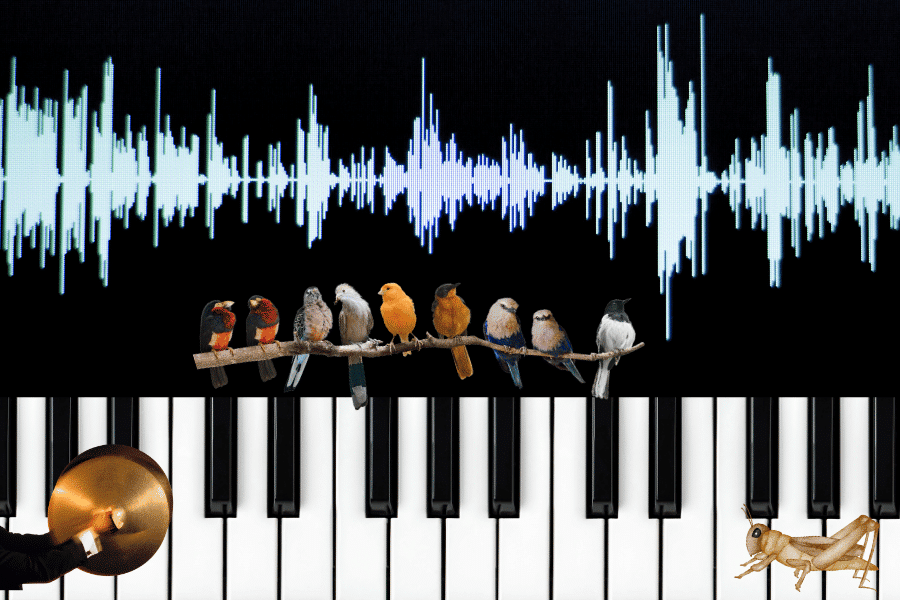
    The third layer gives a podcast emotion and the three elements, together, make the sound of a podcast, he said. 

    “So, it’s not just music,” he said. “These three elements move together during the narration.”

    The goal is to combine music and sound effects to create a “rhythm of narration.” After an important word, he might create a pause and in it increase the music. After that, come sound effects.  

    Caminero wanted to know what Micheli considers when creating music to give a podcast emotion and identity. Micheli said that an important part of the process is to re-listen to what you have done to try to create consistent sound.

    “It’s very important because we spend a lot of time on the timeline,” he said. “We work a lot in depth on the details, but at a certain point you have to change your position and change your mind and you have to become not a creator, you have to become a listener.”

    You don’t always need to create original music for your podcast soundtrack. Micheli suggests combining original music with music you can find in a sound library, but note that it isn’t easy. “It is quite a job to find the right music, right sound in this gigantic archive and match together original music and other music,” he said. “I think it’s the best way for creating the sound for a podcast.”

    Creating original music makes the most sense for podcasts that are documentaries or fiction, Micheli said. But most important is that the podcast must have a good story and script first. 


    Questions to consider:

    1. What does Micheli mean by a “rhythm of narration”?

    2. How can you add great sound to a podcast if you can’t compose music yourself?

    3. If you were to create a podcast series what would it be about and what kind of sound would you use?


    Source link

  • Can a podcast cross borders?

    Can a podcast cross borders?

    “To me the essential ingredient is that two persons or two teams from different countries collaborate, right?” Ricci said. “So who’s doing the podcast itself makes it really a cross-border operation.”

    A podcast becomes cross-border, he said, when you bring different perspectives from different countries together in one story. There are two ways to make that story compelling to both the audiences and to Europe as a whole.

    The first way, he said, is to have a strong story that articulates across borders and is relevant for two countries. It can be a very specific story that relates to feelings and notions interesting to anyone. The second way is to start from a general topic and then find a story within that topic. 

    “I’d really love that all podcasts speak to every audience we aim to target,” Ricci said. “I think it’s the biggest challenge to make sure that every podcast finds its audience in every national context.”

    At WePod, the team divided the production process into stages. 

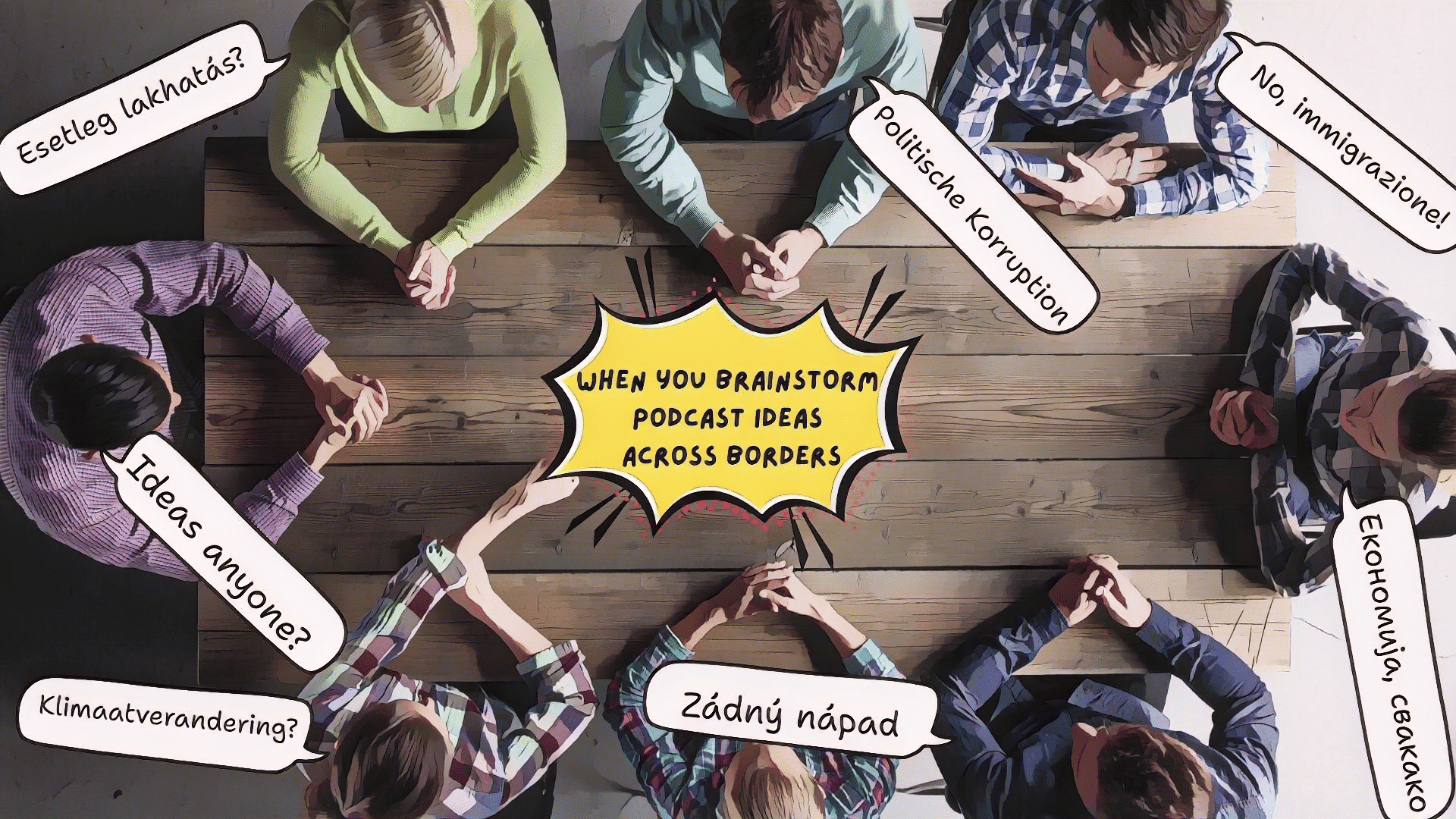
    First there was a pre-editorial stage where they brainstormed ideas. Then came a pre-production phase, where within the topic they reflected more concretely about the characters of each podcast. 

    “How do the different episodes talk to each other?” Ricci said. 

    Provide room for perspectives.

    That was followed by the production phase. That involved going on the ground, setting up interviews and working on scripts and language transcriptions. 

    Finally, in the post-production phase everything textual became a finished podcast, ready to be promoted and distributed. 

    Caminero said that every podcast WePod did was produced in at least two languages, the first in the native language of the podcast producer and in English for a cross-border audience. “Obviously, this creates specific challenges because not all versions can be identical,” Caminero said. “You need to make room for adaptations.”

    Ricci said that it was important in a big production like WePod, with people from different nationalities, to give people room to express themselves. “I think it takes time just to sit around the table, understand each other,” Ricci said. 

    This becomes important when you have deadlines and deliverables. “You’re pretty much kind of freaking out to meet everything, every deliverable you have to meet, every deadline,” Ricci said. If you try to impose a top down approach, it won’t work.

    “So, I think it just takes a lot of talking before action,” Ricci said. 


    Questions to consider:

    1. What does it mean to be cross-border?

    2. How can a story that is interesting in one country have resonance in another?

    3. Can you think of a topic important to your region that would also be important to people elsewhere?


    Source link