Category: women

  • When young girls pay the cost of climate change

    When young girls pay the cost of climate change

    Jaffarabad, Balochistan: When floodwaters swept through Shaista’s village in 2022, they didn’t just take her family’s home and farmland, they also took away her childhood. Just 14 years old, Shaista was married off to a man twice her age in exchange for a small dowry. 

    Her father, a daily wage laborer, said it was the most painful decision he has ever made.

    “I didn’t want to do it,” he said, his eyes fixed on the cracked earth where his fields used to be. “But I have four other children to feed and no land to farm. We lost everything.”

    Stories like Shaista’s are becoming increasingly common across Balochistan, Pakistan’s poorest province. In 2022, devastating floods there driven by record-breaking monsoon rains and accelerated glacial melt linked to climate change, displaced over 1.5 million people.

    There is worldwide recognition that extreme weather events — not just floods, but drought, heatwaves, tornados and hurricanes — are becoming more frequent and less predictable as the planet warms. These events have devastating and long-term consequences for people in poor regions. 

    Young girls as assets 

    In districts like Jaffarabad and Chowki Jamali, the aftermath of the disaster has left families grappling with deepening poverty, food insecurity and crushing debt. For many, marrying off their young daughters is no longer just a tradition, it’s a form of survival.

    A 2023 survey by the Provincial Disaster Management Authority reported a 15% spike in underage marriages in flood-affected regions. Child rights activists warn that these numbers likely underestimate the scale of the crisis, as most cases go unreported.

    “In flood-hit areas, families are exchanging their daughters to repay loans, buy food or simply reduce the number of mouths to feed,” said Maryam Jamali, a social worker with the Madad Community organization. “We’ve documented girls as young as 12 being married to men in their forties or fifties. This isn’t about tradition anymore, it’s desperation.”

    Bride prices, once a source of negotiation and family prestige, have plummeted due to the economic collapse. Activists report instances where girls are married for as little as 100,000 Pakistani rupees (roughly US$360), or in some cases, simply traded for livestock or debt forgiveness.

    “There are villages where girls are married off like assets being liquidated,” said Sikander Bizenjo, a co-founder of the Balochistan Youth Action Committee. “It’s not just a violation of rights, it’s a systemic failure rooted in climate vulnerability, poverty and legal gaps.”

    Marriage as debt payment

    In Usta Muhammad, another flood-ravaged district, 13-year-old Sumaira (name changed) was married off just weeks after her family’s mud house collapsed. Her parents received 300,000 rupees (a little over $1,000) from the groom’s family, which they used to rebuild their shelter and repay moneylenders. 

    Now pregnant, Sumaira, has dropped out of school and rarely leaves her husband’s house.

    “I miss my friends and school,” she told us softly. “I wanted to become a teacher. But my parents said there was no other way.”

    Child marriages like Shaista’s and Sumaira’s carry lasting consequences: early pregnancies that endanger both mother and child, disrupted education, psychological trauma and lifetime economic dependence. 

    A study following the 2010 floods found maternal mortality rates in some affected regions were as high as 381 per 100,000 live births, one of the highest in the world.

    “These girls are thrust into adult roles before they’re ready,” said Dr. Sameena Khan, a gynecologist in Quetta. “They face dangerous pregnancies, and many have no access to medical care. Their childhood ends the moment they say ‘yes’ or are forced to.”

    Giving girls an alternative to marriage

    The crisis unfolding in Balochistan is not unique. Across the world, climate shocks and civil strife are causing displacement that intensifies the risk of child marriage. 

    In 2024, News Decoder correspondent Katherine Lake Berz interviewed 14-year-old Ola, who nearly became a child bride after her Syrian family, displaced by war and facing severe poverty, began arranging her marriage to an older man. But before that coil happen, Ola was able to enroll in Alsama, a non-governmental organization that provides secondary education to refugee girls. In less than a year, she was reading English at A2 level.

    Alsama, which has more than 900 students across four schools and a waiting list of hundreds, has been able to show girls and their parents that education can offer an alternative path to security and dignity.

    In Balochistan, the absence of legal safeguards compounds the crisis. The Sindh province banned child marriage in 2013 under the Sindh Child Marriage Restraint Act which set the legal age at 18 for both girls and boys. But Balochistan has yet to enact a comparable law. 

    Nationally, Pakistan remains bound by the UN Convention on the Rights of the Child, which requires nations to end child marriage but enforcement remains patchy. And Pakistan is not one of the 16 countries that have also signed onto the Convention on Consent to Marriage, Minimum Age for Marriage and Registration of Marriages, which forbids marriage before a girl reaches puberty and requires complete freedom in the choice of a spouse. 

    Pakistan needs to reform its laws, said human rights lawyer Ali Dayan Hasan. “Without a clear provincial law and mechanisms to enforce it, girls are at the mercy of social pressure and economic collapse,” Hasan said. “We need legal reform that matches the urgency of the climate and humanitarian crises we are facing.”

    Attempts to introduce child marriage laws in Balochistan have repeatedly stalled amid political resistance and lack of awareness. Religious and tribal leaders argue that such laws interfere with cultural norms, while government officials cite limited administrative capacity in rural areas.

    Bringing an end to child marriages

    The solution, experts agree, is multi-pronged: legal reform, economic recovery and access to education.

    “We can’t end child marriage without rebuilding livelihoods,” said Bizenjo. “Families need food, land, healthcare and hope. If they can’t survive, they’ll continue to sacrifice their daughters.”

    Grassroots organizations like Madad and Sujag Sansar provide vocational training, safe shelters and legal awareness sessions in flood-affected areas. In one case, Sujag Sansar intervened to stop the marriage of 10-year-old Mehtab in Sindh, enrolling her in a sewing workshop instead.

    UNICEF estimates that child marriages could increase by 18% in Pakistan due to the 2022 floods, potentially reversing years of progress. The agency is urging governments to integrate child protection into climate adaptation and disaster relief programs.

    “Girls must not be forgotten in climate response plans,” said UNICEF Pakistan’s representative Abdullah Fadil. “Their future cannot be the cost of every flood, every drought, every crisis.”

    Back in Jaffarabad, Shaista now lives with her husband’s family in a two-room house. Her dreams of becoming a doctor have faded, replaced by household chores and looming motherhood. “I wanted to study more,” she said. “But now I have to take care of others.”


    Questions to consider:

    1. How does the marriage of young girls connect to climate change?

    2. How can societies end the practice of child marriage?

    3. Why do you think only 16 countries have signed the UN treaty that requires consent for marriages?


    Source link

  • Black Women Reach Record State Legislative Representation Despite Persistent Gaps at Higher Levels

    Black Women Reach Record State Legislative Representation Despite Persistent Gaps at Higher Levels

    Black women achieved record-high representation in state legislatures and made historic gains in the U.S. Senate in 2025, according to a new report tracking their political progress over the past decade.

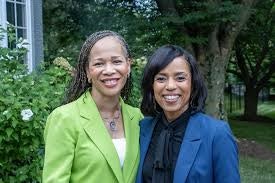
    Senators Lisa Blunt Rochester of Delaware and Angela Alsobrooks of Maryland.The “Black Women in American Politics 2025” report, released by Higher Heights Leadership Fund and the Center for American Women and Politics at Rutgers University, documents significant advances for Black women in elected office while highlighting continued underrepresentation at the highest levels of government.

    Black women now hold 401 state legislative seats nationwide, representing 5.4% of all state legislators and 16.2% of all women state legislators. This marks a 67.1% increase from 240 seats in 2014, when the organizations began tracking these statistics.

    The most dramatic change occurred in the U.S. Senate, where two Black women now serve simultaneously for the first time in American history. Angela Alsobrooks of Maryland and Lisa Blunt Rochester of Delaware both won open seats in the 2024 election, doubling Black women’s representation in the upper chamber.

    “This year also marks the first time in history that two Black women serve together in the United States Senate,” Alsobrooks and Blunt Rochester wrote in the report’s foreword. “That milestone is not a coincidence; it’s a culmination. It’s the result of investments made, barriers challenged, and generations of Black women who refused to be sidelined.”

    At the congressional level, 29 Black women currently serve as voting members, including 27 in the House and two in the Senate. This represents nearly double the 15 Black women who served in Congress when tracking began in 2014. All current Black congresswomen are Democrats except for the two senators.

    The 2024 election cycle was particularly significant because Vice President Kamala Harris became the first Black woman to head a major-party presidential ticket. Though Harris lost the election, her 107-day campaign raised $81 million in its first 24 hours and nearly doubled Democratic voter enthusiasm, according to the report.

    Black women also made notable gains in municipal leadership. Three new Black women became mayors of major cities: Cherelle Parker in Philadelphia, Sharon Tucker in Fort Wayne, and Barbara Lee in Oakland. Eight Black women now serve as mayors of the nation’s 100 most populous cities, matching their proportion of the U.S. population.

    However, significant representation gaps persist at higher levels. No Black woman has ever served as governor, and Black women remain underrepresented in statewide executive offices. Currently, 10 Black women serve in such positions nationwide, including four lieutenant governors, two attorneys general, two secretaries of state, one auditor, and one controller.

    The report notes that 34 states have never elected a Black woman to statewide executive office. Since 2014, only 25 Black women have ever held such positions across 17 states.

    “In our nation’s 249-year history, a Black woman has never served as governor of a state or as president of the United States,” the senators wrote. “That reality is a stark reminder that our work is not done.”

    The growth in Black women’s representation has occurred almost exclusively among Democratic officeholders. The report documents only seven Black Republican women state legislators nationwide and notes that all Black congresswomen are Democrats.

    State-level representation varies significantly by region. Maryland leads with Black women comprising 18.6% of state legislators, followed by Georgia at 17.4%. Conversely, five states have no Black women in their legislatures: Hawaii, Idaho, Montana, North Dakota, and South Dakota.

    The report also highlights institutional leadership gains. Twenty Black women now hold state legislative leadership positions, including six who lead their chambers. In Congress, Black women hold over 22% of House Democratic leadership positions.

    Looking ahead, the organizations identify opportunities for continued growth. Virginia Lieutenant Governor Winsome Earle-Sears, a Republican, is running for governor in 2025 and could become the first Black woman governor in U.S. history if successful. Additionally, over 200 statewide offices will be up for election in 2026.

    This marks the eighth iteration of the annual report series, which began in 2014 and has been published in 2015, 2017, 2018, 2019, 2021, and 2023. The comprehensive analysis tracks Black women’s political participation across federal, state, and local levels, providing the most detailed picture available of their representation in American politics.

    Source link

  • Can you eliminate a gender gap by segregating genders?

    Can you eliminate a gender gap by segregating genders?

    In her 23 years as an educator at Hunter College High School, a highly-competitive coeducational high school in New York City, Jana Lucash has found that boys in her class will often participate even when they are not prepared. Her female students, in contrast, seem to be unwilling to participate unless they absolutely know the correct answer. 

    This is one reason that many parents choose to send their daughters to all-girls schools. These schools are known for fostering connections and developing academic success. 

    But do social pressure, competition and other negative consequences outweigh the benefits of a predominantly female environment?

    I attend an all-girls school and so I decided to explore the positive and negative aspects of being a part of this type of environment.

    All-girls schools are educational institutions catering exclusively to female students, allowing them to grow intellectually and socially in a single-gender environment. 

    Gender segregation

    These schools generally have a reputation for creating a supportive and empowering atmosphere for young girls and women. The purpose of an all-girls school is to encourage academic excellence, build confidence and teach leadership skills to their students. 

    While these institutions around the world often leave positive impacts on their attendees, like increased participation in class and eliminating distractions, they are also critiqued for their competitive nature, which could negatively affect student mental health. 

    These issues raise serious concerns and questions about how beneficial and positively impactful these all-girls schools truly are for the population that they serve.  

    Research has shown that all-girls schools increase student participation in the STEM field and other male-dominated fields after graduation. A study conducted by Goodman Research Group, back in 2005 asked some 1,000 recent graduates of all-girl schools to participate in a survey, which focused on the academic and social impact of single-gender institutions. 

    After conducting the survey, the authors found that 74% of the grads felt more encouragement in math, science and technology by attending an all-girls school. Additionally, they found that all-girls school graduates were six times more likely to major in science, math and technology, in comparison to girls attending coeducational schools. 

    Girl empowerment

    All-girls institutions cultivate an environment where female students feel empowered to explore their interests and academic pursuits, specifically in male-dominated fields. This not only encourages young women to follow their aspirations, but allows them to challenge the stereotypical gender barriers in professional fields where women are underrepresented. 

    All-girls schools also offer students a social environment with a strong sense of community and an emphasis on building strong relationships. Many young women feel more connected to their peers and lose the social pressures that are typically present in coeducational schools. 

    A 2013 survey, which was conducted on behalf of the National Coalition for Girls Schools, asked a series of questions to 2,000 students from schools that were all-girls, with an additional 5,000 girls who attended coed private schools and another 5,000 girls who attended coed public schools. 

    The study concluded that almost 97% of all-girls school students felt their ideas and opinions were more respected at their single-gender school compared to 58% of girls at coeducational schools.

    Without feeling pressure and judgement from their male counterparts, female students tend to feel more safe and are more inclined to express themselves and their ideas. This environment allows students to feel a sense of belonging, confidence and power that is not always found in a coed environment.

    Coed education versus single-gender schools

    At coeducational schools, girls’ voices and opinions might be self silenced or silenced by the more rambunctious boys in the room. In addition, these institutions and faculty can further undermine the confidence and self-worth of their female students.

    Lucash at Hunter College High School, for example, found that girls tend to self-silence and boys have no trouble expressing themselves throughout class. 

    This sentiment is echoed by a 10th-grade student at The Hewitt School, which I attend. Abby Potenza attended a coeducational school prior to switching to Hewitt.

    “Being at an all-girls school has given me both confidence and a sense of comfort to express my opinions and ask questions, which I did not receive at a coed school,” Potenza said. “I feel the environment, both social and educational, is stronger and more supportive at an all-girls school.”

    When I was an elementary school student in a progressive, coeducational environment, I too experienced the detrimental impact of being silenced, both institutionally and by an educator. 

    Being silenced and self-silencing

    In an advanced math class in fourth grade, I found myself one of three girls in a class of 20 students. For a school which valued diversity and equity, it was disturbing that the institution itself could not see that as a problem.

    This shows that many institutions in the 21st century do not prioritize creating a supportive and empowering environment for girls.

    Most positive associations with single-gender education can be countered by certain challenges and all-girls schools are no exception. While these schools empower young women and can foster a supportive environment, a sense of competition can often emerge.

    Miriam Walden teaches English at The Hewitt School and sees a similar competitive nature. 

    “Even when you take away the boys in the classroom, there is still competition between girls, a lot of competition,” Walden said. “It’s very subtle and it’s very insidious and so there is a lot of harm that happens at the school, socially, around status, academic success, wealth, where you are going to college. All of this stuff becomes extremely damaging to many students.”

    The global popularity of single-gender education

    Outside of the United States, single-gender education is popular in many countries. The reasoning for attending these single-gender schools varies from community to community, country to country. Some of the variables that impact the choice to attend these schools include religion, socio-economic status and geography. 

    In 2022, University of Oslo researcher Sadaf Basharat looked at math achievement in Saudi Arabia where single-gender education is mandatory and found that girls do better than boys in math, according to international assessment standards known as TIMSS. 

    Other countries in the Middle East, such as Oman, Iran, Kuwait and Bahrain, which have a high proportion of single-gender schools, have also seen female students in recent years outperforming their male classmates in math.

    While single-gender schools open the opportunity for girls and young women to be educated, countries such as Afghanistan are prohibiting women from attending secondary schools, whether single-gender or coeducational.

    The academic effect single-gender schools in the United States have on their students is equal to the ones at international single-gender schools. A 2016 study in the Caribbean Educational Research Journal found that students at all-girls schools in the Caribbean have a higher passing rate than both girls attending coeducational schools, as well as boys in coeducational schools and single-gender schools.  

    Due to the demographics of the students who attend all-girls schools outside of the United States, the data is not as conclusive as to the negative impact of these types of schools on their students’ competitive nature. 

    For instance, UNESCO published a study by the London Business School’s Global Entrepreneurship Monitor that found that all-girl’s schools in countries such as Trinidad and Tobago and Thailand attract a wealthier subset of the population, which could create a false representation of what the possible positive outcomes are. 

    Competition between girls

    All-girls schools offer an educational environment with both important benefits and possible limitations for students. On one hand, these institutions offer students a supportive atmosphere which encourages them to reach their full potential and cultivate a strong sense of confidence. This environment can lead to higher academic success and a greater likelihood of breaking gender norms in the workplace. 

    They also encourage young women to move past gendered expectations regarding future intellectual pursuits and challenges them to break societal barriers by moving into STEM-based fields specifically. 

    On the other hand, all-girls schools can create a bubble of competition and rivalry that can limit a young woman’s development and aspirations. The focus on academic achievement is only intensified in a single-gender educational environment and can be pressuring and damaging. 

    Weighing out the benefits and drawbacks of an all-girls school is important when making the decision on whether to attend one, or in determining how you perceive single-gender schools in general. The question is, what would be best for you or your daughter?


    The views and citations expressed by this student journalist are their own and not those of their school or any person or organization affiliated or doing business with their school.


    Questions to consider:

    1. Why might a parent choose to send a child to a single-gender school?

    2. Why do some teachers think girls don’t do as well when there are boys in the class?

    3. Do you think you would do better or worse by changing to an single-gender school if you attend a coed school now or vice versa? Why?


    Source link

  • For women athletes, world recognition is a long time coming

    For women athletes, world recognition is a long time coming

    Last year was arguably the best year for women’s sports yet.

    According to data analysis company S&P Global, in-person attendance and viewership were higher, with women’s professional sports sponsorships increasing by 22% since 2023. According to UN Women Australia, globally, there has been a lack of interest in women’s sports. But it seems that they might finally be getting the attention they deserve.

    To find out what is driving this change in attitude towards women’s sports, I interviewed 10 women athletes across high school, university, and coaching. 

    Historically, women’s sports have not gotten the recognition that they deserve. However, during 2024, women’s collegiate basketball had a significant increase in viewership compared to the previous year. The Final Four game in 2024 was a showdown between two players from two U.S. universities: Caitlin Clark of the University of Iowa and Paige Bueckers of the University of Connecticut. The game drew in a peak audience of 16.1 million, according to an article in Sports Illustrated

    Women’s media coverage has tripled since 2019. At this rate, if coverage trends continue, women’s share of coverage could reach 20% by the end of this year, according to Women.org, an organization within the United Nations devoted to gender equality and the empowerment of women. 

    Gender parity in sports

    The Paris Olympic and Paralympic Games were officially the first to see 50:50 coverage in gender equality.

    Avery Elliot, a track and field athlete from the University of Pennsylvania, attended the Paris Olympics as a spectator and said she noticed the change – more social media presence and sponsorships, particularly highlighting women of color, especially in women’s gymnastics, spurred by the popularity and success of U.S. athletes Simone Biles and Jordan Chiles and Brazilian Rebeca Andrade. 

    The lack of media coverage of women has always played a role in the lack of recognition that they receive. Lanae Carrington, a track star at Lehigh University in the U.S. state of Pennsylvania, said that in the past, women athletes would get dismissed for getting a low number of views or for the belief that women’s games were not as entertaining as those of men. “Overall, women are making a stronger impact in the entertainment industry, whether that’s more highlight reels on TikTok or screen time on TV,” Carrington said. “It’s finally becoming normalized.” 

    One of the hardest things to deal with as an athlete is a lack of support, whether from the media, in person or on the sidelines. 

    Brianna Gautier, a volleyball and basketball sensation at Neumann University in Pennsylvania, said it is hard to play a game where you’re not going to have a full house. “But it’s kind of helped me learn to just play for myself instead of waiting for people to show up and relying on that to bring some type of energy because I feel like it starts within you and your teammates,” she said.

    Play for yourself first

    As a track and field athlete, I have seen this firsthand. It is unfortunate to see people walk away after the men are finished competing. But I found that when you start showing up for yourself with energy, success comes rolling in. Gautier has embraced the idea of playing for herself and nobody else.

    It used to be that at Neumann, people would attend the men’s basketball games but never stay afterward to support the women. She also expressed the importance of the support of NBA players such as Steph Curry, who came out to watch several women’s Stanford basketball games in 2023. Gautier said that people think to themselves that if their favorite male basketball players are tuning in to watch women’s sports, it must be worthwhile. 

    Carrington said parents also need to support their daughters in athletics. “This is important because many girls don’t have parents who encourage them to play more traditionally masculine sports, such as basketball and soccer,” she said. 

    Most of the women I interviewed commented on the change in the WNBA as the catalyst for the change in women’s sports.. 

    Liz Spagnolo is a soccer player at Tower Hill High School in the U.S. state of Delaware who appreciates the opportunities she now has. “Women in sports is big for us because based on women 100 years ago, we wouldn’t be expected to play sports, or be expected to do something like cheer,” Spagnolo said. 

    The Caitlin Clark effect

    Arianna Montgomery, an athlete at The Tatnall School, the private school in Delaware that I also attend, said she appreciates the change in women’s basketball.

    “It’s gotten a lot more fame, definitely more college sports have gotten a lot more fame,” Montgomery said. “I think women’s games are starting to become more popular. People are starting to look more towards women’s sports as well as men’s sports, and even since before, instead of men’s sports now, a decade ago, that wasn’t the case.”

    Many of the women I spoke to said that a big contributor to the success of women’s sports is due to the Catlin Clark effect. The Caitlin Clark effect is a term that was created after her record-breaking seasons playing women’s basketball at the University of Iowa during the years of 2023-2024.

    As a result, she has become the all-time leading scorer in college basketball before entering the WNBA,  and has reportedly signed sponsorship deals worth more than $11 million. 

    Ruth Hiller, a lacrosse coach at my school said that are a number of successful women athletes that young women can now look up to, including tennis superstars Venus and Serena Williams and Alex Morgan, the former captain of the U.S. women’s soccer team, women’s tennis pioneer Billie Jean King and Charlotte North, a professional lacrosse player who broke the all-time goals record in college lacrosse. 

    Women now rack up medals and points

    Daija Lampkin, my track and field coach, pointed to Alison Felix, who won more medals than any other U.S. track and field athlete, and tennis superstar Serena Williams.

    It is important, Lampkin said, that women support women. “Our body is critical, and some women are self-conscious that they are going to be muscular,” Lampkin said. “It can tear down your confidence. It’s not talked about in sports how women look at their bodies. People tear down Serena Williams and her body all the time, but look at where she is and how much she has accomplished”. 

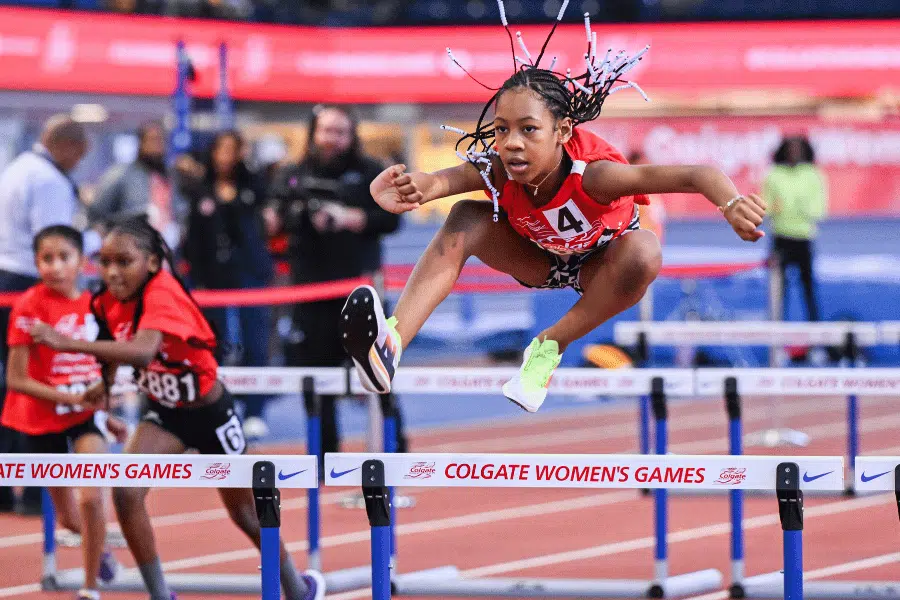
    I have been participating in sports since I was 3 years old, when my parents signed me up for gymnastics. I run track and field and am a runner, jumper and hurdler. I began training for track and field competitions at the age of 8, and my dad has been my coach since the very beginning. 

    In my experience, my father was instrumental in encouraging me to participate in dance and gymnastics growing up, while also encouraging me to run track and play basketball and soccer for fun.

    With opportunity comes pressure, and Gautier said it is important for girls not to put too much pressure on themselves. “When you are an athlete, you tend to feel that you have to perform a certain way to be successful or please everyone else, but I feel you kind of get blinded by the fact that you are doing it for yourself,” she said. 


    Questions to consider:

    1. Why have women not gotten the same recognition and pay as male athletes in sports? 

    2. What does “parity” mean when it comes to gender in sports?

    3. Should there be any differentiation when it comes to gender in sports and why?


    Source link

  • Strategies to help girls stay engaged in STEM learning

    Strategies to help girls stay engaged in STEM learning

    Key points:

    • When girls participate in STEM learning, the future is more inclusive
    • 5 practical ways to integrate AI into high school science
    • Linking STEM lessons to real-world applications
    • For more news on STEM learning, visit eSN’s STEM & STEAM hub

    Encouraging girls to engage in STEM is vital for fostering diversity, innovation, and equal opportunities in these fields. Women remain underrepresented in STEM degrees and in careers, often due to societal stereotypes, lack of representation, and limited access to resources.

    More News from eSchool News

    HVAC projects to improve indoor air quality. Tutoring programs for struggling students. Tuition support for young people who want to become teachers in their home communities.

    Almost 3 in 5 K-12 educators (55 percent) have positive perceptions about GenAI, despite concerns and perceived risks in its adoption, according to updated data from Cengage Group’s “AI in Education” research series.

    Our school has built up its course offerings without having to add headcount. Along the way, we’ve also gained a reputation for having a wide selection of general and advanced courses for our growing student body.

    When it comes to visual creativity, AI tools let students design posters, presentations, and digital artwork effortlessly. Students can turn their ideas into professional-quality visuals, sparking creativity and innovation.

    In my work with middle school students, I’ve seen how critical that period of development is to students’ future success. One area of focus in a middle schooler’s development is vocabulary acquisition.

    For students, the mid-year stretch is a chance to assess their learning, refine their decision-making skills, and build momentum for the opportunities ahead.

    Middle school marks the transition from late childhood to early adolescence. Developmental psychologist Erik Erikson describes the transition as a shift from the Industry vs. Inferiority stage into the Identity vs. Role Confusion stage.

    Art has a unique power in the ESL classroom–a magic that bridges cultures, ignites imagination, and breathes life into language. For English Language Learners (ELLs), it’s more than an expressive outlet.

    In the year 2025, no one should have to be convinced that protecting data privacy matters. For education institutions, it’s really that simple of a priority–and that complicated.

    Teachers are superheroes. Every day, they rise to the challenge, pouring their hearts into shaping the future. They stay late to grade papers and show up early to tutor struggling students.

    Want to share a great resource? Let us know at [email protected].

    Source link