Category: Youth Voices

  • When world leaders descend on your town

    When world leaders descend on your town

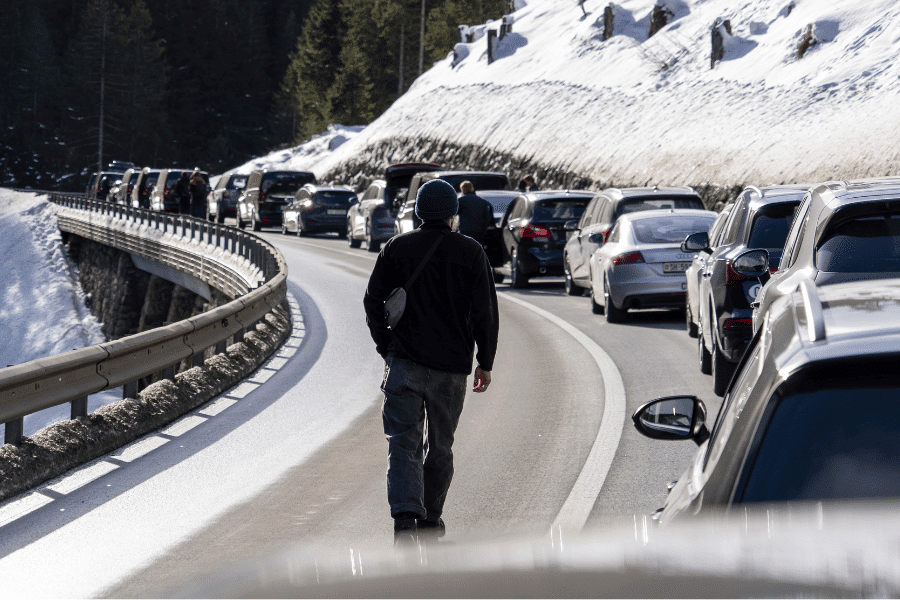
    When Linda Zaugg’s baby caught a high fever in January, it took an hour and a half to walk him to the hospital — a journey that usually takes 10 minutes. But this was Davos, Switzerland during the week of the World Economic Forum (WEF). Some 3,000 politicians and business leaders from all around the world had descended on the city to discuss important political and economic issues. 

    Zaugg is a member of the local parliament in Davos, a town in the Swiss Alps with a permanent population of about 11,000 people. She has been spearheading a campaign to raise awareness of the local impacts the conference has and find ways to mitigate them. 

    During the forum, traffic becomes so bad, she said, that ambulances have trouble finding their way through the streets of Davos, causing response times to increase significantly. 

    Traffic isn’t the only problem. During this time Davos experiences a massive influx of people, causing rent prices to explode by up to 10 times.

    “This is the real problem with the WEF,” she said. “Not the conference itself, but all the people and companies that come along with it to make money and advertise.”

    Economic effects of an economic forum

    Albert Kruker, the tourism director of Davos, warned that these price increases may cause a price spiral which would affect the town year-round.

    During the forum, local businesses go into overdrive trying to supply the politicians, journalists and other attendees with everything they require. When asked about it, the owner of a local bakery, Bäckerei Weber, said that it is one of the most profitable but also intense weeks of the year.

    “During the conference you get all these catering companies coming in and the hotels are full, so we have a lot more orders,” he told us. “During the conference we work 24 hours a day. Because of the security, we usually start delivering at two o’clock in the morning.”

    Many other business and house owners during this time either stock up on their goods or rent out their buildings for exorbitant prices. A banker living in Zurich with an apartment in Davos said that he can rent out his apartment for a single week during the conference for approximately three months’ rent.

    In an apartment block right next to the conference hall, many inhabitants move out during the week. These apartments are then rented by journalists, attendees and large companies.

    Disruption in Davos

    One resident of an apartment block told us that he is never home during the WEF. “I rent out my apartment and go on holiday during this time,” he said.

    The housing crunch during the forum is so intense that to accommodate attendees, some renters and families are forced out of their homes for the duration of the conference.

    Zaugg said that some landlords even include a clause in the renter’s agreement dictating that the renters must leave during this period. A side effect of this is that many children must live temporarily outside the city and cannot attend school.

    This problem is worsened by the fact that the streets are constantly congested and filled with drivers that aren’t used to Davos.

    These drivers often do not respect speed limits or pedestrian only zones, requiring even more attention by commuters, which is especially difficult and dangerous for children and the elderly as they aren’t used to this amount of traffic.

    Additionally, the public transportation system is bogged down during this time, once again causing confusion among society’s most vulnerable.

    Crowds and congestion

    Stephan Büchli, a local bus driver, said that there are no fixed schedules during this time as the traffic is simply too unpredictable. Additionally, they must use smaller buses, as the streets are too congested to allow the manoeuvring of the traditional ones.

    Furthermore, the new drivers often also park in restricted zones, further impacting public transport.

    “Last year I saw an old man at the local bus station during the conference. He was crying very heavily and was confused. It really made me angry,” Zaugg told us.

    The level of congestion also brings other problems with it.

    All this traffic creates substantial emissions. In 2023, the private jets attending the Forum alone generated 7,500 tons of CO2, roughly equivalent to the yearly emissions of 5,000 cars.

    Minimising the carbon footprint

    Part of the problem, Büchli said, is that limousines, trucks and taxis often leave their engines on while standing still, sometimes for upwards of half an hour. He himself has frequently witnessed cars idling with the engine running while stuck in traffic.

    As a high-profile event, the WEF requires a lot of temporary structures, internal furnishings and food to function. Every year these temporary structures are erected in late December and then taken down again afterwards. Some of them only get used once and thrown away after only one week’s use.

    The same is true for internal furniture such as carpets, shelves, computers and TV screens, as well as any leftover food. Several residents told us that after the WEF there are heaps of electronic equipment that gets thrown away. 

    Still, while many residents feel the effects, many keep their irritation to themselves out of fear of being labelled a WEF hater.

    While there are several key problems with the Forum in its current form, the organisers aren’t sitting idle. Over the past few years, several steps have been taken to lessen the impact of these problems.

    The road ahead

    The most obvious of these steps is the reduction in waste. The organisers of the conference and the government of Davos have issued regulations on the number of temporary structures and their reusability. This has caused their number to noticeably decrease over the last few editions.

    Old furniture and electronic devices are sold to the local inhabitants at reduced prices and spare food is offered to the residents for free, further contributing to making the WEF more sustainable.

    To ensure that people can travel around in a manageable timeframe, the municipality has also set up extra trains that commute from one end of the town to the other. Entry into Davos by car was also restricted this year for visitors and tourists.

    One of the most impactful changes was the installation of temporary ambulance stations. These stations are scattered across Davos, allowing them to respond quickly to emergencies and save lives.

    Over the last few years, both the WEF organisation and Davos itself have taken several different measures to lessen the negative impacts of the conference. However, these issues still persist and require solutions.

    Only time will tell if the people who organize a conference meant to bring people together to improve the state of the world can improve the lives of the people who live in this small town in the Alps, for one week of the year. 

    “You truly notice how the ideological part of the WEF, the bringing together of people, gets pushed into the background in favour of economic reasons,” Zaugg said.


    Questions to consider:

    • What is the World Economic Forum?

    • In what ways is the town of Davos negatively affected by the WEF?

    • Is there an event that disrupts life near where you live? How do people deal with it?


    Source link

  • A taste for the good life

    A taste for the good life

    Postcard views, luxurious watches, delicious cheese and chocolate — the country that comes to mind is idyllic Switzerland in central Europe.

    But this seemingly perfect country comes at a price: its high cost of living. According to Coop and Carrefour, two leading supermarket chains in Switzerland and France, one chocolate bar in Switzerland costs more than one and a half times as much as the same chocolate bar in neighbouring France. 

    “The price of chocolate with regards to its quality in Switzerland is fair and for me worth paying,” said Andrina Deragisch, a 17-year-old student of Kantonsschule Zürich Nord, a Swiss high school. 

    Chocolate’s price is affected by various factors, most importantly the price of the cocoa bean. Nowadays that is at an all-time high due to climate change, plant-affecting pests in Africa and East Asia and packaging prices and taxes. Its price is four to five times higher than a year ago, according to Migros, the second-largest retail company in Switzerland. But what makes the difference in Switzerland? 

    “The most significant factor is the labour,” says Richie Gray, global head of SnackFutures, the Corporate Venture Capital Hub of Mondelez that invests in businesses in the snack industry. 

    How much would you pay for a chocolate bar?

    Workers in Switzerland are paid well, which makes them able to keep up with the high cost of living. This leads to a high-end price of chocolate in comparison to neighbouring countries. To avoid such high labour costs, Mondelez moved Toblerone’s production to Slovakia in 2023, imitating various international companies such as Nestlé and Barry Callebaut, that have shifted a great part of their production operations to Eastern Europe and Asia. 

    According to the 2017Swiss Manufacturing Survey from the University of St. Gallen, 46% of the interviewed firms are considering outsourcing parts of their manufacturing operations to China, Germany or Eastern Europe. 

    As a result, the Swiss manufacturing industry is seeing rising unemployment; the number of jobs has already fallen by 10% since 1990, and lower taxes from the international companies to Swiss authorities. In further development this leads to reduced purchasing power of customers and state incomes, weakening the country’s economy.  

    According to data from the Federal Statistical Office and the National Institute for Statistics and Economic Studies, the average Swiss person earns a little over 6,750 Swiss francs (CHF) monthly whereas in France, average wages are about 2,570 CHF a month. Switzerland counts as one of the best-earning countries in the world, creating a high-quality of life for its population.  

    According to Human Development Reports, Switzerland’s Human Development Index placed first among the whole world, providing wealth, comfort, material goods and exceptional healthcare and education. 

    A strong labour market

    High productivity and competitiveness shape the Swiss labour market, said Christian Gast, chief economist at Swissrock, an asset management company based in Zurich. “Switzerland is considered to be fully employed, with only 1.3% of the entire population having no job,” he said. 

    The demand for labour results in high pay. Moreover, when people earn more, they have more money to spend on products like chocolate. 

    Another factor is the strong Swiss franc. The European Central Bank reports that the exchange rate between the Swiss franc and the euro has constantly increased from 0.87 EUR per Swiss franc in 2018 to around 1.06 EUR per Swiss franc today.

    “If you’re coming from another country, you need more of your own currency to buy a Swiss franc,” Gast said.

    But what makes the Swiss currency so strong?  

    “Our fiscal policy is strongly regulated,” Gast said. “This means the expenses of the government are largely balanced with its incomes.”

    An attractive place for money

    If there is a stable relationship between expenses and income, there is little debt result and interest rates remain low. This makes Switzerland attractive to international investors. Purchases are made within the country, boosting its economy and simultaneously its prices. 

    However, where does Switzerland’s well-working economy with excessive prices for services and products originate from? The small country in the heart of Europe with no environmental advantages developed into a financial powerhouse with banks as its mines.

    According to the Swiss Bankers Association, Swiss banks held over a quarter of all assets present in all the banks across the globe in 2018. This means that 27.5% of global revenue, amounting to US.$6.5 trillion was stored in Swiss banks. 

    “There are barely any countries with more international banks than Switzerland,” Gast said. Since World War II, countless wealthy people have chosen to store their money in Swiss banks as Switzerland has a proven track record for its secrecy, neutrality and stable political system. 

    But wouldn’t there be frustration towards such high living costs among the population? On average, prices in Switzerland are 58.4% times higher than in the rest of the countries in the European Union. Consider that in the United States, Donald Trump won a second term as president in part because he promised lower prices and affordable living costs. However, Swiss people tend to accept the high prices in the country since the quality of life is also so high.  

    Additionally, the inflation rates in Switzerland are low — the price level has been relatively constant or only increasing minimally. According to the Federal Statistical Office, inflation rates were only at 1.1% in 2024, whereas in the United States it was at 2.9% in December 2024. People in the United States are displeased with the sudden higher prices which means they want a solution to solve this. At the same time, Swiss people have not experienced a drastic change and therefore are not as keen to make prices lower.  

    As Swiss people consume around 10kg of chocolate per person each year, there’s no doubting its popularity. We are both very fond consumers of Swiss chocolate and eat at least one bar of chocolate a week. The sweetness and comforting feeling of chocolate melting on your tongue is a sensation nobody can resist. 

    Source link

  • Can we manage disasters that are no longer anomalies?

    Can we manage disasters that are no longer anomalies?

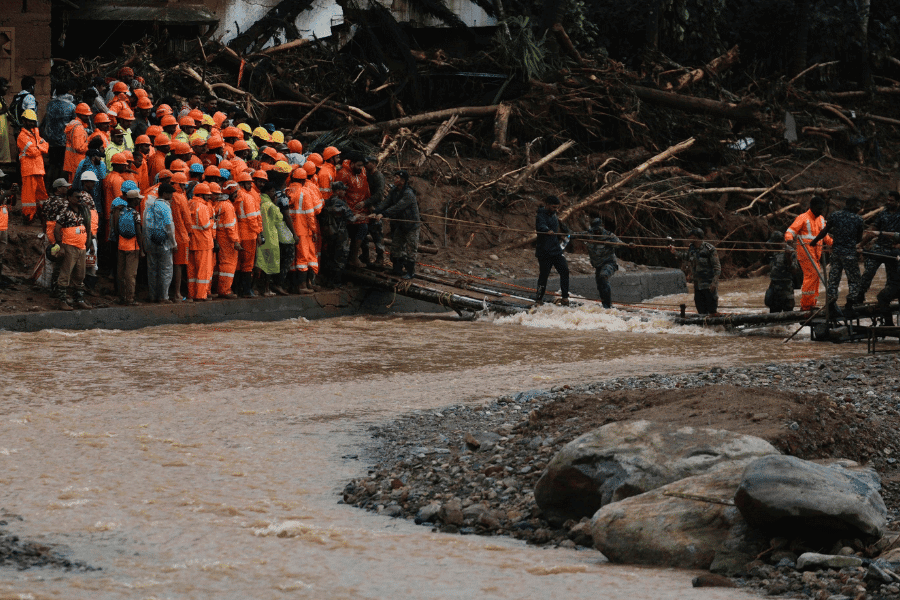
    In July 2024, the state of Kerala in southern India was struck by a massive landslide that devastated several villages, including Punchirimattam, Chooralmala and Mundakkai. The impact was catastrophic: nearly 300 people died and hundreds more injured. 

    This tragedy, triggered by unprecedented rainfall during the monsoon season, drew attention to a stark and growing concern: India’s ability to manage and mitigate the increasing frequency of natural disasters effectively. 

    Over the past few years, India has witnessed an alarming rise in the intensity and frequency of natural disasters, be it floods, heatwaves, cyclones or landslides. 

    This surge is being driven by the changing climate. With global warming altering weather patterns, India finds itself vulnerable to an array of disasters that threaten its people, infrastructure and economy. In response, there are calls for legislative reform, particularly an overhaul of the Disaster Management Act of 2005, so that the country will be better prepared to respond to natural disasters. 

    India’s experience can serve as a lesson for other nations in the region and globally. 

    Breathtaking landscapes become landslides.

    Kerala, located in southwest India on the Malabar Coast, is renowned for its lush landscapes, tranquil backwaters and tea plantations. The state is no stranger to monsoon rains, but in July 2024 it faced a sudden, violent landslide that wreaked havoc in the hilly region of Wayanad. 

    These areas, often prone to landslides, were overwhelmed by incessant rainfall, which led to soil erosion and a massive collapse of hillsides. 

    The villages of Punchirimattam, Chooralmala and Mundakkai were hit the hardest, with homes and buildings buried under tons of mud. Most residents were asleep when the disaster struck before dawn, leaving little time for evacuation. The landslides not only caused a tremendous loss of life but also rendered thousands homeless, further deepening the crisis. 

    In the aftermath, rescue operations were launched swiftly by the National Disaster Management Authority (NDMA), the Indian Army and the Air Force, along with local government authorities and communities. 

    Ramakrishnan, a tea estate employee in Mundakkayam, said that emergency relief included immediate financial assistance of Rs. 3,000 per individual. To put that into context 3,000 rupees is about U.S. $35 and the average person in Kerala earns the equivalent of about U.S $23,000 per year. They also received food and medical supplies. 

    Helping people after a disaster

    Affected families were relocated to temporary shelters, and school-going children were enrolled in nearby schools to continue their education. The National Disaster Response Force and state disaster funds provided crucial support for these efforts. 

    Yet, despite these swift actions, the Kerala government’s request for additional federal support, under the provisions of the Disaster Management Act, was delayed. 

    By October 2024, the High Court of Kerala had raised concerns about the delay in the disbursement of relief funds. This incident highlights some of the systemic flaws in India’s current disaster management framework — flaws that have become increasingly apparent as natural disasters grow in scale and frequency. 

    While the Wayanad landslide is one of the deadliest in recent memory, it is far from an isolated event. Over the last few years, India has experienced a disturbing rise in natural disasters, exacerbated by climate change. 

    In 2020, according to the United Nations Disaster Risk Reduction’s Prevention Web, the northeastern state of Assam faced catastrophic flooding that affected over five million people, leaving much of the region submerged. Back in 2018, the Indian Express newspaper reported that dust storms in Rajasthan not only caused widespread destruction but also revealed significant gaps in the country’s disaster management infrastructure, such as the lack of effective early warning systems and inadequate public awareness campaigns.

    Similarly, heatwaves, which have always been a concern in India, are becoming more extreme and frequent, leading to an increase in deaths and health crises.

    Inequity in disaster management

    Some weather events seem to get more attention than others, said Prathiksha Ullal, an advocate whose interests lie primarily at the intersection of environmental law and feminist perspectives. 

    “Despite heat waves being a major concern, they receive little attention, whereas cold waves are highlighted in discussions in the Lok Sabha [lower house of India’s Parliament],” Ullal said. 

    These disasters, which are often compounded by inadequate infrastructure and preparation, point to the urgent need for a restructured disaster management framework that can adapt to the growing threats posed by climate change. 

    The Disaster Management Act of 2005 was enacted to provide a comprehensive framework for disaster preparedness, response and recovery In response to India’s vulnerability to natural disasters. The act established the NDMA to coordinate disaster management efforts at the national level, as well as State Disaster Management Authorities (SDMAs) to manage disasters within individual states.

    The 2005 Act was an important step forward, but under it, there is confusion over the roles of national, state and local authorities in response to disasters; it doesn’t allocate enough money for disaster preparedness or response; and it doesn’t address climate-induced disasters such as heatwaves, droughts and extreme rainfall events. 

    This has made the framework less relevant in an era where climate change is increasingly contributing to the frequency and severity of disasters.

    Improving how a government responds to disasters

    Recognizing the shortcomings of the 2005 Act, the Indian government has proposed amendments to strengthen the country’s disaster management framework. The Disaster Management (Amendment) Bill of 2024 seeks to address many of these issues and build a more robust system to tackle the growing threat of natural disasters. 

    One of the central features of the bill is the strengthening and increased funding of the NDMA and the establishment of state disaster response forces. 

    The amendment aims to improve response times and coordination during disasters by providing state governments with more autonomy and resources. The bill also emphasizes disaster risk reduction, which focuses on preventing and mitigating the impact of disasters before they occur. This is a shift away from the previous focus solely on response and recovery. 

    Critics argue that the bill still centralizes too much power in the hands of the central government, limiting the autonomy of local authorities. Additionally, the bill’s failure to explicitly include climate-induced disasters, such as heatwaves and droughts, means that it may not fully address the risks posed by climate change. 

    India’s vulnerability to natural disasters is closely linked to the impacts of climate change. Rising temperatures, unpredictable monsoons and increased frequency of extreme weather events are all exacerbating the country’s disaster risk.

    State-specific disasters

    The 2024 Amendment Bill does begin to address climate change by incorporating disaster risk reduction as a key component, but it does not go far enough. For instance, heatwaves — which have become a major concern in India — are not adequately covered. 

    The DT Next newspaper reported that the South Indian state of Tamil Nadu has taken the initiative to declare heatwaves a state-specific disaster, enabling them to provide relief and take preventive measures. However, this is a localized response, and a more comprehensive national approach is needed. 

    The bill also does not fully address the role of technology in disaster management. Experts suggest that incorporating artificial intelligence and real-time data monitoring systems could significantly improve India’s ability to predict, track and respond to disasters. According to the AI company Ultralytics, AI models can be trained to provide early warning systems and help reduce the impacts of natural disasters.

    For example, predictive modeling and vulnerability mapping could help authorities better prepare for floods, landslides or heatwaves by identifying high-risk areas and populations. 

    India’s disaster management struggles are not unique. Bangladesh, Nepal, the Philippines and other countries in the region face similar challenges, with frequent floods, cyclones and landslides causing significant loss of life and economic damage. 

    India’s evolving approach to disaster management, particularly through the Amendment Bill, could serve as a model for these countries, helping them build more resilient systems for managing climate-related disasters. 

    The tragic landslide in Wayanad serves as a poignant reminder of the increasing vulnerability of India’s communities to natural disasters. While immediate relief efforts were swift and commendable, they also underscored the need for deeper, systemic changes in how India manages its disaster response. 

    In the face of escalating natural disasters, India has the opportunity to lead the way in developing disaster management policies that are not only reactive but proactive. 


    Questions to consider:

    1. What can cause a landslide in parts of India?
    2. What was wrong with the Disaster Management Act of 2005?
    3. What are some dangers climate change poses in your area?


    Source link