Category: youth

  • Art as success? That’s genius!

    Art as success? That’s genius!

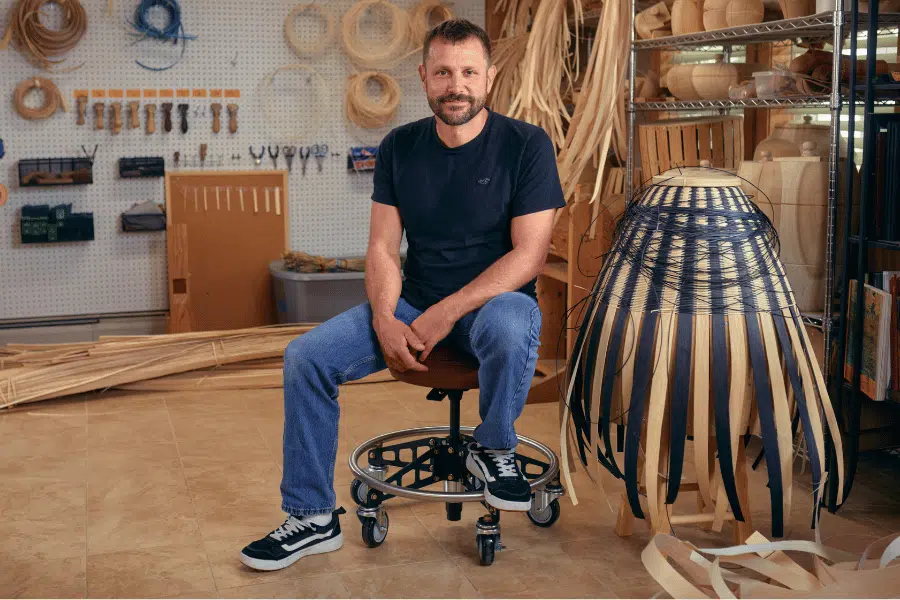
    The MacArthur Foundation selects a diverse group of people for an award dubbed the “genius grants”. In doing so they help us redefine our measure of success.

    Source link

  • East Africa’s Queer communities show progress and hope

    East Africa’s Queer communities show progress and hope

    Around the world, Queer rights are being challenged, attacked and denied. Governments are cutting budgets for important health and other programmes. 

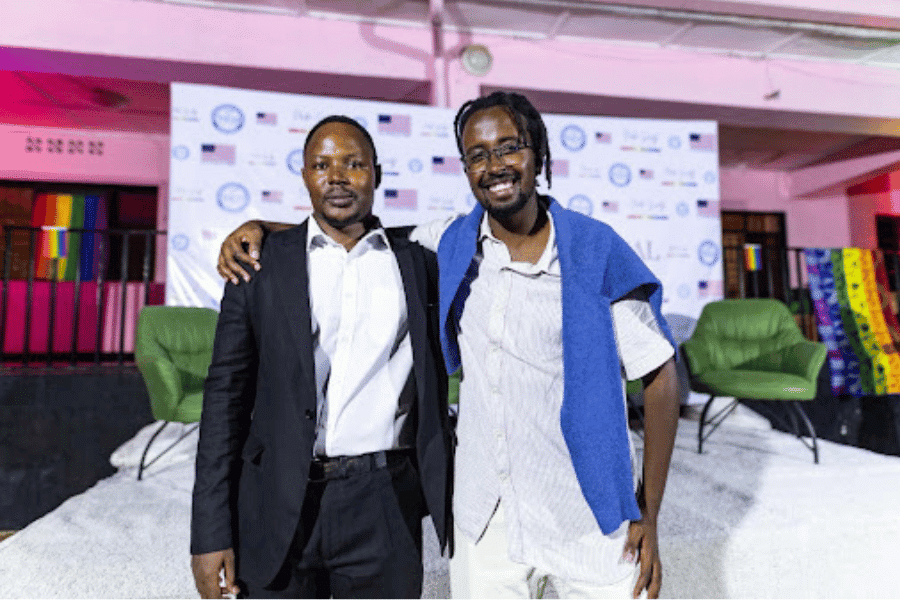
    But in parts of Africa, there are distinct signs of progress. Organizations that serve and advocate for Queer communities in Eastern Africa now see hope for the future. That’s the case even in Uganda where “aggravated homosexuality” has carried the death penalty since 2023.

    “It is still a very hard environment but we are doing much better than a lot of people think,” said Brian Aliganyira, founder and executive director of the Ark Wellness Hub, an organization based in Kampala, Uganda, that helps LGBT community members who have difficulty accessing health services in public hospitals due to both anti-Queer laws and ongoing community stigma and discrimination.

    “We are doing better in terms of fighting back and supporting communities, not necessarily better in terms of protection, rights and freedoms,” Aliganyira said. 

    In Kenya, homosexual acts are illegal. Rodney Otieno, who is the co-founder and policy director for the Queer & Allied Chamber of Commerce Africa of Nairobi (QACC), described the creation of a “Queer ecosystem” that mobilises resources, builds social enterprises, creates sustainable economic pathways for people of the Queer community and attracts impact investments – using money for good causes even as it generates wealth. The QACC now boasts over 3,000 members in Kenya, plus others across Africa.

    Language and discrimination

    Otieno and the four other East African community leaders interviewed for this article generally prefer to use the more fluid term “Queer” rather than “LGBTQ” or any of its many variations. 

    Kevin Ngabo, a Queer activist and social justice advocate, said that local languages often lack positive or even neutral words to describe queer identities — only stigmatizing ones.

    “‘Queer’ gives us an umbrella that feels both flexible and affirming, allowing people to belong without being boxed in by rigid categories,” Ngabo said. “It’s a way of saying: I am different and that difference is valid.”,

    Ngabo was born and raised in Rwanda before moving to Nairobi, Kenya late last year.

    In Rwanda, there are no anti-discrimination laws but the government does not recognize same-sex marriages. 

    Pride in one’s identity

    A Queer rights activist in Kigali, who asked not to be identified, said that young people are feeling more comfortable with their identities. “GenZers are taking up more space as their authentic selves,” the activist said. “They are even getting more understanding and affection from their families. It is not ‘weird’ anymore. This will become the norm.”

    The Kigali activist has recently been involved in both a Pride Party and a Queer film festival, which attracted over 600 paying participants from around the region. 

    Queer community leaders point out different elements of both recent progress and hopes for sustainable success in the future beyond the constant imperative to keep community members safe and to try to get discriminatory laws repealed.

    “We need to continue to work together, make good use of our limited resources, be clear about what we are doing, raise awareness and be diplomatic when dealing with the authorities” says another anonymous Queer activist and feminist in Rwanda.

    Ngabo in Nairobi believes that Queer people across the region need to develop a strong sense of community and be “stubborn when they are told they can’t do something, and take space and stand up for what they believe in.”

    Finding allies to your cause

    Aliganyira in Kampala agrees that people should not run away from their ongoing challenges with safety, respect and equal opportunity and instead continue to show courage, resilience and perseverance to defend their current rights and expand them in future.

    A Queer activist in Rwanda stressed the need to work with allies and others to create more education and training to promote awareness, understanding and empathy.

    Ngabo shared some advice: “Start small and start where you are,” he said. “Speak up when you hear harmful stereotypes. Make space for people to share their stories without fear. Support Queer-led groups, attend events, or even just show up for your friends when they need someone safe to lean on.”

    Allyship isn’t always grand, he said. “It’s often in the quiet, consistent choices to affirm someone’s humanity,” he said.

    Queer community leaders say they are generally optimistic about the future.

    “In five to 10 years’ time, the narrative will change completely,” said Otieno in Nairobi.

    Changing people’s perceptions

    Young queer activists are being empowered and learning how to take on leadership roles in government and in other decision-making spaces, said one Rwandan activist.

    Another Rwandan activist envisions a future where same sex couples will be able to get married, adopt kids and access medical services freely.  

    “Things will improve if we are smart,” the activist said. “I hope we will see more safe spaces, more affirming healthcare (especially in mental health), more economic inclusion, and more media and policy-making representation. In the end though, dignity is more important than law changes.”

    Ngabo in Nairobi agrees: “We want respect,” he said. “We want to feel safe. We don’t want equality. We want equal opportunities. We want to thrive.”

    Real progress means being able to live authentically without having to conform, he said. “Stronger protections under the law, safe spaces to gather, visibility in public life, and most importantly, Queer people leading the narrative about our own lives,” Ngabo said. “These are what a brighter future looks like to me.”

    Even in Uganda, Aliganyira believes things can still change for the better.

    Uganda was once considered the safest place for Queer people in East Africa before the 1990s, he said.

    “Uganda can undo what it has done and get beyond fear and uncertainty,” he said. “It’s up to everyone to come together and overcome division.”


    Questions to consider:

    1. Why do LGBTQIA+ community members in East Africa prefer to call themselves “Queer”?

    2. What are the key elements of a brighter future for the East African Queer communities?

    3. What can you do yourself to stand up for human rights as an ally or a member of a Queer community where you live?


    Source link

  • A decade of giving teens the last word

    A decade of giving teens the last word

    They are important not only for the students writing these stories but for teens all over the world reading or listening to these stories. They see their own anxieties and concerns reflected.

    As managing director at News Decoder, Maria Krasinski has seen how empowering personal reflection stories are when published. 

    “These stories build students’ self-awareness, confidence and empathy,” Krasinski said. “Seeing their stories published is an empowering act that validates their lived experiences and tells them that their voices are worth being heard.”

    She said that what News Decoder does is ask students to pause, analyze and articulate what they learned from an experience. “That creative process strengthens not only their storytelling skills, but also their ability to make sense of the world and step into public conversation,” she said. 

    A decade of publishing student stories

    News Decoder has been doing this for 10 years. Some of the first stories we published were personal reflections sent in by students.

    Back in May 2016, a high school student studying for a year in France wrote a personal reflection article after having encountered a number of her peers from Turkey at a conference in Luxembourg. During the conference they learned that a suicide bomber had killed three people in Istanbul.

    “I can’t even begin to imagine the heartbreak and panic they felt when they found out,” she wrote. 

    She then explored the concept of senseless violence:

    “I’m afraid that I’m beginning to become desensitized to the tragedies that strike all around the world,” she wrote. “When I got home from the conference and brought up the topic of the Turkish bombings, my host mom asked me how that news was different from any other day’s news, and then asked me to pass the pepper.”

    Students reach profound conclusions.

    In the article, she worked through her complicated thoughts and feelings and came to this conclusion: 

    “If we allow ourselves to be desensitized to all the bad, the good will stop motivating us as well.”

    Back in 2017, News Decoder’s founder Nelson Graves wrote that students make use of the News Decoder platform to make their voices heard. 

    “News-Decoder offers students a chance to put their best foot forward, to push the envelope, to confront different viewpoints and to work with professional correspondents,” he said. 

    For 10 years News Decoder has used storytelling to engage students in the process of learning. Through our educational programs, students are encouraged to ask big questions, identify problems they see around them and talk to people to get their questions answered — classmates, neighbours, family and experts.

    All the while, we ask students to compare their lived experiences and the problems they see around them, with what is happening elsewhere in the world. If they see inequities in their communities, how does that manifest in other countries? In doing this, they find out how connected they are to all the people seeing and experiencing these same problems. 

    Seeing the world through a global lens

    Amina McCauley is program manager for News Decoder’s EYES project — Empowering Youth Through Environmental Storytelling. She said that the global connection is important.

    “I think that young people rarely get the chance to articulate their values in a global context,” McCauley said. “Writing a personal reflection allows them to understand themselves better through this different lens.”

    The empowerment comes when they master the art of communicating what they learn to the wider world. 

    We want News Decoder students, and anyone we work with, to be able to respond when they hear or see something they think is wrong, but to be able to do so not just quickly but thoughtfully. 

    We’d like you to join our network and help us do that. If you are a teacher or school administrator, explore our school programs and consider bringing us into your schools. If you are a journalist consider donating articles and time to engage with students across the world. And if you have the means, consider donating funds to our nonprofit. 

    Why should ignorant people and bullies have the last word? 


    Source link

  • Where are our young leaders?

    Where are our young leaders?

    Why is it that young leaders are in such short supply? 

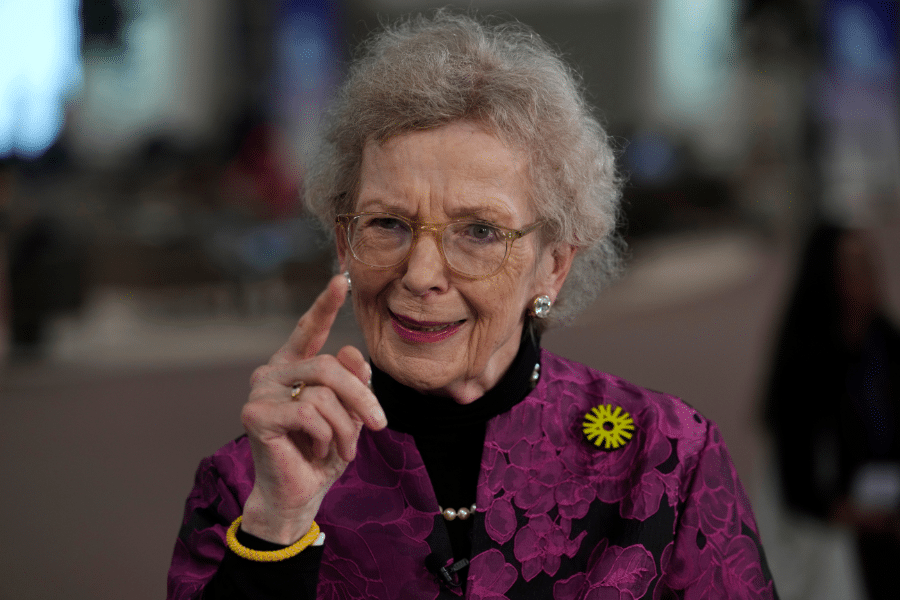
    Former Irish President Mary Robinson recently gave one of the most forceful condemnations of Israel’s war on Gaza. Now the UN High Commissioner for Human Rights, Robinson visited Egypt and the Rafah border and called on states to implement “decisive measures” to halt the genocide and famine in Gaza

    “Governments that are not using all the tools at their disposal to halt the unfolding genocide in Gaza are increasingly complicit,” she said.  

    Robinson is a member of an organization that calls itself “The Elders.” Founded in 2007 by Nelson Mandela, the South African political prisoner turned president, the group advocates peace, human rights and environmental sustainability. 

    In her comments, Robinson chided today’s leaders for not fulfilling their legal obligations. “Political leaders have the power and the legal obligation to apply measures to pressure this Israeli government to end its atrocity crimes,” she said. 

    Robinson is 81 years old. Where are the young leaders making such statements? Where are they organizing groups like The Elders? 

    Youth power

    The media’s attention to Robinson was impressive. Her August press conference was followed by several lengthy interviews on major networks. An independent group like The Elders — whose members include former presidents, UN officials and civil society activists — deserves recognition. It also invites reflection on the role of age in today’s accelerated time. 

    Being elderly and having once held an important position was not always politically positive. “Don’t trust anyone over 30,” was a popular expression in the 1960s. Dr. Martin Luther King Jr. was just 26 when he led the 1955 Montgomery bus boycott and 34 when he delivered his  “I Have a Dream” speech during the 1963 Washington rally in front of the Lincoln Memorial. John F. Kennedy was 30 when he was elected to the U.S. Congress and 43 when he was elected president. Student leaders made their marks on U.S. politics in the 1960s. 

    Mario Savio was 21 when he led the Berkeley Free Speech Movement in California, which demonstrated the political power of student protests. 

    Mark Rudd was a 20-year-old junior when he led strikes and student sit-ins at Columbia University to push for student involvement in university decision making.  

    Tom Hayden was 20 when he cofounded Students for a Democratic Society (SDS), a national student movement that opposed the Vietnam War and pushed for a complete reform of the political system. At age 22, he wrote the Port Huron Statement, a political manifesto that called for non-violent student activism and widespread civil disobedience achieve the international peace and economic equality that government leaders had failed to achieve. 

    Savio, Rudd and Hayden were more than just campus activists; they were front page national news. 

    Age politics

    Where are the student leaders opposing Trump’s attack on universities and freedom of expression now? College presidents, professors and boards of trustees are shouldering the burden. There is a generational vacuum. 

    Youth and youthful dynamism are no longer viewed as political positives. Today, no one could imagine the 79-year-old Donald Trump playing touch football on a beach in Florida as John F. Kennedy and family did at Hyannis Port on Cape Cod when he was president.

    In reality, Kennedy suffered from many serious medical conditions but they were largely hidden from the public; it was crucial that he maintain his youthful image. Trump swinging a golf club and riding in a golf cart is not a youthful image; even his awkward swing shows his age. 

    Nor are the pictures of the members of his Mar-a-Lago crowd youthful; they look like a meeting of grandparents. As slogans reflecting their times, Make America Great Again is far from the New Frontier which called for an end to poverty and investing in technology and science to send humans to the moon.

    Robinson visited the Rafah crossing with another member of The Elders, Helen Clark. Clark is 75 years old, the former Prime Minister of New Zealand and United Nations Development Program administrator. 

    Generational change

    Of her visit Clark said that she was horrified to learn from United Nations Sexual and Reproductive Health Agency that the birth rate in Gaza had dropped by over 40% in the first half of 2025, compared to the same period three years ago. “Many new mothers are unable to feed themselves or their newborn babies adequately, and the health system is collapsing,” Clark said. “All of this threatens the very survival of an entire generation.”

    Based on her years of experience, Clark wisely talked of generational change.

    Age benefits people who, like Robinson and Clark, have held important positions. Because of that experience, members of The Elders take no political risks by speaking out. 

    The 83-year-old U.S. Senator Bernie Sanders is a notable exception of an elder speaking out in the United States while still in office. For whatever reasons, the elderly members of the Senate — there are currently seven senators who are in their 80s and 17 are in their 70s — have been particularly silent on issues like Gaza. 

    In fact, they have been particularly silent on most issues. 

    Where are the Savio/Rudd/Haydens today? A comparable young leader is Greta Thunberg. Greta was only 15 when she initiated the climate strike movement Fridays for Future. But while Greta initiated the movement, she did not organize it as Tom Hayden did with the formation of the SDS. Thunberg is an important symbol and example of courage — the drone attack on her Gaza-bound “Freedom Flotilla” is beyond reprehensible and consistent with Israel’s total war — but she is not a movement organizer on a national or global level. 

    What makes statements by people like Robinson and Clark so impressive is that they stand out in a realm of stunning silence. 

    The New Frontier

    The Democratic Party in the United States, for example, has no serious leadership. (The same might be said for Socialists in Europe and the Labour Party in Great Britain.) The Democrats inability to rally around 33-year-old Zohran Mamdani who is running for mayor of New York City is an example of the Party’s cowardice and/or lack of vision. 

    While the older, established Democrats are quick to criticize Trump, they offer no new strategies or actions.

    We are desperately waiting for something new. JFK’s motto The New Frontier touched a foundational American embrace of the frontier, the space between the known and new. Back in 1893, historian Frederick Jackson Turner came up with a theory that the continual expansion of the American frontier westward allowed for continual reinvention and rebirth, and that shaped the character of the American people. This frontier theory is essential to an America’s identity built on always moving forward. In contrast, Trump’s return to the past is anti-frontier. MAGA is nostalgia and passé. 

    Where are today’s young progressives presenting new political possibilities as Hayden and his cohorts did with Port Huron and SDS? Or does asking that question show that I am being too nostalgic about the past as well?   

    A version of this article was published previously in the magazine Counterpunch.


    Questions to consider:

    1. Who are “The Elders” and what are they trying to achieve?

    2. What was “The New Frontier” and what did it say about the American character?

    3. Do you think you would be more likely to vote for some very old over someone very young for political office? Why?


    Source link

  • How to amplify youth voice? Bring teens into the pressroom.

    How to amplify youth voice? Bring teens into the pressroom.

    Each year, Global Youth & News Media recognizes news organizations that are innovating in ways that include or help young readers and young journalists. 

    The France-based nonprofit, founded in 2018, seeks to reinforce connections between young people and news media. 

    This year, it held a global competition to find projects that could show how young people are helping news organizations survive in a world where too many of them are shutting down. 

    “I was looking at who was helping local news for a different project and noticed that nearly every journalism-related NGO I knew was doing something to help local news survive,” said Aralynn McMane, executive director at Global Youth & News Media. “And new nonprofits were emerging only for that purpose.”

    The problem, though, was that she didn’t see much sharing of that knowledge. So one of the aims of the competition was to create cross-pollination — highlight projects that could be replicated by other organizations elsewhere and provide a forum for the sharing of lessons learned. 

    “This was a particularly satisfying competition for us because we found so many great win-win cases of meaningful youth-local news collaborations from all over the world with lessons for newsrooms most anywhere,” McMane said.

    Can we fertilize the news deserts?

    News Decoder is deeply concerned about the emergence of “news deserts”: localities that no longer have any news outlets as profit-driven corporate owners pull the plug on local newspapers.

    A study in 2023 found that more news outlets in the UK were closing than were being launched. In Canada, between 2008 and 1 April 2025, more than 500 local news outlets closed in some 370 communities across the country, according to the Local News Map crowd-sourcing data initiative. Meanwhile, a report from the Brookings Institution found that in the United States in 2023, some 2.5 local news outlets folded every week.  

    That’s why I was honored to serve as one of 26 judges from 17 countries in the competition. While the entries taken as a whole gave me reason to hope, the winners left me inspired. 

    The competition found dozens of collaborations across six continents. They served to remind us of the vital public service mission local news organizations perform when they have the resources to do so. 

    Consider The Westsider in Melbourne, Australia. The staff there recognized the need for voters to be informed about the candidates in local elections and how they stand on important local issues. But to chase down dozens of candidates takes staffing that The Westsider doesn’t have. So with a small grant from a local journalism organization, the paper recruited 72 students from RMIT University to chase down every candidate running for a local office and ask them a series of questions. From that funding the paper produced a non-partisan voter’s guide. 

    Youth can tell important local stories.

    Another standout was Phralipen of Croatia, who collaborated with Youth Roma Congress to produce stories about the Roma community through reporting, multilingual content and participatory journalism.

    Then there was the Contra Costa Youth Journalism program in Northern California, a collaboration between the Contra Costa County Office of Education and Bay City News/Local News Matters, a news organization based in Berkeley, California. The program recruits and trains young people from underserved communities to be journalists and has published more than 70 stories from these areas as a result. 

    Katherine Rowlands, the founder and publisher of Bay City News and Local News Matters, said programs that bring young people into journalism are important.

    “It is critical to train and inspire the next generation of journalists so we create a pipeline of future reporters to inform, question and make sense of the world,” Rowlands said. “It is also really important for us to include these younger voices in the journalism we do now so that we more accurately reflect our communities and bring their issues to the forefront.”

    From Pakistan to Botswana, Bolivia to Tanzania, the competition identified news organizations finding ways to bring young people into their newsrooms to ensure that what young people do, and the issues that are important to them, are not left out of local news coverage. In the process, they are finding that for organizations that are short-staffed and short of funds, young people are a key resource that has been long overlooked.

    The entries were graded on the impact on the local community and transferability — whether the project could easily be replicated by other news organizations in other places. 

    One thing we’ve learned at News Decoder — and which the results of this competition clearly showed — is that young people are eager to have their voices heard and see journalism as an effective way to do that. 

    News organizations can benefit from their passion and energy and also from the perspectives they bring. 

    The full list of winners

    GOLD AWARD (most transferable, clearest on impact)

    • The Westsider with RMIT University (Australia)
    • Stamp Media (Belgium)
    • Phralipen and the local Roma community (Croatia)
    • The Greenline (Canada)
    • Časoris and Črni Vrh primary school (Slovenia)
    • Landshuter Zeitung/Mediengruppe Attenkofer podcast mies keck (Germany)
    • Bay City News Foundation with Contra Costa Youth Journalism (United States)
    • The Spotlight News with The University at Albany (United States)

    SILVER AWARD (transferability and clarity of impact)​

    • Casa de Nadie (Bolivia)
    • Nyugat.hu (Hungary)
    • Cable Newspaper Journalism Foundation (Nigeria)
    • Univerzitetski Odjek (Serbia)
    • Orkonerei FM Radio (Tanzania)
    • The Jersey Bee (United States)

    COMMUNITY AWARD (potential for community impact)

    • Daily News (Botswana)
    • Thinking Abyss (Greece)
    • Kashmir Times (Kashmir)
    • Risala Today (Pakistan)
    • SF Channel Bitegeere (Uganda)

    Full list of winners available on the Global Youth & News Media website.


    Source link

  • A decade getting teens to do something many avoid: Think

    A decade getting teens to do something many avoid: Think

    TikTok reels, attention grabbing headlines and AI that spits out instant answers. The way teens engage with the world today often lacks depth. 

    But at this age, where the teen brain is rapidly developing, deeper thinking — dubbed by psychologists as transcendent thinking — is vital not just for self-reflection and problem solving, but also self-esteem and better relationships in adulthood. 

    Many of us spend a lot of time in what researchers call “surface-level” thinking — reacting to what’s in front of us. Transcendent thinking, though, is when we go beyond concept descriptions, to wrestle with questions like, What does this say about justice? How do systems work? Where do I fit in all this? 

    “Young people get so much information fed to them through social media, influencers and podcasts and AI, and this is such a passive way of learning,” said Marcy Burstiner, News Decoder’s educational news director. “Dangerous, really, if they aren’t critically thinking about the information they are getting.”

    That’s why for 10 years News Decoder has used the lens of journalism to engage students in the process of learning. Through our educational programs, students are encouraged to ask big questions, identify problems they see around them and talk to people to get their questions answered — classmates, neighbours, family and experts. In doing this, they find out information themselves. 

    Spoon-fed learning

    This is more important than ever as the internet transforms from a place where people would lose themselves as they “surfed,” stumbling upon all kinds of new and interesting information along the way, into a place where an AI bot does that for them and spits out summarized results. 

    For 10 years, we’ve been asking teens to find real people to interview, to compare their different perspectives and from that to come up with their own original thoughts about complex topics where there isn’t a clear right and wrong, where there are layers of inequity. 

    Student Jack McConnel at The Tatnall School in the United States did this when he interviewed his state’s congressional representative, Sarah McBride, the nation’s first transgender representative in Congress.

    Through the research he did, and after interviewing McBride, McConnel came to the conclusion that voters in his district didn’t elect her because of gender identity, but because McBride pledged to help solve the more mundane issues they cared most about — protecting consumers from getting scammed, for example, or helping farmers to lower food prices. Gender identity wasn’t their most important concern.

    Students, like McConnel, who work with News Decoder often start with a “pitch” — a proposal for a news story. In the pitch, we have them ask a big question that their story will answer. McConnel’s asked three: “What role does identity play in our elected officials? Has this fixation from both sides made congressional and senatorial positions simply for show? Does it matter more who the person is or what the person does, and have we lost sight of what matters about our politicians?”

    Through his research and his one-to-one interview with McBride, he was able to answer all those questions. 

    Beyond facts

    Hannah Choo is a student at an international school in South Korea, and is working with News Decoder as a summer intern. As part of her work, she creates video content for social media based on articles published on News Decoder.

    Choo has found that through engaging with these stories, she’s forming a deeper connection with the issues the stories explore. She said the challenge is to go beyond merely summarizing the information. The goal is to connect with an audience. 

    “And that puts me in a position where I need to really focus on why this issue matters and why I should care,” Choo said. “And that gives a lot more of a sense of purpose.” 

    Choo remembers talking to a biology graduate student, who told her about apoptosis, a process whereby cells die off — a way our bodies get rid of unneeded cells. Alone, this concept feels meaningless, even dry. 

    But the grad student told Choo that when we’re initially formed in the womb, we have paddle-shaped hands with a webbing of skin connecting the fingers and toes. This webbing disappears as we form, due to this apoptosis. Choo remembers looking at her own hands in fascination.

    “And so later, when I actually got to learn biology and learn about the cell cycle, it was a lot easier for me to engage with the topic,” Choo said. “I wasn’t just studying science but I was studying my own body.” 

    From deep thinking to deeper relationships

    A five-year study, published in 2024 in the journal Scientific Reports, followed 65 teenagers aged 14-18 to see how transcendent thinking shapes their brains, and how this further shapes their lives.  

    The teens were shown emotionally rich mini-documentaries featuring real stories of adolescents around the globe — a method that triggers transcendent thinking. They then talked through what the stories meant: how they felt, why they mattered, and what bigger ideas they raised. 

    They found that teens who engaged in this deeper style of thinking showed stronger connections over time between two key brain networks — those involved in self-reflection and big-picture thought, and focus and problem solving. 

    Crucially, they also found that these teens went on to have a clearer sense of identity in late adolescence, which later linked to greater self-esteem and better relationships in young adulthood.

    One way News Decoder helps young people understand deeper meanings and broader implications is by having them look at societal problems and possible solutions. 

    Searching out solutions

    At News Decoder we ask students to identify a problem in their community and then see if they can find people working to solve that problem. 

    “In the process they see at first that a lot of problems seem to have no solution or the solutions are so far off,” Burstiner said. “But all the complications that prevent solutions are like protective layers around the problem. They are like the levels you need to surmount in a video game.”

    If a teen has the patience and persistence to work through those complications they can not only see the solutions but they can see what is preventing those solutions, Burstiner said. 

    One News Decoder student in India wondered what might happen when climate change causes massive migration. 

    “In exploring the topic she hit on the idea of lost languages — that a language is what often ties a community together and connects generations. But if a community is forced to disperse and the people end up integrating into other lands, the language that connected them could die out,” Burstiner said.

    Connecting dots 

    Another student at The Tatnall School played soccer, and began thinking about how much it cost his family for him to play at a competitive level. “In exploring this he realized how much of competitive sports is elitist and how much more difficult it is for someone to go into professional sports if they are poor,” Burstiner said. 

    When students conduct interviews with people who understand these topics in-depth or who are affected by these issues, they can further connect their sense of self with these stories. 

    Choo, during her internship, pitched a story about cancer, because a close family member was undergoing cancer treatment. She asked this question: “How does climate change affect the quality of healthcare for cancer patients?”  

    In doing the research, uncovering connections and conducting interviews, she connected the often-abstract issue of climate change to her own life. 

    “This was the first time I could really connect climate change to my own life and my own loved ones,” Choo said.

    Source link

  • When you feel sick but are embarrassed to say so

    When you feel sick but are embarrassed to say so

    When Annick Bissainthe was diagnosed with irritable bowel syndrome (IBS) in 2018 it destroyed her relationship with food and that affected her relationship with people. 

    She said it restricted social interactions and prevented her from doing activities she used to do before her diagnosis. “Like two days before, I would agree that, yes, I’m going to meet you at a certain point,” Bissainthe said. “But something happens one hour before that [gets me] sick and I can’t go anymore.”

    IBS is a common condition afflicting 5-10% of the world’s population but its symptoms are things few people want to talk about: abdominal pain, cramping, diarrhea, constipation, bloating and excessive gas. 

    Preventing these symptoms often requires adjustments to a diet. It is easy to explain to someone why you can’t eat certain foods if you are allergic to those foods. But many people find it embarrassing to explain that they can’t eat those foods because of an irritable bowel.  

    Dairy, added sugars and spices are among Bissainthe’s top triggers for IBS symptoms, but they comprised a large part of her diet prior to being diagnosed. 

    “Everyone else in your culture eats it,” said Bissainthe. “Food is not just about eating, but there’s also a sociocultural aspect … it’s difficult especially being in an environment where you’re not understood.” 

    Symptoms of IBS go untreated.

    IBS is particularly prevalent among young adults but often undiagnosed. Living with IBS as a young person can be especially difficult. “I was in my late 20s, so I was like, ‘I’m a healthy young adult but not able to eat [certain foods]’,” Bissainthe said. “I felt like my body was letting me down.”

    Dr. Miranda van Tilburg, professor of Health Systems Science at Methodist University in the U.S. state of North Carolina, said that IBS has no known physical cause, so it is often poorly managed, treatment efficacies vary widely and patients’ concerns are frequently dismissed. 

    “There are no tests that we can do, biomedical markers, no radiography, nothing we can do to look at your body and say, ‘You have IBS,’” van Tilburg said.

    Dr. Irma Kuliavienė, a gastroenterologist at the Lithuanian University of Health Sciences, said that while the symptoms are real and have biological underpinnings, unlike a tumor, they can’t be “seen” such through endoscopy or colonoscopy scans.

    Jeffrey Roberts, an IBS patient advocate, said that he often wondered whether he was the cause of his symptoms and if it would restrict what he could do in life. He said the diagnosis of IBS is often dismissed as “just IBS” or brushed off as “all in the head.”  

    In the media, when bowel problems are raised, it is often to produce laughs, he said. 

    No laughing matter

    Treating IBS as a joke can be detrimental to IBS patients’ mental health and quality of care. Van Tilburg said IBS can be the primary source of stress in someone’s life but telling people to reduce stress when they have these symptoms is counterproductive. 

    The reasons why IBS occurs are unclear, although several possible contributing factors have been proposed. They include the interaction between the gut and the brain, known as the gut-brain axis, and the gut microbiome — the ecosystem of microorganisms in your gut.

    Because many potential biological mechanisms could be at play, it is difficult to identify a common therapy that will work for everyone, Kuliavienė said.  

    Dr. Shefaly Shorey, associate professor at the National University of Singapore, said that talking about gastrointestinal symptoms such as flatulence, diarrhea and constipation is considered taboo, especially in many Asian cultures. Shorey was diagnosed with IBS in 2017 and said this avoidance of open conversations about bowel problems can hinder needed care. 

    “These are not glamorous topics to talk about,” Shorey said. Lack of support and acceptance, especially from family members, can lead IBS patients to avoid opening up about their symptoms. 

    Finding the right treatment

    In some countries, dieticians and access to lab tests are not widely available and that can also affect whether someone can get properly diagnosed. Van Tilburg said that a key first step to helping people who have IBS is for doctors and nurses to accept symptoms as genuine. “We need to do a better job of educating physicians on how to talk to these patients,” she said. 

    This is important because IBS is a chronic condition that many patients will deal with for life, and while there are different therapies that can help reduce or eliminate symptoms, there is no one-size-fits-all treatment.

    Extensive trial-and-error is often needed to find what approaches will work best for each individual, a process that requires close collaboration between the patient and practitioner. Bissainthe still lives with IBS but having tried so many different treatment options over the years, is better aware of what management strategies work for her.

    Kuliavienė said that to find the right treatment there needs to be a trusting relationship between doctor and patient.

    “When we talk with our patients, when we hear our patients, we can see which pathway is better and choose specific treatments for specific patients,” she said. 


    Questions to consider:

    1. What is irritable bowel syndrome?

    2. Why are people embarrassed to talk about IBS?

    3. What things are you embassed to talk about with a doctor? 


    Source link

  • Want to be a drummer? Grab a bucket.

    Want to be a drummer? Grab a bucket.

    The tent donated by the Mani Tese association swayed every 10 minutes. In May 2012, aftershocks from the Emilia earthquakes in Northern Italy shook the ground. But inside that precarious structure, dozens of people played music together as if nothing could stop them. 

    Oil buckets transformed into drums, pots hung from metal nets, plastic bins resonated like timpani. What might have seemed like an improvised concert was actually the birth of something revolutionary.

    “That was truly an unforgettable moment for all of us,” said Federico Alberghini, the head and founder of Banda Rulli Frulli. “We realized we had something huge in our hands, a project with such vision and energy that telling it now still moves me.”

    Founded in 2010, Banda Rulli Frulli is an inclusive and accessible music project that brings together young people of all abilities to build instruments from recycled materials and create music as a collective. Born as an educational experiment, it has grown into a community movement combining creativity, craftsmanship and social inclusion.

    In that tent, among young people who had lost their homes and families uprooted from their lives, an experiment was being born that today counts 2,400 participants in 12 bands spread across Italy, with the first international expansion planned for New York in autumn 2025.

    Hearing the beat of a different drum

    The story of Rulli Frulli begins long before the earthquake. Alberghini was just 11 years old when, accompanying his father to a vintage car show in the Modena area in the early 1990s, he noticed a door with the inscription, “Quale percussione?” or, “Which percussion?” Beyond that threshold awaited Luciano Bosi, a collector of percussion instruments and pioneer of construction workshops using recycled materials.

    “He was sitting on the floor,” Alberghini said. “He performed a solo for me with two sticks using four volumes of the [telephone book], without even greeting me first. When I saw all this I told myself that this was what I wanted to do when I grew up.”

    Bosi is now part of the Rulli Frulli staff and has donated his entire instrument collection to the project. His philosophy is simple: any object, even the most mundane, can be a musical instrument. In the 1970s he had been the first to bring workshops for building instruments from recycled materials to Italian schools.

    That encounter planted a seed that germinated years later. Alberghini, after pursuing a career as a drummer in various bands, became a music teacher at the Fondazione Scuola di Musica Carlo e Guglielmo Andreoli. It was then that he began experimenting in his grandmother’s garage with a small group of young people from the area. 

    “In 2009 I had to climb over the fence of the Finale Emilia dump because I couldn’t find anyone to give me a bucket to play,” Alberghini said. “Today we receive containers of buckets and bins to supply the more than 2,400 girls and boys who are part of the Rulli Frulli bands scattered across Italy.” 

    Among these bands is the one from Finale Emilia municipality. Rulli Frulli now has dozens of concerts to its name and has released six albums in collaboration with some of the biggest names from the Italian independent music scene.

    A generative method of inclusion

    What makes the Rulli Frulli project unique is not only the use of recycled materials, but its natural approach to inclusion for people with disabilities. “Any potential disabilities are never ‘announced,’” Alberghini said. 

    The result has attracted the attention of the Catholic University of Milan, which in 2022 conducted and published a scientific study on the so-called “generative method” of the band. The research revealed, among other things, how the group’s sound environment — dozens of people playing self-built percussion instruments at very high volume — can have unexpected therapeutic effects.

    A child with autism who cries at the noise of a vacuum at home can, in the context of the band, find comfort in equally loud, deafening sounds that might otherwise be overwhelming — sounds that become less disturbing when created in a group.

    “When you watch the Banda Rulli Frulli on stage today, you see 80 people engaged in a performance so solid, so impactful that it doesn’t even cross your mind to look for disability,” Alberghini said. “You don’t notice it because you’re overwhelmed by the impact of those who are playing.”

    From tent to national spotlight

    The turning point came in 2016, when the band was selected to participate in a May Day Concert in Rome. The scene that presented itself to the event’s historic sound engineer has become legendary: from a double-decker bus that arrived in Piazza San Giovanni, dozens of people poured out, all dressed in blue-and-white striped shirts, and invaded every space in the backstage area.

    “The sound engineer arrives, looks at me, consults a folder and says: ‘So, you are guitar, bass and drums, right?’” Alberghini said, reconstructing those moments. “‘No,’ I replied, ‘we are those over there,’ pointing to the sea of people in striped uniforms.”

    After that concert social media exploded, the band became known throughout Italy and received an invitation to appear on the prime-time national television program of pop star Mika. “When I watched the episode again, I saw 60 people moving as if there were 10: perfect, organized, like true professionals,” Alberghini said.

    Since 2018 the project has spread throughout Italy according to a structured three-year process: in the first year the educators from Finale Emilia go to the headquarters of the band that is being formed once a week; in the second year they go every two weeks; in the third once a month. From the fourth year, the new band is autonomous, but remains connected to the network through a collaboration contract that establishes common practices, including ethical policies on sponsorships.

    “We receive requests from individuals, from associations, from local institutions, from cooperatives,” Alberghini said. Among the most significant projects is “Marinai,” [Sailors] a band composed of 25 boys from the Ivory Coast seeking asylum in Reggio Emilia. “I remember the first rehearsal with them: we went there, we unloaded buckets, sticks, bins, etc. I turned around for a moment and, without me doing anything, a beautiful samba started.”

    From ruins to rebirth

    In May 2022, Italian President Sergio Mattarella inaugurated the Stazione Rulli Frulli, a multifunctional hub created from the former bus station of Finale Emilia. The renovation cost more than €1 million. Today the structure houses a rehearsal room, a radio station, a completely soundproofed construction laboratory, the Astronave Lab (a social carpentry workshop for young people with disabilities) and a restaurant open every day.

    “Every week our spaces are frequented by 700-800 young people and employ 25 people,” Alberghini said. “Our goal is not to do activities only with young people with disabilities, but to mix everything together: the Station must be a beautiful and welcoming place for anyone.”

    The success is tangible: reservations at the restaurant, where young people with disabilities also serve at tables, are so numerous that there is no space for months. “A parent kept telling me to forget about it, because he was afraid that our idea would scare the rest of the community,” Alberghini said. “Well, he was wrong.”

    What was born in a small town in Emilia after an immense catastrophe is transforming into a global model. Rulli Frulli will soon become a foundation, and there are plans for the first band on foreign territory at La Scuola d’Italia Guglielmo Marconi in New York City.

    “The goal is to export the Rulli Frulli model outside Italy as much as possible,” Alberghini said. “Because this is a big and new project, which we want to expand as much as possible in Europe and in the world.”

    The message coming from Finale Emilia is as simple as it is powerful: when a community faces difficulties together, transforming waste into opportunities and differences into wealth, it can build something that goes far beyond the sum of its parts. In an increasingly divided world, the sound of plastic buckets and pots could be exactly the symphony we need.


    Questions to consider

    1. How can a collective tragedy transform into an opportunity to create more inclusive and resilient communities?

    2. How does Rulli Frulli’s “natural” approach to inclusion differ from traditional methods of social integration?

    3. What kind of music could you make from things you find in your home?


    Source link

  • U.S. campuses are no longer safe spaces

    U.S. campuses are no longer safe spaces

    Leslie Ortega is pursuing her second bachelor’s degree in botany at a university in California. She earned her first degree in business administration back in December 2016. That was before U.S. President Donald Trump took office. The experience was much different then. 

    “Obama was president when I was in college from 2012-2016 and I remember how happy everyone was around me,” Ortega said. “There was an oblivious feel to it where we felt safe. Now being in school I notice that there is definitely more fear in classrooms.”

    With Trump in office for a second term, Ortega said she sees a major shift. It is no longer easy to be blind to the realities of how so many lives are changing. 

    “Existing in a world where your neighbor or your favorite food vendor can be snatched off the street on the basis of their skin color and occupation is impossible to hide from,” she said. “This has always been happening even during Obama but we had rose colored glasses when he was in office.”

    As someone who recently graduated two months ago with a bachelor of arts focused in ethnic studies, I have to agree with Ortega. I cannot ignore the current political state of the country, especially as students and universities remain potential targets of U.S. Immigration and Customs Enforcement (ICE) raids. 

    An attack on diverse perspectives

    On top of that, conservatives are actively taking actions that threaten diversity, equity and Inclusion measures and certain subjects like critical race theory. My major, rooted in critical race theory, is deemed controversial by some because it teaches students to critically analyze information and question authority in a sense. Ethnic Studies courses are typically taught to engage people to uncover history from non-white perspectives, unveiling a legacy of imperialism and racism. 

    Actions that make it difficult to teach or learn these concepts are being enacted by people in power who seem to lack consideration for how marginalized communities will be affected. 

    At the California university I attended, two emails from the administration addressed the topic of immigration this past semester. The first was a letter from the interim president back in February 2025 which outlined guidance for university employees and students on how to interact with ICE officers if they ever showed up on campus. 

    It stated that since a large portion of the campus is open to the general public, it is therefore open to federal officers.

    However, ICE agents could not enter areas not open to the public such as residence halls, confidential meeting rooms, employee offices or classrooms while the university was in session. This email also outlined resources students and staff could turn to such as the Coalition for Humane Immigrant Rights and a new center for “Dreamers” – undocumented people who had been brought into the United States as children. It also explained how to create an immigration preparedness plan. 

    A second email was sent out two months later, with quick guide cards and a link to an immigration resources page on the university website.

    Will campus be an unsafe haven?

    It is currently summer. How the university will actually respond if ICE were to show up on campus is really up in the air. It is one thing to voice concern and another to actually intervene in the face of injustice to protect targeted individuals. 

    While I will not return to campus this fall, I have no doubt that it will be students and staff of color who will ultimately serve as the first line of defense. Given how the university has responded in the past to student activist efforts, I would not be surprised if the campus administration did little should ICE arrive. 

    Across the country, university students have watched the detainment of student activists by ICE agents. Merely advocating against Israel’s ongoing genocide of the Palestinian people in Gaza, has been deemed a crime worthy of detention and deportation.

    These detainees included Mohsen Mahdawi and Mahmoud Khalil from Columbia University and Rumeysa Ozturk from Tufts University. Khalil spent more than three months in detention before his release on 20 June. 

    The arrests of students simply for speaking out angers students like Ortega. 

    “It is infuriating to hear about student’s visas being revoked for their stance on supporting Palestine during a presidency that criminalizes opposition to the status quo,” Ortega said. “[This is] referring to anyone that critiques American ideology, the military complex or simply the American flag.”

    Arrests in the City of Angels

    Los Angeles has seen a surge of undocumented immigrants being arrested. According to the Los Angeles Times, nearly 2,800 people have been picked up by masked ICE agents on the streets, at job sites, Home Depot parking lots and even outside immigration court hearings since 6 June 2025.

    Across the country these numbers could rise. In July, the U.S. Congress passed a national budget called the “Big Beautiful Bill” which will greatly increase the number of ICE agents and detention centers. 

    I view this bill as a way to cement discrimination against immigrants into the U.S. legal framework. We are already seeing the rapid construction and opening of detention centers such as Alligator Alcatraz in Florida – a tent city that can hold up to 3,000 people 

    According to public and internal data from the U.S. Customs and Border Protection agency, as collected by NBC News, more than 56,000 people were being held in ICE detention centers as of 1 Aug. 2025.

    All this has created a state of fear. I spoke to someone who lives in California and currently holds a student visa holder. I’m not identifying the person because of fear that doing so will make them a target. The student recently earned a master’s degree in education and is currently in the admission process to a teaching credential program. 

    “There’s a culture here [in the U.S.] that when they hear that you don’t have a social security number, they stop helping you as if you were a pariah,” the person said. “I couldn’t work on campus, I lost a lot of opportunities because I didn’t have a social security number. Sometimes I could get stipends or fellowships but it was because of people who understand immigrants.”

    Silencing of student activism

    They now have a work visa and hope to get permanent residency, but given all the threats the current presidential administration has made to student visa holders, they wonder about their prospects. 

    “The silencing of the student activists is sending a message to everyone that if you dissent, if you protest, if you do not agree with what’s going on right now, then there will be consequences,” they said. 

    They said they used to be politically active, but no longer feel safe to do so here, or at least to the same degree. 

    “There’s an executive order that says that the first thing they’re going to look at about you is your social media, so you cannot even post about what you think, what you defend,” they said. “You cannot talk about the ongoing genocide anymore, because then, all the money that you have invested in changing your migratory status will be thrown to the trash. You give all your money, that’s dispossession without violence, you make this enormous sacrifice and then you don’t want to lose it, right, so you are forced, you are silenced.”

    I am choosing to censor the person’s name for the sake of their own safety and wellbeing, I can’t help but wonder if doing so represents yet another way immigrants are silenced. 

    Fighting desensitization

    All of this is to say that being a person of color and a student during this presidential administration has been exceptionally difficult. That’s particularly true for someone like Ortega, who attends school in a predominantly White area.

    “It is emotionally and mentally draining to be focusing on your safety existing on a campus that doesn’t support you if you choose to wear a keffiyeh or a patch in opposition of a felon as a president,” Ortega said. 

    I recognize that as a person of color, I might not have the same advantages as someone who is White. As an American citizen though, I have some sense of protection in speaking up. But it is my Mexican and Guatemalan heritage that fuels my fight. 

    My existence is a result of immigration; I would not be where I am today if it were not for my family members who chose to come to the United States.

    While it can be easy to become desensitized, especially with a new devastating headline every day, I urge others to hold onto some sense of hope by leaning into community resistance. Only by letting go of the belief that “this doesn’t personally affect me, so I don’t care” can we truly begin to dismantle systems of power.

    Only seven months have passed since Trump returned to the presidential office. As he continues to carry out his seemingly racist agenda that targets anyone who is low-income, disabled, queer or non-White, university campuses that are supposed to be havens for learning and connecting with new ideas, are now filled with fear and suspense.


    Questions to consider:

    1. Why are increasing numbers of university students in the United States afraid to speak out?

    2. Why do you think the author feels she doesn’t have the same protections as a U.S. citizen as someone who is White?

    3. Do you think that people who want to study in another country should be able to do so? 


    Source link