
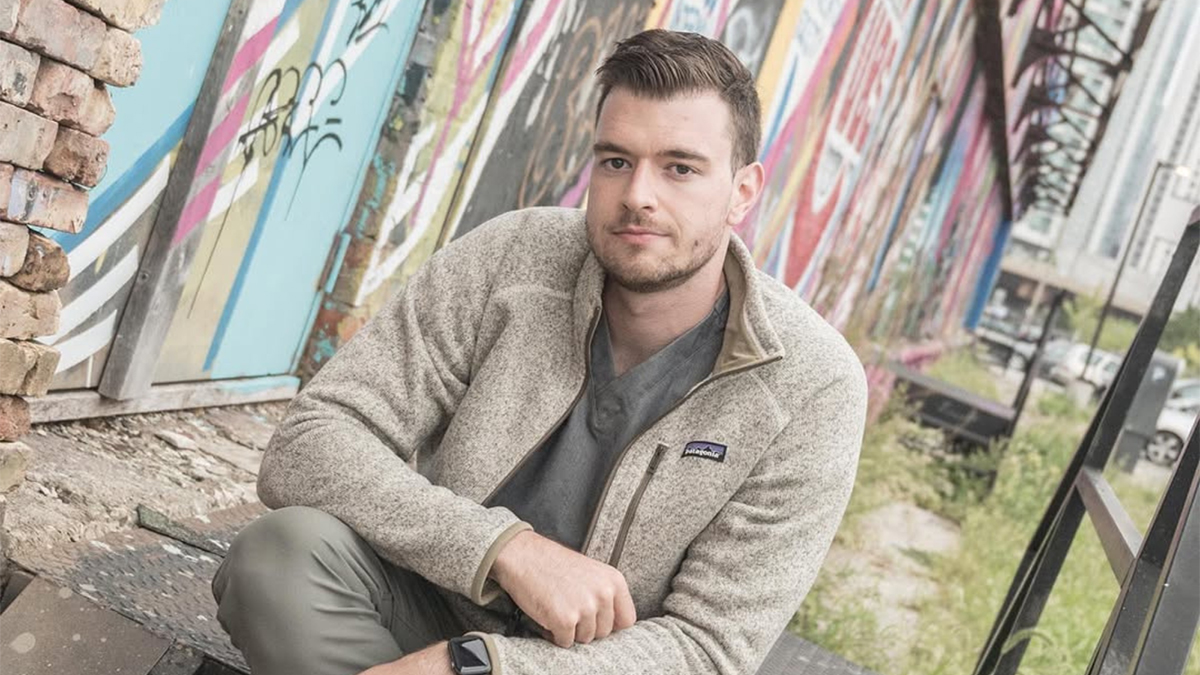
Dr. Adam Goodcoff | Photos courtesy of MedFluencers
Influencer and emergency medicine physician Dr. Adam Goodcoff shares insights on embracing AI and evolving career pathways to help healthcare professionals stay adaptable and future-ready.
As someone who has successfully merged clinical practice with digital innovation, how do you believe emerging healthcare professionals can best position themselves to thrive in this evolving landscape?
I think the best thing someone who’s coming up or even someone actively practicing now could do is keep an open mind and have a hunger for new skills and knowledge. Look at the way machine learning has come into our lives in the last two or three years. If you had asked a clinician three years ago if they found AI helpful, I don’t think they could even tell you where AI was in the mix. Today, there are tools like the ambient AI scribes and various platforms that are now making their way into healthcare. We need to have hunger and interest in the discovery of these new tools and consider how we could integrate them into our day-to-day workflow. I think having an open mind is the best way to do that.
What key skills or mindsets do you think are essential for those entering healthcare today?
I think the mindset is really one of growth and opportunity. We’re entering a really interesting era, as I mentioned, with AI and medicine and tech enabling the workforce for healthcare providers. Even five years ago, it was an analog specialty. I mean, we were interacting with computers and using some dictation software, but nothing really advanced. In that short time span, we’ve accelerated that so much already.
What I would say to the learners and those coming into this career is to be hungry and be open to change. Medicine is well known for being slow to change and slow to adopt, and there are reasons for that; there’s safety and security in the way that we’ve done things. However, now at a time when innovation is so rapid, I think it’s important to consider the ways we might be able to integrate that into our workflow.

Can you share some examples of how social media and digital platforms have created new career pathways within healthcare that might not have existed a decade ago?
I think the beauty around social media in healthcare is that we’ve now created an opportunity to educate our peers and patients in a direct-to-consumer space in a way that is faster and more direct than ever before. It’s really democratized health education. I think it’s an exciting time where real value can be brought and exchanged on social platforms.
Healthcare workforce shortages are a pressing concern. How can innovative career models like those involving digital health communication help address these gaps while also enhancing patient care?
I’d be a bit biased answering this, but I think social media brings visibility to healthcare careers and brings some of the fun and discovery back into a career in healthcare. We have physicians and folks of all degrees really showing what life can be like in various career pathways. I found a lot of success in my own content by creating ways for learners to engage and test their skills and to feel rewarded in a friendly learning environment, where there was no pressure to formally study. That’s what we see at MedFluencers: These physicians and healthcare professionals are excited about reaching the next generation of learners, driving the adoption of new technologies and therapies faster, and getting that information in the right hands.
Looking forward, what trends or opportunities do you foresee that healthcare students should be preparing for to maximize their impact and career satisfaction?
I think healthcare careers are changing. From a technology side, there’s tremendous enablement, but also the way that the healthcare system works is constantly evolving. There are certainly things about the system that are broken, but there are things that are being fixed, and I think that goes back to my concept of keeping an open mind and being fluid or open to change around the way that a career looks. When I was in high school and thinking about being a physician, it’s different today than it was then. In an equal amount of time, it will be radically different again. We’re at such a quick evolutionary pace here.
I’d invest in your own learning, especially understanding a bit more about machine learning and AI. I think it’s become a part of all of our lives, and there are so many folks who just quickly label it AI and write it off. What is the AI doing? Why is it different than traditional search? What are we doing differently with these tools?