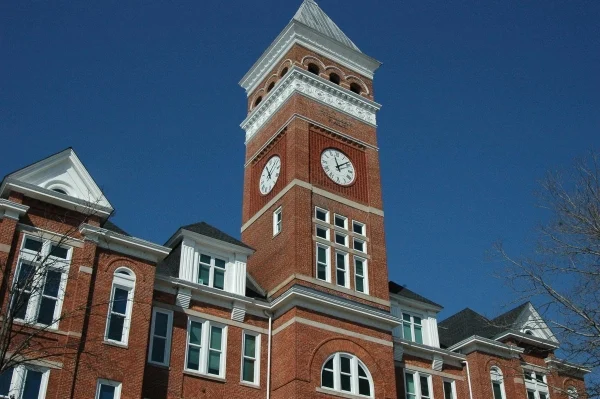
Clemson president Jim Clements is retiring at the end of the month.
sbrogan/E+/Getty Images
Clemson University president Jim Clements is retiring at the end of the month, bringing an abrupt end to his 12-year tenure at the helm of the public institution in South Carolina.
He cited “health and family” as his reasons for stepping down just over a year after he signed a five-year contract extension.
“Clemson has been my home and passion, yet my greatest love is for my wife, Beth, and our children and grandchildren. Life moves quickly, and I don’t want to miss what truly matters—the major milestones and the quiet, everyday joys,” Clements wrote in a Tuesday message announcing his retirement. “Those are the moments I want to experience and hold close.”
Clements joined Clemson in 2013 after nearly five years as president of West Virginia University.
He cited a record number of applications and Clemson’s attainment of Research-1 status under the Carnegie classification system, achieved in 2013, among his accomplishments. Board of Trustees chair Kim Wilkerson also said in her own message that under Clements’s leadership, “Clemson achievedrecord enrollment and graduation rates, expanded research initiatives and secured historic philanthropic support.”
More recently, however, Clements courted controversy after the university fired three employees for allegedly making inappropriate remarks about the death of Charlie Kirk. The university appeared to claim in a social media post related to the firings that First Amendment rights do not “extend to speech that incites harm or undermines the dignity of others.”
Clemson also shut down faculty and staff affinity groups intended to advise leaders on how to support Black, Latino, LGBTQ+ students, veterans and others in September. At the time, Clemson officials claimed, “The commissions have successfully fulfilled their important charge.”
Now Clemson is expected to name an interim president at an emergency board meeting Wednesday. Provost Bob Jones, who was planning to retire, is expected to be named to the interim role and to “serve until a successor is named,” according to Wilkerson’s statement.
The number of unique credentials available in the U.S. has hit a whopping 1.8 million, with digital badges making up more than a million of those offerings, according to the latest report from Credential Engine.
The report, released Tuesday, is the fifth in a series tracking the ever-growing variety of credentials and providers cropping up across the country. Much has changed since the last “Counting Credentials” report came out in 2022. Credential Engine, a nonprofit dedicated to charting the credentialing landscape, improved its data collection and analysis strategies to remove duplicate programs from data samples and include more badge programs, allowing for more accurate counts and estimates, the new report noted.
Researchers found that 134,491 credential providers—including colleges and universities, online course providers, nonacademic organizations, industry associations, and state governments—are producing 1,850,034 credentials, up from the 1,076,358 they counted in 2022. The report also found that education institutions, federal and state governments, and employers spend $2.34 trillion annually on these programs.
Credential Engine identified 1,022,028 badges and 486,352 certificates among the total. Degrees, by comparison, made up a smaller fraction of the credentials tallied this year: 264,099 programs. The number of secondary school diplomas and occupational licenses followed behind at 52,948 and 14,331, respectively. Certifications, which require an exam and tend to expire, reached 6,892. And the organization found 3,384 microcredentials, defined by the report as any program offered by a massive open online course provider that embraces the label.
Scott Cheney, CEO of Credential Engine, said the standout finding to him is “there’s a lot of digital badging being done,” a trend he finds “really exciting.” He believes digital badges, which recognize specific skills and achievements for display online, allow workers to better showcase their learning at a more granular level. For example, badges, whether offered by academic or nonacademic providers, can recognize skill sets ranging from emotional intelligence to mastery of a coding language, or even completion of a class or work project.
Badges are “being used to recognize smaller and smaller learning activity and skill attainment,” Cheney said. “We’re really seeing a moment when we’re able to actually count all learning,” which helps job applicants “tell their story.”
He said the digital format not only makes it easier for learners to keep track of everything they’ve achieved but also simplifies sharing that information with employers.
A companion report, released with the credential count, suggests innovations like digital wallets and learning and employment records, which can house collections of digital credentials, are making badges more shareable and verifiable for employers.
“The technology is there,” Cheney said.
He also believes the ascent of skills-based hiring is driving the trend. More than half of states have adopted policies to encourage hiring according to skills, not degrees, and a slew of employers have embraced the approach. He’d like to see more employers with these goals use digital credentials to assess what candidates bring to the table.
Because of these recent developments, “all of a sudden, we need ways to actually unpack the skills that you have in a traditional degree or certificate or certification” and to offer ways to learn and prove mastery of “a single skill,” he said.
Though the report doesn’t delve into it, he noted that traditional higher education institutions are increasingly interested in offering nondegree credentials, which he believes is “healthy for them and their relationship with their students” as demand for such programs ramps up.
But Cheney also understands colleges’ trepidation about entering a nondegree credential landscape that’s crowded, “very chaotic” and “difficult to navigate.” He acknowledged that some academics have healthy concerns about the quality of proliferating nondegree credentials as nonacademic credential providers grow their offerings at fast clip. The trend “does cry out for … a greater need to have reliable outcome data and impact data,” he said. Members of the committee engaged in the negotiated rule-making process for Workforce Pell, a new federal financial aid option for short-term job training programs, are wrestling with such questions about how to ensure credentials’ quality this week.
Nondegree credentials aren’t “going to be right for every institution, and that’s OK, too,” Cheney said. “We need some that are still going to be very traditional … because the economy needs that as well.” At the same time, higher ed institutions “need to recognize where the marketplace is, where the zeitgeist is in the country and what employers need and what students are calling out for.”
Kao denied any wrongdoing and plans to appeal the decision.
lucentius/iStock/Getty Images Plus
The University of California, Berkeley, suspended lecturer Peyrin Kao without pay for the spring semester because he made pro-Palestinian political comments during class.
Kao, a lecturer in the Electrical Engineering and Computer Science Department, participated in a 38-day hunger strike this fall to protest the use of technology in what he called Israel’s genocide in Gaza. He allegedly told students during class that he was undergoing a “starvation diet” and directed them to his website to learn more about why he was striking.
Also, last spring, Kao allegedly made “off-topic” remarks including about “the conflict in Israel and Gaza, an expression of solidarity with a protest happening outside the classroom, Google’s business dealings with Israel, UC’s investment in companies that themselves invest in companies that ‘supply bombs,’ and calls for solidarity with those in Gaza and to ‘Free Palestine,’” executive vice chancellor and provost Benjamin Hermalin wrote in his letter recommending that Kao be suspended.
Hermalin ultimately determined that Kao violated a Board of Regents policy requiring that instructors only discuss content relevant to the course in session during class time. With his comments and actions, Kao “misused the classroom for the purpose of political advocacy,” Hermalin wrote. Kao will be suspended for six months, starting Jan. 1.
“Mr. Kao drew attention to his hunger strike in class and informed the students how they could find out why he was engaging in it. In addition, the visible physical toll it presumably was taking and the adverse consequences it may have had on the quality of his instruction all represent a form of advocacy, albeit nonverbal,” Hermalin wrote. “In that sense, his actions are no different from those of an instructor who repeatedly wore a t-shirt when teaching that had on it a very visible political symbol or a picture of a political candidate.”
Kao denied any wrongdoing and plans to appeal the decision.
“The timing of my punishment raises serious questions about whether it was a politically motivated decision by the university to appease the Trump administration. My suspension is the latest in a long line of faculty and students disciplined for taking a stance against occupation and genocide in Palestine,” Kao said in a statement distributed by the San Francisco Bay Area Council on American-Islamic Relations, which also denounced Kao’s suspension. “The university is trying to make an example out of me and suppress any conversation about Palestine, because those conversations would expose the university’s investment in genocide. I will not be deterred by this unconstitutional attack on free speech, and I intend to continue exercising my First Amendment right to advocate for a free Palestine.”
Berkeley officials declined to answer Inside Higher Ed’s questions about Kao’s suspension.
“The university does not comment on confidential personnel matters,” a spokesperson wrote in an email. “Speaking generally regarding free speech policy, the university will always take a viewpoint-neutral approach when it comes to supporting freedom of expression and actions that align with policy.”
Union workers in Los Angeles protest Öztürk’s arrest on April 1, 2025.
Genaro Molina/Los Angeles Times/Getty Images
Rümeysa Öztürk, a Tufts University Ph.D. student from Turkey who was arrested by immigration officials earlier this year, is returning to teaching and research months after her release from detention, multiplesources reported.
Öztürk garnered national attention for being one of the first students swept up in the Trump administration’s attack on international students who had expressed pro-Palestinian beliefs; she had co-authored an op-ed in the student newspaper calling on Tufts to condemn Israel’s attacks on Gaza. Though she was released from detention in May, her status in the Student Exchange and Visitor Information System, a digital records system of international student information, was not restored, preventing her from teaching or engaging in research for months.
U.S. District Judge Denise J. Casper granted Öztürk’s request for a preliminary injunction restoring her SEVIS status on Monday. The judge agreed that the termination of her records had caused “irreparable harm” by preventing her from accessing employment, professional development and doctoral training in the last year of her Ph.D. program.
A recent Student Voice survey by Inside Higher Ed and Generation Lab found that nearly one in five college students say their top stressor is affording life after graduation. A similar share worry that they don’t have enough internship or work experience to be successful.
The survey, fielded in August, includes responses from over 5,000 college students, including 1,000 two-year and nearly 2,000 first-generation college students.
“Stability is really important to this generation of job-seekers,” said Shawn VanDerziel, chief executive officer at the National Association of Colleges and Employers, citing the organization’s own student surveys. “For the last several years, students regularly report to us that, in their first job, the most important thing is stability.”
That means having a reasonable living standard as well as an employer who provides sufficient benefits, work-life balance and assurances against layoffs, VanDerziel said.
Christine Cruzvergara, chief education officer of the job board Handshake, said the trend doesn’t surprise her because it mirrors similar data her organization collected earlier this year, which found that AI, changes to federal policy and a competitive job market are among the factors impeding students’ confidence after graduation.
“The cost-of-living piece is very real,” Cruzvergara said. “That is, anecdotally, something that we do hear from students, even in the four-year space: ‘Everything is so expensive; I don’t know how I’m going to be able to live.’”
Nationally, the American public is feeling strained financially. A recent McKinsey survey found that 45 percent of consumers said “rising prices or inflation” is their top concern; an additional 24 percent pointed to their “ability to make ends meet,” and 19 percent cited job security and unemployment.
“I know no one is going to hire me in an economy like this,” one student at New Mexico State University–Dona Ana wrote in the “other” response option on the Student Voice survey.
The cost-of-living squeeze has pushed more graduates to consider housing and grocery prices when selecting a city to live in.
“In the past, you may have found other things that have risen to the top, like vibrant nightlife, environmental issues, recreation. All those things are still on the list, but cost of living is No. 1 in the minds of graduates today,” VanDerziel said.
Handshake has seen more applicants looking toward smaller markets, or “B-list cities,” for their first destination after college, “because you might be able to get a good enough job that you can actually have the quality of life that you’re looking for at the same time,” Cruzvergara said.
Internships needed: Students’ perception that they lack skills and experience points to a growing need for higher education leaders to provide work-based learning to prepare students for the workforce. Some institutions now guarantee experiential learning or internships as part of their strategic plans, Cruzvergara said.
“I’m pleased to hear that students are concerned about internship opportunities, because that tells me that they are in tune with what’s happening in the world and the fact that employers see internship experience as being the best of everything,” VanDerziel said.
Four-year students are more likely to have enrolled in college directly after graduating from high school, which could explain why this group of students is more likely to fret about their lack of work experience, Cruzvergara said.
“If they didn’t do an internship, or they only did a part-time job in the summer, they might feel as if they’re at a disadvantage because they haven’t been in a more traditional white-collar work environment,” Cruzvergara said.
Older students (25 and up) or those who have worked full-time were less likely to cite anxieties over a lack of work or internship experience, despite being statistically less likely to complete an internship while in college. Handshake data from earlier this year found that about one in eight students have not participated in an internship and do not expect to before finishing their degree, in large part due to time constraints caused by other work or homework, or because they weren’t selected for an internship role.
While some employers value all work equally, others believe it’s important for students to have work experiences specific to their intended professions, VanDerziel said.
A soft landing: College and university career centers can help address some of students’ anxieties about graduation by connecting them to employers the traditional way at career fairs, Cruzvergara said.
“In the face of emerging AI in more industries, roles and sectors, I actually find that what’s become really quite popular again for students in order to get a job or an internship is good old-fashioned networking,” Cruzvergara said.
Attendance at networking and employer-led events hosted on Handshake (either virtual or for registration purposes) has tripled this year, according to the job board’s data.
“I know it’s not new; career centers have been doing this for a long time, but do we need to do it more? Do we need to do it in a different way?” Cruzvergara said.
Colleges should also consider their own departments as employers to host interns.
“The school is a business in and of itself that has all these different functions,” Cruzvergara pointed out. “So how are you creating an internship within your own finance department? How are you creating an internship within your own legal department?”
Join HEPI tomorrow (Thursday 11 December 2025) from 10am to 11am for a webinar on how universities can strengthen the student voice in governance to mark the launch of our upcoming report, Rethinking the Student Voice. Sign up now tohear our speakersexplore the key questions.
This blog, kindly authored by Thomas Owen-Smith, Principal Consultant, William Phillips, Data Analyst, and Pippa Wisbey, Consultant, all of at SUMS Consulting, is part of a three-part mini series on UK universities’ approaches to land use.
Most readers will be familiar with the current conditions for the UK’s universities. Proximate financial risks – potentially existential for some institutions – understandably focus minds on the here and now.
Whatever system emerges from the current turmoil will need to be more resilient than what it replaces.
While the gathering risks in the economic and geopolitical theatre are familiar, on longer horizons – and let’s remember that many universities like to emphasise their longevity of foundation and core mission – the greatest risks are those stemming from the disruption to world’s climate and natural systems.
These risks are generally slow onset. Until they become acute, causing loss, damage and danger to human health and safety.
Solely the “physical” risksthat we have modelled may cause hundreds of millions of pounds of loss and damage to universities each year (estimated at a potential £166.8m annually, based on moderate estimates), as extreme weather becomes more frequent.
These do not account for “transition risks” and “systemic risks”, which have less direct linkages to physical location and would manifest in disruption to their supply chains, national infrastructure and so on.
While impacts of extreme weather would likely be spread across multiple institutions, financial impacts of this order are material – particularly for those institutions which are most exposed.
Climate impacts might manifest not only in damage to buildings and other infrastructure, but also loss of valuable equipment and disruption to critical business – carrying further costs for institutions – and impacts on the health, wellbeing and safety of their staff and students. Insurance costs are also expected to rise, and in the most exposed cases, some assets may become uninsurable.
Securing future resilience is therefore very much a long-term game.
Mapping risks
Physical risksrelate most closely to the location (“exposure”) of assets. As hazards (storms, heatwaves and the like) become more frequent and more severe, loss, damage and costs increase – further exacerbated by institutions’ vulnerabilities.
Using our mapping tool, institutions can explore both observed patterns of temperature and rainfall at their location, and modelled patterns for 2C and 4C of global temperature rise – both plausible scenarios for the second half of this century.
They can also explore datasets containing granular local-level data around flood risk and heat islands. While these have not yet been modelled for future climate conditions, it is safe to assume that flooding and extreme heat events will become more frequent and more extreme, as winters become wetter and summers hotter and drier across most of the country.
Under current conditions, 197.5 hectares (ha), constituting 3.2% of mapped lands are at high or medium risk from flooding, while 4,102.1 ha (or 64.2%) are at high or medium risk of extreme heat stress.
The instances where floods or extreme heat risk incurring the greatest costs for institutions, is where their built estate is in high-risk areas. By our mapping, 92.1 ha (or 1.4%) of university estates are areas where high or medium flood risk coincides with built environment; and 2,898.6 ha (or 45.4%) are built environment with high or medium heat risk.
Of course, flood risk and heat islands are not totally independent variables from land cover. Built areas can exacerbate both flood risk by reducing the scope for water absorption, and heat islands due to their high retention of heat compared to non-built surfaces.
Responding and adapting to risks
Many institutions have already begun to respond to climate and environmental risks, and sector organisations have developed guidance on adaptation and resilience.
Those institutions that haven’t yet done so can use our mapping tool as an initial pointer to frame detailed site-specific risk and vulnerability assessments. Following UK Government guidance, we recommend using scenarios of 2C and 4C global temperature rise.
Better understanding of this picture for the specifics of university sites will also allow for options assessment around adaptation measures (including land-based approaches such as increased areas of non-built space or green infrastructure) to mitigate heat island effects; or if it is unavoidable, manage conditions of high heat through more cooling (which brings increased energy use).
The same stands for institutions that have a large built area in flood-prone zones. Understanding the current risk (which is likely to be on the radar already for many of these institutions) and how it might develop with the changing climate opens into exploring options for response. Nature-based solutions such as extending wetlands or porous ground surfaces can potentially mitigate flood risks in some areas. That said, institutions may wish to consider relocating valuable equipment, high-use areas or strategic activities if situated at the most risky sites.
While adaptation will carry upfront costs for institutions, national-level modelling indicates that the projected costs of loss and damage without adaptation will be substantially greater, and most adaptation measures have a high benefit to cost ratio if they are undertaken in good time.
In other words, spending sooner will save later.
The bigger picture
In the big picture, reducing the risks around increased exposure to physical hazards also underlines the necessity for every organisation to reduce its own impacts on climate change and nature loss – the ultimate drivers of the deteriorating risk environment.
In part 3 of this mini-series, we will explore opportunities that universities’ estates may offer to do that, some of which also offer other benefits to institutions’ financial position and core mission.
SUMS Consulting will host a webinar from 11:00 to 12:00 on Thursday 22 January 2026. The webinar will include a walkthrough of the report and online tool, and panel discussion featuring Nick Hillman OBE (Director of HEPI). Register here.
This story was produced in partnership with Work Shift and reprinted with permission.
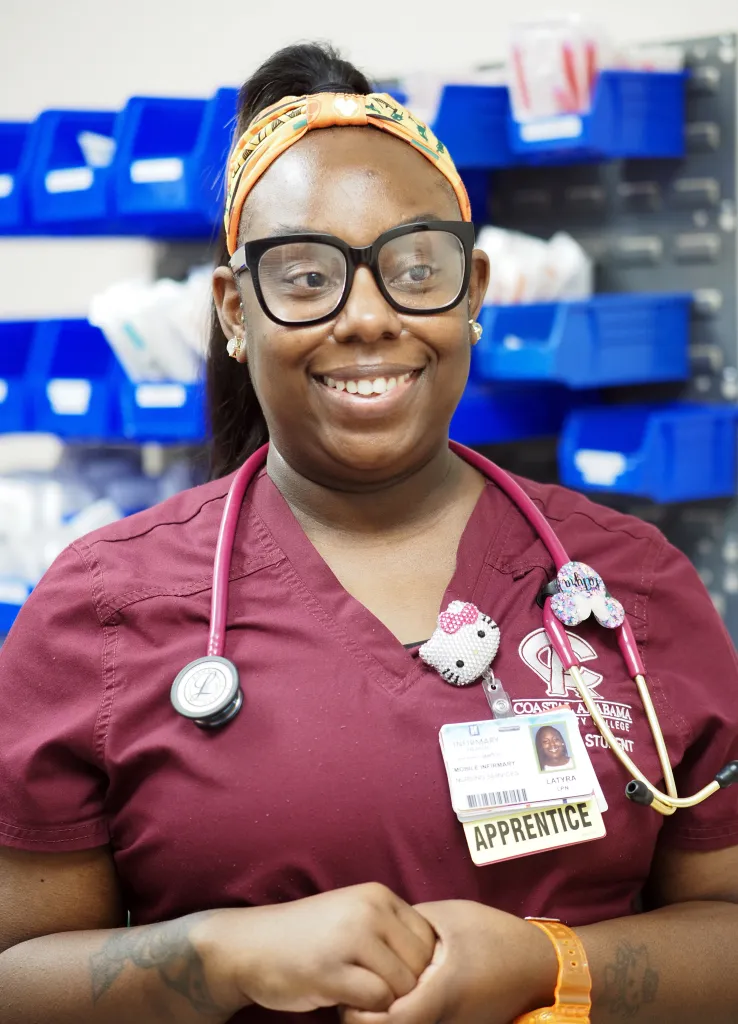
MOBILE, Ala. — Three or four times a week, LaTyra Malone starts her day at Mobile Infirmary hospital at 6:30 a.m. For the next 12 hours, she makes her rounds and visits with patients — asking if they’re in pain, checking vitals, administering fluids. To an outside observer, she appears to be a nurse.
But Malone, 37, is a registered nurse apprentice. Everything she has learned how to do in her nursing classes at Coastal Alabama Community College, she can do at the hospital under the supervision of registered nurse Ondrea Berry, her journeyworker — a term typically used in the skilled trades. Unlike most nursing students who complete their required clinical hours in groups for no pay, Malone gets paid as an employee with benefits. She also gets much more personalized, hands-on learning time.
“It’s like having a little kid attached to your leg all day,” Berry joked.
For Malone, the partnership is invaluable.
“I learn so much more one-on-one,” Malone said. “I might know the basics of disease processes or why we’re giving a certain medicine, but hearing her break it down to me helps a lot.”
The pair work largely as a team, alternating duties to allow Malone a chance to observe and practice. By now, Malone knows the ropes pretty well: In addition to her apprenticeship training and classes, she has 16 years of experience as a certified nursing assistant and a medical assistant. And Berry, who is 25, says she benefits from the working relationship too. “There are teaching moments for both of us,” she said.
Degreed nursing apprenticeships, like the one in Alabama, have emerged nationally as a potential solution to a thorny problem. The national nursing shortage is creeping toward crisis levels, with the demand for RNs like Berry and licensed practical nurses, or LPNs, projected to outstrip the supply for at least the next decade. At the same time, tens of thousands of people like Malone are already working in patient care in hospitals. Many aspire to be nurses — in fact, many certified nursing assistant programs sell the idea that you can start there, quickly land a job and then continue on to become a nurse.
But in reality, that’s a huge leap that requires an entirely different admissions process and English, math and science prerequisites that many nursing assistants don’t have. It also assumes that someone working an eight- or 12-hour shift for $18 an hour can find the time and the money for more education.
“The sort of ‘we are excellent’ ethos in nursing might be self-defeating in that it is weeding out a lot of people who would be amazing nurses,” said Iris Palmer, director for community colleges with the education policy program at New America.
Ondrea Berry, left, dispenses medication at Mobile Infirmary hospital while LaTyra Malone looks on. As an apprentice, Malone must be supervised by Berry at all times. Credit: Mike Kittrell for Work Shift
Related: Interested in more news about colleges and universities? Subscribe to our free biweekly higher education newsletter.
Several states, including Texas, North Carolina and Wisconsin, have begun growing registered apprenticeships in nursing — which have approval from the U.S. Department of Labor — to help address this problem. But no state has done quite as much as Alabama in scaling the model.
In 2021, the Alabama Board of Nursing worked with the state legislature to create a nursing apprenticeship license. Normally, nursing students are not licensed until after they graduate and pass a national licensure exam, and therefore they can’t be paid for their supervised clinical hours. The new apprenticeship license allows them to earn while they learn, making nursing school much more accessible for students like Malone and helping to fill critical staffing needs in hospitals.
Since the law passed, 80 employers and 28 colleges and universities in Alabama have jointly created LPN and RN apprenticeship programs for those who are still working toward a degree. Nearly 450 apprentices — the great majority RNs — have completed the program and passed their exam, with more than 500 currently apprenticing. It’s too soon to say whether apprenticeships will solve the nursing shortage in the state, but early data shows benefits for employers and aspiring nurses alike.
Mobile Infirmary has had over 90 nursing apprentices since the hospital’s program began in 2022, first with the LPN apprenticeship and soon after with the RN one. Graduates are required to stay at the hospital for one year after the apprenticeship ends, but most are staying beyond that. Only five have left so far, according to Stefanie Willis-Turner, the director of nursing school partnership and programs at Mobile Infirmary.
The hospital, like many others, already offered tuition reimbursement for employees who wanted to go back to college and move into nursing or another higher-level position. But such programs have notoriously low uptake, in part because most low-income employees can’t front the cost of tuition and also because many don’t know what steps to take.
“It amazed me the number of people that wanted to go back to school but didn’t really know where to get started,” Willis-Turner said. “Having a person to help guide them has really been our trigger, and that’s how we run this program.”
LaTyra Malone is a two-time apprentice at Mobile Infirmary hospital. Last year, she worked with Ondrea Berry as a licensed practical nurse apprentice while she earned the certification. This year, she is a registered nurse apprentice. Credit: Mike Kittrell for Work Shift
Willis-Turner played a crucial role in recruiting Malone for the apprenticeship. Malone has wanted to be a nurse since she was a teenager when she was president of her high school’s chapter of HOSA-Future Health Professionals, a global student-led organization that promotes careers in health care. But her plans to become a registered nurse were delayed when she became a mother. The financial burden plus the rigid schedules of nursing school made it difficult to make room for parenting, working and studying.
With the apprenticeship, Malone doesn’t have to worry about paying for college, and she can provide for her family while improving her nursing skills. Her path stands in stark contrast to that of Berry, who worked at Dairy Queen throughout nursing school to pay for tuition and health insurance. Berry didn’t have kids to take care of, but she also didn’t have financial support from anyone else in her family. Her only on-the-job training in nursing school was the clinical hours, where she joined a group of students who took turns practicing new skills with just one nurse. Berry says she only attempted two IVs in that time. Malone has done so many she can’t count.
About 75 percent of the apprentices at Mobile Infirmary over the last three years were already working at the hospital. The rest came from surrounding medical facilities. Some even quit their jobs to transfer to Mobile Infirmary for a better chance at getting into the apprenticeship program. In addition to paying students for their work, Mobile Infirmary pays for any tuition that isn’t covered by scholarships or grants. The hospital also provides two uniforms free of charge. And students know they have a guaranteed job after they graduate and pass the nursing exam.
This kind of targeted support is what makes the best apprenticeships successful in boosting individual economic mobility, its advocates say. Another key factor is the type of job an apprenticeship prepares people for. Most health care apprenticeships are for entry-level roles like CNAs, patient care technicians and medical assistants — jobs that, on average, pay $18-$20 an hour.
About half of states offer apprenticeships for LPNs, who make about 50 percent more than that, and half do so for RNs, whose median salaries are close to six figures, according to data from the U.S. Department of Labor. But far fewer apprentices are in those LPN and RN programs — and the majority of RN apprenticeships are for nurses who already have degrees, not for those who are still learning. That means aspiring nurses must still get all the way through the financial and logistical obstacles of nursing school before they can start to work.
Josh Laney helped set up the different model in Alabama when he was director of the state’s Office of Apprenticeship. For a long time, he said, he bought into the “urban legend” that training more people to be certified nursing assistants, especially when they’re young, would get people onto the path to becoming nurses.
“The pitch was, ‘We get you the certificate and then you’re going to work at a hospital because it’s a very high-demand occupation. From there you can go on and move into nursing or whatever else you want to do,’” Laney said. “But there was no specified plan for how to do that — just a low-wage, very stressful and strenuous job.”
The data backs that up. A 2018 study of federal Health Profession Opportunity Grants for CNA training showed that only 3 percent of those who completed the training went on to pursue further education to become an LPN or RN. Only 1 percent obtained an associate degree or above. A study in California showed slightly better odds: 22 percent of people who completed certificate programs at community colleges to become CNAs went on to get a higher-level credential in health care, but only 13 percent became registered nurses within six years.
Because of these outcomes, Laney refused to pursue apprenticeships for CNAs in Alabama. One reason apprenticeships for CNAs and medical assistants are common, however, is that they are jobs that don’t require degrees and have fewer regulations when it comes to training. Setting up a registered apprenticeship for nurses who don’t already have a bachelor’s degree is complex and requires the work of many entities — the nursing board, colleges and employers.
When he went to the state board of nursing to propose LPN and RN apprenticeships, Laney was initially shut down.
“To their credit, they said, ‘Go away, bureaucrat! You’re not industry, you’re not the employer. You don’t really have anything to do with this,’” he recalled. “What I learned there, and what I’ve recommended to every other state who’s tried this, is let the employers carry your water. If they want it, they’ll get it done.”
Laney then talked to the Alabama Hospital Association and Alabama Nursing Home Association, to reach employers. Given the shortages they had been experiencing, they bought into the idea and approached the nursing board themselves. Next, Laney’s team got community colleges on board, then universities. With the assurance that apprenticeships wouldn’t cut down on any of the required classes and clinical hours, the nursing board agreed to create the new license, following legislative approval.
Other states embarking on nursing apprenticeships have faced similar challenges.
Apprenticeships aren’t a panacea. They hold promise for creating upward mobility, diversifying the profession and improving the odds a student makes it through to graduation, but they can’t solve all the knotty challenges of the nursing shortage. A lack of instructors in nursing schools — and therefore a lack of available seats for qualified students — is still one of the biggest factors. And in the apprenticeship model, every student needs one-on-one mentorship, meaning hospitals must have enough staff available and willing to work in a mentoring role for up to a year.
Jay Prosser, executive director of the Massachusetts Nursing Council on Workforce Sustainability, knows all that. But he thinks apprenticeships will bring in more “practice-ready” nurses who are more likely to stay in the field long-term, especially those who were already working in patient care in the United States or other countries. Massachusetts is on the cusp of starting a licensed practical nurse apprenticeship with one employer and one academic partner, after working with the state nursing board and colleges for the past year. Unlike in Alabama, the nursing board didn’t need to create a new license, but rather the board judges whether educational programs meet regulations or not.
The Massachusetts Nursing Council on Workforce Sustainability is also creating a nursing apprenticeship network in the state, to make it easier for different institutions and programs to exchange ideas.
Prosser said one of the biggest barriers was making sure that the scope of practice for apprentices was clearly defined. He worked with local colleges to make sure of this. Prosser had previously worked as an assistant chief nursing officer in Birmingham, Alabama, and moved to Massachusetts in 2021 with the idea of apprenticeships already in mind.
Several other states have also created nursing apprenticeships for students who don’t already have a degree, but they’re limited to single institutions. In 2023, Texas began offering nursing apprenticeships for students who hadn’t already earned a degree in a collaboration between South Texas College and the Texas Workforce Commission.
The University of Wisconsin Health system has created a portfolio of nine registered apprenticeship programs, including an RN program launched in 2023 and a handful of other apprenticeship-style programs. Bridgett Willey, director of allied health education and career pathways, said the hospital started with entry-level apprenticeships, like medical assistants, before proposing degreed programs.
“There’s still kind of a myth that the colleges are going to do all this on their own,” Willey said. “Well, that’s not true. Employers have to sponsor, because we’re the ones hiring the apprentices and often supporting tuition costs, as well.”
The outcomes from the entry-level apprentice programs helped convince the health system that it was worth investing more. A three-year study showed that staff retention rates for those who participated in the hospital’s apprenticeships were 22% higher than for those who didn’t. In the two-year-old RN program, attrition is less than 10% so far — significantly lower than the attrition rate the hospital has seen with traditional students who participate in clinicals at the hospital.
UW Health supports efforts to scale their apprenticeship model across the state, but so far they haven’t panned out. Willey said employers are interested, but conversations often stall when questions arise about how to create more clinical capacity and find funding sources to support apprentices.
Even so, Eric Dunker, founding executive director of the National Center for the Apprenticeship Degree, which is affiliated with Reach University, predicts that nursing apprenticeships are about to see major growth, as teaching apprenticeships did five years ago. Earlier this year, Reach University received a $1 million grant to expand apprenticeships in behavioral health, and is planning for nursing ones. The strict licensing regulations for nursing make it more complicated than scaling up teaching apprenticeships, but Dunker sees the possibility of expanding them if nursing boards, colleges and employers all come to the table, as they did in Alabama.
“There’s a lot of entry-level health care apprenticeships,” Dunker said. “But the key is upward mobility, which is nursing and nurse practitioners. There’s typically been a bottleneck in stacking these pathways, but that’s where you’re starting to see more states and systems become a little more creative.”
Tyler Sturdivant, Coastal Alabama Community College’s associate dean of nursing, knows what that looks like. Figuring out the logistics of setting up an apprenticeship program was a challenge, he said, and required hiring an additional staff member to liaise between the college and hospital partners. But three years into the apprenticeship program for LPNs and RNs, the school is seeing higher completion rates than for traditional students.
This means they’re producing more licensed nurses to fill positions and someday mentor, or even teach, other apprentices.
On a typical Friday morning in September at Mobile Infirmary, Malone and Berry visited a 70-year-old man who came in for a urinary tract infection that then weakened him. That day, the apprentice and journeyworker switched out his bed for one lower to the ground to reduce the fall risk, taught him how to raise the bed so he could sit upright, updated him on a plan for physical therapy and adjusted his socks for him.
Malone appeared comfortable and confident, taking the lead in the patient’s care while Berry assisted her. Malone says the many hours of practice she’s had through the apprenticeship has made her feel prepared for the job and ready to continue to follow her dreams. One day, she wants to become a nurse practitioner specializing in mental health.
“I won’t feel complete until I actually become a nurse,” Malone says. “I thought I was going to be one sooner, but bumps in the road happened and I ended up having a child. If it wasn’t for the apprenticeship, I probably wouldn’t be here now.”
Contact editor Lawrie Mifflin at 212-678-4078 or on email at [email protected].
This story was produced in partnership with Work Shift and reprinted with permission.
Since you made it to the bottom of this article, we have a small favor to ask.
We’re in the midst of our end-of-year campaign, our most important fundraising effort of the year. Thanks to NewsMatch, every dollar you give will be doubled through December 31.
If you believe stories like the one you just finished matter, please consider pitching in what you can. This effort helps ensure our reporting and resources stay free and accessible to everyone—teachers, parents, policymakers—invested in the future of education.
Generative AI is here and is creating challenges in higher education (Balch, 2023). As instructors, we are struggling with the need to teach our students necessary and marketable skills for their evolving world (e.g., Balch & Blanck, 2025; Butulis, 2023; Parks & Oslick, 2024; Schoeder, 2024), while maintaining academic rigor and integrity. Our students are aware of and are using generative AI in many ways (Kichizo Terry, 2023), and generative AI may change the way that we and our students perceive the role of instructors in higher education (Saucier, 2025). I share my recent experiences with and reflections on my students using generative AI in my classes below in the hopes that the lessons I have learned will help other instructors navigate similar experiences with students in their classes.
At the end of the semester, I received an email from a student in my general psychology course to ask me what he should do about a paper he wanted to turn in. The paper was an article summary and reflection paper that students can complete in my course in lieu of participating in research. The research participation requirement, and thus these papers, do not count for points – the research requirement just has to be completed (I will note here that this is a department policy for all general psychology courses – not a policy I personally created for my course). He ran his paper through an AI checker “just for fun” and it reported his paper was 43% written by AI. He wondered how to proceed because he said he did not use AI to write his papers and did not want to get into trouble. Knowing that AI checkers are not that reliable, I told him that if he had not used AI to write his paper, then he would be fine. He submitted the paper (and a couple of others) and I quickly forgot about his email in the chaos of the end of the semester.
In processing the papers submitted by the students in my class with an enrollment of 206 students, I later discovered an issue. The paper assignment asks students to retrieve, read, and write a summary and reflection on research articles published in the current calendar year from one of two specified journals. The first part of the assignment asks them to provide the reference for the article they used for their paper. Due to my questionable decision not to spend much time on APA format in my course, many of the students provided references in various states of incompletion and disrepair. Consequently, I copied and pasted the article information they did provide into Google Scholar to check to see if the articles used for each paper were in fact from one of the specified journals for the current calendar year. During this tedious task, I found that some articles were not from the specified journals, and some were not from the current calendar year. This was not surprising. What was surprising is that I found that some of the articles (including the three used by my student above) did not exist.
Over many email exchanges and Zoom meetings over the next several days with two students who used non-existent articles for their papers, I discovered that each had used generative AI to complete their papers. Three times, the student above put the directions from my posted assignment into generative AI, and each time generative AI obligingly produced something the student thought was an article from one of specified journal in the current calendar year. The articles were authored by “Smith”, “Johnson”, and, my personal favorite, “Doe.” The student then clarified that he requested a summary of each article, not the actual articles to help him write the papers in his “own words.” What was interesting to me was, that in reviewing the papers submitted, I do believe the student wrote the papers as I directed, but used the article summaries provided by AI rather than the full articles. I fully acknowledge that I cannot perfectly determine by reading them if papers were written by students or by AI, but the ideas, language, and grammar errors in the papers lead me to believe my student on that point. My student did acknowledge he knew this was wrong, but was overwhelmed by his workload at the end of the semester and made a bad decision for papers worth no points. The other student told me that he uploaded articles into generative AI and asked for summaries that fit the assignment directions, and said that the AI botched the references which was why the papers did not exist. Given that the articles the student later provided me that he said he uploaded to AI had different authors and topics from what he reported on his originally submitted papers, I suspect the student was not completely honest with me.
Both students seemed genuinely shocked that AI would retrieve articles for them that did not exist. Both students acknowledged that they knew what they were doing was not allowed and that they had violated our university’s honor code. Both students noted that end of the semester stress and the low stakes of the assignment were factors in their decisions to employ AI. Especially given that the papers they had used AI for were worth no points in my course, I treated these as teachable moments. I discussed with each student the issues with their using AI and they seemed receptive to this conversation. Each promised to not use AI for coursework ever again. I am not optimistic enough to think that this is a binding agreement, but I do think both students were impacted by this experience. I allowed each student the chance to redo their papers without the use of AI.
Lessons Learned
These experiences were unsettling for me and caused me to think deeply about AI and how I could adjust my courses to avoid future situations like these. These are a few of the lessons I will take with me from these situations:
First, I will have a useful AI policy in my courses that helps students better understand what is and is not allowable.
Every course should have a clearly stated AI policy – and my course did. My AI policy stated that students are prohibited from using AI for any coursework unless I explicitly tell them they may do so. I thought this provided enough guidance for my students (and flexibility for me if I ever wanted my students to use it for something), but the first of my students above saw no ethical difference in using AI to find research articles than in using a database like Google Scholar or PsycInfo. Rather than generally stating to “use library resources,” providing explicit directions to use those specific library resources would have been valuable. Also, discussing how AI may or may not be used for “idea generation” (and what that means) would be valuable, versus using it to complete coursework.
Second, I will discuss why I’m not allowing AI for at least some of the coursework in my class.
While AI and the skills to use it effectively and appropriately are important, they are not important for everything. I will discuss with my students the necessity of their independently learning content knowledge and skills without the use of AI.Relatedly, I will discuss with my students that AI often is not able to do the specified tasks reliably (e.g., finding relevant articles that actually exist). I will explain to my students that my policies and course decisions are designed to help them learn, not to provide barriers to their success. This will highlight that my purpose is to engage and support my students in their learning (Saucier, 2019; Saucier, 2022).
Third, I will have clear and actionable plans for actions and consequences if students violate my stated AI policy.
One of the issues I encountered was what to do with the students who violated my AI policy. When reporting cases to our university Honor and Integrity system, we are asked to recommend a sanction. I was not sure what an appropriate sanction would be in these situations in which students used AI inappropriately to complete papers worth no points. I could have recommended that the students fail the course due to an academic integrity violation, but this seemed too harsh to me (and I acknowledge some readers may disagree) without my having indicated in my syllabus that this penalty would be sought in cases like these. My future AI policies will be more explicit in how I pursue consequences when the policies are violated.
Fourth, I will try to support my students by reducing end of semester stress in my courses.
As part of empathetic course design (Saucier, Jones, Schiffer, & Renken, 2022), I recommend spacing out assessments. I recommend using more lower stakes and fewer higher stakes assessments. I recommend not having a high proportion of course points due in the last weeks of class. I recommend using the minimum effective dose of assessment, such as by setting maximums (e.g., no more than two pages) rather than minimums (e.g., at least three pages) on assignments – which is a decision that also streamlines and positively affects my experience in processing my students’ work.
Conclusion
Generative AI is here and our students are using it in our courses. We should anticipate having to deal with our students using AI in ways that may surprise us. Accordingly, our policies and teaching practices should be designed to help them (and us!) navigate the situations in which our students use AI in unauthorized and inappropriate ways. This will make their experiences better as learners and our experiences better as teachers.
N.B. I uploaded my conclusion to ChatGPT and asked if it agreed. It did, concluding that, “The goal should be to help students become savvy, ethical users of AI while maintaining the integrity of the learning process.” Well said.
Donald A. Saucier, Ph.D. (2001, University of Vermont) is a University Distinguished Teaching Scholar and Professor of Psychological Sciences at Kansas State University. Saucier has published more than 100 peer-reviewed journal articles and is a Fellow of the Society for Personality and Social Psychology, the Society for the Psychological Study of Social Issues, the Society for Experimental Social Psychology, and the Midwestern Psychological Association. His awards and honors include the University Distinguished Faculty Award for Mentoring of Undergraduate Students in Research, the Presidential Award for Excellence in Undergraduate Teaching, and the Society for the Psychological Study of Social Issues Teaching Resource Prize. Saucier is also the Faculty Associate Director of the Teaching and Learning Center at Kansas State University and offers a YouTube channel called “Engage the Sage” that describes his teaching philosophy, practices, and experiences.
Saucier, D. A.,Jones, T. L., Schiffer, A. A., & Renken, N. D. (2022). The empathetic course design perspective. Applied Economics Teaching Resources, 4(4), 101-111.
Nearly seven years ago, in February 2019, UCU published Staying Power, an investigation into the professional experiences of 20 Black woman professors in UK higher education, authored by Nicola Rollock. At the time, the total number of UK Black women professors numbered only 25.
Against the backdrop of an often highly hierarchical higher education academic culture that assumes capacity for high workloads, and with numerous unwritten codes of conduct, many of Rollock’s respondents documented instances of bullying, racial stereotyping, low-level aggressive behaviour and the constant tacit expectation to prove themselves, leading to feelings of stress, anxiety, exhaustion and burnout. But despite these experiences, they had navigated a career path to professorship, adopting strategies to advance their careers, while absorbing setbacks and blockages strewn in their paths.
In the intervening years, the conversation about race, equity and higher education intensified. Later in 2019 recent graduates Chelsea Kwakye and Ore Ogunbiyi published Taking up space, which documented their experiences as Black students at the University of Cambridge. In October of that year the Equality and Human Rights Commission published the findings of a national investigation into racial harassment in universities.
The UK higher education sector was pursuing action on race awarding gaps, and developing the Race Equality Charter to embed anti-racist practice in institutions. Students’ unions campaigned for ethnic and cultural diversity in the curriculum, and for bursaries and additional support to open up pathways for Black students into research careers. Senior appointments were made to spearhead equality, diversity and inclusion, and commitments to change were published. In 2020, Rollock curated Phenomenal women: portraits of Black female professors, a landmark photography exhibition at London Southbank Centre which then went on to be displayed at the University of Cambridge.
The conversation reached a peak in the wake of the global outcry following the murder of George Floyd in the US in the early months of the Covid-19 pandemic and during the ensuing Black Lives Matter protests. And while it was understood that work on anti-racism was often slow, and under-resourced, there was a sense at the time that some in the sector were prepared both to confront its history and adjust its practice and culture in the present.
Looking around today, the picture seems much more muted. There’s been political backlash against the Black Lives Matter movement, and against the notion of institutional and structural racism more generally. “Woke” is more frequently heard as a term of criticism rather than approbation. And though 97 institutions have signed up to the Race Equality Charter and work on awarding gaps has been integrated into access and participation policy, the sense of urgency in the national anti-racism agenda has ebbed.
What lies beneath the cycle
For Nicola Rollock, who now divides her time between a professorship in social policy and race at Kings College London, and consultancy and public speaking, this cycle is nothing new. Earlier in her career she was commissioned by the Runnymede Trust to investigate the extent to which the recommendations of the Macpherson inquiry (which followed the murder of Stephen Lawrence and the failure of the Metropolitan Police to bring his killers to justice) had been implemented in the decade following its publication.
Some of the recommendations were relatively straightforward: senior investigating officers (SIOs) should be appointed when there is a murder investigation – tick. Families should be assigned a family liaison officer, when they have experienced a murder – tick,” she says. “But the recommendations pertaining to race – disparities in stop and search, the recruitment, retention and progression of Black and minority ethnic officers – the data had barely moved over the ten year period between 1999 and 2008–9. I was stunned. At the time, I couldn’t understand how that was possible.
Rollock’s subsequent work has sought to explain why, despite periodic bouts of collective will to action on racism, it persists – and to lay bare the structures and behaviours that allow it to persist even as the white majority claims to be committed to eradicating it. In 2023 she published The Racial Code – a genre-busting tour de force that forensically unpacks the various ways that organisations and individuals perform racial justice in ways that continually fail to achieve a meaningful impact, told through the medium of short stories and vignettes that offer insight into what it feels like to experience racism.
One story in particular, set in a university committee meeting, at which a Black academic is finally awarded a long-awaited (and inadequate) promotion, and responds in the only way she feels is open to her, offers a particularly forceful insight into the frustration felt by Black women in academia at what can feel like being simultaneously undervalued and expected to be grateful to be there at all. Recurring motifs throughout the book, such as the Count Me In! diversity awards – embraced with enthusiasm by white characters and viewed with deep scepticism by Black ones – demonstrate the ways that while racism may manifest subtle differences across different contexts and industries, it thrives everywhere in shallow and performative efforts to tackle it.
For Rollock, the choice of fiction as a medium is a deliberate effort to change hearts as well as minds. Though each of the propositions offered in her stories are grounded in evidence; they are, indeed, the opposite of fictional, the story format affords much greater opportunity for fostering empathetic understanding:
Many of us know the data, we know the headlines, but we don’t know about the people behind the headlines: what is it like to be part of a group that is under-represented? How does it feel to be overlooked for promotion despite possessing the right qualifications and experience? I don’t think we truly understand what it is to fight, to strategise, to manage disappointment predicated on the colour of one’s skin. For me, storytelling is a way of providing that connection. It is a way of giving life to feelings.
For white readers, The Racial Code offers a glimmer of insight into the experience of marginalisation. And for Black readers, it offers a language and a way of understanding and giving coherence to experiences of racism.
Where we are now
Here, Nicola Rollock offers her often sobering reflections on the last six years in response to my prompts – sharing her observations of the same patterns of injustice she has been analysing throughout her career.
Debbie McVitty: Since 2019–20 we’ve seen a lot of focus on EDI in universities and on racial justice specifically – a number of senior appointments, public commitments, working groups and initiatives. And then, the political backlash, the anti-woke agenda, the attacks on “DEI” – how do you make sense of the period we’ve been through? Has there been “progress”? How should we understand the nature of that progress, if so? And what do we need to be wary of?
Nicola Rollock: I have long been interested in why change happens at certain moments: what are the factors that enable change and what is the context in which it is most likely to occur. This is largely influenced by my work on the Stephen Lawrence Inquiry when, as a young researcher, I believed that we were at a historic turning point when it came to racial justice only to see, in 2009, political commitment subsequently and deliberately wane.
In 2020, when George Floyd was murdered, I was simultaneously disturbed by what had happened and attentive to people’s reaction. Many white people described themselves as having “woken up” to the traumas of racism as a result of his death. Books on race and racism rapidly sold out and I couldn’t help but wonder, where on earth have you been, that you’re only waking up now? I – and others who work on these issues – have been sat in meetings with you, in board rooms, universities, in Parliament, have marched on the streets repeatedly making a case for our dignity, for respect, for equity – and it is only now that you decide that you are waking up?
What happened around Floyd deeply occupied my mind. For a long time, I played with the idea of a film set in a dystopian future where Black communities agree to deliberately sacrifice the life of a Black man or woman every five years to be murdered by a white person in the most horrific of circumstances. The ordeal would be recorded and shared to ensure broad reach and the fact of the crime would have to be unequivocal to ensure that white minds were convinced by the stark racist brutality of what had occurred.
The aim of the sacrifice? To keep the fact of racism alive in the minds of those who, by and large, have the most power to implement the type of change that racially minoritised groups demand.This dynamic is in itself, of course, perverse: the idea of begging for change that history indicates is unlikely to come in the form that we want. The approach then must be not to beg for change but to enable or force it in some other, more agentic way that centres our humanity, our dignity and wellbeing.
Moving back to reality, I would argue that there has been a complacency on the part of liberal whites about the prevalence and permanence of racism and how it operates which is why so many were shocked and awakened when Floyd was murdered. This complacency is also endemic within politics. Politicians on the left of the spectrum have not shown sufficient competence or leadership around racial justice and have failed to be proactive in fostering equity and good relations between communities. Those on the right continue to draw on superficial markers to indicate racial progress, such as pointing to the ethnic mix of the Cabinet, or permitting flimsy and dangerous comments about racism or racially minoritised communities to persist.
Both sets of positions keep us, as a society, racially illiterate and naive and bickering amongst ourselves while the radical right builds momentum with a comparatively strong narrative. We are now in a position where those on the left and the right of the political spectrum are acting in response to the radical right. These are dark times.
Universities themselves are, of course, subject to political pressure and regulation but even taking account of this, I would argue that the lens or understanding of racial justice within the sector is fundamentally flawed. Too often, universities achieve awards or recognition for equity-related initiatives which are then (mis)used as part of their PR branding even while their racially minoritised staff continue to suffer. Or artificial targets are established as aspirational benchmarks for change.
This is most evident in the discussions surrounding the representation of Black female professors. In the years following my research, I have observed a fixation with increasing the number of these academics while ignoring their actual representation. So for example, in 2019–20 the academic year in which Floyd was murdered, there were 40 Black female professors in total (i.e. UK and non-UK nationals) within UK universities. They made up just 2 per cent of the Black female academic population. Compared with other reported ethnic groups, Black female academics were the least likely of all female academics to be professors as a proportion of their population.
Fast forward to the 2022–23 figures which were published in 2024, the most recent year available at the time of this interview. They show that the number of Black female professors increased to 55 but when we look at their representation only 1.8 per cent of Black female scholars were professors – a decrease from 2019–20. And, in both academic years, Black female professors made up the smallest percentage of the female professoriate overall (0.6 percent in 2019-20 and 0.8 percent in 2022-23). In other words, the representation of Black female professors as a group remains relatively static in the context of changes to the broader professoriate. Numbers alone won’t show us this and, in fact, perpetuate a false narrative of progress. It indicates that current interventions to increase the representation of Black female professors are not working – or, at best, are maintaining the status quo – and we are overlooking the levers that really impact change.
Universities themselves are responsible for this “artificial progress” narrative via their press releases which too many of us are quick to consume as fact. For example, a university will announce the first Black professor of, say, Racially Marginalised Writing and we fall over ourselves in jubilation ignoring the fact that the university and the academic choose the professorial title (it is arbitrary) and, that there is a Black academic at the university down the road who is Professor of Global Majority Writing covering exactly the same themes as their newly appointed peer.
The same can be said of press releases about appointments of the “youngest” professor within an institution or nationally. We never ask, the youngest of how many or, how do you know, given that official statistics do not show race by age group. Look closely and you may well find that there are no more than say five Black professors at the institution and most were appointed in the last couple of years. Is being the youngest of five a radical enough basis for celebrating advancement? I would suggest not.
Debbie McVitty: Staying power – like The Racial Code – was powerful in its capturing and articulation of the everyday frustrations and the burdens of being marginalised, but with the clear link to structural and organisational systems that enable those problematic interpersonal relationships and to some extent seem to allow or endorse their hiding in plain sight. How helpful is the concept of “lived experience” as data to prompt institutional change, or in what conditions is it most useful?
Nicola Rollock: I am fundamentally uncomfortable with the phrase “lived experience.” In the context of race, the term forces underserved groups to pronounce their status – as if for inspection to satisfy the whims of others when the fact is it is those others who are not being sufficiently attentive to inequity. We end up compensating for their failures. My concern with regard to race is that lived experience becomes the benchmark for intervention and standards: it is seen as sufficient that an initiative about race includes or is led by some Black people irrespective of their subject specialism or expertise. The fact that racial justice is a subject specialism is ignored. When we foreground lived experience over subject specialism, the objective is not real change, it is tokenism. I would like to see the subject of racial justice treated with the same degree of rigour and seriousness as we treat, say science or mathematics.
Debbie McVitty: Another really critical theme across both Staying Power and The Racial Code is agency – the coping tactics and strategies Black women (and men) use to function in what they can often experience as a hostile, toxic cultural environment, whether that’s seeking out allies, being highly strategic and dogged about promotion processes, developing their own analytical framework to help them make sense of their experience, and so on. Covid in particular drove a conversation about work-life balance, wellbeing and compassionate leadership – do you think Black women in academia have been in a position to benefit from any of that? Have the go-to coping strategies changed as a result?
Nicola Rollock: Universities are not places which foreground well-being. Lunchtime yoga sessions or tips about how to improve work-life balance tend to be rendered meaningless in a context where concerns about financial stability, student numbers, political unrest and national and international performance tables take precedence. So many of us have filled in forms aimed at capturing how we spend our time as academics while being aware that they are performative: they do not reflect the breadth of the activities that really take up our time.
I find that Black scholars are often contacted to save failed relationships between white supervisors and Black doctoral students or to offer mentorship and support to Black students and junior colleagues. Then there are reference requests from Black scholars from across the globe who you want to support in the spirit of fighting the system and giving back. And this can be on top of the organisational challenges that you yourself are facing. None of this is documented anywhere. We don’t receive time off in lieu or financial bonuses for this work. It often sits casually under the often uninterrogated banner of “service.” In short, if anyone is interested in work-life balance, they should avoid academia.
Debbie McVitty: One of the things we have unfortunately learned from the past six years is that engagement with racial justice does tend to ebb and flow and is subject to political winds and whims. What can be done to keep institutional leadership focused on these issues and keep working on building more just institutions? How can racial justice work become more sustainable?
Nicola Rollock: Public and political commitment to EDI or what we might think of more broadly as equity, tends to move in waves and as a reaction to external pressures or pinch points. This is concerning for several reasons not least because it ignores the data and evidence about the persistence of inequity whether by social class, gender, disability.
Commitment to advancing racial justice varies depending on one’s racial identity and understanding of the issues. Institutions will only engage with it seriously if they are compelled to do so and if there are consequences for not doing so. We saw this with the awarding gap.
I would also say, perhaps controversially, that we racially minoritised groups need to more readily accept the history and characteristics of racial injustice. For example, if a white senior leader says they refuse to accept institutional racism, my view is that we should not spend our energy trying to convince them otherwise. We only deplete ourselves and waste time. Instead, look for pinch points or strategic points of intervention which might also work to that senior leader’s interests.
We must also establish accurate and more stringent goals as our ambitions for racial progress and not allow our desperation for change to lessen our standards. For example, I have spent a considerable amount of time recently working in policing. Whenever something goes wrong around race, there are those who demand the Commissioner’s resignation. Why? Do we really think the next person to be appointed is going to offer a miracle transformation on race? And what influence do we really have on the appointment’s process? I am not opposed to calling for anyone’s resignation but it has to be done as part of a carefully thought through, strategic plan as opposed to being an act of frustration. I am aware however that acts of frustration are better meat for newspaper headlines over my efforts to foreground strategy and radical change.
There is a further point that your question does not speak to which is the need for self-affirmation and self-care. I think we need to be better at working out what we want for ourselves that is not contingent on our arguing with white stakeholders and which holds on to and foregrounds our dignity, well-being and humanity. This is something I wish I had understood before I entered the workplace and specialised in social policy and race. As much as I love research, it would have probably led to my making different career choices.
One key way in which I believe this work can be sustained is by paying closer attention to our “Elders” – those academics, activists and campaigners who have already fought battles and had arguments from which we should learn and build upon. I would like to see greater integration and connection with what we plan to do today and tomorrow informed by what happened yesterday.
To most undergraduate and postgraduate students, deciding to undertake a doctoral degree is not common.
What is involved can be rather opaque – if not completely mysterious – with many potential applicants unaware of how to navigate the PhD journey.
Unfortunately, there is evidence of underrepresentation for some groups at doctoral level. For example, 59 per cent of the undergraduate population identify as White, rising to 68 per cent of taught postgraduates and 74 per cent for research degrees as of 2022-23.
This broken pipeline is demonstrated by just 1.2 per cent of the 19,868 studentships awarded by all UKRI research councils from 2016-17 – 2018-19 went to Black or Black Mixed students, with just 30 of those being from a Black Caribbean background.
In addition, those from underrepresented groups have fewer role models in PhD study and in academia. For academic staff, HESA data for 2023-24 shows that just 3.4 per cent of all academic staff are Black, with data from 2022-23 showing that 1 per cent of all professors are Black (and just 31 per cent of professors are female).
The value of personal contact
One of the most effective ways to help potential applicants understand what is involved in a doctorate is a face-to-face event, where current doctoral researchers and supervisors can deliver presentations, answer questions and talk one-to-one with attendees. However, such in-person events can be challenging for many students including those with physical disabilities and may not be suitable for those who are neurodivergent. In addition, they can be costly in terms of travel, time not available for paid employment and/or requiring the expense of childcare. Last, but not least, the idea of attending such an event can simply be intimidating, especially to those who do not come from a middle-class background.
Working with the Bloomsbury Learning Exchange, we surveyed over 200 PhD students about their application journey. Most gained understanding through personal contacts rather than formal events, with significant numbers regretting their lack of preparation for the intensity of doctoral study.
Guided by these survey results and input from academics, support staff and students, we developed “Is a PhD Right for Me?”, a Massive Open Online Course (MOOC) on FutureLearn as a readily available resource for potential PhD applicants coming from a wide range of backgrounds and circumstances. The MOOC format allows the students to engage with it at times that suit them best. We focused on information regarding preparation, funding, and commitment, but also factors which may cause a potential PhD student to pre-emptively talk themselves out of applying, such as personal circumstances like ethnicity, disability, gender, age, psychological wellbeing, and insecurities about intellectual fitness to engage in high level academic study. Through frank interviews and diverse representation, we show authentic experiences of doctoral study. The feedback we have received suggests that our approach is proving effective.
Participants who have completed the whole course have told us that it has empowered them to make a better-informed decision about whether or not to proceed with a PhD application:
I haven’t been in paid employment for many years due to ill health. I am very tenacious and adaptable, I am disabled so have to be. Yes, I feel ready for a PhD. This course has been really helpful thank you. I feel more confident on the application process and the time management aspects in particular.
It has also changed how some potential applicants see more personal aspects of PhD study:
This course overturned the stereotype I had. I learned that there could be PhD students who are easy-going and enjoy life and work and who are not serious all the time.
Supervision
The gatekeepers to PhD study are usually the staff who work in a supervisory capacity. In many institutions, the initial contact is made with a potential supervisor before a formal application is made. At such a stage there is no monitoring of the characteristics of the inquirer (not yet formally an applicant) so biases – conscious or otherwise – will not be apparent.
Some barriers can be inadvertent: such as requiring a master’s for PhD study or requiring a publication. The former is expensive, especially for students carrying substantial financial burdens from undergraduate study and the latter can be harder for those with caring responsibilities or for those who are not already familiar with the focus on publication in academia.
It is important that universities do not focus only on the application process but also ensure appropriate support during doctoral study for those from traditionally under-represented groups. In particular, universities can facilitate peer-support groups similar to existing examples such as the Blackett Lab Family, developed at Imperial from Mark Richards’ decision to take on two Black students as their academic and social mentor and now a national collective who share a passion for physics and positive representations of the Black community.
While supervisor training exists, uptake is often low. Universities might instead integrate inclusion discussions into regular departmental activities, making these conversations harder to avoid.
New deal
If we are to truly level the playing field for PhD study, the sector needs coordinated action across multiple fronts. While UKRI’s New Deal for Postgraduate Research represents important progress, its reach extends to only 20% of UK doctoral researchers, leaving the majority of provision unmonitored and unregulated. The current system’s reliance on individual supervisors as informal gatekeepers perpetuates existing inequalities, often unconsciously.
What is needed is a more systematic approach: a national framework that standardises PhD admission processes, monitors equity outcomes across all institutions, and mandates inclusive practices rather than leaving them to institutional discretion. This could include establishing minimum standards for supervisor training on unconscious bias, requiring transparent reporting of demographic data at inquiry and application stages, and creating pathways that do not penalise those without traditional academic capital.
Universities must also recognise that widening participation cannot end at enrolment; it requires sustained support structures that acknowledge the different challenges faced by doctoral students from underrepresented backgrounds. The prize is significant: a more diverse doctoral cohort will not only address issues of fairness and representation but will ultimately strengthen the quality and relevance of research itself. The question is whether the sector has the collective will to move beyond well-intentioned initiatives toward the structural changes that genuine equity demands.
Contributing authors from the Bloomsbury Learning Exchange: Tom Graham, Nancy Weitz, Sarah Sherman