Blog

  • National Ad Campaign Aims to Shift Narrative on Higher Ed

    National Ad Campaign Aims to Shift Narrative on Higher Ed

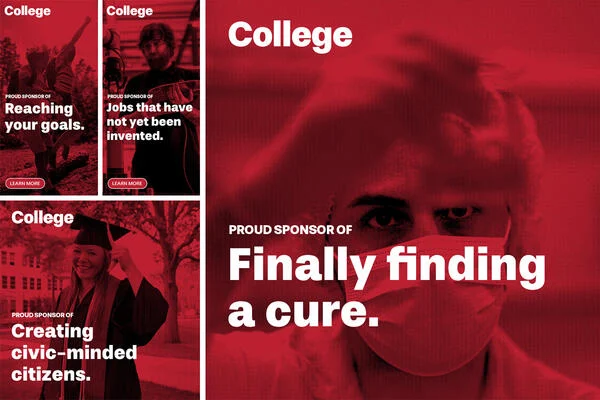
    You won’t see students studying together in a library, images of grand campus buildings or crowded athletic events in a new campaign promoting higher education. There are no logos, no mascots and no official colors.

    Instead, an elderly couple walk arm in arm smiling, with “Proud sponsor of a better life for everyone” printed across the image. Sparks fly from a welder’s electrode just behind the words “Proud sponsor of the future titans of industry.” Another image shows a masked nurse holding an infant with the words “Proud sponsor of goodbye nursing shortage.”

    The ads are part of “College: Proud Sponsor of America at Its Best,” a national campaign that is explicitly not promoting a single institution. Its goal is to remind Americans of higher ed’s impact in bolstering national security, developing the economy and building the workforce.

    “Higher ed may not be for everybody in terms of, ‘Hey, I want to go to college,’ but the benefits of higher ed are for everybody,” said Tamalyn Powell, a senior vice president of education at BVK, the marketing agency that created the campaign.

    BVK officially launched Proud Sponsor last October after higher ed had spent months under attack from the Trump administration, but Powell said the agency didn’t create the public service campaign in reaction to the assault. Rather, it’s a response to years of public polling showing increasing skepticism about the value of higher ed.

    Powell said she watched the poll numbers “with horror” and that now is the moment to “set the narrative for higher education rather than reacting to it, which is what we’ve been doing.”

    The campaign is targeting adults ages 35 to 64. Data from BVK shows that perceptions of higher ed improved significantly after people viewed the campaign. The ads also positively influenced the opinions of people in groups who tend to be most skeptical or cynical about the value of higher education, such as conservatives or people in rural areas.

    “That convinced me that this might have the ingredients for something that would have greater effect than anything I’ve been involved in in the past that related to the sector,” said Terry Flannery, the chief operations officer at the Council for Advancement and Support of Education, which is partnering with BVK on the campaign.

    But it will take “significant resources” to get Proud Sponsor in front of its target audience, said Flannery. CASE is fundraising, but Flannery declined to offer more specifics about how much money they need. The organization is looking to individuals, corporations and foundations that believe in the value of higher ed to financially support the campaign, not colleges.

    Flannery worries that if the funding comes from higher ed, the campaign could look self-interested and will be dismissed right away.

    “We really need some third-party advocates,” she said.

    Securing that financial support is crucial to the campaign and makes it different from similar efforts in the past that Flannery has been part of.

    “Every other effort like this that I’ve been involved in—and there have been several over decades—never had money behind it,” she said.

    Jamie Ceman, a senior executive vice president of reputation at RW Jones, agreed that while Proud Sponsor has some momentum, the funding piece is most important to the campaign’s eventual success.

    “The funding piece is what always falls short,” she said of previous public service campaigns.

    Another way campaigns can fall short of their goals is relying too heavily on institutions to push their message, Ceman added. Institutions typically target audiences already on their side.

    “You can’t necessarily change negative perceptions by talking to the people who already love higher ed, and schools and colleges are equipped to market and communicate to their alumni, prospective students,” she said. “That’s where I think Proud Sponsor can be really powerful, because this is a larger advocacy campaign to reach people that campuses aren’t typically reaching.”

    Building Support

    Several national associations representing higher ed have publicly backed Proud Sponsor. The American Council on Education endorsed it a year ago, noting that it complements its own campaign, “Higher Ed Builds America.” More recently, the Council of Independent Colleges and the American Association of State Colleges and Universities signed on. This summer, the Inter-University Council of Ohio, representing the state’s 14 public institutions, is launching a statewide campaign as part of Proud Sponsor.

    Nick Anderson, executive director of strategic communications at ACE, told Inside Higher Ed that ACE welcomes “any message that’s moving in the same direction.”

    Anderson said in addition to the Proud Sponsor campaign, ACE’s “Higher Ed Builds America” offers a framework that institutions and state systems of higher ed can use to explain their impact at the regional, state and local level.

    “There’s a need in this current moment to coalesce around the value of higher ed, however they want to say it,” he said.

    But a new narrative won’t be enough to change the public perception, said Anderson.

    “The messaging goes hand in hand with the hard work of innovation and improvement,” he said.

    Still, the Proud Sponsor organizers hope colleges and universities will unify around the campaign, even as they acknowledge such collaboration can be contrary to institutions’ instincts.

    “We keep hearing we need a united narrative,” Powell said, “and this is that narrative.”

    Source link

  • 31 Colleges Agree to End Partnerships With PhD Project

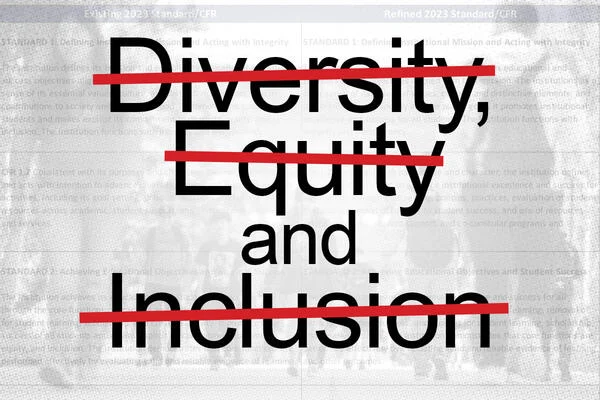
    31 Colleges Agree to End Partnerships With PhD Project

    Photo illustration by Justin Morrison/Inside Higher Ed | CSUDH/iStock/Getty Images | WSCUC NEW

    All but 14 of the 45 universities placed under investigation for participating in the PhD Project and allegedly violating civil rights law have agreed to cease partnering with the organization, the Education Department announced Thursday.

    The Office for Civil Rights launched the investigations last March, arguing that the PhD Project, a nonprofit organization that connects prospective business doctoral candidates from underrepresented backgrounds with academic networks, was “limit[ing] eligibility based on the race of participants.” 

    So by supporting or partnering with the PhD Project, OCR accused the universities of violating regulatory guidance from the department as well as Title VI of the Civil Rights Act. (Title VI prohibits discrimination based on race, color, religion, sex or national origin.)

    The 31 universities that reached agreements with OCR had either already terminated their relationship with the nonprofit or have agreed to do so moving forward. They’ve also agreed to review their partnerships with all other external organizations to ensure they don’t also restrict participation based on race, according to the department.

    “This is the Trump effect in action: institutions of higher education are agreeing to cut ties with discriminatory organizations, recommitting themselves to abiding by federal law, and restoring equality of opportunity on campuses across the nation,” Education Secretary Linda McMahon said in a news release. “We are hopeful that other institutions with similarly discriminatory practices will follow suit, paving the way for a future where we reject judging individuals by the color of their skin and once again embrace the principles of merit, excellence, and opportunity.”

    Documents obtained by The Washington Post and a story published by the paper prior to ED’s announcement further reinforced that the terms of the agreement extend well beyond cutting ties with the PhD Project.

    Before the department’s announcement, the Post reported that colleges under investigation had already ended partnerships with “a range of organizations associated with racial minority groups,” showing the broader reach of OCR’s push against the PhD Project.

    For instance, the University of Kentucky flagged more than 1,200 affiliations that could put the state flagship institution at risk, saying they would be canceled or undergo “deeper review.” Ohio State University limited its support for students and faculty members attending the conferences of race-based affinity groups.

    And just a day prior to announcing the PhD Project resolutions, the department agreed to end race-based criteria for the McNair Post-Baccalaureate Achievement Program, which is part of TRIO and focuses specifically on supporting low-income, first-generation and underrepresented students pursuing doctoral degrees.

    The announcements about McNair and the PhD Project come just weeks after the Education Department announced that it was dropping its appeal in a lawsuit that challenged the regulatory guidance that spurred these investigations. The guidance document, known as a Dear Colleague letter, declared all race-based scholarships, student support services and programming illegal based on a broad interpretation of the Supreme Court’s 2023 ruling that banned race-based admissions.

    By withdrawing the appeal, the department essentially agreed to an existing ruling from a lower court that blocked the guidance after a judge found it unconstitutional. But that doesn’t mean the administration has given up on its larger goal of ending all race-based programs.

    Since the appeal was withdrawn, the Trump administration has pointed to other guidance from the Department of Justice and the text of Title VI to justify its ongoing actions.

    “The Department has full authority under Title VI of the Civil Rights Act of 1964 to target impermissible DEI initiatives that discriminate on the basis of race, color, or national origin,” Julie Hartman, press secretary for legal affairs at the Education Department, told K–12 Dive on Feb. 4. “Title VI has always prohibited schools from racial preferencing and stereotyping, and it continues to do so with or without the February 14th Dear Colleague Letter. OCR will continue to vigorously enforce Title VI to protect all students and hold violators accountable.”

    Source link

  • How One College Teaches Students Compassion

    How One College Teaches Students Compassion

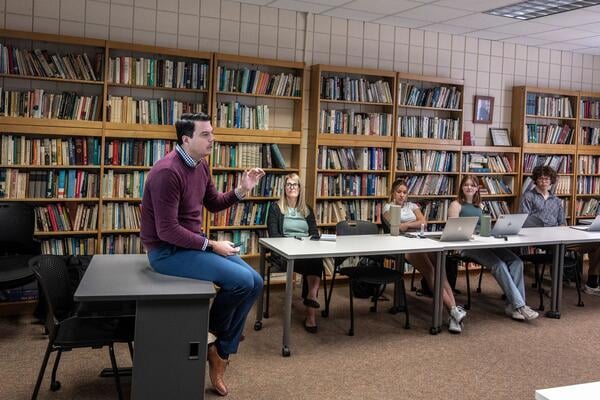
    Cris Tietsort was invited into a political science course at the University of Denver to talk to students about compassion at a time when political polarization and social isolation are reshaping campus life. He began with a simple question: What are your values in a calm moment?

    “It’s really important for people to clarify their values in a good moment, instead of a heated moment, because that’s when we get really hot, we get emotional, and our brain goes to a different place,” said Tietsort, an assistant professor of organizational communication at the University of Denver.

    The lesson is one of many Tietsort developed through the Compassion Lab, which he launched as a one-time course in fall 2023 to help students respond thoughtfully to disagreement.

    The following year, the lab became a mobile classroom—an opt-in program for faculty and staff who want to bring its lessons into their courses, from political science and business classes to residential assistant training—with the goal of equipping students with skills they can carry into their future professions.

    More than 600 students have participated in the lab, Tietsort said, and over 90 percent reported that they better understood how to put compassion into practice.

    “A lot of undergraduates feel alone and they feel like it’s vulnerable to reach out,” Tietsort said. “How do we help support students having meaningful connections with others? I see compassion as the heart of that.”

    The Compassion Lab is part of the University of Denver’s 4D Experience, a universitywide initiative launched in fall 2022 that aims to help students develop intellectually, socially and emotionally. The 4D Experience includes the lab, peer mentors and immersive experiences such as retreats at the Kennedy Mountain Campus.

    Laura Perille, executive director of the 4D Experience, said the initiative responds directly to what employers say they want in graduates, including strong interpersonal skills, empathy and the ability to navigate conflict.

    “The goal is to really think about how we embed this in both the curriculum and co-curriculum in ways that are better preparing our students for life and workplace success,” Perille said.

    Erin Anderson-Camenzind, a professor and the 4D Experience’s director of faculty innovation, said the foundation Tietsort created through the lab makes that broader integration possible.

    “If we can provide [students] with multiple touch points for building compassion over their time at the University of Denver, then that’s when it becomes part of that identity that we really want for them,” Anderson-Camenzind said.

    Fostering compassion on campus: Tietsort said there are two versions of the Compassion Lab: one more skills-focused and one more knowledge-focused.

    The skills-focused version is typically used when faculty want students to build tangible tools that apply directly to their major or a course they’re taking.

    “If I go into, say, a business class and we’re talking about compassion—not among friends but in the business world—it may need to be more of a motivational conversation,” Tietsort said. “It may need to be ‘How can we help you understand that compassion is actually essential for leadership, and what are the organizational outcomes?’”

    The knowledge-focused version, by contrast, goes deeper into what effective support looks like and the research behind compassion.

    “I had one student who said they leaned too far toward compassion, which resonates with how sometimes we’re overly compassionate and miss an opportunity to challenge someone,” Tietsort said. “They really appreciated talking about the nuts and bolts of that.”

    Ultimately, Tietsort said, the lab’s flexibility is what makes it effective across disciplines.

    “I always adapt to the faculty in the class because I want it to feel personalized to what they’re doing,” Tietsort said. “Some faculty want more engagement; some faculty want it to just be something that’s dropped in.”

    More than 600 students have participated in Tietsort’s Compassion Lab.

    Why compassion matters: Perille said students are entering a world marked by polarization, loneliness and fractured connections—realities she said make the lab and the broader 4D Experience all the more important.

    “It’s really building out a network of curricular and co-curricular strategies, faculty and staff professional development, to make sure that we are collectively creating a culture and an ethos that prioritizes these things,” Perille said. “That’s really critical to how we think about this approach.”

    Anderson-Camenzind echoed that sentiment, noting that cultivating compassion among students requires institutional support.

    “We need to have structures in place that provide faculty and staff with the compassion and support they need, or else they may have a really hard time doing it for our students,” Anderson-Camenzind said.

    For Tietsort, the goal is ultimately to help students see compassion as central to leadership.

    “If you become a better empathic listener, that’s not just going to have a deep impact in your own life and building relationships, but that’s going to impact you in the workplace,” Tietsort said.

    Get more content like this directly to your inbox. Subscribe here.

    Source link

  • Owner Wants to Give Away Green Mountain Campus

    Owner Wants to Give Away Green Mountain Campus

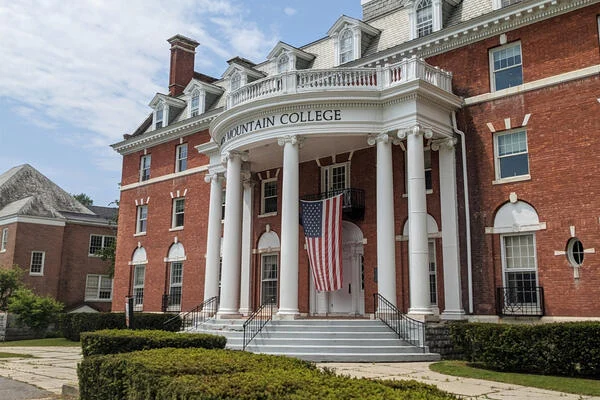
    The former Green Mountain College campus is hitting the market. The price tag? Free.

    Owner Raj Bhakta—who bought the campus for $4.5 million in 2020 after the college closed in 2019—wants to give away the property in rural Vermont, Seven Days reported. Bhakta, a distiller and former contestant on The Apprentice, a reality show that starred Donald Trump, launched a website seeking proposals and is specifically looking to hand the campus over to someone with “a vision aligned with the revival of the United States and Western Civilization.”

    Bhakta specified in a news release he wants it to go to a “Catholic mission-based organization.”

    Interested parties must “recognize this must first begin with the spiritual revival of our Christian faith. It will be upon coherence with this mission that candidates will be judged,” according to the site. While Bhakta is not looking to sell the property, the website notes, “It will cost at least $1 million a year to operate the campus”; it encourages recipients to budget $1.5 million annually to “maintain existing infrastructure” and to “catch up on deferred maintenance.” Potential beneficiaries “must be able to demonstrate sufficient resources to maintain the property.”

    The campus is located in Poultney, Vt., on the western side of the state, and estimated to be worth more than $20 million, according to the news release, which indicates that ideal uses for the property would be for Catholic education, retreats or mission centers. The property includes approximately 115 acres and multiple academic and residential buildings.

    The deadline for interested parties to submit proposals is March 31.

    Source link

  • Mott Community College President Accused of Proselytizing

    Mott Community College President Accused of Proselytizing

    Mott Community College is mired in conflict over claims that its president, Shaunda Richardson-Snell, proselytized on campus on multiple occasions, including asking a Native American visitor to campus whether he accepted Jesus as his savior.

    The Michigan college’s Board of Trustees held a special meeting on Wednesday to address the issue, attracting community members who came out in full force for two hours of heated public comment. Some argued Richardson-Snell exercised her right to religious expression while others insisted she crossed the line as the head of a public college. Richardson-Snell wasn’t present at the meeting because of a conference, according to board chair Jeffrey Swanson.

    After coming out of closed session, the board delayed taking any action but agreed to revisit a motion to make a public statement, drafted by trustee Santino Guerra, at a regular meeting on Monday.

    The statement under consideration says the college “affirms the constitutional right to freedom of religion and respects the deeply held beliefs of all individuals.” At the same time, it notes, “as a public institution, the college also has a responsibility to maintain an environment that is inclusive and welcoming to people of all faiths and those with no religious affiliations. Of course, we expect all members of the campus community to exercise their rights in a manner that respects the diversity of beliefs represented at Mott.”

    This week’s special meeting follows a December letter to Richardson-Snell from Americans United for Separation of Church and State, in which the nonprofit said it had received a complaint “regarding several occasions” on which she “made proselytizing religious comments in her capacity as President of Mott Community College.” The letter, obtained by Inside Higher Ed, asked for a response within 30 days.

    “Allowing any College employee—but especially an employee as high profile as the President—to use their positions to religiously proselytize students, employees, or visitors conveys disrespect for the beliefs of the community and sends the message that those who do not practice the officially favored faith are unwelcome outsiders who do not belong,” Ian Smith, staff attorney for Americans United for Separation of Church and State, wrote in the letter. “The College has a constitutional duty to ensure that this behavior ends. Please do so.”

    The Concerns

    Celia Perez Booth, a retired Mott Community College professor and a local Native American community advocate, raised concerns about the president proselytizing at an October meeting.

    She told the board that Richardson-Snell asked her son, a Native American visitor to campus who was participating in a peace and dignity ceremony on Indigenous People’s Day, “if he had been saved and accepted by Jesus as his lord and savior.”

    “Other people heard you and were shocked by your repugnant question,” Booth said. “How can we trust you or have respect for you when you use your position to disrespect us?”

    A student also reported having a conversation with Richardson-Snell that had religious undertones, regarding students’ use of artificial intelligence, trustee Art Reyes shared at the October meeting. Reyes told the board the president reportedly asked the student “if he was aware of the ‘one truth’ and that there was only one truth.”

    She “then started espousing her beliefs as it pertained to what that one truth is and then further went on and indicated that there’s a struggle for the world and that the devil was involved in trying to take this over,” Reyes said at the meeting.

    The college’s faculty union, the Mott Community College Education Association, raised similar concerns in an Oct. 16 message to human resources. Brian Littleton, president of the union, wrote that some faculty members “felt uncomfortable with President Richardson-Snell’s outward expression of religious faith during workplace interactions.” He also cited an instance in which Richardson-Snell told him “God was on her side” regarding grievances the union raised over its collective bargaining agreement.

    “It was very off-putting because I had no response for that,” Littleton told Inside Higher Ed. “This is not a religious issue.”

    He emphasized that Richardson-Snell’s personal faith isn’t the problem.

    “We believe people have their right to their beliefs,” he said, and diversity, including religious diversity, is prized at Mott. But “there’s a line when you have a position of authority that you have to be careful that you don’t unduly influence others when you have that leadership.”

    The college’s general counsel, John Gadola, responded to the faculty union in a November message, obtained by Inside Higher Ed, that the U.S. Constitution “protects religious expression” and the college’s employment policies “uphold freedom of speech and expression for all employees.”

    Prompted by the worries others raised, Kathleen Watchorn, an alum of the college whose son ran for a Mott board seat in 2024, filed the complaint with Americans United for Separation of Church and State out of concern for the direction of the college.

    “To criticize religion in any way or to bring it up is almost taboo,” Watchorn told Inside Higher Ed. “But this is a public college. It’s not a Christian university, and the president has no business asking people about religious beliefs in her job as president.”

    At this week’s special board meeting, community members came down on both sides of the issue. Members of local churches argued Richardson-Snell shouldn’t be penalized for expressing religious convictions.

    “There is no separation of faith and self,” Miosha Robinson, a leader of Good Church in Flint, Mich., told the board. “What was done was an expression of who she is. There is no way that she could go through life and not share her faith.”

    Compounding Conflict

    Board attorney Carey DeWitt said at the Wednesday meeting that he investigated complaints about the president “very carefully” when concerns first surfaced in October.

    He provided guidance to the board, “decisions were made about the issue, and they were implemented by the board in December,” he said—before it received the Americans United letter. He didn’t share what decisions the board made or what the resolution of the investigation was.

    DeWitt wrote in a statement to Inside Higher Ed that he “used as a guide” the U.S. Supreme Court case Kennedy v. Bremerton School District, in which the court sided with a high school football coach who prayed with his students on the field, arguing in part that students were not required to participate and he was acting in his capacity as a private citizen.

    “We asked whether either a First Amendment establishment clause or free exercise clause violation was presented and concluded that neither was present,” DeWitt said. “Nonetheless, we chose to re-emphasize the applicable principles of Bremerton so as to ensure future compliance.”

    Trustee Kenyetta Dotson raised concerns that no memo went out to the public regarding an investigation and argued that some form of statement from the board was “well overdue.”

    Littleton similarly expressed disappointment that this Wednesday was the first faculty heard of an investigation, which he believes should have been conducted by a neutral third party. He described the ordeal as an example of broader transparency issues on the board.

    Trustee John H. Daly, who initially called for the special meeting, said he plans to propose the board undertake an independent investigation on Monday. He regrets that the board didn’t respond more quickly and clearly to complaints.

    “An investigatory process, from my perspective, is not punitive,” he said. It’s to determine “what happened and was that a conflict with either the law or the college bylaws.” He stressed that it’s “not about religion,” but about ensuring a higher ed leadership role isn’t being used “to promulgate a personal bias or opinion.”

    The conflict over Richardson-Snell’s religious comments builds on existing tensions at the college surrounding her tenure. The board sparked controversy when a faction voted her in as interim president in July 2024, despite critiques that she lacked higher ed experience. Its decision to permanently hire her six months later without a national search process prompted further backlash. At the time, a local pastor, Christopher Thoma, and other Christian community members came to her defense in board meetings, arguing that Richardson-Snell had valuable corporate leadership experience and was under fire because of her beliefs.

    Watchorn said, beyond her concerns about proselytization, she’s been disturbed by the “partisan” tone of board infighting in recent years and worries the public’s concerns about campus leadership aren’t being sufficiently and transparently addressed.

    “We need some answers,” she said. “Why are you behaving the way you’re behaving?”

    Source link

  • Severing Military’s Ties With Harvard Is a Mistake (opinion)

    Severing Military’s Ties With Harvard Is a Mistake (opinion)

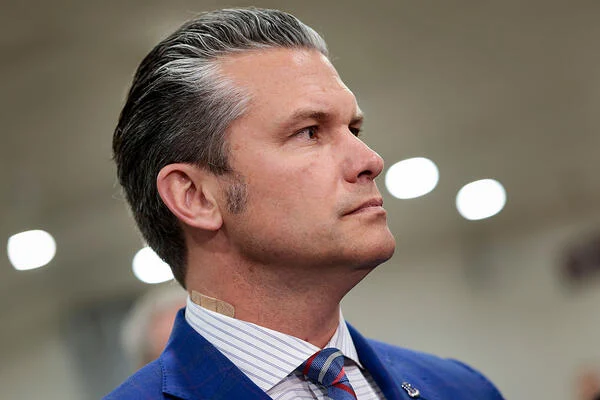
    Secretary of Defense Pete Hegseth announced this month that the Department of Defense will no longer send active-duty military for graduate-level professional military education at Harvard University. In a video announcing the decision on social media, he claimed that officers returned from Harvard with “heads full of globalist and radical ideologies.” He added, “We train warriors. Not wokesters.”

    Before I begin, I will lay my cards on the table. I am a medically retired Air Force major from a traditional, conservative, Southern Baptist background in east Tennessee. At Harvard Kennedy School, I was elected executive vice president of the student government, which represents more than 1,000 graduate students. I say this not to posture, but because I believe this decision warrants a response from someone who was in those classrooms, not as an observer, but as a leader in the student body.

    Politics aside, severing ties between the military and Harvard is a mistake. While at HKS, I had the opportunity to participate in most student organizations, meet with both student and administrator leadership, and drive many of the social and policy discussions (formal and informal) across the school. In each of these settings, military members were active participants: injecting keen insight, stimulating robust dialogue or voicing perspectives that no one else in the classroom had considered.

    What troubles me most about Hegseth’s announcement is that he offered neither data, evidence nor metrics to support the claim that Harvard-educated officers graduate less capable. While invoking General Washington’s assumption of command of the Continental Army in Harvard Square or the number of Harvard-trained Medal of Honor recipients, Hegseth played to emotional appeal rather than demonstrable metrics or data that support his action. But gambling with our nation’s top officers’ professional education from a well-established world-class institution is a high-risk, low-reward proposition.

    In July 2025, the Kennedy School launched the American Service Fellowship, the largest single-year scholarship in the school’s history, for at least 50 fully funded scholarships worth $100,000 to American public servants, with about half of awardees expected to come from military service. Dean Jeremy Weinstein said in the press release announcing the fellowship, “There’s nothing more patriotic than public service.”

    Over the past decade, HKS has trained numerous active-duty, veteran and reserve members. The list of prominent leaders with military ties includes Hegseth himself, former defense secretary Mark Esper, Senator Jack Reed and U.S. representatives Dan Crenshaw and Seth Moulton. If Harvard truly “loathes” the military, then why is the institution investing millions to bring more service members to campus?

    In justifying the decision, Hegseth also asserts that Harvard has partnered with the Chinese Communist Party in its research programs. A June 2025 investigation in The Wall Street Journal reported that a 2014 Shanghai Observer article referred to HKS as the CCP’s top “overseas party school,” as decades of Chinese officials have pursued executive training and postgraduate study at HKS. But rather than supporting Hegseth’s case, this fact undermines it. If China’s future leaders and officials are vying for access to Harvard’s faculty and resources, why would we voluntarily surrender our domestic infrastructure for future officer development? The proper response to a competitor’s investment in an institution is not to abandon it, but to double down instead.

    Consider what we are depriving our nation’s top military leaders of benefiting from. Harvard ranks among the top universities in national and global rankings, and Harvard’s Office of Technology Development reports approximately 391 new innovations, 159 U.S. patents issued and $53.7 million in commercialization revenue in fiscal year 2025 alone. As a prior procurement-contracting officer, these are big-deal numbers. They represent cutting-edge research and development that can rapidly accelerate our defense capabilities and technologies. I remain skeptical about an unfounded decision to deprive our top future military leaders of access to that caliber of institutional infrastructure and the opportunity to build interpersonal relationships with HKS’s scholars, policymakers and faculty.

    Personally, given my preconditions—moderate conservative, white male with a Southern Baptist upbringing, east Tennessee native and ex-military—I did not face discrimination at Harvard. In fact, I was elected to the second-highest student position at HKS. I did not encounter wokeism outright (it almost seems archaic at this point). I can say I was not brainwashed or forced into indoctrination camps for expressing differing viewpoints whether in class or on paper. I found that I am not alone in this thought, either.

    Former Indiana governor Eric Holcomb, a Republican, published an op-ed in The Washington Post titled “I was a red state governor. What I saw at Harvard surprised me.” The governor writes that he was warned by friends about “woke lions” but found open-minded, problem-solving–oriented students from all 50 states. Former Arkansas governor Asa Hutchinson, also a Republican, served as an Institute of Politics resident fellow at Harvard in fall 2024, when he led small student groups on bridging America’s political divide, which I attended. During my tenure at HKS, the Harvard Republican Club hosted Steve Bannon, Peter Thiel and Robert F. Kennedy Jr., and the Institute of Politics hosted Kellyanne Conway and Kevin McCarthy. In short, I find it difficult to characterize Harvard as an echo chamber.

    When I think back to my tenure, I remember the many meetings with the dean of HKS and administrators. I remember a seasoned scholar almost obsessively driven to find common ground through constructive dialogue. I remember the vision committees navigating changes in policy, governance, technology and AI. The top student affairs administrators I met with on a weekly basis were genuine and empathetic individuals who wanted the best for student outcomes regardless of differing political or religious ideologies. I witnessed deep learning occurring with many service members, both senior and junior officers, in my classes and heard their sentiments of appreciation for their educational experience at Harvard.

    Harvard makes an easy target, but a focus on easy targets makes for bad policy. This decision does not protect our military; instead, it reduces its capabilities. It deprives our best officers of access to the kind of rigorous, diverse, uncomfortable and intellectual environment that produces top strategic-level thinkers, not worse-off ones. Pulling our officers out of these environments does the very opposite of training resilient warfighters: It perpetuates a homogeneous environment and denies our future leaders exposure to world leaders. If we truly believe that we must cultivate the best minds and capabilities of the warrior class, then we should trust our officers, invest the resources and meet the challenge, not run from it.

    Allan Cameron is a medically retired Air Force major who served as the executive vice president at the Harvard Kennedy School Student Government. He is an Air Force Academy graduate and holds an M.P.A. from HKS and an M.B.A. from the Naval Postgraduate School. He is currently a student at the Harvard Graduate School of Education.

    Source link

  • Friday Fragments

    Friday Fragments

    Friday Fragments

    Sara Brady

    Fri, 02/20/2026 – 03:00 AM

    An update on compensation, public investment in community colleges, The Girl’s job hunt, and a rare sports story.

    Byline(s)

    Source link

  • Ed Department Weaponizes FERPA to Restrict Voting (opinion)

    Ed Department Weaponizes FERPA to Restrict Voting (opinion)

    Earlier this month, the U.S. Department of Education sent a letter to every college and university president with the goal of continuing its efforts to curb voting among college students. This latest letter threatens colleges and universities if they participate in or use the data from the National Study of Learning, Voting and Engagement, claiming that if they do so, they “could be at risk of being found in violation of FERPA.”

    The Family Educational Rights and Privacy Act is the federal law that protects the privacy of student education records and applies to any institution that accepts Department of Education funds. Like many of this administration’s actions, this letter is designed to have a chilling effect, since no determination has been made by the department that participation in, or use of, NSLVE studies violates any privacy statutes.

    In existence since 2013, with more than 1,000 colleges and universities nationwide currently choosing to participate, the NSLVE is a study of student political engagement at higher education institutions. The NSLVE uses data that colleges and universities voluntarily provide to the National Student Clearinghouse, which matches student enrollment records with public voting files to determine whether students registered to vote and whether they voted—not whom they voted for. NSLVE, which is housed at Tufts University, then uses the de-identified data it receives to send a confidential report to participating campuses about their own students’ voting participation.

    Under the guise of protecting student privacy, the Department of Education is weaponizing FERPA to try to get to the Trump administration’s goal of weakening voter participation, especially among college students, for political reasons. Secretary of Education Linda McMahon herself stated in the press release announcing the new guidance that “American colleges and universities should be focused on teaching, learning, and research— not influencing elections.” And the department admits in its guidance letter that its assessment that NSLVE is in violation of FERPA is based on a “preliminary analysis” and that ED merely has “concerns” about NSLVE’s use of data. The department does not conclude that NSLVE or the use of the NSLVE data violates any laws, including privacy laws.

    The NSLVE primarily uses directory information—name, address and date of birth—which institutions may disclose without consent as long as they have given general public notice (including notice of the option to opt out of disclosure) at the beginning of the academic year. In addition, when other information is provided—such as gender, race/ethnicity and degree-seeking status—it is allowable because it falls under FERPA’s “studies exception.”

    This exception allows information to be shared for studies that “improve instruction.” The NSLVE’s research is designed to enable colleges to improve civic education on campus—something that is a stated goal of this administration. Furthermore, NSLVE reports do not contain individually identifiable information and are only shared with the institution itself. It is for these reasons that the Department of Education, since the program’s inception more than a decade ago, has found this work to be allowable under FERPA.

    It is critical for colleges to understand what this letter is saying—and what it isn’t. Students deserve to have their data protected, and the federal government has a critical role to play in safeguarding their data. It is the Department of Education’s obligation to use its resources to do so. It is paramount that the government ensures any actions taken by institutions put student privacy first. But alleging potential student privacy violations when there are none is a waste of resources and undermines what is really at stake.

    As recognized by the Higher Education Act’s requirement that higher education institutions provide voter registration forms to all their students, colleges have an important role to play in promoting civic engagement and participation in democracy among students. As long as they are doing it in a way that is compliant with the data sharing allowed in FERPA, the federal government must not interfere with colleges’ participation in the NSLVE— especially with threats that are not backed up with legal findings. Insights from the NSLVE are critical to strengthening nonpartisan civic engagement for college students. Restricting use of the data in an election year is not about protecting students—but instead is harmful to them and to our democracy.

    Amanda Fuchs Miller is the president of Seventh Street Strategies and former deputy assistant secretary for higher education programs at the U.S. Department of Education in the Biden-Harris administration.

    Source link

  • Alabama made a big investment in elementary math, but underresourced schools still have a long way to go

    Alabama made a big investment in elementary math, but underresourced schools still have a long way to go

    by Steven Yoder, The Hechinger Report
    February 20, 2026

    GREENVILLE, Ala. — Toward the end of a math lesson on a sunny Friday in October, fourth-grade teacher D’Atra Howard and math instructional coach LaVeda Gray ducked out of the classroom to huddle. Howard’s students at Greenville Elementary School were calculating remainders in division problems on worksheets, and Howard wanted to confer with Gray on which of them needed extra help.  

    Howard is in her second year of teaching. She’s working at the school, 45 miles south of Montgomery, Alabama, with an emergency certificate — a temporary license that allows someone without a professional teaching credential into the classroom. Gray, who works with a half dozen of the school’s 16 teachers, was observing Howard and stepping in to help as needed. 

    Alabama is betting that funneling more money into improving instruction, including hiring coaches like Gray, can overcome teacher inexperience and family poverty to raise student scores. State and national leaders praise the state’s gains to date. 

    But on the ground in poor schools, staff say they have far to go to close gaps with better-off parts of the state.

    A Hechinger Report analysis of 15 of Alabama’s least-affluent districts — which represents about 10 percent of the state’s districts — shows that students there have gained ground since the pandemic and after the Alabama Numeracy Act passed in 2022. Only about 1 percent of students earned a proficient score on the state math test in the 2020-21 school year, but around 14 percent earned proficient scores in  2024-25. 

    However, the gap between the poorest districts and the state average is still wide. Statewide, around 24 percent of students scored proficient in 2020-21, compared to around 42 percent in 2024-25. 

    Greenville Elementary is an example of a school that has seen scores rebound. More than 80 percent of students at the school are eligible for free and reduced-price lunch, and more than 1 in 5 people live in poverty in Butler County, where it’s located. But the school’s proportion of fourth graders scoring proficient on the state math test jumped from 7 percent in 2023 to 24 percent in 2024.

    Part of that is due to the work of Gray, who said that Howard has sharpened her eye for students who stumble. “Starting out, it wasn’t always like that,” she said. “I had to point out, ‘Hey, this student, when we walked around, did you see that they didn’t have anything written down or had the wrong figures?’” 

    After a 10-minute discussion, Howard and Gray pinpointed several students who Howard would pull aside for individual work on the coming Monday. Then Howard hustled back to class.

    Related: One state tried algebra for all eighth graders. It hasn’t gone well

    Research suggests elementary school math matters a lot to academic and life outcomes. Early math achievement predicts success in reading and science through eighth grade, a 2013 study found. Math skills also better predict future earnings than other factors like reading scores, parent-child relationships or children’s health, according to a 2024 Urban Institute report. 

    Alabama’s 2022 law reshaped math instruction at the elementary level by providing money for all schools to hire math coaches and by mandating that struggling schools use state-approved math curricula, among other changes. It also required university teacher preparation programs to include more math instruction courses. To help students who are behind, the state launched a summer math program to get low-scoring fourth and fifth graders up to grade level.  

    The politics of spending money on education in Alabama have flipped. On the 2019 National Assessment of Educational Progress, known as the Nation’s Report Card, the state ranked last in the proportion of fourth graders — 28 percent — scoring at or above proficient in math. At 28 elementary schools, not a single student scored proficient. 

    Legislators grasped the threat that this represented to the state’s economic ambitions, said Peter Jones, associate professor of political science and public administration at the University of Alabama at Birmingham. In a state trying to lure investors from biotech, finance and other sectors, better schools help companies recruit qualified workers and attract out-of-state employees with children, said Jones. The early success of the 2019 Alabama Literacy Act, which similarly revamped how schools in the state teach reading, made it easier to vote for a similarly styled bill targeting math, he said. 

    The result was that in a state where Republicans dominate government, Republicans shepherded the numeracy law through the Legislature, and Republican Gov. Kay Ivey signed it. The Legislature funded it at $15 million in its first year, which state lawmakers have since increased to $95 million.  

    The reform has won praise from national education experts. On June 3, the National Council on Teacher Quality released its assessment of elementary school math instruction policies in the 50 states. It rated most as weak or unacceptable and only one as strong — Alabama’s. 

    The most recent NAEP test results suggest the changes are delivering. In fourth-grade math proficiency, Alabama went from ranked last in 2019 to 35th in 2024. It was the only state to beat its 2019 fourth-grade proficiency rate. And it was one of 18 states where fourth-grade math scores among economically disadvantaged students grew between 2022 and 2024. 

    “Not all students are to the level that we want to see, but that growth is what we’re really focused on,” said Mark Dixon, president of A+ Education Partnership, an Alabama-based education advocacy group that backed passage of the Numeracy Act. 

    Related: A new type of high school diploma trades chemistry for carpentry

    Still, there are immense challenges in narrowing the gaps between Alabama’s poorest and richest districts. Almost 9 percent of the state’s teachers are working on emergency or provisional teaching certificates, the latest state data shows. But in Alabama’s 15 poorest districts, the percentage of teachers not fully certified is 20 percent. That disparity undercuts efforts to lift the quality of math instruction, say school leaders and staff. 

    Two hours north of Greenville is Glen Oaks Intermediate School in Fairfield, a suburb of Birmingham. Ringed by a canopy of tall southern pines and live oaks, it sits in the middle of a neighborhood of newer brick split-level and ranch homes with trim bushes and neat lawns.   

    But nearly a third of Fairfield residents live below the poverty line, and 93 percent of Glen Oaks’ children qualify for free and reduced-price lunch, making it one of the state’s most economically disadvantaged schools. Of its teachers, more than a third weren’t fully certified in 2024, according to state data. 

    School math instructional coach Shenea Robinson said she devotes most of her time to working with those teachers. “It’s just going like, ‘A, do this, B, do this.’ I feel like I’m taking them through a crash course in a teacher education program,” she said. “It’s fast-paced. We’ve had a lot of tears.”

    One day in October, one of the teachers with emergency certificates, Ellanise Hines, worked with 17 fifth graders on calculating the volume of solid shapes. While one group of students worked on a computer, a second group measured Amazon Prime boxes that Hines was using as hands-on models. A third group sat with Hines around a table doing volume calculations on worksheets.

    Hines has been in the classroom for two years and is working toward getting certified. Two days before this class she’d sat with Robinson to go over the best way to teach this lesson and then taught it to Robinson as she would her students. They talked through strategies to help students having trouble.

    Fifth grader Haleigh Jackson said that because of Hines she finally can calculate volumes and decimals this year after not getting them in fourth grade. “She broke them down and explained how they worked until I got it,” said Jackson. 

    State education advocates said coaches and the use of high-quality curricula are especially important for teachers like Hines who are still working towards certification. “If you didn’t have that coaching and you had that inexperienced teacher coming into the classroom with zero support, you’d continue to see the poor results we’ve seen before,” said Dixon, with the Alabama education advocacy group. 

    But Robinson said that for all the gains she makes with inexperienced teachers, many don’t return. “Having to start the process back over with brand new people every year is hard,” she said.  

    Unlike at Greenville, proficiency among Glen Oaks’ fourth graders has been flat, with just 6 percent scoring proficient in both 2023 and 2024 on the state test, well below the state 2024 average of 38 percent. “We’re at 90 to 95 percent in academic growth, so we’re making a difference,” said Robinson. But the majority of the school’s third through fifth graders are performing at kindergarten to second-grade level, she said. 

    “A student in fifth grade who was on kindergarten level may have moved to third grade, but they still are so far away from proficient,” she said.  

    Education advocates praise Alabama for doubling down on elementary math teaching. In May, Ivey signed an education budget that included $27 million to hire an additional 220 math coaches. “Many states are not investing in improving math instruction,” said Heather Peske, president of the National Council on Teacher Quality. “So Alabama is quite a leader.” 

    States’ willingness to spend on teacher training could be especially important in coming years. The Trump administration’s proposed 2026 budget calls for eliminating more than $2 billion in dedicated federal funding for improved teacher effectiveness, part of an administration proposal to turn dedicated education funding streams into state block grants. 

    Whether gains among the state’s least well-off fourth graders will hold remains to be seen. The improvement in Alabama’s poorest districts since 2021-22 might reflect that they’re making up for losing more ground during the pandemic. Among the state’s 15 poorest districts, the decline in scores from the 2018-19 school year to 2020-21 was greater than the state average. 

    Some frontline staff would like to see improvements to keep the momentum going. Student attendance is optional at the summer math programs designed to help struggling fourth and fifth graders, and a report by the state education department found that in 2024 just 1 percent of eligible fourth and fifth graders showed up. At Glen Oaks, less than half of eligible students enrolled in summer math even though the school offered transportation and meals, said Robinson, and she’d like attendance to be mandatory.

    Lisa Adair, an assistant superintendent at the Butler County district, said she’d like to see the Legislature fund math interventionists — specialists who work with individual students.  

    “During the legislative session last year, we were trying to explain to legislators the difference between coaches and interventionists,” Adair said. “In their heads, coaches are doing the same thing.” In the end, a proposal to fund interventionists didn’t advance, she said. 

    Adair hopes the state’s math push opens up opportunities for Butler County students. Many of their parents work in local factories in difficult conditions and get home exhausted after being on their feet all day, she said. 

    Recently, a workforce development group invited district leaders and a few teachers to tour some of those plants to help school staff learn about the skills their students will need to get jobs there. Manufacturers had been telling the district that some graduates couldn’t do basic math and were struggling in their factory jobs. 

    Adair left with an additional message, one that gives more urgency to the district’s efforts to improve math instruction​​.

    “It was a wake-up call,” she said. “I’m thankful for our workforce development, don’t get me wrong. But for me, it was reaffirmation that I don’t want my kids to be part of the working poor. I want more for them.”

    Data intern Kristen Shen contributed to this report.

    This story about elementary school math was produced by The Hechinger Report, a nonprofit, independent news organization focused on inequality and innovation in education. Sign up for the Hechinger newsletter.

    This <a target=”_blank” href=”https://hechingerreport.org/alabama-investment-elementary-math-school-resources/”>article</a> first appeared on <a target=”_blank” href=”https://hechingerreport.org”>The Hechinger Report</a> and is republished here under a <a target=”_blank” href=”https://creativecommons.org/licenses/by-nc-nd/4.0/”>Creative Commons Attribution-NonCommercial-NoDerivatives 4.0 International License</a>.<img src=”https://i0.wp.com/hechingerreport.org/wp-content/uploads/2018/06/cropped-favicon.jpg?fit=150%2C150&amp;ssl=1″ style=”width:1em;height:1em;margin-left:10px;”>

    <img id=”republication-tracker-tool-source” src=”https://hechingerreport.org/?republication-pixel=true&post=114946&amp;ga4=G-03KPHXDF3H” style=”width:1px;height:1px;”><script> PARSELY = { autotrack: false, onload: function() { PARSELY.beacon.trackPageView({ url: “https://hechingerreport.org/alabama-investment-elementary-math-school-resources/”, urlref: window.location.href }); } } </script> <script id=”parsely-cfg” src=”//cdn.parsely.com/keys/hechingerreport.org/p.js”></script>

    Source link

  • What’s the real political problem with higher education funding?

    What’s the real political problem with higher education funding?

    This blog was kindly authored by Johnny Rich, Chief Executive of Push and Chief Executive of the Engineering Professors’ Council. It has been written in a personal capacity.

    In recent weeks, the issue of burdensome student loans has metastasised across the media. Then last week the Treasury’s Supplementary Estimates revealed that, even with frozen thresholds and above-inflation interest rates, the current system is necrotising public finances.

    It seems time is up for the system that protected the English higher education sector from the worst ravages of austerity after 2012. It was always, as the OBR called it, a ‘fiscal illusion’ and, when the magician’s sleeves were clipped in 2018 with new ways to account for the cost of loans, it forced successive governments to squeeze students and graduates ever harder.

    It’s still not enough though. Graduates feel their debts were ‘mis-sold’ and the cost to taxpayers is breaking the social compact with universities, which are in turn facing financial crisis.

    Should we tweak the system to make it even more expensive for students and taxpayers? Should we slash the cost of delivering higher education and face the consequences of, presumably, worse outcomes and lower graduate premiums, which would only make matters worse? Should we abandon mass higher education altogether and return to a system where the privileged have access to universities that beget more privilege?

    The system needs a reset

    The real problem – for politicians and for us all – is that the current system doesn’t incentivise the outcomes it needs to drive. Indeed, it actively drives other undesirable outcomes like high debts, skill shortages and unemployed or underemployed graduates.

    Key to the public interest in higher education is the need to produce a graduate population that meets the economic and social needs of the future. That means raising their employability in the broadest sense – their skills, knowledge, behaviours, values and, perhaps most of all, their ability to adapt to shifting labour markets.

    We need a system that plugs the yawning gaps in sectors such as engineering, but which also ensures that people like me (who studied English & Philosophy as an undergraduate) emerge not only with cultural capital, but with an awareness of their transferable employability that they can articulate to themselves and to potential employers and deploy in their work and lives.

    Yet that’s not what the current system is designed for. It was designed to ‘put students at the heart of the system’. It places the future of the highly skilled labour market at the mercy of the choices of 17-year-olds (14-year-olds, in fact, given that that’s the age when most set out on circumscribed pathways). (I’m well aware I am oversimplifying higher education to the school-leaver model. Please forgive the rhetorical device. The point remains whatever the age of applicants: they have neither the information nor the incentive to make individual choices that will aggregate to match future labour market needs.)

    The money follows the student. If they want to study Mickey Mouse courses (i.e. History of Animation), then universities are incentivised to offer those courses with little regard to our national need for Disney historians or fostering those students to transfer the employability they’ve developed to where gaps do exist.

    Meanwhile, if they want to study engineering – where there are skills shortages running into the tens of thousands a year and yet able applicants outnumber places – then the system cannot expand because the income a university can get is capped at around £7,600 lower than the cost of providing that degree.

    The system relies on the economic foresight of young people in a world where high-quality careers support is a tiny voice amid noisy misinformation and confusing heuristics. But it’s worse than that. It also relies on them putting the national interest ahead of their own ambitions and interests – making what appear to be ‘safer’ choices, rather than pursuing what actually interests them and the career they want.

    It’s no wonder it doesn’t work

    We need to redesign the higher education funding system so that it balances the needs of employers, society and the economy with opportunities for prospective students. That system must be sustainable in the long-term, and provide sufficient funding and incentive to universities to deliver a high-quality education that meets those needs.

    If we could do that, then employers would find their skills gaps met, the economy would prosper, graduates would find suitable jobs and universities would thrive. Rather than trying to slice an increasingly expensive cake ever more thinly, we’d be baking a bigger cake.

    There is a way to do this: bring employers in from the cold.

    There’s an increasing number of experts, think tanks, economists and others calling for some form of graduate employer contribution. Having flirted with the idea of a contribution before the election, the idea fell out of favour with the government after the increase in employer national insurance contributions looked like a tax on business growth and the labour market. Instead, Labour took sanctuary in tweaks to the current system.

    However, employer contributions can be designed so they don’t cost employers any more – or potentially less – than the current system for the next 25 years or so. By that time, even if there were additional costs, they would be barely detectable in long-term labour market corrections.

    There are five steps

    1. Abolish tuition fees. Retain (and improve) loans for maintenance (and continue with the reintroduction of grants).
    2. Instead of graduates paying 9 per cent repayments on earnings over the threshold, reduce it to 3 per cent for their maintenance loan (time-limited) and charge employers a 3 per cent contribution (not time-limited). The other 3 per cent could be a saving for employers, a boost to graduates’ take-home pay or, most likely, a combination determined by the labour market.
    3. The employer contribution is paid to the institution where the graduate studied (or multiple institutions according to credit accumulation under LLE arrangements).
    4. Universities that do not meet access and participation benchmarks must pay into a national access fund, which is redistributed to universities that exceed them.
    5. To manage the transition to this system, instead of the government lending to individual students for 40 years, they lend to universities for longer (or indefinite) periods based on student numbers, but otherwise with repayment terms parallel to current graduates.

    This would give universities an incentive to restrict entry to courses that do not deliver what employers or society value. It would also ensure every course fosters wider employability and every university supports its graduates.

    It would give employers skin in the game: influence over higher education provision, but not transactional control for short-term goals.

    And it would give students assurance that, whatever their course, their university is as invested as they are in it leading somewhere.

    This is the graduate employer contribution model I first outlined in a HEPI paper in 2018 and articulated in more depth in 2024 when HEPI commissioned an independent economic analysis and polling of the proposal alongside various other models.

    The projections by London Economics suggested this would save the exchequer many billions per year, and the polling placed it as even more popular among students than an NUS proposal to reinstate a fee-free, full-grant model. Other polling by Public First suggested it would be popular with the wider voting public too.

    The issue of higher education funding gathers political salience every few years and, when it does, it quickly becomes an irresistible tide. The conditions are aligning for it to become a perfect storm. The Green Party is polling at over 20% ahead of Labour among under 24s (more of whom will have the vote at the next general election). Reform UK is touting an (unaffordable) removal of interest on loans. And a prominent candidate for the next prime minister is a former NUS President who will face questions about higher education funding whether it’s because he wants that debate or his opponents do.

    Any serious political party can no longer simply command the waves to turn back. They need to get ahead of this issue with a fair, affordable, workable solution that fixes the real problem of generating growth through opportunity.

    Source link