Blog

  • On-the-Job Training on Offer at Campus Opening Retirement Home

    On-the-Job Training on Offer at Campus Opening Retirement Home

    The “intergenerational retirement living community” about to sprout on an Australian university’s suburban campus will generate clinical training opportunities for students while it “strengthens the social fabric” of the city, its advocates claim.

    The University of Canberra plans to convert unused land—currently occupied by gum trees, grassland, dilapidated fencing and the odd hungry kangaroo—into a mini village complete with 230 “independent living units,” a 180-bed care facility, a retail center and health services on tap.

    The project is designed to ease housing shortages and help older Australians in “downsizing” while promoting intergenerational mingling.

    It will also provide practical educational opportunities across multiple disciplines. “Our students here, from allied health through to the built environment … nursing and many other vocations, will be able to get on-the-job training whilst they are at the university,” said Vice Chancellor Bill Shorten.

    “University education makes a lot more sense when … you’re practicing what you’re learning. Nothing beats that real-world experience.”

    Under a deal signed with property developers Pariter and residential aged care provider Opal, the university will lease the 2.2-hectare site—nestled between UC’s hospital and health hub—for 100 years. The two companies will bankroll the project’s capital costs, estimated at about 150 million Australian dollars ($99.2 million).

    The university will pocket “lease receipts and revenue share,” although it declined to say how much. The deal will facilitate collaborative employment and “co-designed” learning programs, along with joint research projects and student placements on campus and elsewhere.

    The older residents will be encouraged to engage with each other and their younger neighbors, including the more than 2,000 students who live on campus. Pedestrian links will connect them to cafés, the library, medical services and nearby bushland.

    Shorten said the construction still requires final approval, but he expects it to begin within about two years and finish within four. He insisted that the project, which had been the subject of long-standing negotiations with various partners, would have gone ahead irrespective of the university’s financial position.

    “It just makes sense,” he told reporters. “This is an idea [whose] time has come. I think this is what modern universities should be doing. At the end of the day, trying to suppress a good idea is like trying to keep a ball below the surface of the water.”

    UC is among a throng of Australian universities that are converting parts of their considerable landholdings into revenue-earning opportunities matched to their educational and community support missions. The University of Wollongong is seeking final development approval for an “intergenerational university community” that features health services, integrated research and education spaces, an early-learning center and accommodation for more than 400 older residents on its seaside campus.

    La Trobe and Flinders Universities have also flagged the possible establishment of aged care facilities as part of multibillion-dollar developments of their campuses in suburban Melbourne and Adelaide.

    Opal’s director of communications and sustainability, Rosanne Cartwright, said similar precincts were springing up in countries with aging demographics including Germany, Japan and the Netherlands. “The aging population is a global issue that needs to be solved locally,” Cartwright said.

    “Australians across every generation are dealing with loneliness as a real issue,” she added. “Younger people need to look after older people and older people need to look after younger people.”

    Commercial redevelopments on campus have sparked criticism that vice chancellors are diverging from their educational mission into property speculation—grievances that run strong if universities invest in capital projects while reducing staff to save costs.

    The National Tertiary Education Union said it was comfortable with the UC project “so long as it contributes to rather than detracts from” teaching and research.

    “From time to time there are some objections to using university land in that way, but it’s not really in short supply at the University of Canberra,” said the union’s divisional secretary, Lachlan Clohesy. “If there’s revenue … supplementing the university and therefore able to contribute to the core mission, that’s a good thing.”

    Source link

  • Purdue Professor Declines MLA Prize Due to Policies on Gaza

    Purdue Professor Declines MLA Prize Due to Policies on Gaza

    Tithi Bhattacharya, a history professor at Purdue University, formally declined the Modern Language Association’s Aldo and Jeanne Scaglione Prize for South Asian Studies in protest of decisions by the MLA regarding Israel’s attacks on Gaza. 

    “This decision is not a reflection of the committee’s rigorous work or the value of the prize itself, but a stand taken in light of the institutional silence and policy decisions made by the Modern Language Association regarding the ongoing genocide in Palestine, including the MLA leadership’s appalling suppression of the Delegate Assembly’s right to vote on a proposed resolution to boycott, sanction, and divest from Israel,” Bhattacharya wrote Wednesday in a blog post about her decision

    She had been awarded the 2025 prize for her book Ghostly Pasts, Capitalist Presence: A Social History of Fear in Colonial Bengal, published in August 2024. 

    “I also hope that by declining, I can contribute to the urgent conversation about the ethical responsibilities of professional academic organizations when facing colonialism, brutal state violence, and genocide,” Bhattacharya wrote. “My book, which my generous colleagues on the committee have recognized, is about how colonial capitalism does not even spare ghosts. Against such power, I still believe our weapon remains solidarity.” 

    Source link

  • Breaking barriers: advancing ethnic diversity in higher education professional services

    Breaking barriers: advancing ethnic diversity in higher education professional services

    This blog was kindly authored by Dr Louise Oldridge, Senior Lecturer at Nottingham Trent University (with research team Dr Maranda Ridgway, Dr David Dahill, Dr Ricky Gee, Dr Stefanos Nachmias, Dr Loyin Olotu-Umoren, Dr Jessie Pswarayi, Dr Sarah Smith, Natalie Selby-Shaw and Dr Rhianna Garrett).

    Despite decades of progress in widening participation and diversifying student bodies, UK higher education still faces a stark reality: senior professional services roles remain overwhelmingly white.

    Indeed, when the professional body for senior professional services staff (Association of Heads of University Administration – AHUA) embarked on work to ‘shift the dial’ on race, membership had less than 5% global majority colleagues.

    While universities champion equality, diversity, and inclusion (EDI), and the sector has developed levers such as the Race Equality Charter (REC), the lived experiences of ethnically minoritised staff highlight systemic barriers that hinder career progression and perpetuate inequality.

    A recent research project funded by AHUA and conducted by the Centre for People, Work & Organizational Practice at Nottingham Business School explored these challenges. Drawing on interviews, focus groups, and institutional data, the project studied the career barriers and enablers for ethnically minoritised professionals in senior roles.

    The diversity gap in professional services leadership

    University leadership teams have diversified in some areas, for instance among governors, students, and even vice-chancellors, but senior professional services remain largely homogenous.

    Recruitment practices, opaque progression pathways, and institutional norms continue to privilege whiteness and middle-class values, leaving talented individuals from minoritised backgrounds sidelined.

    With limited institutional data available for the study, it revealed that while representation among lower-grade professional services roles has improved, senior positions tell a different story.

    Unlike academic colleagues, there is a stark shift in career management for professional services staff, with our research finding that many institutions are unequipped to track the career trajectories of professional service staff.

    Lived experiences: authenticity, masking, and emotional labour

    The qualitative insights from interviews and focus groups paint a vivid picture of what it means to navigate professional services as a person of colour. Participants spoke candidly about the emotional labour involved in “code-switching” (altering language, appearance, or behaviour to fit dominant norms) and “masking” aspects of identity to avoid judgment or exclusion.

    One participant reflected: “I felt I had to disappear… to succeed, I needed to be someone else.” Others described being labelled as “diversity hires” or facing regular microaggressions that impacted confidence and wellbeing.

    Intersectionality compounds these challenges. Participant responses indicated that race intersected with gender, class, disability, and caring responsibilities, creating layered barriers that are often invisible to policy-makers. Women of colour, for instance, reported being undermined due to both race and gender, while those with disabilities faced inflexibility and a lack of empathy.

    Performative EDI and the need for structural change

    In a blog on the REC for Advance HE, Patrick Johnson calls for institutions to make an authentic commitment to dismantling racial barriers for staff. Institutions can use data to expose disparities and perceptions of the operating culture and environment.

    As Patrick notes, it is important that challenges are acknowledged openly and specific actions put in place in response.

    That said, participants in this research questioned the depth of their organisation’s commitments. EDI initiatives were described as performative and focused on optics rather than outcomes. As one interviewee put it:

    We talk about EDI when we’re going for awards, but it’s not part of our everyday practice.

    This disconnect between rhetoric and reality highlights a critical gap: policies alone cannot dismantle systemic inequities.

    Ultimately, what is needed is leadership from those in roles which can challenge the structural issue, redefine what it means to be ‘professional’, develop clear career pathways, transparent promotion processes, and accountability mechanisms that move beyond tick-box exercises. REC is a starting point for supporting this process, but cannot be seen either as a panacea or an end in itself.

    Five pathways to change

    The report offers a roadmap for transformation, organised into five thematic areas:

    1. Structural reform and policy change
      Clarify career pathways for professional services staff, audit recruitment practices, embed accountability into EDI policies and ensure progression routes are transparent – such as providing an understanding of ‘typical’ career histories for leadership roles.
    2. Representation and inclusion
      Increase diversity at senior levels through targeted development and sponsorship. Avoid tokenism by ensuring ethnically minoritised staff have meaningful influence, not just visibility. This could include clearer succession planning.
    3. Development, support, and research
      Invest in mentoring, coaching, and executive development programmes tailored to professional services. This reflects both formal support staff networks and more informal collectives, alongside committing to longitudinal research to track progress. For example, creating an informal network of colleagues across the sector.
    4. Cultural change and co-creation
      Move beyond compliance-driven EDI to authentic engagement. Challenge assumptions about professionalism and leadership, and co-create inclusive cultures with staff. This could mean redefining what institutions view as ‘professional(ism)’.
    5. Sector-level collaboration and accountability
      Coordinate efforts across professional bodies, share best practice, and ensure transparent reporting. Diversity must be a collective responsibility, and could include sector-wide knowledge exchange, clear metrics and outcomes.

    From awareness to action

    The report calls for dismantling what research team member Rhianna Garrett describes as ‘the architecture of whiteness’, which underpins institutional norms. This means rethinking recruitment, valuing professional services as integral to university success, and creating spaces where ethnically minoritised staff can thrive without compromising their identity.

    As one focus group participant put it:

    We recognise there is an issue, but I don’t think we really understand what to do about it – and a big part of that is because things are so white.

    For AHUA, and other sector professional service organisations, this report is a call for the sector to deliver systemic, sustained change. The question is not whether higher education can afford to prioritise diversity in professional services leadership; it is whether it can afford not to. It informs our next steps in a Theory of Change workshop to identify meaningful actions moving forward.

    As Dr Andrew Young, Chief Operating Office, The London School of Economics and Political Science, and AHUA project sponsor states:

    The evidence in this report should make all of us in higher education uncomfortable.  Change will only happen when we stop celebrating statements of intent and start measuring outcomes.

    Source link

  • With preschool teachers in short supply, cities, states turn to apprenticeships 

    With preschool teachers in short supply, cities, states turn to apprenticeships 

    by Nirvi Shah, The Hechinger Report
    December 5, 2025


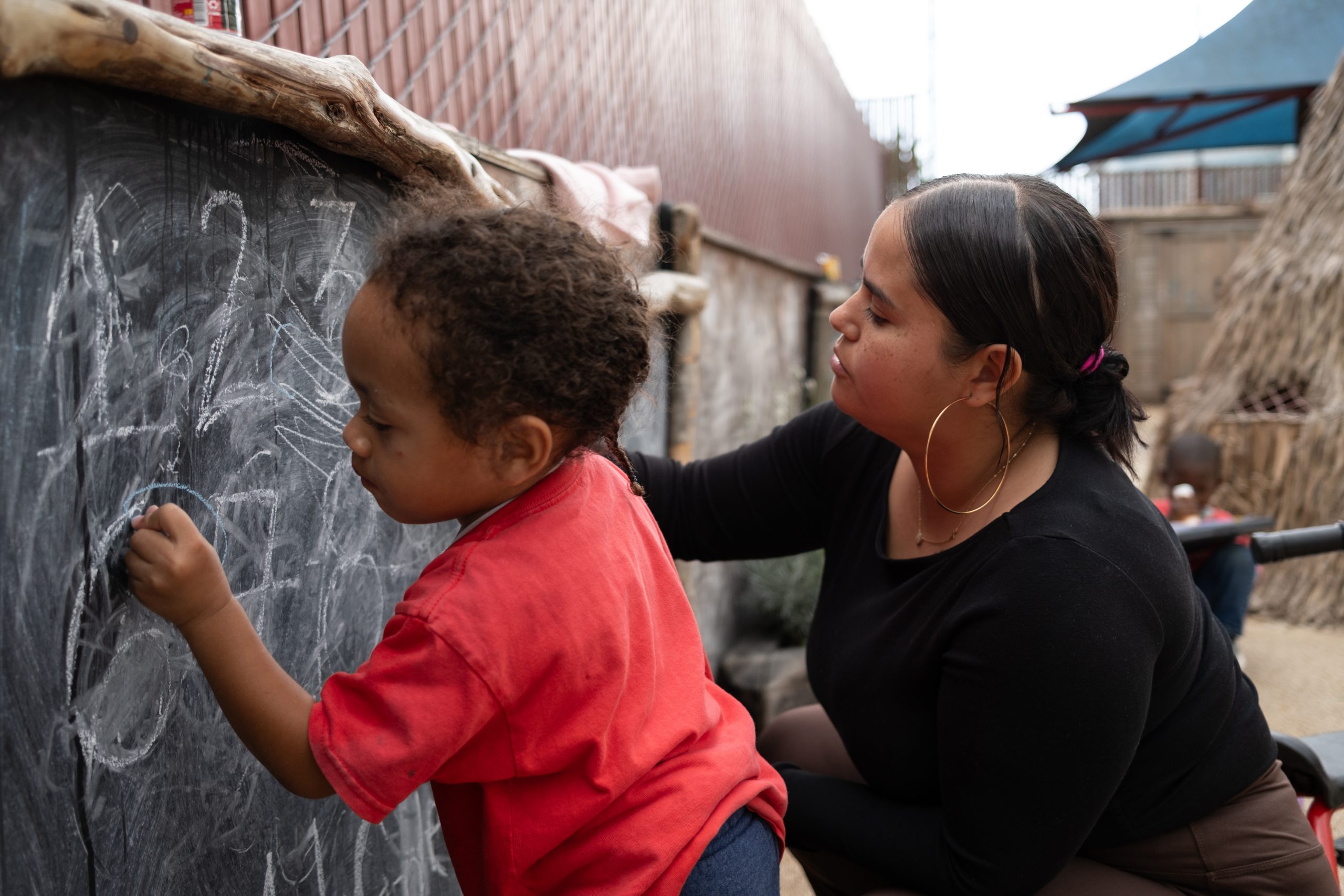
    SAN FRANCISCO — In a playground outside a YMCA, Mayra Aguilar rolled purple modeling dough into balls that fit easily into the palms of the toddlers sitting across from her. She helped a little girl named Wynter unclasp a bicycle helmet that she’d put on to zoom around the space on a tricycle. 

    Aguilar smiled, the sun glinting off her saucer-sized gold hoop earrings. “Say, ‘Thank you, teacher,’” Aguilar prompted Wynter, who was just shy of 3. Other toddlers crowded around Wynter and Aguilar and a big plastic bin of Crayola Dough, and Aguilar took the moment to teach another brief lesson. “Wynter, we share,” Aguilar pressed, scooting the tub between kids. “Say, ‘Can you pass it to me?’” 

    Aguilar and Wynter are both new at this. Wynter has been in the structured setting of a child care center only since mid-August. Aguilar started teaching preschoolers and toddlers, part-time, in February. 

    It has been life-changing, in different ways, for them both. Wynter, an only child, is learning to share, count and recognize her letters. Aguilar is being paid to work and earning her first college credits — building the foundation for a new career, all while learning new ways to interact with her own three kids.

    Early educators are generally in short supply, and many who attempt this work quickly quit. The pay is on par with wages at fast food restaurants and big box stores, or even less. Yet unlike some other jobs with better pay, working with small children and infants usually requires some kind of education beyond a high school diploma. Moving up the ladder and pay scale often requires a degree. 

    What’s different for Aguilar compared to so many other people trying out this profession is that she is an apprentice — a training arrangement more commonly associated with welders, machinists and pipefitters. Apprentice programs for early childhood education have been in place in different parts of the country for at least a decade, but San Francisco’s program stands out. It is unusually well, and sustainably, funded by a real estate tax voters approved in 2018. The money raised is meant to cover the cost of programs that train early childhood educators and to boost pay enough so teachers can see themselves doing it for the long term. 

    Related: Young children have unique needs and providing the right care can be a challenge. Our free early childhood education newsletter tracks the issues.

    Some policy experts see apprenticeships as a potential game changer for the early educator workforce. The layers of support they provide can keep frazzled newcomers from giving up, and required coursework may cost them nothing. “We want it to be a position people want to go into as opposed to one that puts you in poverty,” said Cheryl Horney, who oversees the Early Learning Program that employs apprentices at Wu Yee Children’s Services in San Francisco, including the site where Aguilar works.

    Aguilar, 32, is paid to work 20 hours a week at the Wu Yee Children’s Services’ Bayview Early Learning Center, tucked inside a Y in a residential neighborhood a little under a mile from San Francisco Bay. She works alongside a mentor teacher who supports and coaches her. The apprenticeship covers the online classes, designed just for her and other apprentices and taught live from City College of San Francisco, that Aguilar takes a few nights a week. She was given all the tools needed for her courses, including a laptop, which she also uses for homework and discussions with other apprentices outside of class. 

    After high school, Aguilar had tried college, a medical assistant program that she quit after a few months. That was more than 10 years ago. She hadn’t touched a computer in all that time. When she was enrolling her youngest daughter at another Wu Yee location, Aguilar saw a flyer about the apprenticeship program and applied. She is finding this work to be a far better fit: “This — I think I can do it. This, I like it.” 

    The need for more early educators is longstanding, and in recent years there’s been a push for early educators to get postsecondary training, both to support young children’s development and so the roles command higher salaries. For example, a 2007 change in federal law required at least half of teachers working in Head Start to have bachelor’s degrees in early childhood education by 2013, a goal the program met.

    Despite efforts to professionalize the workforce, salaries for those who work with young children remain low: 87 percent of U.S. jobs pay more than a preschool teacher earns on average; 98 percent pay more than what early child care workers earn. In 2022, Head Start lead teachers earned $37,685 a year on average. 

    Apprenticeships are seen as one way to disrupt that stubborn reality: Would-be teachers are paid while being trained for everything from entry-level roles that require a small number of college credits or training to jobs, like running a child care center, that require degrees and come with more responsibility and even higher pay. According to a June 2023 report from the Bipartisan Policy Center, a think tank, 35 states have some kind of early childhood educator apprenticeship program at the city, regional or state level, and more states are developing their own programs. U.S. Department of Labor data shows that more than 1,000 early educator apprentices have completed their programs since the 2021 fiscal year. Early Care & Educator Pathways to Success, which has received Labor Department grants to help set up apprenticeship programs, estimates the numbers are far larger given its work has cultivated hundreds of apprentices in 21 states, including  Alaska, California, Connecticut and Nebraska.

    These programs can be complicated to launch, however. They sometimes require painstaking work to find colleges that will provide coursework specific to local regulations and at hours that work for apprentices who may be in classrooms much of the workday as well as tending to their own children. They require money to pay the apprentices — on top of whatever it already costs to run child care centers and pay existing staff. The apprentices also typically need other layers of support: coaching, computers, sometimes child care and even meals for apprentices’ own kids as they study and take exams.

    In San Francisco, Horney advocated for her employer to set up an apprenticeship program for staffers at its 12 Head Start centers even before the tax money became available. She recalled losing teachers to chain retailers like Costco and Walgreens where they found less stressful jobs with more generous benefits. When she arrived in San Francisco to work in the classroom, with five years of experience and a bachelor’s degree, she was paid $15 an hour. “Now the lowest salary we pay is $28.67 for any sort of educator,” she said, and the wages and apprenticeships are even drawing people from other counties and stabilizing the San Francisco early educator workforce. “It has helped immensely.”

    Other parts of the country have seen success with similar initiatives.

    The YWCA Metro St. Louis in Missouri, which hasn’t had a single teacher vacancy for the last two years at the child care centers it oversees, credits its apprenticeship program. In Guilford County, North Carolina, vacancies and staff turnover were a plague until recently, but an apprenticeship program for entry-level early educators has kept new teachers on the job. 

    Elsewhere, there is hope for those kinds of results. In the Oklahoma City area, an apprenticeship program started in 2023 just yielded its first graduate, who worked in a child care center for two years and completed a 288-hour training program. Curtiss Mays, who created the program for teachers at the group of Head Start centers he oversees, was in the midst of trying to hire 11 educators just as the first apprentice earned a credential that allows her to back up other teachers. 

    “It’s a pretty major project,” Mays said. “We hope it’s the start of something really good.” Mays worked with the Oklahoma Department of Labor to set up the apprenticeship program, which he said has already pulled one person out of homelessness and is helping to lure more aspiring teachers. It will pay for education all the way through a bachelor’s degree if apprentices stick with it. 

    Apprenticeship programs can be costly to run, but bipartisan federal legislation to support them has never gained traction. (Advocates note that apprenticeships can cost far less than a traditional four-year college degree.) Labor Department money for organizations that help set up and grow early childhood educator apprenticeships helped increase the number of apprentices in so-called registered apprenticeship programs — ones that are proven and validated by the federal agency. But some of those grants were axed by the Trump administration in May. 

    In San Francisco, while setting up apprenticeships was as labor intensive as in many other places, the 2018 real estate tax provides a new and deep well of money to propel the early educator apprentice effort. The money pays for all of the things that are letting Aguilar and dozens of others in the county earn at least 12 college credits this year. In two semesters, Aguilar will have the credentials to be an associate teacher in any early education program in California. Other apprentices across San Francisco, in Head Start centers, family-owned child care programs, even some religious providers, can work toward associate or bachelor’s degrees using the new tax revenue to pay for it. 

    Related: The child care worker shortage is reaching crisis proportions nationally. Could Milwaukee provide the answer?

    Long before the ballot measure across the bay in San Francisco, Pamm Shaw dreamed up the forerunner of an early educator apprenticeship program in a moment of desperation.  

    It was over a decade ago, and Shaw, who was then working at the YMCA East Bay overseeing a collection of Head Start centers, said her agency was awarded a grant to add spaces for about 100 additional infants. Except her existing staff didn’t want to work with children younger than 3. So Shaw sent notices to the roughly 1,000 families with children enrolled in YMCA East Bay Head Start programs at the time and convinced about 20 people, largely parents of children enrolled in Head Start, to consider the role. She pulled together the training that would qualify the parents to become early educators — 12 college credits in six months.

    The education piece, Shaw realized, was a huge draw. Some of the parents had spent 10 years working toward associate degrees on their own without completing them. Giving them the chance to earn those degrees in manageable chunks — while getting paid and receiving raises relatively quickly as their education advanced — proved a powerful recruitment tool. “It changed their lives,” Shaw said. And these new teachers had their eyes opened to how what they would be doing wasn’t just babysitting. They took away lessons they used with their own children — who in turn took notice of their parents studying. “It’s actually child care,” said Shaw. “So much happens in the first year of life that you never get to see again. Never, ever, ever.” 

    It changed Shaw’s life, too, and inspired many other apprenticeship programs all over. Her role morphed into fundraising to build out the apprenticeship pipeline. The program, now baked into the YMCA of the East Bay system, reflected the overall early educator workforce: It was made up entirely of women, mostly women of color, some of them immigrants and many first-generation college students. By the time Shaw retired a few years ago, more than 500 people in the Berkeley area had completed the early educator apprenticeship program. 

    Erica Davis, a single mom, is one of its success stories. When she met Shaw, Davis said, she was relying on public assistance and jobs caring for other people’s children, while taking care of a daughter with significant medical needs, as well as her toddler-age son. Davis was at a Head Start dropping off paperwork for the family of a child in her care when an employee told Davis her young son might be eligible for Head Start too. He was, and as Davis enrolled him, she learned about Shaw’s apprenticeship program. Davis missed the first window to apply, but as she put it, “I was blowing their phone up. I needed to get in.” 

    That was 2020. By this spring, Davis will have earned her bachelor’s degree from Cal State East Bay. She works full-time at a Richmond, California, Head Start center while taking classes and supporting her kids, now in high school and elementary school. She can afford to rent a two-bedroom apartment, owns a car and no longer relies on state or federal assistance to pay bills. She’s on the dean’s list, and, she said proudly, she can squat 205. 

    “I didn’t take my education seriously,” Davis, 41, said of her younger self. “I feel like I’m playing catch-up now.” She is in her element at the YMCA of the East Bay Richmond Parkway Early Learning Center, reading to children, working on potty training and leading the kids through coloring-and-pasting exercises. She has even become an informal coach for newer apprentices. The network and family feel of these apprenticeships is some of what helps many succeed, she said. “I have a sad story, but it turned into something beautiful.”

    Related: The dark future of American child care

    While Davis said she prefers the flexibility of taking classes at her own pace, other apprentices thrive in the kind of classes Aguilar attends, with a live instructor who starts off leading students in a mindfulness exercise. That is the same approach to teaching apprentices at EDvance College in San Francisco, which works exclusively with early childhood apprentices, according to its president and CEO, Lygia Stebbing. 

    The college provides general education classes in reading, math and science for apprentices pursuing degrees, taught through an early childhood lens so it feels approachable and relevant. And every lesson can be applied nearly in real time, unlike other paths to degrees, in which in-person teaching experience comes only after many classes, Stebbing said. Before beginning classes, apprentices get a crash course in using technology, from distinguishing between a tablet and a laptop to using Google Docs and Zoom, “so they can jump right into things,” she said. A writing coach and other student support staff are available in the evenings, when apprentices are taking courses or doing homework. Because many of the apprentices are older than typical college students and may even have used up their federal Pell Grants and other financial aid taking courses without earning a degree, the college works with foundations and local government agencies to offset the cost of courses so graduates don’t end up in debt.        

    “We’ve really put the student at the center,” Stebbing said.   

    For Mayra Aguilar, her mentor teacher Jetoria Washington is a lifeline who can help her unstick an issue with any aspect of the apprenticeship — in the classes she takes or the classroom where she works. Taking courses online means she can be home with her own kids in the evenings. Earning money for the hours she spends in the classroom means she is not going into debt to earn the credential she needs to find a full-time job. The constellation of support has helped her shift from feeling in over her head to feeling ready to keep working toward a college degree.        

    And she is having fun. On the playground, one of the kids had the idea to trace another with sidewalk chalk, working on their pencil grip as much as they were playing. Except it wasn’t just the other kids: They traced Aguilar, too. When it was time to go back inside, powdery green and pink lines crisscrossed the back of her brown pants and black blouse. She wasn’t bothered.   

    “I love the kids,” she said. “They always make me laugh.”       

    Aguilar has even picked up skills that she uses with her own children, something many apprentices describe.        

    Now, she sometimes says to her youngest daughter, “Catch a bubble.” That’s preschool speak for “Be quiet.” When a teacher needs the toddlers’ attention, kids hear this phrase, then fill their cheeks with air.        

    Most of the time, at home and at work, a brief silence follows. Then the kids look up, ready to hear what comes next.    

    Contact staff writer Nirvi Shah at 212-678-3445, on Signal at NirviShah.14 or [email protected]

    Reporting on this story was supported by the Higher Ed Media Fellowship. 

    This story about preschool teachers was produced by The Hechinger Report, a nonprofit, independent news organization focused on inequality and innovation in education. Sign up for the Hechinger newsletter

    This <a target=”_blank” href=”https://hechingerreport.org/one-city-finding-early-educators/”>article</a> first appeared on <a target=”_blank” href=”https://hechingerreport.org”>The Hechinger Report</a> and is republished here under a <a target=”_blank” href=”https://creativecommons.org/licenses/by-nc-nd/4.0/”>Creative Commons Attribution-NonCommercial-NoDerivatives 4.0 International License</a>.<img src=”https://i0.wp.com/hechingerreport.org/wp-content/uploads/2018/06/cropped-favicon.jpg?fit=150%2C150&amp;ssl=1″ style=”width:1em;height:1em;margin-left:10px;”>

    <img id=”republication-tracker-tool-source” src=”https://hechingerreport.org/?republication-pixel=true&post=113662&amp;ga4=G-03KPHXDF3H” style=”width:1px;height:1px;”><script> PARSELY = { autotrack: false, onload: function() { PARSELY.beacon.trackPageView({ url: “https://hechingerreport.org/one-city-finding-early-educators/”, urlref: window.location.href }); } } </script> <script id=”parsely-cfg” src=”//cdn.parsely.com/keys/hechingerreport.org/p.js”></script>


    Source link

  • How to Find a Cosigner for a Student Loan

    How to Find a Cosigner for a Student Loan


    If you applied for a private student loan and were notified that you need to apply with a cosigner, you’re not alone. Over 90% of private student loans include a cosigner, which is an individual — usually a parent or guardian — who is willing to take equal responsibility for the loan alongside you, the primary borrower.

    Why do I need a cosigner?

    To assess your ability to repay your student loan, private lenders typically require a credit and income check. Given that most student loan borrowers are fresh out of high school or in their early twenties, many do not have sufficient credit history, or if they do, their credit score is low.

    Credit history is built over time through credit cards, mortgages, car loans, etc., and many students have not yet encountered these responsibilities. As a result, student borrowers are often prompted to apply with a cosigner, who has an established income and a history of repaying debts on time.

    Who can be a cosigner?

    When considering who can cosign your loan, the most important trait is reliability and good credit. This will not only help you secure your loan, but possibly lower your interest rate, as well.

    A lower interest rate can make a big difference in the amount of money you’ll owe, overall.

    How can I find a cosigner?

    When thinking about how to find a cosigner, consider this question: “Who do I know will be sitting at my graduation, cheering me on as I walk across the stage to receive my diploma?”

    By starting here, you will identify individuals who are invested in your success and achievement. Parents and guardians are a great place to start. Aunts, uncles, grandparents, or older siblings can also be good options.

    Once you identify the person who can be a cosigner, gather and organize all of the information about the loan in preparation for any questions your cosigner might have.

    Here are a few they might ask:

    • Why are you applying for this loan?
    • How much are you applying for?
    • Who is the lender?
    • Why do you need a cosigner?

    When approaching someone to cosign your loan, be sure to communicate that you intend to be trustworthy and repay your loan on time. Your cosigner is equally responsible for your loan, so any missed payments by you will also negatively affect their credit history.

    If they ask why you’re applying for this loan, it would be a good idea to show them your school of choice, the cost of attendance, and any other financial aid you’ve already received, and the remaining balance you need the loan to cover. This will keep your cosigner informed and will help them understand why the loan is necessary. Opening up about your finances to a person you trust could be helpful — they may be able to offer advice on how to best navigate repaying the loan and life beyond college.

    At College Ave, we can provide you with an email that you can send directly to your cosigner. This email contains useful information about applying for a student loan as a cosigner, but we recommend first having an in-person discussion with the individual you plan to ask.

    Why Undergraduates and Graduates May Need Cosigners

    Private lenders, like College Ave, rely on credit scores, proof of income, repayment history, and other factors to determine whether a borrower is eligible for a loan and will be able to repay it.

    Undergraduate students usually have little to no credit history and limited income. This makes it hard for a lender to assess if they’ll be able to repay their loan on their own. A cosigner can improve odds of getting an application approved, secure a lower interest rate, and more favorable terms. Cosigning a loan also enables the undergrad to establish and build their credit history.

    Graduate students may also need or want a cosigner to secure a private student loan for the same reasons listed above — improved approval odds, favorable rates and terms, etc. Though graduate students are older, they may still have limited credit and/or high existing debt from undergrad loans or other living expenses.

    Remember, you might need a cosigner for other things too—like renting an apartment. That same person could be a great option to help cosign your undergraduate or graduate private student loan.

    How do I know if my cosigner will qualify?

    At College Ave, we offer a credit pre-qualification tool that will tell you if your credit qualifies for a loan and what interest rates you can expect. This can be filled out prior to applying. After asking your cosigner, it is a good idea to have that individual use the pre-qualification tool, too, to see if their credit qualifies.

    For more information on cosigners, check out: What is a Private Student Loan Cosigner?

    Source link

  • Building Your Teaching Mind Budget – Faculty Focus

    Building Your Teaching Mind Budget – Faculty Focus


    Source link

  • Building Your Teaching Mind Budget – Faculty Focus

    Building Your Teaching Mind Budget – Faculty Focus


    Source link

  • “Tabletop Role-Playing Games in the Classroom” is now in print!

    “Tabletop Role-Playing Games in the Classroom” is now in print!

    In August 2023 — a year after launching Kentucky Educators for Role-Playing Games — I began writing a book.  It was born from a pragmatic perspective; I had spend a lot of time and energy curating resources and stories for KyEdRPG, so why not package it for an outside audience?  But as I began, I had no idea if it would ever be published, much less seen by more than a handful of friends.  

    Six months later in February 2024, the first complete draft of my manuscript was ready, but more importantly, I found a publisher in McFarland as part of their “Studies in Gaming” series.  I am so thankful that Matthew Wilhelm Kapell (series editor) and Layla Milholen (executive editor) gave me such early affirmation, and helped guide my book to publication.  Friends, educators, and rollers of the dice, I give you: Tabletop Role-Playing Games in the Classroom: Infusing Gameplay into K-12 Instruction!

    When I received my author’s copies a few weeks ago, I did an “unboxing” video, and perhaps befitting the holiday season we are in, I was once again full of gratitude and thanks.  

    My Acknowledgment section is long and full of names, but in this blog entry I’ll add one more:  Kalli Colley, a Regional Innovation Specialist with the Kentucky Department of Education.  The first of our Kentucky “Dungeons & Desks” series (which continues!) was in March of this year, well past the point where my manuscript was locked in for copy editing.   Therefore, I was unable to include her in the Acknowledgements, so I’ll make that up here.  It’s been a joy co-facilitating sessions with Kalli, leading and learning with attendees from Kentucky and beyond about TTRPGs in education.  I’m thankful for her expertise!

    And by reading this, thank you.  Over a decade ago, Edtech Elixirs began, and it’s the practice of writing thousands of words over 200+ blog entries that gave me the confidence to tackle something as audacious as a book. I hope that Tabletop Role-Playing Games in the Classroom is also something you can consider worthy of your time to read — and inspires you to try some joyful instruction in your own learning spaces.

    I’ll end with helpful links and information for how you can order your copy:

    More info about the book

    Print ISBN Number:  9781476697550

    eBook ISBN Number:  9781476657905

    Direct from Publisher

    Amazon

    Barnes & Noble

    Books-a-Million

    I highly recommend special ordering the book via its print ISBN number at your favorite local brick-and-mortar independent bookstore (mine is Carmichael’s!).  If you use my Bookshop portal, 10% of sales go to support independent bookstores, and I also earn a small percentage. 

    Source link

  • Everyone is Cheating, Even the Professors (Jared Henderson)

    Everyone is Cheating, Even the Professors (Jared Henderson)

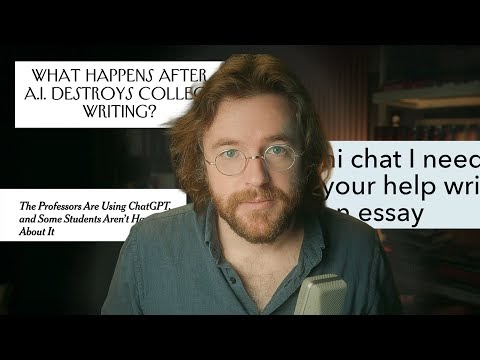
    There’s a lot of talk about how AI is making cheating easier than ever, and most people want to find a way to stop it. But the problem goes much deeper than we typically assume. This video covers AI-assisted cheating (like with ChatGPT, Claude, etc.), the value of education (and Caplan’s signaling theory), and the reason why professors and researchers commit fraud. 

    Source link

  • George Mason faculty urge leaders to reject Trump deals risking ‘institutional autonomy’

    George Mason faculty urge leaders to reject Trump deals risking ‘institutional autonomy’

    This audio is auto-generated. Please let us know if you have feedback.

    Dive Brief:

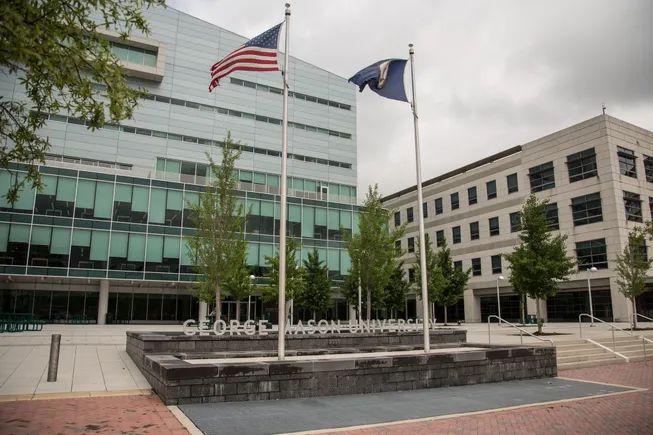
    • George Mason University’s faculty senate on Wednesday urged the public Virginia institution’s leadership to rebuke any deal with the Trump administration that would undermine its independence.
    • In a newly passed resolution, the senate said recent federal deals struck by other colleges have set a precedent in which “administrative convenience takes precedence over the faculty’s constitutional and professional responsibility.The resolution urged George Mason’s board and president to reject any similar settlement with the Trump administration to end federal investigations into the university. 
    • George Mason leaders must also decline the administration’s separate higher education compact, it said, as that proposal seeks to “blur the constitutional distinction between voluntary funding conditions and compelled oversight.”

    Dive Insight:

    Under President Donald Trump, the departments of Education and Justice have opened at least four investigations into George Mason since this summer, targeting the university’s diversity, equity and inclusion work.

    George Mason’s faculty senate warned the governing board Wednesday against cutting a deal with the DOJ that puts the university under “continuing federal supervision.” And any settlement must involve “transparent deliberation and meaningful faculty consultation,” as required by George Mason’s shared governance policies, the senate said.

    Faculty cited the University of Virginia’s recent deal with the federal government as one that did not meet these standards. 

    The state flagship in October agreed, in part, to adhere to the DOJ’s guidance against DEI efforts and to make quarterly oversight reports for three years. In exchange, the federal government suspended and will eventually end five DOJ investigations into UVA and continued to give the university access to research funding.

    The resolution from George Mason’s faculty senate said UVA had “negotiated in secrecy, without faculty consultation” and imposed “years of federal monitoring and mandatory reporting that chill free inquiry, constrain legitimate academic debate, and erode shared governance.”

    Just six weeks after the Education Department announced a probe into George Mason, it formally accused the university of illegally using race and other protected characteristics when making hiring and promotion decisions. As in other federal investigations into George Mason, the department singled out the university’s president, Gregory Washington, who has been an ardent supporter of diversity initiatives during his five-year tenure.

    The agency gave the university 10 days to meet a list of demands to resolve the investigation. Among other requirements, one condition would have compelled Washington to publicly apologize. The president instead firmly rebuked the Education Department’s findings, with his lawyer calling them “a legal fiction.”

    In contrast, George Mason’s governing board said that it would seek to negotiate with the Trump administration to resolve the allegations. The board also said Washington’s attorney would be involved in talks with the Education Department.

    The faculty senate resolution pushed George Mason’s leaders to not accept Trump’s proposed higher education compact or any agreement that “conditions federal funding on the surrender of institutional autonomy or faculty governance.”

    Through the compact, the Trump administration seeks to have colleges voluntarily agree with its policy agenda in exchange for research funding incentives rather than its playbook of seeking compliance through unprecedented punitive actions.

    But the faculty senate argued in their resolution that the compact’s “promise of ‘excellence’ masks a fundamental shift of authority from university faculty and governing boards to federal agencies.”

    Further complicating matters, George Mason’s board currently has just six voting members — down from the usual 16 meaning it doesn’t have a quorum. Since June, the governing bodies of George Mason and two other Virginia public colleges have been in a state of political flux due to a fight between a Democrat-controlled state Senate committee and Republican Gov. Glenn Youngkin over his university board selections.

    The committee rejected many of Youngkin’s selections, and despite his efforts to install them anyway, court decisions have blocked them from serving.

    The faculty senate on Wednesday said that the board should not negotiate or sign off on any substantial agreement “affecting curriculum development, research priorities, faculty governance, or the allocation of university resources” without members who are “properly appointed and duly confirmed” by the Virginia General Assembly.

    Virginia’s governor-elect, Democrat Abigail Spanberger, last month raised similar concerns over potential actions taken by UVA’s board, which has 12 of its intended 17 members. 

    George Mason’s board — and the board’s leader — have come under scrutiny from faculty and lawmakers.

    In July, the George Mason chapter of the American Association of University Professors voted no-confidence in the board and urged it to defend Washington.

    And the leaders of Virginia’s state senate accused Charles Stimson, head of George Mason’s board, of a conflict of interest in September and called for him to resign if he did not recuse himself from discussions related to the federal investigations. 

    Stimson is a senior legal fellow at The Heritage Foundation, a right-wing think tank the AAUP found to be among those behind the wave of state-level anti-DEI legislation. The foundation also created Project 2025, a wide-ranging conservative blueprint for Trump’s second term whose policies the president has embraced after distancing himself from the handbook as a candidate.

    Stimson, whose term runs through June 2027, rejected calls to either recuse himself or step down.

    Source link