
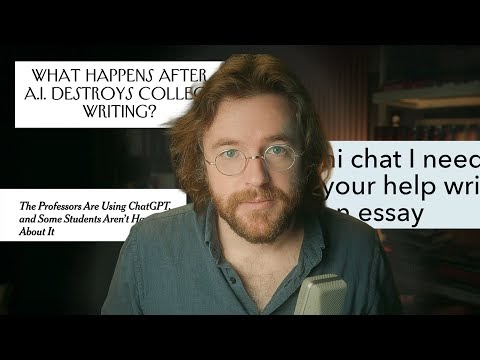
There’s a lot of talk about how AI is making cheating easier than ever, and most people want to find a way to stop it. But the problem goes much deeper than we typically assume. This video covers AI-assisted cheating (like with ChatGPT, Claude, etc.), the value of education (and Caplan’s signaling theory), and the reason why professors and researchers commit fraud.
Blog
-
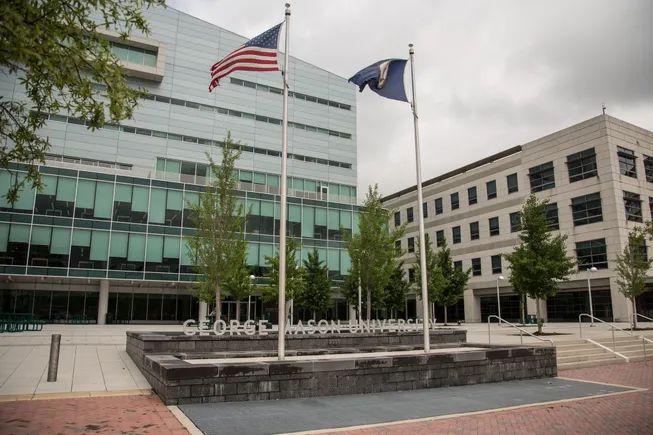
George Mason faculty urge leaders to reject Trump deals risking ‘institutional autonomy’
This audio is auto-generated. Please let us know if you have feedback.Dive Brief:
- George Mason University’s faculty senate on Wednesday urged the public Virginia institution’s leadership to rebuke any deal with the Trump administration that would undermine its independence.
- In a newly passed resolution, the senate said recent federal deals struck by other colleges have set a precedent in which “administrative convenience takes precedence over the faculty’s constitutional and professional responsibility.” The resolution urged George Mason’s board and president to reject any similar settlement with the Trump administration to end federal investigations into the university.
- George Mason leaders must also decline the administration’s separate higher education compact, it said, as that proposal seeks to “blur the constitutional distinction between voluntary funding conditions and compelled oversight.”
Dive Insight:
Under President Donald Trump, the departments of Education and Justice have opened at least four investigations into George Mason since this summer, targeting the university’s diversity, equity and inclusion work.
George Mason’s faculty senate warned the governing board Wednesday against cutting a deal with the DOJ that puts the university under “continuing federal supervision.” And any settlement must involve “transparent deliberation and meaningful faculty consultation,” as required by George Mason’s shared governance policies, the senate said.
Faculty cited the University of Virginia’s recent deal with the federal government as one that did not meet these standards.
The state flagship in October agreed, in part, to adhere to the DOJ’s guidance against DEI efforts and to make quarterly oversight reports for three years. In exchange, the federal government suspended and will eventually end five DOJ investigations into UVA and continued to give the university access to research funding.
The resolution from George Mason’s faculty senate said UVA had “negotiated in secrecy, without faculty consultation” and imposed “years of federal monitoring and mandatory reporting that chill free inquiry, constrain legitimate academic debate, and erode shared governance.”
Just six weeks after the Education Department announced a probe into George Mason, it formally accused the university of illegally using race and other protected characteristics when making hiring and promotion decisions. As in other federal investigations into George Mason, the department singled out the university’s president, Gregory Washington, who has been an ardent supporter of diversity initiatives during his five-year tenure.
The agency gave the university 10 days to meet a list of demands to resolve the investigation. Among other requirements, one condition would have compelled Washington to publicly apologize. The president instead firmly rebuked the Education Department’s findings, with his lawyer calling them “a legal fiction.”
In contrast, George Mason’s governing board said that it would seek to negotiate with the Trump administration to resolve the allegations. The board also said Washington’s attorney would be involved in talks with the Education Department.
The faculty senate resolution pushed George Mason’s leaders to not accept Trump’s proposed higher education compact or any agreement that “conditions federal funding on the surrender of institutional autonomy or faculty governance.”
Through the compact, the Trump administration seeks to have colleges voluntarily agree with its policy agenda in exchange for research funding incentives rather than its playbook of seeking compliance through unprecedented punitive actions.
But the faculty senate argued in their resolution that the compact’s “promise of ‘excellence’ masks a fundamental shift of authority from university faculty and governing boards to federal agencies.”
Further complicating matters, George Mason’s board currently has just six voting members — down from the usual 16 — meaning it doesn’t have a quorum. Since June, the governing bodies of George Mason and two other Virginia public colleges have been in a state of political flux due to a fight between a Democrat-controlled state Senate committee and Republican Gov. Glenn Youngkin over his university board selections.
The committee rejected many of Youngkin’s selections, and despite his efforts to install them anyway, court decisions have blocked them from serving.
The faculty senate on Wednesday said that the board should not negotiate or sign off on any substantial agreement “affecting curriculum development, research priorities, faculty governance, or the allocation of university resources” without members who are “properly appointed and duly confirmed” by the Virginia General Assembly.
Virginia’s governor-elect, Democrat Abigail Spanberger, last month raised similar concerns over potential actions taken by UVA’s board, which has 12 of its intended 17 members.
George Mason’s board — and the board’s leader — have come under scrutiny from faculty and lawmakers.
In July, the George Mason chapter of the American Association of University Professors voted no-confidence in the board and urged it to defend Washington.
And the leaders of Virginia’s state senate accused Charles Stimson, head of George Mason’s board, of a conflict of interest in September and called for him to resign if he did not recuse himself from discussions related to the federal investigations.
Stimson is a senior legal fellow at The Heritage Foundation, a right-wing think tank the AAUP found to be among those behind the wave of state-level anti-DEI legislation. The foundation also created Project 2025, a wide-ranging conservative blueprint for Trump’s second term whose policies the president has embraced after distancing himself from the handbook as a candidate.
Stimson, whose term runs through June 2027, rejected calls to either recuse himself or step down.
-

Therapists Can’t Fix What Society Broke (Steven Mintz)
On a recent flight, a small child in the row behind me shrieked with piercing intensity. The passenger beside me leaned over and whispered, with assurance, “He’s autistic.”
Neither of us knew the child. What we had was a familiar modern reflex: reaching immediately for a diagnostic label.
Yet the scene likely had simpler explanations. Any parent knows toddlers often melt down. They have immature nervous systems, poor emotional regulation, and lack the linguistic tools to express their discomfort.
Air travel makes this exponentially worse: altitude pressure that feels like a drill behind the eardrum, bright lights, crowding, disorientation, loss of routine, confinement in an airplane seat, and helpless parents who cannot walk, rock, or soothe as they ordinarily would.
In such a setting, a screaming child isn’t a clinical puzzle. He or she is a human being overwhelmed by an environment for which their developmental stage is simply unsuited.
But what struck me wasn’t the child’s distress—it was my fellow passenger’s interpretive leap. We now default to pathology. Behaviors that earlier generations would have recognized as overtiredness, frustration, temperament, or physiological misery are now reframed as sensory processing issues, spectrum behaviors, and emotional dysregulation.
A century ago, William James or Émile Durkheim would have been baffled by our eagerness to see ordinary distress as a clinical symptom. They assumed a different relationship between individuals and their environments. They looked first to situational explanations, developmental stages, social settings, and institutional pressures—not to internal pathology.
The classical social theorists were exquisitely attuned to context. They understood that behavior is produced not just by minds but by milieus; not only by individual traits but by social expectations, institutional routines, physical environments, and cultural frames.
They would have asked: What was the situation? What were the constraints? What was the child’s developmental stage? What stresses shaped the parents’ responses? Why do modern societies interpret certain behaviors this way?
Those are the questions we increasingly fail to ask.
The Classroom Mirror
I see this reflex every semester. Many students arrive with formal diagnoses—ADHD, social anxiety, depression, autism spectrum traits—and often understand these labels as central to their identity.
I don’t doubt these conditions are real for many. But far more often than we acknowledge, their struggles stem less from an intrinsic disorder than from a structural mismatch between who they are and the environments we place them in.
Large lecture halls; nonstop digital distraction; relentless assessment; pressure to perform perfectly; overcrowded advising systems; erosion of in-person community; feeling constantly watched and perpetually behind—these aren’t symptoms of personal pathology. They’re central to how colleges are currently designed. They generate anxiety, cognitive overload, disconnection, and inadequacy in perfectly healthy young adults.
Yet in a culture where we no longer know how to talk about situational or structural problems, students understandably look inward. What earlier generations might have described as exhaustion, loneliness, discouragement, confusion, or developmental turbulence is now interpreted as a disorder to be treated.
We diagnose individuals when the real problem lies in the systems, structures, and expectations surrounding them. Classical social theorists understood something we’ve forgotten—that human beings cannot be separated from the worlds they inhabit, and what looks like personal failure is often the predictable result of social arrangements, institutional pressures, and cultural transformations.
Many problems we treat as individual psychology are, in fact, social. What feels personal is often produced by institutions, expectations, and culture.
The Lost Questions
There’s a paradox at the heart of contemporary social analysis. We have more data than ever—surveys tracking happiness, studies measuring loneliness, algorithms predicting behavior, and neuroscience mapping the brain. We can quantify anxiety rates, document declining social trust, and measure screen time to the second.
Yet for all this empirical precision, we seem less able than earlier generations to explain why wealthy, free, technologically advanced societies produce so much unhappiness, alienation, and despair.
Classical social thinkers—from roughly the 1880s through the 1950s—understood something we’ve forgotten. They grasped that modernity wasn’t simply adding new goods (wealth, freedom, and technology) to human life while leaving fundamentals unchanged. It was dissolving the very frameworks, rituals, and structures that had given life meaning, connection, and purpose.
Modernity was a package deal, and the price of its benefits was the loss of much that made life livable.
Contemporary social science has largely abandoned this tragic sensibility. We analyze discrete variables—income inequality, screen time, political polarization—without attending to deeper structural transformations that generate these symptoms.
We prescribe technical fixes—better mental health services, regulated social media, and reformed institutions—without recognizing that problems run deeper than any policy intervention can reach.
The classical thinkers knew better. They understood that modernity’s discontents weren’t bugs to be fixed but features of the system itself.
What the Classics Saw
A core insight runs through the writings of Weber, Durkheim, Simmel, Tönnies, Polanyi, and others: modern life systematically dissolves the dense webs of meaning, obligation, and continuity that structured pre-modern existence. This dissolution wasn’t avoidable—it was the necessary condition for everything modernity promised.
Tönnies on the Shift from Community to Society
Ferdinand Tönnies’s distinction between gemeinschaft (community) and gesellschaft (society) captures what changed. Gemeinschaft described life organized around kinship, locality, tradition, and unreflective bonds that made people part of something larger than themselves. You didn’t choose your village, extended family, place in the social order, or obligations to neighbors. These were given, woven into existence’s fabric.
Gesellschaft described modern life organized around contract, choice, rational calculation, and instrumental relationships. You choose your career, residence, and associations. Relationships are voluntary, revocable, and organized around mutual benefit rather than organic solidarity. This brought enormous gains in freedom and opportunity. But it also meant nothing was given, everything was optional, all relationships were contingent rather than fixed.
The real loss wasn’t some sentimental yearning for village life. It was the disappearance of what Robert Nisbet called “intermediate institutions”—the extended families, congregations, civil associations, unions, and community networks that once connected individuals to one another and gave daily life structure, support, and meaning.
Church, guild, neighborhood, extended family, and craft tradition weren’t just social organizations but ontological anchors. They provided identity, purpose, standards of excellence, and narratives connecting past to future. When they dissolved or became voluntary lifestyle choices rather than unchosen obligations, something irreplaceable was lost.
Durkheim on Anomie
Émile Durkheim argued that people need moral frameworks—not in the sense of strict rules or puritanism, but shared expectations that help us decide what goals are reasonable and what counts as “enough.” Without those external standards, our desires have no limits; we keep wanting more without knowing why or to what end.
This breakdown of guiding norms is what Durkheim meant by anomie. It’s not just chaos or “normlessness.” It’s the collapse of the social structures that tell us how to measure success, how to live a meaningful life, and where to direct our ambitions. When those frameworks erode, people feel unmoored—driven by endless wants but with no sense of direction or satisfaction.
In the pre-modern world, Durkheim argued, people lived inside thick webs of meaning that helped them understand who they were, what counted as a good life, and when enough was enough. These frameworks came from many places: religious teachings about one’s duties, craft traditions that defined good work, sumptuary rules that kept status competition in check, seasonal rhythms that shaped time, and life-cycle rituals that marked major transitions.
These systems could certainly be restrictive, but most people experienced them as simply the way life worked—structures that offered direction, limits, and shared expectations.
Modernity dismantled many of these frameworks in the name of individual freedom and social mobility. Suddenly, people could aspire to anything and reinvent themselves entirely. But with old limits gone, desires multiplied. If you can always become more, achieve more, accumulate more, how do you ever know when you’ve done enough? What tells you that you are successful, secure, or “on track”?
The result wasn’t pure liberation. It was a new kind of burden: wanting without an obvious endpoint, striving without clear measures, comparing yourself endlessly to others with no shared standard to anchor the process.
This helps explain why so many people today feel anxious despite rising living standards. Wealth can meet basic needs, but it also fuels comparison—and modern life has stripped away many of the boundaries that once contained those comparisons. In achievement-driven cultures, where people set their own goals and judge themselves against constantly shifting internal standards, nothing ever feels sufficient.
Weber’s Iron Cage
Max Weber’s concept of rationalization captured another major shift in modern life: institutions stopped being guided by tradition, shared judgment, or moral purpose and instead became organized around efficiency, calculation, and technical control.
Decisions that once involved human judgment increasingly followed rules, metrics, and procedures. This made institutions more predictable and effective—but also more rigid and impersonal.
Modern life came to be shaped by what Weber called instrumental rationality: finding the most efficient means to a given end. Bureaucracies, markets, legal systems, and scientific institutions operate this way. The result was extraordinary productivity and administrative capacity. But it also stripped institutions of meaning and moral depth.
Weber called this disenchantment. The world no longer appeared as a moral or spiritual order. It became a set of problems to manage, resources to optimize, and processes to streamline.
His metaphor of the iron cage captured the paradox: we built rational systems to serve human needs, but those systems now constrain us. Bureaucratic procedures, market incentives, and technological imperatives keep operating even when they undermine human flourishing. Individuals become replaceable “human resources,” valued for their functions rather than their purposes.
Simmel on Metropolitan Life
Georg Simmel’s 1903 essay “The Metropolis and Mental Life” reads uncannily like a diagnosis of smartphone culture. Simmel argued that modern city life bombards people with constant sensory and social stimuli. To cope, the urban mind develops a protective numbness—a “blasé attitude”—marked by detachment, indifference, and a shrinking capacity to feel surprise or deep emotion.
Urbanites, he wrote, become more calculating because their social world is crowded with brief, superficial interactions. When you have to navigate countless encounters each day, you evaluate people quickly, in instrumental terms. The result is thinning of relationships: less depth, less intimacy, fewer truly authentic exchanges. The emotional and cognitive energy required for rich connection is already spent fending off overstimulation.
If you swap “metropolis” for “social media,” Simmel’s analysis becomes even more resonant. The endless feed, the pressure to maintain hundreds of shallow ties, the constant performance of the self, the transformation of attention and emotion into metrics—these conditions supercharge the very defenses Simmel described. We become numb to protect ourselves, then wonder why so little feels meaningful anymore.
Polanyi’s Great Transformation
Karl Polanyi’s The Great Transformation (1944) argued that the 19th century’s most radical innovation wasn’t the market—markets had existed for millennia—but the idea of a market society, where land, labor, and money themselves became commodities. This meant pulling these “fictitious commodities” out of the social relationships that once governed them and treating them instead as items to be priced, traded, and regulated entirely by the market.
The result dissolved an older emphasis on reciprocity and the notion of a moral economy. Labor became a commodity to be bought and sold rather than a social relationship with obligations on both sides. Land became real estate to be traded rather than patrimony connecting generations. Social relationships became transactions rather than obligations. This created enormous wealth and flexibility. It also destroyed the social fabric that had made life meaningful.
Polanyi’s key insight was that markets must be politically created and enforced. The “free market” required aggressive state intervention to break up common lands, abolish traditional rights, force people into wage labor, and override local customs limiting commodification. And once created, markets generated such social upheaval that societies repeatedly tried to protect themselves through counter-movements: labor unions, social insurance, land reform, and financial regulation.
Contemporary debates about the gig economy, social safety nets, and the commodification of previously non-market domains (education, healthcare, relationships) still work through Polanyi’s problematic. We keep discovering that some things don’t work well as pure commodities—they need embedding in social relationships and moral frameworks. But market society’s logic keeps pushing toward total commodification.
The Anthropological View
Classical anthropologists—Malinowski, Benedict, Lévi-Strauss—understood that pre-modern societies weren’t simply primitive versions of modern ones, but operated according to different logics. They were organized around ritual, symbol, myth, and kinship rather than instrumental rationality and individual choice.
Rituals weren’t quaint customs but mechanisms for managing life’s fundamental transitions and uncertainties. Birth, maturity, marriage, death—each required ritual marking to integrate individual experience into collective meaning. Seasonal cycles, agricultural rhythms, and religious calendars organized time as qualitatively different moments rather than homogeneous units to be optimized.
Modernity systematically dissolved these meaning-making structures. We still have transitions, but we lack rituals adequate to mark them. We have time, but it’s homogeneous—Monday differs from Sunday only in what we’re scheduled to do. We have choices, but we lack the frameworks that once made choices meaningful rather than arbitrary.
Selfhood as Social
George Herbert Mead, Charles Cooley, and Erving Goffman understood that selfhood isn’t individual but social—it emerges from interaction, from taking on roles, from seeing ourselves through others’ eyes. The self is fundamentally dialogical, constituted through relationships rather than prior to them.
This matters because modernity’s hyperindividualism misunderstands how selfhood actually works. We imagine autonomous individuals choosing identities from an infinite menu. But selves require stable social mirrors—enduring relationships and communities that reflect us back to ourselves consistently over time. When social life becomes fluid, optional, and temporary, selfhood itself becomes unstable and fragmented.
Goffman argued that everyday life works much like a stage. We are all performers who must read cues, manage impressions, maintain face, negotiate interactions, and avoid embarrassment. And this requires constant emotional and cognitive effort.
However, this work becomes exponentially harder when social roles are unclear, when we move among many different audiences (family, coworkers, online strangers), and when norms shift rapidly.
No wonder anxiety is epidemic. We’re constantly performing for audiences whose expectations we can’t know, managing impressions across incompatible contexts, lacking the stable roles that once made social interaction navigable.
Even though thinkers like Durkheim, Weber, Simmel, Polanyi, and Goffman sometimes overstated the contrast between “traditional” and “modern” life, their core insights remain indispensable. They identified pressures built into modern society—pressures we still feel every day.
Why We Forgot
If these thinkers diagnosed our condition so accurately, why did their insights fade from view?
1. Disciplinary tunnel vision: The classic theorists read widely—history, philosophy, psychology, anthropology—and tried to make sense of society as a whole. Today’s social sciences reward narrow specialization. We have far fewer attempts to pull the pieces together into a coherent picture of how modern life works.
2. The dominance of individual-based explanations: Much contemporary research, especially in economics and psychology, explains social problems as the sum of individual choices. That approach misses what the classics understood: that social structures—institutions, norms, incentives—shape what individuals can see, desire, or do. You can’t explain burnout, loneliness, or inequality only by analyzing individuals.
3. Faith in technical fixes: Durkheim and Weber believed modernity involved tragic tradeoffs: more freedom but less stability, more efficiency but less meaning. It’s easier to believe that social problems just need better policy, better design, better apps. The classics remind us that some tensions aren’t solvable; they’re intrinsic parts of the modern condition.
4. The retreat from big-picture thinking: After the 1960s, large theoretical systems fell out of fashion—often for good reasons. But the pendulum swung too far. We became wary of ambitious accounts of how society works. The result: many brilliant micro-studies but fewer frameworks to make sense of the whole.
What We Might Relearn
Returning to classical social theory is about recovering a way of thinking contemporary social science has largely abandoned: structural, historical, synthetic, attuned to modern life’s trade-offs and tragic dimensions.
We need to follow their example, and:
Understand problems as structural, not individual: The therapeutic turn treats unhappiness, anxiety, and alienation as individual psychological problems requiring individual solutions—therapy, medication, mindfulness. The classics understood these as social problems rooted in structural transformations. When Durkheim analyzed suicide, he showed it had social rates that varied systematically. Suicide was individual, but its causes were social. Similarly today: anxiety and depression have individual manifestations, but their epidemic proportions reflect structural conditions.
Recognize trade-offs: The classics saw that you couldn’t have individualism without anomie, rationalization without disenchantment, urban sophistication without blasé indifference. Contemporary discourse often assumes we can have everything—complete individual freedom and strong communities, endless innovation and cultural continuity. The classics suggest we can’t.
Recover a sense of history: The classic thinkers understood something we often forget: modern life is not just “human nature with gadgets.” It’s the result of specific historical changes that dissolved older ways of organizing family life, work, religion, politics, and even the self.
Attend to what can’t be quantified: The classics understood that the most important social realities—meaning, purpose, moral order, authentic community—resist quantification. This doesn’t mean they’re not real, just that they can’t be captured by the metrics contemporary social science favors.
Think about institutions as meaning-making structures: Modern social science often analyzes institutions in narrowly functional terms—schools educate, markets allocate, courts resolve disputes. The classic social theorists saw something deeper: institutions don’t just serve individuals; they form them. They shape our expectations, our aspirations, and even our sense of who we are. They teach us what to value, how to behave, and what kinds of lives are possible.
Making Sense of Our Moment
The classical social thinkers help explain phenomena contemporary frameworks struggle with:
Why Wealth Doesn’t Bring Happiness: Economics assumes that more resources mean more satisfaction. But the classic thinkers saw something different: when moral limits collapse and wants become endless, no amount of wealth brings peace.
Why Freedom Feels Like a Burden: We tend to imagine freedom as pure gain—more choice, more autonomy, more control. The classics remind us that freedom without structure is exhausting. When every commitment is optional, when identities must be invented rather than inherited, and when nothing outside us provides guidance, choice stops feeling liberating and starts feeling overwhelming.
Why Community Keeps Falling Apart: Modern policies try to “build community” through programs, initiatives, and apps. The classics understood that real community doesn’t come from design. It comes from shared obligations, common rituals, unchosen relationships, and continuity over time.
Why Technology Makes Things Worse, Not Better: We keep expecting technology to fix loneliness or rebuild connection. But when technology is built on market incentives and the logic of efficiency, it amplifies the very problems we hope it will solve.
Why Institutions Keep Failing Us: Everywhere we look, institutions feel brittle, ineffective, or hollow. Our reflex is to demand better rules, stronger incentives, more oversight. But the classics point to a deeper issue: institutions designed mainly for efficiency and productivity can’t also provide identity, purpose, or belonging.
Living in Modernity’s Ruins
The classical social theorists don’t give us easy fixes because they knew that none exist. They understood that we cannot slip back into pre-modern forms of community, cannot simply unwind the rationalization that organizes modern life, and cannot restore the thick, taken-for-granted social structures that modernity dissolved.
But what they can give us is clarity: clarity about what has been lost, about why our deepest problems endure despite extraordinary technical progress, and about which tensions are woven into the very fabric of modern life rather than amenable to policy tinkering or therapeutic intervention.
This might seem pessimistic, but there is a kind of liberation in it. If we stop expecting technical fixes to repair what are really cultural contradictions, we may finally learn to cultivate more realistic expectations—and more sustainable forms of flourishing.
And this is where a different kind of hope enters. While we cannot reenchant the world by wishing away modernity’s disenchantment, we can reenchant it through the things that only human beings can make: through art and music, through literature and ritual, through acts of creativity and meaning-making, through humanistic inquiry that deepens understanding, through scientific investigation that expands wonder, and through social scientific insight that clarifies the forces shaping our lives.
These are not substitutes for the old frameworks; they are the means of creating new ones.
The classical social thinkers help us see our moment with uncommon clarity because they stood close enough to modernity’s birth to witness both what was gained and what was lost. They watched the great transformation unfold and grasped its full scope in ways that are hard for us, living inside it, to perceive.
Recapturing their wisdom will require us to recover their tragic sensibility, their structural understanding, and their recognition that modernity’s benefits and costs come bound together.
We are richer, freer, healthier, and longer-lived than any previous generation. We are also more anxious, more isolated, more unmoored, and less certain of what makes life meaningful. The classics saw that these aren’t contradictions but two sides of the same coin.
Understanding this won’t magically make us happy. But it might help us confront our condition honestly—and perhaps learn to reenchant a disenchanted world in the only ways that remain open to us: through imagination, creativity, inquiry, and the hard-earned clarity of seeing things as they really are.
-

Why is it so difficult to make reasonable adjustments when assessing disabled PGRs?
Universities are required under the Equality Act 2010 to make reasonable adjustments for disabled students. While it’s often much clearer how to do this for undergraduate students and postgraduate taught students who have coursework and written exams – for example, by giving them extra time or a scribe – support for postgraduate research (PGR) students is far behind.
Many universities and staff are less clear how to make adjustments for PGRs during supervision, when reading drafts of thesis chapters, and then for the traditional oral viva, which is problematic for many as it relies on instantaneous cognitive processing, fluency and other skills. The Abrahart vs University of Bristol case, in which a student died by suicide after being refused reasonable adjustments to a mode of assessment, highlighted just how critical this issue has become.
Some universities and academics have expressed concerns that making adjustments for disabled PGR students will somehow “disadvantage” non-disabled students. This misunderstands the provisions of the Equality Act. Reasonable adjustments are a unique legal duty in relation to disability which go some way towards reducing the barriers that disabled people encounter on a daily basis.
Cultural barriers
Cultural beliefs – including that PGR study is “supposed to be difficult”, that overcoming the struggle is part of the achievement of obtaining a doctorate, and that adjustments devalue the doctorate – all contribute to unhelpful attitudes towards disabled PGRs and institutions meeting their legal obligations. The still widely held view that a doctorate is training the next generations of academics, limited oversight on progression, lack of consistent training for examiners and supervisors, and the closed-door nature of the viva indicate the cultural nature of many of the barriers.
The recent work within universities on research culture, equality, diversity and inclusion, and widening participation has in many cases focused on everything other than disability. Where disability is considered, it’s often in relation to neurodivergence. Neurodivergent people may find themselves objects of fascination or considered difficult and a problem to be solved, rarely simply as human beings trying to navigate their way through a society which seems to have suddenly noticed they exist but is still reluctant to make the necessary changes.
At the PhD viva, often the centring of the examiners’ experience takes priority – rigid arrangements, and the presumed importance of meeting examiners’ expectations, appear very much as priorities, leaving disabled PhD students without a voice or agency or made to feel demanding for simply suggesting they have legal rights which universities must meet.
Mode of assessment or competence standard?
The Disabled Students Commitment Competence Standards Guide clarifies that the Equality Act’s reference to the duty to make reasonable adjustments to any provision, criterion or practice (PCP) which places disabled students at a substantial (i.e. more than minor or trivial) disadvantage applies to modes of assessment. It is an indictment of entrenched cultural attitudes in the sector that it took the death of a student after being denied adjustments she was legally entitled to for this distinction to be clarified.
Many in HE defend the current approach to PhD assessment as being a necessary way of assessing the types of skills a PGR would need as an academic. However, the QAA level 8 descriptors don’t specify a particular mode of assessment, or that the ability to communicate “ideas and conclusion clearly and effectively to specialist and non-specialist audiences” relates to academic contexts either solely or primarily, nor do they specify that assessment relates to whether or not examiners believe the candidate is “ready” for employment as a lecturer.
The purpose of PhD assessment is to assess whether a candidate meets the assessment criteria to be awarded a doctoral degree. While the question as to whether these level 8 descriptors remain appropriate to assess a PhD may be valid, introducing additional unspoken criteria such as assumptions about academic career readiness is unacceptable for all students, but particularly so for disabled PGRs due to the constant demands on them and cognitive load required to navigate an already unclear system.
Unhelpfully, the QAA characteristics statement for doctoral degrees asserts that “all doctoral candidates experience a similar format – that is, an assessment of the thesis followed by the closed oral examination.” This could conflict with the legal requirement to adjust assessment for disabled and neurodivergent students, and is despite the Quality Code on Assessment reflecting the importance of inclusive assessment which allows every student to demonstrate their achievements, “with no group or individual disadvantaged”.
Sharing this reasoning and information is fundamental to changing entrenched and often misunderstandings in the sector about what we’re actually assessing in the PhD viva and how to approach that assessment.
What needs to be done?
Making adjustments for individual PGR vivas is time consuming when many adjustments could be made as standard (a “universal design” approach), releasing time to focus on making a smaller number of less commonly required adjustments. Many adjustments are easy to make: holding the viva in a ground floor room, linking to already existing accessibility information, limits on the length of the viva with compulsory breaks, ensuring there are toilets nearby, training for examiners, and options about the viva format.
While many PGRs are content with the traditional oral viva, others would prefer a written option (for many years the standard option in Australasia) or a hybrid option with written questions in advance of a shorter oral viva. Universities often raise AI assistance as being a reason that an oral viva is necessary. However, this is best addressed through policies, training and declarations of authorship, rather than relying solely on an oral viva.
Feedback from delegates at a webinar on the topic of inclusive viva which we delivered – hosted by UKCGE – underlined the need for clarity of expectations, standard approaches to adjustments, and training for everyone involved in the PGR journey to understand what the requirements of the Equality Act 2010 are. Adjustments for “visible” disabilities are often easier to understand and make – it would be difficult to deny a deaf PGR a British Sign Language interpreter.
Where disabilities are less visible, cultural attitudes seem more difficult to shift to make these needed adjustments. Revisions to sector documents, such as the doctoral degrees characteristics statement are also overdue.
Put simply, it’s not reasonable to deny a student the award of a degree that their research warrants due to an inappropriate mode of assessment.
The authors would like to thank Charlotte Round, Head of Service for Disability Support at the University of Nottingham, for her involvement.
-

Removing the rent guarantor barrier to safe and stable accommodation
Universities talk about widening participation – but how many ensure every student has a home to go to, so they really can participate?
Rent guarantor requirements are a routine part of student housing, yet they exclude those without family support. It’s time for the sector to take responsibility for removing this barrier.
Most students will need a rent guarantor to secure university halls or private housing.
Imagine how much harder that is if you can’t turn to family members for that support – often the case for young people that have experience of the care system or are estranged from their parents.
Young people in this position can face sofa surfing, dangerous housing situations and dropping out of university. According to NUS research in 2024, 14 per cent of low-income students are reconsidering university due to accommodation costs – with guarantor requirements cited as a major barrier.
Lack of information is a compounding issue. Students without easy access to a guarantor might not even know they need one until the moment they go to sign a new contract with peers – often with whom they have not shared their status and only known for a matter of weeks.
Getting things clear
At the Unite Foundation, we encourage all universities to include clear information about rent guarantors on their housing webpages and on any other pages specifically for students like care leavers, estranged, or international students. It’s vital that any student without UK family to rely on knows what a rent guarantor is before having to suddenly find one or miss out on a home at university.
In Summer 2025, we commissioned a student-led audit of over 180 university websites. 60% included clear information about rent guarantors. This is positive progress, up from 45% in 2024 and 36% in 2022 when we started this work. But that’s still 40% of university websites that don’t provide clear information about this key element of the university accommodation journey.
Impact of Renters Rights Act
When the Renters Rights Act comes into force in 2026, it will shift the challenge faced by students unable to secure a guarantor.
Despite lobbying by NUS for the abolition of guarantor requirements entirely, the Act will not stop landlords from requiring a guarantor, but it will limit upfront rent payments to a maximum of one month’s rent.
Whilst a positive step for the majority of students, the unintended consequence may be to prevent students who are unable to source a guarantor from making a large advance rent payment instead. Paying large advances causes its own set of issues for students, but is often seen as the lesser of two evils compared to homelessness.
It’s anticipated that the legislation may stimulate an increased market for commercial guarantor providers. Commercial providers – companies which act as guarantor for a fee – can be a valuable service, but it is a varied market that sits outside Financial Conduct Authority regulation.
Emerging fees can be between 4 and 15 per cent of annual rent if paying upfront, and up to 20 per cent if paying monthly. Disadvantaged students paying an unregulated premium to access a routine tenancy would be a perverse outcome of measures intended to strengthen tenant rights.
What are the alternatives?
The Unite Foundation has launched our Blueprint for a #HomeAtUniversity – a guide to support universities in ensuring a safe and stable home for care experienced and estranged students. We set out six areas through which universities and PBSA providers can use housing as a widening participation tool. And removing the rent guarantor barrier is one of these.
We know that the context of each university is different, and there are different ways to approach removing the rent guarantor barrier.
Universities like Imperial and Cardiff offer their own guarantor schemes. Some university halls don’t require a guarantor at all. Other universities cover the cost of a commercial guarantor provider, through a negotiated partnership between provider and university.
And it’s great to see Unite Students, our founder and long-term champion, pilot an approach enabling their university partners to step into the role of guarantor for care-experienced and estranged students, at zero cost or risk.
Availability of safe, affordable accommodation is at the heart of many current social policy debates and like wise is fundamental to the sustainability and accessibility of higher education.
There are significant structural issues at a national level in ensuring a home at university for all students – including lack of coordination between universities and local authorities and the level of student maintenance loan. At the Unite Foundation, we do not believe that practice in universities and PBSA providers should replace systemic change. But we also believe that whilst we wait for that change, there is more impact that accommodation providers at university can make.
At the Unite Foundation we are here to help with case studies and peer support webinars sharing what is happening on the ground in the sector. If you deliver an intervention evidenced to support a safe and stable home at university for care experienced and estranged students, or if you want to learn more about what your university could be doing, please get in touch.
A safe and stable #HomeAtUniversity isn’t a luxury — it’s a prerequisite for participation, success, and equity in higher education.
-
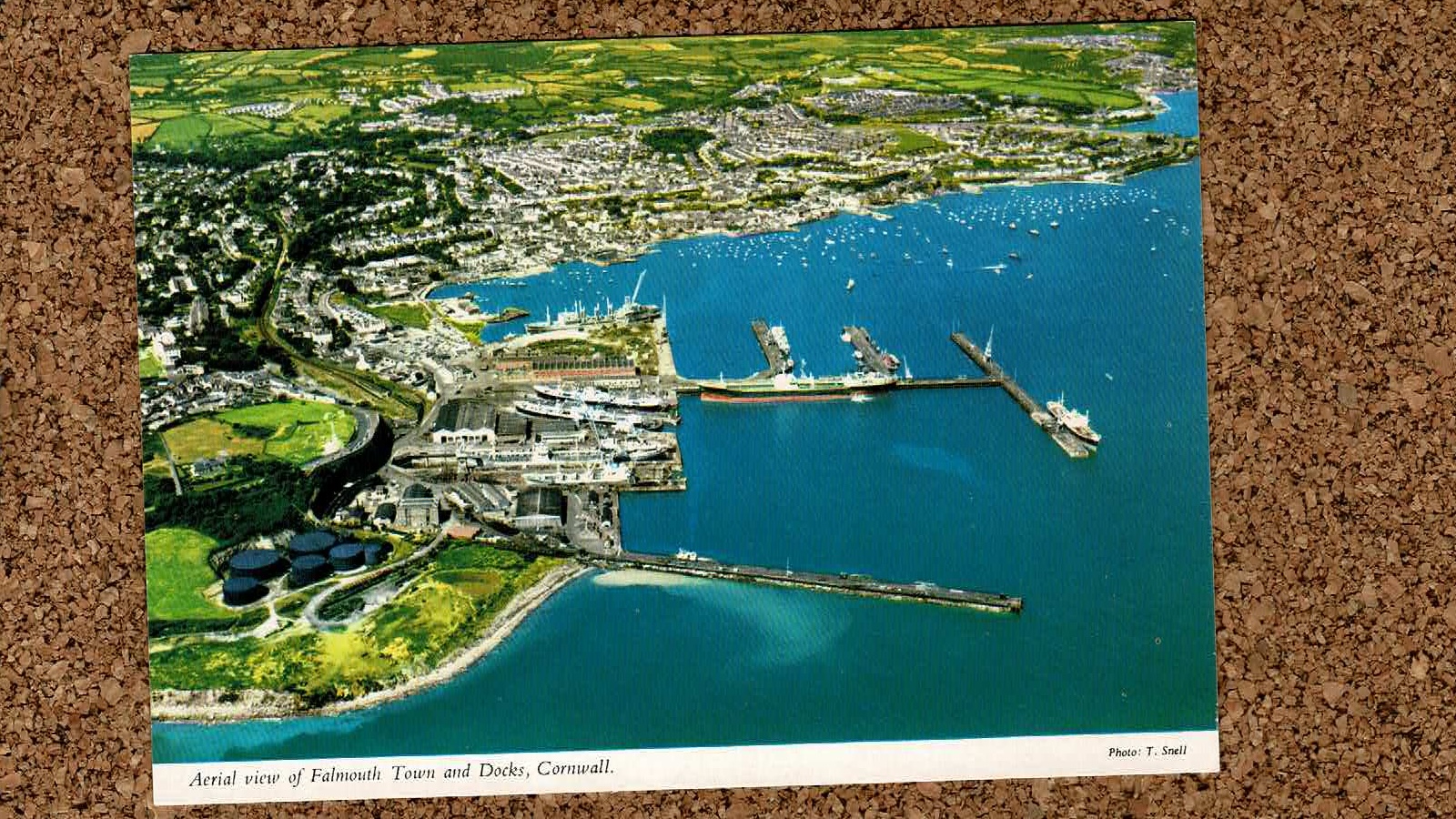
Higher education postcard: Falmouth University
Falmouth is a long way from nearly everywhere else, if you’re travelling by land. This is a very salient fact. It means that if you’re in Falmouth, then Falmouth is where you first look for anything.
And so the Falmouth School of Art, which looks to have started sometime in 1867 or 1868, must have been very welcome to the town and the county.
The classes, which had been held in the municipal offices as part of a school of art and science, had outgrown their space and in 1901 the foundation stone was laid for a new building, in Arwenack Avenue. This would house just the art school.
The observant amongst you will have noticed by now that the postcard is a general view of Falmouth. This is an occupational hazard when trying to find a #HigherEducationPostcard of an institution in a picturesque place, or one with other famous buildings. It is why, for example, its hard to find a postcard of SOAS, when UCL and Senate House are nearby. But, the card does include Arwenack Avenue, on which the new school was located: it is, I think, somewhere in the red circle in the image below:
The school was a private venture, and it was not until 1938 that the local education authority took over running the school. (Needless to say, this is a very unusual situation: pretty much all of the other similar schools I’ve looked at were brought into local authority control in the late 1890 or early 1900s.) The school was initially under the control of the principal of the Truro School of Art: not a merger, but one person running two schools.
In the 1950s the college moved to new premises just up the hill from Arwenack Avenue. This was Kerris Vean, a large house built in 1875. It also had room to expand, and is still part of the university’s Falmouth campus today.
In the 1960s the school had about 120 students, although many of these were part time. This did not prevent it being accepted (after a reassessment) as a suitable location for the National Advisory Council for Art Education’s diploma in art and design, which was the primary qualification available at that time. Teachers included Barbara Hepworth; the school also conducted entrance examinations for the Slade School at UCL and the Royal College of Art. Staff numbers increased to 25, and more space was provided by the local education authority.
In the 1970s the CNAA recognised the school for a BA(Hons) in Fine Art. There was now residential accommodation for 57 students. And as anyone who has ever managed an institution with an art school will recognise, this scale was difficult – lots of space, not many students to fill it, a relatively high number of staff, and tight funding.
The school faced down a threat of closure in 1984, and in 1987 it merged with Cornwall College’s art and design provision to become the Falmouth School of Art and Design. Its range of subjects broadened to include design and journalism, and in 1988 it became a corporation independent of the local authority.
In 1995, recognising the breadth of its provision, the college became Falmouth College of the Arts, offering degrees validated by University of Plymouth. It became University College Falmouth in 2005; took over Dartington College of Art’s provision in 2008, and in 2012 became Falmouth University.
Here’s as always, is a jigsaw of the card. The card has not been posted, so I can’t be sure, but I would guess that it dates from the 1960s.
Why Falmouth University and not the University of Falmouth? I was asked last week whether there was a reason for “University of X” or “X University”. Looking at the legal names of universities in the UK (and some, for example Durham, have a trading name Durham University, and a legal name University of Durham) it seems that the pattern is as follows:
- The norm is “University of X”
- In Wales the default in English is “X University”, perhaps to match the preposition-less pattern in Welsh, where, for example, Cardiff University is Prifysgol Caerdydd (but nota bene University of South Wales, not South Wales University)
- If a university is named after a person or a thing it is “X University” – for example Brunel University
- If the place name is qualified in some way, it is “X University” – for example Buckinghamshire New University, Birmingham City University
- If the place is small, it is “X University” – for example Cranfield University, Keele University
- If the place is a sub-unit of a larger place, it is “X University” – for example Aston University – except when in London – for example University of Greenwich.
Is this a firm set of rules? Probably not, unless the Privy Council office has some tucked away in a file. Is it universally true? Again, no: and one counterexample to the above is Falmouth University. And this is why I chose to do Falmouth this week.
Also, notably, when I shared this analysis on social media, the most sensible response was that I was overthinking it. Which was probably true!
-
Most superintendents satisfied with job, despite the stress and demands
This audio is auto-generated. Please let us know if you have feedback.The school superintendent’s role has grown more complex and demanding over the past five years with unprecedented pressures around funding, staffing, safety and politics, as well as the continuing commitment to students’ academic growth and well-being, a mid-decade survey of superintendents shows.
The survey of 1,095 superintendents, conducted by AASA, The School Superintendents Association, was the first update since the COVID-19 pandemic disrupted in-person learning and caused dips in academic achievement.
It’s also the first survey in AASA’S American Superintendent study series since a record number of school shootings early in the 2020s spawned fears of safety and heightened efforts to safeguard campuses. And that’s all in addition to the emergence of culture wars over books bans and diversity, equity and inclusion programs.
“I think my colleagues would tell you that the civility in communication to public officials plummeted, and I think people just felt that pressure,” said David Law, AASA president and superintendent of Minnesota’s Minnetonka Public School District. Law spoke during a Thursday briefing about the survey results. “This report about how hard the job is, it doesn’t surprise me. It’s a different job.”

David Law is superintendent of Minnesota’s Minnetonka Public School District and president of AASA.
Retrieved from Minnetonka Public Schools on December 04, 2025Despite the challenges and the fact that the vast majority of superintendents reported at least moderate stress levels, a similarly high proportion of respondents said they were satisfied or very satisfied with their current superintendency. Watching students grow and succeed was superintendents’ greatest fulfillment, according to survey results.
Some 89% of superintendents said they were currently satisfied or very satisfied in their job, down slightly from 92% in 2020. Additionally, 59% of respondents said they planned on staying in the superintendency in the next five years. That’s up from 51% in 2010.
AASA’s national decennial studies began a century ago, in 1923. The most recent survey, which was conducted in fall 2024, covered superintendents from 49 states representing rural, suburban and urban districts of various student counts, although 70% of respondents worked in districts with fewer than 3,000 students.
Areas of strengths and challenges
As CEOs of their districts, superintendents have to deal with a broad scope of responsibilities. The survey found that superintendents were most likely to identify their areas of strength as an instructional leader or visionary for their district (40%) and for fostering a positive district and school climate (35%). The least common areas of strength cited were in crisis management (15%) and managing the daily politics of the job (14%).
When asked to pick up to five issues that consume the bulk of their time, most respondents said finance (54%), followed by personnel management (44%), superintendent-board relationships (41%), facility planning and management (41%), and conflict management (39%).
The top two issues that superintendents said most frequently prevented them from doing their core work as an educational leader in the past year were state bureaucracy and mandates (53%) and federal bureaucracy and mandates (40%). Other leading obstacles included social media issues (35%) and political divisions in the community (29%).
When asked to state the biggest problem facing public schools in their district, superintendents most often answered funding, followed by politics and staffing.
Support from communities
A high percentage of superintendents overall said they felt somewhat or very supported by their communities (91%). However, the range varied by district size, with 88% of leaders of districts with fewer than 1,000 students reporting such support, compared to at least 94% at districts enrolling between 3,000 to 24,999 students and those in districts of 50,000 students and more.
One explanation of this trend is that community support in rural districts — where fiscal and human resources are more sparse and where student populations are likely smaller — may be linked “less to symbolic trust and more to the tangible capacity of the district to deliver services,” the report said. On the other hand, while community engagement in urban districts that typically have large student populations often occurs “in a politically charged environment,” those districts tend to have broader advocacy networks and media visibility.
Broken down by race, only 37% of Black superintendents said they felt very supported by their community, compared to 48% of White superintendents. That difference, the report said, “reflects persistent racialized barriers that undermine the legitimacy of leaders of color, particularly when they pursue equity-focused agendas.”
Shawn Joseph, interim superintendent of Maryland’s Prince George’s County Public Schools, said during AASA’s briefing that superintendents and especially district leaders of color “have become targets in these political storms, facing organized resistance and in many cases, threats to their tenure.”
Joseph added that “equity work is no longer quietly debated. It’s, in fact, publicly contested, yet our commitment to fairness, dignity and opportunity must remain unwavering.”
In a notable shift from decades earlier and as a direct result of the pandemic experience, superintendents are now engaging more with their communities, the report said. About 67% engage their communities in advisory or planning activities on at least a monthly basis.
“This is a shift that reflects what we learned in crisis, that trust cannot be episodic,” said Joseph, who is also an assistant professor and co-director of the Urban Superintendent Academy at Howard University. “It has to be consistent, it has to be transparent, and it has to be deeply human.”
AASA attributes increased superintendent engagement with their communities to several factors. First, the pandemic taught superintendents that community trust is vital and must be nurtured continuously. Second, political polarization in education has meant superintendents must engage proactively to keep misinformation from spreading.
Last, the proliferation of digital communication platforms has brought more frequent contact and has given leaders access to families through virtual town halls, webinars and social media, according to the report.
Who is leading districts?
Superintendents remain majority White and male, and on average they are 53 years old, the survey found. But the percentage of women superintendents did jump from 13% in 2000 to 30% in 2025.
Superintendents of color represent 10% of district leaders. Since 2020, the proportion nearly doubled of superintendents who identified as Black or African American or Hispanic/Latinx.
While the diversification of superintendents is a positive trend, the report said both women and people of color remain “dramatically underrepresented” in the superintendency. The report calls for examining the demographics of superintendents in relation to pipelines to district leadership and the job market for superintendents.
“Leaders from underrepresented backgrounds bring essential lived experiences that shape how they understand and respond to the needs of diverse student and teacher populations,” the report said.
Here are other data points from the AASA superintendents survey:
- Nearly 60% of respondents said they had two to eight years of experience in a superintendent role.
- About 75% of superintendents report spending less time with their families.
- The youngest superintendent was 29 years old and the oldest 79.
- Although Hispanic or Latinx superintendents only make up 4% of the superintendent population, they represent 47% of all superintendents leading districts with 51% or more students identified as multilingual learners and 50% of superintendents leading districts with 51% or more students who are immigrants or refugees.
- Women superintendents were more likely than male superintendents to lead districts where more than 51% or more of students were racial or ethnic minorities, eligible for free or reduced-priced lunch or qualified for special education services.
-

One Small Idea Can Have A Big Impact #EdChat
I’ve been very lucky to have been part of many different EdTech Communities over the years. From my time spent with amazing educators at Adobe, Google, Raspberry Pi, Sphero, TED-Ed, and my first EdTech Community, Evernote, I’ve loved how you get what you put into a community. It can be what you need it to be when you want it to be. I’ve taken all of these experiences I use them to help me craft the community experience for educators in the SchoolAI Community.
One of the things I have loved from the different communities was the effort to give the community members a platform to share their story. There is so much we can all learn from each other, but educators are not always given the chance to share or they do not have the ability to attend a conference and share their story. Sometimes the keynote circuit is the same few names and it can be tough to break into those conversations. That’s why I have started the SchoolAI Lightning Talks.
Open to any educator who has an idea worth sharing, I want to give as many educators as possible a chance to share something that matters to them. You can find all of the details here and the submission page here. Do not let “I’m sure everyone already knows this.” or “It probably doesn’t make that big of a difference.” stop you from sharing. Do not let the imposter syndrome take over and prevent you from sharing your idea. If you have any questions, feel free to send me an email at [email protected] or find me on my socials. @TheNerdyTeacher
Hugs and High Fives to everyone!
NP
-

How the Educated Underclass is Already in Crisis
For millions of Americans with college degrees, the headlines about a “possible recession” feel like a cruel joke. While official statistics lag, the lived reality for the educated underclass—those with bachelor’s or advanced degrees who are struggling to maintain stability—is nothing short of an economic depression. Rising costs of living, stagnating wages, and dwindling job security have already reshaped daily life, and many are barely hanging on.
Unemployment figures tell only part of the story. College graduates now make up a record 25% of the unemployed, with white-collar layoffs in tech, finance, and even healthcare rising. Those who are employed are often underemployed, working multiple part-time jobs or in positions that barely require a degree. The promise that a college credential ensures upward mobility is eroding rapidly, leaving a generation of highly educated Americans questioning the value of the very investment that was supposed to secure their future.
Housing costs are skyrocketing, especially in urban centers where jobs are concentrated. Even modest apartments demand incomes far above what many professional graduates earn. Student loan debt compounds the pressure, forcing difficult trade-offs between basic living expenses and debt repayment. For many, “making it” now means moving back in with parents or sharing crowded apartments with friends—situations reminiscent of a pre-adult adolescence prolonged indefinitely.
Meanwhile, inflation eats away at savings. Food prices, healthcare, and transportation costs continue to climb, leaving little room for discretionary spending or emergency funds. The safety net that the previous generation relied on—a stable job, homeownership, a modest retirement plan—is increasingly inaccessible. For the educated underclass, financial precarity has become normalized, even invisible to those who still enjoy some buffer in the broader economy.
The psychological toll is real. Anxiety, depression, and burnout are rampant among highly educated professionals facing underemployment or precarious work conditions. The “American Dream” has shifted from upward mobility to merely surviving, with little room for long-term planning or security.
Policymakers continue to debate whether a recession is coming, but for many, the recession has already arrived. It’s not marked by dramatic market crashes or bold headlines—it is quiet, slow, and insidious, felt in empty savings accounts, missed rent payments, and jobs that fail to match education and ambition. Recognizing this reality is the first step toward meaningful change. Until then, the educated underclass is living through an economic depression, one degree at a time.
-
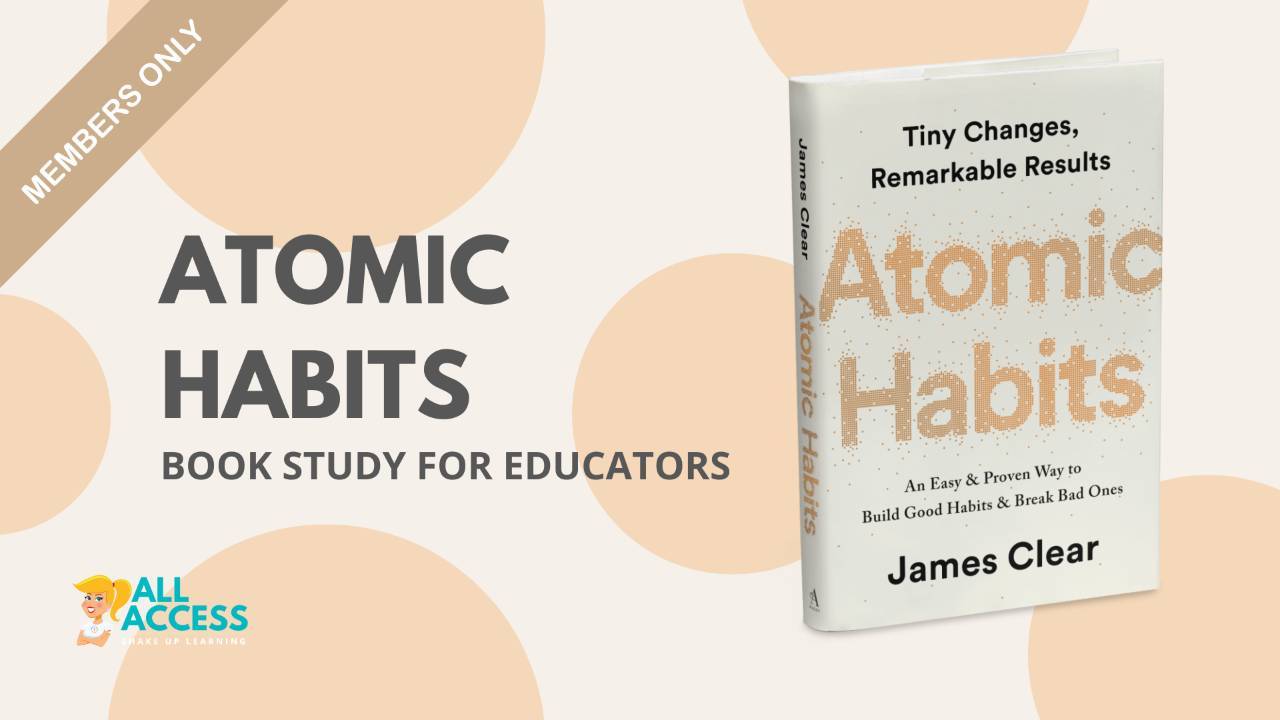
Atomic Habits Book Study
Atomic Habits Book Study for Educators
Join us for a powerful six-week book study of Atomic Habits by James Clear, exclusively for ALL ACCESS Members!
This study will explore how small, consistent habits can lead to big changes in both personal and professional growth. Together, we’ll discuss key takeaways, share insights, and apply strategies from Atomic Habits to build better routines, break unproductive patterns, and create lasting change in our classrooms and lives.
- 📅 Starts January 7
- 🏆 Earn 3 Hours PD Credit
- 🔑 ALL ACCESS Members Only
- ➡️ Get the book here
💡 How It Works:
- Read the assigned chapters each week.
- Participate in asynchronous discussions in the community.
- Reflect on how to apply the book’s insights.
📚 Not a member yet? Join now and get access to the book study, exclusive PD courses, and more!

