Blog

  • Studying abroad at home: why Korean students are choosing US branch campuses in Korea

    Studying abroad at home: why Korean students are choosing US branch campuses in Korea

    by Kyuseok Kim

    In South Korea, education has long been the most powerful route to social mobility and prestige, but a recent study shows how that pursuit is changing. Published in the Asia Pacific Education Review (2025), one of the newest article in transnational education (TNE) research investigates why Korean students are now choosing to study at US branch campuses located inside their own country rather than traveling abroad. Focusing on N University, a US-affiliated institution within the Incheon Global Campus, the study explores how students balance ambition, constraint, and identity in one of the world’s most competitive education systems.

    Korea’s higher education landscape is characterised by rigid hierarchies in which the name of a university often outweighs individual academic or professional ability. Admission to elite institutions such as Seoul National, Korea, and Yonsei University is still viewed as a ticket to success. At the same time, US degrees continue to hold exceptional symbolic power, representing international competence, social status, and career advantage. Yet, for many families, studying abroad is prohibitively expensive, while competition for domestic university places remains intense. The result is that a growing number of students are enrolling in American branch campuses at home, institutions that promise the prestige of a US education without the cost and distance of overseas study.

    To explain this trend, the researchers propose a Trilateral Push–Pull Model. Traditional models of student mobility describe decision-making as a process between two countries or schools: one that pushes students out and another that pulls them in. However, international branch campuses (IBCs) add a third dimension. Korean universities push students away through limited access and rigid hierarchies. US universities attract them with prestige and global capital but are often out of reach financially and logistically. The IBC exists between these poles, offering an American degree and English-language instruction within Korea’s borders. This framework captures how students navigate overlapping pressures from domestic and global systems.

    Drawing on interviews with 21 Korean students, the study reveals several interconnected findings. Many participants viewed the IBC as a second choice, not their first preference but a realistic and strategic option when other routes were blocked. They were attracted by the prestige of American degree, USstyle curriculum (in English), smaller classes, and opportunities for studying at the home campus abroad. At the same time, they expressed anxiety about the ambiguous status of their institution. Several students described N University as “in between”, uncertain whether it was truly American or fully Korean. This ambiguity, they said, made it difficult to explain their school to relatives, peers, or teachers, who were unfamiliar with the branch campus model. In a culture where school reputation carries great weight, such uncertainty caused unease even when students were satisfied with their learning experience.

    The study also underscores the continuing role of family influence and educational aspiration. Many students reported growing up in households where parents believed education was the only reliable path to success and were willing to make sacrifices for English proficiency and global exposure. For these families, IBCs offered a middle ground: a way to obtain a foreign education without leaving home or paying international tuition. Students who attended Korean secondary schools typically saw the IBC as an alternative after failing to gain admission to top domestic universities. Those with international or bilingual school backgrounds viewed it as a substitute for studying abroad, particularly after the COVID-19 pandemic made overseas education less appealing or feasible.

    In both groups, the IBC served as a strategic compromise. It allowed students to maintain a sense of global ambition while avoiding the financial, emotional, and logistical risks of full international mobility. It also provided a form of what sociologist Jongyoung Kim calls global cultural capital: the symbolic value and recognition that come with foreign credentials. By earning an American degree at home, students could claim global status without physically migrating. This pattern illustrates how globalisation in higher education is increasingly taking place within national borders.

    Beyond individual motivations, the study connects these choices to larger demographic and policy challenges. Korea’s declining college-age population and government-imposed tuition freezes have created fierce competition among universities for a shrinking pool of students. In this environment, IBCs serve dual roles: they act as pressure valves that absorb unmet domestic demand and as prestige bridges that connect local students to the symbolic power of American education. However, their long-term sustainability remains uncertain. Many IBCs struggle with limited public visibility, uneven recognition, and questions about academic legitimacy. Unless they establish a clearer institutional identity and stronger integration within the local higher education system, they risk being viewed as peripheral rather than prestigious.

    The research also broadens theoretical understanding of international education. By incorporating the IBC as a third actor in the push–pull framework, the study challenges the assumption that global learning always requires cross-border mobility. It also refines the concept of global cultural capital, showing that students can now accumulate globally valued credentials and symbolic advantage through domestic avenues. In countries like South Korea, where education is deeply tied to social status, this shift represents an important transformation. The global and the local are no longer opposites but increasingly intertwined within the same institutional spaces.

    In conclusion, Korean students’ choices to enroll in US branch campuses reveal a strategic negotiation between aspiration and limitation. These institutions appeal not to those lacking ambition but to those who seek to reconcile global goals with financial and social realities. They reflect a world in which higher education is simultaneously global and local, mobile and immobile. For IBCs to thrive, they must move beyond copying Western models and instead cultivate programs that are meaningful in their local contexts while maintaining international quality.

    This article summarizes the research findings from ‘Choosing a U.S. Branch Campus in Korea: A Case Study of Korean Students’ Decision-Making through the Trilateral Push–Pull Model’ by Kyuseok Kim, Hyunju Lee, and Kiyong Byun, published in the Asia Pacific Education Review (2025).

    Kyuseok Kim is a PhD candidate at Korea University and a Centre Director of IES Seoul.

    Author: SRHE News Blog

    An international learned society, concerned with supporting research and researchers into Higher Education

    Source link

  • Supporting Transfer Student Success Through Data

    Supporting Transfer Student Success Through Data

    Transfer students often experience a range of challenges transitioning from a community college to a four-year institution, including credit loss and feeling like they don’t belong on campus.

    At the University of California, Santa Barbara, 30 percent of incoming students are transfers. More than 90 percent of those transfers come from California community colleges and aspire to complete their degree in two years.

    While many have achieved that goal, they often lacked time to explore campus offerings or felt pressured to complete their degree on an expedited timeline, according to institutional data.

    “Students feel pressure to complete in two years for financial reasons and because that is the expectation they receive regarding four-year graduation,” said Linda Adler-Kassner, associate vice chancellor of teaching and learning. Transfer students said they don’t want to “give up” part of their two years on campus to study away, she said.

    Institutional data also revealed that their academic exploration opportunities were limited, with fewer transfers participating in research or student groups, which are identified as high-impact practices.

    As a result, the university created a new initiative to improve transfer student awareness of on-campus opportunities.

    Getting data: UCSB’s institutional research planning and assessment division conducts an annual new student survey, which collects information on students’ demographic details, academic progress and outside participation or responsibilities. The fall 2024 survey revealed that 26 percent of transfers work for pay more than 20 hours per week; an additional 40 percent work between 10 and 20 hours per week. Forty-four percent of respondents indicated they do not participate in clubs or student groups.

    In 2024, the Office of Teaching and Learning conducted a transfer student climate study to “identify specific areas where the transfer student experience could be more effectively supported,” Adler-Kassner said. The OTL at UCSB houses six units focused on advancing equity and effectively supporting learners.

    The study found that while transfers felt welcomed at UCSB, few were engaging in high-impact practices and many had little space in their schedules for academic exploration, “which leads them to feel stress as they work on a quick graduation timeline,” Adler-Kassner said.

    Put into practice: Based on the results, OTL launched various initiatives to make campus stakeholders aware of transfer student needs and create effective interventions to support their success.

    Among the first was the Transfer Connection Project, which surveys incoming transfer students to identify their interests. OTL team members use that data to match students’ interests with campus resources and generate a personalized letter that outlines where the student can get plugged in on campus. In fall 2025, 558 students received a personal resource guide.

    The data also showed that a majority—more than 60 percent—of transfers sought to enroll in four major programs: communications, economics, psychological and brain sciences, and statistics and data science.

    In turn, OTL leaders developed training support for faculty and teaching assistants working in these majors to implement transfer-focused pedagogies. Staff also facilitate meet-and-greet events for transfers to meet department faculty.

    This work builds on the First Generation and Transfer Scholars Welcome, which UCSB has hosted since 2017. The welcome event includes workshops, a research opportunity fair and facilitated networking to get students engaged early.

    The approach is unique because it is broken into various modules that, when combined, create a holistic approach to student support, Adler-Kassner said.

    Gauging impact: Early data shows the interventions have improved student success.

    Since beginning this work, UCSB transfer retention has grown from 87 percent in 2020 to 94 percent in 2023. Similarly, graduation rates increased 10 percentage points from 2020 to 2024. Adler-Kassner noted that while this data may be correlated with the interventions, it does not necessarily demonstrate causation.

    In addition, the Transfer Student Center reaches about 40 percent of the transfer student population each year, and institutional data shows that those who engage with the center have a four-percentage-point higher retention rate and two-point higher graduation rate than those who don’t.

    Do you have an intervention that might help others promote student success? Tell us about it.

    This article has been updated to correct the share of incoming students that are transfers at UCSB.

    Source link

  • The Meta-Lessons of College (opinion)

    The Meta-Lessons of College (opinion)

    What we learn in school comes in part, and perhaps the smaller part, through the manifest curriculum. We first learn skills—how to read and write and do arithmetic—and then we begin the long process of learning subject matter. This is what school is intended to impart to us. We are taught, in all manner of visible ways, how to do things and what we ought to know.

    From the start, we learn other things as well: how to follow rules, how organizational hierarchies work and how we can be held accountable for misbehavior. We learn, too, what matters to other members of our tribe—individual achievement, success in competition—and what makes some people more important than others. These are elements of the hidden curriculum, or what might be called the meta-lessons of school.

    By the time students get to college, they have already absorbed many such lessons, or they wouldn’t be here at all. But college offers a new set of meta-lessons. These are lessons about knowledge itself: how to assess it, how to identify its varieties, how it’s created. To miss out on these lessons, as can happen, is to miss out on what is most valuable about a college education.

    The meta-lessons of college come with political implications. As political scientists and others have shown, there is a diploma divide in this country. On one side is the largest and most loyal group of Trump supporters: whites without a college degree. On the other side are those with bachelor’s or advanced degrees, who tend to vote Democratic. Clearly, there is something about a college education that makes a difference in political behavior.

    Some analysts have argued that the divide reflects a feeling on the part of non-college-educated whites of being left behind in a high-tech economy. These feelings of disappointment and failure in turn make this group receptive to racist dog whistlesDEI policies are giving undeserving minorities unfair advantages!—used by right-wing politicians. Others have argued that the divide reflects an indoctrination into liberalism that students experience in college.

    Analyses of the diploma divide have been going on for nearly a decade, since soon after Trump’s first election in 2016. Sorting out this body of work would require a separate essay. Here I am proposing only that the divide owes in part to the meta-lessons of college, in that these lessons should, in theory, make people less susceptible to political hucksterism, emotionally manipulative rhetoric and the embrace of simple nostrums as solutions to complex social problems.

    And so it seems worthwhile for pedagogical and civic reasons to put the meta-lessons of college on the table. I identify seven that strike me as crucial. No doubt others’ lists will vary, as will ideas about how much these lessons matter. Yet it seems to me that these lessons, if taken to heart and applied, are what enable college graduates to sort sense from nonsense, fact from fiction and rational argument from demagoguery. Here, then, are the lessons.

    1. Empirical claims are distinct from moral claims. To say, for example, that the death penalty deters capital crimes is to make an empirical claim. It isn’t a matter of opinion. With the right data, we can determine whether this claim is true or not (it’s not). To say the death penalty is wrong is to make a moral claim that must be addressed philosophically. Students who learn how to make this fundamental distinction are less likely to be distracted by philosophical apples when empirical oranges are the issue. Whether revenge feels like justice, they will understand, has no bearing on its practical consequences.
    2. Evidence must be weighed. Arguments gain credence when supported by evidence, especially when it comes to empirical matters. But the importance of assessing the quantity and quality of supporting evidence is less widely appreciated. To the extent that college students learn how to do this—and acquire the inclination to do it even when an argument or analysis is emotionally appealing—they are less likely to be misled by anecdotes, atypical examples or cherry-picked studies that employ weak methods.
    1. Errors often hide in assumptions. An argument can be persuasive because it sounds good and appears to be backed by evidence. Yet it can still be wrong because it starts from false premises. A key meta-lesson in this regard is that it is important to examine the foundations of an argument for logical or empirical cracks that make it unsound. To always ask, “What does this argument take for granted that might be wrong?” is a valuable habit of mind, a habit nurtured in college classrooms where students are taught, likely at the cost of some discomfort, to interrogate their own beliefs.
    2. Logic matters. Poets might want to express the contradictory multitudes they contain, but those who purport to offer serious political analysis must respect logic, the absence of which ought to be discrediting. If your theory of social attraction says birds of a feather flock together, except when opposites attract, you had better find a higher-order principle that reconciles the contradiction or admit that you’re just making stuff up. The meta-lesson that logic matters, again learned through disciplined skepticism, provides at least partial protection against toxic nonsense.
    3. Truth can be elusive, but it is not an illusion. Truth has taken a beating in recent decades under the influence of postmodernist social theories. Even so, it remains possible, unless we abandon the idea of evidence altogether, to have confidence that some empirical claims are true, in the ordinary sense of the term. Students learn this in their subject-matter courses; they learn that research can turn up real facts, that some empirical claims warrant more confidence than others and that some claims are demonstrably wrong. This meta-lesson can help ward off the nihilism—the paralyzing feeling that it is impossible to know what to believe—that often arises in the face of a blizzard of lies.
    1. Expertise is real. In college, students encounter people who have spent years studying, and possibly creating new knowledge about, some aspect of the natural or social world. These people—scientists, scholars—know more about their subject-matter areas than just about anyone else. The meta-lesson, hopefully one that sticks, is that hard-won expertise exists, and while experts might not always be right, they are more reliable sources of analysis than glib pundits and unctuous politicians.
    2. A slogan is not an analysis. Slogans that are useful as rallying cries often deliver no real understanding. “Defund the police” is as useful a guide to crime prevention as “Guns don’t kill people; people kill people” is to addressing the problem of gun violence. Other examples abound. The important meta-lesson is that a useful, sense-making analysis of a complex problem is likely to be complex in itself—and it would be wise, as college students ought to learn, not to forsake complexity in favor of a catchy sound bite.

    The suggestion that these meta-lessons inoculate college graduates against irrationality and unreason stumbles against the fact that college graduates can still succumb to these maladies. It’s hard to know whether this occurs because the lessons were not learned, or if circumstances make it expedient to forget them. I suspect that when well-educated people—the JD Vances and Josh Hawleys of the world—appear not to have learned these lessons, what we’re seeing is a cynical performance in the service of self-interest. The lessons were indeed learned, I further suspect, but are applied perversely, as when the physician becomes a skilled poisoner.

    Nonetheless, the diploma divide is real; a college education, on average, all else being equal, does seem to make people more resistant to misinformation, comforting myths, evidence-free claims about the world, irrational emotional appeals, illogical arguments and outright lies. This is as it should be; it is higher education having the effects it ought to have, effects that can impede authoritarianism. To be sure, college is not the only place where this kind of critical acumen is acquirable. College is just the place best organized to cultivate it.

    In the end, the issue is not the diploma divide. For educators, the issue should be how to do a better job of transmitting the meta-lessons of college, presuming a shared belief in the value of these lessons for the intellectual and civic benefits they can yield. Spotlighting these elements of the “hidden curriculum” of course means they are not hidden at all, and so when critics insist that our job is to teach students how to think, we can say, “Yes, look here: That is exactly what we’re doing.”

    Michael Schwalbe is professor emeritus of sociology at North Carolina State University.

    Source link

  • Student Success and Working-Class Students: Whose Success is it Anyway? 

    Student Success and Working-Class Students: Whose Success is it Anyway? 

    This blog was kindly authored by Max Collins, a student at the University of Sheffield and Jon Down, Director of Development at Grit Breakthrough Programmes 

    A lot is made of higher education being a driver of social mobility, a route for students from working-class backgrounds to achieve labour market success and higher earnings. But, at the same time, many argue that this view is at odds with how students think about the value of their education.  

    The student-led evaluation of the University of Sheffield Ambition Programme, in which Grit was a delivery partner, tells us that this is not how working-class students see it at all. Funded by the Law Family Charitable Foundation, the programme aims to support the success of young men from pre-16 through to graduation and beyond.  

    For some, being at university is less about personal success, more about what it means for their family. Students interviewed by the evaluation team talked about how:  

    success is less about my career or actual achievements. It’s more about my family…  guiding my younger siblings into higher education.   

    For others it’s about taking the opportunities that run alongside the academic experience:  

    At the end of the day a degree is a piece of paper to get to you into a field of work but the opportunities are what makes a degree… for me it’s definitely the wider opportunities. 

    Personal growth and personal satisfaction are also significant indicators of success. Success is: 

    Proving that I could do it. My parents didn’t expect me to go to uni. I wasn’t ever a person who was getting straight As or was the smartest in the class… no one ever thought I was going to go into higher education. Even I didn’t. 

    And it comes with  

    the process and the journey, what you learn from different situations and experiences. 

    Much of this mirrors what employers say about the priorities of new graduates in the workplace.  As one student said:  

    Success is more about the satisfaction you feel at the end of the day, your work-life balance and just feeling like you’re making a difference rather than the financial (although obviously the financial has an impact). 

    Underpinning the conventional, narrow take on what success should look like is a Social Mobility narrative stuck in deficit mode. It is one where working-class pupils at school need to be mended, to be fixed, so they can fit in at university and, ultimately, the graduate work place. They must conceal their identity to successfully navigate the world of Higher Education and a graduate career. It is a narrative that says working-class students need to change – economically, socially, culturally – if they are to succeed: https://wonkhe.com/blogs/working-class-students-feel-alienated-from-their-creative-arts-degrees-heres-how-to-help/

    But, once again, the evaluation of the Ambition programme suggests that this is not how working-class students see things. While the students freely acknowledge the struggles they have had with belonging, with imposter syndrome, with the stigma that comes with a working-class accent, they also describe making connections across the classes: 

    When you’re from a working-class background, you don’t really talk to people of different backgrounds, but the programme has provided a different approach. So now I speak with people who’ve had an upper-class background. I’ve got a lot of international student friends and I’ve learned a lot from them. 

    How they have found belonging: 

    I feel like I belong at uni more than I thought I would because in the programme I immediately met people with a similar background to me…  

    How they got past feelings of stigma: 

    I did feel a bit hesitant, especially coming from Rotherham… literally everyone I met sounds like the Queen’s English, that everyone’s quite posh except me… but once you get to know everyone, you change your opinion and perception of it.  

    Success for working-class students, then, does not have to mean a transformation of identity, rejecting who you are and where you have come from. It’s not about conforming to an alien aspiration. Success is a reframing, on each individual student’s own terms, of their expectations for themselves and their future lives. It can mean a myriad of different things, but success doesn’t have to mean leaving your old self, your family, your community behind.  

    In times when there are significant questions about whether young people will be as wealthy, healthy and happy as their parents, when there are increasing debates about the value of a university education, isn’t it time for universities to expand their definition of success to what feels right and true, rather than to what extent students conform to somebody else’s expectations? 

    So, for the working-class students on our programmes, success might be about the contribution they make to their community or the next generation (the relative values of the pay of teachers and academics has been eroded significantly in recent years but few would argue that these are not a socially valuable and important roles). It might be about their happiness, fulfilment, job satisfaction and quality of life. It might be about finding new ways to live in the world around them. 

    As the old economic certainties are called into question, universities need to find new ways of measuring success beyond those that focus on earning potential and social status. They could start by making more use of questions from Graduate Outcomes Survey around well being and satisfaction. And, rather than being simply a snapshot in time, the Survey could look at the broader graduate journey.  

    For example, alumni can give a much richer picture of what success means in the long term. Case studies and narratives of life journeys help us understand how success means different things at different times. Where success for working-class students means returning to or staying in the communities where they were brought up, instead of being part of the flight to the big cities, then we might capture the economic impact on the prosperity of a local area. 

    In our programmes, we have seen how, with the right mixture of support, challenge and encouragement, working-class students come to define success on their own terms. It becomes an experience rooted in their own selves. After all, whose success is it anyway?


    Source link

  • Scooping Up Adulting and the Benefits of Being Curious – Teaching in Higher Ed

    Scooping Up Adulting and the Benefits of Being Curious – Teaching in Higher Ed

    My first year or two after graduating from college, I kept wanting there to be some instruction book that would teach you how to do all the lessons you somehow had missed in life thus far that it seemed like people should know. Today, young people would refer to this body of knowledge and skills as “adulting,” I think. I’m still wishing I had the magical powers that I witness only on the internet of those people who are able to meal plan effectively and sustainably (as in do it week in and week out). I’ll do it like once and then be so exhausted by the process that I won’t try again until like three years later.

    It still amuses me how this yet-to-be-discovered curriculum evades me. When you think you have something figured out, change emerges, and you’re right back in a liminal space. Jarche writes:

    The Cynefin framework can help us connect work and learning, especially for emergent and novel practices, for which we do not have good or best practices known in advance.

    Speaking of instructions: Will I ever live to see the day when I don’t need to look up the pronunciation of Cynefin each time I run across it, yet again? I’ve been in the field of learning my whole life, though started getting paid for it at the age of 14 and a half, when I first started working and was quickly asked to train other people how to scoop ice cream, decorate cakes, clean the store, and so on at the local Baskin Robbins. It wasn’t that complicated. Sweeping the floors looked the same day-to-day, Even when someone requested a new cake design, it was essentially tracing on plastic wrap and didn’t require new ways of thinking.

    Instead of step-by-step actions, many of the challenges I navigate today at work are complex. I was once selected to be the scholar in residence for the University of Michigan Dearborn specifically because I wasn’t an “expert” (nor did I claim to be one). The role was to explore artificial intelligence in higher education. The team who hired me said it was specifically my curiosity that was what made them think I would be an effective person to help them explore the various perspectives people hold without acting as if there was some easy way to step-by-step figure out exactly what needed to happen.

    Jarche writes:

    In a crisis it is important to act but even more important to learn as we take action.

    This “as we are going” learning is only possible with intentionality. It’s otherwise all to easy to succumb to the tyranny of the urgent and neglect the humility required to continuously learn from what is emerging. We are invited to think of an example of each of the following, which I will attempt to do:

    1. formal community – at my work, we have our Academic Leadership Council (ALC)
    2. informal community – a group of friends have a text chat, where we share each others joys and sorrows, as well as recommend podcasts, articles, tv shows, books, and so on with each other
    3. open knowledge network – I’m thinking about communities that arise from clever (intentional) hashtag use, such as ones related to the disability movement, or Black lives matter, etc.
    4. formal knowledge hub – so many universities have resources to share with faculty related to teaching + learning, like the University of Virginia Teaching Hub

    Source link

  • Game On: Competitive Gamification in Diverse ESL Classrooms – Faculty Focus

    Game On: Competitive Gamification in Diverse ESL Classrooms – Faculty Focus

    Source link

  • Engaging with Intentionality and Curiosity – Teaching in Higher Ed

    Engaging with Intentionality and Curiosity – Teaching in Higher Ed

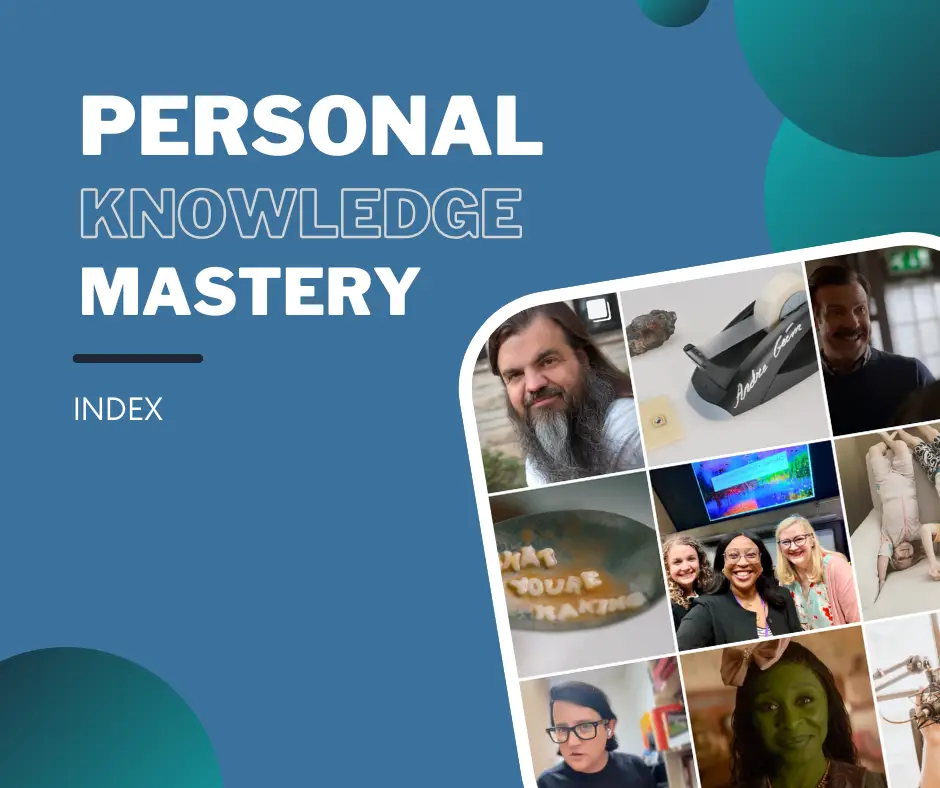
    Thus begins week two of Harold Jarche’s Personal Knowledge Mastery workshop. This week’s schedule already feels overly crowded, when my brain may best begin to be described as “fuzzy”… Hardly an opportunity for much sense-making. Still, I noted something as I considered some of the ways that Jarche says are the practices that PKM is built upon. He gives the following examples:

    – narrating our work
    – adding value before sharing information
    – helping make our networks smarter and more resilient
    – network weaving and closing triangles
    – seeking diverse perspectives
    – sharing half-baked ideas

    I instantly thought of the tension between wanting to “add value before sharing information” and “sharing half-baked ideas”. I’ve almost always found incredible things happening in those times when I feel most vulnerable in sharing the unfinished work, while simultaneously wanting the exchange to be worth someone’s time/attention.

    My favorite LinkedIn thread of all time (as least as of October 13, 2025) started with me saying that I had needed to get these custom card decks printed before creating the game structure that they would be played on. As in I needed to create a game after having ordered the cards that the game would be made up of… It was then in my sense-making (and writing on LinkedIn) that I realized I wasn’t even sure that I knew what a game was. And then, the beauty of the waterfall of goodness that commenced was amazing.

    Harold suggested we look at who he follows on Mastodon, as we reflect on what our purpose and aims might be there. I noticed:

    1. More than a handful of computer programers. While not a programmer, myself, I do enjoy learning from geeky people.
    2. Primarily individuals and not as many organizations or group entities
    3. Many use what appear to be their “real” names
    4. A few have “request to follow” and I’m wondering what the etiquette is with that.
    5. Found a number of people I recognized from elsewhere, but hadn’t yet “found” on Mastodon
    6. Lots of varieties in profile picture approaches. Some regular photos; others more sketch-drawings; others not people at all)
    7. I try not to be about the numbers, but it depresses me to have gone from 8k on Twitter to 259 on Mastodon. Yes, I know it is quality, not quantity. Still… I won’t try to pretend it doesn’t bum me out a bit.
    8. Lots of personality comes out on these profiles… sense of humor… believe in something that matters to them… good trouble…
    9. Lots of environmental people/professions, which reminds me of a post Harold wrote about wanting differing opinions, but not “both-sides-isms”… I just looked to see if I could find this post in my bookmarks and have come up empty. It’s a bummer, too, because he wanted to hear from people who generally agreed with the 97% of the world’s scientists who agree that climate change is occurring and is an issue, but to hear from people who think differently about what to then do about it.
    10. Wait. Robin DeRosa is actively posting on Mastodon. My goodness, have I missed her on social media.


    Source link

  • Graduate jobs and recruitment reality

    Graduate jobs and recruitment reality

    Despite frequent headlines warning of large declines in graduate jobs, the Institute of Student Employers (ISE) Student Recruitment Survey 2025 shows a less severe and more nuanced reality of the entry-level recruitment market.

    Our survey captures recruitment trends from 155 ISE employer members who received over 1.8m job applications for over 31,000 early careers roles. For these employers, graduate hiring has fallen by eight per cent this year, marking the weakest year for graduate hiring since the 12 per cent decline during the pandemic in 2020.

    Although the ISE represents larger employers who recruit graduates onto formal training programmes, broader labour market data also shows reduced hiring which may impact students who take jobs that may not be part of a formal training programme. For example, data from the Recruitment and Employment Confederation shows a 13 per cent drop in all job adverts from July 2024 to July 2025.

    However, this trend varies from sector to sector and employer to employer. ISE’s survey found that while 42 per cent of employers reduced graduate hiring levels, 25 per cent of employers maintained hiring levels – and 33 per cent reported an increase.

    Looking ahead to 2025–26, we expect graduate recruitment to remain challenging as employers forecast an overall seven per cent reduction in graduate hiring, driven by sharp declines for a small number of large employers.

    Rebalancing early talent programmes

    Graduate programmes aren’t the only route into the UK’s top employers and investment in apprenticeships has been growing since the levy was introduced. ISE found employers are rebalancing early careers programmes with more focus on apprenticeships to meet skills demands.

    While graduate hiring declined this year, school and college leaver hiring increased by eight per cent. Graduates still outnumber apprentices and therefore the overall entry-level job market is down five per cent.

    This increase reflects the role of large levy-paying employers with greater resources to develop and manage apprenticeship schemes, bucking the wider market trend. Government data reports only a 0.6 per cent rise in apprenticeship starts among 19- to 24-year-olds over the past year.

    The ratio of graduates to school or college leaver hiring (which is mostly apprenticeships) among ISE members who recruit students onto both pathways is 1.8 graduates for every school/college leaver hire, down from 2.3 last year. This trend looks set to continue into 2025–26 with the ratio is forecast to decline further to 1.6:1.

    Despite this rebalancing, graduate hires still outnumber school and college leaver hires, and although the jobs market remains challenging, graduates remain a core element of early talent strategies.

    AI impact

    AI is undoubtedly reshaping the early careers recruitment sector. However, no one is telling us that AI is replacing entry level jobs (yet).

    As students increasingly use AI to craft job applications, they also submit a greater number of applications, driving up competition for each role. The application to vacancy ratio remains at a historic high of 140 applications per vacancy.

    The authenticity of applications from “AI-enabled candidates” has also emerged as a key employer concern. In fact, an arms race appears to be underway: only 15 per cent of employers said they never suspected or identified candidates cheating in assessments, and 79 per cent of employers are redesigning or reviewing their recruitment processes in response to AI developments.

    Currently around half of employers allow candidates to use AI tools during the recruitment process, primarily for drafting covering letters and CVs and completing online application questions. Only a small proportion of employers (10 per cent) have banned the use of AI or introduced technical measures to prevent its use.

    Our data also shows that 45 per cent of employers had not provided applicants with any guidance on when it was or was not appropriate to use AI. This guidance may support students in navigating their transition into a graduate role and help employers manage their application volumes.

    But while students are embracing AI in their job search, the use of AI by recruiters is currently limited, but likely to grow. While over half of employers use automated systems to fully manage some aspects of testing, AI use is very rare. Employers are most likely to use AI in gamified assessments, but even here the adoption rate is only 15 per cent. Looking ahead to the next five years, more than half of employers expect to use AI in their recruitment processes, and 70 per cent anticipate increasing their use of automation.

    Getting ahead

    The graduate job market is challenging, reflecting the broader economic climate – but it is not without opportunity.

    Students looking to get ahead should remain cautious about their prospects in their chosen career, but the graduate job market is always competitive. A job search should be treated just like a job. Applications should be authentic, considered and tailored, with a focus on quality not quantity. And work experience remains key, with employers reporting former interns better equipped with the skills that they need.

    For universities, these findings highlight the importance of preparing students for a more complex and competitive graduate market through close collaboration with employers.

    As employers rebalance early talent programmes and adapt to the rise of AI, institutions have a key role to play in equipping students with practical experience, adaptability, and digital literacy.

    Strengthening partnerships with employers, embedding employability across the curriculum, and helping students navigate responsible AI use will be critical to ensuring graduates continue to thrive in a shifting recruitment market.

    Source link

  • Preparing students for the world of work means embracing an AI-positive culture

    Preparing students for the world of work means embracing an AI-positive culture

    When ChatGPT was released in November 2022, it sent shockwaves through higher education.

    In response, universities moved at pace during the first half of 2023 to develop policy and good practice guidance for staff and students on appropriate use of GenAI for education purposes; the Russell Group’s Principles on the use of generative AI tools in education are particularly noteworthy. Developments since, however, have been fairly sluggish by comparison.

    The sector is still very much at an exploratory phase of development: funding pilots, individual staff using AI tools for formative learning and assessment, baseline studies of practice, student and staff support, understanding of tools’ functionality and utilisation etc. The result is a patchwork of practice not coherent strategy.

    Yet AI literacy is one of the fastest growing skills demanded by industry leaders. In a survey of 500 business leaders from organisations in the US and UK, over two-thirds respondents considered it essential for day-to-day work. Within AI literacy, demand for foundation skills such as understanding AI-related concepts, being able to prompt outputs and identify use cases surpassed demand for advanced skills such as developing AI systems.

    Students understand this too. In HEPI’s Student generative AI survey 2025 67 per cent of student respondents felt that it was essential to understand and use AI to be successful in the workplace whereas only 36 per cent felt they had received AI skill-specific support from their institution.

    There is a resulting gap between universities’ current support provision and the needs of industry/ business which presents a significant risk.

    Co-creation for AI literacy

    AI literacy for students includes defining AI literacy, designing courses aligned with identified learning outcomes, and assessment of those outcomes.

    The higher education sector has a good understanding of AI literacy at a cross disciplinary level articulated through several AI literacy frameworks. For example, UNESCO’s AI Competency Framework for Students or the Open University in the UK’s own framework. However, most universities have yet to articulate nuanced discipline-specific definitions of AI literacy beyond specialist AI-related subjects.

    Assessment and AI continues to be a critical challenge. Introducing AI tools in the classroom to enhance student learning and formatively assess students is fairly commonplace, however, summative assessment of students’ effective use of AI is much less so. Such “authentic assessments” are essential if we are serious about adequately preparing our students for the future world of work. Much of the negative discourse around AI in pedagogy has been around academic integrity and concerns that students’ critical thinking is being stifled. But there is a different way to think about generative AI.

    Co-creation between staff and students is a well-established principle for modern higher education pedagogy; there are benefits for both students and educators such as deeper engagement, shared sense of ownership and enhanced learning outcomes. Co-creation in the age of AI now involves three co-creators: students, educators and AI.

    Effective adoption and implementation of AI offers a range of benefits specific to students, specific to educators and a range of mutual benefits. For example, AI in conjunction with educators, offers the potential for significantly enhancing the personalisation of students’ experience on an on-demand basis regardless of the time of day. AI can also greatly assist with assessment processes such as marking turnaround times and enhanced consistency of feedback to students. AI also allows staff greater data-driven insights for example into students at risk of non-progression, areas where students performed well or struggled in assessments allowing targeted follow up support.

    There is a wealth of opportunity for innovation and scholarship as the potential of co-creation and quality enhancement involving staff, students and AI is in its infancy and technology continues to evolve at pace.

    Nurturing an AI-positive culture

    At Queen Mary University of London, we are funding various AI in education pilots, offering staff development programmes, student-led activities and through our new Centre for Excellence in AI Education, we are embedding AI meaningfully across disciplines. Successfully embedding AI within university policy and practice across the breadth of operations of the institution (education, research and professional practice), requires an AI-positive culture.

    Adoption of AI that aligns with the University’s values and strategy is key. It should be an enabler rather than some kind of add-on. Visible executive leadership for AI is critical, supported by effective use of existing champions within schools and faculties, professional services and the student body to harness expertise, provide support and build capacity. In some disciplines, our students may even be our leading institutional AI experts.

    Successful engagement and partnership working with industry, business and alumni is key to ensure our graduates continue to have the necessary skills, knowledge and AI literacy to achieve success in the developing workplace.

    There is no escaping the fact that embedding AI within all aspects of a university’s operations requires significant investment in terms of technology but also its people. In our experience, providing practical support through CPD, case studies, multimedia storytelling etc whilst ensuring space for debate are essential for a vibrant, evolving community of practice.

    A key challenge is trying to maintain oversight and co-ordinate activities in large complex institutions in a field that is evolving rapidly. Providing the necessary scaffolding in terms of strategy and policy, regulatory compliance and appropriate infrastructure whilst ensuring there is sufficient flexibility to allow agility and encourage innovation is another key factor for an AI-positive culture to thrive.

    AI is reshaping society and building an AI-positive culture is central to the future of higher education. Through strategic clarity and cultural readiness, universities need to effectively harness AI to enhance student learning, support staff, improve productivity and prepare students for a changing world.

    Source link

  • Sydney Uni denied more international students – Campus Review

    Sydney Uni denied more international students – Campus Review

    Australia is set to welcome 160,000 overseas students next year after the education minister revealed which universities will get the largest number of international enrolments.

    Please login below to view content or subscribe now.

    Membership Login

    Source link