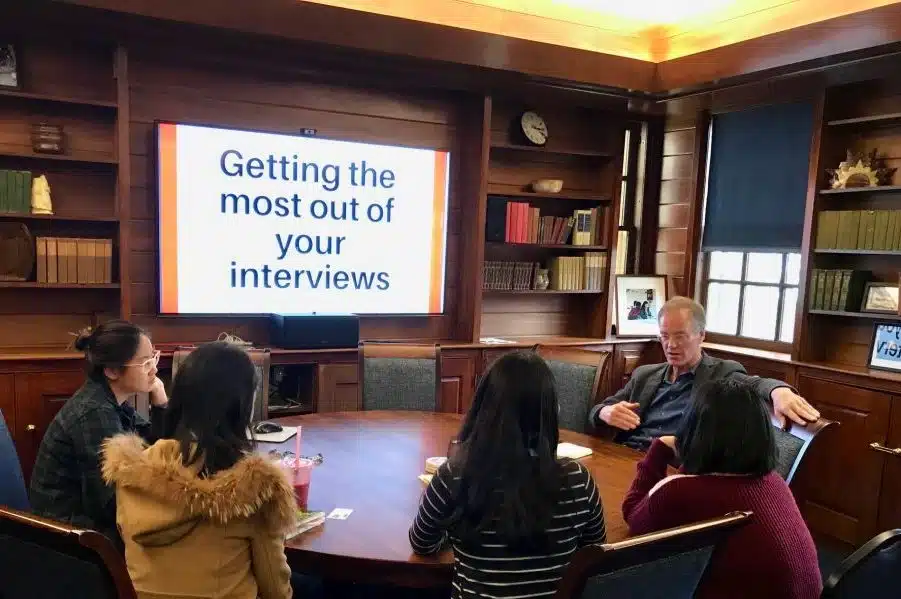
Back in 2020, during the height of the Covid epidemic, high school students in the U.S. state of Connecticut sat down with News Decoder founder Nelson Graves to explore a number of thorny topics that ranged from the death penalty to whether animals should be kept in zoos.
The students in “American Voices & Choices: Ethics in Modern Society” at Westover School had been working with News Decoder since the start of that academic year, mastering the process we call Pitch, Report, Draft and Revise — or PRDR — to identify topical issues at the intersection of ethics and public policy.
They pitched ideas they wanted to report on: teen health; police brutality; abortion; economic privilege in the environmental movement; the risks of experimental vaccines; the impact of alcohol on youth.
Later, each student received detailed feedback from a News Decoder editor, aimed at helping them narrow their research and produce original reporting.
Westover was an early News Decoder school partner. Since our founding 10 years ago, News Decoder has worked with high school and university students in 89 schools across 23 countries.
Decoding news in school
Teachers have used us as part of their course curricula, as extra credit assignments and as standalone learning opportunities for their students.
At Realgymnasium Rämibühl Zürich in Switzerland, teacher Martin Bott brings News Decoder in each year. In one weeklong workshop, students produced podcasts. Over five days, they pitched News Decoder stories about a problem they identified in their local communities, identified an expert to interview, found how that problem was relevant to people in other countries and then wrote a podcast script, revised it and recorded it. “[News Decoder] enabled me to do a few projects which really open up perspectives for the students, give them a taste of life beyond the classroom and of the world of journalism,” Bott said.
In another workshop for RGZH, News Decoder turned students into “foreign correspondents.” They were tasked with finding stories in Zurich that people in other countries would find interesting. Like the students in the podcasting workshop, they then found an expert to interview, wrote a draft and revised it with the goal of publishing it on News Decoder.
One student in the workshop noticed a demonstration of people with dogs and got up the nerve to talk to one of them. They were from an organization that rescued Spanish greyhounds and she decided it would be a good idea for a News Decoder story. The story she wrote ended up as one of News Decoder’s most-read stories of all time.
Not only have Bott’s students been able to publish stories on News Decoder, many of these stories, including the article about the greyhounds, have won awards in our twice yearly global storytelling competition.
“We’ve been delighted to get so many of those stories published on News Decoder,” Bott said. “That’s very, very motivating for the students. And it’s a wonderful learning process for them because they realise it’s not just about school rules and so on out there.”
Challenging students to do more
Bott said that working with professionals at News Decoder gets the students to step up. “When you’re a journalist, you’ve got a responsibility,” he said. “That’s something we’ve been able to talk about with journalists who’ve met us from various parts of the world through News Decoder. And you’ve got real pressure as well. And they’re not, I think they’re not quite used to that. So it really opens their eyes.”
At The Hewitt School in New York, 15 teens at the all-girls school meet once a month as a club. They read and discuss News Decoder stories and pitch their own stories. They also prepare for a cross-border webinar; each year they join with students from a News Decoder partner school in another country, and decide with those students on a topic to explore.
They then research the topic, interview experts and come together with the students from the other school to present their findings live in a video conference before an audience of people from the two schools.
In 2024, students from The Thacher School in California worked with peers at the European School of Brussels II on a webinar on consumerism and the human impacts of climate change.
Russell Spinney is faculty adviser for News Decoder at Thacher. “The webinars really were kind of ways just to get to know each other, discover that we actually do have some common interests. But not only that, that we also have problems that are similar,” he said.
“News Decoder’s workshops,” he said, “get students to think of ways to communicate their research beyond the classroom and connect with what’s going on in the world.” News Decoder has partnered schools this way in some 50 school-school webinars.
The Trump administration is soon expected to propose a plan that would cap loans for a number of advanced degrees—including master’s and doctoral degrees in nursing—and it’s gone viral on social media.
From TikTok to Instagram, to local news headlines, the plan set off a storm of online criticism as influencers and advocacy groups take issue with the supposed declassification of certain degrees. But defining programs as professional or graduate isn’t a debate about social prestige or cultural characterization; it’s a debate about access to student loans, and now the Education Department is saying it’s time to “set the record straight.”
“Certain progressive voices have been fear mongering about the Department of Education supposedly excluding nursing degrees from being eligible for graduate student loans,” the department said in a news release Monday. “This is misinformation.”
The commentators are concerned about an upcoming federal rule, prompted by Congress’s One Big Beautiful Bill Act, that could limit student loan access depending on what post-baccalaureate program a student enrolls in. Certain advanced degrees like dentistry, law or a masters in divinity will be eligible for higher student loans. (An advisory committee approved a draft of the rule in early November, which is slated to be formally proposed on the Federal Register in early 2026.)
Inside Higher Ed has been reporting on the new loan limits for months and closely followed the negotiations over which programs should be considered as professional. So, here’s what you need to know about how the loan limits really work.
Graduate v. Professional Is a Technical Term
Many public critics of the proposal argue that not considering careers like nursing, speech pathology, teaching and social work as professionals would be a disrespectful blow to the dignity of students, many of whom are women, and the perceived value of the pathways they are pursuing. Some have even made uninformed suggestions that this could interfere with a students’ ability to gain licensure or a job after graduation. But those arguments imply that the terms have to do with a student’s level of competency or the capacity of a degree program, which they don’t.
Starting July 2026, “professional” students will be eligible for 50K a year in federal loans, while “nonprofessional” students $20,500. Coincidence that the fields chosen to get less than half the support are predominantly female? 🤔 ETA: I know I forgot some degrees, especially public health. So sorry for the oversight, 😥 should have been at the top of the list after the pandem¡c.
Instead, the department would use the labels of professional and graduate, as defined in the department’s draft rule, to determine how much students can borrow.
Here’s how that will work. If a degree falls in one of the 11 main categories deemed professional, a student pursuing it can take out up to $50,000 a year for four years or $200,000 total. Meanwhile, a student in any other graduate degree program can only borrow $20,500 per year or $100,000.
The lifelong limit for all borrowers is $257,500 and that includes any loans from a bachelor’s degree. So, if a student were to pursue both a Master’s in public health and a medical degree, or any other combination of degrees from the two categories, they would not be able to combine the loan limits to access $300,000 total.
Before the One Big Beautiful Bill Act, students in any post-baccalaureate program could borrow up to the cost of attendance through a program known as Grad PLUS. Students in a master’s or doctoral program who already took out a Grad PLUS loan prior to July 1, 2026 will maintain access to loans for up to the full cost of attendance as long as they stay within the same program, under the draft plan.
And prior to the legislation, the term professional had little substantial meaning. The federal definition in the Higher Education Act served more as a guideline for colleges as they decided whether to self-identify their doctoral programs as professional and to distinguish between degrees that led to a career in the field or in academia. Master’s degrees, like a master’s of science in nursing, had no reason to call themselves professional.
It’s not clear how the loan caps will affect students. Critics of the plan argue they’ll make financing education more difficult and lead to a shortage of employees, and some research has suggested that students will have to turn to private loans to pay for the program. However, suggesting that certain job titles are being “declassified” or will “no longer” be deemed credible is misleading.
So, the real question then becomes which programs count as professional and how did the Trump administration decide that definition?
Currently, 11 main degrees would be considered professional under the draft rule. Those degrees, almost all of which are doctoral, include: medicine, osteopathic medicine, podiatry, chiropractic, optometry, pharmacy, dentistry, veterinary medicine, law, theology, and clinical psychology. All but one—clinical psychology—were noted in the HEA definition.
Clinical psychology was added during the negotiating process, which wrapped up in early November. One member of the negotiating committee argued that there was a high demand for medical providers to treat patients with mental health challenges, particularly veterans diagnosed with PTSD.
Similar arguments were made for other health care roles like nurses, audiologists and occupational therapists and some committee members warned that adding one category and not others could make the proposal vulnerable to legal challenges. But the Trump administration wanted to keep the new legal definition almost as narrow as possible.
Multiple sources familiar with the negotiation process told Inside Higher Ed that committee members warned the department that certain industry groups would push back.
“I was absolutely expecting something like this,” one source said. “The only question was which profession would break through. But among the politically savvy people I talked to we were betting nurses.”
Why Did ED Define Professional This Way?
Education Department officials repeatedly said during the negotiations that the narrow definition reflected Congress’s intent—to limit federal spending on graduate student loans.
Between 2000 and 2020, the number of Americans who had taken out federal student loans doubled from about 21 million to about 45 million and the amount they owed skyrocketed from $387 billion to $1.8 trillion, according to a 2024 report from the Brookings Institute, a nonpartisan D.C. think tank.
And research from multiple sources shows that much of that increase in debt can be traced back to graduate students. A 2023 report from the Department of Education showed that while the amount of undergraduate loans decreased between 2010 and 2021, the amount of graduate student loans steadily grew. And though individual graduate students only make up about 21 percent of all borrowers, they could soon be responsible for the majority of all outstanding debt.
Another study from the Georgetown Center on Education and the Workforce shows that between 2000 and 2024, the median net tuition and fees among graduate degree programs have more than tripled and the median debt principal among graduate borrowers has grown from $34,000 to $50,000.
The Trump administration and Republicans on Capitol Hill say that results from a lack of limits on federal loans. They argue that with essentially unlimited graduate loans, colleges and universities have no incentive to keep costs low and students are convinced to take out more debt than they can handle. By ending Grad PLUS and limiting larger loans to a narrow group of degrees, they say, the goal is to drive down college costs and lower government spending.
“Placing a cap on loans will push the remaining graduate nursing programs to reduce their program costs, ensuring that nurses will not be saddled with unmanageable student loan debt,” the department’s fact sheet noted.
What Consequences Could It Cause?
But the online critics and other advocates question whether the loan caps will actually reduce student debt and drive down college costs.
They are worried that instead of lowering college costs, it will force more students—particularly low-income, first generation students and students of color—to depend on the private loan market.
For many of those borrowers, depending on private lenders could mean higher interest rates and more debt to be paid off. But some, especially those with low credit scores or no credit history, might not be able to access any loan and then wouldn’t be able to pursue certain degrees.
Critics also argue that the loan cap will not only limit opportunities for socioeconomic mobility, but also cause workforce shortages in high-demand, high-cost careers such as nursing, physical therapy and audiology as well as high-demand, low-return careers such as social work and education.
@addieruckman The US Department of Education is considering new rules that would significantly change the definition of what is deemed a “professional degree,” affecting graduate programs and potentially capping federal loan amounts for those not meeting the new definition. This debate over which programs qualify for “professional” status could likely impact students’ access and ability to afford their education. What we do is so important, even if the government doesn’t recognize it!! #departmentofeducation#slp#slpsoftiktok#CapCut♬ original sound – casey
“At a time when healthcare in our country faces a historic nurse shortage and rising demands, limiting nurses’ access to funding for graduate education threatens the very foundation of patient care,” said Jennifer Mensik Kennedy, president of the American Nurses Association, which is a vocal critic of the draft rule. “In many communities across the country, particularly in rural and underserved areas, advanced practice registered nurses ensure access to essential, high-quality care that would otherwise be unavailable.”
The Education Department countered that internal data indicates 95 percent of nursing students borrow below the $20,500 annual loan limit and wouldn’t be affected by the new cap. They also added that this loan cap only applies to post-baccalaureate degrees; about 80 percent of the nursing workforce just has an associate’s degree in nursing or a bachelor’s of science in nursing—both of which can lead to certification as a registered nurse.
The department’s proposal could still be amended before it takes effect. The public will have at least 30 days to comment on the plan once it’s posted to the Federal Register. After the public comment period ends, ED officials will have to review and respond to the comments before issuing a final rule. But most higher ed experts don’t expect anything in the proposal to change no matter how many critiques ED receives.
After that, Congress could still make changes to the law or a new administration could opt to rewrite the definition. But that would take time and likely more Democrats in office, so significant change isn’t anticipated any time soon.
Indiana’s new Act 202, which advocates of free inquiry have feared would suppress academic freedom despite its claims to promote intellectual diversity, now has been implemented in real life: Citing Act 202, Indiana University (IU) officials suspended Social Work professor Jessica Adams from teaching a class called “Diversity, Human Rights and Social Justice” because U.S. Senator Jim Banks complained that she showed a chart in class that included “Make America Great Again” as a slogan that can be used as covert white supremacy.
Senator Banks declared, “At least one student in the classroom was uncomfortable, and I’m sure there are more. This type of hateful rhetoric has no place in the classroom.” He is wrong. Hateful rhetoric has every place in the classroom, and bans on all ideas deemed “hateful” by someone would require massive repression. The goal of a challenging university must be to make students uncomfortable at times.
Although Act 202 is a terrible law, it’s important to point out that this law does not allow Adams to be suspended. Act 202 only allows colleges to do two things in response to complaints: Provide the information to the trustees, and “refer” them “for consideration in employee reviews and other tenure and promotion decisions.”
It does not authorize censoring classes or removing teachers on the grounds of intellectual diversity. In fact, Act 202 specifically prohibits this action because it says that institutions cannot “Limit or restrict the academic freedom of faculty members or prevent faculty members from teaching, researching, or writing publications about diversity, equity, and inclusion or other topics.”
Obviously, banning a professor from teaching because they used a chart about white supremacy is a direct violation of this provision of Act 202. By suspending a professor from a class and invoking this law, the Indiana University administration is going far beyond the requirements and the authority of the law, and Indiana officials are violating the Bill of Rights, Act 202 and their own policies.
The unjustifiable, illegal suspension of Adams without due process is yet another act of repression by Indiana University officials.
But the attack from Act 202 in the name of intellectual diversity has a long history. The right has taken the language of the left, mockingly imitating the words and then turning them into tools of repression.
In 2003, David Horowitz urged conservatives to “use the language that the left has deployed” and declare that there is “a lack of ‘intellectual diversity’ on college faculties.” Horowitz tried to invoke “academic freedom” to justify suppressing it, creating the Academic Bill of Rights and his “Students for Academic Freedom,” claiming that protecting the rights of students meant banning professors from expressing political views.
Horowitz’s terrible idea is implemented in Act 202, where one fireable offense is the crime of being deemed by trustees “likely” while teaching “to subject students to political or ideological views and opinions that are unrelated to the faculty member’s academic discipline or assigned course of instruction.” One problem is that no evidence of any misconduct is needed, simply a feeling that a professor might be “likely” to say something forbidden. But the deeper flaw is the belief that professors should not be allowed to say anything unrelated to their classes.
The AAUP’s standard is for “teachers to avoid persistently intruding material which has no relation to their subject.” It’s not the presence of any ideas unrelated to a class that violates academic norms, but only persistently intruding material. And this rule must be applied in a viewpoint neutral manner. Colleges cannot punish unrelated speech about politics more than they punish unrelated speech about football or the weather or any other topic. By targeting political viewpoints alone for penalties, SB 202 clearly violates the First Amendment.
Heterodox Academy, an organization that advocates for viewpoint diversity, spoke out strongly against these repressive aspects of Act 202. Joe Cohn warned: “The trustees’ guess that the faculty member is likely to ever express a political or ideological view that isn’t germane to the class is sufficient to justify the denial of promotion or tenure.”
These kinds of massive, totalistic bans on speech have an enormous chilling effect in practice, since no one knows what ideas could be deemed “unrelated” to a professor’s field by a trustee who knows nothing about that field.
Indiana has legislated Horowitz’s old dream of banning politics from the classroom, which in practice is meant to be a targeted attack on the expression of left-wing viewpoints.
When we resist bad laws like Act 202 by attacking intellectual diversity, we end up undermining the values we’re trying to protect and undercutting public support. Instead of denouncing the concept of intellectual diversity, we ought to say instead that we are defending intellectual diversity against those who cynically or misguidedly invoke it in order to destroy it.
In the past century, no concept has done more to protect intellectual diversity than tenure. Act 202, by creating a post-tenure review by trustees with no competence to judge academic work, undermines tenure and endangers intellectual diversity rather than defending it.
The Indiana law, by weakening tenure protections, is one of the greatest threats to intellectual diversity in the state. We need to attack the “intellectual diversity” law not because we oppose intellectual diversity, but because we support it. We want professors to be judged by their academic work, not by their political views, and we want academic work to be judged by academic experts rather than unqualified political appointees, because intellectual diversity is endangered when academic freedom and shared governance are attacked.
This week, I spoke about Indiana’s intellectual diversity law as part of a panel on academic freedom at Purdue University Northwest (an event funded by the University of Chicago’s Forum for Free Inquiry and Expression as part of its Academic Freedom Institute). And while attacks on academic freedom can inspire some people to mobilize against the threat, the far more common response is fear and silence.
In an atmosphere of budget cuts, no one is safe. We’re all contingent now, even the diminishingly few faculty with tenure in places where tenure still means something, because entire departments can be whacked to pieces as easily as a controversial adjunct professor is not rehired.
Indiana’s Act 202 attacks intellectual diversity. And when administrators violate the law to suspend faculty for presenting controversial views, academic freedom is under even greater threat.
State is planning to oust 38 universities from a partnership, The Guardian reported.
Drew Angerer/AFP/Getty Images | Lance King, Mario Tama and Justin Sullivan/Getty Images | Liz Albro Photography/iStock/Getty Images
The State Department’s Diplomacy Lab program says it enables students to work on real policy issues, benefitting both their careers and American foreign policy through their research and perspectives. It’s meant to “broaden the State Department’s research base in response to a proliferation of complex global challenges,” according to the program website.
But now the Trump administration’s domestic policy fight against diversity, equity and inclusion could upend this partnership between the State Department and universities. The Guardianreported last week that the department is planning to suspend 38 institutions from the program, effective Jan. 1, because they had what the department dubbed a “clear DEI hiring policy.” It’s unclear how the department defines that phrase or how it determined these institutions have such policies.
On Tuesday, The Guardian—citing what it called an unfinalized “internal memo and spreadsheet”—published the list of institutions that State Department plans to kick out, keep in or add to the program. A State Department spokesperson didn’t confirm or deny the list to Inside Higher Ed or provide an interview, but sent an email reiterating the administration’s anti-DEI stance.
“The Trump Administration is very clear about its stance on DEI,” the unnamed spokesperson wrote. “The State Department is reviewing all programs to ensure that they are in line with the President’s agenda.”
The institutions to be ousted, per The Guardian’s list, range from selective institutions such as Northeastern, Stanford and Yale universities to relatively small institutions including Colorado College, Gettysburg College and Monmouth University. The 10 universities to be added include Gallaudet University, which specializes in educating deaf and hard-of-hearing students, Liberty University, a conservative Christian institution, and the St. Louis and Kansas City campuses of the University of Missouri system. In all, the list shows plans for 76 institutions.
The shakeup appears to be yet another consequence of the Trump administration’s now nearly year-long campaign to pressure universities to end alleged affirmative action programs or policies. The day after his inauguration, Trump signed an executive order mandating an end to “illegal DEI” and calling for restoring “merit-based opportunity.” But Trump’s order didn’t define DEI.
Through cutting off federal research funding and other blunt means, the administration has tried to push universities to end alleged DEI practices. A few have settled with the administration to restore funding; Columbia University agreed this summer to pay a $221 million fine and to not, among other things, “promote unlawful DEI goals” or “promote unlawful efforts to achieve race-based outcomes, quotas, diversity targets, or similar efforts.” Columbia is among the institutions that the State Department intends to keep in the program, according to The Guardian’s list.
Inside Higher Ed reached out Tuesday to the institutions listed to be ousted. Those who responded suggested the program didn’t provide much, or any, funding, and said they didn’t engage in any illegal hiring practices.
The University of Southern California said in a statement that it “appreciated travel funding provided by the Diplomacy Lab program to two USC students in 2017 and looks forward to future opportunities to collaborate.” The university said that was the last time it received funding, and said it “complies with all applicable federal nondiscrimination laws and does not engage in any unlawful DEI hiring practices.”
Oakland University political science department chair and Diplomacy Lab campus coordinator Peter F. Trumbore said through a spokesperson that he hasn’t received notice of a change in status as a partner institution. He also said his university received no funding from the State Department for the program, though “our students have had invaluable experiences conducting research on behalf of State, and working with State Department stakeholders in producing and presenting their work.”
Georgia Institute of Technology spokesperson Blair Meeks said his university also never received funding from the State Department for the program. He also said “Georgia Tech does not discriminate in any of its functions including admissions, educational, and employment programs. We have taken extensive actions over time to eliminate any programs, positions, or activities that could be perceived as DEI in nature.”
Meeks further wrote that the State Department “communicated that cuts or halts to the program were associated with the federal government shutdown” that ended earlier this month. Sarah Voigt, a spokesperson for St. Catherine University, said in an email that the State Department told her university back on Jan. 31 that it was pausing Diplomacy Lab activities, so the institution didn’t apply for research opportunities this semester. Then, last week, the State Department told the university that “‘due to the delays caused by the shutdown,’ they were again pausing Diplomacy Lab activities.”
“Our understanding is that the program was shut down due to a lack of government funding,” she wrote.
“The University had been participating as a Diplomacy Lab Partner Institution since early 2020, and we appreciated the opportunities to offer our students and faculty members very timely research topics through this program,” she added. “If the Department of State were to resume Diplomacy Lab activities, we would review what opportunities were available.”
Two years after the Supreme Court banned the use of race in college admissions decisions and in the wake of the Trump administration’s attacks on diversity, equity and inclusion, colleges’ use of diversity- and identity-related supplemental essay prompts is patchy.
After a boom in prompts about applicant’s identities, several universities have scrapped the essays entirely for the 2025–2026 admission cycle. Still others, especially selective universities, have kept the prompts, saying they are the best way to get to know their applicants.
Kelsea Conlin, who oversees the college essay counseling team for College Transitions, an admissions consulting firm, identified 19 colleges with optional or required diversity essays last admission cycle that either had dropped or reworded those prompts this year.
“I’ve seen very few colleges that still require students to write about diversity; the prompt may still be on their application and students have the opportunity to write about it, but it’s an optional essay,” she said.
Diversity-related essays often ask students to describe how they’ve been shaped by their community, culture or background, sometimes prompting them to describe how those identities will bring something new to a campus. Others ask students to discuss or reflect on issues like diversity, social justice or antiracism more broadly.
In the majority opinion in Students for Fair Admissions v. Harvard, Chief Justice John Roberts said it was acceptable for students to continue discussing race in their essays: “Nothing in this opinion should be construed as prohibiting universities from considering an applicant’s discussion of how race affected his or her life, be it through discrimination, inspiration, or otherwise.”
The following application cycle, several colleges introduced diversity-related essay prompts to their applications, according to research by Sonja Starr, a law professor at the University of Chicago; Conlin also said she observed a surge in these essays in the 2023–2024 application cycle.
But this year, the Department of Justice issued guidance warning institutions against using “proxies” for race in admissions and hiring, and described requirements for applicants to “describe ‘obstacles they have overcome’ or submit a ‘diversity statement’ in a manner that advantages those who discuss experiences intrinsically tied to protected characteristics” as examples.
“The administration basically says, … ‘if you are letting the desire for a diverse campus influence your policies in any way, that is just as unconstitutional as taking the individual applicant’s race into account,’” Starr said. “I think that’s a wrong reading of the law.”
Still, she said she’s not surprised institutions may be wary of maintaining essay questions overtly related to identity, considering the harsh actions the administration has taken against colleges it disagrees with.
“There’s all kinds of ways the federal government can really make it difficult for universities,” she said, pointing out the slew of funding the administration has cut or frozen over the past ten months. “[Some institutions], I think, are just trying to at least stay out of the administration’s way.”
Simplifying the Process
Several institutions told Inside Higher Ed that they cycle out their essay prompts regularly, so the change from last year’s diversity question was par for the course. Others said they eliminated their supplemental essay requirements altogether, in an effort to make the application process less strenuous.
The University of Washington, which removed a supplemental essay asking prospective students to describe how their background and the communities they are involved in would contribute to the campus’s diversity, told Inside Higher Ed in an email that they hope the removal of the essay will make the admissions process less strenuous for applicants.
“During the annual review of our application process, we determined that an additional essay did not provide sufficient value when reviewing students for admission. We discovered that some applicants, like those interested in our honors program, were previously seeing up to four essay prompts. This change simplifies the process for all our applicants,” wrote David Rey, associate director of strategic communications.
A University of Virginia spokesperson gave a similar statement to the campus student newspaper, The Cavalier Daily, about its decision to remove a diversity essay prompt introduced in the 2025–2026 application cycle, saying that its removal aimed to “lighten the load and reduce stress and anxiety around the college application process.” UVA did not respond to Inside Higher Ed‘s request for comment.
Does that mean supplemental essays are falling out of vogue? Not necessarily, Conlin said; a significant number of selective universities still require them, and the students she works with are generally writing just as many supplemental essays as they have in previous years.
Despite some institutions opting to change or remove their diversity prompts, though, Ethan Sawyer, the founder of the admissions consulting firm College Essay Guy, said that a review of 300 institutions’ prompts for the 2025–2026 admission season showed that questions about what a student’s identity will bring to the institution are the most popular for the second year in a row.
He said in an email to Inside Higher Ed that these prompts have proven to be particularly effective at providing colleges with the key information they’re looking for out of an admissions essay. The identity prompt acts as the new “Why Us” essay, but avoids the pitfall of students focusing exclusively on the college’s attributes rather than their own.
“It lets colleges learn what they’ve always wanted to know—how will this student engage with our community? What qualities will they bring?—but through a framing that encourages students to reflect on who they are (as opposed to how awesome the college is). In other words, colleges are still trying to understand fit; they’re just using a lens that better centers the student,” he said.
Students Still Write About Race
While some colleges may be scrapping diversity prompts, many students want to write about their identities, Conlin and Sawyer said.
“They don’t see themselves through just one lens. No student wants to be reduced to a single label or experience. They understand they’re complex people shaped by many different identities, roles, and life moments,” Sawyer wrote. “Part of our job as counselors is to help them express that complexity—to choose which pieces of their story to spotlight in each essay, and to show how those pieces translate into contributions they’ll make on a college campus.”
Many of the new or reworded essay prompts that have replaced diversity-related questions are broad enough that students can still talk about their identities and experience if they choose to, Conlin noted. In her experience, students are often interested in discussing their race or first-generation student status in essays. But students are more reluctant to write about being LGBTQ+ or having mental health struggles.
Diversity essays aside, Conlin also noted two burgeoning categories of essay topics this year: prompts asking students to talk about how they handle conflict and prompts offering students the chance to explain their relationship with AI.
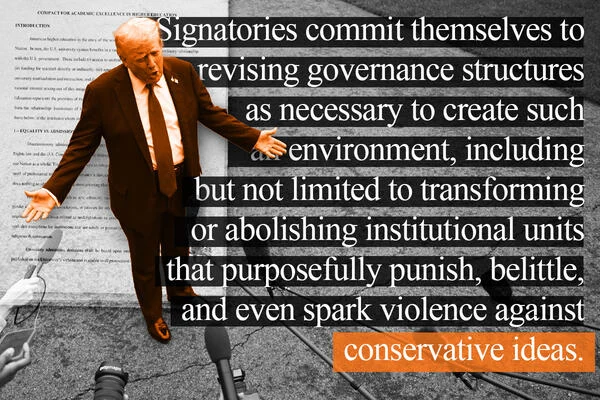
Oakwood University supports the Trump administration’s controversial compact for higher education that would require signatories to make changes to their policies in order to receive a potential edge in federal funding, Religion News Service (RNS) reported.
The historically Black university in Alabama wrote a Nov. 18 letter to the Education Department about its interest in the compact. Oakwood is the second HBCU to show interest in signing on. Like the other HBCU, Saint Augustine’s University, Oakwood officials say the compact needs to change for them to actually sign it.
Of concern for the HBCUS are provisions that would cap undergraduate international student enrollment at 15 percent, require a five-year tuition freeze and limit the use of race in admissions and other decisions.
Most Popular
“While we strongly support the Compact’s overarching goals, several provisions of the draft framework raise important concerns that, if left unaddressed, could unintendedly hinder HBCUs’ ability to participate fully or effectively,” Oakwood President Gina Brown wrote in the letter, according to RNS. “Absent a mission-based exemption, HBCUs would face an untenable choice between compliance and fulfilling their congressionally mandated purpose.”
Oakwood is affiliated with the Seventh Day Adventist Church, and RNS noted that faith-based institutions would still be able to consider religion in admissions and hiring.
The Trump administration invited nine universities to give feedback on the proposed compact. Most of that group declined outright to sign it, saying that federal funding should be based on merit, not adherence to a president’s priorities. Since then, New College of Florida, Valley Forge Military College and Saint Augustine’s have indicated interest in joining the compact.
Four people were arrested at a Nov. 10 protest at UC Berkeley over an event for Turning Point USA.
Justin Sullivan/Getty Images
The Department of Education is reviewing potential violations of the Clery Act at the University of California, Berkeley following violence at a campus protest.
Fights broke out and four people were arrested at a Nov. 10 protest against an event for Turning Point USA, the conservative student group founded by Charlie Kirk, Cal Matters reported. The organization has received newfound attention after Kirk was shot and killed while speaking at Utah Valley University in September, exactly two months before the event at UC Berkeley.
The Department of Education announced the launch of the investigation Tuesday.
“Just two months after Turning Point USA founder Charlie Kirk was brutally assassinated on a college campus, UC Berkeley allowed a protest of a Turning Point USA event on its grounds to turn unruly and violent, jeopardizing the safety of its students and staff. Accordingly, the Department is conducting a review of UC Berkeley to ensure that it has the procedures in place to uphold its legal obligation to maintain campus safety and security,” U.S. Secretary of Education Linda McMahon said in a statement.
ED also accused the university of having “a history of violating the Clery Act” in a news release announcing the investigation, citing a $2.4 million fine and settlement agreement in 2020 for UC Berkeley’s failure to properly classify 1,125 crimes on campus and insufficient record keeping.
The Department of Justice previously announced a probe into the university earlier this month, claiming that “Antifa,” a decentralized, left-wing movement was involved in the Nov. 10 protests.
UC Berkeley spokesperson Dan Mogulof told Inside Higher Ed by email that the university “has an unwavering commitment to abide by the laws, rules and policies that are applicable to the university” and “will continue to cooperate with governmental inquires and investigations.”
Mogulof added that the university provided public reports about two violent crimes that occurred Nov. 10: a fistfight over an attempted robbery and someone being hit by a thrown object. He also highlighted efforts by administrators “to support the First Amendment rights of all by deploying a large number of police officers from multiple jurisdictions, and a large number of contracted private security personnel” and closing off parts of campus on the day of the protest.
The investigation comes as the Trump administration has clashed with the University of California system in recent months as it sought to cut off federal research funding over alleged antisemitism and how administrators handled pro-Palestinian campus protests in spring 2024. The federal government has also demanded the University of California, Los Angeles, agree to a $1.2 billion fine and make a number of changes in response to the administration’s concerns.
A federal judge recently ruled against the federal government and its “blanket policy of denying any future grants” to UCLA and determined that the Trump administration can’t demand payouts from University of California member institutions as it conducts civil rights investigations.
According to an August email obtained by The Chronicle, Jenny Edmonds, associate dean of communications and marketing at Duke’s Sanford School of Public Policy, encouraged faculty to “continue to engage with the media to disseminate [their] research as [they] have always done,” while also cautioning that “media attention to institutions of higher education and discussions about institutional responses to policy changes have become more prominent than ever.”
“In this moment in particular, questions about Duke and current events are being answered by Frank Tramble and his team,” Edmonds wrote. “If you are contacted by the media about overarching issues confronting the University, please forward the requests to [Sanford’s Senior Public Relations Manager Matt LoJacono] and me.”
Although it wasn’t a universitywide directive, The Chronicle obtained emails that show some other departments also gave their faculty similar instructions to route media requests through the university’s central communications channels.
At an Academic Council meeting in October, Duke’s president, Vincent Price, and council chair, Mark Anthony Neal, commended faculty members for not speaking to a New York Times reporter; the reporter had visited the campus while working on a story about the Trump administration targeting Duke’s diversity, equity and inclusion program.
“It was pretty amazing that [the reporter] actually got no commentary from Duke officials and Duke faculty,” Neal continued. “Even if it wasn’t overtly communicated to the community, the community understood the stakes of that mode of inquiry.”
At that meeting Price also called Trump’s higher education compact—which would allegedly give universities preferential funding in exchange for making sweeping institutional policy changes— “highly problematic,” according to The Chronicle. Despite public pressure, Duke hasn’t officially rejected the terms of the compact.
Abedini’s detention makes real the fears of many foreign and American academics who are rethinking or boycotting travel to academic conferences in the U.S.
Peter Zay/AFP/Getty Images
Immigration and Customs Enforcement agents detained a University of Oklahoma professor Saturday while he was on his way to a conference.
Vahid Abedini, a professor of Iranian Studies, was stopped and detained while he was boarding his flight to attend the Middle East Studies Association conference in Washington, D.C. He was released Monday night, according to a LinkedIn post.
“I’m relieved to share that I was released from custody tonight. It was a deeply distressing experience, especially seeing those without the support I had,” Abedini wrote on LinkedIn early Tuesday morning. “My sincere thanks to my friends and colleagues at the University of Oklahoma, the Middle East Studies Association, and the wider Iran studies and political science community for helping resolve this.”
Abedini did not respond to Inside Higher Ed’s request for comment. According to Joshua Landis, Abedini’s colleague and co-director of the Center for Middle East Studies at the University of Oklahoma, Abedini has an H-1B visa.
“ICE arrested our beloved professor Vahid Abedini,” Landis wrote on X Monday. “He has been wrongfully detained because he has a valid H-1B visa—a non-immigrant work visa granted to individuals in ‘specialty occupations,’ including higher education faculty. We are praying for his swift release.”
Reached for comment, a Department of Homeland Security spokesperson told Inside Higher Ed: “This Iranian national was detained for standard questioning. He’s been released.”
Abedini’s detention makes real the fears of many foreign and American academics who are rethinking or boycotting travel to academic conferences in the U.S. due to concerns about wrongful arrests by immigration enforcement.
In a statement, the MESA Board of Directors said they were “disturbed” to learn of Abedini’s detention and “deeply concerned” about the circumstances. The University of Oklahoma declined to comment on the situation.
Colleges and universities sit on a large wealth of data, ranging from student attendance and interactions with learning management systems to employment and earnings data for graduates. But uniting legacy systems and having responsive data remains a wicked problem for many institutions.
This year, Central New Mexico Community College is deploying a new AI-powered predictive analytics tool, CampusLens, part of CampusWorks, to improve data visibility in student retention, early alerts and career outcomes.
In the latest episode of Voices of Student Success, host Ashley Mowreader speaks with Tracy Hartzler, president of Central New Mexico Community College, to discuss the risks with taking on new tools, the college’s approach to change management and the need for more responsive data.
An edited version of the podcast appears below.
Q: Can you introduce yourself, your role and your institution?
Tracy Hartzler, President of Central New Mexico Community College
A: My name is Tracy Hartzler. I’m president of Central New Mexico Community College. We’re located in Albuquerque, New Mexico. We serve three counties around us, and our population is about 900,000 residents in our area, so it’s about half the state of New Mexico who lives in our service area, but it’s an incredibly diverse area.
We have a significant population of Hispanic, Latino students. We have a large population of Indigenous students, as well. We are the largest undergraduate institution in the state, and that’s distinct because we only issue or grant certificates and associate degrees. We are not a bachelor’s degree–granting institution, so our focus really is on those students who are seeking entry into college—whether that’s our dual credit students who are still in high school—but also those who are returning for upskilling. They’ve already earned their bachelor’s degree or degrees, and they’re coming back for some hands-on or applied skills, or those who are getting back into education and training because they’re looking for greater financial stability.
Like so many other colleges, we know we want to learn from others, and so we’re really proud that we work with many of our other colleges across the state of New Mexico, but we certainly engage in conversations with leaders and schools who participate in American Association of Community Colleges who are part of the global community college leader network.
But we’re really pleased and we’ve been really pushed by our peers who are members of the Alliance for Innovation and Transformation—group of higher education institutions, there’s about 60 of us—with some other thought partners to really help us think how we can best leverage technology and change our processes and deliver better education and training for our students and better serve our employers.
We also are relying on lessons learned from those outside of higher education, so whether it’s in hospitality, healthcare, manufacturing and others. So while we know we have great work to do in New Mexico, and we are incredibly fortunate to work with strong partners who tell us what they want and how we can best serve them, we certainly look to other schools and other organizations to help us make those transitions faster so we can better serve our community.
Q: From my vantage point, it seems community colleges are often some of the most nimble when it comes to learning from other institutions.
A: Absolutely. You know, it’s great to be scrappy. I think we and here at CNM, we certainly punch above our weight. We are excited to take on new challenges. We are, frankly, fortunate to be able to move faster. So, if something doesn’t work, we can pivot away from it entirely or continue to revise it. And frankly, the urgency to do so is really placed on us by our employer partners, our community partners and our students. They really are pressing us to be responsive to them because they don’t have time to waste, and they certainly don’t have resources to waste. So, we really step in. And again, I don’t think CNM is unique in that we all respond to the need as quickly and as best we can.
Q: We’re talking today about a new AI-powered predictive analytics tool that you all implemented. Historically, what has been the college’s retention and persistence strategy? What are some of the challenges you have seen when supporting students?
A: Before the pandemic, we were able to and we were participating in a lot of futures work: What do students need? What do they need now? What do employers need in the future? Which, at that time, seemed so far off, and so we were already on a journey again, whether it was working with AFIT or others to help us better identify what we needed to do and how we needed to change to better meet our student and our employer needs.
We knew that that would include certainly technology and leveraging technology, but we also knew it would mean changing how we do things, how we schedule, how we use the data in our systems. And we also knew we have a tremendous amount of information. We have a lot of data, but like so many other places, it’s in seven legacy systems. And we have over 100 applications that help our data systems talk to each other, to generate reports that our staff use, and it’s incredibly challenging to wrangle this data in a way that is useful, that helps us drive and drive change again.
Most of the data is legacy data. It’s what happened last year, and how do we think that’s going to improve? What are we doing now to then improve performance a year ahead, and then we hope that what we do over the next year meets the need, but it takes us too long to really react.
So, we were looking for ways to take the assets we have—which includes our incredible faculty and a number of our leaders and our office of data strategy and some of our contractors, like CampusWorks and consultants—to help us wrangle this data in a way that helps us be data informed in a time-sensitive way.
We had a lot of processes in place that were helping us to do that. A lot of our steps were manual and creating reports, and it really slowed down what our frontline advisers and navigators and employment advisers really were able to do, because we were requiring them to do so much manipulation with the data then to be able to identify what they should do once they got this great report.
So, we were looking for ways to leverage technology. And again, the pandemic happens. We’re increasingly dependent on our systems, using them to greater degrees than we had before, including our learning management system. We are also undertaking a transition conversion from our old student information system to a new student information systemin Workday. We’re making all these changes and upgrading technology, and frankly, AI is coming along that’s really dramatically changing how we work, or could change how we work. We’re trying to figure out a better way to wrangle all these opportunities.
We were so excited to learn about CampusWorks and their product, CampusLens, because we think that tool will help us leapfrog, not only the tool but the experts that that CampusWorks brings to the table to help us to analyze data and develop tools that will help our frontline staff much more quickly and easily identify how they can help students. To register from class A to B, to help them identify all the predictors that say, if the student’s missing one assignment or they haven’t attended class, here are the automatic prompts for you as an adviser or navigator—or if you choose to automate that process you can. But really, how can we help individuals—our employees—still help and better connect with students to keep them on the track of success?
It certainly can also help us schedule, help our faculty and all of our associate deans who do incredible jobs trying to figure out ways to schedule our incredible programming to be most effective for students. Some of this information that we’ve had in different places, when it comes together in a product like CampusLens, will help us generate these tools so that we can we can more quickly assess our situation and better adapt, test, try and iterate ways to better, like I said, schedule classes, schedule our work-based experiences, help our employers predict the number of graduates who are going to come out of our programs at any given time.
When we have employers come to us with dramatic needs, you know, they need 1,000 technicians over three years, well, what do we need to do to scale and ramp up our programming to meet that need?
I’m excited that we have a tool that will help us do that, instead of the army of staff and technical staff that I would have to try to find to help us do that in an efficient way. That’s why a product and a team, a quality, curious and an innovative team at CampusWorks to help us work through some of these projects.
Q: How does the tool work logistically? What are you excited about when it comes to the capabilities of CampusWorks and CampusLens?
A: It helps us better, frankly, use staff time to keep students and others on the right track—on the track that they’ve chosen, by the way.
What is most exciting, at least for us with CampusLens, is their Career Lens. So all institutions, all community colleges, are focused on many phrases, but all go to the federal emphasis, or your statewide emphasis on return on investment. What is the value that a learner gets from your program that can be defined a lot of ways. It could be defined by wages, wages a year out, it could be defined for many years out from completing a certificate or degree. It looks at what’s your job in a particular program. We know the federal government, whether when they’re leading the rules around rule-making for Workforce Pell, we know that those regulations are going to help us require that we analyze our programs for results. Will these programs allow students to be eligible for federal assistance?
We know that we can use all of this data and CampusLens is going to be able to help us identify which programs are eligible for Workforce Pell, what are the wages? It’ll help us report out the successes of our programs, or, frankly, identify those programs where wages are not at the median level. What do we need to do, then, to repackage or reschedule or build up some of our programs to meet the wage requirements that we want individuals to accomplish, to achieve and earn, but also that will meet some of our federal standards?
So, I’m really excited about the workforce component of this, which is really what we’re all looking for. All of us [higher education leaders] want, I’d say, a silver bullet when it comes to unifying this data and being able to tell the story and being able to design programming is responsive and frankly to be able to tell our stakeholders, whether they’re legislators or federal government agencies giving us funding for workforce training, what are the outcomes? That’s so important that we’re able to show and tell the story with really valuable data? And I’m excited that CampusLens allows us to achieve that.
Q: How have you all been thinking about AI as a tool on campus, what are those conversation looking like with your staff and employees?
A: I want to start with our governing board. CNM is governed by a seven-member elected governing board, and our governing board represents geographic areas in our community. They are focused on how we are best serving our students, our employers and our community members and what does that mean for technology? Is the college investing in programming and the right tools? Are we getting the greatest benefit from the tools we’ve purchased? That also includes the question of, how are our faculty and staff using the tools to better help our learners?
We talked about retention and persistence and how we use data, but it takes training and professional development to be able to use the tools to the greatest advantage. And of course, this is all in service to our learners and our employers. So it starts with our leadership, and then it flows through.
I don’t think we’re any different than a lot of other colleges. We’ve looked at our policies, and we’ve built on our existing academic integrity policies around AI use, and we have faculty policies on how they describe and expect use, or have authorized use, if you will, approved use, embedded use of AI in their coursework, in their programs. We have policies in place.
We also have done some pilot work. We’ve created a fund for individuals to come to a group around data, frankly, out of our data governance team and our IT team to be able to pitch ideas for three-month sprints or pilots, and they report back. What was the result? What did we learn? Is it something we should scale
I will say many of those pilots are both on the business side or the operation side of the college, but also on the student and teaching and learning side. So that’s really interesting. We look forward to some of those first official pilots coming forward in the next month or so.
What I’m most excited about, though, is the systemic use of AI across the institution. I appreciate the pilots get us excited and interested. It gets people familiar with tools as they evolve and change. But how do we embed AI into our systems work? That’s why I’m excited about CampusLens.
You can only have so many pilots and scale up pilots, and you can read how many articles that tell you and advice pieces from Gartner to McKinsey to whatever source you may choose that help you try to identify how to scale up pilots. But I wanted something that was going to help us leapfrog that, and frankly, CampusLens allows us to do that with a multi-year co-development opportunity to help us focus on the student journey, but really in a systemic way, look at all of our data sources and our use and all of even our new systems like Workday that help us to leverage a tool that sits above our data sources. We’ll learn the operational side of this as we go on. But I’m really focused on students, and this was the easiest way to take a risk at a systemic change with a trusted partner who has incredible expertise, as we’ve known for years, and our relationship with them to help us take that leap, to help us implement a system-wide approach to using AI and how that can change and enhance all the human work that we do with our students.
It’s not necessarily about eliminating the human touch to what we do. It’s about helping our advisers and our navigators and our faculty members and our intern placement officers, helping them do their work more successfully, always evaluated by student satisfaction, student placement, employer satisfaction and the like.
I appreciate pilots, there’s a great role for them. And I really appreciate that we are able to take a systemic swing at this work.
Q: You used the work risk earlier applied to taking on this system, what do you consider the risks or challenges of this process?
A: There’s always a risk in the investment you’re making initially and the ongoing risk. The risk is not only the contract for the service, hiring the expertise and hiring a partner who’s been affiliated and connected to higher education for decades, who understands students, understands institutional requirements and for compliance and integrity and data governance and permissible uses. Working with a partner that has that basic understanding is critical. That mitigates your risk immediately.
The financial risk is always: Are we chasing AI attachments to every system we have, or are we helping to right size those to be able to leverage a holistic or a system-wide, comprehensive AI-aided business analytics or business intelligence tool? That’s a very different approach then again, enhancing all of the six legacy systems I have, plus using one system or one tool to be able to do that intelligence work. That’s a risk, and that’s something different that we’ve had to navigate.
I don’t underestimate the time and challenge and excitement of staff in using technology, that can be seen as a risk. There’s a real temptation, and I see it almost daily, to just lift what we do currently in our old systems and shift it to a new system and just be satisfied with going faster or generating a nicer looking report. It’s not what we wanted and that is so not what we can do in higher ed. We are called to be more innovative and to really use our information differently. And this tool will allow us to do that in terms of really getting to the intelligence side of predictive analytics.
That’s always seen as almost a holy grail for us, and to see that it’s within reach now, that’s worth the risk for us. We’ll be able to see the analytics and the predictive analytics that we were at one time working on a project, and we thought we might get there in two or three years. The fact that I can probably do this by the end of this academic year is really important for us. And by the way, not just see some results at the end of this academic year, but know that it’s going to be iterative and evolve, so that we’re going to continue to see growth and change and adaptation and be a part of that shaping is really important to us.
I think I mean the risk is time, resources, and security, and we face those all the time. But I will dare say the risk is also not doing anything. If we aren’t moving in this direction, you are risking putting resources, and particularly too much money and technologies that you still have to reconcile in some way. You risk, frankly, burning out your staff by adding another dashboard they’ve got to learn instead of one that’s much more comprehensive. You’re still going to have them look at 10 different screens to come up with all the information they need to advise one student. So, you don’t want to burn out your staff. You actually need them to be more efficient and effective and spend time with the student in a different way.
The risks of not taking a step like this are substantial, because the world will continue. Students will still demand more, and they always demand more to make their work easier, which means our work can be a little bit harder, and employers are expecting us to be responsive. So if you don’t act and take certain risks, you’re either irrelevant or your students are unprepared for the world that they’re going to be entering, and we just don’t have time for that. That’s just not an option.
Q: I appreciated your comment on the risks of using a new tool to do the exact same thing. We know that faculty and staff are often crunched for time and ensuring that we’re creating new systems that are evolutionary and actually creating efficiencies for everyone involved is important.
A: Yeah, and that’s scary. It does mean that we will be changing how we work. It means we will be removing some of the guesswork of whether our efforts will work. We can see whether, if I move certain levers in a student journey, does this really make the difference? Does it really move the needle, not only for that student, but maybe very similarly situated students?
It’s really important. This will change how we work. We’ll be asking our employees, my colleagues, to think differently and do their work differently, because they’ll have more information available to them with suggestions on how to act, so they don’t have to always consider and frankly, reinvent the wheel. That’s really important, but I don’t underestimate what that change looks like, because when you have expertise in old systems or even evolving systems, and that expertise can be threatened or seem to be threatened, then we have to navigate that, and again, always make sure we’re serving our students and doing it the best way we can.
This technology, the tools, the guidance and the continued evolution will, I think, go a long way toward mitigating that fear. When I brought this option for CampusLens to my team, I made sure my team kicked the tires. This wasn’t a president’s folly. It was sincere, deliberate vetting by many individuals across the college to say, is this the right approach? What are our questions? What are our fears? What’s my role? Will it really better serve our students, and what does that look like with professional development? How do I use this team of experts that I’m not used to working with? How are they going to integrate and challenge us and help us do our work? So there were a number of challenges in the five or six months that it took us to ascertain whether this is the right approach for us, and I appreciate that it’s a collaborative effort, and that that is continuing as we talk about change management and the work that we have to test the tool and move it out in the college.
Q: Where are you all at in this change process? What are you looking forward to as the next step?
A: We’re still early in our stages of implementing CampusLens. Much of what we hope for centers arounds adoption and effectiveness and we really hope for a long-term operational integration. Again, my interest is not only in pilots, but in helping us make systemic change and better leveraging all the legacy data sources that we have.
What we are hoping to see in the next 12 months would be how we move from tracking legacy data and focusing on what has happened to helping us think about what is likely to happen based on the data we see. So again, shift in mindset from always reporting out past data, old data, lagging data to what do we think will happen? And then how do we change behavior to improve what we think will happen or change the trajectory, if that’s what we want to do? I think it’s really important for our community, for us to continue to test the model, the tool and the logic, so it’s going to continue to be refined. I know that as we go through over time, we will continue to improve, refine, revise the model so that it better reflects what our community here in Central New Mexico needs and what our students need.
We’re early in the stages. What I’ve seen so far is exciting, and it’s what we wanted to accomplish, and this tool is going to help us accomplish it, I think, sooner, and to be able to test our work sooner.