Blog

  • AI-Powered Data for Community College Student Success

    AI-Powered Data for Community College Student Success

    Colleges and universities sit on a large wealth of data, ranging from student attendance and interactions with learning management systems to employment and earnings data for graduates. But uniting legacy systems and having responsive data remains a wicked problem for many institutions.

    This year, Central New Mexico Community College is deploying a new AI-powered predictive analytics tool, CampusLens, part of CampusWorks, to improve data visibility in student retention, early alerts and career outcomes.

    In the latest episode of Voices of Student Success, host Ashley Mowreader speaks with Tracy Hartzler, president of Central New Mexico Community College, to discuss the risks with taking on new tools, the college’s approach to change management and the need for more responsive data.

    An edited version of the podcast appears below.

    Q: Can you introduce yourself, your role and your institution?

    Tracy Hartzler, President of Central New Mexico Community College

    A: My name is Tracy Hartzler. I’m president of Central New Mexico Community College. We’re located in Albuquerque, New Mexico. We serve three counties around us, and our population is about 900,000 residents in our area, so it’s about half the state of New Mexico who lives in our service area, but it’s an incredibly diverse area.

    We have a significant population of Hispanic, Latino students. We have a large population of Indigenous students, as well. We are the largest undergraduate institution in the state, and that’s distinct because we only issue or grant certificates and associate degrees. We are not a bachelor’s degree–granting institution, so our focus really is on those students who are seeking entry into college—whether that’s our dual credit students who are still in high school—but also those who are returning for upskilling. They’ve already earned their bachelor’s degree or degrees, and they’re coming back for some hands-on or applied skills, or those who are getting back into education and training because they’re looking for greater financial stability.

    Like so many other colleges, we know we want to learn from others, and so we’re really proud that we work with many of our other colleges across the state of New Mexico, but we certainly engage in conversations with leaders and schools who participate in American Association of Community Colleges who are part of the global community college leader network.

    But we’re really pleased and we’ve been really pushed by our peers who are members of the Alliance for Innovation and Transformation—group of higher education institutions, there’s about 60 of us—with some other thought partners to really help us think how we can best leverage technology and change our processes and deliver better education and training for our students and better serve our employers.

    We also are relying on lessons learned from those outside of higher education, so whether it’s in hospitality, healthcare, manufacturing and others. So while we know we have great work to do in New Mexico, and we are incredibly fortunate to work with strong partners who tell us what they want and how we can best serve them, we certainly look to other schools and other organizations to help us make those transitions faster so we can better serve our community.

    Q: From my vantage point, it seems community colleges are often some of the most nimble when it comes to learning from other institutions.

    A: Absolutely. You know, it’s great to be scrappy. I think we and here at CNM, we certainly punch above our weight. We are excited to take on new challenges. We are, frankly, fortunate to be able to move faster. So, if something doesn’t work, we can pivot away from it entirely or continue to revise it. And frankly, the urgency to do so is really placed on us by our employer partners, our community partners and our students. They really are pressing us to be responsive to them because they don’t have time to waste, and they certainly don’t have resources to waste. So, we really step in. And again, I don’t think CNM is unique in that we all respond to the need as quickly and as best we can.

    Q: We’re talking today about a new AI-powered predictive analytics tool that you all implemented. Historically, what has been the college’s retention and persistence strategy? What are some of the challenges you have seen when supporting students?

    A: Before the pandemic, we were able to and we were participating in a lot of futures work: What do students need? What do they need now? What do employers need in the future? Which, at that time, seemed so far off, and so we were already on a journey again, whether it was working with AFIT or others to help us better identify what we needed to do and how we needed to change to better meet our student and our employer needs.

    We knew that that would include certainly technology and leveraging technology, but we also knew it would mean changing how we do things, how we schedule, how we use the data in our systems. And we also knew we have a tremendous amount of information. We have a lot of data, but like so many other places, it’s in seven legacy systems. And we have over 100 applications that help our data systems talk to each other, to generate reports that our staff use, and it’s incredibly challenging to wrangle this data in a way that is useful, that helps us drive and drive change again.

    Most of the data is legacy data. It’s what happened last year, and how do we think that’s going to improve? What are we doing now to then improve performance a year ahead, and then we hope that what we do over the next year meets the need, but it takes us too long to really react.

    So, we were looking for ways to take the assets we have—which includes our incredible faculty and a number of our leaders and our office of data strategy and some of our contractors, like CampusWorks and consultants—to help us wrangle this data in a way that helps us be data informed in a time-sensitive way.

    We had a lot of processes in place that were helping us to do that. A lot of our steps were manual and creating reports, and it really slowed down what our frontline advisers and navigators and employment advisers really were able to do, because we were requiring them to do so much manipulation with the data then to be able to identify what they should do once they got this great report.

    So, we were looking for ways to leverage technology. And again, the pandemic happens. We’re increasingly dependent on our systems, using them to greater degrees than we had before, including our learning management system. We are also undertaking a transition conversion from our old student information system to a new student information systemin Workday. We’re making all these changes and upgrading technology, and frankly, AI is coming along that’s really dramatically changing how we work, or could change how we work. We’re trying to figure out a better way to wrangle all these opportunities.

    We were so excited to learn about CampusWorks and their product, CampusLens, because we think that tool will help us leapfrog, not only the tool but the experts that that CampusWorks brings to the table to help us to analyze data and develop tools that will help our frontline staff much more quickly and easily identify how they can help students. To register from class A to B, to help them identify all the predictors that say, if the student’s missing one assignment or they haven’t attended class, here are the automatic prompts for you as an adviser or navigator—or if you choose to automate that process you can. But really, how can we help individuals—our employees—still help and better connect with students to keep them on the track of success?

    It certainly can also help us schedule, help our faculty and all of our associate deans who do incredible jobs trying to figure out ways to schedule our incredible programming to be most effective for students. Some of this information that we’ve had in different places, when it comes together in a product like CampusLens, will help us generate these tools so that we can we can more quickly assess our situation and better adapt, test, try and iterate ways to better, like I said, schedule classes, schedule our work-based experiences, help our employers predict the number of graduates who are going to come out of our programs at any given time.

    When we have employers come to us with dramatic needs, you know, they need 1,000 technicians over three years, well, what do we need to do to scale and ramp up our programming to meet that need?

    I’m excited that we have a tool that will help us do that, instead of the army of staff and technical staff that I would have to try to find to help us do that in an efficient way. That’s why a product and a team, a quality, curious and an innovative team at CampusWorks to help us work through some of these projects.

    Q: How does the tool work logistically? What are you excited about when it comes to the capabilities of CampusWorks and CampusLens?

    A: It helps us better, frankly, use staff time to keep students and others on the right track—on the track that they’ve chosen, by the way.

    What is most exciting, at least for us with CampusLens, is their Career Lens. So all institutions, all community colleges, are focused on many phrases, but all go to the federal emphasis, or your statewide emphasis on return on investment. What is the value that a learner gets from your program that can be defined a lot of ways. It could be defined by wages, wages a year out, it could be defined for many years out from completing a certificate or degree. It looks at what’s your job in a particular program. We know the federal government, whether when they’re leading the rules around rule-making for Workforce Pell, we know that those regulations are going to help us require that we analyze our programs for results. Will these programs allow students to be eligible for federal assistance?

    We know that we can use all of this data and CampusLens is going to be able to help us identify which programs are eligible for Workforce Pell, what are the wages? It’ll help us report out the successes of our programs, or, frankly, identify those programs where wages are not at the median level. What do we need to do, then, to repackage or reschedule or build up some of our programs to meet the wage requirements that we want individuals to accomplish, to achieve and earn, but also that will meet some of our federal standards?

    So, I’m really excited about the workforce component of this, which is really what we’re all looking for. All of us [higher education leaders] want, I’d say, a silver bullet when it comes to unifying this data and being able to tell the story and being able to design programming is responsive and frankly to be able to tell our stakeholders, whether they’re legislators or federal government agencies giving us funding for workforce training, what are the outcomes? That’s so important that we’re able to show and tell the story with really valuable data? And I’m excited that CampusLens allows us to achieve that.

    Q: How have you all been thinking about AI as a tool on campus, what are those conversation looking like with your staff and employees?

    A: I want to start with our governing board. CNM is governed by a seven-member elected governing board, and our governing board represents geographic areas in our community. They are focused on how we are best serving our students, our employers and our community members and what does that mean for technology? Is the college investing in programming and the right tools? Are we getting the greatest benefit from the tools we’ve purchased? That also includes the question of, how are our faculty and staff using the tools to better help our learners?

    We talked about retention and persistence and how we use data, but it takes training and professional development to be able to use the tools to the greatest advantage. And of course, this is all in service to our learners and our employers. So it starts with our leadership, and then it flows through.

    I don’t think we’re any different than a lot of other colleges. We’ve looked at our policies, and we’ve built on our existing academic integrity policies around AI use, and we have faculty policies on how they describe and expect use, or have authorized use, if you will, approved use, embedded use of AI in their coursework, in their programs. We have policies in place.

    We also have done some pilot work. We’ve created a fund for individuals to come to a group around data, frankly, out of our data governance team and our IT team to be able to pitch ideas for three-month sprints or pilots, and they report back. What was the result? What did we learn? Is it something we should scale

    I will say many of those pilots are both on the business side or the operation side of the college, but also on the student and teaching and learning side. So that’s really interesting. We look forward to some of those first official pilots coming forward in the next month or so.

    What I’m most excited about, though, is the systemic use of AI across the institution. I appreciate the pilots get us excited and interested. It gets people familiar with tools as they evolve and change. But how do we embed AI into our systems work? That’s why I’m excited about CampusLens.

    You can only have so many pilots and scale up pilots, and you can read how many articles that tell you and advice pieces from Gartner to McKinsey to whatever source you may choose that help you try to identify how to scale up pilots. But I wanted something that was going to help us leapfrog that, and frankly, CampusLens allows us to do that with a multi-year co-development opportunity to help us focus on the student journey, but really in a systemic way, look at all of our data sources and our use and all of even our new systems like Workday that help us to leverage a tool that sits above our data sources. We’ll learn the operational side of this as we go on. But I’m really focused on students, and this was the easiest way to take a risk at a systemic change with a trusted partner who has incredible expertise, as we’ve known for years, and our relationship with them to help us take that leap, to help us implement a system-wide approach to using AI and how that can change and enhance all the human work that we do with our students.

    It’s not necessarily about eliminating the human touch to what we do. It’s about helping our advisers and our navigators and our faculty members and our intern placement officers, helping them do their work more successfully, always evaluated by student satisfaction, student placement, employer satisfaction and the like.

    I appreciate pilots, there’s a great role for them. And I really appreciate that we are able to take a systemic swing at this work.

    Q: You used the work risk earlier applied to taking on this system, what do you consider the risks or challenges of this process?

    A: There’s always a risk in the investment you’re making initially and the ongoing risk. The risk is not only the contract for the service, hiring the expertise and hiring a partner who’s been affiliated and connected to higher education for decades, who understands students, understands institutional requirements and for compliance and integrity and data governance and permissible uses. Working with a partner that has that basic understanding is critical. That mitigates your risk immediately.

    The financial risk is always: Are we chasing AI attachments to every system we have, or are we helping to right size those to be able to leverage a holistic or a system-wide, comprehensive AI-aided business analytics or business intelligence tool? That’s a very different approach then again, enhancing all of the six legacy systems I have, plus using one system or one tool to be able to do that intelligence work. That’s a risk, and that’s something different that we’ve had to navigate.

    I don’t underestimate the time and challenge and excitement of staff in using technology, that can be seen as a risk. There’s a real temptation, and I see it almost daily, to just lift what we do currently in our old systems and shift it to a new system and just be satisfied with going faster or generating a nicer looking report. It’s not what we wanted and that is so not what we can do in higher ed. We are called to be more innovative and to really use our information differently. And this tool will allow us to do that in terms of really getting to the intelligence side of predictive analytics.

    That’s always seen as almost a holy grail for us, and to see that it’s within reach now, that’s worth the risk for us. We’ll be able to see the analytics and the predictive analytics that we were at one time working on a project, and we thought we might get there in two or three years. The fact that I can probably do this by the end of this academic year is really important for us. And by the way, not just see some results at the end of this academic year, but know that it’s going to be iterative and evolve, so that we’re going to continue to see growth and change and adaptation and be a part of that shaping is really important to us.

    I think I mean the risk is time, resources, and security, and we face those all the time. But I will dare say the risk is also not doing anything. If we aren’t moving in this direction, you are risking putting resources, and particularly too much money and technologies that you still have to reconcile in some way. You risk, frankly, burning out your staff by adding another dashboard they’ve got to learn instead of one that’s much more comprehensive. You’re still going to have them look at 10 different screens to come up with all the information they need to advise one student. So, you don’t want to burn out your staff. You actually need them to be more efficient and effective and spend time with the student in a different way.

    The risks of not taking a step like this are substantial, because the world will continue. Students will still demand more, and they always demand more to make their work easier, which means our work can be a little bit harder, and employers are expecting us to be responsive. So if you don’t act and take certain risks, you’re either irrelevant or your students are unprepared for the world that they’re going to be entering, and we just don’t have time for that. That’s just not an option.

    Q: I appreciated your comment on the risks of using a new tool to do the exact same thing. We know that faculty and staff are often crunched for time and ensuring that we’re creating new systems that are evolutionary and actually creating efficiencies for everyone involved is important.

    A: Yeah, and that’s scary. It does mean that we will be changing how we work. It means we will be removing some of the guesswork of whether our efforts will work. We can see whether, if I move certain levers in a student journey, does this really make the difference? Does it really move the needle, not only for that student, but maybe very similarly situated students?

    It’s really important. This will change how we work. We’ll be asking our employees, my colleagues, to think differently and do their work differently, because they’ll have more information available to them with suggestions on how to act, so they don’t have to always consider and frankly, reinvent the wheel. That’s really important, but I don’t underestimate what that change looks like, because when you have expertise in old systems or even evolving systems, and that expertise can be threatened or seem to be threatened, then we have to navigate that, and again, always make sure we’re serving our students and doing it the best way we can.

    This technology, the tools, the guidance and the continued evolution will, I think, go a long way toward mitigating that fear. When I brought this option for CampusLens to my team, I made sure my team kicked the tires. This wasn’t a president’s folly. It was sincere, deliberate vetting by many individuals across the college to say, is this the right approach? What are our questions? What are our fears? What’s my role? Will it really better serve our students, and what does that look like with professional development? How do I use this team of experts that I’m not used to working with? How are they going to integrate and challenge us and help us do our work? So there were a number of challenges in the five or six months that it took us to ascertain whether this is the right approach for us, and I appreciate that it’s a collaborative effort, and that that is continuing as we talk about change management and the work that we have to test the tool and move it out in the college.

    Q: Where are you all at in this change process? What are you looking forward to as the next step?

    A: We’re still early in our stages of implementing CampusLens. Much of what we hope for centers arounds adoption and effectiveness and we really hope for a long-term operational integration. Again, my interest is not only in pilots, but in helping us make systemic change and better leveraging all the legacy data sources that we have.

    What we are hoping to see in the next 12 months would be how we move from tracking legacy data and focusing on what has happened to helping us think about what is likely to happen based on the data we see. So again, shift in mindset from always reporting out past data, old data, lagging data to what do we think will happen? And then how do we change behavior to improve what we think will happen or change the trajectory, if that’s what we want to do? I think it’s really important for our community, for us to continue to test the model, the tool and the logic, so it’s going to continue to be refined. I know that as we go through over time, we will continue to improve, refine, revise the model so that it better reflects what our community here in Central New Mexico needs and what our students need.

    We’re early in the stages. What I’ve seen so far is exciting, and it’s what we wanted to accomplish, and this tool is going to help us accomplish it, I think, sooner, and to be able to test our work sooner.

    We bet your colleague would like this article, too. Send them this link to subscribe to our newsletter on Student Success.

    Source link

  • At Nassau CC, Rejected Presidential Pick Prompts Lawsuit Threat

    At Nassau CC, Rejected Presidential Pick Prompts Lawsuit Threat

    Trustees at Nassau Community College are poised to file a lawsuit after the State University of New York’s Board of Trustees denied their presidential pick.

    At a special meeting on Sunday, the Nassau Community College Board of Trustees unanimously voted to allow the board chair to file a lawsuit challenging the SUNY board’s decision, with one board member absent, Newsday reported. Earlier this month, SUNY trustees voted unanimously, with three members absent, to reject Maria Conzatti, who has run the college as interim or acting president for almost four years. A SUNY official told Newsday it was the first time the system’s board disapproved a presidential nominee.

    The resolution voted on asked that Conzatti’s appointment by Nassau Community College’s board be “disapproved” with no further explanation.

    “SUNY is committed to excellent leadership for all of our campuses and the success of our students, and we will vigorously defend ourselves against any frivolous lawsuit,” a spokesperson for the system said in a statement to Inside Higher Ed.

    The college’s Student Government Association also passed a measure on Monday expressing “gratitude and appreciation” for Conzatti while also acknowledging the SUNY board vote and encouraging the college to “conduct an equitable, transparent and expeditious search for a new permanent president.”

    The conflict comes amid broader tensions between the college’s faculty union and the administration over the consolidation of academic departments and a union contract that expired in August, among other issues. The union sued the college last year arguing the elimination of 15 department chairs violated state regulations, but a judge dismissed the case. The union has since appealed.

    Nassau has also reported less-than-optimal student outcomes in recent years. It has the lowest two-year graduation rate and second lowest three-year graduation rate among community colleges in the SUNY system, 9.4 percent and 23.6 percent respectively.

    Source link

  • The bewitchment of skills: time for a rebalancing and a reordering

    The bewitchment of skills: time for a rebalancing and a reordering

    Join HEPI for a webinar on Thursday 11 December 2025 from 10am to 11am to discuss how universities can strengthen the student voice in governance to mark the launch of our upcoming report, Rethinking the Student Voice. Sign up now to hear our speakers explore the key questions.

    This blog was kindly authored by Professor Ronald Barnett, Emeritus Professor at the Institute of Education, University of London and President Emeritus of the Philosophy and Theory of Higher Education Society, and Secretary of the Global Forum for Re-Humanizing Education.

    We are faced today, especially in the UK, with a policy discourse in higher education that speaks entirely of ‘skills’ and an academic discourse, especially in the humanities and social theory, which speaks of ‘education’. In the skills discourse, there is typically no mention of education per se; and in the education discourse, there is no mention of skills per se.

    It will be said that this is an exaggeration, to which I invite such commentators to look at the evidence. In the policy discourse, rafts of blogs, public pronouncements by politicians, and reports from think tanks speak of skills without the idea of education being even mentioned as such, let alone raised up for consideration. On the other side, whole papers in the academic literature and even books can be found that speak of education, student development, criticality, self-formation and so on, while paying only perfunctory attention to the matter of skills, if that. 

    On the skills side of the debate, we may observe a HEPI blog entitled ‘Bridging the Gap: How Smart Technology Can Align University Programmes with Real-World Skills (Pete Moss, 22 July, 2025). The term ‘skills’ appears twenty times, with an additional mention of ‘reskilling’ and the phrases ‘skills gap’ and ‘skills taxonomy’. The term ‘education’ appears just three times, with two of those instances being in the form of phrases – ‘higher education’ and ‘university education’. 

    Only once does the term ‘education’ appear unadorned, and that in the last line: ‘After all, education is a journey.  It’s time the map caught up’. Nowhere are we treated to any indication as to the nature of the journey beyond it being the acquisition of skills. What education as such is, we are left to ponder.

    This debate in higher education is not really a debate at all, but rather a situation in which ships pass in the night and without even acknowledging each other. There is an occasional – if rather perfunctory – doffing of the hat towards skills on the educational side; but pretty well a near-complete silence about education on the skills side.

    Does this matter? After all, it might be suggested that what we have here is nothing more than a continuation of the polarisation of the liberal-vocational perspectives that have been with us in the United Kingdom for two hundred years or more. Nothing new here, it may be said.  I disagree.

    First, the intensity of this polarisation is now extreme. As remarked, characteristically, as I see it, positions are taken up of a kind that exhibits a total blankness towards the other side. As a result, there is no mutual engagement of positions. 

    Second, this blankness is particularly marked on the skills side, so to speak; and that is where the power lies. As a result, the framing of higher education in terms of skills becomes the dominant discourse. 

    Third, the skills side is not only utilitarian, but it is also instrumental. Every aspect of higher education comes to be valued insofar as it demonstrably has an outcome, and this logic is extended to students themselves. They become ends towards external purposes, now of economic, societal and national advancement. The development of students, understood as human beings, is rendered invisible. 

    Fourth, the world is facing great difficulties: egregious inequalities (of a like not seen for hundreds of years), crises of the natural environment, non-comprehension across peoples, violence (both material and discursive), and a degrading instrumentality in the way states treat their citizens are just indicative. What, against these horizons, might ‘higher education’ mean? Simply to speak of skills misses the point.

    Lastly, the world is in difficulty partly due to its institutions of higher education losing sight of their educational responsibilities. At best, those institutions have become institutions of higher skills.  In the process, universities have played a part in forging the instrumentality that is now dominant in the world. That the world is in grave difficulty can be laid, in part, at the door of universities.

    What, then, is to be done? The answer is obvious. We need a rebalancing in our debates, our language, our practices, our evaluation mechanisms, and the ways in which we identify what is of value in higher education. It is right for skills – and knowledge too, for that matter – to have a place, but that place has to be against the horizon of what is good for the education of students as human beings on and in this troubled Earth. 

    But this rebalancing calls for a reordering, where concerns with education have to precede concerns with skills. Wisdom, critical reflection, dialogue for understanding, care, consideration, carefulness, self-understanding, the world, Nature, dispute, antagonism, and mutuality have to become part of the vocabulary of student formation in constructing a proper policy debate. Unless and until this happens, the policy framework will be blind and surrender itself into the interests and technologies of the powerful.

    Source link

  • AI In Academic Publishing: Disruption or Evolution? – Faculty Focus

    AI In Academic Publishing: Disruption or Evolution? – Faculty Focus

    Source link

  • AI In Academic Publishing: Disruption or Evolution? – Faculty Focus

    AI In Academic Publishing: Disruption or Evolution? – Faculty Focus

    Source link

  • Penn Graduate Students (GET-UP) Authorize Strike as Contract Talks Falter

    Penn Graduate Students (GET-UP) Authorize Strike as Contract Talks Falter

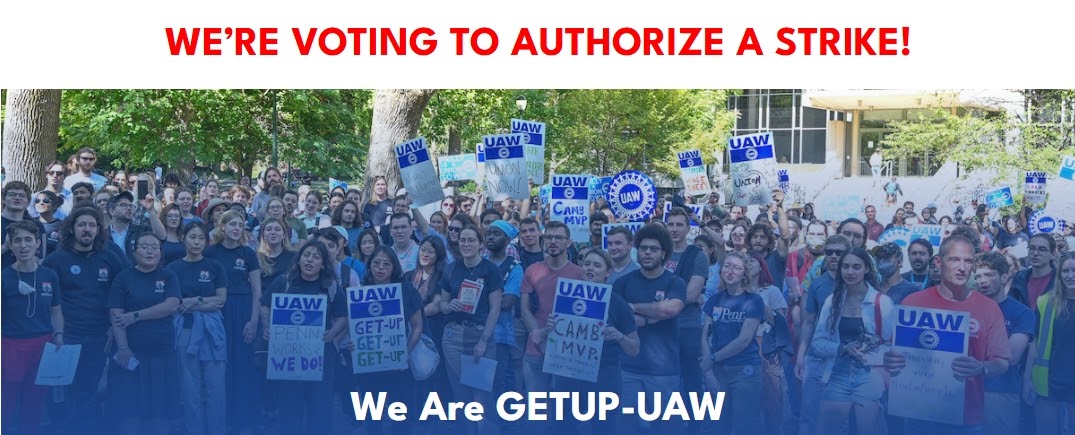
    Graduate student workers at Penn have overwhelmingly authorized a strike — a decisive move in their fight for fair pay, stronger benefits, and comprehensive protections. The vote reflects not only deep frustration with stalled negotiations but also the growing momentum of graduate-worker organizing nationwide.

    A year of bargaining — and growing frustration

    Since winning union recognition in May 2024, GET‑UP has spent over a year negotiating with Penn administrators on their first collective-bargaining agreement. Despite 35 bargaining sessions and tentative agreements on several non-economic issues, key demands — especially around compensation, benefits, and protections for international students — remain unmet.

    Many observers see the strike authorization as long overdue. “After repeated delays and insulting offers, this was the only way to signal our seriousness,” said a member of the bargaining committee. Support for the strike among graduate workers is overwhelmingly strong, reflecting a shared determination to secure livable wages and protections commensurate with the vital labor they provide.

    Strike authorization: a powerful tool

    From Nov. 18–20, GET‑UP conducted a secret-ballot vote open to roughly 3,400 eligible graduate employees. About two-thirds voted, and 92% of votes cast authorized a strike, giving the union discretion to halt academic work at a moment’s notice.

    Striking graduate workers, many of whom serve as teaching or research assistants, would withhold all academic labor — including teaching, grading, and research — until a contract with acceptable terms is reached. Penn has drafted “continuity plans” for instruction in the event of a strike, which union organizers have criticized as strikebreaking.

    Demands: beyond a stipend increase

    GET‑UP’s contract demands include:

    • A living wage for graduate workers

    • Expanded benefits: health, vision, dental, dependent coverage

    • Childcare support and retirement contributions

    • Protections for international and immigrant students

    • Strong anti-discrimination, harassment, and inclusive-pronoun / gender-neutral restroom protections

    While Penn has agreed to some non-economic protections, many critical provisions remain unresolved. The stakes are high: graduate workers form the backbone of research and teaching at the university, yet many struggle to survive on modest stipends.

    Context: a national wave of UAW wins

    Penn’s graduate workers are part of a broader wave of successful organizing by the United Auto Workers (UAW) and allied graduate unions. Recent years have seen UAW-affiliated graduate-worker locals achieve significant victories at institutions including Cornell, Columbia, Harvard, Northwestern, and across the University of California (UC) system.

    At UC, a massive systemwide strike in 2022–2023 involving tens of thousands of Graduate Student Researchers (GSRs) and Academic Student Employees (ASEs) secured three-year contracts with major gains:

    • Wage increases of 55–80% over prior levels, establishing a livable baseline salary.

    • Expanded health and dependent coverage, childcare subsidies, paid family leave, and fee remission.

    • Stronger protections against harassment, improved disability accommodations, and support for international student workers.

    • Consolidation of bargaining units across ASEs and GSRs, strengthening long-term collective power.

    These gains demonstrate that even large, resource-rich institutions can be compelled to recognize graduate labor as essential, and to provide fair compensation and protections. They also show that coordinated, determined action — including strike authorization — can yield significant, lasting change.

    What’s next

    With strike authorization in hand, GET‑UP holds a powerful bargaining tool. While a strike remains a last resort, the overwhelming support among members signals that the union is prepared to act decisively to secure a fair contract. The UC precedent, along with wins at other UAW graduate-worker locals, suggests that Penn could follow the same path, translating student-worker momentum into meaningful, tangible improvements.

    The outcome could have major implications not just for Penn, but for graduate-worker organizing across the country — reinforcing that organized graduate labor is increasingly a central force in higher education.


    Sources

    Source link

  • Union to hold confidence vote for UTS VC – Campus Review

    Union to hold confidence vote for UTS VC – Campus Review

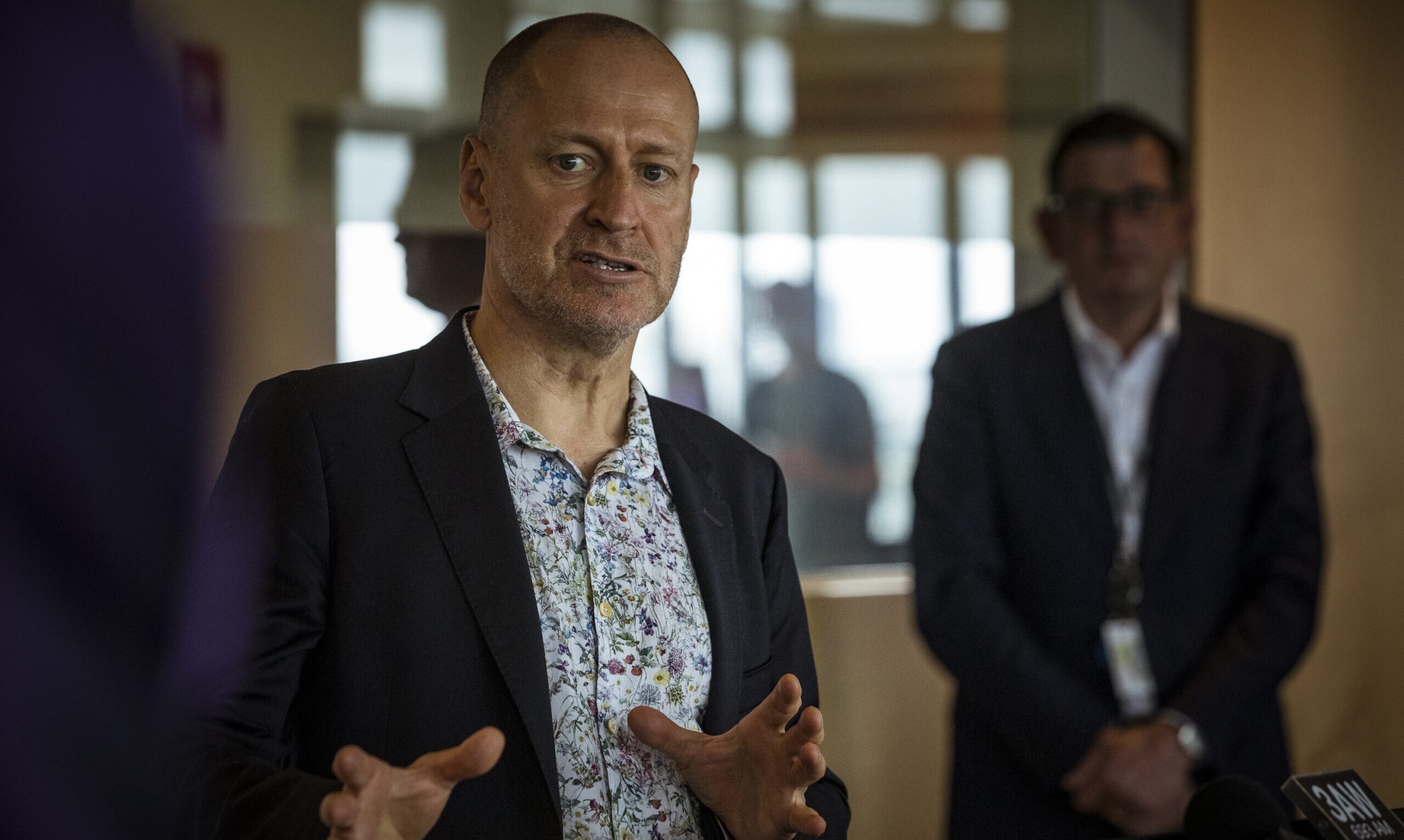
    The tertiary education union will this week ask staff whether they are confident in the leadership of University of Technology Sydney (UTS) vice-chancellor Andrew Parfitt.

    Please login below to view content or subscribe now.

    Membership Login

    Source link

  • CSIRO cuts hit environment, biosecurity areas – Campus Review

    CSIRO cuts hit environment, biosecurity areas – Campus Review

    CSIRO staff will have to wait until the new year to find out if they still have a job, as Australia’s premier science research organisation begins consultations to determine how it will divide up to 350 job losses.

    Please login below to view content or subscribe now.

    Membership Login

    Source link

  • What do students need? – Campus Review

    What do students need? – Campus Review

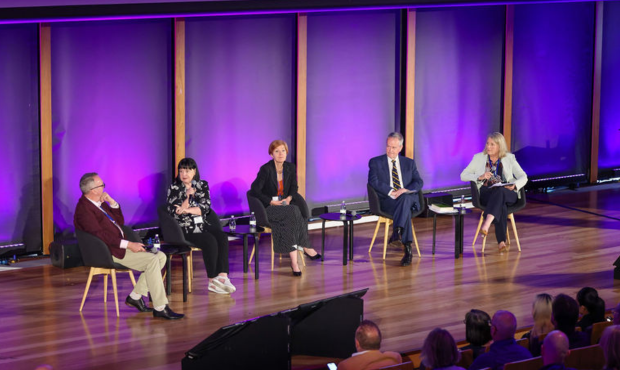
    A panel of university leaders and unionists answered the question ‘What do students need?’ at a recent HEDx event.

    Please login below to view content or subscribe now.

    Membership Login

    Source link

  • The future of financial hardship support needs to be flexible

    The future of financial hardship support needs to be flexible

    The government’s recent white paper on Post-16 Education and Skills places flexibility and choice at the centre of the future student experience.

    When it comes to students, the government wants universities and colleges to adapt to a much wider range of demographics and to further embrace diversity – while continuing to break down the barriers to opportunity for students from all backgrounds.

    One of the ways to strengthen opportunity is through the additional forms of financial support (via bursaries, scholarships and special-case funds) that higher education institutions provide for those students most at risk of dropping out, or those simply denied opportunity in the first place.

    When it comes to this funding, the sector needs to work much harder in supporting a more varied set of future students, whilst making better use of data to design support packages, and adapting to the real-time user requirements for this type of funding.

    Beyond the post-school model

    The majority model of financial support is still designed primarily for a post-school entrant market (in line with access and participation plans) but we now need to evolve this for a much broader range of working students, part-time students, later life students and so on – based on the white paper’s steer for different student demographics and for more support for students from lower income backgrounds. This will require more agility. It will also require a closer and more strategic, data driven approach to the timing, delivery and use of such student funding.

    Universities will increasingly be expected to meet the needs of a more diverse and complex learner population, one that is typically older, more financially stretched, and balancing work, family, caring responsibilities, and study. While the student body is evolving at pace, and there are encouraging signs of greater flexibility and adaptability across the sector, as highlighted in The Shape of Student Financial Support in 2025, there is also clear recognition that more progress is needed.

    In our work with universities (designed to strengthen the effective delivery and impact of student financial support) we refer to this sea-change in funding as enabling both more optionality (for the funders) and greater agency (for the beneficiaries). Too much of the sector’s current model still assumes the profile and rhythms of the traditional 18-year-old school leaver. Policy momentum is pushing us firmly beyond this, and institutions will need to rethink not just how much financial support they provide, but how, when and in what form it is provided, and crucially, who it is designed for.

    A new student majority

    Commuter students, part-time learners, those studying while working full-time, and individuals returning to education later in life are no longer outliers. They are becoming a significant and growing segment of the student population, and the white paper’s direction of travel signals that this growth will continue.

    These learners typically have different cost profiles, different pressures, and different expectations around support. Rent and food costs matter, of course, but so do childcare, caring responsibilities, travel to placements and campus, and the financial instability that often comes with shift-based or zero-hours work. Their support needs do not fall neatly around term dates.

    A modern student support system must reflect that reality.

    Beyond the “once-a-year” mindset

    One of the strongest messages emerging from our work with universities is that timing of support is as critical as the pound value that support. Students increasingly need support that works with the grain of real life, not against it. That means agility: funds that can be released quickly during a crisis; support that can be drawn down in a way that helps with budgeting; and options that reflect different lifestyles, responsibilities, and individuals preferences around how they manage their finances.

    For mature learners, the notion of a predictable “start of term” pressure point is often irrelevant. Housing, employment and family commitments create fluctuating financial pinch-points throughout the year. A forward-looking and agile hardship and support model must therefore allow universities to intervene dynamically, reacting to student need rather than institutional calendar.

    Across the more than 40 institutions we partner with, we see a growing shift toward more targeted, purpose-led and flexible support. Although institutions are facing significant financial constraints, they are adapting, often rapidly, to ensure funding reaches the right students in a way that genuinely makes a difference.

    We are seeing:

    • A move toward more tailored interventions, with universities reshaping bursaries and hardship schemes around specific learner profiles, including mature and commuter students.
    • Increased use of real-time payment mechanisms, enabling rapid support when a financial shock threatens continuation.
    • Greater use of data to understand how different types of students use support, and what interventions are most likely to prevent financial distress, disengagement or withdrawal.
    • Growing recognition that support must be designed around lived experience, responsive to trends and feedback, not just institutional tradition.

    This shift is encouraging, but the system as a whole is not yet optimised for the demographic change that the White Paper anticipates.

    Where policy meets practice: recommendations for a modernised support model

    To prepare for a more diverse learner population, the sector will need to reimagine its support architecture. From our work with universities and our ongoing analysis of funding patterns, several recommendations emerge:

    We should build support models around life-stage, not simply level of study. Mature and non-traditional learners experience costs and vulnerabilities that differ from the archetypal school-leaver. Support schemes should explicitly recognise this, particularly around childcare, travel, digital access, and household stability.

    There is a need to shift from fixed-cycle payments to flexible, real-time support. Financial crises rarely occur conveniently during scheduled disbursement windows. Universities need mechanisms that allow for rapid, secure, and dignified disbursement of funds whenever needed.

    It is time to explore hybrid support models that blend cash, credit and vouchers. Different pressures require different tools. Cash support is essential in alleviating hardship. Credit and voucher mechanisms can help direct funds toward participation, learning, and targeting food poverty. Mature learners often benefit from a mixture of both.

    We must make data central to decision-making. With financial pressure mounting across the sector, institutions must allocate limited resources with precision. Data on spending patterns, draw-down behaviour and student feedback can inform more effective and equitable holistic support strategies.

    We should co-design support with the students who rely on it. There is no substitute for listening to those living the experience. Mature and non-traditional students frequently report that support systems “aren’t designed for people like me”. Bringing their voices into design and evaluation will be vital.

    A financial support system fit for the future

    The white paper’s direction is clear: widening participation will no longer be defined simply by access for school leavers from underrepresented groups. It will increasingly require a system capable of supporting learners from every life stage, people retraining, upskilling, switching careers, balancing caring responsibilities, or returning to education for the first time in decades.

    This transition will require institutions to be flexible, evidence-led, and prepared to evolve their traditional models of support. Our latest annual report provides one lens on how this evolution is taking place, and where further change is needed. But the wider policy moment demands more than reflection: it demands intentional redesign.

    If universities are to deliver opportunity for all, as the white paper sets out, they will need financial support systems that reflect the real, diverse, year-round lives of today’s and tomorrow’s students. Flexibility is no longer a helpful addition; it is the foundation on which effective, equitable support must be built.

    Source link