When pediatricians diagnose preschoolers with attention deficit hyperactivity disorder, there are clear steps they are supposed to take.
Families should first be referred to behavior therapy, which teaches caregivers how to better support their children and manage challenging behaviors that may be related to ADHD. If therapy isn’t making a significant difference, the American Academy of Pediatrics advises, pediatricians can then consider medication.
Nationwide, this process — behavior therapy, then medication if needed — isn’t being followed as often as it should, according to a study recently released by Stanford Medicine and published in JAMA Network Open. Instead, more than 42 percent of 3- to 5-year-olds with ADHD were prescribed medication within a month of their diagnosis.
Missing out on behavior therapy has worrisome implications for children and families, said Dr. Yair Bannett, assistant professor of pediatrics at Stanford Medicine and lead author of the study. Behavioral management training for parents over the course of several months has been found to reduce children’s ADHD symptoms and behavioral problems, and improve parent skills and their relationships with their children.
Without that support, families may be left facing additional challenges. Behavioral training “reduces the chaos in the house and can improve the quality of life for the parents and the child,” Bannett said.
There are several reasons families may be missing this intervention. Some pediatricians aren’t familiar with the purpose of behavior therapy, Bannett added, which is specifically aimed at the adults who support children with ADHD, not the children. “It’s really more of an advanced type of parenting course,” he said. Families also may have trouble finding affordable local therapists.
Bannett said parents should use three key practices to support young children with ADHD. (These strategies also work well for teachers, he added.)
Focus on building a strong, positive relationship: Having a strong attachment between the child and parent or teacher is an important first step to managing behavior, Bannett said. That means spending quality one-on-one time with the child. “That’s the child’s motivation, they want to please you,” he added. “Without that first piece, none of this will work.”
Use positive reinforcement: Rather than punishing a child’s negative behavior, Bannett said, parents and teachers will see more success if they praise good behaviors and develop reward systems to encourage them.
Adjust the child’s environment: Children with ADHD may thrive with simple environmental changes, such as “visual schedules” — charts that use pictures to show a child daily activities or tasks — and a consistent, structured routine.
Parents who can’t find in-person therapists can substitute online therapy, Bannett said. The training is also useful for families even after their children are prescribed medication.
To make sure more families have access to helpful strategies, Bannett would like to see more education for doctors and clinicians on these best practices.
“The pediatricians could also counsel families in the office about these techniques,” Bannett said. “Some written materials and resources could be enough” to at least introduce these practices, he added. “That’s what I’m hoping could make a change.”
Reading list
This story about children with ADHD was produced by The Hechinger Report, a nonprofit, independent news organization focused on inequality and innovation in education. Sign up for the Hechinger newsletter.
The Hechinger Report provides in-depth, fact-based, unbiased reporting on education that is free to all readers. But that doesn’t mean it’s free to produce. Our work keeps educators and the public informed about pressing issues at schools and on campuses throughout the country. We tell the whole story, even when the details are inconvenient. Help us keep doing that.
Marketing can make or break a private school’s success. Because even the best programs won’t fill classrooms if families don’t know what your school has to offer.
Private and independent schools that once relied on word-of-mouth or legacy reputation now compete in a vastly different environment. Families have more options, higher expectations, and greater access to information than ever before. The result? Schools must communicate not just what they offer, but why it matters.
The pandemic underscored this shift. While many private schools saw enrollment rise as families sought flexibility and a sense of community, sustaining that growth now depends on something deeper: a clear, consistent brand story and a modern marketing strategy that builds trust through every interaction.
This guide shows you how.
Drawing on 15+ years of HEM’s work with schools and colleges, we’ll clarify what private educational marketing means and why it’s now mission-critical for admissions and retention. Then we’ll move from strategy to execution, how to define your school’s positioning, understand the motivations of parents and students, and turn that insight into high-performing digital and word-of-mouth campaigns.
What you’ll learn:
How to differentiate your school with a compelling value proposition and proof points
The channels that actively move inquiries (website/SEO, social, email, paid)
Content and community tactics that convert interest into visits and applications
A step-by-step plan to build (or refresh) a coherent marketing strategy
We’ll weave in real examples, both client work and standout schools, to keep it practical and immediately usable.
Struggling with enrollment?
Our expert digital marketing services can help you attract and enroll more students!
What Is Marketing in Education?
Put simply, marketing in education is about connection. It’s understanding what families value and communicating how your school meets those needs with clarity and authenticity. It’s a strategic process of shaping perception, building relationships, and inspiring trust in your institution’s promise.
In practice, this means identifying what makes your school distinct, whether it’s academic excellence, small class sizes, or a values-driven community, and ensuring those strengths are reflected across every touchpoint: your website, social media, campus events, and everyday communication.
But here’s the key difference from corporate marketing: in education, the “product” is transformative. You’re not selling a service; you’re demonstrating outcomes like student growth, alumni success, and lifelong belonging.
That’s why leading independent schools now view marketing as a strategic discipline, not an afterthought. Many have dedicated teams managing branding, digital presence, and admissions communications, because in today’s landscape, great education needs great storytelling to thrive.
What Is the Role of Marketing in Schools?
Essentially, marketing in schools is about alignment; connecting what a school offers with what families seek. A strong marketing function doesn’t just fill seats; it sustains a mission. It ensures enrollment remains healthy, relationships stay strong, and the school continues to thrive long term. Here are a few key roles that marketing plays in a private or independent school:
Driving Enrollment and Retention: Effective private education marketing attracts new families and nurtures existing ones. From open house campaigns to parent newsletters that celebrate student success, it reassures families they’ve made the right choice, turning satisfaction into advocacy.
Building Brand and Reputation: Every message, photo, and interaction shapes how a school is perceived. Strong marketing clarifies the school’s value and ensures consistency across channels, building recognition and trust.
Fostering Community Engagement: Marketing also connects the internal community (students, parents, and alumni), transforming them into ambassadors whose stories amplify the school’s credibility and reach.
In essence, marketing is the strategic engine that sustains both mission and momentum.
How to Market Private Schools: Key Strategies
Marketing independent schools successfully starts with one word: focus. The most effective strategies combine digital innovation with human connection, reflecting both the school’s personality and the priorities of modern families. In this section, we explore key strategies and best practices for private education marketing. These will answer the big question: “How do we market our private or independent school to boost enrollment and stand out?”
1. Understand Your Target Audience and Their Needs
Everything begins with insight. Parents and guardians are the primary decision-makers for K–12 education, so understanding what they value, whether it’s academic rigor, faith-based values, or community belonging, is essential. Avoid broad messaging that speaks to “everyone.” Instead, analyze your current families: Where do they live? What motivated their choice? What concerns drive their decision-making?
Many schools formalize this through personas, fictional yet data-driven profiles like “Concerned Parent Carol,” representing key audience segments. Surveys, interviews, and CRM data can help refine these personas to reveal motivations and needs.
Example: Newcastle University (UK). The university’s marketing team uses data and research to deeply understand prospective students. Newcastle’s internal content guide emphasizes identifying audience needs through methods like analytics, social media listening, surveys, and focus groups. This research informs content planning, ensuring communications solve audience problems and use the right tone and channels.
Once you know your audience, tailor your outreach accordingly. Working parents may prefer evening emails; international families may value multilingual content highlighting boarding life. Each message should reflect your school’s unique strengths and speak directly to what families care about most.
In short, marketing begins with knowing your families deeply and crafting messages that make them feel seen, understood, and inspired to choose your school.
2. Define and Promote Your School’s Unique Value Proposition
Once you know your audience, the next step is to define what truly makes your school stand out. In a competitive education landscape, clarity is power, and your Unique Value Proposition (UVP) is what helps families instantly understand why your school is the right choice.
Start by asking: “What do we offer that others don’t?” Your differentiators might be tangible (like an IB-accredited curriculum, advanced STEM facilities, or bilingual instruction) or emotional (a nurturing environment, strong moral foundation, or inclusive community). The key is to highlight the qualities that align with your audience’s values and can’t easily be replicated by competitors.
Look at what nearby schools emphasize, then find the white space. Finally, weave your UVP consistently through your website, tagline, visuals, and social media tone. A clear, authentic value proposition creates confidence and shows families not just what you offer, but why it matters.
Example: Minerva University (USA). Minerva differentiates itself with a global immersion undergraduate program and an active learning model. The university clearly promotes this UVP: students live and study in seven cities on four continents over four years, rather than staying on one campus. Minerva’s website emphasizes that this global rotation and its innovative, seminar-based curriculum prepare students to solve complex global challenges. Each year in a new international city is not a travel experience but an integral part of academics, which Minerva markets as a unique offering in higher education.
3. Build a Robust Online Presence (Website, SEO, and Content)
Your school’s online presence is its digital front door, often the first impression prospective families have. A strong online foundation combines a polished website, smart SEO, and valuable content that informs, inspires, and converts.
Website Design & User Experience (UX) Your website should feel like a guided tour: beautiful, intuitive, and informative. Parents should quickly find essentials like admissions details, tuition, programs, and contact info. Use clean navigation, mobile-first design, and fast loading speeds to keep users engaged. High-quality visuals, such as campus photos, testimonial videos, or 360° virtual tours, bring your school to life. Consistent colors, logos, and tone across every page reinforce trust and ensure brand cohesion.
Search Engine Optimization (SEO) Even the best website can’t help if no one finds it. Use relevant keywords (e.g., “private school in Toronto,” “Catholic high school with IB program”) naturally in titles, headings, and meta descriptions. Create dedicated pages for programs and locations, optimize image alt text, and claim your Google Business profile to strengthen local SEO visibility.
Content Marketing Keep your site dynamic through regular updates via blog posts, student stories, and event recaps. Highlighting achievements and thought-leadership topics (like “How to Choose the Right Private School”) builds credibility and draws organic traffic.
Example: Massachusetts Institute of Technology – MIT (USA): MIT’s Admissions Office hosts a famous student-written Admissions Blog that has become a pillar of its online presence. For over a decade, current MIT students have blogged candidly about campus life and academics, amassing thousands of posts read by prospective students worldwide. This blog strategy – focusing on transparency and real student voices – has paid off: the content generated millions of views, a robust engagement, and is often cited by applicants as influential in their college choice. MIT even curates a “Best of the Blogs” booklet and frequently analyzes blog traffic and feedback, using those insights to continually refine content and keep its website highly relevant to what prospective students want to know.
A well-designed, search-optimized, content-rich website isn’t just marketing; it’s proof of excellence.
4. Leverage Social Media and Digital Engagement
Social media is no longer optional. For private schools, it’s often the first place parents and students experience your community. Done right, it doesn’t just showcase your school; it builds lasting emotional connections.
Choose the Right Platforms Focus on where your audience spends time. For most schools, Facebook and Instagram are the anchors.
Facebook for community updates, parent groups, and event highlights.
Instagram for vibrant visuals and stories from daily campus life.
Schools serving older students or alumni can also explore TikTok, YouTube, or LinkedIn to reach new audiences.
Be Consistent and Purposeful Post regularly, at least a few times weekly, and plan around the school calendar. Use photos, short videos, or student/teacher takeovers to bring authenticity. Feature achievements, classroom moments, and cultural highlights to help families visualize their child’s experience.
Engage and Respond Social media is a dialogue, not a monologue. Reply promptly to comments, use polls or Q&As, and encourage user-generated content. Paid campaigns on Facebook and Instagram can further boost awareness, driving families to your website or open house events.
Example: New York University (USA). NYU’s admissions team expanded its digital reach by launching an official TikTok account and running student-led Instagram takeovers to showcase campus life. Current NYU students (Admissions Ambassadors) frequently create Instagram Stories and TikToks about dorm life, classes, and NYC activities, allowing prospects to see authentic student experiences. NYU actively encourages prospective students to engage – liking, commenting, or DMing questions – and monitors that feedback. This social strategy not only entertains (e.g., seniors doing TikTok dances) but also provides valuable peer-to-peer insights about “fit,” helping applicants feel more connected to the university culture.
A strong social presence humanizes your brand and turns followers into advocates.
5. Utilize Both Digital and Traditional Advertising Wisely
A balanced mix of digital and traditional advertising ensures your school reaches families online and in the local community. Each channel serves a distinct purpose.
Digital Advertising: Platforms like Google Ads and Facebook/Instagram Ads allow precise targeting by location, interests, and demographics. Search ads capture families actively looking for private schools (“private school near me”), while display and remarketing ads keep your brand visible even after visitors leave your site. For best results, pair strong ad copy with well-optimized landing pages. Email marketing is also a cost-effective channel for nurturing inquiries through newsletters and event updates.
Traditional Advertising: Local print ads, outdoor banners, and community events remain powerful for visibility. Direct mail campaigns and education fairs can connect you with parents in person, adding a personal touch that digital may lack. Track every campaign’s ROI and adjust accordingly.
Example: In 2025, Troy University rolled out “All Ways Real. Always TROY,” a new brand campaign across a mix of traditional and digital channels. The integrated campaign includes a dynamic video commercial, print ads in publications, targeted online ads, extensive social media content, billboards in key markets, and even on-campus signage reinforcing the message. By deploying a cohesive theme on multiple platforms, Troy ensures its story of “authentic, career-focused” education reaches people wherever they are – whether scrolling online or driving past a billboard. (The campaign was informed by research and campus stakeholder input, and its multi-channel approach builds broad awareness while maintaining consistent branding.)
6. Emphasize Personal Connections: Tours, Open Houses, and Word-of-Mouth
Even in the digital age, enrollment decisions are deeply personal. Families may start online, but the final decision often comes down to how a school feels, its people, warmth, and community spirit. That’s why in-person experiences and authentic connections remain at the heart of private school marketing.
Tours and Open Houses: These events are your strongest conversion tools. Host open houses that showcase your facilities, programs, and culture. Include presentations, guided tours, and student or parent ambassadors to share authentic perspectives. Personal tours should be tailored to family interests, show relevant classrooms, introduce teachers, and follow up promptly afterward.
Word-of-Mouth and Community Engagement: Encourage satisfied parents, alumni, and students to share their experiences online and offline. Create ambassador programs or host informal meet-ups. Families trust real stories from peers more than polished ads, its important to nurture that organic advocacy.
Example:St. Benedict’s Episcopal School (USA). This private school in Georgia leverages parent word-of-mouth through an organized Parent Ambassador Program. Enthusiastic current parents serve as school ambassadors – they attend open houses (in person or virtual) to welcome and mentor new families, display yard signs in their neighborhoods, bumper stickers on cars, and share school posts on their personal social media to spread the word. To further encourage referrals, St. Benedict’s even offers a Family Referral Program: current families receive a tuition discount (10–15% off one child’s tuition) if they refer a new family who enrolls. These personal recommendations and community events create a warm, trust-based marketing channel that no paid advertisement can replace.
7. Monitor, Measure, and Refine Your Marketing Efforts
Marketing is an evolving process of observation, analysis, and improvement. The best-performing private schools treat marketing as a cycle: plan, execute, measure, and refine.
Track and Analyze Performance: Use tools like Google Analytics, Meta Ads Manager, or your CRM to monitor how families engage with your campaigns and website. Track metrics such as page visits, inquiries, conversion rates, and the most effective traffic sources. For example, if your admissions page gets plenty of views but few form completions, it may need stronger calls to action or a simpler layout.
Define and Review KPIs: Set measurable goals, like inquiry volume, open house attendance, or enrollment yield, and review them monthly or quarterly. Data-driven insights allow you to invest more in what works and cut what doesn’t.
Iterate and Adapt: Marketing trends shift quickly. Regularly test your messaging, visuals, and targeting strategies. Even small A/B tests on ads or email subject lines can lead to significant improvements over time.
Example:Drexel University (USA). Drexel invests heavily in data analytics to continually refine its marketing and enrollment strategies. The university established an Enrollment Analytics team dedicated to measuring what’s working and advising adjustments. This team analyzes prospect and applicant data, builds dashboards and predictive models, and shares actionable insights with admissions and marketing units. By using data visualization and machine-learning models (for example, predicting which inquiries are most likely to apply), Drexel’s marketers can focus resources on high-yield activities and tweak messaging or outreach frequency based on evidence. The goal is to enable fully data-driven decisions – Drexel explicitly ties this analytic approach to improving efficiency and effectiveness in hitting enrollment goals.
How to Create a Marketing Strategy for a School (Step-by-Step)
We’ve explored what effective school marketing entails. Now let’s unpack how to build a plan that actually works.
How to create a marketing strategy for a school? To create a marketing strategy for a school, set clear goals, analyze your audience and competitors, define your unique value proposition, choose effective marketing channels, implement campaigns consistently, measure performance using data and feedback, and refine tactics regularly for continuous improvement and enrollment growth.
Whether you’re starting from scratch or optimizing an existing strategy, a clear, step-by-step framework helps you move from ideas to measurable impact.
Step 1: Determine Your Goals
Start by defining what success looks like for your school. Without clear goals, marketing becomes guesswork. Use the SMART framework: Specific, Measurable, Achievable, Relevant, and Time-bound, to make goals actionable.
For instance:
Increase Grade 9 applications by 15% for the next school year
Boost awareness in new neighborhoods to attract 10 students from that area
Enhance perception of our arts program through digital storytelling campaigns
Each goal should have a metric. If you aim to “increase inquiries,” specify how many, by when, and through which channels. Concrete targets create accountability and make it possible to assess ROI later.
Step 2: Conduct a Situation Analysis
Before planning tactics, understand your current position. Conduct a SWOT analysis (Strengths, Weaknesses, Opportunities, Threats) to evaluate both internal and external factors.
Internal Assessment:
What is your brand reputation in the community?
Are your social media channels active and engaging?
Does your website effectively communicate your strengths?
External Assessment:
Is the local school-age population growing or declining?
Who are your competitors, and what are they emphasizing?
What economic, demographic, or policy shifts could impact enrollment?
For example, a strength could be high university placement rates; a weakness might be outdated branding; an opportunity could be a new housing development nearby; a threat might be a competing school opening next year.
Review past marketing data, too. Which campaigns generated the most inquiries? Did your open house attendance meet expectations? Insights from past efforts shape a more effective plan moving forward.
Step 3: Define Your Value Proposition and Key Messages
Your Unique Value Proposition (UVP) is the heart of your marketing strategy. It defines what makes your school distinct and why families should choose you.
Once identified, craft three to five key supporting messages. Example:
UVP: “We provide a holistic education that develops intellect and character.”
Key Messages:
Dual-curriculum integrating academics and character education.
Small class sizes for individualized attention.
Safe, inclusive community environment.
Commitment to innovation and creativity.
Decades-long legacy of academic excellence.
These pillars should guide every piece of communication, from your homepage copy to your social media captions. Make sure they align with your audience’s priorities. Involving key stakeholders, teachers, admissions staff, parents, and alumni ensures authenticity and internal alignment.
Step 4: Select Your Marketing Channels and Tactics
With messaging established, identify how you’ll deliver it. The best school marketing strategies blend digital and traditional approaches, tailored to your budget and bandwidth.
Digital Channels:
Revamp and optimize your website for clarity, SEO, and mobile responsiveness.
Create a content calendar for blogs, newsletters, and video storytelling.
Maintain consistent posting on key social platforms (e.g., Instagram, Facebook, YouTube).
Run targeted Google Ads and Facebook campaigns for open house registrations.
Traditional Channels:
Host community events, sponsor local activities, or participate in school expos.
Distribute branded print materials like brochures and banners.
Leverage alumni and parent networks for referral-based outreach.
Outline timelines and assign responsibilities. For instance, if the admissions team handles social posts while a vendor manages SEO, document it clearly. Prioritize what’s realistic, for example, executing three channels effectively beats juggling six poorly.
Tip: Always make sure your digital foundation (especially your website) is strong before investing in high-cost advertising. A great ad can’t compensate for a poor landing page.
Step 5: Launch and Implement the Campaign
This is where planning meets execution. Roll out initiatives systematically and track everything from day one.
Develop a month-by-month marketing calendar tied to admissions milestones. For example:
August: Update website content, design new visuals, and optimize SEO.
September: Launch “Back-to-School” awareness campaign and host the first open house.
October–November: Run paid social ads and distribute direct mailers.
January: Promote application deadlines through retargeting and email follow-ups.
To maintain consistency, use automation tools (like HubSpot or Hootsuite) to schedule posts, emails, and reminders. However, ensure automation still feels human; personalized responses matter.
Coordinate closely with admissions and faculty teams so inquiries are promptly followed up on. A well-executed campaign can fail if responses are delayed. Always be ready to scale operationally when interest spikes.
Step 6: Evaluate and Refine
Once campaigns have run for a few months or after a full admissions cycle, analyze outcomes against your original goals.
Ask:
Did applications or inquiries increase as projected?
Which channels drove the most qualified leads?
Were conversion rates consistent across the funnel (inquiry → visit → enrollment)?
Review quantitative data (Google Analytics, CRM reports, ad dashboards) and qualitative feedback (from parent surveys, open house attendees, or declined applicants).
Then refine your strategy accordingly. Maybe your direct mail campaign underperformed while Instagram ads overdelivered. Next year, you’ll reallocate the budget. Or perhaps your messaging around “academic rigor” resonated more than “extracurricular excellence,” lean into what’s connecting emotionally.
Treat underperforming tactics not as failures but as opportunities to learn and adapt. The most successful schools are agile; they evolve messaging, visuals, and targeting as they collect new insights.
Step 7: Maintain and Innovate (Ongoing)
Marketing is cyclical. Each year, repeat the process of reassessing goals, refreshing creative assets, and incorporating new ideas.
Innovation keeps your brand vibrant. Test emerging platforms (like TikTok or Threads), experiment with storytelling formats (student podcasts, short documentaries), or integrate automation and AI for efficiency. Ensure each new initiative aligns with your mission and audience preferences.
Document everything in a concise marketing strategy brief: a one-page summary outlining:
Goals and KPIs
Target audience profiles
Key messages
Marketing channels and timeline
Budget and resource plan
Sharing this internally keeps admissions, communications, and leadership aligned.
Creating a marketing strategy for your school is about clarity, structure, and alignment. By defining goals, analyzing your position, articulating your value, choosing the right channels, and refining based on results, your school can build a sustainable and measurable marketing system.
At HEM, we’ve experienced how following this structured approach outperforms those relying on ad-hoc efforts. The difference? A strategy built on data, storytelling, and intentionality, turning marketing from a task into a powerful growth engine for your institution.
Wrapping Up
Marketing a private or independent school is both an art and a science. It blends the emotional connection of storytelling with the precision of data-driven strategy. The most successful schools understand their audiences deeply, communicate their value clearly, and use modern tools to bring those stories to life.
In today’s evolving landscape of private education marketing, technology has created new opportunities, from SEO and social media to virtual tours and AI chatbots, yet the heart of school marketing remains the same: authentic human connection. A well-placed digital ad may spark interest, but it’s the warmth of a personal tour or a parent’s heartfelt testimonial that inspires trust and enrollment.
If you’re just beginning, focus on the fundamentals: know your audience, tell your school’s story authentically, and ensure every touchpoint, online and offline, reflects your values. With consistent, strategic communication, your school can build visibility, strengthen relationships, and attract the right families.
And remember, you don’t have to do it alone. Partnering with education marketing experts like Higher Education Marketing can help transform your strategy into measurable enrollment success.
Do you need help developing a results-driven private education marketing plan for your institution?
Struggling with enrollment?
Our expert digital marketing services can help you attract and enroll more students!
Frequently Asked Questions
Question: What is the role of marketing in schools?
Answer: Essentially, marketing in schools is about alignment; connecting what a school offers with what families seek. A strong marketing function doesn’t just fill seats; it sustains a mission. It ensures enrollment remains healthy, relationships stay strong, and the school continues to thrive long term.
Question: How to create a marketing strategy for a school?
Answer: To create a marketing strategy for a school, set clear goals, analyze your audience and competitors, define your unique value proposition, choose effective marketing channels, implement campaigns consistently, measure performance using data and feedback, and refine tactics regularly for continuous improvement and enrollment growth.
Question: What is marketing in education?
Answer: Put simply, marketing in education is about connection. It’s understanding what families value and communicating how your school meets those needs with clarity and authenticity. It’s a strategic process of shaping perception, building relationships, and inspiring trust in your institution’s promise.
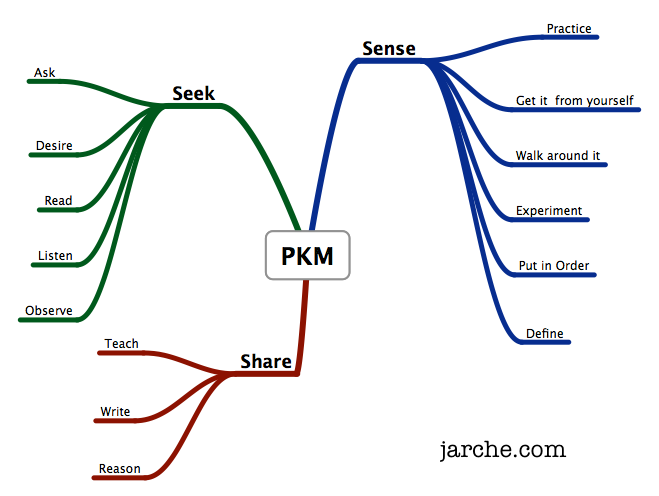
I’ve been curious about curiosity for a long while now. That foundation made it that much more rewarding for me to see it as the current topic for Harold Jarche’s PKMastery workshop. There’s a vulnerability that comes from allowing ourselves to be curious. Yet what that yearning allows for is unparalleled and well worth the costs.
Lifelong Learning
When we are curious, our learning never ends. Getting to work at a university, being invited to speak at many other institutions for higher learning, and having kids who are both in middle school, affords me a never-ending buffet of learning. Sometimes, it can get overwhelming and I need to resort to bookmarking things that seem interesting, but that I may not have time to look to deeply at in the moment. Tagging those bookmarks allow me to uncover resources in the future, when they will be most relevant to something I’m curious about then.
I like tracking my reading in a service called StoryGraph. Setting a minimum goal for books read in a year helps overcome my natural tendency toward my attention going to RSS headline and short-form reading. Most years, I’m struggling to reach the goal, come December. However, my focus on listening to more audio books has allowed me to already have surpassed my 2025 goal.
Healthy Human Relationships
When we focus on being curious about what others thing and having empathy for them, the possibility for having healthy human relationships emerges. It’s easy to focus on “winning” as the sole pursuit of our interactions with others. However, when our focus is on being right, instead of initially on curiosity, we limit the potential for solutions that are geared toward the common good. Covey writes:
Next to physical survival, the greatest need of a human being is psychological survival—to be understood, to be affirmed, to be validated, to be appreciated. When you listen with empathy to another person, you give that person psychological air. And after that vital need is met, you can then focus on influencing or problem solving.
I smiled, as soon as I saw that Jarche had included this beloved clip from Ted Lasso in his writing about curiosity. At this point in the show, Rupert, is “winning” at humiliating his ex-wife (the blonde woman whose expression you can see throughout many of the camera angles during the clip). She doesn’t want to see Ted Lasso also be humiliated by Rupert and is concerned that is exactly what’s about to happen.
However, curiosity wins the day, as does kindness. Lasso says at one point:
Don’t mistake my kindness for weakness.
Curiosity is a powerful aim and one that is infectious. When we resolve to continually fuel our openness and getting better, together, we unleash a powerful problem-solving potential.
Cultivating Curiosity
Jarche writes about curiosity and resolve. He describes the need for a “constant dance between bigger groups of ideas and smaller groups of people working together,” and how necessary both cooperation and collaboration are to effective problem solving and creativity.
In this week’s reading, Jarche reminds us of how needed a human set of skills are today:
The skills required to live in a world dominated by complex and non-routine work requires — creativity, imagination, empathy, and curiosity.
He also stresses the unbounded potential for creativity that we posses, when we focus on curiosity:
While the industrial economy was based on finite resources, a creative economy is not. There is no limit to human creativity. We have to make a new social contract — not based on jobs — but rather enabling a learner’s mindset for life.
Until next time… And until then: Let’s all stay curious.
Two weeks ago, I had the privilege of gathering with higher ed leaders from across the country for our annual Collegis conference, designed to spark candid dialogue about the future of higher education. We were fortunate to bring together leaders from institutions of all types and sizes, recognizing that while their contexts differ, the profound disruption reshaping higher education is affecting them all. As we heard from industry experts and schools “winning” during these unprecedented times, it was so rewarding to see excitement build around how to not just navigating this disruption but embrace and drive it.
We’ve hosted several conferences over the years, but this one felt different. Maybe it was the collective honesty in the room or the mix of optimism and unease we all carried about the future of higher education. Whatever it was, the conversations reminded me how critical it is for our industry to embrace discomfort as a catalyst for progress.
In higher education, disruption is often seen as something that happens to us, driven by external forces we have to react to. But our focus this year was on flipping that script. Instead of responding to disruption, we talked about creating it by becoming the catalysts who challenge long-held models and reimagine how to meet the needs of today’s and tomorrow’s students.
These conversations also reinforced the value of stepping out of the day-to-day to connect with peers and have the kind of honest, intentional conversations that spark real change. I felt honored to be amongst a group of leaders so passionate about the need to evolve for one main reason — the student.
Rethinking what “ready” really means
One thought-provoking statement that stood out to me came from presenter Casey Evans, Chief Operating Officer at ASU EdPlus. She posed: Institutions focus too much on students being college-ready. We need to flip that and ask ourselves, are WE, the college, ready for the students?
It’s a simple reframing, but it changes everything. Too often, we measure readiness as a student’s ability to fit into the systems we’ve built. But what if readiness meant our ability to adapt those systems to meet students where they are?
I spoke with leaders who are looking to do exactly that — using data, technology, and empathy to design experiences that are more flexible, inclusive, and human. These institutions aren’t lowering standards, they’re reimagining them. They’re asking what it means to be student-ready, not system-bound.
The power of deconstruction
Another theme that emerged was around innovation. Fixing broken processes isn’t innovation. Reimagining them is.
I heard from presidents, provosts, and enrollment leaders who are bravely seeking to dismantle long-standing workflows and rebuild them one step at a time. Not because it’s easy or efficient, but because it’s necessary.
That kind of deconstruction takes courage. It means letting go of what feels comfortable and, at times, rebuilding from the ground up with the student experience leading the way. It’s a daunting idea, but real innovation happens when we move past fixing what’s broken and start imagining what’s possible.
Leading through ambiguity
We also explored what it means to lead in an era that’s unpredictable and accelerating. Technology, policy shifts, and political forces are reshaping higher ed faster than ever, often in ways we can’t control.
Change once seemed to follow a pattern. Now it’s fluid — much like unstructured data: constant, complex, and always evolving. Uncertainty isn’t the exception anymore; it’s the environment we operate in.
That’s why intuition alone isn’t enough. Leaders need data to anticipate, adapt, and make confident decisions in real time. True leadership today means creating space for curiosity and collaboration, moving forward even when the path isn’t clear, and trusting that progress is built on motion, not perfection.
Creating space for humanity
Throughout the event, we discussed how technology could better support human connection across the student experience. There’s a real desire to reduce friction in the journey, make data work harder, and give faculty and staff more time to focus on what they do best: connecting, mentoring, and inspiring.
That vision resonates deeply with me because it’s exactly what I believe is possible. Technology isn’t a replacement for human interaction, but it can absolutely enhance it. When designed intentionally and used strategically, it creates space for humanity. It creates space for students to feel seen, for advisors to act sooner, and for institutions to operate with both empathy and precision.
This is the kind of transformation higher ed leaders are striving toward, and it’s one we’re excited to help bring to life.
Looking ahead
As I left DisruptED, I felt both challenged and inspired. Change in higher ed isn’t slowing down. Technology, regulation, and politics are reshaping our world in ways we can’t always control — but how we respond is up to us.
There is no new normal. Continuous, unpredictable change is the norm, and with it comes opportunity. With the right data, strategy, and partners, institutions can move from reacting to leading — anticipating what’s next instead of catching up.
Change isn’t optional, but progress is. And as this community of leaders continues to show, disruption doesn’t divide us. It pushes us forward when we’re bold enough to lead together.
Innovation Starts Here
Higher ed is evolving — don’t get left behind. Explore how Collegis can help your institution thrive.
Kim Fahey is President and CEO of Collegis Education, where she leads strategy, operations, and growth to help higher education institutions leverage data, technology, and talent to achieve measurable outcomes. Since joining Collegis in 2014, Kim has played a pivotal role in scaling the company and evolving it into a premier higher ed solutions provider. A transformative leader with deep experience in technology and operations, she is passionate about driving innovation, building high-performing teams, and delivering exceptional results for Collegis partners.
A chemist from the University of California, Berkeley, was among the trio of scientists awarded the Nobel Prize for Chemistry on Wednesday.
Omar Yaghi, the Berkeley professor; Susumu Kitagawa from Kyoto University in Japan; and Richard Robson from the University of Melbourne in Australia were recognized for their work since the 1990s to develop a new form of molecular architecture that combines metal ions and carbon-based molecules, according to a release from the Royal Swedish Academy of Sciences, which administers the Nobel Prize.
The metal-organic frameworks can harvest water or store toxic gases. The release noted that the frameworks “may contribute to solving some of humankind’s greatest challenges.”
The release says the frameworks are essentially “rooms” because of the large spaces that form in the structure. A Nobel committee member compared it to Hermione Granger’s magical bag in the seventh Harry Potter book, the Associated Press reported. Her small bag eventually contained a tent, books and other provisions. Likewise, the frameworks look small but can hold a lot.
Since the trio’s discoveries, more than 100,000 metal-organic frameworks have been created, according to a news release from Berkeley.
Welcome to TWTQTW for June-September. Things were a little slow in July, but with back to school happening in most of the Northern Hemisphere sometime between last August and late September, the stories began pouring in.
You might think that “back to school” would deliver up lots of stories about enrolment trends, but you’d mostly be wrong. While few countries are as bad as Canada when it comes to up-to date enrolment data, it’s a rare country that can give you good enrolment information in September. What you tend to get are what I call “mood” pieces looking backwards and forwards on long-term trends: this is particularly true in places like South Korea, where short-term trends are not bad (international students are backfilling domestic losses nicely for the moment) but the long-term looks pretty awful. Taiwan, whose demographic crisis is well known, saw a decline of about 7% in new enrolments, but there were also some shock declines in various parts of the world: Portugal, Denmark, and – most surprisingly – Pakistan.
Another perennial back-to-school story has to do with tuition fees. Lots of stories here. Ghana announced a new “No Fees Stress” policy in which first-year students could get their fees refunded. No doubt it’s a policy which students will enjoy, but this policy seems awfully close in inspiration to New Zealand’s First Year Free policy which famously had no effect whatsoever on access. But, elsewhere, tuition policy seems to be moving in the other direction. In China, rising fees at top universities sparked fears of an access gap and, in Iran, the decision of Islamic Azad University (a sort-of private institution that educates about a quarter of all Iranian youth) to continue raising tuition (partly in response to annual inflation rates now over 40%) has led to widespread dissatisfaction. Finally, tuition rose sharply in Bulgaria after the Higher Education Act was amended to link fees to government spending (i.e. more government spending, more fees). After student protests, the government moved to cut tuition by 25% from its new level, but this still left tuition substantially above where it was the year before.
On the related issue of Student Aid, three countries stood out. The first was Kazakhstan, where the government increased domestic student grants increased by 61% but also announced a cut in the government’s famous study-abroad scheme which sends high-potential youth to highly-ranked foreign universities.
One important debate that keeps popping up in growing higher education systems is the trade-off between qualityand quantity with respect to institutions: that is, to focus money on a small number of high-quality institutions or a large number of, well, mediocre ones. Back in August, the Nigerian President, under pressure from the National Assembly to open hundreds of new universities to meet growing demand, announced a seven-year moratorium on the formation of new federal universities (I will eat several articles of clothing if there are no new federal universities before 2032). Conversely, in Peru, a rambunctious Congress passed laws to create 22 new universities in the face of Presidential reluctance to spread funds too thinly.
But, of course, in terms of the politicization of research, very little can match the United States. In July, President Trump issued an Executive Order which explicitly handed oversight of research grants at the many agencies which fund extramural research to political appointees who would vet projects to ensure that they were in line with Trump administration priorities. Then, on the 1st of October (technically not Q3, but it’s too big a story to omit), the White House floated the idea of a “compact” with universities, under which institutions would agree to a number of conditions including shutting down departments that “punish, belittle” or “spark violence against conservative ideas” in return for various types of funding. Descriptions of the compact from academics ranged from “rotten” to “extortion”. At the time of writing, none of the nine institutions to which this had initially been floated had given the government an answer.
The nine universities that were sent the Trump administration’s new deal for higher ed are under increasing pressure to reject the compact.
Multiple major associations representing institutions and faculty have urged them not to sign it. California governor Gavin Newsom has said the University of Southern California and any other university in his state that signs will “instantly” lose billions of state dollars. Faculty groups at the University of Virginia, another institution presented with the compact, overwhelmingly urged university leaders to reject it. A group of progressive student and higher ed worker organizations is circulating a petition that calls on university presidents and boards to “reject the Trump administration’s attempt to cajole universities into compliance through explicit bribery.”
So far, the universities at the center of the fight are remaining mostly mum, saying they’ll review the proposal. Some leaders are hinting they have reservations about signing. But other higher ed leaders and observers say that beyond what those institutions do, the nine-page document represents another escalation in the White House’s precedent-shattering crusade to overhaul postsecondary ed—one that could restrict freedoms at colleges across the nation. They expect the compact will likely serve as a blueprint for the administration’s dealings with other colleges.
“It’s making it really clear that the dominoes are being set up … they’re going to expand this to the rest of higher ed,” said Amy Reid, interim director of PEN America’s Freedom to Learn program.
A White House official told Inside Higher Ed in an email that “other schools have affirmatively reached out and may be given the opportunity to be part of the initial tranche.” The New York Times cited May Mailman, a White House adviser, as saying the compact could be extended to all institutions.
The administration has dangled the compact before universities with promises of extra benefits it hasn’t revealed. It’s an evolution in the White House’s quest to upend higher ed using the blunt instrument of federal funding access. The federal government earlier slashed billions of dollars from Harvard and Columbia Universities and other selective institutions to pressure them to change their internal policies and practices.
But now, the administration has written a boilerplate contract asking colleges to voluntarily agree to overhaul or abolish departments “that purposefully punish, belittle, and even spark violence against conservative ideas,” without further defining what those terms mean. It also asks universities to, among other things, commit to not considering transgender women to be women and to reject foreign applicants “who demonstrate hostility to the United States, its allies, or its values.”
In addition to a murky promise of additional money, the compact can be read as threatening colleges’ current federal funding. Higher ed groups say those that sign are taking a big gamble. The compact says failure to adhere to the terms of the agreement, which are vague, can lead to a loss of all federal funding. But it’s also unclear whether the universities have the freedom to refuse. A line at the end of the compact’s introduction says, “Institutions of higher education are free to develop models and values other than those below, if the institution elects to forego [sic] federal benefits.”
The nine institutions sent the Compact for Academic Excellence in Higher Education aren’t necessarily being asked to sign it. The letter sent to the University of Virginia requested “limited, targeted feedback” on the compact by Oct. 20—before the White House sends invitations to finalize language and sign to universities showing “a strong readiness to champion this effort.”
Lynn Pasquerella, president of the American Association of Colleges and Universities, said many campus leaders worry that, if any institutions do sign the compact, it will start a ripple effect in which other university leaders feel pressured to sign so they don’t lose out on funding.
Joy Connolly—president of the American Council of Learned Societies, a federation of 81 groups including the American Academy of Arts and Sciences and the American Historical Association—added that with this compact, the White House “is using nine months of intimidation tests to take its divide-and-conquer strategy to the next level.”
“If one by one institutions give in and sign, hoping to mitigate the damage later, it will set a truly problematic precedent,” Connolly said. “Some of the most powerful and wealthy institutions on the planet will have agreed to subject their faculty and research and teaching to state approval, and academia will be visibly divided into an insider group and an outsider group.”
Unclear Carrots, Clearer Sticks
According to the letter to UVA—signed by Mailman, Education Secretary Linda McMahon and Vincent Haley, director of the White House’s Domestic Policy Council—universities that sign will reap “multiple positive benefits … including allowance for increased overhead payments where feasible, substantial and meaningful federal grants, and other federal partnerships.” The White House didn’t provide Inside Higher Ed further information on how much extra money signatories would be able to receive.
The compact itself makes no mention about the potential financial benefits of signing.
For this unclear gain, a signatory university would risk all of their federal funding: The compact says “all monies advanced by the U.S. government during the year of any violation shall be returned to the U.S. government.”
Asked to clarify whether a university that refuses to sign could lose all federal funding, White House spokeswoman Abigail Jackson replied in an email simply that “the Administration does not plan to limit federal funding to schools that sign the compact.”
Jackson said universities that do sign “would be given [funding] priority when possible as well as invitations to collaborate with the White House. This is an opportunity for collaboration that all institutions of learning should be excited about.” The White House didn’t grant Inside Higher Ed an interview or answer written requests for more information about the compact’s benefits and how some of its requirements should be interpreted.
Pasquerella, of AAC&U, said the compact is “meant to be vague as a way of fomenting confusion.”
“Part of the strategy, I believe, of this administration is to engage in overly broad, overly vague language that is confusing so it’s not clear when institutions are complying,” Pasquerella said—a form of jawboning that pressures universities to overcomply. She said the compact’s promise of federal funds for signatories and apparent threat of cuts for those who refuse is “not a real choice.”
“It is the continued weaponization of federal funding,” she said. The compact isn’t “reforming higher education but dismantling it and replacing it with institutions that have a conservative ideology.” It disadvantages those institutions that are unwilling to relinquish their academic freedom and other freedoms, such as transgender people’s rights, she said.
Jon Fansmith, senior vice president for government relations at the American Council on Education, expressed concern that institutions that don’t sign could face the same “harassment” Harvard has suffered for refusing the administration’s earlier demands on that university. The administration cut off Harvard’s access to billions of dollars in research funding, placed it on heightened cash monitoring and tried to prevent it from enrolling international students, among other efforts in a growing pressure campaign against the institution.
“Now they’re essentially saying we’re going to create two classes of institutions,” Fansmith said: those “swearing fealty to the administration” and getting extra benefits, and those that are punished.
“That’s a massive step in the wrong direction in the history of American higher education,” he said. He said prioritizing less merit-worthy candidates for federal funding just because they signed the compact is “harmful to the goal of getting the best science performed on behalf of the American people.”
Standing Up
Fansmith noted the compact’s ideas aren’t necessarily new for the administration, but they would add up to “very specific intrusions into institutional policies.” For instance, the compact would mandate that all “undergraduate applicants take a widely-used standardized test … or program-specific measures of accomplishment.” Signatories must also agree that no more than 15 percent of their undergraduates be in the “Student Visa Exchange Program [sic], and no more than 5 percent shall be from any one country.” (The Student and Exchange Visitor Program, not the Student Visa Exchange Program, collects information on international students.)
Reid, of PEN America, said, “The administration has gone from picking off individual schools to selecting a group—a group of well-respected universities, but that for different reasons are seen as perhaps likely to comply—and putting everyone on notice that this is coming for everyone.”
Some of the nine institutions, however, have hinted at reservations about signing. On Friday, Dartmouth College president Sian Leah Beilock noted in a statement that “you have often heard me say that higher education is not perfect and that we can do better. At the same time, we will never compromise our academic freedom and our ability to govern ourselves.”
On Sunday, University of Pennsylvania president J. Larry Jameson said Penn’s “long-standing partnership with the federal government in both education and research has yielded tremendous benefits for our nation,” but also that “Penn seeks no special consideration.” On Monday evening, University of Virginia Board of Visitors chair Rachel Sheridan and interim president Paul Mahoney wrote in a message to the campus community that “it would be difficult for the University to agree to certain provisions in the Compact.”
Reid told Inside Higher Ed that “for those of us who are not at those nine targeted institutions, the question is how do we all respond in a way that bolsters the resolve of any institution to stand up.”
“It is wrong to call this a compact, because there’s nothing mutual about it,” Reid said. “It is a one-sided coercive proposition that has a bow of commonality stuck onto it that it doesn’t deserve. We need to call this what it is, which is an attempt to extort universities, to shut down free expression on campuses, to impose ideological restrictions under another name.”
The plaintiffs, which include the American Association of University Professors, UAW International and UAW Local 481, allege in the lawsuit that numerous researchers and academics will lose their jobs as a result of their institutions not being able to afford the new fee. (An H-1B visa previously cost $2,000 to $5,000.) Universities, along with national labs and nonprofit research institutions, were also exempt from the annual cap on the number of new visas, and it’s unclear whether the new fee will apply to higher ed.
The New York Times reported that this lawsuit “appears to be the first major challenge to the new fee.”
The fee, the complaint states, “will result in significant and potentially catastrophic setbacks to research that benefits the American public and ensures the United States remains a leading source of innovation and expertise. For example, the fee will likely result in sharp cutbacks in the employment of highly talented foreign workers and severe setbacks for university research, graduate programs, and clinical care, compounding an anticipated shortfall of 5.3 million skilled workers over the next decade.”
The lawsuit highlights several specific examples of researchers whose work would be interrupted by this change, including an unnamed plaintiff who studies conditions and diseases that cause blindness.
“Her departure will set back the crucial research she is conducting, disrupting the lab’s ongoing work and ability to secure future research funding, preventing her department from getting any future funding through her, and potentially delaying the availability of treatment for the conditions that are the focus of her research,” it states.
The plaintiffs note in the lawsuit that the $100,000 fee “applies even where workers are already lawfully present in the United States under, for example, a student visa or another immigration status, and are seeking to change to H-1B status.”
They argue in part that the president does not have the statutory authority to increase the fee for H-1B visas. They are asking the judge to nullify the $100,000 fee and allow H-1B visas to be processed as they were previously.
Few have mastered the art of anticipation like Taylor Swift. Even before her album The Life of a Showgirl hit the shelves, she had captivated audiences and dominated the conversation. What’s remarkable isn’t just her star power; it’s the deliberate marketing strategies that blend spectacle, authenticity and fan participation. For leaders, marketers and brand builders in any industry, her approach offers a master class in how to create momentum before a product is even released.
Here are three standout observations from Swift’s launch strategy, along with actionable marketing tips you can put into practice.
Blending High Production With Authentic Self
Swift’s promotional rollout strikes a delicate balance between dazzling spectacle and grounded vulnerability. She teased the album with cinematic visuals—glittering production sets, stylized promo videos and bold aesthetics—while also poking fun at herself in playful, self-aware moments. She’ll show the sparkle, but also the cat hair on her dress.
Marketing Tip: Pair your most polished campaigns with candid behind-the-scenes content. Letting your audience see the human side of your work builds trust and relatability, while the high production values set the tone of aspiration. The contrast makes each side stronger.
Enrollment Marketing Tip: Mix in both staged and spontaneous content. Let your student ambassadors be themselves online and on tours. In your photos and social posts, let your content show some of the laughs, awkward moments and behind-the-scenes interactions.
Using Cryptic Drip Campaigns and Symbolism
From shifting color palettes to symbolic imagery and cryptic hints, Swift feeds her audience just enough to keep them speculating. Fans become detectives, dissecting every clue and turning the rollout itself into a participatory event. Bringing fans into her music in an intentional way is one of Taylor’s superpowers. Brands and even other industries adopt her motifs (orange, sparkles), amplifying her reach and making the symbols part of the cultural conversation.
Marketing Tip: Don’t reveal everything at once. Use teaser elements such as colors, tag lines or subtle product hints to spark curiosity and invite your audience to co-create the narrative. Anticipation builds energy and energy drives engagement.
Enrollment Market Tip: Add interactive content to everything you do, including countdown timers, digital scratch-offs and interactive maps to highlight your campus. Engage your prospective students as participants in the recruitment process.
Extending the Album Into Experiences
This launch was about more than just music. Swift staged limited theatrical events that mixed performance with commentary, offered exclusive vinyl editions with collectible packaging and framed her announcements as headline-worthy moments (like unveiling details on a podcast). The album is no longer just an album; it’s a multiplatform experience that fans feel they need to participate in.
Marketing Tip: Think beyond the product itself. Create extensions—events, companion content or limited-edition releases—that transform your core offering into a cultural experience. Scarcity, exclusivity and immersion turn products into movements.
Enrollment Marketing Tip: For every standard event you hold, there is an opportunity to create a special edition right alongside it. For example, before or after your normal local event or campus tour, hold an “exclusive session” for a certain group. Use your campus events, athletics, engineering or academic competitions to extend for a sneak peek or behind-the-scenes access for prospective students. Additionally, use events in your community, such as performing arts, minor league baseball, or an NFL game outing, to provide a special prospective student event. It does not need to cost much; be creative, test and adjust as you go.
Taylor Swift’s approach to The Life of a Showgirl is more than entertainment marketing—it’s a blueprint for building anticipation, deepening connection and extending brand impact. By blending high production with authenticity, leveraging symbolism and drip campaigns, and turning her release into an immersive experience, she ensures that the conversation begins long before release day.
For marketers in any industry, especially higher education, the takeaway is important: Key moments are no longer about flipping a switch on release day. They are about crafting an unfolding story, one that your audience wants to decode, share and experience with you.
James Rogers is chief executive officer for 3 Enrollment Marketing.
Recently published data from the educational consulting group EAB shows that first-year students at two-year colleges want help connecting with peers on campus; nearly half reported dissatisfaction with their social lives since starting college. The report outlines ways to create engagement and other priorities for community college students.
Community college in context: First- to second-year retention is the greatest predictor of completion for students enrolled in a two-year degree program, according to data from the National Student Clearinghouse Research Center.
Community colleges are among the most diverse higher ed institutions, with students more likely to be working adults, parents and first-generation learners compared to their four-year peers.
The EAB data identifies key trends in first-year community college students’ experiences and how institutions can improve their retention.
Methodology
EAB’s survey included responses from over 12,600 first-year college students, including 1,531 enrolled in community colleges. The survey was fielded in February and March 2024.
The data: When asked to name the most disappointing elements of their college experience so far, students indicated they felt disconnected from the campus community. Forty-two percent of respondents said their social life was a top disappointment, followed by not making friends or meeting new people. An additional 35 percent of students said they felt as though they didn’t belong.
This mirrors results from a 2025 survey conducted by Inside Higher Ed and Generation Lab, which found that only 20 percent of two-year students rated their sense of social belonging at college as above average or excellent, with the greatest share of respondents indicating they have an average sense of belonging (49 percent). By comparison, 29 percent of four-year students said they had an above average or excellent sense of belonging.
EAB’s report recommends that two-year colleges create small interventions to support students’ desire for community, including arranging drop-in events, hobby groups or peer mentorship programs. Making clubs easier to join through flexible meeting times or virtual meetings can also accommodate learners’ busy schedules, according to the report.
One-third of respondents to EAB’s survey said they were disappointed by classes and academics, and one in five students said faculty had disappointed them.
EAB’s community college survey also found that 32 percent of respondents had experienced bias or exclusion in some capacity since starting college, with the greatest share of respondents saying they faced criticism for their physical appearance or for the high school they attended. The results indicate a need for mechanisms for students to report harassment and connect with mental health supports, according to EAB’s report.
When asked what a “safe campus” means to them, the greatest share of community college respondents selected sufficient support for mental health and wellness (67 percent) and low or no property crime (67 percent). A similar number indicated that low incidence of sexual assault was key to creating a safe campus environment (66 percent).
Mental health concerns are one of the top reasons students of all backgrounds leave higher education, but community college students are even more vulnerable because they can be less financially secure or have fewer resources to address poor mental health.
However, community college counseling centers often have smaller staffs and serve only a fraction of their enrolled students; 2025 data from the Association for University and College Counseling Center Directors found that only 5 percent of all community college students receive support from their counseling center.
When asked what best represents the value of higher education, successful job placement after graduation was the top choice among community college students (44 percent), followed by availability of scholarships (42 percent). Internships, co-ops and active learning experiences (33 percent) were less important than generous financial aid awards (38 percent) and moderate tuition prices.