Blog

  • U.S. Remains Leader in Interdisciplinary Science

    U.S. Remains Leader in Interdisciplinary Science

    U.S. colleges and universities lead the world in interdisciplinary science research according to the Times Higher Education Interdisciplinary Science Rankings 2026 (THE is Inside Higher Ed’s parent company). 

    American institutions occupy six of the top 10 slots on this year’s table. The Massachusetts Institute of Technology is first for the second year in a row, followed by Stanford University in second, also retaining its 2025 position. The California Institute of Technology rose one spot to third place, and the University of California, Berkeley, debuts on the list in fourth position. 

    Duke University dropped from fifth to sixth rank this year, and the Georgia Institute of Technology appears on the list for the first time, coming in seventh. 

    On a country level, nearly a quarter of the top 100 institutions in the ranking are from the US, more than any other nation. 

    Launched in 2024 in association with Schmidt Science Fellows, the rankings were created to improve scientific excellence and collaboration across disciplines and to help universities benchmark their interdisciplinary scientific work

    THE broadened the interdisciplinary scope of research for this year’s list to cover any project that comprises multiple scientific disciplines or one or more scientific disciplines combined with the social sciences, education, psychology, law, economics or clinical and health.

    The U.S.’s performance in the rankings is driven by high scores for outputs metrics, which include the number and share of interdisciplinary science research publications, the citations of interdisciplinary science research, and the reputation of support for interdisciplinary teams. 

    “For more than 80 years, research universities have advanced our understanding of the world, leading to dramatic improvements in health, economic prosperity, and national security. That work fundamentally is done best when people ideate and collaborate without regard for disciplinary boundaries within and between scientific areas,” Ian A. Waitz, vice president for research at MIT, said in a statement. 

    “Scientific research that breaks down academic silos and crosses traditional disciplines is increasingly understood to be essential for the next generation of big breakthroughs and the key to solving the world’s most pressing problems,” said Phil Baty, THE’s chief global affairs officer.

    “The world’s biggest challenges are highly complex and require cutting-edge knowledge and fresh ideas from a wide range of specialisms.”

    Source link

  • PXED — A $22 Billion Student‑Debt Gamble Investors Should Beware

    PXED — A $22 Billion Student‑Debt Gamble Investors Should Beware

    Warning to Investors: Phoenix Education Partners (PXED) may present itself as a cutting‑edge solution in career-focused higher education, but it’s built on the same extractive infrastructure that powered the University of Phoenix. With nearly a million students still owing an estimated $22 billion in federal loans, backing PXED isn’t just a financial bet — it’s a moral and reputational risk.

    PXED’s leadership includes powerful private-equity players: Martin H. Nesbitt (Co‑CEO of Vistria and PXED trustee), Adnan Nisar (Vistria), and Theodore Kwon and Itai Wallach (Apollo Global Management). Also in the mix is Chris Lynne, PXED’s president and a former Phoenix CFO intimately familiar with UOP’s controversial enrollment and marketing strategies. These are not educational reformers — they are dealmakers aiming to extract value from a student-debt pipeline.

    Higher Education Inquirer’s College Meltdown Index highlights how PXED fits into a broader financialization of higher education. Rather than reforming the University of Phoenix, its backers have resurrected it under a new brand — one that continues to enroll vulnerable adult learners, harvest federal aid, and operate with considerably less public oversight. 

    Whistleblowers previously documented that Phoenix pressured recruitment staff to falsify student credentials, enrolling people who wouldn’t otherwise qualify for federal aid. Courses were allegedly kept deliberately easy — not to teach, but to keep students “active” enough to trigger aid disbursements. Internal marketing also exaggerated job prospects and corporate partnerships (e.g., with Microsoft and AT&T) to entice students. 

    PXED may lean on a three‑year default rate (often cited around 12–13%), but that number is deeply misleading. Many UOP students stay stuck in deferment, forbearance, or income-driven repayment, masking the real long-term risk of non-payment. This is not just a short-term liability — it’s a potentially massive, multiyear financial exposure for PXED’s backers.

    There was a significant FTC settlement that canceled $141 million in student debt and refunded $50 million to some students. But the scale of harm far exceeds that payout. Untold numbers of borrowers still have unresolved Borrower Defense claims, and the reputational risk remains profound.

    Beyond financial concerns, there’s a major ethical dimension. HEI’s Divestment from Predatory Education argument makes a compelling case that investing in companies like PXED — or in loan servicers that profit from student debt — is not just risky, but morally indefensible. According to HEI, institutional investors (including university endowments, pension funds, and foundations) are complicit in a system that monetizes students’ aspirations and perpetuates financial harm. 

    For investors, the message is clear: Phoenix is not merely an education play — it’s a high-stakes, ethically fraught extraction machine built on a legacy of indebtedness and regulatory vulnerability.

    Unless PXED commits to real transparency, independent reporting on student outcomes, and accountability mechanisms — including reparations or debt relief — it should be approached not as a social-growth story, but as a dangerous gamble.


    Sources

    • HEI. “Divestment from Predatory Education Stocks: A Moral Imperative.” Higher Education Inquirer

    • HEI. “The College Meltdown Index: Profiting from the Wreckage of American Higher Education.” Higher Education Inquirer

    • HEI. “What Do the University of Phoenix and Risepoint Have in Common? The Answer Is a Compelling Story of Greed and Politics.” Higher Education Inquirer

    • HEI. “University of Phoenix Uses ‘Sandwich Moms’ to Sell a Debt Trap.” Higher Education Inquirer

    • HEI. “New Data Show Nearly a Million University of Phoenix Debtors Owe $21.6 Billion.” Higher Education

    Source link

  • Law Internships For High School Students: Find, Apply, And Succeed

    Law Internships For High School Students: Find, Apply, And Succeed

    How to Get Started

    Getting an internship in law while you’re still in high school is a great way to learn about the field, get better at your job, and make your college applications stronger. The College Planning Center helps high school students find law internships for high school students at law firms, government offices, and other legal opportunities.
    This guide will show you how to find, apply for, and succeed in summer law internships for high school students, FBI internships for high school students, or even international programs such as United Nations high school internships.

    The Benefits of Law Internships

    High school legal internships give students hands-on experience working in law offices, courts, government agencies, or international organizations. Interns gain:

    • Exposure to legal jobs and responsibilities
    • Opportunities to network with professionals
    • Enhancement of college applications
    • Improvement of research, writing, and communication skills

    The College Planning Center has seen how law internships for high school students help students clarify career goals and build confidence in professional settings.

    Different Types of Law Internships for High School Students

    Law Office Internships for Teens

    Some law firms have shadowing or internship programs where students assist with research, attend court sessions, and learn about legal procedures. Paid and unpaid opportunities are often available in metropolitan areas.

    Government Internships for High Schoolers

    Sometimes, high school students can work as interns in government offices, district attorneys’ offices, and public defenders’ offices. These programs teach students about making laws, public policy, and how courtrooms work.

    Summer Law Internships

    High school students can engage in summer law internships for high school students lasting 6–10 weeks. Most programs have mentoring, workshops, and chances to do legal research and casework.

    Internships with the FBI for High School Students

    The FBI has programs that teach students about law enforcement, criminal investigations, cybersecurity, and how federal law enforcement works.

    White House Internships for High School Students

    Some White House programs take high school interns who are interested in law, government, and public policy. Interns do policy briefs, research projects, and administrative work.

    International Law Internships

    Students can learn about human rights and global law through programs like the United Nations High Commissioner for Refugees internship or United Nations high school internships.

    How to Help High School Students Get Law Internships

    Resources for Schools and Communities

    Students can get internships at local law firms, courts, and government offices through their high school counselors, law clubs, and community groups. The College Planning Center works with other organizations to connect students with real opportunities.

    Websites That Can Help You Find Internships

    Websites like Idealist, InternshipPrograms.com, and GoAbroad list internships in the US and internationally. Use these along with The College Planning Center’s internship finder to locate legal internships for high school students.

    Getting Help and Meeting New People

    Parents, mentors, and community members can help uncover opportunities. Attending workshops, law camps, and pre-college programs increases your chances of securing a law internship.

    Conclusion

    High school students who participate in law internships for high school students gain hands-on legal experience, develop transferable skills, and strengthen their academic and professional profiles. Programs offered through the College Planning Center make it easier to locate legitimate opportunities, refine applications, and connect with mentors.

    The first step toward a future career in law is securing your first internship. Start early, stay organized, and leverage resources like the College Planning Center to make it happen.

    Source link

  • LAWSUIT: New Jersey school board member silenced for asking constituents about a proposed tax increase

    LAWSUIT: New Jersey school board member silenced for asking constituents about a proposed tax increase

    ALLOWAY TOWNSHIP, N.J., Nov. 20, 2025 — A local school board member’s Facebook post to community members about a tax hike should have started a conversation — instead, it led to censorship.

    The Foundation for Individual Rights and Expression is suing the commissioner of New Jersey’s Department of Education and members of the state’s School Ethics Commission to stop them from abusing a law to chill the speech of an elected school board member who used social media to seek her constituents’ input. 

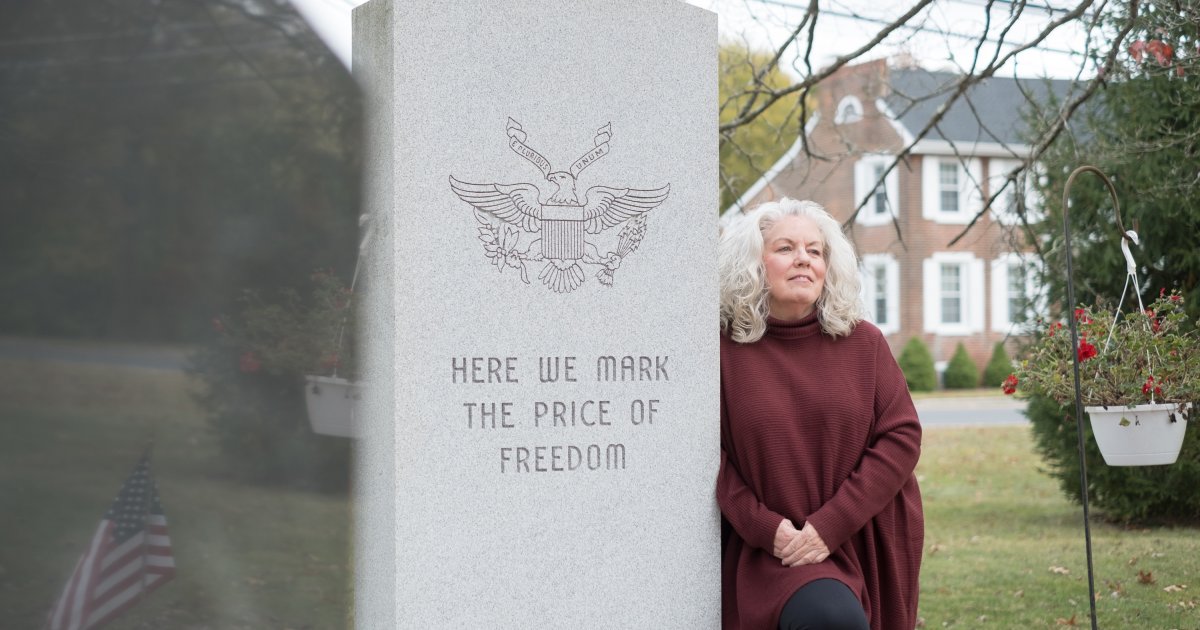
    “I didn’t join the school board to be told to shut up,” said Gail Nazarene, an elected school board member, Navy veteran, and grandma in Alloway Township. “New Jersey officials claim the authority to punish me simply for asking folks questions about important issues, particularly when it affects their wallets. I should be free to communicate with constituents and get their views without being censored by state officials.”

    COURTESY PHOTOS OF GAIL NAZARENE

    In April, Gail used Facebook to discuss tax increases and other school issues with constituents. In one post, she asked, “As a resident of Alloway, I am wondering what other residents think about a 9-15% school tax increase?” She clarified in her later posts that she was asking in her personal capacity. But another school board member saw the posts and filed a complaint against her, claiming Gail had violated New Jersey’s School Ethics Act because she allegedly had spoken on the board’s behalf. The complaint is pending before the state’s School Ethics Commission. 

    “Americans deserve to know what their elected officials think about important issues,” said FIRE attorney Daniel Zahn. “New Jersey is muzzling elected officials and preventing them from talking with their community, the very people they were elected to represent.”

    The state broadly interprets the School Ethics Act to bar elected officials from discussing issues relating to schools on social media. And this isn’t the first time it’s done so. The School Ethics Commission has previously warned elected officials against engaging with constituents on social media and previously interpreted the act to prevent elected school board members from discussing matters of public concern on social media and in op-eds

    But the First Amendment protects Gail’s right to speak freely on such issues. 

    Gail has stopped soliciting constituent feedback online. She fears any posts about school board issues will lead to punishment, including reprimand, censure, suspension, or removal. But she also is concerned about the loss of First Amendment freedoms for her and her constituents. 

    “When the state silences school board members, parents and taxpayers are kept in the dark,” said FIRE attorney Greg Greubel. “The School Ethics Act can’t be turned into an unconstitutional gag rule.”

    Today’s federal lawsuit asks the court to declare New Jersey’s School Ethics Act unconstitutional as interpreted by the state and stop its use against elected officials speaking out about public issues. 

    The Foundation for Individual Rights and Expression (FIRE) is a nonpartisan, nonprofit organization dedicated to defending and sustaining the individual rights of all Americans to free speech and free thought — the most essential qualities of liberty. FIRE educates Americans about the importance of these inalienable rights, promotes a culture of respect for these rights, and provides the means to preserve them.

    CONTACT
    Katie Stalcup, Communications Campaign Manager, FIRE: 215-717-3473; [email protected]

    Source link

  • 2025 DataOnDemand Order Form – CUPA-HR

    2025 DataOnDemand Order Form – CUPA-HR

    This form is for ordering 2025 DataOnDemand (DOD) subscriptions ONLY. 2025 DOD subscriptions feature data collected in fall of 2024.

    • Access Expiration: Access to 2025 DataOnDemand subscriptions will expire at 12:01 a.m. ET on February 9, 2026.
    • User Access: Once payment is received in full, your institution’s chief HR officer (CHRO) or Primary CUPA-HR Contact will be able to assign access to authorized subscription users at your institution. See Manage DOD Access for details.

    To pre-order 2026 DOD subscriptions — accessible February 12, 2026–February 8, 2027 — use our standard ordering system. 2026 DOD subscriptions feature data collected this fall.

    Participation discounts on DOD subscriptions apply to the specific surveys (and survey years) in which your institution participated.


    Source link

  • Podcast: Reform UK, local skills, students at work

    Podcast: Reform UK, local skills, students at work

    This week on the podcast we examine what the rise of Reform UK – and new insight into its prospective voters – might mean for universities, international education, and the wider public legitimacy of higher education.

    Plus we discuss Skills England’s new guidance on local skills improvement plans – and the move to place higher education, up to postgraduate level, at the heart of local skills ecosystems – and a new study of student working lives that reveals how paid employment alongside full-time study is reshaping participation, wellbeing, and outcomes.

    With Sam Roseveare, Director of Regional and National Policy at University of Warwick, Alex Favier, Director at Favier Ltd, Jen Summerton, Operations Director at Wonkhe and presented by Jim Dickinson, Associate Editor at Wonkhe.

    Labour takes steps to bring higher education and local skills closer together

    Long hours and poor working conditions hit students’ outcomes hard

    The surprising pragmatism of Reform UK voters towards international education

    Higher education’s civic role has never been more important to get right

    You can subscribe to the podcast on Apple Podcasts, YouTube Music, Spotify, Acast, Amazon Music, Deezer, RadioPublic, Podchaser, Castbox, Player FM, Stitcher, TuneIn, Luminary or via your favourite app with the RSS feed.

    Source link

  • It is up to all of us to stand up to bullies

    It is up to all of us to stand up to bullies

    In the northern part of the country of a thousand hills, amidst volcanoes and the freezing air, there resides a Catholic high school. My name is Anderson and this is my story. I went to study there right after finishing my primary school.

    The school was competitive; the smartest, most intelligent and most talented students were found there. It was a school of sciences and it used to be in the top five best high schools in the country. It had an amazing environment. Though strict academically, the teachers were among the best.

    When I arrived, it wasn’t that hard to fit in because my elder sister had studied there before me. Some senior students recognized the resemblance and helped me get used to the school. This also gave me the privilege of not being bullied.

    Normally, new students in S1 were bullied by seniors and couldn’t report it because they were scared of what might happen. The bullying was actually different based on gender. Boys were beaten severely, while girls were pressured into “dating” seniors. You might think dating sounds harmless, but it often involved bullying too.

    There was a male friend of mine who was told to sit on his fork (the one used when we are eating) and say his weight — if he didn’t, the other students would beat him badly. This was also ridiculous because a fork cannot be used to measure someone’s weight. Another was given a leaf from a tree and told to use it to call his parents — again, he was beaten. This was a type of bullying because obviously you can’t talk on the leaf; they wanted him to pretend that the leaf is the phone.

    On the other hand, my girlfriend was called out by senior boys, made to greet each one in a way they preferred and surrounded by a big circle of them. In summary, the first year was really hard for some students.

    The bullied become bullies

    By the second year, we were seniors to new students and some of us began to bully them. At this point, I understood the perspective of bullies — though it didn’t justify their actions. Seeing new students, you feel the tendency to assert your seniority and demand respect.

    Some classmates acted out of revenge, targeting new students for what they had endured. On my side, I welcomed them with kindness and tried to help them adapt, knowing how hard it had been.

    We used to have shows, which were my favorite part. I loved fashion and wanted to model in the shows, but I was always scared. During the shows, boys would often stand at the entrance, waiting to touch the girls’ bodies; breasts, buttocks, even private parts. Girls could complain, but some students and authorities argued that some girls “wanted to be touched.”

    Others said that if girls didn’t want it, they could avoid participating or avoid wearing revealing clothes. Though some authorities promised to investigate, they often ignored the problem. Shows were considered entertainment, so the school left the organization to students. At some point, students feared reporting, worried the school might ban shows entirely.

    It wasn’t only during shows. In class, we had a group of bullies we studied with. When the lights went out, girls would run outside immediately, because boys would touch them by force in the darkness.

    When harassment is condoned

    Once, I was sitting in class, my head on the desk, taking a nap. The lights went out and I didn’t notice. I woke up surrounded by boys. When I tried to leave, they blocked my way. One of them, called Chris, touched my breasts and others grabbed me as well. I felt scared, ashamed and angry. They were about to do more, but fortunately, other students started entering the class, and they left.

    I laid my head back on the desk and cried. When people asked what was wrong, I couldn’t say. I had few friends; just my twin sister and another girl. When I reached the dormitory, I cried the whole night. My friend checked on me and though I hesitated at first, she comforted me.

    I opened up and told her the story. To my surprise, she had also been harassed by the same boy, Chris. He was undisciplined and we didn’t know how to report him; there was no evidence and I wasn’t ready.

    I spent months blaming myself. I was ashamed, hated myself and even had suicidal thoughts. My heart felt broken into pieces and no day passed without crying. But my twin sister was there for me. We cried together and I felt comforted. She suggested that we learn karate so no boy would dare harass me again.

    We joined a karate club at school. It was amazing. The group was friendly, teaching discipline, teamwork and flexibility. Chris still mocked me, but I knew he was scared. In class, he never bullied me again. I continued learning karate even in other schools.

    Fighting harassment

    At other schools, I began my journey in leadership. I was voted Head Girl at two schools, started reading about feminism and realized I was a feminist. I began challenging unfair school policies that hindered one gender. On many campuses, girls were forced to do cleaning chores because culture expected them to be “decent” and “clean.”

    Boys were allowed privileges girls could not have, without clear reason. It was a hard battle because authorities were biased. When I finished high school, I was voted Minister of Gender Promotion at my campus.

    Reflecting on my high school experience, I realized many other girls knew stories of friends who were sexually assaulted and who couldn’t report it. Sometimes it was done to them by teachers or fellow students or authorities.

    Schools often silence reports to protect their reputation. I understand that, but it shouldn’t come at the cost of student safety. There weren’t reporting platforms in place, but when girls tried to report, they were sometimes blamed, told they “wanted it.”

    All of this motivated me to start a high school research project to assess the impact of school policies, sexual harassment and sextortion (this means when someone asks for sexual intercourse in exchange for a certain favor. In this context it may be to give you grades or other favors which you can get after having sex with that person offering it) on gender equality outcomes in high schools.

    I am still working on my proposal, applying feedback and hoping for approval. As a survivor, I want to help my younger sisters get justice. I want to ensure no other girl cries alone at night, hiding the trauma she endured. I want to be their voice and advocate for solutions as youth.

    This is my story — though it is still being written and it is far from over.


    Questions to consider:

    1. How can someone who is bullied become a bully?

    2. Where do you think that some people get the idea that sexual harrassment is acceptable?

    3. Have you ever been bullied or felt harrassed at school?

    Source link

  • SUNY enrollment grew 2.9% in fall 2025, continuing upward trend

    SUNY enrollment grew 2.9% in fall 2025, continuing upward trend

    This audio is auto-generated. Please let us know if you have feedback.

    Dive Brief:

    • The State University of New Yorks fall 2025 enrollment rose 2.9% over last year, marking the third straight year of growth at the public system after a decade of steady student losses.
    • Enrollment in the 64-college system reached 387,363 students this fall. SUNY also experienced outsized first-time undergraduate enrollment growth this fall, with new students increasing by 3.1% to 70,401.
    • However, SUNY’s recent enrollment growth — up 6.5% since 2022 — is still well below the 500,000-student goal New York Gov. Kathy Hochul set that year.

    Dive Insight:

    From 2012 to 2022, SUNY’s enrollment steadily declined, losing more than a fifth of its students. Hochul has made changing SUNY’s fortunes, and the state’s public higher education more broadly, a policy priority since taking office in 2021.

    SUNY Fall Enrollment

    The university system lost roughly 100,000 students between fall 2012 and fall 2022.

    In that time, New York made completing the Free Application for Federal Student Aid a high school graduation requirement beginning in the 2024-25 academic year, a move SUNY supported publicly.

    SUNY has also introduced direct admissions at community colleges and guaranteed admissions at its selective colleges. Direct admissions programs offer students college acceptance without them first needing to apply, whereas guaranteed admissions programs generally promise students a spot if they submit an application and meet certain conditions.

    In fall 2025, headcounts at SUNY’s 30 community colleges jumped 5% to 173,893 students. Their first-time enrollment also grew, rising 4.8% to reach 34,425 students.

    Hochul on Tuesday partly attributed the enrollment growth at the system’s community colleges to the SUNY Reconnect initiative, launched earlier this year. 

    The program, also known as the Opportunity Promise Scholarship, allows New York residents ages 25 to 55 with no prior degree to attend community college for free if they study certain high-demand fields, such as nursing and engineering.

    As of Nov. 13, 5,608 people enrolled at SUNY community colleges through Reconnect, according to institutional data. Hochul’s office said each student in the program saves an average of $2,000 per year.

    Transfer enrollment also increased at SUNY in fall 2025, up 4.7% to 26,301 students.

    Like overall enrollment, however, the number of transfer students, first-time students, and students at community colleges still fell well below 2015 numbers.

    In contrast to SUNY’s overall growth this year, international enrollment dipped amid federal attacks on foreign students and an increasingly complicated visa landscape.

    Overall international enrollment at SUNY’s colleges declined 3.9% to 20,608 students. 

    The recently released annual Open Doors report found that international enrollment in the U.S. reached an all-time high in fall 2024.  But its preliminary fall 2025 survey of 825 colleges shows their international enrollment dropped 1% this term, driven by a 12% decline in foreign graduate students.

    SUNY’s institutional data aligned with these findings. Declines were steepest at doctoral degree-granting universities, where enrollment fell 6.9% to 15,352 students. International graduate enrollment decreased 13.8% compared to fall 2024, according to Hochul’s office.

    Other institutional types — the system’s comprehensive and technology colleges — saw increases, though they only enroll a combined 2,216 international students. 

    Source link

  • The digital advantage in schools 

    The digital advantage in schools 

    Key points:

    When I first stepped into my role overseeing student data for the Campbell County School District, it was clear we were working against a system that no longer served us.

    At the time, we were using an outdated platform riddled with data silos and manual processes. Creating school calendars and managing student records meant starting from scratch every year. Grade management was clunky, time-consuming, and far from efficient. We knew we needed more than a patchwork fix–we needed a unified student information system that could scale with our district’s needs and adapt to evolving state-level compliance requirements. 

    Over the past several years, we have made a full transition to digitizing our most critical student services, and the impact has been transformational. As districts across the country navigate growing compliance demands and increasingly complex student needs, the case for going digital has never been stronger. We now operate with greater consistency, transparency, and equity across all 12 of our schools. 

    Here are four ways this shift has improved how we support students–and why I believe it is a step every district should consider:

    How centralized student data improves support across K-12 schools

    One of the most powerful benefits of digitizing critical student services is the ability to centralize data and ensure seamless support across campuses. In our district, this has been a game-changer–especially for students who move between schools. Before digitization, transferring student records meant tracking down paper files, making copies, and hoping nothing was lost in the shuffle. It was inefficient and risky, especially for students who required health interventions or academic support. 

    Now, every plan, history, and record lives in a single, secure system that follows the student wherever they go. Whether a student changes schools mid-year or needs immediate care from a nurse at a new campus, that information is accessible in real-time. This level of continuity has improved both our efficiency and the quality of support we provide. For districts serving mobile or vulnerable populations, centralized digital systems aren’t just convenient–they’re essential.

    Building digital workflows for student health, attendance, and graduation readiness

    Digitizing student services also enables districts to create customized digital workflows that significantly enhance responsiveness and efficiency. In Campbell County, we have built tools tailored to our most urgent needs–from health care to attendance to graduation readiness. One of our most impactful changes was developing unified, digital Individualized Health Plans (IHPs) for school nurses. Now, care plans are easily accessible across campuses, with alerts built right into student records, enabling timely interventions for chronic conditions like diabetes or asthma. We also created a digital Attendance Intervention Management (AIM) tool that tracks intervention tiers, stores contracts and communications, and helps social workers and truancy officers make informed decisions quickly. 

    These tools don’t just check boxes–they help us act faster, reduce staff workload, and ensure no student falls through the cracks.

    Digitization supports equitable and proactive student services

    By moving our student services to digital platforms, we have become far more proactive in how we support students–leading to a significant impact on equity across our district. With digital dashboards, alerts, and real-time data, educators and support staff can identify students who may be at risk academically, socially, or emotionally before the situation becomes critical. 

    These tools ensure that no matter which school a student attends–or how often they move between schools–they receive the same level of timely, informed support. By shifting from a reactive to a proactive model, digitization has helped us reduce disparities, catch issues early, and make sure that every student gets what they need to thrive. That’s not just good data management–it’s a more equitable way to serve kids.

    Why digital student services scale better than outdated platforms

    One of the most important advantages of digitizing critical student services is building a system that can grow and evolve with the district’s needs. Unlike outdated platforms that require costly and time-consuming overhauls, flexible digital systems are designed to adapt as demands change. Whether it’s integrating new tools to support remote learning, responding to updated state compliance requirements, or expanding services to meet a growing student population, a digitized infrastructure provides the scalability districts need. 

    This future-proofing means districts aren’t locked into rigid processes but can customize workflows and add modules without disrupting day-to-day operations. For districts like ours, this adaptability reduces long-term costs and supports continuous improvement. It ensures that as challenges evolve–whether demographic shifts, policy changes, or new educational priorities–our technology remains a reliable foundation that empowers educators and administrators to meet the moment without missing a beat.

    Digitizing critical student services is more than a technical upgrade–it’s a commitment to equity, efficiency, and future readiness. By centralizing data, customizing workflows, enabling proactive support, and building scalable systems, districts can better serve every student today and adapt to whatever challenges tomorrow may bring.

    Latest posts by eSchool Media Contributors (see all)

    Source link

  • MAGA Trump Influencers TARGET Gen Z in Extremist GOP TAKEOVER (Political Punk)

    MAGA Trump Influencers TARGET Gen Z in Extremist GOP TAKEOVER (Political Punk)

    The MAGA movement is recruiting a new generation… and they’re doing it through the manosphere. From Nick Fuentes to Andrew Tate, a growing army of Trump-aligned influencers is targeting Gen Z boys who feel left behind… promising power, purpose, and belonging while feeding resentment and hate. This isn’t random… it’s a strategy. The “alpha” pipeline is reshaping the Republican Party from the inside out, one lonely teenager at a time. Watch how these extremist influencers are using religion to turn alienation into political weaponry… and building Trump’s future GOP.

    Source link