Hello! This is Christina Samuels, the early education editor here at Hechinger.
By now, I hope you’ve had a chance to read my colleague Jackie Mader’s story about the important role that Head Start plays in rural communities. While Jackie set her story in western Ohio, she also interviewed Head Start parents and leaders in other parts of the country and collected their views for a follow-up article.
In a fortunate bit of timing, the advocacy group First Five Years Fund published the results of a survey it commissioned on rural Americans and their feelings on child care access and affordability. Like the people Jackie interviewed, the survey respondents, more than half of whom identified as supporters of President Donald Trump, said they had very positive views of Head Start. The federally funded free child care program received positive marks from 71 percent of rural Republicans, 73 percent of rural independents and 92 percent of rural Democrats.
The survey also found that 4 out of 5 respondents felt that finding quality child care is a major or critical problem in their part of the country. Two-thirds of those surveyed felt that spending on child care and early education programs is a good use of taxpayer dollars, and a little more than half said they’d like to see more federal dollars going to such programs.
First Five Years Fund was particularly interested in getting respondents to share their thoughts on Head Start, said Sarah Rubinfield, the managing director of government affairs for First Five Years Fund. The program has been buffeted by regional office closures and cuts driven by the administration’s Department of Government Efficiency.
“We recognize that these are communities that often have few options for early learning and care,” Rubinfield said.
In the survey, rural residents said they strongly supported not just the child care offered by Head Start, but the wraparound services such as healthy meals and snacks and the program’s support for children with developmental disabilities. Though Head Start programs are federally funded, community organizations are the ones in charge of spending priorities.
“Rural voters want action. They support funding for Head Start and for child care. They want Congress to do more,” Rubinfield said. Though the “big beautiful bill” signed into law in July expands the child care tax credit for low-income families, survey respondents “recognized that things were not solved,” she added.
The First Five Years Fund survey was released just a few days before a congressional standoff led to a government shutdown. The shutdown is not expected to touch Head Start immediately, said Tommy Sheridan, the deputy director of the National Head Start Association, in an interview with The New York Times. The 1,600 Head Start programs across the country receive money at different points throughout the calendar year; eight programs serving about 7,500 children were slated to receive their federal funding on Oct. 1, Sheridan told the Times. All should be able to continue operating, as long as the shutdown doesn’t last more than a few weeks, he said.
“We’re watching with careful concern but trying not to panic,” Rubinfield said. “We know the impacts may not be immediate, but the longer this goes on, the harder the impacts may be for families and programs.”
This story about rural Americans was produced by The Hechinger Report, a nonprofit, independent news organization focused on inequality and innovation in education. Sign up for the Hechinger newsletter.
The Hechinger Report provides in-depth, fact-based, unbiased reporting on education that is free to all readers. But that doesn’t mean it’s free to produce. Our work keeps educators and the public informed about pressing issues at schools and on campuses throughout the country. We tell the whole story, even when the details are inconvenient. Help us keep doing that.
Ever call a service provider only to get bounced between departments, retelling your story to every new agent, each one promising a fix that never comes? You hang up frustrated, unheard, and uncertain.
This same dynamic plays out in higher ed every day. A prospective student tells an admissions counselor, “I need to finish my graduate degree in one year.” That context gets lost in the handoff. The student success team never hears it. Course sequencing doesn’t line up. Frustration builds. Momentum stalls.
That isn’t just a communication slip. It’s a broken promise.
Too often, institutions treat the student journey as a series of separate phases — marketing handles outreach, admissions manages enrollment, and student success supports retention — but students don’t experience their education in phases. They experience it as one journey.
And when we don’t design for that, we create invisible gaps that undermine trust, break continuity, and erode outcomes.
This isn’t a marketing problem. Or an admissions problem. Or even a student success problem. It’s an alignment problem.
The real challenge is that internal teams aren’t playing from the same sheet of music. Without shared data, shared metrics, and shared goals, it’s impossible to have a meaningful conversation about where the student journey breaks down.
It also makes improvement feel like guesswork. One team pushes harder on applications. Another tries to boost first-term persistence. But without a full-funnel view, efforts remain disjointed and hard to scale.
To grow enrollment and retention sustainably, you need institutional alignment around the full journey, from first click to graduation.
Full-Funnel Enrollment Planning as a Solution for Growth
A full-funnel strategy doesn’t just connect dots — it puts everyone on the same map. Sustainable enrollment growth requires moving beyond early-stage efforts and focusing on a unified enrollment strategy that carries a prospective student from interest all the way through graduation. That means marketing, admissions, and student success teams need to share the same data, vision, and goals. Here’s what that looks like in practice.
Connect Marketing, Admissions, and Student Success
Replace handoffs with collaboration. That means shared access to student data, from first inquiry to graduation. When teams see the same big picture, outreach becomes more relevant, timing improves, and support gets proactive.
Build a Shared Road Map With Clear Metrics
Institutions need to establish a single road map that charts the student journey from inquiry to enrollment to graduation and attach measurable goals to each phase, such as enrollment yield, first-term persistence, and long-term retention rates. A shared scorecard keeps the discussion focused on the big-picture student journey, rather than team silos.
This shared dataset should be analyzed to detect patterns and trends. Where are students dropping out of the funnel? Which programs retain the best-fit learners? Which messages produce the best engagement? The insights you glean from your analysis can help you tweak targeting and support.
Align Around Student Fit Early
Retention starts with recruitment. When marketing and admissions teams are aligned with student success, they can spot patterns of persistence and adjust targeting accordingly. It’s not just about getting more students in the door — it’s about attracting students who will thrive.
Structure Cross-Team Check-Ins
Yes, it means more meetings, but structured, purposeful alignment sessions across departments can surface insights you’d otherwise miss. Better yet, tie every meeting to shared key performance indicators (KPIs) and use that data to drive strategy.
Treat Technology as a Bridge, Not a Band-Aid
Modern customer relationship management (CRM) platforms give you visibility into every stage of the funnel. Real-time reporting and alerts enable teams to identify issues — where students are disengaging, where more support is needed, which outreach messages are failing to resonate — and respond quickly before they become systemic.
Reframing Retention as a Targeting Opportunity
Strong retention doesn’t begin in week eight of the semester. It begins the moment a prospective student clicks “Learn More.” Strategies for success include the following:
Target right-fit students using behavioral and demographic data.
Tailor outreach to meet the expectations of adult and online learners.
Use predictive insights to intervene before a student disengages.
When you design a journey that prioritizes clarity, continuity, and fit, your enrollment and retention numbers start to reflect that.
Key Takeaways
With the value of higher ed under scrutiny and students facing more choices than ever, institutions must start treating the student journey like a customer journey.
That means designing around measurable satisfaction at every stage. Rallying around shared information. And giving every team a role in both the promise and the delivery of student success.
Because when students fall through the cracks, they don’t just feel confused. They feel let down.
Enrollment growth requires an end-to-end student journey approach, not a single-stage fix.
Full-cycle planning drives stronger enrollment and better retention.
Alignment among internal teams is the foundation for sustainable results.
It’s Time to Close the Gaps
At Archer Education, we partner with institutions to connect marketing, enrollment, and student success into one seamless journey. We help you build full-cycle strategies that grow enrollment, increase retention, and, most importantly, deliver on your promises to students.
Ready to start the conversation? Let’s talk.
Contact our team to learn more about our tech-enabled strategy, marketing, enrollment, and retention services.
Universities and colleges today face a highly competitive recruitment environment. Declining enrollment trends, shifting demographics, and the rise of alternative education options mean institutions must work harder than ever to connect with prospective students. Traditional outreach methods alone are no longer enough.
That’s where digital marketing for universities comes in. By leveraging the right mix of online strategies, higher education institutions can build brand awareness, generate qualified leads, and foster lasting relationships with students. From content marketing and SEO to social media and data-driven analytics, digital tools give schools the power to meet prospective students where they are: online.
In this blog post, we’ll break down eight proven digital marketing strategies tailored for universities. Along the way, we’ll answer common questions—like what exactly digital marketing in education means and how much universities invest in it—to give you a clear, actionable roadmap for success.
Struggling with enrollment?
Our expert digital marketing services can help you attract and enroll more students!
Understanding Digital Marketing in Higher Education
What is digital marketing in education? Digital marketing in education is the use of online channels—such as websites, SEO, social media, email, and digital ads—to promote programs, connect with prospective students, and engage alumni. Unlike other sectors, the “product” is not just a service but an experience and long-term investment, so messaging must inform, inspire, and build trust.
Why is digital marketing for universities so critical now? The stakes are high. With declining enrollments and growing skepticism about the value of a degree, institutions are investing heavily in outreach. According to SimpsonScarborough’s 2019 State of Higher Ed Marketing report, universities typically allocate between $429 and $623 per enrolled student each year to marketing efforts. The University of Maryland Global Campus, for example, committed $500 million over six years, half dedicated to digital ads.
Digital channels offer clear advantages: precise targeting, interactive storytelling, and measurable results. More importantly, they allow two-way communication—helping schools nurture relationships from first contact through enrollment, turning digital marketing into both a recruitment engine and a trust-building tool.
Below, we outline 8 proven digital marketing strategies for universities and colleges. These strategies have been tested in the education sector and shown to drive results – whether it’s increasing website traffic, applications, or student engagement. Along the way, we’ll highlight real-world examples (with sources) from reputable institutions to illustrate how each strategy can be put into practice.
1. Content Marketing and Search Engine Optimization (SEO)
In higher education, content is king. Universities that create valuable, student-focused content build trust and attract more applicants. Effective content marketing means answering the questions students and parents are already asking—through program pages, blogs, testimonials, videos, guides, and virtual tours.
SEO ensures this content gets discovered. When prospects search “best MBA in Canada” or “colleges with digital marketing programs,” optimized titles, headings, and keywords help your institution appear in results. Consistent updates, quality backlinks, and keyword-rich program pages boost visibility even further.
Example: Boston University runs an extensive content hub (“BU Today”) that publishes daily stories about student life, wellness, careers, research and more. This on-site news magazine – featuring contributions from students, faculty, staff, and alumni – builds trust and drives organic traffic by answering the questions prospective students are asking. BU Today’s engaging content strategy not only informs and inspires readers, but also strengthens the university’s visibility in search results through fresh, keyword-rich stories.
Students spend countless hours on social media, making it one of the most powerful tools for higher ed marketing. Platforms like Instagram, TikTok, YouTube, and LinkedIn allow universities to showcase campus life, share authentic stories, and build community long before students arrive on campus.
Tailor content to each platform: Instagram thrives on visual storytelling, TikTok on fun, viral content, YouTube on long-form video, and LinkedIn on alumni success. Meeting students where they are ensures your message resonates.
Authenticity wins: Many schools hand over the reins to students for “takeovers.” For instance, Babson College used Instagram takeovers for Q&As, giving prospects a candid look at campus life. Spelman College maximizes Instagram’s features—Stories, Highlights, and IGTV—to create a polished yet authentic presence that builds trust.
TikTok’s rise: Universities like Oxford and Indiana University leverage TikTok trends to humanize their brand and showcase student enthusiasm, boosting engagement dramatically.
The payoff is real: John Cabot University increased applications by 42% after ramping up its social media presence. Done right, social platforms don’t just market a school—they cultivate belonging and amplify word-of-mouth.
Example: John Cabot University, an American-accredited university in Rome, overhauled its social media strategy to engage prospective students and saw remarkable results. By partnering with Higher Education Marketing and tailoring content to its audience, JCU achieved a 300% increase in applications coming directly from social media and a 42% overall rise in student applications. In practice, this involved creating more audience-targeted posts and campaigns that funneled followers to the admissions site – demonstrating how active social engagement can translate into measurable recruitment gains.
Organic content builds long-term visibility, but paid digital advertising delivers immediate reach. Pay-Per-Click (PPC) ads—on Google, Facebook, Instagram, LinkedIn, or YouTube—allow universities to target demographics, locations, and search intent with precision.
Search ads help institutions appear at the top of results for competitive terms like “MBA program online” or “study in Canada.” Even major universities bid on their own branded keywords to capture applicants searching directly for admissions. These ads often lead to optimized landing pages designed to convert interest into inquiries.
Social ads provide granular targeting. The takeaway? With smart targeting, strong creative, and optimized landing pages, PPC can deliver measurable results in recruitment, even on modest budgets.
Example: Laurier employs highly targeted PPC advertising to reach international prospects in key markets. In partnership with HEM, Laurier runs country-specific campaigns on Google and Meta (Facebook/Instagram), even narrowing ads to specific cities to maximize relevance. For example, prospective students in India, Nigeria or Vietnam might see ads for Laurier programs, and search ads ensure Laurier appears for queries like “study in Canada university.” This precise targeting has boosted Laurier’s lead generation from countries such as India, Bangladesh, Ghana and more, illustrating how PPC can efficiently capture students in different regions.
Email remains one of the highest-ROI tools for higher ed recruitment. When a prospect shares their email, it creates an opportunity for personalized, direct communication that nurtures them through the enrollment journey.
Lead nurturing works best through sequenced emails—welcoming inquiries, highlighting programs, showcasing campus life, and reminding applicants to complete next steps. Segmentation and personalization make campaigns more effective: tailoring messages by program, audience type, or student behavior ensures relevance and boosts engagement.
Automation tools like HubSpot or Slate allow universities to trigger timely follow-ups—such as reminders for incomplete applications or pre-visit info before a campus tour. Done well, email serves as the connective tissue of digital strategy—tying content, events, and ads into one cohesive student journey.
Example: Michael Vincent Academy, a private vocational school in Los Angeles, streamlined its recruitment process by implementing a customized CRM with marketing automation. The academy uses an automated system (HEM’s Mautic CRM) to follow up with every inquiry, score leads, and send sequenced emails. Routine tasks – from welcome emails to application reminders – are now handled automatically, allowing staff to spend more time on personal outreach to high-value prospects. The impact is significant: key elements of the follow-up workflow are now automated, improving efficiency and ensuring no prospective student falls through the cracks.
Pro Tip: Don’t overload inboxes—send 1 email every 7–10 days, keep designs mobile-friendly, and always include a clear call-to-action.
5. Website Optimization and User Experience (UX)
Your website is your digital campus, often the first impression prospective students have. A well-optimized site improves engagement and conversion by guiding visitors smoothly through their journey.
Mobile-first design is non-negotiable. With most students researching on phones, responsive layouts, fast load speeds, and intuitive navigation are critical. Google also rewards mobile-friendly sites in search rankings.
Clear navigation helps diverse audiences—prospective undergrads, grads, parents, international students—find relevant information quickly. Saint Louis University, for example, introduced an interactive admissions page with customizable “pathways,” simplifying content discovery and personalizing the student journey.
Engaging media like photos, videos, and virtual tours immerse visitors in campus life, while CTAs such as “Request Info” or “Apply Now” nudge them toward action.
Example: University of North Dakota undertook a comprehensive website refresh that yielded strong results in both engagement and conversions. The new site introduced a powerful “Program Finder” tool giving prospective students one central place to discover academic programs by interest. The homepage and navigation were reorganized around key audiences (prospective undergrads, grad students, parents, etc.), making it easier for each group to find relevant info. UND also weaves in student stories and news in a way that reflects student life and values, rather than just facts. This focus on UX paid off: after launch, UND saw organic traffic climb and a 62% jump in undergraduate inquiries year-over-year, all while many peer institutions saw declines. It underscores that a fast, intuitive, mobile-friendly site can be a university’s best recruitment tool.
Pro Tip: Audit your site regularly—outdated info or broken links can undo even the best design.
6. Search Engine Marketing (SEM) and Local SEO
Search engine marketing ensures your institution is visible when prospective students actively look for programs. Beyond broad SEO, local optimization and targeted campaigns make a significant difference.
Local SEO helps capture location-based searches like “MBA in Toronto” or “universities near me.” Universities should claim and update their Google Business profiles, add campus photos, respond to reviews, and use city/region keywords across their site. For multi-campus schools, create individual location pages optimized with local terms.
Long-tail keywords are equally powerful. Students often search specific queries like “best undergraduate business programs for entrepreneurship.” Creating FAQ pages, blog posts, or landing pages around these terms captures highly motivated prospects. Likewise, many universities now optimize program pages with alumni career outcomes and salary data to rank for career-focused searches.
Example: Cumberland College, a career college in Montréal, used SEM and on-page SEO to significantly boost its visibility and inquiries. With expert help, Cumberland optimized its website content (in English and French) and refocused its keyword strategy – plus ran complementary Google Ads – to capture more search traffic. The impact was dramatic over a short period: organic web visitors rose by 27.5%, and overall leads (inquiries) jumped by 95% after the campaign, compared to the previous year. Even more striking, leads coming specifically from organic search increased nearly five-fold (a 386% increase) as Cumberland climbed higher in search results.
Pro Tip: Align SEM campaigns with the admissions cycle—boost spend before deadlines to capture undecided applicants.
7. Video Marketing and Virtual Engagements
In the digital era, video has become an incredibly powerful medium of digital marketing for colleges, and universities are uniquely positioned to leverage it. From campus tour videos and student vlogs to recorded webinars and live-streamed events, video marketing allows prospective students to experience a taste of campus life and academics from anywhere in the world. It’s engaging, shareable, and often more memorable than text.
Campus tours and virtual experiences: When students cannot visit in person (due to distance or as we saw during pandemic lockdowns), a virtual tour is the next best thing. Many universities now feature immersive 360-degree virtual campus tours on their websites. These let users “walk” through the quad, peek into classrooms, dorms, and labs, all from their computer or phone. It’s an interactive way to showcase facilities and atmosphere. Even a simple narrated campus tour video on YouTube can be effective – guiding viewers through major spots on campus while current students or staff explain highlights.
Storytelling through students: Prospective students trust their peers. “Day in the life” vlogs or testimonial clips highlighting internships and career outcomes resonate strongly. Short, authentic videos often outperform highly produced pieces.
Example: Montgomery County Community College (USA) grabbed attention with an award-winning recruitment video campaign. Their 30-second video spot, “You in Motion,” is a high-energy montage that inspires viewers to envision their success at the college. In that half-minute, the video communicates key value props – an affordable, top-notch education; extensive support resources; and a wide range of programs – all set to uplifting visuals of campus and student achievements. The campaign succeeded in exciting prospective students and driving home the message that at Montco you can “make your own momentum”. It’s a prime example of how concise, well-produced video content can boost a school’s appeal and conversion rates.
Source: YouTube
Takeaway: Video marketing builds trust through storytelling, making your institution both relatable and aspirational.
8. Data Analytics and Continuous Optimization
A major advantage of digital marketing for colleges is the ability to measure performance in real time. Universities that actively track and optimize campaigns consistently outperform those that rely on static strategies.
With tools like Google Analytics, CRMs, and marketing automation, schools can monitor conversions such as info requests, applications, and event signups, while attributing results to specific channels. For example, McGill University’s School of Continuing Studies implemented eCommerce-style tracking with HEM, enabling them to connect digital ad spend directly to applications and enrollment outcomes.
Example: McGill’s School of Continuing Studies struggled to connect its digital ad spend to actual enrollments – until it implemented an advanced analytics solution. Working with HEM, McGill SCS set up eCommerce-style tracking (via its Destiny One online registration system) to measure exactly how ads and web campaigns translated into applications, registrations, and revenue. This involved configuring Google Analytics and tag manager to capture each student touchpoint and conversion. The result was a newfound ability to make data-driven decisions on marketing: McGill can now see ROI by campaign and optimize accordingly, rather than guessing.
Optimization goes beyond tracking. A/B testing landing pages, refining email subject lines, or adjusting ad targeting can deliver significant lifts in conversions. Ultimately, analytics turn insights into action. By continuously refining campaigns based on real results, institutions ensure smarter spending, better engagement, and stronger recruitment outcomes.
Bringing It All Together
Digital marketing is no longer optional for universities—it’s the foundation of how students discover, evaluate, and choose their educational path. From content marketing and social media engagement to PPC, email nurturing, and data-driven optimization, each strategy plays a role in building trust and guiding prospects through the enrollment journey.
The institutions that succeed are those that take an integrated approach: aligning their website, campaigns, and student communications to deliver a consistent, authentic experience. Real-world examples—from Boston University’s content hub to McGill University’s data-driven enrollment gains—show how strategy translates into measurable results.
Ultimately, digital marketing is about connection. By telling authentic stories, engaging students where they are, and continuously refining based on analytics, universities can cut through the noise, reach the right audiences, and build relationships that last well beyond enrollment.
Done right, digital marketing doesn’t just attract students—it creates advocates who carry your institution’s story forward.
Struggling with enrollment?
Our expert digital marketing services can help you attract and enroll more students!
FAQs
Q: What is digital marketing in education?
A: Digital marketing in education is the use of online channels—such as websites, SEO, social media, email, and digital ads—to promote programs, connect with prospective students, and engage alumni. Unlike other sectors, the “product” is not just a service but an experience and long-term investment, so messaging must inform, inspire, and build trust.
Q: Why is digital marketing for universities so critical now?
A: The stakes are high. With declining enrollments and growing skepticism about the value of a degree, institutions are investing heavily in outreach.
Q: How much do universities spend on digital marketing?
A: Universities now spend between $429 and $623 per enrolled student, per year on marketing.
Another one bites the dust. That’s what the headline should be this week.
On Monday, YouTube agreed to pay $24.5 million to President Trump and several others, settling a lawsuit over YouTube’s suspension of their accounts following the events at the U.S. Capitol on Jan. 6, 2021.
This marks the third major social media company to capitulate to the Trump administration this year. In June, Meta settled for $25 million, followed by X, who agreed to a $10 million settlement less than a month later. Unfortunately, this is in addition to media companies like Paramount Global, who bent the knee to Trump for $16 million this past July, and ABC News, who settled for $15 million late last year. That’s also not to mention the universities that caved after government pressure and bullying. Columbia, for example, agreed to a $221 million settlement with the Trump administration in July. And Harvard, after a long fight, is also reportedly approaching a $500 million settlement this week.
If you care about free speech, this should really piss you off. These companies and institutions traded principle — and, most importantly, the opportunity to stand on their First Amendment rights — for profit and short-term peace of mind.
How do we know? Because in many cases, such as that of Paramount Global, the settlement was a thinly veiled prerequisite to FCC approval of a major — and lucrative — business deal the company was after.
We also know it because many of the lawsuits themselves were, to quote FIRE Chief Counsel Bob Corn-Revere, “forehead-slappingly stupid”— such as Trump’s claim against CBS (which is what held up the Paramount deal).
The complaint against YouTube is merely the latest example of this baseless legal posturing. It rests on two counts: First, that YouTube violated the First Amendment by suspending Trump and his fellow plaintiffs’ accounts. Second, that Section 230 of the Communications Decency Act is an unconstitutional source of immunity for companies like YouTube to engage in censorship.
Both counts are without merit.
YouTube is a private company with its own First Amendment rights
Throughout the complaint, Trump and his fellow plaintiffs argue that YouTube was doing the bidding of the Biden White House and Democratic members of congress, effectively turning the platform into a government actor. As a result, the complaint argues, YouTube became subject to First Amendment restrictions on censoring “constitutionally protected speech on the Internet, including by and among its approximately 2.3 billion users that are citizens of the United States.”
To the untrained ear, this may actually sound reasonable. After all, YouTube is a place where millions of people communicate with one another and receive information about the news of the day. But none of that changes the fact that YouTube is also a private company with its own First Amendment rights — which includes the right not to publish or platform content or speakers it disfavors. When you recognize that, the entire argument in this complaint falls apart.
The complaint attempts to justify its contention by noting that the platform was “encouraged and immunized by Congress” to suspend the accounts of Trump and the other plaintiffs. (Part of this so-called immunity comes from 1996’s Section 230, which the complaint also attacks. We’ll get into that in a moment.) “In censoring the specific speech at issue in this lawsuit and deplatforming Plaintiff, Defendants were acting in concert with federal officials, including officials at the CDC and the (Biden) White House,” the complaint reads. “As such, Defendants’ censorship activities amount to state action.” Unfortunately for Trump and his fellow plaintiffs, that’s not how the law works.
According to the complaint, the Biden administration engaged in coercive and indirect tactics to pressure these social media companies to censor and deplatform views the administration didn’t like — otherwise known as jawboning. This, as we’ve arguedbefore, does violate the First Amendment. A year ago in NRA v. Vullo, the Supreme Court agreed, unanimously affirming what had been ruled in 1963’s Bantam Books v. Sullivan: The government can’t do indirectly what the First Amendment prevents them from doing directly.
However, if Trump and his fellow plaintiffs are arguing that the Biden administration jawboned YouTube, they’re suing the wrong people. While jawboning is a violation of the First Amendment, it doesn’t magically transform the coerced party into a government actor. It certainly doesn’t cause a private company to lose its own First Amendment rights. There are multiple tests for when a private person or entity becomes a state actor, but in order to justify this claim in this context, the complainants would have to show concerted action — in other words, the platform consciously acted as the government. The allegation that the platform sometimes gave into government pressure doesn’t satisfy that standard.
Section 230 is not unconstitutional
The second count in the complaint attempts to further justify the first, but inadvertently emphasizes why both are baseless. “Defendants would not have deplatformed” Trump and his fellow plaintiffs, the complaint reads, “but for the immunity purportedly offered by Section 230.” That is nonsense. The platforms did not need “immunity” in deciding to deplatform anyone because nothing in the law compels them to carry particular speakers.
In a nutshell, Section 230 says that platforms like YouTube, X, and Facebook cannot be held legally liable for the content posted on their sites by their users. The law also further protects platforms’ right to curate and moderate that content as they see fit, like a bookseller would.
For years, politicians on both sides of the aisle have railed against and mischaracterized Section 230 for their own partisan reasons. This complaint against YouTube is no different:
Section 230… [was] deliberately enacted by Congress to induce, encourage, and promote social media companies to accomplish an objective — the censorship of supposedly “objectionable” but constitutionally protected speech on the Internet — that Congress could not constitutionally accomplish itself.
The complaint argues that Section 230 is little more than a tool for jawboning. As a result, the complaint “seeks a declaration that Section 230…[is] unconstitutional insofar as [it purports] to immunize from liability social media companies and other Internet platforms for actions they take to censor constitutionally protected speech.”
This is, to put it bluntly, wrong.
First of all, Section 230 was passed in 1996, long before the advent of social media. The idea that it was “enacted by Congress to induce, encourage, and promote” censorship on social media would require a time machine to make true. Second, Section 230 actually works as a safeguard against jawboning — granting publishers and platforms an additional layer of protection against government pressure when it comes to content moderation (and from private causes of action, too). And I say “additional” here because the First Amendment already protects the right of these platforms to use their own editorial discretion, as the Supreme Court held just last year in Moody v. NetChoice.
In other words, Section 230 doesn’t grant these platforms any rights the First Amendment does not. Rather, it further protects those rights from baseless legal action — such as the complaint YouTube just paid $24.5 million to avoid fighting.
And this is why it’s so disappointing that YouTube caved.
These companies cower at their — and our — peril
Just as with Paramount, ABC, Meta, X, and even Trump’s “SLAPP” lawsuit against the Iowa pollster J. Ann Selzer and TheDes Moines Register (who, thankfully, have not rolled over), the YouTube settlement is another example of what we’ve been calling the extortion-industrial complex: The Trump administration’s intention to seize control of America’s media industry through the use and abuse of government powers.
Add to that the administration’s unlawful and unconstitutional attempts to nationalize private institutions of higher education, and we have a serious problem on our hands. These actions, and the majority of the targets’ unwillingness to fight back, pose a major threat to our most foundational freedoms. If our colleges and universities are forced to toe the ideological line of whoever is in power, and if our media companies operate under the boot of the state, we lose both the free inquiry given to us by academic freedom and the open discourse given to us by a free press.
What makes all this worse is that the lawsuits are based on obviously meritless claims that would never withstand scrutiny if they actually went to court. The Trump administration has been mauling these institutions with paper tigers, and the institutions have decided to cower in fear rather than fight. Sure, in the short term, the settlements may help to achieve government favor. The mergers may go through. The federal funding may resume or continue to flow. Costly legal battles may be at least temporarily avoided. But meanwhile, “the freedom of Speech may be taken away,” as George Washington once said, “and dumb and silent we may be led, like sheep, to the Slaughter.”
That’s the cost of these companies’ cowardice: The First Amendment freedoms we all depend on to protect our individual rights and keep our democracy going. When those are given up, there’s no getting them back. We should all be fighting like hell to keep them.
On Oct. 1, the Wall Street Journal reported that the White House is asking colleges to sign an agreement to secure preferential treatment for government funding. FIRE is working to obtain the full agreement, but initial reporting already indicates it raises threats to free speech and academic freedom.
The following statement can be attributed to Tyler Coward, FIRE lead counsel for government affairs.
Freedom thrives when the people, not bureaucrats, decide which ideas are worthy of discussion, debate, or support.
As FIRE has long argued, campus reform is necessary. But overreaching government coercion that tries to end-run around the First Amendment to impose an official orthodoxy is unacceptable. And the White House’s new Compact for Academic Excellence in Higher Education raises red flags.
The compact includes troubling language, such as calling on institutions to eliminate departments deemed to “purposefully punish, belittle, and even spark violence against conservative ideas.” Let’s be clear: Speech that offends or criticizes political views is not violence. Conflating words with violence undermines both free speech and efforts to combat real threats.
The compact also requires university employees to refrain from “actions or speech related to politics.” If the language merely barred high-ranking employees from engaging in partisan political activity on behalf of the university, it would reflect existing and generally permissible IRS restrictions. But the compact’s reported wording goes further by suggesting a blanket prohibition on all staff engaging in political speech. For public institutions, that is deeply problematic. Public university faculty have the First Amendment right to speak about politics in their teaching and scholarship. Outside of their official duties, faculty and non-faculty university employees retain full First Amendment rights to speak off-the-clock as private citizens on matters of public concern. Banning them from doing so would be flatly unconstitutional.
A government that can reward colleges and universities for speech it favors today can punish them for speech it dislikes tomorrow. That’s not reform. That’s government-funded orthodoxy.
Tyrone M. JimmisonTyrone M. Jimmison has been named senior associate vice president for advancement at Meharry Medical College has been named senior associate vice president for advancement at Meharry Medical College.
Jimmison has a background in advancement leadership and held senior roles at the University of Houston, the University of Rochester, University of Washington Medicine, the University of Texas, and Texas Christian University. His work in fundraising, strategic planning, and donor engagement has consistently driven growth and strengthened institutional missions in complex academic medical environments.
In his most recent role as chief development officer at the University of Houston, Jimmison led fundraising strategy for nine schools and units, directly managing a team of major gift officers and aligning development priorities with academic leadership. His work has resulted in major institutional successes at the University of Roch- ester, including a $12 million individual gift and contributions toward a $2.6 billion Accelerate Campaign at the Uni- versity of Washington Medicine.
Jimmison holds a bachelor’s degree in exercise physiology from the University of Mount Union and a master’s degree in education from Texas Christian University.
The Trump administration has escalated its confrontation with higher education institutions by sending detailed policy demands to nine universities, conditioning their continued access to federal funding on compliance with the president’s political objectives.
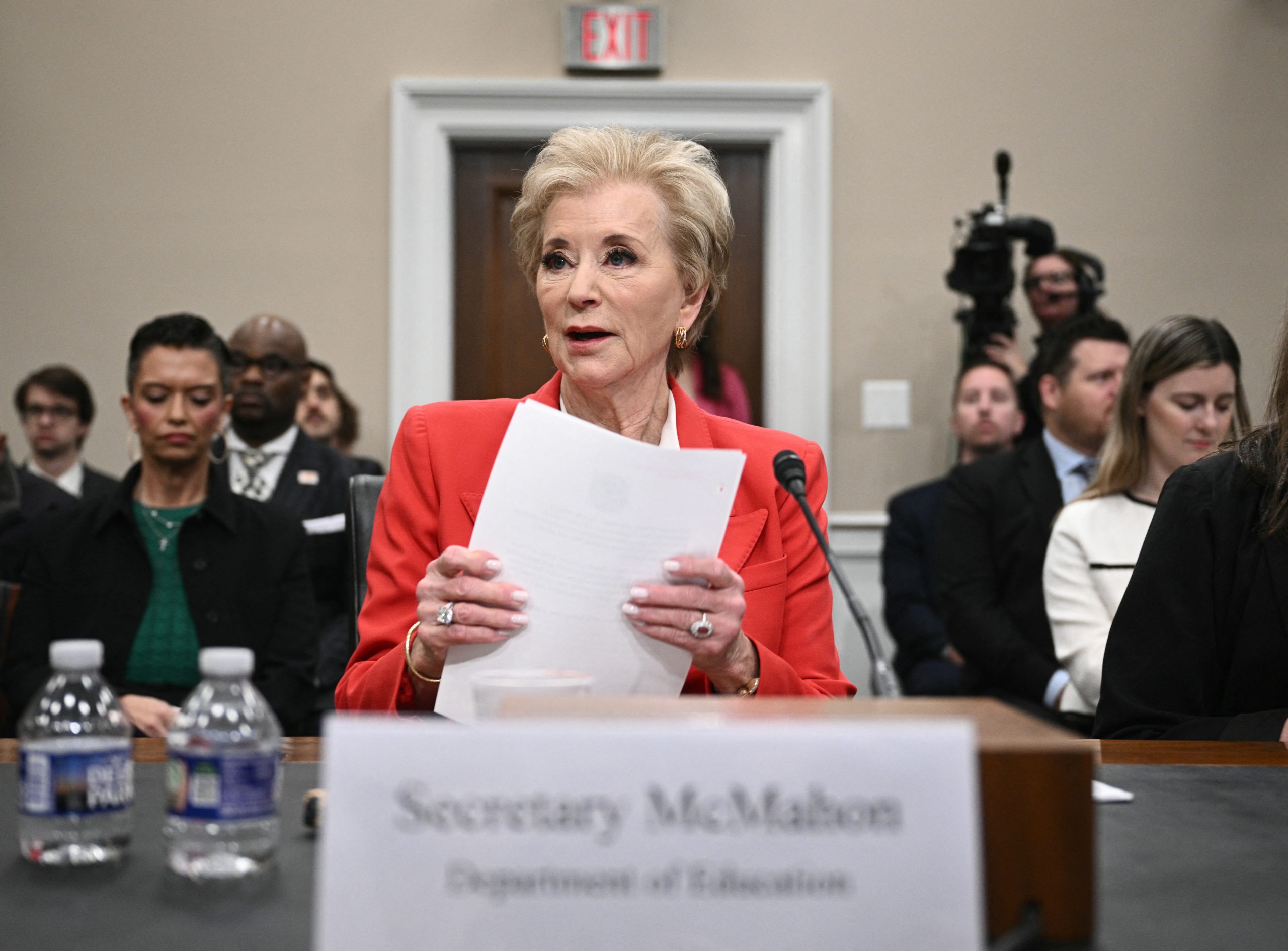
The unprecedented move, delivered via letters signed by Education Secretary Linda McMahon and other senior officials, presents a 10-page “compact” that outlines sweeping requirements affecting tuition pricing, international student enrollment, gender policy, and campus speech.
The compact mandates that participating institutions freeze tuition rates for five years, place restrictions on international student enrollment, and adopt administration-approved definitions of gender. Universities must also commit to preventing any policies that the administration characterizes as punishing conservative viewpoints.
The nine institutions that received letters on Wednesday include Dartmouth College, Brown University, Massachusetts Institute of Technology, University of Southern California, University of Arizona, University of Virginia, University of Pennsylvania, University of Texas, and Vanderbilt University.
According to The New York Times, May Mailman, the White House’s senior adviser for special projects and a letter signatory, indicated the administration remains open to dialogue with contacted universities. “We hope all universities ultimately are able to have a conversation with us,” Mailman stated.
The demands represent a significant threat to institutional autonomy and could have far-reaching implications for diversity, equity, and inclusion efforts on college campuses. The restrictions on international student enrollment raise particular concerns about the future of global education exchange and the presence of international scholars who contribute substantially to research and campus diversity.
The administration’s approach effectively creates a two-tiered system where compliance brings preferential treatment in federal grant competitions. As one senior White House official told The Washington Post, universities would technically remain eligible for grants, but compliant institutions would gain a “competitive advantage.”
This compact represents the latest escalation in the administration’s sustained campaign targeting higher education. Previous actions have included funding freezes, threats to revoke tax-exempt status, and attempts to eliminate universities’ authorization to host international students.
The administration has particularly focused on policies related to international students, pro-Palestinian campus activism, transgender student athletes, and diversity, equity, and inclusion programming.
Harvard University stands alone among major research universities in actively resisting the administration’s demands through litigation. In an April open letter to the Harvard community, President Alan Garber articulated the stakes for academic freedom: “No government—regardless of which party is in power—should dictate what private universities can teach, whom they can admit and hire, and which areas of study and inquiry they can pursue.”
However, on Tuesday, President Trump claimed a deal with Harvard was nearing completion. The administration has already announced agreements with the University of Pennsylvania, Columbia University, and Brown University earlier this year.
One of the consequences of Vladimir Putin’s invasion of Ukraine has been a vast reconfiguring of Russia’s academic and intellectual life. Universities, thought of as a potential hotbed of opposition since the White Ribbon movement of 2011, came under intense control and its personnel placed under even greater scrutiny.
Many faculty fled. Connections with international partners in the West were severed. And then to top it off, the Russian government announced that it would abandon the three degree bachelor’s, master’s doctoral system introduced when the country joined the Bologna Process 20 years earlier.
All this has combined to create what some have called a slow motion collapse in Russian higher education. But to understand what’s been happening in Russian Universities since February 2022, you really need to go back to the dawn of the Putin era in January 2000, and understand how ideological control of institutions has come to rest squarely inside the Kremlin.
Joining the podcast today is Dmitry Dubrovsky. He’s a scholar at the Institute for International Studies at Charles University in Prague, where he has taught ever since being designated as a foreign agent by the Putin regime in early 2022. And he writes primarily about the politics of academic freedom and civil society in Russia.
He’s with us today to talk about this slow motion collapse, the internal governance of Russian institutions, and how the country might one day be put back on a track to integration with European academia. Over to Dmitry.
The World of Higher Education Podcast Episode 4.5 | Undoing Bologna: Russia’s Conservative Turn in Higher Education with Dmitry Dubrovsky
Transcript
Alex Usher (AU): Dmitry, I want to take us back to the year 2000. Vladimir Putin is the new president of the Russian Federation. What was the state of the higher education sector at the time, and how did Putin approach it? How did he view higher education as an instrument of state policy?
Dmitry Dubrovsky (DD): Well, the legacy of the 1990s left Putin with a serious challenge. The system faced underfunding and fragmentation. At the same time, scholars were eager to join the European system. There had been attempts in the 1990s, but the biggest problems were the lack of financing and the absence of international mechanisms or tools to fully integrate into the European system of higher education and science.
Putin saw higher education and science, first and foremost, as a tool to join Europe—to become part of the European family and a prominent member of the global market of ideas. That’s why Russia joined the Bologna Process in 2003 and actively pushed for internationalization.
AU: So in that sense, it’s probably not that different from most other countries in the former socialist bloc, like Poland or Romania—the idea that internationalization would bring about an improvement in higher education. Is that about right?
DD: It is right, with one very important difference. At first it might seem small, but it became a very serious issue. In higher education and science, everywhere in the world, there are always people who believe that their own system is highly advanced—at the very top.
The problem in the late Soviet Union and the Russian Federation was that a substantial number of people survived the collapse of the USSR still believing that Russian and Soviet science was the most advanced in the world. In some cases, for certain disciplines, that might have been true. But in most areas—especially the humanities and social sciences—it wasn’t.
By the late 1990s, there was a substantial group of people who were deeply disappointed in the results of democratic reforms and in what democracy had brought, both to the country overall and to higher education and science in particular.
AU: Okay, now, Putin was president until 2008, and then he switched places for four years with Prime Minister Medvedev. He returns to power as president in 2012. And as you say, it’s a different Putin—a much more authoritarian Putin. How did his approach to higher education change? If we think of “Putin 1.0” around 2000, what does “Putin 2.0” look like after 2012? How does he try to exert greater control over the system?
DD: It’s important to note that before Putin came back to power, there was a very significant period of reform in Russian higher education. Especially around 2007–2008, reforms were focused on improving quality and gaining international recognition. This was the era of what we call “managerialist modernization.”
The idea was to select flagship universities that would drive the rest of the system forward into a brighter future.
AU: And eventually that becomes the 5–100 Project.
DD: Yes, the 5–100, or “5–2020” project. The goal was that at least five Russian universities should appear in the world rankings. It was a very interesting period because it marked a serious transformation in the sociocultural landscape of Russian higher education.
For the first time, the so-called “effective managers” entered the system. From the mid-2000s onward, higher education began receiving serious investment from the state, making it appealing to a new managerial class and their approaches. Internationalization advanced, but it went hand in hand with growing managerial control over universities.
Even before Putin returned in 2012, higher education was already being used as a tool to demonstrate the effectiveness of Russian policy and as an instrument of soft power, particularly through supporting Russian universities in former Soviet countries like Armenia, Azerbaijan, and Tajikistan.
When Putin came back, however, the situation changed dramatically. What I call the “conservative shift” began—not just in politics broadly, but within higher education and science.
AU: And some of that has to do with the broader crackdown at the time. I remember there was a lot of pressure on foreign organizations, which made international cooperation more difficult. For example, the government targeted the Open Society Foundations, George Soros’ network that had been active in supporting the social sciences and humanities. There was also a crackdown on things like gender studies and spaces for LGBTQ students.
Masha Gessen wrote about this in her book The Future is History. Why did that happen at that moment? What was it about Putin that made him say, “This is an area I want to control and push in a more conservative direction”?
DD: First and foremost, we have to remember the protests of 2011–2012. That was the time of the so-called “white ribbon” movement. It came very close to a revolution, though in the end it never happened—we failed. I was a member of that movement myself.
The significant participation of scholars and students in those protests put higher education under special scrutiny from the security services and the political apparatus. They believed that control over the education system could restore their legitimacy and symbolic power in society.
And remember, these leaders were, in many ways, Soviet people. They genuinely believed, “This is how the Soviet Union ruled—through control, especially in education and ideology.” And to some extent, that was true. The Soviet Union consolidated its power in part through universities.
Putin believed the same could work for him—that restoring control over higher education would allow him to strengthen his government, which had been undermined by the events of 2011–2012.
AU: We’ve been talking about the relationship between institutions and the government, but the government also changed the way institutions were run a couple of times, right? How has the exercise of power within Russian universities changed? I’m pretty sure there’s been a change in the process of selecting university leaders. How has that affected Putin’s ability to control universities?
DD: The specificity of Russian universities in the 1990s was that there was an enormous amount of democracy. There was absolutely no money in the system, so it was extremely poor—but at the same time, it was a kind of “poor democracy.” There were numerous elections, and the whole system of university governance was very active in self-governance.
There were real political struggles. People fought for the position of dean, they competed for the position of rector. Even department chairs could be elected. Almost every administrative position within a Russian university could be filled through an election.
When Putin consolidated power, especially during the managerial reforms, there was pressure—particularly on the flagship universities in the 5–100 Project—to amend their charters and replace elections with government appointments.
The official explanation was simple: if the state was providing so much budget support, then the state should also assign the rector rather than leave it to an election.
Even now, some Russian rectors are still technically elected. But in Putin’s Russia, an “election” is not an election in the normal sense. The ministry proposes the candidate, people watch the process, and it ends up looking very much like the way Putin himself is “elected.”
AU: Dmitry, in the early days of the 2022 invasion of Ukraine, one thing that surprised a lot of people in the West—it seemed to come out of the blue—was a letter in support of the invasion signed by several hundred university rectors. Why did they do that? I mean, presumably they were ordered to by Putin, but why did Putin think that would be legitimizing?
DD: In post-Soviet societies there is a very high level of trust in higher education and science. The leaders of higher education were expected to officially support the so-called “hard decision” about the war.
But it’s important to remember—something some of our colleagues abroad seem to forget—that most of these rectors were never democratically chosen. They do not represent the voices of Russian scholars, lecturers, or faculty members. They mostly represent the vision of the presidential administration. Their role was to collect names for a list of support and then sign this shameful document.
And of course, this didn’t start in 2022. Under the “foreign agent” law of 2015, the government began a long anti-Western campaign—searching for “un-American” groups of influence, cutting connections with international centers, and declaring institutions like Central European University or Bard College in New York to be “undesirable organizations.”
This created a climate of fear and anxiety among the leaders of higher education. And there was direct blackmail: if you decided not to sign, that was your choice—but you had to think about your faculty, your team, your colleagues. They would probably be fired soon.
AU: What changed on university campuses after the invasion? Obviously, if I were in Putin’s position, I’d be worried about student unrest. So what happened in terms of surveillance on campus, and how did faculty react? I mean, you were a faculty member at the time, and you’re one of many who left fairly quickly after the invasion. How big a brain drain was there?
DD: Not as big as you might think, for different reasons. Academics can’t move as easily as other people—they need to be sure they’ll have a way to continue working, and for many there simply wasn’t anywhere to settle quickly.
My personal story was different. By coincidence, I had an invitation for a fellowship. Long story short, I relocated quickly from my home city of St. Petersburg to Prague. But for many others, leaving was far more difficult.
As for institutional surveillance—yes, it was there. It looks like Russia had been preparing for war for about two years beforehand. Around two years before the invasion, they started introducing special vice rectors responsible for “youth” whose actual role was to monitor and control loyalty.
At the same time, they established special departments within Russian universities with very long titles—things like “Promoting Civic Consciousness, Preventing Extremism, and Managing Interethnic Relations.” In practice, these were institutions embedded in higher education to control and discipline students and scholars.
Their real work was searching social networks, looking for so-called “betrayal” behaviors among students and faculty, and reporting them to the security services and police. Today, almost every region of the Russian Federation has one of these departments to oversee and report on improper behavior.
AU: After that rectors’ letter, Russia was suspended from the Bologna Process, and in retaliation Putin announced a return to the pre-Bologna system. So, getting rid of the bachelor’s, master’s, PhD framework and bringing back the old Russian model with the second PhD. How is this process unfolding? How easy is it to undo Bologna?
DD: That’s a good question. I don’t think Russia is really going to undo Bologna. They’re not planning a full reversal or trying to recreate the Soviet path.
From one side, there’s direct pressure on the Ministry of Higher Education and its bureaucrats to dramatically change a system that has been built over twenty years. But this system cannot simply be reversed. Legally, if students have already been admitted to a particular program, the state can’t just stop it midstream. At the very least, it would take four or five years to change. It can’t happen overnight.
Secondly, to me this feels like an exercise in mimicry or emulation from the old Soviet-style bureaucratic circles in higher education. I follow what’s happening closely—the statements from the Minister of Education—and they always try to explain what will be different, but they can’t. They have no clear idea what they’re trying to create.
Officially, they say, “This is not Bologna anymore. It has proved to be ineffective. Now we will collect the best achievements of the Russian system of education.” But what does that even mean? It’s absolutely impossible to understand. From my perspective, they are trying more to sabotage the process than to implement something substantial.
AU: Looking ahead, what do you think a post-Putin higher education system in Russia might look like? Is there a path back into the European higher education space, and what would it take to undo the damage that’s been done since 2012?
DD: That’s a good question. Currently, I would describe the situation as a “fourth deglobalization.” We’ve essentially gone back to the conditions of 2003, before joining the Bologna Process.
That doesn’t mean there’s no capacity—many faculty members still working in Russia earned their degrees in Western institutions. There is still substantial expertise within the system. But the fate of Russian higher education is very difficult to predict because it is so closely tied to the political fate of the Russian Federation itself.
If sanctions were to decrease and the war were to end, perhaps things could return to something like “normalcy.” But even that is debatable—what would “normalcy” mean in this context? At best, it might look like the Cold War era, perhaps similar to the late 1970s.
There are already serious restrictions in place: academic sanctions, boycotts, and bans on cooperation imposed by many institutions and countries. These severely limit Russia’s ability to develop visible academic exchanges with Europe. Instead, Russia is turning elsewhere—towards an “alternative globalization,” aligning more closely with countries like China, Iran, South Africa, and Brazil within the BRICS framework, [a political and economic bloc of major emerging economies that positions itself as an alternative to Western-led alliances].
AU: Dmitry, thank you so much for being with us today. It just remains for me to thank our excellent producers, Sam Pufek and Tiffany MacLennan, and you, our listeners, for joining us. If you have any questions or comments on this week’s episode, or suggestions for future ones, please don’t hesitate to get in touch at [email protected].
Join us next week when our guest will be Joshua Travis Brown from Johns Hopkins University’s School of Education. He’ll be joining us to talk about his fascinating new book from Oxford University Press, Capitalizing on College: How Higher Education Went from Mission-Driven to Margin Obsessed. Bye for now.
*This podcast transcript was generated using an AI transcription service with limited editing. Please forgive any errors made through this service.Please note, the views and opinions expressed in each episode are those of the individual contributors, and do not necessarily reflect those of the podcast host and team, or our sponsors.
An unexpected group of presenters–11th graders from Whitney M. Young Magnet High School in Chicago–made a splash at this year’s ACM Conference on Fairness, Accountability, and Transparency (FAccT). These students captivated seasoned researchers and professionals with their insights on how school environments shape students’ views of AI. “I wanted our project to serve as a window into the eyes of high school students,” said Autumn Moon, one of the student researchers.
What enabled these students to contribute meaningfully to a conference dominated by PhDs and industry veterans was their critical data literacy–the ability to understand, question, and evaluate the ethics of complex systems like AI using data. They developed these skills through their school’s Data is Powerprogram.
Launched last year, Data is Power is a collaboration among K-12 educators, AI ethics researchers, and the Young Data Scientists League. The program includes four pilot modules that are aligned to K-12 standards and cover underexplored but essential topics in AI ethics, including labor and environmental impacts. The goal is to teach AI ethics by focusing on community-relevant topics chosen by our educators with input from students, all while fostering critical data literacy. For example, Autumn’s class in Chicago used AI ethics as a lens to help students distinguish between evidence-based research and AI propaganda. Students in Phoenix explored how conversational AI affects different neighborhoods in their city.
Why does the Data is Power program focus on critical data literacy? In my former role leading a diverse AI team at Amazon, I saw that technical skills alone weren’t enough. We needed people who could navigate cultural nuance, question assumptions, and collaborate across disciplines. Some of the most technically proficient candidates struggled to apply their knowledge to real-world problems. In contrast, team members trained in critical data literacy–those who understood both the math and the societal context of the models–were better equipped to build responsible, practical tools. They also knew when not to build something.
As AI becomes more embedded in our lives, and many students feel anxious about AI supplanting their job prospects, critical data literacy is a skill that is not just future-proof–it is future-necessary. Students (and all of us) need the ability to grapple with and think critically about AI and data in their lives and careers, no matter what they choose to pursue. As Milton Johnson, a physics and engineering teacher at Bioscience High School in Phoenix, told me: “AI is going to be one of those things where, as a society, we have a responsibility to make sure everyone has access in multiple ways.”
Critical data literacy is as much about the humanities as it is about STEM. “AI is not just for computer scientists,” said Karren Boatner, who taught Autumn in her English literature class at Whitney M. Young Magnet High School. For Karren, who hadn’t considered herself a “math person” previously, one of the most surprising parts of the program was how much she and her students enjoyed a game-based module that used middle school math to explain how AI “learns.” Connecting math and literature to culturally relevant, real-world issues helps students see both subjects in a new light.
As AI continues to reshape our world, schools must rethink how to teach about it. Critical data literacy helps students see the relevance of what they’re learning, empowering them to ask better questions and make more informed decisions. It also helps educators connect classroom content to students’ lived experiences.
If education leaders want to prepare students for the future–not just as workers, but as informed citizens–they must invest in critical data literacy now. As Angela Nguyen, one of our undergraduate scholars from Stanford, said in her Data is Power talk: “Data is power–especially youth and data. All of us, whether qualitative or quantitative, can be great collectors of meaningful data that helps educate our own communities.”
Evan Shieh, Young Data Scientists League
Evan Shieh is the Executive Director of the Young Data Scientists League.
Latest posts by eSchool Media Contributors (see all)
This audio is auto-generated. Please let us know if you have feedback.
Dive Brief:
Washington University in St. Louis has laid off 316 staffers and eliminated another 198 unfilled positions since March, Chancellor Andrew Martin said in a community message Tuesday.
Leaders made the cuts to the private university’s main campus as well as to its medical center. In all, the reductions are expected to save about $52 million annually, Martin said.
The chancellor cited several budget pressures driving the cuts, including “drastic reductions in federal research funding,” the changing needs of students, and “ineffective processes and redundancies in the way we operate.”
Dive Insight:
Martin framed the workforce cuts overall in terms of mission and financial sustainability. “If we want to be great, and not just good, we must focus our resources where they will have the most impact and ensure that we’re positioned for success in the long-term,” he said.
He said the current round of reductions were finished but hinted that there could be more changes down the line. “We must continue to evaluate how we work and identify additional ways to operate more effectively in support of our mission, if we are to be successful,” Martin said.
Nonetheless, WashU is in a much stronger position than many of its peers in the private college world.
For fiscal 2024, the university logged $20.5 billion in assets on its balance sheet and an operating surplus of $150.3 million.
Still, that surplus has been steadily shrinking in recent years. Just between fiscal years 2022 and 2024, the figure fell by 58%. Over the same period, total expenses rose by nearly 25%, or about $1 billion, to $5.1 billion in fiscal 2024.
For fiscal 2025, the university broke even on its budget thanks to “prudent financial management and thoughtful work,” Martin said in late July. Among other actions, WashU paused new construction projects such as a planned arts and sciences building and green space upgrades.
In the same July message, Martin pointed to long-term “structural budget challenges that WashU must address” and announced that the university would skip annual merit raises for its employees for fiscal 2026.
“I know this is disappointing news,” he said. “Please know it is not a reflection of your hard work and contributions, which I deeply value, but a necessary step as we prioritize long-term institutional stability and strategic investment in our core mission.”
As WashU looks ahead to future fiscal years, Martin noted in his July message that the university will face a heightened endowment tax bill of roughly $37 million after Republicans’ massive tax and budget bill passed this summer takes effect.
In fiscal 2024, the university’s endowment was worth $12 billion, or about $797,600 per student, according to the latest study from the National Association of College and University Business Officersand asset management firm Commonfund.