Blog

  • Higher education faces ‘deteriorating’ 2026 outlook, Fitch says

    Higher education faces ‘deteriorating’ 2026 outlook, Fitch says

    This audio is auto-generated. Please let us know if you have feedback.

    Dive Brief:

    • Fitch Ratings on Thursday issued a “deteriorating” outlook for the higher education sector in 2026, continuing the gloomy prediction the agency issued for 2025.
    • Analysts based their forecast on a shrinking prospective student base, “rising uncertainty related to state and federal support, continued expense escalation and shifting economic conditions.” 
    • With its report, Fitch joins Moody’s Ratings and S&P Global Ratings in predicting a grim year for higher ed Moody’s for the sector overall and S&P for nonprofit colleges specifically.

    Dive Insight:

    Fitch’s report details a dour year for higher ed, but one that affects colleges unequally.

    The shifting federal landscape, for example, will have “a wide but uneven impact on the sector,” the report said, citing possible changes to research funding and the Republicans’ massive spending bill that passed this summer. The analysts specifically pointed to new federal lending limits for graduate programs, set to take effect in July, which could limit colleges’ pricing power.

    Fitch also expects international enrollment to falter. Preliminary surveys about fall 2025 enrollment have found colleges reporting a drop in international students, especially those enrolled in graduate programs.

    International enrollment can be a financial boon to colleges, especially those heavily dependent on tuition revenue, as these students often pay full sticker price.

    But under President Donald Trump, the federal government has repeatedly attacked foreign students, from expanding the vetting process to revoking their visas by the thousands. It has also moved to tighten international student visa programs.

    “This fragile pipeline will become another area of increasing competition for fewer students and may further erode any meaningful student fee revenue growth prospects for 2026 and beyond,” the report said.

    The number of high school graduates is expected to peak this year after years of growth, according to the Western Interstate Commission for Higher Education. In the coming years, the number of traditional-age college students is expected to drop, leaving colleges fighting for fewer attendees.

    Overall enrollment in the sector has recovered from the pandemic, according to the National Student Clearinghouse Research Center. 

    But those gains have been largely concentrated at two-year institutions, according to Fitch. The report noted that these institutions offer increasingly popular certificate programs and dual enrollment, which allows students to take college courses while in high school. However, those options may not ultimately lead to more transfer students at four-year colleges, it said.

    Amid these factors, colleges will face “strained revenue growth prospects,” according to Fitch Senior Director Emily Wadhwani.

    “A vulnerable international student pipeline, a shrinking domestic student base and rising scrutiny on the value proposition of a higher education degree are likely to erode any meaningful student fee revenue growth prospects in the coming year,” Wadhwani said in the report.

    The number of colleges merging or closing is expected to “continue at an elevated pace” in 2026, Fitch analysts said.

    Source link

  • Education Department outlines potential Workforce Pell regulations

    Education Department outlines potential Workforce Pell regulations

    The U.S. Department of Education recently released a draft proposal of regulatory language that outlines how short-term programs could become — and remain — eligible for the newly created Workforce Pell Grants. 

    The Workforce Pell program will allow students in programs as short as eight weeks to receive Pell Grants. It was created as part of the massive spending and tax package that Republicans passed this summer and takes effect in July 2026. 

    The Education Department released the draft proposal ahead of negotiations next week to hash out the regulatory language governing how the program will operate. 

    In a process known as negotiated rulemaking, stakeholders representing different groups affected by the regulations are to meet Monday to begin discussing the policy details of the Workforce Pell program. Participants include students, employers and college officials. 

    If they reach consensus on regulatory language, the Education Department will have to use that when formally proposing regulations for Workforce Pell. If the stakeholders don’t reach consensus, the agency will be free to write its own regulations. 

    The draft proposal outlines the steps state officials will have to take for workforce programs to begin qualifying for Workforce Pell Grants and what student outcome metrics they would need to hit to remain eligible for the grants. 

    How would programs get approved for Workforce Pell?

    The massive budget bill expands Pell Grants to certain workforce-training programs lasting between eight to 15 weeks. For programs to be eligible, governors must consult with state boards to determine if they prepare students to enroll in a related certificate or degree program, meet employers’ hiring needs, and provide training for high-skill, high-wage or in-demand occupations, among other requirements.

    Under the Education Department’s draft proposal, each state’s governor would work with its workforce development board to establish which occupations are considered high-skill, high-wage or in-demand and publicly share how the state made those determinations. Governors would also have to seek feedback from employers to develop a written policy for determining whether programs meet local hiring needs. 

    As established in the spending bill, short-term programs must then receive approval from the Education Department’s secretary before they can qualify for Workforce Pell. Under the statute, programs have to exist for at least one year before they can get approval. 

    The Education Department’s proposal adds that the secretary wouldn’t be able to approve a program until “one year after the Governor determines that the program met all applicable requirements.” 

    This means that “all programs would need to wait an additional year before becoming eligible, even if they had already existed for more than a year,” according to a Thursday analysis of the draft from James Hermes, associate vice president of government relations at the American Association of Community Colleges. 

    AACC plans to work with negotiators to push for that provision to be changed, Hermes said. 

    How will programs maintain eligibility?

    Under the Education Department’s draft language, programs would need to maintain a job placement rate of 70% to remain eligible during the first two years of the Workforce Pell program. But after the 2027-28 award year, they would need 70% of their graduates to specifically land jobs in fields for which they’re being trained, according to the proposal. 

    During each award year for Workforce Pell, the statute bars programs from posting tuition and fee prices that are higher than the “value-added” earnings of their students. It calculates that difference by subtracting 150% of the federal poverty line from the median earnings of students who completed their program three years prior. 

    Source link

  • CDC Advisory Committee Votes to Overturn Decades-Old Hep B Vax Recommendations – The 74

    CDC Advisory Committee Votes to Overturn Decades-Old Hep B Vax Recommendations – The 74


    Get stories like this delivered straight to your inbox. Sign up for The 74 Newsletter

    The committee that advises on national vaccine policy today overturned a decades-long recommendation that newborns be immunized for hepatitis B, a policy credited with nearly eliminating the highly contagious and dangerous virus in infants. 

    The decision came in an 8-3 vote from the committee that has been handpicked by Health and Human Service Secretary Robert F. Kennedy Jr., a long-time vaccine skeptic. It followed three previous failed attempts to vote on the measure and two days of contentious, confused hearings that further undermined the group’s credibility.

    Amy Middleman, a longtime committee liaison and a University of Oklahoma pediatrics professor, said it was the first time the committee “is voting on a policy that, based on all of the available and credible evidence … actually puts children in this country at higher risk — rather than lower risk — of disease and death.”

    Susan J. Kressly, the president of the American Academy of Pediatrics, which is continuing to recommend the hepatitis B vaccine at birth, called the committee’s guidance “irresponsible and purposely misleading” and said that it will bring about more infections in infants and children.

    “This is the result of a deliberate strategy to sow fear and distrust among families” she said.

    The members of the Advisory Committee on Immunization Practices, known as ACIP, who voted in favor of the new guidance said the universal birth dose, first introduced in 1991, had likely played a small role in the reduction of acute cases and noted that the country’s policy was an outlier when compared to those of peer nations, which have more targeted approaches. They also raised concerns about the safety of the vaccine, arguing there were insufficient trials done, a claim that has been widely debunked.

    The committee’s new recommendations still include a dose of the vaccine within the first 24 hours of life for infants born to hepatitis B-positive mothers. But for those born to mothers testing negative, they recommend “individual-based decision-making, in consultation with a health care provider” to decide “when or if” to give the vaccine. 

    Removing the universal birth dose “has a great potential to cause harm,” dissenting committee member Joseph Hibbeln said, “and I simply hope that the committee will accept its responsibility when this harm is caused.”

    The committee also voted to upend the rest of the schedule for the hepatitis B vaccine, which is required for school attendance in the vast majority of states and historically included three doses in an infant’s first year. Now, after the first dose, parents will be encouraged to ask their doctors to check infants for a sufficient immune response before proceeding with any future doses, a practice that currently lacks any scientific evidence, according to vaccine experts.

    The recommendation now heads to Jim O’Neill, the acting head of the Centers for Disease Control and Prevention, newly installed after September’s ousting of the previously confirmed director, who said she resisted Kennedy Jr.’s demands to pre-approve vaccine recommendations and fire career scientists. 

    O’Neill’s decision could impact not only the vaccine’s availability, but also its accessibility, since both public and private health insurers look to these policies to determine coverage. 

    “The American people have benefited from the committee’s well-informed, rigorous discussion about the appropriateness of a vaccination in the first few hours of life,” O’Neill said in a statement Friday.

    Rochelle Walensky is the former CDC director and is now a Harvard University medical professor. (Harvard T.H. Chan School of Public Health)

    Former CDC director Rochelle Walensky, now a Harvard University medical professor who recently co-authored a paper on the importance of the hepatitis B birth dose, projected that eliminating it for infants whose mothers test negative will raise the number of newborn hepatitis B cases by 8% each year.

    “We rely on an infrastructure of vaccines not only to protect ourselves and our children, but to protect our communities and one another,” Walensky said. “Today’s meeting was just another one of those chisels in the infrastructure.”

    Paul Offit, the director of the Vaccine Education Center and an attending physician in the Division of Infectious Diseases at Children’s Hospital of Philadelphia, referred to the committee as “a clown show” in an interview on CNN Friday morning.

    “Honestly, it’s a parody of what this committee used to be,” he said. “It’s hard to watch, and for those of us who care about children, it’s especially hard to watch.”

    Offit said he doubted that the committee understood how hepatitis B was transmitted in young children — half the time through the mother during childbirth but just as often through casual contact with someone who was chronically infected and didn’t know it. About 50% of the millions of Americans infected with hepatitis B are unaware of it.

    “By loosening the [immunization] reins, you are just putting children in harm’s way,” Offit said.

    The hepatitis B vaccine was first recommended by ACIP in 1982. Before that point, an estimated 200,000 to 300,000 people, including about 20,000 children, were infected with the highly contagious virus each year. 

    This was particularly dangerous for infants who have a 90% chance of developing liver cancer or chronic liver disease, if they contract the virus. For 4- and 5-year-olds, that chance remains high at 30-40%.

    Committee members argued the guidance change reflected a return to pre-1990s policies that focused on a targeted approach, rather than a universal one. A number of them said that these earlier practices were successful and sufficient in cutting hepatitis B rates, a claim other experts — including those at the CDC — refuted. 

    In a departure from typical practices, presentations on disease rates and safety concerns at the hearing were not given by CDC subject-matter experts, but instead were led by a climate researcher and a known anti-vaccine activist, who authored a since-retracted paper on the impact of rising autism rates. 

    Amy Middleman, a pediatrics professor at the University of Oklahoma. (University of Oklahoma)

    When one CDC hepatitis B expert was invited to weigh in during a question-and-answer period, he expressed concern about the presented research and emphasized the lack of evidence to support the committee’s changes. Middleman jumped in at one point to correct the committee when it misinterpreted “the conclusions of my own study.”

    Throughout the meeting, Kennedy Jr.’s appointees spoke about the importance of protecting parents’ rights, seemingly pitting this against public health policy. 

    “My personal bias is to err on the side of enabling individual decision making and individual rights over the right [of] the collective,” said Robert Malone, the committee’s vice chair who led the meeting since newly appointed chair Kirk Milhoan, a cardiologist and critic of the COVID vaccine for children, was unavailable to attend in person.

    Earlier this year, the committee also voted to change policies surrounding the measles, mumps, rubella and varicella (chickenpox) combination vaccine and this year’s COVID 19 booster.

    Historically, committee members were highly qualified medical professionals, vetted for months to years before serving. But, in an unprecedented upheaval in June, Kennedy Jr. fired all 17 existing advisory members via a Wall Street Journal op-ed — after promising he would leave the committee’s recommendations intact — and hastily replaced them. 

    Many of the new members have espoused anti-vaccine rhetoric and other scientific misinformation and a number of them do not have medical degrees or significant experience in the field. 

    Cody Meissner, a professor at Dartmouth’s Geisel School of Medicine and the only committee member to have previously served, also opposed the guidance change.

    Cody Meissner is a professor at Dartmouth’s Geisel School of Medicine. (Dartmouth College)

     “We’ve heard ‘do no harm’ is a moral imperative,” he said. “We are doing harm by changing this wording, and I vote no.”

    The committee vote was the latest in a wave of policy changes, firings and general chaos at the CDC and HHS that have alarmed experts since Kennedy Jr. took charge almost a year ago. 

    Last week, the Food and Drug Administration’s chief medical and scientific officer released an unsupported memo claiming COVID-19 vaccinations had contributed to the deaths of at least 10 children. Last month, Kennedy Jr. ordered CDC staff to change information on their website to promote a link between vaccines and autism, a widely discredited theory that he has promoted for years.

    According to Offit, the negative impacts are already being seen: This year tallied the greatest number of measles cases (1,828) since it was declared eliminated in 2000, the majority of which were in unvaccinated children, two of whom died. It marked the first pediatric measles deaths since 2003.

    There have also been nearly 300 childhood flu deaths — among predominantly unvaccinated kids — the most seen since the country’s last flu pandemic and whooping cough cases are surging in some states. The highly contagious respiratory infection, prevented through the DTaP vaccine, has killed three unvaccinated infants in Kentucky.


    Did you use this article in your work?

    We’d love to hear how The 74’s reporting is helping educators, researchers, and policymakers. Tell us how

    Source link

  • Do federal privacy laws require schools to protect — or reveal — students’ LGBTQ+ identity?

    Do federal privacy laws require schools to protect — or reveal — students’ LGBTQ+ identity?

    This audio is auto-generated. Please let us know if you have feedback.

    Federal lawmakers are divided over whether the Family Educational Rights and Privacy Act and the Protection of Pupil Rights Amendment should be used to protect student’s LGBTQ+ status from parents or to reveal it. 

    The disagreements arose during a Wednesday hearing held by the House Education and Workforce’s Early Childhood, Elementary and Secondary Education subcommittee as the two originally bipartisan laws — which are meant to protect students’ records and information collection from unauthorized disclosures — are increasingly being wielded by federal authorities to crack down on districts over their privacy policies on issues like students’ gender pronouns. 

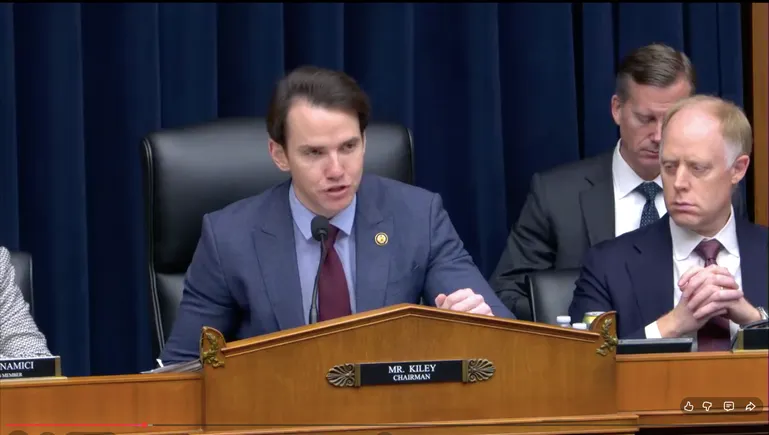
    “This should not be a partisan issue,” said Rep. Kevin Kiley, R-Calif., chairman of the subcommittee. “Keeping parents in the dark is wrong.”

    Kiley and witnesses at the hearing said some school districts keep dummy files in order to keep parents in the dark about information like a preferred name a student is using in school, have “secret transition policies” directing staff to withhold from parents if children express a gender identity different from their sex at birth, and conduct “intrusive” surveys and evaluations of students’ mental health. 

    However, representatives and witnesses on the other side of the issue say that policies requiring parents to know students’ gender identities, sexual orientations, or pronoun and name changes jeopardize student safety and housing security in some cases, and also violate student rights.

    “Forcing teachers to out every student every time they want to go by a different name or engage in some form of self-expression is an unrealistic expectation and disrupts the teacher-student bond,” said Rep. Suzanne Bonamici, D-Ore. “If students are not talking to their parents about their gender identity, maybe there’s a good reason for that. A lot of homeless youth are LGBTQ, and they get kicked out of their house when they reveal their gender identity.” 

    LGBTQ+ people are overrepresented in the homeless youth population, according to the National Network for Youth, a nonprofit that aims to reduce youth homelessness. These youth are 120% more likely to experience homelessness than their non-LGBTQ+ peers and represent up to 40% of all youth experiencing homelessness, despite accounting for only 9.5% of the overall population.

    Administration cracks down on schools protecting LGBTQ+ students

    According to Parents Defending Education, a conservative parental rights group, over 1,200 districts impacting more than 21,000 schools and a collective 12.4 million students have policies stating that district personnel “can or should keep a student’s transgender status hidden from parents.” 

    Nearly half of those noted districts are in California, which has a state law that went into effect this year preventing school employees from disclosing any information related to a student’s sexual orientation, gender identity, or gender expression to any other person without their consent. The law also prohibits schools from requiring employees to disclose such information to parents and is the subject of an Office for Civil Rights investigation launched in March.

    By contrast, at least 15 states have policies requiring schools to reveal students’ LGBTQ+ status under some circumstances, according to the Movement Advancement Project, which tracks issues related to transgender students.

    The hearing last week and disagreements over the essence of the privacy laws — as well as LGBTQ+ student safety — came as the Trump administration increasingly uses FERPA and PPRA to investigate schools for civil rights violations, similar to the investigation in California. 

    In August, for example, it launched investigations into four Kansas school districts for alleged FERPA violations also related to withholding student information from parents’ related to LGBTQ+ status. “My offices will vigorously investigate these matters to ensure these practices come to an end,” said McMahon in a statement related to the Kansas investigations. 

    Ultimately, these investigations could be used to withhold funds from schools, many of which are in states with LGBTQ+ protection laws requiring such school policies. 

    Source link

  • What You Need to Know Before Entering or Renewing an OPM Partnership

    What You Need to Know Before Entering or Renewing an OPM Partnership

    Online programs are no longer a nice-to-have. They are essential, with many schools looking to online as their primary growth lever amid market headwinds. A strong portfolio of online programs can allow institutions to grow enrollment, reach new student populations, and future-proof their offerings. But building, launching, and sustaining a successful online program operation requires a certain expertise that many internal teams lack. And even if your team has the right skills, you have to ask, “Do they really have the capacity to take on one more thing?”

    Given that time and budget are often finite, and the deep digital expertise needed to launch, scale, and sustain competitive online programs, its easy to see why traditional Online Program Management (OPM) providers would seem like a turn-key solution. At first glance, this revenue-share OPM model appears checks all the boxes: no upfront cost, faster time to market, and a larger team to shoulder the workload. It makes sense why the model feels appealing.

    But there is no easy button in higher ed. When something appears to be too good to be true on the surface, chances are high that it is. What seems like a low-risk solution today can turn into a strategic liability tomorrow. Beneath the surface of many revenue-share OPM agreements are hidden costs, inflexible contracts, and a loss of institutional control that only becomes clear once you’re locked in.

    When institutions realize the model isn’t working

    We’ve had more than a few partners come to us waving the white flag. They’re stuck in contracts that overpromised and continue to under deliver. But with little-to-no insight into the daily operations, data, and marketing strategy, it becomes increasingly difficult to find a way out that doesn’t jeopardize what’s already in motion or stall the programs still in planning. Said plainly, this is not the symbiotic relationship they were sold.

    And more and more institutions are catching on. Since 2021, new revenue-share deals have declined by nearly 50% as colleges and universities opt for fee-for-service agreements that offer transparency, flexibility, and allows schools to retain long-term control. A fee-for-service partnership puts both the school and its strategic partner in the front seat to work together to get to the final destination (the driver) and best way to get there (the navigator). And in some cases, these partnerships can be a stop gap, ensuring what is in motion stays in motion while schools work to build their own internal OPM, eventually being able manage its online programs autonomously.

    The punchline is you have options. “OPM” is not synonymous with revenue-share. Enablement-based partners (like Collegis Education) now deliver the same services without taking over your strategy or forcing you to relinquish control.

    10 reasons to rethink the revenue-share OPM model

    The challenges with traditional OPM contracts aren’t always obvious upfront. It’s only after the ink dries that many institutions realize the trade-offs run deeper than expected — disrupting operations and long-term strategy. As more institutions reconsider their approach to online growth, it’s essential to understand what’s really at stake.

    So before you lock your school into an OPM’s golden handcuffs and sign a revenue-share agreement, here’s what you need to know.

    1. You’re not just outsourcing — you’re giving up control

    There is a big difference between external support and ceding control entirely. The traditional OPM model assumes ownership of key functions like marketing and enrollment, resourcing decisions, and budget allocation. That’s not collaboration; it’s surrendering some of your biggest strategic levers to an outside vendor whose priorities are often centered on enrollment volume, not institutional mission. And once you’ve given up that control, getting it back is not easy.

    2. OPM’s “no upfront cost” has a high long-term price tag

    The traditional OPM pitch (no upfront fees and no budget approvals) sounds like a win. But many institutions end up giving away 50–80% of tuition revenue for up to a decade or more. That’s funding that could be reinvested in faculty, student support, or academic innovation. Without that revenue, it becomes even harder to build internal teams or expand capabilities, leaving you stuck with the same constraints that pushed you toward an OPM in the first place. It’s a cycle that’s tough to break.

    And because these contracts often lack transparency, the full financial impact isn’t clear until it’s too late. Every year in a revenue-share agreement can mean more value slipping through your fingers.

    3. The promised results don’t always materialize

    Even after giving up a significant share of tuition revenue, many institutions report underwhelming enrollment growth, unclear ROI, and limited visibility into performance. Add to that the cultural disconnects between OPM teams and on-campus leadership (different priorities, processes, and communication styles) and frustration can quickly mount.

    When that much is at stake, institutions deserve meaningful outcomes, aligned strategies, and a partner that’s fully invested in their success.

    4. OPM contracts are built to keep you in them

    OPM agreements are intentionally rigid and extremely difficult to exit. The OPM wants to increase your dependency on them and often includes tail clauses, auto-renewals, and other provisions that make it challenging to walk away. Even if the partnership underperforms, you may still be stuck paying for services you no longer want or need while the market moves on without you.

    5. You lose control of your data and rely on systems you don’t own

    With revenue-share models, the tech stack is owned by the OPM and often lives outside your ecosystem. That means your access and visibility is limited to what the OPM is willing to share. This lack of transparency into performance data slows decision-making and leaves you dependent on tools you don’t control or fully understand. For a modern institution, that dependency is downright dangerous.

    Ready to Build Your Own Path Forward?

    Download our “Building an Internal OPM” workbook for practical steps to assess your internal capabilities and create a sustainable, in-house online program strategy.

    6. There are reputational risks in programs built for scale and not students

    Revenue-share OPMs are financially incentivized to prioritize enrollment growth over educational outcomes. That often results in generic courses, diluted rigor, and aggressive marketing — especially toward vulnerable student populations. One high-profile partnership between a university and its OPM provider made headlines when tuition was set high, outcomes lagged, and questions emerged about who was truly being served.

    And because the OPM is essentially invisible to students, your institution bears the full weight of any backlash — whether it’s from prospective students, faculty, or the public. The long-term impact? Lower student satisfaction, reduced faculty trust, and reputational damage that’s hard to repair.

    7. You’re accountable for compliance

    The Department of Education and several states are scrutinizing tuition-share deals. If regulations change or compliance gaps emerge, your institution will bear the legal and financial consequences. Unlike your vendor, you can’t opt out of oversight — your name, your accreditation, and your funding are all on the line.

    8. Your brand and mission take a back seat

    Speaking of brand integrity, when traditional OPM vendors control your messaging, your communications, and your marketing funnel, your voice starts to disappear. The student experience and institutional identity can quickly diminish and become disjointed. What’s left is often little more than your logo on a landing page, detached from the values and mission that set your institution apart.

    9. The path to independence is steep (and costly)

    Revenue-share OPMs aren’t structured to make independence easy. Even if you’ve built internal capabilities over time, you may not have access to the data, systems, or strategic insight needed to take control. Without a clear runway to transition, institutions often feel forced to renew, because picking up the ball and running with it isn’t possible when you can’t see the full playbook.

    10. There are better options and true partnership models

    Enablement-based, fee-for-service models let you control the pace, scope, and strategy. You keep your data, you own your student experience, and you build sustainable capacity to grow on your terms.

    Sustainable growth starts with ownership

    If your goal is to build a mission-aligned, financially sustainable online portfolio, outsourcing core capabilities may not be the answer. Traditional OPM models once helped institutions enter the online space, but today, they’re more likely to hold you back.

    Don’t give away your tuition dollars. Don’t give up your data. And don’t sign away your flexibility.

    Build smarter. Own your growth.

    Let’s explore what a fee-for-service partnership could look like for your institution.

    Innovation Starts Here

    Higher ed is evolving — don’t get left behind. Explore how Collegis can help your institution thrive.

    Source link

  • How Articling is Different from Summering

    How Articling is Different from Summering

    Somehow it’s already December, which means we are just about at the halfway point of articling – how did we get here so quick? It has been an unforgettable journey so far, and I can’t imagine what the next 6 months will have in store for us.

    Before jumping into how articling is different from summering, I want to highlight some of the ‘roses’ I’ve had so far…

    … the first being the unforgettable trip the Ottawa students took down to the Toronto office to attend the annual client party. Not only did we finally get to meet the Toronto students, but also lawyers from all the offices! It was so fun to finally put faces to names and meet face-to-face rather than on Zoom calls. A close second would be the countless memories made with the other students. One undeniable fact about the students in both the Ottawa and Toronto offices is that we have built lifelong friendships, and being able to work so closely with some of our closest friends makes the culture at the firm and as an articling student truly incredible.

    One of the main differences between summering and articling so far has been being able to actually stay on a file and work on different assignments within one matter. It’s incredibly interesting to be able to assist with various moving parts of a file and being able to see them come together. For example, an affidavit drafted over the summer may end up being revisited in order to pull correspondences out to help draft a 30.10 motion, but at the time of drafting the affidavit, certain emails may not have seemed that important. It’s also fascinating to help prepare mediation materials, or motion materials and then be able to actually attend and see how those materials contribute to the litigation.

    Another big difference while articling is the mix of confidence, being able to return with familiarity of expectations for certain assignments, but also the autonomy we now have on assignments. Obviously almost every assignment still comes with what feels like a thousand questions, but being trusted to draft materials where I’m the one looking at productions and making an opinion, or being asked to research a topic from scratch and putting together an argument for a factum makes me feel as though I’m starting to get my footwork figured out in what it actually is like to practice law. Of course, the safety net of having a ton of resources and support is always still there, but the environment is very conducive to promoting our confidence as soon-to-be lawyers!

    The first (almost) six months of articling have been full of incredible experiences and assignments, and I can’t wait to see what the rest of articling has to offer!

    by Lauren M.

    Source link

  • A Guide to Accessibility (for Educators)

    A Guide to Accessibility (for Educators)

    With the DoJ’s April 24, 2026 deadline approaching mandating all digital tools be accessible, every educator across the US (and Canada) is rushing to make their course materials accessible.

    An Incomplete Guide to Accessibility (for Educators) is for instructors, professors, or TAs that need help approaching digital accessibility. In plain language, we’ll demonstrate how to update learning materials to meet compliance—without treading all over your painstakingly-planned pedagogy. It’s important to emphasize that accessibility is ultimately about breaking barriers for people with disabilities, and this guide will strive to keep that in mind.

    Accessibility isn’t easy

    It’s important not to downplay the work needed to ensure digital materials are well-designed for everyone, without discrimination. 

    But… accessibility really isn’t that hard, either. 

    While more complex solutions can be harder to implement, the basics of accessibility are fairly easy to understand and action on. Start there, and grow over time. 

    It’s a skill. It takes practice. But it’s not rocket science, or evaluating 100 student essays on the diction of Shakespeare, either. Every week, educators share ideas and concepts with students, which, with any luck, germinate into critical thinking skills. Teaching is a much harder thing; accessibility is simple by comparison.

    As a digital product designer with over 20 years experience, I know the effort it takes to push accessibility forward. In 2020, Top Hat’s product and engineering team worked to make our platform more accessible for any student.

    The goal of this guide is to help you navigate this work, too.

    This guide is evolving

    The “incomplete” title of this guide is intentional. Members of the Top Hat team will add to this guide over time, but accessibility standards change. In software, compliance drift can happen as companies make updates to their little corner of the web. The very browser you’re using to read these words has likely been updated dozens or hundreds of times since this guide was written. 

    Obligatory legal note (sorry): Please don’t mistake this guide as legal advice or counsel. Consider this work an incomplete and imperfect list of suggestions from our experience, nothing more.

    We appreciate feedback 

    Both good and constructive feedback (what my cat’s therapist calls “bad” feedback) are encouraged. If you spot any gaps or errors in the guide, please let us know and we’ll remediate. Just send us an email to [email protected].

    Chapter 1: Making Sense of Compliance

    Awareness of the law is important, but don’t get lost

    It’s easy to get overwhelmed by all the accessibility laws flying about. Federal, DOJ, State. How do they measure up against each other? What do you need to care about?

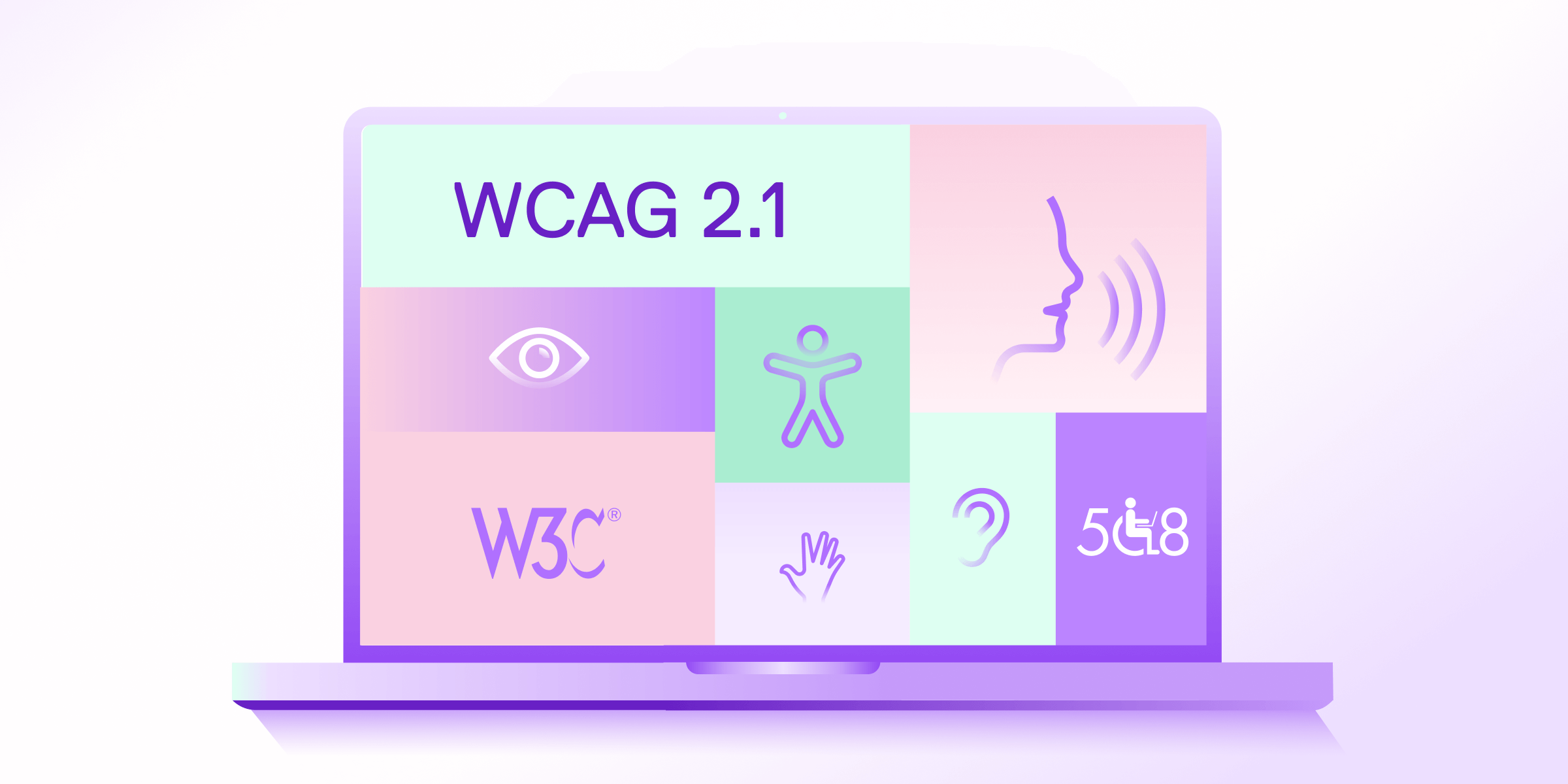
    TLDR: WCAG 2.1 Level AA 

    WCAG 2.1 Level AA is the standard to follow. If you know what that alphabet salad means, you can probably skip this chapter. 

    It’s the W3C standard this guide (and Top Hat) uses. 

    A wave of legislation

    Here is a list of accessibility policies from the US. I recommend glossing over it, unless you enjoy sifting through rats nests of legalese for reasons I won’t ask about:

    Americans with Disabilities Act (ADA), Section 508 of the Rehabilitation Act. Arizona (digital accessibility standards in statewide IT policy), Arkansas (Act 1227 of 1999), California (multiple government code sections), Colorado (House Bill 21-1110), Connecticut (Universal Website Accessibility Policy), Delaware (State Digital Accessibility Policy), Georgia (digital properties accessibility), Idaho (Web Publishing Guidelines), Illinois (Illinois Information Technology Accessibility Act), Indiana (Code 4-13.1-3), Iowa (Website Accessibility Standard), Kansas (Information Technology Executive Council Policy), Maine (Digital Accessibility and Usability Policy), Maryland (Information Technology Nonvisual Access Regulatory Standards), Massachusetts (Enterprise Information Technology Accessibility Policy), Michigan (Digital Accessibility Standard), Minnesota (Digital Accessibility Standard), Missouri (RSMo. 161.935), Montana (state code 18-5-605), Nebraska (Accessibility Policy), Nevada (ADA Technology Accessibility Guidelines), New Hampshire (Web and Mobile Application Accessibility Standards), New Jersey (NJ A4856), New York (NYS-P08-005 and Senate Bill S3114A), Ohio (Administrative Policy, Website Ability), Oklahoma (Electronic and Information Technology Accessibility Law), Pennsylvania (Information Technology Policy), Rhode Island (World Wide Web Consortium Priority 1 Checkpoints), Texas (Web Accessibility Standards and Administrative Code), Utah (accessibility standards for executive branch agencies), Virginia (Information Technology Access Act and Accessibility Standard), and Washington (USER-01 Accessibility Policy). 

    You might have noticed not all states are listed. Some states decided to spare us the headache of adding more to this list. Americans with Disabilities Act (ADA)—the big kahuna of federal legislation—still applies.

    Real risk

    If your legal department puckers up at the word accessibility, you should know it’s because the risk to your school is real. The ADA publishes “settlements” on its website, which is a public list where complainant(s) have filed discrimination suit(s) against a corporation and settled. A good chunk of them are against educational institutions (K-12, community colleges, and big institutions alike).

    State and federal policy is not written for you

    Its job is to provide the judicial system the right to pursue action against anyone caught discriminating, and to make you aware that they can (and might) do that. Less discrimination is good for everyone. We like that idea. 

    But knowing there are arcane words hanging above every slide deck and document you decide to share with your student body is scary. There’s pressure here to Do The Right Thing.™

    Good news: There’s a simple way to meet state and federal legislation: WCAG. Protip: It’s pronounced wug-ka-guh.

    WCAG: One Standard to Rule them All 

    Bad news: WCAG is written by engineers, but don’t hold that against it. 

    WCAG stands for Web Content Accessibility Guidelines. It’s managed by the World Wide Web Consortium, otherwise known as “W3C,” which is a wizardly-sounding name, if you ask me. Most policies across the US and Canada list it as a standard to meet for digital accessibility (the only reason I’m not saying ALL policies is because I haven’t read them all, but I’m fairly certain everyone is just copying each other’s homework here).

    Understanding the WCAG Alphabet Salad: Versions and Levels

    There are levels to the WCAG standard, but it’s very simple to unpack.

    Which WCAG version?

    Because almost all legislation focuses on WCAG 2.1 Level AA, we’ve focused this guideline on that. 

    Why not WCAG 2.2? 

    WCAG 2.2 adds more consideration to its framework for mobile devices and form factors. Top Hat follows 2.2, because our product supports mobile apps. 

    This isn’t as applicable for educators, so we’re focusing on 2.1 for this guide.

    What are WCAG levels?

    Within each version of WCAG there are “levels” of compliance denoted by A, AA, and AAA. Level AA is where most software vendors and digital services will hang out. 

    There’s no extra credit for meeting AAA. Generally speaking, AA will be a better choice for delivering great learning materials to students. The scuttlebutt on the street (the youth are all aflutter about this) is that AAA is for banks and government institutions.

    Note for Canadians

    Canadians will be expected to adhere to the Accessible Canada Act (ACA). Ontario, British Columbia, and Newfoundland and Labrador have their own laws, too.

    In most cases WCAG 2.1 Level AA will meet the letter of these laws, too.

    This guide follows: WCAG 2.1, Level AA

    This guide follows WCAG 2.1, Level AA standard, and so does Top Hat’s content and platform.

    If your institution uses another level, or something other than WCAG, this guideline may not be useful to you.

    It’s helpful to think of content and software together, but separate

    In addition to ensuring the form and fit of the software you use is up to standard, educators have an obligation to make sure the content and materials of a course are compliant, too.

    • If the software presenting your slides can’t be navigated by a user using assistive technology? That’s a violation. 
    • If the reading order of your slides isn’t correct? Violation. 
    • If you use an image to convey information that doesn’t have alt-text or a long description? Violation (every physics instructor will be hit especially hard by that last one).

    All of it needs to meet WCAG 2.1 AA compliance.

    For your own sanity, it will be helpful to keep both software and content in mind when navigating accessibility.

    Full disclosure: This article is published by Top Hat

    The goal of this article isn’t to woo you into using Top Hat. Top Hat is an ed tech platform that has features to help make educational content accessible, but it’s important to us that this guide will be useful for as many educators as possible.

    Throughout the chapters, where possible, we’ll provide accessible considerations for content both with and without use of the Top Hat platform. As you’ll see in this guide: where content is authored and shared with learners alters the choices you need to make to ensure your stuff works.

    Let’s go!

    Now that the standards are out of the way let’s get into the fun stuff: making your course and materials accessible. 

    Next Chapter: Text Alternatives for Educational Images and Visual Aids

    Source link

  • Wales stands firm against international fee levy, minister says

    Wales stands firm against international fee levy, minister says

    During a a visit to the University of South Wales’s (USW) Pontypridd campus, Wales’s minister for further an higher education Vikki Howells reaffirmed that the country will not introduce the levy – details of which were set out in last week’s Autumn Budget.

    Instead, Howells reiterated that international students coming to Wales would find a warm welcome. “We want to send a clear message that Wales is open, inclusive, and committed to providing an outstanding student experience,” she said after the visit.

    “International students are an integral part of our higher education community. They not only boost our economy but also bring cultural diversity and global outlooks that benefit all of us. Wales is proud to be a place where students from around the world feel welcome and supported,” said Howells.

    We want to send a clear message that Wales is open, inclusive, and committed to providing an outstanding student experience
    Vikki Howells, member of the Senedd

    Louise Bright, USW’s pro vice-chancellor for enterprise engagement and partnership, added: “Our international students contribute enormously to the life of our universities and of Wales. Their skills, insights and experiences help us create a stronger, more outward-looking and connected nation.”

    Universities Wales said the move underscored the Welsh government’s commitment to supporting international education in Wales.

    It comes just a weeks after Howells recorded a video for international students assuring them that they would find “a place where you’ll truly belong” if they chose Wales as a study destination. The country has been positioning itself as a regional hub for international education – with interest in studying in Wales rising most sharply in Indian and American students.

    According to HESA data, Wales was home to some 27,795 international students in the 2023/24 academic year, with most of those coming from non-EU countries.

    The University of South Wales had the most, with 6,635 international students, followed by Cardiff University with 6,480 and Swansea University with 4,780.

    The international student levy – which will come into force in England in 2028 – has been controversial, with stakeholders warning that it could severely impact international enrolments.

    Large metropolitan universities stand to lose the most money from the policy, which will see a £925-per-student flat fee for all institutions in England with more than 220 international students. The cash raised will be used to fund domestic maintenance grants.

    According to the latest available HESA data, University College London would have to pay the most money – over £25 million – followed by the University of Manchester and the University of Hertfordshire.

    Source link

  • Let’s have no locks on learning

    Let’s have no locks on learning

    At News Decoder we believe that information should flow across borders and that you shouldn’t need money to access it. That’s why we’ve created resources for both young people and educators that are open access — they are free and available to anyone. It is our mission, after all, to inform, connect and empower young people to be engaged citizens and changemakers locally, nationally and globally.

    These free resources include articles, podcasts and videos that offer young people tips on writing and reporting and information they need to be media literate such as guides for fact-checking news stories and verifying the accuracy of information. We also make publicly accessible our Decoder Dialogues —  in which we gather young people from different countries together with experts to talk about an important topic. You can watch our latest Decoder Dialogue on how young people speak out and stand up that took place 2 December. 

    For a great read on how some places are addressing the problems of paywalls on academic and scientific research, check out Charissa Eggers recent article for News Decoder

    Below are a series of useful guides for student journalists or for anyone who wants to become a better storyteller. 

    And check out more of our open access learning resources. 

    https://news-decoder.com/top-tips-can-you-be-the-bearer-of-good-news/ 


    Source link