Blog

  • One Small Idea Can Have A Big Impact #EdChat

    One Small Idea Can Have A Big Impact #EdChat

    I’ve been very lucky to have been part of many different EdTech Communities over the years. From my time spent with amazing educators at Adobe, Google, Raspberry Pi, Sphero, TED-Ed, and my first EdTech Community, Evernote, I’ve loved how you get what you put into a community. It can be what you need it to be when you want it to be. I’ve taken all of these experiences I use them to help me craft the community experience for educators in the SchoolAI Community

    One of the things I have loved from the different communities was the effort to give the community members a platform to share their story. There is so much we can all learn from each other, but educators are not always given the chance to share or they do not have the ability to attend a conference and share their story. Sometimes the keynote circuit is the same few names and it can be tough to break into those conversations. That’s why I have started the SchoolAI Lightning Talks

    Open to any educator who has an idea worth sharing, I want to give as many educators as possible a chance to share something that matters to them. You can find all of the details here and the submission page here. Do not let “I’m sure everyone already knows this.” or “It probably doesn’t make that big of a difference.” stop you from sharing. Do not let the imposter syndrome take over and prevent you from sharing your idea. If you have any questions, feel free to send me an email at [email protected] or find me on my socials. @TheNerdyTeacher

    Hugs and High Fives to everyone!

    NP

    Source link

  • How the Educated Underclass is Already in Crisis

    How the Educated Underclass is Already in Crisis

    For millions of Americans with college degrees, the headlines about a “possible recession” feel like a cruel joke. While official statistics lag, the lived reality for the educated underclass—those with bachelor’s or advanced degrees who are struggling to maintain stability—is nothing short of an economic depression. Rising costs of living, stagnating wages, and dwindling job security have already reshaped daily life, and many are barely hanging on.

    Unemployment figures tell only part of the story. College graduates now make up a record 25% of the unemployed, with white-collar layoffs in tech, finance, and even healthcare rising. Those who are employed are often underemployed, working multiple part-time jobs or in positions that barely require a degree. The promise that a college credential ensures upward mobility is eroding rapidly, leaving a generation of highly educated Americans questioning the value of the very investment that was supposed to secure their future.

    Housing costs are skyrocketing, especially in urban centers where jobs are concentrated. Even modest apartments demand incomes far above what many professional graduates earn. Student loan debt compounds the pressure, forcing difficult trade-offs between basic living expenses and debt repayment. For many, “making it” now means moving back in with parents or sharing crowded apartments with friends—situations reminiscent of a pre-adult adolescence prolonged indefinitely.

    Meanwhile, inflation eats away at savings. Food prices, healthcare, and transportation costs continue to climb, leaving little room for discretionary spending or emergency funds. The safety net that the previous generation relied on—a stable job, homeownership, a modest retirement plan—is increasingly inaccessible. For the educated underclass, financial precarity has become normalized, even invisible to those who still enjoy some buffer in the broader economy.

    The psychological toll is real. Anxiety, depression, and burnout are rampant among highly educated professionals facing underemployment or precarious work conditions. The “American Dream” has shifted from upward mobility to merely surviving, with little room for long-term planning or security.

    Policymakers continue to debate whether a recession is coming, but for many, the recession has already arrived. It’s not marked by dramatic market crashes or bold headlines—it is quiet, slow, and insidious, felt in empty savings accounts, missed rent payments, and jobs that fail to match education and ambition. Recognizing this reality is the first step toward meaningful change. Until then, the educated underclass is living through an economic depression, one degree at a time.

    Source link

  • Atomic Habits Book Study

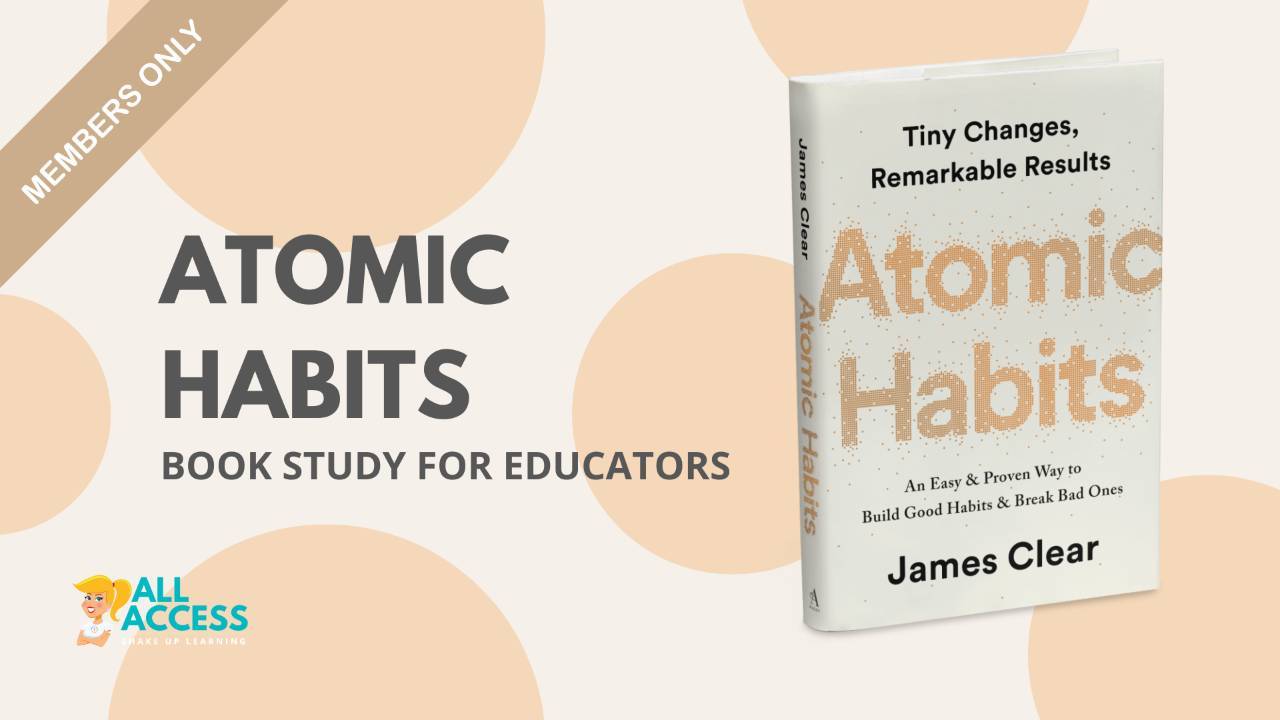
    Atomic Habits Book Study

    Atomic Habits Book Study for Educators

    Join us for a powerful six-week book study of Atomic Habits by James Clear, exclusively for ALL ACCESS Members!

    This study will explore how small, consistent habits can lead to big changes in both personal and professional growth. Together, we’ll discuss key takeaways, share insights, and apply strategies from Atomic Habits to build better routines, break unproductive patterns, and create lasting change in our classrooms and lives.

    • 📅 Starts January 7
    • 🏆 Earn 3 Hours PD Credit 
    • 🔑 ALL ACCESS Members Only
    • ➡️ Get the book here


    💡 How It Works:

    • Read the assigned chapters each week.
    • Participate in asynchronous discussions in the community.
    • Reflect on how to apply the book’s insights.

    📚 Not a member yet? Join now and get access to the book study, exclusive PD courses, and more!

    Source link

  • International students missing out under US Early Decision system

    International students missing out under US Early Decision system

    Stakeholders are worried about the Early Decision (ED) system – where students apply early to their first-choice institution and, if admitted, are required to commit to attending. Although admission is not guaranteed, the common practice is that students must ‘lock in’ once accepted and withdraw all other applications, even in different countries.

    But with rising visa denials in Donald Trump’s United States, fears are rising that international students could be at an unfair disadvantage.

    Education consultant Elisabeth Marksteiner, pointed out that even if a student applies for a visa as soon as they have been accepted by an institution, they could be denied in late August, with the semester due to start in early September

    “Suddenly the student has no live applications anywhere in the entire world. There is no plan B – the whole point about ED is it takes out all insurance, effectively,” she told The PIE News.

    “There are some countries where we know it can be 11 months to get a visa appointment… there is no way that you are going to make it.”

    Advice from the National Association for College Admission Counseling (NACAC) on ED was updated in August to make it more specific and transparent for parents and school counselors alike.

    “The updates aim to ensure applicants, parents/guardians, and counselors fully understand the implications of an ED commitment under various possible scenarios,” it said.

    The practice has become a popular way for institutions to gauge their enrolment numbers ahead of time. And according to Marksteiner, enforcing binding ED agreements is a low-stakes approach for elite institutions – even if it means some international students won’t be able to take up their place.

    “The people who are most using ED are the ones at the top of the pile. They will always be able to fill their class,” she said.

    The people who are most using ED are the ones at the top of the pile. They will always be able to fill their class
    Elisabeth Marksteiner, education consultant

    ED offers often use complicated wording and “legalese” that, according to Marksteiner, can leave parents and high schoolers feeling uneasy.

    “It seems to me that we have lost effectively our moral compass in holding ED agreements in the way that we do,” she explained.

    In September, Tulane made headlines after it slapped Colorado Academy with a one-year ban on ED applications after one of its students allegedly pulled out of an offer.

    However, some institutions are changing their policies to make sure than non-US applicants do not have to withdraw their applications from other parts of the world.

    Visa delays have been a persistent problem for US higher education institutions under the second Trump administration – part of an “escalating cascade” of attacks on international students, according to an address by Presidents’ Alliance CEO Miriam Feldblum at this week’s PIE Live North America conference in Chicago.

    Since taking office for the second time, President Trump has imposed a travel ban on 19 countries, enforced an immigration crackdown that has affected thousands of international students and suspended visa interviews across the world for several weeks – a move whose effects are still being felt.

    Source link

  • What’s the gossip from The PIE Live North America?

    What’s the gossip from The PIE Live North America?


    Nicholas Cuthbert

    Nick began his career with Nottingham Trent University in the UK working in international student recruitment, before going on to a wide range of leadership and consultancy roles in the private sector. He joined The PIE in 2021 and is a key commentator on the current trends in the global higher education industry. He curates content for our PIE Live conferences and is the co-host of the Tales from the Departure Lounge podcast. Get in touch with Nick at [email protected]


    View all articles by Nicholas

    Source link

  • Serve on a Council – CUPA-HR

    Serve on a Council – CUPA-HR

    Serve on a CUPA-HR Council

    Thank you for your interest in serving as a member of one of CUPA-HR’s councils. The application will be posted in early 2026.

    Members who volunteer to take on council roles help the association keep a finger on the pulse of opportunities and challenges for member engagement and the association’s chapters.

    CUPA-HR councils are created by the board of directors based on the association’s strategic priorities. Council members are given specific assignments, are expected to disseminate and accomplish work, and are accountable to and expected to follow the direction of the board of directors. CUPA-HR currently has two councils.

    Member Engagement Council

    The Member Engagement Council focuses on:

    • Reviewing and proposing enhancements to CUPA-HR’s member benefits
    • Engaging in CUPA-HR’s annual membership renewal campaign
    • Reaching out personally to long-time association members and new members
    • Supporting the development and presentation of content promoting association membership and benefits
    • Promoting association engagement and helping recruit leaders for the council
    • Helping CUPA-HR staff create and implement engagement activities for the annual and spring conferences

    The Council is led by a chair, chair elect and CUPA-HR’s senior vice president with guidance and support from CUPA-HR’s director of Member Engagement and manager of Member Engagement.

    Time Commitment

    • Three-year term
    • Monthly council video-conference calls (typically one hour in length)
    • Council work as assigned. This is a working council, so active engagement and commitment to help achieve anticipated outcomes are essential.
    Chapter Support Council

    The Chapter Support Council serves to provide encouragement and practical support to CUPA-HR’s 41 chapters.

    • Each council members will be assigned up to three CUPA-HR chapters to support.
    • Chapter support is tailored to meet the unique needs of each chapter. For chapters operating effectively, the assigned council member’s role emphasizes collaboration and resource-sharing, including facilitating connections between high-performing chapter leaders and those seeking guidance. For chapters requiring additional assistance, council members focus on addressing specific needs such as governance, programming, succession planning, or other operational priorities. This approach ensures that all chapters receive targeted support aligned with their current stage of development. Council members will also periodically travel to chapter events and board meetings to lead and facilitate program segments.
    • Council members will also help develop and deliver in-person content at the annual Association Leadership Program and virtual content for chapter leaders, such as onboarding.

    The council is led by a chair, chair elect and CUPA-HR’s senior vice president with guidance and support from CUPA-HR’s director of Member Engagement and manager of Leader Engagement.

    Time Commitment

    • Three-year term.
    • Monthly council video-conference calls (typically one hour in length).
    • Attendance at assigned chapters’ meetings, at least once per quarter depending on number of chapters assigned (usually a total of two to three hours per quarter).
    • Monthly chapter support calls for chapter leaders (typically one hour in length). Not all council members are required to attend every meeting. However, council members should attempt to attend as many as possible to help facilitate discussion, share ideas and perspectives, and prompt chapter leader participation for their assigned chapters.
    • Council work as assigned, including engagement with designated chapters. This is a working council, so active engagement and commitment to help achieve anticipated outcomes are essential.
    • Prepare and present content for chapter events (as requested and when schedule permits).

    Individuals will not be re-appointed to consecutive terms. It is intended that each council will include new and broad representation to encourage maximum involvement.

    Selection

    Criteria

    Applicants should meet the following criteria:

    • Active status as a CUPA-HR institutional representative, honorary life member, or retiree member
    • Demonstrated interest in and commitment to the mission of CUPA-HR
    • Emphasis on diverse representation of institution type, skills, interests, and needs of the council
    • Demonstrated expertise in the area of specialization being sought
    • If applicable, demonstrated prior involvement with CUPA-HR, CUPA-HR chapters, CUPA-HR committees, etc.
    • Support of employing institution to attend all meetings, in addition to other related activities as appropriate for the duration of council appointment
    • Demonstrated commitment to contribute the time, interest, ability and resources necessary to complete assignments promptly and professionally
    Selection Process
    1. Council member candidates should complete the electronic application no later than January 31. Information regarding council candidates is reviewed only by the council.
    2. In March each year, the council will consider the pool of candidates for vacant seats. Selection will be guided by the criteria above, as well as institutional and geographical representation on the council and the applicant’s commitments to various CUPA-HR committees or programs.
    3. At the spring meeting of the CUPA-HR Board of Directors will receive the council’s selections for approval.
    4. All applicants will be notified of the outcome by the chair of the council after the spring board meeting.

    Source link

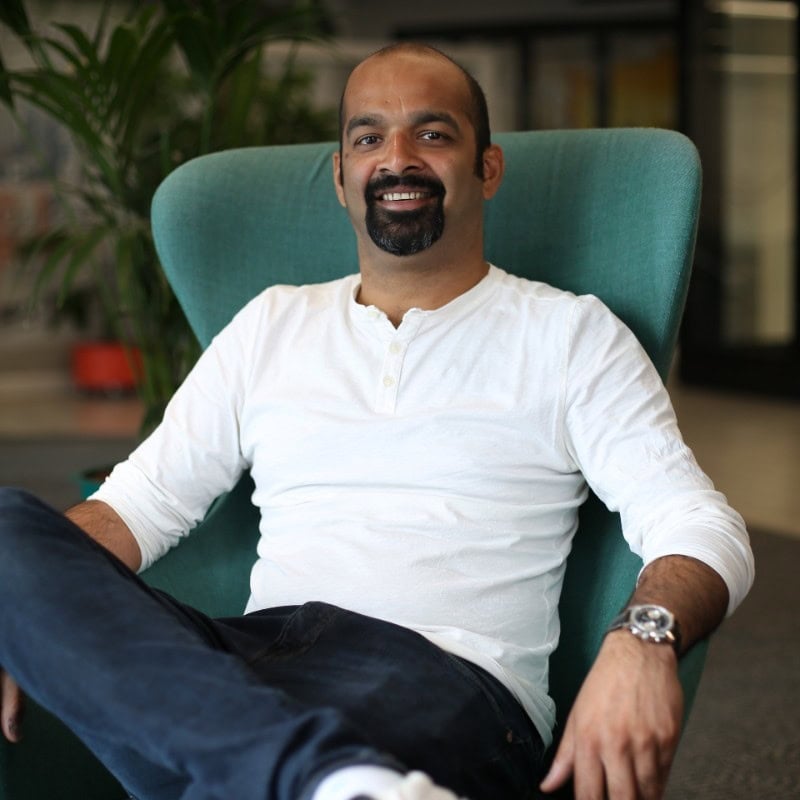
  • Vaibhav Rustagi, Glion Institute of Higher Education

    Vaibhav Rustagi, Glion Institute of Higher Education

    What do you like most about your job?

    Meeting the new generation/face of hospitality. The opportunity to empower this new generation to realise their full potential. Building bridges between academia and industry, and watching students grow into confident, purpose-driven professionals, is deeply fulfilling.

    Describe a project or initiative that you’re currently working on that excites you.

    We’re focusing on bringing the industry even closer to our students: turning London itself into a living classroom. With the world’s leading hospitality brands, luxury groups, and innovators all here, Glion London is uniquely placed to connect education with real-world opportunity. Our aim is to make every student’s journey a true immersion into the beating heart of the industry.

    What’s a piece of work you’re proud of – and what did it teach you?

    Being part of the team at Hult International Business School that scooped the excellence award for best Business School Careers Strategy from AMBA and BGA in 2020. It taught me about the importance of connecting with alumni, who in turn came back to Hult to recruit for internal opportunities within their organisations.

    What’s a small daily habit that helps you in your work?

    I work in a different place every day. Glion London is split across three floors, and not least because I only joined the institution in September, I like to sit with different people to listen and understand their roles and how we can all work even more effectively in a team dynamic.

    What’s one change you’d like to see in your sector over the next few years?

    For hospitality to be recognised as the glamorous and sexy profession that it is, and the opportunities in related areas such as consulting, private equity, sales, operations management and education. Also for prospective students to fully realise the transferrable skills for life that studying programs in this area provide.

    What idea, book, podcast or conversation has stayed with you recently?

    ‘The Knowledge Project Podcast’ by Shane Parrish: thoughtful discussions on how we think, decide, and learn better. ‘The Empire Podcast’ would be another.

    What’s one piece of advice you’d give to someone starting out in this field?

    In hospitality, that you have to start from the bottom. You can’t run a restaurant without having washed plates. In education, the importance of soft skills – critical thinking, problem-solving, customer service, ownership, creativity and so on.

    Source link

  • When will we listen to what young people say?

    When will we listen to what young people say?

    Imagine adding your thoughts to a conversation, only to have them dismissed by the group — and not because of what you said, but because they thought you were too young to know what you are talking about or understand the topic at hand.

    That’s what teens around the world face when they try to participate in “adult” conversations.

    On Tuesday 2 December, we gathered seven people from six countries in a live virtual roundtable to discuss whether and how young people are able to speak out and be heard. Five teens from News Decoder partners schools in India, South Africa and the United States were joined by News Decoder correspondent Alfonso Silva-Santisteban from Peru and Marouane El Bahraoui, a research intern at the Carter Center in the United States and African Leadership Academy alum originally from Morocco.

    When we asked each of the teens whether they felt they were listened to, they all agreed on one thing: When talking to their peers they felt understood and respected. But when trying to get their opinions across in a room of adults, they were often dismissed and felt disrected.

    “If I’m talking about a certain topic to my peers and they already have that knowledge already, they already know what I’m talking about, then it’s much easier for them to actually hear me and understand me,” said Ramona-Blessing Mkunna, a Tanzanian student studying at the African Leadership Academy in South Africa.

    Some voices are valued more.

    Sophie De Lavandeyra, a student at The Hewitt School in New York City said that she feels that even when she speaks to teachers or family members, she is heard and listened to but not equally valued. “And ultimately, there’s this sense of ‘I’m a student, I’m a child’, so therefore my opinions must be not as valued as other adults in my community,” she said.

    Sydney also attends Hewitt and said that the problem of being heard is more pronounced for girls. “I think people can undermine our opinions or statements and beliefs that we have,” she said.

    Mahee Mantri, a student at VIBGYOR High in India said that she feels that people look at age and not experience, and that while her experiences might be different, they should still be considered valid. It seems, she said, that the age difference gives some people an excuse to not listen.

    That young people feel they aren’t heard may be the one unifying aspect of what we call the “Gen Z” generation — the first generation to be born in a fully-digital world.

    El Bahraoui said that if there is a Gen Z movement, it is one that doesn’t have a leader and it doesn’t have a specific set of demands, but the demands they do have seem to cross borders: lowering unemployment, ending nepotism and corruption, slowing down climate change.

    “Young people are afraid of the uncertain future or the uncertainty of the future. That’s why there is all this anger and people going out to the street and protesting because people want some stability some certainty,” he said.

    From anger to action

    In many places, like Kenya, to get heard youth are taking to the streets in protests and when they do, it has produced results, El Bahraoui said. “Some protests led to the dissolution of the house of representatives,” he said. “Some protests led to the ousting of the president or the head of state. Other protests led only to the government removing a financial bill, such as the case in Kenya. There was a tax bill and then Gen Z protests went to the streets and the government just removed that bill, instead of removing the whole government or the whole parliament.”

    Silva-Santisteban said some of the frustrations young people have is that even when protests produce change, often those changes aren’t long-lasting or significant.

    “There’s an outburst of outrage and young people are called to be responsible of the change. Like they’re the spearheads of the protest. And at some point they become responsible of the change, but then the conditions are the same, especially in a country [like] Peru where you have a political crisis, a lot of conditions for unemployment.”

    Meanwhile, the young people that took to the streets face violence and are stigmatized, he said.

    The young people in the roundtable seemed to agree that shouting demands might not be the most effective way to get heard. Instead it comes down to an ongoing process of talking to people you might not agree with, and more important listening respectfully to what they have to say.

    Dialogue is needed.

    Anna Bamugye, a Ugandan student at the African Leadership Academy, said that you can’t force your opinions on people. “It’s about understanding each other and where you’re coming from,” she said. “And most of the time, we find comfort in talking to those who understand what we’re trying to convey, what the message we’re trying to say.”

    But in order to get a message to people, you must talk to people who may not understand you. “You have to talk to people who have different views,” she said. “To hear where other people are coming from allows you to understand, and maybe just help understand how you can shift that person’s perspective and understand where both parties are coming from.”

    In this way too, she said, you could learn something from them that you had never thought of.

    Mkunna said that If the goal is to raise awareness, you have to consider the most effective way of doing that. She has cousins who were born with autism and has found that in Tanzania people are largely ignorant about autism. As a result, autistic people face discrimination. She decided to launch a social media campaign to educate people about autism. “I think it really helped,” she said. “Because we got a chance to go on national TV and we went on radio and we talked about autism.”

    In New York, Del Cid and De Lavandeyra found themselves angry about the immigration raids taking place in New York and all over the country. Del Cid channeled her anger into photography. “So I personally use my art and the images that I take to kind of convey a story and a narrative,” she said.

    De Lavandeyra wrote an AI program using a large language model, that lets people who speak little English get questions answered. The program allows them “to be able to chat in whatever language is their home language, and be able to ask questions and get their legal answers based off [U.S. Citizenship and Immigration Services] data,” she said. “But written in a way where they could understand, and it was not just a bunch of legal jargon that felt unintelligible for them and something they weren’t being able to process.”

    Mantri said that it is important to both listen and speak up. “I feel there is a generation gap which I experienced in my parents or their generation, and in my generation we question why — why is it things are like that?” she said. “I always like to question why is it like this and they probably just hear it and consider it as back answering or disrespect.”


     Questions to consider:

    1. What is the difference between being heard and having someone listen to what you say?

    2. Why is the ability to listen to what people say important if you want to get your opinions across?

    3. In what ways do you try to get your voice heard?



    Source link

  • Podcast: AI, uni finances, civic

    Podcast: AI, uni finances, civic

    This week on the podcast artificial intelligence remains front and centre, with a look at the growing concerns around AI-generated teaching content and the student backlash it’s prompted. We also discuss our new project with Kortext on AI in pedagogy and an emerging debate over AI’s place in the REF process.

    Plus we explore the financial strategies universities in England are adopting in response to mounting pressures, and what does a more ambitious civic university agenda look like in 2025?

    With James Coe, Associate Editor at Wonkhe, Jo Heaton-Marriott, Managing Director at the Authentic Partnership, Jonathan Simons, Partner and Head of the Education Practice at Public First and hosted by Mark Leach, Editor-in-Chief at Wonkhe.

    On the site:

    The end of pretend – AI and the case for universities of formation
    High quality learning means developing and upskilling educators on the pedagogy of AI
    Counting the cost of financial challenges in English higher education
    Civic 2.0 – the civic university agenda but with sustainable impact

    You can subscribe to the podcast on Apple Podcasts, YouTube Music, Spotify, Acast, Amazon Music, Deezer, RadioPublic, Podchaser, Castbox, Player FM, Stitcher,

    Source link

  • Districts report enrollment drops amid heightened immigration enforcement

    Districts report enrollment drops amid heightened immigration enforcement

    This audio is auto-generated. Please let us know if you have feedback.

    Dive Brief:

    • Los Angeles Unified School District’s enrollment fell 4% year over year to 392,654 for 2025-26 — a greater-than-expected drop in a year where the school system has faced heightened immigration enforcement. The dip is “deeply connected to the realities our immigrant families are facing,” Superintendent Alberto Carvalho told K-12 Dive in a statement Tuesday.
    • Other districts affected by increased immigration enforcement activities have also reported enrollment drops, including Miami-Dade County Public Schools in Florida and Chicago Public Schools. The uptick in enforcement followed a Trump administration policy change in January that allows immigration raids at schools.
    • In many areas, these declines are partly driven by lower enrollment for newcomers, defined as students who have been enrolled for three years or fewer in any U.S. school, were born outside the U.S., and are English learners. 

    Dive Insight:

    “These declines reflect a climate of fear and instability created by ongoing immigration crackdowns, which disrupt family stability, housing, and mobility,” said Carvalho. “These fears are now exacerbating pre-existing factors that were already driving statewide enrollment declines — including falling birth rates, rising housing costs, and broader economic pressures.” 

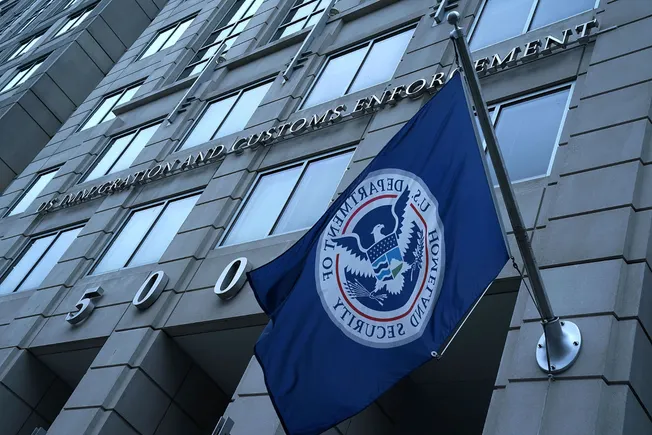
    LAUSD and its surrounding areas have seen an increase in immigration enforcement activity in both the current and previous school years, including incidents in which U.S. Department of Homeland Security officers attempted to gain entry into elementary schools by allegedly making false claims they had parent permission to speak with students. In another instance, agents apprehended a high school student with a disability while he was enrolling for classes in an apparent case of mistaken identity.

    LAUSD families and those in other areas hit by heightened immigration enforcement have also experienced activity during school pickup and dropoff hours. 

    The impact of these activities on attendance has led some school leaders to emphasize the possibility of virtual schools. 

    Now, the apparent toll on enrollment — including that of newcomers — is set to impact districts’ budgets. 

    In LAUSD, newcomer enrollment for students who were expected to return for the 2025-26 school year is down 9% at 16,668, compared to the projected 18,232. 

    “Unless these overlapping issues are addressed at the state level, California’s public schools will face long-term ramifications that will affect classrooms, staffing, programming, and the future of public education itself,” said Carvalho. 

    Late last month, congressional Democratic lawmakers sent a letter to U.S. Secretary of Education Linda McMahon in which they inquired about steps the department is taking to protect students as raids impact their families and communities. The lawmakers wrote that they are “deeply concerned” about the fallout.

    “The chaotic manner in which raids and apprehensions are being carried out is injecting needless trauma into these communities, which then makes its way into schools and contributes to absenteeism,” said lawmakers, led by House Education and Workforce Committee Ranking Member Bobby Scott, D-Va. Students, regardless of their immigration status, are being impacted, they wrote. 

    “The consequences of the Administration’s actions show that our nation’s students, families, and schools need resources to help in the days ahead,” the lawmakers wrote.

    Source link