Blog

  • In Light of AI, a Creative Alternative to Essays (opinion)

    In Light of AI, a Creative Alternative to Essays (opinion)

    For decades now, professors have been complaining about the futility of asking students to write term papers, otherwise known as a research paper. In theory, research papers teach students how to gather a large body of information, weigh conflicting interpretations and come up with their own ideas about the subject, all while honing their writing skills.

    But the reality is very different. The prose is usually terrible and the ideas a bad rehash of class lectures. Grading these essays is pure torture. Anecdotally, I’ve heard many say that evaluating papers is the worst part of teaching. If Dante had known about grading, he would have added a new circle of hell where the damned have to grade one bad paper after another for all eternity.

    And now we have AI, or “artificial intelligence,” in the form of ChatGPT, Grok, Gemini and a host of other platforms. Submit a prompt, and these programs spit out an essay that, aside from the occasional hallucination, is actually pretty good. Grammatical mistakes are rare; there’s a thesis, evidence and organization.

    Even worse, using AI for schoolwork is rampant in both K–12 and higher ed. As James D. Walsh puts it in his now-infamous New York magazine article, “Everyone Is Cheating Their Way Through College.” And it’s nearly impossible to catch cheaters, especially now that the airless, robotic prose that’s often a marker of an AI-written essay can be masked by programs that promise to “unlock truly human-like AI text.”

    What to do? If you have a large class, interviewing students about their essays to ensure they didn’t use AI is impractical, and randomly choosing students to interview could lead to charges of bias. Besides, suspecting everyone of plagiarism destroys the class atmosphere.

    Many have gone back to handwritten exams and in-class writing assignments. But grading a pile of blue books is as agonizingly tedious as a pile of papers.

    My solution has been to replace the final research paper with a creative project.

    Instead of a detailed prompt or instructions, I give my students very wide latitude to do, as the phrase goes, whatever floats their boat. Nonetheless, I still set a few parameters. They have to tell me several weeks in advance what they have in mind. They can’t take a piece of paper, draw a line across it and say, “Behold: my interpretation of Hamlet.”

    I have only two hard rules: The project must reflect a good-faith effort to interpret something we’ve read in class, and they have to hand in a brief description of what they tried to accomplish. For those willing (most are), the students present their projects to the class during the period allotted for the final exam. Other than that, they do what they want—and I’ve gotten amazing results.

    When I was teaching the literature of terrorism, one student happened to be going to New York for spring break, so she went to the Sept. 11 memorial and interviewed people. Another student composed a rock opera based on Thomas Kyd’s Elizabethan play The Spanish Tragedy. A group put together a postapocalyptic performance of King Lear on the heath, using the university’s loading docks for their stage. I’ve gotten raps, short stories, children’s books, parodies performed and written, musical compositions, and paintings.

    For example, a student produced this project for my last Shakespeare class (reproduced with the student’s permission):

    Created by Teresa Cousillas Lema

    This pencil drawing represents the student’s response to Al Pacino’s delivery of Shylock’s “Hath not a Jew” speech in Michael Radford’s 2004 film, The Merchant of Venice. The three images represent the different emotions Shylock displayed over the course of his speech: rage, sadness, determination.

    For the background, this student wrote out Shylock’s speech, thereby committing it (she told me) to memory. But this project represents more than a pretty picture: It demonstrates a profound response to Shakespeare’s words and Pacino’s delivery of them.

    This project accomplished nearly the same goals a term paper is supposed to accomplish: reflecting on the material and responding to the play both emotionally and intellectually. As a final payoff, while most students forget about their term papers seconds after they submit them, I’m guessing this student will remember this one and carry forward a deep appreciation of Shakespeare.

    Granted, switching to creative projects does not entirely eliminate the possibility of using AI to cheat. Students could still resort to AI if they want to produce anything that involves writing (e.g., a screenplay or a short story), or, for visual projects, they could use an AI art generator. But the opportunity to create something they’re invested in, as opposed to responding to the professor’s essay topics, reduces the incentive to not do the work. The project is something the student wants to do rather than something they have to do.

    Yet there is something lost. When the creative project replaces the research paper, students will not have the experience of sorting through multiple and contradictory interpretations. They won’t learn about literary theory and different approaches to literature. And they won’t learn how to write critical prose.

    In short, in my discipline, replacing the research paper with a creative project means moving away from teaching English majors how to be literary critics, and that’s not small. It means reorienting the undergraduate English major away from preparing our best students for graduate school and more toward historically informed response.

    Nonetheless, it makes no sense to continue with an evaluation method that just about everybody agrees has long since lost its value. So I suggest abandoning the essay for another method that not only accomplishes nearly the same aims but, in the end, brings joy to both student and teacher.

    Peter C. Herman is a professor of English literature at San Diego State University.

    Source link

  • Students are being affected by strangulation

    Students are being affected by strangulation

    When translating international research on strangulation during sex specifically, an estimated 1.2-1.6 million students across UK higher education institutions will have had this experience.

    Content warning: strangulation, choking, sexual violence, suicide, homicide

    Strangulation is not widely discussed in UK university settings, but it should be, and universities can be very well-placed to respond to this topic across many different contexts.

    With a new academic year beginning, particularly in the context of the Office for Students’ harassment and sexual misconduct new regulation and prevalence data, now is the time to consider the best approach to strangulation for new and existing cohorts of students.

    What is strangulation?

    Strangulation – or “choking” as it is sometimes called in the context of sex – is the application of external pressure to the neck, which results in the restriction of air and/or blood flow, through obstruction of the windpipe and/or major blood vessels.

    Whilst ‘choking’ is sometimes a term that is sometimes used interchangeably, this term is more technically applied to an internal obstruction in the throat which restricts breathing (e.g. choking on a piece of food).

    The Institute for Addressing Strangulation (IFAS) was established in October 2022, following the introduction of new legislation, presenting strangulation as a stand-alone offence in England and Wales.

    There is not yet research specifically on the prevalence of strangulation during violence and abuse in universities in the UK. This in itself is a risk to an effective response. However, from research we do have available, we can see how students could be affected by strangulation.

    In the context of sexual violence, research from a Sexual Assault Referral Centre in England showed that around a fifth of victim/survivors of sexual assault and rape by a current or ex-partner had been strangled at the time of the assault. A higher proportion of victim/survivors who were strangled were “In education”, compared to those who weren’t strangled (12 per cent compared with 9 per cent).

    For those in domestic abuse relationships, there is an increased risk to the victim/survivor once they have been strangled. Research has shown that there is a seven-fold increased risk of the victim being killed by the perpetrator when non-fatal strangulation is in the abuse history.

    From April 2022 – March 2023, the Vulnerability Knowledge and Practice Programme (VKPP) showed that 10 per cent of suspected victim suicides following domestic abuse (SVSDA) related to victims aged 16-24. Of all the SVSDA cases in the same year, the VKPP reported that non-fatal strangulation was noted in the abuse histories of 20 per cent of cases.

    The risks of an act of strangulation on its own can include loss of consciousness (possibly indicating acquired brain injury), stroke, seizures, motor and speech disorders, and death.

    If universities have an awareness of the abuse and violence their students are subjected to, is the knowledge around strangulation a missing piece of a bigger puzzle?

    Strangulation during sex

    Strangulation or “choking” during sex is disproportionately prevalent amongst younger age groups.

    A survey conducted by us at IFAS late last year showed that 35 per cent of respondents aged 16-34 had been strangled during sex by a partner at least once. This was sex they had entered into willingly, but the strangulation was not always with prior agreement from all parties.

    Of the respondents who had previously been strangled during sex, only 50 per cent reported to us that this strangulation was always agreed in advance.

    When looking at university populations internationally, the prevalence of engaging in strangulation during sex appears to be higher than in the general population sample referenced above. In the United States, it has been reported that 42 per cent of undergraduates have been strangled during sex and 37 per cent have reported strangling someone else – in Australia, 56 per cent of students had an experience of having been strangled and 51% had done this to a partner.

    Researchers in the United States have also looked specifically at the risks of strangulation during sex. They found that individuals who had frequent experience of partnered strangulation had heightened levels of a blood biomarker that indicates inflammation within the brain and cell death.

    Even when used during sex, research consistently shows that there is no safe way to strangle. This is beginning to be better recognised, including with action by the government to criminalise the depiction of strangulation in pornography.

    What should higher education institutions be doing

    Strangulation may be missing in universities’ broader responses to sexual misconduct, domestic abuse, and sex and relationships education. Whilst not applicable to all institutions, the principles outlined in the swiftly upcoming Office for Students Condition of Registration (E6) may serve as a useful framework in which to integrate this topic.

    Non-judgemental engagement around strangulation is vital. Students who are thinking about or who are engaging in strangulation during sex should feel able to discuss this with trusted staff who can provide helpful and objective information.

    Students who have been strangled in other settings – for instance, in domestic abuse or sexual violence – also require opportunities to disclose and seek specialist support. Integrating responses to strangulation under the appropriate support requirements of E6 could be suitable, particularly when disclosed as part of abuse or misconduct.

    It is necessary that questions are asked of students in relevant contexts such as sexual misconduct support services, given that spontaneous disclosure may be rare. It is important to remember the range of terminology that could be used to describe the same act, particularly across different contexts.

    Staff should be confident they are talking with students in a way all parties can understand and from which appropriate action can be taken.

    As would be the common practice for other disclosures such as domestic abuse, limits to confidentiality and escalation procedures should also be appropriately discussed and understood by all.

    In E6, the Office for Students notes the importance of capturing data on behaviours in order to inform both prevention and response initiatives. Including strangulation as a specific variable to consider within this data capture process would be valuable for universities. The more staff know about strangulation in different contexts, the better and more specialist the response can be. If questions are not asked about strangulation, and opportunities for disclosure are limited, prevalence data are unknown.

    The higher education sector has long been an advocate for evidence-based practice, and sexual misconduct has been a recent example of where understanding the issue has led to more concerted efforts to address these unacceptable behaviours (see e.g. the Office for Students’ pilot sexual misconduct survey).

    Staff should collate data on strangulation disclosures and reports (for example, through disciplinary proceedings), and be able to monitor and report on these data independently and in the context of other behaviours such as sexual misconduct. Where possible, it would be beneficial to consider how strangulation is captured on disclosure tools, reporting forms, risk assessment templates, and case management systems. Staff should consider how their university’s strangulation data form part of reporting through existing governance structures.

    Strangulation is still an emerging – and can be taboo – topic of conversation which means relatively little is known and shared. Myths and misconceptions thrive in these environments which can lead to victim blaming and poor outcomes for those involved. Education for whole institutions on what is known objectively about this behaviour in different contexts is needed.

    This education can come in the form of, for example, training for staff and students around sexual misconduct and other forms of abuse and harassment – particularly when discussing consent and the requirement for prior and informed consent for all sexual behaviours. As universities have been reviewing their training provision to align with, and hopefully go beyond, the requirements of E6, this seems like a suitable framework for the appropriate inclusion of this topic.

    Individual conversations with students and staff seeking support are also good opportunities to share information and resources for further support. Staff in specialist roles such as student support workers, and disciplinary investigators and panel members may benefit from more specialist training interventions in order to feel confident and competent to support the education of others.

    The topic of strangulation is a nuanced one, not least because of the varied contexts in which it may be occurring. It therefore requires a careful approach by universities, but this is not an insurmountable task. We would encourage institutions to follow the trajectories they should already be taking to address harassment and sexual misconduct and apply appropriate learning to this important topic.

    Please visit the IFAS website for more information.

    Source link

  • The Language Crisis: How can we increase working-class uptake in languages? 

    The Language Crisis: How can we increase working-class uptake in languages? 

    Author:
    Lee Marney

    Published:

    This blog was kindly authored by Lee Marney, a recent graduate of the University of Manchester.   

    Introduction 

    Megan Bowler’s recent HEPI report lays bare the problems that language educators are experiencing in the face of declining uptake of modern foreign languages (MFL) at both post-14 and post-16 levels since the removal of compulsory foreign language Key Stage 3 in 2004.  

    The report is a fascinating insight into how language learning is indeed more vital than ever in the face of artificial intelligence, and the skills acquired are beneficial not only to individuals who learn MFL, but also to local communities and the economy.  

    MFL and pupils for lower socioeconomic backgrounds 

    With just 6 per cent of AS/A- Level students studying French or Spanish being eligible for Free School Meals, policymakers must do more to remove barriers to entry to language learning for students from socioeconomically disadvantaged backgrounds. This is imperative, given that MFL uptake at both post-14 and post-16 is most common among students whose household income was above the national average, with uptake notably highest among students from socioeconomically advantaged households (£78,000 or more). 

    The report recommends various measures to promote language educational uptake. However, more ought to be done to target groups of students who have disproportionately low participation in MFL to address the current language learning crisis, particularly through the form of:  

    • offering alternative qualification pathways; and 
    • reforming curriculum through utilising heritage languages (A heritage language is a minority language, migrant or indigenous, learned at home during childhood) to move away from a Eurocentric model of MFL across all Key Stages. 

    Beyond the Euro-centric approach 

    As far back as 1975, curriculum reformers have argued that languages spoken by migrant families are a cultural asset to the UK. Multilingualism is already ubiquitous in British society, with 90% of schools having students for whom English is their additional language, with over 20% of students having a first language that is not English. The most common first languages among these students are Romanian, Urdu, Polish, Punjabi, and Arabic. Indeed, schools already possess a rich linguistic tapestry that is, currently, being underutilised. 

    In the U.K, roughly 75% of ‘underrepresented groups’ have knowledge of a heritage language, including working-class and Black, Asian and Minority Ethnic (BAME) communities. Despite this, 82% decide not to pursue a formal qualification due to the push in schools towards the big three: French, Spanish, and German.  

    Overhauling the current Eurocentric MFL curriculum that understates the role of heritage languages is vital to aid the language crisis. The current exam-focused system fails students who speak heritage languages, restricting their ability to fully maximise their language capabilities. A new model that embraces the UK’s diverse tongues would boast both cultural and economic advantage, given that the UK’s lack of language skills cost the UK economy around 3.5% of GDP. 

    An applied approach to language learning 

    Megan Bowler’s report suggests a level three certificate in Applied Languages to boost post-16 participation in MFL. However, to appeal to working-class students, governmental policy should also encourage post-16 education institutes to incorporate language components in the new technical qualification T-Levels such as marketing, media, and management and administration. While not exclusively for working-class students, this would specifically benefit them by creating a pathway to use languages in professional settings. This is pertinent when considering that students from socioeconomic advantaged backgrounds have more opportunities to use their language capabilities when engaging in their international travelling lifestyle, conceptualising their MFL as useful outside of an academic setting, allowing for more opportunity to construct a world view. One such model is the diplôme de compétence en langue in France that takes a holistic approach to language learning for professional competence development. Bodies such as the British Academy have also recommended this. This type of linguistic competence development is essential to ensure UK competitiveness in a globalised economy, given that small and medium-sized enterprises (SMEs) are 30 per cent more successful in exporting when they utilise language capabilities. 

    Conclusion 

    While policy can be a useful top-down tool to encourage MFL uptake, Megan Fowlers report rightfully points out that it must be accompanied by an ethos that reformulates the way in which we view the skills accrued by MFL learning. However, one must also be able to acknowledge that policy is a vital tool in encouraging that ethos growth by uplifting the linguistic diversity of this country’s working class. By reforming qualifications and allowing curriculum content to reflect the linguistic diversity of the UK and beyond, policymakers can ensure MFL are a tool for social mobility.  

    Source link

  • Explore the earnings for graduates of beauty schools, other certificate programs

    Explore the earnings for graduates of beauty schools, other certificate programs

    Schools that train hairstylists, dental assistants and health aides will be able to keep getting federal student loan dollars even if the professionals they turn out don’t end up earning any more than a high school graduate.

    That’s because programs like those, which don’t end in a college degree, were granted an exemption from new accountability measures under President Donald Trump’s ”big, beautiful bill.” 

    A Hechinger Report analysis of federal data found at least 1,280 such certificate programs could have been at risk of their students losing access to federal student loans — but a successful lobbying effort excluded them from the accountability measures. 

    Related: Become a lifelong learner. Subscribe to our free weekly newsletter featuring the most important stories in education. 

    Under the new law, most graduates of associate, bachelor’s and graduate degree programs must earn at least as much as someone who has only a high school diploma. If programs fail to hit that benchmark for two out of three years, their students will no longer be eligible for federal student loans. (And the schools must warn students of this possibility if they miss the mark for just one year). Without that borrowing power, many students could not afford to attend. And without those students, some of the schools might not survive. 

    Using the table below, see which certificate programs might have been flagged under the Trump law if not for the exemption. If graduates of a particular program ended up earning less than adults with only a high school diploma, that program could have faced losing eligibility for federal student loans under the Trump law.

    Methodology

    What exactly does the “big, beautiful bill” call for?

    The legislation requires the Department of Education to compare earnings of working adults who have only a high school diploma to the earnings of adults four years after they complete a degree program or graduate certificate. If a postsecondary program’s graduates fail to outearn adults with only high school degrees for two out of three years, students can no longer obtain federal student loans to attend that program. 

    The law also sets up an appeals process and a way for programs to apply to regain eligibility for federal student loans.

    What data was analyzed? 

    The law directs the education secretary to use census data to calculate median earnings for working adults with only a high school degree in the state where a program is located. The Department of Education will release regulations that spell out exactly how to do that math. For example, the law does not spell out whether it will look at census data averaged out over 12 months or a longer period of time. 

    For earnings data for high school graduates, The Hechinger Report relied on calculations from the Department of Education, which were derived from the 2022 American Community Survey 5-Year Estimates Public Use Microdata Sample from the U.S. Census Bureau.

    To calculate median earnings for graduates, the law directs the Education Department to put together earnings data for a cohort of at least 30 graduates who received federal student aid for postsecondary education — which typically includes grants, loans or work-study. Graduates are excluded if they’re currently enrolled in another higher education program. If there are fewer than 30 students in a cohort, the Education Department can lump together several years of data to get to 30 students.

    To get earnings data for graduates of certificate programs, Hechinger used a federal database known as College Scorecard. We downloaded field of study data for the 2022-23 school year. From this data, The Hechinger Report extracted information about certificate programs, at their main campuses, and included only programs that had median earnings data. The federal database suppresses earnings data for small programs. That left 4,431 currently operating certificate programs. 

    How was a program determined to be at possible risk of failing the accountability measure?

    For each program, The Hechinger Report compared median graduate earnings to the high school graduate earnings data of the state where the program was located. If the graduates earned less, the program was considered to be at risk.  

    Under the law, postsecondary programs that don’t meet the earnings benchmark for one year have to inform all current students that they are at risk of losing their eligibility for federal student loans. 

    Are there any limitations to the data? 

    The “big, beautiful bill” takes online programs into account by considering whether students live in the same state where their academic program is based. Under the law, student earnings are compared with national data rather than state data when fewer than half of enrolled students live in the state where the school is located, which may be the case for online programs. 

    The Hechinger Report’s analysis instead compares every program with state earnings. That’s because the College Scorecard field of study data set is limited and only includes information about graduates employed within the same state as the institution, not whether enrolled students live in the same state as the program. In addition, College Scorecard data provides earnings data for all graduates without a breakdown for whether they receive federal aid.

    Also, the Hechinger database looks at the available median earnings of all students four years after graduation for the school year 2022-23, regardless of the number of graduates. Though College Scorecard suppresses data on smaller programs, median earnings data is available for programs with 16 or more working graduates. The “big, beautiful bill” directs the Department of Education to instead lump together years of data to create cohorts of at least 30 students.

    Contact investigative reporter Marina Villeneuve at 212-678-3430 or [email protected] or on Signal at mvilleneuve.78

    This story about beauty schools was produced by The Hechinger Report, a nonprofit, independent news organization focused on inequality and innovation in education. Sign up for the Hechinger newsletter.

    The Hechinger Report provides in-depth, fact-based, unbiased reporting on education that is free to all readers. But that doesn’t mean it’s free to produce. Our work keeps educators and the public informed about pressing issues at schools and on campuses throughout the country. We tell the whole story, even when the details are inconvenient. Help us keep doing that.

    Join us today.

    Source link

  • Cosmetology schools and other certificate programs got exemption from rules on graduates’ earning levels

    Cosmetology schools and other certificate programs got exemption from rules on graduates’ earning levels


    Remiah Ward’s shift at the SmartStyle salon inside Walmart was almost over, and she’d barely made $30 in tips from the haircuts she’d done that day. It wasn’t unusual — a year after her graduation from beauty school, tips plus minimum wage weren’t enough to cover her rent.

    She scarcely had time to eat and sleep before she had to drive back to the same Walmart in central Florida to stock shelves on the night shift. That job paid $14 an hour, but it meant she sometimes spent 18 hours a day in the same building. She worked six days a week but still struggled to catch up on bills and sleep. 

    The admissions officer at the American Institute of Beauty, where she enrolled straight out of high school, had sold her on a different dream. She would easily earn enough to pay back the $10,000 she borrowed to attend, she said she was told. Ward had no way of knowing that stylists from her school earn $20,200 a year, on average, four years after graduating. Seven years later, her debt, plus interest, is still unpaid.

    In July, Republicans in Congress pushed through policies aimed at ensuring that what happened to Ward wouldn’t happen to other Americans on the government’s dime; colleges whose graduates don’t earn at least as much as someone with a high school diploma will now risk losing access to federal student loans. But one group managed to slip through the cracks — thousands of schools like the American Institute of Beauty were exempt. 

    Remiah Ward worked two jobs while trying to make it as a hair stylist but never made enough to pay her all her bills and has had to put her dream career on hold. Credit: Courtesy Remiah Ward

    Certificate schools succeeded in getting a carve-out. The industry breathed a collective sigh of relief, and with good reason. At least 1,280 certificate-granting programs, which enrolled more than 220,000 students, would have been at risk of losing federal student loan funding if they had been included in the bill, according to a Hechinger Report analysis of federal data. [See table.] About 80% of those are for-profit programs, and 45 percent are cosmetology schools.

    “There is this very strange donut hole in accountability where workforce programs are held accountable, two-year degree programs are held accountable, but everything in between gets off without any accountability,” said Preston Cooper, a senior fellow at the conservative think tank American Enterprise Institute.

    The schools spared are known as certificate programs and, with their promise of an affordable and relatively quick path to economic security, are the fastest growing part of higher education. They usually take about a year to complete and train people to be hair-stylists, welders, medical assistants and cooks, among other jobs.

    As with traditional colleges, there are big differences in quality among certificate programs. Some hair stylists can make a middle-class living if they work in a busy salon. But for people who have to pay back hefty student loans, the low wages for stylists in the early years can be an insurmountable obstacle.

    Ward found herself facing that dilemma. When she could no longer sustain the lack of sleep from her double shifts at Walmart, she pressed pause on her styling career and took a job with Amazon, loading and unloading planes. She wasn’t ready to give up her dream career, though, so in addition to her 10-hour days moving boxes, she took part-time gigs at local hair salons. She didn’t have family to help pay rent, not to mention loan payments, so she couldn’t afford to work fulltime at a salon, which is essential to build up a regular clientele — and bigger tips. Without that, she couldn’t get much beyond minimum wage. 

    A representative from the American Institute of Beauty denied that Ward was told she would easily repay her loan.

    “No admissions representative, not at AIB or elsewhere, would ever make such a statement,” Denise Herman, general counsel and assistant vice president of AIB, said in an email. 

    The high cost of many for-profit cosmetology schools — tuition can be upward of $20,000, usually for a one-year program  — can leave former students mired in debt. In May, the government released data showing 850 colleges where at least a third of borrowers haven’t made a loan payment for 90 days or more, putting them on track to default. About 42 percent of those were for-profit cosmetology and barbering schools (including AIB).

    Brittany Mcnew says she loves working as a stylist but that her income takes a hit when traffic is slow in her salon in Bethlehem, Pennsylvania. Credit: Meredith Kolodner/The Hechinger Report

    Herman blamed the Biden administration policy that after the pandemic let borrowers forgo payments without any penalty.

    “Debtors became ‘comfortable’ not making payments,” said Herman. “AIB provides the graduate with the information graduates need to make their payments. What that graduate decides to pay, or not pay, is not influenced by AIB.”

    Under the “big beautiful bill” passed in July, two- and four-year colleges must ensure that, after four years, graduates on average make at least as much as someone in their state who has only a high school diploma. The colleges must inform students if they fail that test, and if it happens for two out of three years, the college will be ineligible to receive federal loan funds.

    Some for-profit certificate schools lobbied hard for an exemption. The American Association of Career Schools, which represents proprietary cosmetology schools, spent $120,000 lobbying the Education Department and Congress, including on the “big beautiful bill,” in the first six months of this year. At the group’s major lobbying event in April, Sen. Bill Cassidy, chairman of the Senate Health, Education, Labor and Pensions Committee, was the keynote speaker.

    Cassidy declined to answer questions about why certificate programs were excluded, but a fact sheet from his committee noted that they are already covered by something else, the gainful employment rule, which is also being challenged by the for-profit cosmetology industry.

    That federal gainful employment regulation, updated in 2023, requires in essence that graduates from career-oriented schools earn enough to be able to pay back their loans and earn more than a high school graduate. It also requires that consumers, like Ward, be given more information about how graduates from all colleges fare in the workplace.

    The rule posed an existential threat to a huge swath of cosmetology schools.

    In 2023, the American Association of Career Schools sued to block the gainful employment rule. 

    “AACS supports fair and reasonable accountability measures,” Cecil Kidd, the AACS’s executive director, said in an email. “However, we strongly object to arbitrary or discriminatory policies such as the US Department of Education’s Gainful Employment rule, which unfairly targets career schools while exempting many public and private non-profit institutions that fail to meet comparable outcomes.”

    He pointed to public comments in which AACS has argued that the rule imposes an unfair burden on cosmetology schools since stylists are predominantly women, who are more likely to have “personal commitments” that affect their earnings, and who rely on tips that are often pocketed as unreported income.

    Cameron Vandenboom is a successful hair stylist but says the high cost of her private beauty school wasn’t worth thousands of dollars in student debt: “I absolutely should have gone to community college.” Credit: Courtesy Shanna Kaye Photo

    In a twist that surprised advocates on both sides, the Education Department in May asked the court to effectively dismiss AACS’ lawsuit. 

    If the court rules in favor of the cosmetology schools, certificate programs will be free of all accountability requirements on their graduates’ earning levels, because they got the carveout in July. 

    Even if the court rules against cosmetology schools, advocates are pessimistic that the Trump administration will implement the gainful rules. The first Trump administration got rid of the original rules back in 2019 and Nicholas Kent, now the U.S. undersecretary of education, was previously the chief policy officer for Career Education Colleges and Universities, or CECU, the trade group that represents for-profit colleges, including certificate programs. He is a well-known critic of the rule.

    “I would be very surprised, if the unlikely scenario plays out that the Biden rule is upheld, that this Department of Education would just say, OK, the court has spoken,” said Jason Altmire, CECU’s executive director. “We are not opposed to accountability for certificate programs, so long as it’s fair to everybody and we have a voice in how you’re measuring programs.”  

    Altmire said CECU didn’t lobby for certificate programs to be carved out of Congress’ bill, but did argue against the earnings formula that Congress landed on. Altmire said it doesn’t take into account part-time work and the gender gap in wages.

    One objection from AACS, raised by CECU as well, is that the earnings measured don’t include tips, which are crucial to hair stylists’ income. Analyzed without including tips, 576 of 724 cosmetology schools in the Hechinger Report analysis would fail Congress’ earnings test. But even if tips were included and raised stylists’ income by 20 percent, 526 cosmetology schools would still fail.

    Earlier this year, Remiah Ward made the difficult decision to leave Florida and move to Kentucky, where the cost of living was more forgiving. She’s working from 7 p.m. to 7 a.m. at an aluminum factory for $19.50 an hour. 

    One day, she might go back to styling after her debt is paid off. Like many former beauty school students, she wishes she’d had more information when she decided to enroll.

    “They really sugar-coated it. I was 18 years old, and I needed a trade that I was already pretty good at,” said Ward, who is now 26. “Everybody thinks they’re going to make a high return, and it’s just not the reality.”

    Marina Villeneuve contributed data analysis to this story. 

    This story about cosmetology schools produced by The Hechinger Report, a nonprofit, independent news organization focused on inequality and innovation in education. Sign up for the Hechinger higher-education newsletter.

    The Hechinger Report provides in-depth, fact-based, unbiased reporting on education that is free to all readers. But that doesn’t mean it’s free to produce. Our work keeps educators and the public informed about pressing issues at schools and on campuses throughout the country. We tell the whole story, even when the details are inconvenient. Help us keep doing that.

    Join us today.

    Source link

  • From Isolation to Inspiration: A Faculty Fellowship for Collaborative Innovation – Faculty Focus

    From Isolation to Inspiration: A Faculty Fellowship for Collaborative Innovation – Faculty Focus

    Source link

  • High quality recruitment practices is everyone’s responsibility

    High quality recruitment practices is everyone’s responsibility

    The UK’s international higher education sector is at yet another crossroads.

    The positioning of international students as not only economic contributors to universities, but also cultural and intellectual assets to our campuses and communities is a well-told tale. But with ever-increasing government scrutiny of international recruitment practice, it is essential that the sector can unequivocally demonstrate that it operates with integrity and transparency.

    It is not just the government institutions must convince of the UK’s commitment to high quality opportunities, but students themselves to ensure the UK remains a destination of choice.

    Last month, IDP published its global commitment to quality and, as part of this, announced we are fully compliant with the British Council’s Agent Quality Framework (AQF). I imagine some might read that and ask “so what? Were you not already working in a compliant way already?”

    To be clear, we were (and always have been) committed to being ethical and responsible in our approach to recruitment, and it is what our partners know and trust us for. But our public commitment to the AQF in January 2024 and more latterly basic compliance assessment (BCA) requirements changes inspired us to have a wholesale review of our processes to ensure all our processes and practices drive quality. Transparency matters more now than ever – the more reassurance we can give our partners that we take our role in their student recruitment seriously sends the right signal to the government that we are committed to sustainable growth focused on right metrics.

    We are in this for the right reasons, that is, the right students, with the right standards and intentions, going to the right universities to complete their studies while living and thriving in our towns and cities. But it’s our hope that by being public about our official compliance, we can encourage others to do the same.

    The fact it has taken us, a well-established world-leading recruitment partner, months to feel confident the checks and balances are in place and that we have full adherence to the framework, demonstrates the complexity behind compliance. As we go along, we’ll no doubt learn more about how we can improve and strengthen those assurances to our partners (and therefore to the government) that international education is not full of ‘bad actors’.

    This is about more than compliance with external standards. It is a need for the international education community to be loud and proud about our work at a time when quality assurance in recruitment is under a brighter spotlight than ever.

    Regulation, regulation, regulation

    The UK government has made clear that international student recruitment cannot be divorced from broader debates around immigration, compliance and the sustainability of the sector. Parliamentary inquiries. Home Office interventions. The MAC review. The Immigration White Paper. The Home Office English Language Test. Freedom of Information requests. Intensified media focus. All this has raised questions about whether recruitment practice is always consistent with the standards expected of a world-leading education system. And this isn’t just about immigration rhetoric – this is about how those practices impact students and the enormous financial and emotional investment they make in choosing the UK for higher education, and make them feel their investment is worth it.

    In this environment, questions may be asked as to whether self-regulation is sufficient. The AQF, developed by the British Council in partnership with BUILA, UKCISA and Universities UK International, provides the only recognised, sector-wide framework for professionalism, ethical practice, and student-centred advice. To ignore or sidestep it is to invite greater external regulation and risk undermining already-precarious confidence in the sector.

    International students deserve more than transactional recruitment processes; they deserve ethical, transparent, and student-first guidance that empowers them to make the right choices for their future. Likewise, the UK needs to demonstrate to policymakers that the sector is capable of regulating itself to the highest standard.

    Quality is a shared responsibility

    The AQF sets out clear principles in five areas; organisational behaviour, ethical business practice, objective advice and guidance, student-centred practice and organisational competence

    Compliance across all these standards is not the endpoint. Instead, it is a baseline for our work. Compliance establishes credibility, but the leadership requires continuous improvement and a proactive commitment to go beyond minimum requirements.

    The onus is now on all organisations involved in international student recruitment – universities, agents, sub-agents, aggregators and service providers – to align with the AQF and evidence their compliance. AQF compliance is a collective responsibility. The question is no longer whether institutions and agents should adopt the AQF, but instead how quickly they can demonstrate alignment and ensure that these standards are consistently embedded in practice. Anything less risks weakening trust in the UK’s international education offer.

    The message to the sector is clear – quality must take precedence over volume until we are confident we’re in a position to grow sustainably and deliver on student expectations. Only by embedding AQF standards across all recruitment channels can the UK demonstrate to government, students and the wider international community that it is serious about maintaining excellence.

    The UK has an opportunity to lead globally on quality standards. Let’s do it together.

    Source link

  • Podcast: Sexual misconduct, international levy, closures

    Podcast: Sexual misconduct, international levy, closures

    This week on the podcast we examine the results of the Office for Students’ first sector-wide survey on sexual misconduct.

    With over 50,000 responses from final-year undergraduates, the data provides a stark picture of prevalence, reporting, and staff-student relationships in higher education. But with only sector-level results released, questions remain about transparency, accountability, and the regulator’s approach to such a sensitive issue.

    Plus we discuss the politics and potential consequences of a proposed levy on international student fees – a policy idea that could reshape funding, recruitment, and the UK’s global competitiveness. And we take stock of warnings from the Institute of Physics about possible closures of departments and courses, asking what this says about funding for high-cost subjects and the sector’s capacity to manage contraction and change.

    With Charlotte Corrish, Head of Public Policy at the Office of the Independent Adjudicator for Higher Education, Mark Bennett, Vice President Research and Insight at Keystone Education Group, and David Kernohan, Deputy Editor at Wonkhe, and presented by Mark Leach, Editor-in-Chief at Wonkhe.

    The “regulatory burden” on sexual misconduct needs to lift the weight from students

    What OfS’ data on harassment and sexual misconduct doesn’t tell us

    IOP: Quarter of UK university physics departments risk closure as funding crisis bites

    Public First: Counting the cost – Modelling the economic impact of a potential levy on international student fees

    You can subscribe to the podcast on Acast, Amazon Music, Apple Podcasts, Spotify, Deezer, RadioPublic, Podchaser, Castbox, Player FM, Stitcher, TuneIn, Luminary or via your favourite app with the RSS feed.

    Source link

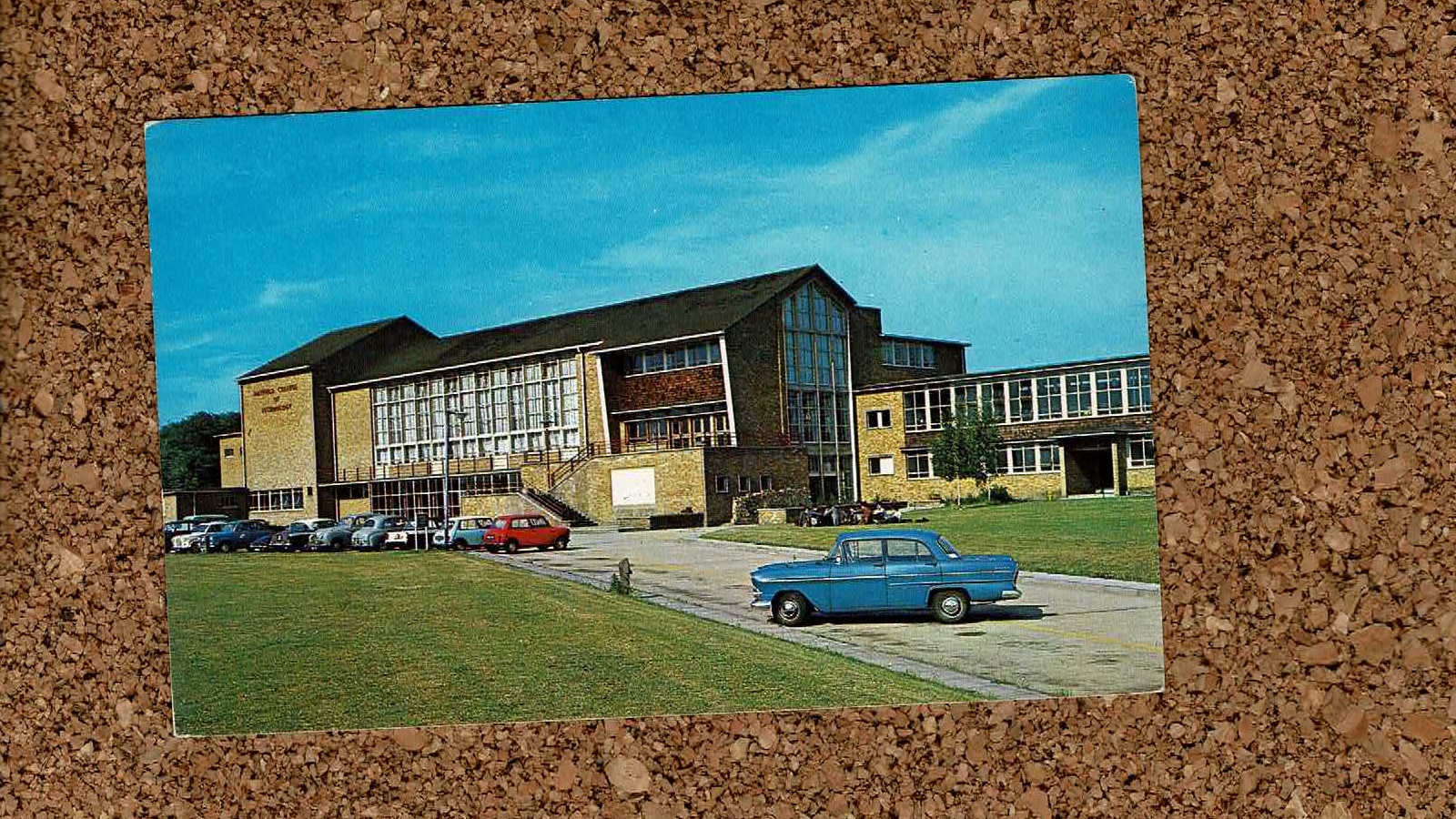
  • Higher education postcard: Jesus College, Cambridge

    Higher education postcard: Jesus College, Cambridge

    In about 520CE, or so the story goes, Radegund was born, daughter of Bertachar, one of three brother kings of Thuringia.

    Uncle Hermanfrid, one of the other brothers, killed Bertachar; Radegund moved into his household. Hermanfrid allied with another king, Theuderic, to defeat Radegund’s other uncle, Baderic, and thus became sole King of Thuringia. And in so doing he reneged on an agreement with Theuderic.

    I hope you’re paying attention, because there’ll be a short test later.

    Now Theuderic was not the kind to forget a slight, and in 531, when Radegund was 11, he invaded Thuringia, with his brother Clothar. They defeated Hermanfrid, and Ragemund was taken into Clothar’s household. She lived in Picardy until 540, when Clothar married her, bringing his total of wives to six. (The other wives were Guntheuca, Chunsina, Ingund, Aregund and Wuldetrada, just in case you think I’m making this up.)

    In 545 Clothar murdered Radegund’s last surviving brother, and that was clearly the last straw, as she fled. She sought the protection of the church, and Medardus, Bishop of Noyen, ordained her as deaconess. In about 560 she founded the abbey of Sainte-Croixe near Poitiers, and she died in 567, having reputedly lived an austere, ascetic life, renowned for her healing powers. Or so the story goes.

    Now fast forward 600 years or so. Malcolm IV, King of Scotland and Earl of Huntingdon, visited Poitiers, the site of the cult of the now-sanctified Radegund. He gave ten acres of land to found a priory, dedicated to St Mary and St Radegund. And this land was in what would in time become central Cambridge.

    Now fast forward another 300 years. The priory now had a – ahem – reputation. John Alcock, Bishop of Ely, in whose see the priory sat, was given permission by Pope Alexander VI and King Henry VII to dissolve the priory. This was in 1496; the later description of the priory as a “community of spiritual harlots” may have been the cause; it may also, of course, have been a post facto justification. In any event, the priory was dissolved and a college founded in its place. The College of the Blessed Virgin Mary, Saint John the Evangelist and the glorious Virgin Saint Radegund, near Cambridge, which is now more commonly known as Jesus College, Cambridge, took over the priory buildings, and away it went.

    Bishop Alcock, by the way, gave the college its arms: the three cocks’ heads play on his surname. No sniggering at the back there.

    For hundreds of years Jesus was, in essence, a training college for clergy, staying small. But in 1863 Henry Morgan was appointed tutor of the college, and set about his duties with energy. The railway boom at the time meant that some of the original priory lands could be sold, bringing in cash with which Morgan expanded the college: by 1871 there were four times as many students as ten years previously; by 1881 the college had nearly doubled in size again from 1871. And these students would not be confined to those seeking a career in the Church of England.

    Let’s have a look at some Jesus College people. (What’s the correct term? Jesuits is logical but it really does have a more specific meaning. Jesusites? Jesusians? I bet there’s a correct term, and I bet someone will comment to say.)

    A good place to start is Thomas Cranmer, Archbishop of Canterbury at the time of Henry VIII, and architect of the English reformation. Cranmer may have (but probably didn’t) attended the college as a student, but he was certainly reader in divinity at Jesus from 1517 to 1528. He didn’t keep strong connections to the college after moving into court circles as archbishop, but as he was ultimately executed as a traitor (he backed the wrong team in the post-Edward VI power struggle) this may have been no bad thing, for the college at least.

    Let’s then move on to Laurence Sterne, student at the college 1733–37. He became a clergyman, but no-one remembers him for this. Because he arguably invented the English novel, with The Life and Opinions of Tristram Shandy, Gentleman published between 1759 and 1767. If you don’t know it, have a read; it is well worth it. It may change your opinions about just how modern modern writing is.

    Next in the roll of honour is Thomas Malthus, student of the college 1784–88 and fellow 1793–1804. As an economist Malthus was influential. In his Essay on the Principle of Population as it Affects the Future Improvement of Society he argued that population growth was unsustainable, because demand for food would inevitably outstrip supply. It is worth noting that the world population at that time was about 800 million; it is ten times that today. And while food is not fairly distributed across the world, neither is there a population crash as Malthus argued there would be.

    And now let’s move on to Samuel Taylor Coleridge, romantic poet and opium addict, author of The Rime of the Ancient Mariner and Kubla Khan. Coleridge was a student at Jesus. He developed his opium habit while at college, and in his third year dropped out to join the army, under the assumed name of Silas Tomkyn Comberbache. His brother had to pay a bribe to get him out of the army, and although he returned to Cambridge thereafter he never quite graduated.

    In 2019 Jesus appointed its first female master, Sonita Alleyne, having first admitted women as students in 1979. Alleyne was also the first black head of an Oxbridge college, preceding Valerie Amos at University College, Oxford by a year. More generally, the college has a very good run through its history here.

    Jesus is a sporty college, and its boat club is very strong. It holds the most headships of the river in the May and the Lent bumps, across both men’s and women’s boats. (I tried to explain about Cambridge rowing a while ago – here’s the link in case you’re interested.)

    And here’s a jigsaw of the card – hope you enjoy it!

    Source link

  • FIRE statement on coalition backing press freedom at Santa Fe arts school

    FIRE statement on coalition backing press freedom at Santa Fe arts school

    Today, the Foundation for Individual Rights and Expression and three partner organizations demanded that the Institute for American Indian Arts and its new president Shelly Lowe drop all sanctions on student David McNicholas, who was punished for supposedly “bullying” IAIA administrators. The offense? Investigative journalism exposing an empty food pantry on a campus where many students live below the poverty line. Since then, McNicholas has faced over a year of retaliation from administrators. Most recently, IAIA said he couldn’t even put up posters soliciting student submissions for a new edition of his independent student magazine, since it is not a school-funded publication — despite the fact that school policies list no such requirement. 

    FIRE, the National Coalition Against Censorship, the Society of Professional Journalists, and the Student Press Law Center are urging Lowe to drop the sanctions on McNicholas and revise the school’s anti-bullying and posting policies to comply with the First Amendment. 

    The following statement is from FIRE Strategic Campaigns Specialist William Harris.


    Student journalist David McNicholas isn’t backing down after the Institute for American Indian Arts tried to silence him yet again. And now, he has four national nonprofits on his side. IAIA’s forbidding McNicholas from putting up posters seeking student submissions — ironically, for a new, free-speech-themed edition of The Young Warrior — is just the latest attack in its retribution campaign against investigative journalism that put McNicholas on probation, cost him work, and even left him homeless. 

    Coalition Letter to IAIA, September 25, 2025

    FIRE and other organizations urge the Institute of American Indian Arts to drop its sanctions against McNicholas and comply with the First Amendment. 


    Read More

    IAIA’s brand-new president, Shelly Lowe, should know better. A former chair of the National Endowment for the Humanities, an institution that has faced many attempts by politicians to police artistic expression over the years, she now leads a school whose attacks on press freedom and expression are straight out of the authoritarian playbook. 

    Such hostility towards the First Amendment is especially offensive at an arts school — the last place where free expression should be under attack. Strong speech policies protect the sort of expression that drives culture forward.

    Over 500 members of the public have signed on to our Take Action campaign demanding that IAIA reverse course. Lowe should heed the call.

    Stand with us and tell IAIA to end this censorial saga and restore free expression to campus.

    Source link