Blog

  • PhysicsWallah becomes first Indian edtech unicorn to go public

    PhysicsWallah becomes first Indian edtech unicorn to go public

    Run by founders Alakh Pandey and Prateek Maheshwari, PhysicsWallah, which became a unicorn after surpassing a USD$1bn valuation, opened its public offering for subscription on November 11, with the bidding closing on November 13.

    The IPO, comprising a Rs 3,100 crore (USD$350m) fresh issue and a Rs 380 crore (USD$42.9m) offer-for-sale (OFS) by Pandey and Maheshwari, raised Rs 1,563 crore (USD$176.4m) from anchor investors at Rs 109 per share, a day before the issue opened.

    PhysicsWallah, known for its digital courses, physical centres, and hybrid programs, with a strong focus on India’s national-level engineering and medical exams as well as government exam prep, views the IPO as a key milestone.

    We plan to open at least 70 centres annually over the next three years, with around Rs 400 crore allocated for this
    Alakh Pandey, PhysicsWallah

    The stock market listing makes PhysicsWallah India’s first pure-play edtech company to go public. Pandey said the IPO proceeds would be largely used to expand offline centres and boost branding.

    “The first major expense after the IPO will be setting up new offline centres. This is our primary focus, as we plan to open at least 70 centres annually over the next three years, with around Rs 400 crore allocated for this,” stated Pandey, during a media briefing with reporters.

    “Another Rs 400 crore will be spent on our existing centres, covering lease and rental expenses. Around Rs 700 crore will go toward branding and event marketing over the next three years, with at least Rs 250 crore each year. Additionally, Rs 200 crore will be allocated for technology upgrade and server costs, and the remaining funds will be used for general expenses.”

    Backed by venture capital firms WestBridge Capital, Hornbill, and GSV Ventures, the company, strong in India’s tier-2 and tier-3 cities, sees the IPO as paving the way for further expansion in Karnataka, Kerala, Tamil Nadu, Gujarat, Odisha, and Northeast India.

    “Physics Wallah is an impactful organisation – from Tier 3 towns to villages, students everywhere are learning through our platform,” said Pandey.

    PhysicsWallah hitting Dalal Street, India’s equivalent of Wall Street and home to the Bombay Stock Exchange (BSE), comes at a time when some of the country’s biggest edtech competitors are seeing their businesses shrink.

    While Byju’s, once the world’s “most valued” edtech startup, is facing takeover bids amid bankruptcy proceedings and lawsuits over “alleged harm to its reputation”, Unacademy has seen a year-on-year decline in total revenue over the past two years, with Upgrad reportedly considering acquiring the company at roughly a tenth of its last valuation of USD$3.44bn.

    Though PhysicsWallah reported a 33% revenue jump to Rs 847 crore (USD$95.5m) in Q1FY26, its net losses widened to Rs 127 crore (USD$14.3m) due to a 39% rise in expenses.

    The company, however, has maintained that its revenue has grown 90% over the past two years and that it maintains a strong cash balance.

    “I want this company to be run with discipline, to grow responsibly, and to make it public in a way that benefits everyone. We are in a hyper-growth phase, and as we expand, we don’t want to slow down or fail to deliver. The IPO will also help us gain more trust and traction with parents.

    “Online education will continue to be our biggest focus – whether it’s a student in Grade 6 or a college or UPSC aspirant. We currently reach 42 lakh (over 4 million) students, mostly in test prep, but we are expanding into school education and board exams. Our aim is to make affordable education accessible across regions,” Pandey added.

    Despite initial optimism, reflected in domestic mutual funds taking up more than half of the allocation – indicating early institutional confidence – the demand in the public issue has remained lukewarm.

    The IPO got off to a slow start, with Day 1 subscription at just 7% and Day 2 improving slightly to 12%, falling well short of market expectations.

    By Day 3, the IPO reached 1.11x overall subscription, with the retail portion at 85%, non-institutional investors (NII) at 25%, qualified institutional buyers (QIBs) at 1.61x, and the employee portion subscribed 2.58x.

    The basis of allotment, which determines how many shares each investor will actually receive, is expected on November 14, with listing likely on November 18.

    Experts suggest that PhysicsWallah’s IPO, which saw muted subscription initially, signals broader caution for India’s edtech sector, which is facing declining market demand and revenue losses, with over 2,000 startups having shut down in the past five years.

    But it’s not just PhysicsWallah. More edtech companies are eyeing the IPO route, including Imarticus Learning, Upgrad, Eruditus, and other education-related firms like Simplilearn and Leverage Edu.

    Just recently, B2B education platform Crizac debuted on the Indian stock market, raising £74m in its IPO, with the listing expected to support the company’s expansion into new markets and services.

    With funding in the edtech space rising five-fold in H1 2025, as per reports, industry insiders expect the next 12-24 months to bring a handful of IPOs.

    “Edtech has gone through its ups and downs and has never been a very predictable sector. There are very few companies that can actually go public successfully,” Nikhil Barshikar, CEO and co-founder of Imarticus Learning, told The Entrepreneur in a recent interview.

    “But now, more companies are focusing on cutting unprofitable or unpredictable business segments. My gut feeling is that in the next 24 months, we will see at least five to 10 listings from the edtech vertical.”


    Source link

  • When life is bitter, don’t lose hope

    When life is bitter, don’t lose hope

    When life takes away your greatest support, it can feel as if the world is falling apart. For me, losing my father as a child was more than heartbreaking. It was a true test of strength. Yet in a world that often seemed bitter, the kindness of strangers and the power of personal dreams helped me rise above my sorrow and shape a future full of hope.

    My family and I live in the Eastern province of Rwanda. I was only five years old when one morning, my father packed his bag and left the house. He didn’t say where he was going and he never came back. Days turned into weeks, weeks into years, but there was no sign of him. No call. No letter. Nothing. 

    At first, I didn’t understand what was happening. I kept asking my mother, “When is Papa coming back?” But she would just smile sadly and say, “One day, maybe.”

    In her heart, she knew he was not coming back. 

    Life changed quickly after that. Without a father and without money, things became hard for the family. My mother, Catherine, had no job. She had never worked outside the home before. Now, she had to take care of me and my four siblings alone. 

    Struggling with little

    We had no house of our own. We moved from one place to another, staying with kind neighbors or sleeping in small, broken huts. During rainy nights, water would leak through the roof and we had to stay awake holding buckets. Sometimes, we didn’t even have enough food to eat. Many nights, we went to bed hungry. 

    My siblings were in high school at the time, but the family could not afford school fees anymore. One by one, they dropped out and stayed home. It was painful for me to watch them suffer. I loved them deeply and wanted a better life for all of them. 

    Despite everything, I stayed in school. My mother worked hard doing small jobs washing clothes, digging gardens or selling vegetables in the market. She never gave up. “You are our hope,” she would tell me. “Even if your father left, we must move forward.”

    I listened. I promised myself that no matter how hard life became, I would not give up. I wanted to finish school, go to university and one day help my family live a better life. 

    But it was not easy. 

    Help can come from surprising places.

    I often went to school with old shoes. I had no school bag only an old plastic bag to carry my books. I had no lunch and many times, I sat in class with an empty stomach. But still, I worked hard. I listened carefully, asked questions and always completed my homework, even if it meant studying by candlelight or by the dim light of a kerosene lamp. 

    Many teachers began to notice me. They saw that even though I had nothing, I had determination and a kind heart. One teacher gave me exercise books. Another helped pay part of my school fees. A neighbor who owned a small shop gave me a few snacks sometimes. A church group gave my mother food and clothes once in a while. 

    These acts of kindness kept me going. 

    I studied harder than anyone else and soon became the best performer in my class. Every year, I got top marks. My name was always on the honor list. At school, students looked up to me. But at home, things were still hard. My siblings had lost hope, but I kept believing in a better future. 

    After many years of struggle, I finally finished high school. I was the first in my family to do so. On the day I received my final results, my mother cried tears of joy. You did it, my son. You made me proud, she said, hugging me tightly.

    But my journey wasn’t over

    I had one more goal: to go to university. That meant more fees, laptop, more books, more challenges, but I didn’t stop. I applied for scholarships and after many rejections, I finally got accepted to a university with some financial support. 

    Now, I’m 22 years old. I’m in university, studying hard every day. I met with a kind person again, who gave me a place to sleep and dinner. Even though I have that support, I’m still facing challenges. I still lack proper shoes, clothes and transport money, but I keep going. My dream is to become a professional, get a good job first, then become self-employed and return home to support my mother and siblings. 

    I remind myself: “My father left us when I was just a child. We had no house, no food and no money. My siblings could not finish school. But I decided to fight. Kind people helped me and I stayed strong. Now I am at university. I will not stop until I help my family rise again.” 

    I hope my story will teach young people that even when life feels bitter and people let you down, you must not give up. Strength is not about having everything. It is about standing tall even when you have nothing. This is the reason why I’m writing my story. 

    Even when life is painful and people walk away from you, never lose hope. With hard work, faith and the help of kind people, you can still rise, succeed and help others do the same. 


    QUESTIONS TO CONSIDER:

    1. What was one thing the author promised himself when things got really hard for his family?

    2. In what ways did people help the author succeed?

    3. When have people helped you when you were having difficulty?

    Source link

  • What’s in the new Office for Students strategy?

    What’s in the new Office for Students strategy?

    The Office for Students began a consultation process on its 2025-30 strategy back in December 2024. Alongside the usual opportunities for written responses there have been a series of “feedback events” promoted specifically to higher education provider staff, FE college staff, and students and student representatives held early in 2025.

    In the past OfS has faced arguably justified criticism for failing to take sector feedback on proposals into account – but we should take heart that there are significant differences between what was originally proposed and what has just been finalised and published.

    Graphic design is our passion

    Most strikingly, we are presented with four new attitudes that we are told will “drive delivery of all our strategic goals in the interest of students” – to hammer the point home individual activities in the “roadmap” are labelled with coloured, hexagonal, markers where “a particular activity will exemplify certain attitudes”. We get:

    • Ambitious for all students from all backgrounds (an upward arrow in a pink hexagon)
    • Collaborative in pursuit of our priorities and in our stewardship of the sector (two stylised hands in the shape of a heart, yellow hexagon)
    • Vigilant about safeguarding public money and student fees (A pound-sign on a teal hexagonal background)
    • Vocal that higher education is a force for good, for individuals, communities and the country (a stylised face and soundwave on a purple hexagon)

    Where things get potentially confusing is that the three broadly unchanged strategic goals – quality (tick, yellow circle), sector resilience (shield, blue circle), student experience and support (someone carrying an iPad, red circle) – are underpinned both by the attitude and the concept of “equality of opportunity” (teal ourobouros arrow). The only change at this conceptual level is that “the wider student interest” is characterised as “experience and support”. Don’t worry – the subsections of these are the same as in the consultations

    Fundamentally, OfS’ design language is giving openness and transparency, with a side order of handholding through what amounts to a little bit of a grab-bag of a list of interventions. The list is pared down from the rather lengthy set of bullet points initially presented, and there are some notable changes.

    Quality

    In the quality section what has been added is an assurance that OfS will do this “in collaboration with students, institutions, and sector experts”, and a commitment to “celebrate and share examples of excellence wherever we find them”. These are of course balanced with the corresponding stick: “Where necessary, we will pursue investigation and enforcement, using the full range of our powers.” This comes alongside clarification that the new quality system would be build on, rather than alongside the TEF.

    What is gone is the Quality Risk Register. An eminently sensible addition to the OfS armoury of risk registers, the vibes from the consultation were that providers were concerned that it might become another arm of regulation rather than a helpful tool for critical reflection

    Also absent from the final strategy is any mention of exploring alignment with European quality standards, which featured in the consultation materials. Similarly, the consultation’s explicit commitment to bring transnational education into the integrated quality model has not been restated – it’s unclear whether this reflects a change in priority or simply different drafting choices.

    Students

    In the section on students, language about consumer rights is significantly softened, with much more on supporting students in understanding their rights and correspondingly less on seeking additional powers to intervene on these issues. Notably absent are the consultation’s specific commitments – the model student contract, plans for case-report publication, and reciprocal intelligence sharing. The roadmap leans heavily into general “empowerment” language rather than concrete regulatory tools. And, for some reason, language on working with the Office for the Independent Adjudicator has disappeared entirely.

    A tweak to language clarifies that OfS are no longer keen to regulate around extra-curricular activity – there will be “non-regulatory” approaches however.

    New here is a commitment to “highlight areas of concern or interest that may not be subject to direct regulation but which students tell us matter to them”. The idea here looks to be that OfS can support institutions to respond proactively working with sector agencies and other partners. It is pleasing to see a commitment to this kind of information sharing (I suspect this is where OIA has ended up) – though a commitment to continue to collect and publish data on the prevalence of sexual misconduct in the draft appears not to have made the final cut.

    Resilience

    The “navigation of an environment of increased financial and strategic risks” has been a key priority of OfS over most of the year since this strategy was published – and what’s welcome here is clearer drafting and a positive commitment to working with providers to improve planning for potential closures, and that OfS will “continue to work with the government to address the gaps in the system that mean that students cannot be adequately protected if their institution can no longer operate”.

    Governance – yes, OfS will not only consider an enhanced focus, it will strengthen its oversight on governance. That’s strategic action right there. Also OfS will “work with government on legislative solutions that would stop the flow of public money when we [OfS, DfE, SLC] have concerns about its intended use.”

    Also scaled back is the consultation’s programmatic approach to governance reform. Where the consultation linked governance capability explicitly to equality and experience outcomes, the final version frames this primarily as assurance and capability support rather than a reform agenda. The shift suggests OfS moving toward a lighter-touch, collaborative posture on governance rather than directive intervention.

    Regulation

    OfS will now “strive to deliver exemplary regulation”, and interestingly the language on data has shifted from securing “modern real-time data” to “embedding the principle collect once, use many times” and a pleasing promise to work with other regulators and agencies to avoid duplication.

    Two other consultation commitments have been quietly downgraded. The explicit language on working with Skills England to develop a shared view of higher education’s role in meeting regional and national skills needs has disappeared – odd given the government’s focus on this agenda. And while the Teaching Excellence Framework remains present, the consultation’s push to make TEF “more routine and more widespread” has been cooled – the final version steps back from any commitments on cadence or coverage.

    What’s missing within the text of the strategy, despite being in the consultation version, are the “I statements” – these are what Debbie McVitty characterised on Wonkhe as:

    intended to describe what achieving its strategic objectives will look and feel like for students, institutions, taxpayers and employers in a clear and accessible way, and are weighted towards students, as the “primary beneficiaries” of the proposed strategy.

    These have been published, but separately and with a few minor revisions. Quite what status they have is unclear:

    The ‘I statements’ are a distillation of our objectives, as set out in our strategy. They are not regulatory tools. We will not track the performance of universities and colleges against them directly.

    Source link

  • Where the federal school choice program stands

    Where the federal school choice program stands

    This audio is auto-generated. Please let us know if you have feedback.

    School choice advocates and public school supporters are eagerly awaiting details of the nation’s first federally funded tax credit scholarship — a program that could accelerate private school choice participation while funneling taxpayer dollars to private schools.

    Approval of the first nationwide private school choice program came in the Republican-led “One Big, Beautiful Bill” signed by President Donald Trump on July 4. 

    The U.S. Department of Treasury is expected to issue proposed rules detailing how the program will operate, including how states can opt in and what guardrails will be put on managing the scholarships. However, it’s unclear where this work stands and whether the prolonged federal government shutdown has delayed this work.

    The Treasury Department did not immediately respond to an inquiry from K-12 Dive on Wednesday about the status of the rule.

    The new law allows any taxpayer to donate up to $1,700 annually to a scholarship-granting 501(c)(3) organization, or SGO. That donor would then be eligible for a 100% federal income tax credit for their contribution. The contributions could then be used toward private school tuition at secular and religious schools, homeschooling materials, and expenses at public or private schools. 

    The money generated from contributions could add up to $101 billion per year if all 59 million taxpayers chose to claim the credit, according to a July analysis from the Institute on Taxation and Economic Policy. However, the institute predicts not all taxpayers would participate.

    Taxpayers can begin making contributions to scholarship-granting organizations beginning Jan. 1, 2027. States need to opt in to participate. 

    Advocating for and against federal scholarships

    Since the omnibus budget was signed into law, supporters and critics of the tax credit scholarship provision have been voicing concerns and questions. For instance, a coalition of more than 200 national and state organizations that support education freedom wrote to the Treasury Department on Oct. 24 to offer their recommendations as the agency begins to write proposed regulations, according to the letter posted by Tax Analysts, a nonprofit tax publisher. 

    The group suggested that there be consistent requirements for scholarship-granting organizations and clarity on the timeline for when states submit lists of qualified SGOs.

    “We believe the three guiding principles for rulemaking are to make it: as easy as possible for as many families as possible to access scholarships for their children; as easy as possible for scholarship-granting organizations (SGOs) to participate and provide scholarships; and, as easy as possible for taxpayers to contribute to SGOs,” the letter said.

    ACE Scholarships, a Denver-based nonprofit scholarship-granting organization that operates in 13 states, is part of that coalition. Jackie Guglielmo, vice president of services, said ACE has been busy fielding inquiries from SGOs, families and schools about the new program. It has also worked to help Treasury Department staff understand how current SGOs support private school choice programs. 

    The Treasury Department is “really looking to us to understand the operations,” said Guglielmo, who anticipates proposed regulations will be released early next year.

    The organization is also meeting with state leaders to discuss their potential participation, Guglielmo said. “I think a very, very important part of this initiative that’s sometimes overlooked is that both private and public students are eligible to receive the scholarship, and that’s something that’s really exciting.”

    Arne Duncan, who served as U.S. education secretary in the Obama administration, recently co-wrote an opinion piece in The Washington Post urging states to participate. “Opting in doesn’t take a single dollar from state education budgets. It simply opens the door to new, private donations, at no cost to taxpayers, that can support students in public and nonpublic settings alike,” the op-ed said.

    Meanwhile, organizations critical of the fledgling program are urging states not to opt-in. Although the program includes taxpayer contributions to public schools, people should be aware of the “potential ramifications of opening the door to a voucher scheme that is ultimately designed to benefit private and religious schools,” according to a Sept. 15 fact sheet from Public Funds for Public Schools and the Education Law Center.

    Public school supporters are concerned the program will lead to reduced funding for public schools and worry about educational equity and accountability at private schools. 

    Source link

  • Will Trump policies exacerbate the special education teacher shortage?

    Will Trump policies exacerbate the special education teacher shortage?

    This audio is auto-generated. Please let us know if you have feedback.

    Teacher preparation experts fear ongoing special education teacher shortages will worsen as the Trump administration continues to downsize the U.S. Department of Education.

    Along with mass layoffs at the federal agency, proposals to consolidate federal grants for training special educators are fueling concerns that these moves will exacerbate critical staffing issues. 

    During the 2024-25 school year alone, 45 states reported shortages in special education — the most frequently reported shortage area nationwide, according to Learning Policy Institute. The other most common shortages reported by states include science (41), math (40), language arts (38), world languages (35) and career and technical education (33), LPI found. 

    A wave of layoffs in October at the Education Department that decimated most of the Office of Special Education Programs — a decision that is currently tied up in the courts — sent shockwaves throughout the special education community. OSEP helps administer and oversee the distribution of federal funds through the Individuals with Disabilities Education Act. 

    One of the grants impacted by these changes in particular is IDEA Part D for personnel development to improve services for children with disabilities.

    The IDEA Part D personnel development grants received $115 million in federal appropriations during fiscal year 2024. Under the Trump administration’s FY 26 proposal, that same program would be zeroed out, and the newly allocated funds would go to IDEA Part B programs into a single state block grant program. 

    The budget proposal stated that even with this consolidation of funds, “states would continue to meet key IDEA accountability and reporting requirements aimed at ensuring a free appropriate public education is available to all students with disabilities and protecting the rights of those students and their families.”

    Regardless, there’s minimal support in Congress for this kind of state block grant program, as both the House and Senate appropriations committees have rejected the measures in their budget planning for FY 26.  

    These IDEA Part D funds are typically awarded for five years to state education agencies, school districts, higher education institutions and nonprofits. 

    On top of challenges for OSEP to oversee the IDEA Part D personnel preparation funds while it is shortstaffed, experts and advocates say the Trump administration’s budget proposal to consolidate IDEA Part D into state block grants will harm teacher prep programs’ ability to train high-quality special educators.    

    The changes this year are of particular concern for Laurie VanderPloeg, associate executive director for professional affairs at the Council for Exceptional Children, who said the absence of IDEA Part D preparation program funds could reduce the number of special education teacher candidates in educator preparation programs. 

    Even at current enrollment levels in special education teaching programs, VanderPloeg said, there’s still not enough people in the pipeline to meet the demands in the field.  

    “So with the reduction in enrollment in the educator prep programs, it’s going to reduce our national flexibility with being able to fill all of the open positions with good, qualified personnel,” said VanderPloeg, who also served as director of OSEP during the first Trump administration. 

    The uncertainty around IDEA Part D grant funds is also hanging over the heads of educator preparation programs, leaving many wondering how long these federal dollars dedicated to training special educators will last, VanderPloeg said. If these grants are disrupted, she said, there could be other implications for teaching candidates currently enrolled in programs that benefit from the funds. 

    Source link

  • Education Department zeroes in on 4-year colleges for expanded IPEDS collection

    Education Department zeroes in on 4-year colleges for expanded IPEDS collection

    This audio is auto-generated. Please let us know if you have feedback.

    Dive Brief:

    •  Only four-year institutions would be subject to significantly stepped-up reporting requirements for admissions data disaggregated by race and sex, under a notice issued by the Trump administration on Wednesday.
    • The plan, first introduced in August, would require affected colleges to submit six years worth of application and admissions data — disaggregated by student race and sex — as part of the next reporting cycle. 
    • The updated terms would exempt two-year colleges and open-enrollment institutions that only award aid based on financial need from having to report this data to the National Center for Education Statistics, which oversees the Integrated Postsecondary Education Data System. 

    Dive Insight:

    The U.S. Department of Education currently only requires institutions to submit data disaggregated by race for enrolled students.

    But under the Trump administration’s proposal, colleges would have to disaggregate data for applicants, those admitted and enrolled students by race and sex. They would also have to cross-reference the data with each individual’s admissions test scores, GPA, family income, Pell Grant eligibility and parents’ educational level.

    Colleges would be required to submit this information for every academic year dating back to 2020-21 for the first IPEDS reporting cycle of the new plan, currently proposed as 2025-26.

    The administration intends to use the data points to “indicate whether institutions of higher education are using race-based preferencing in their admissions processes,” according to the Federal Register notice filed by Ross Santy, data officer at the agency’s Office of Planning, Evaluation and Policy Development. The U.S. Supreme Court struck down the use of race-conscious admissions practices in 2023.

    The plan would also mandate that colleges submit their graduation rates from 2019-20 to 2024-25.

    In its August notice, the Education Department said it expected to focus these additional reporting requirements on four-year institutions with selective admissions processes. It said these colleges “have an elevated risk of noncompliance with the civil rights laws,” both in admissions and scholarships, while it considered community colleges and trade schools at low risk for civil rights noncompliance in admissions since they admit all or virtually all of their applicants.

    The department at the time sought public comment on which institutional types should be subject to the new reporting proposal. This week, it made revisions based on that input, according to Santy.

    Since the Trump administration first announced the proposal, higher ed groups and colleges have raised concerns about the administrative burden it would put on institutions and the rapid turnaround time necessitated by a 2025-26 start date.

    Wednesday’s update would bring relief for two-year institutions and many of those with open enrollment policies. But many of the sector’s concerns went unaddressed, including comments about unclear language in the proposal, issues around student privacy and unease that the Trump administration would construe the data with the intent of attacking colleges further.

    Since President Donald Trump began his second term in January, the federal government has alleged that colleges supporting diversity efforts or permitting student protests are in violation of civil rights law and has opened numerous investigations on these grounds.

    Source link

  • Truth vs. risk management: How to move forward

    Truth vs. risk management: How to move forward

    Key points:

    In the world of K-12 education, teachers are constantly making decisions that affect their students and families. In contrast, administrators are tasked with something even bigger: making decisions that also involve adults (parents, staff culture, etc.) and preventing conflicts from spiraling into formal complaints or legal issues. Therefore, decisions and actions often have to balance two competing values: truth and risk management.

    Some individuals, such as teachers, are very truth-oriented. They document interactions, clarify misunderstandings, and push for accuracy, recognizing that a single misrepresentation can erode trust with families, damage credibility in front of students, or most importantly, remove them from the good graces of administrators they respect and admire. Truth is not an abstract concept–it is paramount to professionalism and reputation. If a student states that they are earning a low grade because “the teacher doesn’t like me,” the teacher will go through their grade-book. If a parent claims that a teacher did not address an incident in the classroom, the teacher may respond by clarifying the inaccuracy via summarizing documentation of student statements, anecdotal evidence of student conversations, reflective activities, etc.

    De-escalation and appeasement

    In contrast, administrators are tasked with something even bigger. They have to view scenarios from the lens of risk management. Their role requires them to deescalate and appease. Administrators must protect the school’s reputation and prevent conflicts or disagreements from spiraling into formal complaints or legal issues. Through that lens, the truth sometimes takes a back seat to ostensibly achieve a quick resolution.

    When a house catches on fire, firefighters point the hose, put out the flames, and move on to their next emergency. They don’t care if the kitchen was recently remodeled; they don’t have the time or desire to figure out a plan to put out the fire by aiming at just the living room, bedrooms, and bathrooms. Administrators can be the same way–they just want the proverbial “fire” contained. They do not care about their employees’ feelings; they just care about smooth sailing and usually softly characterize matters as misunderstandings.

    To a classroom teacher who has carefully documented the truth, this injustice can feel like a bow tied around a bag of garbage. Administrators usually err on the side of appeasing the irrational, volatile, and dangerous employee, which risks the calmer employee feeling like they were overlooked because they are “weaker.” In reality, their integrity, professionalism, and level-headedness lead administrators to trust the employee will do right, know better, maintain appropriate decorum, rise above, and not foolishly escalate. This notion aligns to the scripture “To whom much is given, much is required” (Luke 12:48). Those with great abilities are judged at a higher bar.

    In essence, administrators do not care about feelings, because they have a job to do. The employee with higher integrity is not the easier target but is easier to redirect because they are the safer, principled, and ethical employee. This is not a weakness but a strength in the eyes of the administration and that is what they prefer (albeit the employee may be dismissed, confused, and their feelings may be hurt, but that is not the administration’s focus at all).

    Finding common ground

    Neither perspective (truth or risk management) is wrong. Risk management matters. Without it, schools would be replete with endless investigations and finger-pointing. Although, when risk management consistently overrides truth, the system teaches teachers that appearances matter more than accountability, which does not meet the needs of validation and can thus truly hurt on a personal level. However, in the work environment, finding common ground and moving forward is more important than finger-pointing because the priority has to be the children having an optimal learning environment.

    We must balance the two. Perhaps, administrators should communicate openly, privately, and directly to educators who may not always understand the “game.” Support and transparency are beneficial. Explaining the “why” behind a decision can go a long way in building staff trust, morale, and intelligence. Further, when teachers feel supported in their honesty, they are less likely to disengage because transparency, accuracy, and an explanation of risk management can actually prevent fires from igniting in the first place. Additionally, teachers and administrators should explore conflict resolution strategies that honor truth while still mitigating risk. This can assist in modelling for students what it means to live with integrity in complex situations. Kids deserve nothing less.

    Lastly, teachers need to be empathetic to the demands on their administrators. “If someone falls into sin, forgivingly restore him, saving your critical comments for yourself. You might be needing forgiveness before the day’s out. Stoop down and reach out to those who are oppressed. Share their burdens, and so complete Christ’s law. If you think you are too good for that, you are badly deceived” (Galatians 6:1-3). This scripture means that teachers should focus less on criticizing or “keeping score” (irrespective of the truth and the facts, and even if false-facts are generated to manage risk), but should work collaboratively while also remembering and recognizing that our colleagues (and even administrators) can benefit from the simple support of our grace and understanding. Newer colleagues and administrators are often in survival mode.

    Latest posts by eSchool Media Contributors (see all)

    Source link

  • The Hidden Costs of College Beyond Tuition

    The Hidden Costs of College Beyond Tuition

    College affordability conversations tend to focus on tuition. But it’s the total cost of attendance (COA) that can catch many students off guard and derail their progress toward a degree. A new deep dive report from Inside Higher Ed—Beyond Tuition: The Hidden Costs of College and Their Disproportionate Impact”—reveals how inaccurate COA disclosures and unexpected costs, from mandatory meal plans to technology fees to rising rents, can blindside students and threaten their success.

    Join the Discussion

    On Wednesday, Dec. 17, at 2 p.m. Eastern, Inside Higher Ed will host a live webcast discussion based on the report. Register for that here. Download “Beyond Tuition: The Hidden Costs of College and Their Disproportionate Impact” here.

    Drawing on data from Inside Higher Ed’s Student Voice surveys and other research, plus interviews with dozens of experts, student advocates and students themselves, the report notes that just 27 percent of undergraduates fully understand their institution’s cost of attendance—and that, for some, even an unexpected $100 expense could threaten their enrollment. Hidden costs hit lower-income, first-generation, parenting, international and other student groups especially hard, the report also finds.

    Examining efforts to improve COA accuracy and transparency, and zooming in on students and change-makers in California, New York and Texas, the report calls for colleges to provide more accurate COA data, expanded emergency aid and clearer communication to help students plan for the full cost of college, not just the tuition bill.

    “The public doesn’t think about living costs, although you have to cover them when you go to school. They also think tuition is skyrocketing when it really hasn’t,” said Robert Kelchen, professor and department head of educational leadership and policy studies at the University of Tennessee at Knoxville. “To some extent we’re focused on the wrong problem.”

    This independent editorial report is written by Melissa Ezarik, with support from the Gates Foundation. The findings and conclusions contained in the report are those of the author and do not necessarily reflect positions or policies of the Gates Foundation.

    Source link

  • 10 Universities Seek Recognition by a New Accreditor

    10 Universities Seek Recognition by a New Accreditor

    Just four months after the launch of the Commission for Public Higher Education, the aspiring accreditor has received letters of intent from a cohort of 10 institutions, making them the first potential members.

    The initial group to submit a letter of intent seeking CPHE accreditation comes from four states: Florida, Georgia, North Carolina and Texas. All are currently accredited by the Southern Association of Colleges and Schools Commission on Colleges. They are:

    • Appalachian State University (N.C.)
    • Chipola College (Fla.)
    • Columbus State University (Ga.)
    • Florida Atlantic University
    • Florida Polytechnic University
    • Georgia Southern University
    • North Carolina Central University
    • Texas A&M Kingsville
    • Texas A&M Texarkana
    • University of North Carolina at Charlotte

    With its inaugural cohort and draft standards in place, the newly formed commission—introduced by Florida governor Ron DeSantis at a June press conference in which he railed against existing accreditors—is making progress toward its eventual goal of recognition by the U.S. Department of Education, which is a years-long process. Now the first 10 potential member institutions will offer CPHE a chance to show how it might offer a different approach to accreditation, even as it simultaneously battles accusations that it is aligned with DeSantis and his partisan attacks on higher ed.

    The Initial Cohort

    The aspiring members are all public colleges or universities—in keeping with CPHE’s stated mission—and represent a range of institution types. Several, including Florida Atlantic, are large research institutions, while NCCU is a historically Black university and Chipola College mostly offers two-year programs, though it does confer some bachelor’s degrees as well.

    “I think it’s an extraordinary group. It’s beyond, both in terms of number and in terms of breadth, where I think anyone could have reasonably thought we would be when we started this project,” said Daniel Harrison, vice president for academic affairs at the UNC system, who has worked from the beginning of the project to launch the Commission for Public Higher Education.

    Harrison noted that those institutions were the first to express interest before the fledgling accreditor capped the initial cohort at 10, though he anticipates bringing more in next year.

    Those institutions will maintain SACSCOC accreditation while going through the recognition process for CPHE, which will include a self-study by the universities, meeting with teams of peer reviewers and site visits—all typical parts of the recognition process for any accreditor.

    While Harrison said CPHE encouraged individual institutions to discuss the endeavor with Inside Higher Ed, only three of the 10 provided responses to requests for statements or interviews.

    Appalachian State University provost and executive vice chancellor Neva Specht wrote in an email that “we welcome a peer review process that recognizes the characteristics that distinguish institutions of public higher education.” Specht added that they “anticipate that an accreditation process that emphasizes clear outcomes and helps focus our work in alignment with public higher education standards will help bolster confidence not only in our institution, but in our industry, as we continue working together on improving value and return on investment for our students, their families, and the taxpayers of North Carolina.”

    Chipola president Sarah Clemmons also offered a response, writing in an emailed statement that the college “believes that a competitive environment fostered by multiple institutional accreditation options promotes innovation and continuous improvement in accreditation practices. Quality assurance is strengthened when accreditors must demonstrate their value and effectiveness to their member institutions. This healthy competition ensures quality which ultimately benefits students, institutions, and the broader higher education community.”

    UNC Charlotte, which has faced criticism for allegedly pursuing CPHE accreditation without faculty input, shared with Inside Higher Ed a previously published statement and frequently asked questions page.

    Others either did not respond or referred Inside Higher Ed to system officials or CPHE. When asked for comment, the University System of Georgia pointed back to CPHE.

    The Specter of Politics

    The public first learned about CPHE during the June press conference where DeSantis blasted the failings of higher education broadly and accreditors specifically. The Republican governor attacked the “accreditation cartel” and claimed SACSCOC sought to impose diversity, equity and inclusion standards on Florida universities, though the organization has never had standards on DEI practices. (Asked about that topic, DeSantis falsely claimed it does have DEI standards.)

    While DeSantis emphasized conservative political grievances with accreditation in the initial announcement, CPHE leaders have sought to temper the governor’s remarks.

    Harrison—who was traveling to Appalachian State University to meet with professors the same day he spoke to Inside Higher Ed—said the commission is working in a “personalized way” to address concerns about politicization by seeking faculty input at potential member institutions.

    “We are coming very earnestly to our faculty and asking them to engage with us and help us to make this what it should be,” Harrison said. “And I think that if faculty will continue to allow us the room to grow and to operate, they’re going to be very pleased by what they see here.”

    He also highlighted the appointment of Mark Becker to CPHE’s board.

    Becker, the former president of the Association of Public and Land-grant Universities and former leader of Georgia State University, said in a news release announcing his role that “the time is ripe for innovation in higher education accreditation,” adding that CPHE “is poised to take advantage of that opportunity to become a powerful engine for improving student outcomes across the sector.”

    Harrison argued that Becker’s “entire career has been built on serious nonpartisanship—not bipartisanship, nonpartisanship. And that is the model that we are following here as well.”

    But critics persist.

    Faculty voices have been the most critical of CPHE thus far, especially the American Association of University Professors, which held a webinar on “politicizing accreditation” earlier this fall highlighting concerns about the new accreditor.

    Matthew Boedy, a University of North Georgia professor who led the AAUP webinar, expressed worry about how state governments might impose their political will on CPHE. In a follow-up email to Inside Higher Ed, he cited CPHE’s “lack of independence” from states as the most significant concern.

    “Whatever power SACS or others had to limit political interference or leveraging campus expansions on bad economics or even cuts in programs—all that would be gone,” Boedy wrote. “Administrations at the campus and system level can’t be both the referee and player in this game. There is also a concern that this new ‘state run’ accreditation will not just limit itself to schools but also professional programs like law and medicine that have stuck to diversity goals.”

    The AAUP has also encouraged members to contact lawmakers and trustees to express their apprehensions, sharing talking points in a tool kit circulated last month that took aim at the organization.

    “CPHE is not an academically credible accrediting body,” reads part of a proposed script in the AAUP tool kit designed to help members organize against the new accreditor. “It is structured to advance political agendas by allowing state government control over institutional accreditation. It threatens academic freedom, faculty shared governance, and institutional autonomy.”

    But CPHE officials continue to urge critics to focus not on DeSantis’s partisan rhetoric but rather on how the organization has proceeded since it was launched. Speaking to Inside Higher Ed at the APLU’s annual conference on Monday, Cameron Howell—a University of South Carolina official and CPHE adviser—argued that the organization has eschewed politics in its operations.

    “I believe there is nothing political or ideological about what we are doing,” Howell said.

    While he said he didn’t “want to end up in a rhetorical argument with the governor of Florida,” Howell emphasized that other speakers involved in the rollout who followed the governor in the June press conference focused on innovation and efficiency. He also emphasized transparency in CPHE operations.

    “We have tried very, very diligently to be transparent in the way we’re making decisions and in the way we’re seeking feedback, in part to demonstrate in a way that’s completely aboveboard that nothing that we’re doing is political or ideological,” Howell said. “Now, of course, there are benefits to having stakeholder involvement in and of itself, but I think that we’ve done a pretty good job of convincing a lot of faculty with whom we’ve been working … a lot of other administrators, that we take this very seriously, that it’s about process and results. It’s not about politics.”

    Ryan Quinn contributed to this report.

    Source link

  • Advocates Defend In-State Tuition for Undocumented Students

    Advocates Defend In-State Tuition for Undocumented Students

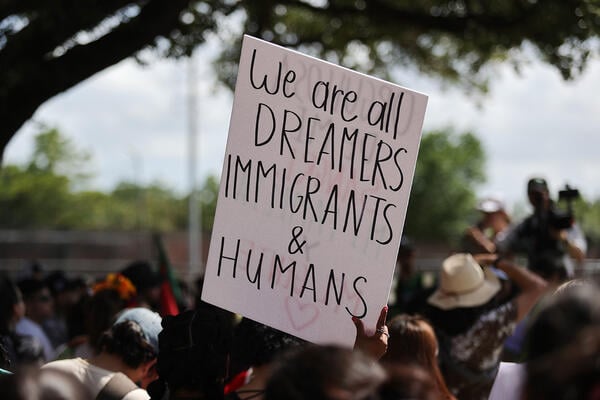
    Immigrant students and their advocates are working to reopen federal lawsuits that ended in-state tuition benefits for undocumented students in two states and another state where the same outcome seems imminent. Advocates say the judges ruled in favor of the government without a public hearing and the affected students weren’t given the opportunity to defend the policies.

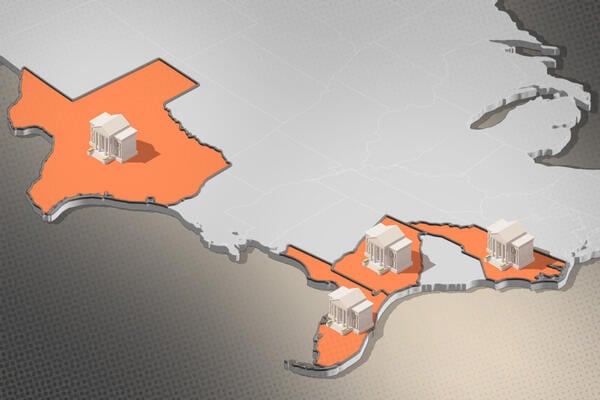
    Since the summer, the U.S. Department of Justice challenged in-state tuition policies in Illinois, Kentucky, Minnesota, Oklahoma and Texas, claiming state laws extending in-state tuition prices to undocumented students breach federal law.

    In Texas and Oklahoma, attorneys general quickly sided with the DOJ and judges swiftly ruled to end in-state tuition benefits for undocumented students. As a result, tuition tripled for some undocumented students this fall, forcing them to make difficult choices about whether they could afford to stay enrolled.

    Kentucky’s undocumented students could soon face the same dilemma. The Kentucky Council on Postsecondary Education agreed to end in-state tuition benefits for local undocumented students in a settlement filed in September, but a judge has yet to make a ruling. Meanwhile, legal battles in Minnesota and Illinois are ongoing as these states defend their policies.

    Since these lawsuits first emerged, civil rights groups and students have sought to intervene or become parties to them. They’re hoping to reopen the quickly closed cases to have their say in court.

    A Latino civil rights organization, the Mexican American Legal Defense and Educational Fund, was the first to file a motion to intervene on behalf of undocumented students in Texas in June. A month later, the American Civil Liberties Union of Texas, the Texas Civil Rights Project, Democracy Forward and the National Immigration Law Center followed suit. They filed their own emergency motions to intervene on behalf of the activist group La Unión del Pueblo Entero, the Austin Community College District’s Board of Trustees and Oscar Silva, a student at the University of North Texas.

    MALDEF filed a similar motion on behalf of a group of undocumented students in Kentucky in August. And last week, the organization moved to intervene for students in Oklahoma, as well.

    Thomas A. Saenz, MALDEF president and general counsel, said undocumented students in Kentucky, Oklahoma and Texas “were promised regular tuition, and as a result of that promise, made the decision to attend public higher education institutions in those states,” but “that promise was stripped away wrongfully” and without public input.

    He stressed that, except for in extreme circumstances, such as cases involving national security, federal courts are meant to do their work in the public eye. But the Texas and Oklahoma laws got the ax without a public hearing. He also argued state lawmakers who dislike these policies can seek to repeal them, like any other state law, but there’s “no basis for legally challenging them.”

    “They’re not allowed to close the public out, do things behind closed doors,” Saenz said. “We ought to expect our courts to conduct their work in public. And that did not happen in Texas. It did not happen in Oklahoma.”

    A Bumpy Road

    Despite students and advocates’ efforts, the motions to intervene have hit a legal setback.

    In Texas, U.S. District Judge Reed O’Connor denied both MALDEF’s and the other groups’ motions to intervene. O’Connor, a George W. Bush appointee, said in court filings he agreed with the federal government and Texas that the motions were “legally futile” because federal law “pre-empts” the challenged Texas law. All of the groups seeking to intervene appealed the decision to the U.S. Court of Appeals for the Fifth Circuit.

    Saenz pushed back on the judge’s reasoning, saying O’Connor agreed with Texas and the DOJ’s conclusion “without any argument” or a public hearing where he could have heard a defense of the Texas Dream Act, the 24-year-old law that offered in-state tuition to undocumented students.

    “No administration of either party in nearly a quarter century has ever challenged the Texas Dream Act, so his conclusion of futility is simply ludicrous,” Saenz said.

    The law was never “presented,” according to Saenz. “That’s the way the courts are supposed to work. You’re supposed to have [an] argument presented in an adversarial manner. He simply signed off on a concocted agreement” between the Texas and U.S. attorneys general, he said.

    A group of higher ed institutions and organizations have rallied behind MALDEF and other advocacy groups. The Presidents’ Alliance on Higher Education and Immigration filed a 43-page amicus brief with the Fifth Circuit last week, defending interveners in Texas. Thirty-seven colleges, universities, higher education and immigrant rights organizations also signed on to the amicus brief, including the American Association of Colleges and Universities and the Association of Catholic Colleges and Universities.

    The district court decision “violates democratic principles by denying all interested parties their right to be heard,” the amicus brief read.

    Whether or not intervention efforts succeed, the stakes of these overturned state laws are too high not to try everything possible, said Miriam Feldblum, president and CEO of the Presidents’ Alliance.

    “This is about workforce development and supporting our domestic—including immigrant—talent pipeline that colleges and universities train, educate, nurture, and that go on to fuel the workforces … in communities and states,” she said.

    She also described intervening as a matter of “fairness.”

    “This is not about special treatment of undocumented students,” Feldblum said. “The tuition-equity challenges are targeting students who have grown up in the U.S., who have graduated from local high schools to pursue postsecondary education. This is what we want them to do. This is why we’re investing in their education.”

    Despite the roadblock, Saenz said he’s still confident motions to intervene will ultimately triumph.

    “I’m very hopeful, because it’s the law,” he said. “Intervention is legally required to be granted in all of these cases. And when we get to the merits of whether the tuition-equity laws are pre-empted or not, the law is absolutely on our side.”

    Source link