Blog

  • Responding to the International Education Strategy requires an appreciation of how fast the world is changing

    Responding to the International Education Strategy requires an appreciation of how fast the world is changing

    The long-awaited new UK international education strategy looks and feels very different from the last one.

    Gone is the target for international recruitment from the previous strategy, which had, in any case, been exceeded substantially. It has been replaced by a “bold ambition” to grow overall education exports to £40bn per year by 2030 (the figure for 2022 was calculated at £32.3bn).

    The emphasis is on growing transnational education (TNE) and partnerships in education and research, as well as outward student mobility, and the UK’s global reputation in education. There is much to welcome in this strategy. Not least the cross-government (FCDO, DfE and DBT) ownership of the agenda, and the recognition that the rapidly changing geopolitical landscape requires support from the UK government and its institutions to support the sector.

    But let’s turn to what isn’t in the strategy. Great strategies are adaptable to a changing landscape, and the external environment in international education is shifting very rapidly.

    Times change

    Two major issues are worth highlighting. First, there is no such thing as a single TNE model, and the financial margins differ markedly depending on the host country and the teaching model. The margins depend on the nature of the regulatory regime and the nature of the host country partnership(s). International campuses which involve an element of research activity are also more expensive to run.

    It’s fair to say that many UK universities operating overseas have tended to engage in TNE not solely because of financial margin, but often to raise their international profile in order to attract more direct recruitment to their UK campuses. Others make a larger margin by adopting a very streamlined and low-cost teaching model.

    Second, the financial sustainability of UK universities has been greatly impaired by the instability of direct international recruitment. The international education strategy uses the cautious language of “sustainably recruiting high-quality students” to the UK, not least because of the difficult immigration debates student flows have caused.

    Canada, Australia and the USA – the other three of the “Big Four” international student destinations – have had similar debates on student visas. But the shift from the Big Four dominating international direct recruitment to a situation where a “Big Fourteen” have come to compete more aggressively for this market has been very sudden, and has left the UK and other anglophone countries having to compete much more aggressively.

    The countries experiencing growth range from Europe (for example France, Germany and the Netherlands) to Asian destinations (such as China, Korea and Malaysia). There are many reasons why these new destinations have become more competitive beyond the student visa regime: student safety, work experience opportunities, pricing/affordability, cultural and language factors, and the geopolitical environment have all played a part.

    Universities in the Big Four are responding by competing on some of these fronts. Many of the new countries and jurisdictions in the Big Fourteen have explicit targets to grow international numbers, unlike the new UK strategy (e.g. Japan, South Korea, Hong Kong, and France). Many non-Anglophone countries have embraced English language teaching, especially at master’s level.

    We need new models

    But is this a definitive trend we are observing away from the Big Four – or is the market just becoming more contestable and the landscape will evolve even further?

    I would argue the latter: I believe that the international recruitment market could continue to evolve rapidly. Under the circumstances, universities in the more established markets will want to forecast the potential short-term trends and cycles in student demand, but more importantly the underlying factors: to what extent are some factors like studying closer to home important for students in large sender markets like China and India? To what extent are there trade-offs between different factors such as the cultural affinity of the host nation and affordability/pricing? Economic theory, and indeed the instability of flows since the pandemic, suggests that these factors do interact and there are trade-offs.

    University leaders will want to gain a much more sophisticated market understanding in the next five years than relying on the simple linear market trends which we adopted in our recruitment forecasts 10-15 years ago. That will require much more refined economic analysis of what students (and their families) think about international study.

    Similarly, UK and other universities jumping on the accelerating TNE bandwagon will want to understand how this interfaces with direct recruitment in the Big Fourteen. We know that an in-country TNE presence in a large sender market can have an impact on direct recruitment.

    Watch this landscape carefully over the next five years – it will rapidly evolve.

    Source link

  • Iowa Universities Would Be Liable for Part of Defaulted Student Loans Under House Bill – The 74

    Iowa Universities Would Be Liable for Part of Defaulted Student Loans Under House Bill – The 74


    Get stories like this delivered straight to your inbox. Sign up for The 74 Newsletter

    State universities would be responsible for portions of students’ defaulted loans under legislation advanced Wednesday by an Iowa House subcommittee.

    House Study Bill 540 would require state universities to offset 25% of a borrower’s liability if they default on an educational loan taken out to attend the institution. This means the university would be liable for 25% of what the student owes.

    More than 40% of Iowa public college graduates finish their education debt-free, Iowa Board of Regents State Relations Officer Jillian Carlson said, and those who do take out loans receive financial counseling early in their college career “to help them right-size their debt and advise them on not taking out more than they need.”

    “One question or concern that we do have is to clarify whether students who default on their loans are actually defaulting because they’re unable to make the payments, versus defaulting on their loans because they know that we would pick up 25% of the bill when they actually do have the resources to make the payments,” Carlson said.

    Rep. Heather Matson, D-Ankeny, said there are important, practical questions on the topic of universities potentially being liable for defaulted loans that are not answered in the bill, such as where the money to take on these debts would come from. She also asked whether it should be the responsibility of a university to “be on the hook for” part of a loan in certain situations, like if a graduate finds themself in medical debt and must decide how they’ll use their money to stay safe and healthy.

    “I think it’s important to recognize that the majority party talks a lot about personal responsibility, especially when it comes to student loans,” Matson said. “So I’m curious as to why you all are proposing to put a graduate’s financial decisions back onto a university if personal responsibility for student loans is so incredibly important.”

    Rep. Jeff Shipley, R-Fairfield, said during the subcommittee meeting he believes the idea presented in the bill has “some merit.” He and subcommittee chair Rep. Taylor Collins, R-Mediapolis, approved the legislation to move to the Iowa House Higher Education Committee.

    “My general thoughts are, we need to make sure we have some skin in the game when it comes to … the future employment of these individuals, once they graduate,” Collins said.

    Iowa Capital Dispatch is part of States Newsroom, a nonprofit news network supported by grants and a coalition of donors as a 501c(3) public charity. Iowa Capital Dispatch maintains editorial independence. Contact Editor Kathie Obradovich for questions: [email protected].


    Did you use this article in your work?

    We’d love to hear how The 74’s reporting is helping educators, researchers, and policymakers. Tell us how

    Source link

  • What Education Leaders Can Learn from the AI Gold Rush – The 74

    What Education Leaders Can Learn from the AI Gold Rush – The 74


    Get stories like this delivered straight to your inbox. Sign up for The 74 Newsletter

    Every week, my 7-year-old brings home worksheets with math problems and writing assignments. But what captivates me is what he creates on the back once the assigned work is done: power-ups for imaginary games, superheroes with elaborate backstories, landscapes that evolve weekly. He exists in a beautiful state of discovery and joy, in the chrysalis before transformation.

    My son shows me it’s possible to discover something remarkable when we expand what we consider possible. Yet in education, a system with 73% public dissatisfaction and just 35% satisfied with K-12 quality, we hit walls repeatedly.

    This inertia contributes to our current moment: steep declines in reading and math proficiency since 2019, one in eight teaching positions unfilled or filled by uncertified teachers, and growing numbers abandoning public education.

    Contrast this with artificial intelligence’s current trajectory.

    AI faces massive uncertainty. Nobody knows where it leads or which approaches will prove most valuable. Ethical questions around bias, privacy and accountability remain unresolved.

    Yet despite uncertainty — or because of it — nearly every industry is doubling down. Four major tech firms planned $315 billion in AI spending for 2025 alone. AI adoption surged from 55% to 78% of organizations in one year, with 86% of employers expecting AI to transform their businesses by 2030.

    This is a gold rush. Entire ecosystems are seeing transformational potential and refusing to be left behind. Organizations invest not despite uncertainty, but because standing still carries greater risk.

    There’s much we can learn from the AI-fueled momentum.

    To be clear, this isn’t an argument about AI’s merits. This is a conversation about what becomes possible when people come together around shared aspirations to restore hope, agency and possibility to education. AI’s approach reveals five guiding principles that education leaders should follow:

    1. Set a Bold Vision: AI leaders speak in radical terms. Education needs such bold aspirations, not five percent improvements. Talk about 100% access, 100% thriving, 100% success. Young people are leading by demanding approaches that honoring their agency, desire for belonging, and broad aspirations. We need to follow their lead.

    2. Play the Long Game: Companies make massive investments for transformation they may not see for years. Education must embrace the same long-term thinking: investing in teacher development programs that mature over years, reimagining curricula for students’ distant futures, building systems that support sustainable excellence over immediate political wins.

    3. Don’t Fear Mistakes: AI adoption is rife with failure and course corrections. Despite rapid belief and investment, over 80% of AI projects fail. Yet companies continue experimenting, learning, adjusting and trying again because they understand that innovation requires iteration. Education must take bold swings, have honest debriefs when things fall flat, adjust and move forward.

    4. Democratize Access: AI reached 1.7 to 1.8 billion users globally in 2025. While quality varies and significant disparities exist, fundamental access has been opened up in ways that seemed impossible just years ago. When it comes to transformative change in education, every child deserves high-quality teachers, engaging curriculum and flourishing environments.

    5. Own the Story, and Pass the Mic: Every day, AI gains new ambassadors among everyday people, inspiring others to jump in. The most powerful education stories come from young people discovering breakthroughs during light bulb moments, from parents seeing children thrive, from teachers witnessing walls coming down and possibilities surpassing imagination. We need to pass the mic, creating platforms for students to share what meaningful learning looks like, which will unlock aspirational stories that shift the system.

    None of this is possible without student engagement. When students have voice and agency, believe in learning’s relevance and feel supported, transformative outcomes follow. As CEO of Our Turn, I was privileged to be part of efforts that inspired leaders and institutions across the country to invest in student engagement as a core strategy. We’re now seeing progress: all eight measures of school engagement tracked by Gallup reached their highest levels in 2025. This is an opportunity to build positive momentum; research consistently demonstrates engagement relates to academic achievement, post-secondary readiness, critical thinking, persistence and enhanced mental health.

    Student engagement is the foundation from which all other educational outcomes flow. When we center student voice, we go from improving schools to galvanizing the next generation of engaged citizens and leaders our democracy desperately needs.

    High-quality teachers are also essential. Over 365,000 positions are filled by uncertified teachers, with 45,500 unfilled. Teachers earn 26.4% less than similarly educated professionals. About 90% of vacancies result from teachers leaving due to low salaries, difficult conditions or inadequate support.

    Programs like Philadelphia’s City Teaching Alliance prove what’s possible: over 90% of new teachers returned after 2023-24, versus just under 80% citywide. We must create conditions where teaching is sustainable and honored through higher salaries, better working conditions, meaningful professional development and cultures that value educators as professionals.

    Investing in teacher quality is fundamental to workforce development, economic competitiveness and ensuring every child has access to excellent instruction. When we frame this as both a moral imperative and an economic necessity, we create the coalition necessary for lasting change.

    Finally, transformation must focus on skill development. The workforce young people are entering demands more than technical knowledge; it requires integrated capabilities for navigating complexity, building authentic relationships and creating meaningful change.

    At Harmonious Leadership, we’ve worked with foundations and organizations to develop leadership skills that result in greater innovation and impact. Our goals: young people more engaged in school and communities, and companies reporting greater levels of innovation, impact and financial sustainability.

    The appeal here is undeniable. Workforce development consistently ranks among the top priorities across political divides. Given the rapid rate of change in our culture and economy, we need to develop skills for careers that don’t yet exist, for challenges we can’t yet imagine, for a world that demands creativity, adaptability and resilience.

    The AI gold rush shows what’s possible when we set bold visions, invest for the long term, embrace learning from failure, democratize access and amplify voices closest to transformation.Our children, like my son drawing superheroes on worksheet backs, are in chrysalis moments. The choice is ours: remain paralyzed by complexity or channel the same urgency, investment and unity of purpose driving the AI revolution. We know what works: student engagement, quality teachers and future-ready skills. The question isn’t whether we have solutions. It’s whether we have courage to pursue them.


    Did you use this article in your work?

    We’d love to hear how The 74’s reporting is helping educators, researchers, and policymakers. Tell us how

    Source link

  • Educating teachers to use AI without harming the planet 

    Educating teachers to use AI without harming the planet 

    by Ariel Gilreath and Caroline Preston, The Hechinger Report
    January 25, 2026

    This story appeared in our climate and education newsletter. Sign up here.

    I’m one of those rare people (there are others out there, right?) who have yet to try ChatGPT or any other generative artificial intelligence program. Part of my hesitation is driven by a vague concern that AI is killing the planet: Researchers predict, for example, that U.S. data centers could consume as much water as 10 million Americans and emit as much carbon as 10 million cars. At the same time, there’s hope that AI could combat climate change, by accelerating research on climate solutions. 

    So I was intrigued when I came across an announcement about a new initiative on how to teach K-12 educators to use AI with climate change in mind. The effort, called TEACH-AI, was started last fall by researchers from the University of California, Irvine, Indiana University Bloomington and the University of Bremen in Germany. Among other projects, they are developing a course to help future educators understand how to use AI in an environmentally conscious way, and how to use it to teach lessons on climate change. 

    My colleague Ariel Gilreath, who covers K-12 education for Hechinger, spoke this week with one of the TEACH-AI creators, Asli Sezen-Barrie, an endowed chair of climate and environmental education and an associate professor at the School of Education at UC Irvine. Here is Ariel’s interview with Sezen-Barrie, edited for length and clarity. 

    Caroline Preston


    Can you explain the idea behind TEACH-AI, and how it came about?

    Institutions have started a lot of initiatives around AI. At this point, it’s hard to basically say: ‘Don’t use this,’ because there are benefits that teachers and students see. So we thought, ‘OK, how do we have them think through the environmental cost of this?’ 

    At the same time, we were trying to understand what is the confidence level and knowledge base that educators have right now, about not just commonly known tools like ChatGPT, but other AI tools developed for education purposes including to understand the changing climate. 

    What I started seeing is environmentally conscious teachers were actually a lot more cautious than what we initially thought. Even when their students were using it, they were concerned. Their districts are working on adopting certain tools, and these teachers were actually underlining a lot of reasons why not using AI is a good thing right now. We heard similar concerns from our colleagues in Germany. 

    What we thought then is: If their students are going to use it, if their districts are going to adopt AI tools, and teachers are really concerned, let’s try to figure out a way to understand how we can both use climate change as a context to see how AI can be used purposely — how do we choose the right tools, when the AI tool can align with our purposes — and then also create activities that teachers or their students will be able to use to debate what is the cost-benefit analysis for certain AI tools. 

    Is the purpose primarily to help future educators use AI to teach environmental lessons, or is it training educators how to use AI in a more sustainable way?

    It’s going to be both. Because this is going to be one course, it’s exploratory work. My  colleagues developed a tool called StoryAI, which has a specific goal and purpose and, as a result, lower energy cost. We’re going to see how we can leverage big data to store data with that tool on teaching issues like sustainable fashion or food waste or fires.

    Given the amount of water and energy AI data centers use, there’s been a lot of debate about whether using AI at all is bad for the environment. I’d love to hear your thoughts about this.

    Those concerns are valid. But at this point, where I am, it’s hard for me to say: ‘It’s bad — period.’ Because there are valid reasons teachers will tell you they use it, like with overwhelming tasks. Climate change is such a complex topic. And we tell them to teach it in interdisciplinary ways, how communities care about it, what science says about it. 

    Maybe that’s where AI tools can support educators. It can be that they use AI tools to learn about changing climate and current data and research. 

    We need to think about what AI tools and what kind of use of AI will align successfully with the way we’re designing teaching and learning, and which ones will fail. We need to prepare educators on working through that judgment.

    Part of this initiative involves designing a course that blends AI literacy with geography and environmental science education. What can teachers expect to learn from this course?

    The course is called An Education for Sustainable Futures. We’re going to explore the two angles I mentioned: how AI tools have a role in understanding and making projections about climate change, and how do they support the solutions — or not, at times. The other component is bringing in AI literacy. 

    There’s a lot of professional master’s degrees appearing all over the country right now, and internationally as well. You don’t see so much discussion — or a course or even a curriculum element — on the environmental impact. Bias, language bias and reliance is discussed a little bit, but not from an environmental context. 

    And the class you described is just one part of this initiative.

    We are also doing document analysis to look at guidance from California, Germany, UNESCO, to see where AI recommendations can align with environmental literacy. 

    Education can have a critical role in these discussions, because people make decisions, people vote for things. Not knowing and not understanding these things doesn’t give them informed actions. 

    Education’s role can be really critical to have these discussions and to learn to look at this kind of data.

    Contact editor Caroline Preston at 212-870-8965, via Signal at CarolineP.83 or on email at [email protected]. Contact staff writer Ariel Gilreath on Signal at arielgilreath.46 or at [email protected].

    This story about AI in education was produced by The Hechinger Report, a nonprofit, independent news organization focused on inequality and innovation in education. Sign up for Hechinger’s climate change newsletter.

    This <a target=”_blank” href=”https://hechingerreport.org/educating-teachers-ai-without-harming-planet/”>article</a> first appeared on <a target=”_blank” href=”https://hechingerreport.org”>The Hechinger Report</a> and is republished here under a <a target=”_blank” href=”https://creativecommons.org/licenses/by-nc-nd/4.0/”>Creative Commons Attribution-NonCommercial-NoDerivatives 4.0 International License</a>.<img src=”https://i0.wp.com/hechingerreport.org/wp-content/uploads/2018/06/cropped-favicon.jpg?fit=150%2C150&amp;ssl=1″ style=”width:1em;height:1em;margin-left:10px;”>

    <img id=”republication-tracker-tool-source” src=”https://hechingerreport.org/?republication-pixel=true&post=114496&amp;ga4=G-03KPHXDF3H” style=”width:1px;height:1px;”><script> PARSELY = { autotrack: false, onload: function() { PARSELY.beacon.trackPageView({ url: “https://hechingerreport.org/educating-teachers-ai-without-harming-planet/”, urlref: window.location.href }); } } </script> <script id=”parsely-cfg” src=”//cdn.parsely.com/keys/hechingerreport.org/p.js”></script>

    Source link

  • WEEKEND READING: Calling for a bold new vision for higher education 

    WEEKEND READING: Calling for a bold new vision for higher education 

    Join HEPI for a webinar on Thursday 29 January from 1.30pm to 2.30pm examining the findings of Student Working Lives (HEPI Report 195), a landmark study on how paid work is reshaping the student experience in UK higher education amid rising living costs and inadequate maintenance support. View our speakers and sign up here.

    This guest blog was kindly authored by Dr Adrian Gonzalez, Senior Lecturer in Sustainability at the University of York, and Richard Heller, Emeritus Professor of Public Health, University of Manchester UK and of Medicine, University of Newcastle Australia.

    Background

    Globally, humanity is grappling with a set of interconnected and intractable wicked problems, from the accelerating climate crisis to widening inequality. These are proving difficult to resolve, and higher educational institutions are needed to respond to them and advance solutions.

    Yet, at the same time, higher education around the world is facing its own structural problems that limit the sector’s ability to respond to societal issues. Our thesis is that a major transformation of higher education is required to allow the sector to respond. We identify the major challenges, offer one set of solutions, and call for interest in further discussion about how to transform higher education for the future.

    Climate hypocrisy

    Despite the current climate crisis, it features little in most universities’ education and research programmes. There are barriers to embedding sustainability into higher education degrees, including disciplinary conflicts over the meaning of sustainability and major institutional barriers. There is also work on greening university campuses, in some cases stimulated by student activists, although care needs to be taken that this does not become another form of higher education greenwashing. Buildings, travel by staff and students (including student field trips), as well as by international students, have a high carbon footprint. Currently, there is no requirement or standardised way of measuring or reporting universities’ carbon footprint. The response by the sector to this threat can therefore be characterised as tinkering rather than undertaking the transformation required to reflect the global climate emergency. 

    Knowledge inequity

    There are global, regional, national and socioeconomic inequities in access to university education, under-representation of populations in the creation of knowledge and global inequity in research publications, as well as silence or tokenism in educational decolonisation agendas. The commodification of knowledge and the commercialisation of the higher education sector hinder attempts to reduce inequity. The higher education system needs to transform to be more open and responsive to societal needs, offering the opportunity to increase knowledge equity. This will create opportunities and have long-term effects on reducing the problems caused by, between and within, national inequalities.

    Governance and management

    Employment precarity and casualised teaching and research work have risen across the international higher education sector. Excessive managerialism reduces academic autonomy. Gender pay gaps remain, and there is a general failure of the market-driven business model. Financial sustainability is lacking and requires overseas student fees to plug funding gaps across many higher education national contexts, while global needs for access to higher education are ignored in favour of those who can pay fees. Funding from fossil fuel and wider petrochemical companies that strengthen climate obstruction are also still embedded within global HE, including through different research funding avenues.

    Research

    As universities have commodified education; academic publishers have commodified the publication of research. A small number of powerful publishers dominate the field and make large profits by charging high fees for library subscriptions, or to authors in article processing charges, while using volunteer academics as reviewers and editors. This is perpetuated by a system which requires academics to ‘publish or perish’ and prioritises the citation of research in ‘high impact’ journals for academic advancement, often in Global North journals written in English. Publish or perish has also helped drive an acceleration in the quantity of articles published, arguably, in some cases, at the expense of quality. While prestige and academic advancement favour research over education within universities (promotion opportunities for those on an academic teaching pathway are fraught with challenges), research funding is precarious and inadequate. Funding for research on climate change is inadequate and inequitable.

    A distributed model of education

    The first step is to acknowledge these problems. There is a need to develop ideas and advocate for a transformation of higher education, and we call on others to join us in developing and working through ideas and potential solutions to help facilitate a progressive learning culture and practice which addresses these major issues.
    The use of a distributed model of education has the potential to address many of the problems outlined. Large campuses are replaced by local hubs, which can be physical or virtual. Education would be largely online and utilises open educational resources, research involves under-represented populations, and publication focuses on Diamond Open Access journals, which are community-driven, academic-led, and academic-owned. The carbon footprint of higher education would be drastically reduced, leadership distributed (hence managerialism reduced), and academic autonomy increased. Collaborative development and sharing of open educational resources reduces the drive to the commodification of education, and open publishing reduces the power of commercial publishers. These various initiatives will increase knowledge equity. The distributed model is consistent with societal moves towards decentralisation of the internet (Web3.0 and 4.0) and federated IT infrastructures (such as the Fediverse for open social media). Decentralised Autonomous Organisations (DAOs) may offer support. The adoption of such a model would encourage new locally driven academic environments and research initiatives responsive to societal needs.

    Calling for ideas and interest

    This is one set of ideas, but there must be others, large and small, global and local. For example, there are alternative options to increasing student fees, such as a progressive graduate tax, that would offer a fairer and more sustainable financial model. A recent book, Stories of hope – reimagining education, demonstrates that universities contain many committed educators who report exciting educational innovations.  Please express your interest in joining in a discussion about how we can tackle these challenges in a robust and transformational way. If you might be interested, please complete this short form and we will be in touch with further details.

    Source link

  • No Snow Day? Mamdani Says NYC School Will Be In-Person Or Remote on Monday – The 74

    No Snow Day? Mamdani Says NYC School Will Be In-Person Or Remote on Monday – The 74


    Get stories like this delivered straight to your inbox. Sign up for The 74 Newsletter

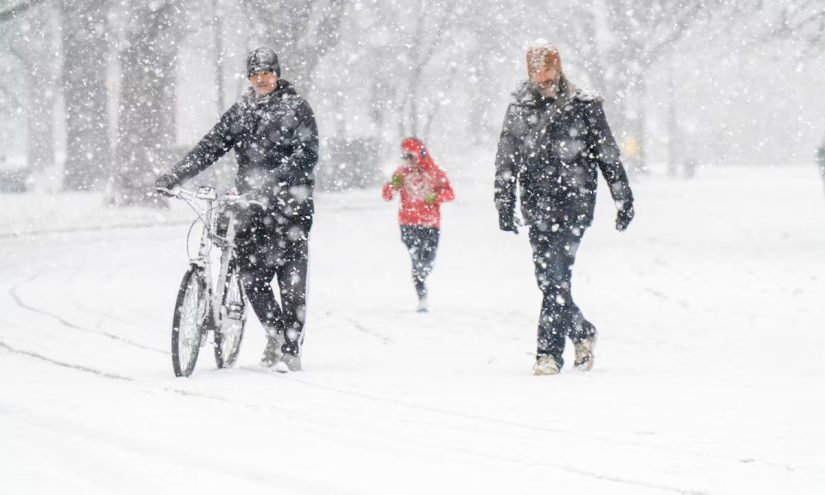
    Sorry kids, New York City students will still not have a traditional snow day, no matter how many inches fall.

    School will be in session on Monday, whether in-person or remote, Mayor Zohran Mamdani said on Friday as he provided an update on the preparations for a potentially massive winter storm heading to the area over the weekend.

    The mayor said he will make the final decision by noon on Sunday whether classes will pivot to remote learning. The city is also canceling Sunday’s Public School Athletic League activities as well as any other Sunday school events.

    “I have to apologize to the students that we’re hoping for a different answer for a traditional snow day,” Mamdani said during a press briefing on the storm, acknowledging that the city has no flexibility in its calendar to cancel instructional days.

    New York City schools Chancellor Kamar Samuels said the city was committed to swiftly sharing information about schools.

    “We know that families need timely, clear information to plan their schedules,” Samuels said.

    He also said that schools will be flexible in their approach to remote learning.

    “No one is asking kids to be on a device for six hours and 20 minutes,” Samuels said. “Some learning will be synchronous. Some will be asynchronous. You can still have your hot chocolate, you can still go out and enjoy the snow.”

    Education Department officials are encouraging students and staff to log in to remote learning platforms over the weekend to make sure they can connect and to avoid technical glitches Monday morning, according to a letter to principals obtained by Chalkbeat. School leaders were also encouraged to stagger school start times for each grade level by 15-minute increments “to ensure a smooth login experience,” the email states.

    The National Weather Service is predicting up to 14 inches in the metropolitan region, and the city is gearing up. Schools across the five boroughs are reaching out to their students to ensure they have devices and understand how to log on in the event of a remote school day.

    This is the first major logistical test for the mayor and his new chancellor. A big chunk of the city’s nearly 900,000 students — all high school students and those attending 6-12 schools — already had the day off for a teacher professional development day. But the day might be complicated for many parents of young children: They might be frustrated with remote learning and prefer that their kids play outside, or they might be scrambling for child care, especially if they must work in-person.

    Many families also depend on schools to provide their children breakfast and lunch.

    Schools last closed in-person classes because of snow two years ago, and it did not go well: A technical meltdown prevented many students and teachers from logging on, despite efforts to practice in advance. The Education Department subsequently conducted another drill, but it was optional, and many students seemed to have opted out.

    “We are preparing for the possibility of remote such that we do not repeat those mistakes of the past,” Mamdani said.

    Samuels recalled the 2024 remote snow day as a “day that will live in infamy” and said, “We’ve stress tested the system, both in person with students logging in and as well. We’ve had simulations so we are prepared now.”

    The most recent test, Samuels said, was in December.

    “We’ve increased the capacity to make sure that we can house as many students as possible on that day,” Samuels added. “So we now have the capacity of having a million students logging at the same time within 60 seconds.”

    The mayor and chancellor offered conflicting messages this week about whether closing school altogether, with no remote learning, could be an option. Samuels said on Wednesday that remote learning would be required if school buildings are shuttered, though Mamdani indicated on Thursday that he was mulling a traditional snow day.

    Changes to the school calendar make cancelling school difficult, if not impossible.

    The city stopped having traditional snow days in 2020, deciding that schools could instead offer remote learning to help meet the mandated 180 instructional days as more holidays have been added to the calendar.

    The state allows certain professional development days to count toward that number, and because of that, New York City students are only in class 176 days this year.

    Mamdani emphasized the steps the city is taking to prepare for the storm.

    More than 2,000 sanitation workers are going to start 12-hour shifts starting Saturday evening as the city issues a hazardous travel advisory for Sunday and Monday. He urged people to take the storm seriously and stay home.

    The city’s subway and bus system is expected to be operational, said Janno Lieber, CEO of the Metropolitan Transportation Authority.

    Chalkbeat is a nonprofit news site covering educational change in public schools. This story was originally published by Chalkbeat. Sign up for their newsletters at ckbe.at/newsletters.


    Did you use this article in your work?

    We’d love to hear how The 74’s reporting is helping educators, researchers, and policymakers. Tell us how

    Source link

  • 5th Circuit Questions Whether 10 Commandments in Classrooms Establish a Religion – The 74

    5th Circuit Questions Whether 10 Commandments in Classrooms Establish a Religion – The 74


    Get stories like this delivered straight to your inbox. Sign up for The 74 Newsletter

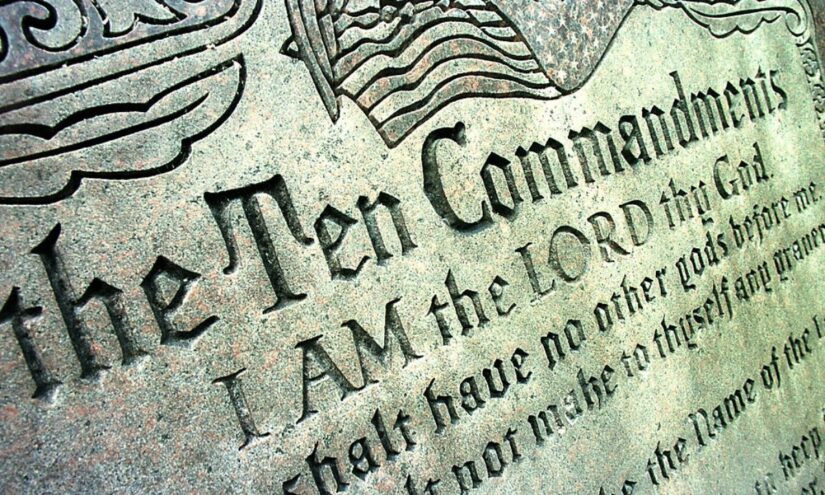
    The full panel of judges on the U.S. 5th Circuit Court of Appeals heard arguments Tuesday in a case that could require Louisiana public schools to feature posters with the Ten Commandments in every classroom.

    Attorney Liz Murrill sought a rehearing with all 17 judges from the 5th Circuit after a three-judge panel ruled in June that the 2024 state law requiring the displays was “plainly unconstitutional.” A group of parents of public school students had filed a lawsuit against the state to block the law, which includes the text of a Protestant version of the Ten Commandments, from being enforced.

    The case, Roake v. Brumley, could hinge on whether the law violates the First Amendment’s Establishment Clause, which prohibits governments from endorsing a specific religion. Whether a comparable law in Texas takes effect will likely depend on the outcome of the Louisiana case.

    The plaintiffs in the case are represented by the American Civil Liberties Union, Americans United for Separation of Church and State and the Freedom from Religion Foundation. Judges grilled their lawyers with questions about basing their arguments on the long-standing precedent from the case Stone v. Graham, a 1980 ruling from the U.S. Supreme Court that overturned a similar law in Kentucky. Justices decided then that the First Amendment bars public schools from posting the Ten Commandments in classrooms.

    Some 5th Circuit judges said they believe the Stone decision was effectively nullified because it relied on a precedent from the 1971 case Lemon v. Kurtzman, which the Supreme Court overturned in 2022. The so-called Lemon test has been applied for five decades to decide what amounts to a violation of the Establishment Clause.

    The 2022 case, Kennedy v. Bremerton, involved a Washington state high school football coach who was fired for praying at midfield after games and allowing students to join him. Joseph Kennedy got his job back after conservative justices prevailed in a 6-3 decision, saying the post game prayers do not amount to a school endorsement of Christianity.

    Attorneys for the plaintiffs told the 5th Circuit judges that the Kennedy decision might have overturned Lemon but did not nullify the Stone ruling. Still, some judges questioned how an 11-inch by 14-inch poster amounts to coercion of religious beliefs.

    In a news conference after the nearly two-hour hearing, Murrill expressed confidence in the state’s arguments but predicted the case is likely headed to the Supreme Court regardless of the 5th Circuit’s decision.

    “We believe that you can apply this law constitutionally,” Murrill said.

    Gov. Jeff Landry, who attended Tuesday’s hearing, called the Ten Commandments one of the nation’s foundational documents.

    “I think Americans are just tired of the hypocrisy,” Landry said. “I just think that it’s high time that we embrace what tradition and heritage is in this country, and I agree with the attorney general. I like our chances.”

    The Rev. Jeff Sims, one of the plaintiffs and a Presbyterian minister in Covington, issued a statement after the hearing saying he wants to be the one to decide on the religious education that his children receive.

    “I send my children to public school to learn math, English, science, art, and so much more — but not to be evangelized by the state into its chosen religion,” Sims said. “These religious displays send a message to my children and other students that people of some religious denominations are superior to others. This is religious favoritism and it’s not only dangerous, but runs counter to my Presbyterian values of inclusion and equality.”

    Louisiana Illuminator is part of States Newsroom, a nonprofit news network supported by grants and a coalition of donors as a 501c(3) public charity. Louisiana Illuminator maintains editorial independence. Contact Editor Greg LaRose for questions: [email protected].


    Did you use this article in your work?

    We’d love to hear how The 74’s reporting is helping educators, researchers, and policymakers. Tell us how

    Source link

  • WEEKEND READING: Death by a thousand cuts: why universities cannot survive on goodwill alone

    WEEKEND READING: Death by a thousand cuts: why universities cannot survive on goodwill alone

    This blog was kindly authored by Dr Alessandro Siani, Senior Teaching Fellow at the School of the Environment and Life Sciences, University of Portsmouth.

    There is a visible shift in mood across higher education in the UK. Whether in committee meetings or coffee breaks in between lectures, conversations have moved from the familiar tongue-in-cheek moaning about marking and grant proposal deadlines to more foreboding tones and matters. If the current academic zeitgeist had to be summarised in a single word, it would probably be ‘survival’ – both at the institutional and individual level.

    While budget cuts, institutional restructures, and a certain degree of uncertainty have always been a part of academic life, there is a palpable feeling of impending doom in UK higher education. The mounting pressure felt by institutions across the country is different from the peaks and troughs universities are accustomed to: this time it feels structural rather than cyclical, with no clear solution in sight. With academic and professional staff feeling overworked and undervalued, and two-thirds of university staff considering leaving the sector, it is clear that the current situation is not sustainable.  

    Lifting higher education out of its current slump is likely to require a paradigm shift in how educational institutions are funded and managed. To move forward, however, it is worth asking how the sector ended up in such dire straits in the first place.

    The financial foundations are collapsing

    This problem boils down to basic maths: higher education institutions are struggling to secure enough funding to cover their operational expenses. Nearly half of UK institutions face deficits in 2025-26, and as many as fifty of them are at risk of closure within the next year due to insolvency. A key cause of underfunding is the historical stagnation of tuition fees (which have not kept pace with inflation for over a decade), leading to a decline in their real-terms value estimated at 26% between 2017 and 2025. Many universities reacted to the tuition fees freeze by increasing the intake of international students to compensate for the real-terms loss in home tuition fees. However, the new international student visa restrictions imposed in 2023 by the Sunak government caused a sharp drop in international applications, leading to a steady decline in university income over the following years. Moreover, the current Starmer Government has recently announced the introduction of an international student levy starting from 2028 to fund support for home students. This proposal raised further concerns for higher education institutions (particularly larger ones), which would be expected to foot the bill by either absorbing the costs or passing them onto the students, making those institutions less competitive in the international market. While the Government has also announced that tuition fees will rise in line with inflation for academic years 2026/27 and 2027/28, with future fee uplifts conditional on higher education providers achieving a higher quality threshold , higher education institutions are still scrambling to make ends meet.

    Restructuring, redundancies, and the burden on those who remain

    The UCU’s live tracker of redundancies, restructures, reorganisations and closures across the UK higher education sector offers a sobering insight into the impact of underfunding on institutions and people alike. As of December 2025, the tracker lists a hundred and five higher education institutions as currently undergoing redundancy and restructuring programmes, and universities have announced over twelve thousand job cuts over the previous year alone.

    The consequences of the job cuts are not only catastrophic for those who find themselves suddenly unemployed. After each redundancy round, the remaining staff are left struggling with uncertainty around further cuts on the horizon, survivor’s guilt and drastically increased workloads. Despite carrying an ever-growing emotional and operational burden, staff often end up sacrificing their time and wellbeing to ensure that student support, research outputs and administrative responsibilities continue to be delivered to a high standard.

    Workload models: when the numbers lose meaning

    Given these challenges, senior leadership teams often find themselves caught between a rock and a hard place. On the one hand, they are tasked with sustaining operations with shrinking budgets and skeleton staff, which inevitably leads to unpopular decisions. On the other, they are aware of the need to preserve morale in a workforce already stretched thin.

    In this context, workload models can appear like an attractive solution, offering – at least in principle – a transparent way to allocate an increasing amount of work amongst dwindling staff numbers. Workload models are automated systems used to quantify and allocate workload by assigning a set time allocation to each task – for example, thirty minutes for marking an essay. The problem arises when time allocations are manipulated to deflate the formal workload, artificially creating capacity to carry out additional work. In the previous example, if the allowance for marking an essay was reduced from thirty to ten minutes, staff would be expected to mark three times as many papers in the same time – which realistically means taking thrice as long if (as is usually the case) staff are unwilling to carry out the task to a significantly lower standard. Under the veneer of fairness and organisational efficiency, workload models are increasingly being revealed for what they often are: an accounting trick to prove that there is still capacity and justify staff cuts and increased workloads.

    Most academics thrive on hard work and regularly go above and beyond often at the cost of their work/life balance, but many are no longer willing to be gaslit about the amount of work they are doing. It is becoming increasingly clear that the misalignment between modelled and actual workloads has a detrimental effect on staff morale and trust in their leadership teams.

    Where can the sector go from here?

    Despite all of this, most higher education institutions continue to function – not because the current system works, but because the staff on the ground are working to breaking point and beyond to keep things running. To ensure the long-term sustainability of the sector, the focus should shift from surviving to thriving, and the planning from tactical to strategic.

    A two-pronged policy intervention should constitute the bedrock of academic funding and sustainability. The first prong is an increase in governmental support: it is imperative that governments, regardless of their political colour, acknowledge that higher education is a remunerative investment in the future not just of our learners, but also of our communities, industries, economy and nation at large. It is also crucial to reverse policies that have been proven to cause financial strain (such as the restrictions on international student visa introduced under Sunak), or at the very least to avoid further aggravating them, as it appears to be the case with the proposal set forward by the Starmer government in 2025 to extend the visa restrictions to research master’s courses.

    The second prong implies a paradigm shift in how higher education institutions are administered. The idea that universities and colleges should run like businesses has been argued to be incompatible with their very nature and purpose: to educate, innovate, develop critical thinking and professional skills. To thrive, higher education institutions cannot be forced to chase profits – which inevitably leads to cutting corners and prioritising metrics over integrity and excellence – and should instead embrace their irreplaceable role as communities of practice and learning.

    At present, the only certainty is that staff trust and goodwill cannot be expected to last forever and, unless urgent action is taken to stop their erosion, it will be hard to rebuild institutional cultures that were fostered over decades of hard and collegial work.

    Source link

  • Export success is not international education success

    Export success is not international education success

    The UK government’s newly published International education strategy opens with a statement few in our sector would dispute – in an “uncertain world, education matters more than ever.”

    That is true. But a closer reading of the document suggests a more specific and narrower interpretation of why education matters.

    This is not, in any meaningful sense, a national international education strategy. It is, instead, an international education export strategy.

    There is nothing inherently wrong with that. Education is one of the UK’s most successful export sectors, supporting jobs, research, soft power, and local economies across the country. At a time of financial constraint, it is understandable that government thinking frames education primarily through the lenses of growth, trade, and global influence.

    But if this is the government’s intent, it should be honest about it. Words matter, because they shape priorities, expectations, and trade-offs.

    Calling this an “international education strategy” implies something broader – a vision for how education helps the nation understand the world, engage with it intelligently, and equip its people to thrive within it. That wider vision is largely absent in this strategy.

    The dominant logic of the strategy is export-led. Success is defined through metrics such as global market share, education exports reaching £40 billion per year by 2030, transnational education expansion, and the recruitment of international students as contributors to economic growth and soft power. Students, staff, and institutions appear primarily as instruments in a national growth and influence agenda.

    What’s missing

    What is missing in this strategy is just as telling.

    First, there is no serious engagement with languages and area studies. At precisely the moment when the UK’s universities are retrenching from modern languages and regional expertise, the strategy is silent on linguistic capability and cultural literacy.

    This is not a marginal issue. If international education is about preparing a country to collaborate, compete, and coexist in a complex world, then understanding other languages, cultures, and political contexts is a basic requirement.

    Second, the strategy underplays the role of internationally mobile academic and professional staff. International researchers and educators are acknowledged, but largely as contributors to research outputs, innovation, and competitiveness.

    There is little sense of them as part of a long-term national knowledge ecosystem, or of the conditions required to attract and retain global talent in an increasingly competitive environment. Trust and partnership are repeatedly mentioned, but these depend on openness, stability, and welcome – not just on visa routes that happen to suit current labour market needs.

    Third, outward mobility for UK students and staff remains peripheral. The return to Erasmus+ and the continuation of the Turing Scheme are positive steps, but they are framed as supporting soft power and employability rather than as core components of a genuinely international education system.

    More than a decade ago, I argued that if we truly value international experience, we should allow UK students make use of UK student loans to travel and study beyond our borders. That argument still has traction and still goes unanswered.

    Nothing new

    None of this is new. When previous international education strategies were published, I raised similar concerns – that international education was being conflated with international student recruitment and export earnings, and that the deeper purposes of education in a global society were being squeezed out.

    More than a decade on from BIS’s International education strategy: global growth and prosperity, the language is more polished and the ambition more coordinated across government, but the underlying philosophy has changed remarkably little.

    The risk is not that the UK pursues education exports. The real risk is that we mistake export success for international education success. A country can generate billions in education revenue while simultaneously hollowing out its own international capabilities – languages, cultural understanding, outward mobility, and academic openness.

    A true international education strategy would start with different questions. What capabilities does the UK need to thrive in a multipolar, unstable world? How does international education contribute to social cohesion at home as well as engagement abroad? How do we ensure that internationalisation benefits domestic students and staff, not just balance sheets and trade statistics?

    The current strategy contains elements that could support such a vision. It talks about partnerships, mobility, values-based education, but they are subordinate to the export narrative rather than driving it.

    If government wants an international education export strategy, it should say so clearly. And if it wants a genuinely international education strategy, then this document is only half the story.

    Source link

  • Children With Disabilities Particularly Vulnerable to Minneapolis ICE Crackdown – The 74

    Children With Disabilities Particularly Vulnerable to Minneapolis ICE Crackdown – The 74


    Get stories like this delivered straight to your inbox. Sign up for The 74 Newsletter

    The Trump administration’s weeks-long immigration enforcement campaign in Minneapolis, which has shuttered schools and terrified students and parents, has left one group particularly vulnerable: children with disabilities. 

    Their families, who already fear their kids shutting down, running away, harming themselves or acting out when confronted under normal circumstances, have seen their anxiety skyrocket as they contemplate worst-case scenarios with federal agents. 

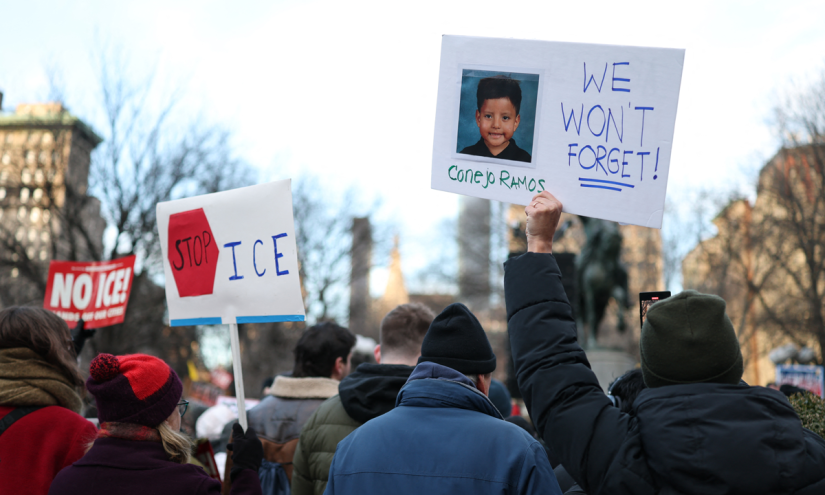
    Thousands of Minnesotans gathered in sub-zero temperatures Friday to demonstrate against the federal government’s ongoing presence, including surrounding the airport terminal and flooding the streets downtown.

    Idil Ahmed, who lives near the epicenter of raids and protests, worries about her 6-year-old autistic daughter having a meltdown during an encounter with Immigration and Customs Enforcement agents.

    “If they stop us, all hell will break loose with my child,” Ahmed said. “And there is no talking to these people.”

    Parents tell The 74 they have no faith, after federal agents ripped a disabled, autistic woman from her car and, according to school officials, used a 5-year-old as bait this week to lure his mother from their home, that immigration officials would be patient with a child who can’t immediately respond to orders.

    “When I saw that image of this young boy with his backpack, I thought, ‘That could be my son,’” said Najma Siyad, mother of a 5-year-old with autism. 

    Both Ahmed and Siyad are members of Minneapolis’ Somali community, the largest in the United States and one that has been virulently targeted for removal by President Donald Trump. 

    They are among many Somali families whose children have autism; a neurodevelopmental condition that is prevalent in their community.

    They and other Somali-Americans say their children are doubly vulnerable by virtue of their race and disability: While the first is obvious, making them a potential mark for ICE and U.S. Customs and Border Protection, the second is not. 

    They and other families with special needs kids have missed school, skipped doctor’s visits and, in many cases, are not getting the occupational, physical and speech therapy services that help their children manage their lives and progress academically.  

    Ahmed said her daughter missed three consecutive weeks of occupational therapy because her therapist was too fearful to enter their neighborhood.

    “OT for us is so important,” Ahmed said. “It regulates her emotions, helps with fine motor skills, simple things like dressing, eating, body movements, the teaching of how to be physically independent.”

    And while multiple districts are offering remote learning to families afraid to leave their homes, online instruction isn’t a viable option for children who need a team of skilled school staff to access their education. 

    “It’s not a solution for us,” said Anisa Hagi-Mohamed, founder of an autism advocacy group called Maangaar Voices. 

    Regression, both educationally and socially, is a constant concern, these parents say. But stronger still is their worry about their child coming face-to-face with a federal agent who doesn’t know — and perhaps doesn’t care — why they won’t interact. 

    A spokesman for the Department of Homeland Security, which oversees ICE and CBP, said he was working on a response as to whether agents are trained to interact with autistic children and others with disabilities. Minnesota law requires autism training for peace officers but this does not apply to ICE and CBP, Minneapolis advocates say.

    Hagi-Mohamed has three kids, a 9-year-old son and two daughters, ages 5 and 8. All are “on the autism spectrum,” and each has their own unique vulnerability, she said.

    Her middle child is nonverbal and frequently runs away to no particular destination. 

    And her son looks far older than his age. He also has difficulty responding to anyone who commands him to act. 

    “He would completely shut down, self harm and get hurt in the process,” Hagi-Mohamed said, imagining him in an ICE encounter. “I worry all the time.”

    She’s advised him not to talk to any adults outside of school or home. 

    She’s frightened, too, for her 5-year-old, who treats all grownups with the same deference as her parents. 

    “The stranger danger thing is not so strong in her,” Hagi-Mohamed said. “She is one of those kids who if you tell her to do something, she will do it.”

    These families say they have remained petrified ever since an ICE agent in Minneapolis killed unarmed motorist Renee Good on Jan. 7 just after she dropped her 6-year-old son off at school. Hours later, federal agents wreaked havoc at nearby Roosevelt High School

    Maren Christenson, executive director of the Multicultural Autism Action Network, said she lives so close to where Good was shot that she’s worried tear gas will seep through the family’s windows from the ongoing protests. 

    Maren Christenson and her son, Simon Hofer (Maren Christenson)

    Christenson’s 14-year-old son, Simon Hofer, has autism and she can’t predict how he would respond to an ICE agent. 

    The boy said he’s worried — not so much for himself, but for his friends. 

    “I have been feeling angry, scared, sad,” he told The 74 on Thursday. “It feels kind of hopeless sometimes and overwhelming. Friends of mine and classmates are afraid to go to school and so they attend online.”

    His mother has told the special education community that even if someone is Caucasian, is a citizen, has a disability and can articulate their challenges, they are not free from peril. 

    Her advice? “Comply: do what they tell you to stay safe.” 

    But she’s unsure whether that strategy would work for people with autism who can become unmoored by such an encounter. Stress might hamper their ability to communicate, she said.

    “We have held a number of community conversations and brainstormed, asking, ‘What could we do? What are people doing?’” she said. “But the truth of the matter is we are in uncharted territory. There is no guidebook, no best practices for when your city is under siege.”

    A mother of two boys with autism who lives in the southern suburbs of Minneapolis and who asked not to be named to protect her family’s safety, said her children, ages 8 and 5, are just now learning about the concept of police. 

    They cannot at all understand the complexity of immigration enforcement — or the harsh tactics that have come with it — so she’s keeping them mostly at home.

    “There is only so much I can do when I am not with them,” she said.

    Hodan, the mother of an 18-year-old college student who has autism, said her son has always had high anxiety. But now, she said, it’s worse. She’s given him a list of a dozen phone numbers to call in an emergency that he keeps in his jeans and in his shoes. 

    “He has his citizenship card in his pocket and when we drive, I make him put it on the center console,” said his mom, who asked that her last name not to be used to protect her family.

    Along with school and therapy sessions, also gone from families’ routines are winter afternoons at indoor play spaces, trips to the gym for their teenagers and other child-friendly destinations. 

    Siyad, a mother of three who lives 18 miles south of Minneapolis, close to St. Paul, said they recently took the 26-minute drive to the Minnesota Children’s Museum and had to turn around when they were three minutes away after witnessing an ICE encounter on the road. 

    “That fear is daily,” she said. “I am a naturalized citizen but I was not carrying my passport at the time. We had to turn around immediately.”

    The painful irony, she said, is that her children, like all of the others in this story, their parents said, are U.S. citizens. 

    “Our kids are as American as apple pie,” she said. “This is their home.”


    Did you use this article in your work?

    We’d love to hear how The 74’s reporting is helping educators, researchers, and policymakers. Tell us how


    Source link