

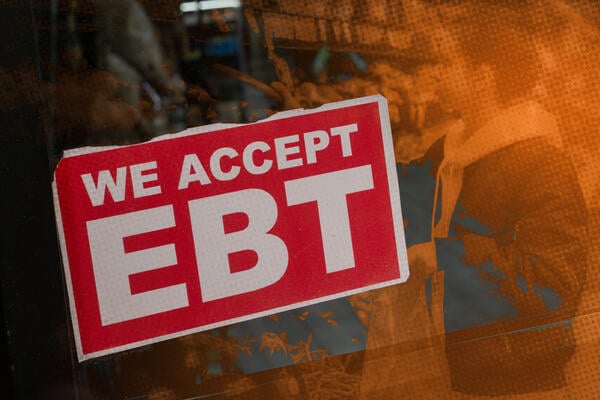
In the last week, campuses scrambled to shore up resources as 42 million Americans, including over a million college students, prepared to lose federal assistance to buy food. Payments for the Supplemental Nutrition Assistance Program, or SNAP, didn’t go out on the first of the month as they normally would amid the ongoing government shutdown.
Now the Trump administration plans to dole out some of the benefits this month—but not all—in response to two federal court orders.
In court filings Monday, the Trump administration agreed to expend emergency reserves to issue partial benefits this month, but also said the funds will only cover half of eligible households’ current benefits. And for at least some states, payments could take months to come through because of bureaucratic hurdles.
Erika Roberson, senior policy associate at the Institute for College Access and Success, said she worries students who rely on SNAP will still get less food than they need.
“Some food is not nearly enough food—especially when students are left to decide between finding their next meal and studying for an exam,” Roberson said in a statement to Inside Higher Ed. “Food should not be a luxury, but today, sadly, many college students are finding themselves in a position where that’s their reality.”
And while partial benefits are better than none at all, some questions remain unanswered. It’s unclear whether all SNAP recipients will get half of their benefits or whether some will get less than others this month, said Mark Huelsman, director of policy and advocacy at the Hope Center for Student Basic Needs at Temple University. He also expects payments to be delayed.
“I think that it still holds that campuses and food pantries and community organizations are going to be stretched pretty thin in the coming weeks,” Huelsman said, “even if the courts did the right thing here and stepped in and made sure that people’s benefits weren’t completely withheld.”
Colleges and universities across the country have been furiously stocking up their campus pantries and expanding on-campus food programs in preparation for a pause in SNAP.
Southeast Community College in Nebraska typically runs a food drive in November for the food pantries on its three campuses. But this year, the college started its drive a month early, predicting a surge of students in need. Already, the Lincoln campus’s pantry went from serving 49 students two years ago to 505 students this September, said Jennifer Snyder, communications specialist at Southeast Community College. That number is only expected to grow. The college also plans to run a fundraising campaign for its emergency scholarship fund in case more students need aid than usual.
Ramping up these supports comes with challenges, Snyder said. Campus pantries used to be able to stock up by buying items at a low price from local food banks, but food banks are holding on to more of their goods as they also prepare for increases in demand. As campus pantries become harder to fill, Snyder worries staff members will have to make difficult decisions about how much food students can take.
“The need is there, and the demand is there, but the supply just keeps dwindling,” Snyder said. “So, how do you make it even? How do you make it fair for everybody so that everybody has access?”
Snyder said the Trump administration’s promise to partially fund SNAP this month hasn’t changed the college’s plans.
“If it’s partial funding, that’s a benefit,” she said. But “you just don’t know when it’s going to be taken away, so we should plan for the worst.”
Keith Curry, president of Compton College in Los Angeles, also sprang into action when he realized his students’ SNAP benefits were at risk.
The college already offers students one free meal per day through a partnership with the nonprofit Everytable. Starting Wednesday, the college is upping the number to two free meals daily for students participating in CalFresh, the state’s SNAP program, and CalWORKs, a state benefit program for low-income families. CalWORKs students will also get $50 in grocery vouchers per week, and students in either program get an extra $20 in farmers market vouchers per week.
Compton College also has a data-sharing agreement with the Los Angeles County Department of Public Social Services that helps the college identify students who are eligible for CalFresh and CalWORKs to offer them extra supports, if students sign a waiver allowing it. The college plans to lean on that partnership to verify more students participating in these programs who are now eligible for Compton College’s new supports. The college and Everytable are splitting the costs of the additional free meals, and the college plans to reassess the political situation every Friday to determine whether the extra measures are still needed.
“We’re moving forward, because we don’t know what the impact will be to our students,” Curry said. “We don’t know how much they will actually receive. And our students need us more now than ever before. People are waiting for their benefits, and they’ve got to figure it out. Students are in a precarious position where they already have other needs.”
The Foundation for California Community Colleges expects more than 275,000 students in the system will be affected by SNAP payment delays, according to an emergency fundraising campaign launched Monday.
Grant Tingley, 41, is one of those students. He’s a student at Cypress College and an ambassador for the foundation whose job is to spread information about student food and housing resources. He’s also a SNAP recipient himself. In preparation for SNAP’s lapse, he’s been working with community organizations and other students to create a database of local food pantries and is pushing his campus food pantry to expand its hours.
Tingley emphasized that hunger makes it harder for the most vulnerable students to focus on their schoolwork. He’s also a student worker at Rising Scholars, a support program for formerly incarcerated students, students with incarcerated family members or students recovering from substance use, like himself. He fears these students in particular are at risk of losing academic momentum.
“They’re a group of people that have been beaten down repeatedly, time after time, and sometimes a small roadblock can really be a huge impediment for them going forward and continuing on their path,” he said. “Every little roadblock that we put in front of these students is almost make or break.”
Huelsman, of the Hope Center, encouraged colleges and universities to keep pushing forward plans to bolster student food supports and emergency aid as students divert funds they use for housing and other necessities to groceries. The Hope Center also put out a guide to help colleges navigate how to support students through disrupted SNAP benefits.
Even with partial benefits flowing, “every contingency plan and every preparation that institutions were making to help students weather this is still live,” he said. “Students are going to still feel a pretty severe disruption. And there’s just general confusion about what’s next.”

What is a scholarship?
A scholarship is free money that you can apply for and earn to help you pay for your higher education.
Unlike other types of financial aid (aka, loans), money that you earn from scholarships doesn’t ever need to be repaid!
While the pool of scholarship opportunities opens up significantly once you enter your junior year, there are still scholarships out there for high school sophomores to apply for!
A big benefit of starting the scholarship process as a sophomore is that, since you’re starting earlier than most, you can take your time in getting familiar with the world of scholarships (what you need to apply, where to find opportunities, how to write strong essays, etc!). This, in turn, will put you in a prime position to be a successful applicant for many of the bigger scholarships that are available for high school juniors and seniors.
In addition to this post, and the entire Access Scholarships platform (search engine, blog posts, scholarship directory), there are tons of other places and resources you can check out to help you search and apply for scholarships.
You’ll want to start by heading over to the website(s) run by your state that outline state-based financial aid and scholarship opportunities.
To learn about local opportunities, the best place to start is with your school counselor or your high school’s website. You can also find potential scholarship opportunities that are specific to you through social media (Instagram, Twitter, Facebook, even Pinterest!). You can follow hashtags on Instagram such as #TexasScholarships (if you live in Texas) so that anytime an organization posts a relevant scholarship with that hashtag, you can see it and apply if you’re interested!
One of the best ways that you can stand out through your application is through the extra requirements that you submit.
Whether it’s an essay, a video, letters of recommendation, or other additional submissions, these are all places where you will want to dedicate extra time and effort to make sure that what you’re sending in is authentically YOU, unique, eye-catching, and memorable.
If writing scholarship essays is not something you feel confident with yet, don’t worry! Our blog post How To Write A Winning Scholarship Essay will give you everything you need to get things started on the right foot. If you still need help, look into hiring a top rated scholarship essay writing services to review your entry.

The job market is the worst it’s been in over a decade, specifically for the younger generation. Gen Z’s unemployment rate is nearly double the national average and nearly 60% of recent college grads are still looking for their first job, compared to just 25% of recent college graduates in previous generations. but this all Gen Z’s fault or is there something else going on?
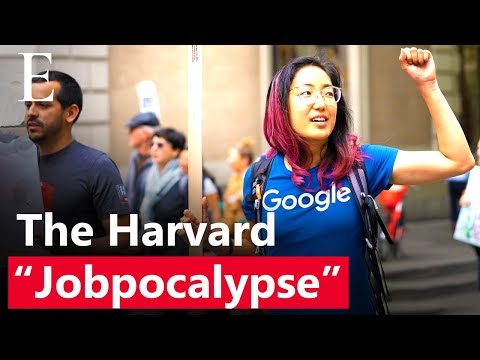
Generation Z faces a challenging labor market as unemployment among recent graduates reached 8.6% in June 2025. Entry-level jobs often demand two to three years of experience, creating a catch-22 for young workers. Stagnant starting salaries, rising living costs, and student debt averaging $33,500 per borrower add economic pressure. Companies prioritize retaining staff, while tariffs, inflation, and hiring freezes limit new opportunities. Gig work and delayed financial independence are common, with only 29% of Gen Z workers feeling engaged. Long application processes, reduced internships, and intense competition further hinder career entry, creating widespread professional anxiety and underemployment.
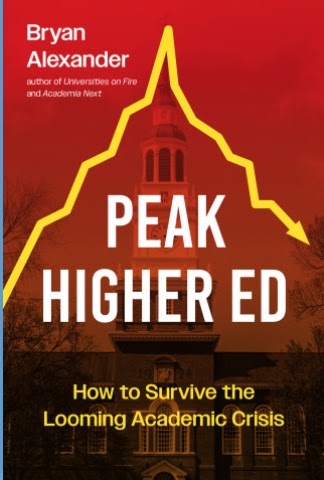
Peak Higher Ed: How to Survive the Looming Academic Crisis by Bryan Alexander debuts January 6, 2026. Here’s a synopsis.
Over the past decade, American colleges and universities have seen enrollment decline, campuses close, programs cut, faculty and staff laid off, and public confidence erode. In Peak Higher Ed, futurist Bryan Alexander forecasts what the next decade might hold if we continue down this path. He argues that the United States has passed its high-water mark for postsecondary education and now faces a critical turning point. How will higher ed institutions respond to this wave of change and crisis?
Combining data-driven research with scenario modeling, Alexander outlines a powerful framework for understanding what led to this moment: declining birthrates, surging student debt, rising tuition, shifting political winds, and growing skepticism about the value of a college degree. He maps out how these forces, if left unchecked, could continue to reshape academia by shrinking its footprint, narrowing its mission, and jeopardizing its role in addressing the planet’s most pressing challenges, from climate change to artificial intelligence. Alexander explores how institutions might adapt or recover, presenting two possible futures: a path of managed descent and a more hopeful course of reinvention.
Peak Higher Ed examines the fraying of the “college for all” consensus, the long shadow of pandemic-era disruptions, and the political polarization that has placed universities in the crosshairs. Written for educators, policymakers, students, and anyone invested in the future of higher learning, this book offers a deeply informed, unflinching look at the road ahead and the choices that will determine whether colleges and universities retreat from their peak or rise to a new one.
A record number of American students are applying to UK universities, with applications up nearly 14% over last year. The shift reflects something deeper than academic preference. It’s a response to uncertainty – political, cultural, and institutional – within the US higher education system.
Students are assessing the climate as carefully as the curriculum, and for many, overseas options are starting to look more stable, more supportive, and more aligned with their values.
For years, US institutions have concentrated on drawing international students into their classrooms and research labs. These efforts have been crucial to advancing STEM research, sustaining graduate-level enrolment, and feeding innovation pipelines. That trend continues, but the story is evolving.
An outbound shift is now underway, with a growing number of American students pursuing degrees abroad. They’re no longer just participating in short-term exchanges or postgraduate fellowships, they’re committing to full undergraduate and master’s programs in other countries.
This change matters – and it signals both a loss of tuition revenue and a weakening of domestic confidence in US higher education itself.
Global competitors are moving decisively
Universities in the UK, Canada, Australia, Germany, and the Netherlands have responded to this moment with strategy and urgency. They’ve expanded international recruitment offices, developed targeted campaigns for US students, and aligned their degree programs with global employment pathways.
Tuition transparency, faster visa timelines, and the option to work post-graduation are all part of a larger value proposition. These countries have positioned themselves as predictable, inclusive, and serious about talent retention.
When American students earn degrees abroad, they begin forming professional relationships, research collaborations, and employment ties in other countries
The messaging stands in sharp contrast to the environment many students perceive at home in the US, where they’re regrettably familiar with ongoing threats to federal research funding, campus free speech tensions, and anti-immigrant rhetoric. Legislative actions in some states, such as restrictions on DEI programs or faculty tenure, further complicate the picture for students who see higher education as a place of openness and critical inquiry.
Even where the academic offering remains strong, the broader social climate is giving students pause. Many now fear that attending university in the US could come with limitations on expression, uncertainty around institutional support, or even diminished international credibility. These concerns are pushing more prospective students, both international and domestic, to weigh their options with increasing care.
The landscape is becoming borderless
Higher education is no longer a domestically bounded experience. Today’s students are growing up in a digital-first world where comparison is constant and information is immediate. They can browse course catalogs from universities in five countries before lunch.
They’re watching lectures on TikTok from professors in London, Melbourne, and Berlin. They’re discussing housing, scholarships, and career prospects with peers on Reddit, Discord, and WhatsApp. The idea of applying to college abroad no longer feels radical or risky – it feels strategic.
At the same time, the financial argument for international study has grown stronger. In the UK and parts of Europe, undergraduate degrees often take three years instead of four. Tuition is fixed, predictable, and, in some cases, lower than the out-of-state rates at US public universities.
Students can begin building global networks immediately, with exposure to cross-cultural collaboration built into the experience. That combination of efficiency, affordability, and international orientation is hard to ignore.
Consequences will extend beyond enrollment trends
If this shift continues, the implications go well beyond enrolment figures. When American students earn degrees abroad, they begin forming professional relationships, research collaborations, and employment ties in other countries. That international experience can strengthen global literacy, which is good in theory, but it may also weaken long-term institutional connections to the US – particularly if graduates choose to live, work, and innovate elsewhere.
This becomes especially relevant in sectors where talent mobility drives economic growth. If a critical mass of globally minded US students pursue AI, climate tech, public health, or diplomacy degrees abroad and then launch their careers overseas, the domestic pipeline for advanced skills and leadership becomes harder to sustain. These are early signs of a broader trend, and we should treat them with urgency.
The same applies to the soft power of US education. For decades, American universities have served as platforms for international exchange, not only bringing foreign students in, but equipping domestic students to become global ambassadors. If that dynamic begins to fade, so does the country’s influence in shaping global norms around research, ethics, and innovation.
Prioritising stability and trust
Reversing this trend will require more than competitive admissions packages. US institutions – and the policymakers who shape their environment – must work to restore trust. That means safeguarding academic freedom, ensuring transparent financial support structures, and publicly affirming the value of international engagement.
Students are listening closely. They are attuned to leadership choices and the broader societal signals surrounding higher education. If they sense instability or retreat, they will continue to look abroad.
Universities also need to communicate more effectively with prospective students about their long-term value. That includes articulating what makes a US education distinctive, and doing so without leaning solely on prestige or nostalgia. There must be a renewed emphasis on civic purpose, global relevance, and practical opportunity. The next generation is looking for clarity, meaning, and alignment between their educational investment and the world they hope to shape.
The US can lead again, if it chooses to
The United States still possesses unmatched institutional capacity in research, innovation, and cultural reach. But influence is not a static asset. It depends on the willingness to adapt and lead with principle. The current wave of outbound student mobility should not be dismissed as an anomaly. It’s a signal. How US higher education responds – at both the institutional and national levels – will determine whether it remains a magnet for talent or becomes just one option among many.

![[Podcast] Healthy Minds, Bright Futures: How to Navigate Mental Health & Build Support](https://blog.college-counseling.com/wp-content/uploads/2025/11/Podcast-Healthy-Minds-Bright-Futures-How-to-Navigate-Mental-Health.webp)
Children’s mental health is in the spotlight like never before. Concerning data around anxiety and depression, as well as the increasing prevalence of conditions such as attention deficit hyperactivity disorder and autism spectrum disorder, are driving important discussions about supporting kids’ mental health.
In this three-part series, our expert guests address evidence-based interventions and assessments to equip clinicians with the latest tools and tactics for enhancing a child or adolescent’s well-being. We’ll assess the current landscape of student mental health and dive deeper into ADHD, ASD and co-occurring conditions, and the latest BASCTM family of solutions.
Check out the podcast episodes!
Ep. 1
ADHD diagnosis rates vary widely, and the condition itself presents many complexities. We’ll explore actionable strategies for clinicians to identify children who need additional ADHD support and how to provide the right learning environment for them, with our guest: Tyler Vassar, Ed.S., a licensed school psychologist and assessment consultant at Pearson.

Right before college students returned to campuses, the U.S. Department of Education issued new guidance designed to make it harder for college students to vote. Every school year, students receive an email with information about how to register to vote. This is because it is required in law. The Higher Education Act requires institutions of higher education to “make a good faith effort to distribute a mail voter registration form…to each student enrolled in a degree or certificate program and physically in attendance at the institution, and to make such forms widely available to students at the institution.”
Contrary to statute, the Trump Administration is now encouraging schools to limit who they send this information to – saying that if a school doesn’t send it to students who they have “reason to believe” are ineligible to vote, that’s okay. In addition to this being contrary to law, which requires all students to receive this information, this will increase the likelihood of students who are eligible not receiving information about how to register to vote (thus suppressing their votes) – and is likely to most impact students of color. The Department is also encouraging the voter registration information to include language reminding students of the list of ways that voting may be fraudulent – another tactic that may have a chilling effect on students going to the polls.
The same Department guidance prohibits students from being paid with federal work-study funds for any voting-related activities. A press release from the Department says that they are making a change to this longstanding policy because “Federal Work-Study is meant to provide students opportunities to gain real-world experience that prepares them to succeed in the workforce, not as a way to fund political activism on our college and university campuses.”
As we prepare our next generation of leaders to play a role in our democracy, in government, and in public service, it is hard to see how allowing students to participate in nonpartisan voting engagement is not aligned with experience they will benefit from in the workplace. By engaging in nonpartisan voter registration efforts using work-study positions, college students are able to increase the number of their peers who are registered to vote while learning and participating fully in our democratic system – all while earning the funds they are entitled to so that they can afford a college degree. It can’t go without saying that this restriction is also counter to statute and regulations which do not limit the types of on-campus work study positions to those that are in the “public interest,” as the guidance suggests. That limitation is only linked to off-campus work-study positions.
In a survey by CIRCLE following the 2024 elections about why young people didn’t register to vote, more than one in 10 – 12 percent – of people aged 18-34 said they did not know how to register or had problems with voter registration forms. Nearly a third of young people – 31 percent – said they were too busy, ran out of time, or missed the registration deadline. Without receiving voter registration information, in an objective way, from their college or university or their peers on campus, these numbers are likely to go up as more students will lack the information they need about voter registration.
Ensuring college students are able to vote shouldn’t be a partisan issue. In 2024, there were disparities by both gender and race in youth voter turnout. We all benefit from a democracy where everyone’s voice is heard and every vote is counted – for whomever the ballot is cast.
_________
Amanda Fuchs Miller is president of Seventh Street Strategies and former Deputy Assistant Secretary for Higher Education Programs at the U.S. Department of Education in the Biden-Harris Administration.
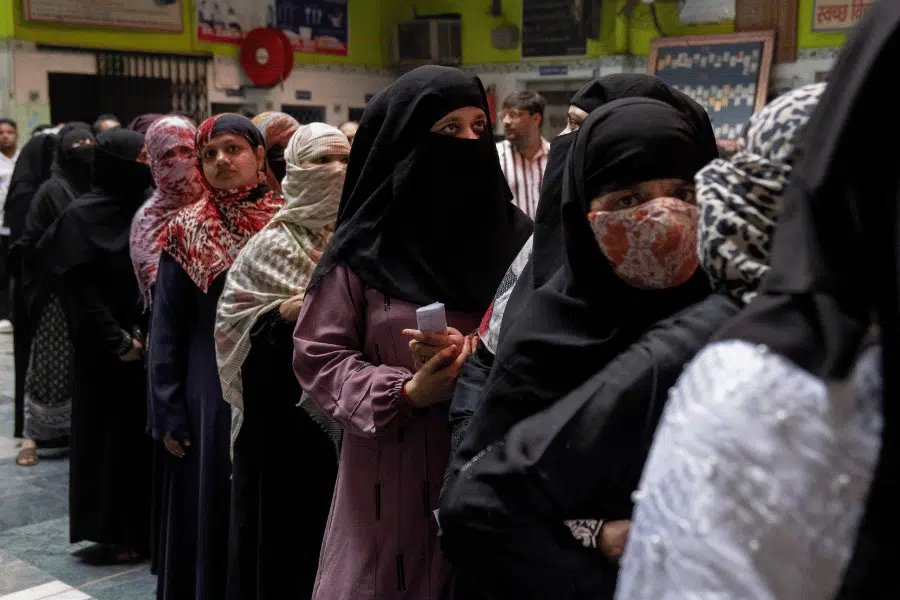
Sidra Khan is a young Muslim woman in India who aspires to be a lawyer. Since early childhood, she has valued and respected Islam, the religion she was born into. But her headscarf now meets eagle eyes when she travels on public transport or tries to make a point during college lectures.
She feels that anti-Muslim rhetoric in India is causing her peers to judge her on the basis of religion and not merit. This, many Muslim students like Khan feel, is a casualty of having the government of Prime Minister Narendra Modi rule India.
Over the last decade, the government of this secular country long considered the world’s largest democracy has introduced religious-based laws and politicians have incited anger and hatred against those who aren’t Hindu through rhetoric in speeches and AI campaigns. In northeast India’s Assam state, Wajid Alam, a college history student, watched a new election video from the ruling Bharatiya Janata Party with unease.
An AI generated video shared by BJP’s official social media handles suggested that if the BJP loses power, Assam would be overrun by Muslims. It used AI-generated imagery to depict Muslims in hijabs and skull caps allegedly taking over airports, stadiums, tea gardens and other public spaces.
It concluded with a message claiming Muslims could grow to 90% of Assam’s population, provoking other religious groups to choose the BJP to get rid of Muslims.
For Alam and millions of Muslims in Assam, the video felt like an attack. And it is not the first time the BJP has been accused of demonizing religious minorities. Under Prime Minister Narendra Modi, India — a country founded on principles of secularism and religious freedom — has seen growing hostility toward Muslims and Christians.
Some 200 million people in India practice the Muslim faith, making it the world’s third largest population of Muslims.
Modi became India’s 14th prime minister in May 2014. Not long after, reports of attacks on religious minorities began to climb. In June 2014, Mohsin Shaikh, a young Muslim IT worker in Pune, was beaten to death by Hindu extremists — the first of several lynchings that followed.
A year later, in 2015, a Hindu mob in Dadri, Uttar Pradesh, killed Mohammad Akhlaq on suspicion of eating beef — considered a serious offense in the Hindu religion. That made global headlines and signalled the rise of cow-protection vigilantism.
By 2016–17, assaults on Muslims accused of trading or transporting cattle spread across northern India, with cases like the lynching of dairy farmer Pehlu Khan in Rajasthan. Christians, too, came under pressure during this period: nationalist groups staged forced reconversion campaigns, disrupted prayer meetings, vandalized churches and invoked new anti-conversion laws to arrest pastors and worshippers.
Together, these incidents marked the early years of the Modi era as a turning point, when both Muslims and Christians began to face growing hostility in daily life.
At the same time, hostile rhetoric against minorities became increasingly common in election campaigns. BJP leaders and affiliated Hindu nationalist groups framed Muslims as “outsiders” or “invaders,” with speeches warning of demographic “takeovers” or linking entire communities to terrorism and cow slaughter.
Christians were accused of running covert “conversion factories,” with pastors painted as threats to India’s cultural identity. These narratives — echoed at rallies, on television debates and, more recently, through AI-generated propaganda — blurred the line between campaign messaging and hate speech. For many analysts, this marked a shift: politics was no longer just influenced by religion, but actively weaponizing it to polarize voters.
These speeches were not isolated slips but part of a larger pattern. Muslims were painted as “infiltrators,” “termites” or participants in a supposed “love jihad” plot to convert Hindu women, while Christians were accused of running “conversion factories” and threatening India’s culture.
Senior BJP figures, including party president Amit Shah and Uttar Pradesh Chief Minister Yogi Adityanath, used such language at rallies to mobilize support. Over time, this messaging blurred into mainstream political discourse, normalizing suspicion and hostility toward entire communities.
India’s experience is part of a wider global pattern. Around the world, political movements are blending nationalism and religion to define who “belongs.” A recent Pew Research Center study found that while the United States ranks lower than many countries on overall religious nationalism, it stands out among wealthy democracies for how many adults say the Bible should influence national laws or that being Christian is essential to being truly American.
In the United States, debates over Christian nationalism have become a powerful current within the Republican Party and Donald Trump’s political rhetoric.
Trump and allied evangelical leaders increasingly frame America as a “Christian nation,” a message that blurs the line between faith and state power. Commentators warn that this effort to link patriotism with religion mirrors broader global trends — from India to Israel to Turkey — where religious identity is being harnessed for political gain.
Both the U.S. and Indian constitutions enshrine secularism, which is the idea that the state would keep equal distance from all religions. In India’s case, that principle mattered in a country where Hindus form the majority but millions of Muslims, Christians, Sikhs and Buddhists also call the nation home.
Even before Modi, religion and politics were sometimes entwined: the Congress Party drew on Hindu symbolism, the 1984 anti-Sikh riots scarred the country and the destruction of the Babri mosque in 1992 shook faith in secularism. Still, the political consensus was that India was not to be defined by one faith.
“But a lot has changed under Modi and the BJP,” said Sneha Lal, a Hindu student studying to become a primary school teacher. “We did not grow up in this India.”
Lal is bothered by some of the BJP’s tactics that have promoted anti-conversion laws in several states, laws often used against Christians and Muslims accused of proselytizing.
In 2019, the Citizenship Amendment Act introduced fast-track citizenship for non-Muslim refugees, a move widely criticized as discriminatory toward Muslims. That same year, Delhi revoked the autonomy of Jammu and Kashmir, India’s only Muslim-majority state. Alongside these legal changes, election campaigns have increasingly featured polarizing rhetoric, and propaganda — including AI-generated videos — has circulated warning of demographic “takeovers.”
Critics say these policies and messages together mark a break from India’s founding secular vision, pushing the country toward a Hindu-first identity.
Seema Chishti, a senior journalist who has witnessed India’s journey from secular to right-wing, said that mixing religion with politics and diluting India’s unified national identity across religious and ethnic groups is a stated core principle of the ruling party, based on its militant roots.
“The Indian Constitution recognises no barriers to being Indian, i.e. nationality is not contingent on faith, caste, region, creed, gender or political views,” Chishti said. “BJP has loudly proclaimed ‘Hindu-India’ and instilled ‘Hindu’ nationalism in politics, education, the armed forces and every other facet of Indian life.”
An example of Modi’s attempt to link Indian-ness with Hinduism is the Citizenship Amendment Act of 2019 which fast-tracks Indian citizenship for non-Muslims from three neighbours: Pakistan, Bangladesh and Afghanistan. “This action echoes ideas of India being a Hindu homeland,” Chishti said.
On 15 August 2025, on India’s 79th Independence Day, Modi addressed crowds gathered at Delhi’s historical Red Fort, as he did the last 11 years that he has been in power.
On a day which commemorates India’s long struggle for self-rule that culminated in self-governance and independence from the British empire, Modi referred to the right-wing paramilitary organization Rashtriya Swayamsevak Sangh or RSS as a philanthropic organization. RSS has espoused an India for Hindus only.
All this has had tragic consequences. On 25 September, a seven-year-old Muslim boy was abducted from his neighborhood and brutally murdered in northern India’s Azamgarh.
But religious hate crimes haven’t only targeted Muslims. On 11 June, a mob allegedly linked to Hindu extremist groups attacked guests at a Christian wedding and set fire to a utility vehicle. And on 25 July, two Catholic nuns were arrested in central India’s Chhattisgarh state following a complaint by a member of an extremist Hindu group.
India’s United Christian Forum reported that in 2024, Christians across the country witnessed 834 such incidents, up 100 incidents from 734 in 2023 — that comes out to more than two Christians being targeted every day in India simply for practising their faith.
These incidents of attacks and even public hate speeches against Christians are not limited to vandalism, they extend to physical assaults, disruption of prayer gatherings, financial boycotts and even motivated arrests.
This anti-Christian sentiment has been fanned by Hindu extremist groups in the country, which are indirectly and sometimes directly backed by the ruling BJP and other Hindu nationalist groups. These groups are increasingly using anti-conversion laws created in the Modi era to harass Christians.
Arun Pannalal, president of the Chhattisgarh Christian Forum, said that two things are happening: Lawlessness of mobs who target Christians is ignored by police, while Christians often find themselves subject to seemingly random arrests.
“On random calls by Bajrang Dal goons the Police arrested the nuns, without evidence of anything,” Pannalal said. “But when the nuns wanted to complain against the goons, it was not lodged.”
Chishti said that more than politicising religion, by inserting religion into politics, the BJP is trying to portray itself as the only ‘Hindu’ party and the others consequently as not. She maintains that the BJP has fought elections on issues that polarise Indians, divide them and not on its performance or electoral record. Its electoral dominance has also meant that other parties in the fray, the opposition too find themselves playing on the BJP’s turf.
“The BJP has done its best to make the political discourse about faith, symbols of religion — Hindu and Muslim — and portraying themselves as saviours of the Hindu faith and righting so-called historical wrongs,” Chishti said.
As a result, the media focuses on the religious conflicts, instead of other pressing issues, such as the economic well-being of people, the public health or education systems, joblessness and inflation, Chishti said.
As India heads toward future elections, the blending of religion and politics raises questions not just for its own democracy but for others around the world. For young people in India, the stakes are immediate: whether their country remains true to its founding promise of secularism and equal rights.
But for readers everywhere, India’s story is part of a larger global trend from the United States to Turkey to Israel, where religion and nationalism intertwine to shape politics. Understanding how these forces play out in the world’s largest democracy can help us make sense of how faith and power continue to influence politics across the globe.
India’s struggle shows that when religion becomes a political weapon, democracy itself can become the battleground.
1. How is freedom of religion protected in India?
2. In what ways are Muslims being treated differently by the Modi administration?
3. In what ways to you feel comfortable or uncomfortable in your community expressing your faith?
