This audio is auto-generated. Please let us know if you have feedback.
Dive Brief:
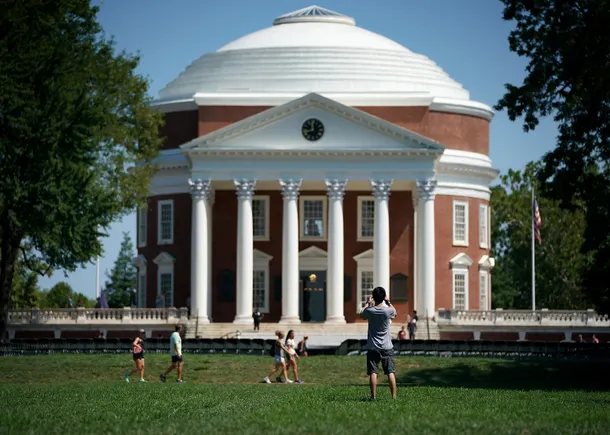
Two Democratic leaders in the Virginia Legislature are questioning the legality of the University of Virginia’s recent deal with the U.S. Department of Justiceand calling for an independent review of its constitutionality.
In an eight-page letterthis week,state Sens. Scott Surovell and L. Louise Lucassaid the agreement“directly conflicts with state law, commits the University to eliminate legislatively mandated programs, subjects the University President to personal certification requirements and potentially places UVA in violation of its statutory obligations.”
The pair requested UVA Interim President Paul Mahoneyand Rachel Sheridan, the head of UVA’s board,to formally respond by Nov. 7. UVA did not immediately respond to questions Thursday.
Dive Insight:
On Oct. 22, Mahoneysigned a four-page agreement with the DOJ to eventually close five investigations into UVA. In exchange, the public university agreed to adhere to the DOJ’s sweeping July guidance against diversity, equity and inclusion efforts and provide the agency with quarterly compliance reports.
In their letter, Surovell and Lucas lambasted Mahoney and Sheridan for “a fundamental breach of the governance relationship” between the university and the state.
“This agreement was disturbingly executed with zero consultation with the General Assembly, despite the fact that the General Assembly controls the University and provides the bulk of its government funding,” they said, arguing the lack of legislative involvement could violate state statute.
When announcing the deal, UVA said Mahoney struck the deal with input from the university’s governing board, whose members were “kept apprised of the negotiations and briefed on the final terms before signature.”Since the agreement doesn’t include a financial penalty, it did not require a formal vote from the board, the university said in an FAQ.
Along with the board, Mahoney has said he struck the deal with input from the university’s leadership and internal and external legal counsel.
Surovell and Lucas questioned if Jason Miyares, Virginia’s Republican Attorney General and an ally of President Donald Trump, had counseled the university about the deal.
Miyares — who fired UVA’s longtime legal counsel upon taking office in 2022 — is up for reelection in November with Trump’s endorsement, a backing Lucas and Surovell cast as an “inherent conflict of interest.”
It is unclear, they said, if Virginia’s top lawyer is “competent and capable of providing truly independent legal advice to Virginia’s public universities in this area of the law.”
Virginia public colleges “need legal counsel who will zealously defend state sovereignty and institutional autonomy — not counsel whose political fortunes are tied to the very administration applying the pressure,” they said.
The two lawmakers, along with Democratic state Sen. Mamie Locke, previously threatened UVA’s state funding if the university agreed to the Trump administration’s separate higher education compact, which offered preferential access to grant funding in exchange for unprecedented federal oversight. UVA turned it down five days before announcing its deal with the DOJ.
Lucas and Surovell aren’t the only Virginia legislators to question the integrity of the UVA-DOJ deal. State Del. Katrina Callsenand Sen. R. Creigh Deeds, Democrats who represent UVA’s district, condemned it as subjecting the university “to unprecedented federal control.”
In an Oct. 23 letter, the pair told Mahoney and the boardthat their approval of the agreement calls “into grave question your ability to adequately protect the interests and resources entrusted to you by the Virginia General Assembly.”
“Your actions fail to leave the University free and unafraid to combat that which is untrue or in error,” they said. “By agreeing to these terms, UVA risks betraying the very principles you espouse in your letter: academic freedom, ideological diversity, and free expression.”
Callsen and Deeds called on UVA leadership to reverse the deal and “reject further federal interference.”
When asked on Thursday if Mahoney or the board had responded, Deed’s office referred to a story published by The Cavalier Daily, the university’s independent student newspaper.
In a letter shared with The Daily, Mahoney and Sheridan said that they “respectfully disagree” with Deeds and Callsen’s assessment, adding that the deal is the “culmination of months of engagement” with the DOJ and other federal agencies over multiple civil rights investigations.
They also said the institution’s deal with the federal government differs significantly from the “lengthy lists of specific obligations” agreed to by Columbia and Brown universities.
“Our agreement is different — if the United States believes we are not in compliance, its only remedy is to terminate the agreement,” they said.
This audio is auto-generated. Please let us know if you have feedback.
Dive Brief:
The U.S. Department of Education on Thursdayreleased final regulations that will bar organizations the agency deems as having a “substantial illegal purpose”from being a qualifying employer for the Public Service Loan Forgivenessprogram.
The Trump administration’s new rule will exclude organizations from the PSLF program that it determines to be“supporting terrorism and aiding and abetting illegal immigration,” among other activities, according to Thursday’s announcement.
Several advocacy groups immediately vowed to challenge the rule in court. They and other opponents argue the agency is politicizing the PSLF program and will use the new rule to remove organizations with goals not aligned with the Trump administration, such as providing gender-affirming care or supporting undocumented immigrants.
Dive Insight:
Congress created the PSLF program in 2007 to allow college graduates who work for government employers, including school districts, and certain nonprofits to receive debt relief on their student loans after making a decade of qualifying payments.
Many borrowers initially struggled to get relief through the program due to confusing eligibility requirements and loan servicer issues. As of April 2018, for example, just 55 workers had received debt relief through PSLF, according to a report that year from the U.S. Government Accountability Office.
To address the problems, the Biden administration eased some of the program’s requirements in October 2022 for one year.The administration also released regulations that expanded which loan payments counted toward PSLF beginning in 2023.
By October 2024, over 1 million workers had received relief through the program during the Biden administration, the White House said at the time.
But in a March executive order directing the Education Department to change PSLF’s eligibility requirements, President Donald Trump accused the prior administration of abusing the program by relaxing its requirements. Trump also contended that the program sent tax dollars to “activist organizations”that harm national security and undermine American values.
The Education Department’s final rule, which takes effect July 2026, is meant to carry out the executive order.It will bar organizations from the PSLF program if the Education Department determines they illegally:
Aided and abetted violations of federal immigration law.
Aided and abetted illegal discrimination.
Supported terrorism or engaged in violence “for the purpose of obstructing or influencing Federal Government policy.”
Engaged in “chemical and surgical castration or mutilation of children” — a common conservative description of providing gender-affirming care for transgender minors.
Engage in the “trafficking of children” across state lines to emancipate them from their parents.
Have a pattern of violating state laws.
The U.S. education secretary will determine whether employers have a “substantial illegal purpose” based on “a preponderance of the evidence,” which can include final federal or state court rulings or settlements in which organizations admit they engaged in illegal activities, according to an agency fact sheet.
Employers who are notified of such a finding will have an opportunity to respond and appeal.
They will also be able to “enter into a corrective action plan” with the Education Department to avoid being blocked from the program, according to an agency fact sheet. However, if they lose access to PSLF, they will only be able to reapply after 10 years.
If an organization is blocked from the program, loan payments made by its employees will still count toward their PSLF’s 10-year clock until the Education Department’s finding takes effect, according to a fact sheet.
“However, any payment made after an employer is deemed no longer eligible for PSLF will not be counted toward the number of payments to forgiveness,” the department said in the 185-page final rule, set to be published on Friday.“This approach ensures that workers who have served in good faith are not punished, while also protecting taxpayers by preventing benefits from flowing to unlawful conduct in the future.”
Student advocacy and nonprofit groups have decried the new rule.
Aaron Ament, president of the National Student Legal Defense Network, vowed in a Thursday statement to sue in the next few days.
“Instead of supporting first responders, healthcare workers, and teachers working to make our country a better place, the Trump Administration is punishing public servants for their employers’ perceived political views,” Ament said.
Democracy Forward and Protect Borrowers, two other advocacy groups, likewise said they would challenge the rule in court. In a joint statement Thursday, they said the rule would allow the Education Department to target organizations that support immigrants, provide gender-affirming care and protect the free speech rights of protesters.
“This new rule is a craven attempt to usurp the legislature’s authority in an unconstitutional power grab aimed at punishing people with political views different than the Administration’s,” they said.
A Practical Framework for Admissions Leaders to Reach More Students, More Meaningfully
College fairs and high school visits have long been the bread and butter of admissions outreach. But are they still relevant in a digital age saturated with webinars, virtual tours, and TikTok campus tours?
The answer is a resounding yes! The 2025 E-Expectations survey of college-bound high school students shows they rate these experiences as helpful and impactful, with fairs standing out as one of the most widely used resources in the college search (RNL, Halda, & ModernCampus, 2025).
Here is the catch: just showing up is not enough. The latest research tells us that the true impact of fairs and visits depends on how thoughtfully they are designed, where institutions decide to spend their travel dollars, and, maybe most importantly, whether the students and families who need access the most are actually being reached (Huerta, 2020; Institute for Higher Education Policy [IHEP], 2021).
This blog brings together three key perspectives, each offering a piece of the puzzle:
The student voice: What the latest E-Expectations data reveals about how students use and value fairs and visits.
Practice-level insights: What enrollment professionals and researchers like Huerta (2020) have learned about structuring these events so they support, rather than overwhelm, students.
Policy and systems view: How institutional budgets, recruitment, travel, and school selection practices shape which communities are included, or left out (IHEP, 2021; Niche, 2023).
By weaving these perspectives together, my goal is simple: to offer admissions leaders a practical framework, a clear and actionable checklist, for designing and delivering college fairs and high school visits that truly serve the full range of students and families you want to reach.
What students say about fairs and visits
In the 2025 E-Expectations survey, 80% of respondents attended a college fair, and 85% of those found it helpful (RNL, Halda, & ModernCampus, 2025). Helpfulness peaks in 10th grade but stays strong from 9th (82%) through 12th (85%). First-generation students also find fairs helpful (86%).
High school visits tell a similar story. Niche (2023) reports that over 70% of students say meeting an admissions representative at their school influenced their decision to consider a college. Campus visits are even more powerful: 85% said a visit nudged them to apply or enroll. The message is clear: students want in-person engagement even in the digital age.
However, college recruiters visit suburban and affluent schools more often, leaving rural, urban, and first-generation students with fewer recruiter visits (Niche, 2023). If your travel schedule seems stuck on the same comfortable zip codes year after year, you are seeing this problem play out firsthand. The right students are not always getting the right opportunities.
Reimagining college fairs for equity
College fairs and campus visits are only helpful when they reach the students who actually need them. Huerta (2020) does not sugarcoat the gaps: “traditional college fairs often disproportionately serve White and affluent students, while low-income, first-generation, and students of color are left out of these critical opportunities for exposure and access” (p. 3).
How can fairs and visits have a greater impact? Preparation is everything, especially for first-generation students. The right support before the fair can make all the difference. Huerta (2020) says it plainly: “Pre-fair activities such as setting up professional emails, preparing questions, or even taking short career tests equip students to maximize the limited time they have with recruiters” (p. 5). With a plan, the fair is less overwhelming and more empowering.
What about addressing affordability questions during these activities? Huerta (2020) is clear: “Workshops on financial aid, scholarships, and affordability should be at the center of college fair programming, not optional add-ons” (p. 6). Put cost and aid front and center, and you not only build trust, you tackle one of the biggest barriers families face. If you have ever watched a parent’s shoulders relax after a frank talk about financial aid, you know this is not just theory—it is practical, high-impact work.
Now picture a fair that feels like a true community event, a place where everyone belongs. Huerta (2020) recommends an equity checklist: multilingual resources, childcare, transportation, and intentional outreach. Suddenly, the fair is not just another recruitment event; it is a space where families actually feel welcome (p. 7). You are not just handing out brochures, you are opening doors.
Enrollment and admissions implications
Go beyond the usual feeder and affluent schools and make a conscious effort to reach overlooked students.
Prepare students and families with guides and resources before the visit.
Strengthen access with multilingual support, childcare, and transportation options.
Measure success by engagement of underserved groups of students, not just attendance.
Rethinking recruitment policies through the institutional lens
Zooming out, let us talk about how big-picture policies and budgets shape everything from your team’s travel routes to who gets a seat at the table.
Travel budgets shape access
Recruitment travel is costly and eats up a large chunk of resources. Public institutions report spending a median of $536 per recruited student and close to $600,000 a year on enrollment management vendors (IHEP, 2021). Almost one-fifth of recruitment budgets go toward travel for high school visits and college fairs (p. 9). Every travel dollar is a map, deciding which schools and communities get face time with colleges.
Over-investment in feeder and affluent schools
IHEP (2021) does not mince words: colleges target suburban and affluent schools, reinforcing privilege, while rural, low-income, Black, Latinx, Indigenous, and AAPI students are left seeing fewer recruiters (p. 11). Nearly nine million students live in rural areas, but cost and assumptions about mobility keep colleges away (IHEP, 2021, p. 11). If you have ever skipped a rural or urban school because “it is too far” or “students from there do not enroll anyway,” you are not alone, but the pattern has real consequences.
The “iron triangle” of prestige, revenue, and access
IHEP (2021) calls the balancing of academic profile, revenue, and access the “iron triangle” of recruitment. Too often, access gets squeezed out by prestige or dollars. One example? The out-of-state recruitment push for higher tuition, which can crowd out in-state, low-income, and racially diverse students—the very populations public institutions were built to serve (IHEP, 2021, p. 10). There is a real tension here: the pressure to chase rankings and revenue versus the public mission to expand access.
Enrollment and admissions implications
Audit travel strategies so you don’t overlook rural, urban, and high first-generation schools. Resist the urge to chase rankings or revenue at the cost of access. Measure equity ROI to look at who you reached and not just enrollment numbers. Honor the public mission—for public institutions, especially, recruitment travel should put in-state, underrepresented, and transfer students first.
The “Comprehensive Equity Checklist” for college fairs and high school visits
(Adapted from Huerta, 2020; IHEP, 2021; Niche, 2023)
If you are looking for a place to start, here is a checklist you can use to make sure your next fair or visit is as equitable and impactful as possible:
Access and Inclusion
Provide multilingual materials (flyers, signage, applications, financial aid guides).
Offer live interpretation services for families with limited English proficiency.
Ensure transportation options (buses, metro passes, shuttles) for students and families.
Provide childcare or family-friendly spaces so parents and guardians can attend.
Make fairs and visits physically accessible (ADA-compliant venues, inclusive spaces).
Student and Family Preparation
Equip students with pre-fair tools: professional email setup, question prompts, résumé templates, and career interest surveys.
Offer prep sessions for families on navigating fairs, admissions language, and understanding financial aid.
Provide clear expectations before high school visits (e.g., topics covered, documents to bring).
Financial Aid and Affordability Resources
Make financial aid and scholarship workshops central, not optional, at fairs.
Ensure recruiters can clearly explain the cost of attendance, aid packages, scholarships, and ROI.
Share state aid and local scholarship resources during visits.
Provide simple, multilingual financial aid guides for families to take home.
Recruiter Diversity and Training
Send representatives who reflect racial, ethnic, and linguistic diversity.
Train recruiters in cultural competency, equity, and family engagement strategies.
Encourage authentic, student-centered conversations rather than scripted pitches.
Pair senior admissions leaders with feeder schools while ensuring new schools also receive attention.
Event and Visit Design
Avoid overwhelming “information overload” by structuring fairs with breakout sessions (e.g., Paying for College 101, Essay Writing Tips, Navigating Campus Visits).
Set up reflection areas where students can take notes and debrief.
Schedule visits that reach all grade levels, not just seniors, to build early awareness (9th–10th grade especially).
Balance large-scale fairs with smaller, targeted events for first-generation and underserved students.
Travel Strategy and School Selection
Audit recruitment travel annually: which schools are visited and which are left out (rural, urban, high first-generation, under-resourced)?
Intentionally expand beyond feeder and affluent schools to reach underserved communities.
Balance in-state versus out-of-state recruitment to honor institutional missions and equity commitments.
Use hybrid and virtual visits to reach schools where travel is limited.
Data, Metrics and Accountability
Collect and analyze participation data disaggregated by race, income, geography, and first-generation status.
Track equity ROI: not just attendance numbers, but who was reached and how engagement expanded access.
Report back annually to leadership with both quantitative metrics (schools visited, demographics reached) and qualitative feedback (student and counselor satisfaction).
Equitable recruitment means more than showing up. It requires intentional design, inclusive practices, and accountability. This checklist can help you ensure that your fairs and visits open doors, instead of reinforcing barriers.
The bottom line: Opportunity by design
College fairs and high school visits remain powerful entry points for students exploring higher education. The data is clear: students find them helpful, and when done well, these moments spark interest, build trust, and create momentum in the college search process. But as the research shows, the true impact depends on how these events are implemented and who gets to participate. Fairs that overwhelm students or focus only on affluent schools, and travel that bypasses rural or first-generation communities, risk narrowing opportunity rather than expanding it.
Admissions leaders hold both the keys and the responsibility to change this. Rethink what success looks like. Expand your travel map beyond traditional feeder schools. Center on affordability and preparation on every visit. Use a comprehensive checklist to plan. If you do, you will reach more students, more meaningfully. Measure the value of college fairs and high school visits by the quality of the student and family experience, the strength of your partnerships with counselors, and the breadth of the communities you serve. In doing so, you will not just make the most of fairs and visits, you will reaffirm your mission to open doors of opportunity for every student who is ready to walk through them.
Talk with our marketing and recruitment experts
RNL works with colleges and universities across the country to ensure their marketing and recruitment efforts are optimized and aligned with how student search for colleges. Reach out today for a complimentary consultation to discuss:
This audio is auto-generated. Please let us know if you have feedback.
Dive Brief:
The education sector saw 180 ransomware attacks worldwide in the first three quarters of the year — a 6% year-over-year increase from the 170 attacks recorded in 2024, according to Comparitech data released Thursday. The findings include both confirmed and unconfirmed attacks.
Most of the 2025 ransomware attacks — 95 out of 180 — were in the U.S. Some 35 of those 95 attacks have been confirmed by the targeted schools so far. The number of confirmed attacks is expected to climb in the coming months, as breaches are often reported some time after an attack.
Still, the past two quarters marked the first dip in attacks since the start of 2024, which could indicate “a more positive outlook for the education sector,” according to the cybersecurity and online privacy product review website.
Dive Insight:
The ransom demand across all 180 attacks globally averaged $444,400.
“This definitely isn’t the time to get complacent,” said Rebecca Moody, head of data research at Comparitech, in an email to K-12 Dive on Thursday. “These attacks, and their subsequent breaches, remain a dominant threat. That’s why it’s imperative schools and colleges of all sizes take key steps to try and mitigate their risks.”
Many of the confirmed attacks resulted in systems going offline, leading to network disruptions and classes being cancelled for days or weeks. The incidents led to stolen data more often than not, with an average of 2.6 terabytes worth of data stolen per attack.
In South Carolina’s Cherokee County School District, for example, a confirmed March attack affected systems for around a week and resulted in 624 gigabytes of data allegedly stolen. Last month, the school district reported that data from 46,000 peoplewas impacted.
To prevent ransomware attacks, Moody said schools should keep systems up to date, patch vulnerabilities as soon as they’re flagged, and conduct regular cybersecurity training for employees.
“A worst-case scenario plan should also be in place because, as gangs continue to exploit vulnerabilities via third parties, even schools with the best cybersecurity standards can be left vulnerable if the third parties they’re working with are targeted,” said Moody.
Likewise, cybersecurity experts suggest that school districts implement phishing tests, establish a backup network and tap into state and federal support such as cybersecurity advisors to prevent and respond to ransomware attacks.
Phishing, which often seeks to trick staff into revealing login credentials, can target high-profile employees more often than others, such as those working in human resources, business, the superintendency and other administrative roles with access to sensitive data.
This audio is auto-generated. Please let us know if you have feedback.
Dive Brief:
A prolonged federal government shutdown is causing some school systems and government agencies to provide outreach and extra supports for low-income families and children affected by the likely expiration of benefits.
Advocates for low-income families are warning that childhood hunger will increase when funding expires Nov. 1 for the Supplemental Nutrition Assistance Program — the nation’s largest federal food assistance program.
While SNAP benefits are of immediate concern, some school systems, advocates and policymakers also said they are worried about the long-term sustainability of free-or reduced-price school lunch programs, as well as access to Head Start services if the shutdown isn’t resolved soon.
Dive Insight:
About 39% of SNAP recipients are children under the age of 18, according to the National Education Policy Center.
The National School Boards Association is “deeply concerned” that more children will go hungry with the suspension of SNAP benefits, said Verjeana McCotter-Jacobs, the group’s executive director and CEO, in a Thursday statement.
“Schools are doing everything they can to provide safe, stable environments where students can learn and thrive — but they cannot do it alone,” McCotter-Jacobs said.
The federal government shutdown began Oct. 1 when Congress could not agree on a fiscal year 2026 budget. While most daily school operations were not expected to be impacted by a short-term government closure, the longer the shutdown lasts, the more impacts to school services there could be, according to K-12 organizations.
During the shutdown, federal agencies have furloughed staff, hampering federal assistance to states and districts. At the U.S. Department of Education, about 95% of the non-Federal Student Aid staff were furloughed during the first week of the closure, according to the agency’s shutdown contingency plan from Sept. 28.
The U.S. Department of Agriculture, which administers SNAP and the National School Lunch Program, said in an Oct. 1 memo to regional and state directors of Child Nutrition Programs that funding for the school lunch program would be available at least through October.
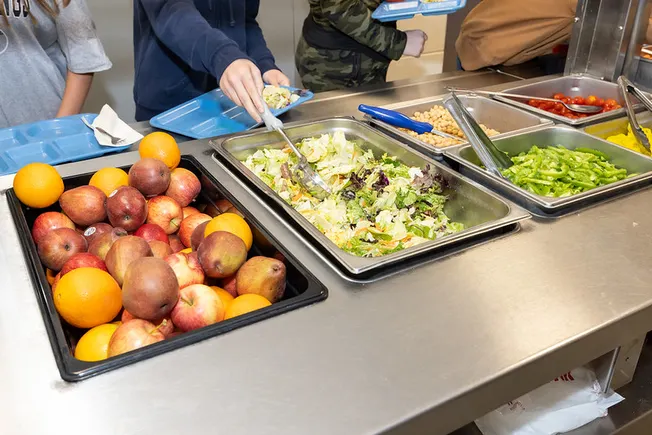
Even though SNAP is used as a proxy for school meal eligibility, the School Nutrition Association said the expiration of SNAP benefits will not affect children’s eligibility for free and reduced-price school meals.
The association is, however, encouraging its members to plan for increased participation among children whose families lose their SNAP benefits and to look into community-based support for struggling families, said SNA spokesperson Diane Pratt-Heavner.
According to Pratt-Heavner and an FAQ updated by SNA on Oct. 27, several states reported having inadequate funding to cover school nutrition programs in October early during the shutdown and said reimbursements to districts could be delayed should the shutdown extend beyond Nov. 1.
Pratt Heavner said since then, SNA has been hearing from state agencies that their issues were addressed. Additionally, in an Oct. 24 memo, USDA said it had transferred funds to the Child Nutrition Program to carry out the National School Lunch Program and other activities, according to SNA.
School meals served in October are reimbursed by USDA in November and the November meals are reimbursed in December, according to Pratt-Heavner. SNA is continuing to monitor the situation, Pratt-Heavner said.
In Maryland, an Oct. 9 letter to districts from State Superintendent of Schools Carey Wright said that if the federal government shutdown continued through November, the state education department would seek state approval to reimburse claims for November. If the shutdown goes into December, districts may be asked to rely on available food service fund balances to support the programs until the shutdown ends, the letter said.
This week, 25 states and the District of Columbia sued the USDA claiming the agency unlawfully suspended SNAP benefits for November during the government shutdown, according to reporting by Grocery Dive.
Meanwhile, Head Start advocates are sounding alarms that more than 65,000 children in 41 states and Puerto Rico will lose access to the early childhood program for youngsters from low-income families starting Nov. 1 due to the funding impasse.
The National Head Start Association is calling on Congress to resolve the budget debate now. “With each passing day of the shutdown, families are pushed closer to crisis,” said Yasmina Vinci, NHSA’s executive director, in an Oct. 27 statement.
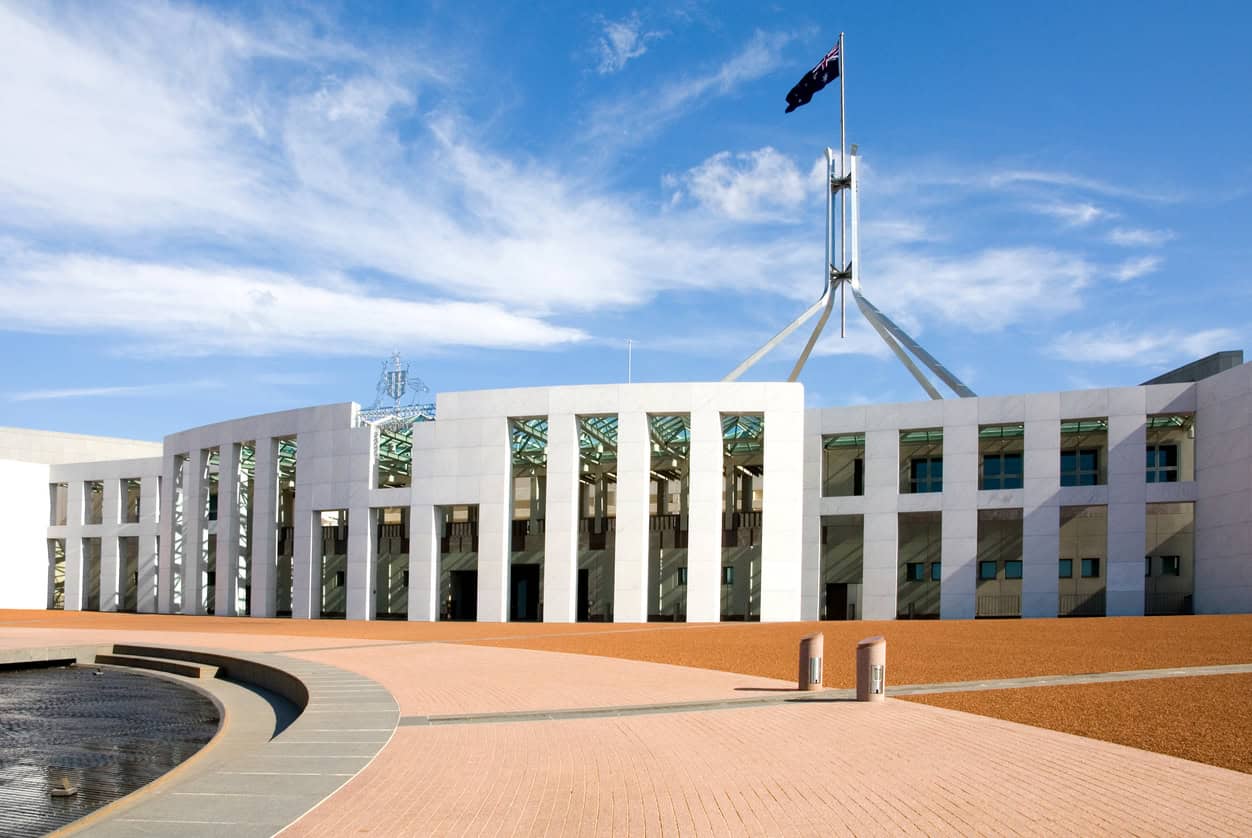
Australia’s Education Legislation Amendment (Integrity and Other Measures) Bill 2025 has cleared its second reading in the House and will progress without amendment.
Following the government’s unsuccessful attempt in 2024 to pass reforms through a previous ESOS amendment Bill, minister for education Jason Clare has reintroduced legislation aimed at “strengthening the integrity of the international education sector”.
Speaking in parliament on October 29, Clare said the Bill will make it “harder for bad operators to enter or remain in the sector, while also supporting the majority of providers, who do the right thing”.
“These changes safeguard our reputation as a world leader in education, both here and overseas,” he added.
Assistant minister for international education Julian Hill addressed some of the key points of debate in the sector regarding the Bill, including changes that relate to education agents.
The Bill is set to tighten oversight of education agents by broadening the legal definition of who qualifies as an agent and introducing new transparency requirements around commissions and payments.
Hill claimed this increased transparency will help providers “identify reputable agents”.
“Education agents, counsellors, consultants – whatever they’re called in different countries – overall play a really important and constructive role,” he said.
“But the evidence is overwhelming, from universities but also from the reputable private providers in the higher education sector and the vocational training sector, that the behaviour of unscrupulous agents onshore pursuing transfers has corrupted the market.”
The evidence is overwhelming… the behaviour of unscrupulous agents onshore pursuing transfers has corrupted the market Julian Hill, assistant minister for international education
The legislation looks to enable the banning of commissions to education agents for onshore student transfers – a measure that has been widely debated in the sector lately.
“I absolutely understand there are some in the sector who don’t like this part of the Bill,” said Hill.
“But, overwhelmingly, the feedback which I’ve received over years now from the reputable private providers in VET and higher education is to please do something about the behaviour of the agent commissions because they are buying and selling students.”
Elsewhere, the legislation also sets out that education providers will require authorisation from the Tertiary Education Quality and Standards Agency (TEQSA) — Australia’s national higher education regulator — to deliver Australian degrees offshore.
“All that this part of the Bill is doing is making sure that TEQSA, as the regulator, has a line of sight to what providers are doing offshore – that’s all,” said Hill.
“That’s because Australians, and all of the reputable providers and universities delivering transnationally, guarantee to the world that, when one of our Australian providers delivers a course offshore, that course is delivered to exactly the same quality standard as if the student were in Australia. That’s our promise to the world.”
“Right now, TEQSA, as the regulator, simply doesn’t have the data-flow to know reliably which providers are delivering in which markets… There’s no more power; there’s no more red tape; it’s simply saying: ‘You need to get authorisation.’ It’s straightforward. Everyone who is currently delivering automatically gets authorised. But then they just have to tell the regulator, so that they can run their normal risk-based regulation.”
Hill stressed that the recent expansion of transnational education (TNE) has been highly beneficial for the economy, Australia’s soft power, and, in particular, for strengthening links with Southeast Asia – a priority region for the government as it seeks to deepen trade, education and diplomatic ties.
“But, if one of our providers does the wrong thing in a given market, it wrecks our reputation for everyone,” warned Hill.
The Bill did face some criticism during proceedings, including from independent MP for Wentworth, Allegra Spender, who widely supports the Bill but raised concerns about new ministerial powers to cancel a class of courses or course registrations. Spender hopes these powers are used “sparingly and with clear safeguards”.
“These powers mark a departure from existing arrangements, where cancellations are overseen by independent regulators, like TEQSA and ASQA. Under the Bill, the minister is no longer required to consult these bodies. Instead, the minister may only consult such persons or entities as the minister considers appropriate. This is a significant centralisation of power and one that carries risk.”
“The minister may cancel courses due to systemic issues, but that threshold is vague. More worryingly, courses may simply be cancelled because they seem to offer limited value to Australia’s current or future skill needs, a narrow test which is also open to interpretation.”
According to Spender, this overlooks the fact that more than 60% of international students return to their home countries.
“As education expert Andrew Norton points out, why should their course choices be limited by the labour market needs of a foreign country?” she asked.
The new Bill closely mirrors last year’s version but drops the proposed hard cap on international student enrolments that contributed to the earlier Bill’s failure in parliament. Instead, the government is managing new enrolments through its National Planning Level, a de facto cap that sets target limits for providers.
Under these limits, publicly funded universities that diversify away from traditional markets and expand into Southeast Asia may become eligible for a higher allocation of international student places. Those that demonstrate strong student housing arrangements may also become eligible for a higher allocation of international student places.
File photoAs the Trump administration moves to dismantle the U.S. Department of Education and gut federal financial aid programs, a new analysis released Thursday warns that college is becoming increasingly unaffordable for low-income families — and states may be the last line of defense.
The report from The Education Trust examines state financial aid programs in Illinois, Indiana, and Minnesota, revealing that while some states are making progress, critical gaps remain in helping students who need assistance most.
“The role of states in ensuring postsecondary access and affordability is essential now,” the report states, citing the Trump administration’s July Supreme Court victory allowing it to proceed with layoffs that cut the Department of Education’s staff in half.
The staffing cuts, which disproportionately targeted financial aid personnel, come as congressional Republicans passed legislation in July 2025 that restricted Pell Grant eligibility, limited parent borrowing, and made student loan repayment more expensive.
The report documents a stark affordability crisis. For recent high school graduates in Illinois, the average cost of attending a public four-year college represents 63.2% of annual family income for Black students, compared to 25.8% for white students.
In Indiana, the gap is similarly wide: 58.8% for Black families versus 22.1% for white families. Minnesota shows comparable disparities at 57.1% and 22.9%, respectively.
“Despite the benefits of a college degree, most families cannot cover the costs,” according to the report, which notes that the average cost of tuition, room, and board at public four-year colleges rose from $8,984 in 1980 to $22,389 in 2023, adjusted for inflation.
Meanwhile, the Pell Grant — the nation’s primary need-based aid — has lost purchasing power dramatically. In 1975, it covered more than 75% of college costs; today it covers only about one-third.
The Education Trust analysis found significant problems with how states allocate financial aid:
Illinois dedicates 98.8% of its undergraduate aid to need-based programs, primarily through its Monetary Award Program. However, the grant functions as “first dollar” aid, meaning other assistance must be applied to tuition before MAP funds, potentially leaving low-income students with little support for non-tuition costs.
Indiana splits funding more evenly: 40% goes to its need-based Frank O’Bannon Grant, while 44% supports combination need-and-merit programs like the 21st Century Scholars Program. The O’Bannon Grant provides larger awards to students at private colleges than public institutions — a policy that researchers say “privileges students from higher-income and higher-asset families.”
Minnesota allocates 72% of aid to its need-based State Grant program. The state recently launched the North Star Promise Scholarship, which provides tuition-free education to families earning under $80,000, though as a “last-dollar” program, it may provide minimal assistance to the lowest-income students already receiving Pell Grants.
The report identifies numerous eligibility requirements that exclude vulnerable students:
Neither Indiana nor Minnesota provides aid to undocumented students, despite those residents paying state and local taxes
None of the three states allow currently incarcerated students to receive aid, even though Congress restored Pell Grant eligibility for this population in 2023
Minnesota excludes students in default on federal loans, making it harder for those experiencing financial hardship to complete degrees
Part-time students — often working parents or adult learners — face reduced aid or exclusion in many programs
The Education Trust urges states to redesign financial aid systems with ten key features:
Prioritize need-based aid over merit-based programs
Cover costs beyond tuition, including housing, food, transportation, and childcare
Serve part-time students, adult learners, and returning students
Include undocumented and justice-impacted individuals
Never convert grants to loans
Serve students at all public colleges equally
Allow access for those in loan default
Consolidate programs into streamlined, need-based grants
Use negative Student Aid Index numbers to direct more aid to the neediest
Implement college access policies like direct admissions and FAFSA completion requirements
“What’s more, policies that promote college attendance are crucial for reducing barriers to higher education,” the report states, highlighting that both Illinois and Indiana have FAFSA completion requirements and direct admission programs, while all three states offer dual enrollment opportunities.
The report highlights the economic benefits of state investment in higher education. Each college graduate in Illinois increases the state’s annual GDP by approximately $155,566 and generates 6.8 jobs. The state recoups its education investment in just 4.1 years of the graduate’s working life.
Bachelor’s degree holders earn $1.2 million more over their lifetimes than those with only high school diplomas, are 24% more likely to be employed, and are nearly five times less likely to be incarcerated.
“State policymakers have a vested interest in ensuring that recent high school graduates pursue higher education and stay in state to complete their education,” the report concludes.
The analysis comes as education advocates warn that the federal retreat from college affordability could reverse decades of progress in expanding access to higher education, particularly for students of color and those from low-income backgrounds.
For families in more than a hundred Head Start programs across the country, November could mark the beginning of some hard decisions.
On Saturday, 134 Head Start centers serving 58,400 children would normally receive their annual federal funding, but the ongoing government shutdown has put that money in jeopardy. The federally funded Head Start provides free preschool and child care for low-income families, and is particularly important to rural communities with few other child care options.
At the same time, the federal government has said that because of the shutdown, it cannot distribute Supplemental Nutrition Assistance Program (SNAP) benefits that families also expect on the first of the month. Plus, a program that provides extra money for families to buy milk, baby formula, and fruit and vegetables is also running out of $300 million in emergency funding provided to it earlier this month.
Related: Young children have unique needs and providing the right care can be a challenge. Our free early childhood education newsletter tracks the issues.
All this means low-income families are facing upheaval on multiple fronts, said Christy Gleason, the vice president of policy, advocacy and campaigns for the nonprofit group Save the Children. Families in Head Start often receive other federal benefits, so they could simultaneously be facing a disruption in child care — and the meals provided there — and public food assistance.
“You’re going to end up with parents and caregivers who are skipping meals themselves, because that’s the way they put food on the table for their kids,” Gleason said. Save the Children manages Head Start programs in rural Arkansas, Indiana, Louisiana, North Carolina, Oklahoma and Tennessee, but its programs are not among those affected by the Nov. 1 annual funding deadline. Head Start has 1,600 programs that receive their yearly funding throughout the calendar year.
There are still a few days left to avert the crisis, Gleason said. More than two dozen states are suing the government to force it to use a pot of money that had been set aside for paying SNAP benefits in an emergency. President Donald Trump also said this week that the food aid situation would be fixed, but didn’t offer details. Federal lawmakers have also introduced different proposals to keep food assistance money flowing. A handful of states said they will continue to pay for the supplemental milk and formula program, known as WIC. Head Start programs may be able to tap local money, but that isn’t expected to last long.
“The clock is ticking,” Gleason said. “Every hour that goes by is an hour where the stress for these families grows, but it’s not too late for government action to change course and make sure children are not the ones to suffer the consequences of political decisions.”
New data quantifies child care gaps
Nearly 15 million ages 5 and under in the United States have “all available parents” — both adults in a two-parent household, or one if the child has one adult caregiver — in the workforce. The country has about 11 million licensed or registered child care slots.
That leaves about 4 million children whose families may need child care — a hard-to-grasp number that obscures the fact that some parts of the country may have greater needs than other regions because child care providers are concentrated in some areas and sparse in others.
The Buffett Early Childhood Institute, based at the University of Nebraska, is trying to address that problem. It has created a map that it says will give a more accurate view of where child care is needed the most, down to the congressional district.
The map captures the number of children with working parents and the number of available spots in licensed child care. What it cannot capture is demand — not every family needs child care, even families with parents in the workforce — but the map does allow policymakers a starting place for a more nuanced evaluation of their community’s needs.
“We know the limitations of the data, but we also know in order to address the gap, this needs to be broken down into bite-sized pieces,” said Linda Smith, director of policy at the Buffett Institute.
This story about the government shutdown was produced by The Hechinger Report, a nonprofit, independent news organization focused on inequality and innovation in education. Sign up for the Hechinger newsletter.
The Hechinger Report provides in-depth, fact-based, unbiased reporting on education that is free to all readers. But that doesn’t mean it’s free to produce. Our work keeps educators and the public informed about pressing issues at schools and on campuses throughout the country. We tell the whole story, even when the details are inconvenient. Help us keep doing that.
We tackle ten common arguments against free speech.
FIRE President and CEO Greg Lukianoff and FIRE Senior Fellow and
former ACLU President Nadine Strossen are the co-authors of the new
book, “War on Words: 10 Arguments Against Free Speech–And Why They
Fail.”
Timestamps:
00:00 Intro
01:18 Book’s origins
04:25 Argument #1: Words are violence
20:27 Argument #2: Words are dangerous
25:09 Argument #3: Hate speech isn’t free speech
31:06 Argument #4: About shoutdowns
37:18 Argument #5: Free speech is outdated
45:41 Argument #6 Free speech is right-wing
50:14 Argument #7: About that crowded theater and
marketplace of ideas
59:27 Argument #9: Misinformation and
disinformation
01:03:53 Argument #8: Free speech protects power
01:09:30 Argument #10: About the Holocaust and Rwandan
genocide
Enjoy listening to the podcast? Donate to FIRE today
(https://www.thefire.org/) and
get exclusive content like member webinars, special episodes, and
more. If you became a FIRE Member
through a donation to FIRE at thefire.org and would like access to Substack’s
paid subscriber podcast feed, please email [email protected].